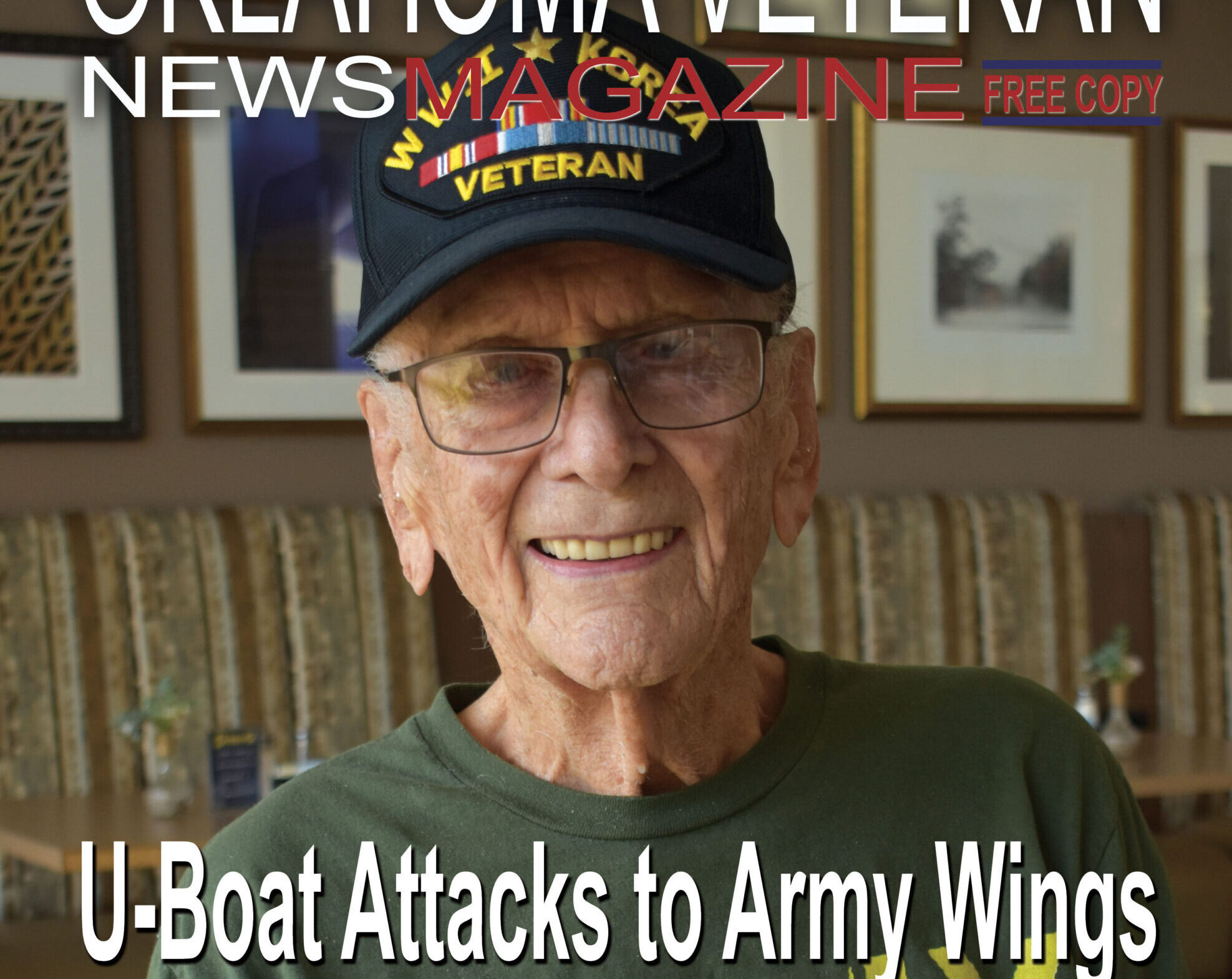

The Charles Bachlor’s WWII Story
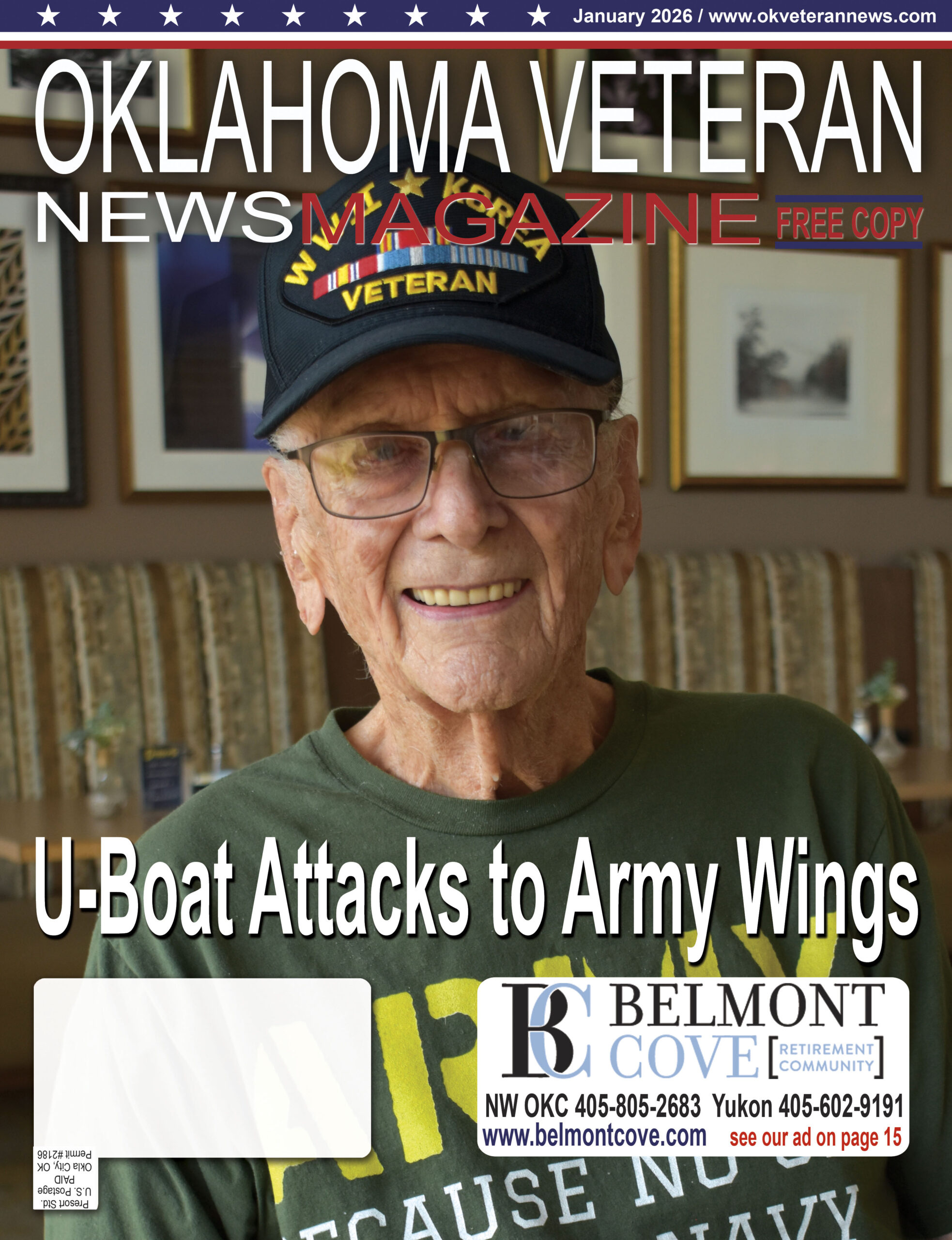

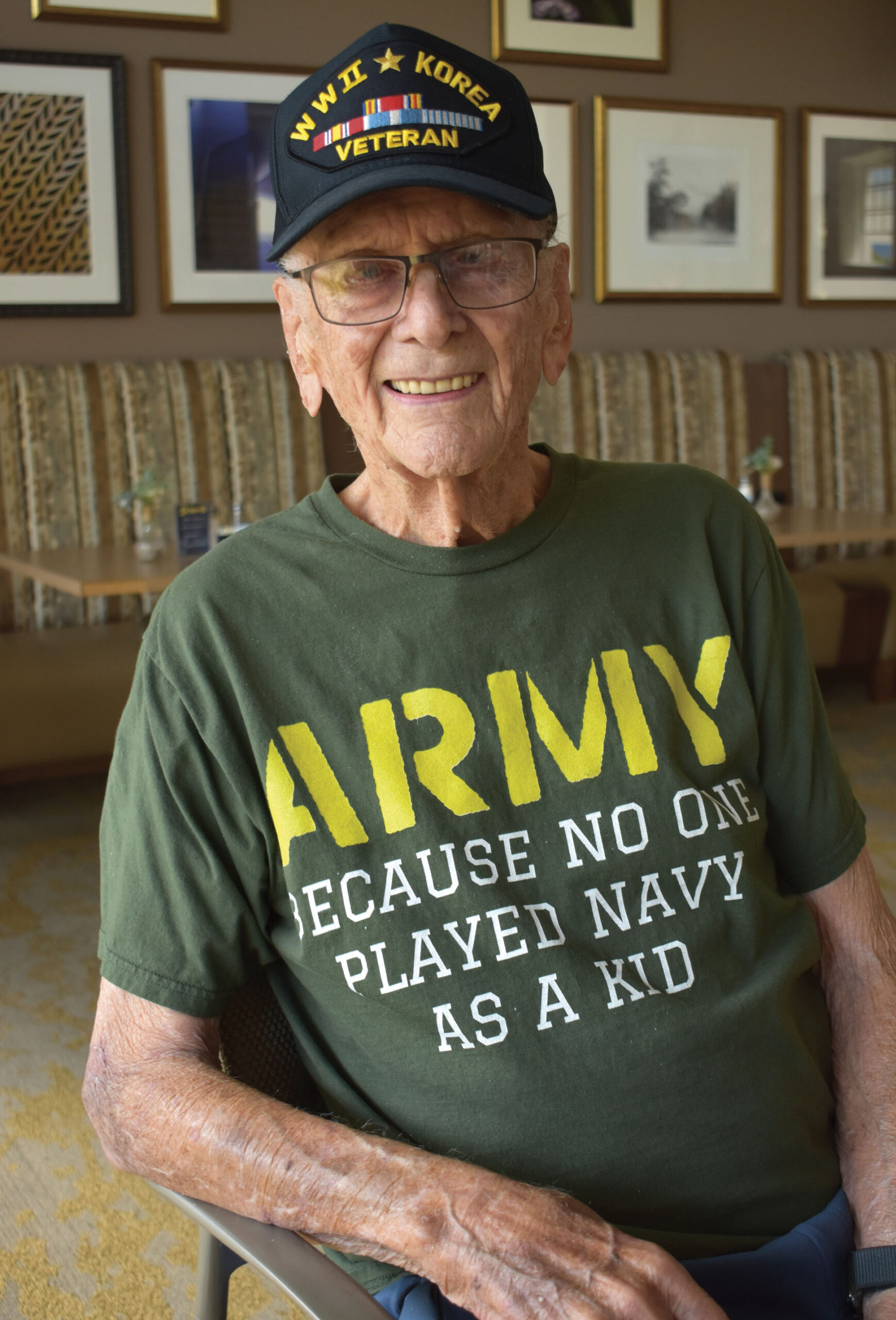
Charles “Ray” Bachlor, born in Tulsa in 1927, spent part of his teenage years in Houma, Louisiana, between 1940 and 1942, attending high school as a sophomore and junior. His family moved frequently. “We followed the oil fields,” he recalled. His father, Roy, managed a supply store for an oil field supply company. Located 57 miles southwest of New Orleans on the Gulf of Mexico, Houma was a quiet oil town-until the war arrived.
A ‘secret’ war on the Gulf
During WWII, German U-boats prowled the Gulf of Mexico. “Houma soon found itself in the midst of a ‘secret’ war-one in which one or more oil tankers were being torpedoed each week near Wine Island after being loaded with oil,” wrote Bachlor after the war. “The ‘U-boat’ would fire an explosive torpedo to spread the oil and then an incendiary to light it. Merchant seamen would have to dive into the burning oil. Sometimes the sub would surface and machine gun survivors. Those who managed to survive… were picked up by our shrimp boats and brought to the hospitals in Houma and Morgan City.”
“Ellender Hospital in Houma was overwhelmed, and folding cots covered the grounds outside the hospital. The sweet smell of burning flesh permeated the air long before you reached the hospital. Women of the town-including my mother-volunteered to help the overworked hospital staff.”
Kimberly Guise, a curator at the National WWII Museum, confirmed these accounts. Bachlor recorded a grim tally: between 1942 and 1943, 88 tankers sunk and 1,471 dead-Americans killed just offshore.
Back to Tulsa
Bachlor finished high school in Sand Springs in 1943 and briefly attended Tulsa University. He tried to enlist in the Navy but was drafted into the U.S. Army on March 1, 1945, as a private.
Basic training
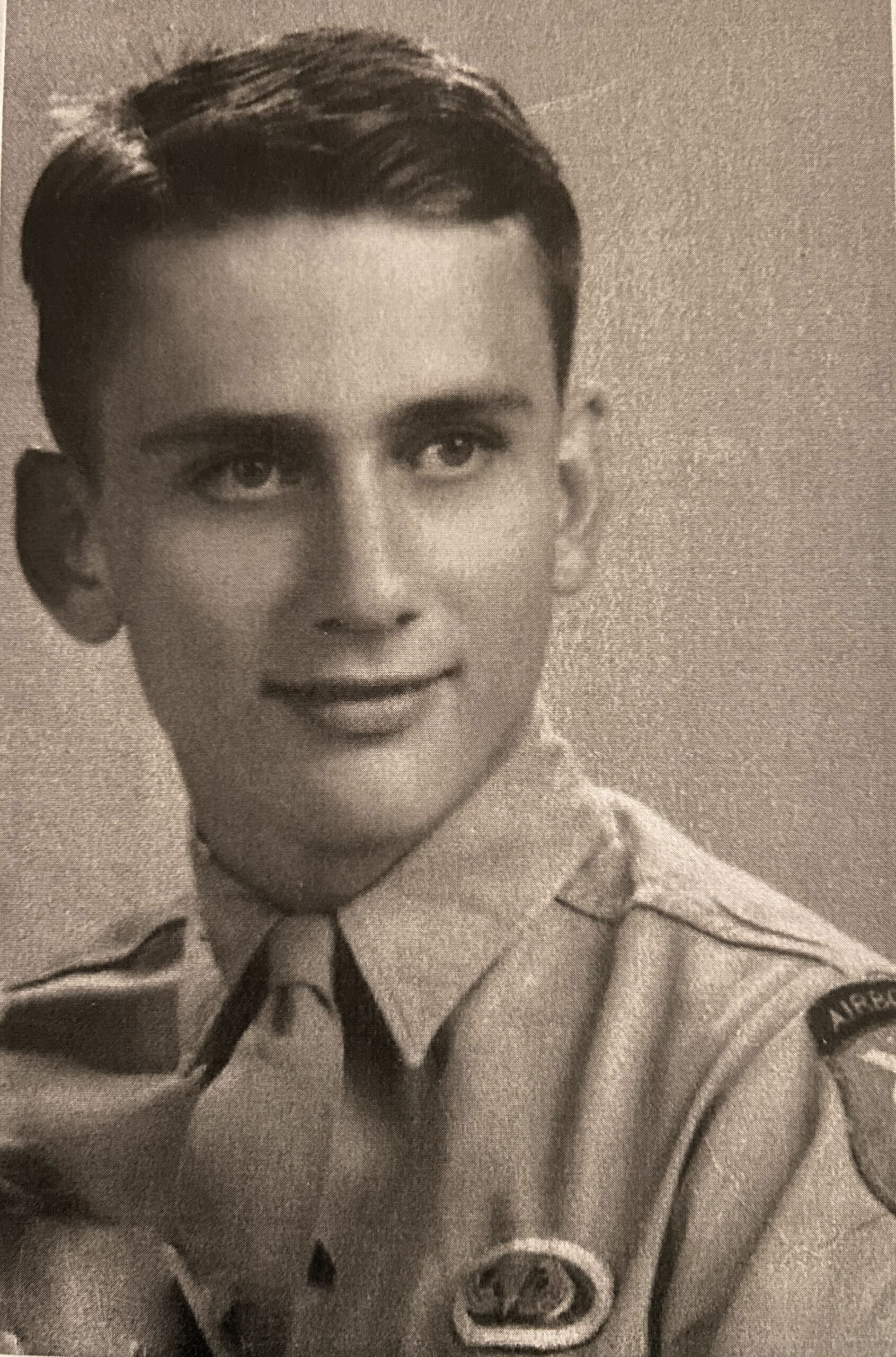
He began basic infantry training at Camp Livingston, Louisiana, in March for seven weeks. One day, a paratrooper visited. The man’s appearance and the unique duty of an elite organization intrigued him. “I was afraid of heights so I joined the paratroopers to overcome that fear,” Bachlor admitted.
Paratrooper training
Transferred to Fort Benning, Georgia, he entered paratrooper training. “Our first week was in the sawdust pits where we were doing nothing but PT. Fifty minutes of PT and 10 minutes rest and 50 minutes more… And every day we’d go on long runs.”
The second week brought a new challenge: “We were jumping from a 34-foot tower… the scariest of all, because you dropped 34 feet and then this cable caught you after (falling 19 feet), then you go down a line to a sawdust pit.” All this to overcome a fear of heights!
By the third week, they were packing their own parachutes and, “We’d hang harnesses and learn to guide ourselves, pulling on our shroud lines.” That week, they were also dropped from 250-foot towers.
“Fourth week we jumped every day. And then we made a night jump and then we got our wings…So, we had to make two marches in combat situations and C-47 to came in, picked us up, and we would make a simulated combat jump. And, so then you graduated.”
The war ends
Bachlor trained for a possible airborne assault on Japan. Then, the United States demolished Hiroshima on August 6 and Nagasaki on August 9, 1945, with atomic bombs. National leaders wanted to avoid at least 500,000 American casualties during a land invasion of Japan. “There were a lot of people that were in the military that were happy about dropping the bomb…and I think it was only later that a lot of people had second thoughts about how terrible the bomb was…but in the end run, it saved a lot of lives,” he said. “It shortened the war.”
Japan officially surrendered on September 2, 1945. Bachlor’s orders to join the 13th Parachute Division at Fort Lewis were canceled. Instead, he remained at Fort Benning as a parachute school instructor, earning the rank of Staff Sergeant.
A Long military career
After leaving the Army in 1948, Bachlor earned an Engineering Physics degree, was commissioned as a Second Lieutenant in 1950 and taught infantry basic training at Fort Chaffey, Arkansas, until May 1951. He later worked for the Security Advisory Group-Japan from 1952-1954 and taught at the Command & General Staff College, Ft. McArthur, Calif.
When Colonel Bachlor retired in 1979, he had served 34 years-rising from private to colonel, an achievement few attain. His life story stands as a testament to courage and dedication. He lives in Tulsa. •
story and photos by Lt Col Richard Stephens, Jr., USAFR, Ret.