
Weatherford’s Stafford Air and Space Museum, located at 3000 Logan Road near historic Route 66, offers visitors an extraordinary journey through aviation and space exploration.

From airplanes to space craft
Weatherford’s Stafford Air and Space Museum, located at 3000 Logan Road near historic Route 66, offers visitors an extraordinary journey through aviation and space exploration. Its packed galleries showcase rockets, aircraft, space suits, engines, and other artifacts – many connected to Oklahoma’s celebrated astronaut, Lieutenant General Thomas Stafford. The museum traces the story of flight from the Wright Brothers to the moon landings, with more than 50 American and Soviet technological achievements arranged in rough chronological order. Plan at least two hours to take it all in. Let’s blast off.
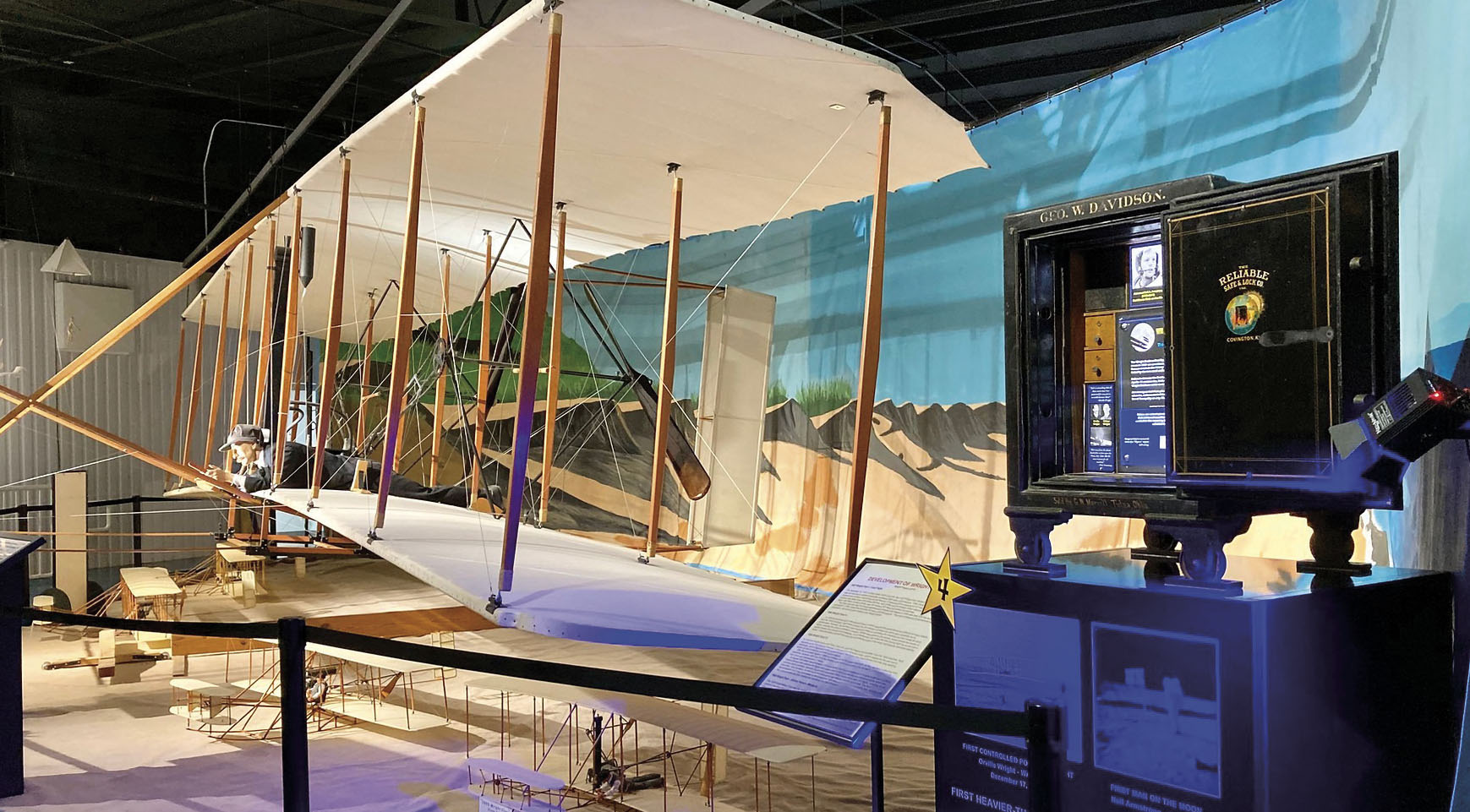
The world of controlled, heavier-than-air powered flights started on December 17, 1903, when the Wright Brothers flew the Wright Flyer. A full-scale replica can be seen as well as other early aircraft like an actual Sopwith Pup and replicas of a Bleriot XI, Curtiss Pusher, and Charles Lindbergh’s Spirit of St. Louis. Visitors can use a “Star Tour Guide” handout to learn about each exhibit. Reflecting on the rapid pace of progress, Doug Schones of Canute remarked, “From 1903 to 1969, such a short time (one life time), so much technology.”
Rockets and Engines Take Center Stage
The heart of the museum lies in its space exhibits. Among them is an actual German WWII V-2 rocket, as well as F-1, J-2, and Soviet NK-33 engines. The mighty Saturn V moon rocket required five F-1 Rocketdyne engines, producing 7.6 million pounds of thrust, to send astronauts to the moon. A Titan II rocket, the same type Stafford rode into orbit during his Gemini 6 and 9 missions in 1965 and 1966, respectfully, is also displayed. Interactive exhibits let visitors hear-and almost feel – the immense power of rockets.
Houston’s Johnson Space Center contributed an authentic Mission Control Console used from the Gemini program through the Apollo, Skylab, Apollo-Soyuz, and the early Shuttle eras. Another highlight is the actual Gemini 6A spacecraft that Stafford and Wally Schirra flew during the first-ever rendezvous in space with Gemini 7 on December 15, 1965.
A towering, full-scale replica of the Apollo 11 Lunar Module (LM) “Eagle” is displayed. In 1969, Neil Armstrong and Edwin Aldrin, Jr. piloted a LM like this to become the first humans to walk on the moon. Nearby, Stafford’s Apollo 10 spacesuit – composed of 18,000 parts – offers a tangible link to his historic mission in May 1969.
International Space Station
Space Station fans will enjoy seeing a 1/24th scale model that illustrates the complexity of the orbiting laboratory. Interactive displays explain its components and the multinational crews who have lived and worked aboard. Viewing the model, Angela Correll of Ponca City observed, “This (ISS) is what keeps us connected” because astronauts from many nations share the station. Visitors are encouraged to download the “Spot the Station” smartphone app to track its path overhead.
Cold War and Modern Aircraft
The museum has an impressive collection of fighter airplanes. Outside are four and inside, visitors encounter an F-86 “Sabre,” Soviet MIG-21R “Fishbed,” T-38 “Talon,” F-16 “Fighting Falcon” and 2024’s addition, a F-117A “Nighthawk” stealth fighter. The MIG-21R served as the Soviet Bloc’s front-line fighter during the Cold War. The F-117A, a stealth fighter which Stafford helped develop, flew combat sorties during Operation Desert Storm, Allied Force and Iraqi Freedom, according to the Star Tour Guide.
Honoring Thomas Stafford
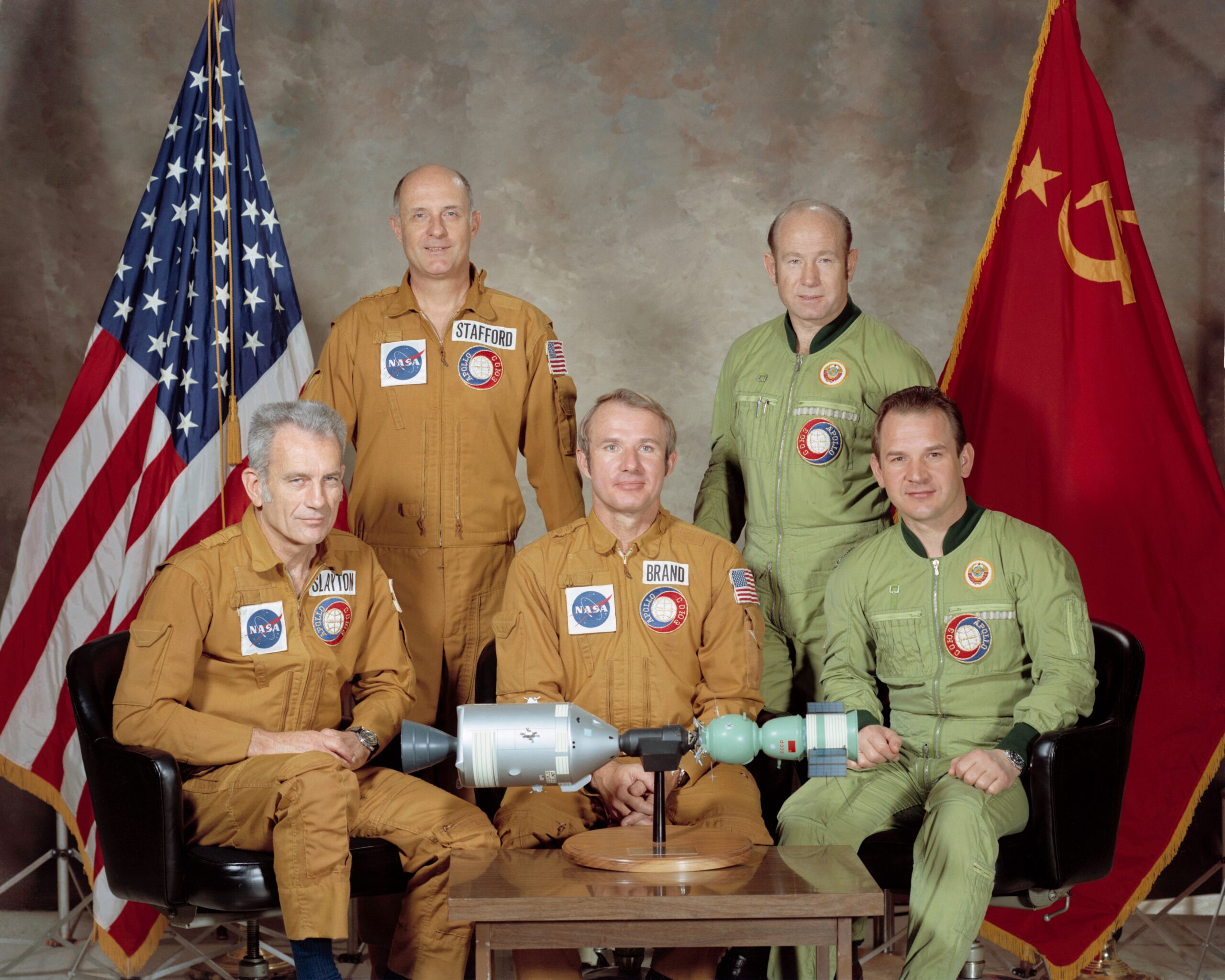
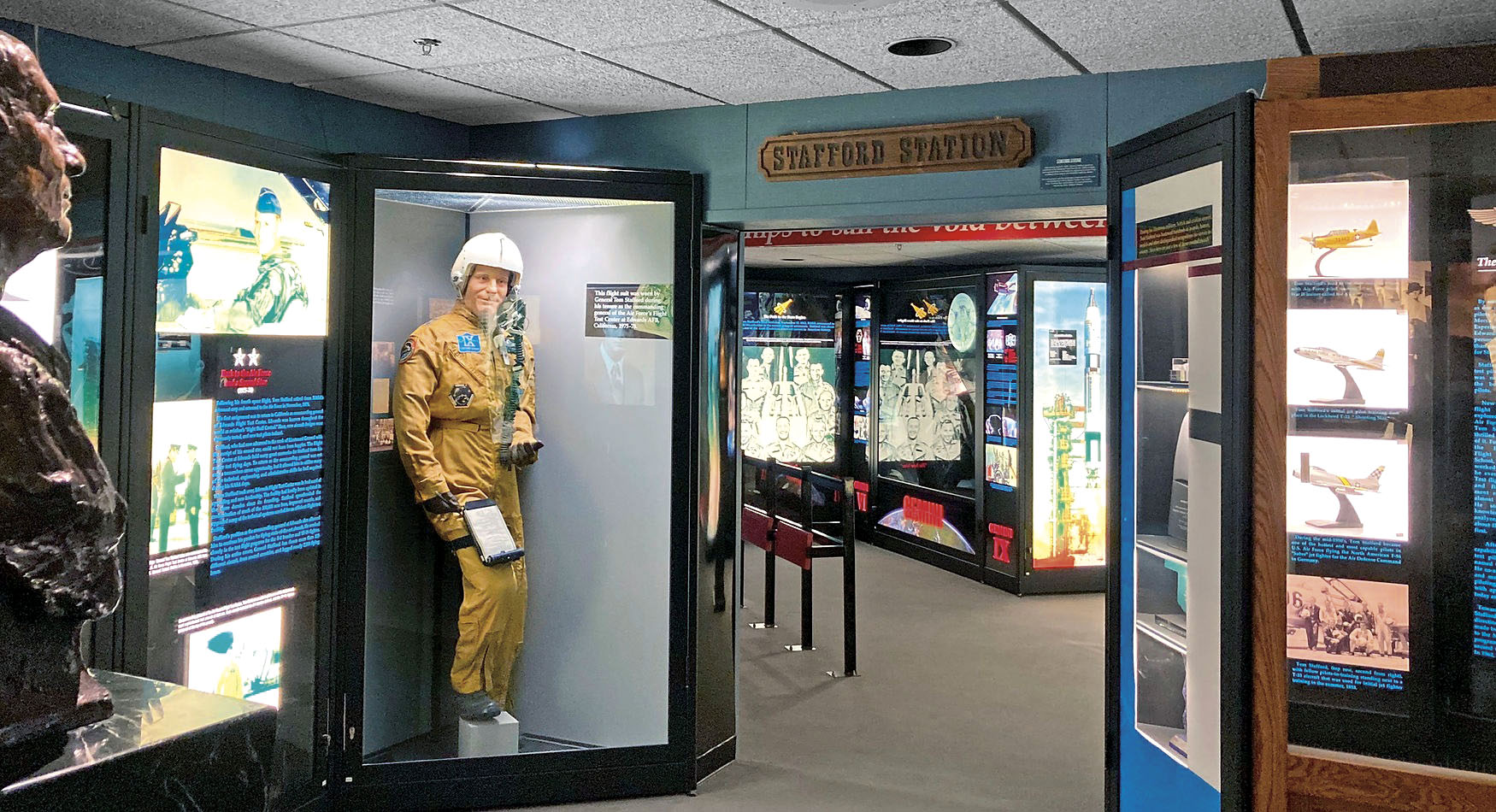
General Stafford was born and raised in Weatherford. The museum’s website notes, “His mother came to Oklahoma in a covered wagon and lived to see her only child fly to the moon. His father was a dentist who taught his son to appreciate what he had by working hard for it.” With a lot of hard work and natural abilities, Stafford graduated at the top 10% of his class at the U.S. Naval Academy and later became “Chief of Astronauts at NASA, was appointed Head of Research and Development at the Pentagon, chaired the team that developed the Hubble instrument COSTAR (Corrective Optics Space Telescope Axial Replacement), worked at Area 51, and (was) responsible for Stealth Technology as we know it today.” His career included four historic space missions: Gemini 6A, Gemini 9, Apollo 10, and Apollo-Soyuz, where he commanded Apollo’s final flight. Lieutenant General Stafford lived from September 17, 1930 – March 18, 2024, reaching the age of 93.
Completing the Visit
Open seven days a week, the Stafford Air and Space Museum, blends history, technology, and human achievement into an unforgettable experience. Note. Museum personnel did not respond to requests for an interview. •
story and photos by Lt Col Richard Stephens, Jr., USAFR, Ret.