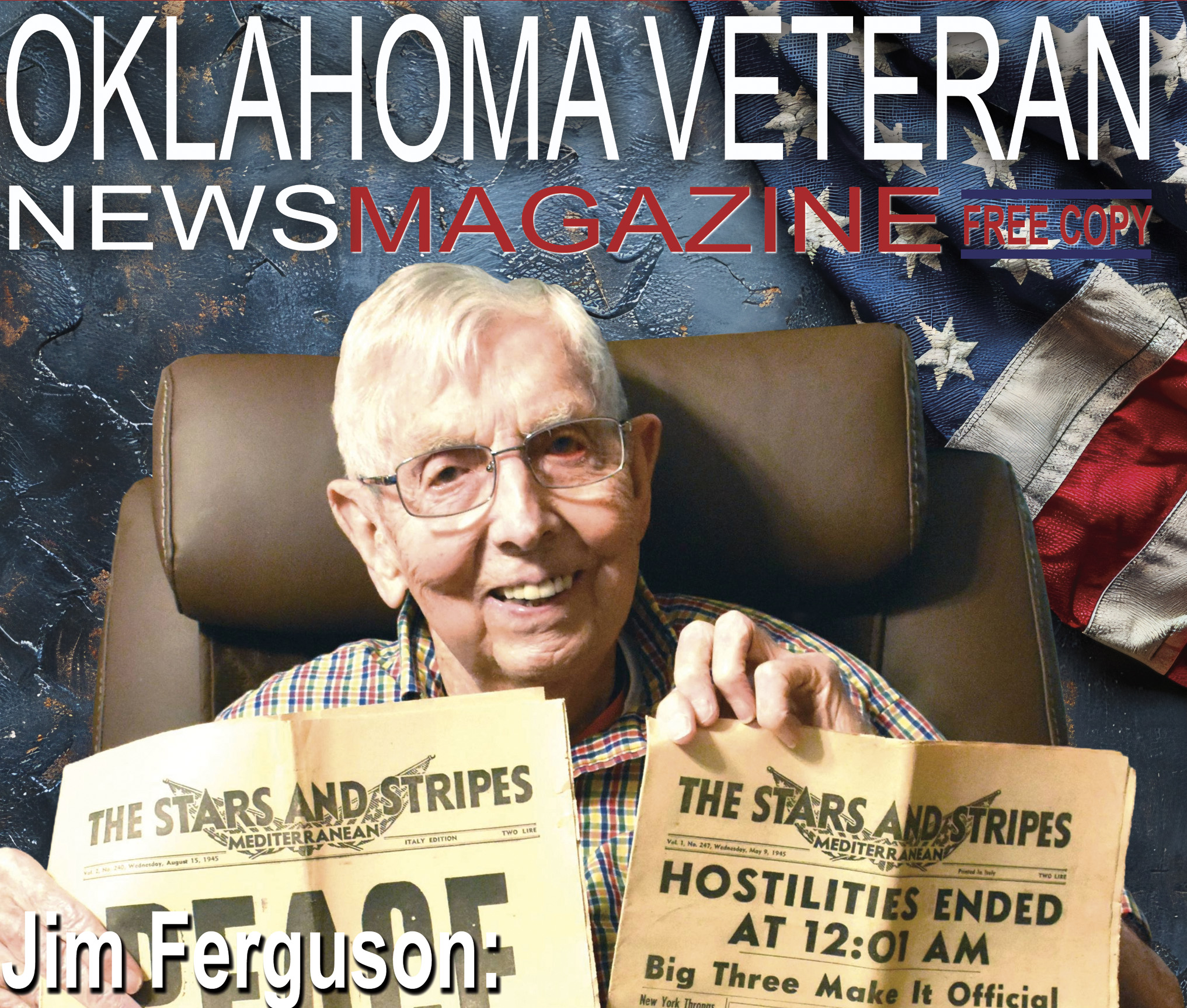

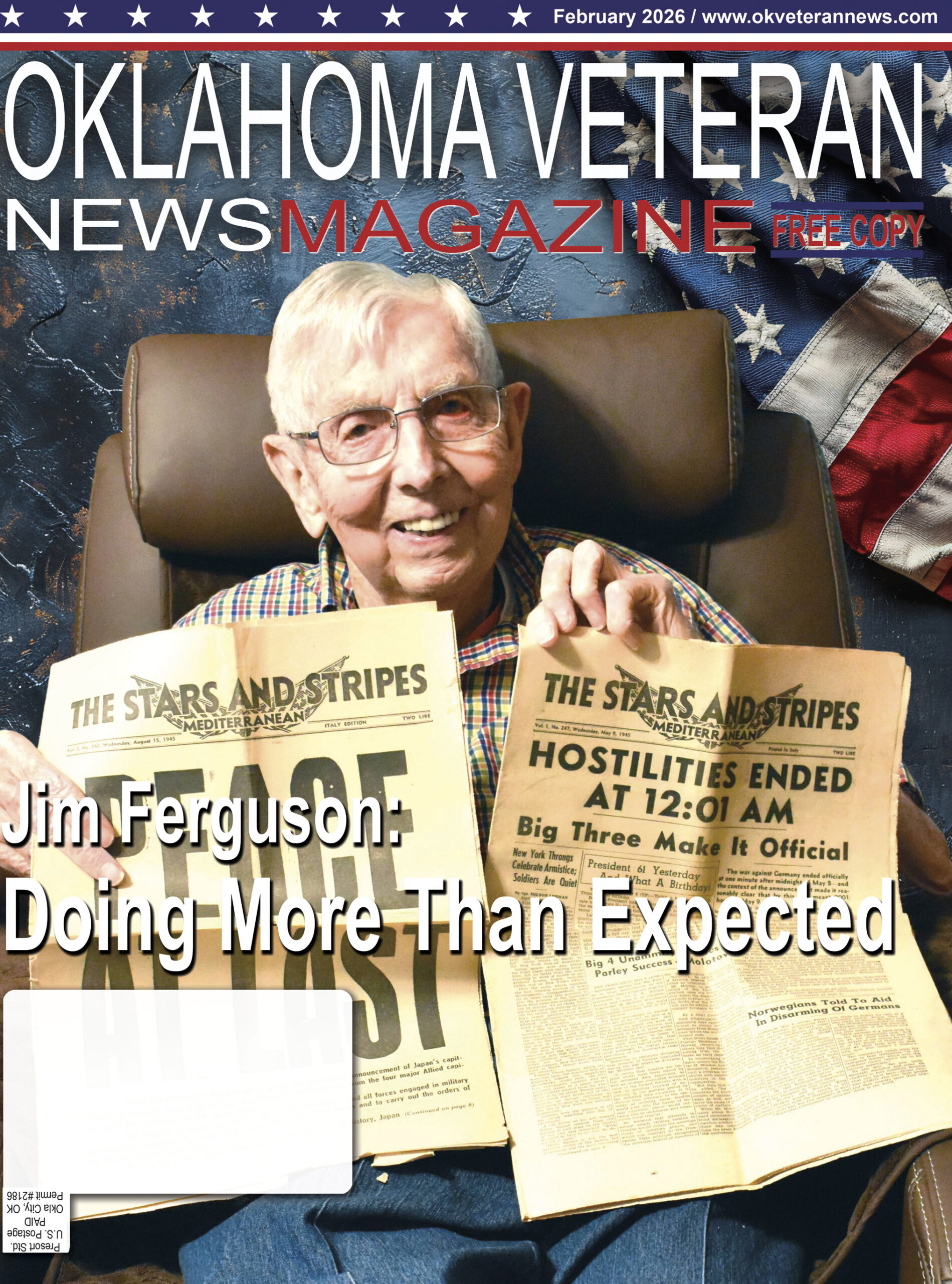

Some Americans serve their country for a chapter of their lives. Jim Ferguson wrote a book’s worth. His record spans three years of active duty during World War II and one year during the Korean War, 17 years in the Air Force Reserve, and 31 years as an Air Force civilian engineer at Tinker Air Force Base – four decades devoted to national defense.
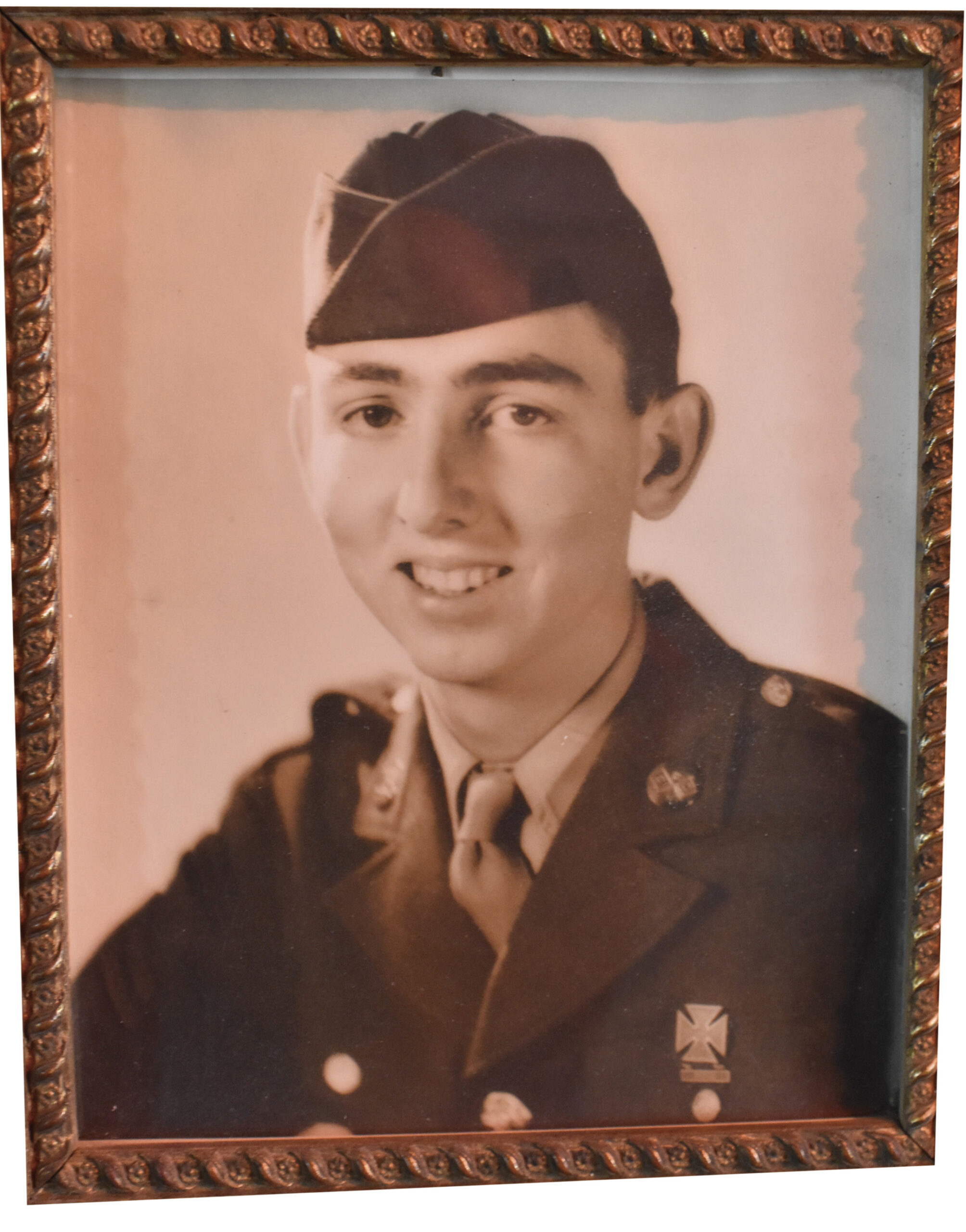
Ferguson’s journey began after graduating from Siloam Springs High School, Arkansas. At age 18, he enlisted in the U.S. Army Signal Corps Reserve on October 22, 1942. He immediately attended radio technician school in Little Rock as a civilian civil servant before being activated by the Army Air Corps on March 10, 1943.
After completing basic infantry training at Camp Pinedale, California, Ferguson was assigned as a Classification Specialist and deployed overseas.
Duty at Bari, Italy
When he arrived on May 23, 1944, front-line fighting had moved north. He recalled, “Sunken ships littered the harbor…The noise and flak from the British guns are loud and heavy.”
Assigned to the 420th Signal Company, 15th Air Force, Ferguson used a typewriter and spreadsheets to take aim at manpower shortages by comparing authorized manpower to assigned strength and reporting shortages to headquarters.
The work required visiting combat units. “On a typical day, I would get on a B-17 and fly out to one of our units and get information for my reports to be this worksheet that shows how many positions we’ve got that’s vacant so that the system can send in the replacements…”
SS Charles Henderson blows up in Bari Harbor
On April 9, 1945, “In one of the greatest munitions disasters of World War II, the Charles Henderson was unloaded at Exit 14…when it was destroyed in a high-level explosion,” according to the Puglia Reporter newspaper in Italy. “This detonation caused by [handling] 500 loaded bombs loaded with Composition B, killed 542 people and injured 1,800 others…The buildings along the waterfront were destroyed by 2,000 feet, the ships were badly damaged at 2,100 feet.’”
The blast left a lasting impression and later, PTSD. Ferguson remembered, “you could still see debris that…the gravity hasn’t brought back to the ground…Our building was severely damaged with all windows and doors destroyed…I went up on the roof and found a piece of the ship that I could not lift that had been blown from the harbor to the roof of our building.”
Given rest and recreation leave, Ferguson visited Capri, Rome – where he met Pope Pius XII – and Switzerland.
He received a Bronze Star for Italy’s Rome-Arno Campaign and was discharged on Jan 28, 1946.
Korean Conflict
Service called again. “I spent one year on active duty and was discharged as a Technical Sergeant on 23 August 1951…During this period, I was commissioned as a 2nd Lieutenant in the US Air Force Reserve as an electronic engineer.” He continued in the Air Force Reserve as an engineer, attaining the rank of Major before retiring on 1 February 1969.
Family
Ferguson met his future wife, Beverly Murry, at a church activity in Siloam Springs in 1946. Both attended John Brown University, where he earned a Bachelor of Engineering degree using the new GI Bill.
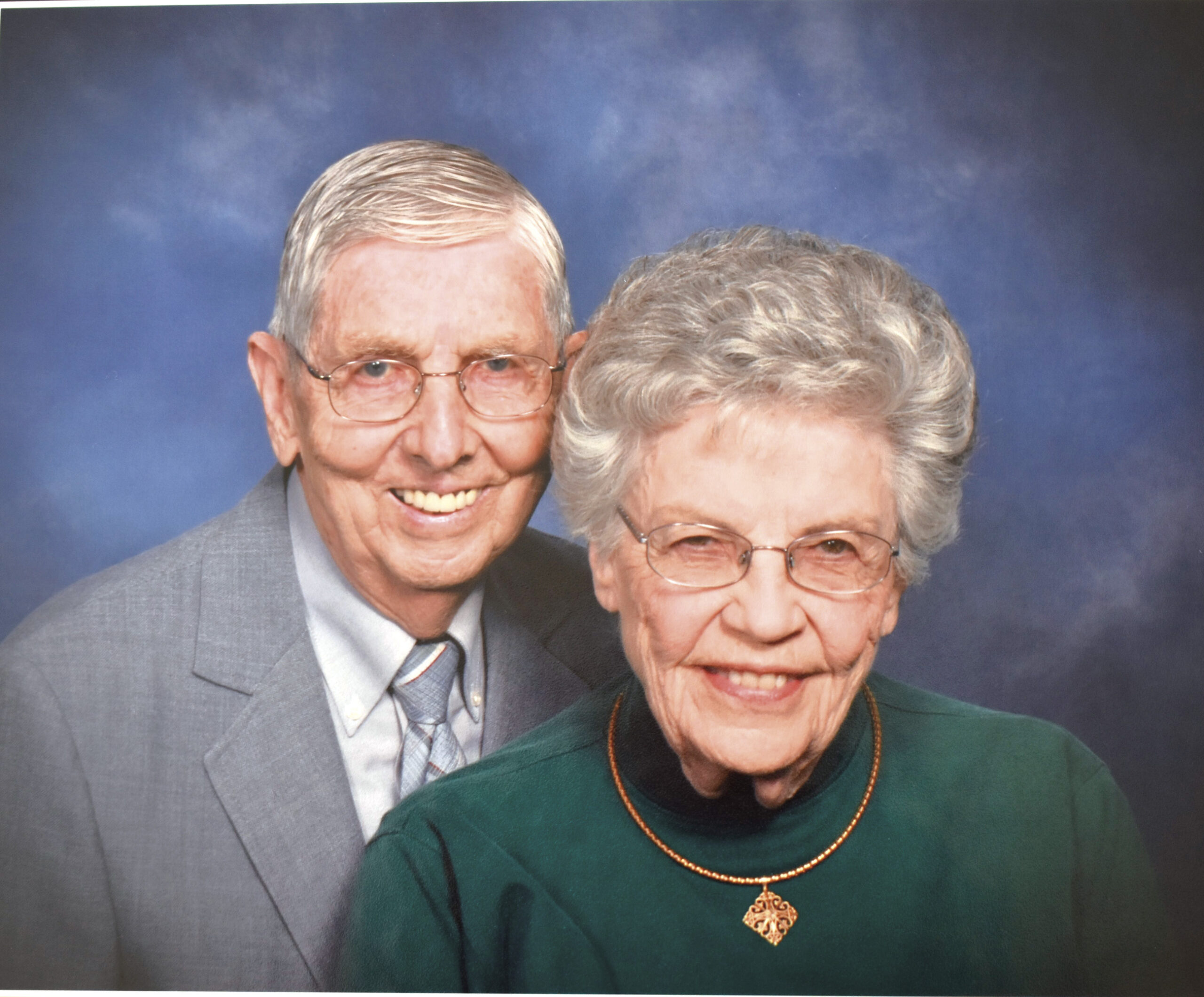
After the Korean War, Ferguson resumed his friendship with Beverly and they married on Feb 16, 1952. He said, smiling, “She told me later that she would’ve married me a lot sooner if I’d asked sooner, but I wasn’t too smart…Beverly had said, ‘I was ready to get married long before you asked.’ The best 70 years of my life.”
They raised two children: Bill Ferguson, who married Elette and live in Mount Vernon, Washington, and Gayle Davis, who lives in Oklahoma City with her husband, Michael.
Electronic Engineer
In 1951, Ferguson began his civilian Air Force career with the Airways and Air Communications Service, renamed the 38th Cyberspace Engineering Installation Group. The Group provided communications and navigational aids. His work included preparing “site concurrence letters and engineering documents…at different bases around the country…” His team identified locations for airfield infrastructure like air navigation systems and control towers and equipment to support them during the Cold War.
Ferguson’s attention to detail and ability to work with people led to promotion as a Supervisory Electronics Engineer and eventually, GS-14 General Manager. He earned a Meritorious Civilian Service Award, among the Air Force’s highest civilian honors. He retired Dec 30, 1982.
Reflections about life
Looking back on war, Ferguson remains thoughtful and direct. “I don’t know why adults go to war. The outcome is always the same: somebody wins, somebody loses. A lot of people are killed. I still remember the burial grounds with the crosses, you know, driving by them in Italy.”
His advice for living a good life? “I’d say the golden rule would be pretty good.” His son, Bill, added, “You always told me, Dad, ‘Do more than what’s expected…Don’t just do the minimum.’”
After Beverly died four years ago at age 90, Ferguson reflected on loss and companionship. “I’m just much, much happier when I’m around people and that was a thing I didn’t recognize until I experienced living alone after my wife passed…The loss of a spouse was the worst experience I’ve ever had, you know…’”
Longtime friend Bill Dooley summed up friendship simply: “He’s a wonderful guy and I’m happy he’s my friend.”
Ferguson is 101 years old and lives in Midwest City. •
story and photos by Lt Col Richard Stephens, Jr., USAFR, Ret.