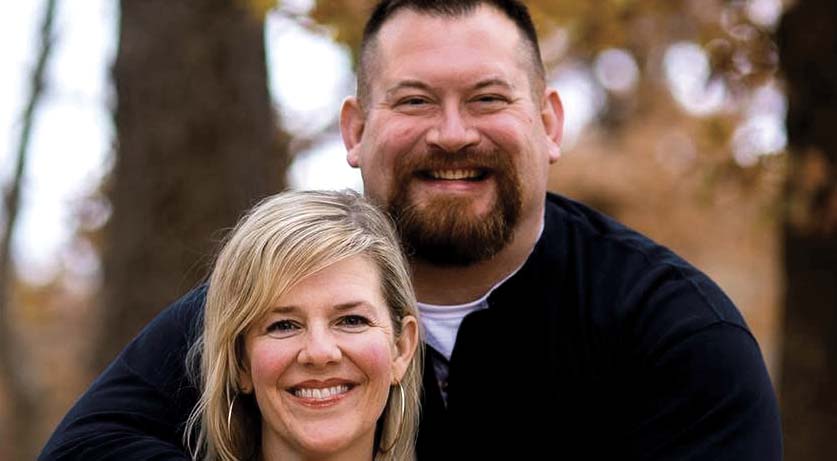

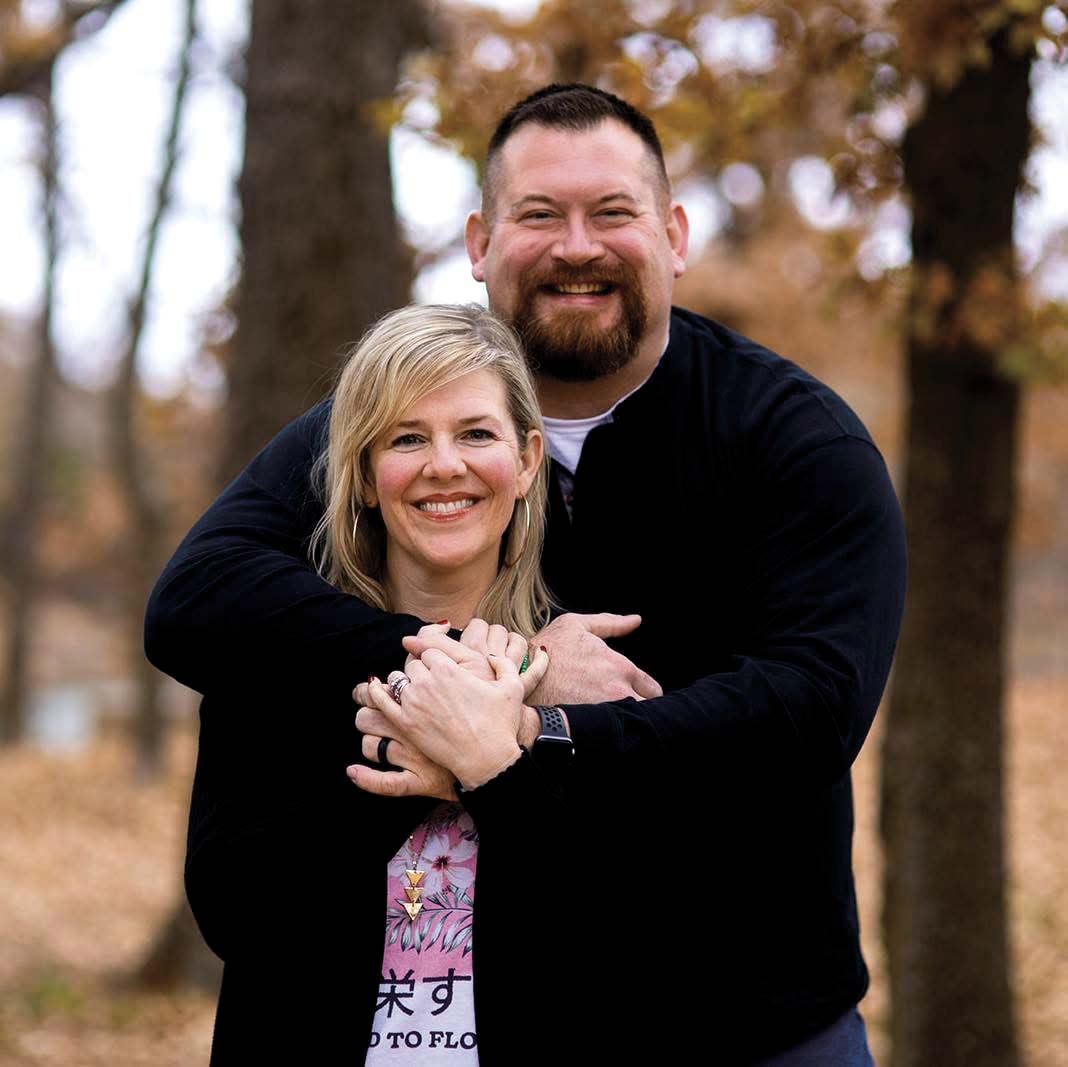
George Shafer, a U.S. Army veteran, was at his lowest point when his wife Meredith found him in their family’s treehouse with a shotgun aimed under his chin.
He credits her with getting him the help he needed when he was ready to end it all.
“I suffered a traumatic brain injury (while serving) and I got into a deep depression,” Shafer said. “I am a veteran that has struggled. I have struggled with the aimlessness, and the lack of passion, feeling worthless, feeling empty, feeling void.”
Shafer those feelings only heightened during the COVID-19 pandemic after he and his wife’s ministry which helped veterans struggling with addiction closed its doors.
“When the ministry (in Edmond) fell apart in the pandemic, I lost many relationships, and I really isolated myself. I hurt a lot of the friends that I had at the time,” he said.
Shafer said after Meredith found him in the treehouse; she went to work to get him help.
“She was relentless,” he said.
Meredith Shafer wrote in a Facebook post about her and George getting saved 12 years ago.
“Twelve years ago, today (Sept. 28) the Lord saved us,” she wrote. “I was pregnant with our youngest, and life had been in shambles for a while. Mr. Wonderful (George) was chained by addiction, and I was at the end of my rope. That day I found him in our kids’ treehouse about to take his own life. It turns out, he was at the end of his rope too and did not know how to get out of those chains. Twelve years ago, God met us in a treehouse and changed our lives forever. Not in an instant like we wanted, but over and over in the daily choices He showed us how to make.”
Shafer said their response to the pandemic helped shape his family’s future.
“When the pandemic hit Oklahoma, our family had a meeting around the dining room table. We were all nervous, but we discussed what opportunities were available in our new norm,” he said. “We told our kids that it was a difficult situation, but it was also globally difficulty being experienced by everyone. Meaning, the people who are quickest to adapt to change will be the most prepared when the pandemic was over. Our family received this well, and got to work! But they also helped me do the same.”
Shafer decided to go back to school online through Liberty University and receive his Masters of Divinity degree from Regent University.
“There’s just been a calling on my life (to complete his education), and I’ve known it for a very long time. And I ran from it. But when COVID hit that was one of the thresholds that was there for me to cross,” he said.
Shafer credits his wife and children for sticking with him through his studies.
“Meredith Shafer, Jack, Tate, Lucy, and Isaiah; this victory is for you,” Shafer wrote in a Facebook post. “For the missed: sports events, kid drop-off and pickup, parent/teacher conferences, etc. Thank you for helping me, believing in me, and trusting me for the past 7 years through both an undergrad and a challenging master’s program. For a guy who had a 9th grade education prior to college, there were days I wasn’t sure we were going to make it (math and Greek). You guys helped me break generational curses and change the trajectory of our family name.”
Shafer graduated with his master’s degree last spring but was still unsure of what was next for him.
That is when he and his wife felt a calling to come to Generation’s Church in Guthrie.
“I scheduled a meeting with my pastor Josh Seabolt (and told him his story),” Shafer said. “I told him I made a lot of mistakes, and he showed me the grace of Jesus Christ.”
Through that conversation, Shafer was later hired as Generation Church’s Pastor of Digital Communications, and his wife serves as Pastor of Assimilation and Small Groups.
He thanked Generations Church for giving his family a shot.
“To our Generations Church family, you will have no idea how much your love and support has meant to our family. So grateful for each of you,” he said. “It’s very humbling.”
Shafer is the former chaplain of the American Legion Lebron Post 58 in Guthrie, where he helped launch its Bunker 58 Esports program, which is designed to reduce veteran suicide by providing an environment of a connection, teamwork, and camaraderie for local veterans.
Shafer said his struggles help him better help other veterans.
“When I see that in somebody else, I’m able to recognize it,” he said. “Not because I’ve experienced exactly what that person has experienced, but it rekindles my desire to ensure that nobody ever feels that way again. To ensure that they understand that they’re made in the image of God, in the image of their creator, and that they have worth, and that they have value. Even if they no longer wear the uniform or serve the country, they still have value and they still have worth, and they still have things that they were put on this planet to do. And if I can help them get through this short, temporal period of feeling empty, it’s my honor to do that.” •
story by Van Mitchell, staff writer
For more information about Generations Church visit
https://www.generationsguthrie.com.