History Alive! on the Cherokee Strip, a living history program at the Cherokee Strip Regional Heritage Center in Enid, will return for another year.
It takes place throughout the year on the first and third Saturday of each month from 11 a.m.-3 p.m. The four historic buildings in the Humphrey Heritage Village, which are from the territorial days, come to life with reenactors dressed in period clothing from the late 1800s.
Attendees can sit at school desks in the Turkey Creek one-room schoolhouse from 1896 while lessons are taught, hear a pioneer tale from those tending their shops and watch as craftsmen and women work their trades. Visitors can go inside the 1905 Glidewell house or stop at the church from 1902. Guests can watch and participate in the different skills and trades of the time or file their own land claim at the historic 1893 U.S. Land Office.
History Alive! started at the CSRHC in the winter of 2019 and happened once a month. It has grown into a biweekly event. Volunteers are always needed.
The History Alive! programs are included with paid admission. For more information about the Cherokee Strip Regional Heritage Center, please call 580-237-1907 or visit https://csrhc.org/.
The Cherokee Strip Regional Heritage Center is a division of the Oklahoma Historical Society. The mission of the Oklahoma Historical Society is to collect, preserve and share the history and culture of the state of Oklahoma and its people. Founded in 1893 by members of the Territorial Press Association, the OHS maintains museums, historic sites and affiliates across the state. Through its research archives, exhibits, educational programs and publications the OHS chronicles the rich history of Oklahoma. For more information about the OHS, please visit https://www.okhistory.org/.
Living History Program Returns to Enid for Another Year
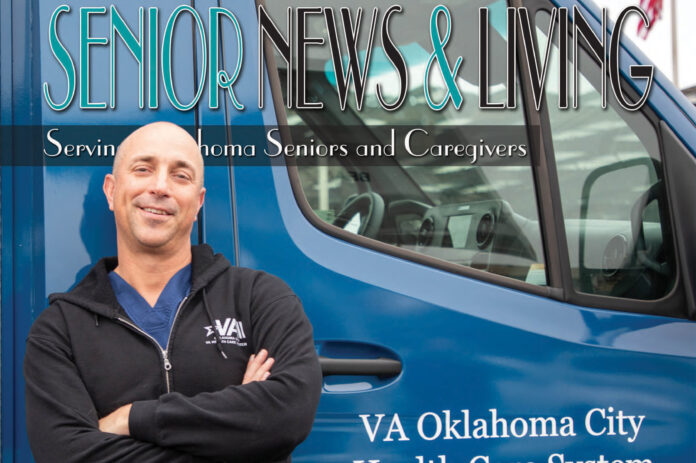
New Year Brings New Growth for OKCs VA
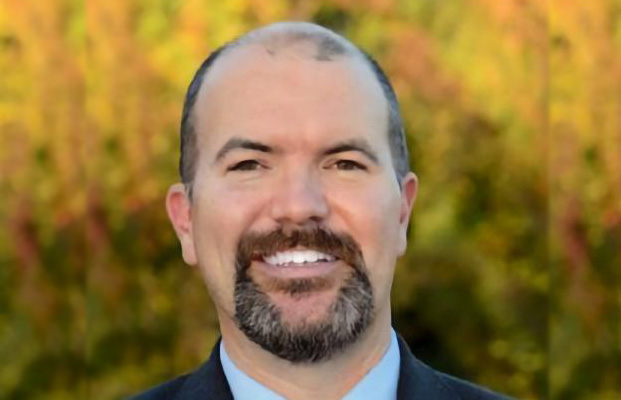
Wade Vlosich
OKC Veterans Administrator Healthcare System director.
Story by Van Mitchell, Staff Writer
The Oklahoma City Veterans Affairs Oklahoma City Healthcare System has become the fastest-growing VA in the nation, according to Fiscal Year 2023 statistics.
Wade Vlosich, OKC VA HCS director, attributes the rapid growth to community engagement and outreach efforts, particularly to isolated Veterans.
“Many Veterans are not sure if they are eligible for VA healthcare,” Vlosich said. “We have traveled to remote locations to personally reach out to our Veteran population and provide answers to their questions through our PACT Act resource fairs.”
In August and September of this year, Vlosich said OKC VA averaged about 22 new registrations a day.
“Overall, this fiscal year, we saw 13,994 first-time users, which was 18 percent of our overall users within the Oklahoma City VA,” he said. “That is about a 20 percent increase over the last four years, when most other VA facilities average between 1-3 percent annual growth.
Vlosich said keeping up with established patients with so many new patients coming in presents a challenge, but the facility is also expanding and growing to meet all satisfaction and clinical care needs.
With new equipment arriving and construction constantly happening, Vlosich is often seen in scrubs instead of a suit as he inspects new specialty and construction areas throughout the downtown facility.
Expansion is the primary focus for this health care system which includes Community-Based Outpatient Clinics (CBOC). The VA now has two clinics in North OKC, including one that provides dental care.
VHA implemented these clinics to make access to health care easier. These clinics provide the most common outpatient services, including health and wellness visits, without the hassle of visiting a larger medical center. VHA continues to expand their network of CBOCs to include more rural locations, making access to care closer to home. One of its newest rural clinics is in Shawnee, OK.
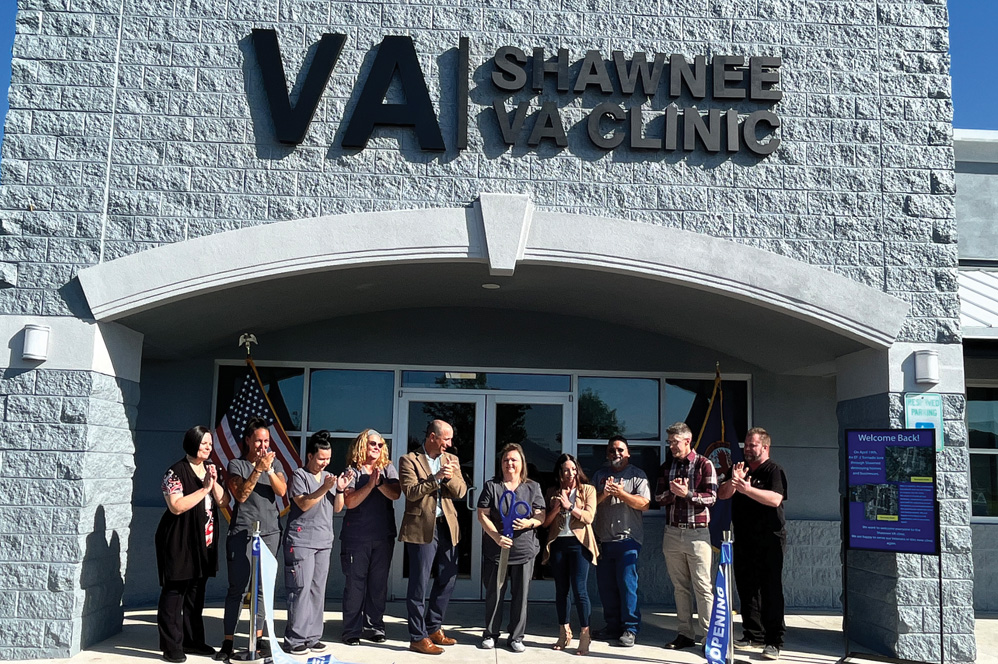
“Oklahoma City (VA) has grown by 22 percent total since 2019,” Vlosich said. “We’re growing so rapidly, and we’re trying to build all these new clinics. For instance, new clinics are pending approval to be built in Woodward and we’re expanding our Stillwater and Yukon clinics.”
Another area of growth is occurring among this facility’s female Veteran population. Expanded services for women now include a mammography clinic and plans to build a new women’s only stand-alone clinic.
Other plans include securing facilities for inpatient services, substance abuse treatment and long-term care as well as opening a Fisher House for Veterans’ families.
Vlosich said the VA has acquired the former Norman Specialty Hospital near the corner of Robinson Street and Berry Road to convert into a new VA hospital, and is redesigning the facility to meet both the inpatient substance abuse and skilled nursing facility building requirements.
The new hospital will have 53 beds — 26 for skilled nursing, and 26 for inpatient substance abuse treatment — and serve up to 78,000 veterans who live in the Oklahoma City area.
The 26 substance abuse beds will be used for the highest level of rehabilitation services for patients who are diagnosed with alcohol or drug addictions or substance use disorder.
“One of the things that some of our younger and older veterans face is substance abuse treatment issues,” Vlosich said. “We’re building a substance abuse treatment facility in Norman to help with that. There are none in the state of Oklahoma right now.”
Vlosich said homelessness with Veterans is a growing problem in Oklahoma.
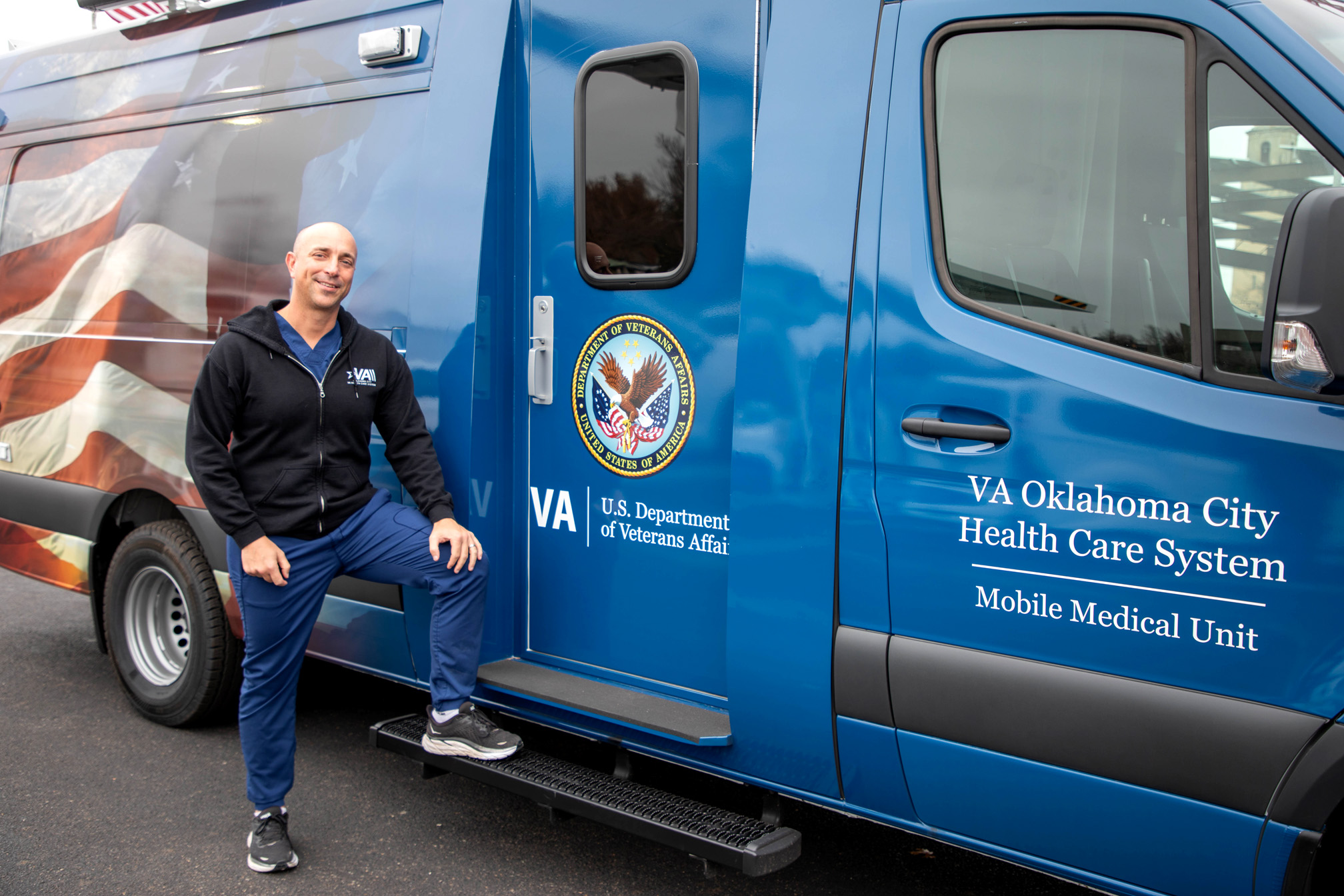
OKC VA HCS previously launched a mobile medical unit to treat the homeless population and even established their own ambulance service.
“We’ve got a great homeless program here in Oklahoma City,” he said. “We are the second VA in the nation to get a mobile homeless van. We call it MMU, Mobile Medical Unit, and they travel around different areas providing healthcare to homeless veterans at their homeless camps or the homeless shelters because a lot of them don’t want to come in, they have mental health issues or other things. We’ll drive out there and provide medical care to our homeless veterans and bring the van back in.”
Vlosich said the OKC VA HCS continues to work with the Housing and Urban Development (HUD) and Veterans Affairs Supportive Housing (VASH) Programs to expand their capabilities.
The goal of OKC VA HCS leadership is to eliminate Veteran homelessness by providing shelter, transitional and permanent housing to Veterans to those who need it the most. Some examples are providing employment and different legal services through the Veterans Justice Outreach program.
Throughout 2022, VA staff helped Veterans find permanent housing such as apartments or houses that Veterans could rent or own, often with a subsidy to help make the housing affordable. VA staff also helped some Veterans end their homelessness by reuniting them with family and friends.
Vlosich said Veterans have another tool with the VA Health Chat which allows Veterans to immediately connect with VA health care clinicians over text-messaging.
The VA Health Chat App provides easy, online access to chat with VA staff when you have minor health questions, want to schedule an appointment, have a non-life-threatening health concern, and more.
“We’ve instituted an app now that if you need to talk to somebody in our community care office, you can go online and chat with them through the app as opposed to spending 30, 40 minutes on the phone. It’s easier,” he said.
Vlosich said the Promise to Address Comprehensive Toxics (PACT) Act is one of the largest VA Health Care expansion programs and extends eligibility for Veterans who have been exposed or possibly exposed to toxic environments while serving in Vietnam, Gulf War, and post-9/11 eras.
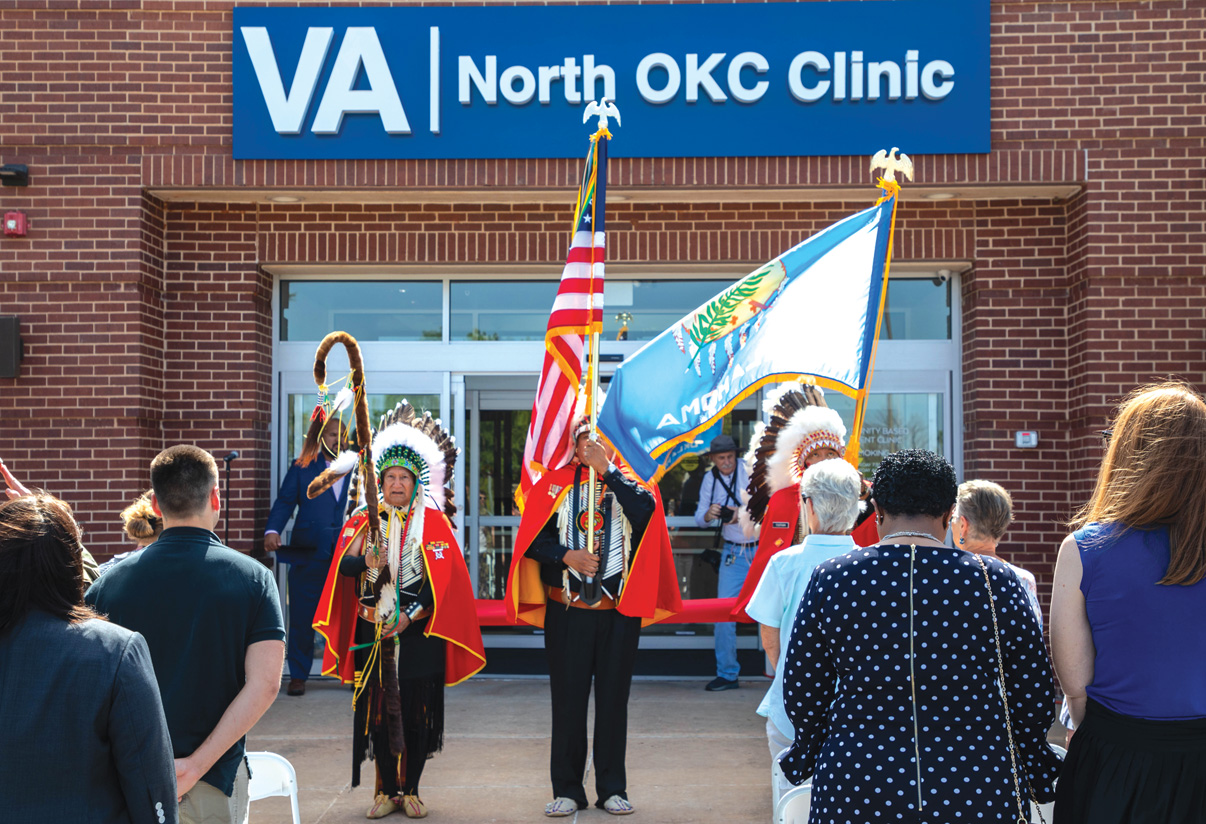
Over the last year, Indian Health Service (IHS) and The Department of Veteran Affairs have partnered together, holding PACT Act outreach events across Oklahoma. This joint effort has assisted Tribal, non-Tribal Veterans, and Veterans in rural areas to receive healthcare services, education, and other benefits they deserve.
Vlosich said hiring fairs and recruitment incentives have helped bring new employees on board.
“On average, we’re bringing on about 30 to 40 staff members every two weeks just to meet demand,” Vlosich said. “We’ve added new primary care teams for most of our community-based outpatient clinics.”
Vlosich also acknowledged the efforts of current employees during this season of growth. He said OKC VA employees have stepped up to meet Veterans’ needs.
“They’ve worked overtime,” he said. “During COVID, we had employees spending the night in the hospital just to take care of our Veterans. We appreciate their dedication because, without them, many could go without healthcare, and our Veterans are our most precious resource.”
For more information on the PACT Act see the press release on page 11.

VICKEY’S MIRACLE

By Theresa Green
It’s the season when we talk a lot about miracles, and one Oklahoma woman will tell you she is living proof they exist.
Vickey McDonald, 62, spent more than half a year hospitalized.
“I had two heart attacks, seven surgeries, spent almost seven full months in the hospital,” she said.
Her prognosis was grim. McDonald says she was told by doctors at the hospital in February that it was unlikely she’d survive.
“It was very grave, yes. She was given really no chance of survival at all. Pretty grim,” said Tracy Bates, a nurse practitioner with Valir PACE.
Doctors at the hospital planned to send her home on hospice care, but McDonald chose a different path, enrolling instead in an all-inclusive care program called Valir PACE. It is a holistic program of care that offered help with her medical, therapy, dental, transportation, home care and other needs. It all sounded too good to be true.
“At first, I was like, this is not for real. You got to be kidding me,” she said. “But then I realized they really do everything that lady said they would do. They really do.”
Now, several days a week, you will find McDonald hard at work in the physical and occupational therapy clinic at PACE in downtown Oklahoma City.
“She’s one of the hardest workers I know in therapy,” said Kirsten Paschal-Wilson, Valir PACE Therapy Manager. “She wants to be there. She shows up. She puts in the work, and it doesn’t stop at therapy. When she gets home, she keeps putting in the work because she loves her life. She loves to live it and she’s going to do it independently.”
It’s more than just therapy, though. McDonald is seen regularly by the team of health professionals in the PACE clinic too.
“Just seeing her be able to walk out the door and walk back in on a regular basis. A year ago, for sure, I don’t know that would have happened,” Bates said. “She’s very determined to do the very best she can do as long as she possibly can. She’s a fighter – 100 percent a fighter.”
McDonald’s is a story of sheer grit, determination and what many, including her health team at Valir PACE, might call a medical miracle too.
“It’s hard not to get emotional,” said Bates, her eyes welling with tears, “because it shows that I am where I need to be.”
And McDonald says clearly so is she.
“Went to my doctor in August for my six-month check-up. He said, ‘Let me explain it to you. When you left the hospital in February, you had a zero percent chance of survival. So whatever you are doing, you need to keep doing it.’”
The grandmother of 10 is determined to keep doing just that, working hard to get healthier, to continue to live life independently and to prove wrong those doctors who gave her no chance of survival just ten months ago.
“She swears up and down that she wouldn’t have doe it without PACE,” said Paschal-Wilson, “But I don’t think she would have done it without herself either.”
“Life is a gift. My family is so precious to me and I’m thankful that I am able to spend more time with them. I thank God every day for Valir PACE. I’d sing it from the rooftop if I could sing,” McDonald said, adding with a chuckle, “When I get my voice back, I might do that.”
VillagesOKC Announces New Staff, Member Roles
By Marilyn Olson, Executive Director, VillagesOKC

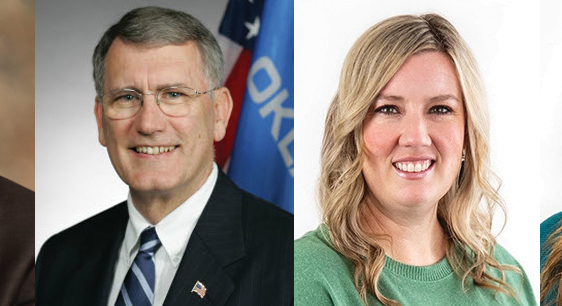
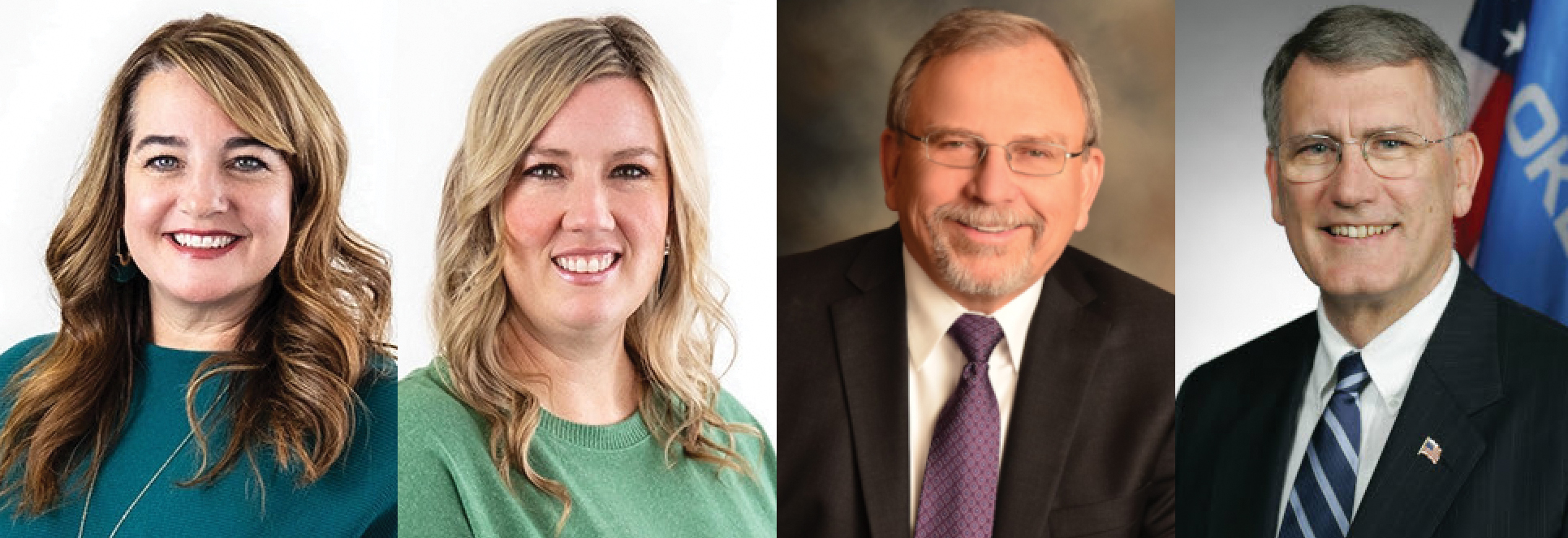
VillagesOKC has exciting member and staff news as the New Year begins. On the staff side, there are two promotions to announce. On the member side, one member has accepted the position of VillagesOKC Director of Veteran Initiatives, and another will lead a monthly Alzheimer Support Group at the Bethany Library.
Amy Shirola, previously operations manager, assumes a new role as director of administration and finance. Britni Bergman, previously office assistant, becomes office manager. On the member side, Gary Banz is the new Director of Veteran Initiatives. Herb Magley will lead the Alzheimer Support Group.
Shirola will oversee all accounting functions, including analyzing financial data and managing budgeting and planning processes. She started working with VillagesOKC in March 2022 after 15 years in corporate accounting. Her entrepreneurial experiences include two food-based businesses – Pie Prerogative OKC and 2 Women and a Whisk Catering Company.
Bergman will oversee all office functions and vendor relations, as well as managing the robust VillagesOKC calendar. She has been the office assistant since November 2022. Her past experience includes six years in a variety of roles with Red Rock Behavioral and Mental Health Services in Yukon and Oklahoma City. Before coming to VillagesOKC, she was office manager for Sarah Libby Photography.
“The promotion of these two professionals highlights their exemplary performance,” said VillagesOKC Executive Director Marilyn Olson. “Ms Shirola and Ms Bergman are part of the organization’s long-term plan for sustainability. Having an intergenerational workforce brings energy and wisdom. And, with this organization there is great work flexibility which is so important to young parents. VillagesOKC is making great strides due to the talent and heart from these leaders, and we honor their success.”
Banz is a former Oklahoma state representative and high school social studies and American Government teacher. He was honored by the Oklahoma Military Hall of Fame for organizing and serving as flight commander on 24 Oklahoma Honor Flights which took 2,055 Oklahoma World War II, Korean War and Vietnam War veterans to Washington, DC, for an all-expenses paid day trip to visit war memorials. He has written and produced two documentaries honoring service members and is working on a third.
Magley is a retired geologist who spent 43 years working in the oil industry. Tragedy struck late in his career when after 35 years of marriage, his wife, Gail, developed Alzheimer’s disease at the age of 54. Magley retired from the oil industry to care for her. The couple went on an 11-year journey with the disease. After his wife died, Magley decided to dedicate his life to those who were on their journeys with Alzheimer’s. The VillagesOKC sponsored Alzheimer’s Support Group will meet monthly beginning January 16 at the Bethany Library. Meetings will be on successive third Tuesdays of the month from 6-7 p.m. in Meeting Room B.
To learn more about VillagesOKC, call or text (405) 990-6637 or email info@villagesokc.org.
ODWC Director Resigns, Interim Director Appointed
Oklahoma Department of Wildlife Conservation Director J.D. Strong resigned effective immediately. The decision was accepted unanimously by the Oklahoma Wildlife Conservation Commission, the agency’s advisory, administrative and policy-making body.
Strong was the Department’s 18th Director and had served as Director since 2016. ODWC Assistant Director Wade Free was named Interim Director by the Commission.
We greatly appreciate the past seven years of leadership and service that J.D. has provided during his tenure with the Department of Wildlife Conservation, and we wish he and his family all of the very best in their future endeavors.
“After much prayer, and after more than 31 years of state service, I have decided to step down as Director of the ODWC, effective immediately.
This decision is bittersweet. I have loved every minute of working alongside the wonderful people that comprise the Oklahoma Department of Wildlife Conservation, watching them passionately and skillfully nurture a better environment for our fish and wildlife, and for the Oklahomans who get to enjoy them. Our state is unquestionably better because of ODWC’s dedicated team of professionals, and I thank them for the privilege of working alongside them for these past seven years.
Having been ODWC Director for the past seven years, I’m extremely proud of what we have accomplished together. As with previous exits, I’ve always tried to leave with no regrets, as well as to leave the woodpile higher than I found it. My hope and belief are this is the case here.
I have no doubt that ODWC’s future is bright, and I will be cheering for the continued success of the Department every step of the way.”– J.D. Strong, Former Director of ODWC
SNL TINSELTOWN TALKS Joyce Bulifant’s Ups and Downs of Marriage and Career
By Nick Thomas

For those who keep track of Hollywood nuptials, the title of Joyce Bulifant’s 2017 autobiography may not represent a marital world record, but it’s certainly an attention grabber. The actress, who co-starred in TV series such as “Flo” and “Mary Tyler Moore,” recounted her life and career in “My Four Hollywood Husbands.”
Bulifant describes how alcohol influenced her four hubbies: “Hawaii Five-O” star James (“Danno”) MacArthur; TV/film producer, director, and screenwriter William Asher; “Days of Our Lives” actor Edward Mallory; and her last husband actor Roger Perry who died in 2018.
“It was never my intention to marry famous Hollywood men, it just happened that way,” said Bulifant from Los Angeles. “I was 14 when I first met Jimmy (MacArthur) while we were at boarding school together and we started dating a couple of years later.”
She remembers her spouses as unhappy men especially MacArthur in their decade-long marriage.
“When he wasn’t working, he would drink more and it became a terrible situation,” she said. “I thought if I just loved them enough they wouldn’t need to drink and would become happy, but it just didn’t work that way.”
She remained happily married to her last husband Roger Perry although he too experienced some early rough patches. “He wanted to get better, so that’s why this marriage worked,” she said.
Career-wise, Bulifant has been successful on stage as well as in film and television, and was a frequent game show panelist in the 70s and 80s. She even appeared briefly in the classic 1980 comedy “Airplane!” as the mother of the sick little girl with the intravenous drip.
“I didn’t want to do that dadgum movie, I thought it was so silly,” she recalled. “I was married to William Asher at the time and he told me ‘You’re an actress – you act!’ Now it’s been called one of the 100 funniest movies ever made.”
But one major TV role did slip past.
“I was all signed, sealed, and delivered to play Mrs. Brady on ‘The Brady Bunch,’” she recalled. “One Friday, I was showing the director and producer (and writer, Sherwood Schwartz) my wardrobe but they were acting very strange. When I asked what was wrong they sat me down and said the executives at ABC in New York wanted Florence Henderson for the role.”
Schwartz called that evening confirming the bad news. “That’s the way it goes in this business,” said Bulifant. “Florence was a wonderful actress and a lovely lady.”
Concentrating on TV work, Bulifant only appeared in about a dozen films. Her first main feature role was in the 1967 Disney musical “The Happiest Millionaire,” memorable for her “Bye-Yum Pum Pum” song with Lesley Ann Warren. It would be the last live-action feature produced by Disney, who died a year before the film’s release.
Bulifant’s radiant cheerful on-screen personality and distinctive youthful voice made her a favorite comedic actress with audiences. Despite some missed career opportunities and the marital challenges, she has always remained optimistic.
“When you’re in the entertainment business, you have to deal with disappointment and rejection so if you don’t feel strong and confident about yourself it can be very disheartening,” she says. “That’s true for anyone with self-doubt which is why my book resonates with people from all walks of life. So I’m very pleased when I hear from people it has helped.”
Nick Thomas teaches at Auburn University at Montgomery, Alabama, and has written features, columns, and interviews for numerous newspapers and magazines.
See https://www.getnickt.org/.
Topics You Need to Discuss with Aging Parents
Dear Savvy Senior, My siblings and I don’t know much about our elderly parent’s financial situation or their wishes if and when something happens to them. They are both in their mid-eighties. What’s the best way to handle this and what all should we know? Apprehensive Daughter
Dear Apprehensive,
Many adult children don’t know much about their elderly parent’s financial situation or end-of-life plans, but they need to. Getting up to speed on their finances, insurance policies, long-term care plans and other information is important because some day you might have to help them handle their financial affairs or care, or execute their estate plan after they die. Without this information, your job becomes much more difficult. Here are some tips that can help.
Have the Conversation
If you’re uncomfortable talking to your parents about this, use this column as a prompt or see https://theconversationproject.org/, which offers free guides that can help you kick-start these discussions.
It’s also a good idea to get all your siblings involved too. This can help you head off any possible hard feelings, plus, with others involved, your parents will know everyone is concerned.
When you talk with your parents, you’ll need to collect some information, find out where they keep key documents and how they want certain things handled when they die or if they become incapacitated. Here’s a checklist of areas to focus on.
PERSONAL INFORMATION: Contacts: Make a list of names and phone numbers of your parent’s doctors, lawyer, accountant, broker, tax preparer, insurance agent, etc. Medical information: Make a copy of their medical history and a list of medications they take. Personal documents: Find out where they keep their Social Security card, marriage license, military discharge papers, etc.
Secured places: Make a list of places they keep under lock and key such as safe deposit boxes, safe combination, security alarms, etc. Digital assets: Make a list of their digital assets – everything from social media accounts to online banking. It should include usernames and passwords. Pets: If they have a pet, what are their instructions for the animal’s care? End of life: What are their wishes for organ or body donation, and their funeral instructions? If they’ve made pre-arrangements with a funeral home, get a copy of the agreement.
LEGAL DOCUMENTS: Will: Do they have an updated will or trust, and where is it located? Power of attorney: Do they have a power of attorney document that names someone to handle their financial matters if they become incapacitated? Advance directives: Do they have a living will and a medical power of attorney that spells out their wishes regarding their end-of-life medical treatment? If they don’t have these documents prepared, now’s the time to make them.
FINANCIAL RECORDS: Financial accounts: Make a list of their bank accounts, brokerage and mutual fund accounts, and any other financial assets they have. Debts and liabilities: Make a list of any loans, leases or debts they have – mortgages owed, car loans, student loans, medical bills, credit card debts. Also, make a list of all credit and charge cards, including the card numbers and contact information. Company benefits: Make a list of any retirement plans, pensions or benefits from their former employers including the contact information of the benefits administrator. Insurance: Make a list of the insurance policies they have (life, long-term care, home, auto, Medicare, etc.) including the policy numbers, agents and phone numbers. Property: Make a list of the real estate, vehicles or other properties they own, rent or lease and where they keep the deeds, titles and loan or lease agreements. Taxes: Find out where they keep copies of past year’s tax returns.
You’re probably not going to get all this figured out in one gathering, so it’s important to keep the conversation going to ensure your parent’s wishes will be accurately executed.
Send your senior questions to: Savvy Senior, P.O. Box 5443, Norman, OK 73070, or visit SavvySenior.org. Jim Miller is a contributor to the NBC Today show and author of “The Savvy Senior” book.
McRaniels Named to Lead RSVP of Central Oklahoma
The Retired Senior Volunteer Program (RSVP) of Central Oklahoma has named a new executive director. Laura McRaniels will fill the position following the retirement of Beth Patterson on Dec. 31.
McRaniels, who was named as the organization’s assistant director in 2022, joined RSVP in 2018 and served as the organization’s volunteer coordinator linking more than 500 older adults to volunteer opportunities with 124 local nonprofit organizations.
“It is an honor to pass on the reins to Laura,” Patterson said. “In addition to Laura’s genuine compassion for people through her words and actions every day, she has such insight, problem-solving skills, follow-through, and attention to detail that make her an excellent person for this role.”
Prior to joining RSVP, McRaniels owned her own in-home childcare business, and served as a direct care specialist with the J.D. McCarty Center. She joined RSVP as the administrative assistant and was appointed to volunteer coordinator in 2018. She completed all tiers of the Nonprofit Management Certification program through the Oklahoma Center for Nonprofits. McRaniels has a long-time dedication to volunteerism, serving since 2008 with D-Dent, Inc. and West Wind Unitarian Universalist Congregation.
Since 1973, RSVP of Central Oklahoma has helped older adults continue to live with purpose and meaning by connecting them with rewarding community volunteer opportunities. RSVP is a partner of AmeriCorps Seniors and the United Way of Central Oklahoma. To learn more about RSVP of Central Oklahoma, call 405-605-3110 or visit https://rsvpokc.org/. You can also follow RSVP on Facebook at facebook.com/RSVPokc.