


Modest Governor Henry Bellmon Remembered
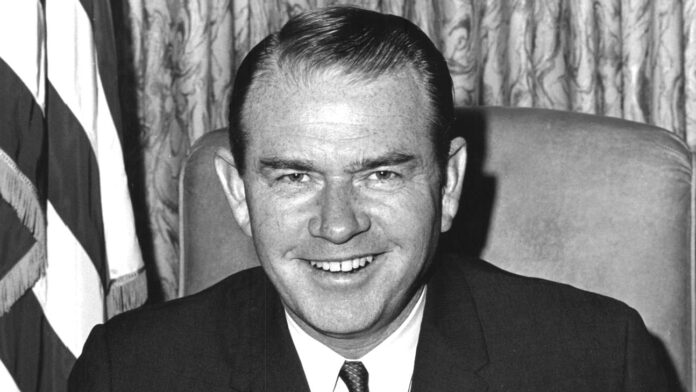
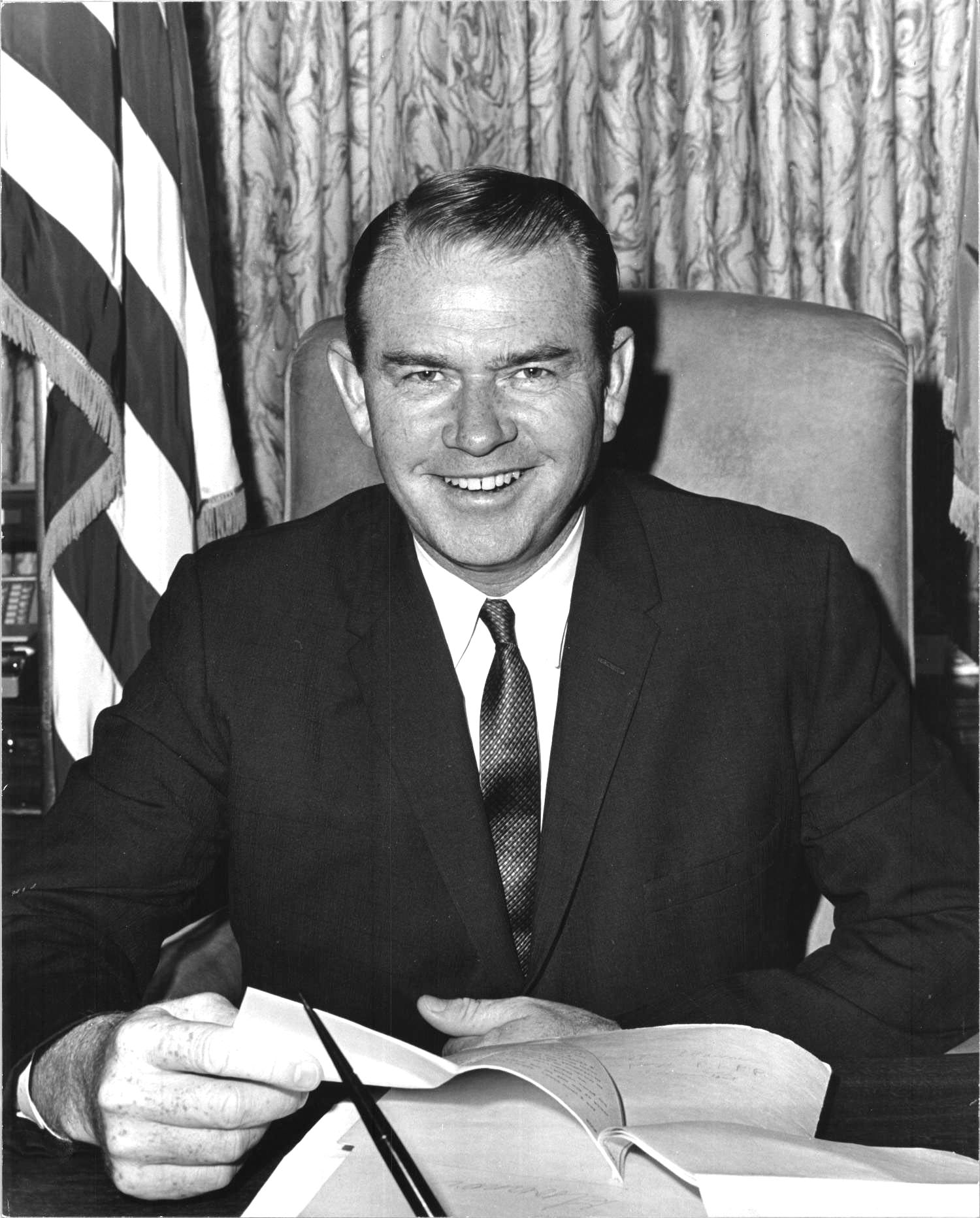
Marine Corps First Lieutenant Henry Louis Bellmon displayed heroism and leadership as a tank platoon commander during four WWII Pacific Island landings. He earned a Silver Star for bravery and inspired admiration among infantrymen who could draw water from his tank platoon.
He served one term as an Oklahoma State Legislator from 1946 to 1948 before a prolific career that included serving as Oklahoma’s first Republican Governor and U.S. Senator. He was governor from 1963 to 1967. Under Oklahoma law at the time, he was not allowed to run for a second term. He was then elected twice as U.S. Senator from Oklahoma, serving from 1968 to 1980, when he chose not to run again. In 1986, he was re-elected as governor, a position he held until 1990. Born in 1921, he seldom, if ever, discussed his gallant service during campaigns.
Bellmon first caught his superiors’ attention during his initial tank-commanding training in the United States, where he demonstrated mechanical skills he had learned on the family homestead in Billings, Oklahoma. When his M4 Sherman tank lost a track, he instructed his driver to move forward and backward slowly, and two crew members used hand tools to quickly realign the track back on.
After observing his ingenuity during training, Captain Robert M. Neiman, who took command of the forming Company C, 4th Tank Battalion, chose Second Lt. Bellmon as a platoon leader. A recent graduate of Oklahoma A&M College (now Oklahoma State University), he was soon training as a platoon leader of five tanks.
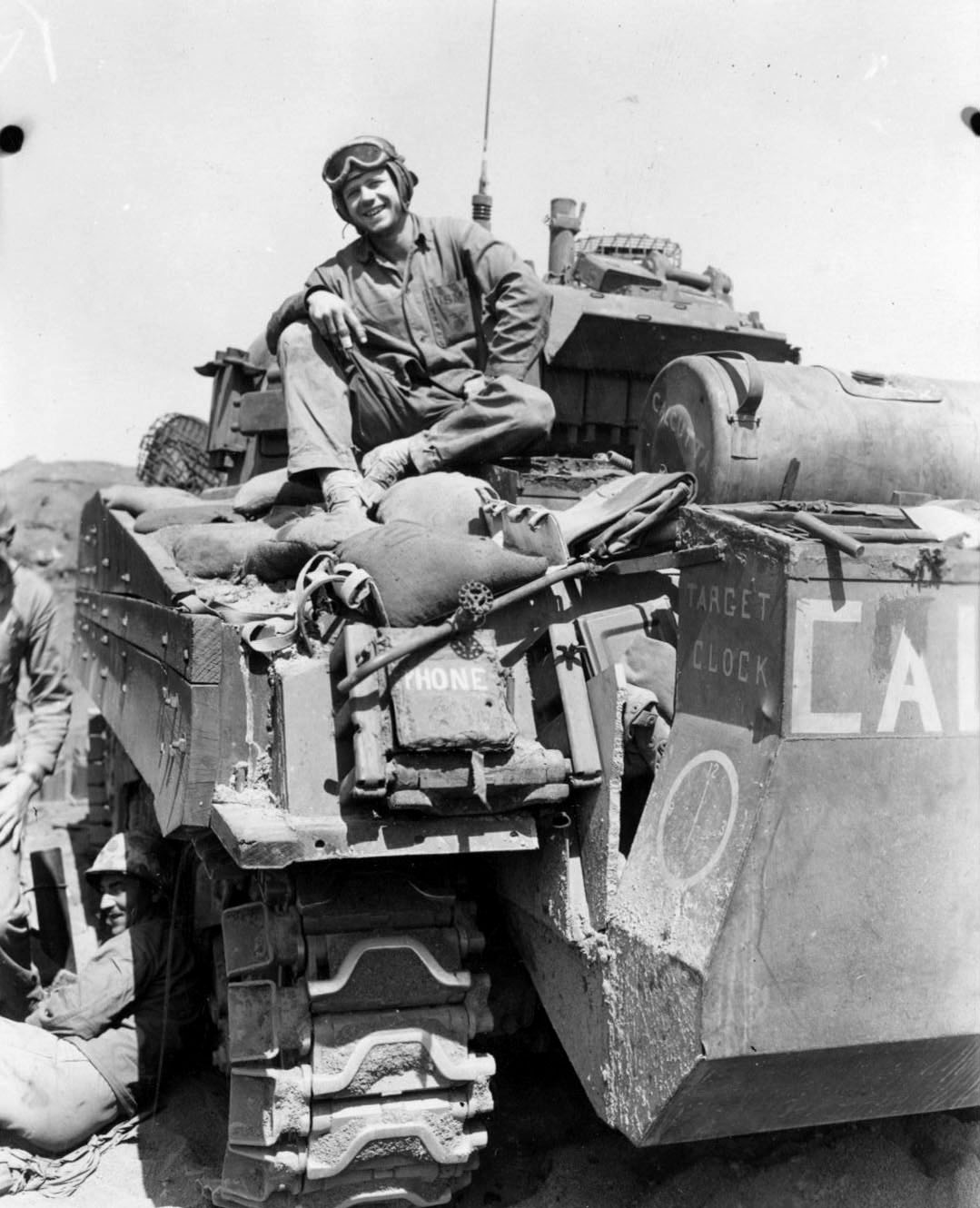
As members of the 4th Marine Division, his platoon took part in four major amphibious landings across the Central Pacific, ending with intense fighting in the battle for Iwo Jima.
Tanks served as infantry support weapons in the rugged island and jungle terrain. Their firepower helped the infantry counter Japanese defensive tactics. They were considered one of the most important weapons in the Pacific War for breaching stubborn Japanese entrenchments.
In their first combat landing at Roi-Namur (Kwajalein Atoll) in February 1944, Bellmon’s unit supported the assault on these twin islands in the Marshall Islands.
The unit returned to base on Maui, Hawaii, where Bellmon and other tank crews began modifying their tanks to enhance survival and effectiveness, showcasing their ingenuity and dedication to protecting the infantry.
Marines adapted existing equipment to demonstrate that unconventional leadership and rapid adaptation could build an elite force in significant engagements of the Pacific War.
With each return to Maui, new features were added until the modifications were deemed complete. These included water tanks to supply the infantry, wooden planking on the sides to prevent magnetic mines, radios welded to the back so the infantry could communicate with the tanks without opening hatches, protection for all hatches, and protection against mines.
These modifications clearly exemplify the Marines’ concept of adapting and improvising to defeat a resourceful enemy.
In June of 1944, during the invasion of Saipan, Bellmon’s leadership and technical skill with heavy equipment were duly noted by his commanders. He was awarded the Legion of Merit for his tank platoon’s frequent success in attacking fortified positions and traversing minefields.
In July, Bellmon’s platoon took part in the landing on Tinian, where his unit fought for all but one day of the campaign. Once again, they destroyed many enemy installations while under heavy fire.
In February 1945, Bellmon’s final combat landing at Iwo Jima was the most harrowing, as his tank was immobilized by a land mine immediately after landing.
The island, just 8 square miles in size, was key to the Pacific campaign. Its three airfields could support heavy bombers within a close 750-mile strike range of mainland Japan, making Bellmon’s actions essential to the broader war effort.
Bellmon was quoted in an interview with Jim Stafford with “The Daily Oklahoman” in 1995 on the 50th anniversary of the invasion, as remembering his tank being stranded because of Japanese fire later in the battle.
“It disabled the tracks, Bellmon said. “It was impossible to get out and fix it with all the machine gun fire, so we just sat there.”
“When we would spot a machine gun nest, we’d take it out, and of course, that drew artillery fire,” Bellmon said his tank took numerous hits. “They (the Japanese) were stupid,” he said. “They were using high-explosive artillery that exploded on impact. We would just get sparks.”
Despite the tank being a prime target for artillery, he remained inside to direct his platoon’s fire and movements by radio. Over the many days of the long battle, he had two more tanks destroyed beneath him, but continued the attack in new vehicles. Bellmon was known for his aggressive leadership. This courageous effort earned him the Silver Star for his gallantry.
He remembered taking over command of the five tanks of another platoon leader who was killed for several days.
At age 24, Iwo Jima was his most significant and last battle of the war. Approximately 70,000 Marines and Sailors participated; over 6,800 were killed, and nearly 20,000 were wounded. About 22,000 Japanese were killed or captured.
Iwo Jima lasted for 36 days of continuous combat. While military planners initially estimated the island would be secured in just three to four days, Japanese defensive strategies extended the conflict into a grueling five-week campaign.
His unit returned to Maui to train troops for the planned invasion of Japan. The use of the two atomic bombs ended the war.
Navy Fleet Adm. Chester Nimitz, commander in chief of the U.S. Pacific Fleet, said of the Battle of Iwo Jima, “If there had been any question whether there should be a Marine Corps after this war, the Battle of Iwo Jima will assure that there will always be a Marine Corps.”
Bellmon’s political achievements, including his principled approach and impact on Oklahoma’s Republican party, exemplify how his military leadership translated into public service.
After his distinguished service in Oklahoma and Washington, D.C., he taught government and political science at Oklahoma City University, Central State University, Oklahoma State University, and the University of Oklahoma, shaping future generations.
He retired to the family farm and then retired from his wheat and cattle operations in his late 70s. He died at the age of 88 in 2009 following a long struggle with Parkinson’s disease. • by Darl Devault, contributing editor
Cedar Gate Hosts MOH Foundation Fundraiser
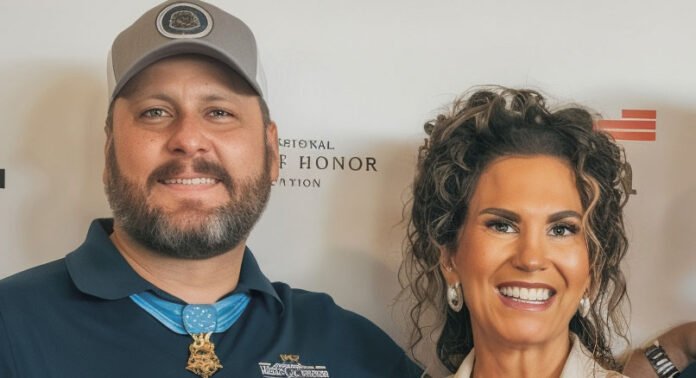
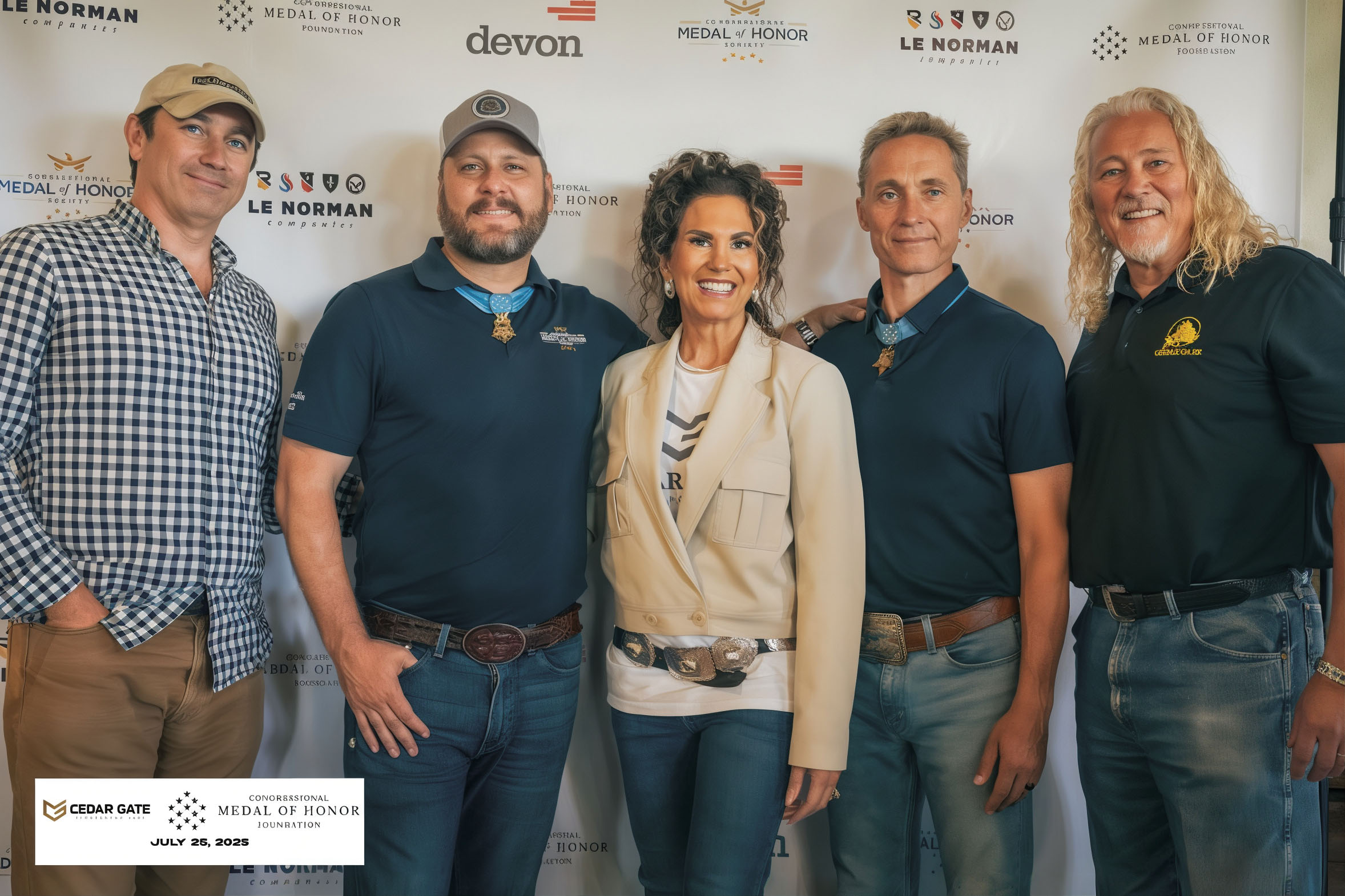
Three Medals of Honor recipients attended a fundraising luncheon/live auction/clay shoot event at Cedar Gate in Kingfisher benefiting the Congressional Medal of Honor Foundation.
The Medal of Honor Foundation is a 501(c)(3) nonprofit organization established to support and advance the mission of the Congressional Medal of Honor Society. Its core purpose is to honor and preserve the legacy of Medal of Honor Recipients by inspiring future generations through the timeless values represented by the Medal: Commitment, Integrity, Courage, Sacrifice, Citizenship, and Patriotism.
The Foundation designs programs that share the extraordinary stories of Medal of Honor Recipients, promote values education, and support the needs of the Recipients and their families.
The 3 Medal of Honor recipients who attended were: • Britt Kelly Slabinski, Senior Chief, US Navy, War on Terrorism, Afghanistan • Earl D. Plumlee, Staff Sergeant, US Army, War on Terrorism, Afghanistan • William D. Swenson, Captain, US Army, War on Terrorism, Afghanistan
The event aims to carry on a tradition established by President Abraham Lincoln in 186. In 163 years, over 40 million Americans have served in the Armed Forces, yet only 3,526 have received this distinguishment. The event is geared toward increasing awareness and honoring soldiers in the Oklahoma City area.
In addition to the Congressional Medal of Honor recipients, the Oklahoma group invited local heroes to take part in the lunch time program.
“It’s an honor to have these hero’s share their stories. It’s such an inspiring experience to meet these heroes and understand what they went though so that we have the liberties we have today,” said John Ungerecht, a supporter of the group. “We had 28 teams in attendance, and many lunch only patrons. The 3 MOH recipients availed themselves to all, taking pictures and visiting with folks. Great, very humble guys! Everyone had such a great time!”
Chartered by Congress in 1958, the Congressional Medal of Honor Society’s membership is comprised of those who wear the Medal of Honor, our nation’s highest military award for valor. As individuals who have gone above and beyond the call of duty, the Medal of Honor Recipients are committed to serving our country in peace as they did in war by championing the values of courage, sacrifice, integrity, commitment, patriotism, and citizenship.
The nonprofit Society preserves their stories and shares their values through Outreach and Education initiatives and its Medal of Honor Museum.
Ungerecht said that the event has already been deemed a huge success due to the corporate interest and sponsorship.
“Putting on an event like this relies heavily on individual and group participation. It becomes an incredible story when local businesses step in and lend their financial support. We couldn’t do what we do without them,” he said.
Allen Strider, a U.S. Army Combat Engineer, and organizer of the event, said John Nash, Secretary of Military and Veteran Affairs for Oklahoma, served as the keynote speaker.
“He did a really great job,” Strider said.
Strider said the auction included having each Medal of Honor recipient be part of a team for clay shooting.
“To raise more money, we auctioned off each one of them to shoot on somebody’s team,” he said. “Whoever paid the most money for one of the recipients got that recipient to shoot on their team with them.”
Strider said all proceeds benefit the Medal of Honor Foundation.
“Every bit of it. We don’t charge a dime for this. I never have charged for this, and I never will. This is what I do for those guys. They deserve it,” he said. “I’m a Veteran too from the Vietnam era. When you talk about the Medal of Honor people, the Silver Star, the Bronze Stars, the Purple Hearts, that rings home with me.”
Strider said he wants to make the fundraiser an annual event.
“Absolutely. I want to make it as big as I can get it,” he said. “I want to do 120 teams, but we need sponsors, we need some companies to stand up and recognize what we do and be one of our sponsors. I don’t care what industry you’re in, your support means a lot to us, and we could use it.”
Strider said they have three different company sponsor levels.
“We have three different sponsor levels. We have the Medal of Honor sponsor, we have the Silver Star sponsor, and we have the Bronze Star sponsor. And we have signs made up for that,” he said. “We always make sure we recognize these people because it’s appreciated. They have no idea the impact they have made. It makes a significant impact.”
For more information about sponsorship opportunities call Strider at (405) 465-3354 or email at [email protected]. •
By Van Mitchell, staff writer

Faces of the Fallen – Army PFC Jon Townsend
By Jill Stephenson.
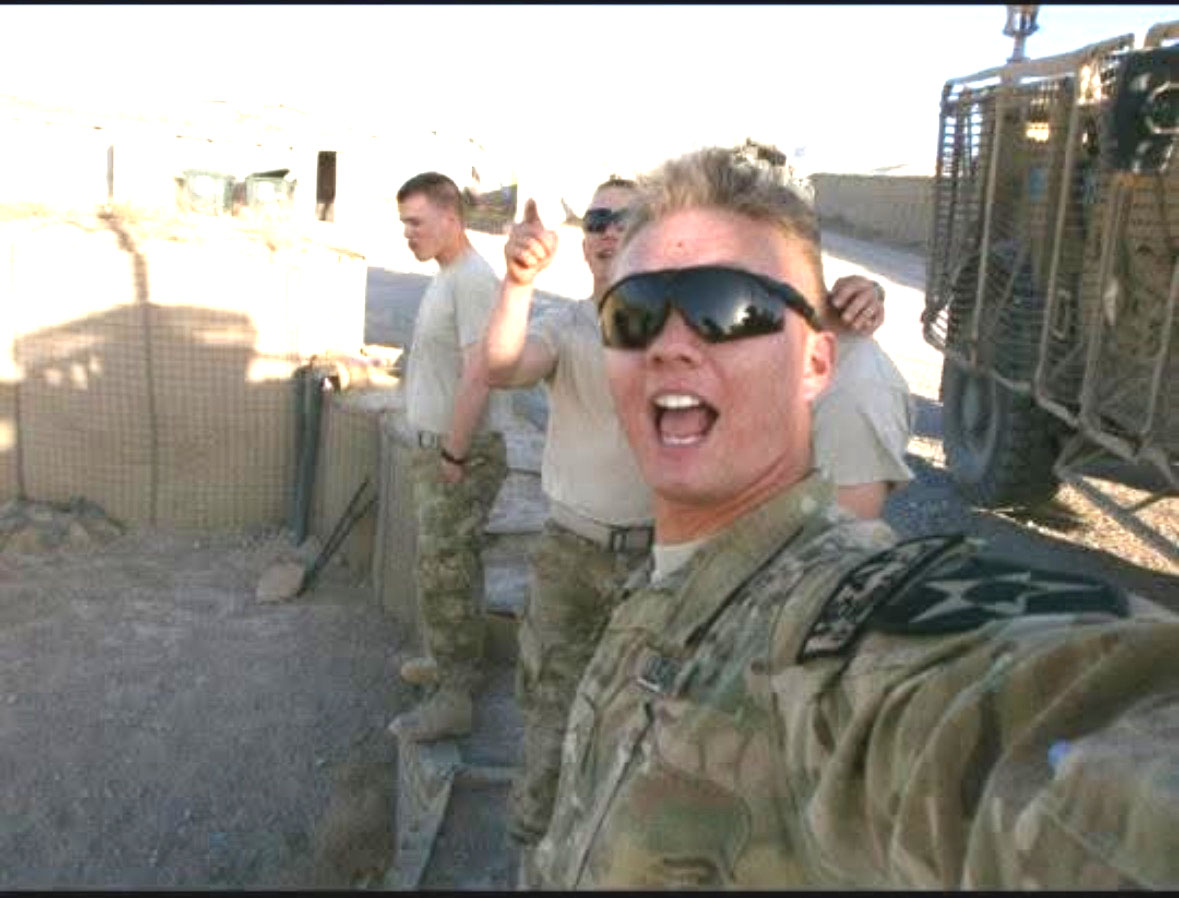
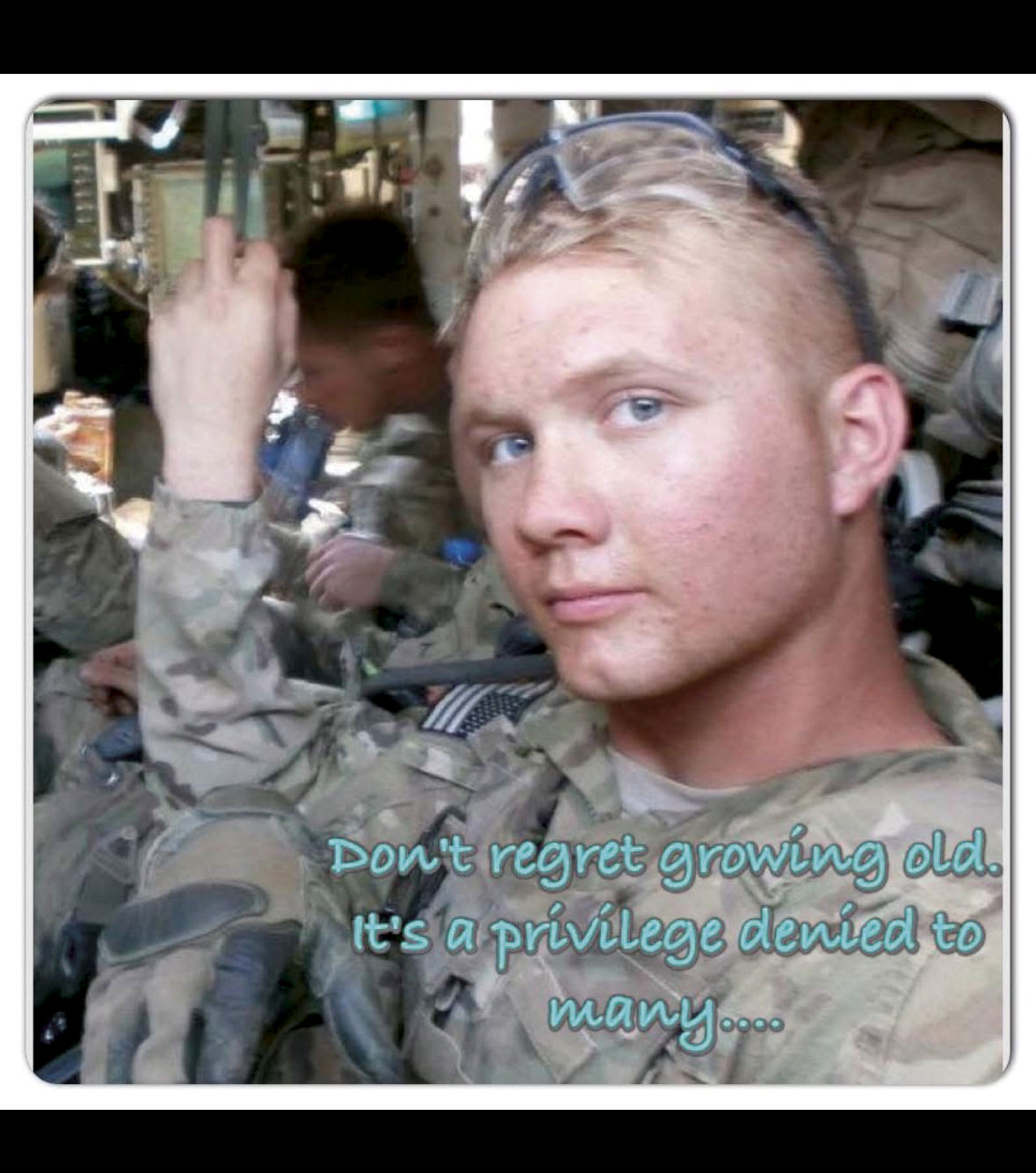
Army PFC Jon Townsend of Claremore was killed September 16, 2012 while actively serving in Afghanistan. He was 19 and left behind a wife and many loving family members and friends. One of those family members was his sister Jennifer, who was six years older than Jon. I interviewed her for this article.
Before Jon started school it was clear he was smart and patriotic. He could recite the pledge of allegiance, sing Amazing Grace and knew his multiplication tables. He was actively involved in 4H where he won numerous awards and was influenced by a band teacher to play almost any instrument he picked up, including the trumpet, drums and guitar.
As a young boy, one of Jon’s heroes was the tv character, “ Walker, Texas Ranger”. He admired his heroism in fighting bad guys and saving good girls. According to Jennifer, he would also walk around in a beat up cowboy hat and kick things like a cowboy would. Jennifer said she would call him Noj just to annoy him and that many people called him Jon Ross.
Jon was actively involved in his church and enjoyed sharing his faith with others. He was a talented musician and tutored other kids in his band class. He also played football during high school and was seen playing with the band while wearing his football uniform. Days after graduating from Sequoyah High School in May of 2011, Jon left for bootcamp.
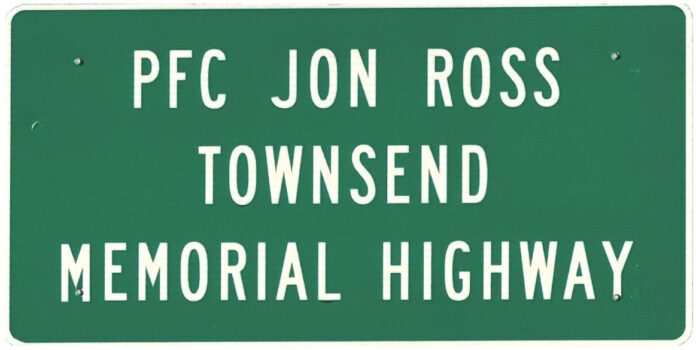
While overseas, he took to the children and asked his family to send candy and wet wipes for them. He said he wanted them to know he was a good guy. Before Jon left for his deployment he married his sweetheart and made a video to watch in the event of his death. He had also been mentoring several youth from local churches. They would meet in a peaceful spot overlooking Claremore Lake where they shared personal issues with him they didn’t feel comfortable talking about in church. After Jon was killed, his family collaborated with his friends to create a memorial in that place to honor him. Jennifer remarked that to this day, it is the place where she feels the closest to him. In December of 2015, a one mile section of highway 88 between Oologah and Jon’s church was dedicated as the PFC Jon Ross Townsend Memorial Highway. Jennifer drives by this often and says it makes her feel good that people still place memorial items there in his honor. She would like people to know that Jon believed in what he was doing. He was there to share God’s word and to help people that couldn’t help themselves. He led several of his fellow soldiers to God. They called him, “God’s soldier” and “Preacher Boy.” After his death, one of the wives of his brothers in arms had a patch made that said “God’s Soldier” on it. They wore them under a flap on their uniform in his honor.
I asked Jennifer why she thinks it’s important for the public to know about our fallen heroes. She said there are many reasons. They gave the ultimate sacrifice – not just for those they know, but for people they never met, for the possibility and hope for a better life, and to know that what they’ve done will make a difference.
To keep his memory alive, Jennifer still talks about her brother to her children. She reminisced of the great hugs he gave and said her son now gives her the same kind. Her son was four and oldest daughter was two when Jon died. She has since had another daughter. She has been honest about what happened to him and shared with them that Jon loved God and his family and friends and he died serving his country. If he was still here he would do it all over again.
Jennifer stated that Jon grew up without a dad and believes this is why he made the switch with a fellow soldier the night he died. Jon said to him, “You need to be able to stay in and get some rest and call your kids. I’ll take your turn and you can take mine later.” He saw the importance of being a father because he grew up without one. He would pay with his life so children he never knew would still have a father.
PFC Jon Ross Townsend is laid to rest next to his grandfather, who was his father figure, at Lone Chapel Cemetery in Pryor. He is loved and missed every day. •
story by Jill Stephenson, Gold Star Mother.
The Living Salute Fort Reno’s Deceased Veterans
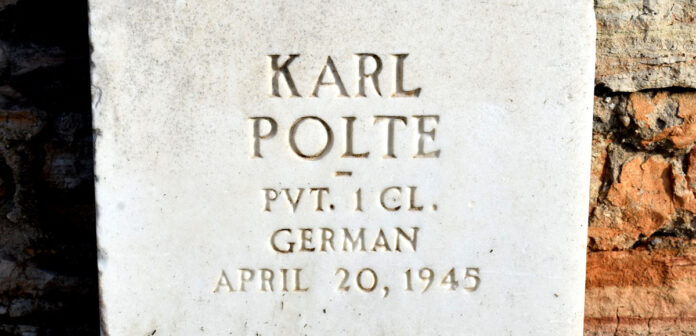
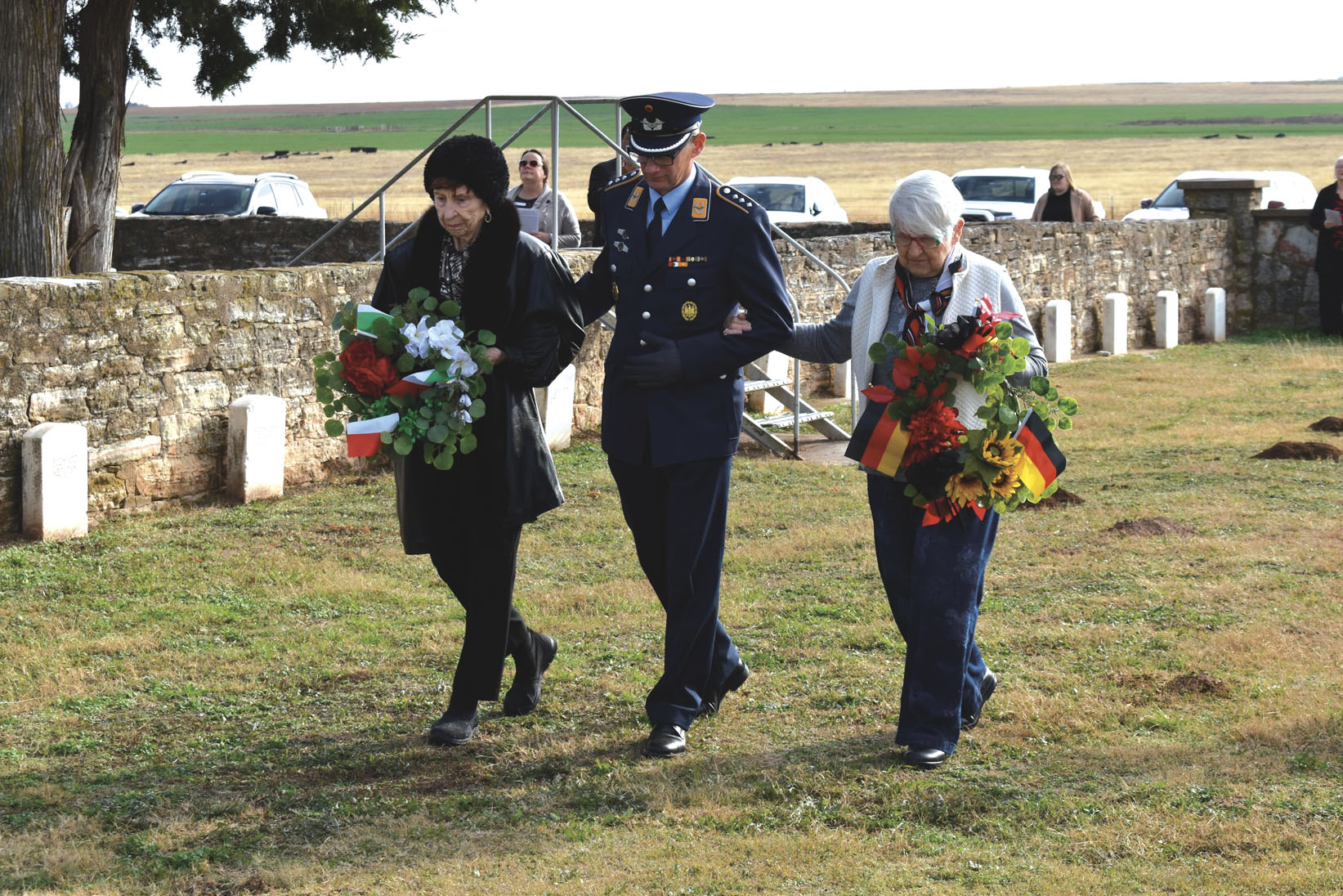
Wreaths Across America
A mix of long rifles, muskets and pistols fired together at the Post Cemetery on December 20 – not in anger, but in honor of veterans – during the nationally held Wreaths Across America Ceremony. It was sponsored by the National Society Daughters of the American Revolution (DAR).
Once 60 visitors assembled at the Post Cemetery, Leslie Dietrich, Regent of the Fort Reno Chapter of DAR, welcomed everybody and asked for the Colors to be posted. Allegiance was given to our flag, followed by a prayer of remembrance for deceased veterans.
Dietrich said the group lays wreaths “to remember, honor and teach about those who served in the military and protected our freedoms…and teach the next generation the value of freedom.” Their purpose is “not to decorate graves…” but express a “symbol of honor for their (veterans) sacrifice.” The National DAR has given service to living and deceased veterans since 1890.
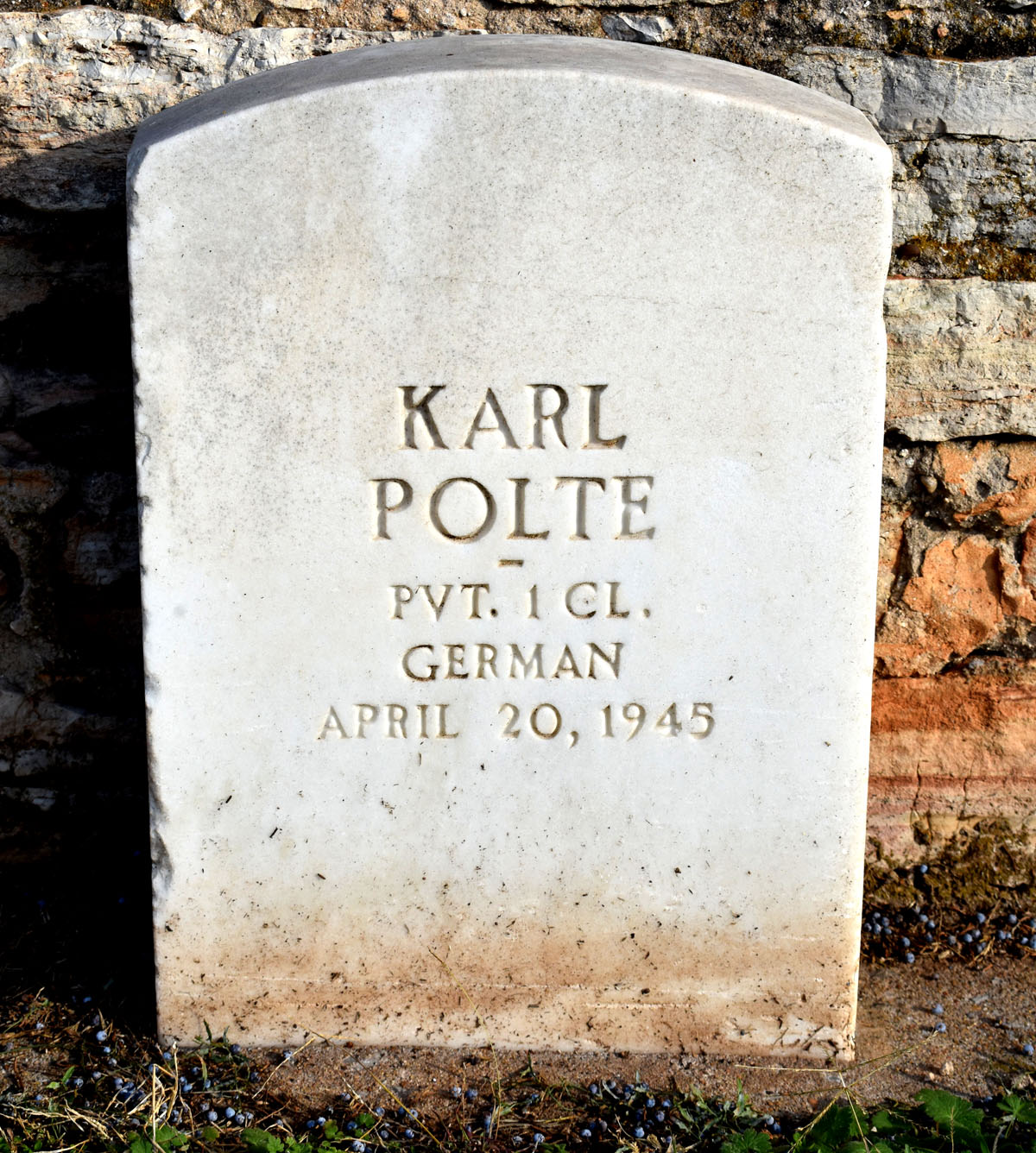
Attendees then picked up the green wreaths that the DAR brought and put them on veteran’s headstones while reciting their name as a way to publicly show they are not forgotten. After Dan Wilson of Wakita laid a wreath, he said, “I love to see the respect given to those who have gone before us.” German and Italian soldiers buried at the P.O.W. Cemetery did not receive wreaths.
Members of the Sons of the American Revolution and The Guthrie Gunfighters, dressed in historical period clothing, formed a line and fired three volleys. Then, Chad Kautz played a mournful Taps. The Guthrie Gunfighters’ Trail Boss, Kent Smith, said, “We come out to support the museum in a unique way to honor our veterans.”
In 2022, the Worcester Wreath Company of Harrington, Maine, placed wreaths on 2.7 million veteran’s headstones at 3,702 locations in all 50 states and abroad with the help of two million volunteers and organizations providing support.
After both events, Kaufman opened the museum for individual tours and a reception, offering engaging conversation and a variety of food and beverages. She summarized the events by saying, “We are fortunate to have a cemetery that has a long period of history tied to it. With the German-Italian Memorial Service and the DAR’s Wreaths Across America service, they provide opportunities to honor servicemen buried there.”
“To be killed in war is not the worst that can happen. To be lost is not the worst that can happen…….to be forgotten is the worst.” Piere Claeyssens (1909-2003). •
Stafford Museum: Journey From Wright Flyer to the Moon
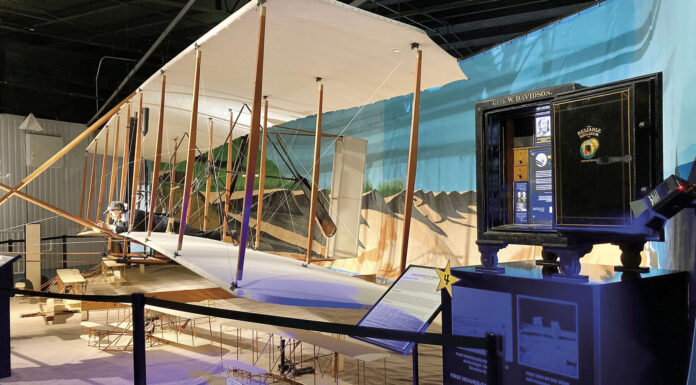
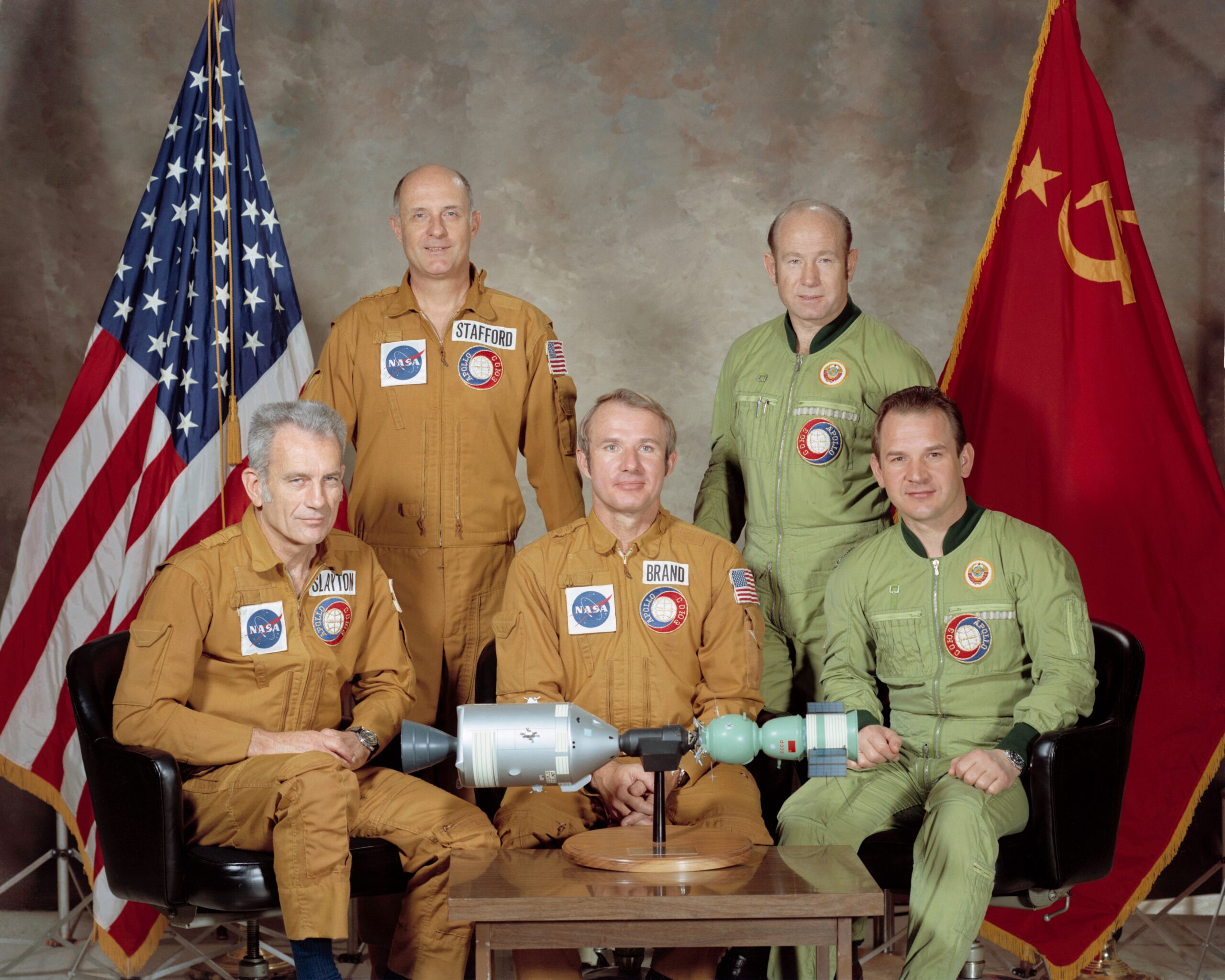
Weatherford’s Stafford Air and Space Museum, located at 3000 Logan Road near historic Route 66, offers visitors an extraordinary journey through aviation and space exploration.
From airplanes to space craft
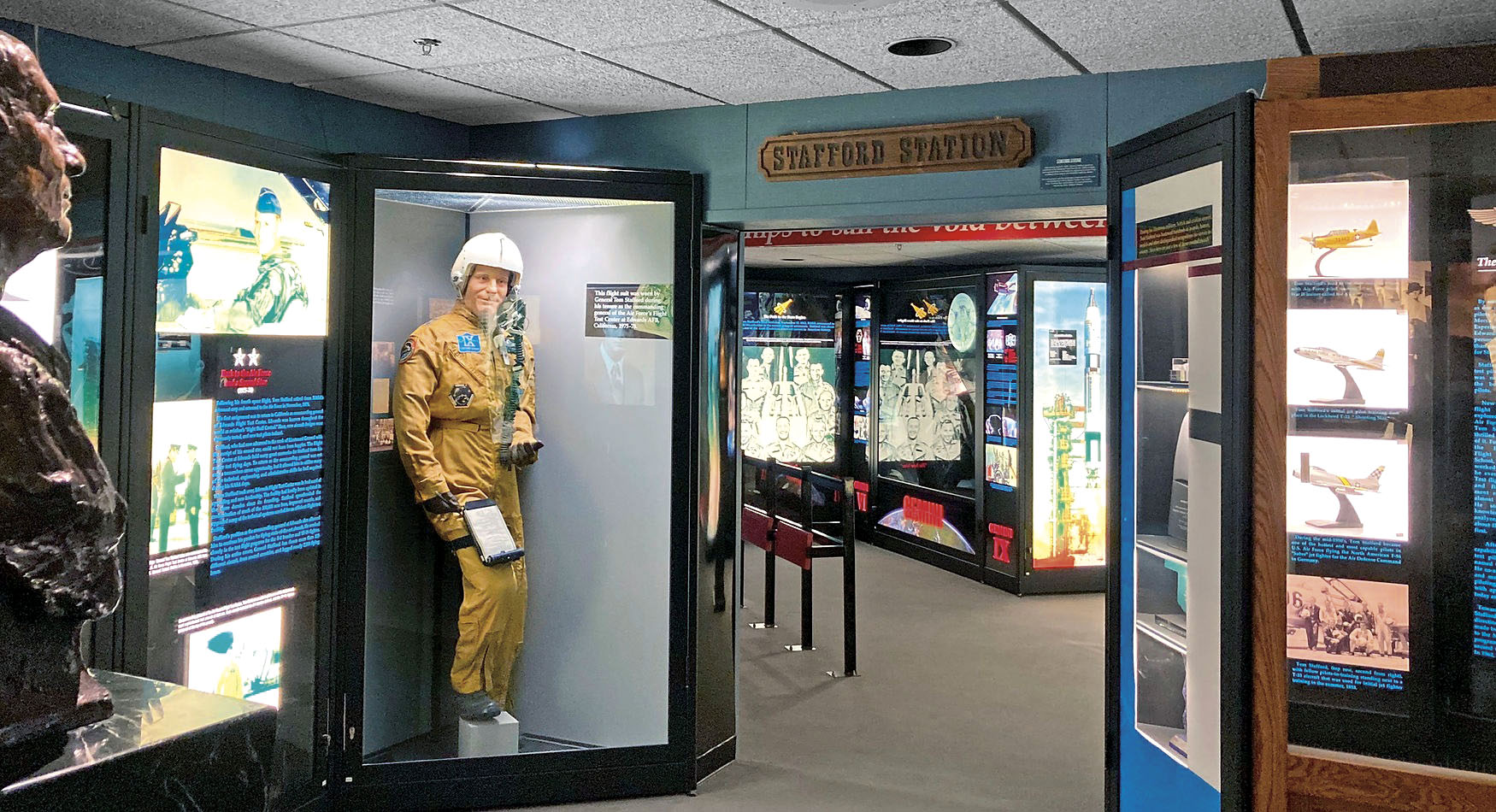
Weatherford’s Stafford Air and Space Museum, located at 3000 Logan Road near historic Route 66, offers visitors an extraordinary journey through aviation and space exploration. Its packed galleries showcase rockets, aircraft, space suits, engines, and other artifacts – many connected to Oklahoma’s celebrated astronaut, Lieutenant General Thomas Stafford. The museum traces the story of flight from the Wright Brothers to the moon landings, with more than 50 American and Soviet technological achievements arranged in rough chronological order. Plan at least two hours to take it all in. Let’s blast off.
The world of controlled, heavier-than-air powered flights started on December 17, 1903, when the Wright Brothers flew the Wright Flyer. A full-scale replica can be seen as well as other early aircraft like an actual Sopwith Pup and replicas of a Bleriot XI, Curtiss Pusher, and Charles Lindbergh’s Spirit of St. Louis. Visitors can use a “Star Tour Guide” handout to learn about each exhibit. Reflecting on the rapid pace of progress, Doug Schones of Canute remarked, “From 1903 to 1969, such a short time (one life time), so much technology.”
Rockets and Engines Take Center Stage
The heart of the museum lies in its space exhibits. Among them is an actual German WWII V-2 rocket, as well as F-1, J-2, and Soviet NK-33 engines. The mighty Saturn V moon rocket required five F-1 Rocketdyne engines, producing 7.6 million pounds of thrust, to send astronauts to the moon. A Titan II rocket, the same type Stafford rode into orbit during his Gemini 6 and 9 missions in 1965 and 1966, respectfully, is also displayed. Interactive exhibits let visitors hear-and almost feel – the immense power of rockets.
Houston’s Johnson Space Center contributed an authentic Mission Control Console used from the Gemini program through the Apollo, Skylab, Apollo-Soyuz, and the early Shuttle eras. Another highlight is the actual Gemini 6A spacecraft that Stafford and Wally Schirra flew during the first-ever rendezvous in space with Gemini 7 on December 15, 1965.
A towering, full-scale replica of the Apollo 11 Lunar Module (LM) “Eagle” is displayed. In 1969, Neil Armstrong and Edwin Aldrin, Jr. piloted a LM like this to become the first humans to walk on the moon. Nearby, Stafford’s Apollo 10 spacesuit – composed of 18,000 parts – offers a tangible link to his historic mission in May 1969.
International Space Station
Space Station fans will enjoy seeing a 1/24th scale model that illustrates the complexity of the orbiting laboratory. Interactive displays explain its components and the multinational crews who have lived and worked aboard. Viewing the model, Angela Correll of Ponca City observed, “This (ISS) is what keeps us connected” because astronauts from many nations share the station. Visitors are encouraged to download the “Spot the Station” smartphone app to track its path overhead.
Cold War and Modern Aircraft
The museum has an impressive collection of fighter airplanes. Outside are four and inside, visitors encounter an F-86 “Sabre,” Soviet MIG-21R “Fishbed,” T-38 “Talon,” F-16 “Fighting Falcon” and 2024’s addition, a F-117A “Nighthawk” stealth fighter. The MIG-21R served as the Soviet Bloc’s front-line fighter during the Cold War. The F-117A, a stealth fighter which Stafford helped develop, flew combat sorties during Operation Desert Storm, Allied Force and Iraqi Freedom, according to the Star Tour Guide.
Honoring Thomas Stafford
General Stafford was born and raised in Weatherford. The museum’s website notes, “His mother came to Oklahoma in a covered wagon and lived to see her only child fly to the moon. His father was a dentist who taught his son to appreciate what he had by working hard for it.” With a lot of hard work and natural abilities, Stafford graduated at the top 10% of his class at the U.S. Naval Academy and later became “Chief of Astronauts at NASA, was appointed Head of Research and Development at the Pentagon, chaired the team that developed the Hubble instrument COSTAR (Corrective Optics Space Telescope Axial Replacement), worked at Area 51, and (was) responsible for Stealth Technology as we know it today.” His career included four historic space missions: Gemini 6A, Gemini 9, Apollo 10, and Apollo-Soyuz, where he commanded Apollo’s final flight. Lieutenant General Stafford lived from September 17, 1930 – March 18, 2024, reaching the age of 93.
Completing the Visit
Open seven days a week, the Stafford Air and Space Museum, blends history, technology, and human achievement into an unforgettable experience. Note. Museum personnel did not respond to requests for an interview. •
story and photos by Lt Col Richard Stephens, Jr., USAFR, Ret.
Military Presidents
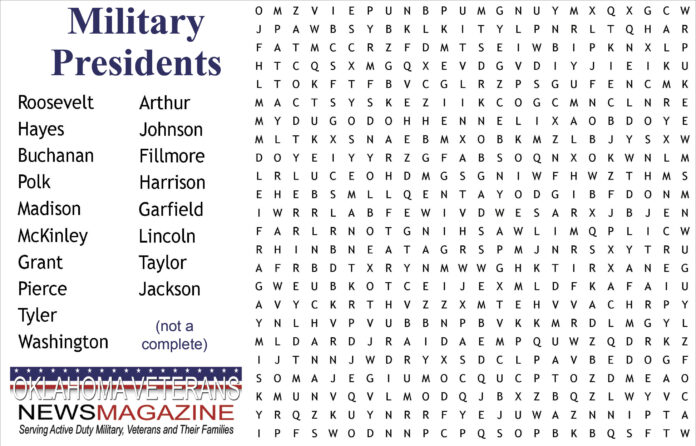
Roosevelt
McKinley
Arthur
Garfield
Hayes
Grant
Johnson
Lincoln
Buchanan
Pierce
Fillmore
Taylor
Polk
Tyler
Harrison
Jackson
Madison
Washington
