Friday, December 12, 2025

Can you get the flu from a flu shot? Simply, no

0
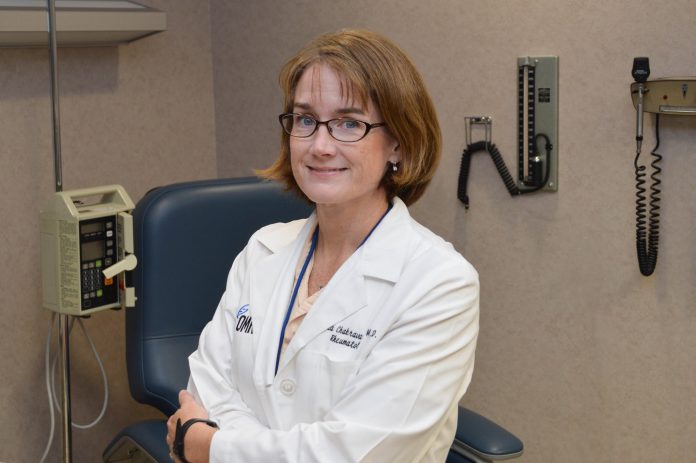
Oklahoma Medical Research Foundation Scientist Eliza Chakravarty, M.D.
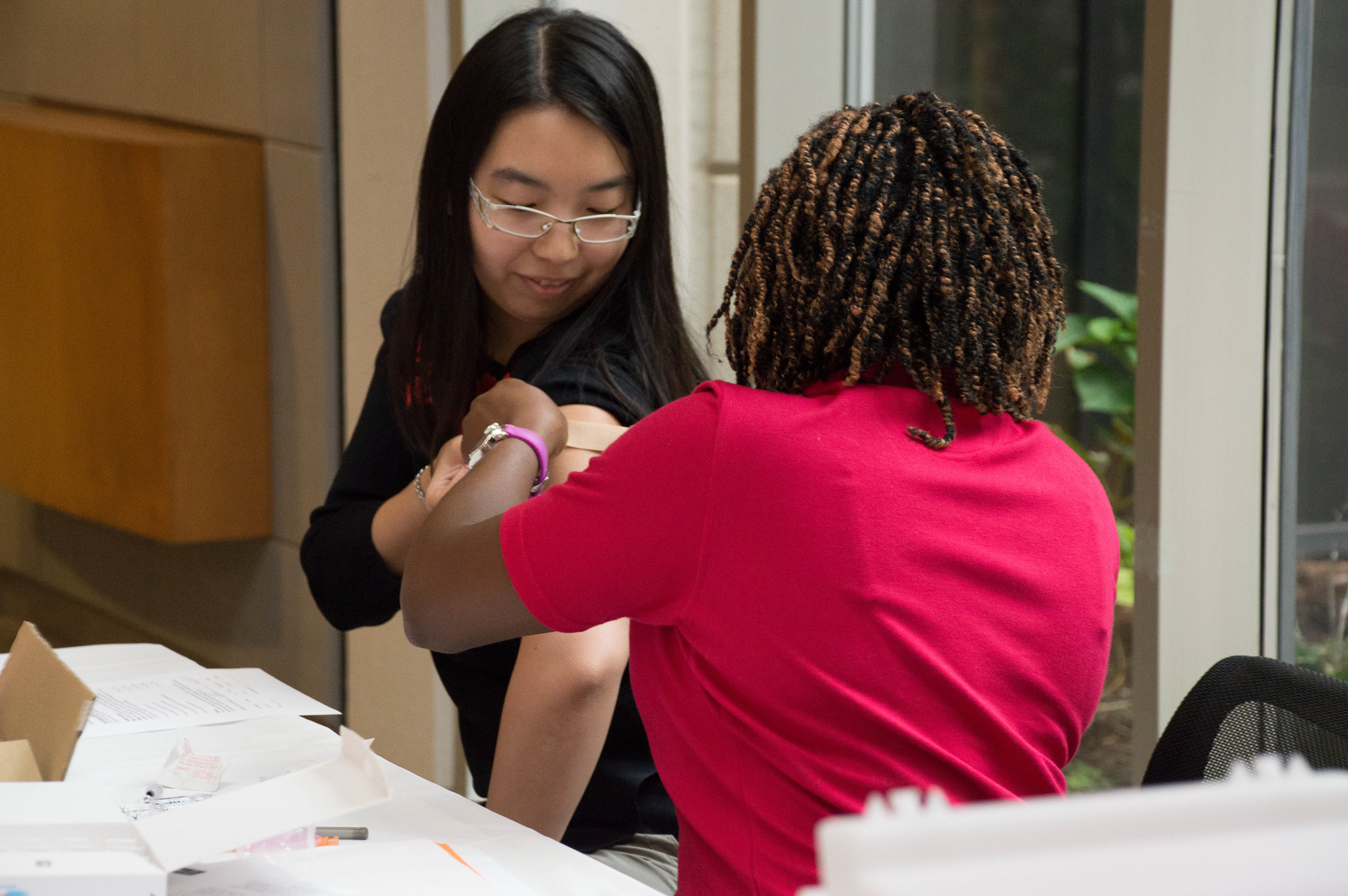
Oklahoma Medical Research Foundation Post-Doctoral Fellow Yao Fu receives her annual flu shot.

The flu virus can spread like wildfire. It kills roughly 36,000 Americans annually and makes many more miserable.
Even with the potential danger posed by the virus, why do as many as 60 percent of Americans forgo the annual flu shot?
A big factor is the long-held belief that the flu shot itself can give you the flu. But according to scientists at the Oklahoma Medical Research Foundation, this simply is false.
“The flu vaccine that we use now does not have live flu virus in it,” said OMRF President Stephen Prescott, M.D. “The vaccine cannot infect you.”
The vaccine is made from proteins in a lab, not from the virus itself. However, your body’s immune system sees these proteins as foreign and makes antibodies that bind to them to prevent the influenza virus from infecting cells and spreading. This process prepares the body for a rapid immune response to the actual flu virus, often preventing the illness.
But a flu shot can cause mild side effects, and this is where some of the misunderstandings start.
OMRF immunologist Eliza Chakravarty, M.D., said the most common side effects are soreness, redness or swelling around the site of the injection, and some people may occasionally experience a low-grade fever. But, according to Chakravarty, this is no cause for alarm, “It’s just your body doing its job and developing protective immunity.”
These symptoms, though, won’t be anything like the full-blown flu, said Prescott, a physician and medical researcher. “The flu will give you a high fever and muscle aches all over your body. Those symptoms are usually severe, and the disease can be life-threatening.”
Very rarely, a person might get the flu after receiving the flu vaccine, but Chakravarty says not to blame it on the shot.
“In these instances, a person was already exposed to the virus,” she said. “Most likely, they were in an incubation period without symptoms, but the vaccine didn’t cause the illness. This is just coincidental and unrelated to receiving the shot. Essentially, it would just be bad luck.”
If you haven’t gotten vaccinated this year, Chakravarty urges you to do so.
“It’s never too late to get the flu shot,” she said. “We’ve found that the flu can linger within a community longer than we expected, so it’s always a good idea to protect yourself and your loved ones.”

January & February AARP Drivers Safety Classes

0

Date/ Day/ Location/ Time/ Registration #/ Instructor

Jan 27/ Wed. /OKC / 9 am – 3:30 pm/ 752-3400 or 478-4587/ Reffner
Mercy Hospital – 4300 W. Memorial Rd.
Feb 1/ Monday/ Okla. City/ 9 am – 3:30 pm/ 843-5995/ Palinsky
Bellview Reabilitation Center – 6500 N. Portland
Feb 4/ Thursday/ Okla. City/ 9:30 am – 4 pm/ 951-2277/ Edwards
Integris 3rd Age Life Center – 5100 N. Brookline, Suite 100
Feb 9/ Thursday/ Yukon/ 9 am – 3:30 pm/ 350-7680/ Edwards
Dale Robertson Senior Center – 1200 Lakeshore Dr
Feb 12/ Friday/ Okla. City/ 9 am – 3:30 pm/ 951-2277/ Edwards
SW Medical Center – 4200 S. Douglas, Suite B-10
Feb 16/ Tuesday/ Norman/ 9 am – 3:30 pm/ 440-8802/ Palinsky
Norman Regional Hospital – 901 N. Porter
Mar 3/ Thursday/ Okla. City/ 9:30 am – 4 pm/ 951-2277/ Edwards
Integris 3rd Age Life Center – 5100 N. Brookline, Suite 100
Mar 8/ Tuesday/ Midwest City/ 9 am – 3:30 pm/ 691-4091/ Palinsky
Rose State College – 6191 Tinker Diagonal
Mar 11/ Friday/ Okla. City/ 9 am – 3:30 pm/ 951-2277/ Edwards
SW Medical Center – 4200 S. Douglas, Suite B-10
The prices for the classes are: $15 for AARP members and $20 for Non-AARP. Call John Palinsky, zone coordinator for the Oklahoma City area at 405-691-4091 or send mail to: johnpalinsky@sbcglobal.net

Savvy Senior: Paying Income Tax on Social Security Benefits

0

Dear Savvy Senior, Will I have to pay federal income taxes on my Social Security benefits when I retire?  Approaching Retirement

Dear Approaching,
Whether or not you’ll be required to pay federal income tax on your Social Security benefits will depend on your income and filing status. About 35 percent of Social Security recipients have total incomes high enough to trigger federal income tax on their benefits.
To figure out if your benefits will be taxable, you’ll need to add up all of your “provisional income,” which includes wages, taxable and non-taxable interest, dividends, pensions and taxable retirement-plan distributions, self-employment, and other taxable income, plus half your annual Social Security benefits, minus certain deductions used in figuring your adjusted gross income.
How To Calculate
To help you with the calculations, get a copy of IRS Publication 915 “Social Security and Equivalent Railroad Retirement Benefits,” which provides detailed instructions and worksheets. You can download it at irs.gov/pub/irs-pdf/p915.pdf or call the IRS at 800-829-3676 and ask them to mail you a free copy.
After you do the calculations, the IRS says that if you’re single and your total income from all of the listed sources is:
· Less that $25,000, your Social Security will not be subject to federal income tax.
· Between $25,000 and $34,000, up to 50 percent of your Social Security benefits will be taxed at your regular income-tax rate.
· More than $34,000, up to 85 percent of your benefits will be taxed.
If you’re married and filing jointly and the total from all sources is:
· Less that $32,000, your Social Security won’t be taxed.
· Between $32,000 and $44,000, up to 50 percent of your Social Security benefits will be taxed.
· More than $44,000, up to 85 percent of your benefits will be taxed.
If you’re married and file a separate return, you probably will pay taxes on your benefits.
To limit potential taxes on your benefits, you’ll need to be cautious when taking distributions from retirement accounts or other sources. In addition to triggering ordinary income tax, a distribution that significantly raises your gross income can bump the proportion of your Social Security benefits subject to taxes.
How to File
If you find that part of your Social Security benefits will be taxable, you’ll need to file using Form 1040 or Form 1040A. You cannot use Form 1040EZ. You also need to know that if you do owe taxes, you’ll need to make quarterly estimated tax payments to the IRS or you can choose to have it automatically withheld from your benefits.
To have it withheld, you’ll need to complete IRS Form W-4V, Voluntary Withholding Request (irs.gov/pub/irs-pdf/fw4v.pdf), and file it with your local Social Security office. You can choose to have 7 percent, 10 percent, 15 percent or 25 percent of your total benefit payment withheld. If you subsequently decide you don’t want the taxes withheld, you can file another W-4V to stop the withholding.
State Taxation
In addition to the federal government, 13 states – Colorado, Connecticut, Kansas, Minnesota, Missouri, Montana, Nebraska, New Mexico, North Dakota, Rhode Island, Utah, Vermont and West Virginia – tax Social Security benefits to some extent too. If you live in one of these states, check with your state tax agency for details.
For questions on taxable Social Security benefits call the IRS help line at 800-829-1040, or visit an IRS Taxpayer Assistance Center (see www.irs.gov/localcontacts) where you can get face-to-face help.
Send your senior questions to: Savvy Senior, P.O. Box 5443, Norman, OK 73070, or visit SavvySenior.org. Jim Miller is a contributor to the NBC Today show and author of “The Savvy Senior” book.

Veterans helping veterans find help, hope

0
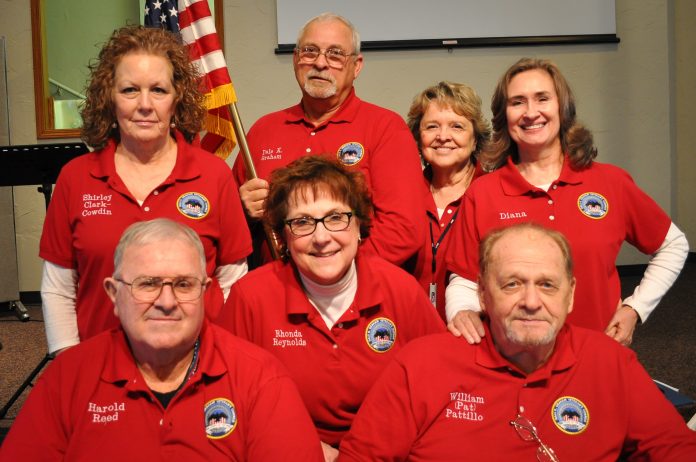
Dale K. Graham (rear center) and an army of volunteers are helping veterans get the benefits they deserve through the Dale K. Graham Veteran’s Corner.

by Bobby Anderson
Staff Writer

It’s Thursday morning at 10 a.m. and the parking lot to Pastor James Gann’s Faith Pointe Baptist Church in Norman is completely full.
On this day there isn’t a service scheduled but people are pouring in from miles away to find help, hope and healing.
“You know that’s what the church is for,” Gann said after bellowing out the name of the next military veteran who will find help that day.
Gann isn’t preaching God’s word but he is making sure the flock is being tended to. That’s why he routinely opens up the the doors to his church to allow staff from the Dale K. Graham Veteran’s Corner to minister to America’s vets.
Graham’s 501(c)(3) organization helps vets navigate the seeming labyrinth that often separates them for the benefits they so rightfully deserve.
People from across the country have made the trek to one of the weekly workshops.
Graham started the ministry in the early 1990s. He began opening up the workshop at his country home.
By 2008, he was in the Goldsby community center. He separated from his original organization and now works out of Norman.
“I just want to help people,” Graham said. “My board of directors and I couldn’t agree. We parted ways and moved on.”
“This move to Norman has been the best move I’ve ever made. What we’re doing is we’re changing lives one at a time.”
Graham estimates his organization helps nearly 150 veterans a week in addition to 10 surviving spouses.
Benefits that veterans once thought impossible or didn’t even know about are often within reach.
Veterans who can get a 70-percent service-connected disability rating can enter a state VA center free of charge.
“One of the biggest drawbacks of getting old is they’re going to take everything you’ve got when it’s finished,” Graham said. “I like to see the kids or grandkids get something.”
An army of between 30 and 40 volunteers – all clad in red polo shirts – are present to help veterans at any given workshop.
The organization supports itself through donations and grants.
Currently, Graham says there is a desperate need for a donation of transportation to help veterans get to the Oklahoma City VA Medical Center and doctor’s visits.
A handicap van would also be a lifesaver as would a permanent location to open up daily for veterans.
The stories continue to flow in. On this morning a woman from Kansas City called and told Graham her brother was living with her after being homeless. After the Gulf War he was unable to function and struggles daily with Post Traumatic Stress Disorder.
She asked if there was anyone in her area that could do what Graham’s organization does.
Sadly, he couldn’t think of any.
“Most people don’t care,” Graham said. “The main thing is people don’t know how to do it.”
Graham is accredited as a claims agent for veterans.
He says he accepts no pay.
Volunteer Rhonda Reynolds recently retired as chief deputy of the Western District Federal. Her late husband was a Navy pilot.
“It’s money they’ve earned,” Reynolds said. “The difference is we’re not talking thousands of dollars we’re talking hundreds of dollars but to people living on $750 a month” it’s a huge difference.
Graham’s group has a network of doctors and healthcare providers that understand the needs of our veterans.
Shirley Clark Crowdin’s Navy husband passed away from Agent Orange exposure. She specializes in working with the spouses of veterans who have passed.
She said World War II surviving spouses, kids or grandkids whose loved one died of cancer are eligible for up to $75,000 in radiation benefits.
“They should have got it 50 years ago,” Crowdin said. “I’m doing claims for surviving spouses (whose husbands served) in Nagasaki and Hiroshima. Nobody told them.
“One of the toughest things is we have so many suicides, but we’re able to service connect them once they pass away.”
Vietnam Veterans are of particular concern.
“Vietnam Veterans – there shouldn’t be one alive that doesn’t get 100 percent (disability),” said Crowdin, who notes the average age at death of a Vietnam Veteran is 63 years old, due to chemical exposure.
“We have World War II surviving spouses that live on about $300 per month and we can get then another $400,” Crowdin said, fighting back tears. “During the holidays we worked with three that had committed suicide.”
Graham nods his head.
“Every time you deal with one of them you feel the pain,” Graham said.
If you or a loved one need help with benefits you can contact Graham at 405-609-9895 or email him at dalekgrahamveteranscorner@gmail.com. Tuesday mornings from 8 a.m. to noon are open for veterans. Walkins begin at 6:30 a.m. until noon on Thursdays.
“So far, we’ve never sent anybody home,” Graham said.

OMRF research sheds new light on effects of aging in knee joints

0
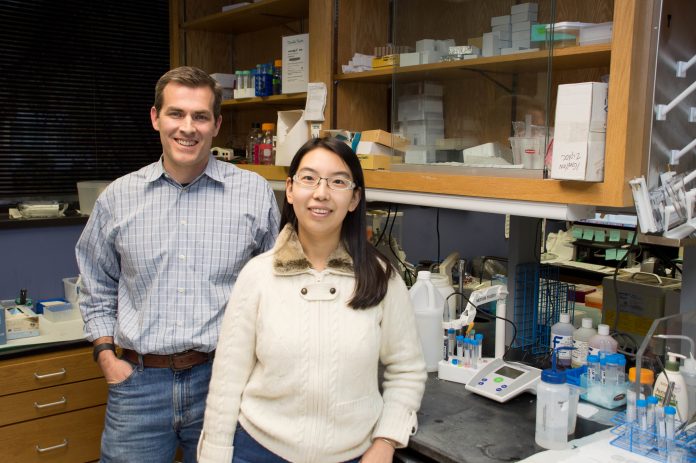
Oklahoma Medical Research Foundation scientists Tim Griffin, Ph.D. and Yao Fu, Ph.D.

Research from the Oklahoma Medical Research Foundation has identified new culprits that may be responsible for the development of arthritis.
The study found that growing older increases the production of a pair of inflammation-producing proteins. It suggests that targeting these inflammatory proteins might provide a path for future development of arthritis therapies.
The new findings, published in the Journal of Gerontology, provide a snapshot of age-related changes in a crucial area of soft tissue in the knee.
A team led by OMRF’s Tim Griffin, Ph.D., and Yao Fu, Ph.D., examined the knee joints of rats as they aged. In particular, the researchers studied the animals’ infrapatellar fat pad, the soft fatty tissue that lies beneath the kneecaps of both rodents and humans.
Scientists have known that these fat pads are a source of inflammation in osteoarthritic knees. And they’ve believed that this inflammation contributes to osteoarthritis, which occurs when cartilage breaks down and wears away.
“It’s actually the most common form of arthritis, often affecting the hips, hands and spine, in addition to the knees,” said Griffin. According to the Centers for Disease Control, an estimated 27 million Americans suffer from osteoarthritis.
Griffin and Fu wanted to look specifically at how aging affects inflammation in the fat pads. Griffin says he anticipated that as the animals grew older, the amount of inflammation produced by the fat pad and the size of the animals’ fat pads would increase.
“But our findings were not quite what we expected,” said Griffin. Specifically, the fat pads actually shrunk while producing higher levels of two inflammatory proteins.
“Our study suggests the fat pad is a contributor to a general increase in knee inflammation that occurs with age,” said Fu. This points toward future treatments to limit the inflammation, which might then prevent osteoarthritis from developing.
However, the researchers did find a benefit to aging in biological conditions that simulated an acute injury—such as a fall that causes damage to a joint. In this condition, the older fat pads decreased their production of leptin, a protein secreted by fat that also contributes to the break down of cartilage.
“We know there is acute inflammation that occurs after injury and can have long-term consequences,” said Griffin. “This study taught us that under certain conditions aging can actually limit the amount of leptin produced by the knee fat pad. This might help us develop new strategies to reduce post-traumatic osteoarthritis, a common cause of the disease in younger active adults.”
Janet Huebner, Ph.D., and Virginia Kraus, Ph.D., of Duke University also contributed to the research, which was supported by grants from the National Center for Research Resources (number RR018758), the National Institute of General Medical Sciences (number GM103441), the National Institute of Arthritis and Musculoskeletal and Skin Diseases (number AR066828), and the Arthritis Foundation.

TRAVEL / ENTERTAINMENT: Art and Artists at the Gilcrease Museum

0

Photography and Text by Terry “Travels with Terry” Zinn  t4z@aol.com

Art can be entertaining and a reunion with favorite talented artist. The November Collectors Reserve event at Oklahoma’s Gilcrease Museum is such a gathering. The Museum is known for its western heritage art, but the Collectors Reserve brings together many contemporary artists expressing many cultures.
Following your favorite artist over the years and over the county, can be daunting, as it has been for many with the prolific bronze artist, Joshua Tobey, http://www.joshuatobeystudios.com/. For many years his wildlife bronze creatures could be found in Sedona, Austin, Santa Fe and Loveland, among many galleries. The multiple award winning artist was present for the recent Collectors Reserve at the Gilcrease, and once again took home the highest award over 100 other artists with the Best In Show. He exhibited his large owl, Wise Guy, and bears performing a balancing act, Tricks of the Trade, and the Best In Show cougar in repose, Lions View.
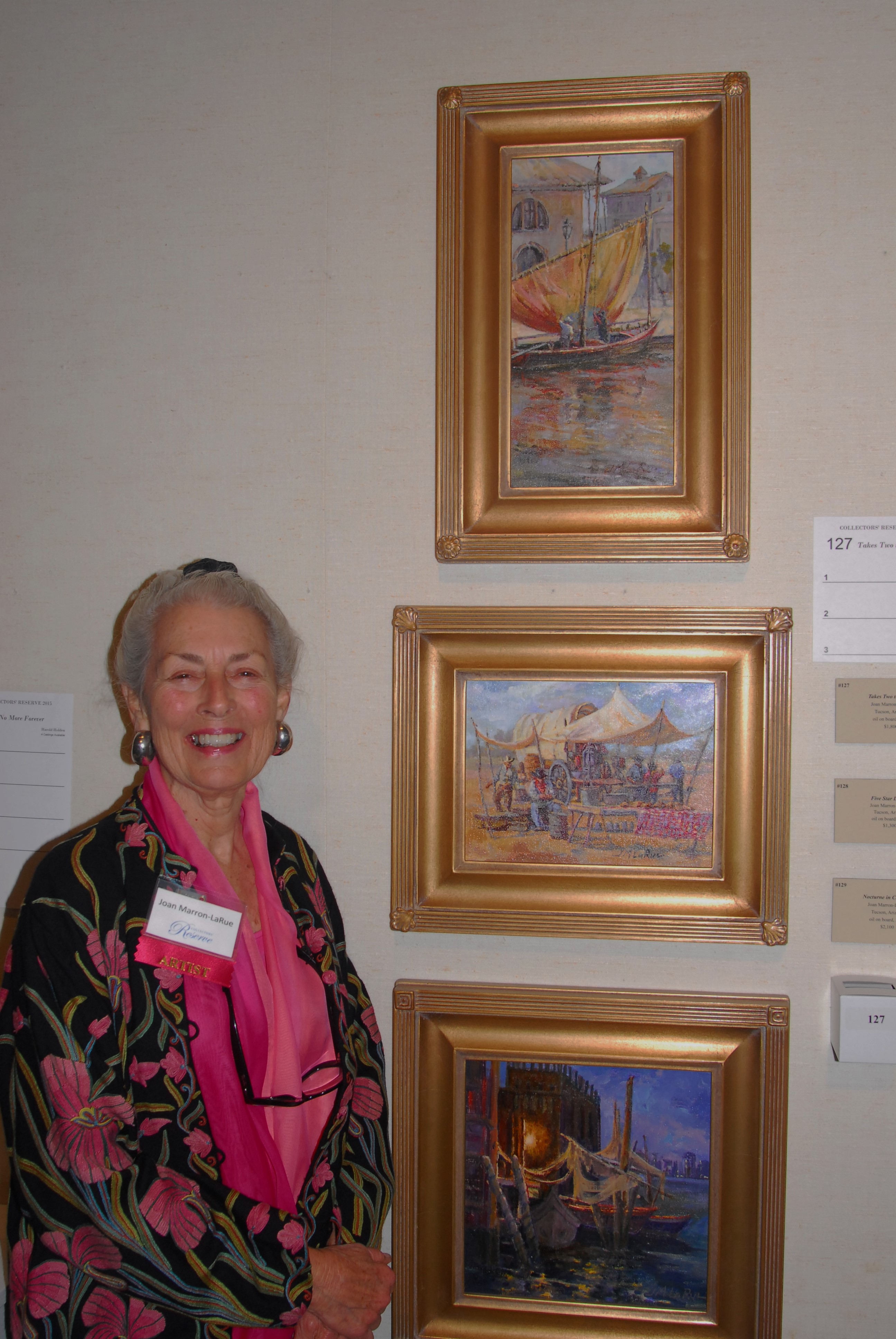
Other artists exhibited were: Joan Marron-LaRue, Doug Hyde, Oreland C. Joe Sr., Linda Turma Robertson, Jim Wilcox, Sandy Scott, and Gerald Balciar among others. Cocktails and light refreshments were served as the guest perused the art that they would like to have the opportunity to purchase with a drawing for its set price. The museum provided group prices for a downtown Tulsa hotel and offered shuttles up to the Gilcrease, making the entire evening more enjoyable.
You may want to plan to attend the 2016 Collectors Reserve, or sample the Gilcrease before then with:
Rick Bartow: Things You Know But Cannot Explain opens January 24 and runs through April 24, 2016 at Gilcrease Museum. Featuring more than 100 pieces, including a broad selection of sculptures, paintings, drawings, prints, mixed media work and the giant pastels for which he is mostly known, the exhibition draws from public and private collections (including the artist’s studio) that affirm this extraordinary artist’s regional, national and international impact.
Also see the works of early nineteen hundred artist William R. Leigh, where in 1906, an opportunity to expand the scope of his work came about when the Santa Fe Railroad offered him free passage to the West in exchange for a painting of the Grand Canyon.
If you don’t have a favorite artist, you can start your search at the Gilcrease. For more information go to: https://gilcrease.org/

Mr. Terry Zinn – Travel Editor
Past President: International Food Wine and Travel Writers Association
http://realtraveladventures.com/author/zinn/
http://www.examiner.com/travel-in-oklahoma-city/terry-zinn
www.new.okveterannews.com – www.martinitravels.com

DSC_0016 - Joan Marron-LaRue

Joshua and Jo Tobey
Joshua and Jo Tobey

SENIOR TALK: If you were an animal, what animal would you be and why? Emerald Square Assisted Living

0

“I would be a lamb because a lamb seems so gentle.” Emma Stone

“I would be a wolf so I could catch my little lamb,” as he pointed to his wife, Emma. Curtis Stone

“I would be a dog because I would love to be loved and babied.” Doris Green

“I would be a cat because cats are nice.” Bennie Green

INTEGRIS Joins Mayo Clinic Care Network

0

INTEGRIS and Mayo Clinic announced today that INTEGRIS has joined the Mayo Clinic Care Network, a national network of health care providers committed to better serving patients and their families through collaboration.
INTEGRIS is the first health care organization in Oklahoma to join the network. The formal agreement gives INTEGRIS access to the latest Mayo Clinic knowledge and promotes physician collaboration to benefit patients. Through shared resources, more patients can get answers to complex medical questions — and peace of mind —while staying close to home.
“While INTEGRIS works with some of the most accomplished and preeminent physicians in the region, we are constantly striving for ways to provide our patients with the best care possible,” says Bruce Lawrence, president and CEO, INTEGRIS. “This collaboration between INTEGRIS and Mayo Clinic brings together two trusted names – each with unique strengths – to the betterment of all Oklahomans.”
As a member of the Mayo Clinic Care Network, INTEGRIS will work with Mayo to share medical knowledge in ways that will enhance patient care. Network products and services include:
· eConsults that enable INTEGRIS physicians to connect electronically with Mayo specialists when they want additional input on a patient’s care
· AskMayoExpert database that offers INTEGRIS providers point-of-care, Mayo-vetted information on disease management, care guidelines and treatment recommendations, and reference materials for medical conditions
· Health care consulting that enables INTEGRIS to learn more about Mayo’s clinical, operational and business models, including the models’ design and implementation
· eTumor Board conferences that enable INTEGRIS physicians to present and discuss management of complex cancer cases with a multidisciplinary panel of Mayo specialists and other network members.
INTEGRIS providers also have access to Mayo’s extensive library of patient education materials, and can view archived Mayo Clinic grand rounds presentations that feature Mayo physicians and scientists.
“We are pleased to welcome INTEGRIS to the Mayo Clinic Care Network,” says David Hayes, M.D., medical director, Mayo Clinic Care Network. “This relationship brings together two like-minded organizations committed to patient-centered care. As we’ve worked toward today’s announcement, it’s been clear that we share many important values and at least one essential goal: to improve the delivery of health care in a way that benefits patients.”
Formed in 1995, INTEGRIS is a nationally recognized health care system with a wide presence in Oklahoma. Approximately 6 out of every 10 Oklahomans live within 30 miles of a facility or physician included in the INTEGRIS organization. INTEGRIS has eight hospitals, more than 2,500 physicians and more than 9,000 employees.
INTEGRIS and other members of the Mayo Clinic Care Network remain independent, but share Mayo’s commitment to improve the quality and delivery of health care. Launched in 2011, the Mayo Clinic Care Network has more than 35 member organizations in the U.S., Mexico, Puerto Rico and Singapore.

Social

0FansLike
0FollowersFollow
0SubscribersSubscribe