Tuesday, February 10, 2026

Moore Native Supports U.S. Navy’s “Take Charge and Move Out”

0
Petty Officer 2nd Class Ciarra Norris is a naval air crewman (avionics) assigned to Fleet Air Reconnaissance Squadron Three (VQ-3) in Oklahoma City.

Every sailor’s story of naval service is unique. For Petty Officer 2nd Class Ciarra Norris, this story began in Moore, Oklahoma, where skills and values learned there would be foundational to success in the Navy.

“Growing up in Moore taught me a strong sense of resiliency and dedication,” Norris said. “In the Navy, things are always changing, so you have to be prepared. Having resiliency and dedication helps you adapt to constantly changing environments.”

Norris graduated from Moore High School in 2020.

Norris joined the Navy three and a half years ago.

“I felt like I was stuck where I was at,” Norris said. “So, I joined the Navy to get out, meet new people, experience other cultures and have more job satisfaction.”

Today, Norris serves as a naval air crewman (avionics) assigned to Fleet Air Reconnaissance Squadron Three (VQ-3) in Oklahoma City. Norris supports the nation’s nuclear deterrence mission at Strategic Communications Wing One (STRATCOMMWING ONE). Its “Take Charge and Move Out” (TACAMO) mission provides airborne communication links to nuclear missile units of U.S. Strategic Command.

The TACAMO mission originated in 1961 when a Marine Corps aircraft was used to test the feasibility of an airborne Very Low Frequency (VLF) communications system. Once the test was successful, funding for the program was granted, and it has continued to grow ever since.

The U.S. Navy’s presence on an Air Force base in a landlocked state may seem strange, but the position is strategic, allowing squadrons to quickly deploy around the world in support of the TACAMO mission.

The U.S. Navy is celebrating its 250th birthday this year.

According to Navy officials, “America is a maritime nation and for 250 years, America’s Warfighting Navy has sailed the globe in defense of freedom.”

“I am most proud of becoming qualified and a second class petty officer, because it puts me in a better place to help those around me,” Norris said.

Norris serves a Navy that operates far forward, around the world and around the clock, promoting the nation’s prosperity and security.

“Serving in the Navy means endless possibilities for me,” Norris said. “It opens doors that I never even thought were possible.”

Norris is grateful to others for helping make a Navy career possible.

“I want to thank my mom, dad and grandparents for their endless support in everything I do and for giving me the confidence behind my decisions,” Norris added. • by Megan Lemly, Navy Office of Community Outreach -Photo by Mass Communication Specialist 1st Class Justin Johndron

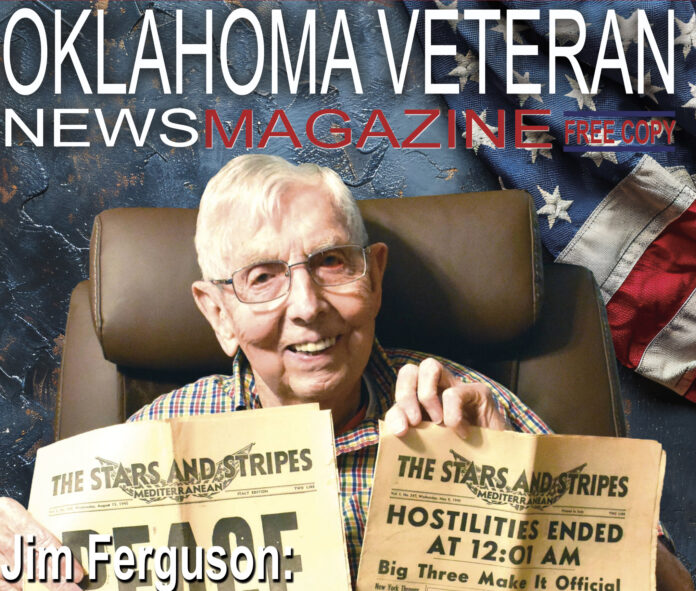
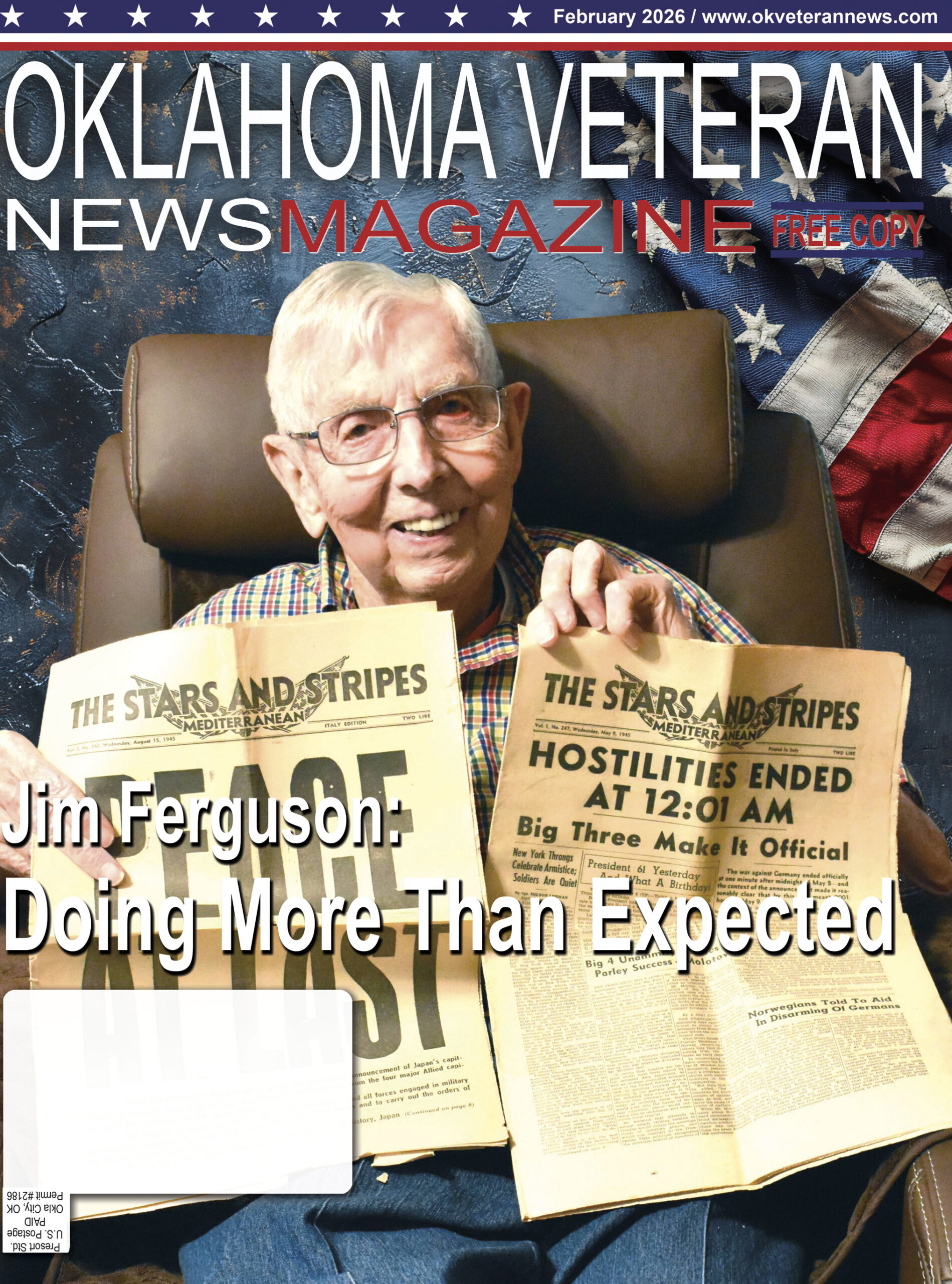
On the Cover: Jim Ferguson Did More Than What’s Expected

0

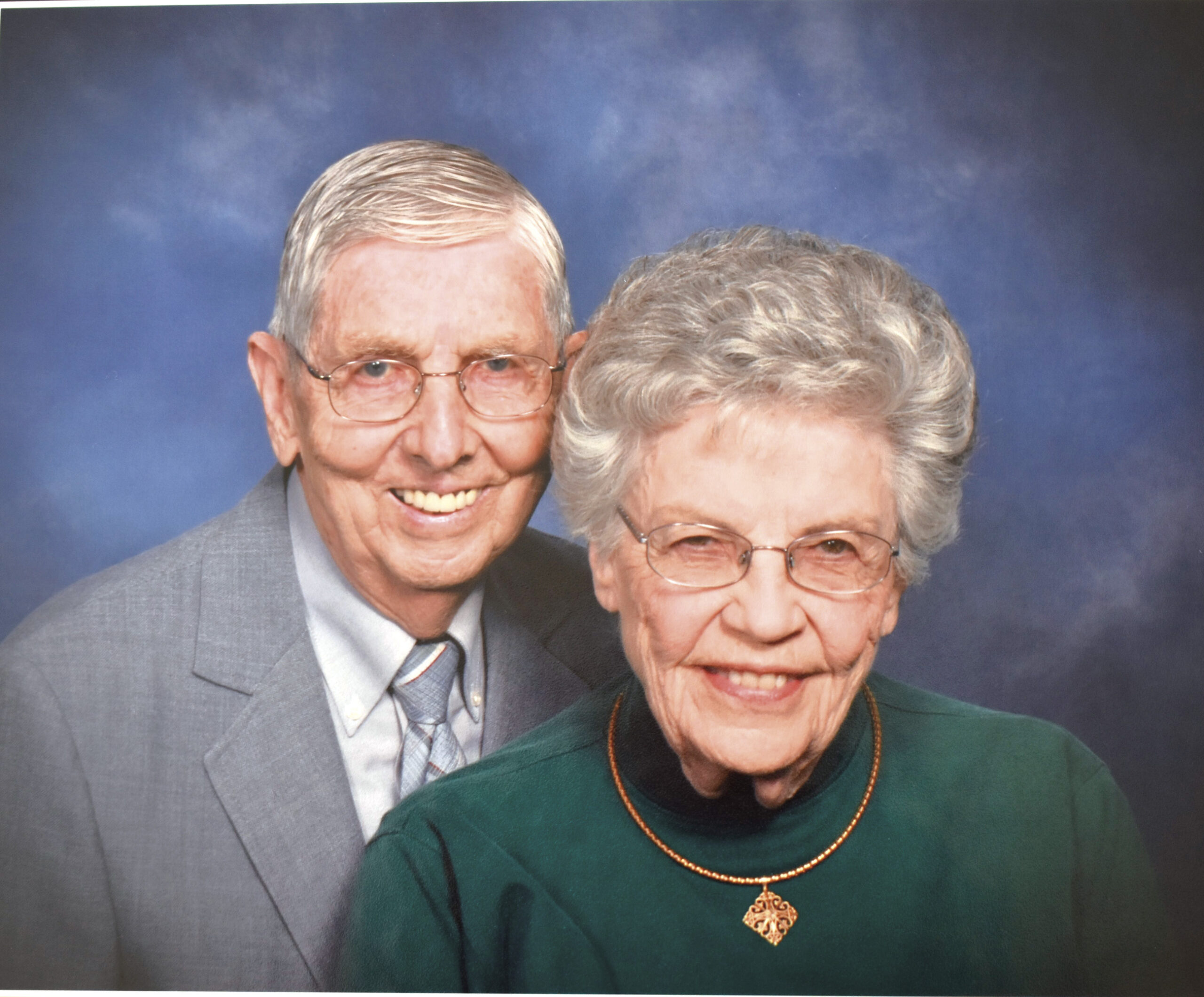
James and Beverly Ferguson were married for 70 years and had a son, William, and daughter, Gayle.
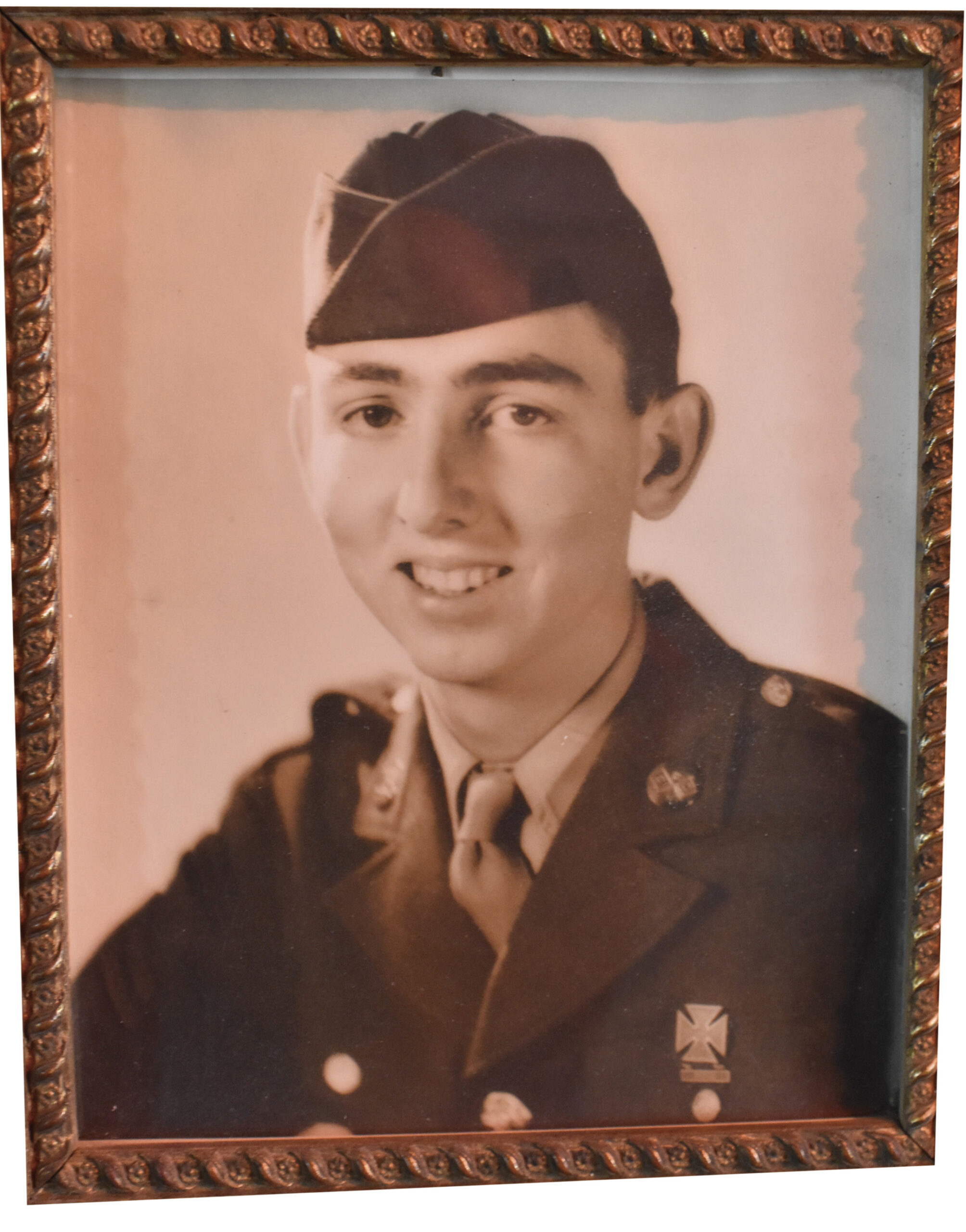
This photo was taken in 1944 when Corporal James Ferguson served the Army Air Corps in Bari, Italy.

Some Americans serve their country for a chapter of their lives. Jim Ferguson wrote a book’s worth. His record spans three years of active duty during World War II and one year during the Korean War, 17 years in the Air Force Reserve, and 31 years as an Air Force civilian engineer at Tinker Air Force Base – four decades devoted to national defense.


Ferguson’s journey began after graduating from Siloam Springs High School, Arkansas. At age 18, he enlisted in the U.S. Army Signal Corps Reserve on October 22, 1942. He immediately attended radio technician school in Little Rock as a civilian civil servant before being activated by the Army Air Corps on March 10, 1943.

After completing basic infantry training at Camp Pinedale, California, Ferguson was assigned as a Classification Specialist and deployed overseas.

Duty at Bari, Italy

When he arrived on May 23, 1944, front-line fighting had moved north. He recalled, “Sunken ships littered the harbor…The noise and flak from the British guns are loud and heavy.”

Assigned to the 420th Signal Company, 15th Air Force, Ferguson used a typewriter and spreadsheets to take aim at manpower shortages by comparing authorized manpower to assigned strength and reporting shortages to headquarters.

The work required visiting combat units. “On a typical day, I would get on a B-17 and fly out to one of our units and get information for my reports to be this worksheet that shows how many positions we’ve got that’s vacant so that the system can send in the replacements…”

SS Charles Henderson blows up in Bari Harbor

On April 9, 1945, “In one of the greatest munitions disasters of World War II, the Charles Henderson was unloaded at Exit 14…when it was destroyed in a high-level explosion,” according to the Puglia Reporter newspaper in Italy. “This detonation caused by [handling] 500 loaded bombs loaded with Composition B, killed 542 people and injured 1,800 others…The buildings along the waterfront were destroyed by 2,000 feet, the ships were badly damaged at 2,100 feet.’”

The blast left a lasting impression and later, PTSD. Ferguson remembered, “you could still see debris that…the gravity hasn’t brought back to the ground…Our building was severely damaged with all windows and doors destroyed…I went up on the roof and found a piece of the ship that I could not lift that had been blown from the harbor to the roof of our building.”

Given rest and recreation leave, Ferguson visited Capri, Rome – where he met Pope Pius XII – and Switzerland.

He received a Bronze Star for Italy’s Rome-Arno Campaign and was discharged on Jan 28, 1946.

Korean Conflict

Service called again. “I spent one year on active duty and was discharged as a Technical Sergeant on 23 August 1951…During this period, I was commissioned as a 2nd Lieutenant in the US Air Force Reserve as an electronic engineer.” He continued in the Air Force Reserve as an engineer, attaining the rank of Major before retiring on 1 February 1969.

Family

Ferguson met his future wife, Beverly Murry, at a church activity in Siloam Springs in 1946. Both attended John Brown University, where he earned a Bachelor of Engineering degree using the new GI Bill.

After the Korean War, Ferguson resumed his friendship with Beverly and they married on Feb 16, 1952. He said, smiling, “She told me later that she would’ve married me a lot sooner if I’d asked sooner, but I wasn’t too smart…Beverly had said, ‘I was ready to get married long before you asked.’ The best 70 years of my life.”

They raised two children: Bill Ferguson, who married Elette and live in Mount Vernon, Washington, and Gayle Davis, who lives in Oklahoma City with her husband, Michael.

Electronic Engineer

In 1951, Ferguson began his civilian Air Force career with the Airways and Air Communications Service, renamed the 38th Cyberspace Engineering Installation Group. The Group provided communications and navigational aids. His work included preparing “site concurrence letters and engineering documents…at different bases around the country…” His team identified locations for airfield infrastructure like air navigation systems and control towers and equipment to support them during the Cold War.

Ferguson’s attention to detail and ability to work with people led to promotion as a Supervisory Electronics Engineer and eventually, GS-14 General Manager. He earned a Meritorious Civilian Service Award, among the Air Force’s highest civilian honors. He retired Dec 30, 1982.

Reflections about life

Looking back on war, Ferguson remains thoughtful and direct. “I don’t know why adults go to war. The outcome is always the same: somebody wins, somebody loses. A lot of people are killed. I still remember the burial grounds with the crosses, you know, driving by them in Italy.”

His advice for living a good life? “I’d say the golden rule would be pretty good.” His son, Bill, added, “You always told me, Dad, ‘Do more than what’s expected…Don’t just do the minimum.’”

After Beverly died four years ago at age 90, Ferguson reflected on loss and companionship. “I’m just much, much happier when I’m around people and that was a thing I didn’t recognize until I experienced living alone after my wife passed…The loss of a spouse was the worst experience I’ve ever had, you know…’”

Longtime friend Bill Dooley summed up friendship simply: “He’s a wonderful guy and I’m happy he’s my friend.”
Ferguson is 101 years old and lives in Midwest City. •
story and photos by Lt Col Richard Stephens, Jr., USAFR, Ret.

 

A Soldier Who Never Leaves His Post.

0
Known as The Big Guy, the statue represents all Oklahoma veterans. It is part of the Oklahoma Veterans Memorial, State Capitol Park.

A Soldier Who Never Leaves His Post. Oklahoma’s Capitol Memorial to Those Who Served and Sacrificed

Soldier Represents All Veterans

Is “The Big Guy,” deep in thought? Does he wear the Thousand-Yard Stare – a distant or vacant look in the eyes of individuals who have experienced intense and often traumatic events? You decide.

Either way, the 8 ½ feet statue of a Vietnam soldier on a 3 1/2 foot pedestal that faces the State Capitol stops visitors at the Oklahoma Veterans Memorial. The memorial is located in the State Capitol Park on Lincoln Boulevard on the north side of the Oklahoma Supreme Court. Walking through the area saddened me because the names of thousands of Oklahomans killed in action are listed throughout.

Other memorials

Behind The Big Guy stand four bas relief bronze panels mounted on rose granite walls. Each panel depicts scenes from four major wars fought since Oklahoma became a state: World War I, World War II, the Korean War and the Vietnam War. The names of Oklahomans killed in action are engraved on the back of the walls and were added in the mid-1990s with additional names from Operation Desert Storm to the present added in 2014.

A memorial to the U.S.S. Oklahoma, a battleship sunk at Pearl Harbor on December 7, 1941, lists the names of 429 sailors and Marines who died.

A place that remembers every war

A memorial to the U.S.S. Oklahoma, the battleship sunk at Pearl Harbor on December 7, 1941, is there with the names of the 429 sailors and Marines who died. It was added on December 7, 1999.

Flags of each branch of the Armed Forces, the MIA-POW flag, the Oklahoma State flag and United States flag are posted behind The Big Guy, next to the “Eternal Flame.” The flame is meant to remind Oklahomans that “we will never forget.”

How the memorial came to be The State of Oklahoma donated the land for the memorial and people from around the country donated money to pay for it.

“After fundraising for the memorial stalled, Governor George Nigh appointed 44 leaders from across the state to the Veterans Memorial Task Force in April 1986” reported The Oklahoman on Nov. 10, 1986. The leaders got the job done: a well-attended ceremony dedicated The Big Guy, four blank rose granite walls and the grounds on 11 November 1986 – almost 40 years ago. Ceremonies included a speech by Governor Nigh and a flyby of F-4 Phantom II fighters.

On November 11, 1987, phase two was completed when bas-relief panels created by Jay O’Melia were dedicated.

A veteran’s vision

Vietnam War veteran Sergeant Mike Mullings was the driving force for the memorial. A medic from Bethany, Mullings was permanently injured while jumping from a helicopter under fire in Vietnam. After he died in 2017, an inscription was added to the base of the Vietnam soldier, “In Remembrance of SGT J. “Mike” Mullings…He was truly a “Big Guy.”

This is the bas relief of World War I, created by Jay O’Melia. Memorials to WWII and the Korean and Vietnam Wars are next to it.

The Sculpturers

Jay O’Meilia of Tulsa (died in 2022), a WWII and Korean War veteran, and Bill Sowell of Pawhuska (died in 2013), an Army veteran, designed, sculpted and cast The Big Guy from 1984-1986.

They chose 18-year-old Harrison Shackleford, an Osage Indian from Pawhuska, as the model for the Vietnam-era infantryman. “We wanted the sculpture of the soldier to be authentic in terms of age, dress and military equipment,” O’Meilia said in the same Oklahoman article, “especially since many of those who served in Vietnam were only 18 or 19 years old.”

Their design was chosen from 44 entries in a sculpture competition in 1984 that included six Vietnam veteran judges.

According to the Oklahoma Historical Society, “Artist Jay Philip O’Meilia, born in Tulsa, Oklahoma, on July 17, 1927, achieved recognition in Oklahoma and elsewhere as a sports painter in the 1950s. A graduate of Tulsa Central High School, he served in the U.S. Navy as an artist during World War II and in Korea.” His work has been exhibited “at the Corcoran Gallery in Washington, D.C., …the National Cowboy and Western History Museum and the Gilcrease Museum in Tulsa.”

Sowell studied at Texas Tech University in Lubbock, Texas. His works appear in Oklahoma and New Mexico.

Over 476,000 Oklahomans have served our state and nation in uniform – The Big Guy stands watch for all of them.

The memorial is worth a visit with friends or with a veteran’s group. If you want to hold an event there, call Capitol Event Reservations, 405-521-2121, or see the Oklahoma Management & Enterprise Services Upcoming Events website at Upcoming Events website at Upcoming Events .

For more information about the memorial, see Oklahoma Veterans Memorial | Oklahoma City, OK

story and photos by Lt Col Richard Stephens, Jr., USAFR, Ret.
Faith Plays Integral Role in Life

0
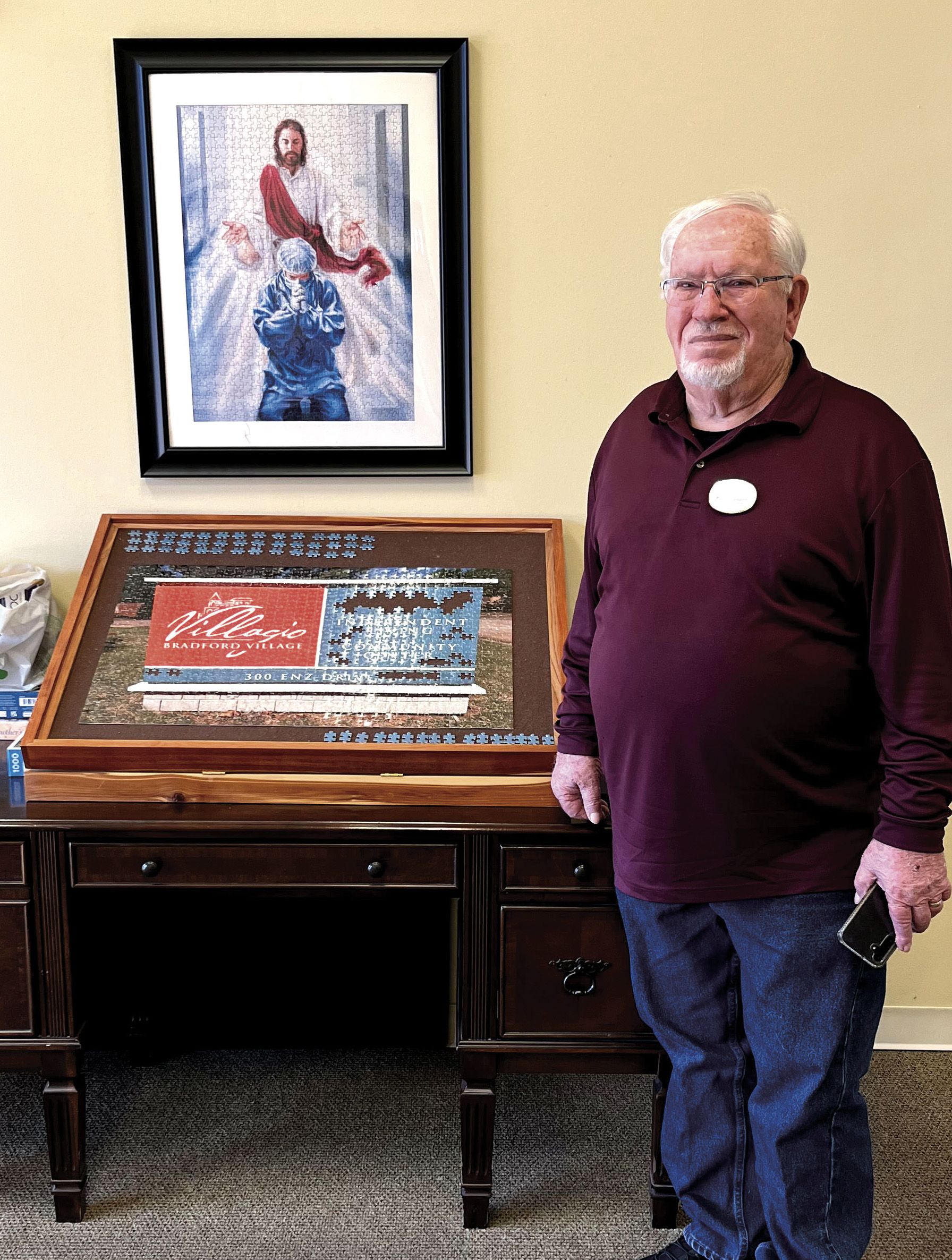
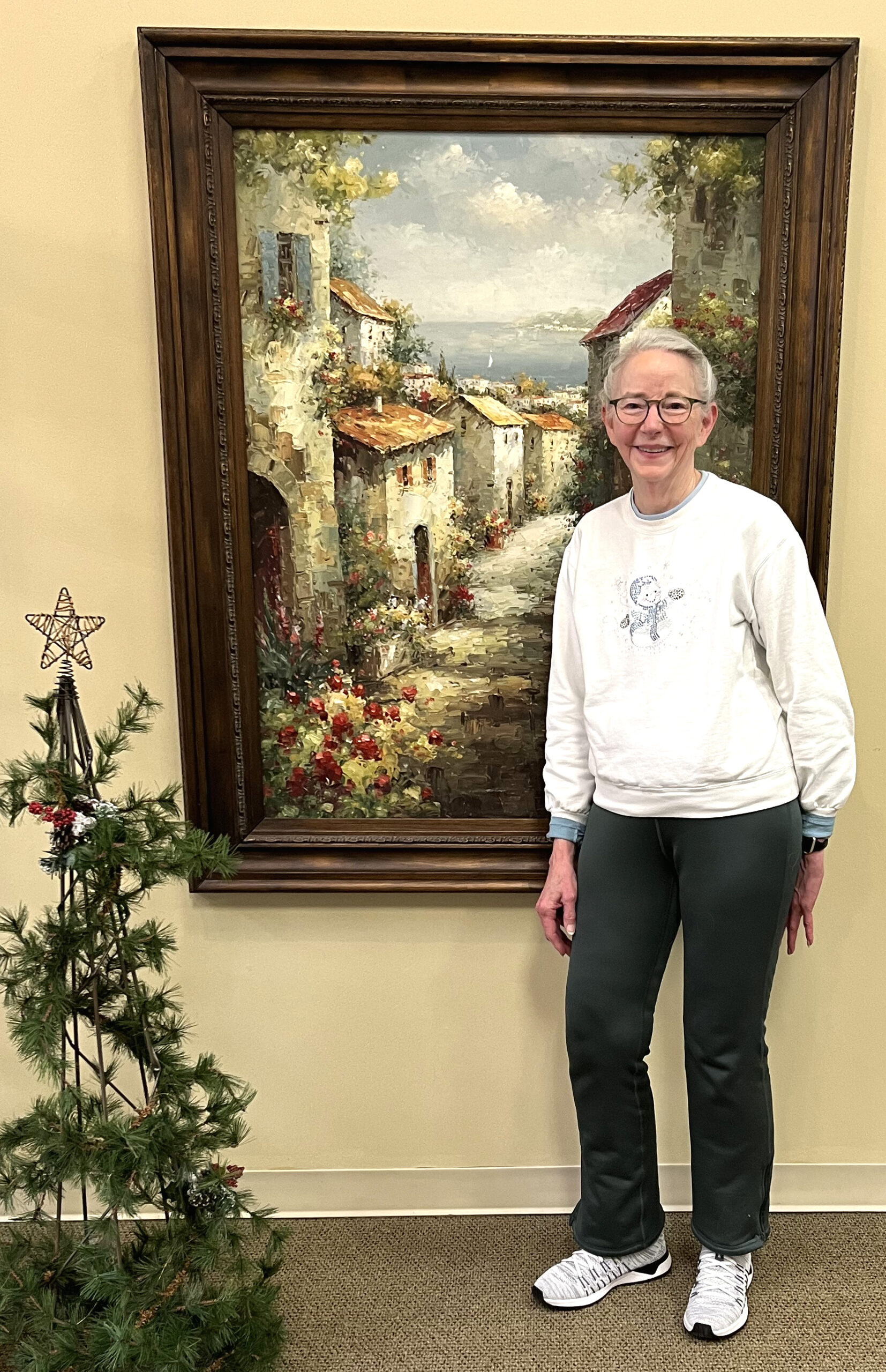
McGee Depue is a resident of Villagio of Bradford Village Independent Living.

Faith has long played an important role in Crystal McGee DePue’s life in which she lost her father at age 12, and the loss of two husbands.

Born in Tehran, Iran, DePue’s parents, who hailed from Edmond, served as missionaries with the Presbyterian Board of Foreign Missions in that country from the late 1940s until 1954 when they returned to the United States.

The Board of Foreign Missions of the Presbyterian Church in the U.S.A. (PCUSA) was organized in 1837 because of General Assembly (Old School) action. Its creation marked the culmination of a discussion covering a period of years as to whether missionary operations should be carried on by voluntary societies, or by the Church in its organized capacity.

“I had come to know the Lord and I had lost my father as a 12-year-old, and I knew that God had seen me and my brothers and sisters through that,” DePue, a resident of Villagio of Bradford Village Independent Living /Assisted Living, located at 300 Enz Drive in Edmond said. “I (later in life) told my kids, God has promised to be a father to the fatherless and a husband to the widow, and we’re just going to trust that that’s what’s going to happen even though it’s hard.”

DePue, 75, said her family moved to upstate New York upon returning home from Iran in what was supposed to be a year-long sabbatical.

“I moved first to New York City and stayed there for six months,” she said. “Then we moved to upstate New York because we were back supposedly on a furlough. It was just supposed to be a year of being back in the States, visiting family, getting refreshed and ready to go back. But my father was found to have serious health problems, and the Presbyterian Board of Foreign Missions wouldn’t send him back.”

DePue said her father continued doing mission work in upstate New York and at a women’s college in Ohio before moving their family back to Oklahoma where he worked as an accountant.

After graduating high school in Edmond, DePue attended a Presbyterian college in Clarksville, Arkansas before attending the University of Central Oklahoma.

It was at UCO where she met her first husband James “Rudy” McGee through a friend. Within two months of dating they were engaged.

“His name was James Brent, but his college roommate had a poster of Rudolph Valentino and thought he looked like that. So, they called him Rudy,” she said.

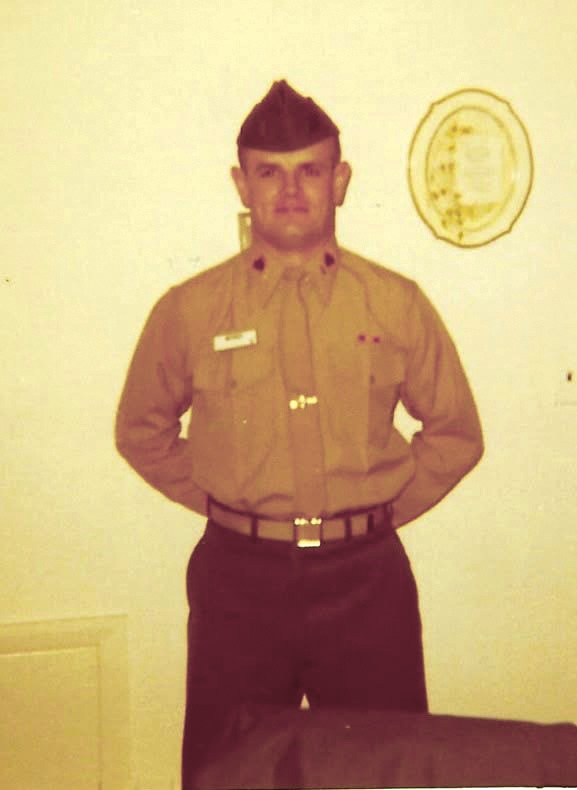
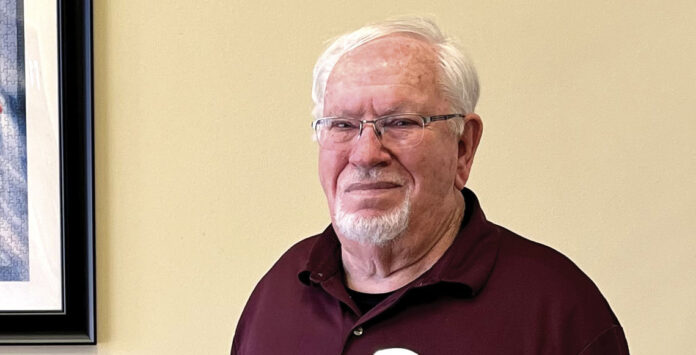
Rudy McGee (pictured) served in the United States Marine Corps, was stationed in Okinawa, Japan. His son Jameson McGee, a retired U.S. Marine Lt. Colonel also served at the same military base in Okinawa as his father.

DePue said Rudy served in the United States Marine Corps and was stationed in Okinawa, Japan. Her son Jameson, a retired U.S. Marine Lt. Col. also served at the same military base in Okinawa, Japan as his father.

After leaving the Marines Rudy became a teacher and taught at several schools in Kansas before landing at his last school in Goddard, Kansas.

In 1985, Rudy was killed by a student in a school shooting along with several others left injured.

“He was shot and killed right after we found out I was pregnant with our fourth child,” DePue said.

She later moved her family back to Edmond to be closer to family.

“We moved back here. I can tell stories of how God provided a house right behind my sister’s house,” she said. “I got Workman’s comp because he was killed on the job. So, that and Social Security allowed me to stay home and have the baby.”’
DePue later worked as a secretary for an oil and gas company before retiring.
Faith continued to tug at DePue’s heart, and she served a year as a missionary in Lyon, France.

“Faith gives meaning to life,” she said. “I don’t know how people make it in this world, particularly now without faith. God has proven himself faithful. As a single parent I had a choice of whether I can do it with God or without God. And I chose God.”

DePue later remarried to the Rev. Dale DePue, who served as the pastor at First United Presbyterian Church in Guthrie, and later served as a State Representative in the Oklahoma Legislature.

DePue said her husband had developed several health issues and moved to Villagio of Bradford Village Assisted Living.

“They took such wonderful care of him, and since it was COVID, I couldn’t go visit him. But when the weather was nice, they would let him come out and we could walk the community,” she said.

DePue later moved into an Independent Living cottage in Villagio of Bradford Village.

She said she enjoys living there.

“They’re very intentional about keeping us active and keeping our minds engaged and keeping us socially engaged,” she said. “It’s a great place to be. I keep telling people it’s where I need to be.” • by Van Mitchell, staff writer

For more information about Villagio of Bradford Village call (405) 348-6945 or visit www.villagioliving.com.

Changes to Community Medical Care

0

By Freddy Groves

Veterans who get their medical care from civilian facilities need to keep an eye on what’s coming. In 2026 the contracts (originally signed in 2018) between the VA and community health plan networks are expiring. An RFP (request for proposal) has gone out to solicit new contracts.

Some changes are coming:
The five regions of VA health care are being reduced to two.

The new contracts will require the community providers to follow industry standards, which is shocking. Is that not already included in any contract to provide medical care to veterans?

At this point, 40% of veterans get their care from civilian providers. That will likely increase, as the new plan contracts will open the door for more providers.

Veterans who want to pursue getting medical care at a non-VA facility need to meet eligibility requirements:
• Must be enrolled in VA health care.
• Live in a state with no full-service VA facility.
• The care needed isn’t available through the VA.
• The VA can’t meet quality standards.
• Qualifies under the old Choice Program: a 30-minute drive (or 20-day wait) for VA primary care or 60-minute drive (or 28-day wait) for specialty care.

Remember that the two-step rule changed in 2025, and if your doctor agrees you need to see a civilian doctor, a second doctor doesn’t need to approve it. Depending on the care you need (there are 30 categories of medical care, such as cardiology and dermatology), you’ll likely be approved for one year.

Here’s where you come in, should you choose to do so. If you’re getting civilian care, will their network administrators be putting in a proposal for the next round of contracts? In other words, will you be able to continue getting care there? Do they know the deadline for their proposal is March 16? I would ask. This is part of being proactive in your own care … asking questions.
To learn more about community care, see https://www.va.gov/communitycare/.


Oklahoma City Resident Supports U.S. Navy’s “Take Charge and Move Out” Mission in the Heartland

0
Chief Petty Officer Bobby Long serves as a Navy counselor in Oklahoma City.

their goals because that gives me a sense of purpose. It also shows that I am a part of something bigger than myself. Seeing others succeed is the best part of the job.”

Long serves a Navy that operates far forward, around the world and around the clock, promoting the nation’s prosperity and security.

“Serving in the Navy means a tremendous amount to me,” Long said. “I didn’t have a lot of opportunities that others have when they graduate high school, and I don’t know what my path would have looked like without the military. I think about that a lot. I know the mindset and skills I have learned because of the military are unmatched.”

Long is grateful to others for helping make a Navy career possible.

“I want to thank my wife, Marisol, for being there for me when times are hard,” Long. “She has been through lots of deployments and lots of taking care of the kids when I am away. I also want to thank our kids, Emily, Eva and Korra, for all the support they have given me over the years. It has been hard on them, but they always seem to make me laugh and keep me happy throughout the years. I want to thank the Chiefs Mess as well for allowing me to be a part of a world-class brotherhood and sisterhood. Lastly, I want to thank all of the junior sailors who have helped me get to where I am today.” • by Megan Lemly, Navy Office of Community Outreach -Photo by Mass Communication Specialist 1st Class Justin Johndro

Social

0FansLike
0FollowersFollow
0SubscribersSubscribe