Thursday, September 17, 2026

Ride the Historic Durango & Silverton Narrow Gauge Railroad

0
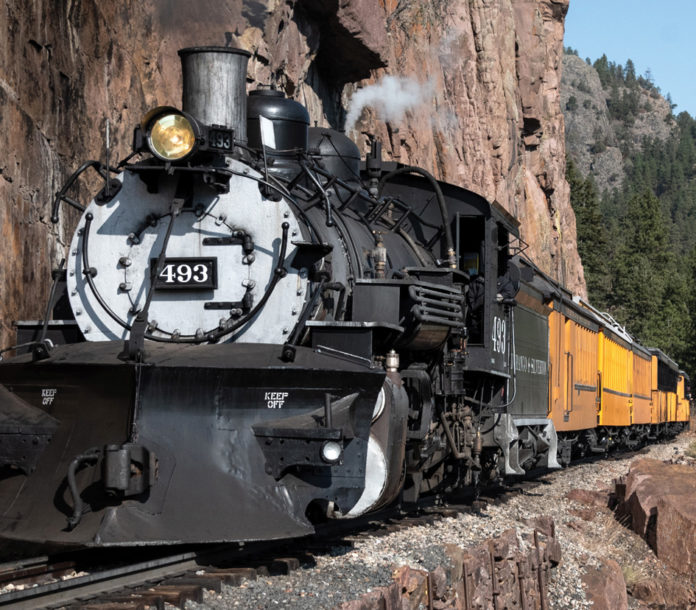
Coal-fired, steam-powered Locomotive 493 pulls the excursion Durango & Silverton Narrow Gauge Train home to Durango from Silverton along the steep canyon walls. Photo by Anthony D’Amato.

Story by Darl Devault, Feature Writer
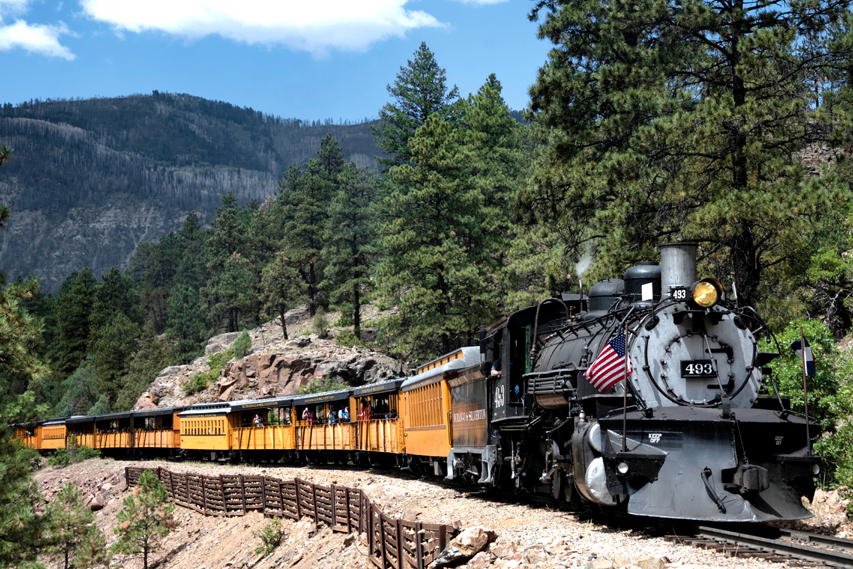
Coal-fired, steam-powered Locomotive 493 pulls the excursion Durango & Silverton Narrow Gauge Train to Silverton along the rugged San Juan Mountains. Photo by Anthony D’Amato.

For seniors trying to make a decisive quality of life recovery from pandemic restrictions booking outdoor experiences now is critical because pent-up demand will create a scarcity at premium destinations.
Seniors got to their vaccines first. With the easing of COVID-19 restrictions more Americans will be getting outside. This may mean seniors need to act quickly in planning a vacation. (story continues below)

www.Earsofoklahoma.com
Going to the Colorado high country in the summer is often on the minds of senior citizens. One of the most memorable experiences available there is taking the narrow-gauge steam locomotive sight-seeing train journey from Durango to Silverton. After a two-hour layover so visitors can eat, it returns to Durango through the scenic San Juan National Forest.
“I rode the train last year under full COVID-19 protocols where it only went halfway to Silverton. It was still a great experience,” said Larry Floyd, 68. The adjunct U.S. history teacher at OSU-OKC said, “This year going all the way on up to Silverton to spend two hours in the historic mining town and coming back would be a great bonus.”
“I also recommend driving up to Silverton to tour the wonderful mining town museum. The jail in the museum really gives you an idea of how bleak jail was at the turn of the last century. Also, only five miles out of Silverton is the Old Hundred Gold Mine tour. You find out what it was like to work underground in search of gold.”
The Durango & Silverton Narrow Gauge Railroad also provides visitors an all-inclusive full day of Silverton’s historic mining town highlights. A bus takes visitors to Silverton in the morning. They return in the afternoon on the train.
Riding the D&SNG for three hours and 40 minutes each way at 12 miles an hour is one of the most unique vacation experiences in America. The trains travel at slow speeds along the mountain cliffs due to many sharp turns. The track takes the trains 400 feet above the Animas River amidst steep mountain scenery.
The coal-fired, steam-operated locomotives are 1923-25 vintage. The train offers four classes of service, from a historic private car, first class, recently refurbished deluxe class, to a seat in vintage coach seating or open-air gondola car.
The coaches each feature bathroom facilities as both enclosed and open gondola cars allow a panoramic view of the mountains.
Concessions are available on every train.
A National Historic Landmark and National Historic Civil Engineering Landmark, the railway has been ranked in the top 10 railroad journeys in the nation for many years.
The railway features a 12,000-square foot free railroad museum in Durango near the ticket office matching its historic status. Besides many vintage exhibits, it features an 800-square-foot model railroad.
Last year for the first time in 138 years the train did not make it to Silverton, elevation 9,318 feet. The normal cadre of 159,000 tourists were denied a 45-mile full trip last summer on the 36-inch-wide rails.
The 2021 summer schedule will be released in early March. Seniors should book their tickets while these high-demand reservations are available. This is especially important to seniors who plan for the weekends where a 10 percent senior discount is offered if they book online.
Highway 550 between Durango, Silverton, and Ouray is known locally as the Million Dollar Highway. Some say it is because of the amount of gold ore many thinks is still in the roadway’s fill. Others say the name comes from the priceless views it provides of the San Juan National Forest and the highway’s actual cost through the rugged terrain. It features steep and twisting canyon-clinging roadway through the towering mountains.
From Durango the highway featuring steep drop-offs without guardrails climbs over Coal Bank Pass at 10,660 feet, and Molas Pass at 10,899 feet. Two campgrounds are nearby before the highway descends into Silverton.
Beyond Silverton on 550, drivers climb Red Mountain Pass, at 11,075 feet and descend the steep canyon walls of Uncompahgre Gorge into Ouray. Ouray, featuring a large outdoor natural hot spring, is known as the “Little Switzerland of America.” Bathers at the springs are treated to picturesque mountain views.
One way to see the historic train on its way to and from Silverton each day is to camp at the Durango North Riverside KOA, a convenient 15 minutes north of Durango. Campers can watch the train from their campsites along the gentle Animas river among Ponderosa Pines.
The KOA offers RV sites, lodging and tent sites. If tent camping, campers want a site next to the river where they can sometimes spot wildlife in the pasture across the river.
Many visitors to the area also tour the Mesa Verde National Park nearby. It sees half a million tourists each year. It is one hour and 15 minutes west of Durango by state highway and the Mesa Top Loop Road. The United Nations named the well-preserved Ancestral Puebloan cliff dwellings a cultural World Heritage Site in 1978.
Visitors can buy 1-hour, ranger-led tour tickets for the park at the Durango Welcome Center beginning at 10 a.m. up to 2 days ahead in person only and sell out quickly.
Seniors age 62 or over can buy discounted annual and lifetime National Park passes in person at a federal recreation site or through the mail. It provides the pass owner plus any number of accompanying passengers entry in a single, private, non-commercial vehicle at all Federal operated recreation sites in America.
Touring the huge Cliff Palace and the Chapin Mesa Archeological Museum offers visitors insights into this ancient Native American culture. Many of the dwellings can be seen from the Mesa Top Loop Road. It offers views of the archaeological sites and overlooks. This includes Sun Point Overlook with panoramic canyon views.
Starting just north of Durango, outfitters in town also offer rafting experiences of every level. They also offer guided 4X4 Jeep trail tours, zip line adventures and introductory rock-climbing excursions.
The folks at Mountain Waters Rafting sell a D&SNG Raft and Rail package. After a morning raft trip on the Lower Animas, customers take a shuttle for the scenic ride to Silverton along the spectacular San Juan Skyway. They explore on their own for lunch before catching the afternoon train back to Durango.
The phrase San Juan Skyway also invites visitors to the area to set out on a seven-hour minimum car tour they will not forget. The trip from Durango to Silverton is a small part of the Colorado Scenic and Historic Byway System. It forms a 235-mile loop of southwest Colorado traversing the heart of the San Juan Mountains.
Please allow this story to serve as a caution to not show up in Durango and expect to buy a ticket for the train. It just does not normally happen. The train is almost always sold out. It makes sense to book reservations at www.durangotrain.com now to enjoy one of the greatest railroad experiences available.

National Cowboy Museum Announces 2021 Honorees for 60th Western Heritage Awards

0
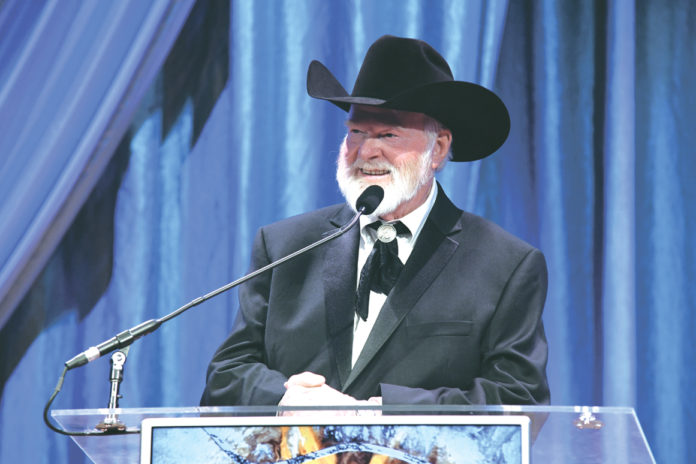
Russell “Red” Steagall is an American actor, musician, poet, and stage performer who focuses on American Western and country music genres and a previous honoree.

Some of the biggest names in popular film, literature, television and music will be recognized during the 60th anniversary Western Heritage Awards, scheduled for September 17 – 18, 2021, at the National Cowboy & Western Heritage Museum in Oklahoma City. The event has been expanded to honor individuals from both 2020 and 2021.
New this year, individuals in the literature and music categories will be recognized during a special awards luncheon on Friday, September 17. All other inductees and honorees will be recognized during the Western Heritage Awards Induction Ceremony on Saturday, September 18 beginning at 6:00 p.m.
“We’re so proud to celebrate the 60th anniversary of this iconic event, which honors the individuals and creative works that continue the special legacy of the American West,” said Natalie Shirley, Museum president & CEO. “With both the 2020 and 2021 honorees and inductees being recognized this year, it’s sure to be an exciting weekend.”
For ticket information and other schedule updates, visit nationalcowboymuseum.org/westernheritageawards.
2021 Western Heritage Awards Honoree List
LITERATURE
Western Novel
The King of Taos: A Novel by the late Max Evans, published by the University of New Mexico Press.
Nonfiction Book
Sand Creek and the Tragic End of a Lifeway by Louis Kraft, published by the University of Oklahoma Press
Art/Photography Book
Making a Hand: The Art of H.D. Bugbee by Michael Grauer, published by Texas A&M University Press
Juvenile Book
Silverbelly by S.J. Dahlstrom, published by Paul Dry Books.
Magazine Article
“Transitions in the Changing West: The Photographic Legacy of Jessamine Spear Johnson,” by Tempe J. Javitz, published in Montana: The Magazine of Western History by the Montana Historical Society
Poetry Book
Second Wind by Patricia Frolander, published by High Plains Press
MUSIC
Original Western Composition
“El Caballo Del Fuego,” recording artist Doug Figgs/The Cowboy Way, composed by Doug Figgs, Floyd Beard, Mariam Funke
Traditional Western Album
A Place to Land, recording artist Kristyn Harris, produced by Aaron Meador
FILM & TELEVISION HONOREES
Western Lifestyle Program
Today’s Wild West, E307 produced by Mark Bedor at Today’s Wild West LLC
Theatrical Motion Picture
News of the World, starring Tom Hanks, produced by Universal Pictures
Documentary
Charlie Russell’s Old West, by coproducer and director Gus Chambers and writer and coproducer Paul Zalis at MontanaPBS
Fictional Drama
“I Killed a Man Today,” Yellowstone, S3, E8 starring Kevin Costner, written by Taylor Sheridan

SAVVY SENIOR: How to Choose a Quality Nursing Home During a Pandemic

0

Dear Savvy Senior,

Can you give me some tips on how to pick a good nursing home in the COVID era? My mother had a stroke a while back and can’t use her legs any longer. I’ve been taking care of her at home, but her health has declined to the point that I absolutely can’t do it any longer. Need Help

Dear Need,
COVID-19 has hit nursing homes hard over the past year, making it extremely difficult for people attempting to choose a nursing home during this time.
While many eldercare experts suggest avoiding nursing homes during the pandemic if at all possible, some families, like yours, find themselves in difficult situations needing long-term or rehabilitative care for their elder loved one now. To help you find a good nursing home in the COVID era, and avoid a bad one, here are some steps to follow.
Make a list: There are several sources you can turn to for referrals to top nursing homes in your area including your mom’s doctor or nearby hospital discharge planner; friends or neighbors who may have had a loved one in a nursing home; and online at Medicare’s nursing home compare tool at Medicare.gov/care-compare. This tool will not only help you locate nursing homes in your area, it also provides a 5-star rating system on recent health inspections, staffing, quality of care, and overall rating.
Also keep in mind that it’s always best to choose a nursing home that’s close to family members and friends who can check in often, because residents with frequent visitors usually get better care.
Do some research: To research the nursing homes on your list, put a call into your long-term care ombudsman. This is a government official who investigates nursing home complaints and advocates for residents and their families. This person can tell you which nursing homes have had complaints or problems in the past. To find your local ombudsman, call your area aging agency (800-677-1116) or visit LTCombudsman.org.
You should also visit the Centers for Medicare and Medicaid Services website (data.cms.gov), which provides updated data on U.S. nursing home reported COVID-19 cases and deaths.
Contact the nursing homes: Once you’ve identified a few good nursing homes, call them to see if they have any vacancies, what they charge, and if they accept Medicaid.
Also, find out their staff-to-patient ratio and staff turnover rate; their COVID infection-control procedures; the percentage of residents and staff that have been vaccinated for COVID; and their facility visitation policy.
If visitor restrictions are in place, see if they offer smartphone, tablet or laptop technology assistance so you can have Facetime, Zoom or Skype video calls with your mom.
Tour your top choices: The best way to evaluate a nursing home is to visit it in person, but because of COVID, some facilities may offer limited or virtual tours only. To help you evaluate and rate a facility, Medicare offers a terrific checklist of questions that you can print at Medicare.gov/NursingHomeCompare/Checklist.pdf.
Paying for Care
With nursing home costs now averaging $255 per day nationally for a semi-private room and nearly $290 for a private room, paying for care is another area you may have questions about or need assistance with. Medicare only helps pay up to 100 days of rehabilitative nursing home care, which must occur after a hospital stay of at least three days.
Most nursing home residents pay for care from either personal savings, a long-term care insurance policy, or through Medicaid once their savings are depleted.
The National Clearinghouse for Long-Term Care Information website (LongTermCare.acl.gov) is a good resource that can help you understand and research your financial options. You can also get help from your State Health Insurance Assistance Program (SHIP), which provides free counseling on all Medicare and Medicaid issues. To find a local SHIP counselor visit ShiptaCenter.org or call 877-839-2675.
Send your senior questions to: Savvy Senior, P.O. Box 5443, Norman, OK 73070, or visit SavvySenior.org. Jim Miller is a contributor to the NBC Today show and author of “The Savvy Senior” book.

A Father of Three Suffers Complete Mitral Valve Failure And Lives to Tell About It

0
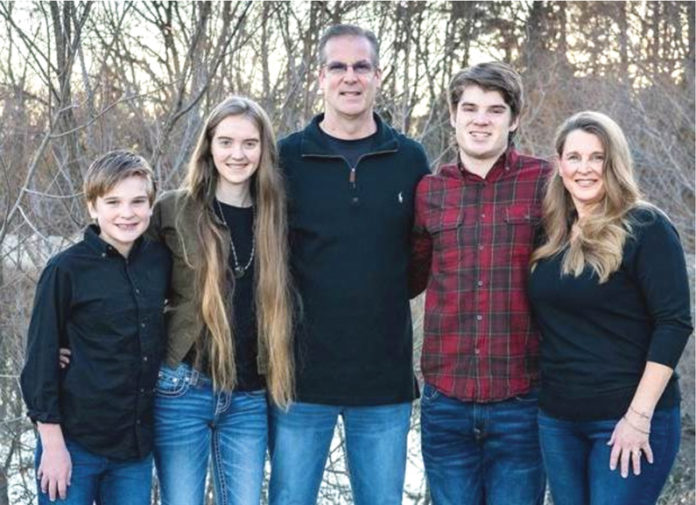
Cliff Allison discovered he had suffered acute severe mitral valve failure, likely due to a congenital heart defect, after developing a severe cough and being sent straight to the emergency room.

In June 2020, Cliff Allison of Tulsa suddenly developed a severe cough and shortness of breath. He sought urgent care, but was sent straight to the emergency room because his oxygenation was dangerously low.
“We thought he had COVID-19,” admits Cliff’s wife Crystal. “That was the fear on everyone’s mind, but all the tests came back negative.”
At age 53 with no prior health issues, Allison was admitted to the hospital in Tulsa with presumed pneumonia, but doctors were baffled because there was no obvious cause. His condition deteriorated quickly and he was moved to the intensive care unit, where they ultimately discovered the problem was with his heart. Allison had suffered acute severe mitral valve failure, likely due to a congenital heart defect.
“Because the valve was not closing, blood was backing up into his lungs with each squeeze of his heart. He was basically drowning from the inside,” explains Crystal. “He was placed on a ventilator as doctors attempted to clear his lungs enough to perform open-heart surgery. Despite all interventions, Cliff was stuck in a vicious cycle. His lungs continued to fill with fluid while his heart was too weak to clear his lungs.”
Doctors in Tulsa had exhausted all options. Allison was clinging to life when he was air-lifted to INTEGRIS Baptist Medical Center in Oklahoma City. His last hope was an advanced life-saving treatment called ECMO, or extracorporeal membrane oxygenation. ECMO does the work of the heart and lungs. It is not a cure, but it buys a patient time to heal.
ECMO is often called the ‘last hope’ for critical heart patients. For Allison, this was most definitely the case. As the helicopter landed at INTEGRIS Baptist, Cliff’s condition suddenly decompensated. Without a moment to spare, Michael Harper, M.D., a critical care intensivist, performed emergency ECMO cannulation and saved Cliff’s life.
“Mr. Allison arrived to our facility in dire straits,” confirms Harper. “His lungs were so full of fluid that they could not absorb much oxygen, and his heart was failing to the point that his blood pressure was critically low. He was dying before our eyes. He wouldn’t have survived another hour without ECMO. Our team moved rapidly to get him on support and stabilized, but this was only the beginning of his long road to recovery.”
Once on ECMO and stabilized, Marshall Bell, M.D., a cardiovascular surgeon with the INTEGRIS Heart Hospital, was finally able to perform the life-saving open heart surgery Allison needed to replace his mitral valve.
“I received a call from Dr. Michael Harper about a patient with a ruptured mitral valve. He was young, in renal failure, had shock liver and severe pulmonary edema. He was very unstable and would likely not survive the night. We both agreed to move ahead aggressively,” says Bell. “While the surgery went smoothly, we still had a long way to go before Cliff could be considered healed.”
Although the surgery was a success, it took weeks to wean Allison off of ECMO. He suffered several setbacks and was hospitalized for a total of 47 days, mostly in intensive care.
“Life is so fragile,” states Crystal. “In an instant we went from being a normal healthy family to one facing a sudden medical crisis. I found myself in frightening and unfamiliar territory, but I never felt alone. The staff at INTEGRIS showed such compassion, not just for Cliff, but for me. I will forever be grateful for second chances.”
Against the odds, Cliff miraculously pulled through. “So many prayers were answered. It is only by the grace of God and the dedication and skill of my care team that I am alive today,” claims Allison. “Because of them, I am still here to enjoy life with my wife of 28 years and my three children. I’m very grateful to still be here for my family.”
Cliff got to go home from the hospital in late July. Through extensive rehab and physical therapy, he has made a full recovery. He continues to live his life with no restrictions, only newfound gratitude.

Local jeep club gives nurses a lift

0

by Bobby Anderson, Staff Writer

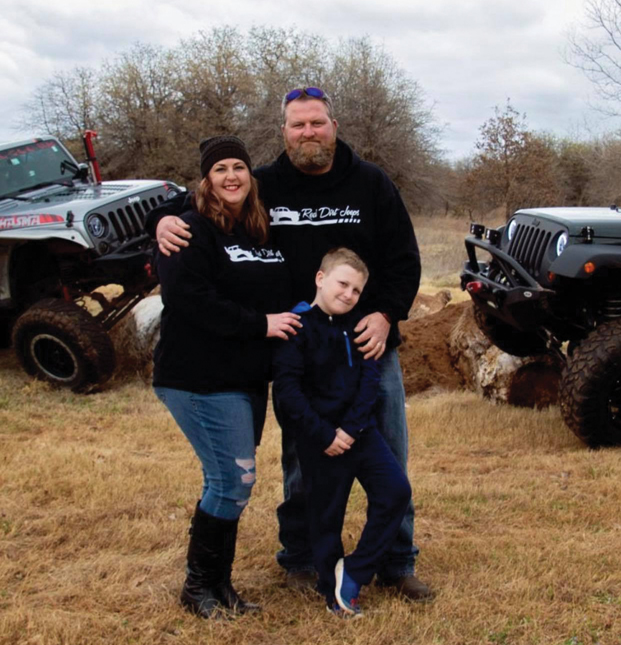
Chris Watham and wife, Megan, helped coordinate more than 300 rides to work for nurses and other medical professionals with the Red Dirt Jeep Club.

As Mother Nature ramped up and roads became perilous, a local group recently helped metro nurses shift into four-wheel drive.
The term “essential personnel” should now officially include Chris Watham and his nearly 800 friends in the Red Dirt Jeep Club who gave more than 300 free rides to work after the winter weather hit.
“I can’t take credit for this. I saw it on a group page Northeast of us,” Watham said. “A year ago, they did it one stormy night. You know, me and my wife were sitting here thinking ‘why couldn’t we do this.’”
The idea of setting up a hotline to coordinate rides came to fruition within 48 hours. Watham put out the call to the club’s membership.
“I immediately had about 10 that said ‘let’s do it,’” Watham recalls. “The rest slowly trickled in.” (story continues below)

www.mcmmedicare.com
That was February 11 just a few days before the storm was slated to move in.
He put the word out to local hospitals about what the group was planning and set up a Google Voice number to handle calls and texts coming in.
Watham’s wife, Megan, initially began manning the phone. She was quickly overrun with requests and had to recruit two helpers as two more lines were added.
“The first and foremost in my and my wife’s minds was safety,” Watham said. “I wanted our drivers to make sure they handled the snow. A lot of them are transplants from the north – Ohio, Detroit, Chicago – so they’re comfortable. We wanted to follow CDC guidelines and make it as safe as we could hauling strangers in a strange vehicle.”
Watham said through the group’s work with various local non-profits like the Jaxon Kade Foundation and Caring Cradles the club’s name was already familiar with a lot of nurses.
“A lot of NICU nurses I ended up hauling already knew about that and the club by that,” Watham said. “We always try to strive to have a positive influence in the world. It put most of our riders at ease.”
Watham lost count on the number of calls and texts.
“I think it was awesome,” Chris said. “Our riders loved it. When I was manning the phones and calling back I can’t remember the number of peers we heard on the phone that were so grateful to have help and were so worried about getting to the hospital because half of their numbers were decimated by call-ins or Covid. They loved it just because they knew for a fact they could get there and get home.
“I had several tell me ‘you don’t understand how much this means to us.’”
Watham wouldn’t allow any of the drivers to accept tips.
The furthest ride out of the metro was Choctaw. A few calls came in from Calumet and Pauls Valley but there weren’t enough drivers.
As the weather worsened, calls came in from Tulsa and then eventually Dallas and Fort Worth.
“I’m not sure how word made it down there,” Watham said.
Trista Matthew, RN, already knew her upcoming shift was going to be tough. Carrying the charge nurse phone for three ICUs on likely a short-staffed day, Matthew was preparing for the stress.
But she was more concerned about forecasts calling for nearly 15-inches of snow and how she was going to make it to work.
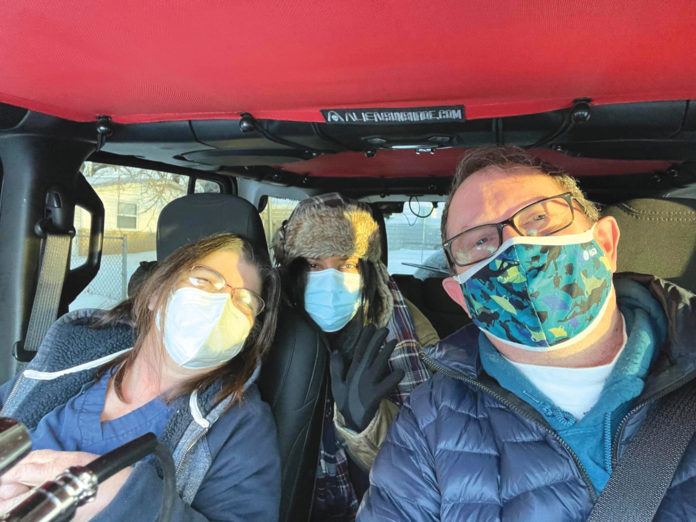
She heard about the offer on an ICU Facebook page. She texted the number and they called her back and scheduled her ride.
“My normal drive takes about 25 minutes and my ride picked me up in Northwest Oklahoma City all the way from Piedmont to drive me to OU,” Matthew said. “She was super nice and flexible with picking me up, which was very helpful since we got put on a code yellow and I couldn’t leave until about 9:30 p.m. when it was officially decided there was enough staff to cover night shift.”
Matthew said her rides were uneventful, as they avoided I-44 and drove Northwest Expressway to avoid the I-44 bridges.
“That road is awful on a good day,” she said.
She said the rides were a blessing on an already stressful day.
Watham said he doesn’t have plans to do the rides on a regular basis but things can change.
“I know my crew is gung-ho. If there’s a need for it again and we have real bad weather (maybe),” Watham said. “It was a ton of work, a ton of time, and a ton of gas spent.
A Jeep club in Tennessee contacted Watham shortly after word got out.
“They’re going to do it,” he said. “I got the idea from another Jeep group. It’s so cool we can pass it around. It’s just the right people in the right places.”

Baseball returns to the Chickasaw Bricktown Ballpark

0
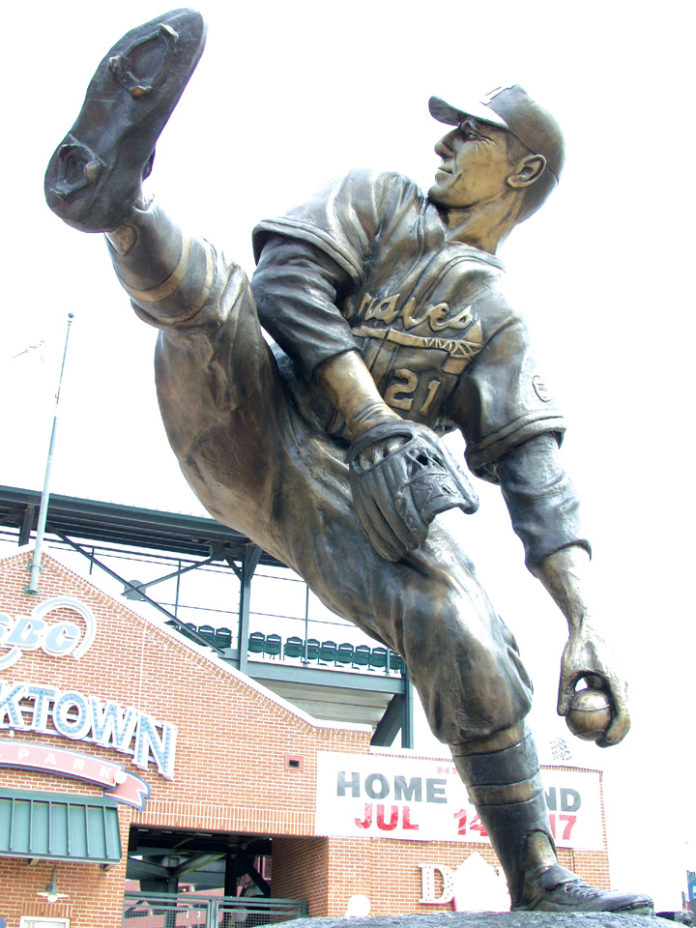
This 861-pound bronze statue honoring National Baseball Hall of Famer and winningest lefty pitcher ever Warren Spahn stands in a plaza just outside at the right field corner of Chickasaw Bricktown Ballpark. Noted Edmond artist Shan Gray sculpted Spahn.

by Darl Devault, Feature Writer

Seniors and their love of Minor League Baseball sat out last season with no crack of the bat, no roar of the crowd to excite the fans. The game is back, but seating is limited due to the pandemic. This makes this early notice to seniors important, so they can buy tickets before they are gone.
Seniors eager for games to begin again at the Chickasaw Bricktown Ballpark in downtown Oklahoma City need to jump on ticket sales early.
For seniors who played the game in their youth, to those who attended with the youth in their family this important business. Getting to see who is pitching well, who is hitting better is likely to be decided by who buys their single game tickets for April and May home games beginning March 9. Season tickets are available now.
Otherwise it is Internet/radio where award winning Dodgers’ sportscaster Alex Freedman delivers the play-by-play on AM 1340 “The Game” or through the iHeartRadio mobile app.
The Oklahoma City Dodges will play 142 games against nine different opponents in the newly created Triple-A West. The Dodgers open play Thursday, April 8 on the road against the Tacoma Rainiers (Seattle Mariners) in their only matchup for the season.
The 72-home-game season begins Thursday, April 15 against traditional rival Round Rock Express (Texas Rangers). The rest of the season will also see Thursday through Tuesday home stands, as the schedule was designed for Wednesdays off.
“This is the most anticipated season schedule in Oklahoma City baseball history,” said OKC Dodgers President/General Manager Michael Byrnes. “After not being able to have a season last year due to health and safety concerns, this announcement (schedule) is a significant step toward baseball returning to Chickasaw Bricktown Ballpark. Last year we saw 16 former OKC players help the Los Angeles Dodgers to a World Series Championship, and we cannot wait to see what the future has in store.”
With the six-game length of each series, the team will have three separate extended 12-game homestands: June 3-15, July 15-27 and Aug. 26-Sept. 7.
The ballpark will open with a reduced capacity from its normal 9,000 sellout count to begin the 2021 season. The Dodgers are working with the OKC-County Health Department on making the fan experience as safe as possible.
To reduce travel to benefit player wellness, all series between the Dodgers and their opponents will be for six games. This will lengthen the season to Sept. 21, with no All-Star game or season ending playoffs.
Independence Day week features games against the Salt Lake Bees (Los Angeles Angels) July 1-6. Labor Day week will also see the team at home in Bricktown Sept. 2-7 versus the Albuquerque Isotopes (Colorado Rockies).
Most of the games will be against teams in the East Division, including Albuquerque, El Paso (San Diego Padres), Round Rock and Triple-A newcomer Sugar Land (Houston Astros). The traditional rivalry with Round Rock continues with 36 matchups in 2021. In addition to Salt Lake, the Dodgers will also host three other members of the West Division: Las Vegas (Oakland A’s), Reno (Arizona Diamondbacks) and Sacramento (San Francisco Giants).
Fan-friendly surroundings at the ballpark is a complete recipe for family fun. The venue offers amenities designed to entertain children of all ages.
Catering to families is what these games are all about at the ballpark. Certain games feature face painting, clowns, jugglers, inflatables, toys, climbing structures. There is plenty of room for kids to play on playground structures and on the grassy hillside.
A Speedball game allows fans to throw a baseball past a radar gun twice to establish an average speed. If they can throw the third ball at the same speed as the average, they win a prize.
The ballpark features an outdoor picnic area in the outfield along the large concourse. It is wide and runs around the entire facility. This allows fans to walk all the way around the park and see every angle of play from all the dimensions of the venue. Parents can attend to their restless little ones and still watch the game by showing them the pitchers warming up in both bullpens from the concourse in the outfield.
Many fans enjoy looking at the history of baseball in Oklahoma portrayed on murals around the concourse. The ballpark also boasts of three larger-than-life bronze statues of Oklahoma’s National Baseball Hall of Famers Mickey Mantle, Johnny Bench and Warren Spahn.
Again, single-game tickets for April and May home games will go on sale March 9. However, fans can currently buy season ticket packages and/or group outings by calling (405) 218-1000 or by visiting okcdodgers.com/tickets.

Retired Air Force physician leaves $2.2 million to OMRF

0
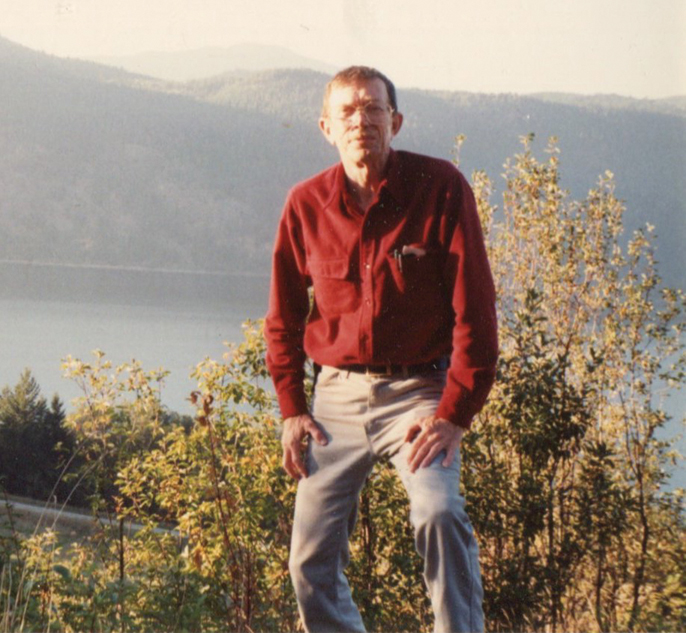
Retired U.S. Air Force physician Dr. Bob Mote was soft-spoken and private. The Moore, Oklahoma, outdoorsman made a single $75 gift to the Oklahoma Medical Research Foundation in 1989. Photo form OMRF

Wesley Robert “Bob” Mote, M.D., was soft-spoken and private. A U.S. Air Force physician for 39 years, Mote still lived in the 1,200-square-foot Moore home he purchased in the ‘60s when he died at age 83.
Mote, who never married and had no children, made a $75 gift to the Oklahoma Medical Research Foundation in 1989. When he died, both foundation officials and Mote’s family were more than a little surprised to learn of a second gift to OMRF worth $2.2 million.
“We were shocked to learn the size of his estate,” said Mote’s great-nephew and namesake, Wes Mote, who said that his great-uncle lived a modest life. “Money meant very little to him. He cared nothing at all about impressing people.”
A second-generation physician, Mote’s family traces his love of medicine to a childhood spent around his father’s clinic in Ardmore. After graduating from medical school at the University of Oklahoma, the young man who had devoted hours of his childhood to writing letters to soldiers during World War II joined the Air Force.
Following posts overseas and stateside, Mote took a staff position at Tinker Air Force Base. He devoted nearly four decades of his life to the care of servicemen and servicewomen and retired as Tinker’s chief of occupational medicine.
Beyond his medical career, Mote was an outdoorsman who enjoyed traveling the world, logging thousands of miles over his lifetime. “He would call us and say, ‘I’m calling from China,’ or ‘I’m headed to Costa Rica,’ or somewhere else,” said Wes Mote’s wife, Leea. “He had just gotten back to Colorado after following the Lewis and Clark Trail and was about to head home when he died unexpectedly.”
Although he was quiet-natured, his great-uncle radiated empathy and had “a manly way of being gracious and caring,” said Wes Mote. He especially delighted in mentoring young medical students, going out of his way to call and check in on them as their careers progressed. “He was so excited about what was to come in medicine,” said Wes Mote.
An avid reader with an insatiable intellectual curiosity, Mote remained a student of medicine even after his retirement. According to Wes Mote, he attended seminars around the country and kept up with the latest advancements in science and medicine.
Because Mote did not designate his donation to a particular area of science, the gift will fund research at OMRF where it is needed most. At OMRF, scientists work on projects affecting a wide range of illnesses, including cancer, Alzheimer’s and heart disease.
“Dr. Mote’s generosity will make a difference in the lives of countless Oklahomans and people everywhere,” said OMRF Senior Director of Development Sonny Wilkinson. “It’s clear that the hope for a brighter future medical research offers to us all mattered deeply to him.”
Wes Mote agrees. “He’d been around medicine since the time he was born, so to us, it makes perfect sense that he left his estate to research,” he said. “I think probably his only regret about dying was missing out on what’s to come in medicine.”

OU Art Museum to Hold Virtual Event About OK Artist Ed Ruscha

0

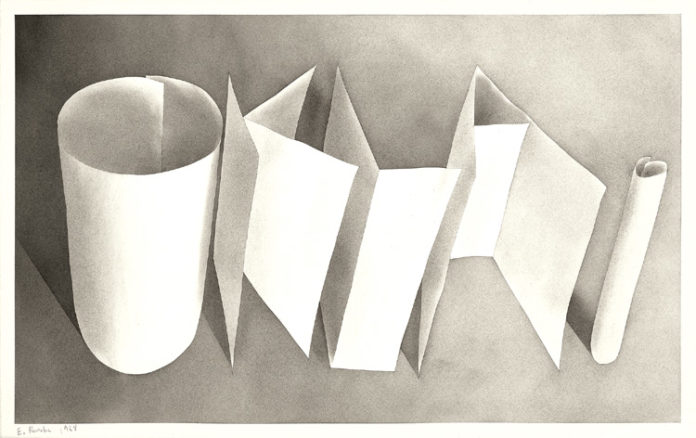
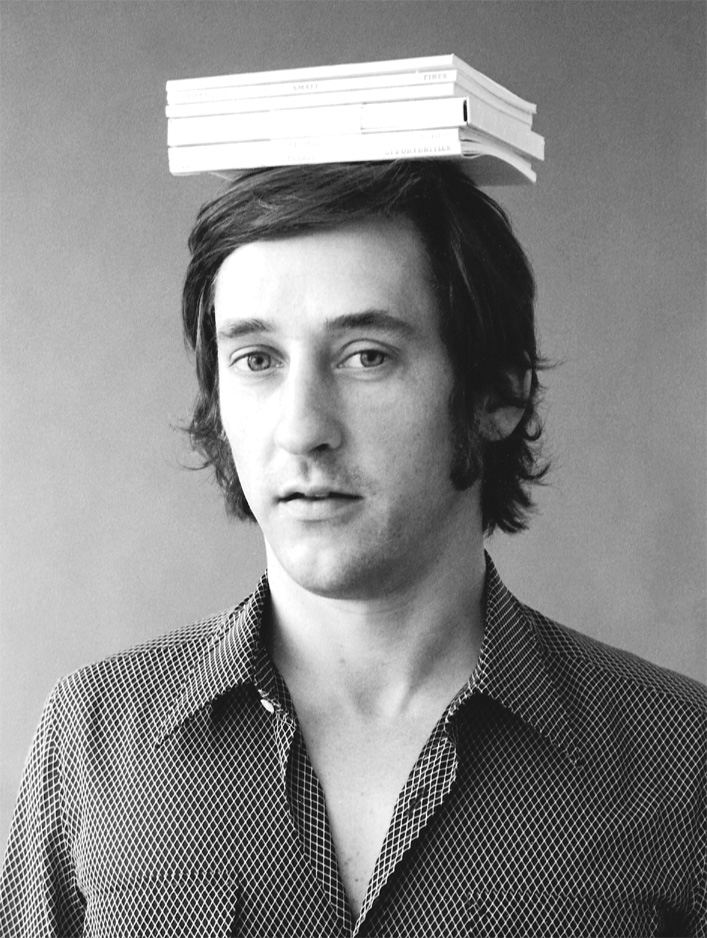
Artist Ed Ruscha and two current exhibitions of his work, OK/LA at the Fred Jones Jr. Museum of Art and Ed Ruscha: OKLA at Oklahoma Contemporary, will be the subject of a virtual panel discussion set for 3 p.m. Friday, March 5. Panelists will include the curators of both exhibitions, OKC Mayor David Holt and Los Angeles Mayor Eric Garcetti.
Longtime Ruscha enthusiasts Mayors Holt and Garcetti will speak to Ruscha’s connections to their communities, both of which the artist has called home. Mark White, executive director at the New Mexico Museum of Art and curator of the OK/LA exhibition, will discuss Ruscha’s connections with five fellow Oklahoma artists who also made Los Angeles home in in the late 1950s. Alexandra Schwartz, cocurator of the Ed Ruscha: OKLA exhibition at Oklahoma Contemporary, and Kirsten Olds, a contributor to the exhibit’s catalog, will examine Ruscha’s oeuvre as interpreted in Oklahoma Contemporary exhibition. The two landmark exhibitions, OK/LA at the Fred Jones Jr. Museum of Art in Norman, Oklahoma, and Ed Ruscha: OKLA at Oklahoma Contemporary in Oklahoma City, explore the lasting influence of Oklahoma on the career of Los Angeles-based artist Ed Ruscha. OK/LA, which opened Sept. 10, 2020, and runs through March 7, features the work of six friends and former Oklahomans who left the state in the late 1950s for Los Angeles: Patrick Blackwell, Joe Goode, Jerry McMillan, Ed Ruscha, Paul Ruscha and Mason Williams. Both exhibitions are free and open to the public.
Ed Ruscha: OKLA at Oklahoma Contemporary, on display Feb. 18 through July 5, focuses exclusively on Ruscha and his Oklahoma roots. Over the course of six decades, Ruscha has created a wide range of artwork varying in mediums that focus on the American Midwest and life on the road. This exhibition surveys the ways in which the Midwest has impacted Ruscha’s life and artwork. Registration for the March 5 event can be found on the museum’s website and event page: ou.edu/fjjma/Events. A link to join the webinar will be emailed upon registration.

LOOKING BACK: Paul ‘Crocodile Dundee’ Hogan is back – sort of

0
Blu-ray cover for The Very Excellent Mr. Dundee starring Paul Hogan - Lionsgate.

By Nick Thomas

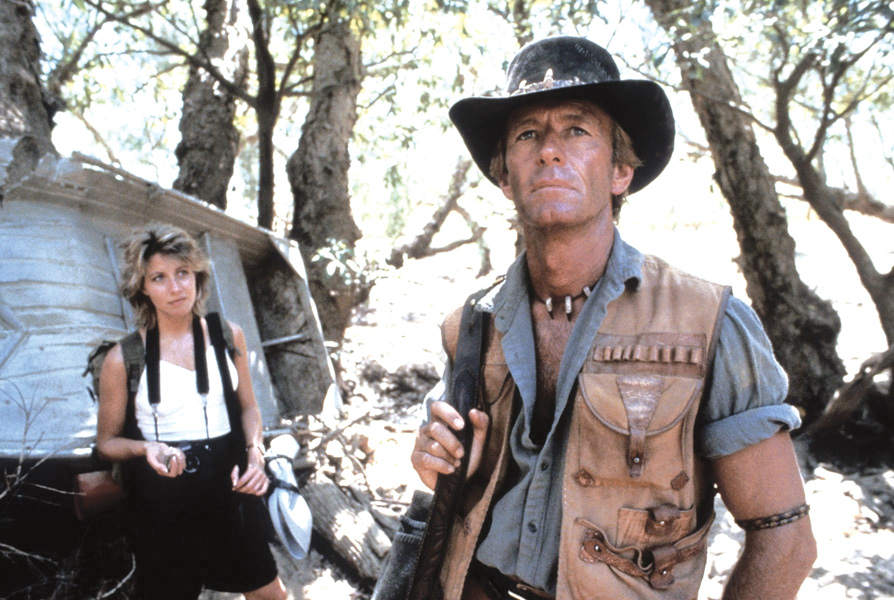
Paul Hogan as Crocodile Dundee with co-star Linda Kozlowski Rimfire Films, distributed by Paramount.

It’s been 35 years since Paul Hogan unleashed the iconic character of rugged reptile wrestling Mick Dundee onto the world in the 80s hit film “Crocodile Dundee” and two sequels. Hogan returned last December – via digital download in the U.S. – in “The Very Excellent Mr. Dundee” released on Blu-ray/DVD February 16.
The Aussie actor is quick to point out that “Mr. Dundee” is not another Dundee movie, but a self-parody where the quiet-living Hogan (starring as himself) falls afoul of a series of ill-fated self-inflicted blunders that snowball, sullying his good reputation. The film also takes a gentle jab at celebrity culture and social media.
“But it’s not a deep meaningful movie, just a bit of fun,” said Hogan from his Los Angeles home. “While it pokes fun at Hollywood rules and how social media through the modern online community can give you a reputation that you don’t deserve, it’s mostly aimed at me.”
The screenplay, written by longtime collaborator Dean Murphy, is mostly fantasy sprinkled with factual tidbits about the real Hogan. Many more facts about Hogan’s life and career are recounted in his autobiography, “The Tap-Dancing Knife Thrower: My Life (without the boring bits),” published last year.
While the book has been highly praised, critics were not so generous when “The Very Excellent Mr. Dundee” was first released last year. No surprise that didn’t bother the unflappable Hogan. “I ignored it, you just take it as it comes.”
Critics were much kinder when “Crocodile Dundee” was released in 1986 to international acclaim. “Its impact was staggering and it turned out to be the most successful independent movie ever,” said Hogan.
The original film yielded one scene destined for cinematic comedy history where Hogan defensively brandishes that giant hunting knife on the streets of New York City.
“I’ve still got the original knife, safe in a bank,” said Hogan. “We also had rubber and wooden ones for various scenes, but I co-designed the original. It might be worth a bit of money to a collector now!”
Then there was the heart-stopping scene where Hogan’s love interest, played by Linda Kozlowski, encounters a huge crocodile.
“That was mechanical, but there were real crocs in the water during filming,” he recalled. “We had guys up trees with rifles just in case one came along and ruined everything.”
So did Hogan consider asking Kozlowski, his co-star and former wife, to take a role in the new film?
“No, she’s given up acting,” he said. “I see Linda a lot and we’re still friends. She was living in Morocco for a while but now is back in LA.”
Despite all the money and fame his Dundee character generated, Hogan has remained grounded, unpretentious, and largely distanced from the Hollywood scene.
“I never really fitted in,” he admitted. “After the success of Dundee, I received all sorts of script offers, good and bad. But I wasn’t interested in becoming an actor for hire. My joy was seeing something that I wrote come to life on the screen.”
While fans may be disappointed that the new movie only features a luckless Hogan as himself, the spirit of Mick Dundee lingers throughout the film. Now 81, however, Hogan has no plans to resurrect the character.
“The original worked fine. I’d like to just leave it alone now.”
Nick Thomas teaches at Auburn University at Montgomery, Ala., and has written features, columns, and interviews for over 850 newspapers and magazines.