


The Retired Senior Volunteer Program (RSVP) of Central Oklahoma announces new members to its board of directors, Maria Fernanda, and to its advisory council, Jamie Jeter.
Fernanda is the Community Outreach Specialist with Blue Cross/Blue Shield of Oklahoma. She holds a bachelor’s degree in family studies from Southern Nazarene University. She serves on the board of Possibilities Inc.; Calm Waters, serving on the fundraising committee; and the United Way of Central Oklahoma, serving on the allocation committee. She has served as a member of the Calle Dos Cinco civic group and served on the Citizens Advisory Board for the City of Oklahoma City. In addition, she has volunteered with Hilltop Pediatrics and the Integris Mobile Clinic.
RSVP of Central Oklahoma welcomes back seasoned advisory council member Jamie Jeter, who previously served a three-year term on the advisory council. Jeter retired from working in contracting and finance at Tinker Air Force Base after 37 years, serving in management the last eight years of her career. She is an avid volunteer, serving at Alliance Health, Midwest City, as auxiliary treasurer and office manager and a strong supporter of RSVP’s mission.
Since 1973, RSVP of Central Oklahoma has helped older adults continue to live with purpose and meaning by connecting them with rewarding community volunteer opportunities, including RSVP’s Provide-A-Ride Senior Transportation Program. RSVP is a partner of AmeriCorps Seniors and the United Way of Central Oklahoma. To learn more about RSVP of Central Oklahoma, call 405-605-3110 or visit rsvpokc.org. You can also follow RSVP on Facebook at facebook.com/RSVPokc.
by Bobby Anderson, Staff Writer
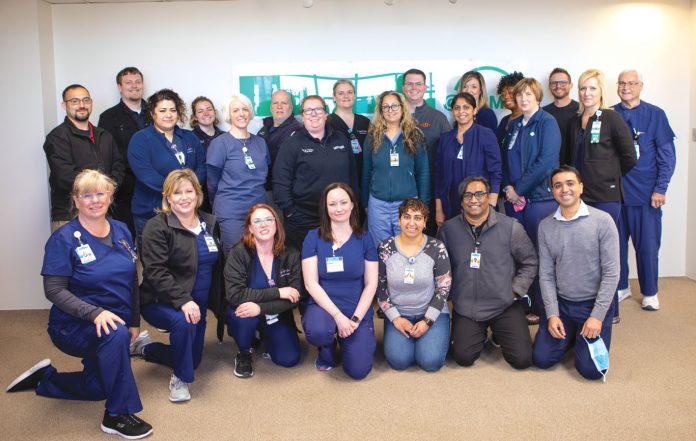
With hospitals nationwide struggling with bed availability, Integris Health has embarked on a new healthcare model that could revolutionize the way patients receive care, all in the comfort of their own homes.
“Really what opened up the need for this is clearly the surge we’ve had with the Covid pandemic,” said Lisa Rother, RN, director of Integris Health@Home. “It’s opened up payor’s eyes to actually reimburse hospitals for innovative care models that allow us to extend access to care within other creative environments such as the home environments.”
With the onslaught of COVID-19, health systems everywhere have turned to technology to find better solutions for patients. Virtual doctor visits once thought impossible are now considered routine. In the pursuit of constant innovation, Integris Health partnered with Medically Home Group, Inc. to provide hospital-level care to patients in the comfort and convenience of their own homes.
“We have to demonstrate all of the care we could provide in a brick and mortar hospital that we would be able to support and provide that same level of care in the home environment,” Rother said. “Now that we have a payor model that will allow us to bill for patient care it really allowed us to seek partners in helping us to provide a model of care we can deliver in that home environment.”
The command center that receives all the data is monitored 24/7 by a team of Integris Health physicians and nurses who will respond to a patient’s medical needs via video or telephone.
Daily in-home visits by a nurse practitioner and other health care professionals are also part of the treatment plan. IV therapies, oxygen treatments, lab tests, mobile imaging like x-rays, and ultrasound are all performed in the home. Other services include skilled nursing, medications, infusions, behavioral health, and rehabilitation.
Integris Health@Home at Integris Baptist and Southwest Medical Centers are now seeking qualifying patients to receive acute hospital-level care in the comfort and convenience of their own homes.
Patients consenting to admission into this model of care must meet inpatient admission criteria, live within a 30-mile radius of the admitting hospital, and have the clinical and social stability to receive care at home.
Common conditions for patients receiving acute care in the home include congestive heart failure, respiratory ailments, diabetes complications, infections like pneumonia, as well as COVID-19.
“We began researching innovative ways to provide this type of care to eligible patients before the pandemic began, but the COVID crisis prompted us to accelerate our timeline,” said Timothy Pehrson, president, and chief executive officer of INTEGRIS Health. “We see the benefit as twofold. The program allows our patients to heal in a familiar environment surrounded by loved ones while improving access by opening up beds for other high acute issues.”
Qualifying patients will receive a remote patient monitoring kit and other home health equipment as needed for their particular diagnoses. Standard equipment includes a blood pressure monitor, pulse oximeter, cellular-enabled digital tablet, and a digital scale. Based on need, additional equipment such as a continuous heart rate and oxygen sensor will be added. All the devices connect to a tablet through Bluetooth and transmit vital signs to a remote monitoring center. Patients are also given an emergency call bracelet.
The Integris Health@Home Command Center hospitalists and nurses connect with the patient through telehealth visits scheduled regularly throughout the day coupled with caregiver visits to the home to administer medications, deliver equipment and supplies, and perform clinical procedures.
The Integris Health@Home Command Center is located at Integris Baptist Medical Center Portland Avenue
Rother said patients will also have the ability to contact their nurses directly as needed through the push of a button.
“Technology is enabling us to provide the right care to patients in a way that is safe and helps them recover where they are most comfortable,” Pehrson said. “As the Hospital at Home model continues to expand across the country, we expect more and more patients will choose to receive this high-quality care at home.”
Research backing the clinical benefits of remote patient monitoring has been available for well over a decade, with a study published back in 2005 showing that hospital-at-home care resulted in patients having a shorter length of stay — 3.2 days versus 4.9 days — and fewer complications.
A Kaiser Permanente study revealed that of 13,055 patients enrolled in its COVID-19 Home Monitoring program between April 2020 and February 2021, 95.5 percent recovered and completed the program, 10.6 percent were admitted to the hospital, and 0.2 percent died. The model will be offered at Integris Canadian Valley and Integris Health Edmond in late spring.
As COVID-19 continues to spread across the world, the workforce challenges in the U.S. long term care industry, which have been exacerbated by the pandemic, remains at a crisis level. Unless Congress acts, nursing homes and assisted living communities will increasingly have to take drastic measures, furthering limiting access to care for vulnerable seniors.
According to the Bureau of Labor Statistics (BLS), nursing homes have lost 238,000 caregivers since the beginning of the pandemic. A report from the American Health Care Association/National Center for Assisted Living (AHCA/NCAL) summarizing BLS data with new January numbers showed that overall long term care workforce levels are the lowest they have been in 15 years.
While a labor shortage exists across many health care settings, BLS data illustrates the dramatic scope of the challenge facing the long term care industry in particular. For instance, hospitals have lost two percent of their workforce, compared to a 15 percent workforce decline among nursing homes and a seven percent decline among assisted living communities.
As pandemic burnout worsens, skilled caregivers are looking elsewhere for work. While many long term care providers have dedicated extensive resources to honor frontline heroes’ extraordinary efforts, current government reimbursement rates limit their ability to make additional investments and compete against other employers for workers. Without action from policymakers, our nation’s most vulnerable seniors risk reduced access to care as facilities are forced to limit admissions or even close down altogether.
On Thursday morning, the U.S. Senate Subcommittee on Employment and Workplace Safety will hold a hearing to examine the pandemic-related workforce shortage in health care settings. As this historic crisis continues, the hearing reinforces the need for lawmakers to take new action to ensure long term care providers have the resources and recruitment tools they need to provide the high-quality care our nation’s seniors deserve. This is the time for lawmakers to make a commitment to investing in our health care heroes and building up the next generation of caregivers.
Before any more long term care facilities have to limit admissions or close their doors, lawmakers should provide our frontline caregivers with the resources they need.
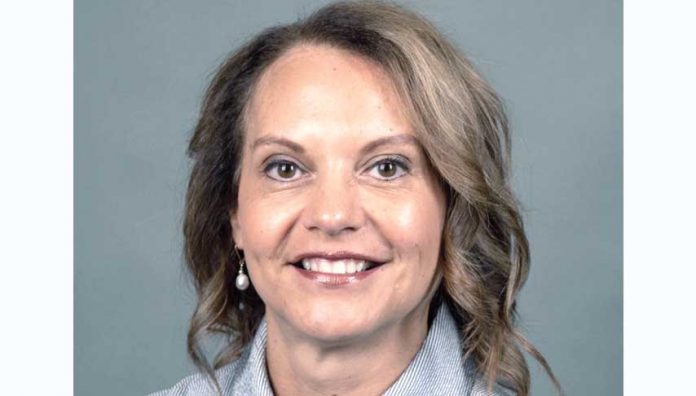
Robyn Sunday-Allen of Edmond was selected as the 2022 Oklahoma Mother of the Year®. She is the 76th woman in Oklahoma history to hold this honor. She (Cherokee) currently serves as the Chief Executive Officer for the Oklahoma City Indian Clinic. She has been recognized for her work and leadership with the Indian Health Service’s Lifetime Achievement Award; Luana Reyes Leadership Award; The Journal Record’s 50 Making a Difference Woman of the Year Honoree 2009, 2010, and 2012; The Journal Record’s Oklahoma’s Most Admired CEO Honoree 2009-2011; and was inducted as the first-ever CEO in Oklahoma’s Circle of Excellence. An Oklahoma proclamation from Gov. Brad Henry declares November 14 Robyn Sunday-Allen Day.
Sunday-Allen, along with honorees from states across the United States, will be recognized during the 87th National Convention of American Mothers, Inc. this April. One honoree will be named the National Mother of the Year® during the convention.
Since 1935, American Mothers, Inc. has had the honor of searching for and selecting the Mother of the Year® in every state, district and territory in the country. “Now more than ever, people are seeing the work that goes into motherhood and truly recognizing the resiliency of mothers. It is an honor to be an organization that has built a legacy network of moms across the nation while sharing their stories of strength and inspiration,” said Joyce Stevens, President of American Mothers, Inc.
For a full list of Mother of the Year® honorees please visit AmericanMothers.org. Nominations for Mother of the Year® are accepted annually, Mothers Day – September 15. For general media inquiries or to set up an interview with the 2022 Oklahoma Mother of the Year®, contact Sabrina Wisher-DeWitt at [email protected].
Robyn Sunday-Allen (Cherokee) currently serves as the Chief Executive Officer for the Oklahoma City Indian Clinic. She attended the University of Oklahoma, where she received her BA in Psychology, BSN in Nursing, and MPH. She is currently on the Board of Advisors for Greater OKC Chamber of Commerce; State of Oklahoma Chamber of Commerce; New View Oklahoma; Oklahoma Quality Foundation. She is also a Graduate of Leadership Oklahoma City Class XXIX and Leadership Oklahoma Class XXVI. She has been recognized for her work and leadership with the Indian Health Service’s Lifetime Achievement Award; Luana Reyes Leadership Award; The Journal Record’s 50 Making a Difference Woman of the Year Honoree 2009, 2010, and 2012; The Journal Record’s Oklahoma’s Most Admired CEO Honoree 2009-2011; and was inducted as the first-ever CEO in Oklahoma’s Circle of Excellence. An Oklahoma proclamation from Gov. Brad Henry declares November 14 Robyn Sunday-Allen Day. She is married to Russell and they have one son, Eli.

by Greg Schwem
Sorry, New Zealand Parliament. While I support mask mandates, my allegiance is also to Barry Manilow.
Last week, while attempting to disperse anti-mask protesters who gathered outside the government’s headquarters in Wellington, New Zealand, Parliament officials resorted to a rather, um, unique tactic: blasting the songs of Barry Manilow, the guy who writes the songs.
Had I been part of the protest, I would have politely tapped a Parliament member on the shoulder and said, “Please turn up the volume. And don’t just limit it to the hits. Dig deeper into the Manilow catalogue. Get my blood flowing with a little ‘Riders to the Stars’ and then tug at my heartstrings with ‘Lonely Together.’”
Admit it, we all have that one artist we’re secretly embarrassed to admit we admire. For me, it’s Barry. Yes, I am on a first name basis with him. Deal with it, haters! You have your Kanye; I have my Barry.
I’ve been a Barry fan since winning tickets, via a radio station giveaway, to a Manilow — sorry, a Barry — concert at Chicago’s Auditorium Theatre in January 1977. Snippets from that tour can be found on “Barry Manilow Live,” the album cover featuring Barry in a royal blue, sequin-studded outfit that he probably was lowered into via hydraulics.
Not only did Barry deliver the hits but he also entertained his fans by singing his “VSM” (Very Strange Medley), a series of well-known commercial jingles that Barry either wrote or sang before the big bucks came his way with “Mandy” and “It’s a Miracle.” Seriously, how many artists can have an entire audience singing, “Get a bucket of chicken, finger lickin’ good, have a barrel of fun, goodbye ho-hum”?
Who knows? Parliament may have waved the white surrender flag and allowed the entire country to discard their masks had protesters begun crooning those lyrics.
If your goal is to annoy an audience, you can’t play the music of somebody who, at 78, is still packing them in, either on the road or at his Las Vegas residency, despite a raspy voice and far too much plastic surgery. Similar stars approaching octogenarian status don’t receive that kind of treatment. I’m sure it never entered Canadian Prime Minister Justin Trudeau’s mind to remove Ottawa truckers from blocking the Canada-U.S. border by blasting Elton John. Or the Rolling Stones.
So, why single out Barry? His songs too are ingrained in our mental jukeboxes, even if we’re afraid to say it. Several years ago, I saw one of those pedal bar tours — basically a keg party on wheels — making its way through downtown Chicago. Its passengers, all half of Barry’s age and in various stages of inebriation, were singing, “Her name was Lola, she was a showgirl…” in whatever key was comfortable.
Nobody asked them to disperse.
In Parliament’s defense, officials did choose other tunes besides Barry’s. “Macarena,” the Los Del Rio song that spawned a dance craze in 1996, got numerous spins and, yes, that would have had the desired effect on me. I probably would have offered to not only wear a mask but distribute masks if it meant never having to hear it again.
Barry songs are played often but not ad nauseum, making them unlikely “nails on a chalkboard” candidates. Next time Parliament, consider the following:
“Call Me Maybe” by Carly Rae Jepsen.
“Blurred Lines” by Robin Thicke.
“All I Want for Christmas” by Mariah Carey.
Anything by the Spice Girls.
Just leave Barry alone to do his thing while he still can. His concerts are bucket list candidates for fans of a certain age, and even younger audience members who get dragged to see him usually end up singing along at some point. I have hopes that my daughters, ages 19 and 25, might accompany me to a Barry concert someday.
OK, that would be a miracle. A true-blue spectacle miracle.
(Greg Schwem is a corporate stand-up comedian and author of two books: “Text Me If You’re Breathing: Observations, Frustrations and Life Lessons From a Low-Tech Dad” and the recently released “The Road To Success Goes Through the Salad Bar: A Pile of BS From a Corporate Comedian,” available at Amazon.com. Visit Greg on the web at www.gregschwem.com.
You’ve enjoyed reading, and laughing at, Greg Schwem’s monthly humor columns in Senior Living News. But did you know Greg is also a nationally touring stand-up comedian? And he loves to make audiences laugh about the joys, and frustrations, of growing older. Watch the clip and, if you’d like Greg to perform at your senior center or senior event, contact him through his website at www.gregschwem.com)


Story and photos by Darl Devault, Feature Writer
After retiring, do you have to choose between being a serious artist or an art teacher? The answer is no if you are genuinely talented at both for Susan Cromer Yback, 64, as she now teaches youth and adults art after teaching elementary school art for a career.
She is now interrupting her retirement and a fulfilling second career as a full-time artist to teach art again. Yback first became retirement privileged after teaching elementary art in the Putnam City School District for 30 years.
She transitioned from teaching full time and began full-time production of her original works after retirement. Now teaching art on a much more personalized level, she sells her art at 2927 Paseo Drive. Yback’s classes and art have become a mainstay of Paseo Gallery One near the southern edge of the historic Paseo Arts District N.W. 27th & 30th Streets and Walker & Hudson in Oklahoma City.
She keeps busy as both a painter in acrylic and a clay artist. Her last decade of creating in the Paseo Arts District has led her to see art differently than during her decades in public school art education. She says she has learned to practice her authentic artistic process while integrating technical and conceptual skills to share a clear message with her students.
“I am excited to begin every class where I can express my creative energy in teaching—an art form in and of itself!” Yback said. “Although I love traditional art, I like to change things up, take a different approach to present an image.”
During her classroom years, Yback participated in many workshops for teachers at the Oklahoma Arts Institute at Quartz Mountain in southwest Oklahoma. There she learned or developed skills such as printmaking from master artists from all over the United States.
She also teaches a pottery class on Saturdays at the House of Clay at 1100 Northwest 30th Street. She teaches artists of all ages pottery hand building. Yback fires the pottery for the class of eight to 10 students each week.
While interviewing her at the Paseo Galley One, observing her teaching a class and talking about her work hanging in her studio/gallery there, it is difficult to determine where she lands on the artist/art teacher continuum.
“Now I find my creative spark as an artist is most important,” Yback said. “But I sure like sharing my love of art with my students.”
At the Paseo Gallery One location on Tuesdays and Thursdays, she instructs children through high school age in acrylic painting. “I am often pleasantly surprised by my young student’s wide scope of educational art experience,” Yback said. “I enjoy guiding students through the creative process, empowering them to create unique and meaningful artworks.”
As she has grown and developed as an artist, she is stretching her emphasis to embrace her husband’s influence, a member of the Great Sioux Nation. Her latest adventures include paintings of Native American themes in what has always been a career where collectors see varied techniques and styles in her paintings.
She often paints scenes with horses or bison in vibrant acrylic as the central theme while working in depictions of people. One of her latest is a realistic portrait of a bison embedded in an earthy abstract work. This masterful artistry is subdued, yet the bison stands out while looking at the viewer depicted in a unique background blend of abstract organic and brown acrylic colors.
She says she was heavily influenced by Henri Matisse and how Pablo Picasso tore things apart and then put them back together. Her painting mentioned above is all of that. In other Native American-themed art, she has channeled the way Joan Miro employed abstraction with extensive use of swaths of color lines in her paintings.
Yback credits Katherine Liontas-Warren, a former professor at Cameron University in Lawton, Okla. as a primary influence. “My art education classes, especially with Oklahoma Art Education Association, have always been a solid foundation, although my interest in expressing my artistic energy might shift from day to day, month to month, through the years,” Yback said. “I like to work quickly. I have learned more ways to do that since retirement.”
Western and Native American art themes run through her work. Yback points to her husband David for that influence. “He is a member of the Great Sioux Nation. Over the years, I have become really interested in his heritage,” Yback said. “He is a descendant of a Lakota Sioux Chief Many Horses. I have worked on researching David’s lineage and often portraying his heritage in my work.”
She is usually present at the studio during the First Friday Gallery Walk, with the next one 6-10 p.m. Friday, March 4, Yback says, “First Friday has become a wonderful tradition for all of us who work along the Paseo, and I love it.”
The Gallery Walk will have more than 20 galleries featuring more than 80 artists who will host opening receptions, promising something for everyone.
Accepting commissions in an accessible and engaging manner, Yback says her original works vary in price. Her more significant pieces fall within the range of serious collectors. She may be contacted at s[email protected] or by phone/text at 405-662-6551.

INTEGRIS Hospice and Palliative Care Services is hosting a free Grief Support Group facilitated by Chaplain Kelly Russell.
The next series will be on Thursdays from 6:30 – 8 p.m., from March 3 through April 7, 2022. The meetings will be held in the INTEGRIS Health Hospice Administration Building, located at 5710 N.W. 130th Street in Oklahoma City.
If you have lost a loved one, grief is a normal and natural response. Sharing your grief with others and listening to the experiences of others can help you to be heard and know you are not alone in your grief. The program is free of charge, but space is limited. To enroll, please call 405-609-4578 or register online.
To register online, click here: Grief Support Group | INTEGRIS Health (coursestorm.com)
To learn more about our grief support program, click here: https://integrisok.com/locations/hospice-and-home-care/integris-hospice-in-okc/grief-recovery-resources
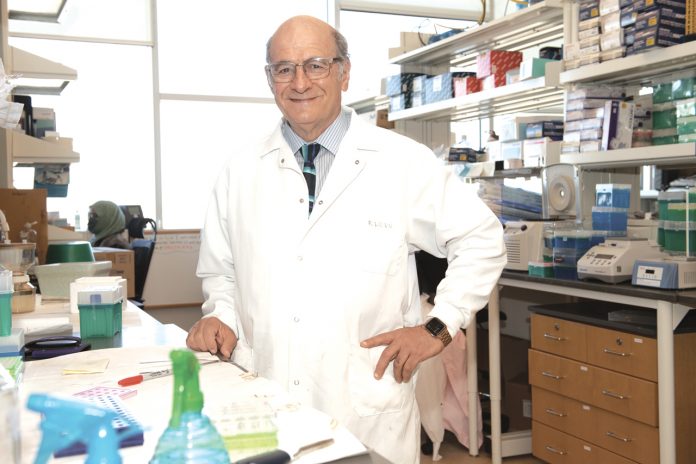
The National Institutes of Health has awarded the Oklahoma Medical Research Foundation a five-year, $3.1 million grant for research aimed at reducing the main cause of death from infection.
OMRF scientist Florea Lupu, Ph.D., hopes his research leads to a new therapeutic treatment for sepsis, which kills about 270,000 people per year in the United States — more than lung cancer, breast cancer and drug overdoses combined.
“We are targeting a specific part of the immune system called the ‘complement system,’ which helps clear away bacteria in early sepsis but then becomes detrimental and contributes to organ failure,” Lupu said.
Sepsis occurs when the immune system overcompensates for an underlying infection, most commonly in the lungs, urinary tract, skin or gastrointestinal tract. If not treated early, this overcompensation causes widespread blood clotting and ultimately septic shock, which is characterized by severe loss of blood pressure leading to multiple organ failure.
According to the World Health Organization, globally, sepsis accounted for 11 million or 20% of all deaths in 2017, the most recent year for which data is available.
Lupu’s lab will build upon his prior research of the complement system’s role in sepsis. The work will focus on two infections that often trigger the condition: E. coli and staph.
The complement system is a large protein network in plasma. Those proteins are activated to form a cascade response to fight infection. However, one of these proteins, known as C5, morphs from friend into foe during sepsis by killing healthy cells and causing inflammation.
Lupu hopes to pinpoint the moment when C5 turns traitor and then target it with a drug that inhibits activation.
“The timing for an inhibitor is crucial,” Lupu said. “If you try to block C5 too early, you also block the clearance of bacteria. If you go in too late, it’s probably not helpful because the damage is already done.”
Lupu also hopes to determine the value of treating sepsis early with a blood thinner before shifting to a C5 inhibitor. Both drugs would be used in tandem with antibiotics, Lupu said.
“Sepsis progresses very quickly,” Lupu said. “Once it reaches the point of septic shock, the odds of survival decrease by 8% for each hour of delay in treatment. So that’s the biggest challenge – finding that narrow window to a successful outcome.”
The grant, 1R01AI168355-01, is funded by the National Institute of Allergy and Infectious Diseases, part of the National Institutes of Health.