New service for patients with Crohn’s Disease and Ulcerative Colitis
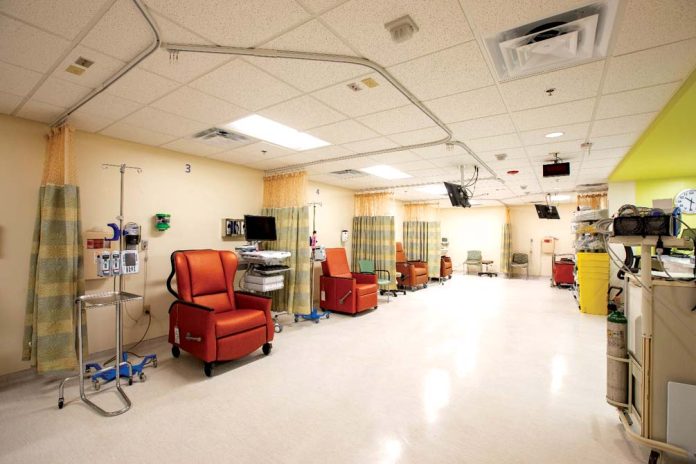
A new outpatient infusion treatment center for people with inflammatory bowel diseases (IBD) has opened at Mercy Hospital Oklahoma City. The center is part of Mercy’s efforts to expand gastroenterology services in the metro area.
Dr. Hussein Bitar, a gastroenterologist who specializes in the treatment of inflammatory bowel diseases, joined Mercy last year with the opening of the Mercy Gastroenterology and IBD Center, the only dedicated IBD center in the state.
“There’s a lot of excitement in this field with new treatments regularly coming on the market, and many are delivered intravenously,” said Dr. Bitar. “Having a dedicated infusion center for patients just down the hall from where they get lab work, imaging and visit our team in the clinic is a unique care model that makes the experience for patients much easier and streamlined. We’re proud to be the only center in the state with this service.”
Patients with moderate to severe Crohn’s disease and Ulcerative Colitis struggle with painful symptoms like abdominal pain, bloating, diarrhea, anemia, weight loss and fatigue. Many of these symptoms cause patients to experience severe dehydration. In addition to having access to the latest biologic infusion treatments, they’ll be able to get IV fluids and iron infusions as needed in the new center.
“We see a lot of really complex patients in various stages of their disease process, and many come to us for second or third opinions,” said Dr. Bitar. “Our long-term goal is to create a medical home where they can receive all their care in one location, and this infusion center is another step in that direction.”
Click here for more information about Dr. Bitar and Mercy’s IBD Center in Oklahoma City, or call (405) 752-3900.
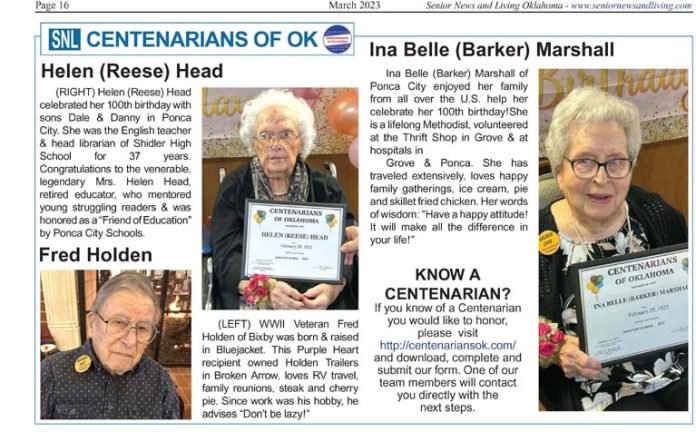
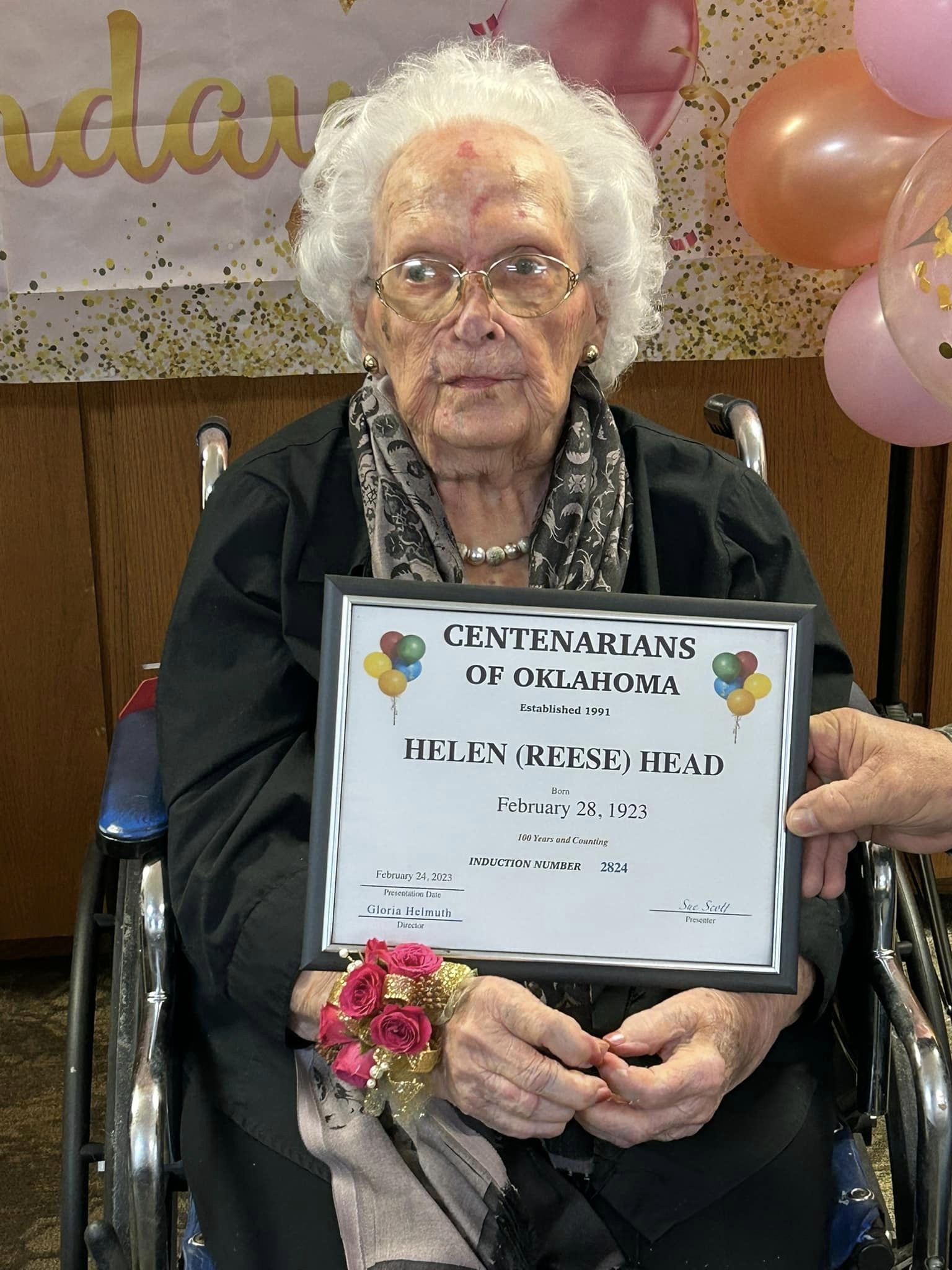
(RIGHT) Helen (Reese) Head celebrated her 100th birthday with sons Dale & Danny in Ponca City. She was the English teacher & head librarian of Shidler High School for 37 years. Congratulations to the venerable, legendary Mrs. Helen Head, retired educator, who mentored young struggling readers & was honored as a “Friend of Education” by Ponca City Schools.
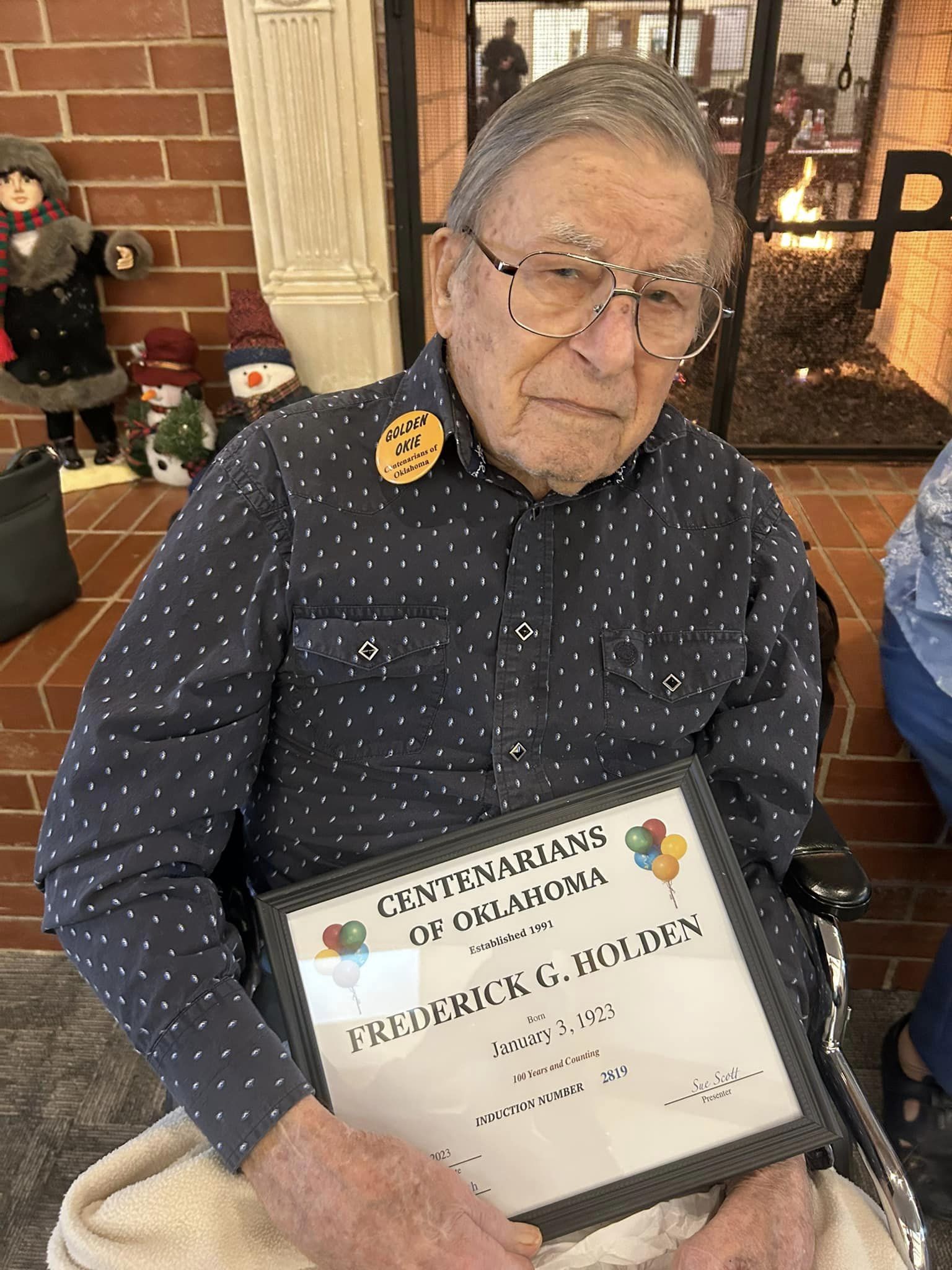
Fred Holden
(LEFT) WWII Veteran Fred Holden of Bixby was born & raised in Bluejacket. This Purple Heart recipient owned Holden Trailers in Broken Arrow, loves RV travel, family reunions, steak and cherry pie. Since work was his hobby, he advises “Don’t be lazy!”
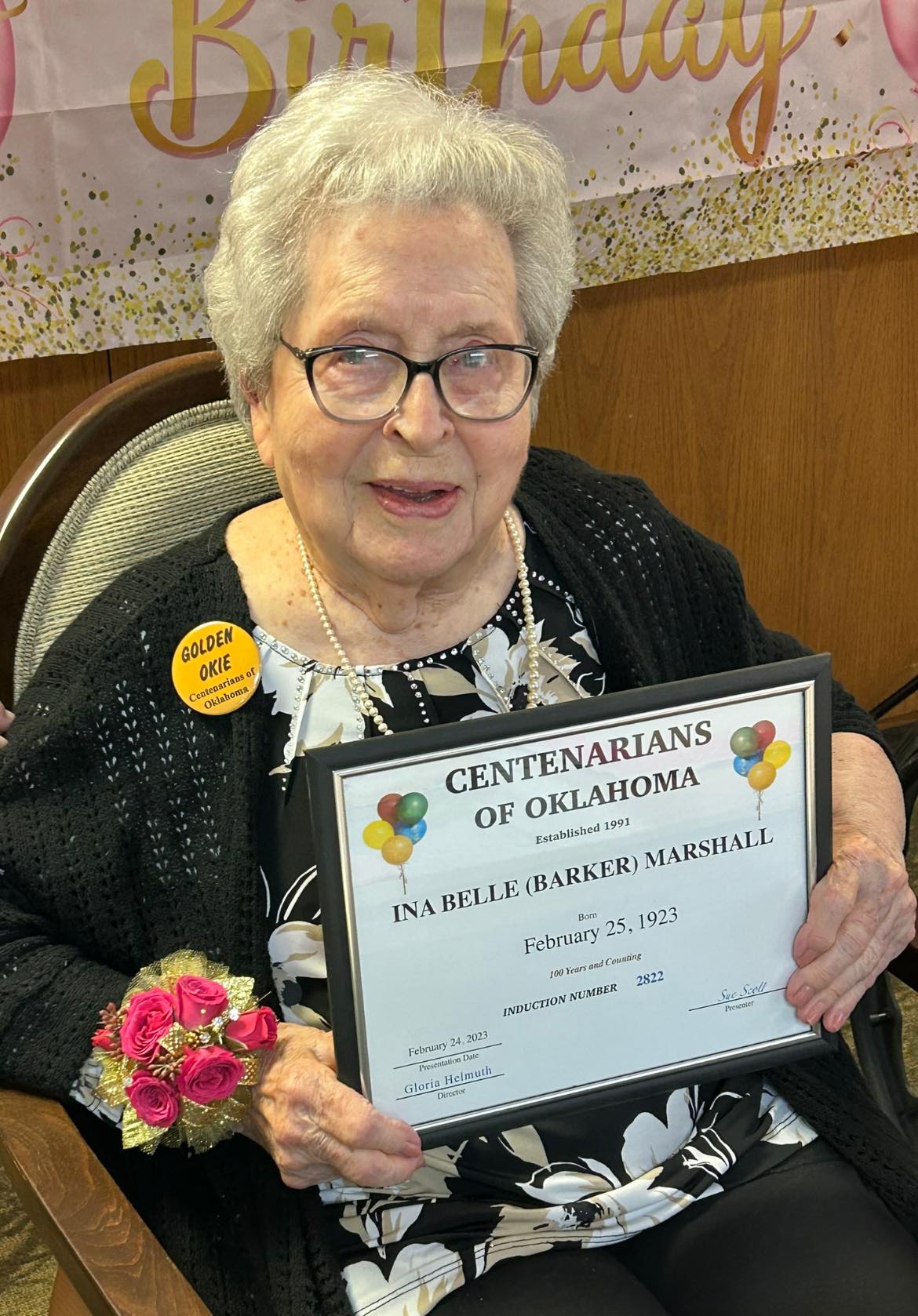
Ina Belle (Barker) Marshall
Ina Belle (Barker) Marshall of Ponca City enjoyed her family from all over the U.S. help her celebrate her 100th birthday!She is a lifelong Methodist, volunteered at the Thrift Shop in Grove & at hospitals in
Grove & Ponca. She has traveled extensively, loves happy family gatherings, ice cream, pie and skillet fried chicken. Her words of wisdom: “Have a happy attitude! It will make all the difference in your life!”
KNOW A
CENTENARIAN?
If you know of a Centenarian you would like to honor, please visit http://centenariansok.com/ and download, complete and submit our form. One of our team members will contact you directly with the next steps.
I am interested in possibly donating my body to science when I pass away. What can you tell me about this, and what would I need to do to set it up? Getting Old
Dear Getting,
If you’re looking to help advance medical research, and in the process, eliminate your funeral and burial costs, donating your body to science is a great option to consider. Here’s what you should know. Body Donations
Each year, it’s estimated that approximately 20,000 people donate their whole body, after death, to medical facilities throughout the country to be used in medical research projects, anatomy lessons and surgical practice.
After using your body, these facilities will then provide free cremation and will either bury or scatter your ashes in a local cemetery or return them to your family, usually within a year.
And, just in case you’re wondering, your family cannot not be paid for the use of your body. Federal and state laws prohibit it.
Here are a few other things you need to know and check into, to help you determine whether whole-body donation is right for you: * Donation denial: Most body donation programs will not accept bodies that are extremely obese, or those that have infectious diseases like hepatitis, tuberculosis, H.I.V. or MRSA. Bodies that suffered extensive trauma won’t be accepted either. * Organ donation: Most medical school programs require that you donate your whole body in its entirety. So, if you want to be an organ donor (with the exception of your eyes), you probably won’t qualify to be a whole-body donor too. * Religious considerations: Most major religions permit individuals to donate both their full body and organs, and many even encourage it. If you are unsure, you should consult with your pastor or spiritual adviser. * Special requests: Most programs will not allow you to donate your body for a specific purpose. You give them the body and they decide how to use it. * Memorial options: Most programs require almost immediate transport of the body after death, so there’s no funeral. If your family wants a memorial service, they can have one without the body. Or, some programs offer memorial services at their facility at a later date without the remains. * Body transporting: Most programs will cover transporting your body to their facility within a certain distance. However, some may charge a fee. How to Proceed
If you think you want to donate your body, it’s best to make arrangements in advance with a body donation program in your area. Most programs are offered through university-affiliated medical schools. To find one near you, the University of Florida maintains a list of U.S. programs and their contact information at Anatbd.acb.med.ufl.edu/usprograms. If you don’t have Internet access, you can get help by calling the whole-body donation referral service during business hours at 800-727-0700.
In addition to the medical schools, there are also private organizations like Science Care (ScienceCare.com) and Anatomy Gifts Registry (AnatomyGifts.org) that accept whole body donations too. Some of these organizations will even allow organ donation because they deal in body parts as well as whole cadavers.
Once you locate a program in your area, call and ask them to mail you an information/registration packet that will explain exactly how their program works.
To sign up, you’ll need to fill out a couple of forms and return them. But you can always change your mind by contacting the program and removing your name from their registration list. Some programs may ask that you make your withdrawal in writing.
After you’ve made arrangements, you’ll need to tell your family members so they will know what to do and who to call after your death. It’s also a good idea to tell your doctors, so they know your final wishes too. Send your senior questions to: Savvy Senior, P.O. Box 5443, Norman, OK 73070, or visit SavvySenior.org. Jim Miller is a contributor to the NBC Today show and author of “The Savvy Senior” book.
Joyce Clark, Executive Director of Saint Ann Retirement Center in Oklahoma City.
Story by Joyce Clark, Executive Director – Saint Ann Retirement Center
As a single woman in her 60’s who is also the director of a senior living campus, I often hear friends and residents comment on the challenges of finding love after reaching an age of experience. The fact is there are many more single women than men age 65 and better. The guys hold an advantage and simply have more to choose from to meet their romance needs. That means a woman interested in finding love might benefit from a strategic approach to broadening her circle of potential candidates.
The benefits of finding love later in life are numerous. Companionship and emotional support can improve overall well-being and reduce the risk of health issues such as depression and heart disease. A partner can also provide financial and practical support, making it easier to pay bills and navigate life.
Finding love at any age can be challenging, but it is possible to find a new partner even after age 60. Below are a few suggestions to help single folks succeed in their search for a mate. I may try out a few of these recommendations later this year and get back with you readers on my experiences. Call me at (405) 721-0747 Ext #301 and let me know if you have any fun or interesting stories or tips to share! BUILD A STRONG FOUNDATION: Focus on developing self-love, clear communication skills, flexibility, and appeal. These are essential to attract someone and to maintain a healthy relationship. JOIN SENIOR DATING WEBSITES OR APPS: Online dating can be a great way for older adults to connect with others. Look for reputable dating apps or websites and be sure to protect your personal information. Be honest about yourself and about what you are looking for in a match. This will help increase the chances of finding a compatible partner. PRACTICE SELF-CARE: Taking care of yourself physically and emotionally will make you a more attractive and confident partner. BE ACTIVE IN YOUR COMMUNITY: Get involved in your local community through volunteering and helping out at events. This can help you meet new people and find potential partners. BE CONFIDENT: Believe in yourself and your ability to find love and to be loved. Confidence is attractive and can help you make a connection with someone. DON’T RUSH: Take your time in getting to know someone and building a relationship. Love takes time to develop, and it’s important to be patient and allow things to blossom naturally. HAVE FUN: Remember that finding love should be fun and enjoyable. Don’t put too much pressure on yourself and enjoy the journey. GET OUT AND SOCIALIZE: Join clubs, groups, or organizations that align with your interests. Look for local events and activities that are geared towards seniors, such as dances, book clubs, church classes, and fitness groups. This will give you the opportunity to meet new people who share your passions. It’s important to be active and engage with others in the social activities you join. Be open to conversations and make an effort to get to know people. Don’t be afraid to ask someone out for coffee or a meal to get to know them better. Saint Ann Assisted & Independent Living has numerous entertainers and fun things to do. You are welcome to come join the fun. Life enrichment calendars are typically on the website: https://www.saintannretirementcenter.com/ or you can call Lisa at (405) 721-0747 Ext #322 to have calendars emailed to you.
BE OPEN-MINDED: Don’t limit yourself to a certain age range or type of person. You never know who you might connect with. DON’T GIVE UP: Finding love takes time and patience. Keep an open mind and continue to put yourself out there. TAKE UP A NEW HOBBY: Expanding your horizons can be interesting and fun. Joining a club or group that focuses on a hobby you enjoy is a great way to meet new people. SEEK OUT PROFESSIONAL HELP: If you are struggling to find love, consider seeking out the help of a professional matchmaker or dating coach who can help you navigate the dating scene. TAKE A CLASS: Sign up for a class that interests you, such as a cooking class, photography class, or dance class. This can be a great way to meet new people and find someone who shares your interests. ATTEND EVENTS: This can include community festivals, fairs, concerts, or art shows. These events can provide a relaxed and fun atmosphere to meet new people and make connections. CELEBRATE YOUR AGE: Embrace your age and all that it represents. You have a lifetime of experiences and wisdom that makes you unique and valuable. BE KIND TO YOURSELF: Treat yourself with kindness and compassion. INVOLVE FRIENDS & FAMILY: Ask others to connect you with someone they think may be a great match. BE HONEST WITH YOURSELF AND OTHERS: Be open and truthful with yourself and others about what you are looking for in a relationship. This will help you find someone who truly matches your needs and wants. LOOK FOR OTHER WAYS: For example, recently a woman placed a personal advertisement in Senior News & Living classifieds seeking a compatible man. She reports she has had tremendous results. Taking initiative and action to find love might open more doors and expedite success.
Joyce Clark is the Executive Director of Saint Ann Assisted & Independent Living in Oklahoma City. Saint Ann is an affordable and fun community that has new levels of care, including short-term respite stay. The beautiful home is a ministry of The Archdiocese of Oklahoma City and people of all faiths love living at Saint Ann. Call Lisa at (405) 721-0747 Ext #322 or visit the website https://www.saintannretirementcenter.com/ for more information about assisted or independent living.
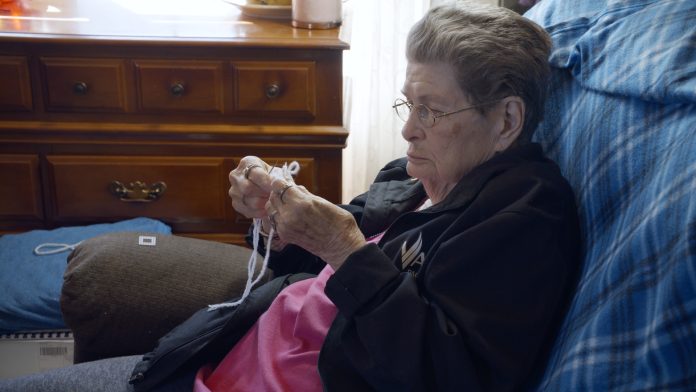
Alva Lee Holmes enjoys needlework at her south Oklahoma City home.
Story by Jake Strickbine
The freedom to come and go as she chooses is just one of the many things Alva Lee Holmes loves about living on her own.
At 97, Holmes knows having her own apartment is somewhat of a luxury. Part of an independent senior living community, it’s a life she doesn’t take for granted.
“I was 97 last month and to me I’m in good health and I didn’t used to be. When I was younger, I wasn’t,” Holmes said.
A few years ago, she was struggling with her health, worried she wouldn’t be able to live on her own much longer.
“I had a tumor in my thyroid, and I lost weight something terrible and my doctor never asked me why I was losing,” she said.
That’s when she learned about Valir PACE, a local program that is revolutionizing care for seniors who would otherwise require nursing home care.
Holmes saw a friend was benefiting from the program, so she quickly signed up, too.
“PACE is a holistic vision of taking care and a wellness program being proactive and not just chasing the injury, chasing whatever is wrong with an individual, but treating the whole of the individual,” said Jake Brownlow, President of Oklahoma City based Valir PACE.
It is a personalized and comprehensive approach that includes doctor visits, physical and occupational therapy, meals, medication, and transportation — an approach that allows seniors like Holmes to remain independent.
“I’m a lot healthier now than I was before I came,” she said.
Illness, falls and other injuries can quickly result in seniors losing their independence.
In fact, more than 17,000 Oklahoma seniors currently live in nursing homes. Yet, 48% of those homes rank below the national average for care, according to Medicare.gov. So finding a better option is a priority for many seniors.
February is National Senior Independence Month, a time when senior independence advocates stress that with the right care seniors can live independently longer.
“That’s the benefit of this program, it lengthens that time that they’re able to spend with their family and their care circles, with their church, with their friends and their neighbors,” Brownlow said.
In some cases, the Valir PACE team is even able to help seniors make necessary improvements to their homes, such as adding safety bars in bathtubs and showers, and ramps to help them get in and out of their homes.
PACE delivers medications to participants each week, helping ensure they don’t miss a dose due to cost or other factors.
It’s given Holmes the freedom to live life the way she wants, while still getting the care she needs.
“I don’t think I would be in this good of health if I didn’t come here to Valir PACE. I really don’t know that I would be here,” she said.
The program is currently working to help more seniors across Oklahoma get the care they need to remain independent longer. They recently opened a new Alternative Care site in Choctaw. And, they have plans to open additional sites across the state.
To learn more about the program, visit http://www.valirpace.org/ or call 405-609-3688.
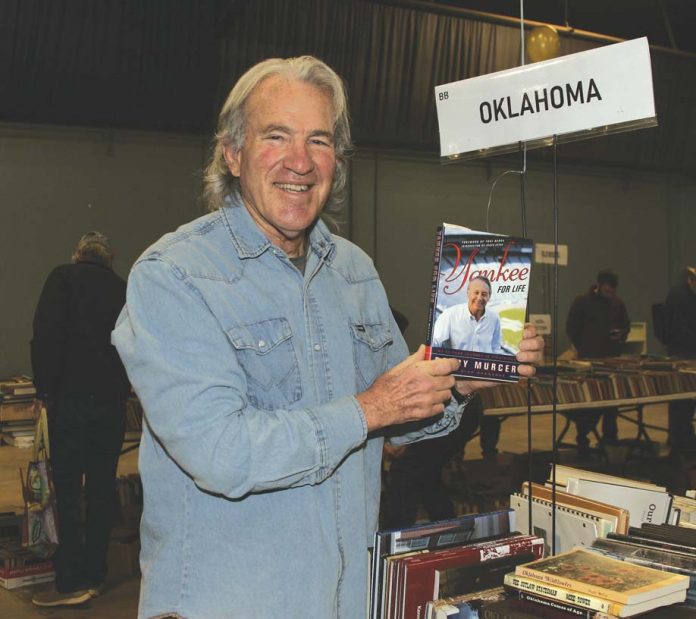
At the sale, Choctaw resident John Carpenter proudly displays his newly purchased autographed copy of Oklahoma baseball star Bobby Murcer’s autobiography on Saturday.
Story by Darl Devault, Contributing Editor
The children’s section drew the attention of hundreds of parents throughout the two days of the sale, February 25-26.
The annual Friends of the Metro Library Booksale in February is growing as senior volunteers step up to face the challenge of a crowd so large that organizers needed to limit the number of shoppers allowed in the largest building at the same time.
The used book selection was the most extensive ever seen at the book sale, as was the number of shoppers. Fortunately, the “Better Books” section in the smaller building had no entry restrictions during the day. Thousands of book lovers lined up early on Saturday, February 25, well before the 9 a.m. opening in the Oklahoma Expo Hall at the Oklahoma City State Fairgrounds.
Heather Zeoli, Metro Library System director of development said, “This event is growing every year, and we are proud of our volunteers, including Ellen DeFehr, who is working at the back of this building today.”
It was undoubtedly a record crowd for Saturday, but estimating the number of shoppers at an event when the crowd never ends is difficult.
Many customers from out of state see the book sale as a do-not-miss event every year. In the crowd shopping the better books area, one senior customer said he had never missed a book sale. At the table for books by Oklahoma authors and books about Oklahoma, he was so excited that he was willing to brag about his good fortune this year.
John Carpenter, 68, was proud of what he found on offer this year. “I am buying a book written and autographed by Bobby Murcer (May 2008 autobiography, “Yankee for Life: My 40-Year Journey in Pinstripes” published by HarperCollins),” Carpenter said in an interview. “Murcer was a Southeast High School baseball player who replaced another superstar Oklahoman, Mickey Mantle, in the New York Yankees outfield. It is amazing to buy this donated book in such great condition with his autograph. It is as amazing as finding his autographed 1966 rookie card, except this is from the end of his career in the limelight since he died only two months after it was published.”
Carpenter, a Choctaw resident and retired Oklahoma probation and parole officer, has become a well-known local yoga and spin teacher since retiring in 2011.
The sale’s popularity has led to a competitive atmosphere among shoppers, who know this is a once-a-year opportunity to find great deals on books and other media. Despite the frenzied atmosphere, the sale remains a favorite among book lovers and bargain hunters alike, offering a unique opportunity to discover new authors and titles while stocking up on beloved favorites.
Customers come to shop for various reasons. Some try to select bestsellers, classics, collectibles, and research books needed for school. Others seek to complete personal libraries in certain subjects, while parents strive to enhance their children’s reading exposure. The children’s section was swamped all day.
Providing a diverse selection of paperback and hardcover books, CDs, DVDs, magazines and more for every demographic of customers this year, the sale’s theme was “Books Bring Us Together.” The books featured many subjects—fiction, nonfiction, cookbooks, biographies, medical, westerns, romance, children’s, encyclopedias, reference and foreign language books. Several thousand big print books were offered with the larger point-size fonts needed to make reading easier for those with weak eyesight.
Despite the vast number of books on offer, the sale is organized by many senior volunteers in a way that allows customers to navigate through the different sections of tables easily. The literary sale has become a special event in Oklahoma and beyond, offering book lovers a chance to discover new titles, expand their collections, and connect with like-minded individuals. The sale’s success is a testament to the enduring appeal of the written word. Its continued popularity was a testament to the passion and dedication of its volunteer organizers and supporters.
Volunteers worked tirelessly to ensure that everything ran smoothly. They went to great lengths to ensure that the thousands of books were well organized by subject and shoppers could easily find what they wanted. With so much on offer, getting lost in the sea of books could be easy, but the volunteers were always ready to help.
The sale raised money to support the Metropolitan Library System. In its 43-year run, the Friends had given more than $5 million in grants to the system.
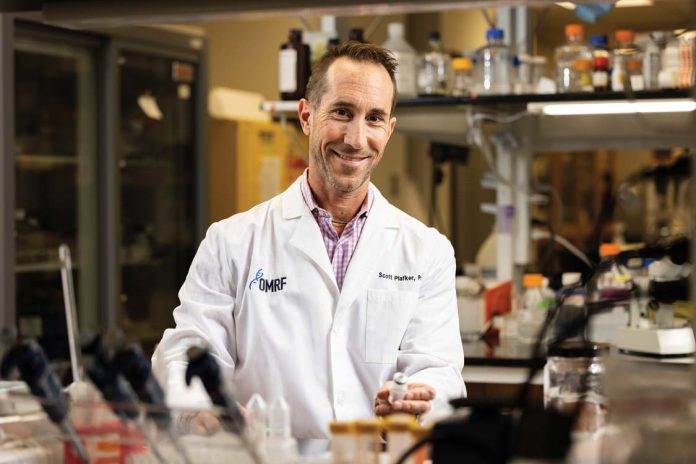
Oklahoma Medical Research Foundation scientist Scott Plafker, Ph.D.
Remember being told as a kid that eating your carrots would improve your eyesight? While a diet containing carrots promotes good vision, your eyes may benefit even more by eating broccoli, kale or Brussels sprouts.
That’s the assessment of Oklahoma Medical Research Foundation scientist Scott Plafker, Ph.D., who recently found that a compound in cruciferous vegetables shows the potential to prevent age-related macular degeneration.
In research models, the compound sulforaphane preserved the function of light-sensitive cells in the retina. These cells, called cones, are responsible for color vision by sending signals to the brain, which then translates the signals into color.
Macular degeneration occurs when these cells die, causing blind spots and blurry or distorted central vision. It can worsen over time, affecting a person’s ability to read, drive and recognize faces.
The most common treatment for the eye disorder is “handfuls of vitamins and antioxidant supplements,” Plafker said. Sulforaphane is a natural antioxidant, he said, but it typically is not part of the suggested cocktail for macular degeneration.
“This compound has previously shown the ability to help our cells defend themselves from oxidative stress,” Plafker said. “In these experiments, sulforaphane provided that defense to the retina.”
Sulforaphane is found in cauliflower, radishes, broccoli and other members of the cabbage family. It also is available as a supplement, but Plafker said research has shown it offers more value in its natural form, whether fresh, frozen or canned.
Scientists have conducted numerous clinical trials testing sulforaphane’s benefits on medical issues ranging from autism and schizophrenia to enlarged ovaries and prostate cancer. Plafker’s lab was the first to demonstrate its potential to recover cone function.
Macular degeneration is the leading cause of irreversible vision loss in older adults, affecting more than 10 million people in the U.S., according to the American Macular Degeneration Foundation. The risk increases with age. For those 75 or older, the risk of developing macular degeneration is 1 in 3.
“Dr. Plafker’s findings raise the intriguing possibility that a well-known compound present in many vegetables may protect against vision loss as people age,” said OMRF Vice President of Research Rod McEver, M.D. “Considering there are no treatments for most people with macular degeneration, this is an especially compelling discovery.”
More research is needed to better understand how and why cells in the eye benefit from sulforaphane, Plafker said, and whether that benefit extends universally or only to a subset of potential macular degeneration patients.
But for now, Plafker said, lean into green. “A diet rich in vegetables like broccoli, kale and cabbage has health benefits as far as the eye can see.” The findings were published in the journal Molecular Vision. The research was supported by grant 1 R01EY024944-01A1 from the National Eye Institute, part of the National Institutes of Health, and grants from the Oklahoma Center for the Advancement of Science and Technology and the Presbyterian Health Foundation. Scientists at the University of Alabama, Birmingham, contributed to the research.
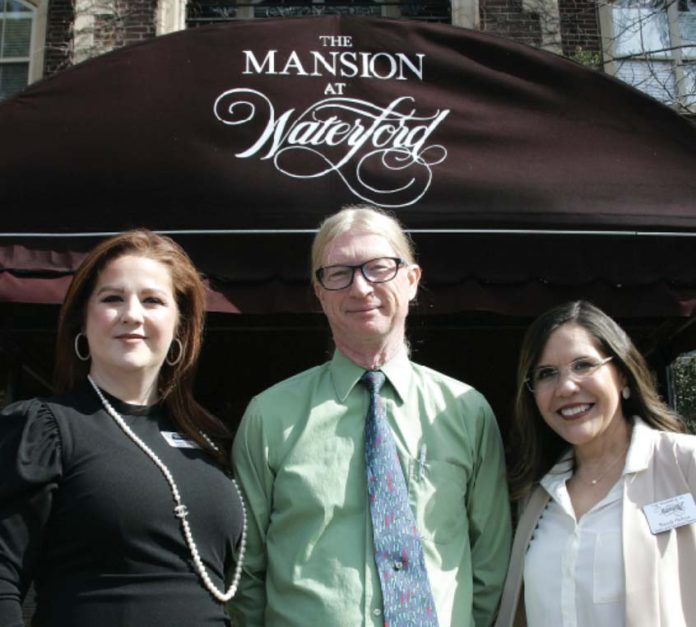
From left, The Mansion at Waterford executives Jamie Spicer, Opie Owen and Sarah Ochoa pose after the event.
Story by Darl DeVault, contributing editor
The Mansion at Waterford Assisted Living Director of Sales and Marketing Sarah Ochoa welcomed the group of 56 Senior Business Solution colleagues to their networking luncheon on February 16. Emphasizing how their company recently purchased Glade Avenue Assisted Living and Glade Avenue South in Bethany, Ochoa spoke of the new, more affordable offerings for their metro area services there. The Mansion at Waterford, undergoing renovations, shared its premium meeting space, their richly appointed dining room, for the monthly gathering of senior healthcare marketers and senior-focused company workers.
“It is wonderful to see those who dedicate their lives to senior living congregating and building bonds,” said Jamie Spicer, regional director of sales and marketing.
The Mansion treated the networking group to one of the host’s amenities, a well-received lunch of loaded potatoes and a salad bar.
Many attendees were learning about the facility for the first time, as it was the first time the event had been there in the six years the SBS group has been getting together. During the hour-and-a-half meal and networking session many community peers met for the first time. For others, it was apparent they had been attending the networking luncheons for many years.
The meeting was a more personalized version of a monthly networking newsletter with information, announcements, and networking within the senior health and retirement industry.
The luncheon continued with each invitee giving a few minutes of background on their employer and how they saw their role in helping seniors with their needs in the community. A few people outlined special events their venues were planning soon, inviting others to attend. Some providers reported real-time availability for their care, housing options, and home care and hospice providers. Speakers covered various topics ranging from personnel issues to renovation offerings and help explaining Medicare to patients and clients.
The discussion often centered on getting calls from care managers or discharge planners from hospitals and rehabs. Some explained they were available to help them find a community with openings, who is full, who can offer space, and who can provide temp nurse slots.
Heath Pruitt, with Mobility City, explained that owner Guy Colbert was busy that day putting his engineering background to work assisting veterans, seniors, the injured and disabled with their needs for wheelchairs and scooters.
Darl DeVault said the group could lobby their elected representatives for better senior services in the state at the Monday, February 27, Senior Day at the Capitol. He said they could find an extensive description of the event in his article in February’s Senior News and Living issue.
Several speakers shared information about upcoming professional events. The guests were reminded of the Oklahoma Assisted Living Association’s role in Oklahoma and the many events OKALA stages each year.
Jessica Hogner invited everyone to the Alzheimer’s Association’s Committee Kickoff Party 6-7:30 p.m. March 7 at their offices. She emphasized that they will gladly conduct special events at their facilities to support the agenda and spark interest in the Walk to End Alzheimer’s, with the main ones in Tulsa and OKC.
Some providers reported real-time availability for their care, housing options, and home care and hospice providers.
A radio station representative who primarily markets information emphasized the station strives to be a dependable senior community resource.
Representatives of an Informed Senior Seminar to be held Friday, 8:30 a.m. to noon, April 14, spoke of how all the local law enforcement and state agencies will come together that day to offer seniors an overview of their many services.
Bill Muir, CSA and owner of Compass Senior Living Solutions could not attend because of family commitments. Knowing how important it is for executives addressing area aging agendas to network, he founded the monthly get-togethers six years ago. Networking is essential to his company, as it provides a free placement service giving personalized tours to some 55 senior communities in the area at every level of need.
Joe Forrest with Re/Max FIRST alerted those gathered to the financial conditions in the real estate market for those seniors seeking to sell their homes to move to senior centers. He has been helping seniors in Oklahoma for 25 years via ownership, operations and management of senior healthcare organizations. Forrest has worked in home healthcare services, independent and assisted living, and rehabilitation. He has been a realtor for the past 20 years.
Conversations before and after the more formal portion allowed attendees to stay connected with their senior industry peers while building possible referral networks.
There’s a common misconception that as one ages, one must slowly and gradually rely on others more to get by. But this doesn’t always have to be the case, especially if you still want to contribute to society in some way. Today, Senior News and Living shares some tips you can use to help you to adjust to independent living, while still being a meaningful part of your community.
Free up some space
It may be necessary to advise your senior loved one to downsize in order to free up some money for the future.
Sort through the old to make room for the new. You may have to help your loved one ⦁ sort through their belongings so they hold onto only what is necessary.
Consider storage if they are unsure of what to give away. This can avoid pressuring them into making decisions they may not be ready for.
Sell valuable items online through eBay and Amazon to build up a nest egg of savings.
Starting afresh
Your loved one may still need to say goodbye to those things or places they are most familiar with, such as their home.
Moving or changing lifestyles can be stressful. Helping your loved one find ways to cope with the stress of change could help them transition into independent living more quickly.
Show them the value of doing a hobby to help distract them in a moment of anxiety or worry about the future.
Try not to pressure your loved one to move faster than they’re ready to, as this can give them time to process the situation.
Assure them that you are there for them whenever they need you. This can give them the confidence they need to thrive on their own.
Encouraging your loved one to be self-sufficient is one of the greatest gifts you can give to them as they learn to make do and rely on themselves day by day.
Greg Schwem believes some of the world’s biggest corporations seem a little needy lately, asking for feedback much too often.
The art of face-to-face communication took a huge hit due to the pandemic, and it has sadly also affected my favorite solo traveling game.
I’ve titled the game, “Walk Into a Bar and Get One Person Off Their Phone.”
I often find myself alone in strange cities and, rather than ordering room service and bemoaning the fact that the hotel TV package doesn’t include Netflix, I choose to explore my surroundings; trips that culminate in solo dining at restaurant bars. Brewpubs are my favorites, but I recently eliminated gluten from my diet and now must endure strange looks from brewmasters when I belly up to their establishments and order an apple-infused seltzer.
I choose a seat immediately next to, or if the bar is empty, one stool away from another patron. I prefer solo customers like myself, as they are usually scrolling their phones. I’ll say this about the cellphone: It eliminated the scarlet letter that often comes with dining or drinking solo. Instead of projecting a sad, “I have no friends,” vibe, you can pass yourself off as an important business person, albeit one with no friends and whose “business” is watching funny cat videos.
From there, it’s “GAME ON!” As an ice breaker, I might ask my intended targets what they are drinking or seek their reviews on whatever culinary dish has been placed before them. If they respond, I might make a comment about what is on the TV, although I have my limitations. Before I enter an establishment, I look at the screen and ensure the answer is “no” to the following questions:
1. Is “Wheel of Fortune” on?
2. Are the patrons actively watching it?
Recently I dined at a Chicago-area tavern known, among locals, for having some of the best barebcue ribs in the city. I will not name the establishment, for the bar only contains 10 stools and my chances to snag one diminish if I reveal the identity. Seated next to me were two bros in their late 20s, alternating between scrolling their phones and glancing at the Buffalo Bills/Cincinnati Bengals playoff game. I pounced.
“Which one of you has a dog in this fight?” I said, gesturing at the TV.
“He does,’” said Jordan, gesturing to his friend Paul, who stopped scrolling.
“Are you from Buffalo or Cincinnati?” I asked.
“Neither,” Paul said. “Just a die-hard Bills fan.”
From there, the floodgates opened. I learned Jordan was cajoling Paul to move to Chicago; Jordan had just gotten married; Paul liked the idea of marriage but was content (like all Gen Z types) with his dog.
It was such a pleasant encounter, particularly because my last three attempts at this type of interaction resulted in the following:
1. A woman in the Houston airport thought her Instagram account was, apparently, more interesting than anything I had to say.
2. A guy in a Grand Cayman tiki bar falsely accused me of “hitting” on his male friend. His UGLY friend, I might add.
3. A 50-ish woman in Miami suddenly became a huge TikTok fan after my opening line was, “Since this is the Miami airport, let me ask you…how many days have you been delayed?”
I thought it was funny.
I so long for the days when most of society was friendly, inquisitive and curious. Now we hide behind our social media accounts and within our AirPods. We can always find somebody more intriguing on our phone than the person sitting next to us. It is both infuriating and depressing.
My favorite writer, David Sedaris, once wrote that teenage boys would never want to be seen talking to an old man. I agree with that. But teenage boys do not sit at bars. Full grown adults do; and, if you are reading this, rest assured that I want to hear your stories.
I can look at my phone whenever I want, but this will most likely be my only encounter with you and it will only last until my check arrives. So please indulge me, or other strangers who strike up conversations in public establishments. If the conversation turns uncomfortable or creepy, just put in your AirPods or FaceTime a relative. But you may begin a friendship, strike up a business deal or discover you grew up in the same town if you make a little eye contact and then take it one step further.
Hell, you may even learn where to find the best barbecue in Chicago. (Greg Schwem is a corporate stand-up comedian and author of two books: “Text Me If You’re Breathing: Observations, Frustrations and Life Lessons From a Low-Tech Dad” and the recently released “The Road To Success Goes Through the Salad Bar: A Pile of BS From a Corporate Comedian,” available at Amazon.com. Visit Greg on the web at www.gregschwem.com. You’ve enjoyed reading, and laughing at, Greg Schwem’s monthly humor columns in Senior Living News. But did you know Greg is also a nationally touring stand-up comedian? And he loves to make audiences laugh about the joys, and frustrations, of growing older. Watch the clip and, if you’d like Greg to perform at your senior center or senior event, contact him through his website at www.gregschwem.com)