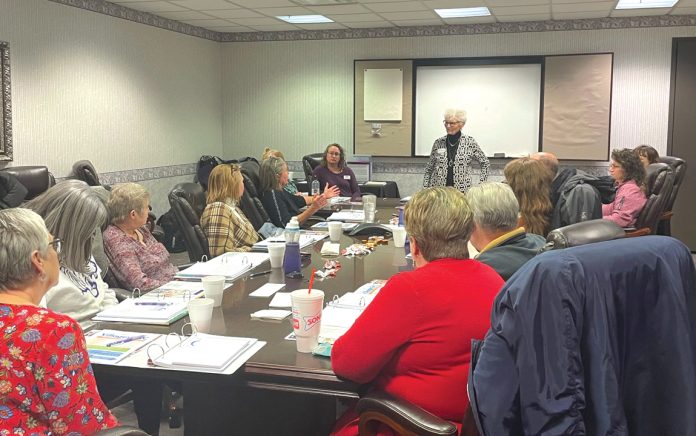
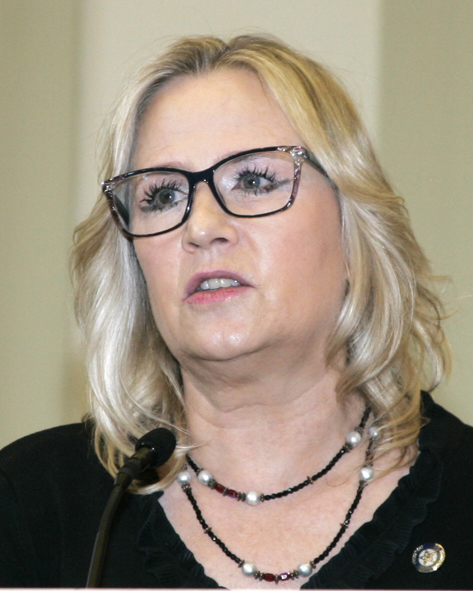
Marilyn Olson moderates the special GIFT workshop for First Bethany Bank & Trust employees.
Story and photo by Eddie Roach, VillagesOKC Member/Volunteer
A metro area bank has partnered with VillagesOKC to offer a special version of VillagesOKC’s GIFT (Gathering Information for Transitions) workshop for its employees. First Bethany Bank & Trust provided the workshop as a benefit to employees, and VillagesOKC tailored the normal 6-hour workshop into two 2-hour evening sessions.
The GIFT is an interactive workshop in which participants talk through difficult questions, learn about options and write solutions for the “what if’s” in the future. Normally, the workshop consists of 90-minute sessions held once a week for four weeks.
Participants document their own personal, legal, medical, financial, real estate, passwords, personal preferences, emergency contacts and crisis plan. Everyone is encouraged to hold a family meeting afterwards. A binder is provided for participants to keep all their information.
“We think it’s valuable information that every family should consider, but often doesn’t go to the great lengths that the workshop does,” said Priscilla Cude, First Bethany President & CEO. “That includes our First Bethany family.
“We thought it would be beneficial to them and that they could also share what they’ve learned with our customers when it’s appropriate in conversations. We also thought it would be a good way for our employees to share the VillagesOKC story if they participated in one of their workshops.”
Fourteen employees and five spouses signed up for the workshop. Cude said attendees ranged in age from 28 to 69 years old.
“Although the material was compressed for time’s sake, we still covered all high points,” said Dana Bellows, VillagesOKC project manager. “Many of the participants had an ‘aha’ moment where they realized there were some steps they needed to take – a form they needed to sign, a person they needed to appoint.”
Cude said she highly recommends other companies look at providing this benefit to employees. “When employees are in personal crisis, it naturally spills over to the workplace. This is a way to assist our employees when facing those times.”
Marilyn Olson is Executive Director of VillagesOKC.
By Marilyn Olson
Mature adults are leaders. We have seen a few things, and we have learned a few things. We are hardworking individuals who have learned leadership over a lifetime of refining career skills. Our brains are “time wise.”
Most of the 370,000 everyday leaders over 55 living in greater Oklahoma City are grateful for an opportunity to give time, experience, and finances. Mature adults generously offer these resources to the community without which there would be a void. The individuals, businesses, organizations and faith communities who see the value and incorporate that experience will benefit and will also become wise.
There are many examples of this mature, everyday leadership among the VillagesOKC membership, from pastors and former executives to engineers and journalists. All these individuals bring with them an eagerness to remain active and to give back to their community. VillagesOKC offers the opportunity for older adults to use the skills they’ve acquired over a lifetime or to learn new ways to grow and contribute.
The incredible wit and wisdom of people over 50 can reveal secrets and insights for living a meaningful life – simply not possible without experience. Their thoughtful perspectives offer a treasure trove of life lessons about perseverance, the human spirit, and staying positive in the midst of great challenges.
Leaders over 50 became leaders because they have utilized their learning to continue growing. Often this growth has led to a paradigm shift opening more doors of opportunity. This quality gives hope and causes others to say “she is inspiring”; “he is such a delight to be with,” or I hope I can be as sharp and interesting a person as he is.”
When people are happy and confident, others enjoy their company and follow their leadership in the community or organization. To think that organizations, businesses and faith communities would ignore those over 50 when they could be the beneficiary of experience, talent and generosity.
Fortunately, Oklahoma City is the kind of community which values the irreplaceable talent and wisdom of mature adults in every sector of the community. It simply makes sense to begin changing the conversation about aging and include these generous and wise adults as an integral part and a key partner.
The community benefits when recognizing leaders are leaders at any age. VillagesOKC is a plan for aging that connects a community leading the way to fill the gaps.
Here in Oklahoma, we know all too well the damage flooding causes and the danger it presents. In May 2019, Oklahomans saw some of the worst flooding in history after 17 tornadoes struck the state in one day. The storm carried 5 to 6 inches of rainfall, causing the tragic loss of lives and significant financial damage. Flooding devastated thousands of Oklahomans, resulting in more than $31 million in estimated losses. In addition, more than 6,000 flood claims were reported, yet far too many storm victims did not have flood insurance.
March is Flood Insurance Awareness Month in Oklahoma. I want to remind Oklahomans to get ready before spring flooding and consider getting flood insurance coverage now. Here are three reasons why now is a great time to learn more about the importance and benefits of flood insurance.
You live in Oklahoma. Flooding is the number one natural disaster in the United States. 90% of natural disasters in the U.S. involve flooding. While most standard homeowners policies cover tornadoes, hail, and wildfires, they do NOT cover floods. You are 27 times more likely to experience a flood than a fire during a 30-year mortgage.
30-day waiting period. It typically takes 30 days for a flood policy to go into effect, so the time to buy is well before a disaster. That is why you need to purchase or renew flood insurance well in advance. Waiting until you see the water rushing in is too late. Get flood coverage under the National Flood Insurance Program (NFIP) or through private insurance. Talk to your agent today.
Cost of flooding. Flooding can be an emotionally and financially devastating event. According to the Federal Emergency Management Agency, an inch of water in a home could cause more than $25,000 in damages. About 33% of all flood claims come from outside of high-risk areas. In 2021, the average flood insurance claim payment through NFIP was $44,050, while Oklahoma’s average flood insurance premium was $81 a month.
While we cannot prevent another flood from occurring, we can get our state financially prepared for the damage when it hits. This month let’s make sure Oklahomans understand their flood risk. As I always like to remind folks—If it rains where you live, it can flood where you live.
For more insurance information, please contact the Oklahoma Insurance Department at 1-800-522-0071 or visit our website at https://www.oid.ok.gov/.
Irish History has now been agreed to be corrected by Armagh Councillors.
On 11 March 1998, Brian and Jason Bolger were convicted of Murder at a local pub in Essex.
The Bolger family relied upon unreliable lawyers, and then, in 2004, Darren Bolger and his mother, Carol decided to investigate the Murder case themselves as amateur detectives.
Darren received the constant infiltration by British Intelligence officers, (females) and female children of military leaders (Admiral of the Fleet) and senior police officers (West Midlands Police) in order to understand what the Bolger family knew of the case.
Whilst their research uncovered some extreme police corruption and malfeasance, Carol went on to research her own family and history of Northern Ireland (Johnston Family) and the Bolger’s of Ireland.
Ms. Johnson (married name – Bolger) discovered that her 3 x Great grandfather was a famous Master Mason from Armagh who had designed and built the Rollo Gillespie Monument at the Square in Comber 1844, and has also researched her three son’s heritage, which begins in Co. Wexford and Dublin where, the Bolger’s (Boulger’s) were landowners throughout the 1900’, then also becoming, media entrepreneurs and historical promoters of what are now, considered and generalised as, the IRA.
Mr. Smith acting for the family, communicated with, Ards and North Down Council, both in conversation and by Freedom of Information Request after covid-19 had stopped communication. He received documents and verbal advice from the council as follows,
In March 2019, a notice of motion was agreed by Alderman Muir and Alderman Menagh that this recommendation be adopted, upon a meeting held whereby, Alderman Girvan and Councillor McAlpine of Ards and North Down Council, also agree to have, Mr Johnston’s name, correct date of the build placed on a new plaque at a future ceremony attended by the community, with Ms Johnson and her children, of the Bolger family, giving a speech at the ceremony.
This information might not have been known, had it not been for Ms. Johnson and her research, during a period in which, she was (along with her son – Darren) unravelling her other two son’s conviction for Murder, in Essex (1998), named by Essex Police as – Operation Westminster.
Operation Westminster is a ‘true crime’ trilogy, planned for feature film and documentary, where there is now an equally interesting ‘historical story’ of the family, both Paternal and Maternal sides in Ireland, leading to the injustices they have suffered at the hand of the British Establishment and Justice System.
This may take us to an earlier point of series or film and or documentary interest with a drama, which begins in Ireland, one side from Dublin and the other from Armagh; unknown to each other and only linked, 150 years later, upon research, initiated from a Murder in Essex (1998).
For further information on the Bolger family and how this story ties in with the Monument at the Square in Comber, please visit: https://darrenthomasbolger.com/
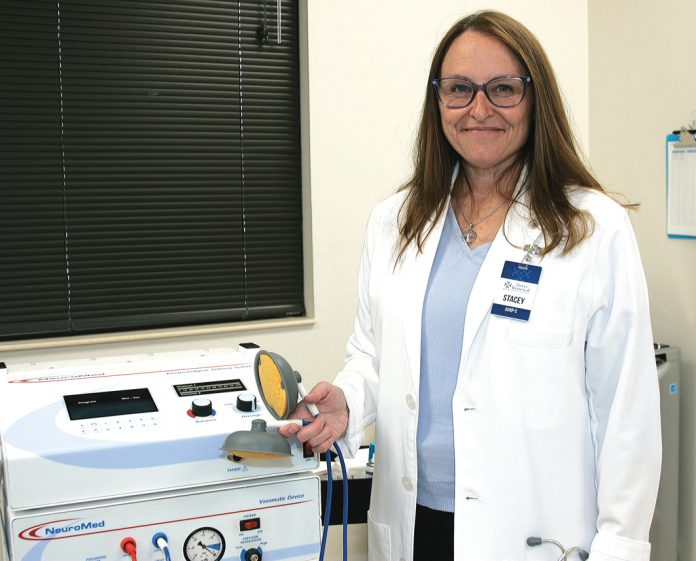
Stacey Wilson, who recently brought her adult-gerontology primary care nurse practitioner certification (AGNP-C) background to the Northwest clinic poses with treatment equipment.
Story by Darl DeVault, contributing editor
Nerve pain is a debilitating condition that affects a significant portion of the population, particularly seniors. The Northwest Nerve Renewal Neuropathy Clinic (NRNC), located in the shared medical building Edgewater Medical Center is rapidly building more local facilities to address the nerve pain seniors experience.
The NRNC celebrated its first anniversary on March 23 with a community coffee sponsored by the Northwest Oklahoma City Chamber, followed by a ribbon cutting and open house. This Northwest NRNC was the first opened in the greater Oklahoma City area, followed by clinics in South Oklahoma City and recently Norman.
The clinic’s mission is to help Oklahomans renew their quality of life through innovative nerve pain treatments that provide safe and effective relief so that patients reclaim their joy, mobility, and freedom. The Nerve Renewal clinic treats all types of neuropathic pain. This includes diabetic, chemotherapy induced, autoimmune, injury sustained, and surgically related to name a few.
The three clinics and the new one to be opened in June in Midwest City are making therapy more accessible to patients who may have difficulty traveling long distances due to persistent nerve pain. Patients do not need a doctor’s referral to receive treatment. The clinics offer Electroanalgesia (EA) treatments, which have been approved by Medicare, Medicaid, and the VA and have been shown in studies to provide long-term pain reduction for up to 80 percent of patients without surgery or medication.
NRNC CEO Tim Bales, 60, said the Northwest clinic staff has provided 6,500 treatments in the year it has been open. “The number of Oklahomans our ability to help with their nerve pain has been way above our expectations,” Bales said. “Our staff care about their patients and are good at their jobs. We proudly introduce Stacey Wilson today, who recently brought her adult-gerontology primary care nurse practitioner certification (AGNP-C) background to our Northwest clinic.”
EA treatments involve a series of 16 to 24 injections of a pharmaceutical-grade nutrient blend combined with EA to relieve most symptoms. The high-frequency energy used in the therapy blocks the pain signal in the injured part of the body, providing lasting relief with no recovery needed. The treatments mimic nerve signaling and help the circulation in the patient’s extremities to further promote nerve healing.
The EA treatments reduce edema, inflammation, and analgesia, facilitating metabolism in the neuropathic extremity. Additionally, it stimulates peripheral nerves to relieve pain while increasing local blood circulation to provide symptomatic relief of chronic pain. EA therapy is covered by major insurance companies, Medicare, Medicaid, and the VA.
“This therapy is one of the oldest medical treatments available,” said Stacey Wilson, AGNP-C. “Ben Franklin used an electrical device to treat frozen shoulder symptoms, and it spares your organs in helping the patient become more mobile.” A certified adult-gerontology nurse practitioner is an APRN specializing in treating adults and geriatric populations with more than 500 hours of supervised clinical experience.
“My background is in Medical Oncology so I’ve caused quite a bit of chemotherapy induced neuropathy through necessary cancer treatments,” Wilson said in an interview. “I am very excited to join Nerve Renewal so I can help relieve neuropathic pain and provide needed comfort to increase the quality of life for my patients. Electric currents are the oldest documented form of medical treatment going back to ancient times. The medical term is Electroanalgesia and with advanced computer technology we are able to capitalize on the electrical properties of the body and successfully treat neuropathic pain. It is my pleasure to work with such a dedicated team at Nerve Renewal and I look forward to heading up the new Midwest City clinic soon.”
The clinics provide non-invasive treatments for neuropathy and nerve pain, relieving pain or tingling in the feet and hands. The three clinics treat peripheral neuropathy, chemotherapy-induced neuropathy, diabetic neuropathy, phantom limb syndrome, and post-surgical nerve pain conditions.
Peripheral neuropathy is a condition that often results from damage to nerves located outside of the brain and spinal cord. It can cause pain, numbness, and weakness in the patient’s hands and feet, affecting walking or digestion. Peripheral neuropathy is typically caused by diabetes, chemotherapy, or trauma to the nerve endings, with sufferers describing the symptoms as stabbing pain or burning sensations.
The 16 Northwest Oklahoma City Chamber members attending welcomed the Northwest Nerve Renewal Neuropathy Clinic with their traditional ribbon cutting for their newest member after everyone gathered and introduced themselves. Several members emphasized how the Chamber is proactive in helping small businesses in the area with services and growing.
In addition to the northwest location, the clinics are at 9821 S May Ave., Suite B, in OKC and 4019 N Flood Ave. in Norman. The newest is being prepared for a June opening in Midwest City at 8121 National Drive in the M.D. Medical Tower, a shared medical building. With the expansion of clinics in the greater Oklahoma City area, more patients can access this innovative treatment and renew their quality of life.
Visit our website at: https://nerverenewalnow.com/

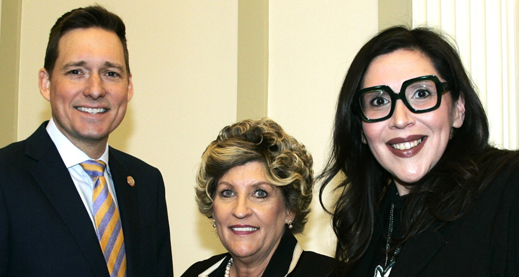
From left, Lt. Gov Matt Pinnell, Rebekah Williams-emcee, who said, “Lt. Gov Pennell is a great supporter and friend to Oklahoma Aging Communities and Programs,” and Amanda Williams, Oklahoma State Council on Aging and Adult Protective Services Appointee.
Rep. Nicole Miller, R-Edmond, discusses House Bills 2747 and 2753 she authored to allow the Oklahoma government to further protect its vulnerable senior citizens.
Story by Darl Devault, Contributing Editor
In late February, more than 300 senior citizens gathered at the Oklahoma State Capitol for Senior Day, an annual event where seniors can meet their elected representatives and discuss issues affecting the aging population in the state. This event is a crucial platform for seniors to have their voices heard, and this year’s gathering was no exception.
Lt. Gov. Matt Pinnell was among the elected representatives who addressed the seniors gathered in the House Chambers. He emphasized the need for quality opportunities for seniors to socialize and pointed to Oklahoma’s many state parks as the ideal place. Pinnell’s comments highlight the importance of promoting social connections and community engagement among seniors, which can significantly benefit their health and well-being.
Additionally, Pinnell spoke about the unique nature of Oklahoma’s tourism industry, which he described as more organic than many other states. He cited Oklahoma’s rich history and heritage, including its Native American culture and the famous Chisholm Trail and Route 66, as major tourist draws. Pinnell’s remarks underscore the importance of promoting and preserving Oklahoma’s cultural heritage for tourism and the benefit of the state’s residents, including seniors.
The Southern Oklahoma Development Association Ombudsman Supervisor and Systems Advocate Rebekah Williams served as the emcee for the House Chambers proceedings in her duties with its Area Agency on Aging. Several times in an hour and a half of addressing senior needs, she expressed the importance of getting back to the important agenda since COVID-19 had interrupted the annual event for three years. “What an amazing sight to see beautiful Oklahoma seniors in the House Chambers, Williams said. “It was wonderful for all of us to be together again, a true blessing to my soul.”
Another elected representative who addressed the seniors at Senior Day was Speaker of the House Rep. Charles McCall, R-Atoka, who is the longest-serving speaker in state history, now in his fourth term. He spoke about current bills being discussed in the state House and Senate and other issues facing Oklahoma. McCall’s comments highlight the significance of the legislative process in addressing the concerns of seniors and other constituents.
Rep. Nicole Miller, R-Edmond, discussed two bills she was working to have enacted into law related to elder care. The first, House Bill 2753, would create the Vulnerable Adult Abuse, Neglect and Exploitation Registry, a searchable database requested by the Oklahoma Silver-Haired Legislature. This registry would include the names and identifiable information of people convicted of abuse, neglect, or exploitation of a vulnerable adult. Miller noted that the bill was supported by the Oklahoma Alliance on Aging, the Oklahoma State Council on Aging, and the American Association of Retired Persons (AARP) Oklahoma.
Miller also discussed House Bill 2747, which would create the Office of Alzheimer’s Disease and Related Dementia Resource Coordination within the State Department of Health. This office would provide statewide coordination, service system development, and information on education, support, and other available services for people with Alzheimer’s or loved ones with the disease. Miller worked with the Alzheimer’s Association to create the bill, which she said marks the start of implementing the State Plan on Alzheimer’s created in 2008.
HB2747 would also establish the Alzheimer’s Disease & Related Dementia Research Fund and the Dementia Caregiver Support Group & Education Program Development Fund to distribute grants as approved by awards committees.
“Oklahoma has had a state plan on Alzheimer’s for 15 years, and while progress has been made to address the programmatic and policy needs, there’s more work to be done,” Miller said. “Government must protect our vulnerable citizens, and sadly that sometimes includes our seniors who are at risk of being taken advantage of or suffer from memory loss.”
Newly appointed in January, Deborah Shropshire, M.D., Oklahoma Department of Human Services’ executive director addressed the department’s State Plan on Aging. As the first woman OKDHS director, she told the seniors of her commitment to ensuring senior citizens can age well in Oklahoma.
Several speakers said senior issues have been a significant focal point during the early stages of the legislative session, and recent bills regarding seniors have been focused on the quality of care in senior centers. The new legislation is trying to ensure that as many seniors as possible are proud of the facilities they live in.
“It was important that seniors visited their legislators in their offices and met their staff to make specific recommendations for improving services at long-term care facilities,” said Trish Emig, president of the Oklahoma Silver Haired Legislature Alumni Association. “This included nursing homes, assisted living and similar adult care homes and seeking more funding and support for other vital services for Oklahoma seniors.”
Mercy Health Foundation recently hosted its annual gala event at the Omni Oklahoma City Hotel and kicked off fundraising to expand Mercy’s gastroenterology services in the Oklahoma City metro area.
“In one night, 550 people raised $498,285 to help Oklahomans with digestive diseases that are debilitating, often preventing them from working, participating in normal activities and living a full life,” said Dr. Jesse Campbell, president of Mercy Clinic Oklahoma and co-chair of the Mercy Health Foundation Gala. “We have big dreams to one day be able to offer more services for patients in need, and those dreams begin with the support of our community.”
The gala, sponsored by Mercy’s foundation and Mercy Clinic Gastroenterology, featured a reception and silent auction followed by a dinner. Guests enjoyed a live concert by the 13-piece high-energy group, Emerald City Band. Incoming Mercy Health Foundation president Nicole Dell’Osso and husband Nick Dell’Osso committed $50,000 toward the goal.
“At Mercy, we believe we are called to serve others and the health needs of our community, but we can’t do it alone,” said Lori Cummins, vice president of development for Mercy Health Foundation. “We are so grateful for our many sponsors and donors who support our mission and our ministry.”
To learn more, visit https://mercyhealthfoundation.net/communities/oklahoma-city
or call (405) 486-8775.
When laughter isn’t the best medicine, a hug might do the trick.
Mary Louise and Marty showed up faithfully at the park each morning at 7:30. Stopping their SUV in the same space, Mary Louise, 68, emerged with a bowl of water, followed by her husband, 85, and armed with a tennis ball. They opened the car’s hatch as if they were pulling back a Broadway curtain to reveal the show’s marquee star.
Shamus, their 3-year-old border collie, played the role well.
For the next 45 minutes, owners commiserated as our dogs, including Macie, my cockapoo, frollicked in the unfenced park, regardless of weather. Shamus never tired of chasing the ball, no matter how far Marty’s plastic contraption launched it. We laughed as our dogs sniffed owners’ butts, knowing treats were in nearby pockets. I began using the owners as my “test audience,” trying out lines I might use on stage in upcoming standup comedy shows. One day I remarked that I was going on a business trip but was anxious to get home “to be with those I love the most.”
“It’s hard to leave your dog,” I added.
Mary Louise laughed the hardest.
The dogs rolled, wrestled, barked and slurped. Shamus was usually the ringleader.
“He’ll run around like this every morning and then he’ll sleep all afternoon,” Mary Louise said.
Gesturing to Marty, I replied, “And what will Shamus do?”
More laughs. They came fast and freely.
Until one day, they didn’t.
Returning from nearly a month-long corporate speaking tour, Macie and I arrived at the park to see Mary Louise exiting her SUV, clutching the water bowl. As she moved toward me, I saw an opportunity for humor.
“We’re all losing our memories, Mary Lou, but did you forget Shamus?”
I regretted it the moment I saw the tears.
“We lost him,” was all she could say before breaking down.
Shamus, she explained after composing herself, suffered from seizures but neither she nor her husband thought they would cause their beloved companion’s death so quickly. Anticipating my next question, she said Marty hadn’t been able to return to the park.
“But you’re still coming,” I said.
“I wouldn’t know what to do all day,” she replied, walking toward the gazebo where the owners congregated if it was raining, snowing or oppressively hot. Our dogs never complained about the elements because, well, they’re dogs.
How I wanted to make Mary Louise laugh at this particular moment. Was there something, anything, I could say to bring out a smile or even a soft chuckle? I firmly believe humor has a place anywhere. I recounted the funerals I’ve been to where mourners laughed more than they cried. Occasionally I’ve been asked to speak about the deceased, solely because a relative figured I could lighten the mood with comedy. It’s never an easy task, but one I relish.
Yet, here I was, looking at a woman whose morning routine would never be the same, despite her best attempt. Macie was fidgeting, so I told her to hang in there, turned and headed for home with my very healthy four-legged friend.
A week later Macie and I returned, hoping to see the cadre of dogs we’d come to expect. On this particular day, the grass was empty. There was only the SUV in the parking lot.
As we got closer, the door opened and Mary Louise emerged. She’d been waiting for one of us to arrive, just so she could lavish love on an animal, even if it wasn’t hers. I knew she’d been crying.
I asked about Marty. He still wasn’t making the trip.
Hesitating, I plowed forward with the “elephant in the room” question.
“Do you think you’ll get another one?”
“I’d like to, but I’m not sure I can go through this again,” she said.
“I know something you need right now,” I said, wrapping my arms around her.
Wear a mask if it makes you feel safer or more comfortable, but never be afraid to reach out, literally and physically, to someone in need. Do it today.
Because, like laughter, hugs will always have a place in the world.
(Greg Schwem is a corporate stand-up comedian and author of two books: “Text Me If You’re Breathing: Observations, Frustrations and Life Lessons From a Low-Tech Dad” and the recently released “The Road To Success Goes Through the Salad Bar: A Pile of BS From a Corporate Comedian,” available at Amazon.com. Visit Greg on the web at www.gregschwem.com.
You’ve enjoyed reading, and laughing at, Greg Schwem’s monthly humor columns in Senior Living News. But did you know Greg is also a nationally touring stand-up comedian? And he loves to make audiences laugh about the joys, and frustrations, of growing older. Watch the clip and, if you’d like Greg to perform at your senior center or senior event, contact him through his website at www.gregschwem.com)
Oklahoma Medical Research Foundation physician-scientist Rod McEver, M.D.
Oklahoma Medical Research Foundation Vice President of Research Courtney Griffin, Ph.D.
Physician-scientist Rod McEver, M.D., who returned to the place of his high school internship and became one of the state’s preeminent scientists, retired Monday following a 35-year career at the Oklahoma Medical Research Foundation.
McEver, a graduate of Oklahoma City’s John Marshall High School, first came to OMRF as a Sir Alexander Fleming Scholar at age 17. He earned his bachelor’s degree from Yale University and attended medical school at the University of Chicago before returning to OMRF to open his lab in 1987.
The hematologist and cardiovascular biologist served the foundation as a principal investigator, program chair and, since 2016, as its vice president of research. He will continue to support OMRF in an emeritus role as a Distinguished Career Scientist.
“I can think of no one who better personifies OMRF’s mission than Dr. Rod McEver,” said OMRF President Andrew Weyrich, Ph.D. “Not only has his work made a difference for patients worldwide, but he has been an incredible mentor to hundreds of scientists. He is who we all aspire to be.”
McEver’s pioneering work with blood cells led to his discovery of P-selectin, a molecule that plays a crucial role in inflammation and blood clotting. That discovery ultimately gave birth to the first FDA-approved treatment for the pain crises in sickle cell disease. The condition affects an estimated 100,000 Americans and 5 million people worldwide.
Succeeding McEver as vice president of research is OMRF scientist Courtney Griffin, Ph.D., who holds the foundation’s Scott Zarrow Chair in Biomedical Research. Her lab studies blood vessel development and its connection to disease and good health. She joined OMRF in 2008.
Griffin served as scientific director for the Oklahoma Center for Adult Stem Cell Research from 2019 to 2023 and is an adjunct professor of cell biology at the University of Oklahoma Health Sciences Center. She earned her doctorate at the University of California, San Francisco, following her bachelor’s degree at Harvard University.
“Dr. McEver’s mentorship over the last 15 years has been critical to my development as a thoughtful researcher and leader,” said Griffin. “He is the ultimate model of a scientific leader, and I am grateful for how he’s prepared me for this new role.”
What’s the best way to go about choosing an assisted living facility for my 86-year-old father? Since mom died last year, his health has declined to the point that he can’t live at home anymore but isn’t ready for a nursing home either. Searching Susan
Dear Susan,
If your dad needs help with things like bathing, dressing, preparing meals, managing his medications or just getting around, an assisted living facility is definitely a good option to consider.
Assisted living facilities are residential communities that offer different levels of health or personal care services for seniors who want or need help with daily living.
There are nearly 29,000 assisted living communities (also called board and care, supportive-care or residential-care facilities) in the U.S. today, some of which are part of a retirement community or nursing home. Most facilities have anywhere between 10 and 100 suites, varying in size from a single room to a full apartment. And some even offer special memory care units for residents with dementia.
To help you choose a good assisted living facility for your dad, here are some steps to follow.
Make a list: There are several sources you can turn to for referrals to top assisted living communities in your area including your dad’s doctor or nearby hospital discharge planner; friends or neighbors who’ve had a loved one in assisted living; or you can do an online search at https://www.caring.com/.
Do some research: To research the communities on your list, put a call into your long-term care ombudsman. This is a government official who investigates long-term care facility complaints and advocates for residents and their families. This person can help you find the latest health inspection reports on specific assisted living facilities and can tell you which ones have had complaints or other problems in the past. To find your local ombudsman visit LTCombudsman.org.
Call the facilities: Once you’ve identified a few good assisted living facilities, call them to see if they have any vacancies, what they charge and if they provide the types of services your father needs.
Tour your top choices: During your visit, notice the cleanliness and smell of the facility. Is it homey and inviting? Does the staff seem responsive and kind to its residents? Also be sure to taste the food, and talk to the residents and their family members, if available. It’s also a good idea to visit several times at different times of the day and different days of the week to get a broader perspective.
On your facility visit, get a copy of the admissions contract and the residence rules that outline the fees (and any extra charges), services and residents’ rights, and explanations for when a resident might be asked to leave because their condition has worsened, and they require more care than the facility can provide.
Also, find out their staff turnover rate, COVID infection-control procedures and if and when medical professionals are on site. To help you rate your visit, Caring.com offers a checklist of questions that you can download and print at Caring.com/static/checklist-AL-tour.pdf.
How to pay: Monthly costs for assisted living ranges anywhere from $2,500 to $6,000 or more, depending on where you live, the facility you choose, and the services provided. Since Medicare does not cover assisted living, most residents pay out-of-pocket from their own personal funds, and some have long-term care insurance policies.
If your dad has limited financial resources and can’t afford this, most states now have Medicaid waiver programs that help pay for assisted living. Or, if he’s a veteran, he may be able to get funds through the VA’s Aid and Attendance benefit. To find out about these programs, ask the assisted living facility director, or contact his local Medicaid office (see Medicaid.gov) or the regional VA benefit office (800–827–1000). Send your senior questions to: Savvy Senior, P.O. Box 5443, Norman, OK 73070, or visit SavvySenior.org. Jim Miller is a contributor to the NBC Today show and author of “The Savvy Senior” book.