Saturday, June 13, 2026

SENIOR TALK: What’s your favorite thing about spring?

0

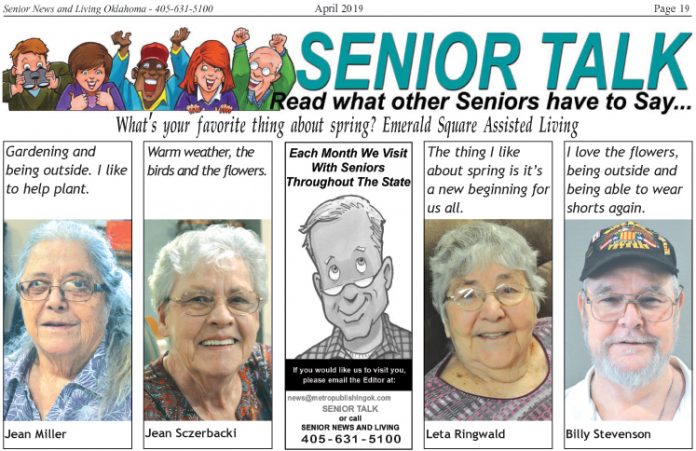
What’s your favorite thing about spring? Emerald Square Assisted Living

Gardening and being outside. I like to help plant.

Jean Miller

Warm weather, the birds and the flowers.

Jean Sczerbacki

The thing I like about spring is it’s a new beginning for us all.

Leta Ringwald

I love the flowers, being outside and being able to wear shorts again.

Billy Stevenson

brought to you by >>>VALLIANCE BANK: Identity theft is an increasing threat

0

Did you know that Identity theft is an increasing threat to all Americans, including senior citizens? Unfortunately, the numbers of people that are victimized by identity theft continue to increase each year. Older adults are particularly vulnerable and deeply concerned about this threat to their financial assets.
Below is a summary of how Identity Theft happens, the warnings signs to watch out for, how to protect yourself and what to do in the event it happens to you.
How Does Identity Theft Happen?
* Opportunistic – e.g., stolen or lost wallets or purses, misappropriated credit or debit cards, re-approved credit applications that you’ve discarded
* Intentional schemes – e.g., asking for personal information in emails, calls or letters (called phishing), pretending to be you to use your benefits, applying for loans in your name
Warning Signs of Identity Theft
* ATM or bank withdrawals you didn’t make
* Credit card charges you don’t recognize
* Bills from medical offices you haven’t visited
* Mail you’re expecting that doesn’t arrive
* Calls from debt collectors
* Notices from the IRS about unreported income or multiple tax returns
Protect Your Identity
* Don’t share personal or account information on social media or emails
* Shred documents others could steal
* Check your credit reports routinely
* Report any suspicious financial transactions immediately to limit losses
What to Do If Your Identity Is Stolen
* Don’t be embarrassed—act!
* Call your bank and credit card issuers immediately so they can close your accounts
* Put a fraud alert on your credit reports to prevent opening of new accounts
* File reports with police and Federal Trade Commission
* Follow up with the IRS, Social Security Administration, and the Centers for Medicare & Medicaid Service for theft of benefits
* Keep a record of who you contacted and when
For more information, visit aba.com/Seniors


SAVVY SENIOR: Recognizing and Treating Depression in Retirement

0

Dear Savvy Senior, Since retiring a few years ago, my husband has become increasingly irritable and apathetic. I’m concerned that he’s depressed, even though he may not admit it. Where can we turn to get help with this, and what, if anything, does Medicare pay for?  Concerned Spouse

Dear Concerned,
Depression is unfortunately a widespread problem among older Americans, affecting approximately 15 percent of the 65-and-older population. Here’s what you should know, along with some tips and resources for screening and treatments, and how Medicare covers it.
Identifying Depression
Everyone feels sad or gets the blues now and then, but when these feelings linger more than a few weeks, it may be depression. Depression is a real illness that affects mood, feelings, behavior and physical health, and contrary to what many people believe, it’s not a normal part of aging or a personal weakness, but it is very treatable.
It’s also important to know that depression is not just sadness. In many seniors it can manifest as apathy, irritability, or problems with memory or concentration without the depressed mood.
To help you get a handle on the seriousness of your husband’s problem, a good first step is for him to take an online depression-screening test.
He can do this for free at Mental Health America, a national nonprofit organization that offers a variety of online mental health screening tools at MentalHealthAmerica.net – click on “Take a Screen” in the menu bar. Or at HelpYourselfHelpOthers.org, which is offered by Screening for Mental Health, Inc.
Both of these tests are anonymous and confidential, they take less that 10 minutes to complete, and they can help you determine the severity of your husband’s problem.
Get Help
If you find that he is suffering from depressive symptoms, he needs to see his doctor for a medical evaluation to rule out possible medical causes. Some medications, for example, can produce side effects that mimic depressive symptoms – pain and sleeping meds are common culprits. It’s also important to distinguish between depression and dementia, which can share some of the same symptoms.
If he’s diagnosed with depression, there are a variety of treatment options including talk therapy, antidepressant medications or a combination of both.
Cognitive behavioral therapy (CBT) is a particularly effective type of talk therapy, which helps patients recognize and change destructive thinking patterns that leads to negative feelings.
For help finding a therapist who’s trained in CBT, ask your doctor for a referral, check your local yellow pages under “counseling” or “psychologists,” or check with the Association for Behavioral and Cognitive Therapies (FindCBT.org), or the Academy of Cognitive Therapy (AcademyofCT.org).
And to search for therapists that accept Medicare, use Medicare’s Physician Compare tool. Go to Medicare.gov/physiciancompare and type in your zip code, or city and state, then type in the type of profession you want locate, like “psychiatry” or “clinical psychologist” in the “What are you searching for?” box.
Medicare Coverage
You’ll be happy to know that original Medicare currently covers 100 percent for annual depression screenings that are done in a doctor’s office or other primary care clinic. They also pay 80 percent of its approved amount for outpatient mental health services like counseling and therapy services, and will cover almost all medications used to treat depression under the Part D prescription drug benefit.
If you and your husband get your Medicare benefits through a private Medicare Advantage plan, they too must cover the same services as original Medicare but they will likely require him to see an in-network provider. You’ll need to contact your plan directly for the details.
Send your senior questions to: Savvy Senior, P.O. Box 5443, Norman, OK 73070, or visit SavvySenior.org. Jim Miller is a contributor to the NBC Today show and author of “The Savvy Senior” book.

Application deadline is nearing Hearing Loss Association

0

Application deadline is nearing. Central Oklahoma Chapter of Hearing Loss Association of America (COC HLAA) is offering two scholarships of $1,000 each. These scholarships are available to students attending higher education in the fall of 2019. The main requirements are that the applicant must have a hearing loss, be an Oklahoman, attending an Oklahoma institution of higher education. Applications may be mailed to COC HLAA, PO Box 42801, OKC 73123, or delivered to the Hearing Helpers Room, 5100 N Brookline, Suite 100, OKC 73112. Application deadline is April 8, 2019, 5PM.
If you know of a student who might be interested, OCO HLAA encourages you to inform them of this scholarship and suggest they make application immediately
COC HLAA has been providing assistance to Oklahomans with hearing loss for 27 years. 2019 holds hope for returning servicemen & women with hearing loss as COC HLAA reaches out with assistance to veterans. 2019 offers a place with COC HLAA to find answers and hope for families of children with hearing loss. 2019 expects to see many more public places joining the Loop OKC initiative to become more hearing friendly and ADA compliant. Central Oklahoma Chapter of Hearing Loss Association of America stands ready to welcome all. Two meetings monthly that are free and open to the public; 2nd Monday monthly at 6:30 PM and 3rd Thursday monthly at 1:30 PM held at the Lakeside Methodist Church 2925 NW 66. Visit the website for more information. WWW.OKCHearingLoss.org.

DARLENE FRANKLIN: The View Through My Door

0
Darlene Franklin is both a resident of a nursing home in Moore, and a full-time writer.

I CAN SEE!

By Darlene Franklin

I can see close to twenty-twenty for the first time since I was a little girl. Cataract surgery has restored my sight to near perfect vision. New glasses will fix what remains unclear.
I can’t wait.
A couple of year ago I began to notice the middle of hymn pages faded out while I played the piano. No amount of blinking or leaning in closer brought them into focus. Since I know most hymns fairly well, I only stumbled for a few notes here and there.
At first, I blamed the situation on poorly reproduced copies. Although the print was small and the ink somewhat faded, I gradually realized it was my eyes. I couldn’t deny it when I had the same problems reading fine print or when working on my computer.
According to the American Academy of Ophthalmology, approximately fifty percent of all Americans have cataracts by age seventy-five. My mother’s experience had left me a little on edge. She had felt uncomfortable when she felt pressure on the eye. But when I asked the surgeon—especially when he talked about using knives—and he basically said I would be too out of it to notice.
Maybe not. But regardless, I wanted to see again.
I did feel the pressure, but it didn’t hurt at all. When he began cutting into my cornea, I saw pretty pink squares. The surgery itself took less than ten minutes per eye.
If you’re like me, you take your sight for granted. I know a few authors who are also blind. But since I’ve always had my sight, learning to function without it would be difficult beyond what I care to imagine. I am thankful for the surgery.
We’re all born with poor vision when it comes to spiritual things, and the older we get, it only worsens. At my salvation, God performed surgery, removed my dead eyes and replaced them with eyes that could take in more and more of his glory. My corrected “far vision” allows my breathless voice to break through in power when I sing, “This is how I fight my battles—I am surrounded by You.” It allows me write poems and books that praise God.
My near vision—other people—remains pretty dense. I frequently ask God to help me to see them as He does.
That requires me to truly look at them. The problem is, especially here at the nursing home, I expect them to look at me.
Sometimes I get it right. Recently, when a worker who’d always been kind and loving to me, gazed in the distance, her mind clearly on something else.
“You look like you’re having a bad day.
“How’d you know?” She asked. “Yes, I am. A terrible day.”
She didn’t tell me what was troubling her, and I didn’t ask. And I was tempted to leave it at that. Instead, I asked if she wanted to pray and, yes, she did.
“You don’t know how much that helped.”
The next day, she was doing much better
I wish I had that kind of sight all the time, to sense when people are in pain and simply need someone to care.
To my shame, often I’m grumpy because an aide has been inattentive or short with me, only to find out later they spent the night at the hospital with a sick baby. I overlook the fact they are first of all individuals dearly loved by God, and that they choose to work with me and for me.
Nurses, certified nurse’s aides, and other professionals in the nursing home environment often feel a strong calling for what they’re doing. They want to help people. For the Christian, that makes me not only their job, but also their ministry.
How easy that is to forget that when I am tired, sore, and I’ve been waiting for help.
Although God has given me new sight, I might not be following His aftercare instructions correctly. I may not be applying the ointment of His word to the area where I have the most vision problems. Perhaps my eyes are dry from spending too much staring at things of little or no value.
Please join me in praying that God will cause us to see the people around us as He does, and to act accordingly.
Darlene is a resident at Heritage Manor in Oklahoma City. Check out her other writing at https://www.darlenefranklinauthor.com/

Apr/May AARP Drivers Safety Classes

0

Apr 4/ Thursday/ Okla. City/ 9 am – 3:30 pm/ 951-2277/ Varacchi
Integris 3rd Age Life Center – 5100 N. Brookline, Suite 100

Apr 9/ Tuesday/ Yukon/ 9:00 am – 3:30 pm/ 350-7680/ Kruck
Dale Robertson Center – 1200 Lakeshore Dr.

Apr 12/ Friday/ Okla. City/ 9 am – 3:30 pm/ 951-2277/ Edwards
S,W. Medical Center – 4200 S. Douglas, Suite B-10

Apr 12/ Friday/ Okla. City/ 9 am – 3:30 pm/297-1449/ Palinsky
Southern Oaks Recreation Center – 400 S.W. 66th St

Apr 13/ Saturday/ Chandler/ 9 am – 3:30 pm/ 834-2348/ Brase
First United Methodist Church – 122 West 10th

Apr 23/ Tuesday/Okla, City/ 8:30 am – 3:30 pm/ 773-6910/ Kruck
Healthy Living Center – 11501 N. Rockwell Ave.

May 2/ Thursday/ Okla. City/ 9 am – 3:30 pm/ 951-2277/ Varacchi
Integris 3rd Age Life Center – 5100 N. Brookline

May 9/ Thursday/ Norman/ 9 am – 3:30 pm/ 307-3177/ Palinsky
Norman Regional Hospital – 901 N. Porter Ave.

May 10/ Friday/ Okla. City/ 9 am – 3:30 pm/ 951-2277/ Edwards
S.W, Medical Center – 4299 S. Douglas, Suite B-10

The prices for the classes are: $15 for AARP members and $20 for Non-AARP. Call John Palinsky, zone coordinator for the Oklahoma City area at 405-691-4091 or send mail to: [email protected]

Significant Women in Oklahoma Agriculture: Mattie Jeffries

0
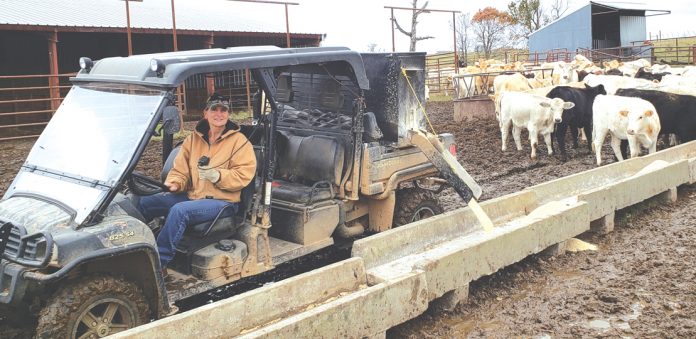
Mattie Jeffries pictured on her farm feeding cattle. Jeffries is being recognized as a Significant Woman in Oklahoma Agriculture.

by Betty Thompson

JAY—There’s no place like home.
Mattie Jeffries grew up on beans, cornbread, and hard work.
The second to youngest of eight children and raised by a single father, Jeffries was familiar with gender equality in their home. She chopped firewood, helped with outside chores, cooked, and cleaned alongside her four brothers and three sisters.
Though her mother was not around when she was growing up, Jeffries said she looked to her older sisters as an example of how to be a lady. Over the years, she changed from the little girl who just threw a cap and boots on.
“Just because I work like a man doesn’t mean I have to look like one,” Jeffries said. “My hands might be rough and calloused but at least my fingernails are pretty in pink. The old saying is true, ‘Even an old barn looks better with a new coat of paint.’”
Her father, Leslie Currey, was a welder by trade and taught Jeffries and her siblings to weld as well. Her four brothers are all welders today, and all eight children own their own businesses.
“Dad raised us to be independent,” Jeffries said. “I’ve heard the more you know the more you’ll have to do, but my philosophy is, the more you know the more you can do yourself.”
As a little girl, Jeffries dreamed of owning her own horse ranch.
“When I was little we didn’t have much, so we went to ride our neighbor’s horse,” Jeffries recalled. “I fell in love with horses and the freedom you feel when riding them.”
Eventually, she did get her own horse, and Dolly played a bigger role in Jeffries’ life than just being part of her horse farm dream.
She did not know Navada Jeffries well at the time, but she remembered the former athlete and fellow graduate of Jay High School who sold hay. And she needed hay for Dolly.
“I didn’t even pay attention to him in high school,” Jeffries laughed. “I was the country girl, and he was the preppy sports guy. He might have played football, but I never saw.”
The two hit it off after that hay delivery, and less than a year later, they were married.
While she did not wind up with the horse ranch she once dreamed of, Jeffries said she has something even better—a cattle ranch, with a few horses sprinkled in.
She and Navada built N & M Farms (named for Navada and Mattie) from the 100 cows Navada had when they began dating. When they first started the farm, they leased all of the land to run the cattle on.
“Together, with God, we grew what we have,” Jeffries said. “Neither my husband or I were given anything, we’ve had to work for everything.”
In the early years of their marriage, Jeffries was working at the bank in town and helping Navada with the farm in her spare time.
“I tagged along with him after hours and on the weekend,” Jeffries said. “He had a hired hand at the time to help him bale hay and work cattle and I told him, ‘Well I can do that!’ He told me I couldn’t, but I proved him wrong.”
Jeffries began working side-by-side with her husband on the tractor, mowing, raking, baling and hauling hay. She even helped him clean out chicken houses for fertilizer.
“I love being outside,” Jeffries said. “We work hard, and I don’t mind working hard.”
She worked at Navada’s side right up to the night before she had their first child, a daughter they named Dakota. She was back on the tractor just a little over a week later, loading up Dakota’s car seat and taking her anywhere from feeding stockers and baling hay, to working cattle and building fence.
Not much changed when their second daughter River came 13 months later, she just took both of them along in the cab of the tractor.
“I’ve raised two daughters in the tractor,” Jeffries said. “It was like having twins, the girls are 13 months apart.”
At the end of those long summer days in the hay field, Jeffries still made time to cook dinner for the family, and keep up with the other household chores, even if it was at 10 p.m.
“I’m a full-time farmer, full-time wife, and full-time mother,” Jeffries said.
While she admits those three jobs are very exhausting, she would not trade it for anything.
In 2003, eight years after beginning their farm, they were able to buy their first piece of property. Since then, they have continued to purchase more land and cattle.
“We think the same, and we have the same goal,” Jeffries said of working with her husband. “I believe it has strengthened our marriage being able to work together like this.”
Their third child came in 2009, a son named Navada Baler, who Jeffries describes as a “100% total farm boy.”
“He’s being raised in the tractor too,” Jeffries said. “He can already drive it.”
Over the years, hard manual labor took a toll on Jeffries back. In October 2015, an MRI revealed she had four ruptured discs and was on bed rest for an entire month. Friends and family told her she needed to quit working on the farm because they feared she would end up paralyzed.
“I didn’t want to have surgery but if that was what it was going to take for me to continue working on the farm then I was determined to do it.”
A friend told her about a spine specialist about an hour away in Owasso, and desperate for relief, Jeffries scheduled the first available appointment.
“I hadn’t been able to walk because of the pain,” Jeffries said. “He adjusted me and asked me to walk around the room. It was like flipping a switch on the pain. I’m not a crier, but I just started crying right then.”
It has been three years since that first doctor’s visit and Jeffries is back on her feet doing what she loves—working side-by-side with her husband and children. She said she cannot imagine doing anything else with her life.
“Owning a piece of our great nation is truly the American dream,” Jeffries said. “There is no place I’d rather be than in the tractor seat on a smooth piece of ground, on horseback gathering cattle, or being with my family on the farm making great memories. There isn’t any place like home.”

Brightmusic’s Fifth Concert of the 2018-19 Season

0

Mozart: From Salzburg to Vienna

The Brightmusic Chamber Ensemble will present its fifth and final regular-season concert, Mozart: From Salzburg to Vienna, Tuesday, April 16, at 7:30 p.m. This all-Mozart evening will feature his most popular work, Eine kleine Nachtmusik.
Mozart’s String Duo No. 1 in G (K. 423) for violin and viola was written when the child-genius was only 17 to help out a colleague—Joseph Haydn’s brother, Michael—who was unable to complete a commissioned work due to illness. By this time, Mozart had been composing for over a decade so, though it is a youthful work, it does not lack maturity. Like Eine kleine Nachtmusik, the Quintet for Clarinet and Strings in B-flat (K. Anh. 91), for two violins, viola, cello and clarinet, was published after the composer’s death at the early age of 35. The quintet, like a number of Mozart’s later works, was finished by another, in this case, the renowned Mozart scholar R.D. Levin. The program will include Mozart’s enchanting violin sonata No. 24 in B-flat (K. 378/317d), transcribed for clarinet quartet (violin, viola, cello and clarinet).
Capping the evening is a work that has long been considered Mozart’s best loved, his serenade Eine kleine Nachtmusik—literally “A Little Night Music” (K. 525) for two violins, viola, cello and double bass. This work was among a bundle of manuscripts that Mozart’s young widow took to a publisher hoping to generate some badly-needed cash. Though it is thought to be missing a movement, there is plenty of charm in the surviving four movements.
Musicians appearing in this concert are: Gregory Lee and Katrin Stamatis (violin), Samuel Formicola (viola), Meredith Blecha-Wells (cello), George Speed (double bass) and Chad Burrow (clarinet).
Brightmusic Chamber Ensemble, Oklahoma City’s own chamber ensemble, presents fine classical chamber music in the beautiful and acoustically-rich St. Paul’s Cathedral at 7th and N. Robinson near downtown Oklahoma City. Tickets are $20 at the door. Children, students and active-duty military personnel admitted free with ID. Free parking south of the cathedral. For more information, visit us at www.brightmusic.org

Settling in: UCO’s new president ready

0
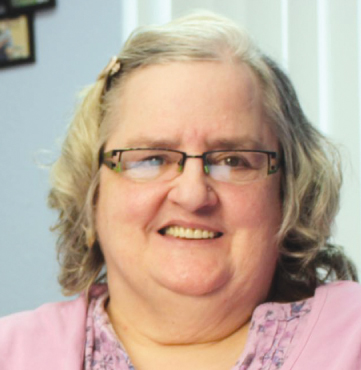
Patti Neuhold will step into the role of president of the University of Central Oklahoma later this summer.

by Bobby Anderson, Staff Writer

Like many people, Patti Neuhold never saw the next big thing in her life coming.
But as the dust began to settle and spring had finally sprung, Neuhold was getting her head wrapped around the fact later this summer she would become the next president of the 16,000-student University of Central Oklahoma.
“I’m excited about it. Every day I realize more is going to come my way and opportunities I’ll get to be a part of and it’s exciting,” said Neuhold.
Earlier this year, the Regional University System of Oklahoma announced Neuhold will become UCO’s 21st president following the June retirement of current President Don Betz.
Neuhold is the Vice President for Finance and Chief Financial Officer for the University of Central Oklahoma. She has a deep knowledge of UCO, having served in leadership in finance and budget, administrative and professional development departments, joining the university in 2007.
With two degrees earned and a third almost completed Neuhold is a proud product of education.
“I would not be where I’m at today without education and that’s a fact,” Neuhold said. “It is, in my opinion, a life changer. Education equals freedom for so many people. It can change the trajectory of an entire family for generations to come.”
“For me, to be able to open that door is so rewarding. I want to make sure other people have the opportunity to grow and shape their destiny the way I have.”
Neuhold balanced UCO’s $187 million budget through years of the most significant declines in state support and declining enrollment. She facilitated business process reviews that resulted in savings, higher retention of faculty and new leadership development opportunities.
“Patti Neuhold has the leadership experience, and vision for the university that will help prepare our students to contribute ideas, innovation and solutions to the marketplace,” said Mark Stansberry, RUSO regent chair. “Her blend of financial acumen, organizational development and understanding of what industry needs will help UCO continue to lead in education and workforce development.”
Neuhold was approved by the board of regents after a national search.
“This is not something I had been working towards,” Neuhold said. “This really wasn’t on my radar for some time.”
But when President Betz announced his retirement last year the wheels started turning. And Betz had already been preparing her.
“He was always very encouraging and helpful in helping me see the possibilities that were ahead of me,” she said.
These are challenging times for higher education in Oklahoma.
“It’s no secret the State of Oklahoma has withdrawn its financial support from higher education across our state,” Neuhold said. “I – like all the other presidents in the state – will be dealing with our allocation from the state and building a relationship with legislators where they understand where we are coming from and what we’re trying to do.”
“Society in general is pushing back against higher education and really forcing all of us to justify our existence, which seems counterintuitive for many of us. I think we’ll be dealing with changing our stories and making sure people understand what is going on behind the curtain and doing everything we can with what we have.”
From its main campus in Edmond and facilities throughout the metro area, UCO is recognized nationally as a military-friendly school and for its high student engagement through service-learning and volunteerism and its workplace environment.
“I hope that No. 1 we can pair our innovative thinking with innovative action. I really want to see UCO move ahead,” she said. “We have so many great problem solvers on our campus – so many innovative thinkers – and I would love to see all of that paired with action.”
“I want UCO to be marked by progress, and potential and possibility.”
She stood out in the selection process but Betz already knew she would.
“Patti has been a key member of the university cabinet for several years, and has exercised significant leadership on a number of highly relevant issues to the university,” Betz said. “I believe that Patti will serve the UCO community, the metro and the state with energy, insight and distinction. I will work closely with her throughout the transition. I am delighted, and I sincerely look forward to the successful future of the university under her leadership.”

Helping Seniors Stay Informed

0

by Sheryl Presley, TRIAD Coordinator for all of OKC Police Department

An event that our Police Department is proud to put on for our seniors is Informed Senior Seminar. Event will be on April 12th at 8:30am at OSU-OKC 900 N Portland student Center 3rd floor. Event is FREE. You do need to register by calling our City of OKC action Center at 297-2535 by April 5. Event will start at 8;30am. We start with a panel discussion and this year our panel discussion will be active incident. We will have MSGT.
Loruse and Captain Samuel from our agency Oklahoma City Police Department and 2 other officers from other agencies on the panel. You will be able to ask the officers anything related to this topic. Then we will provide 4 breakout sessions that will repeat after the 1st session on nutrition and fitness, scams, Medicare updates and transportation for seniors. We have a wonderful committee that works hard to provide different programs every year to educate and inform our seniors. OSU-OKC has been a great partner to allow us to have Informed Senior Seminar here for almost 17 years.
We look forward to having this event and providing resources for our seniors for FREE. Any questions please contact Sheryl Presley at 405-316-4336.
Spring has arrived and with it the scammers come out of the woodwork. Some of the most common scams are home repair frauds. This is the most common and costly of all property crimes. Some tips and red flags to protect yourself from becoming a victim. NEVER, NEVER, NEVER agree or engage the services of anyone who solicits door to door. If the contractor does not have a local address and arrived in the area following the disaster. If the contractor claims to have materials left over from a previous job and offers to use them on your project for a steep discount. The contractor does NOT use a written agreement for the project. Always get 3 estimates and check the company and or name of person representing the company. This can be done by going to your computer and typing in OSCN.NET and checking to see if the person or company has any claims or lawsuits against them. Also check the company name by contacting the better business bureau by calling 405-239-6081. If you are needing roof repair to make sure the contractor is registered with the Oklahoma Construction Industries Board ( www.ok.gov/cib/ or 405-521-6550. Also avoid using workmen or services found in flyers delivered door to door or placed on your car in a parking lot. Ask for the business address and verify the address. Never pay upfront for services that have NOT been completed. Ask for references of other people that have used the business or person you are wanting to do the work. Deal with local contractors who have been in your community and have a good reputation. Make sure you have everything in writing that you are agreeing to have done and the exact amount it will cost. Never sign anything up front. Don’t allow yourself to be rushed or price is only good for TODAY only. If you are a person living alone if possible have someone with you when you have contractors out for estimates and then when you decide on having the work done. In today’s time you don’t want to let the worker or workers to know you live alone. You can also report and fraud to the Attorney General’s Office Consumer Protection Unit at 405-521-2029. In Oklahoma we have had our share of disasters. Tornados and Ice storms have hit us hard over the years. Having a plan and knowing what to do will help you. In our local Triad meetings in the metro we discuss how to handle the storms and prepare. We have
speakers and information that we provide in the meetings. This information will help keep you from being a victim.