Monday, December 8, 2025

OMRF honors scientists at spring board meeting

0
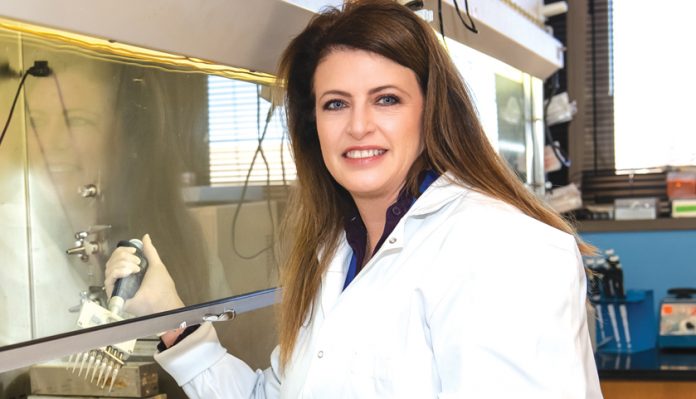
Oklahoma Medical Research Foundation scientist Darise Farris, Ph.D.

The Oklahoma Medical Research Foundation presented scientific awards to four scientists and announced another as an endowed chair during Wednesday’s annual spring board meeting.
Florea Lupu, Ph.D., received the Edward L. & Thelma Gaylord Prize for Scientific Excellence, OMRF’s highest scientific award. Lupu joined OMRF in 2001 and holds the H. Allen and Mary K. Chapman Chair in Medical Research, which focuses on the study of cardiovascular and circulatory diseases and disorders. His lab aims to find a new treatment for sepsis, which kills about 270,000 people per year in the U.S. — more than lung cancer, breast cancer and drug overdoses combined.

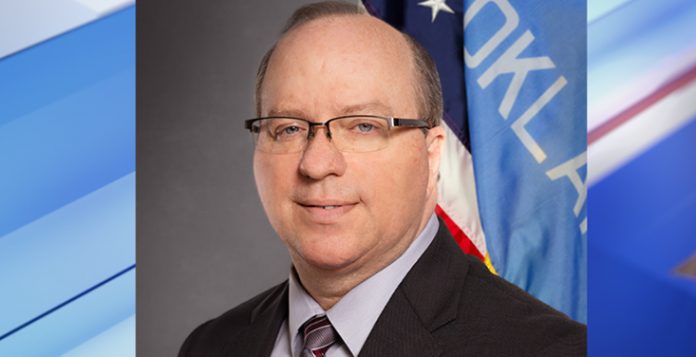
Oklahoma Medical Research Foundation scientist Gaurav Varshney, Ph.D.

The Merrick Award for Outstanding Medical Research was given to Benjamin Miller, Ph.D., an internationally recognized leader in aging research. Miller, a physiologist, seeks to prevent the onset of chronic diseases by slowing the biological process of aging. His current work focuses on whether metformin, the world’s most prescribed diabetes drug, is effective at slowing aging.
Gaurav Varshney, Ph.D., received the J. Donald & Patricia H. Capra Award for Scientific Achievement. Varshney uses revolutionary gene-editing technology to understand human hearing loss, a condition that affects 1 in 6 American adults. Last year, he received NIH funding to study 21 genes believed to be involved in developmental disorders such as hearing loss, autism and schizophrenia.
The Fred Jones Award for Scientific Achievement was presented to Wan Hee Yoon, Ph.D. Yoon uses fruit flies to investigate how disruptions or failures in mitochondria — the driver for energy and metabolism in cells — can lead to neurodegenerative diseases like Alzheimer’s and Parkinson’s. Last year his research uncovered a rare genetic mutation deemed responsible for neurological disorders in nine children in Europe and the Middle East.
Also at the meeting, Darise Farris, Ph.D., was named the Alvin Chang Chair in Biomedical Research. Farris’ lab studies conditions that range from Sjögren’s disease to bacterial infections such as anthrax. Her focus is the body’s abnormal immune responses in these conditions and how countering those reactions can result in better health outcomes.
“Dr. Farris is internationally recognized for her innovative research on immune responses in health and disease,” said Rod McEver, M.D., OMRF’s vice president of research, who held the Alvin Chang Chair from 2009 to 2020. “She is a highly valued colleague at OMRF and other institutions, and most importantly, she is a dedicated mentor to younger scientists.”

deadCenter Film, Norman Music Festival partner for inaugural Oklahoma Music Video Award

0

In a year of full returns in-person and across theaters, deadCenter Film and Norman Music Festival are proud to partner on Thursday, April 28, at Sooner Theatre in announcing finalists for the inaugural Oklahoma Music Video Award in advance of the 22nd annual deadCenter Film Festival, taking place June 9 – 12. The award finalists will be presented at 7 p.m. during opening night of the music festival, which will run through Saturday, April 30 in Norman and precede an evening of programming merging music and movies.
The 22nd annual deadCenter Film Festival will take place June 9 – 12 in venues across downtown Oklahoma City. This inaugural partnership merges the schedule kick-off of the deadCenter Film Festival, in its first full in-theater run since 2019, with NMF, returning to full three-day operations after being one of the first metro area festivals to cancel in 2020, subsequently canceling the event again in 2021 due to the pandemic.
“One of my favorite things about Oklahoma is the way organizations work together to bring unique experiences to our state,” said deadCenter Film’s director of festival and operations, Miranda Patton. “Our partnership with the Norman Music Festival is undeniably one of those great partnerships. I am beyond excited about our upcoming event, the Music Video award, and future opportunities to celebrate music and film together.”
Immediately following the announcement of music video finalists, deadCenter Film will offer a screening of the documentary feature “Skating Polly: Ugly Pop” about the Oklahoma-bred, now West Coastbased, band Skating Polly, which was winner of the film festival’s Audience Award in 2021. The evening will feature a Q&A with director Henry Mortensen after the screening and a performance by Skating Polly, a trio of siblings known for memorable, genre-shattering versatility for more than a decade.
“We are just thrilled to be able to partner with a tremendous organization like deadCenter Film Festival on the inaugural Oklahoma Video Music award. Being able to overlap our brands and extend our message to broader audiences on each other’s behalf is the kind of collaboration that benefits our state, undoubtedly,” Shari Jackson, Norman Music Festival’s executive director said. “Being able to make this presentation with Skating Polly in attendance is the cherry on the top. On behalf of our board of directors, I can certainly say that we look forward to future collaborations with deadCenter Film Festival.” For more information visit: https://www.deadcenterfilm.org/

Report Shows Devastating Number Of Nursing Home Closures

0

In case you missed it, the American Health Care Association and National Center for Assisted Living (AHCA/NCAL) released a report last week highlighting the growing number of nursing home closures. More than 1,000 nursing homes have closed since 2015, displacing as many as 45,000 vulnerable residents. As nursing homes and assisted living communities struggle with the lingering effects of the COVID-19 pandemic and a lack of sustainable government funding, AHCA/NCAL projects that hundreds of add
* Since 2015, facility closures have included 776 before the pandemic and 327 during the pandemic.
* Over 400 nursing homes may close before the end of this year.
* During the pandemic, nearly half of nursing home closures (46 percent) were facilities with the highest ratings by the federal government.
In response to the findings from the report, Mark Parkinson, president and CEO of AHCA/NCAL, said:
“Every closure is like a family being broken apart, with the lives of residents, staff and their families impacted in the process. With hundreds of nursing home closures looming now and thousands more anticipated if government funding is cut, state and federal policymakers need to step up to support our social safety net. We need to do better than just keep nursing home doors open—we need to make significant investments to better support our frontline caregivers and transform facilities for a growing elderly population.”
In many cases, facilities are faced with the difficult choice of limiting admissions or closing their doors for good as a result of financial challenges and a historic workforce shortage. Earlier this month, the Eliza Bryant nursing home in Ohio announced its impending closure because of financial and staffing troubles, and the Kensington, a nursing home in Nebraska made a similar announcement a week later.
Nursing home closures mean reduced access to care for vulnerable seniors who need around-the-clock care. Policymakers must act by allocating the resources necessary to address this urgent crisis and support long term care for the future.

OKC ZOO WELCOMES NORTH AMERICAN RIVER OTTER TO ITS ANIMAL FAMILY

0

Oklahoma Trails is home for new female river otter, Hazel.

Guests visiting the Oklahoma City Zoo and Botanical Garden will have an opportunity to see its newest animal family member, Hazel, a female North American river otter. Hazel, 1, recently arrived at the OKC Zoo from Potter Park Zoo in Lansing, Michigan, and can be seen at the Zoo’s river otter habitat in the Big Rivers building at Oklahoma Trails. The recommendation for Hazel to relocate to the OKC Zoo came from the Association of Zoos and Aquariums Species Survival Plan® (SSP) for North American river otters. AZA’s SSP programs are cooperatively managed programs created to oversee species populations within AZA accredited zoos and aquariums.
“It’s always exciting to connect guests to a new member of our animal family,” said Tyler Boyd, the Oklahoma City Zoo’s curator of carnivores. “Hazel is settling in nicely and becoming familiar with her new habitat space. At this time, she is our only river otter but we are working with the AZA’s SSP program for river otters to find her a companion.”
Located throughout North America and Canada, river otters are classified by the International Union for Conservation of Nature as stable, meaning that their population in the wild is not in immediate danger of decline. River otters are just one of 13 different otter species found globally. River otters are known for their long slender bodies with short legs and their excellent swimming abilities. Adult otters can vary greatly in size, growing to about 2.5 to 5 feet and weighing between 10 and 30 pounds. A carnivorous species, river otters eat fish, frogs, crayfish, turtles and even some small mammals. They hunt either alone or in pairs but can also forage on land for insects and small mammals.
You “otter” make your way to the OKC Zoo to see Hazel! The Oklahoma City Zoo is open from 9 a.m. to 5 p.m. daily with the last entry no later than 4 p.m. Purchase advance tickets for general admission at www.okczoo.org/tickets. Located at the crossroads of I-44 and I-35, the OKC Zoo is a proud member of the Association of Zoos and Aquariums, the American Alliance of Museums, Oklahoma City’s Adventure District and an Adventure Road partner. Regular admission is $12 for adults and $9 for children ages 3-11 and seniors ages 65 and over. Children two and under are admitted free.
Stay connected with the Zoo on Facebook, Twitter, Instagram, Linktree and TikTok, and by visiting our blog stories. To learn more about Zoo happenings, call (405) 424-3344 or visit okczoo.org.

A watchful eye: Local doctor helps seniors monitor health

0
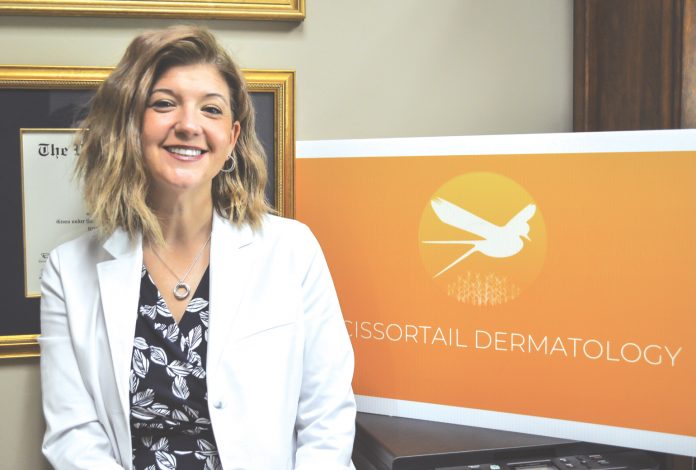
Dr. Elise Brantley specializes in helping seniors preserve their skin health.

story and photo by Bobby Anderson, Staff Writer

It’s all fun in the sun when you’re young.
But as you start to age all that exposure to the sun can begin to take its toll, resulting in blemishes and forms of skin cancer.
That’s where Dr. Elise Brantley and Scissortail Dermatology come in.
Brantley is a board-certified dermatologist who has been practicing since 2009.
Her practice focus is evaluation and treatment of growths of the skin with emphasis on detecting and treating skin cancer.
She is a native Oklahoman from Broken Arrow.
After graduating high school from the Oklahoma School of Science and Mathematics she attended the University of Tulsa for undergraduate studies.
She received her medical degree from the University of Oklahoma and completed her residency training at the University of Cincinnati where she served as chief resident.
While her husband was completing additional training in orthopedics she served on the faculty of both the University of Cincinnati and Emory University in Atlanta, Georgia before returning to Oklahoma.
She has been serving the Oklahoma City metro area for nearly 10 years.
She started Scissortail Dermatology this past September to better serve her patients.
“Over the years I’ve accumulated a practice of people who have had years of chronic sun exposure and a high rate of skin cancer development,” Brantley said. “Many of them are elderly because skin cancers come from years and years of sun exposure. It’s basically insult after insult after insult.”
Years of data have taught us about the harmful effects of the sun’s rays. Unfortunately, for many, that information wasn’t available when they needed it the most.
“We didn’t know then what we know now so when they were younger they were accumulating damage that no one had any idea how dangerous it was,” Brantley said. “Luckily, now, we have a lot more knowledge about how the sun’s rays cause damage but back then people just burned and kept going.”
Brantley has heard stories of patients trying to get sun tans when they were younger. Baby oil, Crisco, aluminum foil, iodine were just a few of the concoctions people thought might help them tan.
The wisdom of trying to get a “base tan” before the summer is also one that Brantley says is a myth. Base tans do not protect from sun damage or skin cancers.
Brantley educates her patients so they can become more knowledgeable about what to look out for.
She focuses on prevention and protection from the sun as well as skin cancer detection and treatment.
“It’s never a bad idea to come in and get a full body skin check from head to toe, at least for a start,” Brantley said. “We can look at your overall risk factors, your history and personal history and even clues from your skin as to how much sun damage you’ve already accumulated.”
“From there we can determine how often you should come in and we can go over how to detect things on your own.”
Three main types of skin cancer exist and some may have genetic components.
Non-melanoma skin cancers include basal cell and squamous cell cancers.
Melanomas are the quicker, more dangerous forms that – if left untreated – can become fatal.
“Those can take off within only a few weeks for the more aggressive ones,” Brantley said. “Anytime you have a brown spot or black spot that is not part of your normal skin that you don’t recognize or is behaving differently you definitely should come get that checked out sooner rather than later.”
“It doesn’t mean it’s melanoma. There’s a whole category of things that are benign that look similar but are hard to tell unless you are trained.”
It’s never too late to hedge your bet against skin cancer. Seeking shade and not being out in the hottest part of the days from 10 a.m. to 2 p.m. are recommended.
There is more SPF protective clothing now than ever before including hats and shirts.
Sunscreen with an SPF of 30 or higher is also a great idea, reapplied every two hours.
Brantley notes that seniors are also at a higher risk of damage as they age, particularly if they spend more time in the sun.
“The more you are in the sun the less effective your immune system is at fighting off skin cancer,” said Brantley, who also noted the benefits of getting Vitamin D from the sun can as readily be achieved through vitamin supplements. “If you are immune-compromised you can start growing more and more skin cancers as your system gets weaker.”
Keeping a watchful eye over her patients is something that brings her immense joy.
“It’s very satisfying how you can get to know someone young and develop a relationship and know these patients over years and years. I love that once you get established with patients you build that relationship and it’s a privilege to get to know someone throughout their entire life. It’s very much a part of who a patient is, not just what their skin looks like.”
You can visit Dr. Brantley at one of her two OKC offices, Collier Skin Cancer Center, 3030 NW 149th St, or 401 SW 80th St, Bldg D, Ste 101. You can make an appointment by calling (405) 562-6222 or visiting her website at www.scissortaildermatology.com

TINSELTOWN TALKS: Bill and Susan Hayes still having the time of their lives on ‘Days of Our Lives’

0
Bill Hayes and Susan Seaforth Hayes in their living room filming Secrets of Soap Opera Lovers - provided by publicist

By Nick Thomas

Actors Bill Hayes and Susan Seaforth were married in 1974. Or was it 1976? Actually, it was both! The pair tied the knot when their “Days of Our Lives” characters (Doug and Julie) married two years after the couple wed in real life.
Some 50 years and a collective 5,000 episodes later, the Emmy Award-winning stars of the perennial NBC daytime soap opera are still together both on-screen and off. They recently produced a website, Secrets of Soap Opera Lovers, explaining how the two have lived, loved, and worked together for five decades (see www.soapoperasecrets.com).
“Our grandson, David Samuel, came up with the idea,” explained Bill from the couple’s home in Los Angeles. “He had been divorced and wanted to know the secrets for our long and happy marriage.”
“So we wrote them down for him and he suggested we share them with others on the Internet,” added Susan.
Their secrets, a collection of personal tips for building a successful long-term relationship, include singing and dancing together, saying I love you every day, keeping promises, and supporting your partner’s dreams. Another involves kissing, an activity their TV characters frequently embrace. The couple’s first kiss – on-screen and in real life – was in a premarital episode airing on July 23, 1970.
“That’s our number one secret,” noted Bill. “Give your lover a kiss first thing in the morning and the last thing at night.”
“We have love scenes on the screen, so naturally we have to rehearse them at home,” added Susan as Bill laughed in the background. “We need to practice a lot – we have to perfect them!”
On the website, Bill and Susan explain their secrets in a series of short videos filmed in the couple’s living room, each reinforced by an illustrative clip of their characters from the show.
“We chose scenes from ‘Days of Our Lives’ that demonstrate the point we make in each video,” said Susan.
Bill, who is 96, and Susan, 78, expect their characters to continue displaying on-screen affection through 2022 and beyond.
“The show is produced five days a week and they used to shoot day-for-day, but now they shoot eight episodes in five days,” explained Susan. “Bill and I have been working about four to seven times a month which is plenty right now.”
In addition to their daytime soap duties, both Bill and Susan have each appeared (separately) in a dozen feature films, as well as numerous TV movies, series, and theatrical productions throughout their careers. Bill even enjoyed a smash hit in the 50s singing “The Ballard of Davy Crockett,” outselling versions by Fess Parker and Tennessee Ernie Ford.
“We recorded it on the first take in one day,” recalled Bill. “I still get a royalty check each year for about $3,000. So someone must still be buying it!”
Long-time fans of “Days of Our Lives” are still buying the love that Bill and Susan’s characters share on-screen.
“It’s not Shakespeare, but the writers continue to make Doug and Julie fresh as the times change and as we age,” said Susan. “We haven’t even thought about stopping. Old actors don’t retire, they just lose their agents!” This iconic daytime TV couple, however, can expect to retain their management for quite some time.
“It’s been hard work for many years, but we still love it,” she adds. “We’re proud to be producing a quality product as the matriarch and patriarch of the show.”
Nick Thomas teaches at Auburn University at Montgomery, in Alabama, and has written features, columns, and interviews for numerous magazines and newspapers. See www.tinseltowntalks.com.

Keith Reed Nominated as Commissioner of Health

0
Oklahoma Health Commissioner, Kieth Reed.

Governor Kevin Stitt nominates current interim commissioner of health for commissioner position

Thursday Governor Kevin Stitt nominated Keith Reed the Commissioner of Health for the state of Oklahoma. Reed has been with the Oklahoma State Department of Health (OSDH) for 20 years, serving in various positions throughout the agency.
Reed has been serving as OSDH’s interim Commissioner of Health since October 22, 2021.
“I am honored to be nominated by Governor Stitt for consideration as Oklahoma’s next Commissioner of Health,” said Keith Reed, current interim commissioner of health. “I am proud to work alongside professionals that are truly dedicated to improving the lives of their neighbors. I look forward to the potential to serve in this capacity and continuing the transformation of OSDH, as it strengthens internally to ultimately be more responsive and a better partner for Oklahomans.”
Reed was born and raised in Monroe, Oklahoma located in Le Flore County.
“I often draw on my upbringing in a smaller Oklahoma community when thinking about the needs of Oklahomans that OSDH has the responsibility for meeting,” said Reed.
Reed has his Bachelor of Science in Nursing (BSN) from Oklahoma’s Northeastern State University and possesses a Master of Public Health Degree (MPH) from the University of Oklahoma. Further, he is Certified in Public Health through the National Board of Public Health Examiners.
In addition to his public health career, Reed is a Colonel in the Oklahoma Air National Guard, serving multiple tours in support of Operations Iraqi and Enduring Freedom. He is currently assigned as Commander, 137th Special Operations Medical Group, Will Rogers Air National Guard Base, Oklahoma City.
“Keith Reed has done an exceptional job as interim commissioner of health and will continue to serve Oklahomans well in this permanent capacity,” said Gov. Stitt. “Keith has a proven track record of success, and he is the right person to lead the Oklahoma State Department of Health into the future.”
Before Reed is officially named as the Commissioner of Health, the senate must confirm his appointment.
The Oklahoma State Department of Health (OSDH) protects and improves public health through its system of local health services and strategies focused on preventing disease. OSDH provides technical support and guidance to 68 county health departments in Oklahoma, as well as guidance and consultation to the two independent city-county health departments in Oklahoma City and Tulsa. Learn more at Oklahoma.gov/health.

OKLAHOMA WOMAN IS BACK IN THE SADDLE, AGAIN

0
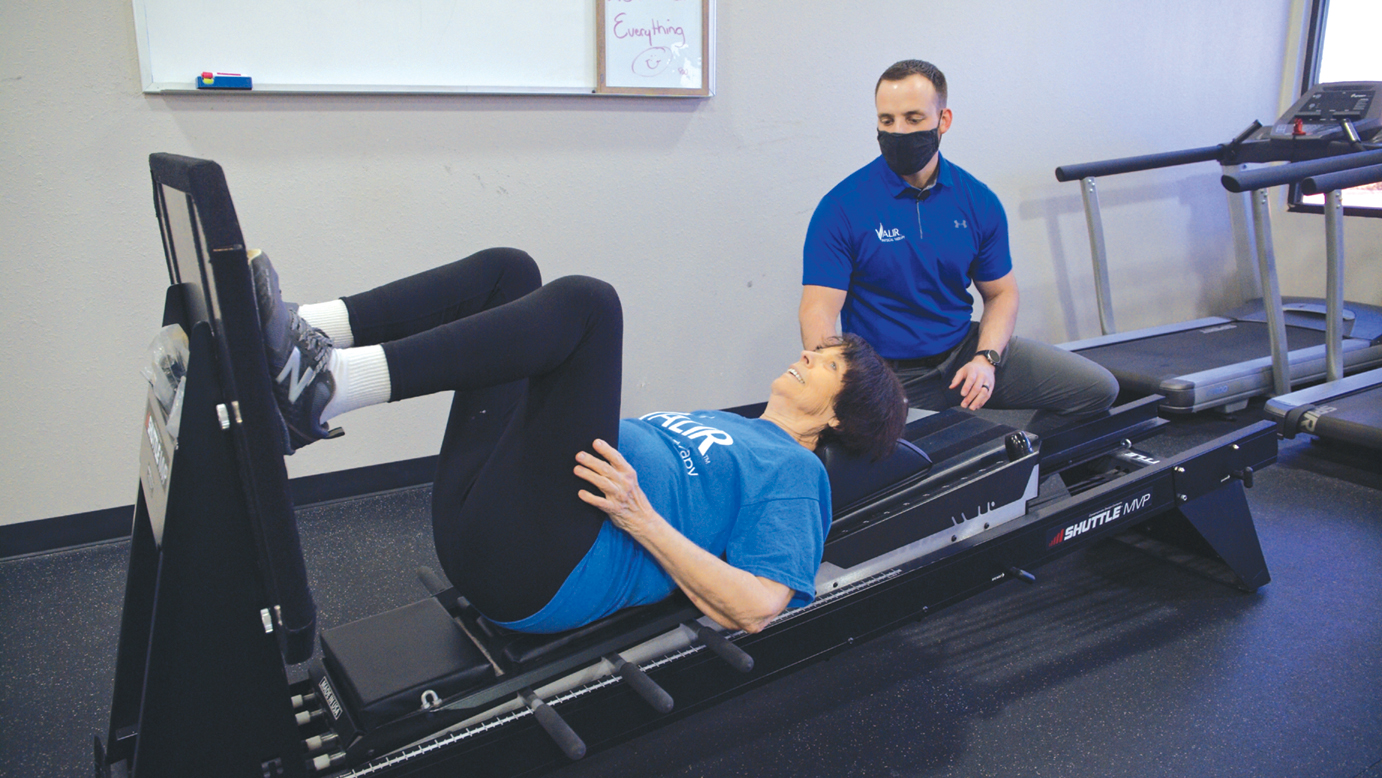
After breaking her hip, Carol Peake wasn’t sure she would be able to get back in the saddle. Thanks to Dr. Alex Maxwell, at Valir Physical Therapy, she is now able to enjoy riding without pain.

After a major fall, metro senior credits physical therapy with helping her regain independence

Carol Peake works with Dr. Alex Maxwell, with Valir Physical Therapy, on exercises that helped her regain mobility after she broke her hip and femur.

Equine lovers can’t imagine life without horses. Carol Peake or Piedmont is one of them, but a fall in the stables meant she had to pull back the reins on riding and she worried she might never ride again.
Peak has ridden horses since childhood. After another of countless rides, she was putting her riding gear away when it happened. A saddle strap wasn’t properly secured, leaving the loop in line with her foot.
“When I turned around to walk off that loop was around my ankle,” Peake recalled. “It yanked my foot out from under me and I crashed to the ground right here on the concrete.”
Her husband was nearby and heard her holler. He rushed to her side and called for help. Peake was rushed to the hospital where they found she had broken the ball off her hip and fractured her femur. She required surgery to repair the damage. Weeks later, she was back home, in pain and barely able to bend at the hit. She wondered how she would be able to ride again. That was when Peake started working with Dr. Alex Maxwell, a physical therapist at Valir Physical Therapy in Piedmont.
“She came in, day one, and knew, ‘I want to get this pain under control,’ and then, right after that, ‘I want to get on a horse as soon as I possibly can,’” Maxwell said.
“Mostly I wanted my life back,” Peake explained, but she knew she had a long way to go.
“She was very unsteady, and she was pretty nervy about standing on one leg, which you have to be on one leg to get into a stirrup and swing your leg over the horse,” Maxwell said.
Peake was upfront with Dr. Maxwell, telling him on her first day about her determination to get back in the saddle.
Knowing her goals, Maxwell tailored her therapy in ways that would help her reach that goal of returning to riding. They focused on exercises that would target specific muscles, strengthening her body in ways that would help her someday get back on a horse again.
“We find those things they want to do, and we make sure we are addressing them through our modalities and treatments,” Maxwell said.
Peake was determined to get better. She pushed through day after day. With Maxwell’s help and encouragement, she began to see improvement — her pain became more manageable, and her strength increased. Nine months later, she reached her goal, climbing back in the saddle for the first time since her injury.
“It was exhilarating,” she said of that moment.
Peake continues to ride regularly. She does need a little help getting into the saddle, though she’s getting closer to doing it on her own. Meantime, she continues to work on strength and range of motion in her hip with the help of the team at Valir PT. She knows without them riding could easily have become a thing of the past.
“Being able to talk about something for weeks and weeks and train for it in here and then actually get to see her go and do it, it was an opportunity that I really appreciated her giving me,” Maxwell said.
Interestingly, Peake says the help she got through physical therapy brought other positives, helping her to enjoy time once again in her garden.

Grants fund essential equipment for OMRF mouse facility

0
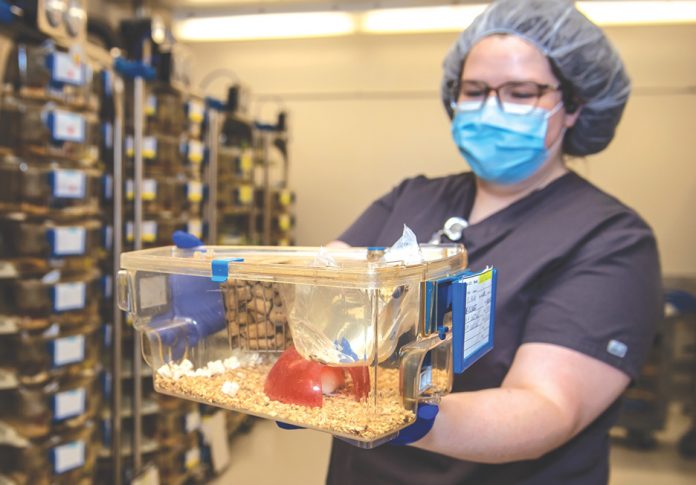
The Oklahoma Medical Research Foundation is home to more than 20,000 mice. Researchers rely heavily on lab mice, which share more than 95% of their genomes with humans. These mice help deepen scientists’ understanding of diseases ranging from cancer to Alzheimer’s to multiple sclerosis and often play a crucial role in developing new treatments.

Five grants totaling $1.5 million have provided new cage-cleaning and sterilization equipment for the more than 20,000 mice that call the Oklahoma Medical Research Foundation home.
Offices in the animal facility, known as the Donald W. Reynolds Center for Genetic Research, also are being renovated, thanks to grants from the Hearst Foundation, J.A. Chapman and Leta M. Chapman Charitable Trust, National Institutes of Health, Presbyterian Health Foundation, and Robert Glenn Rapp Foundation.
Researchers rely heavily on lab mice, which share more than 95% of their genomes with humans. These mice help deepen scientists’ understanding of diseases ranging from cancer to Alzheimer’s to multiple sclerosis and often play a crucial role in developing new treatments.
Mice receive a new cage every one to two weeks. Research technicians wash, sterilize and provide new bedding for nearly 1,000 cages per day. After 20 years, the highly specialized equipment was breaking down regularly: In 2020, OMRF’s contracted technician made 38 visits for repairs.
“What kept us up at night was the prospect of our repair technician getting ill or that the equipment would have a catastrophic failure,” said Jennie Criley, D.V.M., OMRF’s director of Comparative Medicine.
A catastrophic failure, Criley said, could have meant a six-month wait for new, custom-made equipment. This would have caused sweeping delays in research operations, including experiments involving a select group of “germ-free” mice for OMRF researchers like Matlock Jeffries, M.D. These mice have no detectable microbes, and everything that enters their environment must be sterile.
“Our lab studies the relationship between osteoarthritis and microbiomes in the gut,” Jeffries said. “The germ-free facility allows us to give mice a precise microbiome and examine the effects on knee cartilage when we perturb the microbiome. It’s critical that their environment is kept reliably sterile. These grants provide that assurance.” The grants replaced seven pieces of equipment utilized by researchers at OMRF, the Oklahoma City Veterans Affairs Medical Center, University of Oklahoma Health Sciences Center, Oklahoma State University College of Veterinary Medicine and the University of Oklahoma.
The new equipment provides not only reliability, but also energy savings, resulting in more efficient use of foundation funds.
“These facility updates will provide decades of support for OMRF researchers to garner new insights and treatment strategies for diseases that impact people everywhere,” said OMRF President Andrew S. Weyrich, Ph.D.
NIH funds for the renovation are from National Institute of General Medical Sciences Centers of Biomedical Research Excellence program grant No. P20GM139763-01.


Social Security Administration Releases Equity Action Plan

0

Today, the Social Security Administration released its first Equity Action Plan, supporting President Biden’s whole-of-government equity agenda to advance equity, civil rights, racial justice, and equal opportunity for all.
On January 20, 2021, The President signed an Executive Order, Advancing Racial Equity and Support for Underserved Communities Through the Federal Government. The Executive Order requires all Federal agencies “to pursue a comprehensive approach to advancing equity for all, including people of color and other people who have been historically underserved, marginalized, and adversely affected by persistent poverty and inequality.”
“Social Security’s programs touch the lives of nearly every American, providing income security for the diverse populations we serve, including people facing barriers, people with disabilities, people who are widowed, retirees, and their families,” said Kilolo Kijakazi, Acting Commissioner of Social Security. “Systemic barriers may prevent people who need our programs the most from accessing them. Our Equity Action Plan will help to reduce these barriers and ensure people have access to our services.”
Social Security’s Equity Action Plan includes:
* Increasing collection of race and ethnicity data to help understand whether programs are equitably serving applicants and beneficiaries,
* Revising policies and practices to expand options for service delivery, Ensuring equitable access for unrepresented claimants in the disability application process,
* Decreasing burdens for people who identify as gender diverse or transgender in the Social Security number card application process, and
* Increasing access to research grant programs for Historically Black Colleges and Universities and Minority Serving Institutions and procurement opportunities for small and disadvantaged businesses.
To learn more about the actions outlined in the Equity Action Plan, please visit www.socialsecurity.gov/open/materials/SSA-EO-13985-Equity-Action-Plan.pdf. For more information about efforts to redress systemic barriers in policies and programs to advance equity for all, visit www.whitehouse.gov/equity.

Social

0FansLike
0FollowersFollow
0SubscribersSubscribe