Thursday, July 9, 2026

Military Service Prominent at New Museum

0
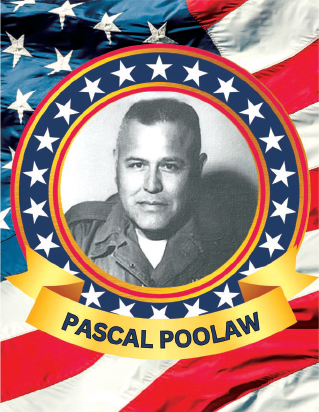
Oklahoma Army First Sergeant Pascal Cleatus Poolaw Sr. was inducted in 2019.


The opening of the National Native American Hall of Fame at its permanent headquarters in early June 2026 is an exceptionally appropriate and strategic milestone for Oklahoma City’s cultural landscape. The opening of the National Native American Hall of Fame at its permanent headquarters in early June 2026 is an exceptionally appropriate and strategic milestone for Oklahoma City’s cultural landscape.
Located at the historic Sundail Mansion at 4000 N Kelley Ave., this new cultural icon is within two miles of the Oklahoma State Capitol and the Oklahoma History Center. This makes it a convenient tourist destination as a national monument to Indigenous achievement.
“The Hall of Fame inducts individuals in 16 categories, including military,” Founder and CEO James Parker Shield (Little Shell Chippewa) said. “We invite all veterans and visitors to our people’s place of honor-the National Native American Hall of Fame.” Shield established the Hall in 2016 in Great Falls, Montana, after serving as Montana’s State Coordinator of Indian Affairs as the first Native American on the Montana Governor’s staff.
Veterans and tourists can deepen their appreciation of Oklahoma’s proud Native American military service by viewing the product of its high per-capita enlistment rate and historic contributions.
Nearly 19% of Native Americans have served in the military since September 11, 2001, compared to an average of 14% for all other ethnicities combined. Historically, Indigenous soldiers have provided irreplaceable tactical advantages.
This began with the legendary Code Talkers of World Wars I and II-including men from the Choctaw and Oklahoma Cherokee Nations.
Native Americans have served in the military because of a complex mix of patriotism, family legacy, economic opportunity, leadership, humility and self-sacrifice to support their community.
This new museum celebrates Oklahoma’s Indigenous heritage by honoring notable figures, including Army First Sergeant Pascal Cleatus Poolaw Sr. He is enshrined alongside 21 other Veterans. This full-blooded Kiowa warrior from Apache, Oklahoma, is widely recognized as the most decorated Native American soldier in United States military history.
His and his four sons’ military service embodies the complex, multi-generational dedication to community defense and service that defines Oklahoma’s Indigenous heritage.
During his legendary career spanning 25 years and three major conflicts-World War II, the Korean War, and the Vietnam War, where he lost his life-Poolaw earned 42 medals, badges, and citations.
Poolaw’s career uniquely highlights the “warrior tradition.” He earned three Combat Infantryman Badges and three Purple Hearts- one of each for every war he fought in.
At his funeral, his wife, Irene Poolaw, summarized his legacy: “He has followed the trail of the great chiefs. His people hold him in honor and highest esteem. He has given his life for the people and the country he loved so much.”
Poolaw is buried at the Fort Sill National Cemetery in Lawton, Oklahoma. His enduring impact remains a fixture at the nearby Fort Sill Army base, where
“Poolaw Hall” houses a museum exhibit celebrating the contributions of Native American soldiers.
The Hall of Fame is a national institution celebrating contemporary path makers, military heroes, and political trailblazers from tribal nations across the United States. It highlights individuals who have made cultural contributions from the Civil War era to modern times in fields such as law, medicine, sports, and activism.
The museum will attract summer vacationers, field trips, and families. It will be a key destination for learning about Native American achievements and increasing visitor engagement.
By opening its doors in June it places Indigenous contributions at the center of Oklahoma City’s cultural landscape, encouraging visitors to explore this vital history.
Housed in the historic 6,000-square-foot Mediterranean-style residential villa built in 1919, the museum offers a private, elegant experience by appointment only, making visitors feel uniquely welcome and valued.
Operating without standard walk-in hours, the museum offers personalized, tailored tours of the collection, providing a more exclusive experience for visitors.
To request entry, email [email protected]. Please include your preferred date and time, the
total number of guests, and any specific educational interests or accessibility needs. The staff handles scheduling inquiries Monday through Friday, 10 a.m. to 4 p.m. Please wait for a staff member to reply and confirm your time slot before traveling to the museum.
For more informationo, visit www.nativehalloffame.org. •
Story and photos by
Darl DeVault, contributing editor
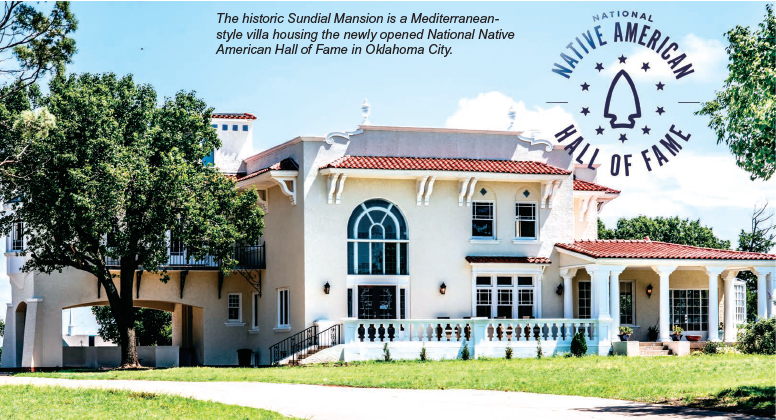

The historic Sundial Mansion is a Mediterranean-style villa housing the newly opened National Native American Hall of Fame in Oklahoma City.

Veteran-Owned 101 Mobility Focused on Oklahoma Veterans

0
101 Mobility specializes in ramps, grab bars, mobility stairlifts, and home elevators often covered by the Veteran Administraion.


101 Mobility has been operating in Oklahoma for over 12 years and recently received a new owner. Veteran Jeff Lynch purchased the mobility company in 2025 and serves as President and CEO. Lynch purchased the company largely because he felt it needed local and veteran ownership due to their focus on the veteran.

While they serve other communities, veterans are a majority of their business because of their great need for what they offer. Actively serving in the military puts one at risk for injury which is why there is a greater need.
Although Lynch’s background was in operations, he felt called to purchase a franchise business that would make a difference in people’s lives. A business like 101 Mobility was a natural place
to land given that he is a veteran and much of their service was devoted to them. He did not know of their existence until he went in search of a business to buy.
Lynch’s passion for owning the company and serving veterans came from his own and his three brothers’ service in the military. He joined the Army at the age of seventeen, became a medic, served twenty-four years and retired as a Major in Special Operations. His business partner and best friend served for 34 years in the Army.
Lynch would like people to know that 101 Mobility is service oriented. They don’t sell products, they provide solutions based on individual needs. They provide residential and commercial service, and are ADA compliant. The company must also hold an elevator license to operate and sell some of their equipment. They are able to answer the calls for immediate needs when life changing injuries happen. The cost of the services they provide can range from $200 to $200,000.
101 Mobility has a corporate agreement with the VA that they will travel anywhere in the state to serve veterans. They currently have eighteen employees spread around the state with offices in Tulsa and OKC.
The VA does offer benefits that cover mobility equipment
and vehicle adaptations for eligible veterans. This can
include wheelchairs, scooters, prosthetics and various vehicle modifications.
101 Mobility works closely with the VA staying up to date on the benefits offered, including grants, and other programs available to help with mobility issues. Some of the grant programs include:
• HISA: Home Improvements and Structural Alterations Grant.
• SAH: Specialty Adapted Housing
• SHA: Special Home Adaption
• PSAS: Prosthetic and Sensory Aids Service
Additionally, 101 Mobility partners with more than 120 VA Medical Centers and associated clinics nationwide to get veterans the mobility solutions they need to live comfortably and independently.
Eligibility for each program varies, however, you may qualify if:
1. You served 24 continuous months
2. You were discharged due to a disability caused or worsened your service.
3. You are or were a member of the National Guard or Reserves A full list of qualifications can be found on the VA website. Common mobility and accessibility solutions covered by VA benefits include stairlifts, vertical platform lifts, ramps, automatic door openers, bathroom safety modifications and mobility scooters.
101 Mobility has helped make a difference in the lives of soldiers who return from deployments with life changing injuries and find their homes difficult to get around in. By working with non-profits that build accessible homes for service members like this, they help them gain independence and freedom to move around in their own home that they otherwise would not have had.
To encourage entrepreneurship through their VetFran program, they offer ongoing support to help veterans become franchise owners and have been honored as a top franchise opportunity for veterans.
101 Mobility wants veterans to know that they are not alone
in seeking solutions and support for mobility. Because they value and honor all who have served, they want to help however they can. Installing and providing life-improving solutions to gain back independence and increase mobility is why they are here.
Lynch asks the veterans reading this to please let their civilian friends know who they are and what they offer as the majority of their calls come from the adult children of civilians.
101 Mobility offers free in-home consultations. Their website is rich with information from products they offer to VA benefits that cover costs, financing options and more. For more information call 918-238-7979 or visit www.101mobility.com.

Faces of the Fallen – Mark Rademacher

0
Sergeant Mark A. Rademacher served as Rifleman, Grenadier, and Team Leader in A Company, 1st Battalion, 75th Ranger Regiment.


By Jill Stephenson
Mark Radamacher was the youngest of ten children in a military strong family from Wales, New York. He was born on June 7, 1963 and was killed in action during the invasion of Grenada on October 25, 1983 at the age of twenty.
Mark’s brother Frank, the oldest of the ten children lives in Claremore. He and
his wife of fifty years moved to Oklahoma less than two years ago to be close
to his son.
I connected with Frank via social media, when I saw pictures his sister Nancy had posted last year from his driveway, stating she was in Claremore. I had been friends with her for some time because her brother and my son were both fallen Army Rangers. Although their deaths were twenty-six years apart, there is a bond that forms amongst the families whose loved ones paid the ultimate price for our freedom. Learning that Frank lived under ten minutes away from me, I immediately wanted to connect with him.
Four of the six Rademacher boys served in the military. Their father and two uncles served during WWII. Mark was mostly influenced to serve by his brothers. At Iroquois Central High School, he was very athletic playing football and wrestling. All of the trophies in those two sports are named in his honor, including the locker room. His involvement in sports helped him train to become an Army Ranger, which was his dream. He joined the military in September of 1981.
His training assignments with the Rangers took him to Puerto Rico, Washington, Wisconsin, Florida, Panama and the Federal Republic of Germany. Mark graduated Ranger School on October 28, 1982. He was promoted to Sergeant three and a half weeks prior to his death. He served as Rifleman, Grenadier, and Team Leader. He is laid to rest at Evergreen Cemetery in Wales Center, New York. His parents and numerous extended family members rest near him.
Due to the difficulty in recovering his body, it took several days for the family to be notified that he had been killed. At the time, Jack Kemp was a local congressman who happened to be good friends with President Reagan. Kemp was instrumental in getting Mark’s body home. His parents later received a letter signed by President Reagan. Mark’s funeral included a two-mile procession lined with flag waving supporters and an overflowing church. When Mark’s mother arrived at the church and saw the casket, she immediately threw herself across it and sobbed. His sisters wanted to open the casket and make sure it was him. He was the baby
of the family, his death hit every one of them hard. When Mark’s belongings were sent home, his family discovered he had prewritten all of his Christmas cards to them. This thoughtful characteristic contributed to how long it took each of them to accept his death.
His sister Nancy remains deeply supportive of the veteran community. She has traveled to Grenada multiple times with some of their siblings. One of the medical students that was rescued in the mission that Mark was killed during, went on to become a doctor and philanthropist. In Mark’s honor, he has generously funded these trips for the family. Additionally,
the VFW Post #7795 in Wales, NY is named for Mark. When the dedication took place, his father was Commander of the post. It was the first time in history that a post was named for a son whose father was the Commander.
It was usually the other way around.

I asked Frank how he feels about losing Mark forty-three years later. Before any words came out of his mouth, his eyes welled with tears. You never get over the loss of a family member. When they die in service, they are honored and remembered by brothers and sisters in arms, fellow Gold Star Families and countrymen who appreciate their sacrifice. As I write this we are between Memorial Day and the upcoming 250th anniversary of the birth of our great nation. As James Garfield eloquently stated on the first Dedication Day ceremony at Arlington national cemetery on May 30, 1858, “For love of country they accepted death, and thus resolved all doubts, and made immortal their patriotism and virtue.”

Frank shared with me that although he wasn’t one of Mark’s brothers that served our country, he has always been a strong patriot and supporter of our military. Mark’s death exemplified this and is the primary reason he still is today. Patriotism and virtue have no timeline.

If you know of a fallen Oklahoma son, and would like a tribute, please emial us at [email protected].

U.S., ROK Joint Repatriation Ceremony

0
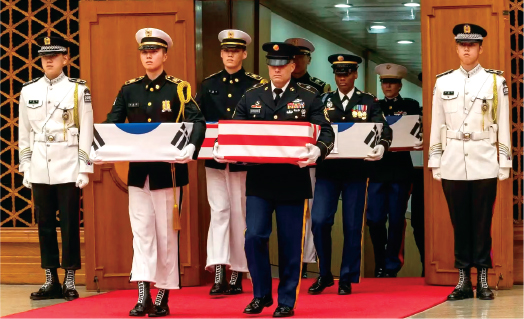
The joint repatriation ceremony honored the heroes who gave the ultimate sacrifice, and the personnel dedicated to finding and recovering our fallen


A joint repatriation ceremony between the United States and the Republic of Korea (ROK) was formally convened on June 5, 2026. This solemn event served to further solidify the steadfast strategic partnership between the U.S. and the ROK.
The ceremony, the first mutual repatriation hosted on South Korean soil, served as a powerful testament to the unbreakable bond between the two nations. In a poignant address to the attendees, ROK leadership emphasized the sacred duty of both nations to bring their fallen heroes home.
“Over 70 years ago, there were heroes who dedicated their most passionate youth and noblest lives to defending the freedom and peace of
the Republic of Korea,” Lee Jae-myung, president of the Republic of Korea stated during the keynote address. “Thanks to the sublime sacrifice of those heroes, we were able
to preserve our freedom and peace.”
The event highlighted the ongoing, exhaustive efforts by both the U.S. Defense POW/MIA Accounting Agency (DPAA) and South Korea’s Ministry of National Defense Agency for Killed-in-action Recovery and Identification (MAKRI). The 10 ROK soldiers were repatriated from the United States back
to South Korea, while the three U.S. service members, recovered from the mountains and fields of the Korean peninsula, were honored before their final journey back to the United States.
Jennifer Walsh, principal deputy director of the DPAA, highlighted the institutional dedication driving the mission.
“This joint repatriation ceremony honors a fundamental principle and commitment to our personnel — those who have served, are serving and will serve in defense of our nations; their families, and our values,” Walsh said. “We honor the heroes who gave the ultimate sacrifice, and the personnel dedicated to finding and recovering our fallen. The
U.S.-ROK alliance remains strong; and strengthened further through our shared efforts to bring home these heroes, evidenced clearly in this ceremony.”
The profound emotional weight of the ceremony was echoed by U.S. military leadership, who framed the recovery efforts not merely as a procedural duty, but as a sacred vow. General Xavier T. Brunson, Commander of United Nations Command, Combined Forces Command, and United States Forces Korea, addressed the gathered allies.
“We gather today in the presence of 13 heroes, three American and 10 Republic of Korea service members. We do not yet know their names, but we know who they are. They are brothers in arms. And today, they’re finally coming home.” Gen. Brunson remarked, thanking the Republic of Korea for its “sacred devotion” and noting that even after seven decades, Korea has never forgotten.
Referring to Korean War historian T. R. Fehrenbach’s observation of the bitterness of leaving soldiers behind on abandoned hills, Brunson reflected on the gravity of the moment.
“For over 70 years, those hills held our brothers. But the return of these 13 heroes is
a testament to an unbreakable promise that outlasts the bitterness of war,” said Brunson. “It is a promise made real
by their tireless partnership between our nations.”
“Because of your dedication
to completing this mission, 13 souls are no longer lost to history,” Brunson added. “But the ceremony serves as a message to all who wear the uniform: we do not leave our fallen behind. The United States and Republic of Korea will continue this mission until every single missing in action is accounted for. To these 13 brave souls: your watch is over. May you rest in eternal peace. Thank you.”
The ROK leadership mirrored this sentiment, drawing a direct line between the defense of the peninsula in the 1950s and South Korea’s emergence as a global economic powerhouse.
“The effort to locate and return not only our own soldiers but also those of our allies to their families is the most fervent proof of the ROK-U.S. Alliance forged in blood,” the president of the Republic of Korea affirmed, pledging to the fallen and to the future: “A nation that remembers sacrifices made for all has
a future, and a community
that repays their dedication will become even stronger. We will build a responsible Republic of Korea that repays extraordinary sacrifices with special honors and never forgets a single hero.” Story and photo by Cpl. Stephen J. Holland II

OKC Veteran Writes New Book to Inspire Veterans to Eat Better

0

Tracey Edmonds, a 100% disabled Veteran, at one time weighed 440 pounds and had trouble even crossing his legs and tying his shoes.

Tracey Edmonds, a 100% disabled Veteran, at one time weighed 440 pounds and had trouble even crossing his legs and tying his shoes.
Four years ago, the Army E4 Veteran had gastric bypass surgery paid for through the VA in San Antonio which gave him weight relief.
But Edmonds, who resides in Oklahoma City along with his wife Debbie, was still struggling with knee, neck, and arthritis issues and not sleeping much at night.
To cope with his pain, Edmonds began spending his nights writing about his surgery journey and how he approaches life.
The result was his new book titled “Eat Like You Had Gastric Bypass,” which is now available on Amazon.com.
“I have spent many nights dealing with not sleeping so I had to find something
to do so I wouldn’t keep everyone up all night and so I started writing years ago as my therapy,” Edmonds said. “This book has been a gatekeeper to keep me focused so 2 years later this is the product of my work which I received word from Amazon on my birthday (May 31) that it was going live in an eBook version which readers can read for free or paperback.”
Edmonds said his book tells you ways what you can eat and live your life just like somebody who’s had surgery.
“I want people to take away that there’s more out there and be motivated and you can do it,” he said. “Just don’t deny yourself. You can eat the things that you want to eat but just eat them in a smaller proportion. Enjoy your food. Enjoy going out to dinner. Enjoy going out to dinner with your family. Limit yourself when you go out.”
Edmonds, a Phoenix City, Alabama native, said he was fortunate to have the VA pay for his gastric bypass surgery.
He said not everyone is as lucky.
“A lot of times people don’t have good insurance like we did. I had VA, they took care of that. If I didn’t have VA, it wouldn’t have been paid for,” he said. “I was sitting in that office doing a post-op surgery in the doctor’s office in San Antonio. This guy hobbled. He had to be close to 500 pounds. A nurse told him, she was sorry, but your insurance is not going to pay for the procedure. The look on his face, the sadness. I will never forget that moment. Weight loss is not an easy journey. This is one of the other reasons I wanted to put this book out to just give people that second option (of losing weight).”
Edmonds, 59, was raised by his maternal grandmother. He didn’t meet his biological father’s family until seven years ago.
“I found my family at age 52. I found
my father through DNA testing,” he said.
“I have a cousin in Washington DC that encouraged me to go ahead and finish all my many notes and writing projects that I’ve been collecting over the years. I’ve got probably eight hard drives that I use to store stuff on, and so I just started putting it together. And my first book, I published on my birthday.”
Edmonds said, “Eat Like You’ve Had Gastric Bypass,” is published under his nickname Tre Edmonds. He said along with that book, he also has written a book called “Look Here Woman,” which talks about his 36-year marriage to his wife, which is also available on Amazon.
“Look Here Woman, that’s an Alabama term,” he said. “This was the surprise book that I put out a week or two later and it’s about my wife and our 36 years of marriage, funny parts of it. They’ll see that they’re two books. One’s a comedy and one’s health related. This is 36 years of our life.”
Edmonds said he is currently working on a book about his childhood upbringing.
“I have a novel that I’m working on about my upbringing from Phoenix City because my grandmother raised me,” he said. “It’s going to be called “A Grandmother’s Love.” It’s coming out next year. I’m going to finish that.”
Edmonds said didn’t tell his family that he turned his hobby of writing into writing books.
“Sitting up, I started writing, trying to be quiet, and that hobby turned into something I enjoyed doing now, which was writing books,” he said. “So, I was lazy and I didn’t really tell anybody because if I didn’t feel like finishing it, it wouldn’t have bothered anybody except me.” •
Story and photo by Van Mitchell, staff writer


Gentle PTSD Support for Veterans at Home

0


What BrightStar Care Clients Are Saying
“I’ve been able to encounter so much greatness with Brightstar Care. The team is so entergetic and compassionate. I have also been pleased with the tremendous amount of care they give to their patients and their families.”

If you love a veteran, you probably already know that “coming home” doesn’t always mean the hard part is over. Many of the families we serve in Oklahoma City and Tulsa are quietly noticing changes in the veterans they care for. Maybe sleep has become more restless. Maybe tempers are shorter. Maybe your loved one is pulling away from family gatherings or church in ways that feel unfamiliar.

You may be asking yourself, “Is this just aging, or could it be something more?” For some veterans, these changes are signs of post traumatic stress disorder (PTSD) surfacing or worsening with age. If that sounds close to home, you’re not alone-and there is help.

Understanding PTSD in Aging Veterans Why Symptoms Can Show Up Later in Life
PTSD doesn’t always appear immediately after someone leaves the military. Many veterans push through distress for years-working, raising families, staying busy-until retirement, health issues, or losses slow them down. When there’s more quiet and less distraction, old memories and emotions can feel louder.
You might notice:

• Nightmares or difficulty falling or staying asleep

• Sudden anger, irritability, or emotional outbursts

• Avoidance of crowds, holidays, or even family events

• Startling easily at loud noises, like thunderstorms or fireworks

• Feelings of guilt or shame when talking about their service

These changes can be scary for you to witness and exhausting for you
to manage, especially when you’re also juggling work, kids, or your own health.

PTSD and “Invisible Injuries” at Home
We often say PTSD is an “invisible injury,” but its impact at home is very real. It can strain marriages, disrupt family routines, and leave caregivers walking on eggshells to avoid “setting off” their loved one. The good news: PTSD is treatable, and the right kind of support at home can make daily life more peaceful while complementing clinical care from the VA or community providers.

How Calm, Trauma Aware In Home Care Helps Creating Safe Routines in Familiar Spaces
Many veterans feel safest in their own homes, where they know every sound and every corner. That’s why in home support can be such a powerful tool. A trauma aware caregiver focuses on:

• Gentle, predictable routines for mornings, meals, and evenings

• Asking permission before assisting with personal care

• Learning triggers and planning around them (TV content, loud noises, certain topics)

• Maintaining a calm tone and body language, even during difficult moments
This approach helps veterans feel respected, not managed. It also helps reduce conflict and crisis moments that can leave everyone drained.

Supporting Emotional Health and Daily Living Together
PTSD rarely exists in isolation. Many aging veterans are also living with chronic illness, mobility changes, or memory loss. In home support can combine emotional awareness with practical help:

• Assistance with bathing, dressing, and grooming that preserves dignity

• Medication reminders and coordination with VA or other providers

• Companionship that respects when your loved one wants to share-and when they don’t

• Transportation to counseling, medical visits, or veteran support groups

• Encouragement with hydration, meals, and gentle movement
You stay part of every decision, but you gain a partner who understands what your family is facing.

How BrightStar Care of Oklahoma City Supports Veterans and Families
Tailored In Home Support for Those Who Served
At BrightStar Care of Oklahoma City, we are honored to serve veterans and the families who stand beside them. Our team provides personalized in home services, from companion and personal care to more complex support overseen by a Registered Nurse. Together, we design a plan that reflects your loved one’s history, preferences, and current health needs.
For veterans living with PTSD or other service related conditions, we focus on building trust, maintaining calm routines, and coordinating with your existing providers whenever possible.

What to Expect When You Reach Out
When you call, you’ll speak with a local BrightStar Care team member-someone who understands Oklahoma families and the realities of caring for veterans at home.
If you’re in Oklahoma City or Tulsa and wondering whether what you’re seeing could be PTSD-or if you’re just feeling overwhelmed by the day to day-you don’t have to figure it out alone.
Visit BrightStar Care of Oklahoma City online to explore how we care for veterans and their families at home:www.brightstarcare.com/locations/oklahoma-city
Call us at (405) 896 9600 to talk with a local care expert about what you’re experiencing and how we can help.
You can also view our location, directions, and reviews here: www.google.com/maps/place/BrightStar+Care
Your veteran has already done the hard work of serving. Let’s make sure they-and you-have the support you deserve at home.

What 24/7 Home Care Really Looks Like in Oklahoma City
As health needs become more complex, many families in Oklahoma City reach a turning point: “Is it time for round the clock help?” You might be seeing nighttime wandering, frequent falls.
Have questions about home care?
Our local home care experts are ready to answer your questions and help you along your unique home care journey.

Stroud’s Museum Has a Big Mission: Celebrate What’s Possible

0


The Route 66 Spirit of America Museum wants visitors to explore the dreams America has achieved, what made achieving them possible, and dreams America can achieve
in the future. It’s the brainchild of Steve Brandt, founder and director, who opened the five-room museum on June 10, 2023.
America’s real and fictional characters and major events are highlighted: the lives of Reverend Martin Luther and Coretta Scott King, the 1976 Centennial Train, Star Wars and Star Trek, “Cars” movie, Superman and Superwoman, a real American hero, Desmond Doss, Woodstock, America’s space quest, including the Apollo program and much more.
There is a theme. “People who follow their dreams have moved America forward. And there are people who have followed their dreams and are no longer alive, but can still move us forward if enough people find out about them. I’m referring to Buckminster Fuller, Dr. W. Edwards Deming and my mentor, Russell Encroft” Brant explained. Interested?
On June 13, Brant held
a seminar with Stroud citizens and discussed America’s status at 250 years. We engaged in conversations on topics like
“Founding Fathers’ belief that the Pursuit of Happiness is an inner spiritual journey” and “What it will take for ‘the light side’ to win over ‘the dark side’ in the contest of ideas. This led to discussions about what makes people happy (consumerism, virtue, religion, etc.) and how some people
use competition while others use cooperation to move society forward.
During the talk, the Bontrager family from Turner, Oregon, visited. Deanna, the mother, noticed, “historical nods to people who really tried to make a difference like Fred Rogers, even Superman, you know, I think anything that influences people to, maybe do something bigger than they think they’re capable of.”


Oklahoma Celebrates America’s 250 Years of Declaration of Independence

0


Stories From Around The State by Lt. Col. Richard Stephens, Jr., USAFR, Ret.

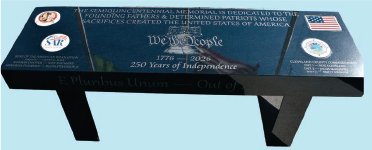
Norman’s Sons of the American Revolution donated a bench for America’s 250th Anniversary of the Declaration of Independence. It sits at the Cleveland County Courthouse.

Simple Bench Makes Big Statement
An engraved, black granite bench was dedicated at the Cleveland County Courthouse in Norman on April 18 – but not an ordinary sitting bench
– this one had a purpose: celebrate the semiquincentennial anniversary of the Declaration of Independence on July 4, 2026, and to thank America’s founding fathers and determined patriots who sacrificed much from 1775-1783 to win the War of Independence. The bench was designed and completed by Ralph Stevenson, Jr., a member of the Norman Chapter of the Sons of the American Revolution (SAR),which donated it.

Members of Norman’s SAR, including Stevenson, State Society SAR President, Henry Baer, and Norman Chapter President, Tony Eastmond, spoke on the significance of the Declaration of Independence at the bench’s dedication.
Seventeen-year-old Natalie Boone eloquently explained each of our Constitutional Rights.

Stevenson said a bench was chosen over other possible items because, “it’s more lasting…” and at 2,200 pounds, “it’s not gonna blow away and it’s permanent.” Asked what he hoped future residents would think of when looking at the bench, he replied, “I just hope it’s a permanent memorial to our ancestors…that sacrificed so much to make the United States.”
Randy Hooper, owner of the Hooper Printing Company who printed the program, attended. He is a descendant of William Hooper, a Congressman from North Carolina, who signed the Declaration of Independence.
About 60 people attended, including Norman’s SAR, 45th Infantry Living Historians, Daughters of the American Revolution and American Legion Post 88.
Contributions for the bench came from 28 individuals and 11 companies or associations. bench, he replied, “I just hope it’s a permanent memorial to our ancestors…that sacrificed so much to make the United States.”
Randy Hooper, owner of the Hooper Printing Company who printed the program, attended. He is a descendant of William Hooper, a Congressman from North Carolina, who signed the Declaration of Independence.
About 60 people attended, including Norman’s SAR, 45th Infantry Living Historians, Daughters of the American Revolution and American Legion Post 88.
Contributions for the bench came from 28 individuals and 11 companies or associations.

9/11 Steel Beam Traveling for USA 250

The Tunnels to Towers Foundation is displaying a steel beam from the south tower of the former World Trade Center on its
“Steel Across America” tour to 30 cities across America from May to September. The beam and a mobile museum came to Oklahoma City on June 12.
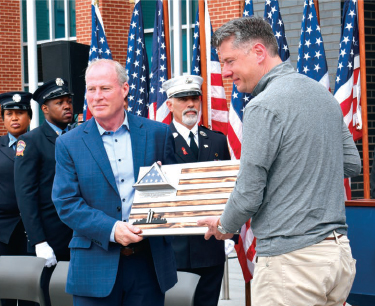
Jack Kielty, a retired NYC Firefighter, told Brianna Brown of OKC Channel 9, “This is the 25th Anniversary of 9/11 (in 2026)…This beam from the south tower of the World Trade Center Center is to commemorate the 25th anniversary and to us in New York City…this is a sacred relic…We feel duty bound to take this around the country and let Americans come and touch this piece of history…So proud to stand here and share stories of Oklahoma City and New York City.”
Kielty gave Major Holt a plaque. A mobile museum tells the story of the attack and response and displays artifacts like fire fighter equipment and uniforms.
The Tunnels to Towers Foundation website lists the exhibit’s schedule. Visit: www.t2t.org

Jack Kielty, a retired NYC Firefighter, presents a plaque to David Holt, Mayor of Oklahoma City, during the Tunnel to Towers’ “Steel Across America” tour during America’s 250th anniversary year.