The Centers for Medicare & Medicaid Services (CMS) reminds the Medicare community of the Jimmo Settlement Agreement (January 2013), which clarified that the Medicare program covers skilled nursing care and skilled therapy services under Medicare’s skilled nursing facility, home health, and outpatient therapy benefits when a beneficiary needs skilled care to maintain function or to prevent or slow decline or deterioration (provided all other coverage criteria are met). Specifically, the Jimmo Settlement Agreement required manual revisions to restate a “maintenance coverage standard” for both skilled nursing and therapy services under these benefits:
Skilled nursing services would be covered where such skilled nursing services are necessary to maintain the patient’s current condition or prevent or slow further deterioration so long as the beneficiary requires skilled care for the services to be safely and effectively provided.
Skilled therapy services are covered when an individualized assessment of the patient’s clinical condition demonstrates that the specialized judgment, knowledge, and skills of a qualified therapist (“skilled care”) are necessary for the performance of a safe and effective maintenance program. Such a maintenance program to maintain the patient’s current condition or to prevent or slow further deterioration is covered so long as the beneficiary requires skilled care for the safe and effective performance of the program.
The Jimmo Settlement Agreement may reflect a change in practice for those providers, adjudicators, and contractors who may have erroneously believed that the Medicare program covers nursing and therapy services under these benefits only when a beneficiary is expected to improve. The Jimmo Settlement Agreement is consistent with the Medicare program’s regulations governing maintenance nursing and therapy in skilled nursing facilities, home health services, and outpatient therapy (physical, occupational, and speech) and nursing and therapy in inpatient rehabilitation hospitals for beneficiaries who need the level of care that such hospitals provide.
The Jimmo Settlement Agreement included language specifying that nothing in the settlement agreement modified, contracted, or expanded the existing eligibility requirements for receiving Medicare coverage. While the Jimmo Settlement Agreement resulted in clarifications of the coverage criteria for skilled nursing and therapy services in the SNF, HH, OPT, and IRF care settings, it did not affect other existing aspects of Medicare coverage and eligibility for these settings. A few examples of such other requirements would include that the services be reasonable and necessary, comply with therapy caps in the OPT setting, and not exceed the 100-day limit for Part A SNF benefits during a benefit period.
If you have a loved one in a Long-Term Care facility and have any questions regarding care or concerns you may have, you can contact an Ombudsman to assist you.
Areawide Aging Agency’s Long-Term Care Ombudsman Program advocates for the needs of residents in LTC facilities serving Canadian, Cleveland, Logan, and Oklahoma Counties. You may contact us at (405) 942-8500 and ask to speak with an Ombudsman or visit our website at https://www.areawideaging.org.
Jimmo Settlement
SAVVY SENIOR: How Seniors Can Protect Themselves from Cybercrimes
Dear Savvy Senior,
I spend a lot of time online and love the convenience of paying bills, shopping, and keeping up with my grandkids on Facebook and Instagram. But a few months ago, my computer was infected with malware, and I just found out some cyber crook opened up a credit card using my identity and went on a shopping spree. Do you have some simple tips to help me stay safe while online? Paranoid Patty
Dear Patty, Unfortunately, cybercrimes against seniors continue to be a big problem in the U.S. According to the FBI 2022 Elder Fraud Report, cybercrime cost Americans over age 60 more than $3 billion last year, a whopping 84 percent increase from 2021.
While anyone can be subject to cybercrimes, seniors are frequent targets because they tend to be more trusting and have more money than their younger counterparts. But there are a number of things you can do to protect yourself from online fraud, hacking and scams. Here are a few tips to get you started.
Strengthen your passwords: A strong password should contain at least 12 characters and include numbers and a special character, like an exclamation point or asterisk. Be sure to change up your password across different sites to ensure a hacker would not gain access to all accounts through one password. And keep a written list of all your passwords stored in a safe secure place.
On your smartphone or tablet, be sure to set up a four or six-digit PIN to protect your device.
Opt out of pop-ups: To protect yourself from computer viruses and other forms of malware, make it a habit to avoid any pop-up style message when you’re on the web. Sometimes hackers disguise their malware as pop-up advertisements or “special offers” when you’re shopping or reading online. Clicking on these pop-ups can lead to viruses or data breaches.
If you encounter a suspicious pop-up message, don’t click on anything in the window. Simply leave the site or close out of your web browser.
When in doubt, throw it out: Sometimes online hackers will send you an email or text message and pretend to be someone they’re not in order to convince you to share valuable information with them, such as your Social Security Number, address or credit card information. This is called phishing.
If you receive a message from an unknown sender, do not respond or click on any links or attachments. Instead, either ignore the message or delete it.
Share with care: There is such a thing as oversharing, and it definitely applies to online profiles. On social media platforms like Facebook, Instagram, and Twitter, online hackers can easily gather information about you from what you post – like where you live.
Ensure that your privacy settings are up to date so that only people who follow you or are your Facebook friend can see your posts.
Verify websites: Before you shop or access your bank online, double check the validity of the website you’re using. Reputable sites use technologies such as SSL (Secure Socket Layer) that encrypt data during transmission. You will see a little padlock icon in your browser and usually “https” at the front of your address bar to confirm it’s a secure connection. If you don’t see it in the web address that you’re on, you should not trust that website with your passwords, payment or banking information.
Have some back-up: Practicing safe habits will protect you and your information, but you don’t have to rely on just yourself to stay safe. Anti-virus software works in the background to protect your computer from a variety of malware and helps to make it easier for you to avoid threats while surfing the web.
For more information on how to safeguard your personal technology devices and information, visit Consumer.ftc.gov and search “Protect Your Personal Information and Data.” And to report fraud and identity theft go to https://reportfraud.ftc.gov/ and IdentityTheft.gov.
Send your senior questions to: Savvy Senior, P.O. Box 5443, Norman, OK 73070, or visit SavvySenior.org. Jim Miller is a contributor to the NBC Today show and author of “The Savvy Senior” book.

Simeon Gipson Rides to Pennsylvania for Games


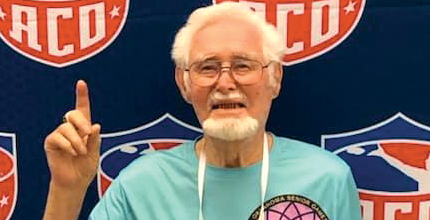
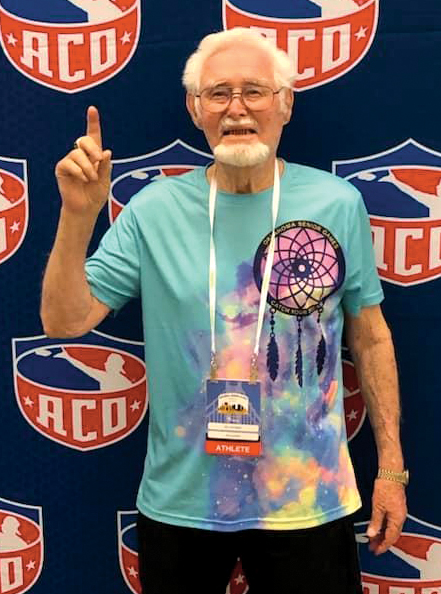
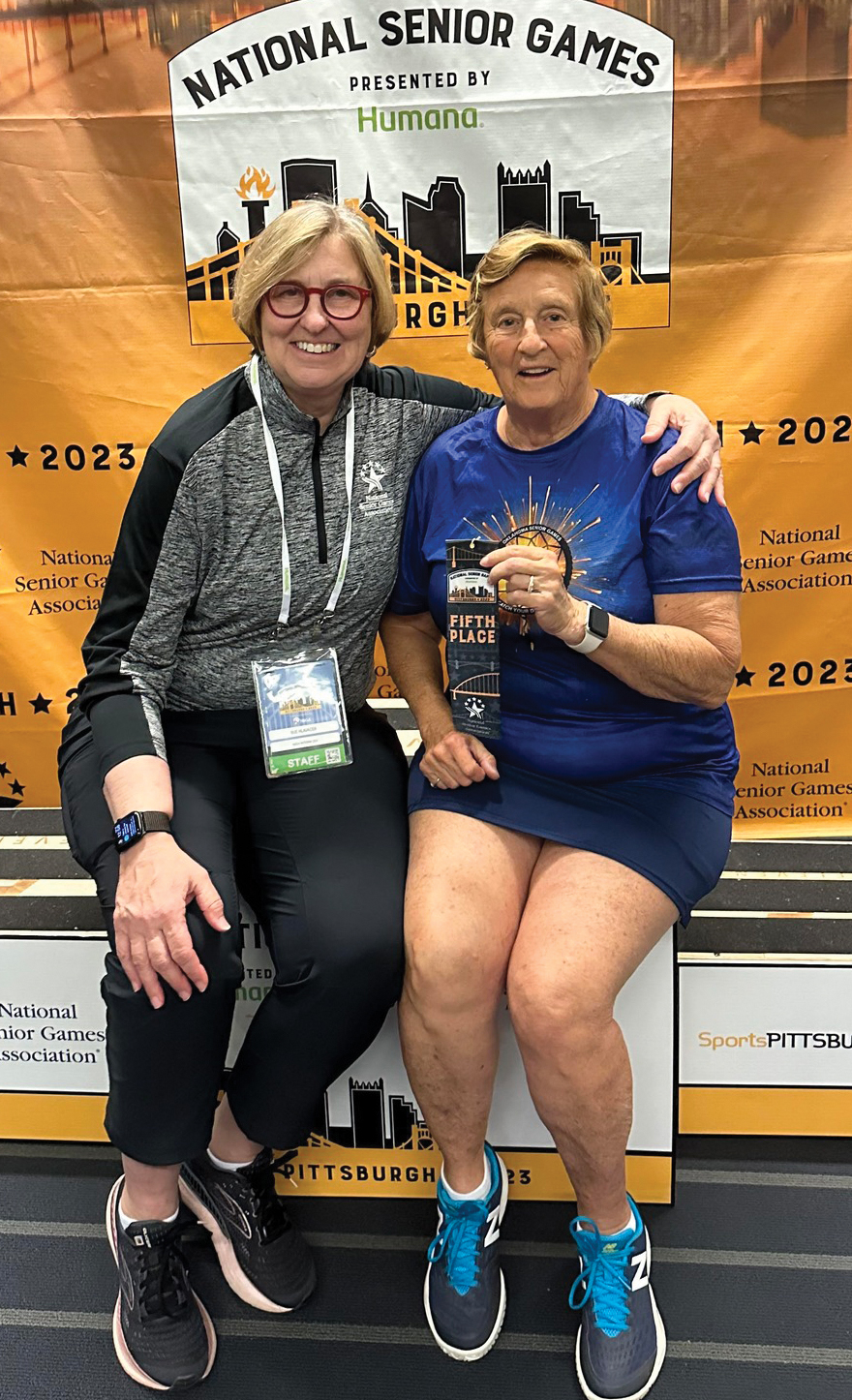
At 77-years old, Cherokee citizen and U.S. Navy veteran Simeon Gipson was pedaling again. This time to the 2023 National Senior Games in Pittsburgh, Pennsylvania where he qualified to compete. Simeon left Tahlequah to make the nearly 997 mile bike ride on May 29th and received a huge send-off at the Cherokee Nation Headquarters in Tahlequah while Cherokee Principal Chief Chuck Hoskin Jr. signing a Proclamation declaring Tuesday, May 30th as “Simeon Gipson Day in the Cherokee Nation” for Gipson’s sustained efforts to encourage physical wellness.
TINSELTOWN TALKS: Sidney Kibrick remembers ‘Our Gang’

By Nick Thomas

First screened in movie theaters during the early 1920s, the “Our Gang” film series was produced for another two decades and featured an ever-changing cast of children, showcasing their comedic neighborhood antics.
Throughout the series of some 220 short films created by producer Hal Roach, about 40 child actors appeared regularly beginning in 1922’s silent era and continuing through 1944. Sidney Kibrick is one of the last surviving “Our Gang” cast regulars.
Kibrick, 95, appeared in more than 2-dozen ‘Gang’ shorts, initially as an unnamed character but eventually anointed with the nickname ‘Woim,’ the exaggerated Brooklyn pronunciation of ‘worm.’ Other well-known members of the gang included Spanky (George McFarland), Butch (Tommy Bond), Buckwheat (Billie Thomas), and Alfalfa (Carl Switzer).
“We’d have 2 hours of schooling in the morning and then work anywhere from 6 to 16 hours until we finished,” recalled Kibrick from his home in Los Angeles. “There was a lot of work, no question about it, but our director Gordon Douglas was a terrific guy and he was really able to get a lot out of each kid.”
Despite the long hours, there was occasionally time to relax and be a kid off-camera.
“There was a big pond at the studio, so Spanky and I would go fishing a lot,” said Kibrick. “We developed a lifelong friendship and although he moved to Dallas while I lived in Beverly Hills, we used to visit and stay at each other’s homes time and time again over the years.”
Despite dozens of kids running around on set, Kibrick remembers things never getting out of control.
“We had scripts and had to rehearse before shooting so it was very structured,” he recalled. “Parents had to be on the set at all times.”
And while most of the young actors got along, Kibrick remembers one troublemaker.
“Alfalfa (Switzer) was a very difficult kid and created a lot of problems on the set. He was not nice – not only to the gang, but to the boys and girls who were extras in the movies. It was just his nature. Years later, he was killed in a fight, so he was basically a tough kid.”
So too was Kibrick’s character, Woim.
“I was Butch’s sidekick and we were the bad guys always taking on Spanky, Alfalfa, and Darla (Hood),” he explained.
Born in Minneapolis, young Sid was just an infant when the family moved to Los Angeles so his dad could find better work and was later ‘discovered’ after turning five.
“My mother took us to Grauman’s Chinese theater and after the movie, a man came over to us, pointed at me, and said he could ‘use that little kid in the movies,’” Kibrick recalled. His parents really pushed him and his brother, Leonard, into acting.
“I was earning $750 a week in ‘Our Gang’ which was a lot in those days, especially during the Depression,” he said. “But by the time I was 15, I’d had enough. My parents wanted me to continue but finally my mother went along with my wishes. I later attended college and became a real estate developer. So I had a very successful post-Hollywood career.”
Last year, Kibrick attended the opening of an exhibit at the Hollywood Museum honoring the 100th anniversary of the “Our Gang” series. “It’s nice to be remembered!” he said.
Nick Thomas teaches at Auburn University at Montgomery, in Alabama, and has written features, columns, and interviews for numerous magazines and newspapers. See https://www.getnickt.org/.
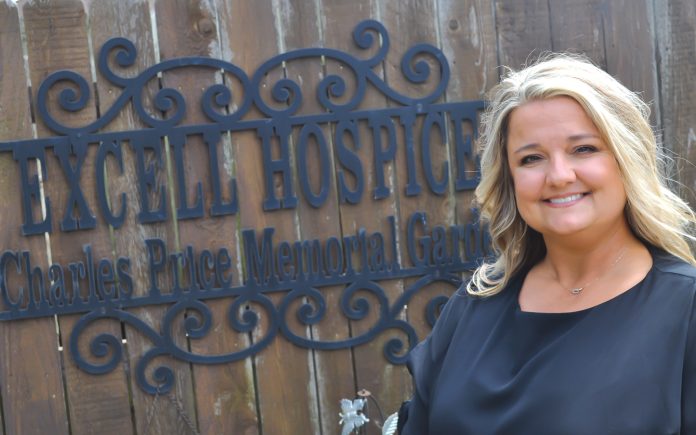
Excell leaving a Legacy of Caring
story and photo by Bobby Anderson, Staff Writer
Kristina Tell, RN, knows how important leaving a legacy can be, both in life and in business.
That’s why the executive director for Excell Home Health and Hospice believes her staff is making a difference every day.
“We provide life-changing services and for every one of our employees that is their goal,” Tell said. “We have always been an agency where we have scored well on our surveys that come back. That’s because we really take the time to take care of our patients. You can have the best marketing team in the world and they can go out and sell your product but if you’re not fulfilling that product it’s not going to continue.
“Our legacy is a legacy of excellence and that’s what we continue to strive for.”
Excell is able to offer a continuum of care with both home health and hospice services. If the time comes, patients can seamlessly transfer services without having to give up those important relationships.
“I think going to hospice is one of the scariest words for patients and so for them to be able to have that same nurse transition with them and still go through that time … we’ve seen a really amazing product from that,” Tell said.
Patients suffering from disease progression, frequent emergency room visits, multiple hospitalizations, and/or aggressive medical interventions may also be eligible for hospice care. Hospice care can be discontinued at any time and is a covered Medicare benefit.
Home Health and Hospice offer an affordable way to receive medical care at home. Many who access these benefits are over the age of 65 and are entitled to Medicare benefits which cover 100 percent of the cost of services and associated medication and supply costs. Medicaid and most commercial insurances also provide home health and hospice coverage.
Often, when patients elect home health or hospice, it is their primary physician who authorizes, coordinates and follows their care from start to finish.
Excell Home Care & Hospice works closely with the physician of your choice to provide care. If the patient does not have a primary care physician and needs to be seen by a doctor, the Home Health and Hospice agency has Medical Directors who can visit the patient.
Tell started her nursing legacy in the intensive care unit at OU Medical. Looking for a change, she found Excell in 2010 and accepted a position as a field case manager.
A clinical supervisor role quickly followed before she accepted the position as director of nursing.
A transition in ownership in 2017 placed her in the director of clinical services role leading both home health and hospice.
“I just love our agency. We’re very family oriented,” she said. “I think it really reflects that when our employees are happy so are our patients. We really care about each other and want the best for each other. I think it would be really difficult to leave my family because I see them all as my family.”
In a very mobile industry, Tell and Excell have enjoyed a loyalty from staff that is uncommon.
“I think that’s one of the things that really sets Excell apart, we have a lot of tenure,” Tell said. “Our director of rehab has been there since our doors opened in 1995. We have a lot of nurses that are 20-plus years, LPNs that are 15-plus years. We have a home health aide who has been here for 17 years. We have a lot of longevity and I think that speaks to who we are.”
Each Excell employee knows they are helping patients leave a legacy, and in turn, creating one of their very own.
“I really think it is because we show our employees that we do value them and care for them. That makes a huge difference,” Tell said of her staff longevity. “If they’re just an employee, just another number they’re going to go someplace else, chase that extra dollar. When you really put the time into your employees, getting to know them and their families we spend a lot of time together.”
For more information about Excell Home Health and Hospice, visit https://excellcares.com.
New Employment Program Helps Launch Careers in Long-Term Care
|
|
|
|
OKC Skydance Bridge On New Stamp
The Oklahoma City Skydance Bridge will join other nationwide landmark bridges as part of a news stamp series by the U.S. Postal Service beginning August 24th. famous OKC landmark will soon grace collectors’ books and the corners of envelopes nationwide. The Skydance Bridge will be featured in a new stamp series (one of four) by the U.S. Postal Service starting Aug. 24.
Inspired by Oklahoma’s state bird, the scissor-tailed flycatcher, Skydance bridge soars over Interstate 40. The bridge is a 380-foot-long pedestrian bridge with a 197-foot-tall sculpture.
The bridge opened in 2012 and connects Upper and Lower Scissortail Park. The bridge was built at a total cost of $5.8 million for the pedestrian use, designed and structurally engineered by S-X-L, a local business. Visit your local post office or shop the USPS online at: https://store.usps.com/store/product/stamp-collectors to purchase these iconic stamps.
Parents, where exactly is the ‘Circle of Trust’?
by Greg Schwem

One of the greatest joys of having adult children is knowing I now have the freedom to criticize other parents and their disciplinary methods.
OK, maybe “criticize” is too harsh; “actively observe and silently disagree” might be a better phrase.
My children are 26 and 21, independent (more or less) and free to make their own decisions without my guidance. Which leaves me with plenty of free time to notice, in grocery stores, airports and other public facilities, millennial and Gen Z couples who have chosen to have children instead of dogs and now realize you can’t cage a child if it acts up. Like my parents, I find myself cringing at what this new breed of procreators consider to be acceptable punishment.
I don’t envy today’s parents and the challenges they face. Suffice it to say none of the other parents in my daughters’ kindergarten carpools would have marched into their schools and demanded their severely underpaid teachers stop reading “The Little Engine That Could” because it’s too “woke.” Well, come to think of it, a mother of seven who lived on my block and attended church several times a day may have if she’d been familiar with the word and its meaning.
Social media was a novelty in my daughters’ middle and high school years and certainly not the harmful behemoth that, today, is the gateway to bullying, ostracization and, in some cases, suicide. Yes, they both had cellphones at young ages and there were moments I had to lecture them about proper phone etiquette. Was I too lenient in certain situations? My father certainly thought so and wasn’t shy about voicing his opinions, usually at holiday gatherings. I would fruitlessly explain that he may have a different view if cellphones had existed when I was under his tutelage.
So maybe I’m overstepping my bounds when I question today’s parents about their punishment tactics. But I am generally curious. At the very least, can somebody with children please answer the following three questions?
1. Have you ever actually gotten to ”three”?
Time and again, I see children misbehaving, only to silently snicker as their mom or dad says, “Logan, I am going to count to three.” What follows is the slowest, most drawn out recitation of “one” and “two” that I have ever heard. If I were a professional boxer, got knocked down in the ring and had 10 seconds to get to my feet, I would want one of Logan’s parents to be the referee. The Logans of the world aren’t stupid; they know they still have at least 20 seconds to do whatever has drawn their parents’ ire before backing off.
2. What exactly are “privileges”?
Because I am always looking for future comedic material and column ideas, I recently started driving for Uber. While taking a couple and their two children to the airport, I heard the dad telling his son if his behavior didn’t improve, he would lose all “privileges.” It’s not the first time I’ve heard that, and now this inquiring mind wants a definition. Maybe it’s because I don’t remember having any “privileges” when I was growing up. In my father’s eyes, being born was a privilege.
3. What, and where, is the “Circle of Trust”?
I first heard that phrase when Robert DeNiro famously uttered it to Ben Stiller in “Meet the Parents.” But that was a fictitious movie. When the Uber dad reminded his son that he was approaching a Circle of Trust violation, I wanted to stop my vehicle and ask if I could view the circle some time. Is it actually drawn somewhere in the house? What are the dimensions? These circles must exist somewhere, because I have heard multiple parents refer to them.
Parents of young children, if I receive the answers to these questions, perhaps I will no longer roll my eyes or mumble under my breath when your little darlings are throwing tantrums at the bank or the hardware store. Even though my father never understood my concept of parenting, I want to understand yours. So I eagerly await your replies.
Don’t make me count to three.
(Greg Schwem is a corporate stand-up comedian and author of two books: “Text Me If You’re Breathing: Observations, Frustrations and Life Lessons From a Low-Tech Dad” and the recently released “The Road To Success Goes Through the Salad Bar: A Pile of BS From a Corporate Comedian,” available at https://www.amazon.com/. Visit Greg on the web at https://www.gregschwem.com/.
You’ve enjoyed reading, and laughing at, Greg Schwem’s monthly humor columns in Senior Living News. But did you know Greg is also a nationally touring stand-up comedian? And he loves to make audiences laugh about the joys, and frustrations, of growing older. Watch the clip and, if you’d like Greg to perform at your senior center or senior event, contact him through his website at https://www.gregschwem.com/)
Learn How to Cross-Stitch in Workshop at the Oklahoma History Center
On Saturday, September 9, from 1-4 p.m., the Oklahoma History Center with host an introduction to cross-stitch workshop. Participants will learn the process of cross-stitching and create a cross-stitch bookmark to take home.
The cost of the class is $20 for Oklahoma Historical Society members and $25 for nonmembers. The deadline to register is Saturday, September 2. All materials and instruction will be provided, along with light refreshments.
The Oklahoma History Center is located at 800 Nazih Zuhdi Dr. in Oklahoma City. It is open to the public Monday through Saturday from 10 a.m.-5 p.m. Please call 405-522-0765 or visit
https://www.okhistory.org/historycenter for admission costs and group rates.