
Chaplain’s Corner: Amazing Connections: Brothers in Christ
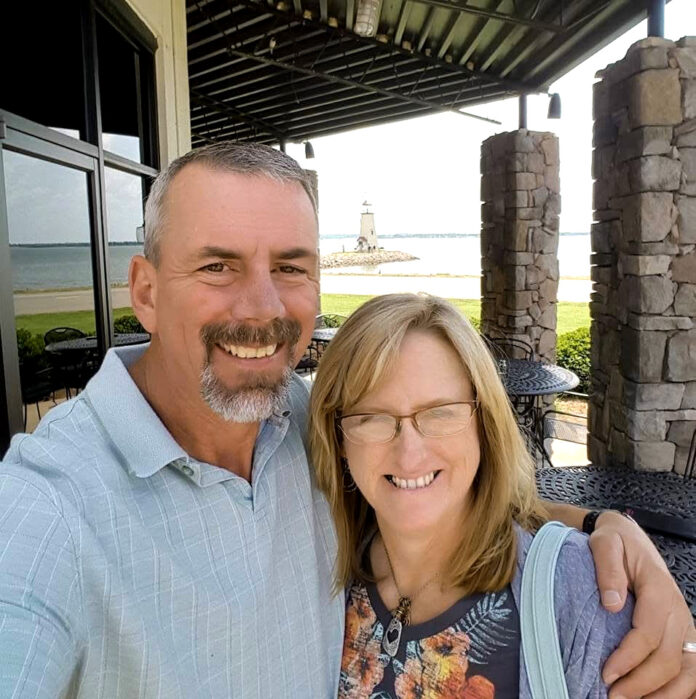
I am Cord Fowler, a US Navy veteran, Husband, Father, and Grandfather here in Oklahoma City. I am an eternally grateful follower of Jesus Christ and very happily married to my wife of 38 years, Kim. I know there are plenty of wonderful wives and mothers out there, but God gave me the best one!
In 1990, I was 5 years into my Navy career, working as an Electronics Technician 2nd class Petty Officer on the USS Tarawa (LHA-1). The Tarawa was an amphibious assault ship, carrying helicopters, landing craft, Marines, and equipment for amphibious operations. We deployed during Operation Desert Storm to transport Marines to the Persian Gulf in support of that successful operation.
After my separation from the Navy, I stayed in the technology field for several years, but God had a new plan for my life. I enrolled in Southwestern Christian University in Bethany, OK where I earned a BS in Biblical Leadership. That led to a new career as a Hospice Chaplain. Becoming a Hospice Chaplain has become one of the most challenging and rewarding chapters of my life! I have had the opportunity to meet so many amazing people at the end of their journey here on earth and have celebrated with them their expectation and hope and what comes next because of Jesus.
One of my most memorable clients was a US Navy veteran who served during World War II. At the time he was transporting marines in the invasion of Guam and the Tarawa atoll. What an amazing coincidence, I served on the very shipped named after the Battle of Tawara he was in Thanksgiving week November 1943. He was piloting a landing craft full of marines headed toward Tarawa. Approximately 150 yards away from the shore, the craft stopped abruptly. It had run aground on the coral reef tearing a hole in the bottom of the craft. He put the throttle at full thrust with no avail. He then tried going backwards with no luck. They were stuck! He described that they were under heavy machine gun and mortar fire. The Marine Sergeant in charge of the squad in the boat shouted at him, “Squid! You need to get us the hell out of here!” My client shouted back, “We’re stuck, I can’t move us!” The Marine ordered everyone, “Out of the boat! Go over the side!” all the while receiving intense small arms fire and explosions all around them.
As soon as all the Marines had left his craft, it became lighter, and he was able to back up off the reef and attempted to return to the ship. He was taking on water and didn’t think he could make it back. Despite the damage he made it back, only to see multiple landing craft in line waiting to be recovered. He piloted his craft to the front of the line when the operations chief on the ship deck ordered him to the back of the line. He shouted back at the chief, “There is a hole in the bottom of my boat and I’m taking on water. If you don’t pull me out now, you’ll need to recover the boat from the bottom of the sea!” The chief ordered that his boat be brought aboard next. He thankfully lived to tell this story to his mates, family members and now me!
I love the shared stories of our service, because we all seem to have examples of these amazing connections, even with those we never served with. That Navy veteran and I became trusted friends, brothers in arms, and brothers in Christ. Our lives are blessed by shared service, a shared Savior, and a shared hope of heaven. •
By Cord Fowler, Chaplain: Legacy Family Hospice

Eighty-One Years Later, a Fallen Marine Is Laid to Rest
Memorial Service
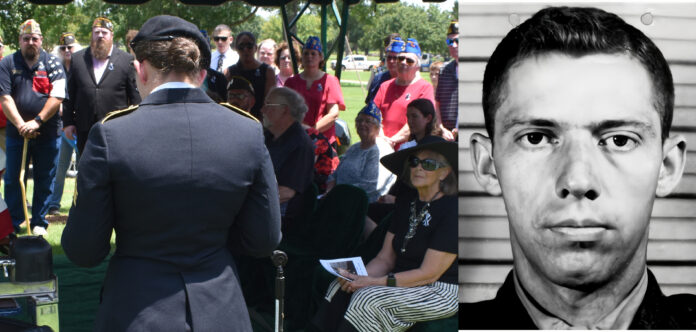
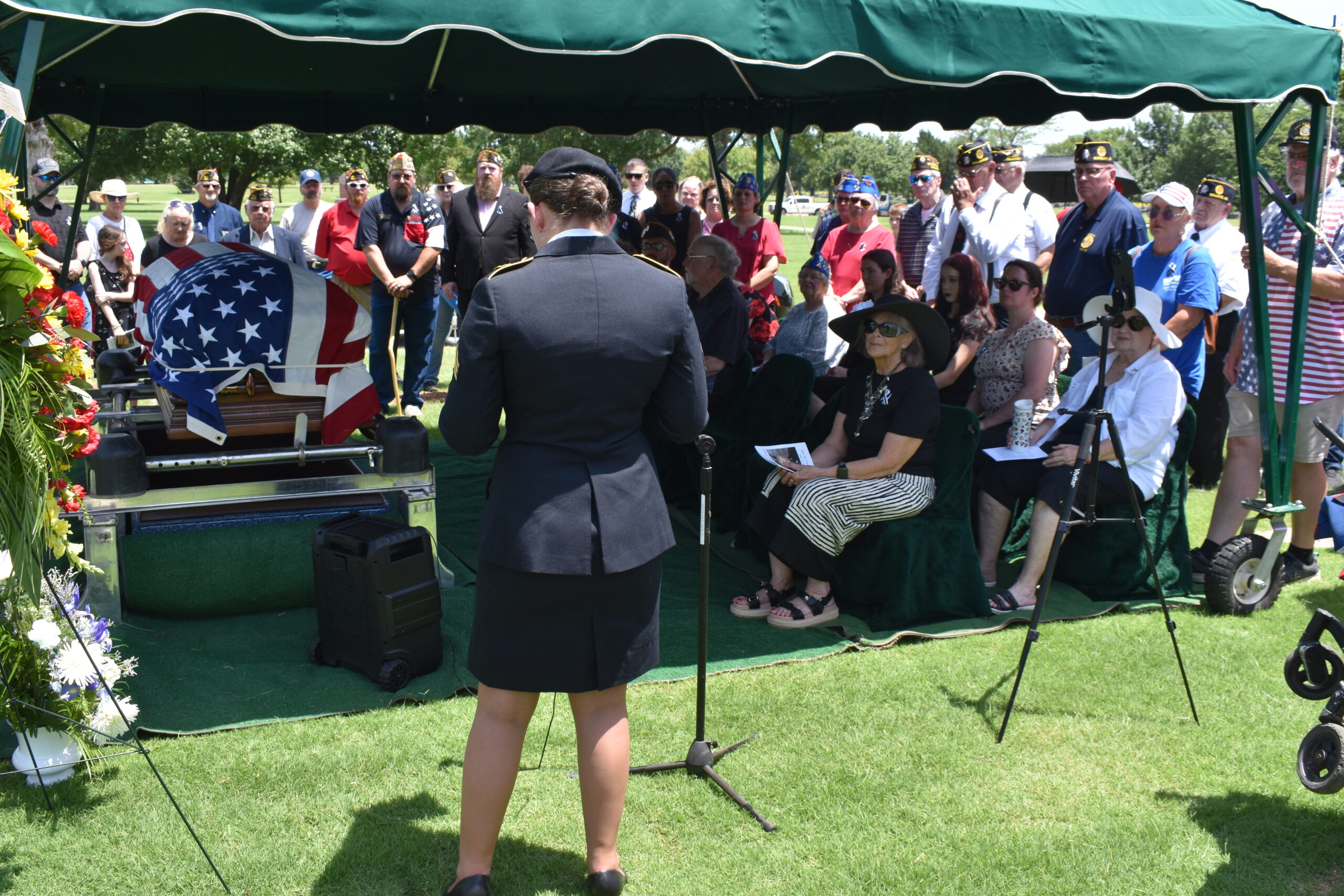
Private Richard Gordon Wright, U.S. Marine Corps, born June 6, 1921, in Sparks, Oklahoma, was buried with military honors on July 18 at Dignity Memorial Park Cemetery in Oklahoma City. The ceremony began at 2 p.m., with cicadas loudly singing in the hot, still air.
Was that unusual?
Yes. Why?
Wright died on November 20, 1943, 81 years ago during WWII on Betio Island in the Gilbert Islands. His remains were not identified until February 8, 2024, by the Defense POW/MIA Accounting Agency (DPAA) and returned to Oklahoma City on July 11, 2025 – more than eight decades after his death.
As the service drew near, at least 75 people gathered in quiet respect. Members from American Legions (Posts 19, Woodward; 111, Edmond; 88, Norman; 142, Hominy, and others) and Veterans of Foreign Wars (Posts 4938, Edmond; 7977, Skiatook; 3077, Collinsville; 7180, Owasso, and others) came, as did those with no affiliation.
Although no one knew Wright personally, they came to witness the homecoming of a Marine who served his country with honor and gave his life for future generations.
Charli Ford, one of two historians and archivists of military history at the Hamilton VFW Auxiliary 4938 in Edmond (President Amanda Duncan is the other) gave the eulogy and thanked those who made Wright’s repatriation possible, including “the DPAA (Defense POW/MIA Accounting Agency) for their efforts to recover, organize, analyze and identify the remains of the missing. And a special thank you to Mr. (Narsease) Tolen, Richard’s first cousin, for the donation of the DNA while he was still alive. His DNA was used to positively identify Richard.” Her voice carried pride and emotion while she recounted Wright’s early life. Ford ended with, “After today,” Ford said, “Richard’s journey comes to a close… May we never forget Richard’s sacrifice.”
Chaplain Ed Beesley, a Vietnam War veteran and member of Post 4938, described how well Betio Island was fortified by the Japanese against a large-scale amphibious assault by Americans. Beesley continued, “I want you to understand the Marines did it in three days…it was a fierce battle…which would come to be known in the Marine Corps as ‘Bloody Tarawa.’ What struck me, is…our own Oklahoma Marine was a part of the first wave on that beach landing on the 20th November, 1943…My understanding was that Richard’s landing craft was hit by mortar fire…” Wright’s 2nd Marine Regiment, about 150 men, was almost annihilated that day.
The service concluded with a prayer, seven-gun salute provided by VFW District 5, the playing of taps, and a moving flag folding ceremony followed by presenting it to Ed Zink of Weaubleau, Missouri, who represented the family. Zink is a second cousin to Wright. The crowd slowly, quietly slipped away.
Wright’s family
Zink spoke of his family’s connection to Wright. “My mother’s mother (Zink’s grandmother) was the sister to Richard’s mother. They were sisters…George Ann and Sharon are Richard’s nieces and they knew about him. Their brother was named after him. So, they knew he was missing, they just never expected him to come home.”
“I’m honored to be able to represent the family and to acknowledge his military career, as short as it was.” Zink, a Marine, understands sacrifice. He served two tours of duty in Vietnam and one in Thailand.
He praised the research Charlie Ford and VFW Post 4938 performed. “They’ve done a wonderful job. Charlie…has been unbelievable. She’s been on this case for several years. They went above and beyond.”
Identifying veteran remains
Amanda Duncan said, “We do a lot of work with MIAs, POWs. It is something our post and our auxiliary is very passionate about.”
She explained the meticulous process of identifying remains. “When something like this happens, first of all, they (DPAA) look at the service record and where they enlisted out of.” Other clues: where family lives(d) and where the deceased’s military unit was engaged in battle.
In Wright’s case, a relative was located in just a few days, though the full process – DNA testing, approvals, and transport – can take months. Ford described how she reached out to a family member through the Ancestry website after a relative built Wright’s family tree. “I noticed she had him on the tree… trying to see… what relation she was and if we could find somebody to give DNA.”
Private Wright is buried in the same cemetery as his father, Henry Wright, a World War I veteran, and grandfather and grandmother, William and Eva Wright.
There are 1,185 Oklahoma MIA/POW servicemen awaiting repatriation.
• story by Lt Col Richard Stephens, Jr., USAFR, Ret.

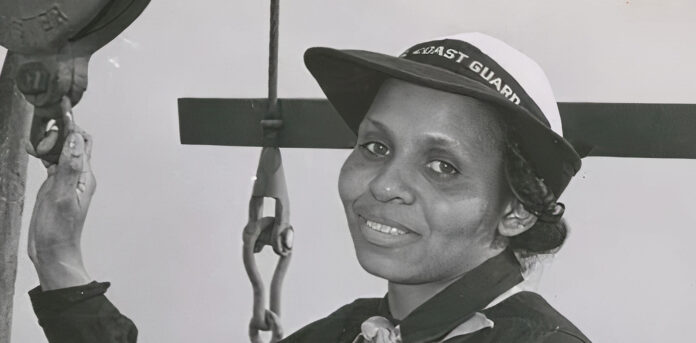
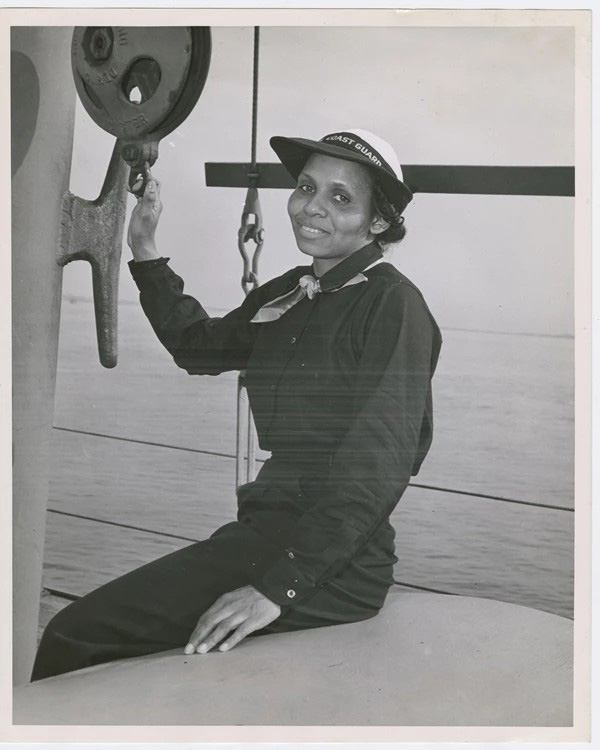
Dr. Olivia J. Hooker – Survivor of Tulsa Race Massacre, Blazes Trail as First Black Woman on Active Duty in US Coast Guard
Early Life & Tulsa Race Massacre
Olivia Hooker was born in Muskogee, Oklahoma in 1915. When she was a child, she and her family moved fifty miles away to Tulsa…Hooker’s father owned a clothing store in the affluent Greenwood District, sometimes known as America’s “Black Wall Street.”
In 1921, when Hooker was six years old, white supremacist rhetoric boiled over into vicious violence. Enraged by false rumors that a local Black man had assaulted a white woman, white mobs invaded the Greenwood neighborhood. Arsonists torched homes, businesses, churches, and schools…At least dozens – likely hundreds – of Black Tulsans died. Nearly 10,000 were left homeless.
Hooker and her family were at home when intruders carrying torches entered their backyard. In an interview with NPR, she remembered her mother hiding her and her siblings under the dining room table… “It was a horrifying thing for a little girl who’s only six years old,” she said, “trying to remember to keep quiet, so they wouldn’t know we were there.” The men destroyed the family record player and butchered the piano with an ax. The mob also burned her father’s store to the ground.
The Hooker family left the city soon after the massacre. They moved to Topeka, Kansas and then to Ohio. Hooker earned a BA at Ohio State University and began working as a teacher. She told NPR that her parents urged her and her siblings to avoid “agonizing over the past” and instead “look forward and think how we could make things better.”
SPARS Service
During World War II, the US military began opening its ranks to women for the first time…When the Navy’s WAVES (Women Accepted for Volunteer Emergency Service) program finally opened to Black enlistees in 1944, Hooker applied several times. But the WAVES turned her down… Instead, Hooker decided to try the Coast Guard Women’s Reserve, better known as the SPARS. In a 2013 interview, she recalled that the SPARS recruiter was “just so welcoming, she wanted to be the first one to enroll an African American.”
On March 9, 1945, Hooker became the first Black SPAR on active duty. Along with four other Black women, she completed boot camp at the Coast Guard’s training center in Manhattan Beach, Brooklyn. She went on to further training as a yeoman, or administrative specialist…The head of the school wrote to every Coast Guard station commander—there were 11—to find an assignment for her. Only one, in Boston, agreed to take a Black yeoman.
At her post in Boston, Hooker worked in the separation center, processing paperwork for those who were discharging from the service. While she was there, the war ended…She left the SPARS having been promoted to yeoman 2nd class.
Asked about her SPARS service in 2013, Hooker reflected:
“I would like to see more of us realize that our country needs us, and I’d like to see more girls consider spending some time in the military, if they don’t have a job at all and they have ambition, and they don’t know what heights they might reach. It’s really nice to have people with different points of view and different kinds of upbringing. The world would really prosper from more of that.”
Psychologist
After leaving the SPARS, Hooker used her GI Bill benefits to go back to school. She earned an MA from Teachers College at Columbia University and a PhD in psychology from the University of Rochester.
Hooker taught at Fordham University in New York City from 1963 until 1985. She then worked at the Fred S. Keller School…She retired in 2002, at the age of 87. Hooker co-founded a division of the American Psychological Association (APA) dedicated to intellectual and developmental disabilities. The APA honored her with a Presidential Citation in 2011.
Later Life & Honors
Throughout her life, Hooker shared her memories of the Tulsa race massacre and advocated for justice for its victims. No one was charged, and most victims received no compensation from their insurance companies. Hooker co-founded the Tulsa Race Massacre Commission in 1997 to unearth the buried evidence of the massacre. She also pressed for reparations for Black Tulsans. She joined a lawsuit against the state and testified before Congress in 2005 and 2007. In the 2020s, victims and their descendants continue to seek acknowledgement and financial compensation for the massacre.
In 2015, the Coast Guard recognized Hooker by renaming a training facility and a dining hall in her honor. Hooker died in 2018 at the age of 103.
By Ella Wagner, PhD, Cultural Resources Office of Interpretation and Education, National Park Service. Article used with the permission of the National Park Service, August 6, 2025.

OK Veteran Commission Turning Progress into Action
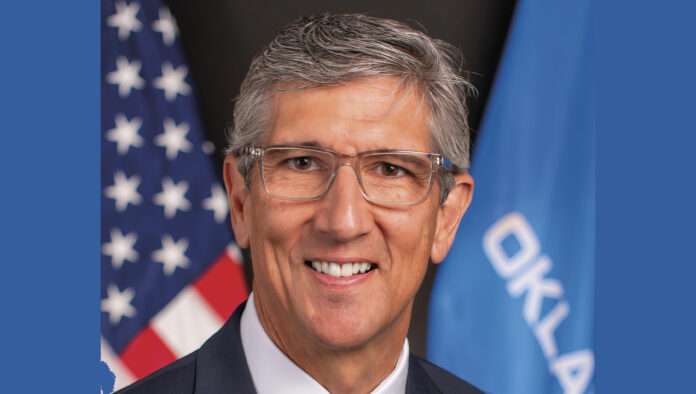
The Oklahoma Veterans Commission brought its, August 8, 2025, meeting to the Oklahoma Department of Veterans Affairs Claremore Veterans Home, where commissioners, agency leaders, and guests gathered to discuss the future of veteran care and services across the state. The meeting began with the formal approval of the previous minutes-a quick procedural step-but the mood in the room carried a sense of purpose. This was not simply about routine governance. It was about action, change, and making visible progress for the more than 260,000 veterans who call Oklahoma home.
A major highlight of the meeting was the update on the newly formed Oklahoma Veterans Foundation. Already recognized as a charitable corporation in the state, the foundation is awaiting federal 501(c)(3) status, which will open the door to donations from individuals, corporations, and community organizations. These funds will be directed toward programs and services that directly benefit veterans, filling gaps where state and federal resources may fall short. Commissioners spoke about the importance of getting the legal and financial framework right from the start to ensure transparency and trust. “I’ve already had people tell me, ‘As soon as you can take a check, I’m writing one,’” Commissioner Martin said. “This is more than paperwork-it’s building the future of veteran support in Oklahoma.”
From there, attention turned to a challenge that touches the lives of veterans and their families every day: admissions to Oklahoma Veterans Homes. In the past, applications could take weeks to process, causing stress for families and delays in care. By replacing the outdated paper-based review process with a streamlined digital system, approval times have been cut to about 24 hours in most cases. This change allows medical staff, administrators, and other decision-makers to review applications simultaneously instead of sequentially. “We went from two or three weeks to about a day. That means a veteran who needs care now isn’t sitting in limbo,” explained Candice McIntire, Homes Outreach Coordinator. Each home now has a weekly admissions goal, and several are already approaching the Commission’s target of 90 percent occupancy. For many in the room, this represented not just operational efficiency, but a moral victory.
Another topic that received considerable discussion was the role of Veteran Service Officers (VSOs). Currently, veterans can receive different guidance depending on where they go for help-a situation ODVA wants to fix. The plan is to align training across all veteran service organizations so that every veteran receives the same high-quality, accurate information. “Whether a veteran walks into a state office or a local service organization, they should hear the same answers,” said Executive Director James “Jay” Bynum. In 2025, ODVA plans to roll out expanded hands-on training, including specialized instruction in disability claims, pensions, and military sexual trauma cases. Veterans in attendance expressed strong support for the move, with one noting, “It’s frustrating when two people give you two different answers. Consistency matters.”
Financial stability was another central theme. Following the pandemic, the cost of contract nursing staff increased dramatically, putting pressure on ODVA’s budget. By raising wages for full-time employees, ODVA has been able to recruit and retain more permanent staff, cutting the number of contract workers and saving millions of dollars annually. “We’ve been able to hire good people, keep them, and still save money,” said Executive Director Bynum. Centralizing purchasing across facilities is another cost-saving measure, bringing consistency to supply orders and reducing waste.
Infrastructure needs were also on the agenda. Many Oklahoma Veterans Homes are decades old, and some have rooms offline due to needed repairs. In Ardmore, for example, more than 20 beds are currently unusable because of water damage. Plans are in place to repair and modernize those spaces, with the goal of restoring them to service. “Every bed we can restore is another veteran we can serve,” Bynum emphasized.
Community outreach remains a major priority. ODVA is building a statewide veteran database to help connect veterans with benefits and services they may not know about. The agency plans to use this database as the backbone of a targeted outreach campaign, meeting veterans where they are-whether that’s at hospitals, community centers, or even sporting events. “It’s not enough to wait for veterans to come to us,” Bynum said. “We have to go to them.”
Training events are also evolving. The agency’s annual service officer training conference has been rebranded and moved to January to allow for more comprehensive, interactive learning. This year’s event will bring together ODVA staff and representatives from other veteran service organizations, reinforcing the idea that serving veterans is a shared mission. “It’s going to be hands-on, not just lectures,” Veterans Services Director, Lisa Acevedo promised.
Throughout the meeting, the human side of this work was never far from the surface. Candice described the joy of calling a family to say their loved one could be admitted the next day. “The relief in their voice-there’s nothing like it,” she said. Candice also told of a veteran who moved in after years of struggling alone. “He told us, ‘I wish I’d done this sooner. I feel like I’m part of a family again.’ That’s why we do this.”
As the meeting concluded, commissioners reflected on the progress made and the work ahead. Challenges remain: filling every available bed, modernizing aging facilities, and securing sustainable funding. But the momentum is real. “We’re on the right track,” Commissioner Martin. “Every improvement means a better life for the people who served our country.”
The next Oklahoma Veterans Commission meeting is scheduled for November 7, 2025, in Lawton. Between now and then, ODVA will continue its push for faster admissions, consistent services, stronger outreach, and more efficient operations-all in the name of honoring veterans through action, not just words. •
By Daron Hoggatt, Oklahoma Department of Veterans Affairs, Public Information Officer

—Veterans Post— Community Care Extended

Veterans who receive community care for medical treatment have been required in the past to seek and receive new referrals every 90 to 180 days. Just getting that referral or authorization can cause delays in treatment. Now, with changes at the VA, those referrals won’t be as frequent.
Starting now, in 30 different categories of medical care, referrals and new authorizations will only be required once a year.
Community care can literally be a lifesaver for veterans who live too far from a VA medical facility, whose closest facility doesn’t provide the medical care that’s required or if the VA’s wait times are not acceptable.
Here are a few of the 30 medical categories that are now eligible for the longer authorization: cardiology, oncology, gastroenterology, pain management and pulmonary.
If you’ve been getting community medical care and are subject to the need for frequent reauthorizations, contact the Community Care office at your closest VA medical center to ask how the new rule impacts the schedule you’ll be on going forward. Ask whether the new “year” began when your current authorization period did, or whether a new year begins right now. Get the answer in writing, if you can. Take the steps you need to, to guarantee that your authorization is indeed extended so you don’t discover at the last minute that there’s been a problem and that your file was overlooked.
If you’d like to take advantage of community care, you need to be enrolled in VA health care or be eligible for it.
If you’re getting VA care, tell your VA physician that you’d like to get community care. If they think it’s appropriate, they will start a referral.
Once you find a civilian community care provider that you like, be sure to verify that they’re part of the VA’s network before you get any treatment from them, otherwise VA won’t pay for it.
To learn more about community care or to find a provider in your area, go online to www.va.gov/communitycare. •
By Freddy Groves
(c) 2025 King Features Synd., Inc.

Real “Top Gun” Action Comes to TV
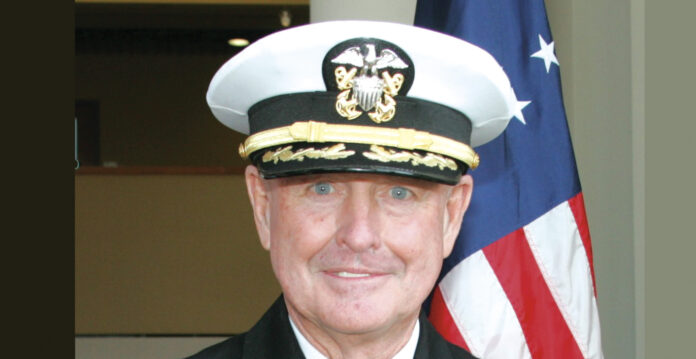

Veterans and patriots will soon be treated to a rare insight into the current training provided at Top Gun elite fighter pilot training in a six-part National Geographic docuseries, “Top Guns: The Next Generation.”
Beginning September 16 at 8 p.m., the six-part series follows a group of Navy and Marine Corps pilots as they navigate the rigorous Advanced Flight Training Program. The series captures the high-stakes aerial training, including dogfights, bombing drills, and challenging carrier approaches, highlighting the intense pressure and mental fortitude required to succeed. Their courage and determination will inspire and command respect from viewers.
“As in any docuseries or documentary about the United States Navy and Marine Corps, it will always be the intent to show the American people the professionalism and discipline of the United States Navy/Marine Corps Team,” Del City retired Navy Captain John Keilty said this week. “and in the case of Top Gun to highlight the mission to win in combat by training the best strike fighter aviators who then elevate combat readiness in the Fleet!”
This documentary series provides an inside look at the demanding and highly competitive world of elite fighter pilot training in the U.S. Navy and Marine Corps. Only the very best will make it through the program. The series is not just entertaining, but also educational, offering a unique insight into the training process.
The series goes beyond the aircraft and follows the fighter pilots through a six-month training regimen. Their experiences both in the air and during their off-base lives with family and friends are on display, providing a unique and engaging perspective on the lives of these future “patch-wearing” pilots. (patch refers to completion of Top Gun)
Some of the creative team behind “Top Gun: Maverick” were involved in filming the series. In-cockpit cameras deliver a front-row view of the action, adding to the immersive experience as they offer unprecedented access to one of the Navy’s most elite fighter pilot programs.
While the series shares a similar spirit with the “Top Gun” movies, it’s a documentary series following real pilots in training, not a fictional story.
Two of the most dramatic episodes will be “HEAD-TO-HEAD,” which focuses on pilots under training facing their final dogfighting test against an instructor before graduation and the finale, “LAST CHANCE,” leads up to graduation and the students’ last chance to earn their patch.
Episodes are available to stream the next day on Disney+ and Hulu.
Oklahoma boasts a Veteran Naval Aviator who was a Navy Test Pilot and flew with many Top Gun graduates. Retired Captain John Keilty had a long and distinguished flying career in the U.S. Navy spanning 26 years. Last month, he retired after 24 years teaching high school and college math and Science, coaching HS football and baseball and being a senior NJROTC Instructor.
He graduated from the U.S. Naval Test Pilot School (USNTPS) in 1984 and was selected to command USNTPS from 1993 to 1995. It was during his CO tour where he participated in the first U.S. Navy/Russian Test Pilot Technical Exchange Program. He was one of seven American test pilots sent to Zhukovsky Air Base (north of Moscow) and the Gromov Flight Research Institute shortly after the Cold War, meeting with Russian pilots and discussing flight test policy, processes, and procedures.
The program was a multifaceted initiative designed to foster cooperation and understanding between the two superpowers in the post-Cold War era. He flew a MiG-29 Russian fighter trainer, and others in his delegation flew the Sukhoi Su-34 Variant. He noted the Russian test pilots seemed to spend less time preparing for our training exercises, and the pre-flight briefings were less structured and significantly shorter in time than their American counterparts (granted, there was a language barrier, but there was a translator present for all briefings).
It seemed to Keilty that they lagged behind the greater autonomy and situational awareness afforded to US pilots operating within more networked systems and advanced avionics. American jets benefited from integrated systems like AWACS and data networks that enhanced overall situational awareness.
The exchange also involved Russian cosmonauts, such as Igor Volk, Chief of Russian Flight Test, who was on the Shuttle Buran Program. He was also the first test pilot to develop the aerobatic “cobra maneuver”. Igor and six other Russian Test Pilots visited Patuxent River Naval Air Station in Maryland to test-fly American planes. Keilty described the opportunity to be in Russia and observe its “new state of freedom” as a thrill, and particularly enjoyed getting to know the Russian people and pilots involved in the program.
Keilty said he found it a privilege and an awesome opportunity to fly the MiG-29. Still, the experience highlighted the differing design philosophies and technological advancements that separated the two nations’ fighter aircraft during that period. He acknowledged the MiG-29 was a capable aircraft for its time, but less advanced systems limited its overall effectiveness compared to its American counterparts.
While a Flight Deck and War Plans Officer, Keilty served on the aircraft carrier USS Theodore Roosevelt and the USS Coronado, home of the 3rd Fleet Commander.
Keilty retired in 2001 as Commander of Strategic Communications Wing ONE at Tinker Air Force Base.
He became a high school teacher to continue his community Involvement and patriotism. Keilty recently displayed continued service to America as the head of the Junior NROTC program at Del City High School. There, he was active in honoring veterans in his work memorializing Vietnam Veterans Bob Kalsu and seven men who attended Del City High School and went on to serve and die in combat in Vietnam.
Now known for his boisterous patriotic demeanor, Keilty demonstrates how modeling patriotism in Del City affects his motivation to be a thoughtful and inspiring leader.
As a former Navy pilot, Keilty says his attitude comes with the territory. “Every time I climbed into that jet and buckled in, it was like the feeling I had some 50 years ago in my first flight training, and the feeling that I represented the greatest country in the world was always very humbling and overwhelming to me,” Keilty said in a recent interview. “In the seven years that I was in the NJROTC program at Del City High School, I saw many young kids voluntarily raise their right hand, take an oath to support and defend, and then go out and make significant contributions to America’s defense and readiness – just one of the greatest feelings in my life!” •
Story and photos by Darl DeVault, contributing editor

Pratt & Whitney Oklahoma City Recognized by American Legion
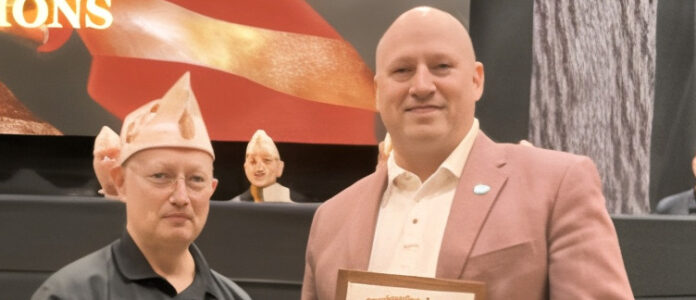
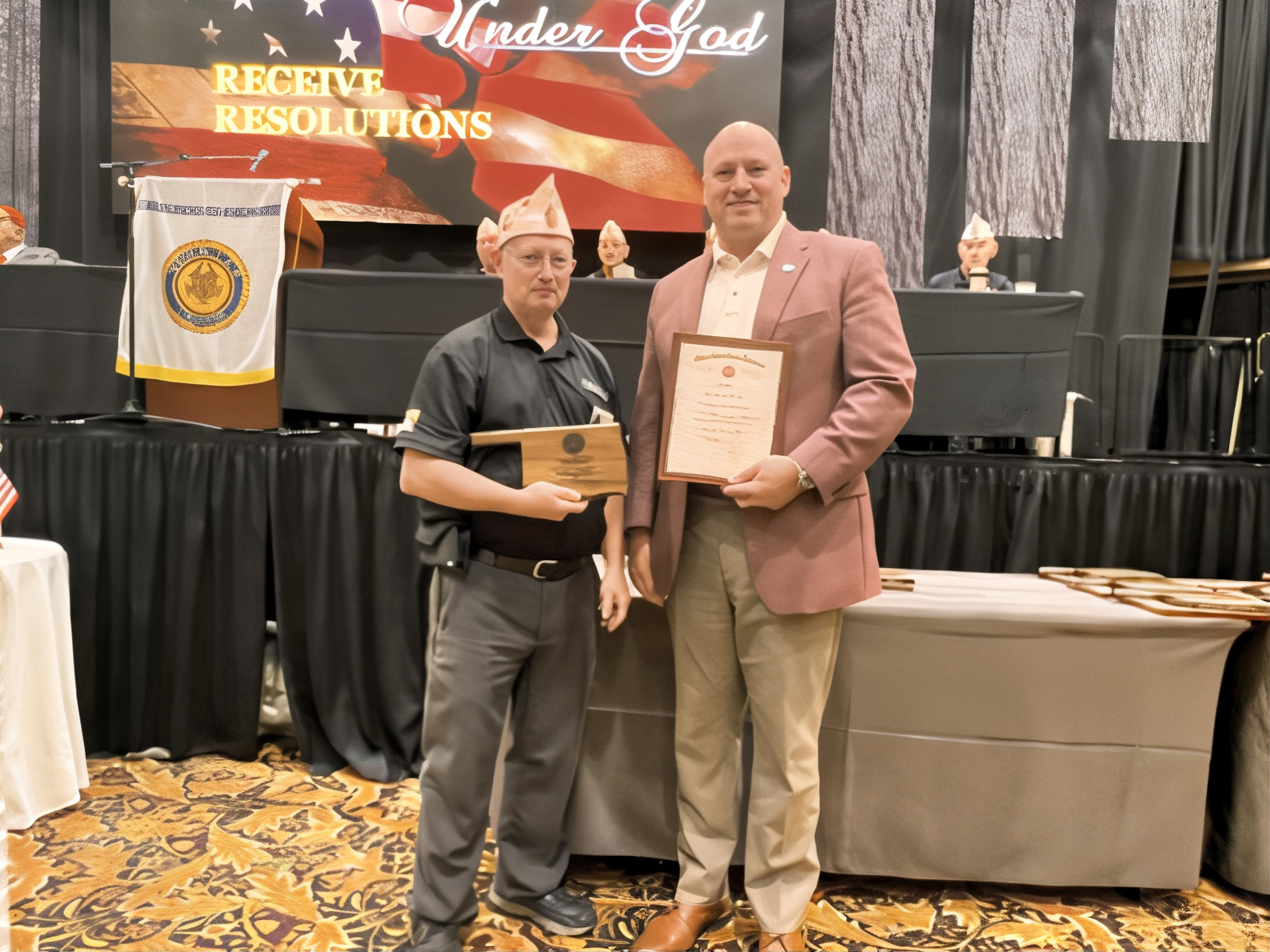

Pratt & Whitney Oklahoma City has been selected as the 2025 “Employer of Veterans” (Large Employer) by the American Legion Department of Oklahoma. The award recognizes the company’s strong support of veteran employees and its commitment to hiring and retaining those who have served in the military. Pratt & Whitney is an RTX business.
The award was presented on Saturday, July 12, during the American Legion Department of Oklahoma Convention in Shawnee, Oklahoma.
“Veterans bring unique skills, perspectives and leadership to our team,” said Greg Treacy, vice president, Pratt & Whitney Oklahoma City. “We’re proud to support them-not only during their time in uniform, but throughout their careers with us.”
Earlier this year, three Pratt & Whitney OKC leaders received the Secretary of Defense Employer Support of the Guard and Reserve (ESGR) Patriot Award during an employee event. That same nomination was shared with the American Legion by the ESGR State Chair, leading to the site’s selection for this statewide recognition.
The recognition reflects Pratt & Whitney OKC’s ongoing efforts to create a workplace where those who have served-and continue to serve-can thrive.

A Marine Forever: The WWII Service and Life of Harriet Frank
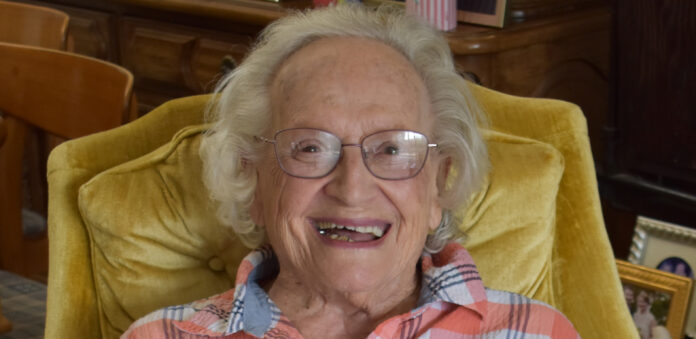
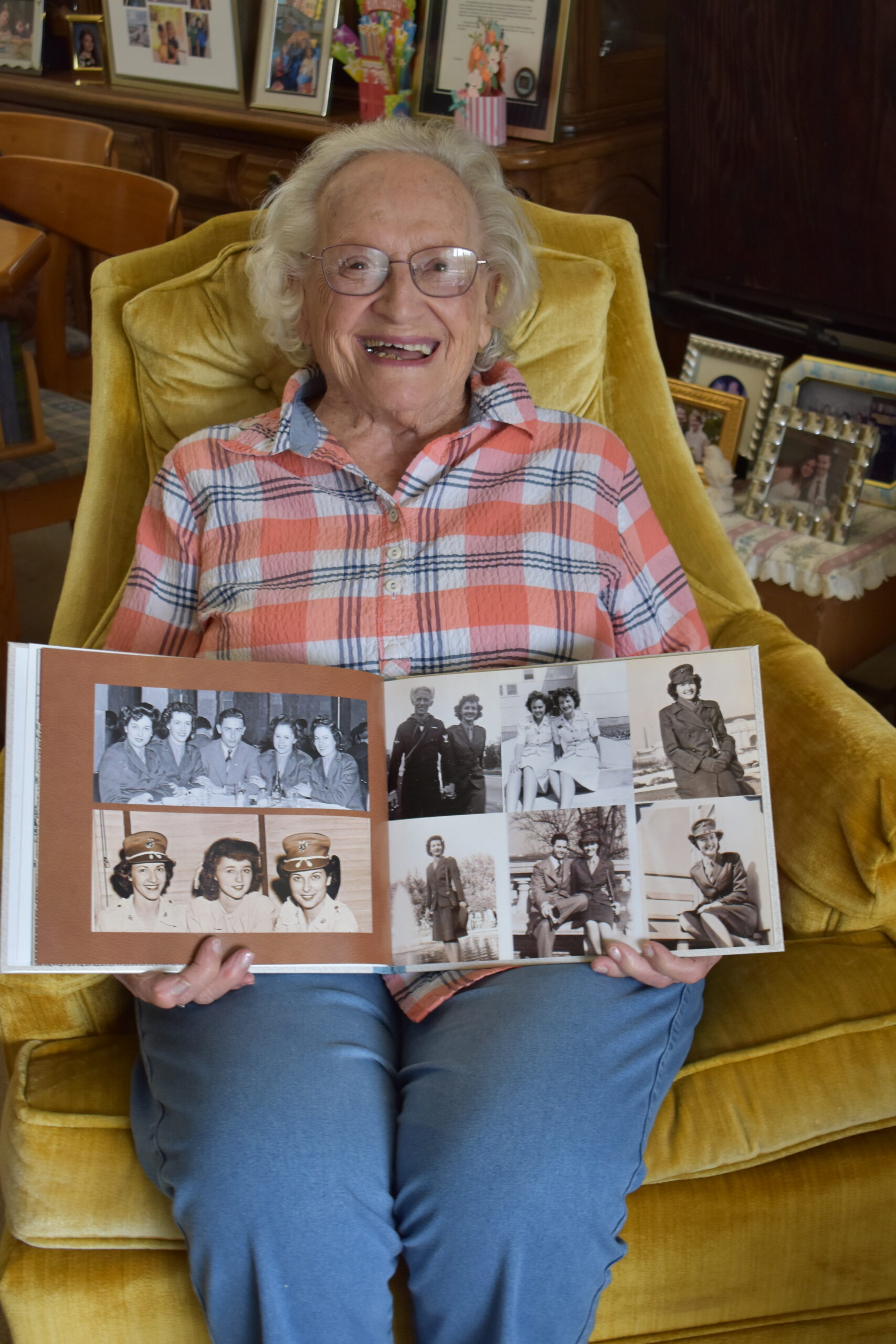
Harriet (Greenberg) Frank served in the USMC Woman’s Reserve between April 29, 1945 (age 20) – July 17, 1946. Then, having women in the military was an experiment, but initiated so men could go overseas
.
Tim Stanley of the Tulsa World newspaper posted an article about Harriet Frank on Facebook in 2015 as part of a “WWII Legacy Keepers” series. The main portion of the article is his; the remainder is from Stephens who visited her in August.
With each one of the small black bags that crossed her desk, Harriet Frank never lost sight of what it represented: another young life cut short by war. “It was work you couldn’t help but get emotionally involved in,” she said of taking inventory of the personal effects of slain Marines, her first job at Marine Corps headquarters in 1945. Among the items collected in those black bags, Frank said, were photos, letters, Bibles and billfolds. One of the items that touched her most, she said, was a baby book…the mother had mailed the book to him. It contained a photo of the baby and a copy of the birth certificate. It was sad, she said, to see things like that and to consider the life that was lost.
At the time of the attack on Pearl Harbor, Dec. 7, 1941, Frank was 16 years old.
“I knew I was going to do something, I just didn’t know what,” she said. Being Jewish, and knowing what was going on in Europe, was additional motivation, she added. To join one of the recently established women’s military branches, you had to be at least 20.
By the time her 20th birthday rolled around on April 29, 1945, Frank had already completed her paperwork to join the Marine Corps Women’s Reserve, or “Lady Marines” as it was often called. “The Marines were the finest branch. They were the bravest, best-looking,” Frank said, laughing. “I wanted to be one of them.” After six weeks of basic training at Camp Lejeune, North Carolina.
Frank was assigned to work at Marine Corps headquarters in Arlington.
After (inventorying personal effects)..she was moved to the office that handled discharges.
Someone down the hall yelled, “The war is over!” And we literally ran from Henderson Hall (in Arlington) clear into D.C. There, on the streets of nation’s capital, Frank joined with the throngs of celebrants. “Everybody was kissing everybody. I’ve never kissed so many strangers in my life,” she laughed.
Frank enjoyed the Marines, she said, and might’ve made a career of military service. But at the time it wasn’t an option; the women’s branches had not yet been made permanent. So, taking her discharge in August 1946 as a corporal, Frank resumed her studies at Oklahoma A&M on the G.I. Bill and completed a degree in sociology. While a student, she met her future husband on a blind date. Ben Frank was a WWII veteran himself, an Army lieutenant who’d served in the China-Burma-India theater. “Two months later we were engaged, and after four months we were married,” Frank said.
The couple settled in Konawa and raised three children together. Frank worked for years in child welfare with the Department of Human Services. When her husband died in his early 50s, she took over the store he ran in Seminole County. Later she moved back to the Tulsa area.
Frank said her military service served her well. “It made me more independent. It gave me more confidence in myself.” Among her fellow veterans, though, she’s still partial to one branch. “The Marines are still the best,” she said, laughing. “And don’t you forget it!”
———————————–
“I wanted the Marines” said Frank. “They were the best branch in my mind and we were treated very well.” However, many male Marines didn’t want women in uniform, so they rudely called women “BAMs,” meaning, “Big-Ass Marines.” “We weren’t gonna put up with it,” Frank said with a feisty tone. Smiling, she recalled she would reply they were “HAMs,” for “Half-Ass Marines.”
During basic training at Camp Lejeune, “We were put on guard duty at boot camp… we’d sometimes do it.” But guard duty was not with a M1 rifle. “A wooden one, shaped like a gun. It was kind of embarrassing,” she said, laughing. But that’s what we did…we marched back and forth along the sidewalk with the wooden gun.”
Harriet Frank joined the “centenarian club” in April. Her advice? “Take care of yourself. You’re the only person that can really take care of yourself.” • story by Tim Stanley and Lt Col Richard Stephens, Jr., USAFR, Ret.

A Snapshot of Heroism from WWII – Ivan W. Evans Jr. – Gone but never Forgotten
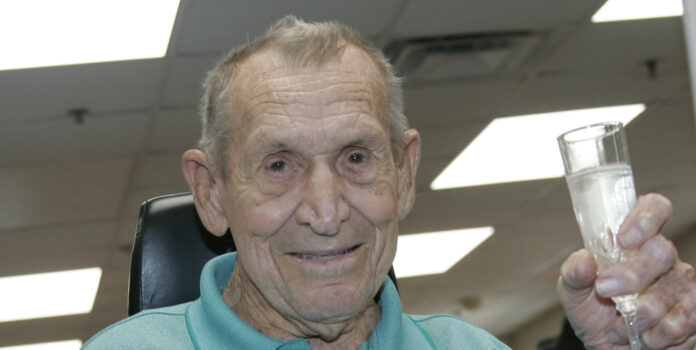
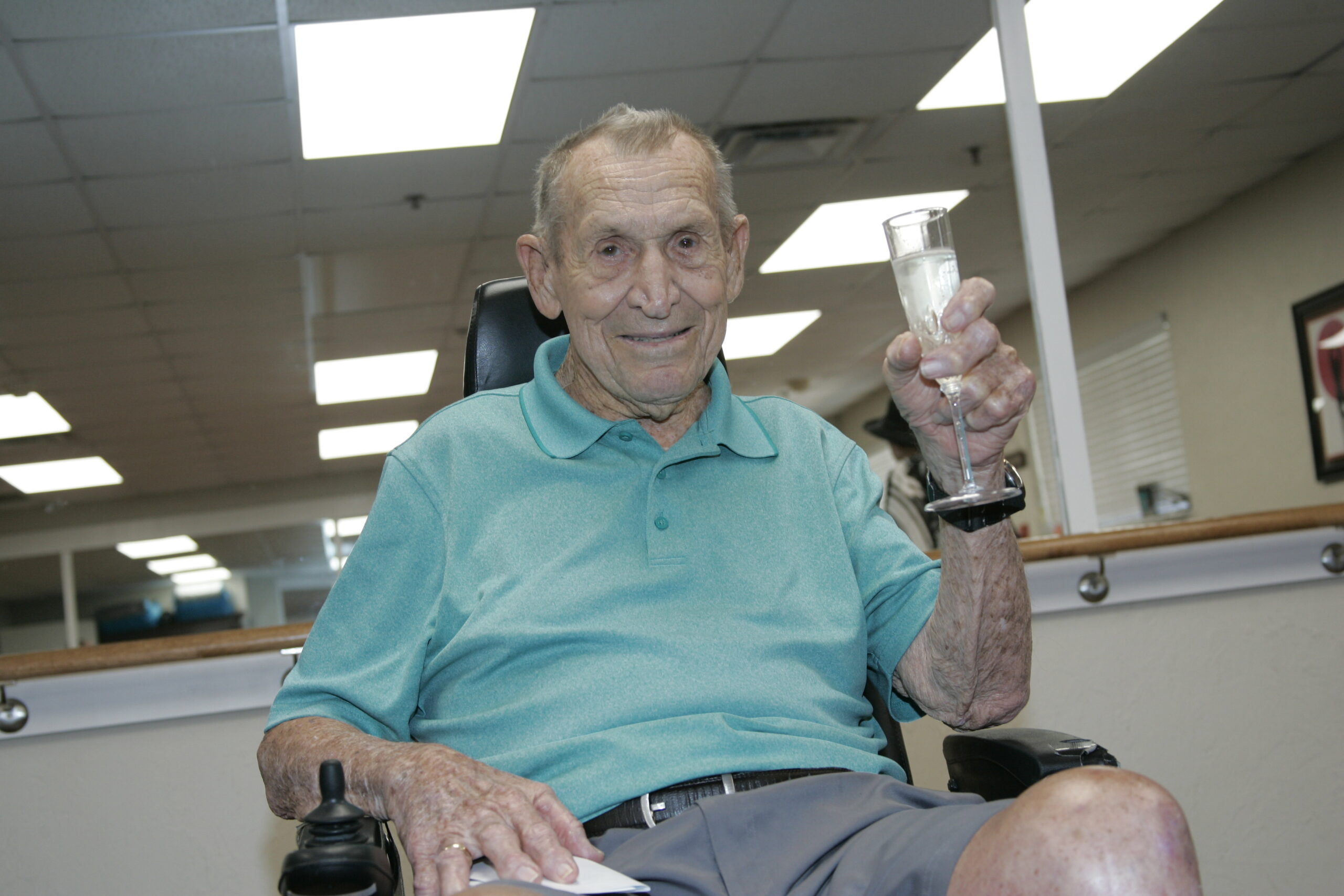
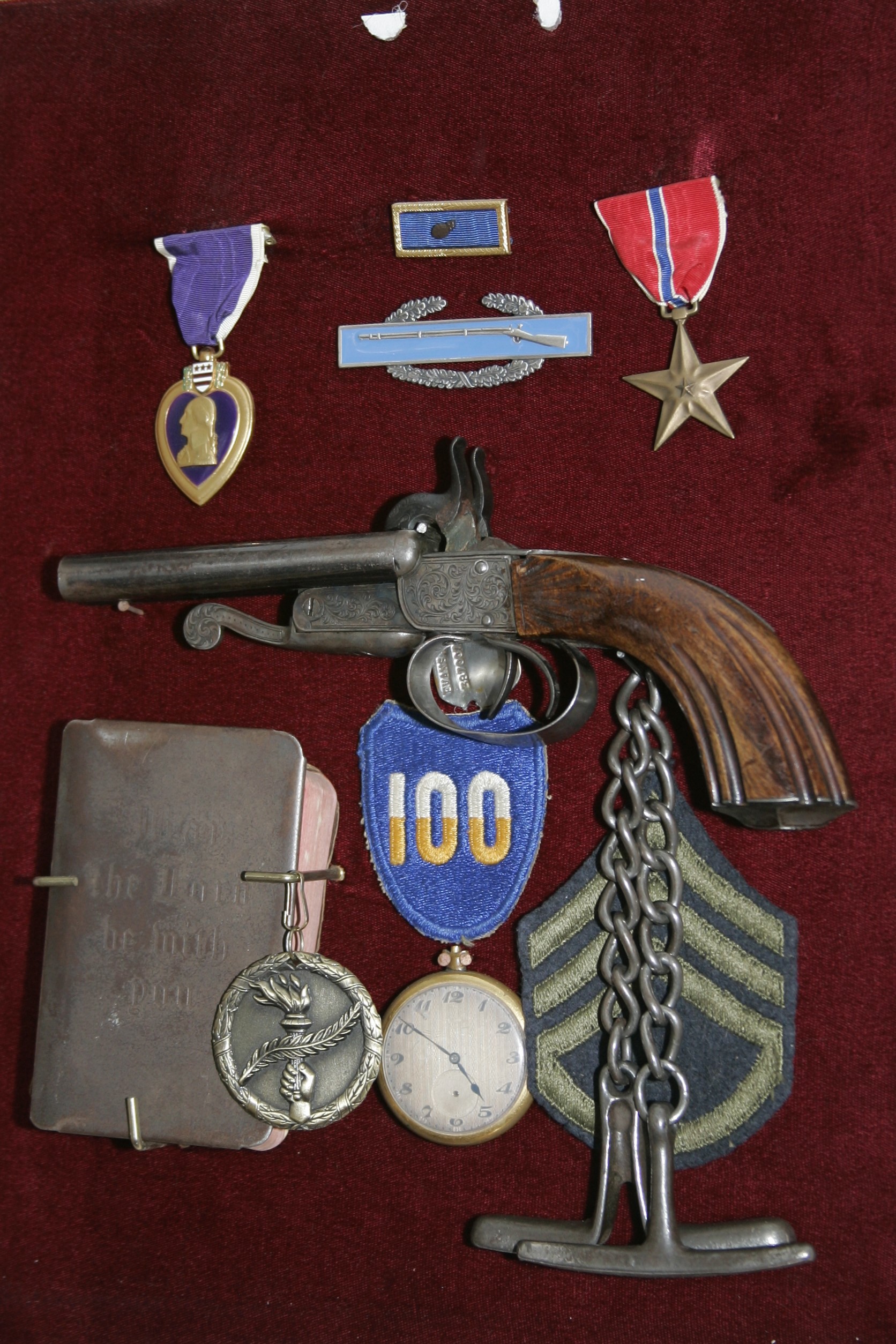
Ivan W. Evans Jr, his voice resonating with the echoes of war in October 2023, recounted his 186 days of continuous battle at the end of World War II in France and Germany. His U.S. Army infantry fighting experiences, etched in the annals of history, were as intense as the widely known Battle of the Bulge.
Just out of high school, he joined the famous 100th Infantry Division after 16 weeks of training as a replacement soldier in early November 1944 in the rugged forested terrain of the French Vosges Mountains. The mountains and savage winter weather acted as a nearly impenetrable fortress for German troops determined to defend the final barrier between the Allies and the Rhine River.
Evans explained how his 100th Division, known as the Century Division withstood Hitler’s last major offensive of the war, Operation Nordwind. This operation, launched by the German Army in a desperate attempt to regain the initiative on the Western Front, was every bit as tenacious and massive an onslaught as the failed Battle of the Bulge.
He spoke with awe of how difficult it was to push the Germans out of the concrete Maginot Line fortifications, a series of defensive structures built by France to protect against a German invasion. However, these fortifications were oriented to defend France from Germany to the North, making the fighting a fierce and yet strange experience, as he described to me in the interviews.
The Germans’ Operation Nordwind took place in severe winter weather about 60 days after Evans went into the frontlines as a .30-cal light machine gunner. A four-man crew supported his weapon. Three soldiers helped him to move the weapon, its tripod and its heavy boxes of ammo.
He said he was lucky to have those first two months to orient himself to fighting Germans as part of the Century Division’s effort to drive the Germans out of France.
By then, he knew to dig a deep, defendable foxhole for himself, his ammo helper and his weapon as a gun emplacement.
He also requisitioned an M1 carbine instead of the .45-caliber sidearm machine gunners were issued. He did this once he realized how fierce the fighting was, in that often below-freezing snowy winter.
Both those things saved his life when the Germans halted their tactical retreat and launched their offensive Operation Nordwind at his position.
His training allowed him to capture a German making a nighttime infiltration bayonet charge. The enemy was attempting to surprise the Americans by quietly sneaking up close and appearing out of the fog, making a bayonet charge.
What followed in the interview was a testament to Evans’ strategic thinking. He demonstrated how he outmaneuvered an on-charging German soldier in the dark, a situation that demanded split-second decisions and quick reflexes.
While seated, he showed me how his reaction was to turn his body sideways, reaching back to grab his M1 carbine propped to the back side of the foxhole. He did that because he would have never had time to use his machine gun.
In turning and reaching back, he did not present a fixed target for the German’s bayonet aimed at his chest. The German missed him; the bayonet slid across the front of his uniform and downward because his foxhole was strategically deep.
In missing such an obvious target, the German lost his balance, stumbling forward. Evans was able to grab the German’s rifle that had just luckily gone past him and pull him further downward into the foxhole, where his hand-to-hand combat training took over.
He quickly subdued his enemy and captured him without injury by using the soldier’s rifle as leverage in striking him hard across the face with the butt of the rifle.
Meanwhile, his ammo crew member did the same to another German charging in. Evans said his foxhole mate required more hand-to-hand combat strikes to subdue his German.
Both men were awarded Bronze Stars for their gallantry in capturing Germans that night, as their actions exemplified what was taking place all across the battlefront during Operation Nordwind. The Germans made their last major offensive on the Western Front, but the well-trained and battle-tested Century Division absorbed the blow and repelled their advance.
Soon, the Germans’ offensive fell apart. The 100th Division returned to normal operations, continuing to push the Germans back into Germany and toward the end of the war. Evans mentioned the difference in being a replacement in the Century Division many times during our interviews, only joining them for those last 186 days of almost continuous fighting in sometimes heavily forested, snowy and windswept conditions.
He did this all the while swelling with pride that his leadership in his gun crew and his .30-caliber Browning machine gun made a significant contribution to protecting his fellow soldiers.
Evans, a man of humble courage, acknowledged the role of luck in his survival during the daily battles. His perspective sheds light on the unpredictable nature of war, where a split-second decision or a fortunate circumstance can mean the difference between life and death.
Evans said he was lucky during all that daily battle. Later, when he was shot in the arm near the Maginot Line while retaking Bitche. He said he was lucky it was only his arm that earned him a Purple Heart Medal.
And then real luck kicked in when his wound was sewn up by the only neurosurgeon available in the MASH unit behind the lines because of his fortunate placement in line at triage.
He regained the full use of his arm because that surgeon knew precisely how to treat the nerves carefully during surgery.
After recovery, he rejoined his unit and continued to contribute to the war effort, as his place in his unit was solidly welcomed. No longer just a replacement nobody knew, he was well respected as a key part of the men’s success in battle after battle.
With only 16 weeks of training, Evans made sure that the sentiment of acceptance and its significance to him were emphasized in the interviews.
Evans said one of the most fulfilling aspects of his role as a machine gunner was protecting and directly affecting his fellow soldiers’ ability to carry the fight to the enemy. He did this right on into Germany, only coming out of the frontline in the last two weeks of the war near Stuttgart.
He said he was proud when he could be creative in moving his weapon to a better position to give him a better view of the battlefield for any defensive purposes, while simultaneously supporting his unit’s forward progress. Those battlefield initiatives became more routine as he gained experience, as he was deeply invested in his weapon making a difference.
Sharing these interviews as a brief reflection of the bravery of an Oklahoman is fitting now to honor his generation on the 80th anniversary of the end of World War II. By only sharing the details of the battles, readers are encouraged to remember the everyday bravery shown by fellow Americans in that war.
Evans was born April 26, 1925, near Bessie, Oklahoma and died on November 25, 2023, in Yukon, only two months after these interviews. He was buried in the Ft. Sill National Cemetery, Elgin, Oklahoma. • Story and photos by Darl DeVault, contributing editor