Monday, December 8, 2025

Safer at Home: Care plan improves quality of life

0
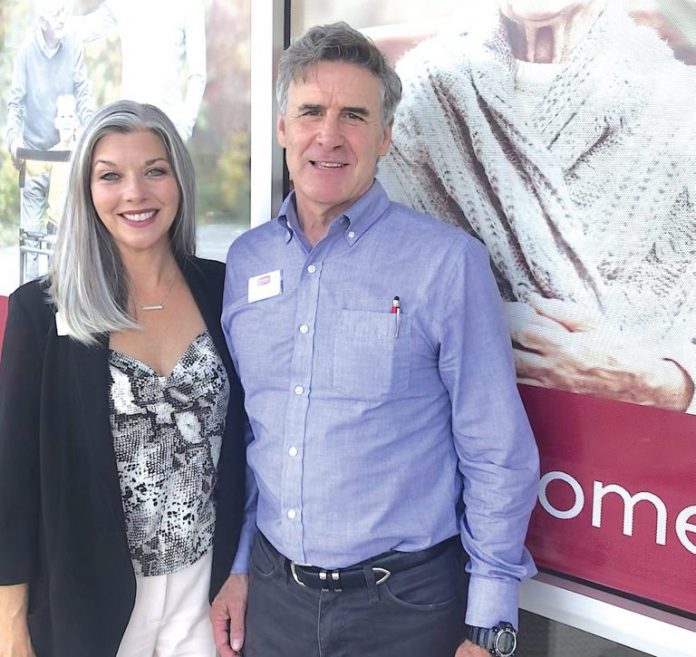
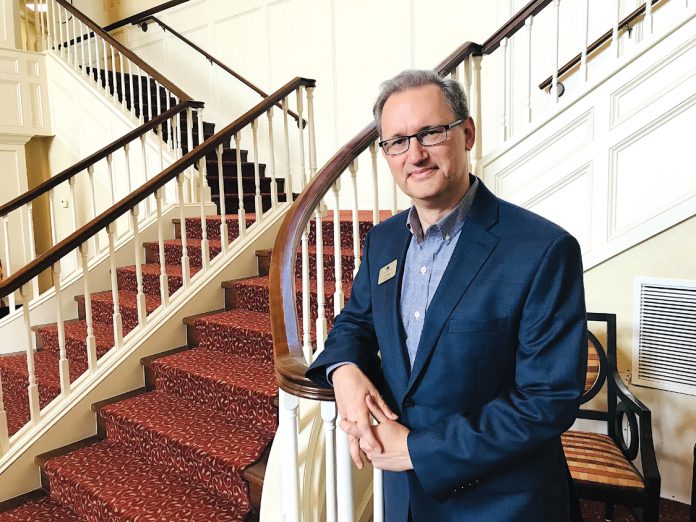
Melissa Hill and Greg Bridges celebrate seven years of business with Home Care Assistance.

by James Coburn – staff writer

Home Care Assistance helps to maintain a clean, safe and healthy environment for its clients, says Melissa Hill and Greg Bridges, owners of the family-owned company based in Edmond.
“We just hit our seven-year anniversary milestone,” Hill said.
The award-winning company provides non-medical care. As a registered nurse, Bridges writes a care plan based on an assessment he makes for individuals.
A home health care company might overlap in the company’s involvement.
“It’s almost synergistic, the whole thing that 1 and 1 makes 3. We partner up with home health. It’s just great because they know our mission, and they know our care methodology. We’re consistent — we’re conscientious — we’re careful.”
Home health might have a physical therapist coming into the home once a week for treatment. (story continues below)

https://www.aarp.org/aarp-foundation/

“Our caregivers serve as cheerleaders and guide them and encourage them to have them go through their exercises which really expedites recovery,” he said.
The caregivers do not diagnose but simply assess and report back to Bridges. Home Care Assistance handles bathing, grooming, sometimes feeding, dressing, safety, transfers, medication reminders and housekeeping. Caregivers report unusual health problems that might pop up or have been overlooked.
Home Care Assistance is on-call 24/7. There is a lot of in-house training to maximize their potential to serve their clients’ needs. Caregivers also provide social interaction which is a much-needed resource to keep individuals from being isolated in their own communities. Balanced care provides emotional, physical and spiritual support. Pathways are secured for safe mobility.
“As a young start-up business seven years ago, we’ve evolved a lot,” Hill said. “Over time, I think, we’ve really established Home Care Assistance as the highest quality care provider in this market. So, our business has grown, and the demand for in-home services is growing. During COVID I think people really came to terms that they are safer at home.”
A caregiver’s assignment is without rotation. A personalized individual caregiver limits the exposure that a resident would otherwise have to people. Home Care Assistance has evolved its employee care program as well with training and development.
“We have some super people with us and some very tenured employees. So, we really invest a lot with our employees in helping them be highly satisfied,” she added.
As they follow the CDC guidelines, caregivers have a high immunization rate and follow the protocol of wearing a protective mask to help reduce the risk of an exposure. Infection control means asking employees to live a lifestyle that considers the everyday health of their clients. Employees are asked daily if they feel sick, and they sign a form, that in-turn is another safety approach.
Balanced care involves an involved assessment by a registered nurse in the client’s home. The RN will evaluate the home including any danger points that could impair a client’s security. There has never been a fall with injury during the seven years that Home Care Assistance has been protecting its clients.
“We turn those into tasks that are followed in the care plan,” Bridges said. “It guides our caregivers on safety and best practices. It’s documented electronically and we follow the real-time feedback on that.”
Bridges notes the occurrence of a tar-like stool, indicating internal bleeding. And recently he assessed someone whose blood pressure changed from low to high when changing from sitting to standing. These indications are reported to the client’s physician.
Bridges is a seasoned nurse having worked in acute care, hospice, and home health. He said that Home Care Assistance operates closest to home health, but without doing the medical component of care. Services are private pay without being contracted with Medicare.
“You really get to know them and the family intimately,” Bridges said.
Caregivers are emotionally invested in their their clients’ successes and empathizing with their challenges. Some of the clients are living with memory loss. It can be heartbreaking to see a client going through stages of dementia.
“You learn to ride some of the tough times out with them,” he said.
A consistent assignment by one caregiver in the home will oftentimes help the individual to relax due their familiarity with a caregiver. It’s very touching for the caregiver to see their client feel safe at home.
Families are their clients as well, as Home Care Assistance is constantly working with the family by getting feedback, Hill said.
“A lot of our clients are fortunate to be very local and can be involved in the care team and work very closely with us,” Hill said. “But we also support people who have nobody. Their kids are in other states and are raising families. So, they really rely on us as the eyes and ears locally to be with mom or dad.”
For more information visit: www.homecareassistanceoklahoma.com.

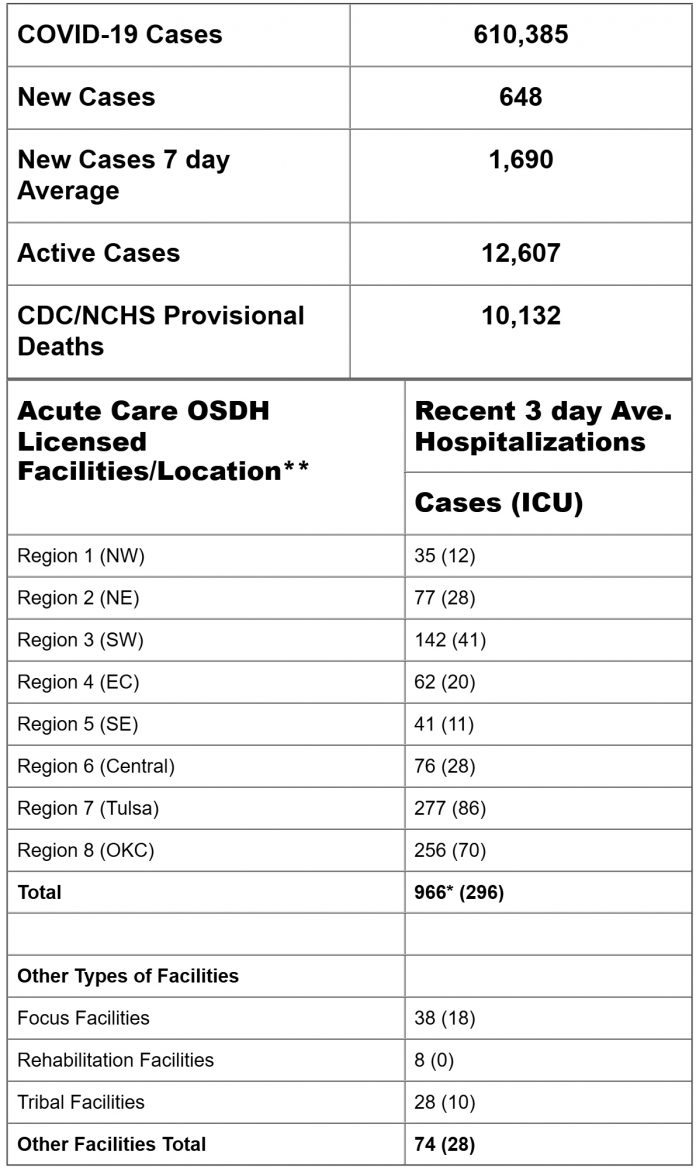
SITUATION UPDATE: COVID-19

0

COVID-19 Oklahoma Test Results

*Includes 22 hospitalizations in pediatric beds.
**Focus, Rehabilitation and Tribal Facilities numbers are not assigned to a specific region as their patient populations reside across the state. Information provided through survey of Oklahoma hospitals as reported to HHS as of the time of this report. Response rate affects data. Facilities may update previously reported information as necessary.
Data Source: Acute Disease Service, Oklahoma State Department of Health. *As of 2021-09-28 at 7:00 a.m.

History and Haunts at the Overholser After-Hours Tour

0

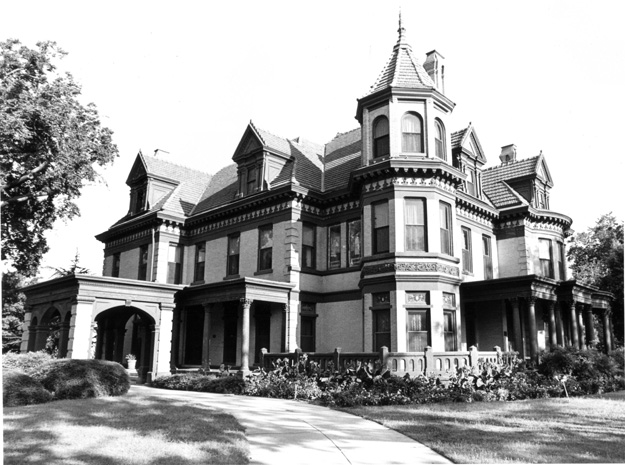
Visit the Henry and Anna Overholser Mansion this October for the History and Haunts after-hours tour! These evening tours of the historic home will take place October 2, October 9 and October 15. All tours will begin at 7 p.m. with a brief introduction in the carriage house followed by a tour of the mansion in its nighttime splendor. Guests will learn the history of the home and its former occupants, and discover why some say they are still roaming the halls! The tour will allow time for guests to explore the historic home on their own. Tickets are $20 per person and are now available for purchase on the Preservation Oklahoma website, www.preservationok.org/shop. The History and Haunts tours will be limited to 25 guests per night, masks are required and tickets are nonrefundable.
Preservation Oklahoma, Incorporated, is the state’s only private, nonprofit membership organization that is dedicated to promoting, supporting and coordinating historic preservation activities throughout the state. Preservation Oklahoma’s mission is to promote preservation statewide. Founded in 1992, Preservation Oklahoma is a statewide partner with the National Trust for Historic Preservation and works on joint projects with the Oklahoma Historical Society, State Historic Preservation Office. More information can be found at www.preservationok.org. The Overholser Mansion is an affiliate of the Oklahoma Historical Society. The mission of the Oklahoma Historical Society is to collect, preserve and share the history and culture of the state of Oklahoma and its people. Founded in 1893 by members of the Territorial Press Association, the OHS maintains museums, historic sites and affiliates across the state. Through its research archives, exhibits, educational programs and publications the OHS chronicles the rich history of Oklahoma. For more information about the OHS, please visit www.okhistory.org.

TINSELTOWN TALKS: Mumy and Cartwright launch new ‘Lost in Space’ book

0
Above: Bill Mumy with the new book - provided by the publisher.
Angela Cartwright with the new book – provided by the publisher

By Nick Thomas

If you were a child growing up during the 1960s and a fan of sci-fi television of the day, the nostalgic value of shows like “Lost in Space” can’t be overstated. Cast members Bill Mumy and Angela Cartwright recognize the connection many seniors may have to the series and have updated and expanded their 2015 “Lost (and Found) in Space” book into a new volume, released September 14 (see www.NCPBooks.com).
“The new book is now 350 pages and contains over 900 photographs,” said Bill Mumy, who played plucky junior astronaut Will Robinson in the series, from his home in Los Angeles. “The original was largely a scrapbook with a few captions, but this one contains a lot more stories about the show as well as the intertwining lives of Angela and me who have remained friends for over 50 years. Much of the credit for the expanded book goes to (the late producer, director, and screenwriter) Kevin Burns.”
Angela Cartwright (the show’s genial and imaginative space-teen Penny Robinson) says Burns called her after acquiring the CBS photo archives of the show.
“We were planning to update the book with maybe 50 additional pages, but it ended up so much more with all these never-before-seen photos,” she explained from her Los Angeles art studio. “Bill and I got on the phone and began writing down all the personal memories the photos brought back.”
“I was 10 when the show began,” recalled Bill. “Angela and I were at school together for 4 years, we went through puberty together, we became each other’s first loves, traveled the world together, and went on to have our own families. So it’s both a book on ‘Lost in Space’ and our long friendship.”
Why the show, and science fiction in general, remains so popular with audiences is no mystery to Mumy. “Sci-fi is just a canvass for the imagination. And because our show had children, kids watching could relate to those characters and go along on the space adventures with us each week.”
After the 3-season show ended in 1968, Mumy and Cartwright continued to act including cameos in the new Netflix “Lost in Space” series. But both have enjoyed successful careers beyond the screen in other artistic areas. Mumy is a respected musician and singer/songwriter (see www.billmumy.com) while Cartwright is a noted photographer and painter (see www.angelacartwrightstudio.com). However, the pair never distanced themselves from the iconic sci-fi series.
“The props, the cast, the stories – I loved every minute working on the show,” recalled Bill. “We’ve been living through a hard time on this planet lately, so a little nostalgia can take you back to a happy time. ‘Lost in Space’ even inspired people to go into the space program.”
“When we visited NASA to watch the Discovery liftoff, an experience I’ll never forget, that’s what technicians told us,” added Angela. “We just made this little show but it really captured the imagination of the youth of the day. Now, people in their 50s and 60s have introduced it to their children and grandchildren. In 30 or 40 years when we’re all no longer around, there will probably be new generations still watching it with fond memories. So we’re grateful for the fans and hope the book brings back a snippet of their childhood.”
And as the stars have aged, so have their fans. “That’s a special connection we have with them,” noted Angela. “They’ve even been very forgiving about my white hair!”
“We’ve told our story and told it honestly,” said Bill. “‘Lost in Space’ just makes people happy.”
Nick Thomas teaches at Auburn University at Montgomery, Ala., and has written features, columns, and interviews for numerous magazines and newspapers. See www.getnickt.org.

FLIGHT NURSE CONTINUES TO SOAR

0
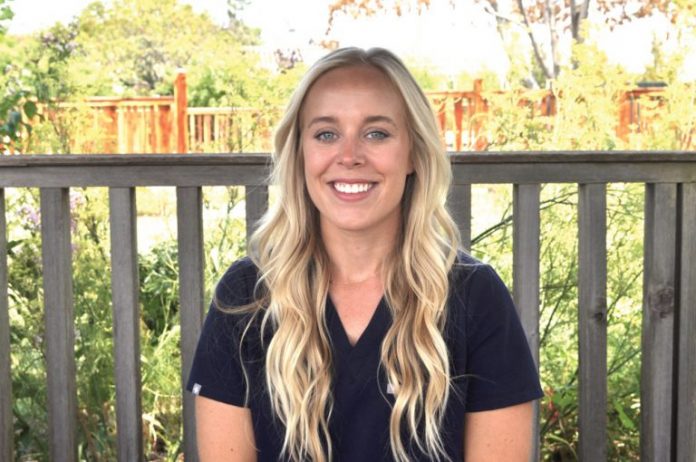
Jenna Waddell, RN, BSN, CCRN, TCRN is a flight nurse for Air Evac Lifeteam in Ada, Oklahoma. They average fifty to seventy flights a month.

story and photo by Vicki Jenkins, Staff Writer

Jenna Waddell is a flight nurse, flying out of Air Evac Lifeteam in Ada, Oklahoma. She has been a nurse for almost six years now and has been flying for a year and seven months. “I always wanted to work in the medical field, ever since I was a child. I truly believe it is a calling for me to serve others. Growing up, my dad, now a 100% disabled combat veteran Navy SEAL, would sometimes come home from deployment with an injury. I would help him in any way that I could. After a traumatic parachuting accident that almost amputated his right leg, I knew for sure that I was supposed to go into trauma and emergency medicine. I grew up taking care of others, so it is only natural for me to be a nurse. It’s in my bones. No pun intended,” Jenna said with a smile.
“Being a flight nurse is the best job in the whole world,” Jenna said. “I don’t just have one favorite thing about my job but the ones that stand out are: 1. The amount of autonomy that I have in the air. I do not have to ask a physician for orders. It is me and my partner making critical life or death decisions. 2. We are held to a higher standard as clinicians with an enhanced scope of practice. The requirements, certifications and education needed are next level and we are expected to know our stuff. 3. I take care of patients in a helicopter.”
Jenna got her first degree at Baylor University in Health and Human Science. “I initially was going to be a physical therapist. During my senior year at Baylor, I was completing my clinical nurse in an inpatient setting for physical therapy school admission. During that rotation, I was working alongside other nurses. I watched as they worked tirelessly to provide the best care for their patients. I knew right then that was going to become a nurse. I applied last minute into UCO’s Nursing program after graduation from Baylor. I went through the fast track nursing program at Oklahoma City University Kramer School of Nursing. I did not realize that nursing had so many specialties and opportunities. After doing more research about the profession, I never looked back,” Jenna said.
To qualify for a flight nurse, more training is needed. “You must have 3-5 years of critical care experience, have BLS, ACLS, PALS, PHTLS, PHNRP, an advanced certification such as TNCC and an advanced nursing certification to include either CFRN, CCRN, or CEN. After being accepted into the new role as a flight nurse, there is a six month orientation/training process,” Jenna explained. “During those six months, you have to attend and pass three regional intensives which test you on your knowledge and skill set during any quizzes and stimulations. There are four flight nurses, four flight paramedics, and four pilots at each base,” Jenna added.
Jenna’s flight flies out of Ada, Oklahoma, working 24 hours on, 24 hours off each week. She works in the trauma bay at the hospital during her week off. “I truly experience the best of the nursing world-in air and on the ground.”
“Our service area is 75 nautical miles from the base in Ada, Oklahoma. However, we have found ourselves in many states across the Midwest and southeastern regions to include Kansas, Arkansas, Louisiana and Texas.”
At the base, Air Evac Lifeteam 26 in Ada, there were seventy-four flights this past month, the most in the state of Oklahoma.
What are some of the qualities of a good flight nurse? “Compassion, hard-working, detail-oriented, empathetic, being a strong, patient advocate, an effective communicator, a leader but also a team player,” Jenna said.
Asking Jenna if she had received any awards or recognitions, she replied, “I received honors for grades all through undergrad and nursing school including Cum Laude, the honor society for nurses, President’s List, Dean’s List, a Base Recognition Award, etc. I volunteered at Habitat for Humanity and the Humane Society.”
When Jenna is not working she enjoys spending her time, running, cycling, Body Pump and CrossFit, etc. Jenna likes to travel and spend time outdoors, whether it be hiking, boating, camping, kayaking and scuba surfing. She enjoys walking Bentley, her Australian Shepherd mix. Jenna also likes to read and play the violin.
Summing up Jenna’s life in three words, she replied, “Faith, adventure and ambition.”
For more information visit: www.lifeteam.net.

Kind hearts: Nursing staff celebrates dignity of life

0
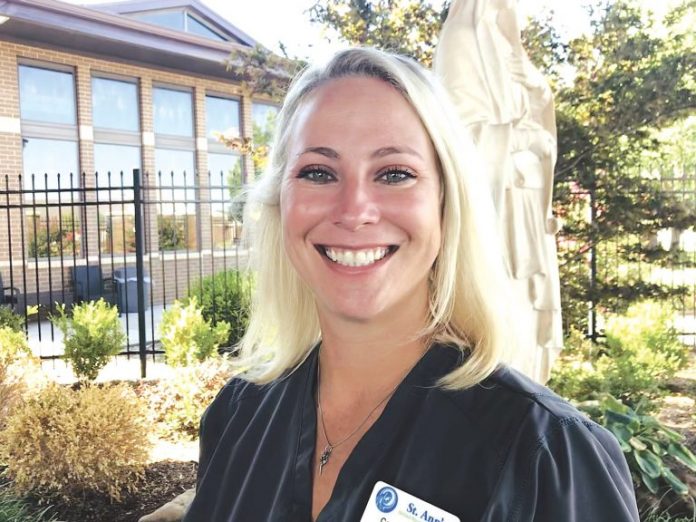
Cori Roney’s leadership begins with compassion and a curiosity to learn.

Story by James Coburn, Staff Writer

Cori Roney helps patients live their lives as happy as they can be.
Her career as a registered nurse comforts lives as the director of nursing at St. Ann’s Skilled Nursing & Therapy, located in Oklahoma City.
There are many opportunities to learn about a myriad of modalities in patient care at St. Ann’s.
“One is their personalities, just like you get to know about your friends — what they like and what they dislike. Their ups and downs, what helps them relax. So even if I’m having a bad day, you still have your family here and they can bring you out of it. It ups your spirits because they are here.”
Her grandfather was in a nursing home. So, she empathizes with families on their journey into long-term care. It helps her to take pride in her work knowing families can take comfort in knowing their loved one is safe and secure when living at home is no longer the best option in care.
Roney began her career as a licensed practical nurse after graduating from the Western Technology Center in Burns Flat. She later graduated from Oklahoma City Community College with a nursing degree. She started in home health and progressed into wound care. Her RN license brought her to a totally skilled facility. She worked at a hospital but wanted to get to know her patients better so she ventured into a skilled rehab facility where she could see patients improve with smiles on their faces when returning home.
Teamwork is a story of success at St. Ann’s Skilled Nursing & Therapy. She accepted her new career challenge at St. Ann’s in January of 2020. A lot of the staff were new last year when the COVID pandemic emerged throughout Oklahoma. Roney is grateful to work where nurses radiate a caring spirit about the residents.
How St. Ann’s nursing staff responded to the pandemic touched Roney’s heart with grace. Families have been very supportive throughout all of life’s challenges. They are like family, too. Life is more of a celebration at St. Ann’s.
“We have birthdays, and our staff will go buy them birthday presents of what patients like. They enjoy seeing them happy,” she said. “Our nurses are really compassionate, and you can’t teach compassion. It’s a natural personality trait. It’s easy to train somebody their skills, but not to have compassion.”
Roney recalls a patient who had COVID. She had spent a month hospitalized and it was touch-and-go regarding her survival. The woman returned to St. Ann’s and is stronger than ever. Seeing someone’s health overcome dark struggles is one of the reasons to be a nurse, Roney said,
“Something that has changed my life, my perspective while being at this facility is the support that we have gotten from our families in the community during the hard times,” she continued.
The past year represents one thread of a career that flourished while helping others. As a child she would watch TV shows about medicine. The nurses portrayed seemed so awesome. She earned her CNA license when in high school. It was a natural fit for a teenager who enjoyed making other people feel better.
“I just like taking care of people. If I can make their day better, I feel like I’ve done my job,” she explained.
She has a lot of praise for certified nurse aides. They are the hardest workers, Roney said.
Having been a CNA deepened her understanding of the dignity of life. Being a nurse means more than taking care of a patient, she said. Patients are people with individualized needs.
“Some people prefer to have their hair fixed, smell good and to wear nice clothes,” she said. “That’s their preference and it is a dignity. Most of the geriatrics, when they grew up, they dressed to impress all the time.
That has helped me as a nurse when looking at the smaller things.”
Small things like wearing glasses, how residents rest in bed matter to them. And Roney said if she didn’t start out as a CNA that she might have missed that.
About 50 percent of CNAs become nurses at St. Ann’s, Roney said. But some of them don’t.
“They love what they do. That’s their calling.”
St. Ann’s offers a nursing scholarship through the Bridges program. Each employee also has an educational fund with options that Bridges will pay for.
“That’s what I feel like is really good about this facility is we’re home-grown and we like to grow people.”
For more information visit: www.stannsok.com.

Osage Artist Shan Gray’s Legacy Will Live On

0
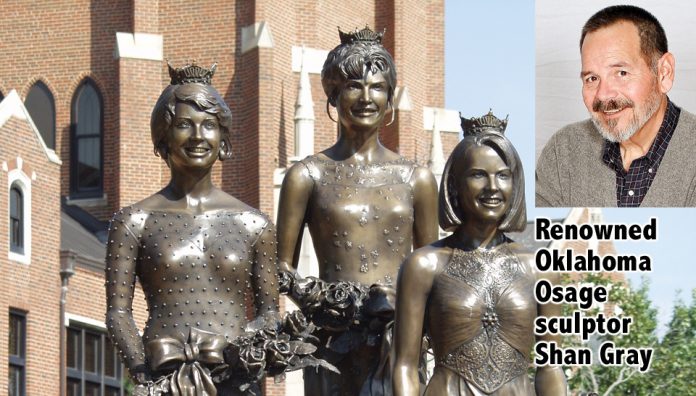
OCU Miss Americas at the southeast corner of the campus. Inset: Renowned Oklahoma Osage sculptor Shan Gray.
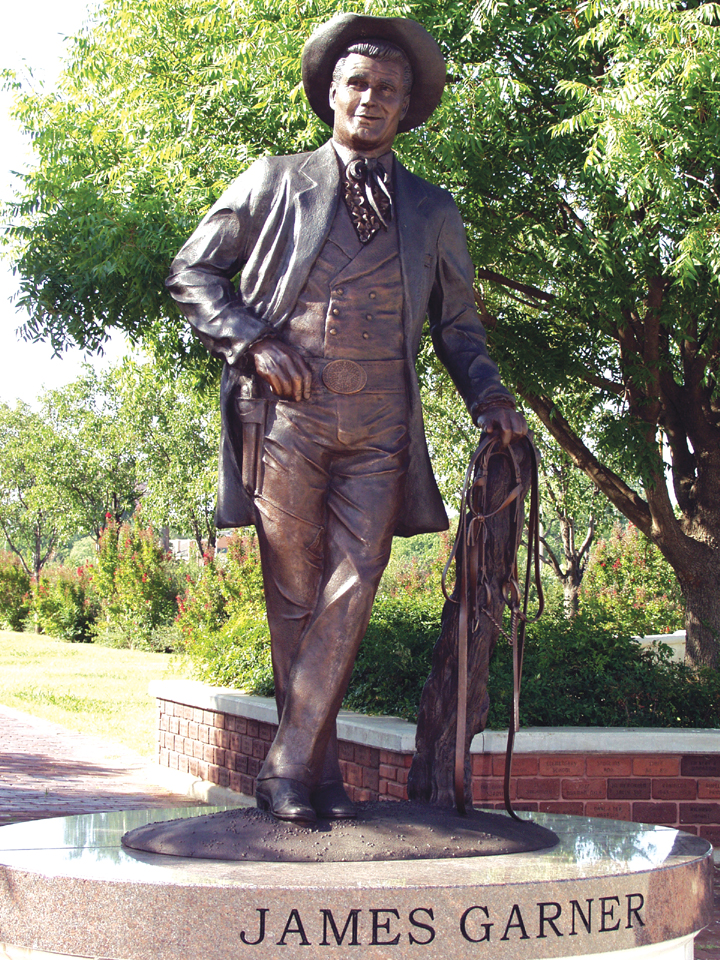
Norman native James Garner Statue at RR Track and Main in Norman.

Story by Darl DeVault contributing editor

Renowned Oklahoma Osage sculptor Shan Gray died in September at age 65, but his legacy as the most prolific artist of the Oklahoma Centennial Commemoration will live on in the state with his iconic bronze masterpieces of public art.
Gray was hitting his stride as a prolific figurative portrait sculptor when Oklahoma planned its Centennial Commemoration for 2007— a statewide, multiyear celebration of the state’s 100th birthday. Commemoration organizers Lee Allan Smith and Blake Wade drafted Gray into sculpting multiple, larger-than-life public art projects, which became a legacy to his talent.
“Gray’s sculpture of the Shannon Miller statue in Edmond is truly the Oklahoma standard for excellence,” said Joel Randell, Gray’s sculpting protege. Gray’s Warren Spahn statues and award put his contribution to Oklahoma art at the level of Paul Moore’s Centennial Land Run Monument masterpiece and Harold Holden’s legacy, Randell added, and his Billy Vessels and James Garner bronze sculptures in Norman illustrate some of the state’s best of the human form in motion. (story continues below)

https://thecarlstone.com/#

Completing eight bronze sculpting projects for the 2007 celebration, Gray was the most prolific of the individually commissioned Oklahoma Centennial artists. He collaborated with John Free Jr. in the casting of his heroic statues at Free’s Bronze Horse Foundry in Pawhuska.
The largest of Gray’s public art creations is the Cleveland County Veterans Memorial near the southwest corner of Reaves Park in Norman. A striking and complex memorial, the work accentuates the clean lines of an obelisk topped by an oversized eagle landing with an American flag.
The statue of the University of Oklahoma’s first Heisman Trophy winner, Billy Vessels, is displayed in Heisman Park just east of Jenkins Avenue and the football stadium. Also in Norman, his bronze likeness of famous Norman son and movie star James Garner enhances the downtown area on East Main Street at the railroad tracks.
“For all of these works,” Gray said at the dedication of the Garner statue, “I was striving to accurately capture the detail and dynamics of the spirit or movement in the human figures in the unmoving bronze to carry off the illusion of bringing the monument to life. I have always said my sculpting style is rooted in the classical tradition.”
A cluster of Gray’s efforts is outside the Chickasaw Bricktown Ballpark in downtown Oklahoma City, including the nine-foot-tall bronze depiction of Warren Spahn in his famous high-kicking windup. Spending his final decades in Tulsa, Spahn is the winningest lefty pitcher in major league history. Gray’s busts of other Oklahomans—New York Yankee pitcher Allie “Super Chief” Reynolds and St. Louis Cardinal Pepper Martin—are near the third-base gate at the ballpark.
Gray’s works include a tribute to the three former Miss Americas who attended Oklahoma City University. At the southeastern entrance to the OCU campus, Jane Jayroe, Susan Powell and Shawntel Smith beam in their pageant evening gowns.
The Nazih Zuhdi Transplant Institute on the campus of Baptist Integris Hospital displays a bust of its namesake medical inventor and heart surgeon. The sculpture is on the ground floor of the main hospital building.
In Edmond’s Shannon Miller Park, Gray’s bronze sculpture honors the seven-time Olympic medalist from Edmond. The 19-foot bronze was the largest statue of a woman athlete in America at its completion.
In Edmond’s J.L. Mitch Park, Gray erected a bronze Girl Scout statue titled ‘95 Years and Planting.’ It depicts a small girl planting a tree in the park.

Salmon, Idaho Artist Shows Work in 23rd Annual Traditional Cowboy Arts Exhibition and Art Sale held at the National Cowboy & Western Heritage Museum

0

Idaho artist, Cary Schwarz, will join some of the finest traditional cowboy artists for the 23rd Annual Traditional Cowboy Arts Exhibition and Sale at the National Cowboy & Western Heritage Museum, October 1-2, 2021.
Showcasing the best of saddlemaking, bit and spur making, silversmithing and rawhide braiding from the members of the Traditional Cowboy Arts Association, the exhibition will open to the public Friday, October 1, 2021, and the sale will take place on October 2. All pieces will remain on exhibit and available for purchase at the Museum through January 2, 2022. The sale will take place on October 2.
Each year the TCAA exhibition gives Schwarz the opportunity to reflect on his journey as a founding member. From the very earliest conversations about what would become the TCAA, to the elaborate education programs of today, it’s been a tremendous journey. Before the founding of the association, Schwarz would stumble into his peers and mentors in the saddle business every few years. Now he interacts with them on a weekly basis, offering a depth of support and advice to one another. To view the catalog, visit TCAA (nationalcowboymuseum.org). To sponsor the event or place a proxy bid for art, visit nationalcowboymuseum.org/tcaa. Proxy service is also available by contacting Trent Riley at (405) 839-7097 or triley@nationalcowboymuseum.org.

Heart for People

0
Christina fell in love with gerontology largely because of the experiences with her grandmother. (Photo provided)

story and photo by Bobby Anderson, Staff Writer

Most people choose the jobs they want to pursue.
For Christina Sibley, the job chose her.
Christina has been a healthcare provider for more than 20 years. She’s taught medical assisting and phlebotomy.
She’s worked in doctor’s offices, labs, hospitals and home care, always with a passion for her patients.
But it was a suggestion from husband, Steven, that brought it all together.
“I feel like God put me on the Earth for a reason,” she said. “I have a specific set of skills, experience and education that allow me to do things for people, they have put me in a unique position to be able to do things for people that others just don’t have the ability to do.”
Christina and her husband own and operate Sibley Insures.
Actually, it’s more than that.
They live it.
An average of 10,000 people age into Medicare each day. (story continues below)

https://www.sibleyinsures.com/

Licensed Health insurance producers in Oklahoma and Kansas, serving OKC, Tulsa, and beyond, the Sibleys are a wealth of information when it comes to making one of the most important healthcare decisions most of us will ever face.
And that yearly decision is fast approaching.
The last few months of the year the Sibleys’ business goes into overdrive with Medicare enrollment beginning October 15 and running through December 7.
“A broker, like myself, is someone contracted with multiple carriers so they aren’t beholden to a specific carrier and they’re not trying to fit someone into the only tool they have,” Christina explained of what she does. “A broker is able to find the right tool for the client and their specific needs.”
“You would be surprised at how many people who are on Medicare, and have been for a long time, who don’t understand how it works. They’ve never really been given a good education.”
That’s the “what” when it comes to Sibley Insures.
The “why” runs deeper.
Christina Sibley tears up when she talks about her grandmother, whom she was able to care for in her final few years.
“She was a widow, a homemaker her whole life, whose husband died at a young age unexpectedly,” she said. “She lived on a very low income and had significant health issues. I watched her struggle for a long time, especially with paying for medications.”
Planning on going to school to become a physician’s assistant, Christina fell in love with gerontology (the study of aging issues), largely because of the experiences with her grandmother.
“My desired patients were going to be geriatric patients. That’s who I love. That’s who I love to work with,” she said. “When Steve suggested I go into insurance I was not interested at all.”
“She thought I was nuts,” Steve said with a laugh. “When she found out about Medicare and what she could do for seniors it was like the lightbulb came on. These were not only the people she wanted to serve but as an educator she was able to use her experience and skills to truly make a difference.”
Behind her the whole way is Steve, who brings 15 years of financial services expertise and 36 years of military service to the business.
She’s always had a passion for education.
“The best part of what I do now … I can spend two or three hours with somebody and really get to know them, help them understand so they can make their own choices,” she said. “As an educator you have to be able to break complex things down into something people can relate to.”
With Covid 19 restrictions ongoing, many seminars and educational opportunities to help seniors make an informed decision will likely not occur this year throughout the industry.
“That has been in the back of my mind but my clients, the people who are already with me, understand they have access to me all year,” she said. “They’re used to ‘Hey, I have a question. I’m going to call Christina.’”
She said “this year, in particular, there are many tools available to meet and enroll virtually, if that’s someone’s preference.”
In person or on the phone, Christina has always prided herself on being accessible to her clients and the people who are referred to her by her clients.
Answering a question, or giving her opinion – it’s always about the client.
“One of my favorite sayings is do the right thing for the sake of the right thing,” she said. “Just do the right thing for people, it’s that simple. I decided early on that I was going to do it that way, period. I’ll either be successful at it or I won’t be, but I’ll do it in a way that I can look at myself in the mirror each day and be happy with what I do.” Visit: https://www.sibleyinsures.com

Bringing joy and comfort: Therapeutic cardboard cut-outs bring smiles

0
Epworth Villa Community Liaison Shelley Stutchman, at left; and Hope Knight, RN, say moments of joy are preserved for hospice patients by the use of therapeutic cardboard cut-outs of iconic actors.

by James Coburn – staff writer

Laughter is great therapy. Epworth at Home Hospice has discovered a way to brighten up the days of hospice patients receiving palliative care, said Hope Knight, a registered nurse with the Epworth at Home Hospice team in Oklahoma City.
Seniors receiving hospice care or home health care from Epworth at Home will often find humor and a glimpse of nostalgia by therapeutic cardboard cut-outs of classic movie stars. Carol Burnett, John Wayne, Audrey Hepburn, and Elvis Presley have made steady appearances. A cut-out of actor Will Smith will soon join the collection of stars.
Patients get a ray of sunshine, something that makes them smile, Knight said. Hospice is a ministry, said Knight, who has been a nurse for 30 years and a hospice nurse for nearly six years. Her history includes emergency room and intensive care nursing.
“We’ll place it in a common area of their room. We will just see smiles and maybe they will point at them. We don’t know what’s going on in their head a lot of times, but we can see some joy in their faces,” Knight said.
The idea clicked in the mind of Community Liaison Shelley Stutchman just before an open house in May. She had been storing the cardboard inspirations in her office and wondered what to do with them. (story continues below)


“Even though John, Elvis, Carol, and Audrey were only cardboard, we could imagine them smiling as our guests took selfies with their favorites of the group,” Stutchman said.
Her role includes visiting with patients in the skilled nursing unit. She said there have been a few home health and hospice patients who have chosen hospice care. She will inform them about hospice and home health options when applicable.
One day she greeted a woman who was feeling a little depressed about her health. She looked at Stutchman and said she gets always feels more courageous and stronger after watching a John Wayne movie.
“How about I have John Wayne come visit you?” Stutchman said.
The woman thought Stutchman was joking, knowing the actor had died in 1979. Stutchman said she needed an hour to prepare her surprise.
“The patient just laughed and went to the therapy gym,” she said. “I attached a personalized note to the John Wayne cutout and snuck it into the patient’s room while she was in therapy. When the patient came back, she lit up like a Christmas Tree.”
The woman came from a hospital after having a leg amputation and felt blue. But soon she was texting photos to family and friends and laughed about how Duke Wayne startled a nurse who came in her room that night. Wayne was standing at the head of her bed holding a gun at his side. Her life was falling apart, but the therapy cut-out changed her attitude.
Knight said hospice families love taking pictures of the cut-outs with their loved ones. People smile as she carries Elvis, Carol, Audrey, or John Wayne down the hall. Ladies will prepare for a visit by Elvis in the rehab unit. They will fix their hair and put on their lipstick, so they will look nice for their photo with Elvis.
“It motivates them therapy-wise to take care of themselves,” Stutchman said.
Another patient said one of the ladies told her she had the personality of Carol Burnett. When the cut-out was brought for an overnight visit to the woman’s room, it became a source of laughter during her visit with her son. They began talking about the old Carol Burnett shows they saw together when her son ways a little boy. Mother and son talked for almost two hours — something they had never done before.
“She said she was forever grateful for the Carol Burnett therapy cardboard,” Stutchman said.
Family members appreciate being able to share joy during their loved one’s hospice care, Knight said.
“It brings back good memories. We’re all about memories in hospice,” she said. “That’s all we’ve got when people pass.”
Even hospice patients living with dementia will interact with the therapeutic cut-outs. Older memories are more intact with dementia. And, even if a hospice patient does not have dementia, they will oftentimes pull back into their younger selves, Knight said.
“They will pull away from the world as they are transitioning from this life to the next. And so many times they just don’t want to talk with people — they don’t want to interact because they’re pulling back and readying their spirit for when they pass on,” Knight said.
Many nurses in general don’t deal well with people passing away because they want to make them better, Knight said.
“But then, there are some of us that say sometimes we don’t make them better, so let’s make this transition the best it can be. Let’s help them have the best life possible in as many days that they have.”
For more information visit: www.epworthathome.org or call (405) 767-9033.

Social

0FansLike
0FollowersFollow
0SubscribersSubscribe