Dear Savvy Senior, Which vaccines are recommended for Medicare seniors this flu season? Just Turned 65
Dear Just Turned, There are actually three different types of vaccines seniors should consider getting this fall to protect against a repeat of last winter’s “tripledemic” of respiratory illnesses, which included flu, RSV and coronavirus. Here’s a rundown of the different vaccines the Centers for Disease Control and Prevention (CDC) is recommending and how they are covered by Medicare.
Senior-Specific Flu Shots For people age 65 and older, there are three flu vaccines (you only need one) that the CDC recommends over traditional flu shots.
These FDA-approved vaccines provide extra protection beyond what a standard flu shot does, which is important for older adults who have weaker immune defenses and have a greater risk of developing dangerous flu complications compared with younger, healthy adults. The three senior-specific options include the: Fluzone High-Dose Quadrivalent vaccine, which contains four times the amount of antigen as a regular flu shot does, creating a stronger immune response for better protection. Fluad Quadrivalent vaccine, which contains an added ingredient called adjuvant MF59 that also helps create a stronger immune response. FluBlok Quadrivalent vaccine, is a recombinant protein (egg-free) flu vaccine that contains three times the amount of antigen as compared with a regular flu shot.
There isn’t enough evidence yet to indicate whether one of these three vaccines provides superior protection over the other two for seniors.
As for side effects, you should know that the Fluzone High-Dose and Fluad vaccines can cause more of the mild side effects that can occur with a standard-dose flu shot, like pain or tenderness where you got the shot, muscle aches, headache or fatigue. While the side effects of Flublok tend to be a little less frequent.
All flu vaccines are covered 100 percent by Medicare Part B as long as your doctor, health clinic or pharmacy agrees not to charge you more than Medicare pays.
New RSV Vaccines Anyone age 60 and older, especially if you have any heart or lung conditions, diabetes, kidney or liver disorders that make you vulnerable to the respiratory syncytial virus (RSV) should consider getting one of the new FDA approved RSV vaccines (either Arexvy or Abrysvo).
These vaccines, recommended by the CDC, will help protect older and immunocompromised adults from respiratory illness, which is responsible for 6,000 to 10,000 deaths and at least 60,000 hospitalizations each year in seniors 65 and older.
The new RSV vaccines are covered by Medicare (Part D) prescription drug plans.
Updated Covid Booster If you haven’t had a Covid-19 booster shot lately, you should consider getting one this fall. Even though the Covid public health emergency has ended and the number of cases has gone way down, it has been surging in recent months causing an increase in hospitalizations, especially among the elderly.
The updated Covid vaccine targets the XBB omicron subvariants that are some of the most dominate coronavirus variants circulating in the U.S. It will also provide protection against the EG.5 variant (Eris), which is closely related to the XBB.
Covid booster shots are covered 100 percent by Medicare Part B.
When and Where Most health officials agree that it’s safe to receive the flu and Covid booster at the same time. But because the RSV vaccines are new this year, many doctors are recommending a two-week window between an RSV shot and the flu and/or the COVID shots.
You can find all three vaccines at most pharmacies, medical clinics and health departments, or you can do a search at Vaccines.gov.
Send your senior questions to: Savvy Senior, P.O. Box 5443, Norman, OK 73070, or visit SavvySenior.org. Jim Miller is a contributor to the NBC Today show and author of “The Savvy Senior” book.
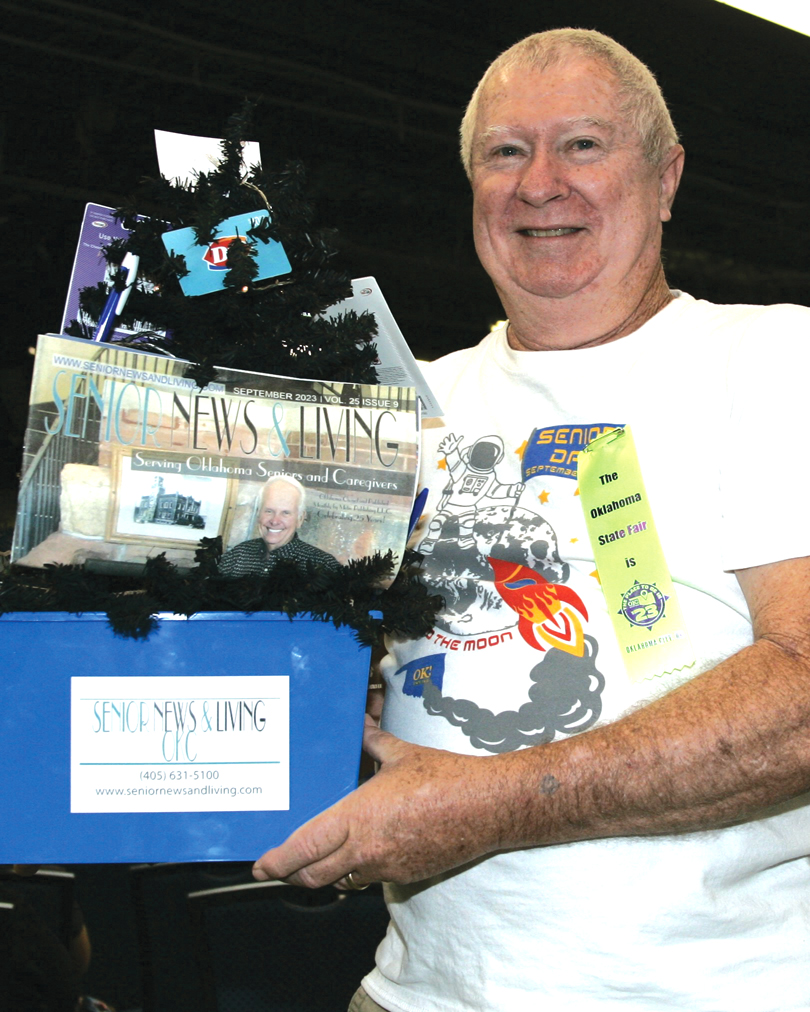
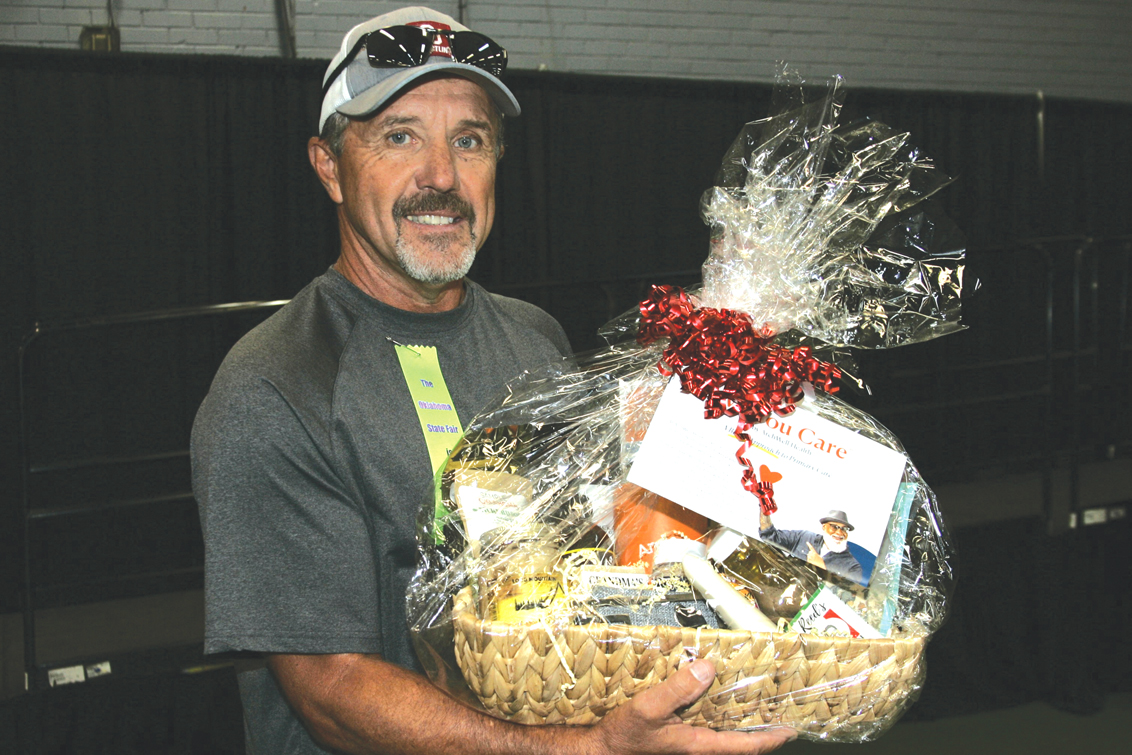
Senior Day at the Fair 2023 encouraged an “Out of This World Seniors Day” theme including alien characters and fun decorations for visitors and vendors.Darrell Melancon from St. Martinville, Louisiana, won the Senior News and Living special prize of a gift card tree totaling over $65.
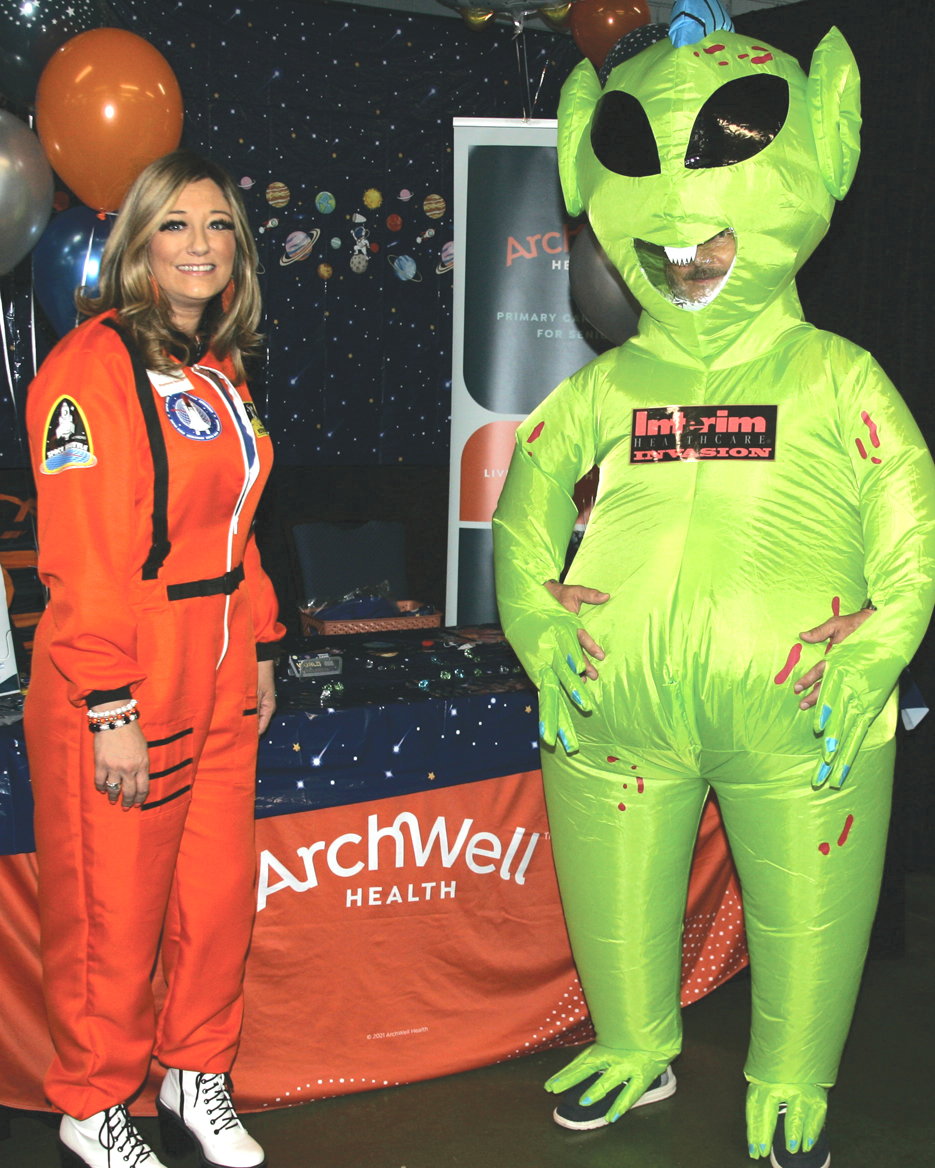
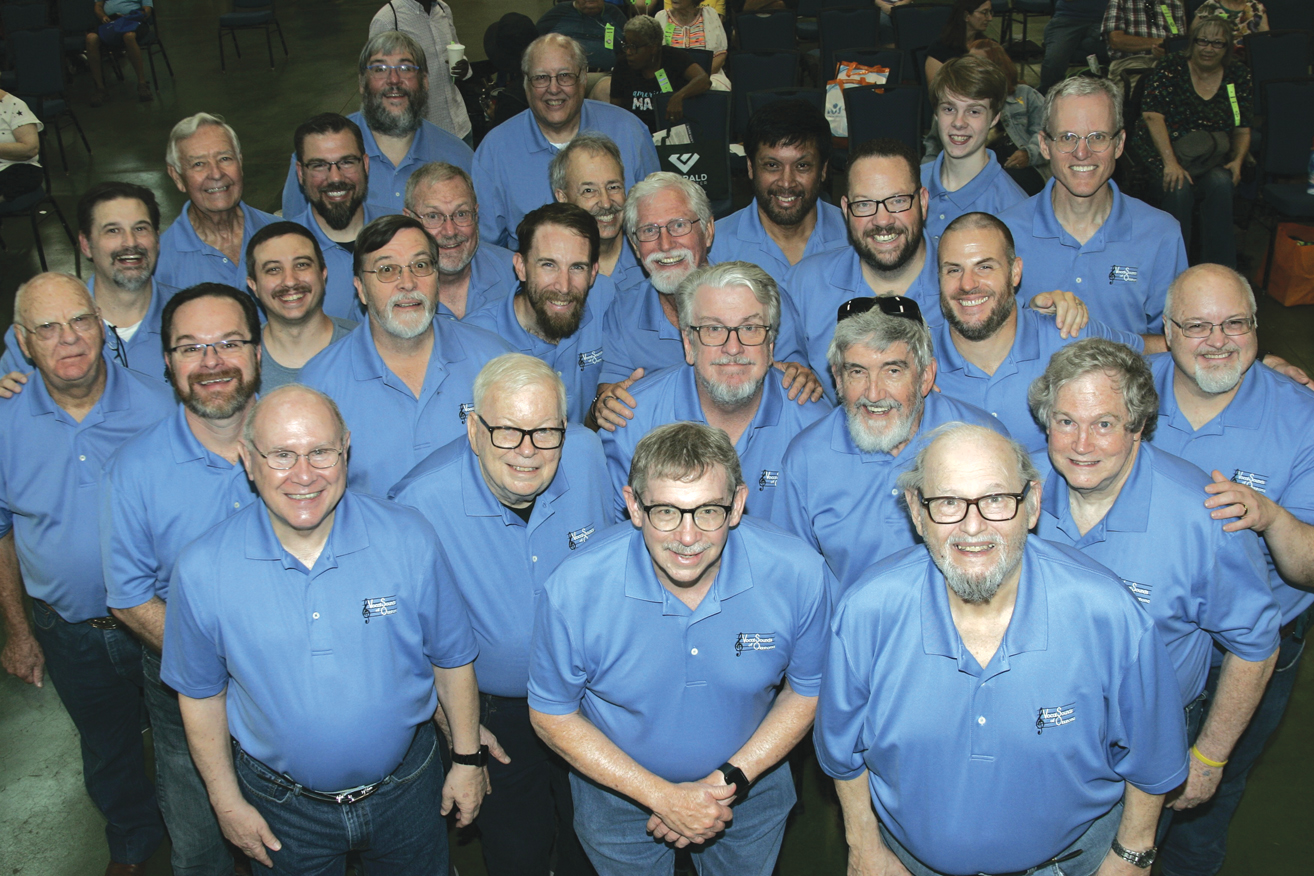
(Top) Little green man visits the Archwell Health booth.The 26-member strong Vocal Sounds of Oklahoma pose just before they share their love of four-part a cappella singing with the audience.
On September 20th, the Oklahoma State Fair lived up to its theme, “The Place to be in ‘23,” when it hosted the “Out of This World Seniors Day” at the Fair, providing activities planned for older fairgoers.
Senior citizens 55 and older celebrated near-space travel with free admission to the fairgrounds on their special day. Many otherworldly experiences were offered to the audience throughout the day.
Many games and contests entertained senior fairgoers who preferred to kick back indoors on the hot and sunny Wednesday in the Modern Living Building. All were entertained by many acts from the space-themed stage and by visiting booths featuring alien and flying saucer decorations.
“I want to share our feedback so far is that this year was our best senior day ever,” said Lisa James, CompleteOK community liaison and event committee member. “I want to thank everyone so much for being a large part of making that happen; we appreciate all of you.” In saying this year’s was the best yet, James added, “I believe the variety of exhibit offerings for our seniors was the best I’ve ever seen.”
The day of activities, entertainment, exhibits, door prizes and health screenings designed especially for the golden agers was packed. The entertainment kicked off at 10 a.m. and finished with Elvis tribute artist Mike Black at 7 p.m.
The Special Events Area at the south end of the Modern Living Building featured outlandish interpretations of many space motifs, including four larger-than-life green aliens with humans trapped inside the costumes.
Sponsor OG&E energized the day while many of the booths donated door prizes and offered giveaways designed especially for the golden ager.
This 46th annual Senior Day at the Fair saw the Okie Stompers’ well-choreographed group display their combination of tap with line dancing as their ten performers dazzled in special out-of-this-world T-shirts. After a quick costume change to a more patriotic outfit, they displayed their ultimate toe-tapping’ clogging when they performed again at 11 a.m.
The one-minute video entries from area independent and assisted living and long-term care communities of their residents “In Motion.” were shown all day to allow the public to select the winner.
Along with the many senior-oriented booths making their services available, “Senior News and Living” gave away their September issue at their booth all day. The publication supplied two door prizes from the stage and small glider planes at their booth.
Although official attendance numbers have not been released yet, “Senior News and Living” sales executive Amanda Miller gave away 900 copies of their publication in their bags before the last 100 were available for pickup without a bag.
The audience participated in themed activities on the decorated stage. At 1 p.m., audience singers took the stage to perform in the “Out of This World Karaoke Contest.” The audience was treated to Gary Aylor’s singing performance at a Robert Goulet quality level. Archwell Health provided his prize.
Activities planned for the day that saw 4,000 seniors last year included a robust lineup of free health screenings. Major organizer OU Health provided memory and depression screening. Passport Health offered Flu, 65+ Flu, vaccines and B-12 shots while more than $10,000 in door prizes were given away in three sessions.
Many seniors picked up a ticket for each session to win one of many donated gifts These multiple drawings in the morning, the early afternoon and then again in late afternoon saw many happy seniors celebrate on their way to the stage to receive their prizes.
The 26-member Vocal Sounds of Oklahoma award-winning a cappella men’s chorus sang several Americana ballads from the stage four-part close-knit harmony for the crowd at 4 p.m. without accompaniment.
The event chairs filled up as Elvis tribute artist Mike Black drew a packed house in the late afternoon. Back from his popular performance last year, Black sang Elvis Presley’s songs at 7 p.m.
The volunteer Senior Day committee works from January through September, planning an excellent event for Oklahoma Seniors 55 and over.
Adjacent, the Oklahoma Senior Games demonstration area was busy all day, with many waiting to play Pickleball on a demonstration court. As America’s fastest-growing recreational sport, it is being widely embraced by seniors for its excellent health outcomes.
Story and photos by Darl DeVault, contributing editor
The 2022 Second Half Expo saw record crowds at the beautiful National Cowboy & Western Heritage Museum in Oklahoma City.Tim Bales, with Nerve Renewal Neuropathy Clinics, along with several associates, visited with attendees and answered questions at the 2022 event.
The free 2023 Second Half Expo connecting seniors to valuable resources begins at 8 a.m. Saturday, October 21st, and finishes at 1 p.m. for the third year at the National Cowboy & Western Heritage Museum in northeast Oklahoma City, which offers free parking.
In its fifth year, organizers call it the largest senior expo in Oklahoma and bill it as “Everything for the 50+ Generation.” It features more than 100 exhibits tailored to people in the “Second Half” of their lives. This is for those Oklahoma seniors looking to connect with the latest products, services, and educational resources needed to live as they have imagined. Oklahoma’s largest senior-related businesses will be present, providing education and demonstrations of their products and services.
Not just for the retired, the day will be loaded with fun and activities, including free educational seminars, food samples, drawings for prizes and music from some of Oklahoma’s best talent.
“We firmly believe the senior years can be lived with dignity and purpose with the right guidance and resources,” said founder Bob Loudermilk. “We strive to support seniors and their adult children, honoring and assisting their aging parents.”
This year’s free panel session at 10 a.m. is titled “Is Your Estate Plan Retirement-ready? – Asset Protection Strategies in an Ever-changing World.” It offers four community thought leaders sharing their expertise. This timely information for seniors approaching the Second Half of life is about securing their financial future. The panelists will explain how asset protection strategies are paramount for folks entering the Second Half of life, particularly concerning retirement, investments, asset management, Medicare, and new marriages.
Entering new marriages later in life necessitates asset protection to preserve pre-existing assets and ensure desired distribution. Older individuals relying on Medicare must protect these benefits to maintain a stable income during retirement. By proactively implementing asset protection strategies, Americans can secure their financial well-being, preserve retirement funds, and safeguard assets for themselves and their loved ones.
The panel session featuring Brian Hill, David Chaney, Tim Hast and Susie Brown will begin at 9 a.m. with coffee and pastries, allowing for networking. The discussions begin at 10 a.m. and end at 11:30. Seating is limited. Please RSVP to reserve your Meet the Panel – Second Half Expo seat. Details of topics and bios of the four panelists are available on this page.
Hill is a partner at Ball Morse Lowe, PLLC, whose practice is focused on Estate Planning and Probate. Hill has guided clients in estate planning, probate, and trust administration for more than 18 years. He has served as an Oklahoma Bar Association Estate Planning Section officer. As a frequent speaker for various organizations, he has provided insight and practical advice to estate planning professionals.
Chief Executive Officer and founder of Legacy & Succession, LLC, Chaney, ChFC, CLU, has received numerous industry awards and accolades in his more than 35-year career. He holds multiple industry designations, including Chartered Financial Consultant (ChFC), which he obtained in 1997.
Hast provides coaching and training in leadership, team building, and people skills and helps people in the workplace get along. He is the author of “Powerful Listening, Powerful Influence,” available on Amazon in paperback, e-book and audiobook.
Brown is the co-owner of Senior Benefits Consulting and has 24 years of experience with Medicare and employer benefits. She teaches educational events on how Medicare works and meets with groups and individuals to consult with them on their Medicare options.
The panelist will impart crucial steps to safeguard your retirement, investments, and assets while ensuring a secure future. This session will equip you with valuable insights to navigate the ever-changing financial landscape, from managing risks to maximizing growth potential.
Ball Morse Lowe, Attorneys and Counselors at Law, is this year’s presenting sponsor. It is also presented by “OKSenior Journal,” with “The Oklahoman” as the National Media Partner and Oklahoma’s News 4 as the media sponsor. Also a sponsor, “Senior News and Living” and “Oklahoma Nursing Times” will provide their publication at their booth all day.
Produced by Second Half Events, Inc., the expo is hosted by The National Cowboy & Western Heritage Museum at 1700 Northeast 63rd St. For more information visit https://secondhalfexpo.com/.
Owner/Innkeeper of The Monastery at Forest Lake in Oklahoma City
Story and photo by Van Mitchell, Staff Writer
Matthew Pierce, owner of The Monastery at Forest Lake, stands next to his business truck.The monks living at The Monastery at Forest Lake operated a bakery called Brother John’s Bakery.
When Matthew Pierce purchased The Monastery at Forest Lake, located at 3500 North Coltrane Road in Oklahoma City, he knew the property had sat vacant for a decade.
What he didn’t realize was the amount of time and money it was going to take to bring the historic property, which served as the mansion home of Oil Baron and Oklahoma Governor Robert S. Kerr, back to life.
“Within the first few months of buying the house and as the hidden catastrophes kept emerging, I thought it appropriate to watch the old Tom Hanks movie, “The Money Pit,” and I began to realize what a financial and architectural challenge I had signed up for,” Pierce said. “Within 12 months I had gone through my entire life savings, almost $400,000, trying to get the 100 year old stone castle-like structure back in shape.”
The Monastery at Forest Lake features a 10,000-square-foot stone fortress on 14 acres, a swimming pool, two lakes, a wedding chapel, and starting in October, the 5-star Bed and Breakfast will transition into an Airbnb.
“We’re going to still offer The Cottage as an Airbnb, (which was Governor Kerr’s servant quarters until 1949) as our most historic suite,” Pierce said. “The Cottage also serves as one of our bridal suites for the wedding venue. And, the old bakery building from the monks’ time here, which is still on-site, that’s a big three-room stone building which is going to be restored into another big cottage so that families can come and stay. It will have a waterfront view and a deck that extends right out to Forest Lake.”
Pierce said the mansion was completed in 1926, and it has a plethora of Oklahoma history and characters. (STORY CONTINUED BELOW PHOTO)
The Monastery at Forest Lake had a tunnel under the speakeasy that allowed bar patrons to quickly escape to the lake, accessed by a hidden staircase.
“In the summer of 1926, this mansion and the E.W. Marland mansion in Ponca City were both finishing construction,” he said. “This was all oil money. The financiers were Oklahoma oil barons of the 1920s, as well as politicians, law-enforcement, and even an occasional gentleman gangster. They formed a “Hunting Lodge” in name only, cleverly incorporated as “The Anglers Association”, which disguised the real purpose of the massive structure with 150-pound doors and 18-inch walls: an illegal speakeasy bar on 50 acres of walled and gated forest. The Twin Hills Golf and Country Club was built in 1918, so that predates it, there was a small lane that led to the Lodge from there.”
Pierce said that there is a tunnel under the speakeasy that allowed bar patrons to quickly escape to the lake, accessed by a hidden staircase.
Pierce said the membership of the lodge held a high-stakes poker game weekly, featuring high rollers of the state’s petroleum Industry. He said one night, the card game was moved to Oilman Charles Urschel’s home in Heritage Hills, and it became the scene of an infamous kidnapping involving Oklahoma gangster “Machine Gun” Kelly.
“His wife, who gave him the moniker “Machine Gun”, put him up for one last final caper, and then to retire from his life of crime,” Pierce said. “The poker game was here most Thursdays and it unknowingly presented a lucrative target for a big “score “, but on that particular night, they had moved the card game to oilman Charles Urschel’s house on NE 18th. Machine Gun Kelly kidnapped Urschel and another man, ultimately transporting Urschel to Texas in the middle of the night.”
According to Oklahoma Historical Society archives, on July 22, 1933, using his trademark machine gun, George “Machine Gun” Kelly, along with Albert L. Bates, interrupted a bridge game at Charles F. Urschel’s residence in Oklahoma City, abducting Urschel and Walter Jarrett at gunpoint while their wives helplessly watched.
The widower Urschel, oilman Tom Slick’s brother-in-law and a trustee to his estate, had married Slick’s widow, Berenice Slick, and combined their fortunes, creating one of the wealthiest couples in Oklahoma City. A criminal of relative obscurity, Kelly, born George Kelly Barnes in Memphis, Tennessee, in 1895, married Kathryn Thorne in 1930. Kathryn has been credited for creating Kelly’s underworld persona, because she bought him his first Thompson submachine gun and dubbed him “Machine Gun.”
After kidnapping Urschel, the criminals took him to a farmhouse in Paradise, Texas, and held him there for more than a week. The kidnappers released him on July 30 after a representative for the family paid $200,000 in documented bills. Kelly was convicted and sentenced to life in prison and served 21 years at Alcatraz, inmate No.117.
Pierce said the hunting lodge closed in 1933 when Prohibition ended nationally, but Oklahoma elected to continue prohibiting alcohol statewide (until 1959).
“The oil company executives freaked out, despite running an illegal bar for over a decade,” he said. “They’re like, “Nope, we’re done.” They shut the doors”.
Pierce said Kerr decided to buy the lodge sometime after it closed.
“He watched it sit for three years and said, “He said this is stupid. I’ll close the lodge. I’ll buy out my brothers. I’ll own the place. I’ll make it my home,” Pierce said.
Kerr later sold the home to Oklahoma City Children’s Hospital pioneer, Dr. John Colmore.
“Colmore bought it in 1949, and raised seven children here,” Pierce said. “We’ve been honored to have four of his now elderly children come and stay in the resort, in their old rooms from their childhood. “He was here until 1970”.
His widow, Mrs. Colmore, sold the house to 13 Russian Orthodox-leaning monks in 1971 for $38,000.
“They were a rather eccentric sect of Monks from Illinois, led by Bishop Burke and Brother John,” Pierce said. “They were here from 1971 to 1988. They raised ostriches for the OKC Zoo and were known citywide for their amazing baked bread.”
Pierce said Dr. Andrew John bought the property from the monks when Burke moved the church to Nebraska, and he was there until 2004.
“Dr. John modernized the air conditioning, the plumbing, added 4,000 square feet of living space, put in the pool, and put in the whole north wing where the pool table is,” Pierce said. “He did all of that work, but his masterpiece was eventually sold at Sheriffs Auction in 2004. Retired World Cup soccer player from Peru, Chico Villar, and his wife Judy bought the empty mansion and enjoyed it as a weekend lake house, and I bought it from them.”
Pierce said the monks operated a bakery called Brother John’s Bread for over a decade.
“Most of us here locally, we remember that the monks were the Forest Park Volunteer Fire Department,” Pierce said. “One day I was sitting in my office and I saw an older gentleman, in full monk garb with a rope for a belt, step out of a vehicle in the parking lot. Incredibly, it was Brother John stopping by unannounced for a visit.”
Pierce said it was Brother John’s first trip back to the Monastery since 1982.
“We had a grand time visiting, and I finally got to ask Brother John a question I had wondered about since childhood: “How in the world did you guys become the Fire Department? Pierce said. “I told him I had a copy of the NBC television feature which was aired in April 1979, of him and the “Firefighting Monks”. He remembered NBC filming it but he had never seen it.”
Pierce said Brother John told him the story saying the fire department was across the street where the school is now, and one day he accidentally caught the bakery on fire.
“We waited and we waited and we’re running around with little water hoses and we’re trying to put this fire out,” Brother John told Pierce. “We could see the windshields of the fire engines just 50 feet away in the station. Finally, the volunteer firefighters, they arrived, they jumped in the trucks, drove across the street, and put the fire out.”
Pierce said the local fire chief asked Brother John if the monks would consider helping them fight fires because they were literally just steps away from the fire station.
“With Bishop Burke’s approval, we agreed that that would be a righteous community service. And so that’s how we became firefighters,” Brother John told Pierce.
Pierce said The Monastery has also been home to several businesses.
“The Colmore’s raised national award-winning AKC Dobermans until the late 60’s,” he said. “The same structure which became Brother John’s Bakery, was originally built as a kennel for Dr. and Mrs. Colmore’s show dogs.”
Pierce said there were so many unknown money pits discovered during renovations of the property. At one point they were constructing a parking lot for the bed-and-breakfast resort, and Pierce’s contractor could not figure out why the gravel base would seemingly disappear overnight.
“Every time we would pour a semi-tractor load of gravel out here in the parking lot area, within a day, it was gone. It would sink and mud would bubble up,” Pierce said. “Finally, the contractor’s like, “Dude, you’ve got a natural spring out here.”
Pierce said a University of Central Oklahoma professor did some research on the property, and found the cause of the water issue.
“Greg James starts looking at the abstract and some photos from the Oklahoma Historical Archives and says, “You know Matt, this place had a commercial fish hatchery on it in 1928.”
Pierce said there are some exciting projects beginning over the next few months, including several custom lakefront homes slated for construction by his business partner, Mike Menzel, on the east side of Forest Lake.
“It’s exciting to see my original vision take shape, at such an important place of my childhood memory. My grandmother and I would stop at the bakery here and buy bread from the Monks in the early 1970s.” he said.
For more information visit https://themonasteryatforestlake.com or call Mattew at (405) 760-9984.
(Right) 100 years old. Naomi Elizabeth (Oursler) Von Gunten of Stillwater is Always very active in her church & community, she regularly Facetimes & Zooms her family using her own iPad, but being the mother of wonderful children who contribute to their communities & churches is her special honor. Words of wisdom: “Go to church, be active in it & develop a strong religious faith!”
Leon Campbell
(Left) 100 years old. Leon Campbell served in the Army during World War II, had a career as an aircraft mechanic, and had many hobbies. He was a competitive dancer winning many awards. Words of wisdom to us are: Love the Live You Live and Dance Like No One is Watching!
Betty Jean Shuttee
(Right) 100 years old. Betty Jean (Field) Shuttee of Enid is a retired pediatric nurse, enjoys all music by Lawrence Welk, reading, gardening, singing, Netflix & angel food cake. Her travels have taken her to 39 countries & to every state in the US. She received a proclamation from the Mayor & a special poster made by a class of preschoolers. Words of wisdom: “Be patient, be positive and be kind to everyone!”
Phil Morgan
(Right) 102 years old. Phil Morgan is a veteran of WWII. Words of wisdom: “Put God first, go to church and develop a close walk with the Lord. Cherish your family, spend time with them, time goes fast, and kids grow up too quickly. Honor the military, respect the United States of America.”
Robert Thomas Stout was in El Reno, Oklahoma on Feb. 27, 1920 and enlisted at Denver, Colorado as a Seaman Apprentice.
Robert reached the rank of Fire Controlman 3rd Class (FC3c) with duties included operating, maintaining, inspecting and repairing the weapons control systems used on combat ships. He also operated range finders, optical fire control equipment, repaired electrical firing circuits and manned fire control stations in action.
Robert’s Duty Stations included the USS Oklahoma in April, 1941 until death, USS Rigel in 1940, Elementary Fire Controlman School in 1940 at San Diego, USS Oklahoma in 1939 and the Naval Training Station Great Lakes, IL in 1939.
Awards and decorations included the Purple Heart Medal, Combat Action Ribbon, American Defense Service Medal (Fleet Clasp), Asiatic-Pacific Campaign Medal (Bronze Star) and the World War II Victory Medal.
Robert Thomas Stout, Fire Controlman 3rd Class died during the Dec. 7 attack on Pearl Harbor, will be buried in the Cottonwood, Cemetery, 20499 1st Street, Cottonwood, California on September 15.
Families of Sailors that died in the Pearl Harbor attack are offered a choice to either have the family member re-interred at NMCP, or choose an alternate location, such as a veterans’, private family site, or Arlington National Cemetery. Navy Mortuary, a branch within Navy Casualty, will coordinate the movement of remains, which typically arrive a couple days prior to the burial.
I have never been a fan of restaurants owned by, or associated with, celebrities. I could be if, while dining, the celebrity whose name is on the door and the menu were sitting near me or, preferably, being told the wait is “over an hour, since you don’t have a reservation.”
So far, that hasn’t occurred. I’ve never spotted Michael Jordan devouring a T-bone at Michael Jordan’s Steak House; never saw Jimmy Buffett – may he rest in peace – working the blender at Margaritaville or encountered Robert De Niro dunking tuna sashimi into soy sauce at Nobu. During Oprah Winfrey’s six-year run as a partner in Chicago restaurant The Eccentric, I visited one evening and pointedly asked the waiter if Oprah was really in the kitchen, whipping up a side dish known only as “Oprah’s Potatoes.”
She wasn’t.
Also, a visit to a celebrity-owned restaurant invariably ends with a bill that could easily be paid by a celebrity but not us common folk. The same holds true in grocery or liquor stores. I’ll happily save a few bucks and not purchase the Guy Fieri barbecue sauce or the Nick Jonas tequila. My football tailgates won’t suffer.
And yet, I recently found myself feeling sorry for actor Paul Newman. And not because he’s dead.
Newman, star of classics including “The Sting,” “Butch Cassidy and the Sundance Kid,” and “The Color of Money,” not to mention the owner of steely blue eyes, launched a line of “Newman’s Own” salad dressings in 1982. According to newmansown.com, the line grossed $300,000 in its first year. None of those profits came from me, for I remember picking up a bottle of Newman’s Italian dressing while in college, glancing at the price and immediately placing it back on the shelf. My date, who I promised to cook for, “Italian style,” had to settle for generic dressing, which did its best to compliment the other generic products that dotted the menu. Cash-strapped college students were not Newman’s target demographic.
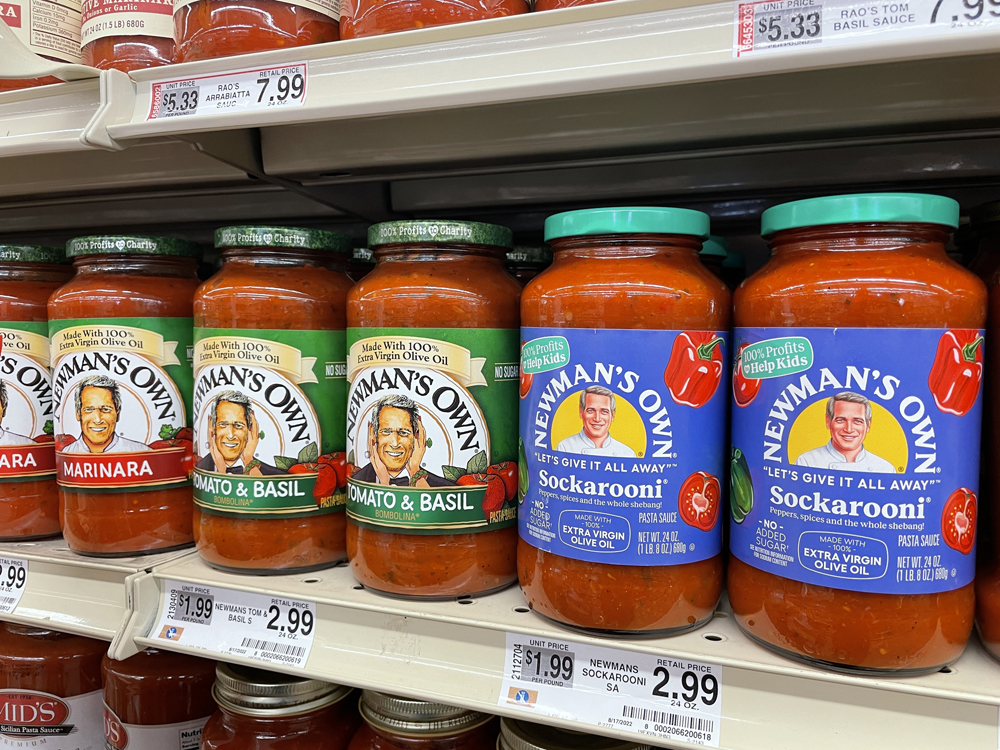
Eventually Newman parlayed his success into other foods, including pizza, spices, olive oils and spaghetti sauces. It was the latter that caught my eye during a recent grocery visit. Newman’s Own Marinara, Tomato & Basil and Sockarooni (“so delicious it could knock your socks off,” the website proclaims) sauces were among the CHEAPEST on the shelves.
College students, there’s a SALE in aisle five! Paul Newman has been officially marked down!
How did Newman allow brands like Rao, Barilla and Classico to dominate the “too lazy to make your own sauce” market, charging upward of $2 more for sauces? Sad to say, I think it’s because the name “Newman” no longer carries the relevance it used to. Cool Hand Luke died 15 years ago this month. The more time that elapses, the more likely shoppers will pick up a bottle of Newman’s Own and say, “Who?” before putting it back.
Yes, we are a celebrity obsessed culture, but we also want to feel like we have a connection with the celebrities we support. If Taylor Swift launched a line of gum and charged $5 per stick, I am certain sales would still explode, for what young girl doesn’t want their breath to smell like Taylor’s?
Now fast-forward 15 years. Taylor will be 48. Probably married with a couple of kids. Maybe doing a 90-minute Vegas residency as opposed to a three-and-a-half-hour stadium show. Will her gum still be a hot commodity? Or will it be alongside the gossip rags and the disposable lighters in the grocery checkout aisle while a new female singer, who probably is currently in preschool, is charging $10 per stick. And making millions.
This time, I tossed two jars of Newman’s sauce into my cart, not because they were cheap but because I don’t want Paul Newman, whose films I still watch, to fade away. Besides, the labels say, “100% profits to help kids” and, as vague as that sounds, kids need all the help they can get these days.
Now I just have to find that college girl and invite her over for a dinner that will knock her socks off.
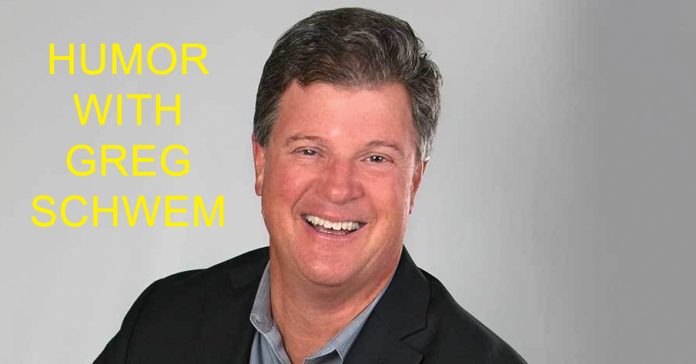
(Greg Schwem is a corporate stand-up comedian and author of two books: “Text Me If You’re Breathing: Observations, Frustrations and Life Lessons From a Low-Tech Dad” and the recently released “The Road To Success Goes Through the Salad Bar: A Pile of BS From a Corporate Comedian,” available at https://www.amazon.com/. Visit Greg on the web at https://www.gregschwem.com/. You’ve enjoyed reading, and laughing at, Greg Schwem’s monthly humor columns in Senior Living News. But did you know Greg is also a nationally touring stand-up comedian? And he loves to make audiences laugh about the joys, and frustrations, of growing older. Watch the clip and, if you’d like Greg to perform at your senior center or senior event, contact him through his website at https://www.gregschwem.com/)
Throughout the month of September, the University of Oklahoma Food Pantry will be competing with the University of Texas’s food pantry, the UT Outpost, to see which pantry can receive the most shelf-sustainable food.
The competition has been named the “Red River Food Fight” and the winner will be named the “Red River Food Fight Champion.”
Matt Marks, campus care coordinator and director of the OU Food Pantry, said they are hoping this competition will help both universities as they try to combat the above-average rates of food insecurity within each of the respective states.
“It’s a fun way to celebrate a historic rivalry,” Marks said. “There’s a lot of competitiveness on the football field, but we are coming together to combat food insecurity and hunger, which plagues both our states. Texas and Oklahoma are two of the hungrier states in our nation and this is a great way to come together to take steps to solve this problem. We’ve got a great relationship with the pantry down in Texas, and just had great conversations with them to bring this together and unite around a very heated game to try to take care of people within our communities.”
Royce Coleman, sophomore biochemistry major in the Dodge Family College of Arts and Sciences and OU Food Pantry associate director of campus engagement, said he began having conversations with UT last fall.
While there was immediate interest, the timeline was too near to effectively execute the drive. But this year, the timing was right.
“The initial goal of the competition was to utilize our historic rivalry and our extremely passionate fanbases toward benefiting both of our food pantries, which in turn would allow us to better provide for our students and staff,” Coleman said. “We are hopeful that the many fans of this rivalry (the greatest college rivalry in the nation, if I may say so myself) will join us in promoting this competition and help us combat the food insecurity that exists on our campuses.”
Valeria Martin, assistant director for basic needs at the University of Texas at Austin, said there was no hesitation when the OU Food Pantry representatives approached them.
“We were so excited when the OU Food Pantry team approached us with the idea to collaborate in a friendly competition for the benefit of our campus pantries,” Martin said. “Our goal for the Red River Food Fight is to raise awareness about UT Outpost in our community. Drawing on the rivalry and competition helps energize our campus around supporting UT Outpost and keeping the pantry stocked while making more students aware of UT Outpost as a resource.”
The winner of the Red River Food Fight will be announced on Oct. 7, the day of the Red River Rivalry football game. Boxes to donate canned goods and shelf-sustainable food to the OU Food Pantry have been scattered across campus; donations also may be made directly to the food pantry. Other items and monetary donations are always welcomed but will not go toward the competition.
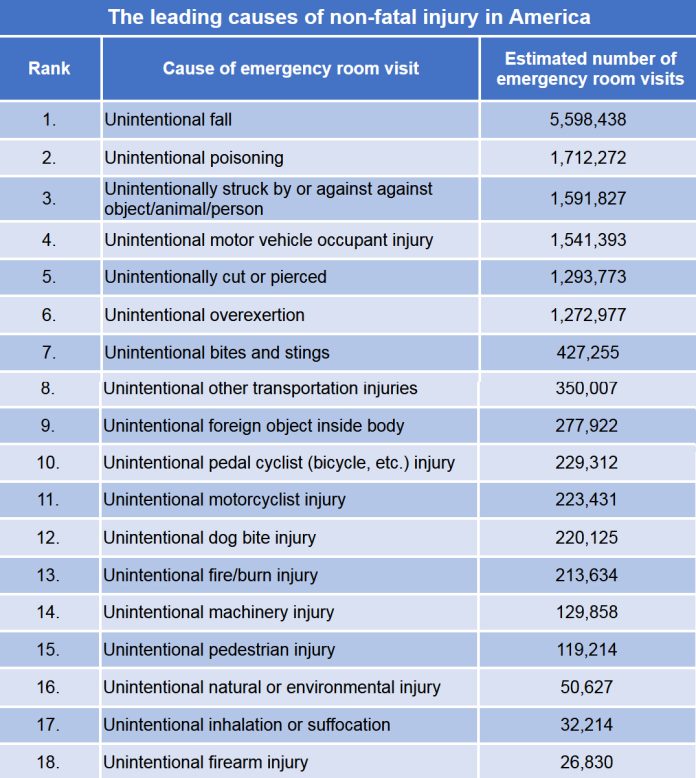
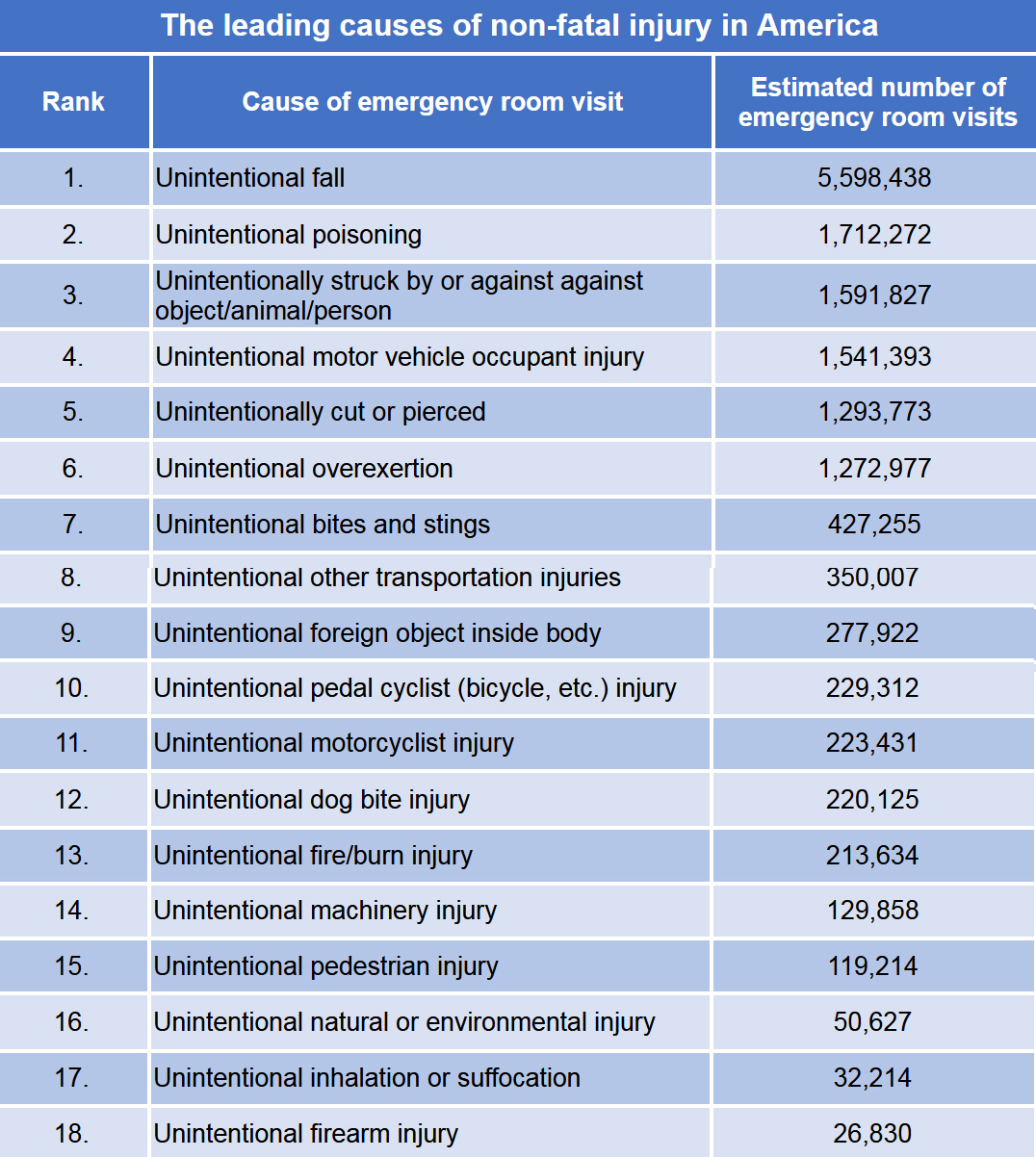
Unintentional falls are the most common, with an estimated 5,598,438 incidents yearly.
Unintentional poisoning came second, with approximately 1,712,272 incidents each year.
Unintentional firearm incidents are the least common, accounting for only 26,830 emergency room visits.
A new study reveals the non-fatal injuries that most frequently land Americans in the emergency room, with accidental falls being the top cause.
The analysis undertaken by experienced personal injury attorneys John Foy & Associates, used the latest data from the Centers for Disease Control and Prevention (CDC) to uncover the leading injuries prompting adults to seek emergency medical assistance. Unintentional falls are the leading cause of non-fatal injuries in America, resulting in around 5,598,438 ER visits annually across all genders and ages. This type of accident may occur due to circumstances like slippery, cluttered, or unstable walking/working surfaces. The second most common is unintentional poisoning, with around 1,712,272 individuals affected each year. From foodborne illnesses to drug overdoses, poisoning comes in many forms and represents one the largest ER risks nationwide. This category excludes the unexpected adverse effects of correctly administered drugs and bacterial illnesses like food poisoning. Unintentionally struck by or against takes third place and accounts for 1,591,827 visits each year. These visits typically involve incidents where individuals are struck by an object, animals or person, rather than a vehicle or machinery. They can occur in a number of circumstances, such as at a person’s workplace, while walking their dog, or rollerblading on the beach. Occupants of motor vehicles are fourth, with an estimated 1,541,393 visits each year. These accidents affect occupants of cars, pickup trucks, SUVs, vans, heavy transport vehicles, and buses and most commonly occur as a result of traffic accidents. Unintentionally cut or pierced is the fifth most common reason, accounting for an estimated 1,293,773 visits each year. Accidental incisions, slashes, perforations, punctures, and lacerations from household or occupational objects are common examples of this non-fatal injury. The sixth-leading cause is overexertion, which can result from activities like heavy lifting or intense workouts, and accounts for more than 1,272,977 yearly emergency department visits. Coming in seventh is unintentional bites and stings, causing around 427,255 emergency visits. This accounts for injuries such as snake and lizard bites, bee and wasp, scorpion stings, and even jellyfish stings. This also encompasses injuries involving penetration of the skin from plants or plant parts. Other unintentional transportation-related injuries come in eighth, with about 350,007 cases each year. These injuries include pedestrians injured while boarding transport, accidents involving power scooters, go-karts, streetcars, and even space transport. Presence of a foreign body is the ninth leading cause, with around 277,922 yearly incidents. Such incidents could involve accidental ingestion or insertion of foreign objects, such as toys, pebbles, or dirt, into the eye or other orifices of the body.
Rounding off the top ten is unintentional pedal cyclist injuries, with 229,312 incidents. This includes accidents involving bicycles and similar transport modes, such as losing control, colliding, or other traffic-related events on public roads.
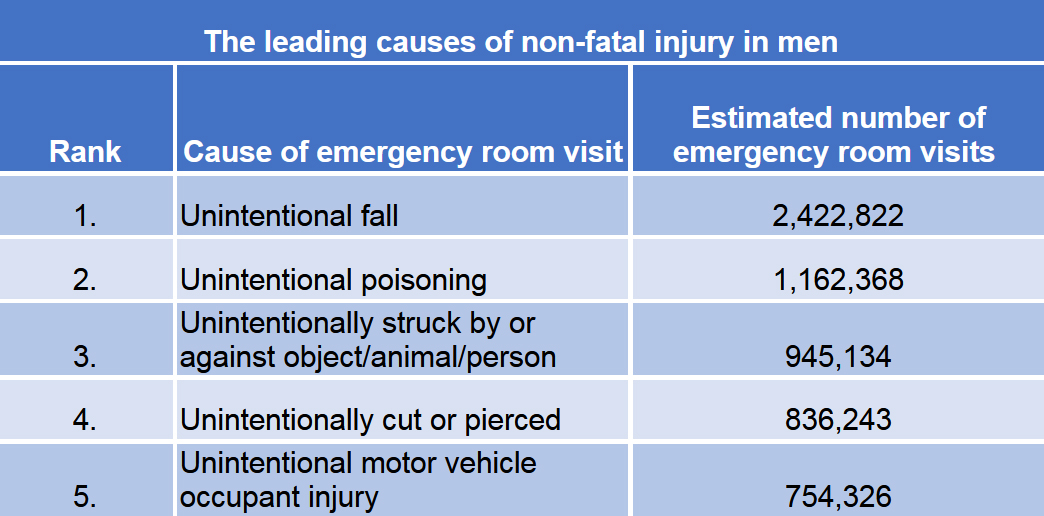
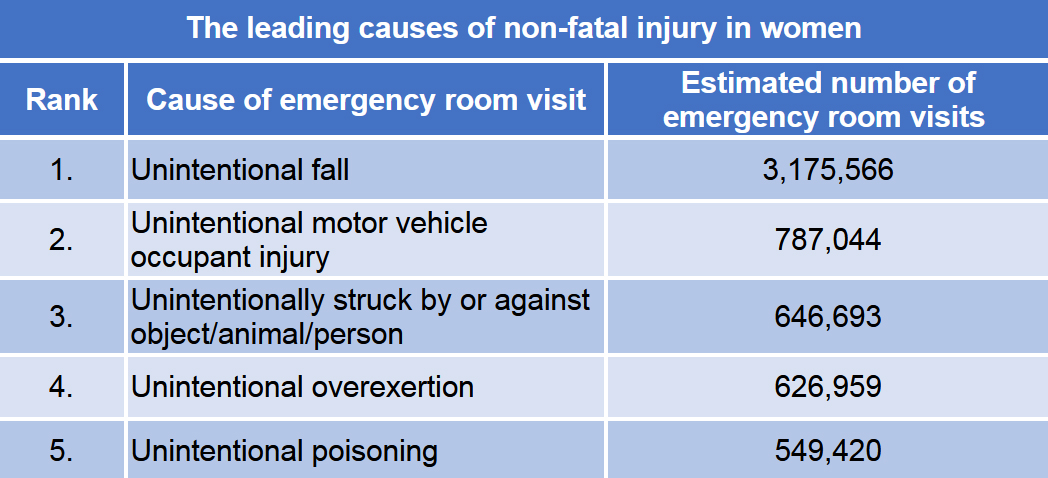
“The data provided further important insights, when looking at sex differences between male and female ER visits. For instance, women are more frequently victims of dog bites than men, which could be in part due to the fact that more than 70% of dog walkers are female.
“Additionally, the data suggests that occupants of larger vehicles, such as cars, trucks, or buses, are 590% more likely to sustain non-fatal injuries than motorcyclists.
“It’s also noteworthy that overexertion alone results in more emergency room trips than dog bites, pedal cycle incidents, and bites and stings combined.”
About John Foy & Associates:
John Foy & Associates helps victims of catastrophic injury, wrongful death, workplace accidents, and defective drugs. The firm has been serving the community for over 25 years, helping their clients secure the compensation they deserve.
Sources:
Centers for Disease Control and Prevention
Methodology:
The research utilized the latest data from the CDC to identify the leading causes of non-fatal injuries among American adults aged 18-85+. Child-specific injuries were excluded to prevent skewness. Injuries were categorized and ranked based on the estimated number of emergency room visits caused. The data was then cleaned to make it easily digestible, with ‘unknown’ or ‘unspecified’ injuries removed. Patterns, like gender differences in injury types, were also investigated to provide insightful conclusions.