Wednesday, May 13, 2026

Vampires: Sink your teeth into the origins of this Halloween legend

0
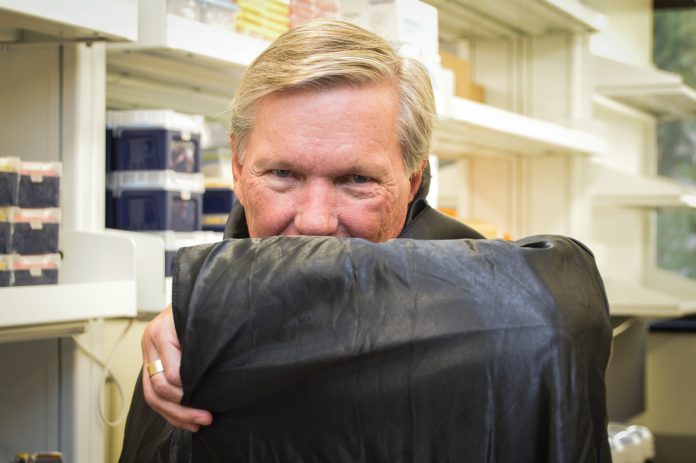
Oklahoma Medical Research Foundation President Stephen Prescott, M.D., sinks his teeth into the medical conditions behind vampire legend.

Vampires are as deeply embedded in pop culture as their fangs are in the necks of their victims.
But before vampires became the darlings of TV and movies, their legends haunted folklore for centuries. According to Oklahoma Medical Research Foundation President Stephen Prescott, M.D., the origin of these creepy beliefs likely rises from a legitimate medical basis: disease.
“When a large group of people would die in a village, the true villain wasn’t a pale-skinned blood-sucker. It was something even more terrifying: microorganisms,” said Prescott, a vascular biologist and physician. “Vampires were often used as an explanation for diseases like smallpox or tuberculosis and other conditions that couldn’t be diagnosed at that time.”
This resulted in a huge swell of belief in vampires in the Middle Ages in Europe, as fast-moving diseases with no explanation swept through towns and villages.
“Without formal educations and modern science to clarify the situation, people grabbed onto something that made sense to them,” said Prescott. “People struggled with causes for illness and death long before we had medical research or modern science to make heads or tails of it.”
The most common physical depictions of vampires share a number of similarities with people who suffered from a rare group of blood diseases called porphyria.
“There are multiple manifestations, but in most cases, people are extremely light sensitive,” said Prescott. “A lot of them couldn’t tolerate the sun at all without severe blistering and deformities, enough to cause them to lose their fingertips or produce facial scarring.”
In addition, the facial mutilation often caused the skin to tighten and pull back, resulting in the appearance of fang-like teeth.
“There were bizarre things going on: They had abnormally long teeth, they slept during the day and came out at night because they couldn’t take sunlight,” said Prescott. “It serves to reason that this would play a role in the origin of the vampire legend. People would have seen them around and drawn their own conclusions of what was happening.”
Some of scarring and physical characteristics were also observed in exhumed corpses of the recently deceased, furthering the rise of the legend in Europe. Natural decay caused the lips and gums to lose fluid and contract, creating (or further exaggerating) the illusion of fangs. The skin also contracts in other parts of he body, causing a claw-like appearance to fingernails and longer hair.
“Vampires came from needing an explanation for why bad things were happening, and blaming disease and death on something that comes out at night and sucks your blood isn’t actually that far off,” said Prescott. “Just look at mosquitoes.”

Community Hospital receives 5-star rating

0

hpi-interiors-063web
hpi-interiors-008web
by Bobby Anderson, Staff Writer
Unless you’ve been living under a rock you’ve realized that hospitals are being scrutinized by the Centers for Medicare and Medicaid Services like never before.
Care standards such as core measures are by now commonplace and improving Hospital Consumer Assessment of Healthcare Providers and Systems scores are keeping hospital executives up at night.
But for the first time this year hospitals in America who excelled in these areas were eligible for the coveted CMS five-star rating.
Community Hospital CEO Debbie Kearns, RN, recently learned her hospital received five stars.
“It’s pretty exciting,” Kearns said. “It reflects the hard work and commitment all of our team members have to providing safe, quality care.”
Community joins select company in Oklahoma with only Oklahoma Heart Hospital, McBride Orthopedic Hospital and Oklahoma Surgical Hospital in Tulsa earning five-star status.
“Community Hospital is committed to providing safe, quality care for every patient,” Kearns said. “Our physicians, nurses and other clinicians are committed to continually improve care. We appreciate the trust patients continue to place in our ability to meet the highest standards of care and are pleased that Community Hospital has achieved the top rating of five stars.
“The five-star rating is a direct reflection of the hard work and dedication of our team members and shows their true commitment to providing our patients with the best experience possible.
Our work doesn’t stop with this ranking, instead it serves to reinforce our mission of becoming the premier hospital in the country specializing in surgical care.”
The Overall Hospital Quality Star Rating is designed to help individuals, their family members, and caregivers compare hospitals in an easily understandable way. Over the past decade, the Centers for Medicare & Medicaid Services (CMS) has published information about the quality of care across the five different health care settings that most families encounter.
The new Overall Hospital Quality Star Rating summarizes data from existing quality measures publicly reported on Hospital Compare into a single star rating for each hospital, making it easier for consumers to compare hospitals and interpret complex quality information.
The methodology for the new Overall Hospital Quality Star Rating was developed with significant input from a Technical Expert Panel (TEP) and refined after public input.
CMS will continue to analyze the star rating data and consider public feedback to make enhancements to the scoring methodology as needed. The star rating will be updated quarterly, and will incorporate new measures as they are publicly reported on the website as well as remove measures retired from the quality reporting programs.
For Kearns and her hospital, which includes a new campus in North Oklahoma City, the five-star ranking was validation of what she sees every day.
“Our culture in our organization is one of hiring the best staff, the best team and to have the best group of doctors,” Kearns said. “Our goal of being a premier surgical hospital, if you don’t continue to maintain those quality initiatives and focus on the customers you can’t maintain that rating.”
Kearns has been notified that Community will receive the quarterly five-star rating again for the next quarter.
“Every employee has to be committed to providing that five-star experience for our customers,” Kearns said. “We don’t have any opportunities to sit back and provide less than an exceptional experience. When we hire employees we set that expectation and raise that bar really high.”
CMS collects the information on these measures through the Hospital Inpatient Quality Reporting (IQR) Program and Hospital Outpatient Quality Reporting (OQR) Program.
Hospitals are only assessed on the measures for which they submit data. Some of the measures used to calculate the Overall Hospital Quality Star Rating are based only on data from Medicare beneficiaries and some are based on data from hospitals’ general patient population, regardless of payer.
“Today, we are taking a step forward in our commitment to transparency by releasing the Overall Hospital Quality Star Rating,” CMS said in a statement. “We have been posting star ratings for different facilities for a decade and have found that publicly available data drives improvement, better reporting, and more open access to quality information for our Medicare beneficiaries.
“These star rating programs are part of the Administration’s Open Data Initiative which aims to make government data freely available and useful while ensuring privacy, confidentiality, and security.”

Rat Pack lives on in Moore

0
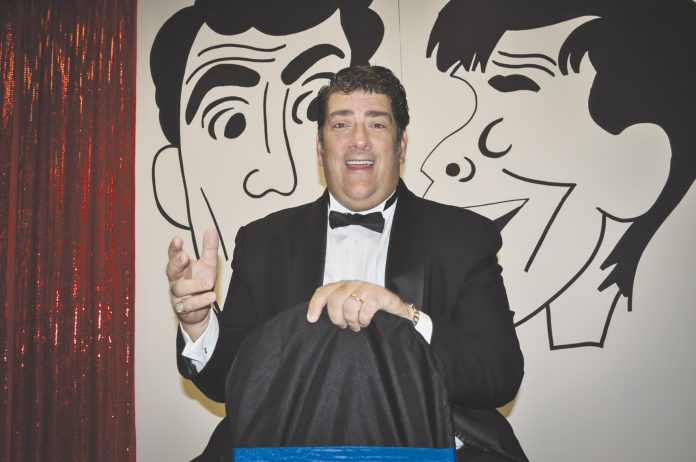
Michael Cooper has been playing Dean Martin for more than a decade at Oklahoma’s only full-time dinner theater, the Yellow Rose Theater, in Moore.

by Bobby Anderson, Staff Writer

It’s been more than a decade since legendary entertainer Dean Martin passed away.
But for a few hours every Friday and Saturday night his infectious spirit and joy are alive and well inside the Yellow Rose Theater in Moore.
Impersonator Michael Cooper and a troupe of performers breathe new life into characters like Martin, Jerry Lewis and members of the Rat Pack at Oklahoma’s only full-time dinner theatre.
Cooper has been portraying Martin for 14 years now in what began humbly as a ministry outreach of the Revival for Christ Club.
Christian-based original plays and dramas came in the early days and are still scattered among the offerings.
A big fire destroyed the area that is now the Yellow Rose Theatre nearly 15 years ago.
During the rebuild the church’s contractor ran off with much of the repair money.
So guys like Cooper would work their regular jobs during the day and then come to the church at night to make repairs.
The church’s then-pastor asked what it would take to do a Rat Pack show.
Cooper wasn’t sure.
“We didn’t look like them, didn’t sound like them and didn’t act like them,” Cooper said. “We could just sing because we were praise and worship leaders. We decided ‘let’s see if we can’t ride this thing.’”
So Rat Pack boot camp began. The group read every book, watched every movie and read every snippet online about the famous entertainers.
They finally nailed it.
The group now travels around the country, stopping at Carnegie Hall and Hard Rock Casino.
Fifties, sixties, seventies shows began to pop up as did Motown and Country performances.
BECOMING DEAN
“I’ve read lots of books and watched lots of footage and just luck I guess,” Cooper said of becoming the persona of Dean Martin. “The first couple years I wasn’t very good.”
The group is now one of the four most recognized Rat Pack groups in the country.
“Now it’s just the experience of having done it thousands of times,” Cooper said. “I can fire up and do it any time. Some nights are better than others. I’ve been doing it for so long now it’s just natural.”
Cooper channels his inner Dean Martin on the weekends and during the the group’s most recent show run of The Colgate Comedy Hour, which featured standup, skits and original Colgate Comedy Hour commercials in between.
And it’s all done while guests are dining with friends or soon-to-be friends.
Executive Chef Kim Johnson handles the cuisine. A catering company also operates out of the theater, which can be rented during the holidays.
“The food is phenomenal. We’ve had people ask for recipes,” Cooper said. “When we started the dinner theater we traveled all over the country. One thing we knew was we would have good food. People aren’t going to get a sliver of shoe-sole meat, a slap of mashed potatoes and some corn on a plate. We give big portions.”
GIVING BACK
The shows are indeed a ministry for Cooper and his ensemble.
After every show Cooper and the performers greet the guests as they leave the building.
One night a woman came up with tears in her eyes.
“My husband has Alzheimers,” she said, her voice cracking. “Once the music started I had my husband back.” I danced with him. He recognized who I was.
We were all in here crying. Literally, once they got back in the car he was far away. But for two hours she had her husband back.
“Even though you might not have a Bible in your hand or be in the sanctuary we’re able to minister to people and that’s why we do it.”
All of the recent skits and standups are versions of the skits that the original group did on the Colgate Comedy Hour.
“Some of the humorous parts of it were because it was Dean and Jerry,” Cooper said. “As much as we try to portray them we’re not them. It’s almost harder for us than it was for them.”
“We knew from the beginning that we had them. We knew this was going to be a viable show.”
I laughed so hard my throat hurts. I haven’t laughed this much in years.
Both are just a sampling of the comments the group gets after every show.
Cooper will be busy again during the holidays.
For Christmas the group will put on Dean’s Very, Very, Very Merry Christmas. Jerry Lewis will be a part and possibly Frank Sinatra and Jimmy Durante thanks to Cooper’s friends.
But three Tuesdays and one Saturday in December will be dedicated to the Sharon L. Vanover memorial dinner.
Qualified families from Moore, South Oklahoma City and Lawton are treated to a show and each child receives a Christmas present.
It’s all about showing love for people.

What are you looking forward to this holiday season?

0

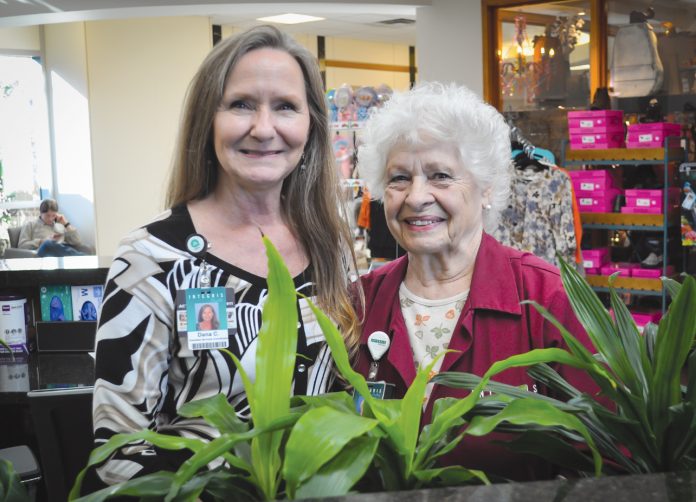
What are you looking forward to this holiday season? Integris Canadian Valley Hospital volunteers

Having my family come from Washington State and St. Louis to visit. That will be the highlight.  Carolyn Furgeson

A visit from Santa Claus would be wonderful. Becky Horn

My son lives in OKC and I’ll be here with him and his family. Eleanor Fuller

My family is having a reunion in Colorado so there will be 14 of us traveling to Pueblo. Morna Martinez

Jack Fain to retire from Oklahoma Forestry Services

0

Oklahoma Forestry Services announces the retirement Forest Ranger Jack Fain on November 1, after 29 years of service. Fain, who is based out of Oklahoma Forestry Services’ northeast regional office in Tahlequah, has assisted on wildfire suppression across the state as an engine boss.
“Jack is an extremely competent leader who always knows how to improve situations and prevent accidents in hazardous wildfire conditions, said George Geissler, director, Oklahoma Forestry Services. “We appreciate Jack’s service and will certainly miss his wildland firefighting experience and expertise. We wish him well.”
A cattle rancher in the Chewey community, Fain’s retirement plans include ranching and helping his children and friends with their business ventures as needed.

New Direction brings dialysis treatment home

0
Leslie Whiles, Oklahoma City’s New Direction Home Dialysis Administrator giving chronic dialysis patients home option.

by Traci Chapman
Staff Writer

Chronic dialysis is difficult for any patient; when that condition is compounded by a wound or tracheostomy, it’s even worse – and for many families those conditions could mean separation and loss, because local treatment options have been so limited.
Not so anymore, as Oklahoma City’s New Direction Home Dialysis brings treatment to the heart of the patient’s life, in the process making it possible for them to stay with their families and continue their lives, in a way never before possible.
That means people who before had to go to Texas, to Ohio or to some other far-flung medical facility for long-term, frequent dialysis treatments now can receive those services at home, where they can continue their day-to-day routine and remain with the family and friends they love.
“The bottom line is outcomes, it’s quality of life, it’s being able to keep families together,” New Direction Administrator Leslie Whiles said. “For a patient to have to go far away, to another state in many cases, is such a hardship – physically, financially, emotionally.”
“For example, we had a patient who was forced to go to Cleveland for treatment, and she was at the end of her rope – she didn’t even feel like it was worth it because it was just too much for her to bear,” she said. “No one should ever have to go through that, and we want to make sure no one has to.”
Whiles knows a lot about dialysis, with almost 30 years in the field. As administrator for Sooner Acute Dialysis, Whiles sees every day how the right program can make a difference in the lives of patients needing inpatient services; with New Direction, Whiles strived to bring the same level of care – and caring – to those who can take part in a long-term treatment option at home.
That’s why finding the right nurses is paramount, Whiles said. As the company grows – New Direction’s staff of three recently grew to six nurses – it’s important to look not just at medical skills, but also at what lies underneath.
“Because we are independent, we are able to focus solely on taking care of our patients, knowing them, knowing about their lives and their families,” Whiles said. “Of course, it’s about care and nursing, but there’s also the deeper ability to bond with people who are going through a very difficult experience.”
Home dialysis means freedom to New Direction’s patients, whether they’re 20 or 80 – and the company has patients of all ages, backgrounds and temperaments. They might be retired, a student or someone working to support their family while undergoing regular treatments. However they might be different, what Whiles and her staff have seen with all was the benefit of home dialysis.
“There is such a transformation because our patients can take control of their lives again, they aren’t isolated in treatment,” Whiles said. “It removes much of the stress and makes their treatment more effective.”
New Direction offers both Peritoneal and Home hemodialysis treatments. Both have more advantages than allowing patients to take treatments at home, Whiles said.
“There are fewer dietary restrictions and we’ve seen less negative side effects like nausea, cramping, weight gain and vomiting,” she said.
A benefit of Peritoneal dialysis, or PD, is that patients can have treatments, even at work and on vacation, Whiles said. Home hemodialysis – HHD – is broken into traditional and short daily treatments.
Traditional patients usually undergo three four-hour, or more, weekly sessions, while short daily HHD features shorter treatment times more often.
“With that, we would probably see two to three hours per session four to seven times a week,” Whiles said. “It really is a matter of choice for the patient.”
While New Direction nurses are an integral part of each patient’s care, so too are each individual’s “care partners,” family members or friends who, along with the patient, are trained on dialysis equipment use and care, as well as other ancillary information.
“Care partners can be involved in setting up the machine and supplies, inserting dialysis needles, helping to record medical information and post-dialysis care and machine maintenance,” Whiles said.
“It’s very important that the individual have a support system in place and they need to have a caregiver, or partner, who can go through the competency evaluation and who is willing to do the work involved in successful treatments,” Whiles said. “Without that, home dialysis really isn’t a viable option.”
But, for those who can take part, home dialysis can mean a whole new life just waiting around the corner.
“It’s important for us to do all we can – we’re an Oklahoma company and we’re going to take care of our people,” Whiles said. “That’s what we’re meant to do, what we’re dedicated to doing.”

SSM Health, OU Medicine Unite to Create a Comprehensive Integrated Health Care Delivery Network

0

Working in partnership to enhance quality of care for all Oklahomans

To best serve the current and future health care needs of Oklahomans, SSM Health’s St. Anthony Hospitals and Physicians Group are partnering with the University of Oklahoma (OU) and the University Hospitals Authority and Trust (UHAT) to create a premier health care network. This combined network will partner with physicians to not only deliver exceptional health care, but also to advance transformative clinical research and provide innovative educational experiences for future physicians and health professionals.
“This is an exciting time for health care in Oklahoma,” said William P. Thompson, president and CEO, SSM Health. “As a part of SSM Health, the St. Anthony Hospitals and St. Anthony Physicians Group have a long history of providing high-quality, compassionate and personalized care. By coming together with OU Medicine, we will build upon our collective heritage of serving this community, while also striving to ensure that Oklahomans receive exceptional care for years to come.”
The combined resources of OU Medicine, UHAT and SSM Health include more than 23 Oklahoma hospitals and affiliates, including OU Medical Center, The Children’s Hospital and OU Medical Center Edmond, as well as St. Anthony Hospital in Oklahoma City, Bone and Joint Hospital at St. Anthony, and St. Anthony Shawnee Hospital.
As a part of the integrated delivery network, OU Physicians and St. Anthony Physicians Group, with a combined total of more than 1,100 physicians and providers, will work together to share best practices and clinical expertise with the goal of best coordinating patient care.
“Today, we begin a new era, focused on further elevating patient care, clinical research and health professions education for the benefit of all Oklahomans,” said OU President David L. Boren. “We will continue to bring Oklahomans the best health care throughout the state with the ongoing support of University Hospitals Authority and Trust and by combining OU’s highly respected Health Sciences Center with a leading health system, SSM Health.”
This new network brings together organizations that each represent more than 100 years of caring for Oklahomans. Established in 1898 as the first hospital in Oklahoma territory, St. Anthony Hospital’s community-based network of services includes St. Anthony Physicians Group as well as a network of 17 rural hospital affiliates. Founded just two years later, in 1900, the OU College of Medicine and its faculty physicians began training future doctors and conducting leading medical research. UHAT has supported the state’s teaching hospitals in Oklahoma City since 1993, helping to build state-of-the-art medical and research facilities.
“We are excited to open this new chapter with SSM Health,” said Mike Samis, chairman of the University Hospitals Authority and Trust. “During its history, the Trust has invested in health care in Oklahoma to advance the mission of our state teaching hospitals, helping to provide quality care to patients and train the doctors of tomorrow. We are appreciative to our HCA colleagues for a nearly 20-year relationship, during which we have expanded our range of services and enhanced our quality of care. Now, we look forward to continuing our role in collaboration with the University of Oklahoma and SSM Health.”
UHAT and SSM Health are committed to making significant investments in this new integrated network to ensure patients and caregivers continue to have access to the latest technology and state-of-the-art facilities. A capital plan is already under development and includes a new patient tower at OU Medical Center.
SSM Health and UHAT will share governance and financial responsibility in the network, with SSM Health managing the day-to-day operations. The transaction should be finalized within the first half of 2017, pending regulatory and other approvals. No state-appropriated funds will be used to create the new network.
The OU Medical System is currently managed by HCA, an investor-owned company based in Nashville. UHAT and HCA plan to end their relationship within the first half of 2017.

Public Health Officials Warn of an Early Start to the Influenza Season in Oklahoma

0

The Oklahoma State Department of Health (OSDH) began surveillance for seasonal influenza early this fall and is detecting laboratory confirmed cases of influenza among Oklahomans. In addition, there have been 14 influenza-associated hospitalizations since September 1, 2016, a total that is concerning at this point in the season. Cases of influenza illness have been geographically spread across the state and have occurred among people of all age groups.
Each week, a network of voluntary medical facilities and hospital laboratories report the number of patients that have been seen for influenza-like illness and the proportion of influenza tests that are positive for flu. Some positive samples are forwarded to the OSDH Public Health Laboratory for confirmation and for determining the type of infecting influenza virus strain. All hospitals and healthcare providers are required to report influenza-associated hospitalizations or deaths to the OSDH.
Symptoms of influenza usually consist of a sudden onset of fever, body aches, headache, sore throat, cough, and fatigue. Most persons affected by the flu require bed rest for 4-7 days to recover fully. Others may be at risk of serious complications of the flu, such as pneumonia, secondary bloodstream infections, or heart problems leading to hospitalization or even death.
To protect against the flu, an annual flu shot is recommended for everyone 6 months and older. Vaccination is especially important for persons at high-risk for severe complications from influenza infection including children less than five years of age, persons age 65 years and older, pregnant women, and persons with underlying medical conditions. Flu vaccination not only protects pregnant women, but also protects their babies for up to 6 months before they are old enough to be vaccinated. Influenza vaccination is safe during pregnancy, after delivery, and for breastfeeding women.
The importance of protecting yourself and those close to you by getting immunized cannot be overstated.
“If you haven’t done so already, now is the time to get your flu shot before influenza activity is elevated,” said OSDH State Epidemiologist Dr. Kristy Bradley. “While the flu shot does not completely prevent all cases of influenza illness, many studies have shown that it greatly reduces the risk of developing severe complications from influenza infection such as hospitalization and death, as well as shortening the duration of illness among people who got the flu vaccine compared to those who did not.”
In addition to getting your flu shot, the OSDH reminds you to follow these respiratory virus illness prevention tips:
Practice frequent hand hygiene using soap and water, or alcohol-based hand gels or wipes when hands are not visibly soiled
Make “respiratory hygiene” a habit, including use of tissues to cover coughs and sneezes, then disposing of them and performing hand hygiene right away. When tissues are not readily available, sneeze or cough into your sleeve — never your hands
Stay home from work, school, and other public places if you are sick with the flu.
Visit flu.health.ok.gov for the Flu View updates posted every Thursday at 10:00 a.m.

Special to SN&L: I want to be Tommy Howard

0

By: William McDonald/Author/Old Friends (Endless Love)
I want to know what it feels like to say, “I am Tommy Howard. I am 76 years old. I’ve lived in a 1997, 33-foot Airstream Class A motor home for 15 years and camped my way through 55 national parks, 49 states and 31 countries.”
I really want to say that.
But I can’t.
Because I can’t dance.
Tommy Howard can dance.
Like popcorn over a hot fire.
So I’m out. I cannot say, “I am Tommy Howard.”
But I can say I know him.
I can say I know of the time he white-knuckled his way down an Andes mountainside behind the wheel of a six-ton runaway Winnebago. I can say I know of the time he hiked up the side of an active volcano in Guatemala and I know of the time he woke up in the middle of a civil revolution in Peru.
I tell him it’s pretty amazing that he came out of all that alive.
“Life is a dance,” he says, waving his hand in the air like he’s shooing a fly. “Just keep moving your feet.”
He does a little North Carolina two-step.
Tommy Howard talks about the stars like they’re a thousand angels glowing in the dark. He talks about meeting a whale in Mexico that told him the meaning of life.
“So, what is the meaning of life?” (I had to ask).
“Beats me. I never learned to speak whale.”
He talks about a woman in his life that is? was? so special that, “I’d walk through hell wearing gasoline pajamas to get to her.”
He talks about beating cancer like it was a nuisance that had to be dealt with.
He drives a 1973 Jaguar XKE.
He hikes where most of us would be afraid to walk.
He has a glass of red wine every night.
He’s 76 years old.
He’ll dance till the music stops.
He’s just finished writing his autobiography, An Unexpected Journey. One reviewer spoke for a lot of us when she wrote:
I would read three or four pages of Tommy Howard’s book and then gaze off into space remembering and recalling those days in my past. The adventure, the excitement of waking up each morning to the wonders of what was going to happen next. And I cried and I mourned the death of my own hopes, dreams and expectations. Then I would pick up Tommy’s book and dream again.
I hear people say, “You’re never too old.”
I hear Tommy say, “You’re never old.”
I am privileged to know Tommy Howard, the 76-year old man who says life is a dance.
Years ago, another friend told me I would never get old if I would always remember to dance to the music of the child in my heart.
Maybe that’s the secret of life?
Learn to dance.

William McDonald is an Emmy Award winning writer and published author who, for more than 30 years, specialized in emotional communication in the broadcast industry. For several more years, he was a caregiver in assisted-living homes, memory-care homes and private homes, and it was there that he met many of the old friends who inspired these stories. He writes full time from his home in Colorado. Available at: www.oldfriendsendlesslove.com

A place to call home

0
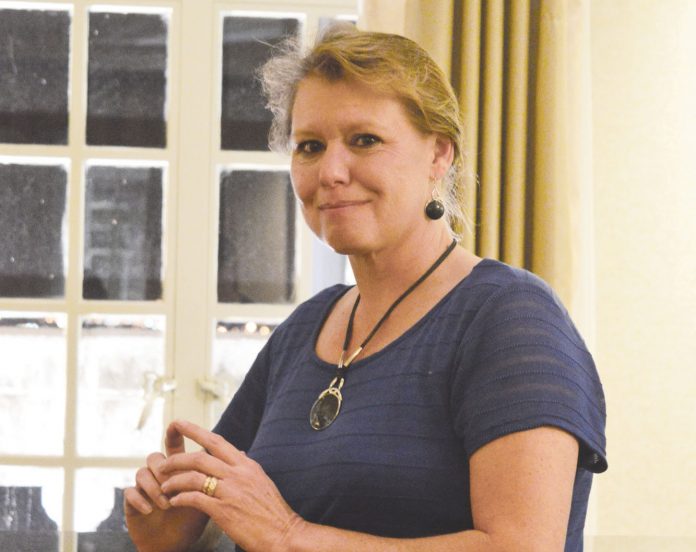
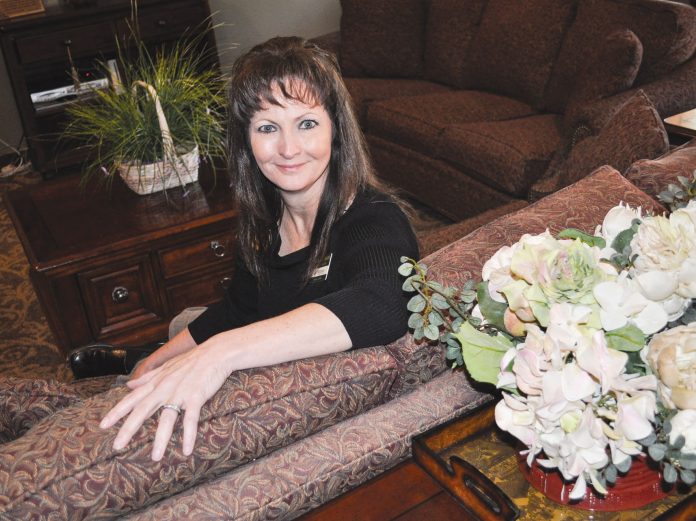
Pattie Waggoner, RN, BSN loves the lifestyle she and her staff provide at Emerald Square Assisted Living.

by Bobby Anderson
Staff Writer

Pattie Waggoner, RN, has put her husband on notice, the Yukon Denali with 150,000 miles has got to go.
A new Suburban will soon be in the Waggoner garage. With seven grandkids Waggoner needs the space.
But aside from the space, Waggoner needs something a little more reliable as she burns up the miles each month as the executive director at Emerald Square Assisted Living in Oklahoma City.
Waggoner is closing in on three years as executive director and most of those miles have come during that time.
Emerald Square offers both independent and assisted living options.
The State of Oklahoma requires a registered nurse consultant do quarterly reports, all admission assessments and sign off on the monthly orders for assisted living residences. Waggoner does all those duties for Emerald Square as well as a sister community, Willowood at Mustang.
So she stays busy?
“All the time,” she said.
But in the midst of the hustle and bustle, Waggoner makes sure her staff takes care of the little things. If the paper doesn’t come that morning a staff member is dispatched to get an armful.
If a resident runs out of an item it’s no trouble to run to the store and pick it up.
That’s why residents from 60 to 103 call Emerald Square home.
And even with her hectic schedule it’s one of the joys Waggoner takes from her role.
“Because they are still in a time of the life that was simple,” Waggoner said. “We’re so fast-paced now that it’s pleasant to come around these folks who are OK with sitting down and having a nice conversation or just saying something very pleasant when they come by.”
“They still have a very good religious foundation to them and that’s very comforting and pleasing to us the staff.”
Waggoner relies heavily on Lesa Mercier, LPN, whom she’s worked with for years and who takes care of the medical needs for the residents.
“She’s extremely good at what she does and you have to be in this business,” Waggoner said. “She’s the major clinical person. We know how each other is going to think about different situations. You have to know and be ready for interventions to anything that happens.”
Waggoner started off cooking in a nursing home and doing the laundry. She earned her certified nurses assistant certificate and then become a medication assistant.
From there she became an LPN followed by an RN and then administrator school.
Her daughter is going to LPN school at Canadian Valley Technology Center at Redlands Community College.
“It’s always been the love of helping the elderly,” Waggoner said.
When the Waggoner grandchildren would ask what nanna did at work she always enjoyed telling them she took care of grandmas and grandpas.
“They just think that must be the coolest job ever and it really is,” Waggoner said. “It’s like having a whole group of loving people here to care for.”
In the Waggoners’ spare time they farm 2,000 acres of wheat. But the majority of her time is spent with the residents at Emerald Square.
“I want them to come here and I want them to have the best quality of life they can have,” Waggoner said. “It’s a simple life for them and it’s not hard. That’s really what they want.”
Before becoming an administrator, Waggoner was a surveyor for the state going into residences and making sure everything was ship shape.
But before all that she was a nurse. With 25 years in nursing Waggoner knows it’s all about caring for people.
“I think they enjoy that we are always available for them so we’re not so tied up with business,” Waggoner said. “I always have time no matter what. I’ll make time for them even if there’s other responsibilities on my shoulders. When they feel like a problem it’s a big thing for them. “They honestly know we’re going to take care of everything for them.”
“Our main focus here is care.”
That was abundantly clear last winter when the power went out. Instead of going home to their families Waggoner and Mercier spent the night roaming the halls with flashlights to make sure everyone was OK.
The power was off for more than 24 hours without an incident as more than 70 people spend the night at Emerald Square.
“If it’s the call of duty we’re going to be there,” she said.

Social

0FansLike
0FollowersFollow
0SubscribersSubscribe