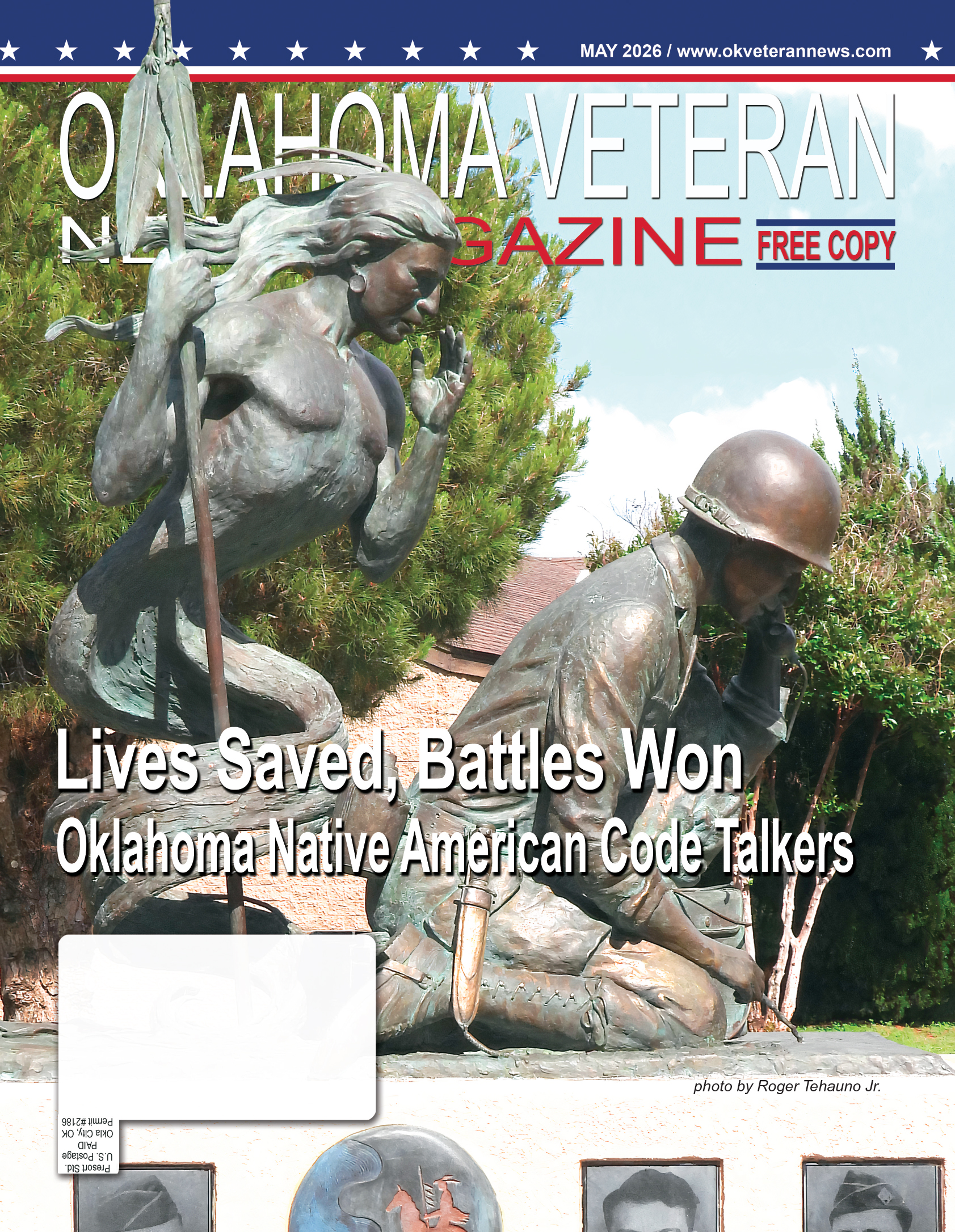

Lives Saved, Battles Won – WWII Oklahoma Native American Code Talkers
A Select Group of Men
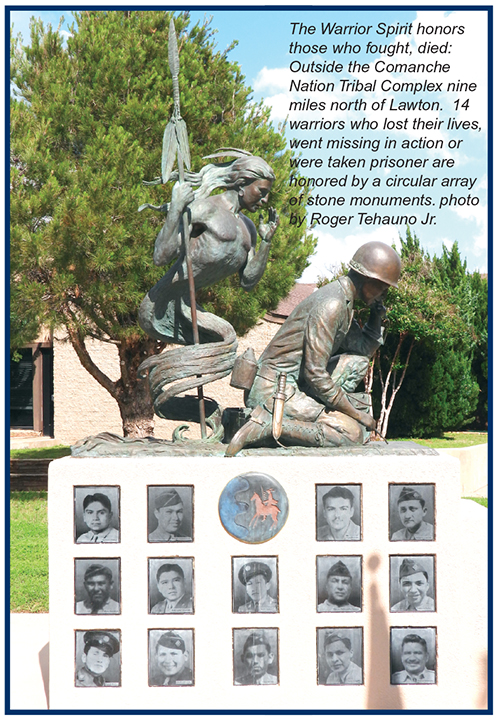
Of the 38 federally recognized American Indian tribes headquartered in Oklahoma, five Nations: Comanche (17 men), Pawnee (9 men), Choctaw (4 men), Muscogee/Creek-Seminole (3 men), and the Kiowa Tribe (3 men) provided a total of 36 Code Talkers, sometimes called “Telephone Talkers.”

Real-Time Communications
Dr. John Curatola, Senior Historian at the National WWII Museum, explained that communications operated at a tactical level and the soldiers were usually dispersed throughout platoons and companies. He said code talkers operated the radios, speaking their tribe’s language or in codes.
“And so that way they would be communicating with their adjacent units or maybe to the battalion in the back, sharing information.” Curatola noted that such messages included
intelligence, ammunition levels, supply status and enemy positions-anything useful during combat.
Comanche Deployed to Europe
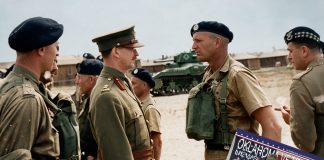
Comanche soldiers were assigned to the Fourth Infantry Division’s Fourth Signal Company at Fort Benning, Georgia, receiving phone, radio, Morse code, and semaphore training. Dr. William Meadows, Professor of Native American studies at Missouri State University, an author of seven books about American Indians, described the Comanche’s training and service in “The Encyclopedia of Oklahoma History and Culture.”
“In August 1941 they were placed under Lt. Hugh F. Foster to develop an unbreakable
Comanche-language code. Foster provided approximately 250 specialized military
terms for which the Comanches developed coded equivalents.” Training was complete
by October 30, 1941.
“Thirteen Comanche Code Talkers landed at Utah Beach during the Normandy
invasion in France. Maintaining wiremessages via field telephone and radio, they served in France, Luxembourg, Belgium, and Germany. Their service included important battles at Cherbourg, St. Lo, Paris, the Siegfried Line, the Huertgen Forest, and Bastogne. Although several were wounded in action, none were killed. The Comanche code was never broken.”
A Life of Service Beyond War
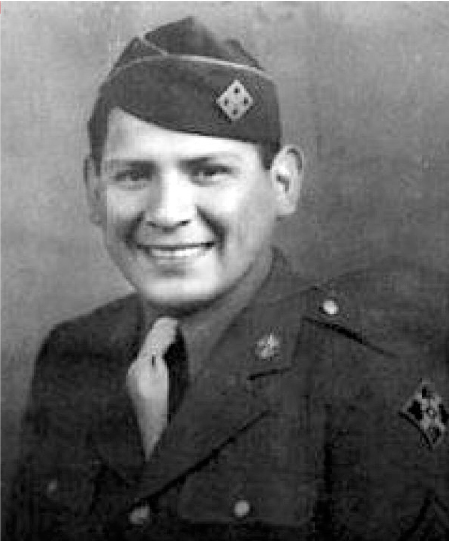
Meadows profiled Corporal Forrest Vernon Kassanavoid, a Comanche Code Talker born March 30, 1921, and died at the age of 75. Wounded by shrapnel in WWII, he received the Purple Heart. He became the first American Indian to graduate from Cameron Junior College under the G.I. Bill in 1947 and later attended Oklahoma A&M College. After the war, Kassanavoid enlisted for six years in the Oklahoma Army National Guard as a staff sergeant. He also worked as a private military supplier for the U.S. government for four years and with the U.S. Postal Service for 28 years. Later, he returned to Indianola, serving as a committeeman for the Comanche Business Committee.
Courage Under Fire
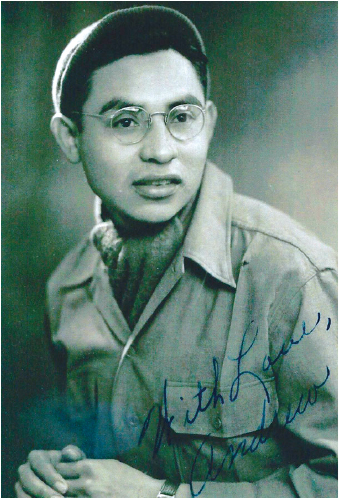
The Choctaw Code Talker Association identified four Choctaws who served in the European Theater: Schlicht Billy, Forreston Baker, Davis Pickens and Andrew Perry. Pickens and Perry were killed in action. Army 2Lt. Schlicht Billy received the Silver Star and the Purple Heart while serving with the 45th Infantry Division. His friend, Davis Pickens, was the Choctaw on the other radio and was killed in action. Billy led an attack on the Siegfried Line in Germany on March 17, 1945, becoming the first soldier to reach a German-held pillbox and toss in a grenade. During the battle, Billy was severely wounded. His actions earned him the Silver Star.
Kiowa Tribe Honored
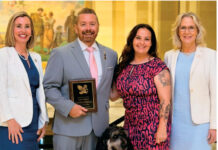
At the 2025 Oklahoma Military Hall of Fame banquet, three Kiowa Code Talkers were inducted posthumously: Private First Class (PFC) Leonard “Red Wolf” Cozad, Sr., PFC James Paddlety, Jr., and Private John Tsatoke. They were assigned to the 689th Field Artillery, XX Corps, in the European Theater.
Chairman Lawrence SpottedBird, a Vietnam era Navy veteran, accepted on behalf of the tribe, stating, “All these Kiowa legends are deceased, but their legacy as Kiowa warriors, the legacy of all of our Kiowa warriors, lives on today.” Then, Kiowa singers drummed and sang a victory song as more than 50 Kiowa Tribal members and all banquet guests stood in respect.
Different Reasons to Enlist
Meadows identified several factors that motivated American Indians to enlist: traditional warrior culture, military preconditioning through boarding schools, unemployment, and out of tribal and national patriotism.
Using A Unique Weapon
Many American Indians recognized the irony of being forced into boarding schools that attempted to erase their language and culture, only for those same languages to become invaluable in wartime.
Meadows wrote, “As one code talker told me, he had something that other soldiers did not – his language – and his language was his weapon.”
A Record of Distinction
In an article, “American Indian Veterans Have Highest Record of Military Service,” Alan Ramirez stated American Indians and Alaska Natives serve in the Armed Forces at five times the national average and have served with distinction in every major conflict for over 200 years.
“American Indians enlisted in overwhelming numbers after the attack on Pearl Harbor in 1941…Forty-four thousand of a total American Indian population of 350,000 saw active duty, including nearly 800 women. For this service they earned at least 71 Air Medals, 34 Distinguished Flying Crosses, 51 Silver Stars, 47 Bronze Stars and five Medals of Honor.”
Long-Overdue Honors
American Indians from at least 34 American Indian nations were given Congressional Gold Medals in recognition for WW I and WWII Code Talker service: the Navajo in 2001 and 33 others after the Code Talkers Recognition Act of 2008.
The French government and the State of Oklahoma bestowed the Chevalier de L’Order National du Merite (Knight of the Order of National Merit) on November 3, 1989 posthumously to the World War I Choctaw and to the three then-surviving World War II Comanche Code Talkers (Chibitty, Kassanavoid, and Roderick Red Elk) at the Oklahoma Capitol.
The Oklahoma Military Hall of Fame inducted the Seminole, Choctaw and Pawnee Nations and the Kiowa Tribe over time.
Comanche Code Talker Charles Chibitty reflected to Meadows, “After all of it was over with, they finally honored us at the state capitol. But to know that I at least done something for the country, what little I did…If what little we did saved some of those lives, then I’m proud I was part of it you know.”
Oklahoma’s Native Americans are immensely proud of their veteran’s service. For more information, visit tribal websites or consult library resources. • Story by Lt. Col. Richard Stephens, Jr., USAFR, Ret. website: Rich Travel Niche