Monday, December 15, 2025
Home LAST MONTH'S ISSUE

LAST MONTH'S ISSUE

Tinker RAO Provides Guidance, Assistance to Veterans

0
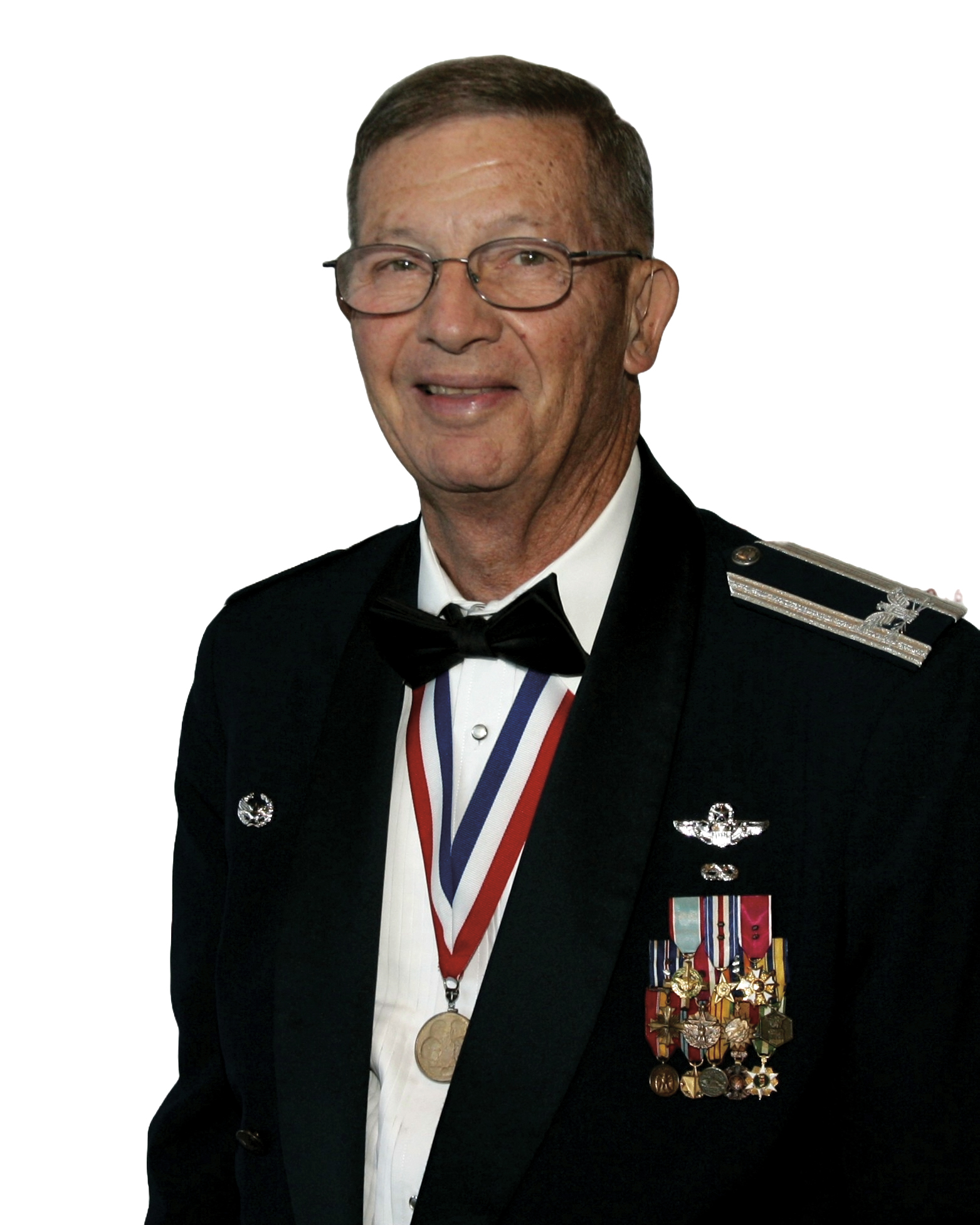
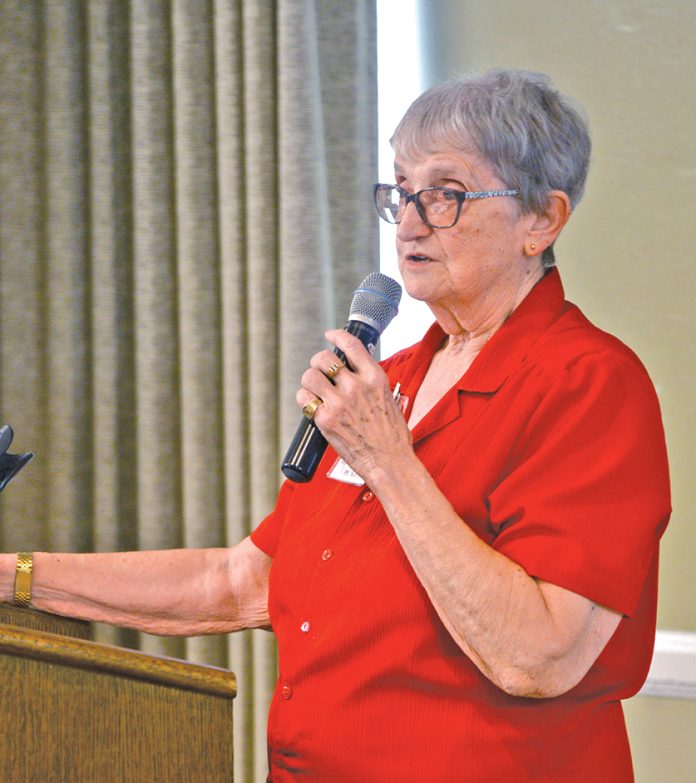
CMSgt. (Retired USAF) Lorraine Caddy serves as the Director of the Military Retiree Activities Office at Tinker Air Force Base.

Story and Photo by Van Mitchel, Staff Writer

The Military Retiree Activities Office (RAO) at Tinker Air Force Base serves as a liaison between the active-duty community and the retiree population.
The RAO is located in Bldg. 1, Door 7, Room 153 at Tinker AFB, and is manned by experienced military retiree members Monday through Friday from 10 a.m. to 2 p.m.
“Our office is here to serve every retiree, regardless of rank or branch of service, when they need guidance or assistance with any issues, “ said RAO Director/CMSgt. (Retired USAF) Lorraine Caddy. “We also provide volunteers to support the Tinker mission at the RAO Office, and the Tinker Clinic Pharmacy.”
Chief Caddy said the Tinker RAO was started in 1982, and she has been with it since 1985. She started as RAO Director in 2014.
“Our primary mission is to be available for any military people or their families, regardless of rank or branch of service, to help them with whatever difficulties they’re having or get them to the right people to help them, which is really what we are,” she said. “We’re more of a referral agency than a doing agency. We have somebody here Monday through Friday from 10 a.m. to 2 p.m. and they’re all trained with as much knowledge as we can give them. We just take the questions as they come on the phone or through the door.”
Chief Caddy said when someone calls or comes by the RAO, the process begins by determining what their problem is and how we can help
“Most military retirees should know how to handle their own personal business, but unfortunately, a lot of people don’t talk. Husbands and wives don’t talk, so they don’t all have the same information,” she said. “We try to find out exactly what their problem is, number one. We try to give them information about this office so that they know they can always come back here. I always tell people, “If we haven’t solved your problem, please come back. We’ll find somebody else who can help you,” because we always try to be available.”
Chief Caddy said once a veteran separates from their branch of service, it becomes more challenging to find help with services needed.
“When someone is on active duty, they basically have face to face help with all their human resource issues and things of that nature. But once you separate, you’re done. You don’t really have a local office to go to for admin information, things of that nature,” she said. “We try to get them the resources they need.”
Chief Caddy said one of the ways the RAO works to get information out is through its Military Retiree Appreciation Day happening on Saturday, Sept. 28 at the Tinker Event Center starting at 7:30 a.m. with the formal program starting at 9 a.m. with several speakers scheduled.
Chief Caddy said the 2023 Military Retiree Appreciation Day had 200 attendees.
“In years past, before COVID, we had more than that, but we had to stop completely for two years,” she said.
The event is planned by Chief Caddy and a committee of volunteers that she selects.
“We’ll open the doors to the public at 0730-for those attending with lite refreshments available while they last,” she said. “I currently have 20 booth folks lined up, meaning people will come and be at a table where you can go and speak with them, and these are people from TriCare and Casualty Assistance, VA, and more. We also have a bus tour that’s available for those who want to take it around Tinker. It takes about 45 minutes to do the bus tour.”
The Military Retiree Appreciation Day also includes the naming of the Volunteer of the Year.
“That award is presented by the Wing Commander at my request to the person at the Retiree Day Service ceremony, so that they know that we give a darn that they’re there, because these people are giving their time and they’ve already given 20 years or more of their life to service,” Chief Caddy said.
Chief Caddy encourages those attending Military Retiree Appreciation Day to ask their questions.
“When I send an email, I encourage them to bring their questions, and before I dismiss any speaker, I always say, ‘Do you have more questions? Please don’t wait until he leaves and then ask me,‘ which is what happens sometimes. They’re shy,” she said. “There’s no question that’s stupid, in my opinion. There is no such thing. If you have a question and you need answers then you need to ask it. Sometimes those questions can’t be answered at the meeting, but then I make sure that that person has an appointment with the people they need to speak with.”
Chief Caddy said she has a desire to keep helping veterans as she was helped along the way.
“I did 20 years of service, and I enjoyed every minute of it,” she said.
Chief Caddy said she was very fortunate to make Chief Master Sergeant after 15 years of service. She started her AF Creer in 1957 and retired from active service in 1977, and she was one of the first 10 women to achieve the rank of CMSgt in the entire United States Air Force.
“I was fortunate because I worked with people who cared,” she said. “Women veterans at that time were not assigned worldwide as they are today. I was working on an IG team and because of that was able to spend three years at Wiesbaden, Germany. My volunteer work with the RAO is great. I meet so many wonderful people and am happy to provide this service to our military retirees.”
Chief Caddy said veteran retiree volunteers are welcome to help with the RAO.
“We would love to have you join us as a volunteer in the Retiree Activities Office, and the Clinic Pharmacy,” she said. “We only ask for 3 hours a week of your time and you will know the joy of “continuing to serve.”

For more information about the RAO or to sign up for the Military Retiree Appreciation Day call (405) 739-2795 or email Chief Caddy at lorraine.caddy@us.af.mil


Savvy Senior: Long-Term Care Benefits for Veterans and Surviving Spouses

0

Dear Savvy Senior, I understand that the Veterans Administration has a benefit that can help veterans and spouses with long-term care costs. We recently had to move my elderly father into an assisted living memory care facility, and my mother will probably need care too in the near future. What can you tell me?
Searching for Aid

Dear Searching,
The Veterans Administration (VA) does indeed have an underutilized benefit that can help wartime veterans and their surviving spouses pay for a variety of long-term care costs.
This benefit, called “Aid and Attendance,” is a special pension that’s paid on top of existing VA pensions for eligible veterans and surviving spouses. In 2024, it pays a maximum of $2,727 a month to married veterans; $2,300 a month to single veterans; or $1,478 a month to a surviving spouse. The money is tax free, and can be used to pay for assisted living, memory care, nursing home or in-home care services.
Currently, around 156,000 veterans and survivors are receiving the Aid and Attendance benefit, but many thousands more are eligible who either don’t know about it or don’t think they qualify.
Eligibility Requirements
To qualify, your dad must have served at least 90 days of active military service with at least one day of service during a period of war, and not have been discharged dishonorably. Single surviving spouses of wartime vets are eligible if their marriage ended due to death.
In addition, your dad will also have to meet certain thresholds for medical and financial need to be eligible.
To qualify medically he must be either disabled, or over the age of 65 and need help performing basic everyday living tasks such as eating, bathing, dressing or going to the bathroom. Being blind or in a nursing home due to disability or receiving Social Security Disability or SSI also qualifies him. Single surviving spouses have no age restrictions, but they must require help with basic everyday living tasks to be eligible.
To qualify financially your parents “net worth,” which includes assets and annual income combined, must be below $155,356 in 2024.
To calculate this, add up your parent’s assets, which includes their personal property (like investments, real estate, etc.) excluding their primary home and vehicles. And tally up their income over the past year (including Social Security, pensions, interest income from investments, annuities, etc.), minus any out-of-pocket medical expenses, prescription drugs, insurance premiums and long-term care costs over that same period of time.
The VA also has a three-year lookback to determine if your parents transferred any assets to ensure they would qualify for benefits. If so, they may be subject to a penalty period of up to 5 years.
How to Apply
To apply for Aid and Attendance, you’ll need to fill out VA Form 21-2680 and mail it to the Pension Management Center (PMC) for your dad’s state. You’ll need to have your dad’s doctor fill out the examination information section. Or you can also apply in person at a VA regional office near your parents.
For more information or to download application forms see
https://www.va.gov/pension/aid-attendance-housebound. You can also call the VA at 800-827-1000 if you have questions.
If you need some help, you can appoint a Veteran Service Officer (VSO), a VA-accredited attorney or claims agent to represent your dad. See
https://www.va.gov/ogc/apps/accreditation/index.asp to locate someone.
If your dad is eligible, it can take months for his application to be processed, so be patient.
You should also know that if your dad’s Aid and Attendance application is approved, the VA will send a lump sum retroactive payment covering the time from the day you filed the application until the day it was approved. Then your dad receives monthly payments going forward.
Send your senior questions to: Savvy Senior, P.O. Box 5443, Norman, OK 73070, or visit https://savvysenior.org. Jim Miller is a contributor to the NBC Today show and author of “The Savvy Senior” book.


OKC Indian Clinic Raises Over $150,000 for hearing 19th Annual Red Feather Gala

0
Rear Admiral, (Ret.) Kevin Meeks received the 2023 Spirit of the Urban Indian honor

Oklahoma City Indian Clinic (OKCIC), celebrates the Red Feather Galaeach year during Native American Heritage month. This year’s occasion raised over $150,000 and will provide 30 pairs of hearing aids for patients in need.
Held at the Omni Hotel in downtown Oklahoma City, this year’s Red Feather Gala was emceed by Ali Meyer and Joleen Chaney, news anchors from KFOR. They successfully united nearly
600 supporters, including tribal representatives from various parts of Oklahoma, to contribute to OKCIC’s charitable mission. To support the cause, attendees had the opportunity to make donations through a silent and live auction and Native art.
An outstanding moment of the evening was when RADM (Ret.) Kevin Meeks received the 2023
Spirit of the Urban Indian honor. RADM Meeks was honored for his lifelong commitment to improving the well-being of Native Americans in Oklahoma. As a proud citizen of Chickasaw Nation, he currently serves as Deputy Secretary of Health. Throughout his career, he has played a pivotal role in the enhancement of health care services for American Indians.
“I am very honored to receive the Spirit of the Urban Indian Honor,” said RADM Meeks. “I’m so proud of Oklahoma City Indian Clinic’s accomplishments. They have created outstanding and nurtured outstanding partnerships with area tribes and the Indian Health Service. OKCIC is a great example for other urban Indian programs to emulate.”
The gala provided attendees with an opportunity to immerse themselves in Native American culture through a captivating dance performance by the Central Plains Dancers. Additionally, guests could make memories at the photo booth, while enjoying a night of dancing with live music and karaoke.

Veterans Resource Fair American Legion Post 88

0

Senior News and Living sponsored a pop-up resource fair at the American Legion in Norman on Monday, May 13th. Here are a few highlights from the event.

Jim Buck, a retired Navy veteran and general manager of the Norman Firehouse Subs delivered sandwiches to the Post. While he was there, he also talked with a Veterans Service Officer about his benefits. Post 88 has a high success rate for settling claims.
Brandon Wallace, right, an Army veteran and President of Flag Poles Honoring our Veterans chats with a veteran attendee at FPHOV table. This all volunteer organization installs flag poles (free of charge) in the yards of Oklahoma veterans. For more information see their website www.fphov.org
Stretch Zone practioner, Josh Johnson, M.S.E., was giving complimentary demonstrations of the the Stretch Zone process.


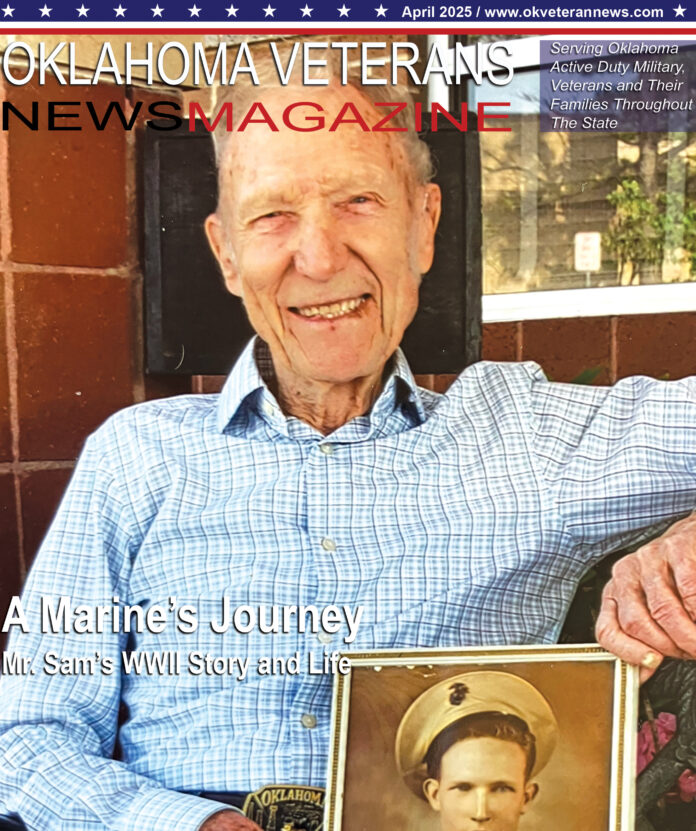
A Marine’s Journey – Mr Sam’s WWII Story and Life

0

At 97, Gillaspy Shares Tales of Courage, Service, and Resilience.

From serving in WWII to building a family farm and becoming a beloved storyteller, legacy spans generations.

Story by Richard Stephens, Jr.

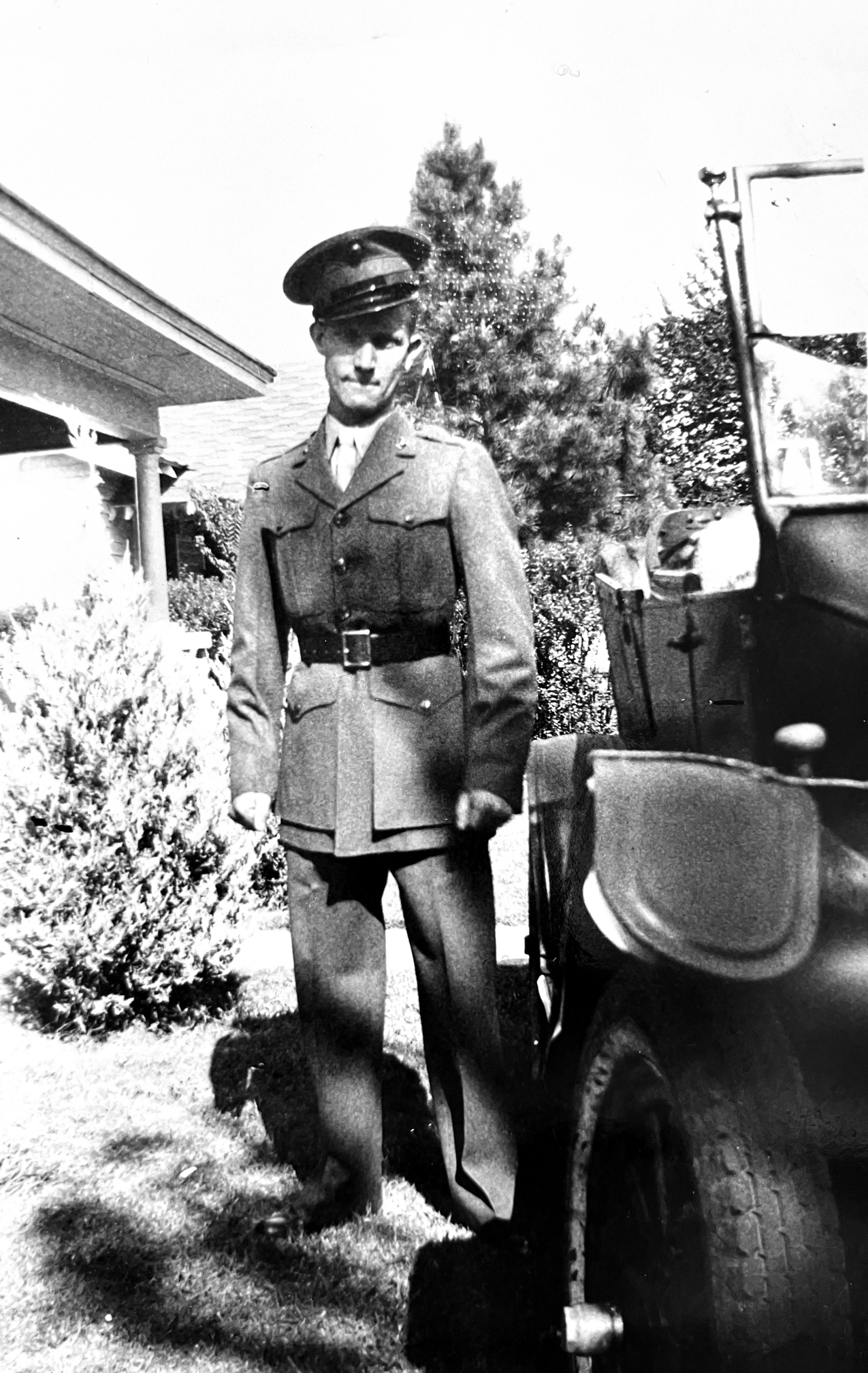
Mr. Sam Gillaspy during his service in the Marine Corps, 1945-1946. The vehicle may be one he drove at Camp Pendleton.
Mr. Sam Gillaspy, age 97, is a member of the Greatest Generation, a precious and small (100,000 remain) group of men (and women) who served our nation during WWII.  Everyone calls him Mr. Sam and he lives in Midwest City.
He is physically strong, slim, and walks straight without bending over or using any physical aid.  Over time, he has lost much of his hearing, some memory and speaks with difficulty.
Joining the Marine Corps
“I was 17 and the United States needed men awful hard.  So, I entered the Marines (enlisted on February 28, 1945, with a delayed report date) and I still had about three months of (high) school left,” Mr. Sam said.  His parents gave permission to enlist.  Why the Marine Corps?  According to Jeannie Vollmer, his partner, he felt that the Marines were the toughest Service.
Was he strong enough to join?  Mr. Sam laughed and said, “Oh yeah.  Back then, yeah, I was.”
Training at Parris Island
After graduating high school, the Marines sent Mr. Sam a letter assigning him to active duty service, effective June 5, 1945.  He remembered, “You got five days to get everything (ready to go).  And so, it took us five days to get from Oklahoma City to the east to the ocean” at Parris Island, South Carolina, for basic training.
Was the training hard?  “Yes, and I did pretty good…I made it the middle” (a good training record).
“They taught me how to fire a BAR (Browning Automatic Rifle)…It’s a long…bigger than a rifle and it has at the end of it, a tripod.  You laid down and (moving arms left to right) and shot…like a machine gun.”  Mr. Sam likely fired the Browning M1918A2 Automatic Rifle, which was the WWII production model used by servicemen after 1940.  “They put me to do it and became real good …We learned how to tear them down and get them back together.  We did that for several days.”
There was field training too.  Wearing backpacks, men held their BARs and crawled under barbed wire into live fire zones to practice wartime skills.
“Live ammunition.  We didn’t know.  They (instructors) were shooting.  It was bang, bang.  They told you that if you get up, they will shoot you.  You die…And you had to just to squeeze through the wire.  And some of the boys…had holes in their backpack…because they’re already big men and (it was) a small width.  I was down where it (the fire) didn’t hit me or my pack.  I made it just fine.”
Assignment at Camp Pendleton
After training, “We went from Parris Island…from east to the west…to San Diego, California…And we didn’t know where we were going.  We got out of the train, standing on the pier in the middle of the night…and there was a big boat with planks (gangway).  I had never seen such a ship like that – it was a monster thing.”
The Marines formed up.  A man called their names alphabetically, starting with “A.”   “All the boys were going upstairs (into the ship) as they called their name.
“Then, all of a sudden, this guy comes up with a jeep and said something to the guy that was reading the names.  He said, ‘You, you and you fall out and follow this man in the jeep.’  And I was the third one.  They put the three of us in that jeep and we drove and drove way up to (Camp) Pendleton” (California), Mr. Sam said.
The others left on the pier?  “And all the rest of them, they ended going into the ship.  Those that went out (on the ship), some of them came back, some of them didn’t.  I guess it was meant for me to stay right there.
“They needed somebody to take care of the general’s car.  They put me doing that.”  Private Gillaspy’s occupation was officially “Truck Driver.”  He serviced the vehicle and kept it shined.
Mr. Sam saw men coming back from being stationed in the Pacific theater of operations.  “I was able to talk with them.  This one man, I don’t know why, it’s been so long, he gave me his rifle that he came from the war…” because the man had used it shooting Japanese.  “And he said, ‘…he couldn’t take it anymore’…And he gave it (rifle) to me.  And I was able to put it in my barracks.”
Time Off
During days off, Mr. Sam and friends sometimes went to Los Angelas to United Services Organization (USO) parties.  Hitchhiking was common.
USOs were a place to relax with talking, dancing and drinking.  “What was nice was, Hollywood ladies would come up to me and ask, ‘Would you like to dance with me?’  I said, ‘Yes, Ma’am, but I don’t know how!’” he said, laughing.
Coming home
“My time ended (enlistment).  They gave me my big footlocker…When it was time (to leave), they took us to the post gates.”  Mr. Sam did what others did:  hitchhiked home.  “It was five minutes and this big Buick with a man driving it (pulled up).  He said, ‘Which way are you going?’  Mr. Sam replied, ‘I’m going to Oklahoma City.’ ‘Well,’ he said, ‘I’m going to Tulsa.  I’ll take you and it won’t cost you nothing.’”
That’s how Mr. Sam got home after serving in WIWII.  He was discharged as a Private First Class on August 26, 1946, after serving a bit more than 14 months.
Post war
Mr. Sam worked for Dolese, a well-known cement maker, for 40 years starting in 1949.  He met Betty, his future wife, and once married, had two daughters, Rita and Cynthia.  They built a home on 42nd Ave. and Kelly Ave. in Oklahoma City.
In 1961, Mr. Sam bought a 160-acre farm in Luther containing a small house built in 1889.  He drove concrete trucks full-time for Dolese and farmed part time.  Once he added rooms and electricity to the house, Betty, Rita, and Cynthia moved there in 1968.  Unfortunately, Betty died of a heart attack soon after.  They grew wheat and alfalfa, fed 80 Hereford cows and raised chickens and rabbits.
Mr. Sam is well known at Arcadia’s Round Barn.  He started storytelling and giving tours soon after the barn’s renovation in 1992.  He explained posters and pictures on the first floor and showed visitors the former hayloft on the second floor that hosted many dances.
Although he stopped storytelling at the Round Barn in 2020, lucky visitors can still catch him there when he stops in to say hello.
Postscript
Was Mr. Sam glad he served in the war?  “Oh yeah, I was,” he said, smiling broadly.  “I enjoyed all of it.”
Asked he had a philosophy on living life or what makes for a good life, Mr. Sam thought for a minute.  Chuckling, then smiling, thinking through his answer, he replied, “I don’t smoke.  I don’t drink.  I don’t chase wild women.”  (Laughed).  His is a life lived well.

Oklahoma History Center Museum to Host Eighth Annual Vietnam Veterans Day Event

0

The Oklahoma History Center, in association with VillagesOKC, the local offices of Humana, Oklahoma Warriors Honor Flight, Navigating Medicare and the Force 50 Foundation, is proud to host a pinning ceremony honoring all the servicemen and servicewomen, active or reservists, who served anywhere in the world during the Vietnam War-era. Family members of any veteran unable to be present may also receive this pin. The event will be held in the Devon Great Hall of the Oklahoma History Center on Friday, March 29, from 10 a.m.-noon, with doors opening at 9 a.m. This event is free and open to the public.
March 29 was designated as Vietnam Veterans Day by the 2008 National Defense Authorization Act, to be commemorated with annual nationwide events. Guided by the stipulations in that act, only Vietnam War veterans and their families are recognized. However, the Vietnam War Commemoration organization is providing recognition pins to honor any US veteran who served on active duty or in the reserves in the US Armed Forces at any time during the period of November 1, 1955, to May 15, 1975, regardless of location, Vietnam or otherwise. Family members of any veteran unable to be present may also receive this pin.
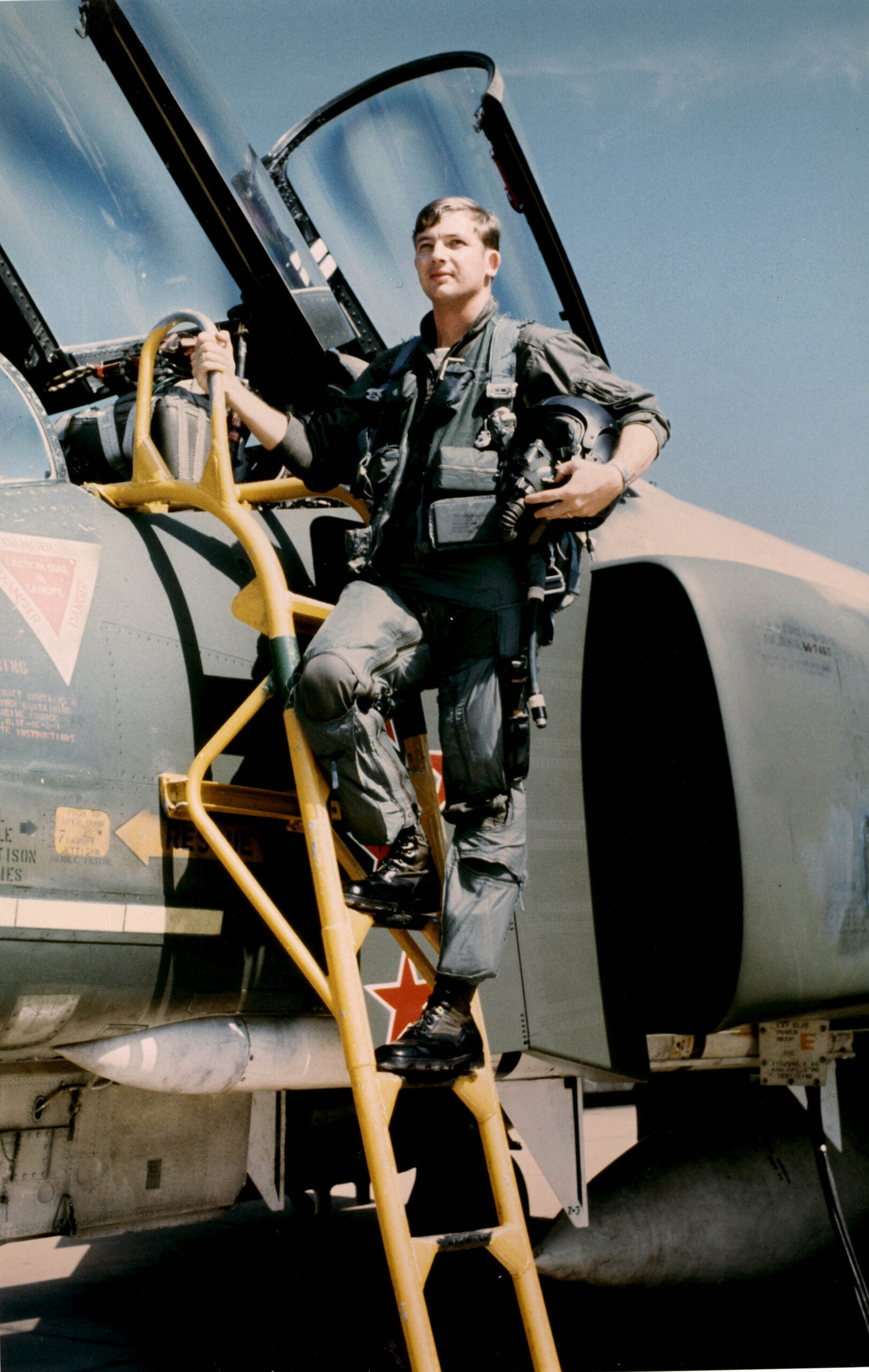
The keynote speaker will be Colonel “Chuck” DeBellevue, who has been deemed “Ace of Aces,” one of only five to achieve that status from downing six North Vietnamese MiGs. He logged 550 combat hours while flying 220 combat missions, with 96 over Vietnam. His decorations include the Air Force Cross, three Silver Stars, three Legions of Merit, six Distinguished Flying Crosses, 18 Air Medals and the Republic of Vietnam Gallantry Cross with Device. In 2012, he was inducted into the Oklahoma Military Hall of Fame and received the Congressional Gold Medal.
Also speaking will be Colonel Peter Plank, one of the founders of the Liberty Jump Team. This team has taken more than 100 World War II veterans back to the battlefields of Normandy and Belgium at no cost to the veterans. “Taking them to the battlefields they fought in and the villages they liberated is a humbling experience. Being a part of the Liberty Jump Team preserves the memory of those that came before us alive. We owe them that,” says Plank.
Michael Do, an Oklahoma City businessman, will speak on behalf of the Oklahoma City Vietnamese community and the South Vietnamese military. Music will be provided by the 145th Army Band, known as “The Governor’s Own.”
The Oklahoma History Center is located at 800 Nazih Zuhdi Dr. in Oklahoma City. It is open to the public Monday through Saturday from 10 a.m.-5 p.m.
The Oklahoma History Center is a division of the Oklahoma Historical Society and is an affiliate of the Smithsonian Institution, National Archives and is an accredited member of the American Alliance of Museums. The mission of the Oklahoma Historical Society is to collect, preserve and share the history and culture of the state of Oklahoma and its people. Founded in 1893 by members of the Territorial Press Association, the OHS maintains museums, historic sites and affiliates across the state. Through its research archives, exhibits, educational programs and publications the OHS chronicles the rich history of Oklahoma. For more information about the OHS, please visit
https://www.okhistory.org.

Vet Chat Gives Veterans Opportunity for Networking, Fellowship, Resources

0
L-R Richard McQuillar, Deborah McQuillar, Leo Webster, Cloris Webster, Rick Huston, Leslie Harris. Started VetChat in Leo’s home.
Chaplain Don Udell offers spiritual encouragement and prayer for veterans and service members.
L-R Carle Evans, Shirley Moore, Sue Bruce “Three of our Vet Chat Widows”
L-R Deborah McQuillar AF SMSgt E8/RET, Petty Officer 1st Class (E6) Amy Petersen, Barbarah Curry AF MSgt E7/RET “Three of our Vet Chat Women”

Story and Photo by Van Mitchell, Staff Writer

Leo Webster, a 24-year Air Force MSgt/E7 RET, knows first-hand the importance of communication when helping other veterans.
In July 2018 he started Vet Chat, a monthly meeting where veterans can gather and communicate with each other and learn about resources that are available to them.
Meetings are held the second Saturday of each month at 9 a.m. in the lobby of Cornerstone Church located at 9900 SE 15th Street in Midwest City.
Vet Chat allows veterans and service members to network and fellowship while learning about the resources available to Warriors, spouses, family members, and widows.
The program’s goal is to give a source of support while also connecting and encouraging veterans by sharing stories in passing of useful advice, information, or resources.
Topics include education benefits, VA burial benefits, Wills, Power of Attorney, disability rating, housing and spousal benefits.
“We strive to connect our veterans with local agencies, organizations, and civic groups that specialize in assisting our heroes and their families,” Webster said. “The goal of this group is to be a source of support while also connecting, encouraging and motivating veterans.”
Webster said Senior News and Living will host a Veteran’s Resource Fair at Cornerstone Church on Saturday, Sept. 14 from 9 a.m. to noon in lieu of the regular Vet Chat meeting that day.


Webster said the idea of Vet Chat began while sitting in church.
“I was sitting in church one day and just looking around at the number of veterans in my church. And being a 24-year Air Force veteran myself, I said, “We need to start talking to each other.” This is just going on in my mind,” he said. “So, I invited a group of veterans to my house to have lunch.”
Webster said he and the rest of his invited guests sat in his living room and started talking to each other.
“You put a table full of food out, you can get a lot of people,” he said. “We started thinking about what are the things that we can just start helping veterans with? And obviously benefits and services and things that were available to veterans. So, I just ran a poll around the table and said, ‘Okay, what are some things? Just write down some things that you think that we can work on.’ Each person came up with a list of things they thought.”
Webster said the Vet Chat meetings outgrew his living room.
“We met in my living room at my house for a long time, but it just mushroomed,” he said. “I asked my pastor, Ron McKey, at Cornerstone Church if I could just start using the foyer in the church. He said absolutely. He said anything that we can do to help our veterans is welcomed.”
Webster said initially the Vet Chat meeting started with around eight veterans, but has grown slowly, but steadily.
“We started off with about eight people, and we’ve had as high as 57 people,” he said. “I would love to have over 100 veterans attend the Vet Chat meetings each month.”
Webster said he gets self-satisfaction from helping others.
“If someone needs something and I can help them, I feel that if I don’t do it, then I’m not fulfilling my calling of giving back,” he said.
Webster said the military teaches toughness, but that process has its challenges.
“Being in the service, us veterans are tough. We don’t ever want to admit that we have challenges, or we have aches and pains,” he said. “I’m a veteran and tried navigating applying for VA disability myself and ended up discouraged. My experience was frustrating like many others, but I had a gentleman, a good friend of mine said, ‘Leo, I’m not going to let you give up.’ He came to my house and picked me up and said, ‘We’re going down to the VA. I’m going to sit with you and you’re going to do this. He loved me through the process and just kept on loving me. And I’m comfortable right now.’”
“We help our veterans, their spouses and especially their widows.” Webster noted. When Sue Bruce lost her husband, the only thing she was sure of was she needed someone’s help. “They supported me through every part of the process. I had no clue as to all the benefits that were available to me. They just did everything, like family.” Bruce said. Carla Evans and her husband came on a Saturday earlier this year, seeking information primarily for her father and also her husband. Just weeks later her husband unexpectedly passed away. Evans said, “I could not have made it through that time without Leo and Vet Chat.
Webster said we also look out for our active service members.
“We have several wonderful retired women, like Barbara Curry, AF MSgt RET and Deborah McQuillar AF SMSgt Ret who love to support and mentor active duty females.”
Webster said he wants Vet Chat to be a safe harbor for every veteran.
“I want Vet Chat to become the model place in Midwest City where veterans can come and know, first of all, you’re at a safe place,” he said. “What you share with us is not going to be put on Facebook, it’s not going to be put out online. You are in a safe place. We are here to help you, and it’s going to be very private and confidential what you share with us. I just want to be here for our veterans. Being a veteran myself, I know how complicated it is and I just want to make life easy for these heroes and give them a safe place to just come and hang out.”
Webster said he works hard to earn each veteran’s respect.
“I have been there (Air Force) for 24 years, and I worked hard to earn the respect of the people that I serve,” he said. “And I venture to say everybody that comes to Vet Chat will tell you how hard I work to earn their respect. And I believe they all respect me, I really do. Because I don’t take anything for granted. I’m persistent when I know that I’m doing something that God would want me to do. I’m passionate about it, and I don’t want to leave any stone unturned. I want to do it with all my heart.”
Webster said while he enjoys how Vet Chat helps veterans; he will never be pleased until every veteran’s need is met.
“Yes, I am happy to see how the program is growing, but I will never be pleased until I know every veteran’s needs or services of what they need is met. And I’ll probably never accomplish that, but that gives me the drive to keep pushing every time,” he said. “Our goal is to assist our veterans to get everything that they’re entitled to. I want to be a friend to my fellow heroes, and not just be there for them.”
For more information about Vet Chat contact Webster at (405) 202-0661 or via email at lcweb@cox.net or contact James McQuillar at (405) 659-2116 or via email at jmcquillar@cox.net. See our Resource Fair Flyer on page 22


OMRF scientist awarded $3.4 million to investigate immune cells

0

Fifty years ago, immunologists were just beginning to understand a newly discovered type of white blood cell that would come to be known as the T cell. Decades of research have since shown these protective cells to be so crucial, we couldn’t survive without them.
Fast-forward to today, and research stands at a similar infancy with a closely related immune cell called innate lymphoid cells, or ILCs, says Oklahoma Medical Research Foundation scientist Xiao-Hong Sun, Ph.D.
The National Institutes of Health recently awarded Sun a $3.4 million grant to continue unraveling mysteries about these cells, including whether they may offer clues about the differences in immune reactions between children and adults.
“It’s far too soon to say whether we will someday discover ILCs play a role as profound as T cells,” said Sun, who holds the Lew and Myra Ward Chair in Biomedical Research at OMRF. “But I hope this research will begin to answer that question.”
Sun joined OMRF in 1999 and studied T cells until pivoting her research to ILCs when scientists discovered them about a decade ago.
Initially, researchers believed ILCs originated only in bone marrow. In 2019, Sun discovered the thymus, a gland near the heart, can also produce them. The thymus trains the immune system to distinguish friendly cells from invaders. It tends to shrink and become less active as we age.
“Our previous discovery was important because it may shed light on why immune reactions differ between children and adults,” Sun said. “Childhood onset of asthma and food allergies are just two examples. This new study may help explain the underlying causes and suggest new therapeutic approaches.”
“It took a half-century of painstaking work by scientists around the world to get to our current understanding of T cells,” said OMRF Executive Vice President & Chief Medical Officer Judith James, M.D., Ph.D. “That’s often how science works. Dr. Sun is applying similar approaches to understand ILCs in an accelerated way. I’m excited to see where her research leads.”
Sun’s grant, No. 1R01AI178947-01, was awarded by the National Institute of Allergy and Infectious Diseases, part of the NIH. Oklahoma City’s Presbyterian Health Foundation provided funding for Sun to collect preliminary data for this research.

Home Oklahoma City Added to National Register of Historic Places

0
Photo Courtesy the State Historic Preservation Office.

Oklahoma County
Dr. William L. and Susie Price Haywood Estate
7100 N. Sooner Rd., Oklahoma City
The Dr. William L. and Susie Price Haywood Estate in Oklahoma City was constructed c. 1930 in the Late 19th and Early 20th Century Classical Revival style and is significant at the local level for its association with Dr. William Haywood, his wife Susie Price Haywood, and their roles associated with the Black community during segregation. Dr. Haywood was a prominent physician for the Black community as early as 1910 when he became the chief African American health officer of Oklahoma County. In the 1920s, he established the Utopia Hospital, which is believed to be the first African American hospital west of the Mississippi. In the 1950s, Haywood became director and chief-of-staff at Oklahoma University Hospital. Mrs. Haywood, a cum laude graduate of Langston University, established herself as the first principal for the summer school for Negro children and eventually as a summer faculty member at Langston as an English teacher and assistant registrar. Mrs. Haywood also published textbooks for students to use, covering topics traditional books did not. The Haywood Estate is listed in the National Register for the couple’s significant role in the African American community in Oklahoma City.
Listing in the National Register of Historic Places is an honorific designation that provides recognition, limited protection and, in some cases, financial incentives for these important properties. The SHPO identifies, evaluates and nominates properties for this special designation.
The State Historic Preservation Office is a division of the Oklahoma Historical Society. The mission of the Oklahoma Historical Society is to collect, preserve and share the history and culture of the state of Oklahoma and its people. Founded in 1893 by members of the Territorial Press Association, the OHS maintains museums, historic sites and affiliates across the state. Through its research archives, exhibits, educational programs and publications the OHS chronicles the rich history of Oklahoma. For more information about the OHS, please visit www.okhistory.org.


Faces of the Fallen

0
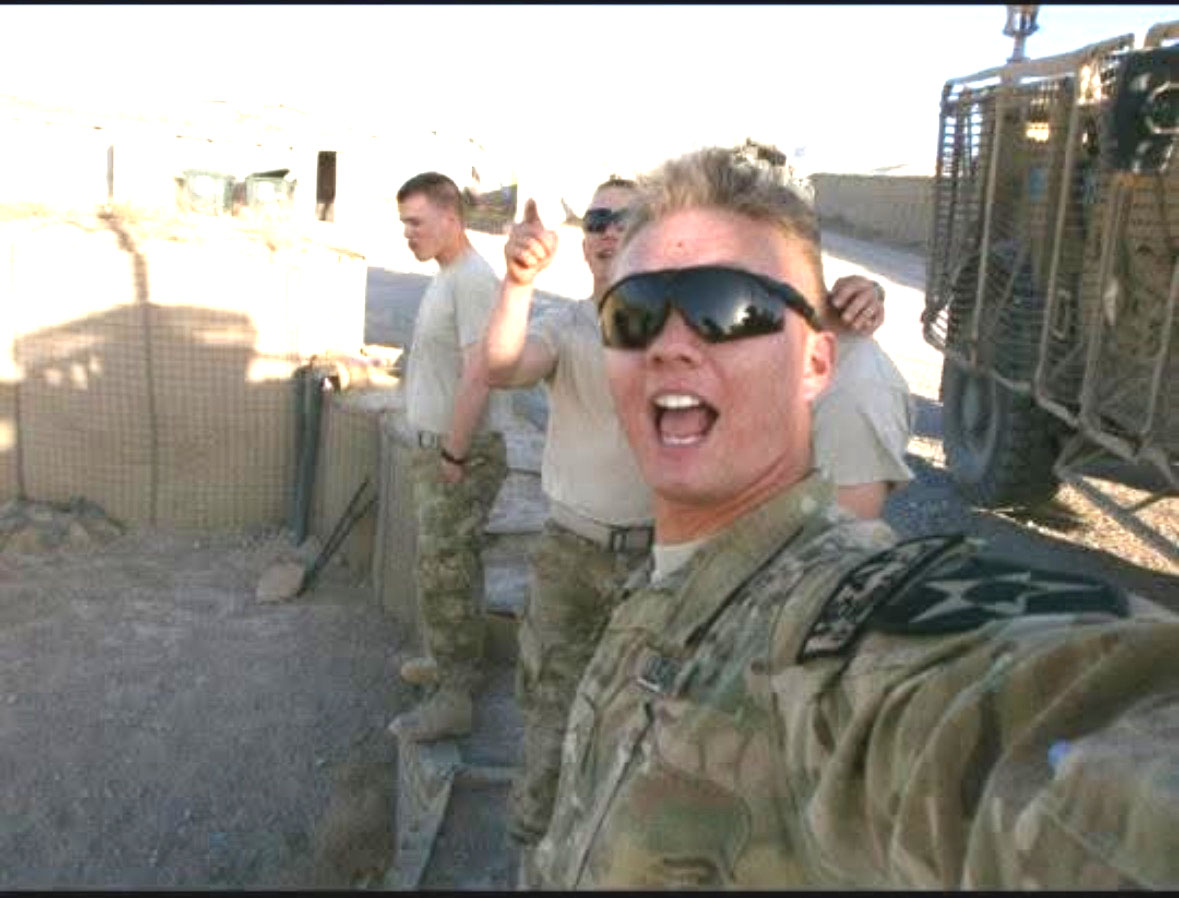
Ben Kopp, 2nd Deployment to Iraq, 2008.

My name is Jill Stephenson.

Last photo of Jill and Ben. Taken before his final employment.


I moved to the Tulsa area earlier this year with my father. We are from Minnesota, however I spent the last four years in NW Arkansas and have previously lived in several other states. My only child honorably served in the military for three years before making the ultimate sacrifice to defend our beautiful America in 2009 at the age of twenty-one. Although I am not from Oklahoma and my son is counted as a MN fallen soldier, I will be sharing stories of Oklahoma/greater Tulsa area fallen military. My first offering will be about my son. Going forward I will focus on local families by sharing stories of courage, patriotism and selflessness. Above all, I want you to get to know the faces and the families of those who have sacrificed so much in the name of freedom.

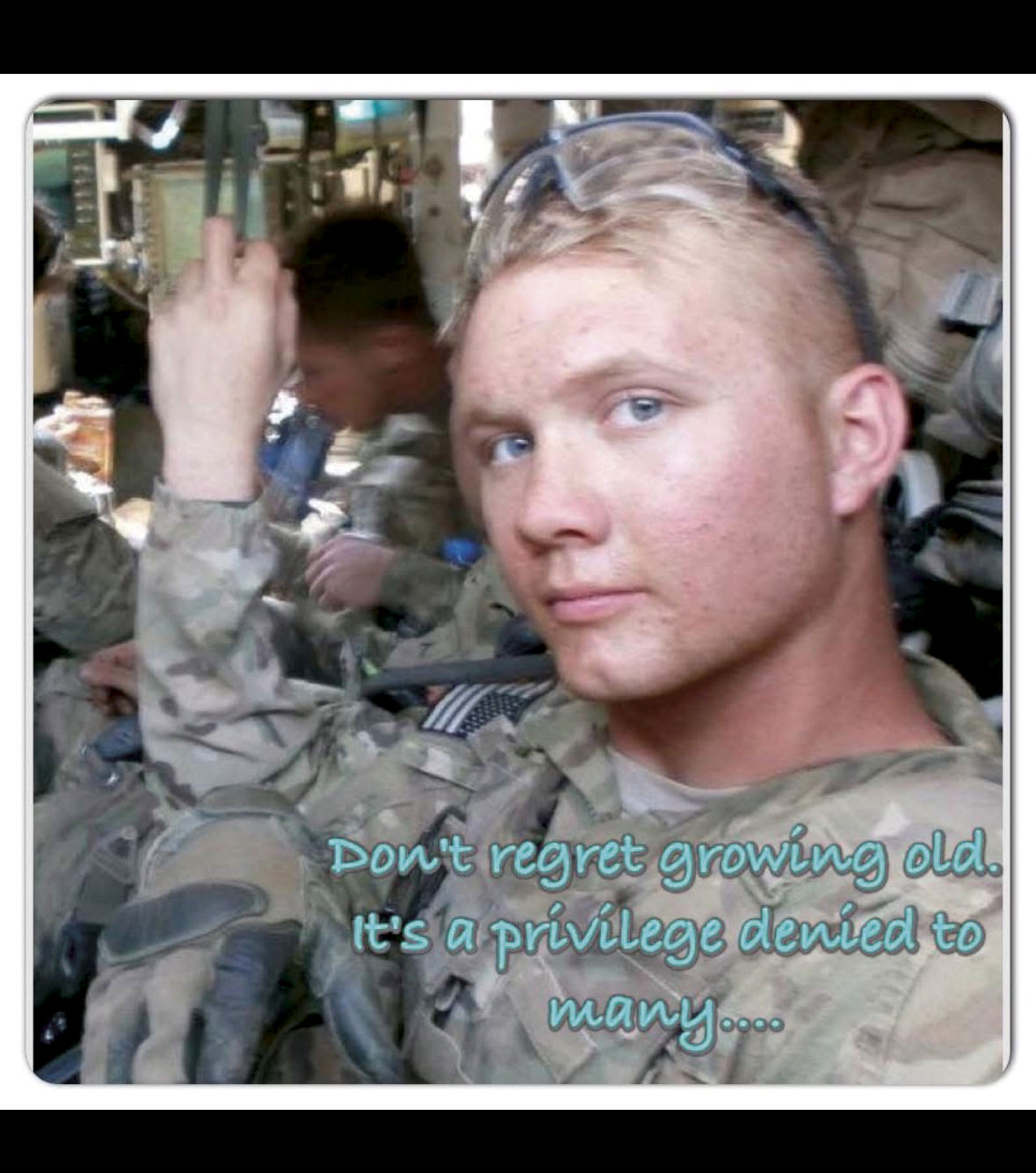
My son Benjamin Kopp joined the military and became an Army Ranger out of respect and admiration for his great grandfather, a WWII veteran, and to avenge the events of September 11th. After 9/11, at the age of 13, Ben vowed to serve his country with determination and pride. He arrived at Ft. Benning, Georgia exactly one month after his high school graduation. His tenacity made him an accomplished Army Ranger only seven months later. The daily challenges of being an elite Army Ranger do not come easy, but quickly turns boys into men. Ben was no exception. On his first visit home, the change in him was noticeable and it was apparent he was doing exactly what he was meant to do.

Bens resting place at Arlington National Cemetery. Memorial Day 2016.

Ben maintained his childhood friendships from his hometown of Rosemount, MN, but also established new friendships within his fellow brothers of the the 3rd Battalion, 75th Ranger Regiment. He became known for his fearless attitude, crooked grin and his charm with the ladies. Ben had an infectious personality and all would agree he was a best friend to many. Ben served two tours in Iraq before his third tour in Afghanistan in May of 2009.

On July 10th, during a firefight with the Taliban, he saved the lives of six of his fellow Rangers before being shot in the leg. Unfortunately, recovery from the trauma his body endured from the gunshot wound and following surgery would prove to be too much. Ben Kopp died on July 18, 2009 at Walter Reed Army Medical Center in Washington, DC. Prior to his death, Ben ensured his living will stated that upon his death, all of his organs, bone, skin and tissue be donated. His donations saved or enhanced the lives of 60 people. His heart lived on and continued to beat for fifteen years and seven months in a woman from Illinois who passed away from health issues unrelated to her heart earlier this year. Ben’s strong ranger heart stayed with her until the objective was complete.

Ben Kopp, 2nd Deployment to Iraq, 2008.

He distinguished himself with the Army Achievement Medal with two awards, Army Good Conduct Medal, National Defense Service Medal, Iraq Campaign Medal, Global War on Terrorism Service Medal, the Army Service Ribbon, Parachutist Badge and the Ranger Tab. Upon his death Ben was awarded the Bronze Star Medal for Valor, the Meritorious Service Medal and the Purple Heart. He was also posthumously promoted to Corporal. Per his wishes, he is laid to rest at Arlington National Cemetery in the famed section 60, where he is surrounded by heroes from all conflicts dating back more than one hundred fifty years.

The pride I have been gifted in being Ben’s mother is something that has continued to grow. His positive influence and inspiration to all who knew him and many who came to know him after he died, remains alive and well. Among many admirable traits he possessed, Ben was also a champion of the underdog, an aspiring leader, humorous, driven, convicted, courageous and selfless. Saving the lives of his brothers on the battlefield and then of strangers upon his death, were true testaments to the kind of person he was.

He is sorely missed to this day by all who know and love him. In life and in death, Corporal Benjamin S. Kopp was and still is a hero. I couldn’t have asked for a better son. He was my best friend. We will always be the land of the free because of the brave.•
story by Jill Stephenson

Social

0FansLike
0FollowersFollow
0SubscribersSubscribe