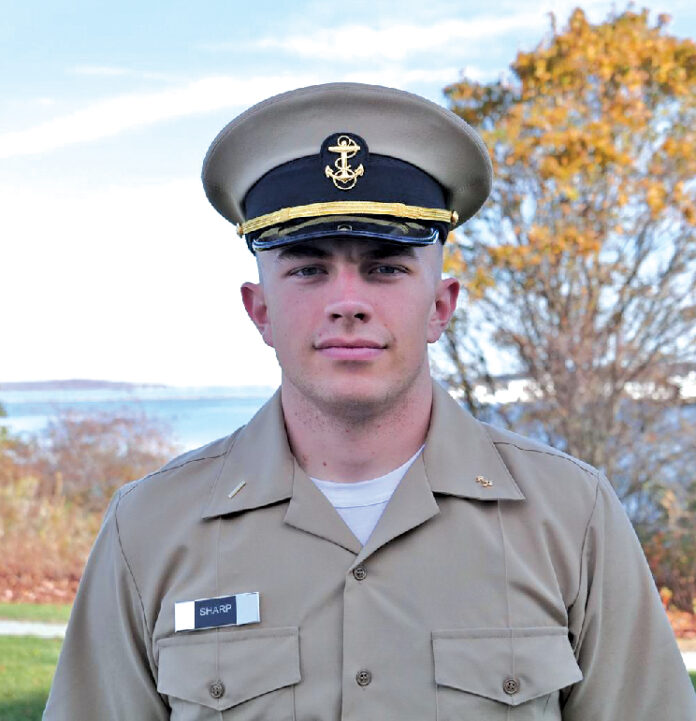
Ensign Samuel Sharp graduate from the Navy’s Officer Candidate School (OCS)
Story by Megan Brown,
Navy Office of Community Outreach
Ensign Samuel Sharp, a native of Oklahoma City, Oklahoma, graduate from the Navy’s Officer Candidate School (OCS). Sharp is a graduate of Gulf Breeze High School and an Oklahoma Baptist University graduate. “I joined the Navy because I wanted to serve my country and follow in the footsteps of my family members who also previously served,” said Sharp.
The skills and values needed to succeed in the Navy are similar to those found in Oklahoma City. “A few lessons I have learned from my hometown that have helped me throughout my time in the Navy and at OCS are the importance of being resilient, adapting to new circumstances and stepping up as a leader when needed,” said Sharp.
OCS is one of four officer accession programs operating at Officer Training Command Newport (OTCN). OCS is the final step in a sailor’s transition into the Naval Officer Corps. This rigorous 13-week program is comprehensive, intense, and designed to reinforce understanding of the responsibilities of a naval officer.
Located in Newport, Rhode Island, the command’s mission is to develop newly commissioned officers morally, mentally and physically, and imbue them with the highest ideals of honor, courage and commitment in order to prepare them for the Fleet. Additionally, this program prepares officers to become effective leaders by developing fundamental skills in leadership, written and oral communication, career management and administration.
With 90% of global commerce traveling by sea and access to the internet relying on the security of undersea fiber optic cables, Navy officials continue to emphasize that the prosperity of the United States is directly linked to recruiting and retaining talented people from across the rich fabric of America.
Sharp serves a Navy that operates far forward, around the world and around the clock, promoting the nation’s prosperity and security. “We will earn and reinforce the trust and confidence of the American people every day,” said Adm. Lisa Franchetti, chief of naval operations. “Together we will deliver the Navy the nation needs.”
Sharp has many opportunities to achieve accomplishments during military service. “So far, my proudest accomplishment while serving in the Navy is having the opportunity to come to OCS as a student naval aviator,” said Sharp.
As Sharp and other sailors continue to train and perform missions, they take pride in serving their country in the U.S. Navy. “Serving in the Navy means that I am able to build myself and other sailors into great leaders,” added Sharp. “It also means setting an example for others to follow, not only in the fleet, but in society as well.”
Kirsten Hubbard, RN, Accepted into a top-rated MSN program to become a family nurse practitioner.
By: Kirsten Hubbard,
Care+Wear Community Member
A Patient’s Story That Touched My Heart
In my years working in healthcare, I’ve come across many patients and families who have profoundly touched my life. One experience stands out vividly. While working in the ICU, a patient who had suffered a terrible accident was admitted to my unit. Though he couldn’t speak during those initial moments, I did my best to care for him, keep him aware of his situation, and simply be by his side.
Over the next few days, as I continued to care for him, I met his family and found myself in frequent conversations with them. I learned his story, their story, and felt that I was truly building a bond with them. By the time I returned for my next set of shifts, the patient was able to communicate with me. He was doing much better than when I’d last seen him. Both he and his family thanked me for the care and support I had given them.
What they didn’t realize was how much they impacted me in return. Seeing him recover enough to leave the ICU and connecting with his family reminded me why I became a nurse. Moments like these fuel my passion for healthcare. The Importance of Building Bonds with Patients
The connections we create with patients and their families are more than just meaningful-they’re vital. They form a foundation of trust, which I believe is essential for healing. When patients feel that they’re not just being “treated” but genuinely cared for, they’re more likely to open up about their concerns and challenges.
This openness allows healthcare workers to tailor support in ways that truly meet each patient’s needs. Often, it’s the human connection and empathy that give patients the courage to follow through with treatment, make lifestyle changes, and maintain a positive mindset during recovery. How Small Gestures Make a Big Difference
Building trust with patients isn’t about grand gestures-it’s about consistency and compassion in every interaction. Personally, I focus on listening first, ensuring patients feel heard and understood. I strive to explain things in clear, simple terms and remain transparent about what they can expect.
Small actions-like maintaining eye contact, remembering details about their life, or even sitting down to be on their level-go a long way. These gestures might seem small, but they build the trust that’s critical to effective care. Advice for New Healthcare Professionals
To those new to healthcare, I encourage you to remember that every patient is a person first. It can be easy to get caught up in tasks and outcomes, but even a few minutes spent connecting on a personal level can make a world of difference.
Patients often feel vulnerable, and showing empathy-even through a kind word or gentle tone-can help them feel cared for and reassured. These small acts of kindness are just as important to their healing journey as the treatments we provide. Conclusion: Why Connection Matters
Experiences like the one I shared are what keep me going in healthcare. They remind me that while medicine can treat the body, compassion and connection heal the soul. For me, these bonds are what make this work not only fulfilling but truly meaningful.
Author Bio: Kirsten is a registered nurse. Since beginning her nursing school journey, she has shared her experiences online, connecting with thousands of nurses and healthcare workers. She started her career in the neuroscience ICU, where she built a strong foundation and gained invaluable knowledge. In addition to her ICU work, Kirsten also cared for pediatric patients at a surgical center, supporting little ones immediately after their surgeries.
Driven to further her nursing education, Kirsten was accepted into a top-rated MSN program to become a family nurse practitioner. She has since transitioned to outpatient nursing, where she provides care to patients with chronic illnesses and infections. Kirsten remains committed to sharing her nursing journey with her audience, building meaningful connections, and making a positive impact throughout her career.
The Oklahoma Aging Advocacy Leadership Academy (OAALA) is accepting applications for 2025. For 27 years, OAALA has provided free training for individuals to be informed volunteer community leaders and advocates for Oklahoma’s aging population. Applications will be accepted until Jan. 10, 2025.
The course kicks off in February and includes coursework through Aug. 2025. Classes typically meet all day Wednesday and Thursday in Oklahoma City, but three of the sessions will be virtual in 2025. Classes are planned on the following dates. They are subject to change with as much notice to participants as possible:
• Kickoff Meeting: Feb. 13 OKC metro
• Session 1: March 12 and 13 Virtual
• Session 2: April 9 and 10 OKC metro
• Session 3: May 14 and 15 Virtual
• Session 4: June 11 and 12 OKC metro
• Session 5: July 9 and 10 Virtual
• Session 6: Aug. 6 and 7 – OKC metro
Attendance and participation are required for each full day. There is no cost to participate as tuition is covered by sponsors, including (when applicable) lunch, books, resource materials and overnight accommodations for those who qualify. Travel reimbursements may be provided under the State Travel Reimbursement Act.
Applicants should demonstrate a willingness to use constructive advocacy techniques to effect social change and a commitment to build communities that include and value all older persons and persons with disabilities. They should also demonstrate sensitivity to the needs of people and the ability to see things from the point of view of others.
“The impact OAALA graduates make in Oklahoma communities compliments our efforts to make services and supports available to older Oklahomans,” said Jeromy Buchanan, Director of Community Living, Aging and Protective Services, a division of Oklahoma Human Services. “We cannot support all the various needs of our aging population alone and are proud to serve alongside these engaged leaders and advocates in service to older adults.”
Applications are online and must be received along with a letter of support by Jan. 10, 2025.
For more information or to request a paper application, contact Jake Stover directly at 405-714-0015 or Email [email protected], or call the Community Living, Aging and Protective Services main line at (405) 521-2281.
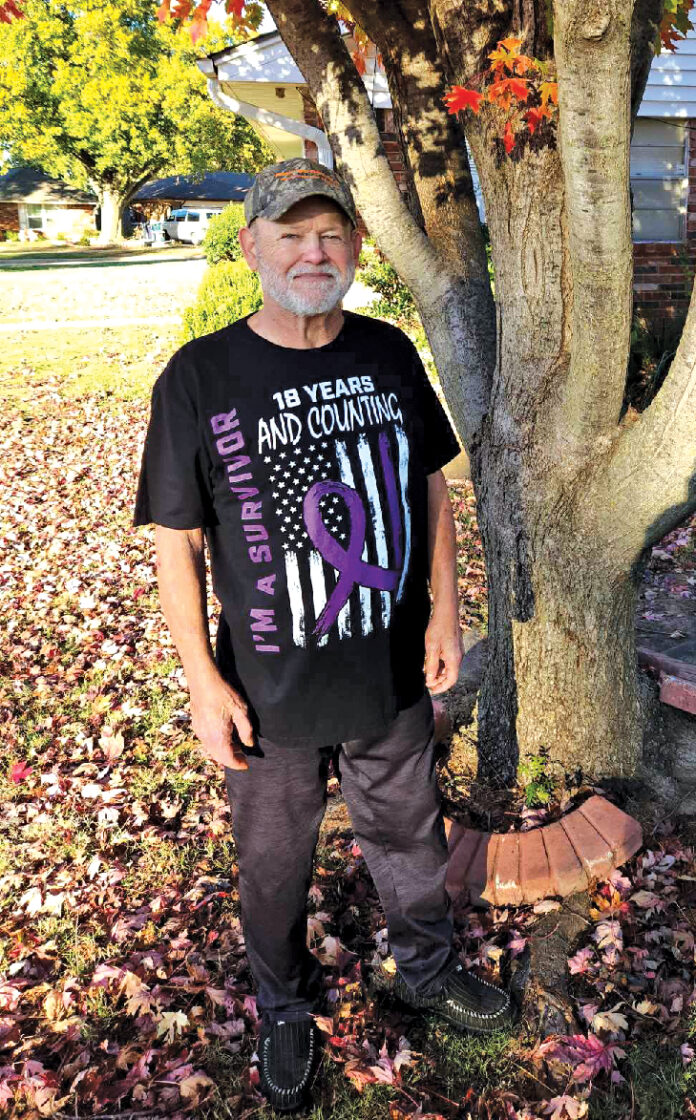
Charley Maynard fighting and living with Pancreatic Cancer
Pancreatic cancer is known for its poor prognosis, though it can be potentially curable if caught early enough. The problem is pancreatic cancer usually shows little or no symptoms until it has advanced and spread. In these cases, the average pancreatic cancer survival time is three to three and a half years. Exception to the Rule
William “Charley” Maynard of Oklahoma City has been living with the disease for 18 years. He was 46 years old when his cancer was discovered accidentally. “We had a pizza buffet at work, and I think I got food poisoning because I became extremely ill afterwards,” he remembers. “It got so bad I ended up going to the emergency room. It was there that they saw something suspicious on a scan.”
After further tests, Charley was diagnosed with pancreatic cancer. It had already metastasized to his liver. He was given two to seven months to live. “I lost it,” he admits. “I thought to myself, ‘I’m too young for this.’” Attitude Adjustment
He acknowledges he didn’t know much about the disease then, or that it was considered by many as a death sentence. “I didn’t ask a lot of questions. I didn’t want to know all those negative things. I moped around for two or three weeks, then decided this ain’t no way to live. I made up my mind that I wasn’t going to just lay down to it. I was going to continue living my life.”
He kept working through his chemotherapy treatments that were on and off for the next several years. He is now on an oral regimen to slow the disease progression and provide comfort.
“There are certainly patients who far outlive their prognosis or even become disease-free,” says Bashar Alasad, M.D., a medical oncologist at the INTEGRIS Health Cancer Institute at INTEGRIS Health Southwest Medical Center. “Overall pancreatic cancer survival rates, while still much lower than other cancers, have gradually improved over the years. I absolutely believe that Charley’s positive attitude has played a huge role in his longevity.” Reason for Living
“I talk to God every day and I know He’s the reason I’m still alive,” Charley confesses. “I think I’m meant to raise awareness by sharing my story. I talk to those who just got diagnosed with any type of cancer and I try to motivate them. I try to give them hope.”
He adds, “I’m 64 years old now. I’ll be 65 in January. I’m proof that you can beat this disease or at least live with it for a long time. You just got to refuse to surrender to it.”
There are not clear-cut symptoms for early-stage pancreatic cancer. However, you should see a health care provider right away if you develop jaundice, stomach or back pain, unexplained weight loss or a sudden onset of diabetes.
If you have a first-degree family member (parents or siblings) with pancreatic cancer, you should talk to your doctor about your risk of developing the disease and the current screenings and genetic tests available.
Santa and Mrs. Claus and helpers, the University of Central Oklahoma (UCO) Pom & Cheer Squad along with Buddy the Broncho, are ready to spread the holiday cheer at the Emerging Leaders Senior Gala.
UWCO Emerging Leaders spread holiday cheer to local seniors
United Way of Central Oklahoma’s (UWCO) Emerging Leaders served a warm holiday meal and more on Dec. 2 at the nonprofit’s annual Senior Holiday Gala, where nearly 200 local seniors enjoyed a festive evening at the Oklahoma History Center.
Clients of UWCO’s Partner Agencies: Catholic Charities, Metro Better Living Center, Urban League and Sunbeam were treated to a catered holiday meal, gifts, dancing and more. Members of the University of Central Oklahoma Pom and Cheer squad and Buddy the Broncho were also on hand to provide entertainment and socializing for the seniors. Santa Claus and Mrs. Clause were even in town!
“This is one of the sweetest events our Emerging Leaders put on,” UWCO President & CEO Rachel C. Holt said. “We are so grateful to have volunteers like them who put so much effort into making this event a winter wonderland for the seniors our Partner Agencies serve.”
Emerging Leaders is a UWCO affinity group for young professionals. Throughout the year, Emerging Leaders, who contribute $500 or more to UWCO, experience various social and professional development opportunities. Learn more about Emerging Leaders by emailing [email protected].
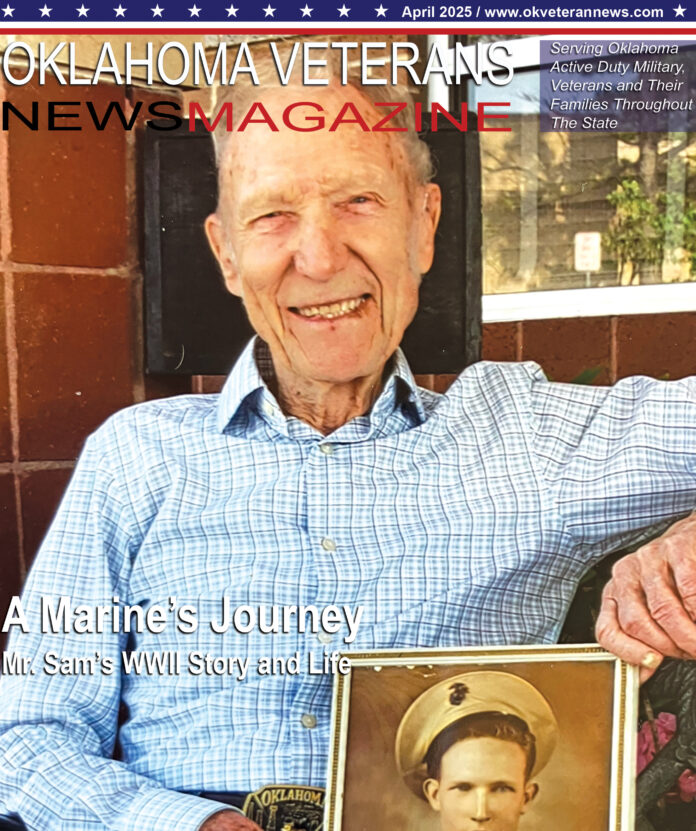
At 97, Gillaspy Shares Tales of Courage, Service, and Resilience.
From serving in WWII to building a family farm and becoming a beloved storyteller, legacy spans generations.
Story by Richard Stephens, Jr.
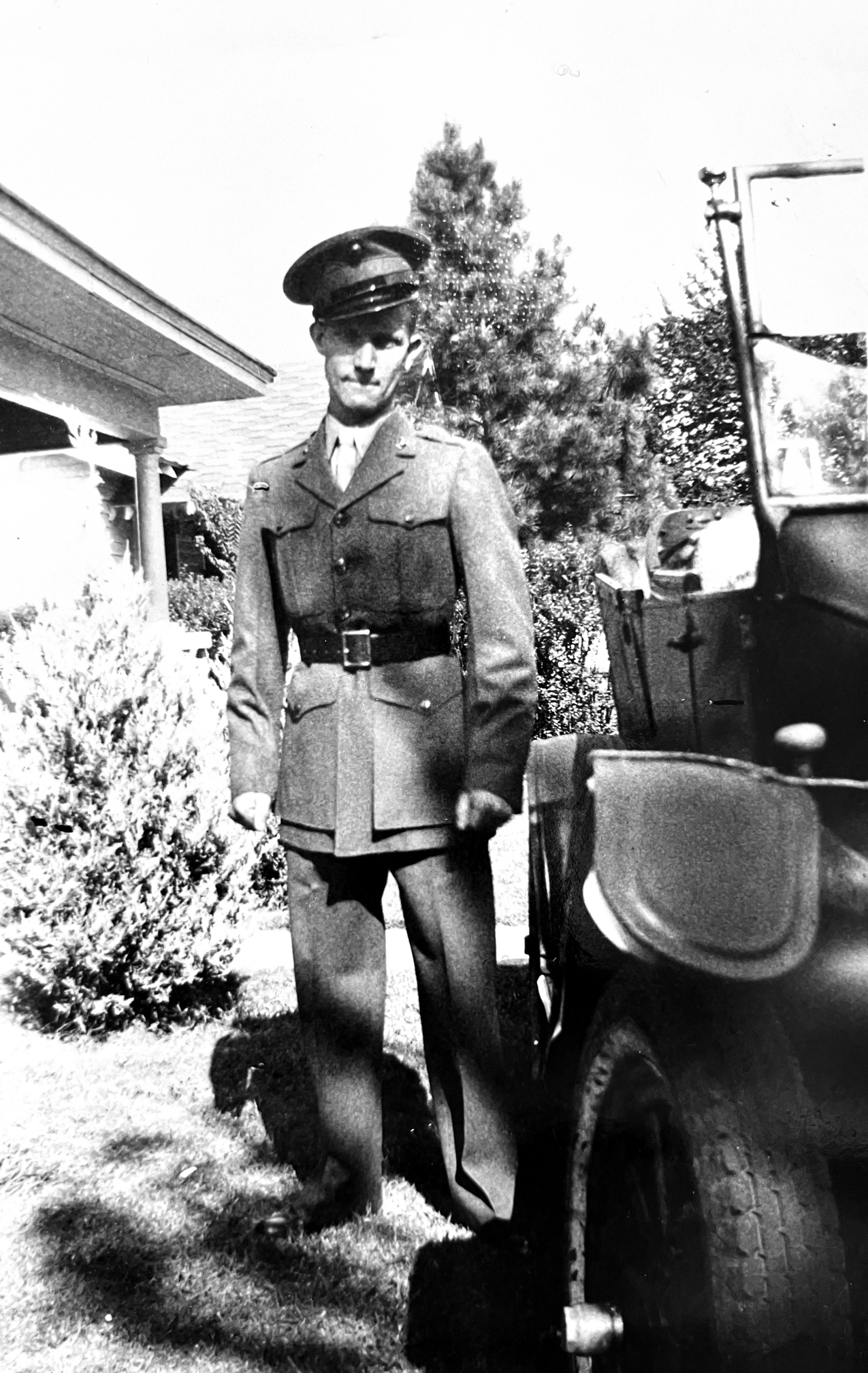
Mr. Sam Gillaspy during his service in the Marine Corps, 1945-1946. The vehicle may be one he drove at Camp Pendleton.
Mr. Sam Gillaspy, age 97, is a member of the Greatest Generation, a precious and small (100,000 remain) group of men (and women) who served our nation during WWII. Everyone calls him Mr. Sam and he lives in Midwest City.
He is physically strong, slim, and walks straight without bending over or using any physical aid. Over time, he has lost much of his hearing, some memory and speaks with difficulty.
Joining the Marine Corps
“I was 17 and the United States needed men awful hard. So, I entered the Marines (enlisted on February 28, 1945, with a delayed report date) and I still had about three months of (high) school left,” Mr. Sam said. His parents gave permission to enlist. Why the Marine Corps? According to Jeannie Vollmer, his partner, he felt that the Marines were the toughest Service.
Was he strong enough to join? Mr. Sam laughed and said, “Oh yeah. Back then, yeah, I was.”
Training at Parris Island
After graduating high school, the Marines sent Mr. Sam a letter assigning him to active duty service, effective June 5, 1945. He remembered, “You got five days to get everything (ready to go). And so, it took us five days to get from Oklahoma City to the east to the ocean” at Parris Island, South Carolina, for basic training.
Was the training hard? “Yes, and I did pretty good…I made it the middle” (a good training record).
“They taught me how to fire a BAR (Browning Automatic Rifle)…It’s a long…bigger than a rifle and it has at the end of it, a tripod. You laid down and (moving arms left to right) and shot…like a machine gun.” Mr. Sam likely fired the Browning M1918A2 Automatic Rifle, which was the WWII production model used by servicemen after 1940. “They put me to do it and became real good …We learned how to tear them down and get them back together. We did that for several days.”
There was field training too. Wearing backpacks, men held their BARs and crawled under barbed wire into live fire zones to practice wartime skills.
“Live ammunition. We didn’t know. They (instructors) were shooting. It was bang, bang. They told you that if you get up, they will shoot you. You die…And you had to just to squeeze through the wire. And some of the boys…had holes in their backpack…because they’re already big men and (it was) a small width. I was down where it (the fire) didn’t hit me or my pack. I made it just fine.”
Assignment at Camp Pendleton
After training, “We went from Parris Island…from east to the west…to San Diego, California…And we didn’t know where we were going. We got out of the train, standing on the pier in the middle of the night…and there was a big boat with planks (gangway). I had never seen such a ship like that – it was a monster thing.”
The Marines formed up. A man called their names alphabetically, starting with “A.” “All the boys were going upstairs (into the ship) as they called their name.
“Then, all of a sudden, this guy comes up with a jeep and said something to the guy that was reading the names. He said, ‘You, you and you fall out and follow this man in the jeep.’ And I was the third one. They put the three of us in that jeep and we drove and drove way up to (Camp) Pendleton” (California), Mr. Sam said.
The others left on the pier? “And all the rest of them, they ended going into the ship. Those that went out (on the ship), some of them came back, some of them didn’t. I guess it was meant for me to stay right there.
“They needed somebody to take care of the general’s car. They put me doing that.” Private Gillaspy’s occupation was officially “Truck Driver.” He serviced the vehicle and kept it shined.
Mr. Sam saw men coming back from being stationed in the Pacific theater of operations. “I was able to talk with them. This one man, I don’t know why, it’s been so long, he gave me his rifle that he came from the war…” because the man had used it shooting Japanese. “And he said, ‘…he couldn’t take it anymore’…And he gave it (rifle) to me. And I was able to put it in my barracks.”
Time Off
During days off, Mr. Sam and friends sometimes went to Los Angelas to United Services Organization (USO) parties. Hitchhiking was common.
USOs were a place to relax with talking, dancing and drinking. “What was nice was, Hollywood ladies would come up to me and ask, ‘Would you like to dance with me?’ I said, ‘Yes, Ma’am, but I don’t know how!’” he said, laughing.
Coming home
“My time ended (enlistment). They gave me my big footlocker…When it was time (to leave), they took us to the post gates.” Mr. Sam did what others did: hitchhiked home. “It was five minutes and this big Buick with a man driving it (pulled up). He said, ‘Which way are you going?’ Mr. Sam replied, ‘I’m going to Oklahoma City.’ ‘Well,’ he said, ‘I’m going to Tulsa. I’ll take you and it won’t cost you nothing.’”
That’s how Mr. Sam got home after serving in WIWII. He was discharged as a Private First Class on August 26, 1946, after serving a bit more than 14 months.
Post war
Mr. Sam worked for Dolese, a well-known cement maker, for 40 years starting in 1949. He met Betty, his future wife, and once married, had two daughters, Rita and Cynthia. They built a home on 42nd Ave. and Kelly Ave. in Oklahoma City.
In 1961, Mr. Sam bought a 160-acre farm in Luther containing a small house built in 1889. He drove concrete trucks full-time for Dolese and farmed part time. Once he added rooms and electricity to the house, Betty, Rita, and Cynthia moved there in 1968. Unfortunately, Betty died of a heart attack soon after. They grew wheat and alfalfa, fed 80 Hereford cows and raised chickens and rabbits.
Mr. Sam is well known at Arcadia’s Round Barn. He started storytelling and giving tours soon after the barn’s renovation in 1992. He explained posters and pictures on the first floor and showed visitors the former hayloft on the second floor that hosted many dances.
Although he stopped storytelling at the Round Barn in 2020, lucky visitors can still catch him there when he stops in to say hello.
Postscript
Was Mr. Sam glad he served in the war? “Oh yeah, I was,” he said, smiling broadly. “I enjoyed all of it.”
Asked he had a philosophy on living life or what makes for a good life, Mr. Sam thought for a minute. Chuckling, then smiling, thinking through his answer, he replied, “I don’t smoke. I don’t drink. I don’t chase wild women.” (Laughed). His is a life lived well.
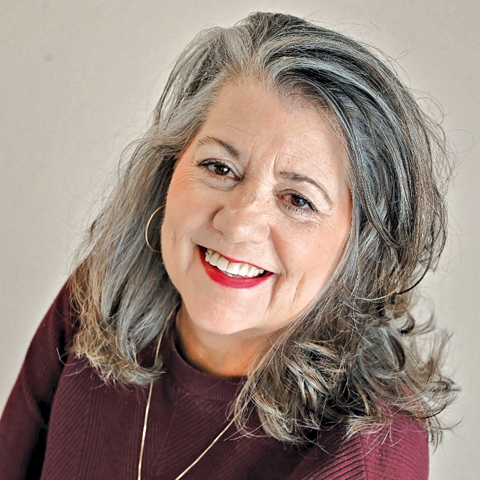
Ballinda Callison, President of Cornerstone Home Health
Story and Photo by Van Mitchell, Staff Writer
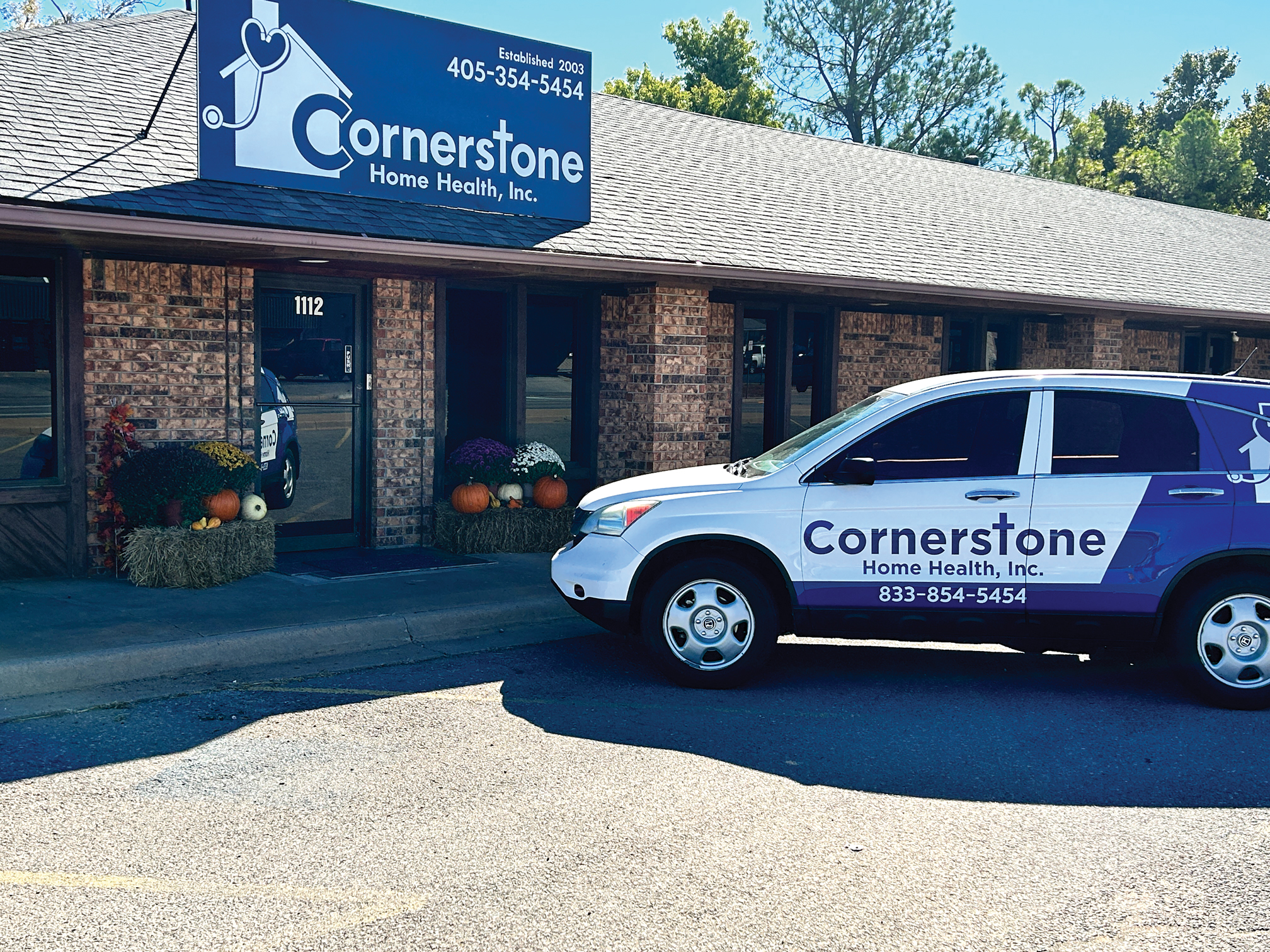
Cornerstone Home Health has been providing services to seniors and veterans in the Oklahoma City metro area since 2003. The veteran-owned company is expanding its footprint by opening an office in Weatherford.
Cornerstone Home Health has been providing services to seniors and veterans in the Oklahoma City metro area since 2003.
Ballinda Callison, President of Cornerstone Home Health said in an interview with Bott Radio serving veterans is a core aspect of their business.
“We service a lot of our veterans, and in fact, probably 80% of our business right now is with the veterans,” she said. “We take care of the veterans, we can do therapy for them, nursing wound care, all those types of things. We can also do their personal care, help them with showers or as little as driving them to an appointment for a doctor’s appointment, going grocery shopping for them, helping them strip and remake their bed, emptying the trash.”
Callison, the daughter of a nurse, has been helping to take care of patients in their homes since she was a young girl. As an adult with small children of her own, she brought meals and did light housework for members of her church, who appreciated the help and enjoyed seeing her children.
She later went back to school, earned a Business Administration degree in Health Care, and was licensed to work in Oklahoma as a Home Health Administrator. She was a co-owner of a staffing firm providing home health care services before starting CHH.
Callison said the lessons she learned as a child with her mother helped shape her vision for Cornerstone.
“My mother did work in convalescent homes,” she said. “She was working almost 16-hour days, and she ended up getting her RN license through the convalescent home years ago. After my dad got back from Vietnam, she started working in private homes for individuals. Somewhere between eight and nine years old, I went with my mother at times to go out to these people’s homes and help her work alongside her because we became their families. Senior care or the home care portion is a big part of keeping people in their home and keeping them from having to need advanced care.”
Callison said Cornerstone Home Health is about building relationships with their clients and families.
“We’d find out what their needs are and if they’re needing transportation to the doctor, if they’re needing physical therapy, if they’ve got a wound or if they’re, then we have to find out first what their needs are,” she said. “Then we would discuss what our services are.”
Callison said faith led her journey to Cornerstone Home Health.
“I look back on my life and the Lord had been preparing me ever since I was a young girl for this kind of work,” she said. “It’s very challenging, it’s rewarding, it’s hurtful. You’ve got to have a passion because if it’s about the money, it isn’t going to happen.”
Now, the veteran-owned company is expanding its footprint by opening a location in Weatherford.
“We’ve opened an office this summer in Weatherford and started taking clients here, within about a 35- to 40-mile radius of Weatherford,” Kathy McGee, Business Development Administrator. “That’s going to include Custer County, Blaine County, basically all the way up I-40 back into Oklahoma City.”
McGee said Cornerstone saw a growing need for its services outside of Oklahoma City.
“It wasn’t necessarily a decision to press forward in one area. It just came out of being contacted to take care of a client, then another,” she said. “Instead of bringing people from Oklahoma City to do that, we decided that we would just go forward this way. We opened the office in the summer, started getting to know some people in the area, and we are really starting to dial into community activities and taking more patients.”
McGee said Cornerstone Home Health wants to hire local caregivers in their expanded area.
“Clients that are here in the Weatherford, Clinton area, their caregivers are going to be from the Weatherford, Clinton area,” she said. “If we have a client that’s in Hinton or Watonga, it’s probably going to be more like someone from that area. Our goal is hiring caregivers in those areas that are closer to those clients that we have in the rural markets.”
McGee said Cornerstone is focusing on personal care services for seniors and veterans in their expanded area.
“We’ll start with maybe light duty housekeeping, meal prep, cooking. We can help with some showering, running errands, some of those kinds of things,” she said. “We offer nursing services for veterans now and will expand nursing services to seniors in 2025.”
Today, VA OKC Healthcare System (OKC HCS) announced that it housed 367 Veterans experiencing homeless in Oklahoma this fiscal year. A total of 98.8% of these Veterans have not returned to homelessness and the OKC VA HCS Social Work Services continues to reach out to any unsheltered Veterans to ensure they have access to housing and other wraparound services they deserve.
Nationally, during this same time period, VA housed 43,116 Veterans experiencing homelessness, surpassing its fiscal year 2024 goal to house 41,000 Veterans a month earlier than anticipated. A total of 96.3% of the Veterans housed have not returned to homelessness, and 38,476 unsheltered Veterans have been engaged nationally.
Preventing and eliminating Veteran homelessness is a top priority for VA and the entire Biden-Harris Administration. Between 2022 and 2023, VA permanently housed nearly 87,000 Veterans. As a result of these efforts, the number of Veterans experiencing homelessness in the U.S. has fallen by over 4% since early 2020 and by more than 52% since 2010.
“No person who has served this country should ever have to experience homelessness,” said VA Secretary Denis McDonough. “As a result of this year’s efforts, more than 43,000 formerly homeless Veterans now have access to the homes that they deserve. And make no mistake: we won’t rest until every Veteran has a safe, stable, accessible, and affordable home to call their own.”
VA and the entire administration have taken considerable steps this year to combat Veteran homelessness. This week, the U.S. Interagency Council on Homelessness released the federal government’s first ever framework for homelessness prevention and launched a new series spotlighting local and federal efforts to prevent homelessness. Last month, VA awarded more than $800 million in grants via its Supportive Services for Veteran Families and Homeless Providers Grant and Per Diem programs, and in July, awarded over $26 million in grants to support legal services for Veterans facing homelessness. Additionally, last month, the U.S. Department of Housing and Urban Development (HUD) and VA announced policy changes that will help more Veterans receive housing assistance under the HUD-VA Supportive Housing (HUD-VASH) program.
VA’s efforts to combat Veteran homelessness are grounded in reaching out to homeless Veterans, understanding their unique needs, and addressing them. These efforts are built on the evidence-based “Housing First” approach, which prioritizes getting a Veteran into housing, then providing or connecting them with the wraparound services and supports they need to stay housed, including health care, job training, legal and education assistance, and more.
Every day, VA staff and VA’s community partners nationwide help Veterans find permanent housing, such as apartments or houses to rent or own, often with subsidies to help make the housing affordable. In some cases, VA staff and partners help Veterans end their homelessness by reuniting them with family and friends.
Visit the VA.gov/homeless to learn about housing initiatives and other programs supporting Veterans experiencing homelessness.
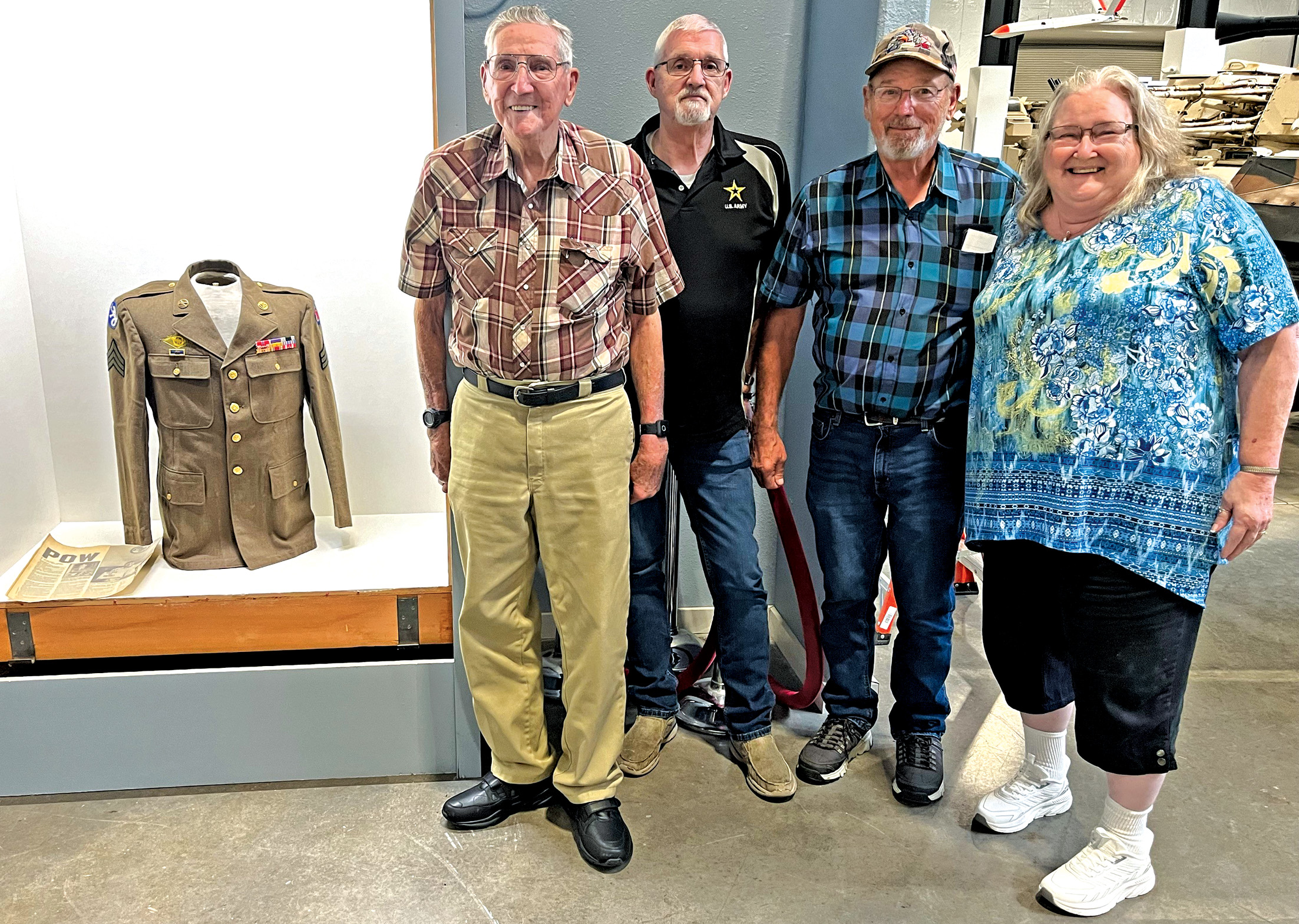
Above: Chandler with Children in front of uniform donations
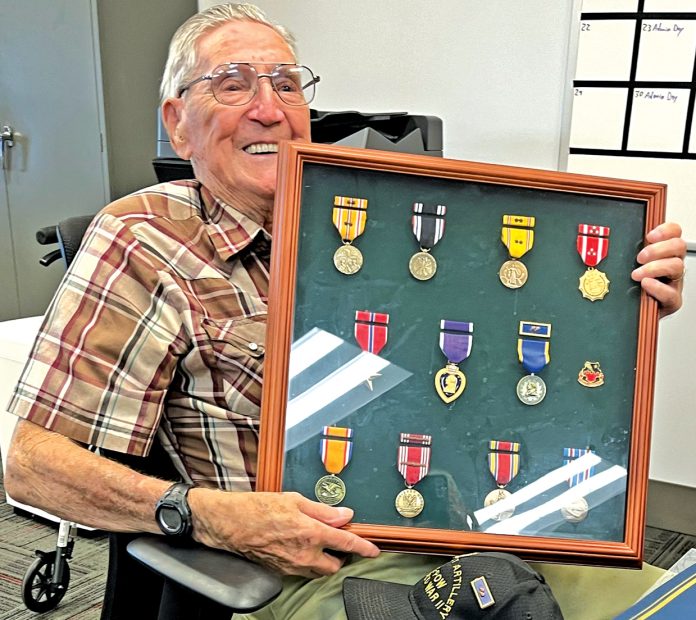
World War II Army Veteran, Leland D. Chandler, donated his service dress uniform, awards, decorations, military documents and artifacts to the U.S. Army Air Defense Artillery Training Support Facility, Fort Sill, Oklahoma.
In January of 1941, Leland Chandler enlisted in the Army at 18 years old, served during WWII and was stationed at the Corregidor Islands in the Philippines with the 60th Coast Artillery. At the young age of 19 years old, Chandler was captured and taken to Japan and listed as a prisoner of war. During his three-and-a-half year status as a POW, Chandler worked as a steel mill laborer with 12-hour shifts, slept on the workroom floor, required to perform under grueling conditions, if he was healthy enough to work-he was given a bowl of rice a day to eat and was beaten when he physically couldn’t perform his laborious duties.
“There were 400 of us that went into that Japanese prison camp and when we were freed, only 53 of us came out, Chandler recalled as his children unveiled his service uniform and awards during the recent donation to the Fort Sill Museum.
Chandler weighed approximately 190 pounds when he went into the Japanese POW camp and when the remaining survivors were liberated, he weighed only 58 pounds.
“They told me I wouldn’t be able to have children, we’ll I’ve proved them all wrong. Heck, they never thought I would live this long and I’ve proved them wrong on that one too!”, Chandler said.
Three of Chandlers’ five children brought their father to Ft. Sill and were happy to help their Father donate his service memorabilia to the museum.
“We all talked about what we wanted to do with Dad’s military history and we all agreed, that it wouldn’t be right to split up his uniform and awards and that we wanted it all to be in the same place to be properly preserve to maintain all this history,” Linn Woodworth, Chandler’s daughter said, “Now we have a place that his kids, grandkids and great-grandkids can come to see all of our Father’s history in one location.”
“Our facility is the U.S. Army Air Defense Artillery Training Support Facility. We have three facilities here at Fort Sill-the Field Artillery Museum, Fort Sill Museum and the Air Defense Artillery Training Support Facility,” said Correy Twilley ADA Training Support Facility Curator. “Ours is a new training concept that uses history to develop our Soldiers, weapons and tactics.”
“We are ultimately a training facility and we have an obligation to teach our young AIT [Advanced Individual Training] students and OCS [Officer Candidates Students] that attend these courses about this part of our history so they can learn about the past in the hopes that we are not doomed to repeat it,” Twilley said, “We are grateful for this unique and well-preserved piece of Mr. Chandler’s history. With this donation, he is helping to educate the future generations of service members and their families who walk through these halls. So much of WWII history has been lost and Mr. Chandler and his family has helped us preserve this piece in time to teach those future generations about his contributions to our nation’s heritage.”
Chandler continues to defy the odds, at a very spry 101 years old, Mr. Chandler holds the title of centenarian and continues to puzzle the medical experts.
Chandler attributes his extraordinary good health to medical care he receives at the VA and his family that has taken such good care of him throughout the years.
“I’m 100 percent (VA service connection) and the VA has taken excellent care of me and they have done everything they needed to do for me and my wife-they are outstanding,” Chandler said.
“One of the best things the VA could have done for my Father is to ensure our Mother was also taken care of-this was a huge relief to me and our entire family,” Chandler’s daughter Linn Woodworth stated. Unfortunately, On December 1, 2023, Chandlers’ wife passed away, just four days after celebrating their 75th wedding anniversary.
Chandler encourages other Veterans to find out if they are now eligible for VA healthcare because the rules and laws have changed over the years. Although, Chandler gives some sage words of advice to Veterans and says to come to the VA prepared.
“Bring in the right paperwork, the documents you need to get them into the system,” Chandler said. Ask yourself, do you have what you need to back it up?”
When asked the question about Veterans who may be reluctant to come to the VA to find out if you are eligible or not, he gave some fatherly words of advice.
“Well, that is your own fault, if you don’t go in and find out-I don’t have any sympathy for people who don’t do the right thing. I don’t know about other places, but I know the VA where I belong, that is the way it works.”
Chandler added, “I wouldn’t be here today if it wasn’t for my family and the excellent care they have given to me over the years.” Chandler said, “I don’t know what I’d do without them.”
For more information about OKC VA HCS, visit our website at the below link: https://www.va.gov/oklahoma-city-health-care
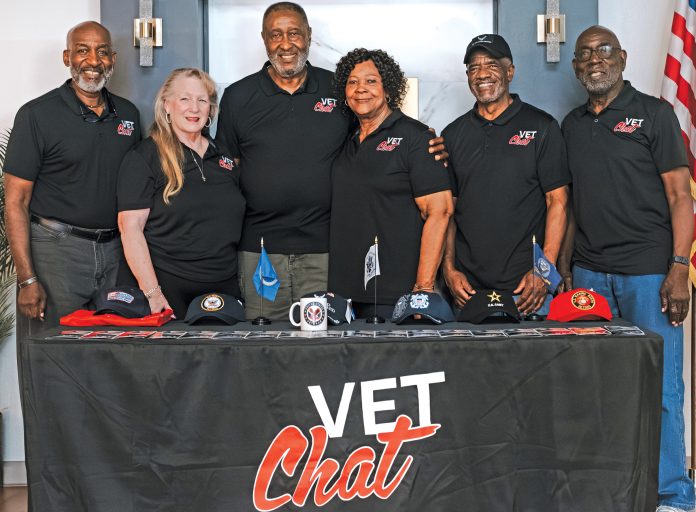
L-R Richard McQuillar, Deborah McQuillar, Leo Webster, Cloris Webster, Rick Huston, Leslie Harris. Started VetChat in Leo’s home.
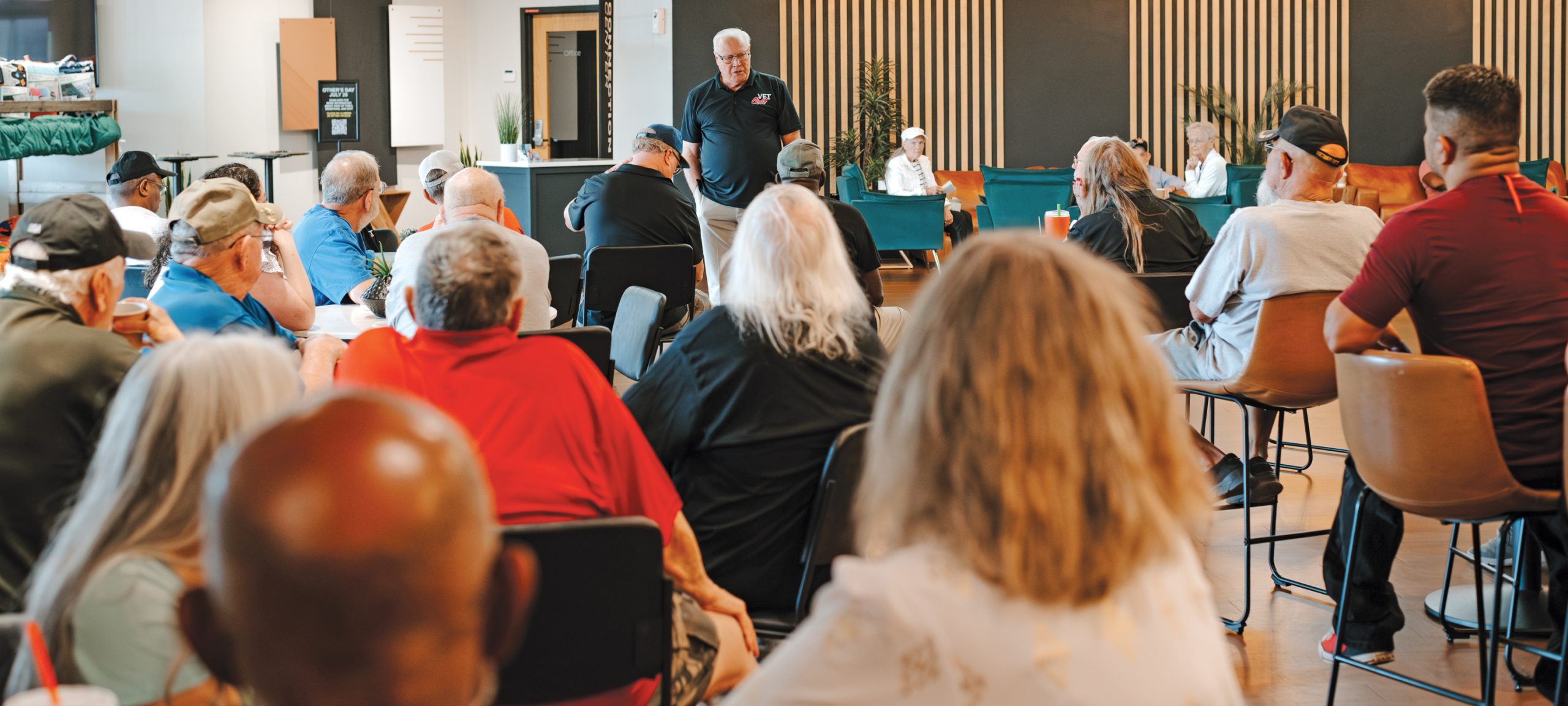
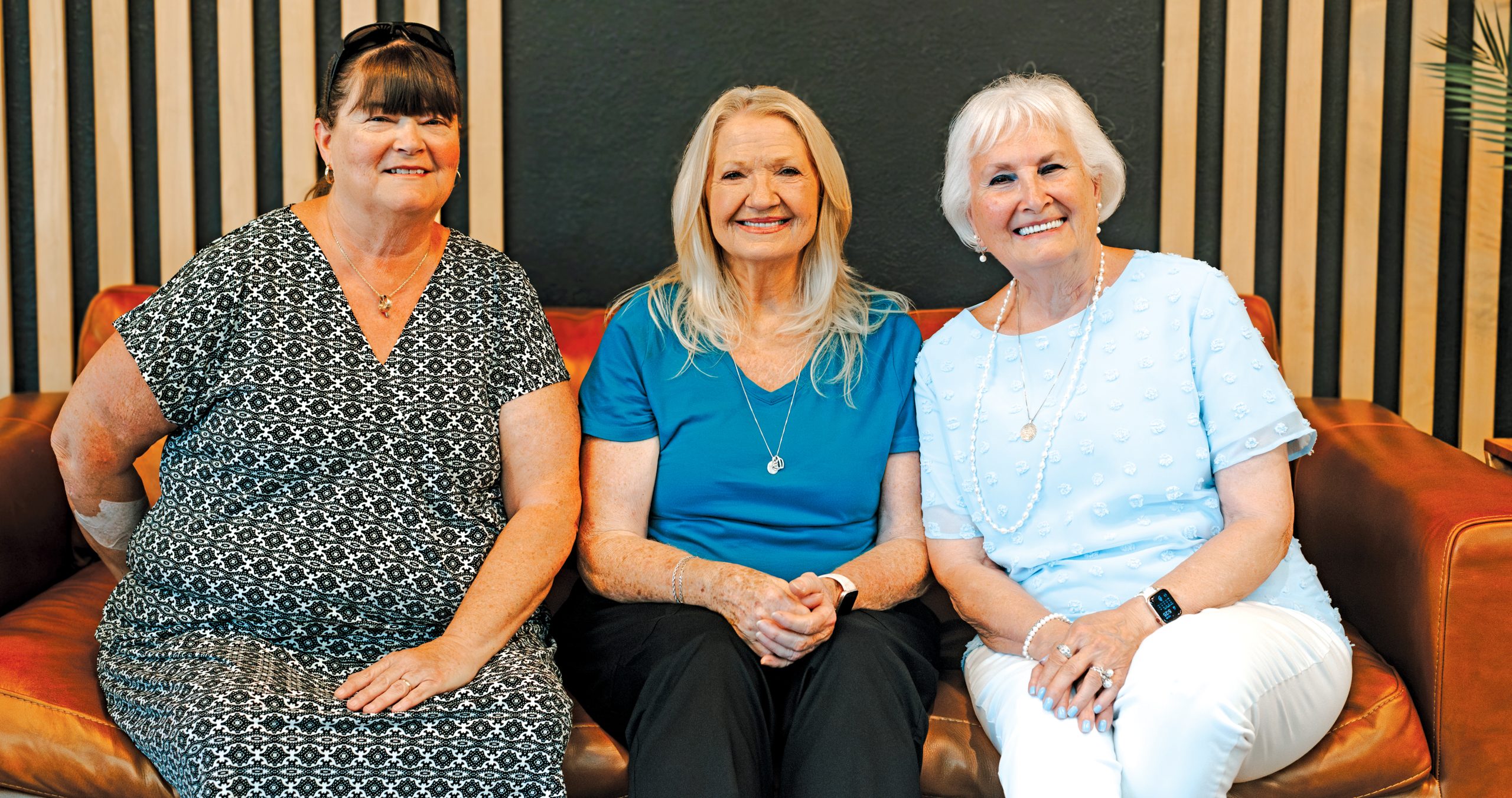
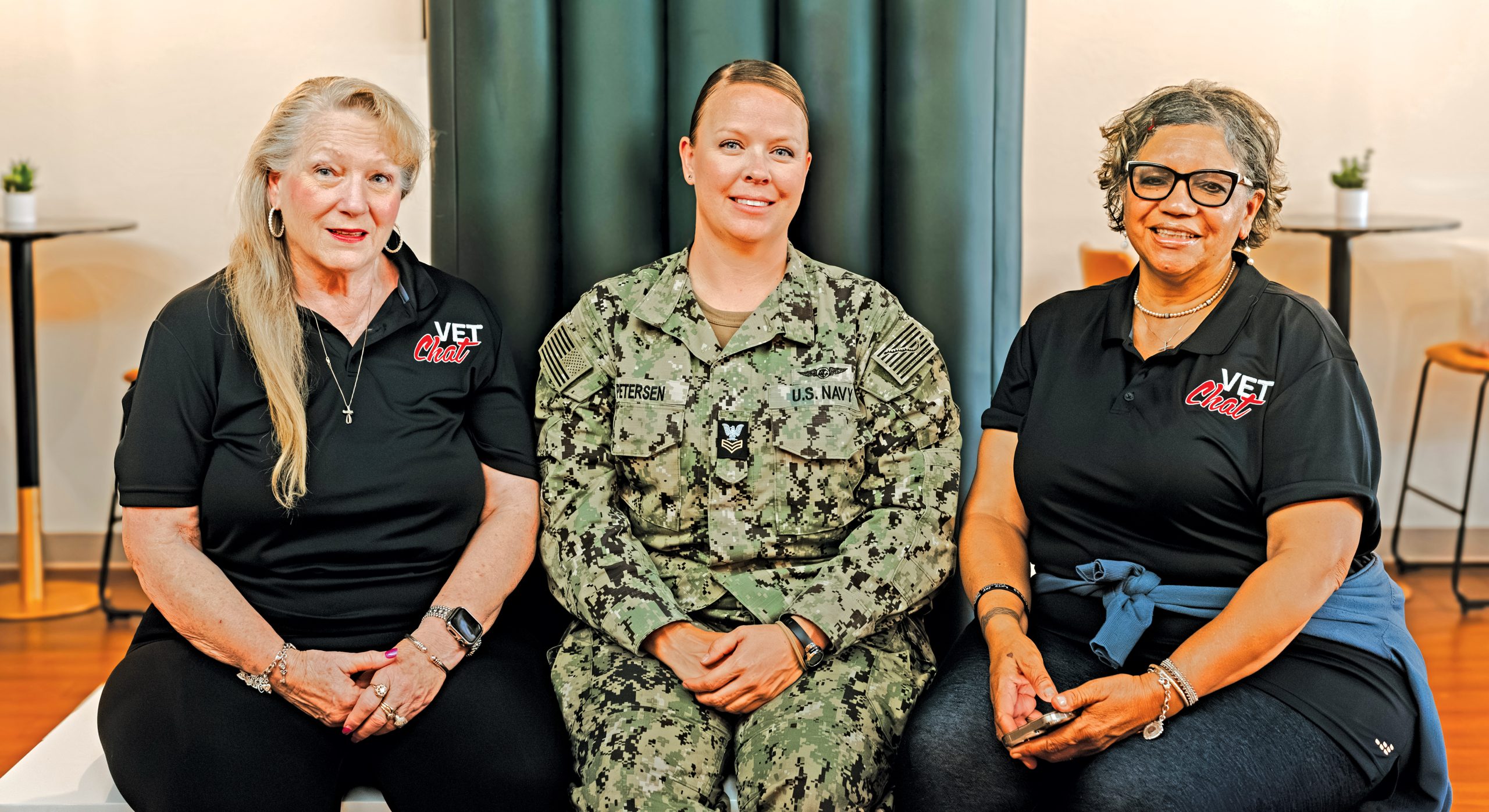
Chaplain Don Udell offers spiritual encouragement and prayer for veterans and service members.L-R Carle Evans, Shirley Moore, Sue Bruce “Three of our Vet Chat Widows”L-R Deborah McQuillar AF SMSgt E8/RET, Petty Officer 1st Class (E6) Amy Petersen, Barbarah Curry AF MSgt E7/RET “Three of our Vet Chat Women”
Story and Photo by Van Mitchell, Staff Writer
Leo Webster, a 24-year Air Force MSgt/E7 RET, knows first-hand the importance of communication when helping other veterans.
In July 2018 he started Vet Chat, a monthly meeting where veterans can gather and communicate with each other and learn about resources that are available to them.
Meetings are held the second Saturday of each month at 9 a.m. in the lobby of Cornerstone Church located at 9900 SE 15th Street in Midwest City.
Vet Chat allows veterans and service members to network and fellowship while learning about the resources available to Warriors, spouses, family members, and widows.
The program’s goal is to give a source of support while also connecting and encouraging veterans by sharing stories in passing of useful advice, information, or resources.
Topics include education benefits, VA burial benefits, Wills, Power of Attorney, disability rating, housing and spousal benefits.
“We strive to connect our veterans with local agencies, organizations, and civic groups that specialize in assisting our heroes and their families,” Webster said. “The goal of this group is to be a source of support while also connecting, encouraging and motivating veterans.”
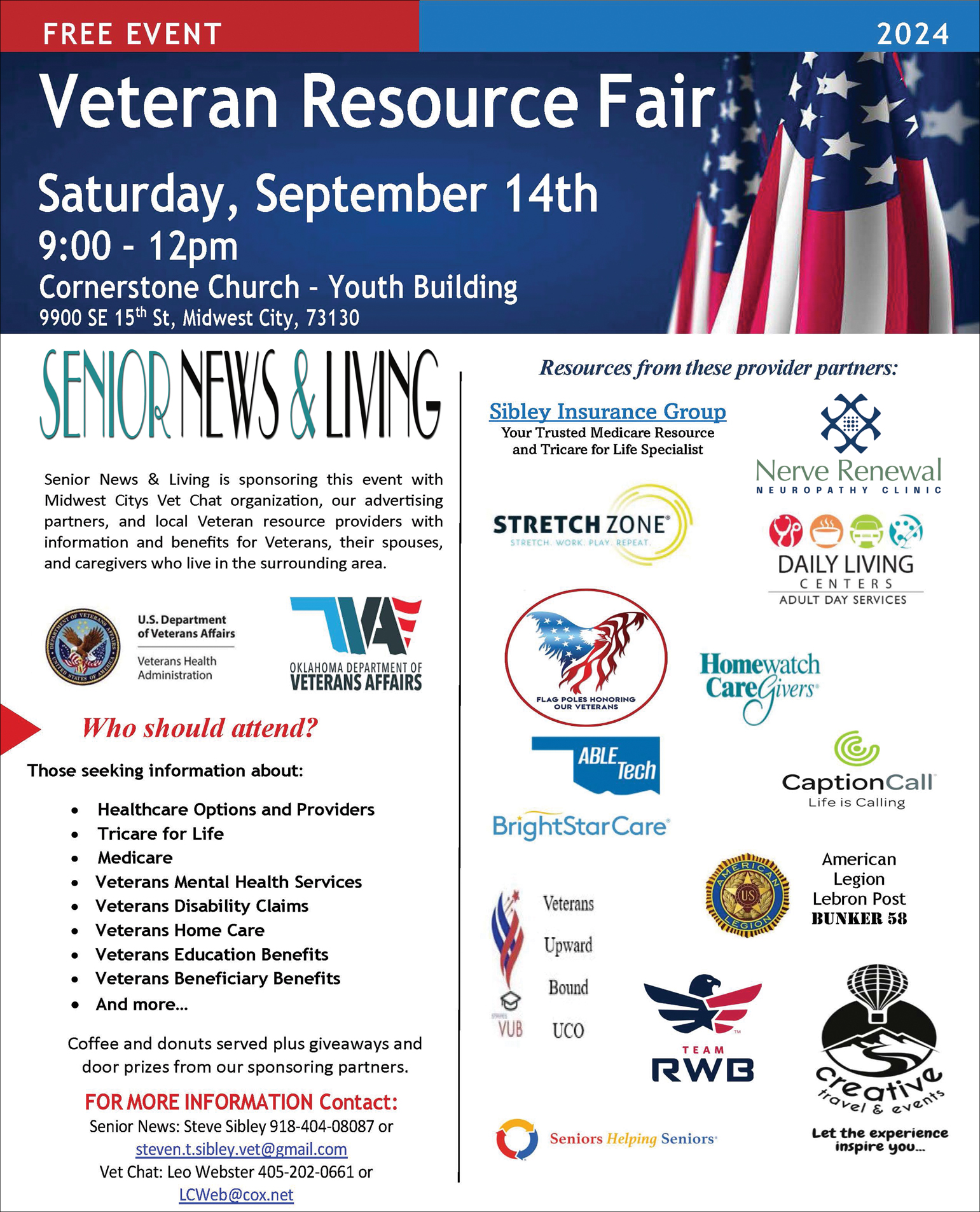
Webster said Senior News and Living will host a Veteran’s Resource Fair at Cornerstone Church on Saturday, Sept. 14 from 9 a.m. to noon in lieu of the regular Vet Chat meeting that day.
Webster said the idea of Vet Chat began while sitting in church.
“I was sitting in church one day and just looking around at the number of veterans in my church. And being a 24-year Air Force veteran myself, I said, “We need to start talking to each other.” This is just going on in my mind,” he said. “So, I invited a group of veterans to my house to have lunch.”
Webster said he and the rest of his invited guests sat in his living room and started talking to each other.
“You put a table full of food out, you can get a lot of people,” he said. “We started thinking about what are the things that we can just start helping veterans with? And obviously benefits and services and things that were available to veterans. So, I just ran a poll around the table and said, ‘Okay, what are some things? Just write down some things that you think that we can work on.’ Each person came up with a list of things they thought.”
Webster said the Vet Chat meetings outgrew his living room.
“We met in my living room at my house for a long time, but it just mushroomed,” he said. “I asked my pastor, Ron McKey, at Cornerstone Church if I could just start using the foyer in the church. He said absolutely. He said anything that we can do to help our veterans is welcomed.”
Webster said initially the Vet Chat meeting started with around eight veterans, but has grown slowly, but steadily.
“We started off with about eight people, and we’ve had as high as 57 people,” he said. “I would love to have over 100 veterans attend the Vet Chat meetings each month.”
Webster said he gets self-satisfaction from helping others.
“If someone needs something and I can help them, I feel that if I don’t do it, then I’m not fulfilling my calling of giving back,” he said.
Webster said the military teaches toughness, but that process has its challenges.
“Being in the service, us veterans are tough. We don’t ever want to admit that we have challenges, or we have aches and pains,” he said. “I’m a veteran and tried navigating applying for VA disability myself and ended up discouraged. My experience was frustrating like many others, but I had a gentleman, a good friend of mine said, ‘Leo, I’m not going to let you give up.’ He came to my house and picked me up and said, ‘We’re going down to the VA. I’m going to sit with you and you’re going to do this. He loved me through the process and just kept on loving me. And I’m comfortable right now.’”
“We help our veterans, their spouses and especially their widows.” Webster noted. When Sue Bruce lost her husband, the only thing she was sure of was she needed someone’s help. “They supported me through every part of the process. I had no clue as to all the benefits that were available to me. They just did everything, like family.” Bruce said. Carla Evans and her husband came on a Saturday earlier this year, seeking information primarily for her father and also her husband. Just weeks later her husband unexpectedly passed away. Evans said, “I could not have made it through that time without Leo and Vet Chat.
Webster said we also look out for our active service members.
“We have several wonderful retired women, like Barbara Curry, AF MSgt RET and Deborah McQuillar AF SMSgt Ret who love to support and mentor active duty females.”
Webster said he wants Vet Chat to be a safe harbor for every veteran.
“I want Vet Chat to become the model place in Midwest City where veterans can come and know, first of all, you’re at a safe place,” he said. “What you share with us is not going to be put on Facebook, it’s not going to be put out online. You are in a safe place. We are here to help you, and it’s going to be very private and confidential what you share with us. I just want to be here for our veterans. Being a veteran myself, I know how complicated it is and I just want to make life easy for these heroes and give them a safe place to just come and hang out.”
Webster said he works hard to earn each veteran’s respect.
“I have been there (Air Force) for 24 years, and I worked hard to earn the respect of the people that I serve,” he said. “And I venture to say everybody that comes to Vet Chat will tell you how hard I work to earn their respect. And I believe they all respect me, I really do. Because I don’t take anything for granted. I’m persistent when I know that I’m doing something that God would want me to do. I’m passionate about it, and I don’t want to leave any stone unturned. I want to do it with all my heart.”
Webster said while he enjoys how Vet Chat helps veterans; he will never be pleased until every veteran’s need is met.
“Yes, I am happy to see how the program is growing, but I will never be pleased until I know every veteran’s needs or services of what they need is met. And I’ll probably never accomplish that, but that gives me the drive to keep pushing every time,” he said. “Our goal is to assist our veterans to get everything that they’re entitled to. I want to be a friend to my fellow heroes, and not just be there for them.”
For more information about Vet Chat contact Webster at (405) 202-0661 or via email at [email protected] or contact James McQuillar at (405) 659-2116 or via email at [email protected]. See our Resource Fair Flyer on page 22