Saturday, December 13, 2025

Cannons Roar, History Lives: Honey Springs Reenactment

0
A Confederate soldier shoots at the Union forces during the Reenacted Battle of Honey Springs in November.

Cannon Roar, Infantry Charge

Boom! Boom! The ground shook as Union and Confederate howitzers volleyed across the battlefield. Smoke rose while 2,000 spectators filmed or covered their ears. Children cried. The Reenactment of the Engagement at Honey Springs, July 17, 1863, had begun.

Six Confederate cannon fired in sequence. Four Union cannon answered. Amidst the smoke, Confederate cavalry flanked left, sabers in hand, while rebel infantry in grey wool uniforms emerged from the woods. At the midpoint of the battle, they spread into two, 20-man lines and advanced toward the Yankee line, believing they were retreating.

Katie Panaro-Kish of Jacksonville, Arkansas, is dressed in an authentic 1800s Tea Dress. It’s her third reenactment at Honey Springs.

“Yee-haw! Yip-Yip!” Johnny Reb yelled, firing at two infantry squares of 25 Union soldiers standing about 50 feet apart. Two men in blue fell. But Billy Yank held firm and in the actual battle, fired back – just as reenactors did on November 7 and 8. In disciplined turns, the Union squares fired volleys at the rebel line 150 feet ahead. The left column fired – three men in grey dropped. The right column fired – two more grey men fell.

Then, Northern Army cannon thundered, covering the Yankees’ advance. The Graybacks retreated across Elk Creek. A narrator explained each step of the battle, which took place on part of the actual battlefield, for onlookers.

Diverse participants

Historical Society information says the combatants in 1863 came from the 1st Division, Army of the Frontier (USA), commanded by Maj. Gen. James Blunt and the Confederate Indian Brigade led by Brig. Gen. Douglas Cooper. They included “American Indians, veteran Texas regiments, and the First Kansas Colored Volunteer Infantry Regiment (the first African American Regiment to see combat in the entire Civil War)…Cooper reported his losses as 134 killed and wounded, with 47 taken prisoner. Blunt reported his losses as 17 killed and 60 wounded.”

Outcome

The Union victory ensured federal control of Fort Gibson in Indian Territory and Fort Smith in Arkansas. However, American Indians in Indian Territory were devastated. The Historical Society estimates between 11-24 percent of tribal members died and after the war, tribes were forced to sign treaties with the U.S. government that made them give up or sell much of their land.

Artillery firing at a Honey Springs Battlefield Reenactment. Photo by Honey Springs Historical Site.

Rest and Relaxation

After the reenacted battle, blue and grey cavalry soldiers allowed children to pet their horses. Attendees and reenactors lined up at food trucks, although it was startling to see Union and Confederate soldiers eating hot dogs and tacos together.
Nearby, Sutler Row businesses sold books, wooden guns, games, and reproductions of 19th Century household items. Demonstrations included laundresses, a piper, and sanitation methods. Union and Confederate camps housed reenactors and their families over the weekend, adding authenticity to the event.

Molly Hutchins, Site Director, estimated 2,500 school children attended Education Day, Nov. 6, and 5,000 came for the two reenactments. She said 300 reenactors from 10 states participated.

Educating Visitors

Trait Thompson, Executive Director of the Oklahoma Historical Society, explained the purpose of the reenactment is “to give our visitors a better understanding of the Civil War in the Indian Territory.” Asked what he hopes people take away from attending, he replied, “Understanding a little bit more about the people that fought here, the reasons they fought and how the battle may have looked. It’s always good when you can match fun and education together.”

Reenactors Voices

For many participants, reenacting is a passion. “I love history. That’s why I do this,” said Sean Mize of Edmond, a Confederate cannoneer. Union soldier Preston Ulrich of Moberly, Missouri, has been reenacting since age 13. Now 17, he participates 6 to 8 times a year with his father. “I think it’s fun. It’s a good way to escape modern life. It lets us dip into what our ancestors did.” For Colleen Jefferson of Ft. Worth, “I think this conflict is the defining conflict for the nation because it challenges our beliefs about our founding principles.” Jefferson has been reenacting for 14 years.

About the Battlefield

Oklahoma’s Historical Society owns and manages the 1,100 acres of the Honey Springs Battlefield east of U.S. Highway 69 between Oktaha and Rentiesville, Oklahoma. It was designated as a National Historic Landmark in 2013. The Society hosts and schedules the reenactment every two years. Planning takes a full year, with support from organizations such as the Friends of Honey Springs Battlefield, a 501(c)(3).

Four monuments list the fighting units involved. Please visit the museum to understand the battle. It has a gift shop and two main rooms. One room offers recorded messages on telephones from dairies and papers of participants and mannequins in period uniforms and weapons. The second displays maps of the engagement, explanations and a replica supply wagon. A few artifacts recovered from the battlefield like minie bullets, lead and canister balls, and camp equipment, are on display.

On one telephone recording, the voice of Col. James Williams, Commander of the 1st Kansas Colored Volunteer Infantry recounted events. “…I moved my regiment… loaded and bayonets fixed under sharp fire, to within 40 paces of the rebel line, without firing a shot, then halted and poured into their ranks a well-directed volley of buck and ball…which sent them to grass…which they never recovered.”

Largest Civil War Battle in Indian Territory

Hutchins emphasized the site’s importance: “We’re the site of the largest Civil War battle fought in Indian Territory…We are also known as one of the most culturally diverse battles in the entire Civil War. Preservation of our site is important for those reasons. We are dedicated to sharing the history of the (battle) and honoring the men who fought here.” •
• Story by Retired Lt. Col. Richard Stephens, Jr., USAFER. See Rich Travel Niche

To learn more, visit https://www.okhistory.org/sites/honeysprings.

WORD SEARCH – A VETERAN’S CHRISTMAS MOVIE

0

Exhibit Highlights Edmond’s Military History

0
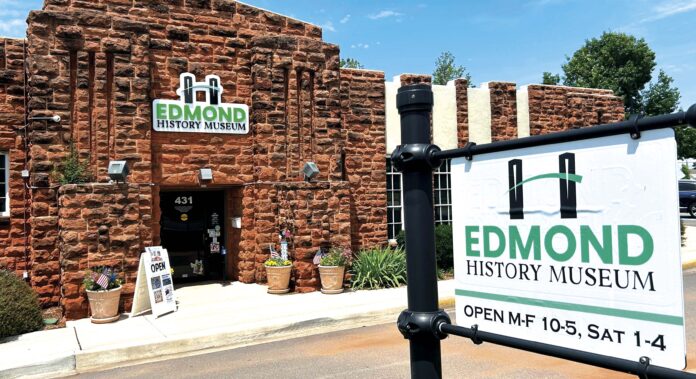
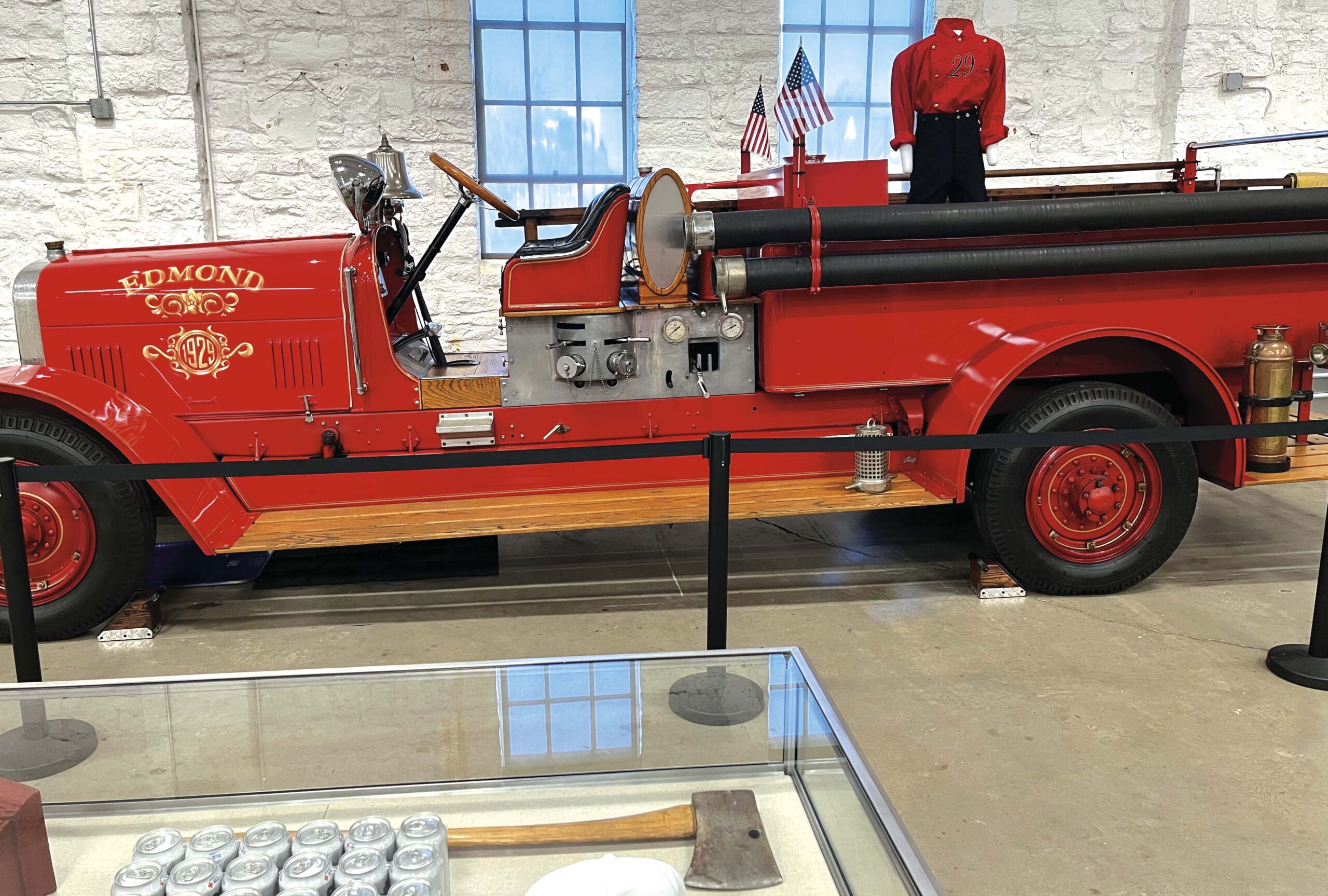
The Edmond History Museum is housed in a former armory once utilized as home the Oklahoma Army National Guard’s 45th Infantry Division.
The Edmond History Museum showcases a variety of exhibits telling the history of Edmond, which includes exhibits on the Edmond Fire Department, military history, and an exhibit about Route 66.

The home of the Edmond History Museum, located at 431 South Boulevard has a history itself.

It once served as the armory home of the Oklahoma Army National Guard’s 45th Infantry Division.

“During the New Deal in the 1930s when President (Franklin D.) Roosevelt was putting people to work, the decision was made to build a lot of infrastructure that would help communities,” Amy Stephens, Museum Director said. “And just after World War I, there was still a lot of heightened interest in safety and security, and so armories were high on that list. There were, I believe, 52 armories built in Oklahoma. A handful remains now, and a couple of them are museums and some community centers and warehouses. This armory was built in 1936 by the PWA. This was built by the workers in our community, and it was for the National Guard 45th Infantry Division.”

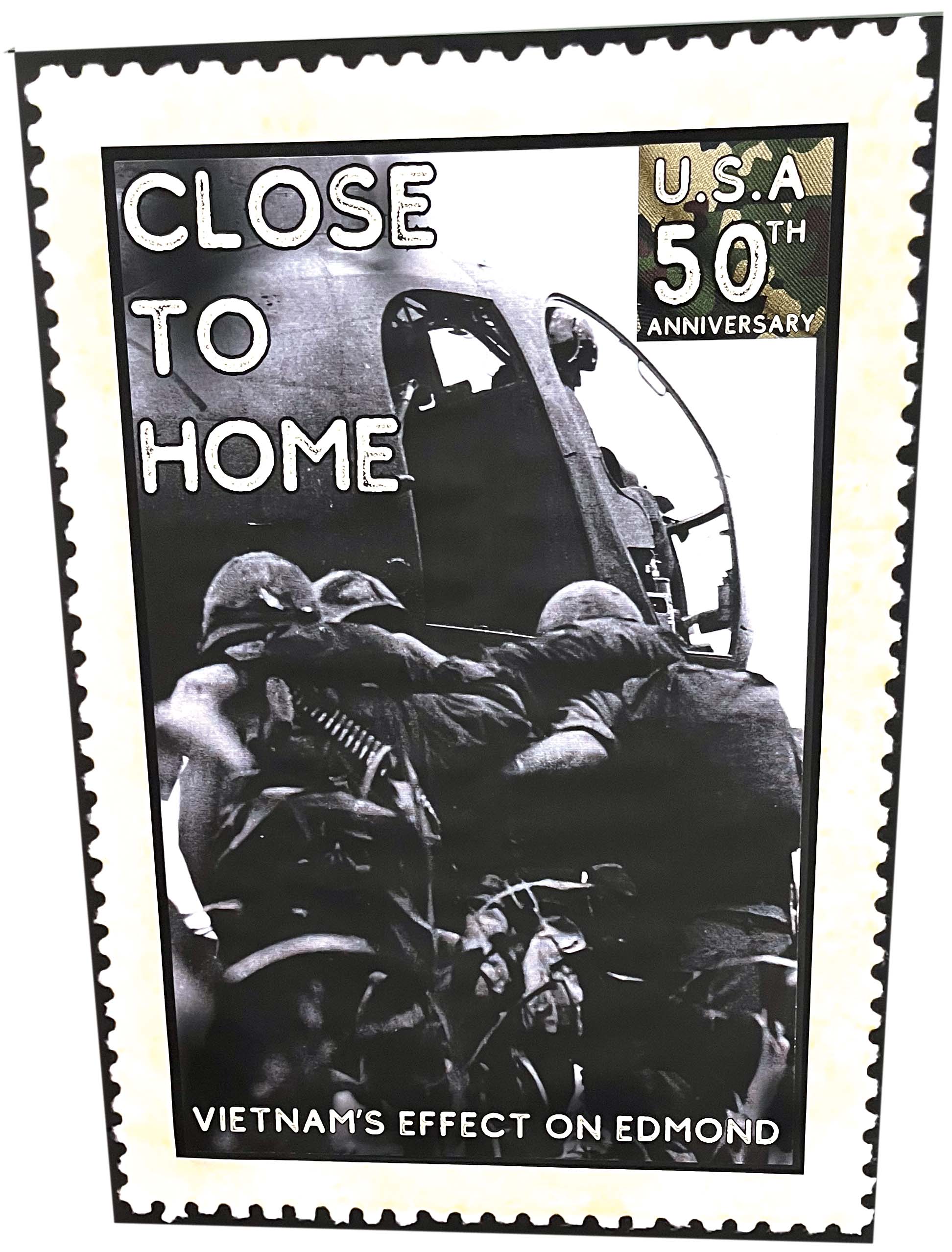
“Vietnam’s effect on Edmond” 50th anniversary postage stamp.

Stephens said the 45th drilled out of the building until a new armory was built on Bryant Street in Edmond.

She said the old armory, which is owned by the City of Edmond, was utilized for storing lawn equipment, non-profit offices, and a theater group.

“For about 10 years, it had multiple purposes, including serving as the office of the Edmond Historical Society, which evolved into the Edmond History Museum,” she said.
The mission of Edmond History Museum is to celebrate Edmond history through preservation and education. Museum hours are 10 a.m.-5 p.m. Monday – Friday, and 1 p.m.-4 p.m. on Saturday.

Artifacts visually tell the story of Edmond from the land run to the present.

“We are a community museum,” Stephens said. “What makes us slightly unique compared to a lot of community museums is that we change exhibits frequently. It’s not the kind of place where you come and you see the farm equipment and then five years later, you come and it’s the same farm equipment on display. We have a few permanent exhibits to tell about how Edmond started and talk a little bit about the purpose of this building originally. But after that, we have 43,000 artifacts in our collection to tell different stories.”
Stephens said that variety of storytelling has led to an increase in visitors.

“We (museum team) put a lot of emphasis on marketing and helping people understand that this is a museum,” she said. “We do a lot more community programming than we used to, and we’re out in the community more. When the city remodeled the park that we’re sitting inside, that brought in a lot of new people who had never even been here. The number has impressively increased. A couple of years ago, our average attendance was between 15,000 and 20,000, which has been ongoing for several years. The last two years we’ve had over 30,000 visitors. This year, we were at 34,000. So, we almost doubled attendance from a couple of years ago.”

Stephens said the museum currently has a Vietnam War exhibit titled “Close to Home,” which pays homage to the service of those from Edmond in that war.

“Telling the story of wars is important,” she said. “In Edmond, we have such a large population of military members and veterans. And so, every few years, we are doing some kind of war topic. We were looking at the calendar, realizing that this is the 50th anniversary of the end of the Vietnam War and knew this was the time to tell a story that hadn’t been told in a while.”

Stephens added “What I think is important about this exhibit is we interviewed people who are still alive, and we’re telling their stories because they’re still around. And we’re so fortunate to be able to gather the information about what happened to them then, and how it affected the rest of their life, and where they are now because of it. We profile six individuals. Everything from pilots to being down on the ground fighting in the swamps. And so, the artifacts and stories are about real people and people that live here.”
Stephens said the museum also tells the history of Edmond’s fire department, and Edmond’s connection to the historic Route 66, which turns 100 in 2026.

“The exhibits we have are very Americana,” she said. “We are currently installing an exhibit on the history of the Edmond Fire Department. We felt like that was a colorful story that everybody could find some interest in. We do have a small permanent exhibit about Route 66 history. We don’t have a ton of huge artifacts. We have a lot of small things, and so it’s a smaller footprint.”

Stephens said in 2026 the museum will have a new exhibit focusing on Tammi Sauer, a local children’s author.

“Early next year, we will be focusing on one of our very prolific local writers, Tammi Sauer,” she said. “She’s published well over 30 children’s picture books, and many are award-winners. They were all done by traditional publishers. She’s just a rock star. We wanted to tell that because 52% of our visitors are children.”

The museum is also doing a partnership with the Edmond Quilt Guild as well as its annual 5th grade art contest.

“The quilt guild is bringing their experts in, and people can sign up for a session to bring their family quilts and have it assessed,” she said. “Every spring we do an art exhibit of 5th grade art about trees in our town. It’s an Arbor Day festival. So, we will continue with that.”
Stephens said within the next year, they are converting a garage space on the corner of the museum into an activity classroom space.

“We are naming it the Thunderbird Room in honor of the 45th,” she said. “We will have a large neon of the Thunderbird that will be hanging on the walls. We want to pay a little more homage to our veteran history here.” For more information visit
https://www.edmondhistory.org/ or by calling the museum at (405)-340-0078. Museum admission is free. •
story and photos by Van Mitchell, staff writer

Sapulpa’s 100-Year-Old Marine Recalls War and Resilience

0
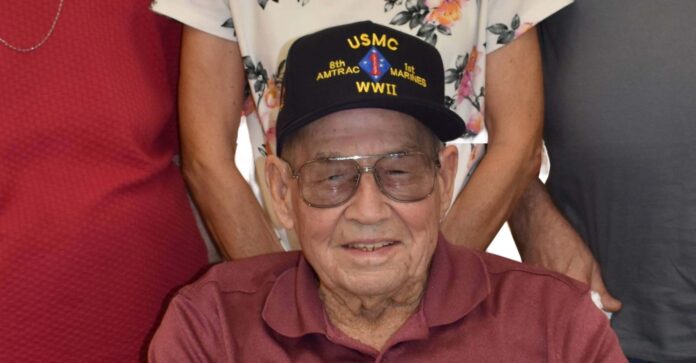
Left: In front, William Mauch. Behind him, from left, Glenna Howard and Patricia and David Mauch. Claremore.

A Serious Start to an Interview
Stephens. “Sir, is there a story or two you want to share about your service?”

Mauch. “For the younger generation, World War II was terrible. I would like for them to know that. It’s not something you would be anxious to get into…The young people need to know it’s not like video games.”

Stephens. “Please elaborate. Do you mean in general or some of the things you saw?”

Mauch. “You’re constantly hoping you stay alive so you can come home and have the American dream to marry and have a family. And that’s constantly on your mind.”

Stephens. “How did your service or the war change you?

Mauch. “Yes. Physically, I was like 135 pounds. After I got through bootcamp, I’m about 175. I think a little bit stronger (chuckles). Mentally, you were kind of prepared because of the Drill Instructor. He instructed you on how tough you should be.”

Stephens. “What would you say about how you did?”

Mauch. “Well, you experience so many things that if you’re 17 or 18 when you go in, you’re very inexperienced. When you come out, you faced a totally new world of time while you were there.”

Stephens. “Do you mean facing a world of life and death?”

Mauch. “Yes. The value of life. You’re more confident if you’re in the Marine Corps, especially. You’re more confident in your life in the future, I think all the way through life after.”

Stephens. “Anything else you’d like to say?”

Mauch. “Marry a lady that you love, for sure, and that will take good care (of you). Enjoy your family as long as possible.”

William “Bill” Mauch, now 100, saw combat close up as he rode in amphibious assault landing tractors during two of the Pacific’s most grueling battles – Peleliu and Okinawa.
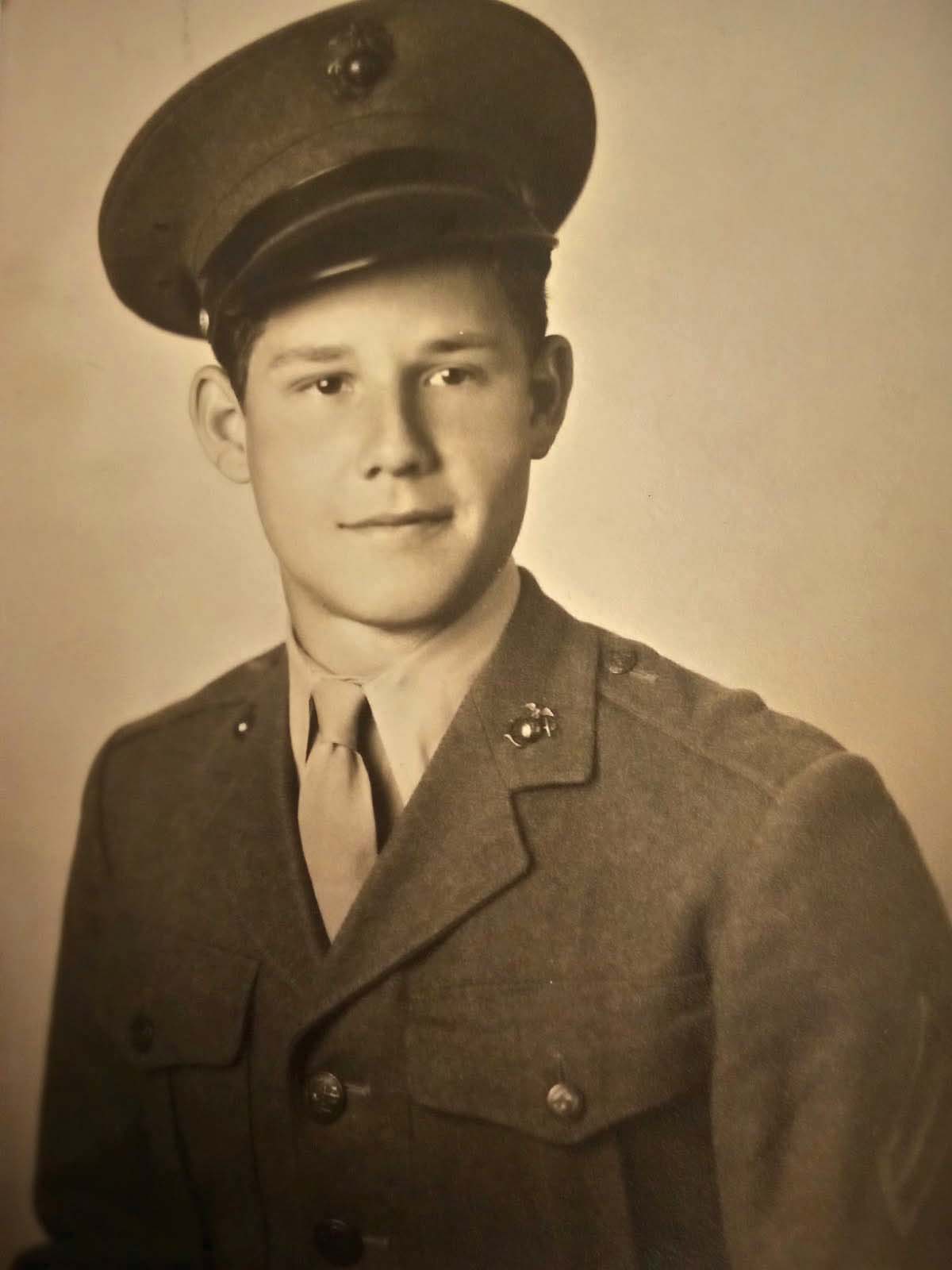
A young Marine William Mauch poses for a picture during WWII. Photo by William Mauch

Into the Heat of Peleliu
Between Sept. 16 and Oct. 20, 1944, Mauch was deployed to the island of Peleliu, a small island in the Palau archipelago located some 500 miles east of the Philippines. He arrived just after the initial Sept. 15 landing. He said, “I was in reserve maintaining the radio systems of about a dozen tractors in our company.”

Conditions were brutal. Temperatures soared to 115 degrees daily. “We drank contaminated water (from contaminated petroleum 55-gallon drums) and there was no way to bathe.” Relief came when the Navy supplied water purified through osmosis systems. Mauch said they were often dehydrated and suffered from dysentery and jungle rot in the crotch and armpits. “It was total misery.”

The Invasion of Okinawa
Five months later, Mauch “carried the first wave of troops to shore April 1, 1945”, during the invasion of Okinawa – the final island battle before an anticipated invasion of mainland Japan. Once again, he rode in amphibious tractors formally named as Landing Vehicle, Tracked, LVT4.

Each LVT4, Mauch explained, “would haul about 25 or 30 (personnel) in the rear, and the front was the driver and the radio operator, and then the commander would be also aboard…You could communicate back and forth on the tractor…I was responsible for the radio intercom systems for 12 of those LVT tractors.” He described how the vehicles were designed for transport and protection. “And then on the back was a drop tailgate, I’ll call it, and the troops would come out there and the tractor would protect them more or less while they got out. Then we could haul supplies, ammunition and things like that. Your initial job was to get the troops ashore.”

The Somber Duty of Burial
After the initial invasion of Okinawa, Mauch’s duties took a somber turn. “About the third day that we got a dispatch to pick up a load, and that was about, I’ll say six or seven dead bodies in body bags. We loaded them on our tractor…We’d haul them to the to the designated cemetery area.” The temporary gravesites were later uncovered and the remains returned to the United States.

Living Under Fire
In a Sapulpa Times interview by Micah Coquette, “Lifelong Sapulpan Bill Mauch turns 100, inducted into the Centenarians of Oklahoma Hall of Fame,” Mauch reflected, “’On that island, we were constantly under threat to our lives,’” adding, “’You have rifle fire, you have mortars, you have big guns and bombers every night. You have anti-aircraft shells that burst and can land on your tent. There’s just all these ways you could get killed.’”

Building a Civilian Life
Discharged in Feb. 22, 1946, Mauch returned to Sapulpa. His father took him to an Odd Fellows meeting where he reconnected with his high school mechanical drawing teacher. “He saw me there and he said, ‘Oklahoma Gas & Electric head called for a young man to train as an engineer…I’d like for you to go ahead…So I did and they hired me. And I spent three years as a junior engineer for OG&E.”

Realizing he needed to use his GI Bill, Mauch enrolled at Oklahoma A&M, spending nearly five years earning a degree in architectural engineering. Afterwards, “I went to work in the aircraft industry for Douglas Aircraft in their structural engineering in Tulsa. Later, McDonald Douglas bought them. I worked for them for 33 years.”

Love and Legacy
He married Helen in 1954, and together they celebrated 70 years of marriage before her passing in 2024. The couple raised four children and were blessed with six grandchildren and nine great-grandchildren. Today, William Mauch continues to live in his hometown of Sapulpa. • Story by Retired Lt. Col. Richard Stephens, Jr., USAFER. See Rich Travel Niche

 

Highway Sign Serves as Reminder to Thousands – Anthony Del Mar Peterson

0
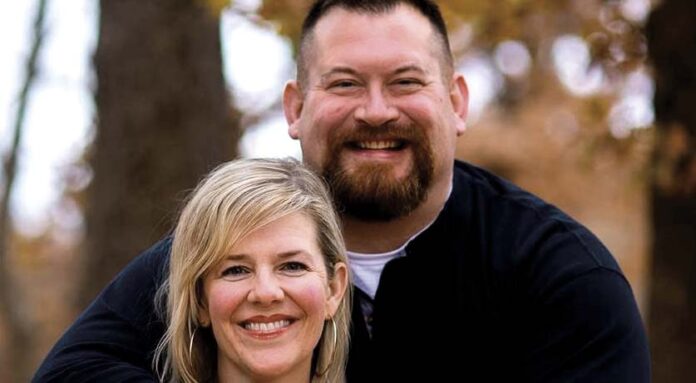
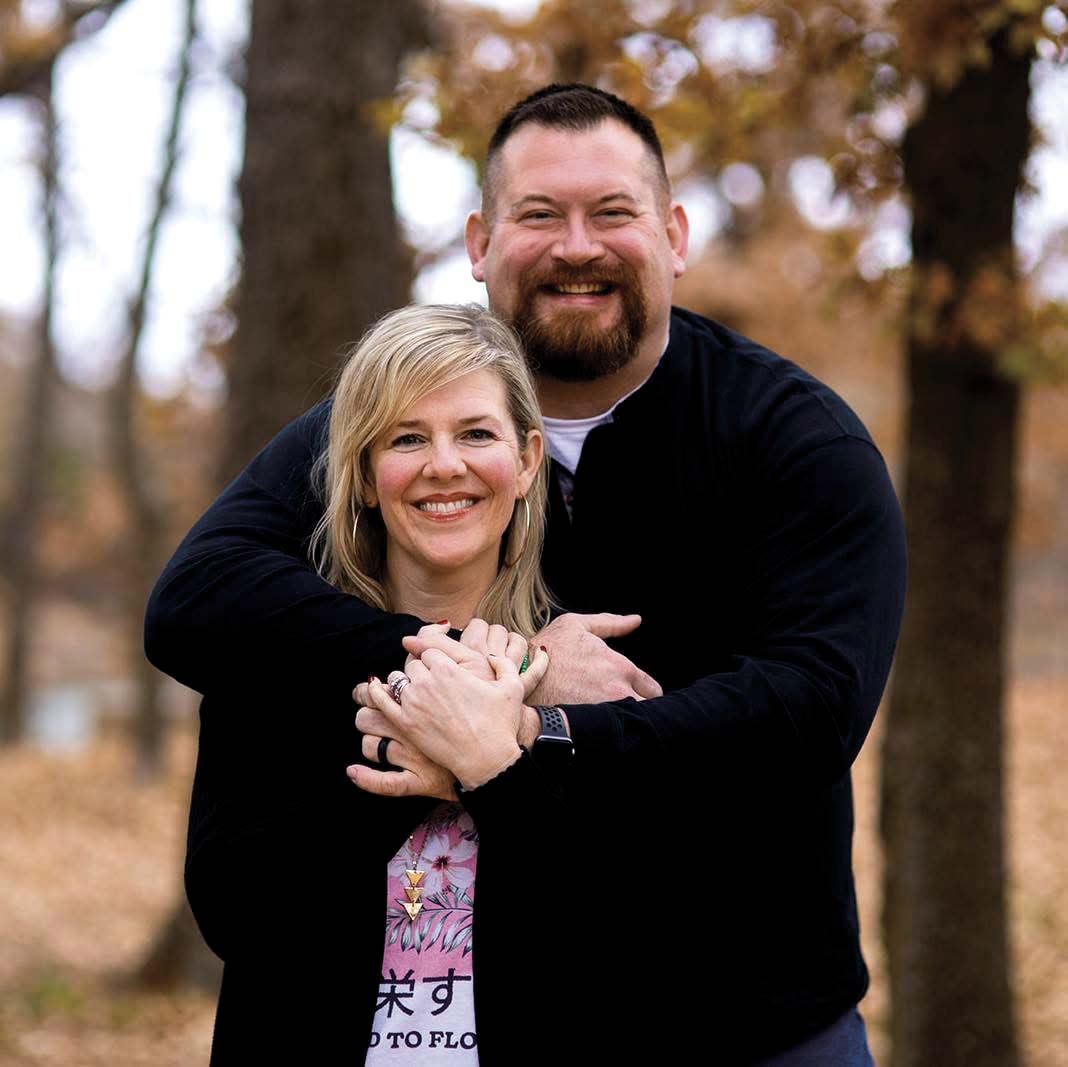
Garth and Terra Peterson with a replica of Anthony’s highway sign.

Have you seen those memorial highway signs with names and military ranks on them along the interstates in the Tulsa area? Have you wondered about the person named on those signs? One such sign is on Interstate 169 at 76th and 86th Streets in the north and southbound lanes in Owasso. It says “SGT Anthony Del Mar Peterson Memorial Highway.” Who is SGT Anthony Del Mar Peterson and why does he have a sign? I will start at the end of the story and then go back to the beginning.

SGT Anthony Peterson served in the Oklahoma National Guard. He was killed in action while serving in the Zurmat district, Paktya province, Afghanistan on August 4th, 2011. He was 24 and on his second deployment. He is survived by his parents Garth and Terra, two siblings, a son and numerous other family and friends.

Larger than life picture of their son Anthony.

I met with Anthony’s parents to learn more about who he was.

Anthony was athletic, loved the outdoors and was always training for something. Despite being a protective big brother, he also liked teasing his siblings. He once tied both of them up and hid them in a closet telling them they needed to learn how to escape in case they were ever captured. When his parents talked to him about it afterwards, he said he was just training them.

Both of his grandfathers and an uncle served in the military, however, they aren’t what influenced him to join. When he was in kindergarten, the family lived in California close to Mather Air Force Base. His mother Terra reminisced about them seeing men jumping out of a Blackhawk helicopter and young Anthony watching with big eyes and stating that’s what he wanted to do when he grew up. His compassion for the military would deepen after the events of September 11, 2001 which drew him to sign up for the military using the delayed entry program. He was so proud, he wore his uniform to his graduation ceremony. Anthony’s father believes he also knew that his parents couldn’t afford to send him to college so joining the military would take that burden off of them.

After his 2005 graduation from Chelsea High School, Anthony volunteered for his first deployment. During that time he was notified that his ex-girlfriend had a son and he was the father. As soon as he came back from that deployment he was an instant father as his son was already under his parents guardianship and living with them. The most important things in his life were God, family and country. His favorite quote was, “Come home with your shield or on it.” In the Spartan world where this quote comes from, to come home without your shield is a sign of cowardice. To come home on your shield (dead) is a sign of honor, meaning you fought til the death.

Garth and Terra Peterson are proud of the man Anthony became and are grateful for the time they had with him. They raised his son, who is now almost twenty years old and is an aspiring music producer. From the time that his dad was killed, he was taught that he had gone to be with God. His memories were kept alive through sharing what was in their hearts, by honoring his life and remembering his sacrifice.

The Peterson’s love seeing their son’s name on a highway sign and hope that it will serve as a reminder to the thousands who drive past it daily to appreciate our freedom and raise awareness about the families who have paid the ultimate price for it. They admit that their own awareness about such sacrifices and the meaning of Memorial Day and Veterans Day grew deeper when they lost Anthony. They encourage people to look up the name of those listed on the highway signs and learn about who they were.

I asked what they would say if they could say anything to Anthony. They agreed they would tell him they loved him and how grateful they are that God lent him to them. I asked what they thought he might say to them. Dad said he would say, “I love you.” Mom said he would say, “Good job, Mom. You did exactly what I wanted you to do.”

Garth and Terra have never lost their faith in God. They remain grateful for the twenty-four years they had with Anthony and for the gift of being able to raise his son.

SGT Anthony Del Mar Peterson is laid to rest at Ft. Gibson National Cemetery. •
story and photos by Jill Stephenson, mother of a fallen soldier.

Oklahoma Heros Inducted into Military Hall of Fame

0

The Oklahoma Military Hall of Fame celebrated its 26th Banquet and Induction Ceremony on Nov 1 at the Embassy Suites, Norman. This year’s class included 11 living and deceased service members representing all Services and all ranks, one civilian and the Kiowa Code Talkers of WWII. The 590 attendees were awed by their valor in battle. The Hall of Fame is one arm of the Oklahoma Military Heritage Foundation that also supports Hall of Honor Chapters in Oklahoma towns.

Mrs. Pamela Kloiber (center) received a Distinguished Public Service Award at the Military Hall of Fame on Nov 1, 2025.

After honoring our national symbols, each service medley was played and dinner served. Singer and performer Maggie Bond and guitarist Dennis Hoch, a Navy veteran of Vietnam, provided entertainment.

Induction Ceremony
After each inductees’ biography was read, the inductee or a representative took the stage with the person who submitted the nomination and the Ambassador who assisted their family’s attendance. Two inductees are highlighted.

Army Colonel Philip Adair
Lt. Col. Gale Clem, his daughter, accepted the award because he died in 2017. She noted, “He was very humble. He…would basically give credit to his fellow servicemen, the crew chiefs, the maintainers, and the other pilots with him…it’s a tribute to an entire generation of Americans…”

Marine Corporal Byron Gordon
Because Gordon died in 2017, his oldest grandson, Chad Higbee, accepted the honor. Gordon was at Bataan when it fell in April 1942. He jumped in the ocean and swam towards Corregidor Island, 3.5 miles away. Years ago, Gordon was asked why he swam. He replied, “It was either that or a Japanese bullet.” Higbee said his grandfather “was actually being encircled by two sharks that were very aggressive. Granddad wasn’t really an overtly religious person, but he did pray for help…And that prayer came in the form of a dolphin who drove off the sharks and then gave him a ride.” Many in the crowd gasped or laughed hearing that story.

Public Service Awards
After 10 military members, including the Kiowa Code Talkers, were inducted for valor, Major General (Ret.) Douglas O. Dollar, USA, who founded the Hall of Fame, and Colonel (Ret.) Kelly Zachgo, President of the Oklahoma Military Heritage Foundation, awarded Distinguished Public Service Awards to CAPT John Kielty, USN, and Mrs. Pamela Kloiber.

Dollar explained the purpose of the Hall of Fame. “We try to honor veterans for one thing, for valor. They’ve been outstanding in combat. The other criteria is that they may have done community/public service for veterans, and they certainly deserve recognition and encouragement.”

Zachgo was pleased with the night’s ceremony. “It was clear that attendees connected with the inductee’s stories and sacrifices. We’re here to honor Oklahoma’s veterans and tonight the cup for them was filled up and held high.”

Inductees not listed in October’s Veteran News Magazine

PVT Oscar J. Upham, U.S. Marine Corps, 1871 – 1949. Upham served in China during their 1899 – 1901 Boxer Rebellion. He received the Medal of Honor for heroic action erecting barricades under enemy fire. He served on the USS Oregon in the Spanish-American War.

CPL Byron C. Gordon, U.S. Marine Corps, 1919 – 2017. During WWII, Gordon deployed to China, Bataan and Corregidor. He endured 3.5 years as a prisoner of war, surviving harsh labor in prison camps and mines. Gordon was awarded the Bronze Star, Purple Heart, and POW medal.

RADM Albert L. Kelln, U.S. Navy, 1929 – 2022. Kelln graduated from the U.S. Naval Academy, served on the USS Blue and USS Ronquil during the Korean conflict, became one of the first officers qualified to operate a nuclear reactor and was Chief Engineer on USS Enterprise.

SSG Virgil Malone, U.S. Army, 1921 – 2004. During the Battle of the Bulge in WWII, Malone drew the enemy’s fire on himself so his fellow soldiers could eliminate a machine gun position. He was wounded in the head and awarded the Silver Star and Purple Heart for extraordinary valor.

SGT Gary L. Opela, U.S. Army. Opela deployed to Vietnam and twice earned the Silver Star. On July 24, 1970, he led a night defense, coordinated supporting fire, and evacuated wounded under heavy enemy attack. Opela helps veterans in Prague.

SGT Harold E. Wadley, U.S. Marine Corps. Wadley earned his first Purple Heart during the Vegas Hill battle, Korean War. With the 5th Marines in Vietnam, he received the Bronze Star with “V” for valor for rescuing wounded comrades. During Operation Swift, he was wounded, earning another Purple Heart and the Silver Star. •
story and photos by Lt Col Richard Stephens, Jr., USAFR, Ret.

For more information about the Oklahoma Military Heritage Foundation, go to https://okmhf.org.

BEETLE BAILEY – 12-01-25

0

Faith and Faith Keep Shafer Striving to Give

0
George Shafer, a U.S. Army veteran, now serves as Generation Church’s Pastor of Digital Communications in Guthrie, and his wife Meredith serves as Pastor of Assimilation and Small Groups.

George Shafer, a U.S. Army veteran, was at his lowest point when his wife Meredith found him in their family’s treehouse with a shotgun aimed under his chin.
He credits her with getting him the help he needed when he was ready to end it all.
“I suffered a traumatic brain injury (while serving) and I got into a deep depression,” Shafer said. “I am a veteran that has struggled. I have struggled with the aimlessness, and the lack of passion, feeling worthless, feeling empty, feeling void.”
Shafer those feelings only heightened during the COVID-19 pandemic after he and his wife’s ministry which helped veterans struggling with addiction closed its doors.
“When the ministry (in Edmond) fell apart in the pandemic, I lost many relationships, and I really isolated myself. I hurt a lot of the friends that I had at the time,” he said.
Shafer said after Meredith found him in the treehouse; she went to work to get him help.
“She was relentless,” he said.
Meredith Shafer wrote in a Facebook post about her and George getting saved 12 years ago.
“Twelve years ago, today (Sept. 28) the Lord saved us,” she wrote. “I was pregnant with our youngest, and life had been in shambles for a while. Mr. Wonderful (George) was chained by addiction, and I was at the end of my rope. That day I found him in our kids’ treehouse about to take his own life. It turns out, he was at the end of his rope too and did not know how to get out of those chains. Twelve years ago, God met us in a treehouse and changed our lives forever. Not in an instant like we wanted, but over and over in the daily choices He showed us how to make.”
Shafer said their response to the pandemic helped shape his family’s future.
“When the pandemic hit Oklahoma, our family had a meeting around the dining room table. We were all nervous, but we discussed what opportunities were available in our new norm,” he said. “We told our kids that it was a difficult situation, but it was also globally difficulty being experienced by everyone. Meaning, the people who are quickest to adapt to change will be the most prepared when the pandemic was over. Our family received this well, and got to work! But they also helped me do the same.”
Shafer decided to go back to school online through Liberty University and receive his Masters of Divinity degree from Regent University.
“There’s just been a calling on my life (to complete his education), and I’ve known it for a very long time. And I ran from it. But when COVID hit that was one of the thresholds that was there for me to cross,” he said.
Shafer credits his wife and children for sticking with him through his studies.
“Meredith Shafer, Jack, Tate, Lucy, and Isaiah; this victory is for you,” Shafer wrote in a Facebook post. “For the missed: sports events, kid drop-off and pickup, parent/teacher conferences, etc. Thank you for helping me, believing in me, and trusting me for the past 7 years through both an undergrad and a challenging master’s program. For a guy who had a 9th grade education prior to college, there were days I wasn’t sure we were going to make it (math and Greek). You guys helped me break generational curses and change the trajectory of our family name.”
Shafer graduated with his master’s degree last spring but was still unsure of what was next for him.
That is when he and his wife felt a calling to come to Generation’s Church in Guthrie.
“I scheduled a meeting with my pastor Josh Seabolt (and told him his story),” Shafer said. “I told him I made a lot of mistakes, and he showed me the grace of Jesus Christ.”
Through that conversation, Shafer was later hired as Generation Church’s Pastor of Digital Communications, and his wife serves as Pastor of Assimilation and Small Groups.
He thanked Generations Church for giving his family a shot.
“To our Generations Church family, you will have no idea how much your love and support has meant to our family. So grateful for each of you,” he said. “It’s very humbling.”
Shafer is the former chaplain of the American Legion Lebron Post 58 in Guthrie, where he helped launch its Bunker 58 Esports program, which is designed to reduce veteran suicide by providing an environment of a connection, teamwork, and camaraderie for local veterans.
Shafer said his struggles help him better help other veterans.
“When I see that in somebody else, I’m able to recognize it,” he said. “Not because I’ve experienced exactly what that person has experienced, but it rekindles my desire to ensure that nobody ever feels that way again. To ensure that they understand that they’re made in the image of God, in the image of their creator, and that they have worth, and that they have value. Even if they no longer wear the uniform or serve the country, they still have value and they still have worth, and they still have things that they were put on this planet to do. And if I can help them get through this short, temporal period of feeling empty, it’s my honor to do that.” •
story by Van Mitchell, staff writer
For more information about Generations Church visit
https://www.generationsguthrie.com.

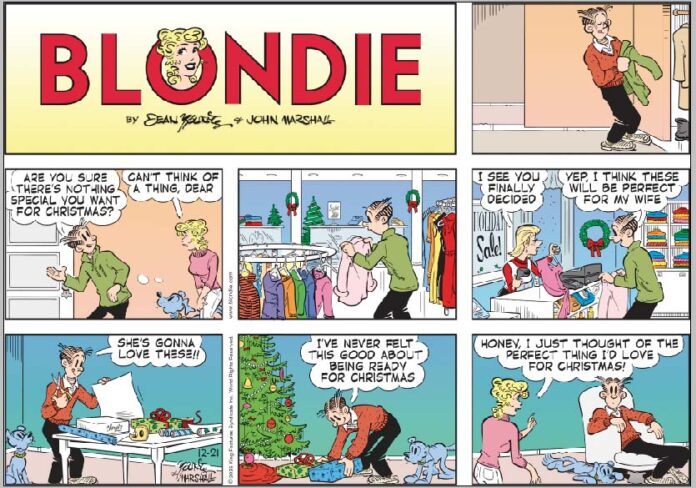
BLONDIE – 12/01/25

0

Social

0FansLike
0FollowersFollow
0SubscribersSubscribe