Effective February 10, the Oklahoma Insurance Department (OID)’s Oklahoma City Office will be relocated to our new facility: Oklahoma Insurance Department, 400 NE 50th Street, Oklahoma City, OK 73105.
As part of the moving process, email and network access will be limited from Wednesday, February 5 through Friday, February 7, 2020. The Oklahoma Insurance Department will resume normal operations on Monday, February 10, 2020 on its regular schedule from 8:00 a.m. to 5:00 p.m. For immediate assistance during this time, you may call Communications Director Liz Heigle at 405-522-0683.
We thank you for your patience and cooperation during these few days as we transition to a more efficient and effective office environment.
If you have questions about other insurance issues, contact the Oklahoma Insurance Department at 1-800-522-0071 or visit our website at www.oid.ok.gov.
Oklahoma Insurance Department’s New Location
Booksale 2020 to Celebrate 40-year Run

Story by Darl DeVault
Seniors still prefer books and make up many of the volunteers and customers at the huge two-day Friends of the Library Booksale 2020 February 22 and 23 at the Oklahoma State Fairgrounds. As thousands of book lovers gather in the Oklahoma Expo Hall the sale proves in the world of digital access, the Age of the Book is still with us.
Subtitled “Booksale—40 Years Strong”, the annual sale provides a diverse selection of books, CDs, DVDs, magazines and more for every demographic of customers.
“It is amazing the wide range of subjects—including fiction, nonfiction, cookbooks, biographies, medical, westerns, romance, children’s, encyclopedias, reference and foreign language, plus a large selection of music, DVDs and audio books,” said Don Dory, 73, Booksale Coordinator. “Thousands of shoppers have been coming for years for our wide selection and low prices. In the General Area, hardback books are one dollar each and paperbacks and magazines are 50 cents each. Collectors go for the Items in the Better Books Room which vary in price, mostly under $5.”
The nonprofit Friends of the Library has used this book sale to raise money to support the Metropolitan Library System. In it’s now 40-year run, the Friends have given more than $4.8 million in grants to the system. All of this is due to the tireless efforts of hundreds of volunteers each year.
Almost five million dollars in 40 years is a big number and so is the 800,000 books available this year. All this means the sale becomes the largest nonprofit bookstore in Oklahoma for three days.
“Customers run the gamut of need—many trying to select best sellers, classics, collectibles and research books needed for school,” Dory said. “Thousands will be seeking to complete personal libraries in certain subjects, while parents will be striving to enhance their children’s reading exposure.”
Friends of the Metropolitan System members can shop a Presale from 1 to 9 p.m. on Friday, Feb. 21. Held the day before the sale goes public, members are invited to first access. Annual memberships are available for $15 in the lobby starting at noon. Children 12 and under accompanied by an adult are free.
After 40 years, the sale is well established on the literary sale calendar for customers coming from all over Oklahoma, surrounding states and the whole region. Selective shoppers are advised to join the nonprofit to ensure the best possible purchasing opportunity.
Book lovers line up all three days awaiting the door’s opening. A quick survey of the parking lot shows that many of those customers are from out of state, coming to Oklahoma each year for the huge selection. The multi-day event attracts more than 10,000 book lovers.
In some ways the diverse selection offered represents a snapshot of a high-quality American publishing museum with the bonus that everything is available for purchase.
“Donated all year from various sources, the books are both common and select, while the other offerings are extremely varied, even including music,” said Beth Toland, 65, publicity chairperson. “This diversity means the sale is in one sense our states largest literary event.”
Admission is free 9 a.m. to 5:30 p.m. Saturday and Sunday, Feb. 22 and 23.
The shopping is so robust that a dozen checkout points are offered by volunteers in each of the two sections. And yet, so many customers arrive early a line forms for the first few hours each day. The book shopping is intense, almost competitive, as this is a once a year opportunity.
Customers, depending on their need for new reading material, come with a wide variety of book hauling capability, as there are no shopping carts provided. Shoppers will see every form of wheeled cart pressed into service by other shoppers as they move among the tables laden with thousands of books. Large boxes are everywhere as some shoppers limit themselves to just those books they can carry.
The volunteers display 40 years of expertise in staging the sale by sorting the books into sections. Those sections are a wide cross section of interest, from tables of books by Oklahoma authors to books about Oklahoma.
Some years special sections offer brand new books donated when book stores and Oklahoma publishing houses use their donations as a way to balance their inventory.
Many business and industry concerns are well represented when entities going out of business donate their libraries. Retiring attorneys provide shoppers the chance to buy law books at a steep discount.
Volunteer shifts are still open, as the group is still looking for volunteers! To volunteer or for more information about Booksale, visit www.mlsfriends.org. For additional questions contact the Friends at 405 606-3763 or friends@metrolibrary.org.
GIFT TO ESTABLISH COMPREHENSIVE NUTRITION CENTER AT THE CHILDREN’S HOSPITAL

David and Cory LeNorman have a unique perspective on the critical nutritional needs of newborns and a heightened awareness of the demand for extraordinary care. Their daughter, Quincy, was born 24 weeks into pregnancy, much earlier than the 38- to 40-week period considered optimal by neonatology experts. The family’s personal experience was the driving force behind their dream, and motivated the $1.5 million gift made to establish the Quincy LeNorman Nutrition Center at The Children’s Hospital at OU Medicine. The gift will significantly advance the care provided at the nationally ranked hospital, adding state-of-the art technologies that further elevate best practices in nutritional science.
“We’re both grateful and delighted to accept this generous gift presented by the LeNorman family,” said Jon Hayes, president, The Children’s Hospital. “It perfectly joins the long-held, shared vision of hospital and physician leaders with the heartfelt desire of the LeNormans. Thanks to this funding, we’ll realize a mutual goal to build upon and expand nutrition services that are vital to health and healing of the children we care for at The Children’s Hospital.”
Born weighing less than two pounds, Quincy LeNorman, the center’s namesake, spent the first 88 days of her life in the Neonatal Intensive Care Unit at Children’s. Now 17, she thrives as a student who plays high-school soccer, with no evidence of an early struggle for life. Quincy’s mother, Cory LeNorman, said her pregnancy was normal in every respect, with no hint of trouble until two days before delivery.
“The reason Quincy is here today is because of the great support we received – skilled and dedicated nurses, doctors and other personnel, and a facility that was equipped to provide the best possible care.”
Nearly three months after her birth, Quincy was discharged from the NICU. But the LeNormans never forgot the labor of love that gave Quincy a chance at life. In years that followed, David and Cory began to consider ways to give back that would match their keen interest and address identified needs at The Children’s Hospital.
At the same time, NICU personnel and hospital leaders envisioned better ways to meet their patients’ diverse nutritional demands. Laying the groundwork to bring the vision to reality, leaders toured several NICU centers in the Dallas/Ft. Worth area, observing best practices in neonatal nutrition handling, touring thoughtfully planned facilities, and identifying a model to emulate at Children’s.
Trent Tipple, M.D., neonatology specialist and chief of Neonatal-Perinatal Medicine, The Children’s Hospital, said, “The Children’s Hospital is where the state’s tiniest and most vulnerable patients come for the level of care their complex conditions require. The future center represents another major step forward in neonatal nutrition. Thanks to the LeNorman family, we will have greater capacity to deliver life-saving technologies and redefine excellence in neonatal care.” One of the significant components that will distinguish the new nutrition center will be its use of sophisticated software that will track and analyze detailed metrics information. A human milk analyzer will determine how and to what extent milk must be fortified to meet specific nutritional needs. It will also identify babies whose growth is not progressing adequately.
Jamie Kilpatrick, M.S., R.N., CENP, director of the Neonatal Intensive Care Unit at Children’s, said, “Currently, formula and human milk preparation for neonates is done in a small human milk lab, which we have already outgrown. Feeding preparation for other hospitalized children occurs in a separate area. All services are performed by excellent and expert hospital team members who follow best practices to meet high-reliability nutrition demands. However, a more seamless operation – more centralized and expanded for greater efficiency – will support our capacity to supply the best nutritional services possible on a broader scale.” The proposed nutrition center will benefit not only babies receiving care as NICU patients, but other infants and pediatric patients who face a range of complex feeding needs. These special needs may be related to specific treatment, care or rehab related to surgery, or due to other unique nutritional deficits or sensitivities.
A safe solution
by Bobby Anderson, Staff Writer
For 30 years now, John Houge has has helped seniors lead a longer, safer and more comfortable life all in the comfort of their own homes.
As the state manager, Houge helped bring Craftmatic adjustable bedding to Oklahomans near the turn of the century, ushering in a new era in home health and safety products.
And for the past 13 years he’s been an expert traveling the metro counseling seniors on the benefits of A Safe Solution walk-in tubs.
For many seniors, the worry about a fall is always in the back of their minds.
According to data compiled from the 1997 and 1998 National Health Interview Survey, the majority (55%) of fall injuries among older people occurred inside the house.
Falls in the bathroom are a major source.
Combine already slick surfaces with water and rugs and getting in and out of a bathtub and it can be a recipe for disaster – literally.
That’s where Houge and A Safe Solution come in. Walk-in tubs provide homeowners with the peace of mind knowing they will be as safe as possible.
“I enjoy going to see people and I enjoy helping them with their home health needs,” Houge said.
A SCARY FALL
According to the National Institutes of Health, one in three adults aged 50 and over dies within 12 months of suffering a hip fracture. Older adults have a five-to-eight times higher risk of dying within the first three months of a hip fracture compared to those without a hip fracture. This increased risk of death remains for almost ten years.
Beyond suffering pain, a hip fracture results in a loss of physical function, decreased social engagement, increased dependence, and worse quality of life. Many people who have a hip fracture need to change their living conditions, such as relocating from their home into a residential aged care facility.
Ultimately, the often rapid regression of an older person’s health following a hip fracture means outcomes are poor.
By offering high-quality walk-in tubs that are safe and therapeutic, individuals overcome the risks of bathing in a standard bathtub.
For those who struggle to get into and out of a standard tub, dreading the difficult 30” threshold and slippery bathtub floor, a walk-in tub is the answer to changing bathing requirements.
Safety is a major reason many rely on walk-in tubs, but Houge said there’s a host of other reasons.
BLISSFUL HEALTH
The benefits of a relaxing bath are becoming clearer and clearer in scientific literature.
Hydrotherapy is the full immersion of the body into both hot and cold water as a natural and holistic treatment which detoxifies the blood, stimulates blood circulation, enhances the immune system, improves digestion, reduces inflammation and much more.
For thousands of years, people around the world have benefited from the healing power of hydrotherapy. In recent decades, doctors have confirmed the healing power of bathing, and studies and testimonials have shown how hydrotherapy is a reliable and affordable home remedy for treating the symptoms of many of today’s most common ailments.
According to an article in the New England Journal of Medicine, type II diabetes patients reported a 13% reduction in blood-sugar levels, improved sleep, and an increased sense of well-being by simply enjoying warm water therapy as a home remedy for diabetes symptoms. Research shows stress reduction improves the quality of life and may indirectly improve blood sugar control.
“There’s the safety and integrity of being able to take care of themselves,” Houge added. “There’s enough safety (features) that most of our customers can take a bath by themselves without being afraid.”
Houge makes his sales calls personally.
“I don’t send a salesman. We’re family-owned, operated and local,” said Houge, who owns the business with wife Karen.
Knowing that change – even change for the good – can be stressful, Houge is there to answer any and all questions before during and after the process.
Once all questions are answered the product can be installed in as little as a day, with two days of set time to insure the optimal cure.
“It feels great because that’s what they really want,” Houge said. “It’s rewarding when they finally see the benefit. Most of our customers are pretty conservative. That is why our mission statement has always been to provide the highest quality products at the most reasonable price in the industry.”
Houge offers Veteran’s Discounts and lifetime warranties along with free in-home estimates.
He can be reached at 405-226-8424 or by email at https://www.safesolutionswalkintubs.com/.
Hearing Loss Association Announces Scholarship winners
by Ron Hendricks
Hearing Loss Association of America Central Oklahoma Chapter (HLAA COC) is proud to introduce this year’s two scholarship recipients. Haleigh Scott and Peter Hardt. Each was granted $1,000 to assist with this year’s college expenses.
Haleigh is the daughter of Crystal & Derek Wilson. During Haleigh’s public education she never attended any special classes but learned early to sit up front and listen carefully. Haleigh faced what many people with hearing loss learn to deal with; questions, isolation, and feeling somehow different. She is attending University of Central Oklahoma and is pursuing a degree in Crimminal Justice and a minor in Forensics. While at UCO Haleigh is also on the cheerleading squad and is active in campus life. She has overcome those feelings insecurity & embarrassment.
Peter Hardt is on track to graduate the University of Oklahoma after the Fall 2020 semester with a degree in Accounting and a minor in Political Science. While at OU Peter has been appointed to be the Director of the Department of Exterior for Oklahoma Student Government. Peter was the first child to have their hearing loss detected by the infant and new-born hearing screening in the State of Oklahoma. Throughout his life he has spoken to parents, been on panels, a summer camp counselor, and has been held up as an example of what a person with hearing loss can do. Peter is the son of Jan & Michael Hardt of Oklahoma City.
HLAA COC is offering scholarships of $1,500 each for the upcoming school year. Application must be made by April 6, 2020. For more information visit the website, WWW. OKCHearingLoss.org.
The Hearing Loss Association of America Central Oklahoma Chapter is a 501(c)3 tax exempt organization. Out Chapter is run entirely by volunteer, there are no paid positions. [the HLAA hopes to open the world of communication to people who have a hearing loss by providing information, education, support and advocacy.
TRAVEL / ENTERTAINMENT: A Treasure Hunt on display in Idabel, Oklahoma
Photography and Text by Terry “Travels with Terry” Zinn t4z@aol.com

It’s not often that a call goes out for missing paintings from a recently deceased artist. But such is in progress with the Museum of the Red River in Idabel, Oklahoma. Home to the late Harold Stevenson,(1929-2018) The museum hosted a call for his works for display in a retrospective to be held at the museum March 10 – June 7, 2020.
There is a scheduled toast to the Martini cocktail, one of Harold’s social trademarks, at a future reception. In 1995 I was re-introduced to the Martini over a lunch with Harold and subsequently remember Harold with each of my Martinis. http://www.martinitravels.com/philosophy-of-the-martini.html
There is a famous Stevenson painting called “The Eye of Lightning Billy.” In tribute to that you see here my photograph of Harold holding the cocktail glass subject of his “Martini Man” painting made in Wainscott. I have entitled my photo, “The Hand of Harold Stevenson.”
Harold Stevenson was honored with a Legislative proclamation at the Oklahoma State Capitol on the afternoon of April 19, 2017, followed by a public reception.
The recognition came as a result of decades of exhibitions with Harold’s studios ranging from Paris, to Idabel Oklahoma, Key West, and Wainscott, New York. As a native from Idabel Oklahoma, he returned to his beloved community as an example of the circle of life. He returned to his childhood home on Avenue A and subsequently passed it on to his nephew who built him a cabin in the Idabel woods.
In a 1998 Persimmon Hill Magazine interview by M.J. Van Deventer, she writes: “Harold Stevenson was drawing and using colors even before he learned to write his name. “I invented painting all by myself,” he says. Today, he is considered an iconoclast, an uncompromising artist who listened only to his own voice and paints the subjects that bring him the greatest pleasure.”
Stevenson was born on March 11, 1929 in Idabel and died there in 2018. Growing up in Idabel Harold was readily accepted by his neighbors when he asked to paint their portraits which later resulted in a larger than life exhibition of his works titled, The Great Society. With encouragement from the founder of the Oklahoma Art Center in Oklahoma City, Nan Sheets, Harold received education from the University of Oklahoma in 1947, Mexico City College, and studied under Yasuo Kuniyoshi and Max Schallinger.
Decades later his larger than life portraits were accepted into the Fred Jones Junior Museum of Art’s permanent collection accompanied with a monumental exhibition. The Museum recently accepted a collection of Harold’s paintings from longtime friend, Buddy Dugan, from Dugan’s San Francisco’s home collection.
Besides the Fred Jones Junior Museum of Art collection, his works are also in the permanent collection of New York’s Whitney Museum, the Guggenheim, and the Oklahoma City Museum of Art. Besides other exhibitions his reclining panoramic portrait, inspired by actor Sal Mineo, is in the Guggenheim. Of note was his huge painting of Spanish bullfighter, El Cordobes, when it was hung from the Eiffel Tower. Harold is best known for his large canvas paintings, some ranging from six feet by ten feet.
Harold’s contemporaries and acquaintances included artists; Marcel du Champs, Jackson Pollack, Andy Warhol, Poteet Victory and philanthropist Peggy Guggenheim where he visited her at her Venice palazzo. He has been described as one of the art worlds icons with work that spans almost seven decades. He is part of a generation that was once classified by a 1962 art show in New York City as the “New Realists.” With an avid interest in classical history Harold Stevenson’s subject matter includes realistic depiction of classical subjects, Oklahoma cowboys, native Americans, landscapes and an admiration of the human form.
This exhibit of Stevenson’s art at the Museum of the Red River, is a rare opportunity to see a retrospective of a home town artist presented in his home town.
For information on museum hours and of public receptions visit; The Museum of the Red River, at 812 E Lincoln Rd, Idabel, OK 74745 (580) 286-3616 PR@motrr.org
More information on Harold can be found: www.museumoftheredriver.org/harold-stevenson-exhibit-planned-for-2020 or his official website, www.HaroldStevenson.com.

OKC ZOO ANNOUNCES GORILLAS ON THE LINE AND CONNECT WITH WILDLIFE CHALLENGE
Answer the call to protect gorillas by donating old phones and disconnect from tech with two exciting new Zoo initiatives
Gorillas on the Line – Saturday, February 1 through Thursday, April 30
When gorillas are on the line, it’s up to us to answer the call! The Oklahoma City Zoo and Botanical Garden is looking to the community-at-large to help save gorillas by donating old or used cellphones to the Zoo for recycling as part of Gorillas on the Line from Saturday, February 1 through Thursday, April 30. The Zoo is home to 10 western lowland gorillas, five males and five females, ranging in age from 34-year-old Emily to 19-month-old Finyezi. The species is critically endangered with only about 350,000 individuals remaining in the wild.
“Small electronics like cellphones frequently contain a substance called coltan and 80 percent of the world’s supply is in the Democratic Republic of the Congo, an area also home to many gorillas,” said Stephanie Smith, OKC Zoo senior primate caretaker. “Mining for coltan threatens the habitats of gorillas, chimpanzees, okapi and other endangered species. When individuals donate used phones or other electronics, the coltan from those devices is re-used and reduces the need to mine for the compound in gorilla habitats.”
Schools, organizations, businesses and individuals are encouraged to collect as many cellphones and electronics as they can in support of gorilla conservation. Last year, over 260,000 people were engaged in the campaign, collecting 12,486 devices that were recycled and raising $6,055 for gorilla conservation. For 2020, Gorillas on the Line hopes to collect 20,000 cell phones for recycling and engage 200,000 children and other community members in gorilla conservation action. Any kind of cellphone will be accepted – even the big, heavy ones from years ago that wouldn’t come close to fitting in your pocket now. Acceptable small electronics include: iPods, iPads, tablets, MP3 players and handheld gaming systems. These items can be dropped off for recycling in the Zoo’s Guest Services office in the entry plaza.
An added incentive: those who bring an old cellphone or small electronic device to donate to “Gorillas on the Line” will receive two Zoo general admission passes valid through April 30, 2021. Guests are welcome to donate additional devices, but will only receive two Zoo passes as a thank you for helping save gorillas.
Connect with Wildlife Challenge – Sunday, February 2
Here’s a wild idea–disconnect from your cell and reconnect with nature at the Oklahoma City Zoo! On Sunday, February 2, in exchange for free general admission, the Zoo is challenging guests to unplug from their mobile phones during the duration of their visit. Guests who feel up to the “Connect with Wildlife Challenge” can securely check-in their cellphones at the Zoo’s Guest Services office (located in the entry plaza) before exploring the park.
“Collectively, we have become so reliant on our smart phones that we fail to engage with the world around us,” said Greg Heanue, OKC Zoo chief marketing officer. “It’s our hope that guests who participate in the challenge will be more present and better connect with friends, family and the amazing wildlife that surrounds them. For those that take the challenge and value their wildlife connection, perhaps they’ll be inspired to go screen-less more often.”
Get back (and give back) to nature at the OKC Zoo! Located at the crossroads of I-44 and I-35, the Oklahoma City Zoo is a proud member of the Association of Zoos and Aquariums, the American Alliance of Museums, Oklahoma City’s Adventure District and an Adventure Road partner. Hours of operation are 9 a.m. to 5 p.m. daily. Regular admission is $11 for adults and $8 for children ages 3-11 and seniors ages 65 and over. Children two and under are admitted free. Effective Saturday, February 1, regular admission is $12 for adults and $9 for children ages 3-11 and seniors ages 65 and over. Children two and under are admitted free. Stay connected with the Zoo on Facebook, Twitter and Instagram and by visiting Our Stories. To learn more about other happenings, call (405) 424-3344 or visit okczoo.org.
Salvation Army Red Shield Kitchen Recognized
The National Indian Council on Aging (NICOA) Senior Community Services Employment Program (SCSEP) partners with The Salvation Army Red Shield Kitchen to train program participants as cooks and kitchen assistants. During the process, participants learn the state guidelines for properly handling food, how to properly clean and sanitize, as well as train for food handlers license. The training prepares participants to become employable based on their training. It’s a win win!
THE RED SHIELD KITCHEN – A Servant’s Heart
There is a sign hanging in the dining area of The Salvation Army Red Shield, it reads “I serve out of gratitude and thanksgiving for what God has done for me. I serve not to receive status, awards, attention, or even appreciation from man. I serve with a heart of compassion and love without discrimination. I serve so that I many give away the blessing which I have already received in Christ Jesus. I serve in a way that I may become transparent, allowing Christ to be seen in all that I say, all that I think, and all that I do”. This truly represents the staff at The Red Shield Kitchen. Keri Griffin, Kitchen Manager was overjoyed, she stated “NICOA means the world to me because I have trained and hired 15 people.” Keri indicates she loves the work the participants do and that they put forth their best efforts as well as given a chance they teach her new things along the way. This makes Keri happy to know she had a little something to do with motivating and inspiring others that bring out the best in her. Each participant just needed a chance, a skill, and to believe in themselves to find something that they truly love to do.
The NICOA SCSEP staff and staff participants each gave one word to describe November 16, 2019, the day of giving back and saying thank you. The words were Amazing, Engaging, Gratifying, Rewarding, and Hope! The most memorable moment was witnessing a family reunited in the dining room. The most notable moment everyone appeared to be similar in many aspects. We have the same hopes, dreams, goals, needs and challenges.

Greg Schwem: At the world’s largest Starbucks, it’s the wait that’s ‘epic’
by Greg Schwem
I am sitting on a wooden chair about the height of one used by a second grader because, after more than 30 minutes of standing and waiting, it was the only seat available.
I am drinking coffee at 10:30 a.m., but not because I am particularly in the mood for caffeine, or any beverage for that matter. I felt guilty talking a seat without making a purchase. Many seat-fillers around me don’t seem to share my guilt.
I am listening to the establishment’s playlist featuring not a single track I recognize. My music identification app tells me the song currently playing is “Chrysalis” by Empire of the Sun. Neither the song nor band title seem appropriate for my surroundings.
I am encircled by individuals whose phones are recording every moment of waiting in line, followed by every monetary transaction, followed by every moment of searching for an open seat.
I am at the world’s largest Starbucks, located on Chicago’s famed Michigan Avenue, just two blocks north of a Starbucks and two blocks south of another Starbucks. Keep that in mind, Starbucks customers, if all you are seeking is your daily dose of java or chai. Actually, the Starbucks in the middle might not even serve your favorite; the menu is, uh, different here. “Cardamom Long Black for Katherine is ready! Katherine? Katherine?”
But if you’re in Chicago, have already visited the world’s tallest building and the largest indoor aquarium, and now you want to experience the world’s largest place to wait in a sea of humanity, straining to hear your name called so you can, in my case, pick up a $7 latte (that drink is still on the menu) and then hope it’s not the victim of an errant elbow as you wade back through the line in search of a seat, then this Starbucks is for you.
As I write this column, taking advantage of the free Wi-Fi, other sore-footed patrons are eyeing me so enviously that I’m considering photographing my chair and posting the image in the “For Rent” section of Craigslist.
“World’s Largest Starbucks” is the more common name for this coffee behemoth, officially known as Starbucks Reserve Roastery Chicago, and featuring a lengthy slogan slapped on billboards scattered throughout the city: “The experience. The spectacle. The craft. The coffee. In a word, it’s epic.”
“Epic” might not be the first word I would use to describe the 35,000-square-foot establishment, formerly home to Crate & Barrel, purveyors of contemporary furniture and housewares. Now, instead of craving a mocha-colored couch, customers seek mocha-flavored drinks. When they aren’t posing for selfies and posting Instagram stories.
No, the word I would use is, “wait,” as in, “Wait in that epic line.”
Seriously, I’ve seen shorter lines at Disney World. My kids never braved lines like this to cavort with Santa. Lines at airports to rebook flights cancelled by January blizzards seem tame by comparison. And, yet, nobody, sans me, seemed to mind waiting for Pizza al Taglio, chilled tiramisu or nitrogen gelato.
“Now we’ve been to the world’s largest Starbucks and the first one, in Seattle,” said Belinda Schmidt, 72, of San Antonio. Schmidt and her husband Ron were in town for their granddaughter’s middle school music concert at McCormick Place. Ron waited 20 minutes for two lattes, a cinnamon roll and a bottle of water while Belinda found two adjoining seats next to me.
“We met a nice family behind us,” Belinda continued. “They used to live in Seattle but wanted to come here because they hadn’t been to a roastery.”
Me neither. Well, maybe I have. In Paris. Or Vegas. Right now, I need to use the restroom but am afraid to leave my seat. Belinda graciously offered to watch my valuables while I went in search of relief.
I will eventually return to Starbucks Reserve Roastery Chicago. The clamor, and the lines, have to dissipate at some point, right?
Or maybe I’ll just be that lonely-looking guy at one of the nearby Starbucks. At least I know there will be a seat waiting for me.
(Greg Schwem is a corporate stand-up comedian and author of two books: “Text Me If You’re Breathing: Observations, Frustrations and Life Lessons From a Low-Tech Dad” and the recently released “The Road To Success Goes Through the Salad Bar: A Pile of BS From a Corporate Comedian,” available at Amazon.com. Visit Greg on the web at www.gregschwem.com.)
You’ve enjoyed reading, and laughing at, Greg Schwem’s monthly humor columns in Senior Living News. But did you know Greg is also a nationally touring stand-up comedian? And he loves to make audiences laugh about the joys, and frustrations, of growing older. Watch the clip and, if you’d like Greg to perform at your senior center or senior event, contact him through his website at www.gregschwem.com)
Crawford Named Senior Associate Dean and Director of New College of Medicine Program
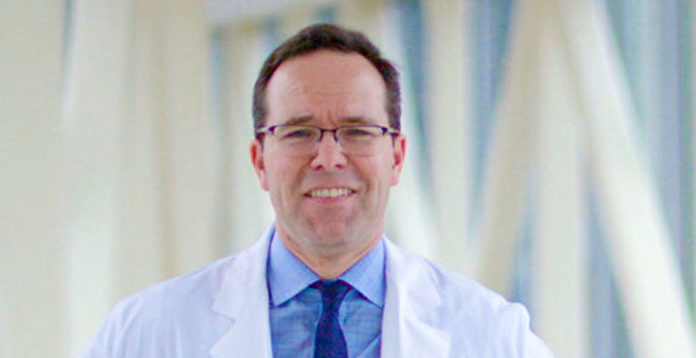
The University of Oklahoma College of Medicine announces family medicine physician Steven Crawford, M.D., as the Senior Associate Dean and director of the newly formed Office of Healthcare Innovation and Policy.
The Office of Healthcare Innovation and Policy was launched to harness resources within the college and across the academic healthcare enterprise to address the social determinants of health – the social factors that significantly impact health conditions among Oklahomans. Crawford has been serving as chair of the Department of Family and Preventive Medicine for 20 years and brings a background and dedication to helping people achieve better health in their own communities. “As part of an academic health center, a significant part of our mission at the OU College of Medicine is to create partnerships with communities across the state, whether rural or urban, to help people get the resources they need to improve health,” said John Zubialde, M.D., Executive Dean of the OU College of Medicine. “Approximately 75% of the care we provide is for people with chronic illness. Once they leave the doctor’s office or hospital, they must manage their conditions, such as diabetes and cardiovascular disease, in their home and community settings. We want to work with communities and health systems to find innovative solutions to support those patients.”
Crawford will begin his role with the Office of Healthcare Innovation and Policy by taking an inventory of the numerous resources across campus and coalescing them in a strategic fashion. Crawford has extensive experience with many such projects, including Healthy Hearts for Oklahoma, begun in 2015 with a $15 million federal grant from the Agency for Healthcare Research and Quality. OU’s healthcare providers worked with approximately 300 small primary care clinics across Oklahoma to incorporate and standardize four guidelines known to decrease the risk of cardiovascular disease: low-dose aspirin in high-risk patients; controlling blood pressure; cholesterol evaluation; and smoking cessation assistance. OU provided the expertise to help clinics establish guidelines into the regular flow of their practices and the technology to measure outcomes. Crawford also brings a background in advocacy for healthcare innovation at the state Capitol, as well as policymaking with the Oklahoma Health Care Authority, which administers the state’s Medicaid program. He works closely with the Oklahoma State Department of Health, both the Oklahoma and American Academy of Family Physicians, and the Oklahoma Hospital Association, among others. He is also a leader for the College of Medicine’s program to prevent opioid crisis, and he directs a workforce grant to recruit and retain more health professions students from diverse and underserved populations.
“I am grateful to be named to this role and to lead our Office of Healthcare Innovation and Policy,” Crawford said. “I believe this type of effort, involving the expertise of people across our campus and state, will improve Oklahoma’s health outcomes and the quality of life for people across our state. The medical care we deliver is important, but equally so are the resources for our patients in the communities where they live.”
The work of the Office of Healthcare Innovation and Policy also dovetails with that of the OU Hudson College of Public Health, whose focus is the science of protecting and improving the health of people in their communities. The Hudson College of Public Health has strong partnerships across the state and beyond to develop strategies toward improving the health of an entire population, rather than treating acute illnesses as they arise. Social determinants of health range from safe housing and local food markets to educational and job opportunities to socioeconomic conditions, and much more.
“The future of our healthcare system – and the health of our population – requires that the disciplines of public health work together with clinical medicine in a coordinated way,” said Gary E. Raskob, Ph.D., Dean of the Hudson College of Public Health. “The medical care a person receives is crucial and lifesaving, but about 40% of our total health outcome is shaped by the ‘upstream’ factors before an individual sees a physician, such as their social circumstances and lifestyle choices.”
As a locally owned, nonprofit healthcare system, OU Medicine is invested in creating a healthier future for the state and, as a teaching campus, it is training future health professionals to advocate for their patients beyond the hospital or clinic. Crawford is the ideal person to lead the mission of the Office of Healthcare Innovation and Policy, said Chuck Spicer, President and CEO of OU Medicine.
“I have witnessed Dr. Crawford’s care and compassion for his patients, both as my personal physician and a close friend,” Spicer said. “He understands that the care we provide shouldn’t end after a doctor’s appointment or a hospital discharge. Instead, our patients should return home to find innovative support developed through a relationship between OU Medicine and the community.
“As a comprehensive academic health center, we keep the patient at the center of everything we do,” Spicer added. “We are dedicated to addressing healthcare innovation and the social determinants of health from a physician-driven and research-driven perspective. That makes us unique in the state of Oklahoma and is a mission that we are excited to grow.”
www.okala.org