A new comprehensive national traffic safety study from Go Safe Labs shows that Oklahoma City was one of the top ten cities in the nation for traffic accidents in 2019, coming in seventh on the non-profit group’s list of America’s least safe cities to drive.
According to Go Safe Labs’ exhaustive study, there were 12,476 crashes last year in Oklahoma City – a 6.1% year-over-year increase. The group’s data science team based their findings on a national review of over 1.8 million accident reports from 2018 and 2019.
“In 2020 we wanted to start the new year by reviewing what we learned from the past year. We thought with a little more traffic safety data we can hopefully know a little more about the safest places to drive,” said Kevin Pomplun, Chairman of Go Safe Labs. “We were surprised by all the enthusiasm for our last report. It was great and humbling. And now we hope these new findings on 2019, make some small impact on 2020 being the best year yet for all of us driving on US roads.”
Nationally, traffic accidents across the United States increased 6.8% in 2019 – with nearly 1 million crashes on America’s roadways. There were 953,630 accidents in 2019, up from 892,615 in 2018.
Using publicly available data from local, state and federal sources, Go Safe Labs identified the top ten cities with the most accidents in 2019: Rank, City, 1. Houston 2. Charlotte 3. Los Angeles 4. Austin 5. Dallas 6. Raleigh 7. Oklahoma City 8. Baton Rouge 9. Nashville 10. Phoenix.
OKC Named One of the Top Ten Least Safe Cities to Drive in America
Insurance Commissioner Mulready Announces New Chief of Staff
Oklahoma Insurance Commissioner Glen Mulready has named Brian Downs to serve as Chief of Staff for the Oklahoma Insurance Department (OID). A native Oklahoman, Downs currently serves as the State Health Information Exchange Director and Special Assistant to the Governor’s Front Porch Initiative.
“Brian’s leadership experience, professionalism and his tireless commitment to Oklahoma citizens make him a perfect fit for this position,” Mulready said. “He has built a level of trust and respect with state and national leaders on both sides of the aisle. I am confident that his leadership will maintain the positive momentum as we continue to move forward with our team’s vision of becoming a Top 10 insurance department.”
Downs previously served as Chief of Staff for Speaker Jeff Hickman in the Oklahoma House Representatives and Chief of Staff and Director of State and Federal Policy at the Oklahoma State Department of Health.
“Commissioner Mulready continually challenges the Department staff to strive for their best as they serve the public. He’s not afraid of changes and he’s dedicated to making OID a Top 10 insurance department. Following his example, I will champion Commissioner Mulready’s vision and do my best to serve Oklahomans in this role,” Downs said.
Downs will begin his new role on January 30th, 2020.
If you have questions about other insurance issues, contact the Oklahoma Insurance Department at 1-800-522-0071 or visit our website at www.oid.ok.gov.
Kirkpatrick Named Director of Oklahoma Medical Marijuana Authority
Oklahoma native Travis Kirkpatrick is the new director of the Oklahoma Medical Marijuana Authority. Kirkpatrick has served as interim director for the last 90 days. Health Commissioner Gary Cox said he made the decision based on Kirkpatrick’s leadership at the authority over the last few months.
“We are excited about the leadership of Travis and his focus on being an efficient and effective organization that serves the citizens of the state,” said Cox. “During his three months, Kirkpatrick has reopened the call center, which is now handling approximately 300 calls a day, hired a compliance manager to ensure the dispensaries across the state are in compliance with state laws, and worked to open the lines of communication with the business community and the patients.”
Kirkpatrick praised the staff for its passion and dedication saying “that is something that drives me every day as I seek to innovate and lead us toward the goals we have been provided by the Oklahoma State Department of Health leadership and the Governor. My goal is to continue to work with the patients, dispensary owners and growers as this authority meets the guidelines set out by the voters and by the Legislature.”
The Oklahoma Medical Marijuana Authority was created by a vote of the people, July 26, 2018. The state question allowed for both licenses to sell and to purchase medical marijuana with a physician’s prescription. Additional regulatory authority was written into the “unity bill” passed by the legislature just months before Kirkpatrick’s arrival. There are currently more than 246,000 patient, caregiver, grower, processor, dispensary, and transportation licenses for marijuana in Oklahoma, all handled by OMMA.
Travis Kirkpatrick is a Public Administration professional with more than 15 years of service to the State of Oklahoma. He brings a multitude of experience in bureaucratic process gained via his roles in several state agencies. A native Oklahoman, Kirkpatrick holds a Master of Public Administration from the University of Oklahoma and a Bachelor of Arts in Criminal Justice from the University of Central Oklahoma. In his spare time, he volunteers on several community non-profit boards and enjoys watching his children play soccer.
Shotguns Donated to Help Underfunded Law Enforcement Agencies
Insurance Commissioner Glen Mulready today donated a Remington 870 Shotgun to the Coweta Police Department Chief Mike Bell at the Oklahoma Insurance Department (OID)’s Oklahoma City office.
“It is much appreciated more than you know,” Bell said. “As a small agency, we can’t afford equipment like this. It will greatly enhance our services.”
The Oklahoma Insurance Department’s Anti-Fraud Division collected the shotguns they don’t use anymore and donated them to underfunded law enforcement agencies. Anti-Fraud Chief Investigator Rick Wagnon contacted the Oklahoma Association of Chiefs of Police and the Oklahoma Sheriff’s Association for a list of underfunded agencies that each association could recommend. From that list, Commissioner Mulready drew the winners randomly and contacted each agency to schedule the shotgun handoff.
Wagnon said they carefully selected small, underfunded agencies that could get the most benefit from this donation. He also said the most of these agencies do not have shotguns and are excited to receive them.
“The goal of the firearm donation is to enable underfunded law enforcement agencies to acquire firearms at no cost in support of their mission,” Mulready said. “We are grateful for our law enforcement agencies and their service to our citizens.”
Mulready said that the department will donate a total of 7 shotguns to the following agencies. Sheriff Larry Lane, Sequoyah County SO, Chief Bob Ernst, Perkins PD, Sheriff Marty Grisham, Love County SO, Chief Mike Bell, Coweta PD, Chief John O’mara, Kiefer PD, Sheriff Joe Janz, Kiowa County SO, Sheriff Tim Turner, Haskell County SO.
Social Security Launches New Campaign to Fight Scammers
The Social Security Administration launched a new Public Service Announcement (PSA) campaign to continue warning people about the ongoing nationwide telephone impersonation scheme. The PSAs feature a message from Social Security Commissioner Andrew Saul. Social Security and its Office of the Inspector General (OIG) continue to receive reports about fraudulent phone calls from people falsely claiming to be Social Security employees. The scammers mislead victims into making cash or gift card payments for help with purported identity theft, or to avoid arrest for bogus Social Security number problems.
“I want every American to know that if a suspicious caller states there is a problem with their Social Security number or account, they should hang up and never give the caller money or personal information. People should then go online to oig.ssa.gov to report the scam call to Social Security,” said Commissioner Saul.
People should also be on the lookout for a new version of this scam. Fraudsters are now emailing fake documents in attempts to get people to comply with their demands. Victims have received emails with attached letters and reports that appear to be from Social Security or the OIG. The letters may use official letterhead and government jargon to convince victims they are legitimate; they may also contain misspellings and grammar mistakes.
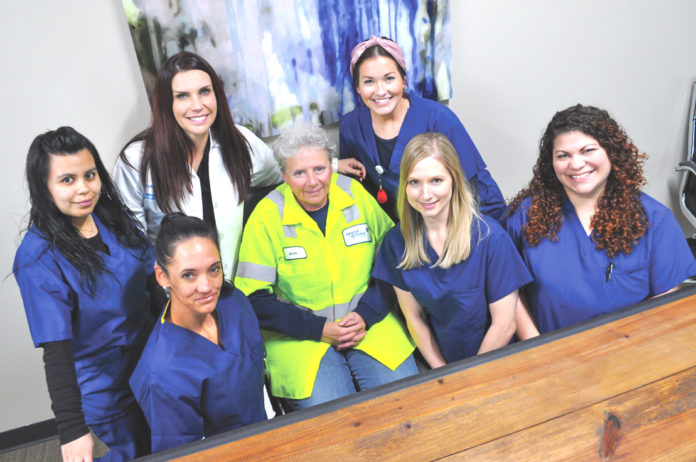
New Year, New Life: Naadi patient gets ultimate gift

story and photo by Bobby Anderson, Staff Writer

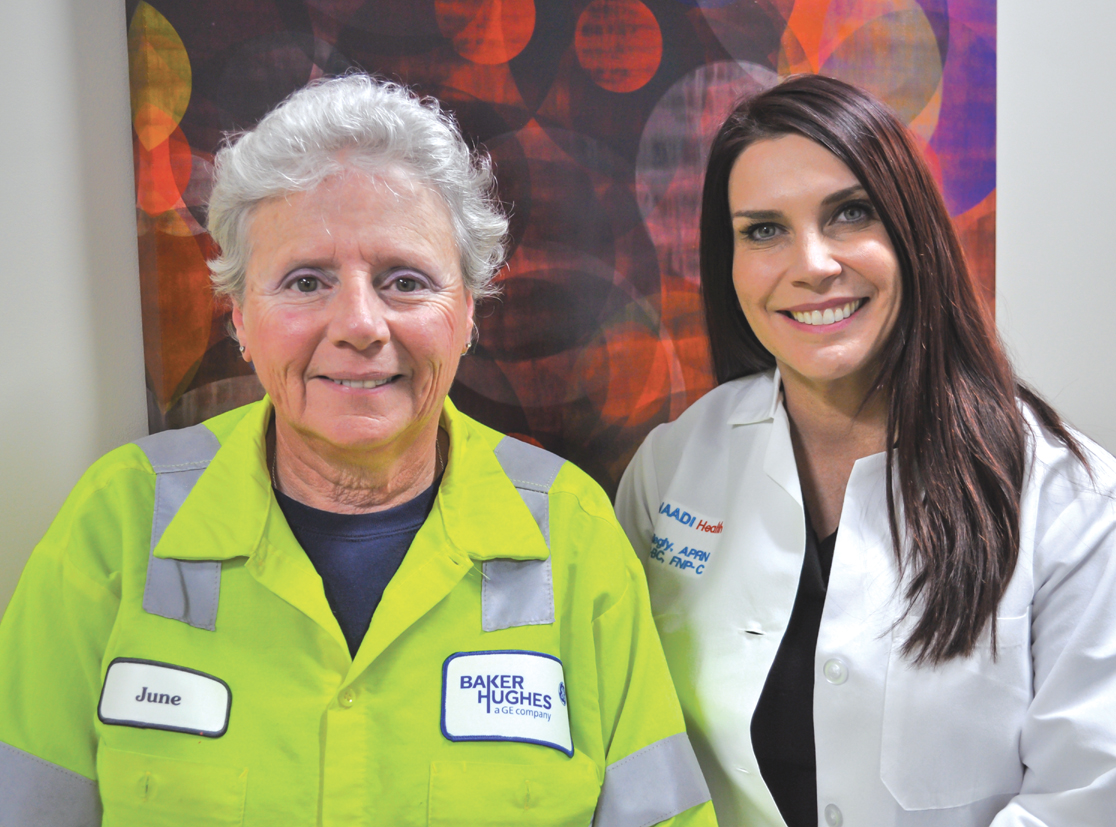
It’s a new year and June Brown is celebrating her new lease on life.
“They said there was really nothing they could do. It was just damaged muscle,” Brown said, recalling a July 2006 injury to her left leg that left her living in pain.
Over the next 13 years, that injury gave way to a vicious cycle of pain, redness and swelling followed by antibiotics.
And building oilfield equipment for a living, that meant Brown spent long days on her feet which just made problems worse.
She managed the best she could until she noticed a hole forming in her leg, about the size of a pencil eraser.
Her doctor put her on another round of antibiotics hoping it would curb the growing infection.
“The doctor was real nice but said he had never seen anything like this and wouldn’t touch it,” Brown remembers.
Finally deciding she had had enough, Brown pressed the issue and sought a second opinion.
Pathology samples showed dead tissue in her leg due to no blood flow.
“It was basically just dying,” she said.
She was horrified and in need of help.
GIFT OF HEALING
That’s when she found Dr. C.V. Ramana and Naadi Healthcare Vascular and Interventional Center.
Dr. Ramana was able to restore blood flow for the first time in more than a decade.
“Within two weeks I was released from wound care. You wouldn’t believe the difference,” Brown said. “It’s got a scar but it’s a totally different leg. I’m just so happy there’s no pain, no nothing.
“I can forget about it.”
Naadi specializes in peripheral vascular disease and venous insufficiency.
From pain in the calf while walking to non-healing wounds, Naadi works on getting people back to their former selves.
“Ultimately, the end goal is if somebody has a really bad wound we don’t want them to lose their limb. We want to save their limb, save their life. People who have amputations have a very high mortality rate,” said Shelby Dudley, a radiology technologist at Naadi.
Naadi Vascular and Interventional Center is the first outpatient center in Oklahoma City dedicated to vascular and interventional radiology.
Interventional radiology (also known as IR) is the minimally invasive, image-guided treatment of medical conditions that once required open surgery.
Breakthroughs in technology and imaging have created new treatment choices for patients. In this new era of medicine, there is no longer one “right way” to handle your condition.
Personalized medicine means doing the right thing for each individual patient. More than ever, it’s imperative for you to know and understand all of the available options to treat your condition or disease. In many cases, there is a minimally invasive approach that could dramatically reduce your pain, risk and recovery time.
“A lot of people have pain in their legs and they think it’s normal and it’s not,” Dudley said. “A lot of people have peripheral vascular disease and they don’t know. It’s a misdiagnosed disease. This can be treated and there are things that can be done to prevent it.”
Controlling diabetes and blood pressure, exercise and maintaining a healthy diet are some of the biggest modifiable risk factors that can help prevent peripheral artery disease.
After the injury, Brown resigned herself to her current condition. She didn’t know things could be better.
Not until she visited Naadi and Dr. Ramana.
“He was great. He was real sweet and real concerned,” Brown said of Dr. Ramana. “He was patient with me. He didn’t try to push. He let me go at my own pace. I appreciated that. He made it to where I would understand what was going on to help relieve some of my anxiety.”
“His staff is really sweet. You couldn’t ask for better, more concerned people that want to make sure you’re comfortable, relaxed and healthy.”
Patients are able to self-refer to Naadi. Taking her health into her own hands was the best gift Brown could have given herself.
“That’s something I hope we can make a change in the culture,” Ramana said. “People see all of that as a normal part of growing old and kind of accept that and don’t think there is anything they can do to impact that.”
“One of the nice things about being in a facility like this is you get to see those patients over and over and you get to see how you’ve impacted their lives,” Ramana said. “It’s very rewarding.”
And now Brown has a new lease on life.
Visit Naadi Health at 1 NW 64th Street in Oklahoma City or call (405)-608-8884. www.naadihealthcare.com
What the Health is Pickleball?
Quite a bit to a Senior


Story by Darl DeVault
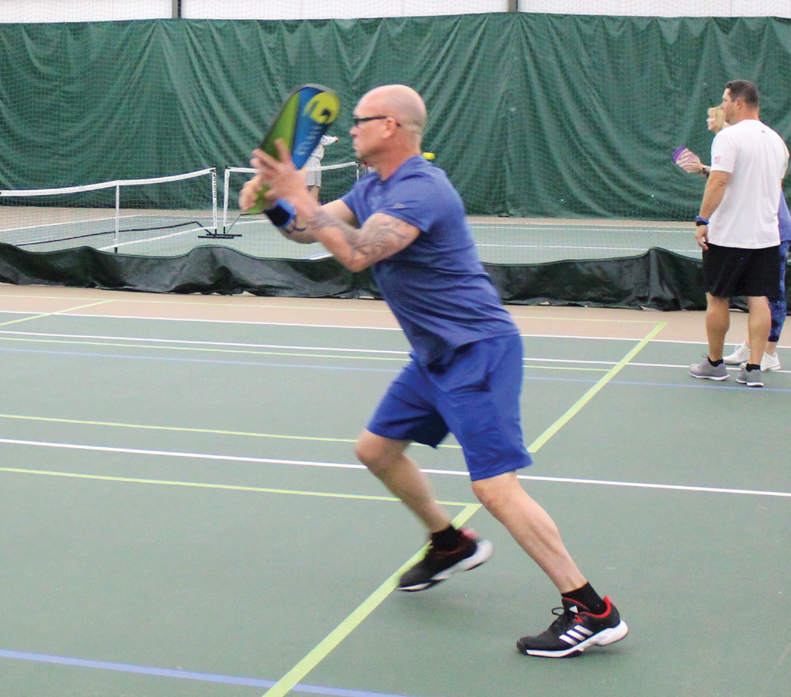
Central Oklahoma’s fastest growing recreational sport, pickleball, has everything going for it—universal design and appeal with senior-led visionary organizers. It is being widely embraced by seniors for its great health outcomes.
Pickleball is a recreational paddle sport for all ages and skill levels that is growing rapidly, providing more venues even now as winter weather sets in. The sport’s growth comes from its universal appeal wherein even grandparents who welcome the opportunity to try new fitness outlets can play with their grandkids to stay active.
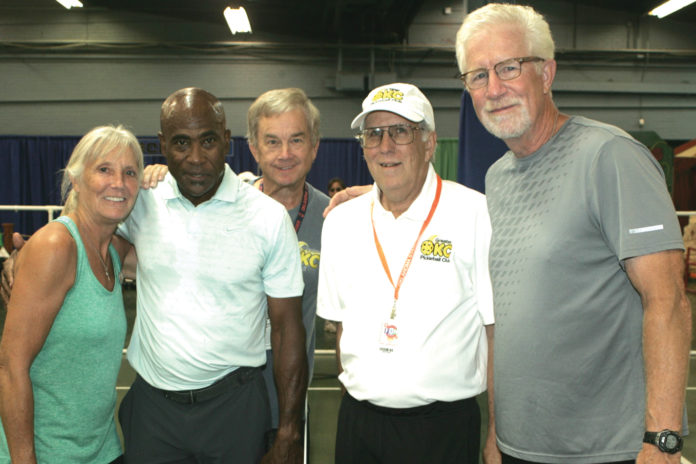
Senior leaders have guided the Greater Oklahoma City Pickleball (GOPB) Club to average 32 percent growth for the last four years, after beginning in 2009 with several players. Currently, 750 members play and socialize at 18 venues around the metro area.
Brad Merritt, 63, president of the GOPB Club, says that pickleball is a draw for people of all ages and skill levels. “A major attraction of this sport is that strategy, placement and patience are greater assets than strength, size and speed,” Merritt said last week. “Older players and those with a less athletic background can really enjoy the game, while some play at a more competitive level.”
Merritt, as outgoing president after two years, is displaying that visionary zeal for the sport by beginning important negotiations with the city Edmond. Improved court availability could take place in the metro area once the newly built Edmond Tennis Center opens in early summer of 2020.
He and other club leaders seek to take advantage of that project, built by the City of Edmond and the Edmond Public Schools.
Merritt began talks two weeks ago to request that Edmonds’ previous facility, the Kickingbird Tennis Center, become a full-time pickleball venue.
The group is excited about this opportunity to have a full time pickleball facility locally.
As one of larger pickleball clubs in America, the GOPB Club has fostered pickleball as a way of life for its best players. Several professional players and impressive national title holders serve as role models to players of every age and talent level. They are traveling the globe to bring home gold, silver, and bronze medals from state and national tournaments and world cups.
The sports’ odd name is murky. Some say it is based on a dog named ‘Pickles’ who chased the ball as the three dads invented a game that young and old could play together 55 years ago. Joel Pritchard, Bill Bell, and Barney McCallum played the first games with solid wood paddles and a whiffle ball. They played near Seattle on a badminton court with the net lowered just past tennis height.
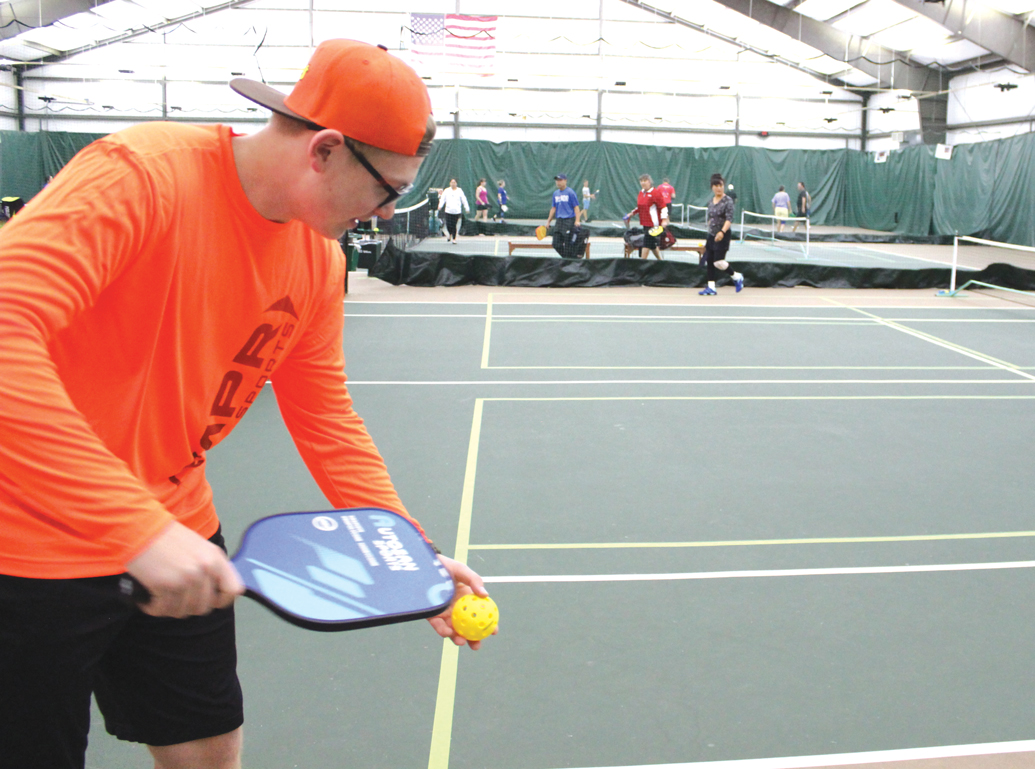
Played as singles and doubles, players only need the ability to move to get started in pickleball. The game is played on either indoor or outdoor courts that are usually scaled down tennis courts. There is serving, volleying and running in short bursts. There is sweating, bending, and stretching. Doubles games often brings spouses and children onto the same court.
Little is required to play, as only comfortable clothes and court shoes are needed to get started. The club furnishes paddles for beginners to use and will provide any partners needed. The club is full of friendly and helpful pickleball players always eager to welcome the curious to the court.
Club members offer lessons for beginners and help players develop their game through round robins, shootouts, leagues and novice-only tournaments. Better players attend tournaments in neighboring cities and states that happen all year long.
Each year, the club’s volunteers provide a free demonstration court for the full run of the Oklahoma State Fair, attracting many new players. The State Games of Oklahoma will host almost 500 players from across the nation here in Oklahoma City this month. Whether someone is just looking for a way to exercise or want to be challenged at a competitive level, there is a place in the pickleball community through this club’s activities.
You can get involved in the sport quickly by going to the national associations’ web site, www.places2play, and put in your zip code. That search brings up those venues in your local area along with times of play and contact information.
Through this club’s efforts and those of others there are places to play every day throughout Oklahoma with indoor and outdoor courts. They invite your interest at www.greaterokcpickleballclub.wildapricot.org
“It’s an exciting time for the sport and the local club with a new board assuming leadership roles this January,” said Merritt. “We expect a lot of new faces in the new year and the GOPB Club invites you to join them on the courts.”
Blue Star Mothers Support and Encourage Military During Christmas

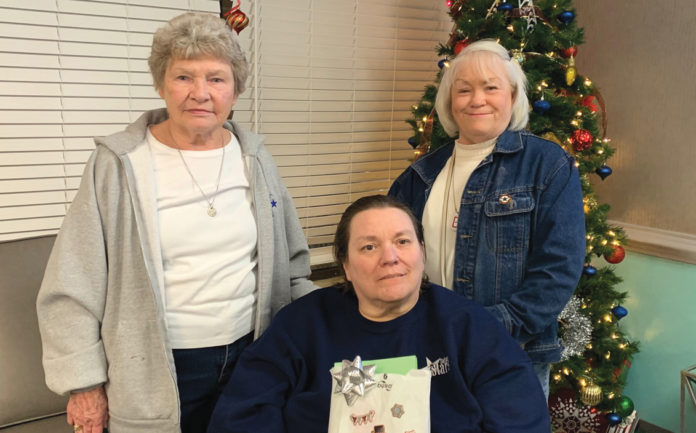
Linda Rakett and her fellow Blue Star Mothers of Chapter 6 love supporting the military and veterans. Rakett is a volunteer with Blue Star Mothers through RSVP of Central Oklahoma. The national organization, made up of mothers who have children serving in the military or who have served and have been honorably discharged, started in 1942 during World War II.
“Our mission is to serve and help active duty military and veterans,” said Rakett, who became a Blue Star Mother when her son joined the Army right out of high school in 2003. “We send deployment boxes to the ones serving around the world, and we try to help the veterans who are at the Veterans Administration hospital or VA Centers.”
During the Christmas season, Linda and the other mothers contact nursing homes in the area and find out how many veterans are residents. They prepare gift bags that contain socks, candy, tissues, personal greeting cards, and snacks for each veteran to share with them for Christmas. They also participate in the Marines Toys for Tots drive, help out at the Military Welcome Center at Will Rogers World Airport, and participate in Veterans Day parades.
“We do whatever we can do to help,” Rakett said. “We love helping our military and our veterans.”
To learn more about Blue Star Mothers and volunteering with RSVP of Central Oklahoma, call Laura McPheeters at 405-605-3110 or email [email protected].
Since 1973, RSVP of Central Oklahoma has helped senior adults continue to live with purpose and meaning by connecting them with rewarding community volunteer opportunities, including RSVP’s Provide-A-Ride Senior Transportation Program. RSVP is a partner of Senior Corps and the United Way of Central Oklahoma. To learn more about becoming a volunteer, call Laura McPheeters at 405.605.3110 or visit rsvpokc.org. You can also follow RSVP on Facebook at facebook.com/RSVPokc.
IS GRANDMA STARVING? THE ANSWER MAY SURPRISE YOU

When you hear the word “malnutrition,” you probably think of people in impoverished countries, but the fact is, one in every two older adults is at risk of becoming malnourished.
An elderly Oklahoma City woman was that one in two. Sharon Gibson said she was wasting away. Doctors had given up hope and so had she.
“It was just all overwhelming and I was to the point where I didn’t care whether I lived or died,” the 74-year-old said.
Malnutrition in older adults is a hidden and growing epidemic and a costly one. The estimated price tag of the increased health care costs for disease-associated malnutrition in older U.S. adults tops $51 Billion a year. Hunger is not the sole cause. Sometimes it’s about eating the wrong foods and sometimes medical conditions like cancer, diabetes and Alzheimer’s are to blame.
Gibson had been diagnosed with Chronic Obstructive Pulmonary Disease, which left her constantly out of breath. She also had digestive issues that impacted her ability to eat, as well as trouble standing, which made it difficult to cook.
“I was very sick physically, emotionally. I couldn’t eat. My digestive system was shot. My lungs were shot – my whole bone structure. I couldn’t even stand up straight,” she explained. That was before Gibson found Valir Pace, a non-profit program that provides all-inclusive care to older adults.
“A lot of participants have come to me when I’m doing their initial assessment and they say, ‘you know, sometimes I have to pay my medicine, you know, pay for medicine and sometimes I have to decide if I want to eat or what I’m going to buy to eat and that’s so heartbreaking,” said Zella Classen, MA, RD/LD, director of Food and Nutrition at Valir Pace.
At Pace, Classen and the entire nutrition team spend their days preparing, serving and packing meals for delivery to participants. They know malnutrition in older adults can lead to a variety of health problems. These include:
• An increased risk of infection due to a weak immune system
• Poor wound healing
• Muscle weakness and decreased bone mass, which increases the risk of falls and fractures
• A higher risk of hospitalization and death
“A lot of times someone will come to me and they may not have been educated on an appropriate diet for them. And remember, as we are get older, we may develop a chronic disease like diabetes or heart disease, and things like that; and they may not have been educated on that. Or if they have been, they really struggle on getting the right foods for that diet because of their limited income. So, we try to work with them on educating and then trying to help solve that problem on getting them the appropriate foods,” Classen said.
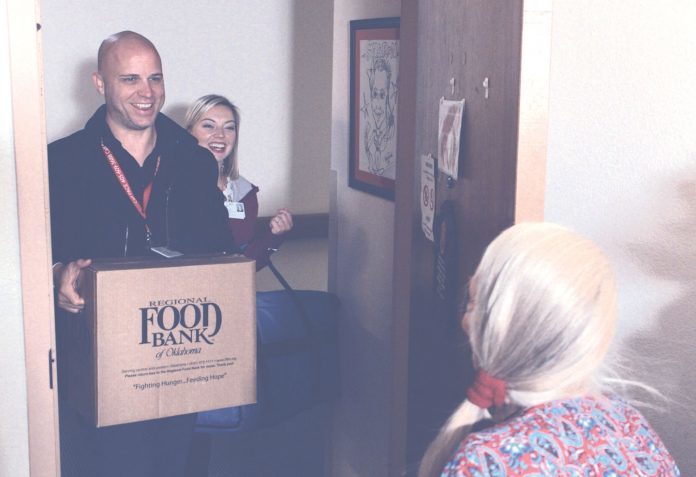
Today thanks to Valir Pace, participants have access to two meals a day, as well as delivery of specially prepared meals and groceries to their homes. It’s not just providing food, though. Classen said it is about providing the right food and the right nutritional supplements to optimize health.
Today, Gibson has a very different outlook on life.
“Nutrition is the basis of everything. If you’re not eating, your body isn’t functioning. You can’t do anything else. So, Zella interviewed me and asked really good questions. They got to the root of my digestive problems and set up a plan with me and, slow but sure, I gathered strength,” she said.
Gibson pays nothing for the program – a program she says has literally saved her life.
“They’ve turned my life around. I’m living again. I’m not just existing. I’m not waiting to die. I’m living and enjoying each day,” she said.
To find out if you or a loved one qualifies for the program, visit www.valirpace.org

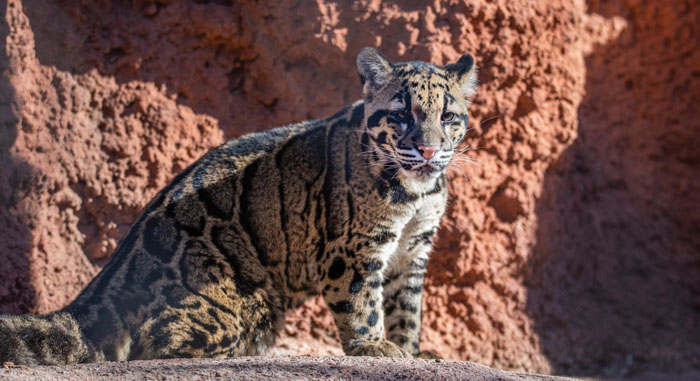
ZOO WELCOMES CLOUDED LEOPARD CUBS TO CAT FOREST HABITAT
Male, J.D., 7 months old, and female, Rukai, 8 months old, are now on public view

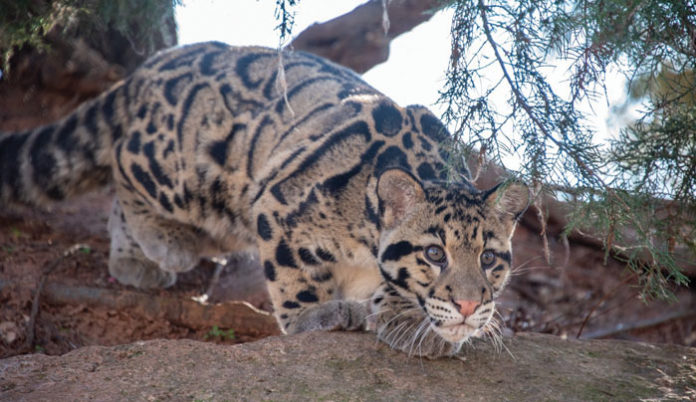
The Oklahoma City Zoo and Botanical Garden is pleased to announce the arrival of two clouded leopard cubs: seven-month-old male, J.D., and eight-month-old female, Rukai. The duo were paired at the Pittsburgh Zoo, Rukai’s birthplace, in October and have spent the past two months bonding. J.D. was born at the Nashville Zoo in late April. The hope is that Rukai and J.D. will one day grow up to have their own cubs together and in clouded leopards, breeding is more successful when future mates grow up together. The method of introducing juvenile, genetically valuable male and female clouded leopards began about a decade ago when the clouded leopard population began to drastically decline.
“The Zoo is so excited to welcome these beautiful, gregarious clouded leopard cubs,” said Tyler Boyd, curator of carnivores. “In addition to serving as ambassadors for their species – educating Zoo guests about their plight in the wild and the need for wildlife conservation – J.D. and Rukai’s potential offspring will help ensure the species continues to thrive for generations.”
The cubs are located in the Cat Forest habitat between the Tiger and Small Cat Interpretive Centers. The carnivore and maintenance teams have added elevated perching opportunities to better suit the arboreal tendencies of this species and afford guests more opportunities for viewing. The Zoo is also home to 15-year-old male clouded leopard, Luke, who will not share a habitat with J.D. and Rukai.
Rukai and J.D.’s relocation to the OKC Zoo was a Species Survival Plan® (SSP) recommendation. The mission of an Association of Zoos and Aquariums (AZA) cooperatively managed SSP Program is to oversee the population management of select species, including the clouded leopard, within AZA member institutions like the OKC Zoo and to enhance conservation of this species in the wild. Each SSP Program coordinates the individual activities of participating member institutions through a variety of species conservation, research, husbandry, management and educational initiatives.
Clouded leopards are native to Nepal and Bangladesh. They are the world’s strongest climbing cats, which gives them an advantage over the other big cats sharing their territory. The species is listed by the IUCN as vulnerable to extinction due to deforestation, poaching and the pet trade. Clouded leopards are protected in most range countries although enforcement in many areas is weak. Precise data on clouded leopard population numbers is not known (they are among the most elusive cat species) but researchers estimate there are around 10,000 clouded leopards in the wild.
Every cloud(ed) leopard has a silver lining – you can CAT-ch them at the OKC Zoo’s Cat Forest habitat! Located at the crossroads of I-44 and I-35, the Zoo is a proud member of the Association of Zoos and Aquariums, the American Alliance of Museums, Oklahoma City’s Adventure District and an Adventure Road partner. Hours of operation are 9 a.m. to 5 p.m. daily. Regular admission is $11 for adults and $8 for children ages 3-11 and seniors ages 65 and over. Children two and under are admitted free. Stay up-to-date with the Zoo on Facebook, Twitter and Instagram and by visiting Our Stories. Zoo fans can support the OKC Zoo by becoming Oklahoma Zoological Society members at ZOOfriends.org or in-person at the Zoo! To learn more about these and other happenings, call (405) 424-3344 or visit okczoo.org.