Wednesday, October 28, 2026

OMRF scientists reveal diabetic heart clues

0
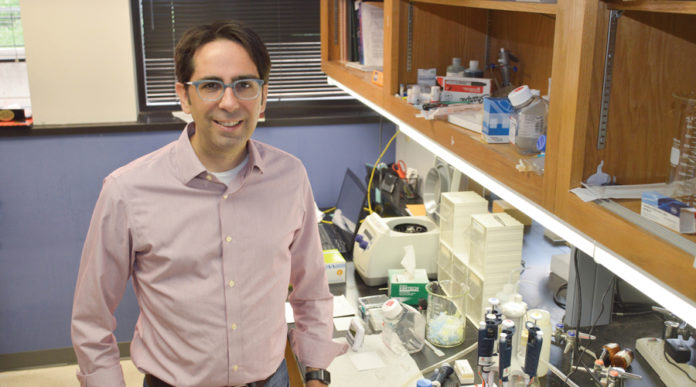
Oklahoma Medical Research Foundation scientist Ken Humphries, Ph.D.

The healthy heart thrives on flexibility, using any available nutrient source for fuel. But in diabetes, that flexibility stops.
Scientists at the Oklahoma Medical Research Foundation are investigating why this inflexibility occurs with diabetes and, ultimately, what can be done about it.
“The healthy heart has a dynamic capacity to respond and adapt to changes in nutrient availability—it’s an omnivore,” said OMRF researcher Kenneth Humphries, Ph.D. “The problem with diabetes, though, is the heart’s inability to use or make insulin, a hormone that allows your blood to use sugar.”
In diabetes, either you’re not making enough insulin or it’s not working properly, said Humphries. This increases the heart’s reliance on fats to meet energy demands, which can lead to damaging effects and even death.
Heart disease is the number one cause of death in diabetic patients, and it can result in a specific type of heart disease called diabetic cardiomyopathy.
“So far, there are no effective treatments for this type of heart disease,” said OMRF graduate student Maria Newhardt, who contributed to the research. “We are trying to increase our fundamental understanding of heart metabolism and how it is disrupted in diabetes so better therapeutic treatments can be developed.”
Humphries and his team conducted a study to see if they could increase flexibility in the hearts of diabetic mice by introducing the complications of obesity.
“Obviously, regulating blood sugar would be the ultimate goal, but we’re looking fundamentally at how the heart responds to differences in nutrient availability,” said Humphries. “We decided to try to force the diabetic heart to use more sugar and see if that made the diabetic heart go back to its normal function.”
The team uncovered a previously unknown form of metabolic regulation. They discovered that two cellular switches in the heart that determine what nutrients the heart will use are interrelated, rather than independent, as previously thought.
These switches need to be able to turn on and off, but in diabetes, one is constantly turned on.
Newhardt said this basic finding is a next step in understanding how diabetes impacts heart health and how interventions—future drugs and therapies— might be used to treat the effects of diabetes on the heart.
Other OMRF researchers who contributed to the findings were Albert Batushansky, Ph.D., Satoshi Matsuzaki, Ph.D., and Mike Kinter, Ph.D.
The research was supported by grants from the National Institute of General Medical Sciences, National Heart, Lung, and Blood Institute, and the National Institute of Aging, all parts of the National Institutes of Health, as well as a Graduate Research Fellowship Program grant from the National Science Foundation.


Savvy Senior: How to Choose a Walk-in Bathtub

0

Dear Savvy Senior,

Because of my mobility problems, I’m thinking about getting a walk-in bathtub that’s easy to get into and out of but could use some help selecting one. What can you tell me about walk-in tubs, and can you recommend some good companies that make and install them?

Bubble Bath Betty

Dear Betty,
Walk-in tubs are a good option for mobility challenged seniors because they’re much easier to get into and out of than a standard tub, and will help prevent slips, trips and falls too. Here’s what you should know. The Basics
Walk-in bathtubs are uniquely designed tubs that have a watertight, hinged door built into the side of the tub that provides a much lower threshold to step over (usually 2.5 to 7 inches) versus a standard tub that’s around 15 inches.
In addition to the low threshold, most walk-in tubs also have a built-in seat, grab bars, anti-slip floors, anti-scald valves and a handheld showerhead. And many higher-end models offer therapeutic spa-like features that are great for seniors with arthritis and other ailments.
The kind of tub you choose will depend on your needs, preferences and budget, and the size and layout of your bathroom. The cost of a walk-in tub today with professional installation ranges anywhere from $3,000 to $10,000. Here are some other things you’ll need to consider, to help you make a good choice.
Tub size: Walk-in bathtubs vary in size. Most models have high walls between three and four feet high, and are between 28 and 32 inches wide, but will fit into the same 60-inch long space as your standard tub without having to reconfigure the room. There are also bariatric walk-in tubs that have wider door openings and larger seats to accommodate people over 300 pounds.
Wheelchair-accessible: Most walk-in tubs have an inward opening door, but if you use a wheelchair, an outward opening door may be a better option because they’re easier to access.
Tub options: The most basic and least expensive type of walk-in tub you can get is a simple soaker tub. But depending on your preferences, you have many other options like an aerotherapy (air jets) tub, hydrotherapy (whirlpool water jets) tub, aromatherapy tub that mixes fragrant essential oils with the water, or a combination tub that has multiple features. Also, look for tubs that have an in-line heating system to keep your bathwater warm while you soak.
Fast fill and drain: One drawback to using a walk-in bathtub is that the bather must sit in the tub as it fills and drains, which can make for a chilly experience. To help with this, consider a tub that has fast-filling faucets and pump-assisted drainage systems, which significantly speed up the process. But these options may require some plumbing modifications to your bathroom.
Easy cleaning: Keeping the tub clean should be a priority, especially if you get a therapy tub because of the bacteria that can grow in it. So, look for tubs with self-cleaning systems.
Warranty: The best walk-in bathtubs on the market today are made in the USA. Also make sure the company you choose has a lifetime “leak-proof” door seal warranty and lengthy warranties on both the tub and the operating system.
Where to shop: While there are many companies that make, sell and install walk-in bathtubs, some of the best in the industry are American Standard (AmericanStandard-us.com), Safe Step (SafeStepTub.com) and Kohler (KohlerWalkinBath.com). Most companies offer financing with monthly payment plans.
Unfortunately, original Medicare does not cover walk-in bathtubs nor do Medicare supplemental (Medigap) policies, but some Medicare Advantage plans may help pay. There are also many states that offer Medicaid waivers that will help pay for the purchase and installation of a walk-in tub to those that qualify, and the VA offers some programs that provide financial aid too.
To get started, contact a few companies who will send a local dealer to your home to assess your bathroom and give you product options and estimates for free.
Send your senior questions to: Savvy Senior, P.O. Box 5443, Norman, OK 73070, or visit SavvySenior.org. Jim Miller is a contributor to the NBC Today show and author of “The Savvy Senior” book.

www.safesolutionswalkintubs.com

FEB/MAR AARP Drivers Safety

0

Date/ Day/ Location/ Time/ Registration #/ Instructor

Feb 6/ Thursday/ Okla. City/ 9 am – 3:30 pm/ 951-2277, C-509-0727/ Varacchi Integris Wellness Center – 5100 N. Brookline, Suite 100
Feb 6/ Thursday/ Norman/ 9 am – 3:30 pm/ 307-3177/ Palinsky
Norman Regional Hospital – 950 N. Porter Ave.
Feb 6/ Thursday/ Midwest Cit/ 08:30 am – 2:30 pm/ 473-8239/ Williams Midwest City Senior Center –
Feb 7/ Friday/ Okla. City/ 8:30 am – 3 pm/ 405-721-2455 ext 0/ Kruck Baptist Village – 9700 Mashburn Blvd
Feb 8/ Saturday/ Midwest City/ 9 am – 3:30 pm/473-8239/ Williams
First Christian Church – 11950 E. Reno Ave.
Mar 5/ Thursday/ Okla. City/ 9 am – 3:30 pm/ 951-2277, C509-0727/ Varacchi Integris 3rd Age Life Center – 5100 N. Brookline, St. 100 S.W. Medical Center – 4200 S. Douglas, Suite B-10

Mar 13/ Friday/ Okla. City/ 9 am – 3:30 pm/ 951-2277, C 691-4091/ Palinsky added cell number

Feb 12/ Wednesday/ Warr Acres/ 8:30 am – 3:30 pm/ 789-3202/ Kruck ###Cancelled ##

Warr Acres Community Center – Waiting confirmation on location

Feb 14/ Friday/ Okla. City/ 9 am – 3:30 pm/ 951-2277, C 691-4091/ Palinsky added cell number

S.W. Medical Center – 4200 S. Douglas, Suite B-10

Feb 7/ Friday/ Okla. City/ 8:30 am – 3 pm/ 721-2466 ex 2163/ Kruck
Baptist Village – 9700 Mashburn Blvd

Feb 8/ Saturday/ Midwest City/ 9 am – 3:30 pm/ 473-8239/ Williams
First Christian Church – 11950 E. Reno Ave.

Feb 12/ Wednesday/ Warr Acres/ 8:30 am – 3:30 pm/ 789-3202/ Kruck
Warr Acres Community Center – Waiting confirmation on location

The prices for the classes are: $15 for AARP members and $20 for Non-AARP. Call John Palinsky, zone coordinator for the Oklahoma City area at 405-691-4091 or send mail to: [email protected]

Aging: Health tips for your golden years

0

Every day, researchers across the globe search for answers to diseases of aging, but you don’t have to be a scientist to get a leg up on the aging process.
In fact, said Oklahoma Medical Research Foundation physiologist Benjamin Miller, Ph.D., some of the best methods for preventing diseases of aging are simple: diet and exercise.
But getting people to follow them, said Miller, can prove difficult.
Want to age gracefully? Try these simple tips:
1. Stay active
Research shows even 30 minutes of exercise and light weight training daily not only helps you avoid packing on the pounds, it also lowers blood pressure, strengthens bones, improves mood and helps maintain muscle mass. And light weight training can improve balance, which can help you avoid falls and injuries.
“If you start exercising, even a little, it will make a big difference,” said Miller.
2. Stay engaged
Like exercise, staying mentally and socially active can have a slew of long-term brain benefits, as well.
Alzheimer’s is the fifth-leading cause of death in Americans over the age of 65. It is the most common form of dementia, accounting for 60-80 percent of all cases, according to the Alzheimer’s Association.
“Scientists increasingly believe it is wise to read, work puzzles, play games and socialize to help improve memory,” said OMRF Aging and Metabolism Research Program Chair Holly Van Remmen, Ph.D. “It keeps the brain healthy and perhaps delays the onset of Alzheimer’s and other forms of dementia. So grab a good book or head out to a bingo night. It’ll be good for you.”
3. Stay moderate
When it comes to diet, moderation is key. Eating too much can have negative health implications from heart disease to type 2 diabetes and arthritis. But as people age, many find they eat too little.
“Over time, your body requires fewer calories, but it needs just as many nutrients,” said Van Remmen. And, she says, don’t skimp on protein. Adequate protein—45 grams of protein for women and 55 grams for men—helps your body maintain muscle mass even when your appetite wanes.
None of these tips are rocket science, said Miller. “Everyone has heard them, it’s just that many people don’t do them. Start now, whatever your age, and you’ll be glad you did.”

www.meadowlakesretirementvillage.com

OKC Named One of the Top Ten Least Safe Cities to Drive in America

0

A new comprehensive national traffic safety study from Go Safe Labs shows that Oklahoma City was one of the top ten cities in the nation for traffic accidents in 2019, coming in seventh on the non-profit group’s list of America’s least safe cities to drive.
According to Go Safe Labs’ exhaustive study, there were 12,476 crashes last year in Oklahoma City – a 6.1% year-over-year increase. The group’s data science team based their findings on a national review of over 1.8 million accident reports from 2018 and 2019.
“In 2020 we wanted to start the new year by reviewing what we learned from the past year. We thought with a little more traffic safety data we can hopefully know a little more about the safest places to drive,” said Kevin Pomplun, Chairman of Go Safe Labs. “We were surprised by all the enthusiasm for our last report. It was great and humbling. And now we hope these new findings on 2019, make some small impact on 2020 being the best year yet for all of us driving on US roads.”
Nationally, traffic accidents across the United States increased 6.8% in 2019 – with nearly 1 million crashes on America’s roadways. There were 953,630 accidents in 2019, up from 892,615 in 2018.
Using publicly available data from local, state and federal sources, Go Safe Labs identified the top ten cities with the most accidents in 2019: Rank, City, 1. Houston 2. Charlotte 3. Los Angeles 4. Austin 5. Dallas 6. Raleigh 7. Oklahoma City 8. Baton Rouge 9. Nashville 10. Phoenix.

www.mcmmedicare.com

Insurance Commissioner Mulready Announces New Chief of Staff

0

Oklahoma Insurance Commissioner Glen Mulready has named Brian Downs to serve as Chief of Staff for the Oklahoma Insurance Department (OID). A native Oklahoman, Downs currently serves as the State Health Information Exchange Director and Special Assistant to the Governor’s Front Porch Initiative.
“Brian’s leadership experience, professionalism and his tireless commitment to Oklahoma citizens make him a perfect fit for this position,” Mulready said. “He has built a level of trust and respect with state and national leaders on both sides of the aisle. I am confident that his leadership will maintain the positive momentum as we continue to move forward with our team’s vision of becoming a Top 10 insurance department.”
Downs previously served as Chief of Staff for Speaker Jeff Hickman in the Oklahoma House Representatives and Chief of Staff and Director of State and Federal Policy at the Oklahoma State Department of Health.
“Commissioner Mulready continually challenges the Department staff to strive for their best as they serve the public. He’s not afraid of changes and he’s dedicated to making OID a Top 10 insurance department. Following his example, I will champion Commissioner Mulready’s vision and do my best to serve Oklahomans in this role,” Downs said.
Downs will begin his new role on January 30th, 2020.
If you have questions about other insurance issues, contact the Oklahoma Insurance Department at 1-800-522-0071 or visit our website at www.oid.ok.gov.

Kirkpatrick Named Director of Oklahoma Medical Marijuana Authority

0

Oklahoma native Travis Kirkpatrick is the new director of the Oklahoma Medical Marijuana Authority. Kirkpatrick has served as interim director for the last 90 days. Health Commissioner Gary Cox said he made the decision based on Kirkpatrick’s leadership at the authority over the last few months.
“We are excited about the leadership of Travis and his focus on being an efficient and effective organization that serves the citizens of the state,” said Cox. “During his three months, Kirkpatrick has reopened the call center, which is now handling approximately 300 calls a day, hired a compliance manager to ensure the dispensaries across the state are in compliance with state laws, and worked to open the lines of communication with the business community and the patients.”
Kirkpatrick praised the staff for its passion and dedication saying “that is something that drives me every day as I seek to innovate and lead us toward the goals we have been provided by the Oklahoma State Department of Health leadership and the Governor. My goal is to continue to work with the patients, dispensary owners and growers as this authority meets the guidelines set out by the voters and by the Legislature.”
The Oklahoma Medical Marijuana Authority was created by a vote of the people, July 26, 2018. The state question allowed for both licenses to sell and to purchase medical marijuana with a physician’s prescription. Additional regulatory authority was written into the “unity bill” passed by the legislature just months before Kirkpatrick’s arrival. There are currently more than 246,000 patient, caregiver, grower, processor, dispensary, and transportation licenses for marijuana in Oklahoma, all handled by OMMA.
Travis Kirkpatrick is a Public Administration professional with more than 15 years of service to the State of Oklahoma. He brings a multitude of experience in bureaucratic process gained via his roles in several state agencies. A native Oklahoman, Kirkpatrick holds a Master of Public Administration from the University of Oklahoma and a Bachelor of Arts in Criminal Justice from the University of Central Oklahoma. In his spare time, he volunteers on several community non-profit boards and enjoys watching his children play soccer.

Shotguns Donated to Help Underfunded Law Enforcement Agencies

0

Insurance Commissioner Glen Mulready today donated a Remington 870 Shotgun to the Coweta Police Department Chief Mike Bell at the Oklahoma Insurance Department (OID)’s Oklahoma City office.
“It is much appreciated more than you know,” Bell said. “As a small agency, we can’t afford equipment like this. It will greatly enhance our services.”
The Oklahoma Insurance Department’s Anti-Fraud Division collected the shotguns they don’t use anymore and donated them to underfunded law enforcement agencies. Anti-Fraud Chief Investigator Rick Wagnon contacted the Oklahoma Association of Chiefs of Police and the Oklahoma Sheriff’s Association for a list of underfunded agencies that each association could recommend. From that list, Commissioner Mulready drew the winners randomly and contacted each agency to schedule the shotgun handoff.
Wagnon said they carefully selected small, underfunded agencies that could get the most benefit from this donation. He also said the most of these agencies do not have shotguns and are excited to receive them.
“The goal of the firearm donation is to enable underfunded law enforcement agencies to acquire firearms at no cost in support of their mission,” Mulready said. “We are grateful for our law enforcement agencies and their service to our citizens.”
Mulready said that the department will donate a total of 7 shotguns to the following agencies. Sheriff Larry Lane, Sequoyah County SO, Chief Bob Ernst, Perkins PD, Sheriff Marty Grisham, Love County SO, Chief Mike Bell, Coweta PD, Chief John O’mara, Kiefer PD, Sheriff Joe Janz, Kiowa County SO, Sheriff Tim Turner, Haskell County SO.

Social Security Launches New Campaign to Fight Scammers

0

The Social Security Administration launched a new Public Service Announcement (PSA) campaign to continue warning people about the ongoing nationwide telephone impersonation scheme. The PSAs feature a message from Social Security Commissioner Andrew Saul. Social Security and its Office of the Inspector General (OIG) continue to receive reports about fraudulent phone calls from people falsely claiming to be Social Security employees. The scammers mislead victims into making cash or gift card payments for help with purported identity theft, or to avoid arrest for bogus Social Security number problems.
“I want every American to know that if a suspicious caller states there is a problem with their Social Security number or account, they should hang up and never give the caller money or personal information. People should then go online to oig.ssa.gov to report the scam call to Social Security,” said Commissioner Saul.
People should also be on the lookout for a new version of this scam. Fraudsters are now emailing fake documents in attempts to get people to comply with their demands. Victims have received emails with attached letters and reports that appear to be from Social Security or the OIG. The letters may use official letterhead and government jargon to convince victims they are legitimate; they may also contain misspellings and grammar mistakes.

New Year, New Life: Naadi patient gets ultimate gift

0
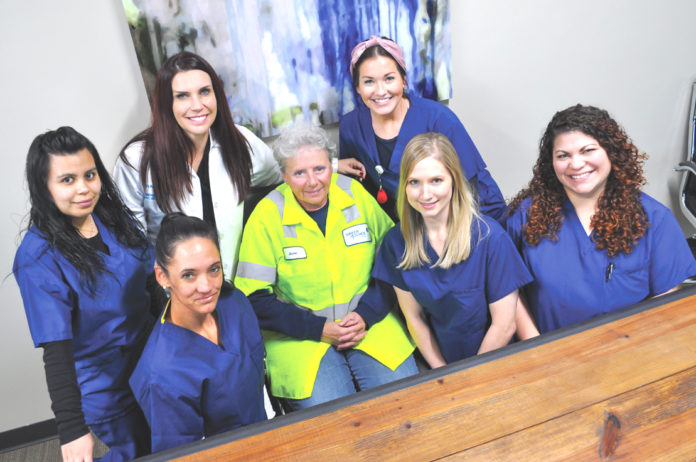
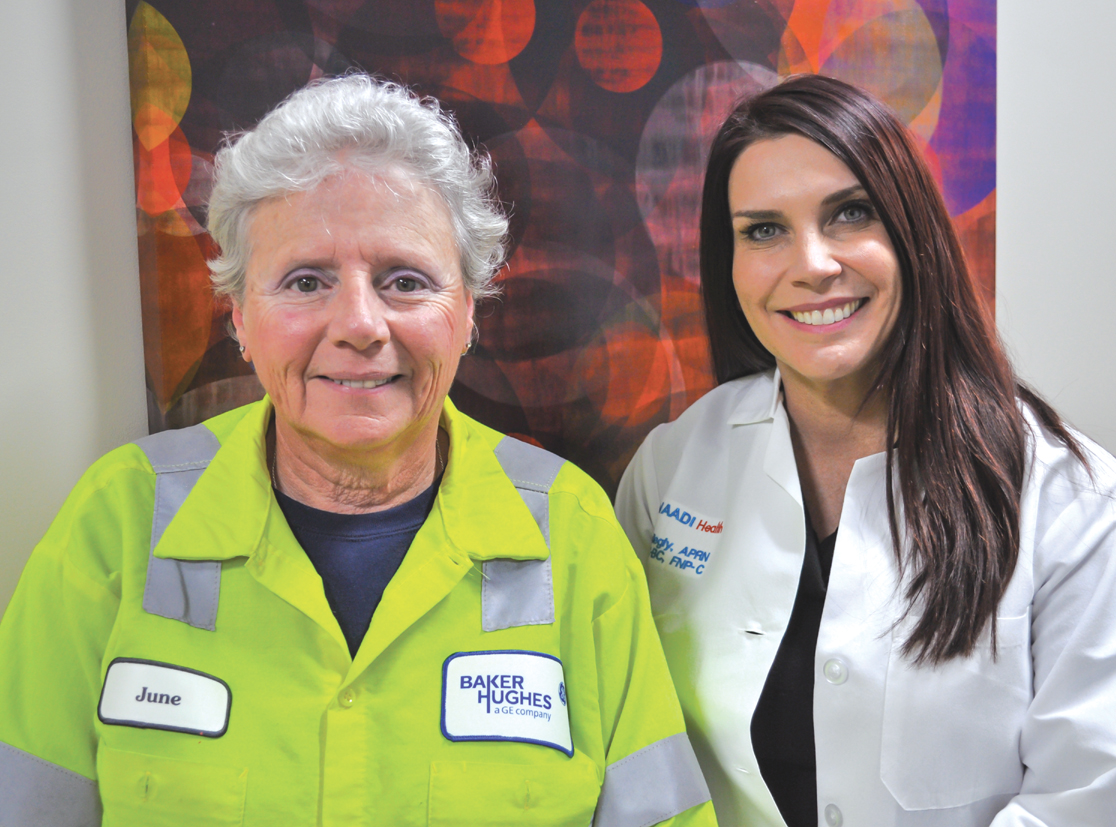
The staff at Naadi Healthcare Vascular and Interventional Center helped give June Brown a new lease on life.

story and photo by Bobby Anderson, Staff Writer

June Brown (above left) celebrates new lease on life.

It’s a new year and June Brown is celebrating her new lease on life.
“They said there was really nothing they could do. It was just damaged muscle,” Brown said, recalling a July 2006 injury to her left leg that left her living in pain.
Over the next 13 years, that injury gave way to a vicious cycle of pain, redness and swelling followed by antibiotics.
And building oilfield equipment for a living, that meant Brown spent long days on her feet which just made problems worse.
She managed the best she could until she noticed a hole forming in her leg, about the size of a pencil eraser.
Her doctor put her on another round of antibiotics hoping it would curb the growing infection.
“The doctor was real nice but said he had never seen anything like this and wouldn’t touch it,” Brown remembers.
Finally deciding she had had enough, Brown pressed the issue and sought a second opinion.
Pathology samples showed dead tissue in her leg due to no blood flow.
“It was basically just dying,” she said.
She was horrified and in need of help.
GIFT OF HEALING
That’s when she found Dr. C.V. Ramana and Naadi Healthcare Vascular and Interventional Center.
Dr. Ramana was able to restore blood flow for the first time in more than a decade.
“Within two weeks I was released from wound care. You wouldn’t believe the difference,” Brown said. “It’s got a scar but it’s a totally different leg. I’m just so happy there’s no pain, no nothing.
“I can forget about it.”
Naadi specializes in peripheral vascular disease and venous insufficiency.
From pain in the calf while walking to non-healing wounds, Naadi works on getting people back to their former selves.
“Ultimately, the end goal is if somebody has a really bad wound we don’t want them to lose their limb. We want to save their limb, save their life. People who have amputations have a very high mortality rate,” said Shelby Dudley, a radiology technologist at Naadi.
Naadi Vascular and Interventional Center is the first outpatient center in Oklahoma City dedicated to vascular and interventional radiology.
Interventional radiology (also known as IR) is the minimally invasive, image-guided treatment of medical conditions that once required open surgery.
Breakthroughs in technology and imaging have created new treatment choices for patients. In this new era of medicine, there is no longer one “right way” to handle your condition.
Personalized medicine means doing the right thing for each individual patient. More than ever, it’s imperative for you to know and understand all of the available options to treat your condition or disease. In many cases, there is a minimally invasive approach that could dramatically reduce your pain, risk and recovery time.
“A lot of people have pain in their legs and they think it’s normal and it’s not,” Dudley said. “A lot of people have peripheral vascular disease and they don’t know. It’s a misdiagnosed disease. This can be treated and there are things that can be done to prevent it.”
Controlling diabetes and blood pressure, exercise and maintaining a healthy diet are some of the biggest modifiable risk factors that can help prevent peripheral artery disease.
After the injury, Brown resigned herself to her current condition. She didn’t know things could be better.
Not until she visited Naadi and Dr. Ramana.
“He was great. He was real sweet and real concerned,” Brown said of Dr. Ramana. “He was patient with me. He didn’t try to push. He let me go at my own pace. I appreciated that. He made it to where I would understand what was going on to help relieve some of my anxiety.”
“His staff is really sweet. You couldn’t ask for better, more concerned people that want to make sure you’re comfortable, relaxed and healthy.”
Patients are able to self-refer to Naadi. Taking her health into her own hands was the best gift Brown could have given herself.
“That’s something I hope we can make a change in the culture,” Ramana said. “People see all of that as a normal part of growing old and kind of accept that and don’t think there is anything they can do to impact that.”
“One of the nice things about being in a facility like this is you get to see those patients over and over and you get to see how you’ve impacted their lives,” Ramana said. “It’s very rewarding.”
And now Brown has a new lease on life.

Visit Naadi Health at 1 NW 64th Street in Oklahoma City or call (405)-608-8884. www.naadihealthcare.com