Peanuts. Shellfish. Eggs. Milk. While that may look like a grocery list to some, to those who are allergic to these common foods, it reads like the start of a horror novel.
More than 50 million people in the United States suffer from at least one food allergy, and many can result in serious health problems and even death. Allergic reactions to food are most common in children, with the Centers for Disease Control and Prevention reporting 4 to 6 percent of youngsters in the U.S. are affected.
With food allergies making such a significant impact on the population, are we any closer to solving the issue?
“We don’t yet have all the answers, but we’ve found some important new clues in recent years,” said Oklahoma Medical Research Foundation President Stephen Prescott, M.D.
Food allergies occur when the body has a specific immune response to a food. While our immune system is designed to fight off foreign invaders like viruses to keep us healthy, occasionally it can incorrectly identify a harmless substance—like peanuts or shellfish—as a threat.
Prescott said for many years, health experts focused on identifying allergens and telling people to stay away from those offending foods.
“This resulted in stringent requirements for food labels and measures like peanut-free classrooms,” he said. “Still, the prevalence of peanut allergies kept increasing.”
In an effort to understand why, scientists studied hundreds of infants deemed at high risk of developing a peanut allergy. They randomly assigned some of the babies to be regularly fed peanut products, while denying the others all foods containing peanuts.
By age 5, less than 2 percent of those children fed peanuts developed an allergy, compared to almost 14 percent of those who’d avoided peanuts. A second study involving children who already showed peanut sensitivities at the beginning of the study yielded similar outcomes.
“These findings suggest that we’ve been going about things all wrong,” said Prescott, a physician and medical researcher. “Instead of protecting kids from food allergens at young ages, it looks like we’d do better by exposing them.”
Indeed, the National Institute of Allergy and Infectious Diseases has issued new guidelines recommending giving babies puréed or finger food containing peanut powder or extract before they are six months old.
“If parents follow this advice, I’d hope to see the peanut allergy numbers start to drop in the coming years,” said Prescott. “If that happened, it would be a big step forward.”
New clues in the fight against food allergies
INTEGRIS to Purchase Deaconess Hospital
INTEGRIS announced today that it has signed a definitive agreement to purchase all associated assets of Deaconess Hospital located near NW 50th & Portland in Oklahoma City from an affiliate of Community Health Systems, Inc. (NYSE: CYH) headquartered in Franklin, Tennessee.
Deaconess operates under the AllianceHealth brand name in Oklahoma and the purchase does not include other AllianceHealth facilities in the state. INTEGRIS will continue operations in the Deaconess facility offering quality health care to area residents.
“This purchase will provide much needed additional capacity for INTEGRIS,” said Chris Hammes, Interim President & CEO, who added, “We see tremendous community benefit and anticipate a seamless transition.”
“Deaconess has offered quality health care services to local residents for many years,” said Damon Brown, Interim CEO, AllianceHealth Deaconess. Brown added, “We believe the combination with INTEGRIS sustains and enhances Deaconess’ commitment for delivery of quality health care and services to the community.”
Due diligence efforts continue, and the transaction is expected to close during the third quarter of 2018, subject to customary regulatory approvals and closing conditions.
Kaufman, Hall & Associates, LLC is acting as the exclusive financial advisor to INTEGRIS Health on this transaction.
June/July AARP Drivers Safety Classes
Date/ Day/ Location/ Time/ Registration #/ Instructor
July 5/ Thursday/ Okla. City/ 9 am – 3:30 pm/ 951-2277/ Varacchi
Integris 3rd Age Life Center – 5100 N. Brookline, Suite 100
July 10/ Tuesday/ Yukon/ 9 am – 3:30 pm5/ 350-7680/ Kruck
Dale Robertson Center – 1200 Lakeshore Dr.
July 10/ Tuesday/ Midwest City/ 9 am- 3:30 pm/ 691-4091/ Palinsky
Rose State Conventional Learning Center – 6191 Tinker Diagonal
July 12/ Thursday/ Yukon/ 9 am – 4 pm/ 350-5014/ Kruck
Spanish Cove – 11 Palm Ave.
July 13/ Friday/ Okla. City/ 9 am – 3:30 pm/ 951-2277/ Edwards
SW. Medical Center – 4200 S. Douglas, Suite B-10
July 13/ Friday/ Okla. City/ 9 am – 3:30 pm/ 297-1455/ Palinsky
Will Rogers Senior Center – 3501 Pat Murphy Dr.
July 24/ Tuesday/ Okla, City/ 8:30 – 3:30 pm/ 773-6910/ Kruck
Healthy Living Center – 11501 N. Rockwell Ave.
July 28/ Saturday/ Shawnee/ 9 am – 3:30 pm/ 818-2916/ Brase
Gordon Cooper Tech Center – One John C. Bruton Blvd.
The prices for the classes are: $15 for AARP members and $20 for Non-AARP. Call John Palinsky, zone coordinator for the Oklahoma City area at 405-691-4091 or send mail to: [email protected]
Mercy Expands Neurology Services
Mercy Hospital Oklahoma City is expanding neurology services with the creation of the Herman Meinders Center for Movement Disorders at Mercy NeuroScience Institute (NSI), adding an expert physician and cutting-edge new treatment.
Dr. Cherian Karunapuzha, a neurologist specially trained in treating movement disorders, has joined Mercy NeuroScience Institute. A movement disorder is a neurological disease that impairs a person’s ability to move naturally. The most common types include Parkinson’s disease, essential tremor and dystonia.
“At Mercy, we have developed a comprehensive multidisciplinary program which serves as a one-stop shop for care for all aspects of movement disorders,” Dr. Karunapuzha said. “This first of a kind center for Oklahoma will provide patients and referring physicians access to advanced care without having to travel out of state.”
As part of the comprehensive approach to care, Mercy will now offer deep brain stimulation (DBS) for patients living with movement disorders. Dr. Eric Friedman, an experienced neurosurgeon, will perform the new procedure at Mercy Hospital Oklahoma City.
Deep brain stimulation involves implanting electrodes in the brain to help regulate abnormal body movements using electrical impulses.
“DBS essentially acts like a pacemaker for the brain,” said Dr. Richard Vertrees Smith, medical director of Mercy NeuroScience Institute. “Movement disorders may progress very slowly, often over decades, and some patients reach a point where medications no longer work. We are proud to be able to offer this exciting new technology that can dramatically improve the quality of life of our patients.”
The creation of the new comprehensive movement disorder clinic was made possible through a $1.7 million donation from local philanthropist Herman Meinders.
In 1970, Meinders founded American Floral Services Inc. (AFS), an international flowers-by-wire service based in Oklahoma City. AFS grew to be ranked as one of the largest floral wire services in the world. Meinders sold AFS in 1994, and it merged with Teleflora in 2000. He remains chairman emeritus of Teleflora.
Herman and his wife were longtime supporters of Parkinson’s research and treatment before he was diagnosed in 2014.
“When I became a patient of Dr. Karunapuzha, I realized what a great doctor he is and when I learned he was considering joining Mercy, I wanted to do whatever I could to make that happen,” said Meinders. “The fact my donation provided the funding necessary to create a comprehensive center for movement disorders and also allowed Mercy to add the best Parkinson’s doctor in Oklahoma to its outstanding staff made this an easy decision for me.”
At the Herman Meinders Center for Movement Disorders, patients will also have access to the most up-to-date imaging services, group exercise classes and a specially trained team of nurses, physical therapists and occupational therapists.
“We couldn’t be more grateful for Herman Meinders and his extreme generosity,” said Jim Gebhart, president of Mercy Hospital Oklahoma City and regional strategy officer. “This donation will have a profound impact on our patients and families for years to come.”
Dr. Karunapuzha will begin seeing patients May 21 at Mercy NeuroScience Institute Suite 218. To schedule an appointment, please call the movement disorder center at 405-302-2661 or the administrative office at 405-749-7000.
INTEGRIS Names New President and CEO
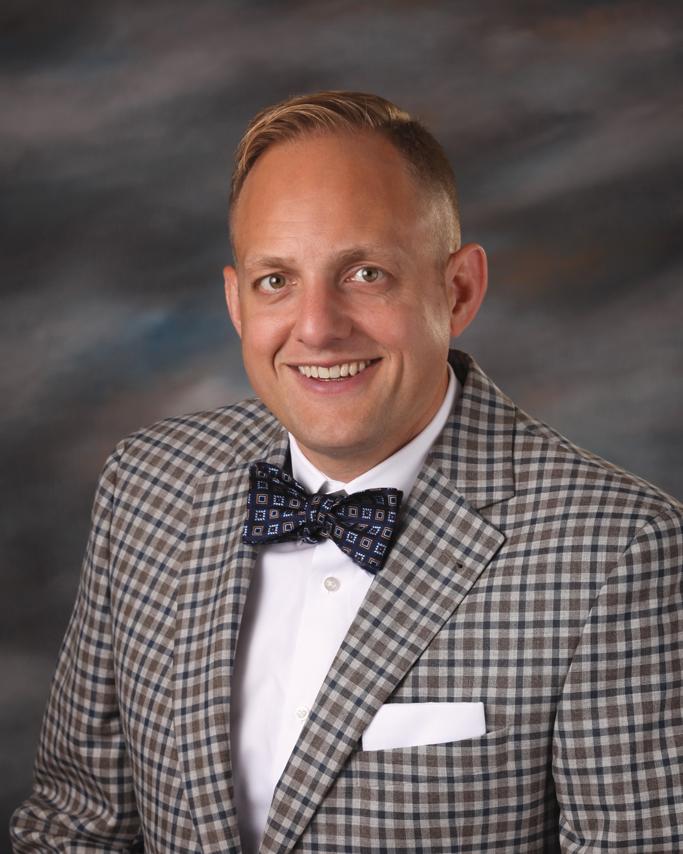
INTEGRIS, Oklahoma’s most comprehensive health care system, announces the selection of Timothy Pehrson as its president and chief executive officer following completion of a national search. Pehrson comes to Oklahoma from Intermountain Healthcare in Utah where he most recently served in a dual role as regional vice president/CEO for the North Region and vice president of continuous improvement for Intermountain Healthcare.
Like INTEGRIS, Intermountain is widely recognized as one of the most innovative, high-quality health systems in the country. In his role as CEO of the North Region, he was the market leader of a five-hospital region in Utah and Idaho, responsible for integrating the efforts of physicians, hospitals and health plans to improve care for the communities Intermountain served. In addition to his role in charge of regional operations, as vice president of continuous improvement he led the enterprise-wide improvement efforts across Intermountain Healthcare to drive caregiver engagement and strong performance in safety, quality, patient experience, access, caregiver engagement, costs and growth.
“Tim distinguished himself throughout the interview process with his impeccable record of accomplishment, an impressive understanding of not only today’s health care industry and its challenges, but more importantly his insights into areas of opportunity for sustainability, affordability and even greater success,” said INTEGRIS Health Board Chairman Pete Delaney, who added, “Tim’s strong physician and employee focus and his genuine enthusiasm for the possibilities that exist here make him the right choice to lead INTEGRIS.”
“I am both humbled and pleased to be joining INTEGRIS, a health system also recognized nationally for excellence, pioneering medicine, innovation and commitment to community,” said Pehrson. “The physicians, clinical professionals and employees at INTEGRIS are some of the most accomplished anywhere. Professionally and personally, my family and I are excited to be making the move to the Oklahoma City area and being part of a growing community that offers an excellent quality of life.” He succeeds Bruce Lawrence, who retired last December, and Pehrson officially steps into his INTEGRIS leadership role Aug. 1.
Pehrson’s career at Intermountain began in 2000 as operations officer at one of its hospitals, and he was named that hospital’s CEO in 2004. Prior to his career at Intermountain, Pehrson worked for United Healthcare, Samaritan Health and Henry Ford Health System.
Tim earned his B.A. in history from Brigham Young University and his master’s in health services administration from the University of Michigan.
Protect yourself from the summer sun
From stinging, blistering and swelling to more serious side effects like headache and nausea, even a run-of-the-mill sunburn can make you wish you’d applied your sunscreen before going out in the sun.
But as bad as the instant regret can be, the long-term effects pose the most substantial threat, said Oklahoma Medical Research Foundation President Stephen Prescott, M.D.
“A number of issues can arise over time, including premature aging, deep wrinkles, eye damage and, most significantly, skin cancer,” he said. “Ultimately, the takeaway is: sunburns are bad news and can have serious consequences.”
Although most people are aware of the dangers burns can present, that doesn’t mean they’re taking the necessary precautions. In fact, the Centers for Disease Control and Prevention report that more than one-third of adults and 70 percent of children have been sunburned within the past year.
Those numbers, particularly in children, strike Prescott as alarming.
“There is a clear link between sun exposure and certain types of skin cancer. This is particularly true when children and young adults get bad burns, because it gives problems a longer time to develop as they age,” said Prescott.
“It’s almost impossible to prove, but many experts think even one bad burn, particularly in childhood, can make the mutations in your DNA that will eventually lead to cancer,” he added.
It’s not the acute burn itself that proves to be dangerous, he said. The infrared rays that cause you to look red or pink when you come out of the sun can cause pain and blistering, but it’s rare that a sunburn is severe enough to require medical attention. It’s the other rays—ultraviolet rays—in sunlight that cause longer-term issues.
Ultraviolet rays are the leading factor in causing skin cancer, the most common cancer in the U.S. In fact, more people have suffered from skin cancer than all other cancers combined over the past three decades, according to the Skin Cancer Foundation.
And sunlight might not be your only enemy when it comes to UV rays. Prescott said even tanning beds can lead to many of the same skin issues and elevated cancer risks.
Thankfully, the solution is a simple one: if you’re going to be exposed to the sun, wear sunscreen. You can also cover up with hats, long-sleeves and pants.
It’s important to note that all sunblock is not created equal, Prescott said. Use something that blocks UV rays, and the higher the SPF the better. OMRF’s Prescott recommends using SPF 30 or higher to be safe.
“We all want to have fun outdoors in the summer at barbeques and lounging by the pool, but taking a few minutes to apply proper sun protection can make a word of difference in the long run,” he said.
Vinyl Man

by Bobby Anderson, Staff Writer
Through the years, John Dunning has been a purveyor of antiques and lover of music.
Funny, how his two loves married a few years ago.
Now, Dunning runs Trolley Stop Records, 1212 N. Pennsylvania and is feeding the metro’s resurgent appetite for vinyl records.
A story in Forbes magazine noted that since 2009 the vinyl format has experienced a 290-percent increase in growth.
You’ll find CDs at Trolley Stop but they’re relegated to the back. There’s no doubt vinyl is the star of the show here.
“To me the unusual thing was back in the 80s CD’s put vinyl out of business pretty much,” he said. “But now it’s kind of flip-flopped and records are putting vinyls out. They’re not making the CDs as much and Best Buy and Wal-Mart, they’re dropping CDs.
“The interesting part is it’s the only example of a technology replacing a technology and then the replaced technology coming back and replacing it. I can’t think of any other scenario.”
“I’ve tried, stretched my brain, but can’t think of any other scenario where that’s happened.”
Dunning’s collection is massive.
“I don’t really know,” Dunning shrugs when asked how large. “People are bringing more in almost daily.”
Trolley Stop contains just a fraction of the vinyl Dunning has collected over the years. He’s got a warehouse that he keeps adding to.
It’s one of the reasons he’s now on Penn.
Dunning arrived to the Penn Theater a year ago this past April with nothing but a cement floor to greet him.
Wooden record cabinets and a stage were created.
By late July Trolley Stop was open for business and the old location at 18th and Classen was shuttered after a seven-year stay.
Since then a number of bands have graced the stage.
“I was just wanting a bigger venue and was driving around town and they had a big For Rent banner hanging,” Dunning said.
There’s a low-key vibe at the Trolley Stop.
Dunning and his wife, buy and sell. Rescue dogs litter the floor here and there, oblivious to the customers most of the time and then sauntering up for a scratch behind the ears other times.
“I just want to be a source of records for people who enjoy music,” Dunning said petting one of the dogs. “And a place to have concerts, too.”
Born in 1951, Dunning is now a visionary for a technology that appears to be sweeping the nation – again.
“It was really displaced but now it’s just booming,” Dunning said of records. “There were lots of guys that never gave it up. Then you had guys once CDs hit that gave all their records away and now they’re kicking themselves.”
And Dunning is there to sell them all back to them.
“The quality of the sound is better. The art is so much richer than a little plastic case,” he said. “You want to sit down and read the liner notes. You get a little CD case and you try to read it and within five minutes you’re tired.”
An artifact, a sampling of art and a piece of of history all come packaged with unforgettable sound.
“The young ones are hopping onboard and its fascinating them because they never grew up with it so it’s fascinating to them,” he said. “They’ve kind of embraced it. And with the power of the Internet being able to listen to old songs and look up bands and history it’s right at their fingertips.”
“Now it’s become a family affair.”
One of the big things Dunning has noticed the last few years is how families come in together. There’s the little ones, the tweens and teens, moms and dads and the grandparents.
“Kids can ask grandpa if they saw this band or that one,” Dunning said. “It’s bringing families together.”
The format almost disappeared in the early 2000s. But then it caught fire again.
Like most people, Dunning watched the Beatles on Ed Sullivan.
“That got me going,” he grinned.
Right after in 1964 Dunning went to the Municipal Auditorium and saw the Dave Clark Five.
He was hooked.
Trips to see Jimi Hendrix, Janis Joplin, Led Zeppelin and other bands most people wish they could see followed.
Dunning spent the 1970s living in a commune in Oklahoma City. Yes, he’s a hippie and proud of it. He was responsible for helping bring more live music to the metro with the construction of the Prairie Lady concert hall.
“We had new bands that were hitting and lot of the old bands,” Dunning said. “That was a lot of fun. To me that was kind of my college education, that time frame.”
Now, he’s teaching a proverbial master’s class to those falling in love with vinyl all over again.
Bullets dodged: Nurse finds life after abuse

by Bobby Anderson, Staff Writer
It wasn’t until the bullets engraved with the initials of her and her children were placed into her hands that Krystel Huddleston, RN, realized just how close she had come to death.
Eight years later the nurse manager who lived through fear, isolation and abuse wants to make sure others in similar situations know that there is hope.
Born and raised in Texarkana, Texas, Huddleston fell in love early at the age of 14. She met a man 10 years older she was sure she would spend the rest of her life with.
As a married woman high school seemed frivolous so she dropped out.
Three kids soon followed as did the isolation and belittlement intermingled with mental and physical abuse.
“I actually got into nursing because he chose that for me,” Huddleston said of her ex-husband. “He felt like that was predominantly women and I wouldn’t be around a lot of men.”
Staying home and playing World of Warcraft and Everquest were at the top of her husband’s agenda.
Huddleston’s husband drove her to nursing school every day until she became an LVN.
Huddleston would cook, clean, go to school, do homework and take care of the kids, all while being kept inside a trailer with locked windows and no other contact.
“I really felt like I had a normal life,” said Huddleston, now a nurse of 12 years and a manager. “I remember getting out into the workplace with strong women and strong personalities. I remember sitting at the nurses station one year and a seasoned nurse was talking about Dr. Phil.”
“I said ‘You’re allowed to watch Dr. Phil?’ She looked at me and asked if I still lived with my mom. I told her my husband says I couldn’t watch that because it gives women ideas.”
“I remember that exact moment realizing my life isn’t normal.”
“I knew the abuse was not normal and he was extensively, creatively abusive,” she said. “I knew that was not normal but I also knew if I catered and walked those egg shells I could find my way around.”
There were good years, but the alcohol and mental health issues began taking their toll.
While Huddleston was bettering herself with a career her husband’s love for the couch, ice cream and playing video games caught up with him.
He developed uncontrolled diabetes. Huddleston had to take care of him, too.
“As he was getting weaker I was getting stronger being in the workfield around strong women,” she said. “Finally, I decided he was going to kill me if I stayed or if I left so I was going to at least make it worth his time.” She went to work one morning after hearing the clicking sound of an empty gun pointed at her temple.
She called the police to pick up her three boys.
Her ex-husband beat the female officer who responded.
Three months later her husband shot himself.
Going through belongings after the funeral, Huddleston began questioning herself.
Was it her fault? Did she do something to make it happen? What could she have changed?
As she dug through personal belongings she found an envelope.
In the envelope was a receipt for five burial plots.
Letters written to her parents and his explaining the family’s planned death were also included.
“His full intention that day was to kill everybody but something intervened and he only killed himself,” Huddleston said.
The irony of her ex-husband choosing the one career for her that would set her free was never lost on Huddleston.
“At first it was very intimidating – just more bullies,” Huddleston said of entering nursing. “I felt I was the low man on the totem pole and I knew nothing. But as those women became my colleagues and I was learning and seeing them interact with spouses I pulled from that and I grew from that.”
“That really helped me become a stronger person.”
Huddleston had one boss that really poured into her. She challenged her to stop being negative, realize her strengths and push forward.
Some scars will always remain.
To this day she’s still not a hugger. She admits she can be uncomfortable with touch.
At restaurants she sits facing the door. In meetings she has her back to the wall.
Don’t sneak up on her.
She’s remarried, though, and moved on.
“I still have my moments,” she says. “Some days I can be confident and be great and nobody knows. Other days it’s one bad event after another.”
The future she’s given herself and her boys is the stuff Lifetime movies are made of.
“There’s always a chance. Take that chance,” Huddleston said of getting out. “It’s worth a chance to try.”
Norman Regional receives “A” ratings
by Bobby Anderson, Staff Writer
Norman Regional Hospital and Norman Regional HealthPlex were both awarded “A” grades in the spring 2018 Leapfrog Hospital Safety Grade.
Leapfrog Hospital Safety Grade is the only hospital rating focused exclusively on hospital safety. Developed under the guidance of an expert panel, the Leapfrog Hospital Safety Grade uses 27 measures of publicly available hospital safety data to assign grades to approximately 2,500 U.S. hospitals twice per year. It is peer reviewed, fully transparent and free to the public.
The Leapfrog group began doing the Hospital Safety Grades in 2012 to help patients and families determine the safest hospitals to seek care.
Norman Regional Hospital, located at 901 N. Porter Ave., earned an “A” grade from Leapfrog for a consecutive year.
Norman Regional HealthPlex, located at 3300 HealthPlex Parkway, also earned an “A” grade, bringing up its “B” from the fall 2017 Leapfrog Hospital Safety Grade.
“This is the only national rating of how well hospitals protect patients from preventable harm and death, such as medical errors, infections, and injuries,” said Leah Binder, president and CEO of The Leapfrog Group. “Receiving an ‘A’ Safety Grade means a hospital is among the best in the country for preventing these terrible problems and putting their patients first, 24 hours a day.”
Richie Splitt, president and CEO of Norman Regional Health System, was proud of Norman Regional Hospital’s “A” grade in the fall, and is even more proud of the healers at Norman Regional for earning an “A” at both campuses.
“We take safety seriously. We always want to make sure our patients are safe and well taken care of,” Splitt said. “Earning an “A” at both campuses is meaningful recognition of our continuous efforts to reduce medical errors, injuries and infections.”
Earlier this year, they health system was named one of America’s best for Bariatric Surgery and Stroke by the Women’s Choice Award, America’s trusted referral source for the best in healthcare.
The award signifies that Norman Regional is in the top 9 percent for bariatric surgery and top 8 percent for stroke centers of 4,812 U.S. hospitals and stroke centers reviewed.
“This is the second year in a row for Norman Regional Health System to be a Women’s Choice Award recipient for both bariatric surgery and stroke. We are incredibly proud of our healers for their hard work and dedication to patient care, safety and satisfaction,” Splitt said..
Norman Regional is one of 422 award recipients representing the hospitals that have met the highest standards for bariatric surgery across the U.S.
“As the FDA approves more bariatric procedures and treatment options increase, the Women’s Choice Award is helping women make educated, confident decisions about where they should go to get the very best care,” said Delia Passi, founder and CEO of the Women’s Choice Award. “There are many women who struggle with their weight, especially as they age. For some, diet and exercise alone aren’t enough and they need to turn to bariatric procedures to reduce their weight for their overall good health.”
Tealridge DON named Administrator of the Year

Vickie Jenkins
Staff Writer
Do you like surprises? You know, those happy surprises when you least expect it? On May 2, 2018, Cheryl Bales, DON, Administrator Executive Director attended the annual OKALA conference in Tulsa, OK. Cheryl got one of those happy surprises when she heard her name being called for Administrator of the Year! She was presented the award by local television News Anchor Kelly Ogle. “I was moved to tears and very excited because of all of the nominations that were read from the presenter. Afterwards, I understood from my peers that it was a very hard secret to keep due to the fact that I serve on the board of directors for the Oklahoma Assisted Living Association,” Cheryl said. “It was something that I never expected,” she added.
Cheryl grew up in the small town of Schulter, just south of Tulsa, OK and graduated with a total of 15 seniors in her graduating class. She attended nursing school in Okmulgee at Green Country Vocational Technical School, graduating in December 1998. I started working as a CNA and Medical Technician at Henryetta Medical Center on the med/surg floor right after nursing school,” she said.
Cheryl currently works for Tealridge Assisted Living and Memory Care as the Administrator/DON/E.D. where she has been for 2 years. She has been in the Assisted Living industry for 17 years. “I have always enjoyed helping others and I guess that is why I became a nurse. It is something that I was meant to do,” she said.
Asking Cheryl what qualities make a good nurse, she replied, “Good quality nursing comes from within and you must have empathy. You must work as a TEAM player. You must treat each resident/patient as if they were your own family members and give them excellent care. You must demand excellence, without micromanaging your team mates, “she replied.
Did anyone influence you to become a nurse? I ask Cheryl. “I think I was influenced by a number of RN’s whom I worked with as a CNA. There was Darlene Baker, Carolyn Parker, Vicki Deturk, Dana Hirsch and many more. They all had an influence on my life. They were very patient and took the time to teach me and so I obtained a lot of on-the-job experience hands on.”
I asked Cheryl if she would describe herself in 3 words. “I would describe myself as fair, honest and dependable. I always listen to both sides (and then the middle) before coming to a conclusion. I try to always be at work and not call in unless absolutely necessary. Residents deserve continuity and to feel safe and secure and you can do that by being there,” she said.
Cheryl’s favorite thing about her job is working to make a difference in the lives of her patients and her staff every day. “I like helping family members to have peace of mind in order to feel secure about their loved ones. Not to be confused with my greatest reward. My greatest reward as a nurse is the humbling response from a family whom I have made a difference in the lives of their loved ones. That is my greatest reward. Just knowing that I was able to make it easier makes it all worth it,” she answered with a smile on her face.
Cheryl is married to her best friend, Calven Bales of Davenport, OK. They have 5 children. Cheryl’s hobbies are a little different from most nurses and unique in a good way. “I love to hunt and fish and when I am not working, you can find me in our boat or fishing at a pond. During deer season, you can find me in a tree stand,” she said.
Leaving words of advice if anyone is thinking about becoming a nurse and making a career in the medical field, Cheryl has some words of encouragement for you; never give up! Always be real! Be open-minded and never get on a power trip! Lead by example!
After learning a little about Cheryl and her outstanding work at Tealridge Assisted Living and Memory Care, it is easy to see how she became, Administrator of the Year, 2018. Congratulations Cheryl!