The Oklahoma Insurance Department (OID) recovered more than $3 million for policyholders in 2017. The money was paid out to Oklahomans who had claim disputes with their insurance company.
“Oklahomans have the right to expect their insurance company to uphold the agreement made in their policy,” Insurance Commissioner John D. Doak said. “I am very proud of our Consumer Assistance Division for its work to recover this money and their daily dedication to educate and help all Oklahomans with insurance issues.”
OID’s Consumer Assistance/Claims Division processes and investigates all complaints lodged by the public against insurance companies. The division opened 6,220 files in 2017. In that year, employees also answered more than 16,000 phone calls. The money recovered for last year totaled $3,326,828.16.
“Our department’s mission is to protect consumers by making sure insurance companies are following all laws and regulations,” said Lydia Shirley, Assistant Commissioner of the Consumer Assistance/Claims Division. “We are here to make sure Oklahomans are getting the coverage they were promised.”
Oklahomans who believe their insurance claim has not been handled properly are encouraged to call the Consumer Assistance Division at 800-522-0071.
The Oklahoma Insurance Department, an agency of the State of Oklahoma, is responsible for the education and protection of the insurance-buying public and for oversight of the insurance industry in the state.
Accel at Crystal Park to offer BCBS and Humana options
In a move that increases health care insurance options and manages cost for consumers, StoneGate Senior Living, LLC, an award-winning full spectrum senior care and housing facility, announces new in-network insurance provider agreements with Blue Cross Blue Shield and Humana for Accel at Crystal Park. Accel at Crystal Park is a skilled nursing care and rehabilitative facility serving the Oklahoma market, and its newest agreements join existing contracts with Medicare Advantage, the Health Insurance Marketplace, Tricare military health benefits plan and the Oklahoma government employee’s health plan.
“Our commitment at Accel at Crystal Park is to ensure the highest standard in patient care and rehabilitation, and access to in-network insurance providers is a critical part of this effort,” says Tamara Meadows, RN-BC, StoneGate Senior Living Divisional Director of Clinical Operations, Oklahoma. “We are proud to add Blue Cross Blue Shield and Humana to our in-network insurance options, and offer expanded choice and cost management to our patients.”
The new in-network insurance provider agreements with Blue Cross Blue Shield and Humana for Accel at Crystal Park will allow admittance for short-term, inpatient therapies and skilled nursing with lower, in-network copays, deductibles, & annual out-of-pocket expenses.
The Blue Cross Blue Shield contract agreement was effective as of December 1, 2017, and the Humana agreement took effect February 1, 2018.
For more information, visit: http://accelcrystalpark.com.
Accel at Crystal Park opened in February 2017, and features 59 private transitional care suites designed for patients recovering from an acute care event. Accel delivers modern amenities and technology, with a rehabilitation gym offering modern equipment and technologies that help patients complete post-acute rehabilitation as quickly as possible and return to their lifestyle. Learn more: http://accelcrystalpark.com/
Free program offers help for those recovering from loss of loved ones
INTEGRIS Hospice will sponsor three identical community grief workshops facilitated by Reverend Bob Willis, B.A., Theology.
Each free-of-charge session is open to the public. Attendees must register for only one session, in advance. Call the INTEGRIS HealthLine to enroll, 405-951-2277. Space is limited.
Willis will sculpt a broken heart from clay as he shares helpful grief information. Content will cover normal grief responses, myths about grief, honoring relationships and healthy expressions of grief.
A short break during each session is offered for networking and resource gathering. Session 1 – Thursday, March 8, 2018, Time – 6 to 8 p.m., INTEGRIS Cancer Institute, 5911 W. Memorial Road, Oklahoma City, OK 73142, Conference Rooms D and E southwest entrance. Session 2 – Tuesday, March 13, 2018, Time – 6 to 8 p.m., INTEGRIS Cancer Institute, 5911 W. Memorial Road, Oklahoma City, OK 73142, Conference Rooms D and E southwest entrance. Session 3 – Thursday, March 15, 2018, Time – 6 to 8 p.m., INTEGRIS Cancer Institute, 5911 W. Memorial Road, Oklahoma City, OK 73142, Conference Rooms D and E southwest entrance.
Willis served as a hospice bereavement coordinator for 17 years and has authored two books: The Ultimate Caregiver and A Guide for Grievers.
Melissa Hill, and Greg Bridges, RN, are changing the way health care is delivered through Home Care Assistance.
by Bobby Anderson, Staff Writer
For the better part of a decade Melissa Hill and Greg Bridges traveled Oklahoma trying to improve the health care landscape in our state.
They saw the good and often times the bad.
What they walked away with was a better understanding of what assistance seniors need to stay in and thrive in their own homes as long as possible.
And through that, Home Care Assistance was born in the metro.
IMPROVING HEALTH CARE
The group has cared for Oklahomans through Home Care Assistance for almost four years now.
Bridges – who brings more than 35 years of registered nursing experience to the company – worked with Hill consulting Medicare providers prior to opening Home Care Assistance.
“Quality improvement and patient safety initiatives,” Hill said of two things that occupied their time as they traveled. “We did a lot of work … particularly around the issue of readmissions. Why are people going back into the hospital and how many of those readmissions could have have been prevented?”
The answer to both questions could be found at home.
“It was very eye-opening for me personally to understand some of the risks or hazards of hospitalization and some of the safety issues that are prolific in the health system,” Hill said of her decade of process improvement. “We know people really want to avoid being institutionalized and the majority of people want to remain in their homes.”
HEALTH AT HOME
Typically, Home Care Assistance hires just one in 25 applicants – all home health aides and certified nursing assistants.
The focus is on activities of daily living – allowing clients to do as much as they possibly can on their own while also being there to help shore up any deficits.
“It’s A through Z, personal care, dressing …” Bridges said. “Statistically, 60 percent of people who come out of the hospital with strokes have depression. Having that relationship with a caregiver one-on-one and not feeling like they are a burden … can really lift someone out of that depression.
“It’s broad spectrum.”
Services range from personal care to medications reminders, running errands and light housekeeping.
“You want to maintain an optimal environment for them to thrive,” Bridges said.
Bridges noted that as health care moves more towards an in-home setting it’s important to understand that bringing someone into your home has legal ramifications.
The Oklahoma State Department of Health is cracking down on “rogue” caregivers who are unaffiliated with licensed agencies.
The reason is that these individuals often do not go through state and national background checks, carry workman’s compensation insurance or withhold required taxes.
Home Care Assistance leans heavily on Bridges’ three decades of experience ranging from the ICU into the home.
“With us you transfer that into the home and the practical things that keep a person safe,” Bridges said. “We try to focus on consistent assignments so the same caregiver and same team knows the patient’s idiosyncrasies. And we’re the owners and I’m the case manager so we know each client intimately and because of that we can intervene and tailor a plan of care.
“Watching a person that closely, supporting physical therapies and having that much feedback and intervention on a daily basis we really nip all sorts of stuff in the bud.”
Most clients who utilize Home Care Assistance are in their 70s or 80s – although Hill points out one client just turned 101 – and need assistance dealing with multiple chronic conditions. Heart and pulmonary issues are prevalent as are Alzheimer’s and dementia.
Following an acute medical issue is often when families realize not only the value but the need for assistance in the home.
“We wish more physicians understood the value of a non-medical home care service and where to find them,” Hill said. “It’s just not top-of-mind yet among health care professionals.”
That will be changing.
Through its Hospital Readmission Reduction Program, Medicare has been financially penalizing hospitals with high rates of Medicare readmissions and is extending the penalties to other settings of care such as skilled nursing facilities.
It’s estimated that in 2017 hospitals with relatively high readmission rates were penalized more than half a billion dollars.
That occured when Medicare patients were readmitted to the hospital within 30 days of discharge for the same diagnosis.
February is Heart Health Month, highlighting the leading cause of death for men and women.
Hill points out that the good news is heart disease is also one of the most preventable diseases. And heart disease can be managed at home.
“We see a lot of people coming out of the hospital after a heart incident or a stroke and that’s the perfect time to have in-home care services to help people recover,” Hill said. “That first 30 to 90 days after a hospital stay people are in a pretty vulnerable state.
“Our services are holistic.”
In late January, Home Care Assistance was honored by Home Care Pulse as a 2018 Best of Home Care aware winner in both provider and employer categories.
You can find out more at www.hospitaltohomecare.com.
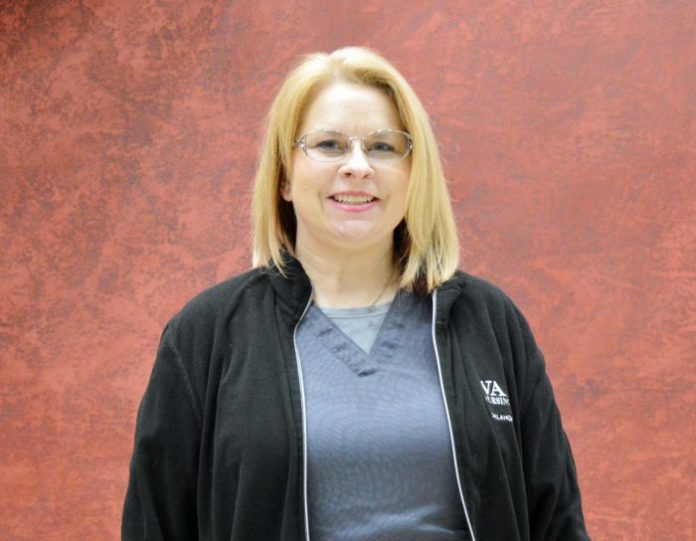
Oklahoma City VA Center nurse Jillene Sroczynski in February will receive the American Legion National VA Health Care Provider Award. Last week, Sroczynski was honored at Mustang Post 353, where she is a member, in anticipation of that Washington, D.C. award ceremony.
story and photo by Traci Chapman, Staff Writer
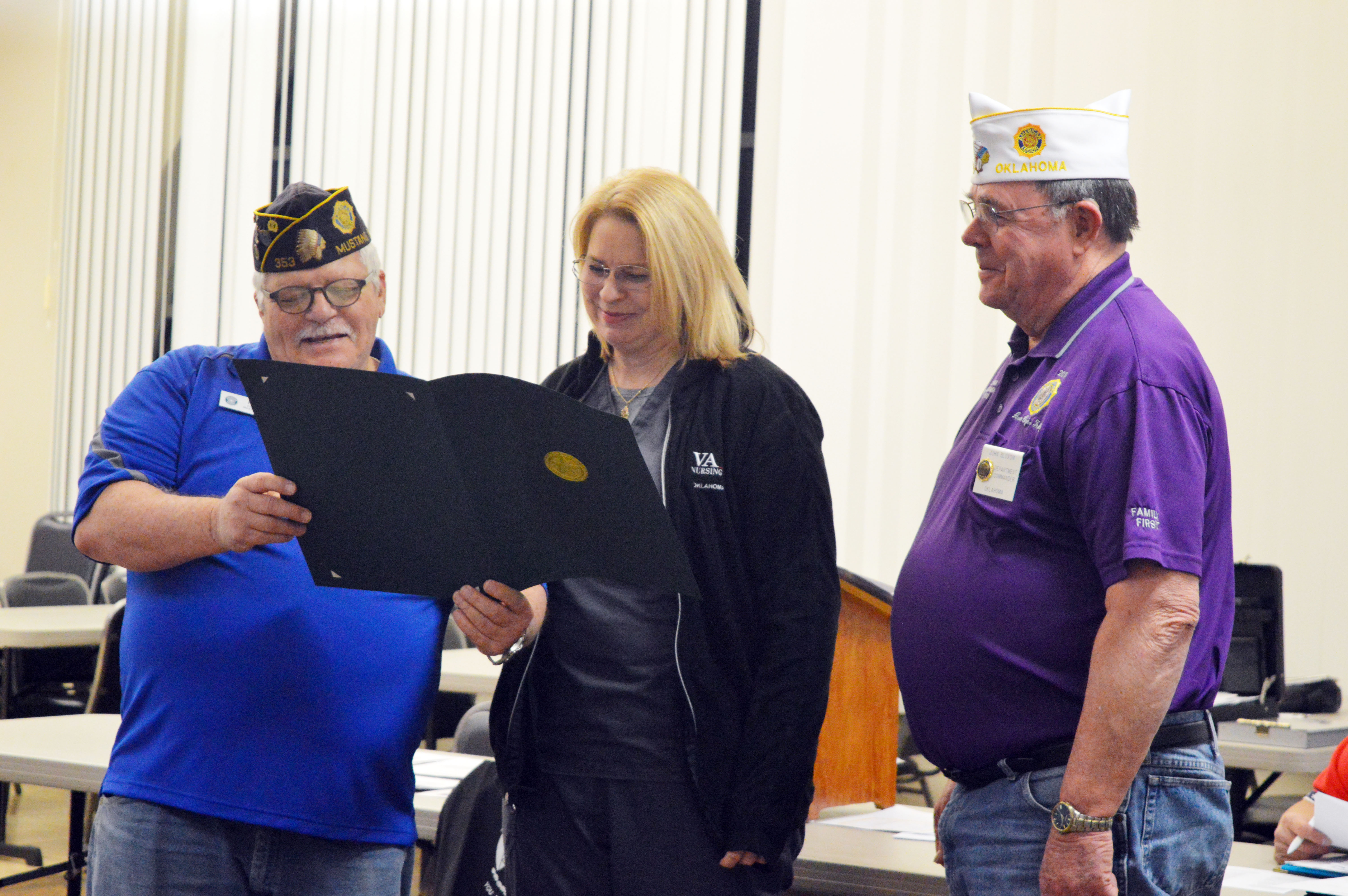
Mustang American Legion Post 353 Commander Paul Ray reads a proclamation issued by Oklahoma State Rep. Leslie Osborn (R-Mustang) and Sen. Lonnie Paxton (R-Tuttle), as Jillene Sroczynski and Department of Oklahoma Commander John Bloxom look on.
Jillene Sroczynski’s life and career have always been one of service, something perhaps best illustrated by her dedication and skill as a nurse at Oklahoma City Veteran’s Administration Health Care System. It is dedication recognized far beyond her supervisors and peers, as the American Legion recently named Sroczynski 2017 National VA Health Care Provider Award.
It was something particularly special to Sroczynski, she said, because she knows what the veterans she treats face – as a former U.S. Air Force pilot, she’s been there.
“It’s especially important to me to remember where I’ve been and what my experiences were in the Air Force and how everyone we treat has been in the same position – many much more with intense, painful and emotionally challenging memories and issues,” Sroczynski said. “It means the world that I can be there for them and help them through what they’re facing.”
A member of Mustang American Legion Post 353, Sroczynski always knew about military life – her father, John Knutson, served in the Vietnam War; he was the one who encouraged her to join the local American Legion post. Her father, in fact, is on her mind most frequently because many of the veterans she treats each day also served in Vietnam, she said.
“Those veterans were different because of the climate in the country when they came home and really for a long time after,” Sroczynski said. “I want to make sure I always give them the respect they deserve, try to be there to support them and show them the gratitude for their service.”
It was, in fact, a Vietnam veteran who put the wheels in motion for Sroczynski’s national honor. Post 353 Commander Paul Ray approached the VA nurse and told her he wanted to throw her name in the hat – something she thought would just end there.
“There are so many accomplished and amazing people working throughout the country for the Veteran’s Administration – I just never expected it to go any further,” Sroczynski said. “When Paul told me about it, I just didn’t think it was for real for the longest time.”
It was indeed real, as last week Department of Oklahoma Commander John Bloxom traveled to Post 353’s monthly meeting to jointly with Ray present Sroczynski with a legislative proclamation signed by Rep. Leslie Osborn (R-Mustang) and Sen. Lonnie Paxton (R-Tuttle). Sroczynski and Bloxom will in February travel to Washington, D.C., where she will receive the national award.
The honors were a big deal for a little girl who grew up in Montana, graduating in 1992 from Montana State University with a computer science degree. During college, Sroczynski took part in ROTC; after graduation, she went into the U.S. Air Force, where she flew KC-135 Stratotankers.
“It was the best thing, I absolutely loved every single minute of it,” she said.
But, things changed in the wake of the Sept. 11, 2001 attacks. Sroczynski’s husband, Andrew, served in the Air National Guard, and the couple knew things would change – the country was headed to war.
“We knew it was time for me to get out, that it was just smart with a small child,” Sroczynski said. “So, my life really changed as I decided to stay home as our family grew.”
The couple would have three children – Megan, Gunnar and Julia – and Sroczynski spent the next decade as a stay-at-home mom. When her youngest daughter, Julia, began preschool, Sroczynski decided it was time to go back to work.
Her new career would be nursing, she decided.
It was not necessarily a completely new thought. In the years since Sroczynski retired from the Air Force, the family experienced a tragedy, and it was a nurse who helped her at one of the lowest times of her life, she said.
“This nurse was the kindest, the most understanding person, and the person that I needed at that time,” Sroczynski said. “I knew that I wanted to work again, and I missed the camaraderie of the military – and I saw that was something very strong in the nursing field, so I knew where I was meant to be.”
Sroczynski knew the first step was education. She enrolled in Oklahoma City Community College’s nursing school, before completing her training at Oklahoma City University’s Kramer School of Nursing. Both were experiences she said she would always cherish.
“I loved both OCCC and Kramer, and particularly as I moved through the program at Kramer, they really taught not just the technical aspects of nursing, but also the caring part of nursing,” Sroczynski said. “I loved that.” With her degree in hand, Sroczynski was as certain about where she wanted to be a nurse as she had been that nursing was what she was meant to do. She applied to Oklahoma City’s VA Medical Center – and waited.
“I tried for three or four months to get a job at the VA Center, and I was starting to worry that I might have to go somewhere else first and then come back and apply again at the VA, when I was so lucky – there was an opening,” Sroczynski said. “They needed someone in the intensive care unit, and I was basically offered the job right then.”
From the start, Sroczynski knew her instincts were correct. While the ICU was amazingly busy, the pace fast and at times beyond stressful, Sroczynski said she loved her job – and the people, both patients and the co-workers who worked side-by-side to help veterans when they needed that help the most. “They are amazing people, the staff that works there,” she said. “It’s kind of a calling to work at the VA Center, it’s certainly not easy, but it’s so, so fulfilling.”
Sroczynski worked in the ICU, one of three intensive care units in the sprawling Oklahoma Center Veteran’s Center facility, for about three years. She then moved to the intervention radiology department – and found she could love her job even more, beyond anything she’d ever dreamed possible.
“The other staff members, the patients, just working at the VA Center – it’s a fun job, a fulfilling job, and I wouldn’t change any of it,” Sroczynski said.
“I loved what I did before changing over to this department, but this is so, so far beyond that.”
Sroczynski is one of three nurses who, along with two doctors and three radiology technicians, comprise the intervention radiology department. It’s a job with long hours and more than it’s share of challenges, but something she said she would never change.
“Being a nurse is harder than flying airplanes – emotionally, physically, it’s a coordinated chaos when you’re trying to save somebody,” Sroczynski said. “It’s more than I expected it to be, but it’s so rewarding.
“To be given an award for doing what I love, where I love to do it, is beyond anything I could have believed,” she said.
Residents from the Villages at Southern Hills collected and delivered donations for Emergency Infant Services as a way to give back to the community.
by Tara Vreeland
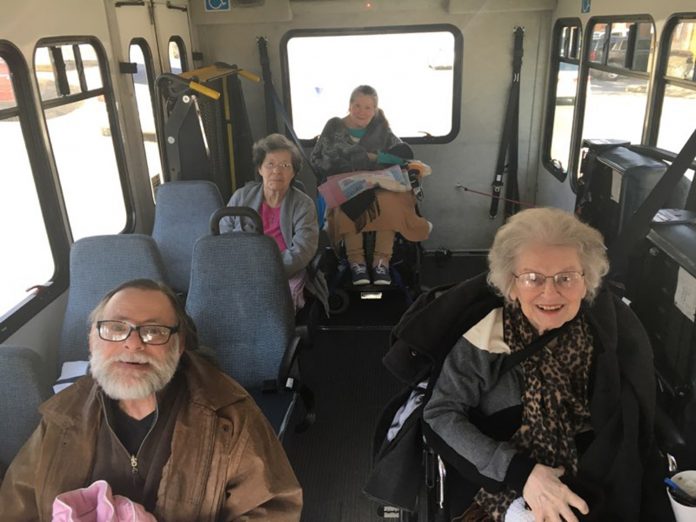
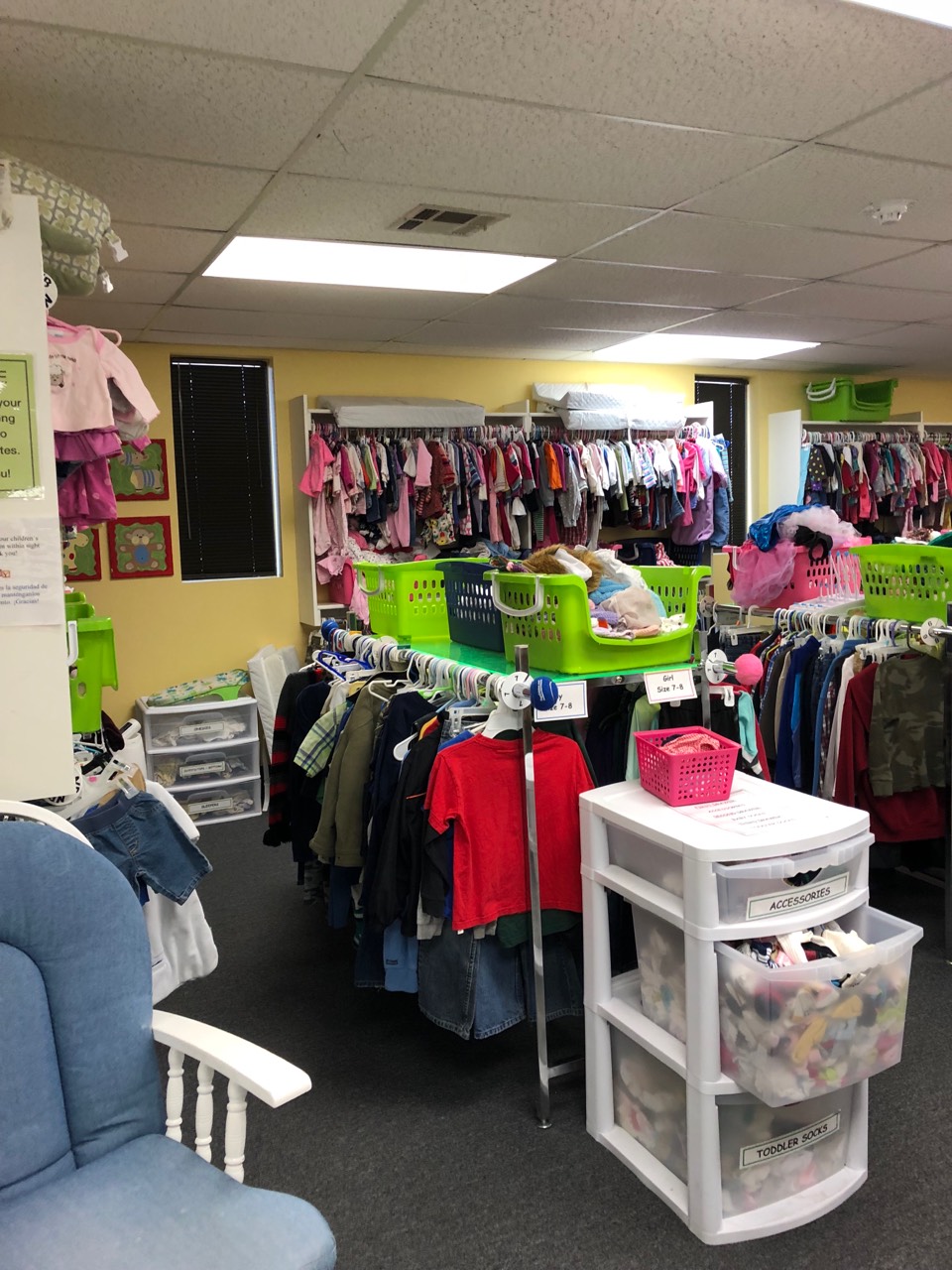
Senior residents rom The Villages at Southern Hills, collected donations for Emergency Infant Services over the holiday season. The residents chose EIS because they wanted to give back to the community and thought it was a good idea after seeing a donation box at the facility. They collected new/gently used baby/toddler items like diapers, bassinets, wipes, clothes, toys, blankets, and strollers. A few of the residents, staff with Lifetime Wellness and social worker, Caitlyn Morgan paired with the Eastside Christian Church Youth Group to collect the times. They boarded a bus to deliver the items to EIS and were personally greeted by Executive Director, Tim Gowin.
Gowin says, “Our agency is pretty much 100% grassroots Tulsa. Donations like this are what make our agency tick. It is the way we are able to serve.”
The residents were able to visit with Gowin and he says they genuinely expressed interest in EIS and its mission. “I could feel the connection with them. And you could see it on their faces. They were very proud to be able to help. They should be proud.” One Villages at Southern Hills resident said, “I didn’t realize there was such a need for the items. I love the cause and am amazed it has no state or local grants behind it.”
Gowin says last year, they served 18,800 children between the ages of 0-5 thanks to generous donations from the community. He also says the items the residents donated were processed the next day and have already been distributed.
Gowin says right now, EIS is in need of volunteers to help serve families. He also says this time of year, there is a need for winter coats for kids 0-5… specifically the middle sizes 24 months 2T and 3T. For more information visit http://www.eistulsa.org/or contact volunteer coordinator Kimberly Deardorff directly at kimberly@eistulsa.org or call 918-582-2469 for any additional information or questions.
Darlene Franklin is both a resident of a nursing home in Moore, and a full-time writer.
Hatred stirs up conflict,
but love covers over all wrongs.
Proverbs 10:12, NIV
By Darlene Franklin
Life inside the nursing home gives me multiple opportunities for conflict. It often leaves me spouting like someone arrested by the cops, babbling incoherently, feeling anxious, afraid, and helpless.
There are biblical principles I can apply, but they require practice in real time. I struggle to find the “correct” response when my inner child screams for fairness and justice. The needs are real, but ranting and pouting only push any possible resolution further away. I suspect many church conflicts stir up similar unreasoned responses. And a four-day Christmas holiday weekend with short-handed, inexperienced staff provided a perfect storm. And praise God, I had a victory.
I’ve been working with a therapist, learning kills on how to redirect my thoughts, out of a genuine desire to please God, to be people-oriented and not a shrew. I am making progress.
Also, instead of expecting the world to change for me, I’ve applied the serenity prayer. God gives me wisdom to accept what I cannot change, courage to change the things I can and the wisdom to know the difference.
Here are examples of those principles at work:
* Empathizing with the staff instead of attacking them. One day my med aide brought my 8 o’clock medicines at 11 a.m. I started to complain. She told me a family member had gone to jail, and she hadn’t slept for twenty-four hours. I let go of my criticism and instead offered my support and prayed for her.
* Thanking instead of criticizing. One evening my aide promised to put me to bed after supper. I meant when I finished supper. She meant when she finished supper for everyone on the hall, which is an hour later. Instead of complaining, I thanked her for putting me to bed before anyone else. As a result, we have a better relationship. She listens to my concerns and address them when she can.
* Looking for the good. As I go about my day, I look for things that each aide does well, such as fixing my bed or finding my clothes in the closet. It opens my mind to what’s right instead of the things I wish they would do better. I also thank them when they do as I ask without frowning or complaining.
* Accepting what I can’t change Over Christmas, I was only given half the continence supplies (kept under lock and key) I needed for the four-day weekend. I asked for more on Friday and again on Saturday (Christmas Eve). When that didn’t happen, I accepted it in peace. I had done what I could. If the aides’ lack of proactive problem solving created issues later, they would be the ones dealing with the consequences.
I also can’t change the schedules here, which at times create problems for my unique needs. I look for ways to work around their schedules, instead of expecting them to change.
* Doing what I can. Most of the conflicts over that weekends were relatively unimportant, nothing to complain to management about. One was a major issue: my call light went unanswered for six hours When I couldn’t get the shift nurse to listen, I followed through with the Director of Nursing the following week. Because I was able to say, the rest of weekend went reasonably well, she was open to my complaint.
* Wisdom to know the difference. Where is the line between my needing help now and aid coming an hour later? How can I schedule phone calls with people outside when I have no control over the timing inside the nursing home? How do I decide when to fight for something, and when to let it go? It’s not always easy, but with God’s help, I’m learning how. I had ordered glasses in November. In December, the social worker told me I couldn’t get glasses because I had received a new pair back in July. I told I hadn’t. After the new year I was going to ask for the prescription to get a pair on my own. I’m glad I waited-she brought me the new lenses a few days before Christmas.
With practice, and by God’s grace, we can learn how to avoid conflict before it escalates.
Russell-Murray Hospice staff gathered Dec. 28 for a retirement reception for long-time social worker Virginia Olds, seated. Russell-Murray recently celebrated its 30th anniversary.
by Traci Chapman, Staff Writer
As Russell-Murray Hospice prepares to commemorate its 30th year in business, those associated with it are celebrating a new home and new levels of care to those who need it most.
“It’s appropriate we are here today, holding our board of directors and annual advisory board meeting, in our new building,” RMH Executive Director – and the organization’s first RN – Vicki Myers said. “It’s peaceful, it’s efficient, it’s just perfect for everything, and if Russell-Murray is here for 30 more years, this building is perfect for us.”
Myers made her remarks during the Nov. 15 annual meeting of the two boards at Russell-Murray’s new home, located at 2001 Park View Drive in El Reno. The new building, recently purchased by the longtime hospice care organization, is more than triple the space of its previous offices, located in historic downtown El Reno, Myers said.
“As we’ve grown, the staff really has had to try to work in a situation that just wasn’t feasible,” she said. “They were just crammed in with each other, and while everyone handled it very well, it just wasn’t working the way we wanted it to.”
That meant when a former medical office building located adjacent to Mercy Hospital El Reno came on the market, the organization jumped at it. The space meant not only plenty of room for a growing staff, but also room to grow and a more prominent location, headquartered not only near the hospital, but also other medical providers.
That’s good news for the staff, but also for Russell-Murray’s patients, said Melodie Duff, RN, patient care coordinator. As RMH closes out the year and heads into 2018 – its 30th anniversary – Duff said staff and those associated with its success have a lot to be proud of, including 4,440 patients who have been treated and cared for by the organization’s nurses and caregivers.
“We currently have patients from infants days old to patients over 100,” Duff said. “We serve without care about their ability to pay, and we’re always there for them, no matter what.”
That’s something unique in Oklahoma hospice – and elsewhere – Russell-Murray Clinical Supervisor Missy Ellard said.
“If a patient qualifies and desires hospice care, we do not turn patients away based on their reimbursement status,” she said. “Many hospices, even not for profit hospices, have a ‘quota’ of non-reimbursable patients and will decline patients if they don’t have a payer source – RMH has never done that.”
That assistance totaled about $400,000 last year, Administrator Christina Ketter said. With $3.8 million in revenues and a $2.6 million payroll, Russell-Murray saw a jump in helping those who could not afford it.
“It might be younger people who lost their job and didn’t have insurance and, of course, the seniors who might not have access to Medicare or something like that,” Ketter said. “To me, our charity care, the way we look at our patients and how we treat them shows what kind of an organization, what kind of people we are.”
Russell-Murray’s approach has worked – from its roots as a small El Reno hospice care provider to an organization with offices also located in Kingfisher, Weatherford and Oklahoma City. In October, those sites combined served 118 patients through the work of 25 full-time RNs and LPNs, as well as several per diem PRN nurses, across RMH’s four offices.
“We serve approximately 75-mile radius surrounding each of the four offices,” Myers said.
Even before the move, Russell-Murray was working to expand its services, not only to patients, but also their families. In March, the organization celebrated the opening of the Virginia E. Olds Resource Library, coordinated originally by Carol Russell Davis, Evan Davis and Vicky Joyner. When RMH began looking at moving, Carol Davis undertook the transfer of the library’s books to the new site, while Sue Pennington-Unsell is director of bereavement.
Named for retired University of Oklahoma School of Social Work professor and longtime Russell-Murray counselor Virginia Olds, the library is unique among hospice organizations, Myers said – and is something that can help not only patients and their families, but also nurses who deal daily with end-of-life care and the emotional toll it can take.
“We wanted to accumulate information related to social issues involved in bereavement, emotional and psychological resources, coping with these kinds of illnesses and more,” Myers said. “It’s important to remember that the patient isn’t the only person who suffers through an end-of-life illness – it’s incredibly difficult and stressful for their family, their friends and their caregivers.” Those caregivers are the backbone of Russell-Murray’s nearly 30-year success, and they make those who work with them proud every day, Duff said.
“I can’t tell you how many thank you cards and calls we get, talking about how our staff treats their patients, and particularly those who can’t afford it,” she said. “We hear all the time that our nurses never judge and are always there to do everything they possibly can do – and that’s an accomplishment in itself.”
Molly Cason Johnson stars as Florence Foster Jenkins in Painted Sky Opera’s production of “Souvenir” at the Civic Center at 8 pm Feb 23-24 and Mar 2-3 and 2pm Feb 25 and Mar 4.
Photography and Text by Terry “Travels with Terry” Zinn t4z@aol.com
While enjoying travel destinations and entertainments, I find there are three levels of enjoyment. The first is the anticipation and planning. The second is the actual experience and the third is the reflection on the experience and many times enjoying it again in memory. In addition to travel this can apply to entertainment as well.
With entertainment, whether it’s movies, or sports or live theater, anticipation is a factor of enjoyment. This is also a most variable factor as with live theater, the ultimate presentation depends on many variables not evaluate until the live performance is underway or completed.
Reputation for quality is an important factor when choosing to put down your money for a ticket. One such reputation for high standards are the productions of the Painted Sky Opera company. (www.paintedskyopera.org) Following their artistic success of last years grand opera “Tosca,” the next promise of impeccable talent is with their upcoming production of “Souvenir.”
In place of a traditional musical presentation or opera, “Souvenir” is a two-person play written by Stephen Temperley in 2004 and focuses on the relationship between Jenkins and her long-suffering pianist, Cosme McMoon, who played for her from 1929 until her death in 1944. Like the 2016 biographical film “Florence Foster Jenkins” starring Meryl Streep as Jenkins, “Souvenir” details many important events for the unlikely singer-pianist duo, including their first meeting, their recordings, and their concert at Carnegie Hall.
“I love this show partly because it presents both sides of Florence, who was a truly unique figure in musical history. ‘Souvenir’ shows how ridiculously awful her singing was, but it never mocks her or becomes mean-spirited,” said stage director Rob Glaubitz. “Florence was a good person who genuinely thought that her singing was bringing joy to people. Of course, her singing was indeed bringing people joy, but not in the way she thought.”
Painted Sky Opera features OKC native Molly Cason Johnson as the comically terrible singer Florence Foster Jenkins in “Souvenir: A Fantasia on the Life of Florence Foster Jenkins” at 8pm Feb 23-24 and Mar 2-3 and 2pm Feb 25 and Mar 4 at intimate CitySpace Theatre in Civic Center Music Hall. Based on real-life events, “Souvenir” depicts the unique story of Jenkins, who achieved fame in the 1940s for her tone-deaf recordings of operatic favorites as well as her sold-out performance at Carnegie Hall.
Johnson graduated from Oklahoma City University and performed and taught in Texas for many years before returning to Oklahoma City in 2013. She has performed locally with CityRep and Lyric Theatre among other companies.
“As a classically-trained singer, the chance to sing badly on purpose is a delicious and rare treat for me,” said Johnson. “I have loved the vocal prep. Our cats, however, are not so amused.”
“Souvenir” also features live performances of many of the songs that made Florence Foster Jenkins famous. Jenkins was regarded as the worst singer ever to perform at Carnegie Hall. She was infamously unaware that her concerts were popular only because her audiences loved to laugh at her inept and out-of-tune singing. Despite her lack of vocal ability, Florence was also a major supporter of the arts and a talented pianist who was passionate about the importance of music to all parts of society.
The part of Cosme McMoon is played by recent University of Central Oklahoma graduate Joey Harbert who also shows off his pianistic and vocal skills in this production. Both Johnson and Harbert are natives of Oklahoma City.
It will be as entertaining to take in the Oklahoma audience’s reaction to the play, whether to laugh at the off key singing or have empathy for Jenkins. It may be both, which is the excitement of seeing live theater and experiencing an unknown work.
“Souvenir: A Fantasia on the Life of Florence Foster Jenkins” is the second show in Painted Sky Opera’s 2017-18 season. Tickets are $30 for adults, with discounts for students, military, and seniors available in-person at the box office. Purchase advance tickets online at the Civic Center website at http://www.okcciviccenter.com or by visiting or calling their box office at 405.297.2264.
Painted Sky Opera’s 2017-18 season concludes in May with Jake Heggie’s “Three Decembers”. For more information, go to www.paintedskyopera.org.