Saturday, January 3, 2026

McKeever brings whole life philosophy to nursing

0
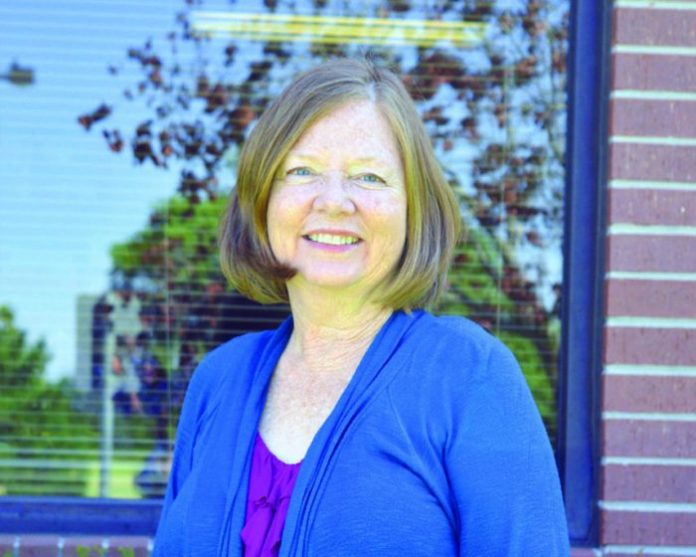
For Karen McKeever, a lifetime of nursing goes far behind the confines of a doctor’s office or hospital - it’s making sure the patient and their family is whole, healthy and happy.

by Traci Chapman
Staff Writer

For Karen McKeever, nursing is about helping the most vulnerable, those who might struggle with getting the help they need.
It’s a philosophy that’s led her to treat thousands of patients and help spearhead an ever-expanding effort to lead patients having difficulty finding their to way discover the right path.
“It just seemed like the people who might need help the most are often overlooked – it’s the people without insurance or who are struggling not only with physical issues, but also mental health challenges,” McKeever said. “They need someone who can be there for them in their corner, to let them know they’re not facing this all alone.”
That kind of nurturing spirit comes easy to McKeever, a mother of six who now has nine grandchildren – and a nurse who worked in pediatrics and as a Yukon Public Schools nurse, concentrating on severely disabled students. Looking out not only for the young, but also the disabled and those who might not have an advocate became McKeever’s life work, a passion that led to an organization aimed at doing just that.
It was originally Canadian County Health Access Network, started in 2011 by McKeever and fellow nurse Rosemary Klepper.
“So many Sooner Care patients don’t know where to go or how to best address their health issues – you see many going to the emergency room when there are better avenues available, and you find families that are dealing with problems that go far beyond basic health or physical disease or distress,” McKeever said.
“There was just a huge gap in service, a real need for these patients and for their families, who were not being taken care of or served,” she said. “We knew how important it was for them to have someone they could turn to – as nurses, we needed to be there not only to treat them but to guide them and help with whatever challenges they were facing.”
It wasn’t long, however, before McKeever and Klepper’s philosophy caught on, and patients beyond El Reno, Yukon, Mustang and other area communities began to ask for assistance. That’s why CC-HAN’s “CC” soon transitioned from Canadian County to , Central Communities, with co-founder and care manager McKeever and fellow care manager Rhonda Chronister now available to SoonerCare patients and their families across south central Oklahoma, working to improve their health and healthcare options and much more.
“Rosemary (Klepper) decided it was time to retire, to explore other things, but my heart is here, I didn’t want to walk away,” McKeever said. “That’s when Rhonda came onboard, and it’s been a great arrangement.”
For her part, Chronister said she views McKeever not only as a co-worker, fellow care manager and nurse, but also as a mentor who has spurred on Chronister’s own love of nursing and helping patients far beyond regular nursing duties.
“Karen is an amazing person and an amazing nurse, and it’s a remarkable opportunity to work with her and learn from her,” Chronister said. “Her capacity for love and how she gives of herself is inspirational to everyone who knows her, particularly the people we serve.”
McKeever has always envisioned something bigger for CC-HAN, which led to the agency helping patients not only locate the right caregiver and treatment, but also issues that might aggravate physical ailments. That’s why CC-HAN provides care management to patients not only facing financial constraints that can limit their ability to get the medical treatment they might need, but also those who deal with complex health issues, as well as providing a proactive approach – guiding patients to the right resources for well child examinations and care, injury and accident prevention, diet and nutrition and accessible medical and dental care.
“What the patient might need at any particular moment might not be ‘nursing’ services, but rather they might not have gas money to get to an appointment or they might not have any food in the cupboards – and that disrupts the treatment they need,” McKeever said. “That’s the bottom line – making sure they are healthy and able to live their lives and do what they need to do, because someone who’s dealing with a mental health issue can have a ripple effect on their entire family, and that family might need guidance in how to help and to make sure it doesn’t negatively impact others, either mentally or physically.”
It’s a philosophy that’s not only challenging and fulfilling, but also always interesting, McKeever said. She never knows what she might face in any given day – whether it will be assisting patients with medical care options, educating families about CC-HAN’s resources or even delivering food to someone who is hungry and doesn’t know where to turn.
“What we do is everything that’s the best of nursing – helping people who truly need it and giving that care, that guidance – as a nurse, it’s so fulfilling and inspirational, and to me it’s what our profession is all about,” McKeever said. “To me, if you’re a nurse, you’re always a nurse – it’s not something you do, it’s something you are.”
For more information about Central Communities Health Access Network, its services or philosophy, look online at www.cc-han.com.


Savvy Senior: Financial Tips for Retiring Abroad

0

Dear Savvy Senior,

What are some financial factors to consider when retiring abroad? My husband and I will be retiring in a few years and are interested in living in a foreign country that’s cheaper than the U.S.

Frugal Couple

Dear Frugal,

Retiring abroad has become a growing trend for millions of U.S. retirees who are looking to stretch their retirement savings. Here are some tips and resources to consider that can help you prepare.
Researching Tools
For starters, you can find lots of information and articles on the countries and cities you’re interested in retiring to at websites like InternationalLiving.com and EscapeArtist.com.
Another good tip is to talk or network with some expatriates who have already made the move you’re thinking about making. They can give you tips and suggestions on many issues, as well as the advantages and disadvantages and day-to-day reality of living in a particular country. Some popular sites for finding expat resources are ExpatExchange.com and ExpatForum.com.
But before committing to location, most experts recommend that you visit multiple times during different seasons to see whether you can envision yourself living there and not just exploring the place as a tourist. Also, consider these financial factors:
Cost of living: Retiring abroad used to be seen as a surefire way to live beyond your means, and for some countries it still is. But the U.S. dollar isn’t what it used to be, so your money may not stretch as far as you think. See Numbeo.com for a country-by-country cost of living comparison.
Taxes: No matter what foreign country you decide to retire in, as long as you’re a U.S. citizen you must file an annual tax return reporting all income above certain minimums, not matter where it’s earned. For details see the IRS publication 54, “Tax Guide for U.S. Citizens and Resident Aliens Abroad” at IRS.gov/pub/irs-pdf/p54.pdf.
Health care: Most U.S. health insurance companies do not provide coverage outside the U.S., nor does Medicare. Check with the embassy (see USembassy.state.gov) of your destination country to see how you can be covered as a foreign resident. Many countries provide government-sponsored health care that’s inexpensive, accessible and just as good as what you get in the states, or you may want to buy a policy through Medibroker (Medibroker.com) or Bupa Global (BupaGlobal.com).
Also know that most people who retire abroad eventually return to the U.S., so you should consider paying your Medicare Part B premiums. If you drop and resume Part B, or delay initial enrollment, you’ll pay a 10 percent premium penalty for every 12-month period in which you could have been enrolled.
Banking: Opening or maintaining a bank account abroad has become more difficult because of the Foreign Account Tax Compliance Act, a U.S. law designed to prevent Americans from hiding assets abroad. So, you may have to establish a savings and checking account with an institution that has international reach like Citibank. And/or consider maintaining your U.S. bank account that you can access online, and get U.S. credit and debit cards that don’t charge foreign transaction fees.
Rent versus buy: Buying a home in a foreign country can be complicated, so it’s usually cheaper and simpler to rent, unless you know you’re going to live there for a long time.
Social Security: You can receive your monthly Social Security benefits almost anywhere you live around the world (see SSA.gov/international/payments.html). Your benefits can be deposited into your bank account either in the U.S. or in your new home country, but there are some exceptions.
The U.S. State Department offers a handy checklist that can help you think through all the issues on retiring abroad. To access it visit Travel.state.gov and search for “retirement abroad.”
Send your senior questions to: Savvy Senior, P.O. Box 5443, Norman, OK 73070, or visit SavvySenior.org. Jim Miller is a contributor to the NBC Today show and author of “The Savvy Senior” book.

Rapp Foundation gives $400,000 to OMRF for new researchers

0
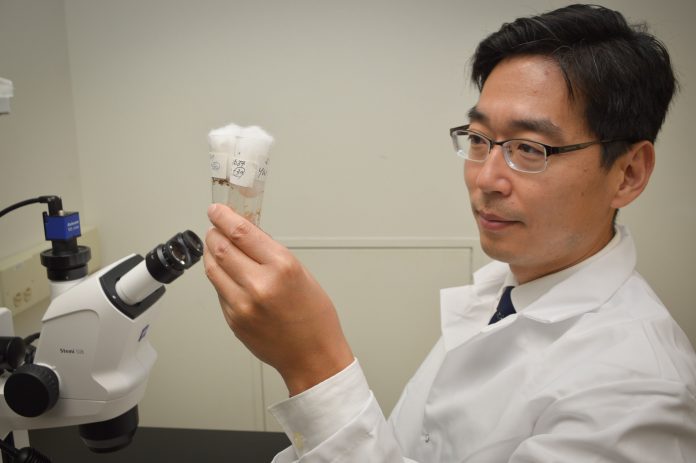
Oklahoma Medical Research Foundation scientist Wan Hee Yoon, Ph.D.

The Robert Glenn Rapp Foundation has awarded the Oklahoma Medical Research Foundation a four-year, $400,000 grant.
The grant will help two new scientists establish laboratories at OMRF. In their labs, they will study the cellular processes that lead to cancer, as well as diseases of neurodegenerative conditions such as Alzheimer’s and Parkinson’s diseases.
“Our family is pleased to play a small role in the important work underway in OMRF’s cancer research laboratories,” said Jilene Boghetich, managing trustee of the Rapp Foundation. “Cancer seems to strike almost every family in some way, and our goal is to help OMRF’s scientists discover new methods to detect and treat the disease.”
Founded in 1951, the Rapp Foundation distributes funds to a wide variety of charitable projects throughout the U.S. This new grant to OMRF represents the latest in a long line of gifts that have helped the Oklahoma City-based nonprofit strengthen its scientific infrastructure.
The new funds will help support the recruitment of a pair of new scientists, Wan Hee Yoon, Ph.D., and Jiang Li, Ph.D.
Yoon joins OMRF from the Baylor College of Medicine in Houston, and his research uses fruit flies to understand the processes of cellular decline that lead to diseases such as cancer and Alzheimer’s. Li also studies the basic cellular mechanisms underlying cancer and neurodegeneration, and he comes to OMRF from Northwestern University in Chicago.
The grant will provide funding for the purchase of sophisticated laboratory equipment and supplies for the new researchers. It will also help support salaries of personnel working in their labs.
“It’s hard to imagine OMRF as it is today without the enduring generosity of the Rapp Foundation through the years,” said OMRF Vice President of Development Penny Voss. “They’ve been true friends to OMRF and to medical research in Oklahoma, and they’ve invested in visionary projects that will benefit us all.”

Oklahoma Heart Hospital Ranks as Nation’s Top 50

0

A relentless pursuit of excellence in cardiac care has once again earned the Oklahoma Heart Hospital (OHH) a national ranking as one of 50 top cardiovascular hospitals by IBM’s Watson Health study, previously known as the Truven Health Analytics study.
“Although this is the fifth time OHH has been ranked one of the top heart hospitals in the nation, it’s our patients who are the real winners,” said Peggy Tipton, RN, OHH’s chief operating officer. “We set the bar extremely high – aiming to lead the nation in all areas of cardiac care. Our physicians and co-workers work together as a team to provide the best heart care.”
The 50 hospitals in the Watson Health study scored higher than their peers on clinical outcomes for heart attack and heart failure treatments, as well as coronary bypass and angioplasty surgeries. The hospitals performed better on mortality and complications, as well as 30-day mortality and readmissions. On average, their procedures cost less and patients had shorter hospitals stays.
For results, Watson Health uses the most recent Centers for Medicare & Medicaid Services (CMS) data from the Medicare Provider Analysis and Review files, CMS Hospital Compare and Medicare cost reports. With the data, the company produces the only study of its kind in identifying the best health systems in the nation. Health systems do not apply for consideration, and winners do not pay to market their award.
“While there are many published rankings of hospitals, the Watson Health survey is one of the most highly regarded by the health care industry,” said Dr. Brook Scott, OHH’s chief medical officer. “Being named one of the 50 top heart hospitals, and one of only 15 community-based hospitals, is a tremendous achievement.”
Oklahoma Heart Hospital, a physician-owned hospital, partners with Mercy and operates two hospitals with a combined 143 beds in Oklahoma City and many clinics throughout Oklahoma.
“Oklahoma Heart Hospital cares for Oklahomans across the state, and we are committed to providing the best care anywhere,” said Dr. John Harvey, OHH president and chief executive officer.

Dec/Jan AARP Drivers Safety Classes

0

Date/ Day/ Location/ Time/ Registration #/ Instructor

Jan 4/ Thursday/ Okla. City/ 9 am – 3:30 pm/ 951-2277/ Varacchi
Integris 3rd Age Life Center – 5100 N. Brookline, Suite 100
Jan 8/ Monday/ Midwest City/ 9 am – 3:30 pm/ 473-9239/ Williams
First Christian Church – 11950 E. Reno Ave.
Jan 9/ Tuesday/ Yukon/ 9 am – 3:30 pm/ 350-7680/ Kruck
Dale Robertson Center – 1200 Lakeshore Dr.
Jan 9/ Tuesday/ Midwest City/ 9 am – 3:30 pm/ 691-4091/ Palinsky
Rose State Conventional Learning Center – 6191 Tinker Diagonal
Jan 10/ Wednesday/ Mustang/ 9 am – 3:30 pm/ 376-3411/ Kruck
Mustang Senior Center – 1201 N. Mustang Rd.
Jan 12/ Friday/ Okla. City/ 9 am – 3:30 pm/ 951-2277/ Edwards
S.W. Medical Center – 4200 S. Douglas, Suite B-10
Jan 23/ Tuesday/ Okla. City/ 9 am – 3:30 pm/ 773-6910/ Kruck
Healthy Living – 11501 N. Rockwell
Jan 24/ Wednesday/ Norman/ 9 am – 3:30 pm/ 515-8300/ Schaumburg Silver Elms Estate – 2100 36th Ave. N.W.
Jan 24/ Wednesday/ OKC/ 9 am – 3:30 pm/ 751-3600/ Palinsky Fountains of Cantebery (Town Center Rm – 1404 N.W. 122nd St.
Jan 29/ Monday/ Shawnee/ 9:30 am – 3:45 pm/ 818-2916/ Brase Shawnee Senior Center – 401 S. Bell St.
The prices for the classes are: $15 for AARP members and $20 for Non-AARP. Call John Palinsky, zone coordinator for the Oklahoma City area at 405-691-4091 or send mail to: johnpalinsky@sbcglobal.net

Oklahoma Gardeners Association 3rd Annual Garden Boot Camp

0

“3rd Annual Garden Boot Camp presented by Oklahoma Gardeners Association will be held Saturdays, January 27, February 3, and February 10, 2018, 9:00 am – 3:30 pm, at Will Rogers Exhibition Center, 3400 NW 36th Street, OKC. Three Saturdays filled with a wide range of gardening information presented by horticultural specialist from around our State. Great to give as a gift to family and friends. Gift Certificates available now. $45 for all 3 Saturdays. For more information or to register, visit our website, www.okgardeners.org or call 694-8456. Seating limited. Deadline for registration is January 12, 2018”.
Oklahoma Gardeners Association is a 501c3 organization. Thier mission is to educate the public using sound research-based horticultural information. We offer children’ programs, informational tables at fairs, garden shows and other events, and speakers who make presentations at various organizational meetings and garden shows in addition to the annual Garden Boot Camp in January and February each year to give gardeners information to start their gardening season right.

VOLUNTEERS NEEDED

0

Make a Difference Volunteering for Resident’s in Long-Term Care

The Long-Term Care Ombudsman Program serves residents in nursing homes, assisted living centers and residential care homes. An Ombudsman helps to improve the quality of care and life for the residents living in long-term care communities. As a friendly visitor and advocate, the volunteer has many opportunities to be of service and enrich the lives of the residents. Many residents never have a visitor after moving to a long-term care facility.
If you are interested in making a difference in the lives of residents in Canadian, Cleveland, Logan or Oklahoma Counties, we have opportunities waiting for you. If you are willing to be that friendly face and advocacy helper, it only takes a desire to be the difference in someone’s life. Potential volunteers are required to complete a two-day training class, become designated to a facility, attend a once a month educational training meeting, and commit to a minimum of only 2 hours per week visiting with residents. Sound simple? It is! Such a small sacrifice to make a huge impact in the lives of so many. Our aging community deserves a happy life. Will you help deliver some happiness?
The next training will be January 24th & 25th, 2018 held at Areawide Aging Agency, located at 4101 Perimeter Center Drive, Suite 310, Oklahoma City, Oklahoma. There is no cost involved and refreshments will be served, but lunch is on your own. Each day classes begin at 9:00 a.m. and will adjourn at 3:00 p.m. This is a FREE 2-day training. If you are interested in becoming a volunteer, or just want to learn more about the Long-Term Care Ombudsman Program, please RSVP by January 17,2018. Please contact Ombudsman Supervisor Tonya VanScoyoc, (405)942-8500. Hurry!! There’s limited seating so register to attend in order to save your seat.

A place to call home

0
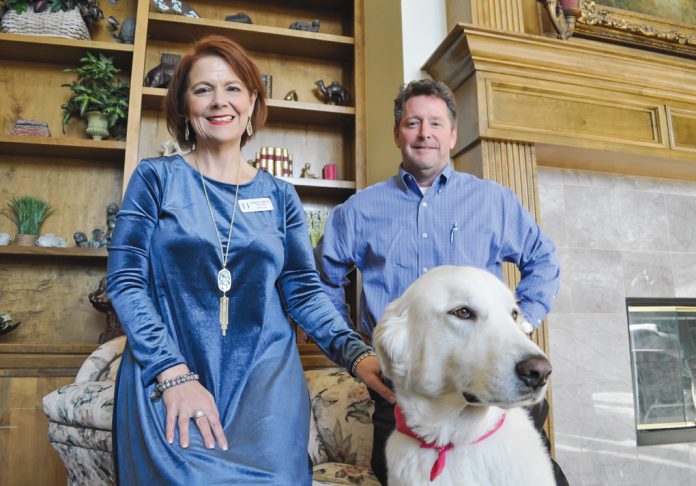
Heritage Assisted Living Center Director of Admissions Kimberly Brinner, Director Curtis Aduddell and Chief Canine Officer Cotton have created a warm, inviting atmosphere for seniors in the metro.

by Bobby Anderson, Staff Writer

Heritage Assisted Living has been in Curtis Aduddell’s family for 17 years.
The director realizes when he comes to work every day he’s walking into someone’s home.
He’s proud of that. And walk the halls of the Yukon residence for a few minutes and you’ll quickly see he’s not the only one.
“More laughter going on here than any other facility around, I’ll bet you,” said resident Jane Carter.
“We do have fun,” resident Ron Kirby chimed in. “It’s the reason to live. That’s what it’s all about. When you’re happy you live longer.”
There’s life in these hallways.
The sound of people laughing.
The smell of chicken enchilada soup simmering on the stove in preparation for dinner.
FAMILY DIFFERENCE
Aduddell became a nursing home administrator in 1993 in Texas. When the opportunity arose to move back to Oklahoma he jumped on it.
His brother and father approached him with a plan to open several assisted living facilities. The family built Heritage Assisted Living from the ground up and Aduddell has been at 9025 Northwest Expressway ever since.
Joan Dark’s residence is just 10 feet down the hall from Aduddell’s office.
His door is alway open, usually with Chief Canine Officer Cotton’s head poking out. Aduddell’s affectionate, gentle and patient Great Pyrenees knows every resident by sight and visits with them on a daily basis.
In 2015, Dark sold her house and moved into independent living. Less than a year later she realized the move didn’t solve the day-to-day chores of cleaning, cooking and shopping.
A friend suggested Heritage Assisted Living.
“I love it here,” Dark said.
And one of the things she loves is the access she has to the man in charge.
She’s used that access on a couple occasions but mostly she pops in just to say hello.
“A lot of people like the fact they can go to somebody that can at least give them an answer. Whether the answer is yes, no, this that or the other you don’t have to run it up a corporate chain of command,” Aduddell said.
“We do it because we love the seniors and we love what we do. That’s my goal. Open door – absolutely.”
SMOOTH TRANSITION
The open door policy is just one of the amenities new residents are offered when Director of Admissions Kimberly Brinner begins the discussion of moving in.
“We get a lot of information before people come in and find out their likes and dislikes,” Brinner said. “We try to pair them up with someone here who is very similar.”
From that information a myriad of things begin to fall into place.
“They feel comfortable. They know there are people they can go to talk to over and over again,” Brinner said. “We know this is going to be hard. The first six weeks are always bumpy, no matter wherever they go.”
“But it’s bumpy because their entire world has just turned upside down. We want to make sure during that time we’re here for them 100 percent.”
That’s where the hospitality committee comes in. Sharing stories, memories, tips and feelings of their own personal transitions oftentimes brings it home to people that they don’t have to go through this phase alone.
Residents are encouraged to take ownership at Heritage. Whether it be serving on resident committees or leading in other ways the message is clear: Heritage is your home.
“We work here. You live here,” Brinner said. “We’re working in your home. We want to know what you want us to do in your home. We don’t want to cross that line when we’re in your home. You tell us what you need us to do to make your life better.”
“The thing I always stress is that we’re a family-owned facility but we’re a family here. My mom lives here.”
Dinnertime is a special time at Heritage – largely because it’s driven by what residents want.
The food council meets monthly with Chef Felipe Castillo to help craft the menu.
Special requests are made and family recipes are shared with Castillo so he can share with everyone.
A few years back, residents even opted to restructure dining times and implement reserved seating.
“They wanted that. It’s not for our benefit,” Aduddell laughed. “They wanted it to get to know the people at their table.”
Remodeling has already begun at Heritage. A bistro will open along with a workout facility. More open reading areas will be offered.
Granite countertops and new flooring are also being installed.
Staff longevity reigns at Heritage. Director of Nursing Jodie Spradlin has several night staff that have worked at Heritage for 17 years.
Many others are reaching a decade of service to residents.
“People come and stay,” Aduddell said. “We just try to hire caring and compassionate people. I think we’ve done a good job in that.”
They’ve also done a good job of making a home.
To find out more information you can call Brinner at 405-470-4249 or go online to
www.heritageokc.com.

Making a difference

0
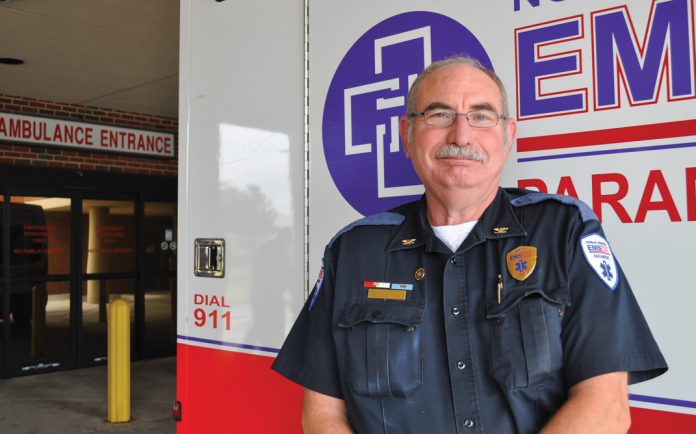
Eddie Sims has spent four decades in health care and is the chief of EMSSTAT services in Norman.

story and photos by Bobby Anderson, Staff Writer

For the last four decades Eddie Sims has kept a watchful eye on the citizens of Cleveland County.
You’ll probably never meet him but if you or a loved one ever requires emergency medical attention it will come as a result of the work put in by Sims and his staff.
The EMSSTAT manager and paramedic has around 100 employees who staff the emergency medical services for Norman, Moore, and adjacent rural areas of Cleveland County along with the northern half of the township of Goldsby.
That means Sims’ crew operates 13-14 ambulances on most days and is responsible for the lives of some 200,000 people at any given time.
Then there’s the athletic events.
“Luckily they’re planned,” Sims smiled. “It’s not a summer concert to benefit the tornado victims in the middle of July which I never want to see again.
“We cover the vast majority of OU athletics and a lot of community events in both cities. I live my life around OU. I don’t leave town for OU game days, graduation or medieval fair. There’s things you have anchored and live your life around those.”
When the football season begins and nearly 90,000 people descend on Gaylord Family Oklahoma Memorial Stadium for a daytime game a medical call for assistance comes in every 90 seconds.
Sims grew up in Miami, Florida with older parents. His father was diagnosed with cancer on his spine when Sims was 11.
He took care of his parents from then on.
Growing up in the early 1970s watching firefighters John and Roy man Squad 51 on the hit TV drama Emergency, Sims was hooked.
“During that time was when EMS was born. That’s what I wanted to do,” Sims said. “We used to sit around and watch it. I was used to being up 24 hours a day taking care of (my father) and responding to stuff. My mom had issues to where she really couldn’t do it and I was an only child.”
“I got involved with medicine and helping people before I really had a choice and it was really what I wanted to do.”
When he was old enough to get a job he found the local market tough to break into without a military or minority background.
“They wouldn’t even accept applications so when I was 14 or 15 I started chasing hurricanes,” he said. “In that process I met the director of the severe storms lab (in Norman) who invited us to come chase tornadoes.”
That began a routine where every spring he would fly to Oklahoma to chase storms.
He eventually settled in Norman and was among the first group to establish medical services under the Norman Police Department.
“When we started Norman probably had 50,000 or 60,000 people in it,” Sims said. “The culture in Oklahoma was ‘take me to the hospital now, you people don’t need to be doing anything to me.”
“There was a lot of public education. Being in a police system it was kind of a unique opportunity that a lot of us that had concerns how the police would integrate into an emergency medical system, it turned out to be an absolutely wonderful fit.”
In 1995, the City of Norman shuffled its emergency services and put them under the umbrella of the Norman Regional Health System.
“Again, that was a great opportunity because the resources the health system had were much greater than the city was willing to contribute,” said Sims, whose agency boasts higher than national average survival rates for patients experiencing cardiac arrest. “Medically, in 1978 if you had a heart attack we tried to get you to a hospital. If you had a second heart attack man you were lucky but you didn’t have much heart left and your quality of life went down.”
“If you had a stroke it really wasn’t an emergency because there wasn’t anything anybody was going to do for you.”
Within the last 10 years that all changed.
“We can get you to a hospital and the people in the cath lab can remove the blockage and you can walk out three days later healthier than when you started,” Sims said. “If you have a stroke and .. we take you to a stroke center and two days later you may have no residual effects at all.”
“The difference that EMS and emergency medicine has made over the four decades I’ve been doing this is amazing.”

Safe Shopping: Don’t be a holiday target

0
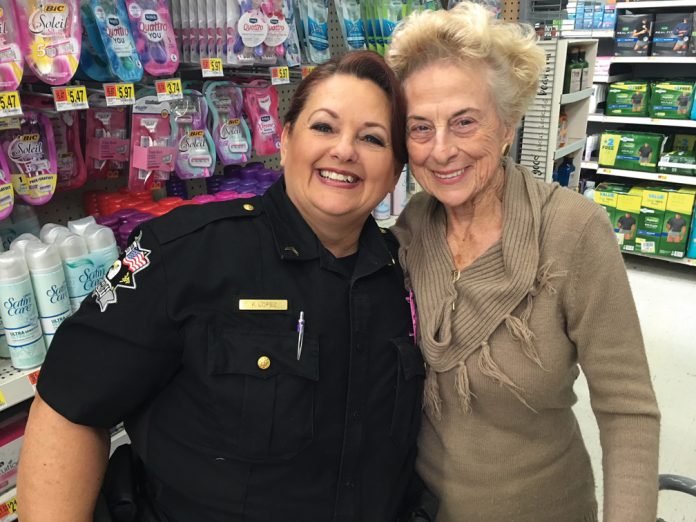
Oklahoma County Sheriff Corporal Kim Lopez and the TRIAD Program are urging seniors to shop safe this holiday season.

by Bobby Anderson,
Staff Writer

It’s the most wonderful time of the year for criminals looking to cash in on those just trying to spread a little holiday cheer.
In November, Oklahoma County Sheriff’s Officer Corporal Kim Lopez celebrated 31 years in law enforcement.
And for the past several years she has served as the coordinator of the TRIAD program which pairs law enforcement and seniors together in an effort to reduce victimization of the elderly.
She sat down with Senior News and Living to share what criminals are looking for and how you can avoid being a target.
PARK AND RUN
Lopez says the parking lot and the cash register are the two most vulnerable spots for seniors.
“I didn’t get what I have from cop school,” Lopez said. “I went to the professionals and career criminals are very quick to brag about how they selected their victims. Seniors have this vague knowledge of why we always say parking lots are fertile ground. But they need to know which ones and why.
“What I always say is the parking lots you feel the most comfortable in – not good.”
Lopez explained that cops aren’t the only ones who watch people’s body language. When people lower their guard in places where they feel more comfortable their body language eases.
Contrary to what you might believe, parking lots that serve 24-hour businesses are hot spots.
“Career criminals tell me when the drug deal goes bad, the fight is on and the police are in pursuit they want to ditch a car by getting to a parking lot and steal a car,” Lopez said. “They understand something we don’t. Crossing many different jurisdictions in a wide variety of vehicles makes it impossible for us to catch them.”
So consider that the next time you go to a casino, gas station or big box grocery store open 24 hours.
But the No. 1 place to be on your guard, according to Lopez, is the hospital parking lot.
Someone who commits a crime in a small town wants to get to a bigger location as soon as possible.
“People at hospitals are the worst for awareness,” Lopez said. “You’ll see people zoned out of their mind. They’ve been sleeping in a chair, eating out of a vending machine and haven’t showered for two days. They’ve had it. They’re worn out, care worn, and have a laundry list of things of things they are worried about and they’re not paying a bit of attention.
“It’s easier to get someone’s car keys and steal their car in a hospital than anywhere else.”
SCENE OF THE CRIME
Wherever you checkout and pay for your purchases is another favorite spot for criminals.
Getting a shopping cart, even if you’re shopping for something small is a great way to put distance between you and someone looking to gain access to your checks or credit/debit cards.
Cell phones are able to take multiple pictures of the checking account information in seconds. Checks that are written and returned to be thrown away are favorite targets.
If you’re going to continue to write checks Lopez suggests using gel, liquid ink to write with. A criminal can use fingernail polish remover on a previously used check to “wash” it and reuse.
And criminals love to follow around senior men.
“Right there at the register, senior adult men are targeted because they carry way too much cash,” Lopez said.
Lopez has noticed an increase in criminals following senior men around and then using a razor blade to slice a hole in the bottom of the back pocket. The wallet falls, the criminal picks it up and is already several purchases down the road before anyone is the wiser.
Lopez also suggests:
· Getting your form of payment out in the “unmentionables section” of the store and not at the register is ideal.
· Carrying your purse in front of you, with your arm over.
· Use a lanyard wallet you can slip under your shirt.
· Turn your rings around at the register. Don’t advertise what you have so someone can target you.
· Use a pen when punching in your debit card number to prevent the use of criminals using clip-on, heat-sensitive cameras.
· Have your monthly Social Security check direct deposited to one account and set-up an auto transfer to an account linked to your debit card that you use to pay your bills. That way if the card and/or PIN is compromised thieves don’t have access to your entire account balance.

Social

0FansLike
0FollowersFollow
0SubscribersSubscribe