Tuesday, July 7, 2026

Generation Builder: Price is right for community health

0
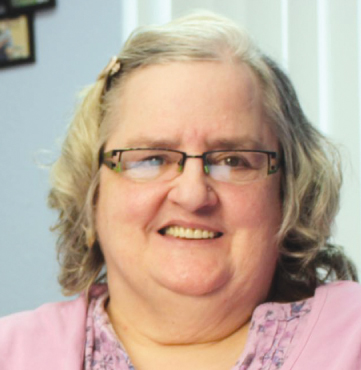
Paula Price, RN, has improved the health of generations of Cleveland County residents through a lifetime of work in nursing and healthcare advocacy.

by Bobby Anderson
Staff Writer

A convincing argument can be made that few people have done more for the health and wellbeing of Cleveland County residents than Norman Regional’s Paula Price, RN.
Not only has Price secured millions in funding for public health programs the last few years, she began at the bedside advocating for her patients back in 1975 when she first earned her LPN.
Price credits her parents with guiding her into nursing.
“They thought it would be a great career for me because I liked to help people and was kind, caring and supportive – those were things they always noticed about me,” Price said. “That’s how I started in nursing and ended up realizing after a few years it was a passion for me and that my parents really knew me well.”
And for nearly 20 years now Norman Regional Health System has relied on Price as the Health System’s Director of Health Promotion and Community Relations.
That heart for the community, coupled with her business acumen, led her to be called again to serve on the healthcare front lines.
New Norman Regional Health System President and CEO Richie Splitt recently announced Price would lead the Health System’s efforts as the new Vice President of Strategy and Growth.
“That’s really what we’re focusing on now is keeping patients out of the hospital and keeping them from being re-admitted or helping them prevent the onset of a chronic disease,” Price said, mentioning Oklahoma’s top conditions like cancer, lung disease, heart disease and diabetes.
Price has worn many hats in her career from medical surgical, surgical, and outpatient settings.
She earned her RN in 1990, but there’s always been a next step for Price.
While she always knew how to heal patients in an acute care setting she always wondered what she could do on a larger scale.
Price received a Bachelor’s of Nursing from the University of the State of New York, a Master’s of Public Health from the University of Oklahoma Health Sciences Center and a Master’s of Nursing from Southern Nazarene University
Most recently, Price has served as the Health System’s Director of Health Promotion and Community Relations for the past 19 years.
Her healthcare experience includes nursing, public health, community relations, marketing and communications. During her career she has received numerous recognitions and honors.
She was honored for her work in the wake of the May 20, 2013 tornado with a 2014 Healthcare Marketing IMPACT Award from Modern Healthcare and Advertising Age.
She also received the Oklahoma City University Kramer School of Nursing Silver Salute Award. In 2016, the Norman Chamber of Commerce recognized her with the Women in Leadership award.
She currently serves on the United Way of Norman Board of Directors, and Norman Chamber of Commerce board.
She makes sure she’s out in the community because it’s the best way to reach so many. It’s one of the reasons she spent 10 years on the board of Health for Friends, which was charged with reaching the underserved population without health insurance.
She led the system’s efforts to provide in-kind contributions of x-rays and diagnostic testing and even pharmacy vouchers that for some patients truly meant the difference between life and death.
She’s dove deep into advocacy especially the last 15 years serving as the Chair of Oklahoma Turning Point and securing millions in local funding through the Tobacco Settlement Endowment Trust.
“One thing about nursing is that I think it’s a very exciting time for nurses because you can really choose your path and choose your career,” Price said. “Now that midlevels are so key in access to healthcare nurses have so many more opportunities and can be a part of this new push of population health.”
And she’s done it while working for one of the few remaining municipal hospitals in Oklahoma.
There’s no corporate bottom line to answer to at the end of the day, only the local patient population that continues to make its approval known by patronizing any of the three health system campuses.
“The challenge of being independent is you really have to manage your resources and capital investment because you have to depend on yourself,” Price said. “We have to be very smart about being efficient and having the quality patient outcomes so we can do everything to maximize our efficiency and the care we provide.”
“We have a wonderful relationship with the community. We have a hometown feel. People know us and they’re comfortable with us. They trust us.”
And Norman Regional trusts Price to lead it into the future.


County Health Departments to Begin Flu Clinics Oct. 2

0

With flu season upon us, the Oklahoma State Department of Health (OSDH) announced county health departments will offer flu vaccine statewide beginning Monday, Oct. 2.
Flu vaccination is recommended each year for everyone 6 months of age and older. When more people are vaccinated against the flu, there is less opportunity for flu to spread in families, schools and communities. Cases of influenza hospitalizations have already been reported for this season.
“We are especially encouraging those in the age group of 18-64 to get their flu vaccination,” said State Health Commissioner Dr. Terry Cline. “During the 2016-17 flu season, there were 715 hospitalizations and 28 deaths among this age group.”
In addition to getting a flu vaccination, people 65 years of age and older, and those with chronic health conditions, should ask their health care provider about being vaccinated against pneumococcal pneumonia. Pneumococcal pneumonia is a common and potentially serious complication of the flu. Unlike the influenza vaccine, the pneumococcal vaccine does not need to be given every year. This vaccine is also available at county health departments.
County health departments will accept SoonerCare, Medicare, all private health insurance, cash, checks, or credit cards as payment for flu vaccine. The following fee schedule will apply:
* All individuals with health insurance should bring their card. Their insurance company will be billed for the vaccine and an administration fee.
* Children 18 years of age and younger who have no health insurance, whose health insurance does not cover flu vaccine, who are eligible for SoonerCare or are Native American or Alaskan natives may receive their vaccine at no charge through the Vaccine for Children Program.
* All others will be charged a fee of $25 to cover the cost of the flu vaccine and the cost of administering the vaccine.
Oklahoma County and Tulsa County residents should check with their city-county health departments for fee schedules available for those county residents.

Local nonprofit sets fall schedule

0
Katie Gallager of Physical Therapy Central speaks to COCHLAA

By story and photo by Ron Hendricks

Central Oklahoma Chapter of Hearing Loss Association of America proudly announces the program/speaker schedule for the fall of 2017. Day group will host John Vincent, Oklahoma Insurance Division, speaking on “Medicare Changes” in October. M/Sgt Robert Shalla, OKCPD will talk about “How to interact with Police Officers” for the hearing impaired in November, Dr. R. Kent Dyer, an otolarnology physician, from Hough Ear Institute will discuss “Balance Issues.” All Day group meetings are held on the 3rd Thursday, 2-3PM with a social time 30 earlier. For December, both the Day & Night groups hold Christmas parties. Everyone brings snacks and enjoys traditional Christmas games. Last Monday, the Night group’s speaker was, Katie Gallager of Physical Therapy Central. She explored the dangers of falls and how hearing loss can contribute to loss of balance. A lively group discussion followed. October we will hear Sheryl Presley, OKCPD Triad Coordinator, discussing “Senior Safety Issues” while in November COCHLA will host Gloria Evans, Hough Hearing & Speech Institute, telling us “How to Effectively Self Advocate.” Night group meetings are held on the 2nd Monday, 7-8PM beginning with a social time 30 minutes prior. All meetings are held at the Lakeside United Methodist Church, 2925 NW 66th Street.
COCHLAA is now in the 27th year of serving Oklahomans with hearing loss and is looking forward to many more years of service. You will see Central Oklahoma Chapter of Hearing Loss Association of America at the State Fair & many other community outreach events such as Health Fairs, Senior events, demonstrations, and consultations as well as at the Hearing Helper’s Room, 5100 N Brookline, Suite 100. For more information visit the website, WWW.OKCHearingLoss.org

Commissioner Requests Data from Obamacare Navigators

0

Oklahoma Insurance Commissioner John D. Doak has ordered Oklahoma’s registered navigators to provide summary reports on enrollment data. The request comes after Doak’s testimony to the Senate Committee on Health, Education, Labor and Pensions (HELP) revealed growing concerns about navigators. After Doak questioned the effectiveness of navigator enrollment and marketing tactics, U. S. Sen. Lamar Alexander said 17 navigators enrolled less than 100 people each in 2016, putting the average grant cost per enrollee at approximately $5,000 for those navigators.
“This kind of waste and abuse confirms a fear I’ve had from the very beginning of the Obamacare debacle,” said Doak. “I urge Congress to begin auditing and overseeing the efficiency of Obamacare navigators. Taxpayer dollars are too precious to waste.”
Since 2013, Oklahoma’s navigator entities have received more than $5.2 million in grants to help consumers look for health coverage options through the federal marketplace. Navigators are authorized to complete eligibility and enrollment forms but are required to be unbiased.
During Wednesday’s hearing, HELP Committee Chairman Alexander revealed that inefficiencies in the navigator program were prevalent. He confirmed one instance where a navigator entity received a $200,000 grant and only enrolled one person in Obamacare.
Commissioner Doak has sent letters to all registered navigators in Oklahoma requesting specific information to determine total consumer encounters and enrollment numbers. The goal of the data collection is to report on the program’s effectiveness and to assist our federal delegates in determining whether government monies would be better spent elsewhere going forward.
Besides shining a spotlight on the federal government’s difficulties around the navigator program, Doak encouraged Congress to return power to the states.
“This is another shining example of the importance of state-based regulation,” said Doak. “Oklahomans know what’s best for Oklahomans. I urge Congress to give us the flexibility we need to implement real solutions to our health insurance problems.”

Hearing Loss Association encourages all to obey police

0

By Ron Hendricks

Regarding the sad news or the Oklahoma City Police officer fatally shooting a deaf man; We at Central Oklahoma Chapter Hearing Loss Association of America, encourage everyone to comply with police orders. If you are detained by a policeman –STOP what you are doing, stand still, and drop anything in your hand. The above applies if you can hear or not, however, if you are hard of hearing, after the officer approaches you, show him your pocket card that indicates the fact that you don’t hear well. A police officer will respect that. It is our goal to reach every Oklahoman with hearing loss to educate them and to help with listening skills, hints, and tricks. Central Oklahoma Chapter Hearing Loss Association of America, has been about the business of helping people with a hearing loss live successfully in the hearing world for 26 plus years. We are available to assist you, including meetings that are always open to the public and are free. We can supply a speaker for your group. See COCHLAA at the State Fair & many other community outreach events such as Health Fairs, Senior events, demonstrations, and consultations as well as at the Hearing Helper’s Room, 5100 N Brookline, Suite 100. We invite you to join Central Oklahoma Chapter of the Hearing Loss Association of America. For more information visit the website, WWW.OKCHearingLoss.org.

Oct/Nov AARP Drivers Safety Classes

0

Date/ Day/ Location/ Time/ Registration #/ Instructor

Oct 3/ Tuesday/ Okla. City/ 9 am – 4 pm/ 773-6910/ Kruck, Healthy Living Oklahoma City – 11501 N. Rockwell Ave.
Oct 5/ Thursday/ Okla. City/ 9 am – 3:30 pm/ 951-2277/ Varacchi, Integris 3rd Age Life Center – 5100 N. Brookline, Suite 100
Oct 9/ Monday/ Midwest City/ 9 am – 2 pm/ 473-8239/ Williams, First Christian Church – 11950 E. Reno (Reno & Anderson)
Oct 10/ Tuesday/ Yukon/ 9 am – 3:30 pm/ 350-7680/ Kruck, Dale Robetson Activity Center – 1200 Lakeshore Dr.
Oct 13/ Friday/ Okla. City/ 9 am – 3:30 pm/ 950-2277/ Edwards, S.W. Medical Center – 4200 S. Douglas, Suite B-10
Oct 20/ Friday/ Okla. City/ 9 am – 3:30 pm/ 681-3266/ Palinsky, Woodson Park Senior Center – 3401 S. May Ave.
Oct 26/ Thursday/ Okla. City/ 9 am – 3:30 pm/ 486-4813/ Varacchi, Epworth Villa – 14901 N. Pennsylvania Ave
Oct 28/ Saturday/ Shawnee/ 9 am – 3:30 pm/ 818-2916/ Brase, Gordon Cooper Tech. Center – One John C. Burton Blvd.
Nov 2/ Thursday/ Okla. City/ 9 am – 3:30 pm/ 951-2277/ Varacchi, Integris 3rd Age Life Center – 5100 N. Brookline, Suite 100
Nov 3/ Friday/ Okla. City/ 9 am – 3:30 pm/ 297-1455/ Palinsky, Will Rogers Senior Center – 3501 Pat Murphy Dr.

The prices for the classes are: $15 for AARP members and $20 for Non-AARP. Call John Palinsky, zone coordinator for the Oklahoma City area at 405-691-4091 or send mail to: [email protected]

ANA Calls for Action in Wake of Police Abuse of RN

0

The American Nurses Association (ANA) is outraged that a registered nurse was handcuffed and arrested by a police officer for following her hospital’s policy and the law, and is calling for the Salt Lake City Police Department to conduct a full investigation, make amends to the nurse, and take action to prevent future abuses.
The incident occurred July 26 at University Hospital in Salt Lake City, Utah and video footage of the incident was recently released. Registered nurse Alex Wubbels was arrested after refusing to draw blood from an unconscious patient who had been injured in a collision and was a patient on the burn unit.
According to the video, Nurse Wubbels shared details about the hospital’s policy with the police officers and consulted her supervisors in responding to the detective’s request. Wubbels cited the hospital’s policy, stating that blood could not be taken from an unconscious patient unless the patient is under arrest, a warrant had been issued for the blood draw, or the patient consents. The police officers stated that they had implied consent to get the blood sample and they believed that the hospital’s policy contravened their duty to enforce the law. However, “implied consent” has not been Utah law for more than a decade. Additionally, the U.S. Supreme Court ruled in 2016 that warrantless blood tests go against privacy interests and public safety and therefore are not allowed. “It is outrageous and unacceptable that a nurse should be treated in this way for following her professional duty to advocate on behalf of the patient as well as following the policies of her employer and the law,” said ANA President Pam Cipriano, PhD, RN, NEA-BC, FAAN.
According to the Code of Ethics for Nurses with Interpretive Statements, “the nurse promotes, advocates for, and protects the rights, health, and safety of the patient.” Unfortunately, nurses often are victims of violence on the job. In 2015, ANA adopted a policy of “zero tolerance” for workplace violence and called on nurses and their employers to work together to prevent and reduce the incidence of workplace violence. “Nurses and police officers work collaboratively in many communities,” said Cipriano. “What occurred is simply outrageous and unacceptable. Nurse Wubbels did everything right. It is imperative that law enforcement and nursing professionals respect each other and resolve conflicts through dialogue and due process.”

Classic Car Show to Benefit Sunbeam Family Services

0

The Mercedes-Benz Club of Central Oklahoma, the Porsche Club of the War Bonnet Region and the Boathouse Foundation have partnered to host the annual “Classics on the River” car show Saturday, September 30, 2017 from 9 a.m. to 2 p.m. at the Boathouse District located at 800 Riversport Drive OKC, OK 73129. Admission is free, but donations are welcome and will benefit the programs of Sunbeam Family Services. To register a car for the show, the fee is $30 for pre-registration ($25 for additional cars) and $35 for late registration on the day of the event. All proceeds benefit Sunbeam.
The classic car show will feature various classes of vintage and modern Mercedes-Benz and Porsche cars in judged and display classes. Brand new Mercedes and Porsche models will also be on display. For more information, visit http://centralok.mbca.org/ or email [email protected].
”We are thrilled that the Mercedes-Benz Club and Porsche Club have chosen Sunbeam for this incredible opportunity once again,” says Jim Priest, Sunbeam’s CEO. “Thanks to their generosity, we will have more funds to serve Oklahoma City children, families and seniors.”
About Sunbeam Family Services: Founded in 1907, Sunbeam Family Services is one of Oklahoma’s longest serving nonprofits, providing help, hope and the opportunity to succeed to people of all ages and all stages of life in central Oklahoma through early childhood, foster care, counseling and senior services. To learn more, visit www.sunbeamfamilyservices.org or follow them on Facebook, Twitter and Instagram.

Retiring nurse graduates

0
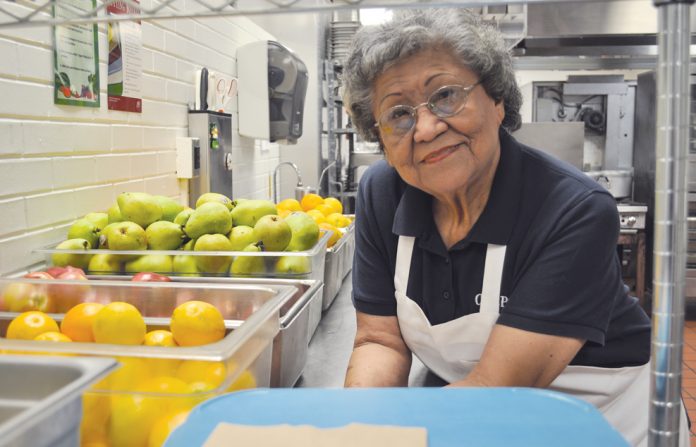
Stephanie Waller Wojczynski, recently retired from her 18-year school nursing career.

by Bobby Anderson, Staff Writer

After nearly 33 years in nursing, Stephanie Waller Wojczynski, RN, went to the Northwest Classen senior prom this spring before graduating in May.
She wasn’t earning a diploma or degree, those had already come in bunches over the last few decades.
Waller Wojczynski’s commencement was the beginning of her retirement after 18 years of school nursing.
“So far I’m really enjoying it,” she said of her retirement. “I’ve had a lot of time to do things I haven’t been able to. One big thing is my mom moved in with us. She needed extra care and it’s given me time to take care of her so it’s a win-win situation.”
She became an LPN in 1984 and then transitioned to RN in 1989. She earned her BSN in 2000.
“I kind of went the long and winding road,” she laughed. “From the time I was a little kid I always wanted to be a nurse. My mom still has a picture I drew when I was five years old in kindergarten of what I wanted to be.”
School nursing came into her life at the right time.
She originally entered Oklahoma City Public Schools in 2000 when her husband was ill and unable to watch the kids.
The school nursing hours allowed her to be free when her kids were out of school.
“After I had been doing it for a few years and he passed I remarried and found I really, really liked it because it’s a lot more challenging than anybody would guess. It’s amazingly challenging,” she said. “Essentially, for a lot of these kids, we are their only health care provider. A lot are uninsured … and with the Affordable Care Act the working poor can hardly afford that. “And we have those who might not be in the country legally and that’s not my job to figure out. My job is to take care of the kids.”
The kids were always the reason she showed up every day.
From the funny to the tragic, school nursing ran the gamut for Waller Wojczynski.
Her first year as a school nurse brought her into the courtroom. A middle school girl came into her office one day and told her that her mother was selling her to older men for drug money.
She immediately notified the police. A few months later she was summoned to court after the biological father sued for custody.
“That was stressful,” she said.
During flu seasons, she could see upwards of 40 children a day.
One fall afternoon she was called to her elementary school where the entire office staff was home sick with the flu.
“There was one clerk working the office and there was a line of kids down the hall,” she said. “We sent home more than 100 kids that day with fevers over 100.”
Waller Wojczynski often split her time between several schools. She spent eight years at NW Classen.
As the health care provider for literally thousands, you can imagine the paperwork.
One spring break she worked almost an entire week entering shot records at home.
“I’m not complaining about having to do it at home because that freed me up to take care of the kids when I was at school,” she said. “The most important thing was taking care of the physical needs of the kids,” she said. “It was drop everything if a kid came in with a physical need but it was crunch time to try to get that paperwork done.”
Prom was a chance to see many of the kids she had nursed their entire school career.
“The students treated me like I was a rock star,” she laughed.
As May wound down so did her 33-year nursing career.
She broke down the NW Classen nurse office one last time and broke down herself more than a couple times.
“That was kind of a mixture of sadness and laughter because I kept coming across things that would remind me of funny stories,” she said. “The feelings are indescribable really. I was kind of overwhelmed those last few days thinking this is the last time I would be here.”
Coming up, she plans on visiting her three kids. Her oldest son, 39, lives in Portland, Maine and is an IT professional with Dell Computers. He and his wife have her only two grandkids, twin boys.
One daughter, 26, and a son, 22, are also out on their own working on their careers.
Later this month she plans a trip to her hometown in Michigan. Her husband’s mother also turns 96.
Friends will be met, dinners will be had.
As for the future, Waller Wojczynski sees herself giving a lot of flu shots this fall.
She’s toying with the idea of a hospice role.
But school nursing will always have a special place in her heart.

Iris Memory Care opens eyes in metro

0
Elegant touches abound at Iris Memory Care in Edmond.
Residents can make beautiful music at Iris Memory Care in Edmond.

story and photos by Bobby Anderson, Staff Writer

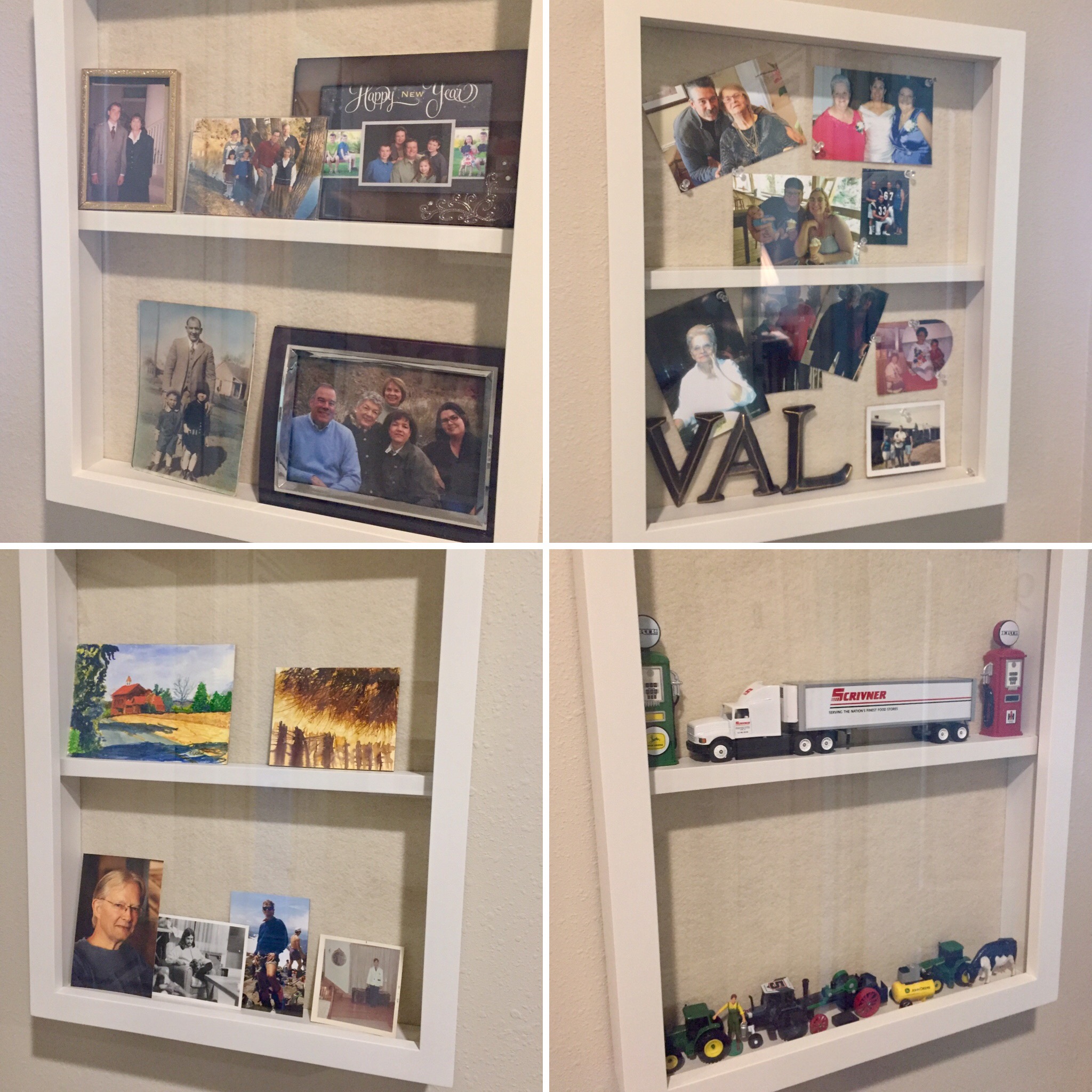
From the moment you walk through the front door the familiar sights, sounds, and aromas of home greet you at Iris Memory Care. From the wood dining tables to the leather recliners, there’s an attention to detail that tells you months if not years of careful planning went into crafting this environment for those needing memory care. Marketing Director Jessie Motsinger explained the entire environment was meticulously crafted to care for loved ones in a comfortable, stimulating environment. Each building at Iris is designed to look and feel like a high-end single-family home, yet the community also has targeted features to meet the unique needs of their residents. Day or night, weekday or weekend, family members are always welcome to spend cherished moments together at Iris.
What it boils down to is Iris Memory Care is unlike any environment you’ve ever experienced. And that was the goal. “For me this is more about caring for people than it is about selling,” said Motsinger, who was brought on more for her background in gerontology rather than sales. “That’s what motivates me. For (the owners) it’s about exceptional care they didn’t feel like they could find when they were going through placing their loved ones in memory care. It’s very personal for all of us.”
PERSONAL INVESTMENT
The founders of Iris Memory Care met several years ago while working together for a senior living company. Having both had personal experiences with dementia, they shared many of the same ideas on how the design and care model for the memory impaired could be improved. “They paid close attention to what was missing in the industry, and took note of all the design flaws you often see in other communities,” said Motsinger. “I think there are many examples of what makes our community better and unique. One that stands out is the ability to see almost all of the common areas of the building from one spot. It might sound like a little detail, but in the memory care world this is a huge advantage for residents and staff. Our building’s open floor plan allows residents to wander freely without fear of getting lost in a back hallway or staff missing them because of blind corners.”
Executive Director Sherri Hudlow, RN, serves as the administrator. The former critical care and senior living nurse has her own personal experience with dementia with her mother. She brings that clinical and personal background to work every day and Motsinger said it benefits everyone around her. “For her it’s about caring for residents and staff. The staff here are kind of like her kids,” Motsinger says. “Sometimes they go on to a nursing career. In addition to making sure the staff is well equipped to care for our residents, Sherri is really interested in growing and mentoring them.” The small environment allows mentoring and engagement to happen more fluidly and benefits the entire Iris community.
“What I love about Iris is that it’s a small place where the owners are regularly here and always available,” Motsinger said. “This is so personal to all of us and it’s an exceptional physical environment. It’s beautiful. And the people we work for – I feel really good working for them. They do things the right way. Taking care of people the right way is just as important to them as the bottom line.”
PERSONAL CARE PATH
Each resident embarks on a uniquely tailored care path that is tailored by both family and staff. When a new resident joins the Iris community, the staff conducts a personal evaluation to identify cognitive function, social interaction, mobility challenges, special dietary needs, and more. Family members are encouraged to attend the evaluation to offer insights about past events, personality traits, friends, relatives, hobbies, and other details that will help us connect with a resident. The more information they provide the deeper the pool of knowledge that can be drawn from. “The most helpful thing is when families give us a lot of history on their loved one to assist with creating a care path,” Motsinger said of the extensive interview process. From proper nutrition, hydration, and medication management to compassionate assistance with activities of daily life, the needs of each individual resident are central to their care path. As soon as a resident moves into Iris this personalized care path guides the daily work of strengthening their abilities and promoting independence. “You’re seeing more engagement by just steady constant routine with a smaller group,” Motsinger said. “We’re trying to maintain as much independence as we can.”
The Personalized Paths of Care spell out a recommended routine on a daily, weekly, and monthly basis, yet they do evolve. As a resident’s needs change, Iris has the flexibility to reassess and customize their care path to fit the situation. That’s why Motsinger says Iris’ owners never want to grow past a certain point. “For us what’s most important is we’re not trying to do everything for everybody,” Motsinger said. “Our goal is not to be a huge organization or take over the market. Our owners want all communities to be within in a few hour’s drive so they can always be easily accessible and stay connected. We want to be thoughtful leaders in care for those with Alzheimer’s and dementia, and a resource for the community.” Whatever the moment may bring, a loved one’s physical and emotional needs are the most important considerations at Iris Memory Care.
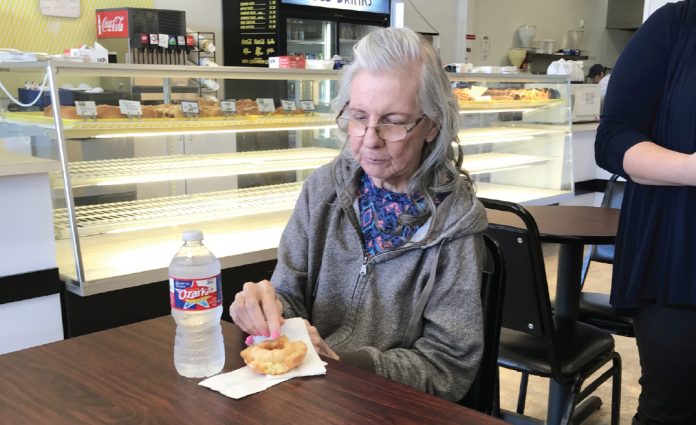
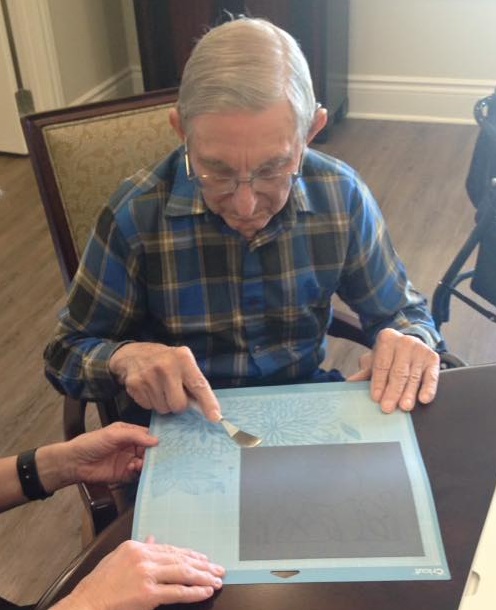
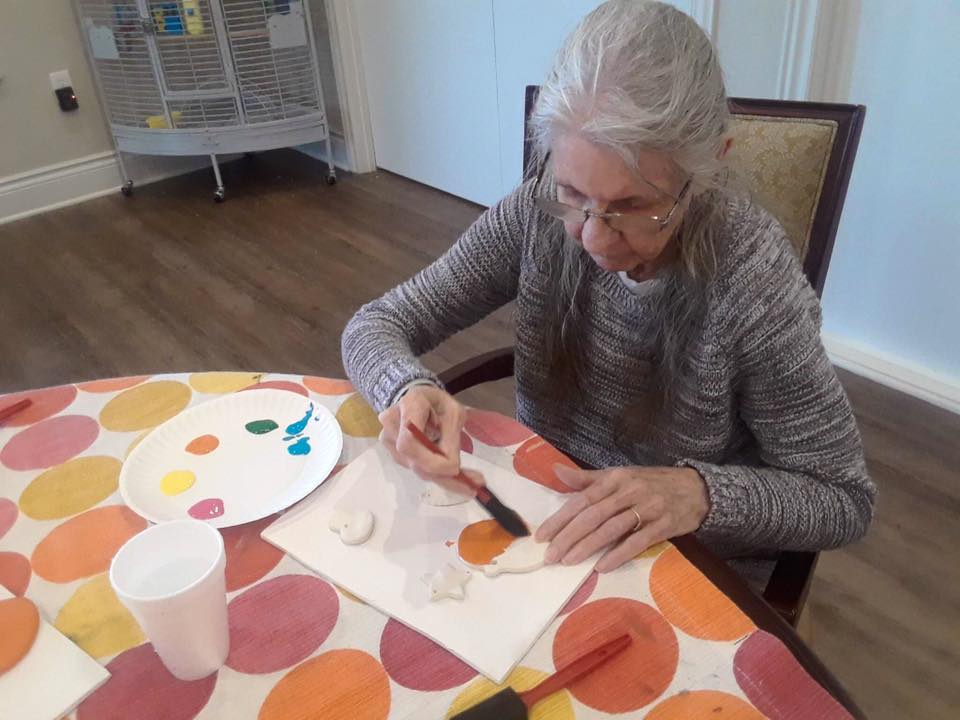
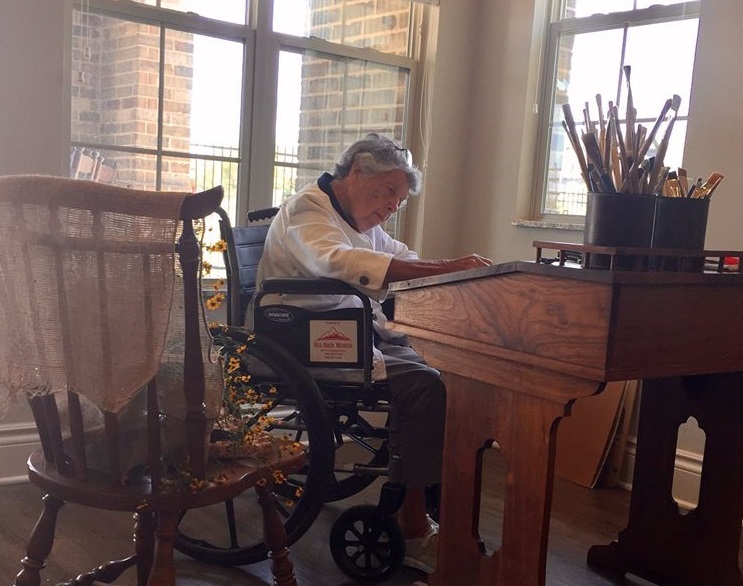
An important difference for Iris Memory Care is the emphasis placed on making connections. Staff members engage residents multiple times per day, and make it a point to facilitate connections among residents with similar interests. With memory impairment, activities that stimulate the senses and encourage hands-on participation can be invaluable ways to soothe or delight your loved one in the moment. Music and art play an important role in the care provided, as do stage-appropriate tasks. When anxiety or sundowning issues arise, the Snoezelen cart helps to reduce stress through sensory engagement with calming aromas, textures, sights, and sounds. You’re also bound to see Motsinger’s therapy dog sprawled on the floor or the light chirping of resident cockatiels in the background.
Monthly resource and informational seminars are offered by Iris to share best practice information as Motsinger taps into her healthcare background and brings people in from all fields so that others may benefit. “These seminars are truly about equipping the community with information they need,” Motsinger said. “For us, if you never come live with us, that’s OK. Let’s share our expertise and share our knowledge.” And, it’s about meeting each person where they are on their memory care journey.