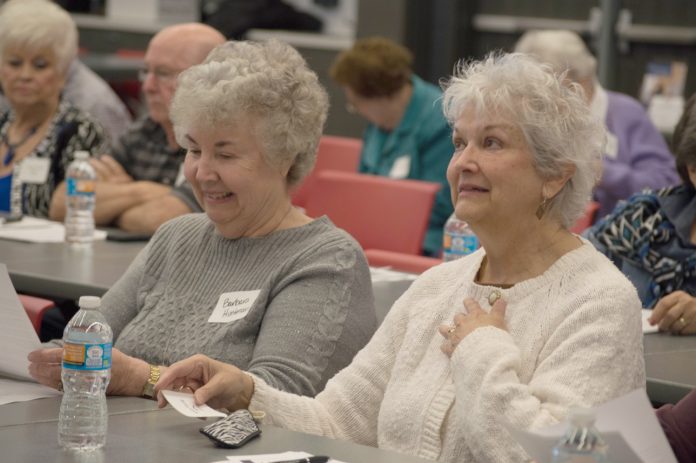
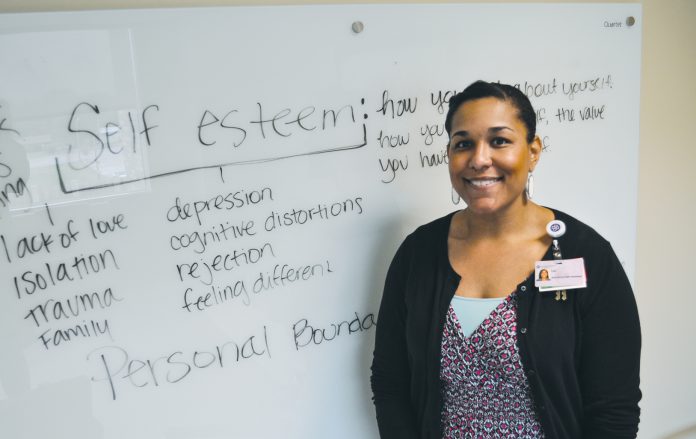
The 19th Annual Caregiver Survival Skills Conference is scheduled for 9 a.m.-2:45 p.m. Friday, June 9 at Church of the Servant Community Hall, 14343 N. MacArthur Blvd.
The theme for this year’s conference is United in Caregiving: You Are Not Alone. The conference affirms for caregivers that being responsible for another person is challenging and many caregivers feel unprepared, overwhelmed or stressed. The Annual Caregiver Survival Skills Conference will bring expert speakers together to equip conference-goers with important skills and resources they can implement immediately.
Jerry Shiles, estate planning and elder law attorney with Parman and Easterday, will be one of the event speakers. He is the co-author of two books, Estate Planning Basics: A Crash Course in Safeguarding Your Legacy and Guiding Those Left Behind in Oklahoma: Settling the Affairs of Your Loved One. He is a speaker on estate planning and elder law on television, radio, newspapers and for community groups. He is one of 21 certified elder law attorneys in the state of Oklahoma, a member of the American Academy of Estate Planning Attorneys and National Academy of Elder Law Attorneys.
Other speakers include Andrea Sneed, Sunbeam Family Services Respite Services Coordinator; and keynote speaker Meredith Shafer, executive director of the Wegener Foundation, an organization that supports programs that serve at-risk children and youth. She is also a wife, mother and author of My Pink Champagne Life and Mad Cow: A PTSD Love Story.
The Annual Caregiver Survival Skills Conference is sponsored by Sunbeam Family Services, Concordia Life Care Community, Home Instead Senior Care and Mercy Hospital. In addition to the speakers, the conference will provide complimentary breakfast and lunch as well as a resource fair. The registration and resource fair will open at 8:30 a.m. There is a suggested donation of $10 to attend the conference; please make checks payable to Mercy Community Outreach. Registration deadline is June 1. For more information or to register, call 405.936.5821. Please leave a message with your name and phone number, and your call will be returned for confirmation.
Caregivers Learn Self-Care Strategies at Annual Conference
ASK VICKI: Q. I never really thought about “conversational intimacy” and the role it plays in a relationship.
Q. I never really thought about “conversational intimacy” and the role it plays in a relationship. It is much harder than people think and sad to think I lost my marriage because of it. I wanted to make others aware of the knowledge I gained and to encourage you to do it before it is too late.
A. My name is Jim and I was married for 16 years. My wife and I both worked full time and we were raising two children. We were busy like all married couples with children’s activities and managing a home.
My wife would occasionally tell me that we needed “to talk” and I would get very busy hoping she would forget. She didn’t. These “talks” always made me anxious. She wanted to discuss a problem or issue related to our marriage or “my behavior.” I would attempt to talk, she would get frustrated and I would completely forget the English language. She could “out talk” me.
We went to counseling and my wife would vent her frustrations to the counselor, often crying saying how alone she felt. I would sit there and pat her on the back, which interesting enough made her dislike me even more. That’s when I learned about “conversational intimacy.” (which I was lacking).
The counselor had us sit facing each other and make eye . (Also hard to do). It was really grueling and strangely informative. I realized that my wife and I had no trouble with physical intimacy (that is until she began to really dislike me) but I’m not sure we ever really had conversational intimacy to begin with. Of course we “talked” during dating and engagement and I’m sure after we married but intimate conversations were rare.
We practiced in the counselor’s office but at home we struggled. My wife had developed some resentments towards me for my lack of concern for her desire to talk, apparently building for several years. I learned that resentments can’t easily be discarded.
She was upset that it took so long for me to “get it.” When she told me that she wanted a divorce I was devastated. I had no idea I had caused so much damage by not making myself available, listening, validating her feelings and trying to find solutions. Having physical intimacy was way more enjoyable and didn’t really require much talking. I made myself very available.
As I sit here in my apartment, alone, after taking my children back to my ex-wife’s house (previously my house too), I have become wiser. I learned how important it is to occasionally have deep conversations, to really get to know the person that I have grown to love.
new drug and you find it does help your symptoms. But when you are told it will cost $475 after your samples are gone, what is the point.
I was personally given a prescription for a skin cream, with a coupon because the doctor told me it might be expensive. When I went to pick up the prescription the pharmacy tech had a strange look on his face when he told me the small tube of cream was $1042 after the coupon!!
Be cautious. Pay attention to the side affects listed for these drugs. If you can make behavioral or life changes, try that first. Your health and your money are at risk.
Vicki L Mayfield, M.Ed., R.N., LMFT Marriage and Family Therapy Oklahoma City
If you would like to send a question to Vicki, email us at news@okcnursingtimes.com
May AARP Drivers Safety Classes
Date/ Day/ Location/ Time/ Registration #/ Instructor
Jun 1/ Thursday/ Okla. City/ 9:30 am – 4 pm/ 951-2277/ Palinsky
Integris 3rd Age Life Center – 5100 N. Brookline, Suite 100
Jun 3/ Saturday/ Chandler/ 9 am – 3:30 pm/ 258-5002/ Brase
Thompson Insurance – 121 W. 10th St.
Jun 9/ Friday/ Okla. City/ 9 am – 3:30 pm/ 951-2277/ Edwards
SW Medical Center – 4200 S. Douglas, Suite B-10
Jun 16/ Friday/ Okla. City/ 9 am – 3:30 pm/ 942-4339/ Palinsky
Will Rogers Senior Center – 3501 Pat Murphy Dr.
Jun 17/ Saturday/ Moore/ 9 am – 3:30 pm/ 799-3130/ Palinsky
Brand Center – 501 E. Main St.
Jun 23/ Friday/ Okla. City/ 9 am – 3:30 pm/ 691-4091/ Palinsky
Mercy Hospital – 4300 W. Memorial Rd, Rm A/B
Jun 28/ Wednesday/ Okla. City/ 9 am – 3:30 pm/522-6697/ Palinsky
Department of Disability Concerns – 1111 N. Lee Ave., Suite 50
Jul 6/ Thursday/ Okla. City/ 9 am – 3:30 pm/ 951-2277/ Varacchi
Integris 3rd Age Life Center – 5100 N. Brookline, Suite 100
Jul 11/ Tuesday/ Midwest City/ 9 am – 3:30 pm/ 691-4091/ Palinsky
Rose State Learning Center – 6191 Tinker Diagonal
Jul 11/ Tuesday/ Yukon/ 9 am – 3:30 pm/ 350-7680/ Kruck
Dale Robertson Center – 1200 Lakeshore Dr.
The prices for the classes are: $15 for AARP members and $20 for Non-AARP. Call John Palinsky, zone coordinator for the Oklahoma City area at 405-691-4091 or send mail to: johnpalinsky@sbcglobal.net
Right Place, Right Time

by Bobby Anderson, Staff Writer
Throughout Glenn Boyer’s life he’s had a knack for being in the right place at the right time.
Even after retirement – living life the way he wants to – little has changed.
“I’ve been blessed with a lot of things,” Boyer said. “Most of these things I didn’t choose, they chose me.”
Being a man of firsts, Boyer has filled his life with love, laughter and a passion for his profession.
His home for the past year, Grand Tapestry at Quail Springs, has helped him continue living life the way he wants.
“It’s great,” Boyer said of his Northwest Oklahoma City apartment. “You meet a lot of people here. I don’t want three meals a day or babysitting. I want to do what I want to do. You choose what you want and you do it.”
By 7:30 each morning you’ll find Boyer in the workout room or he might be taking a few laps in the heated salt water exercise pool.
Some days he’ll invite his men’s bible study over for a catered four-course meal.
In the evenings you might see him in the billiards room teaching a friend’s granddaughter how to play pool.
“Things like that just make it home,” Boyer said.
Being one of the inaugural Grand Tapestry residents is just another in a long line of firsts for Boyer.
In college, he was a shooting guard for Wichita State University’s basketball team. He’s a member of the first Shocker postseason tournament team.
An ROTC cadet, Boyer was drafted out of college and sent to Ft. Bliss
“Little did I know from then on it would be my career,” he said.
The math major was assigned to the computer, missile and radar fields. He spent two years of his four years in the service on a missile site.
He applied for a job as a coach and teacher on the outskirts of Kansas City. The offer was $4,000 a year.
At the same time, Bendix Corporation offered him $12,000 a year as a computer programmer – a first for him.
“That was in 1961 when there were very few computers,” Boyer said. “I’ve been in the field ever since.”
He came to Oklahoma City in 1969.
In 1972 he started Applied Computer Systems, a business he still runs today with son Glenn Jr. at 3509 N. Classen Blvd.
Boyer enjoyed 65 years with his wife before she passed.
“I didn’t know what I wanted but I knew I didn’t want to live by myself in my house,” said Boyer, who lived at Ski Island for 44 years.
His daughter brought him to Grand Tapestry.
It’s a story told time and again.
“I just gave it a try and it turned out to be a good fit,” said retired psychiatrist Liliana Schechter. “It’s very cozy, very nice and we all help each other.”
She definitely didn’t expect to meet a fellow resident whose mother was also from Poland.
Schechter’s Polish mother survived the Auschwitz concentration camp and the Holocaust.
The conversation between the instant friends just flowed.
“We go to the synagogue (together),” Schechter said. “It was truly a miracle.”
Gwyn Walters watches the sun rise each day from her third floor apartment.
“Most of us would say the people,” Walters said of what drew her to become a founding member. “And we have some really fun things to do. The educational offerings have been great, too.”
From listening to University of Oklahoma Football Coach Bud Wilkinson’s story told by his own son, Jay, to learning more about current topics, Walters has been able to experience it all in the comfort of her home.
She enjoys greeting visitors each day.
“I think this place is great,” Walters said. “It’s comfortable. That’s one of the big things I feel here is comfortable and safe.”
“I didn’t feel this safe in my own house.”
A new and vibrant place to call home, Grand Tapestry at Quail Springs is tailored to active adults age 55 and better, centrally located in the Quail Springs area of Oklahoma City.
Here, residents like Boyer chase their passions, enjoy their hobbies and seek out new adventures.
The architecture and interiors were designed to create comfort and convenience in a caring, maintenance-free setting. From the theatre offering an exclusive cinematic experience with reclining lounge chairs, to an outdoor kitchen equipped with grills, a fire pit and water feature, to the raised-bed garden, Grand Tapestry offers a social environment for everyone.
Residents also take advantage of concierge-style services and enjoy the community beyond Grand Tapestry at a variety of dining, shopping and entertainment options within steps of the front door.
Epidemic proportions

Seniors needed in vaccine debate
story and photos by Bobby Anderson, Staff Writer
Whooping cough, polio, measles and rubella.
Anyone over the age of 50 remembers hearing horror stories about the diseases that plagued previous generations.
For the much of the current generation the above are simply footnotes in history with no real meaning.
But that may be changing.
From January 1 to March 25, 2017, 28 people from 10 states (California, Colorado, Florida, Michigan, Nebraska, New Jersey, New York, Pennsylvania, Utah, and Washington) were reported to have measles.
Those numbers are alarming for Norman Pediatrician Dr. Thomas Kuhls, so alarming that for the first time in his life he’s entered politics.
“I’ve never done anything political in my life. I don’t think I even ran for student council in middle school,” Kuhls laughed.
Then two things happened. Kuhls read that an immunization bill by Sen. Ervin Yen would not be heard in the 2016 session.
“Senator Yen’s bill would strengthen immunizations because rates are dropping,” Kuhls said. “More importantly, at the end of the legislative year when the anti-vaccine bill was passed by an overwhelming majority and went to the Governor.” Thank God Gov. Fallin vetoed it but what scared me was when the Republicans tried to override their own governor and came just 13 votes short.
“It was clear the majority of those legislators … even with my ignorance I knew there weren’t that many people that didn’t have their kids vaccinated. It had to do more with misinformation and misunderstanding and not really truly understanding vaccines.”
That’s why Kuhls is supporting the non-profit political action group Vaccinate Oklahoma.
Kuhls taught vaccines at the University of Oklahoma for years. His background is in immunology and pediatric infectious diseases.
Kuhls still has his smallpox scar.
“In my generation and in my parents’ they all knew the importance of vaccines because many of those era have seen polio,” Kuhls said. “Back in my era vaccines were always important.”
WHAT’S AT STAKE
“I think people don’t realize what’s at stake,” Kuhls said. “Our personal exemption rate is increasing yearly in this state. Other states when their rates go up have had outbreaks of diseases like in California.”
“When the population isn’t immunized it sets us up for a disaster, an outbreak.”
Before the middle of the last century, diseases like whooping cough, polio, measles, Haemophilus influenzae, and rubella struck hundreds of thousands of infants, children and adults in the U.S.. Thousands died every year from them. As vaccines were developed and became widely used, rates of these diseases declined until today most of them are nearly gone from our country.
Statistics from the CDC paint an interesting picture.
*Nearly everyone in the U.S. got measles before there was a vaccine, and hundreds died from it each year. Today, most doctors have never seen a case of measles.
*More than 15,000 Americans died from diphtheria in 1921, before there was a vaccine. Only two cases of diphtheria have been reported to CDC between 2004 and 2014.
*An epidemic of rubella (German measles) in 1964-65 infected 12½ million Americans, killed 2,000 babies, and caused 11,000 miscarriages. Since 2012, 15 cases of rubella were reported to CDC.
Kuhls says the United States has very low rates of vaccine-preventable diseases, but this isn’t true everywhere in the world.
Only one disease — smallpox — has been totally erased from the planet. Polio is close to being eliminated, but still exists in several countries.
More than 350,000 cases of measles were reported from around the world in 2011, with outbreaks in the Pacific, Asia, Africa, and Europe.
In that same year, 90% of measles cases in the U.S. were associated with cases imported from another country. Only the fact that most Americans are vaccinated against measles prevented these clusters of cases from becoming epidemics.
Kuhls said one of the major drivers of non-compliance is public schools making it easier for parents to sign exemption forms rather than instructing parents to have their children vaccinated.
“I think anybody my age understands the importance of vaccines and have watched diseases go away,” Kuhls said. “Your readers need to tell their grandkids these diseases are real and they’ve lived through them and they are the vaccines that made them go away.”
“It’s the grandparents that have seen that and have been through that.”
Generation Builder

Senior educates generations
by Bobby Anderson,
Staff Writer
The sounds of children’s playful voices float through Southwinds Montessori Preschool in Norman.
Inside, the classrooms are a flurry of activity with 45 smiling faces whirring around from activity to activity.
In the background, Carol Zerboni smiles a big, beautiful proud smile.
It’s been that way more than 40 years now for Zerboni, who operates the private Montessori school along Highway 9.
And she laughs at the time when running a school and teaching children was the farthest thing from her mind.
“I just wanted a paycheck – a little extra money to have to spend,” Zerboni said of looking for a job as a young art major at the University of Oklahoma.
“I asked if they needed an art teacher and she hired me immediately.”
“I didn’t have a clue what Montessori was. Being Italian, I thought for sure I’d figure it out.”
When Zerboni figured out the Montessori philosophy hailed from Italy she was intrigued.
When she found out what it could do for young children she was hooked.
“I watched and looked at the materials and equipment and the way they were learning and it was different than anything I’d ever seen,” Zerboni said. “The materials were just incredible – beautiful. There was a purpose for everything.”
She switched her major to elementary education and then went on to Oklahoma City University to complete her Montessori training.
The textbook definition of Montessori discusses an emphasis on independence, freedom within limits, and respect for a child’s natural psychological, physical, and social development.
For Zerboni – and literally millions of children through the years – it just seems natural.
THE MONTESSORI CONCEPT
The education system originated in Italy with Dr. Maria Montessori, the second female doctor in the country’s history.
With compulsory education beginning at age seven, the streets of Rome were filled with young children with plenty of time on their hands.
With the idea that children learned 80 percent of their knowledge from birth to four, the pediatrician set up the first Montessori, Casa dei Bambini.
The program was a success, so much so that Prime Minister Benito Mussolini appointed her chairwoman of education for the country.
But during World War II she called the dictator “a fascist pig” and was booted from the country.
“She was so ahead of her time and really bright and really understood the child,” Zerboni said of her icon.
Landing in India, Montessori continued her curriculum development, carrying it all the way through high school.
To this day, Zerboni still gets questioned about what Montessori is all about.
“I tell them it’s a method of education where the teacher’s role is totally different,” Zerboni said. “It’s not teacher-driven. Your job as a teacher is to create the environment to be inviting so that the kids can go in it and move. They need to move and they need to have meaningful work … and for them to make their own choices and create independence.”
That’s why the halls at Southwinds are often a flurry of activity. To some it may seem like a classroom run amuck.
But spend a few moments observing and you’ll see children discovering the world around them through all five senses.
And they’re enjoying it as the same time.
Zerboni will tell you Montessori school kids read earlier than those in traditional school. Phonic sounds are taught at age three but it’s not done with them sitting in a hard-plastic chair for six hours a day.
“Freedom of movement is one of the biggest things that’s different from public school,” Zerboni said. “I really think sticking children that are young in desks is really not fair to the child. It is unnatural. They can’t sit. They’re not absorbing anything at all.”
Absorption is key to knowledge. Children aren’t just taught things in Montessori they experience them and store them with emotion and memory that will carry the information with them for the rest of their days.
Zerboni things a lot of that is missing in today’s schools.
“I think what we’re losing out on is we’re waiting too long to get our kids involved in Math, Reading, Science and all the basics,” she said. “They’re ready for it. They get it.”
Zerboni took her 40 years of experience and passion and poured them into her own line of instructional books.
Zeb Books was born nearly a decade ago – named after the family pet. “I’ve done the thinking about this and about what works and what doesn’t,” Zerboni said. “I’m not sure I have the only way but I know my way works because I’ve got kids reading up a storm.”
“That’s one reason people send their kids here.” And the fact that they’re having fun while learning doesn’t hurt either.
SPECIAL TO SN&L: WHO IS A HERO?

By Darlene Franklin
When I’m asked to name my heroes, I readily name a handful: Rosa Parks, Corrie Ten Boom, Eleanor Roosevelt, alongside Abraham Lincoln, George Washington, and others.
What makes a hero? Dwayne Johnson asked that question in his 2013 television series, The Hero.
In addition to my addiction to reality TV, I was interested in the answer. I was facing my own hero’s challenge. I had to battle back from a month-long hospitalization. I had never fully recovered from crippling weakness and arthritis which had left me unable to walk or do most of my daily activities, and led to my moving to a nursing home.
On my first day of therapy, I was wheeled down the hall to the gym. My physical therapist worked with my lower extremities, core strength, standing, endurance-walking? The occupational therapist focused on “activities of daily living,” more upper body. Could I raise my arms enough to brush my hair? Dress myself?
We had a long way to go, and a hundred days (according to government mandated guidelines) to accomplish the task.
Weakness and pain nibbled at the edges of my motivation. In one of my first sessions, my physical therapist gave me a simple task: stand up.
I called on all my strength and pushed myself to my feet. I remained there, tottering, for a few seconds.
“Sit down-gently. Don’t plop.”
I reached back for the wheelchair arm with one hand, then the other, then as slowly, as carefully as I could, lowered myself into the chair. I was spent.
“That was good,” she said cheerfully. “Now do it four more times.”
Every muscle trembled, and most of them screamed with pain. I adapted the mantra of the winner of The Rock’s competition as my own: “I will not let pain or fear defeat me. I will only fail if I cannot, physically, complete the task.”
I stood four more times that day. I learned an essential lesson in facing an overwhelming task: success has more to do with my willingness to do the hard thing than with physical facts.
My health continues to fluctuate. I’ve been to the hospital three times since Christmas and have just completed another hundred days of therapy.
I will not let pain and fear defeat me.
The lesson served me well. I began with enthusiasm, drive, and a definite goal: to walk around the nursing home.
More lessons headed my way.
· Accept a different normal.
My third hospitalization reminded me of a fact I had conveniently forgotten. Congestive heart failure-which leaves my heart pumping fine, sometimes high, more often low-creates problems for my other organs. They pick and choose when to work.
I decided to stop waiting for things to get better, because they probably won’t. That decision led to the next lesson.
· Do it anyway.
So what if I’m sore from this afternoon’s therapy and tired from last night’s battle with sleeplessness? Go ahead and write. Sing. Visit with friends. Attend church. Live life in the now, because that’s all I have.
And sometimes. . .
· Miracles happen.
For four years, I have worked to improve range of motion in my arms; I can’t clasp my hands together behind my head. We’ve worked on it as much as we’ve worked on walking, standing and everything else. Nothing had changed.
Until one day this session, something popped in my arms and they moved a few more inches. I still can’t rest the back of my head on my hands-but I can wash my hair and tie on a chin strap.
· The miracle you receive may not be the one you wanted or expected.
I ran into a foe that defeated my dreams of walking freely through the halls, at least until I can obtain appropriate equipment: I can’t go without oxygen. My legs will take me further than my lungs will.
“A hero is a person who is admired for. . .courage.” A lifetime has taught me courage is not the absence of fear, but acting in spite of fear.
In that case, maybe I am a hero. Maybe you are too.
Oklahoma ambassadors

Volunteers help travelers on their way
by Bobby Anderson
Staff Writer
When Paul and Kim Sanders retired they wanted to volunteer.
The first assignment they found was stuffing envelopes for an upcoming local fundraiser.
It wasn’t exactly what they were looking for.
“The majority of my life I’ve been an outside salesperson,” Paul Sanders explained. “Sitting in an office just wasn’t my cup of tea.”
But while he was volunteering he did strike up a conversation with someone who volunteered at Will Rogers World Airport.
An invitation was extended and he decided to give it a try.
It’s been eight years now since Sanders – and eventually wife Kim – began manning the Traveler’s Aid welcome centers at Will Rogers World Airport.
And for both of them it’s one of the highlights of their week.
“It’s a lot of fun. We have a good time,” Kim Sanders said. “We meet different people. Everyone who comes through with questions is always friendly.”
The Sanders’ and around 70 others volunteer their time each week to man one of the welcome center booths – one on the main terminal level and the other by baggage claim.
WELCOME WAGON
Will Rogers World Airport sees around four million passengers annually.
That’s a lot of coming and going and volunteers like Paul and Kim are in the thick of it.
NBA stars, mayors from other cities and TV personalities – are just a few of the people that have come to Paul over the years looking for help.
“It’s a fun experience and it’s only four hours a day so you’re not tied down,” Paul said. “It’s a four-hour shift so if you’ve got to be gone or going on a trip … we’ve got people who can come in.”
Upward Transitions (formerly Traveler’s Aid) runs the visitor’s center at Will Rogers World Airport. For more than 90 years, Upward Transitions has touched the lives of Oklahomans, elevating those in need, stranded or homeless to a position of self-sufficiency.
Upward Transitions was founded in 1925 as Travelers Aid and was one of the first agencies to become a member of the United Way of Central Oklahoma. The group receives support from a diverse set of funding sources including the United Way, private foundations, federal, county and city grants.
Megan Chapman serves as the Traveler’s Aid Volunteer Coordinator.
“One of the things that we have the opportunity to do that not a lot of agencies can do is we can provide financial assistance for stranded travelers,” Chapman said. “It could be anything from you getting pickpocketed on your way here and you can’t pay for a taxi. We do help stranded traveler’s get home. That’s our mission of our agency both here and downtown – to bring people home.”
Chapman said her organization has been called on to help victims of domestic violence often find their way to the airport. Those stranded at the airport overnight or facing personal emergencies can also turn to the group.
And they’re greeted largely by senior volunteers trained to make things a littler easier.
“I’m always looking for people who are friendly,” Chapman said. “This is an interactive position. It’s not sitting in an office stuffing envelopes and doing mailings. The needs are greater. People are looking for lost baggage or a place to eat.”
“Often our volunteers are the first face people see or the first person someone talks to when they arrive in Oklahoma. We’re kind of looking for people who want to be ambassadors of Oklahoma City and the airport.”
Chapman was a Will Rogers airport volunteer after six years in the Navy. She loved the experience and a year into her service the position of director came open.
“The reason I love airports isn’t the airplanes – don’t get me wrong, I still have a heart for aviation – but it’s because of the people,” Chapman said. “You meet so many people. Everyone in here has a story whether they’re traveling through on vacation or grieving the loss of a loved one. We like to find out what their stories are.”
That’s the hook for Kim, whose smile automatically lights up a room.
“It gets us out and it helps other people,” Kim said. “When you get done at night you’ve done something. And here it’s something different every time. It’s not like an office. You never know what’s going to happen.”
For more information on how to volunteer you can contact Chapman at 405-232-5507, extension 107.
Simple intervention

AllianceHealth outcomes change lives
by Bobby Anderson,
Staff Writer
The message sent to the Midwest City community a few months back was resounding.
More than two years of work and planning by multiple AllianceHealth Midwest departments culminated in a prestigious accolade that will benefit patients throughout the metro.
For the first time, the hospital received full Chest Pain Center with PCI (Percutaneous Coronary Intervention) Accreditation from the Society of Cardiovascular Patient Care.
“Essentially what it did was validated to our community we were serious about our cardiology program and our treatment and our evaluation of chest pain patients,” said Mark Macklin, RN, BSN, cardiology director and chest pain coordinator. “This has always been a community-based hospital and it was important for us to relay that to the community that we had committed ourselves to improving in those particular areas.”
To receive accreditation, AllianceHealth Midwest demonstrated its expertise and commitment to quality patient care by meeting or exceeding a wide set of stringent criteria and completing on-site evaluation by a SCPC review team.
AllianceHealth Midwest is the only hospital in the state of Oklahoma to receive this level of accreditation.
“This accreditation is another large step in our commitment to providing superior emergency and cardiac care to the residents of Midwest City and Eastern Oklahoma County” said Damon Brown, CEO, AllianceHealth Midwest. “This accreditation was made possible because of the dedicated work and commitment of a multi-disciplinary team that included employees, physicians and paramedics.”
Macklin has spent the last 12 of 22 years in nursing in cardiac care after an emergency medicine and trauma background.
And he’s seen cardiac care come to the forefront.
TREMENDOUS NEED
“Any community in Oklahoma, cardiovascular disease is going to be a primary focus,” Macklin said. “Particularly for the process of chest pain accreditation it was important for us because of our volume throughputs, lengths of stay and those issues that we standardized the process so patients are treated not exactly the same but at least within the same guidelines and standards … so we don’t miss small things along the way.”
Macklin stressed that the purpose of obtaining chest pain accreditation wasn’t to just put the emblem on the paperwork. The process was one the entire AllianceHealth system has committed to in order to improve its processes and insure better outcomes.
“What it tells (the community) is that along with the accreditation process is the process of ongoing performance improvement and what might be standard of care today is fluid and those standards change annually, even more often than not based on evidence-based practice and clinical research.
“We have cardiologists that embrace the recommendations that come out of the American College of Cardiology and published literature.”
Macklin likes to use the phrase “parking lot to parking lot” to describe the program.
The program simply doesn’t work if all departments don’t work together.
“It’s not just an emergency process, it’s not just a cath lab process and it’s not just an inpatient observation process,” Macklin said.
That became obvious during the entire accreditation process.
“What we identified early on in the process was we were already pretty good at the acute MI,” Macklin said. “What we identified through the process and our surveyor’s neutral eyes was that our biggest opportunity was our EMS arrivals and starting to take those EMS patients who were acutely myocardial infarcting … straight to the cath labs, shaving 20 sometimes 30-times off our perfusion times.
“That’s been our biggest improvement you can see on a daily basis. We’ve empowered EMS … that if it walks like a duck, and it quacks like a duck call it a duck and we’ll take them to the lab.”
The process is ongoing.
Macklin knows time is muscle and staff are always up against the clock.
The pride comes through the continual refinement of the process.
Representatives from every department met regularly through the accreditation process and still are called back in to maintain improvement.
“This is a group of people who aren’t afraid to call s omebody out and it’s a group that isn’t afraid to tell you what they need,” Macklin said. “This is a team sport.”
Certification lasts for two years but statistics are monitored monthly by the accreditation agency.
Ongoing employee education and community education are tenets of maintaining certifications.
And the process for recertification has already begun.
And everyone is involved.
Kingfisher to host seventh steer wrestling benefit for OMRF
The seventh annual Cross Family Benefit for the Oklahoma Medical Research Foundation will be held on May 7 in Kingfisher. Cowboys from across the country will saddle up to raise money for cancer research and also to honor the life of Floyd Cross.
Cross battled – and defeated – recurring bouts of colon and liver cancer for 12 years before passing away in 2016. The Cross family continues to fight the disease in his honor by raising funds to support cancer research at OMRF.
“The Cross family is a great example of how Oklahomans can do something meaningful to help combat diseases like cancer,” said OMRF Vice President of Development Penny Voss. “Grassroots efforts like this one make a big difference in giving momentum to the world-class research happening right here in Oklahoma City.” In addition to the steer wrestling competition and t-shirt sales, raffle tickets will be sold for $1 or six for $5 for a wide variety of prizes. A weekend getaway to Red River, New Mexico, will be up for auction. The event will be held at 1 p.m. at the Kingfisher Rodeo Roundup Club Arena. To enter or for more information, call Sherrie Cross at (405) 375-4872 or (405) 313-1776. The books are open from 10 a.m. until noon on May 7. Admission is free.