Friday, March 13, 2026

What brings joy to your life? Grand Tapestry at Quail Springs Apartments

0

My work is important to me because I can still do it. And I love all kinds of sports. Glenn Boyer

Music and art. My family was full of musicians. Liliana Schechter

Believe it or not it’s the sunrise I get to watch every morning. Gwyn Walters

The fact I have a washer and dryer in my apartment. I’m easy to please. Sandy Dolan

Significant Women in Agriculture – Katie Plohocky

0
Katie Plohocky of Tulsa is being recognized in the Significant Women in Agriculture series.

If you’re heading north out of Tulsa and don’t know what to look for, you could pass right by R & G Family Farm and never know it. However, nestled back in the woods off of State Highway 11 you can often find Katie Plohocky gardening, feeding the livestock and organizing her latest proposal to bring agriculture and food to the communities around her.
Born on a 400 acre centennial farm in Croswell, Michigan, Katie Plohocky has been playing in the dirt since she could crawl. Upon graduating high school Katie headed for the business world. She earned a bachelor’s degree in business leadership from Baker College as well as a master’s and MBA from University of Phoenix. Already a well-seasoned commercial real estate agent, in 2000 she moved to Oklahoma to continue her career. It wasn’t until she got involved with the Indian Healthcare Resource Center’s ‘Food for Life’ in 2008 that she realized the food scarcity that many Oklahomans face.
“We are in a food desert,” she said. “People in this area have to travel several miles to access food. We grow more than enough food in the state, but access and distribution of that food is a different story. Seventeen percent of households in this area do not have transportation, so food access is a problem. We help with community gardens, help people grow in their backyards and assist mobile farmers markets.”
In addition to her selfless attitude, Plohocky’s entrepreneurial spirit and work ethic set her apart. The projects and service organizations she has developed did not come with an instruction manual, nor were they a guaranteed success. One thing that is guaranteed, however, is that when Katie recognizes a need with Oklahoma food and agriculture she takes action. Take for example her mobile grocery store.
Founded in 2010, R & G Family Farm’s mobile grocery store was just the first of many different ways Plohocky is striving to increase access to food and having a lasting impact on agriculture in Oklahoma. The mobile grocery store served over 10,000 people in only its second year of operation.
“We started a mobile grocery store to serve food deserts about four years ago,” she said. “We converted a nine-horse trailer into a grocery store that we can transport to different neighborhoods each day. We have 16 acres that consist of chickens, goats, aquaponics, fruit trees and vegetables that we stock the store with. We also have partner farms that grow produce for us as well as let us utilize the food they do not sell. Our customer base continues to expand significantly each year.”
With a portfolio which shows over 100 percent growth in food sales each year, her selfless attitude and entrepreneurial mindset is working well to benefit others. It is easy to see how her volunteer base is growing with individuals that want to give back.
In 2015 R&G Family Farm started ‘Hands to Harvest”, which redirects unsold produce to those who need it most. With this program, Plohocky takes volunteers to partner farms, grocery stores and restaurants to harvest unwanted food and leftover food waste. This food is either distributed through R&G Family Grocers’ mobile store, Food on the Move, Food Bank of Eastern Oklahoma, or taken back to their commercial kitchen for preservation. Between her farm, gardens, mobile grocery store and volunteering it can be hard to see how Plohocky has any free time to do anything else. However, Plohocky understands the importance of educating people across Oklahoma on our food needs at both the local and regulatory level.
Don’t be surprised if you see Plohocky out of her work clothes on the steps of the state capitol building. She has become a resounding voice for Oklahoma food security and has traveled to the state capitol several times to discuss policy related to food growth and distribution. Each year she coordinates the Oklahoma Food Security Summit which brings together national, state, tribal, and local food policy experts and community members to discuss food insecurity and develop solutions to take action. On the local level, she began the “Cooking for Health” program which teaches people how to grow and prepare fresh, healthy food all the while reducing food waste.
“We currently work with Tulsa Food Security Council, Lacy Park Community Center, Tulsa City-County Health Department, OSU Health Sciences, Tulsa Public Schools, Tulsa Community College, and many others to provide community classes around healthy food,” she said.
Listening to Plohocky describe all of the different facets of food and agriculture with which she’s involved can be challenging to keep up with. However, she claims it’s all more than worth it at the end of every day.
“By doing what we do, we hope to change lives for the better. Healthy diets can only be possible through diverse farming systems that ensure everyone has adequate access to local foods. Any day we get to do that is a day well spent,” Plohocky said.

ASK VICKI: Q. I am a health care provider and I am very concerned with all the pharmaceutical drugs being advertised on TV.

0

Q. I am a health care provider and I am very concerned with all the pharmaceutical drugs being advertised on TV. I worry that people will believe everything they see and hear in the commercial and dump more money into this industry that is failing us in so many ways. These are some of my concerns.  —-  Rhonda

A. I don’t know how many readers have paid close attention to these frequently run drug commercials. It is crazy to think that drugs are being advertised on TV…..really?
It is highly unlikely that any of these drugs will make you sing, dance or ace a game of volleyball but you would never know it if you fell for the message in the commercial. Notice how the speaker enunciates very clearly until he gets to the side affects of the drug. Then suddenly he has a manic episode, his speech is pressured and barely audible. The last thing you think you heard is something about coma and possible death. But with those butterflies and beautiful surroundings who focuses on being in a coma.
So ok, you think one of these drugs might help you. You talk to your doctor, who also thinks this drug might help your symptoms and he writes a prescription. Now the scary part. You pull into the pharmacy parking lot with your prescription in hand. The pharmacy tech takes over while you wait. Your name is called and you are told you owe $475.00 after insurance has paid their part. Now you have symptoms related to finding out the pharmaceutical industry is raping you.
So what has happened? You watch a commercial for a new drug with people who are smiling big, some are singing, dancing, growing beautiful flowers and don’t forget the butterflies and maybe the ocean. These are happy people taking their new drug. Who wouldn’t want to smile big and grow beautiful flowers.
So now your hooked. Your doctor writes the prescription. The pharmacist tells you the price. You announce he can keep the drug because there is no way you can pay for it unless you stop eating.
Or another issue………Maybe your doctor gives you samples of the new drug and you find it does help your symptoms. But when you are told it will cost $475 after your samples are gone, what is the point.
I was personally given a prescription for a skin cream, with a coupon because the doctor told me it might be expensive. When I went to pick up the prescription the pharmacy tech had a strange look on his face when he told me the small tube of cream was $1042 after the coupon!!
Be cautious. Pay attention to the side affects listed for these drugs. If you can make behavioral or life changes, try that first. Your health and your money are at risk.

Vicki L Mayfield, M.Ed., R.N., LMFT Marriage and Family Therapy Oklahoma City

If you would like to send a question to Vicki, email us at [email protected]

Hats off to ISMC Hospitalists

0

by Sheila Kennedy-Stewart, MSN, RN, CMSRN & Melodie Hopkins, BSN, RN

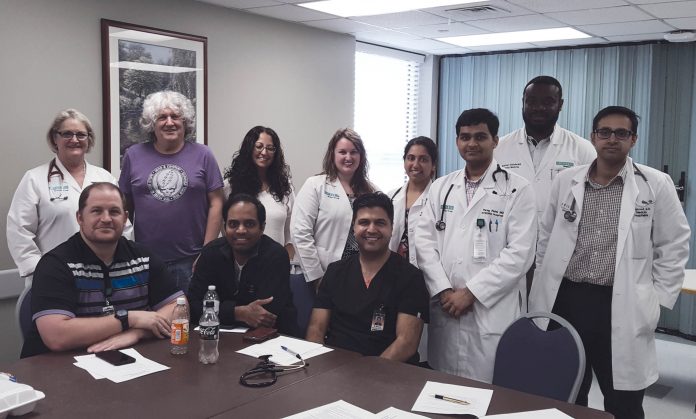
The hospitalist movement has arrived and it has transformed the care of hospitalized patients and the collaboration among healthcare professionals. For Integris Southwest Medical Center (ISMC) nurses and members of the Clinical Practice Council (CPC), having a close, professional relationship with our hospitalists is a must to improve the value of inpatient care. In the fifteen years since the hospitalist movement and quality movement began, our nurses have supported the initiative for 24/7 hospitalists in the hospital for a safer health care system. The engagement of collaboration is mutual between our nurses and hospitalists. Melodie Hopkins, Intermediate Care Team Lead for Integris Southwest Medical says, “The Hospitalist Group have respect for the nurses’ judgement and recommendations in patient care. We feel we now have a voice that is being heard.” ISMC’s Clinical Practice Council is instrumental in supporting nurses by introducing LEAN projects to curtail hospital costs, supporting evidence-based practice for maintaining the highest standard of patient care and raising funds for the celebration of the annual ‘Nurses Week’. This time of year, the CPC would normally be organizing a fund raiser for the special week’s celebration. But ISMC is about to transition to EPIC computer system and all the nurses are busy with extra educational classes. When the hospitalists became aware that this year’s nursing week might not be well celebrated due to lack of funds, they jumped into action.
Our hospitalists organized and are sponsoring the “Brushes and Bubbly.” This event will be a painting fun-raiser. The event is to be held May 25th, 2017 at Nosh Restaurant in Moore. Tickets for the event are $35.00 and all proceeds will go to the Clinical Practice Council. The Nurses of ISMC are grateful for the comradery of our wonderful hospitalists and we salute you: Mobolagi Olulade, M.D., Carolyn Pimsler, D.O., Jeanette Kelley, D.O., Nicole Dodson, D.O., Adrian Scaunasu, M.D., Abie John, M.D., Emenike Uba, M.D., Shiedeh Khodadadian, D.O., Ryan Morgan, D.O., Siddhartha Rangineni, M.D., Matthew Kallenberger, D.O, Mahdi Mussa, M.D., Ralph Shadid, M.D., Magesh Sathaiah, M.D., Dubari Ashraf, M.D., Susan Mathew, D.O., Paragkumar Patel, M.D.

Faith, Fire and Family: Chief watches over Moore

0
Fire Chief Gary Bird has helped guide the City of Moore through utter devastation and simultaneous unprecedented growth during his 30-plus year fire career.


by Bobby Anderson, Staff Writer

Three things immediately stand out when you walk into Moore Fire Chief Gary Bird’s office.
A black leather-bound Bible rests within arm’s reach on his desk.
A copy of The Wisdom of Solomon at Work sits across a nearby table.
Pictures of his three smiling grandkids perch behind him, framing the imposing figure that has helped guide the Oklahoma City suburb through its darkest times and into a period of unprecedented growth – all too often at the same time.
Faith, fire and family.
That’s about all you need to know about Bird, who has devoted more than 30 years of his life keeping his community safe.
On this day, Bird sits in a 19,000-square-foot fire station that doubles as the department’s administrative headquarters.
It’s one of four stations serving the needs of Oklahoma’s seventh-largest city, populated by more than 55,000 as of the last census.
Just looking out from one of the fire bays Bird sees that number growing daily. More than 1,000 apartments are springing up in the community and room is being cleared for even more. Big box stores like Target, Dick’s Sporting Goods, Home Depot and Lowe’s are now staples in a community that 10 years ago had none.
The City of Moore has come a long way, and so has Bird’s department, which just celebrated 100 years of services a few months ago.
EARLY DAYS
For nearly the first three decades of its existence, the City of Moore had very little fire protection. A public water well was dug at the intersections of Main and Broadway. When a fire broke out residents would form a bucket brigade handing off water.
Those first fire alarms came in the form of three pistol shots.
On July 18, 1916 the Moore Volunteer FIre Department was established. Paul R. Simms served as the first chief.
That November the town council passed a resolution to purchase a Badger chemical fire engine, which was hand drawn.
Simms added to that when he rebuilt an old Model-A Ford and kept it in a garage next to his barber shop on South Broadway.
Two years later the city’s first firehouse was built, a 10-foot by 10-foot building.
By the 1930s the council established the first Moore Firefighter’s Pension fund which provided for retirement for firefighters after 20 years of service.
It wasn’t until 1963 when the town started paying a full-time wage for firefighters, phasing out the volunteer brigade as each member retired.
Howard Boatman, Jr., holds the distinction as Moore’s last volunteer, retiring in 1977.
Bird would come along a little later.
August 12, 1985 was Bird’s first day on the job as a recruit. He spent 16 years on a rig before advancing to deputy chief and then chief in June 2012.
“It’s hard to believe it’s been 100 years,” Bird says. “Some days I feel like I’ve been here all one hundred. Then there’s days where it seems like I’ve been here no time at all.”
TOTAL DEVASTATION
Few fire departments in the country have been asked answer the call as often as Moore.
Over the last two decades two of the strongest tornadoes ever recorded struck the city. Five twisters in five years made the community a punchline for Mother Nature’s sometimes cruel humor. Massive rescue and recovery operations were undertaken each time.
The New York City Fire department is famous for what it went through during 9/11. That came from a 10,000-member fire department.
Currently, the Moore Fire Department has grown to 73 uniformed employees with a 66-member shift corps that rotates through 24-hour shifts.
People from around the country have rang Bird’s phone in the weeks and months after each disaster.
And they all want to know one thing: How did you do it?
“The guys were amazing,” Bird said. “We had off-duty guys coming in and we had a lot of them that just didn’t want to leave. The guys jumped right in there and stayed with it.”
“The people in this city are resilient,” Bird continued. “For people it’s home. We’ll build it back and go on. They just keep going. Some of this area has been hit by a tornado three times and the vast majority are still there.”
Bird is one of two employees that are on-call 24-hours a day, seven days a week, 365-days a year.
Bird’s department responds to more than 5,000 calls annually ranging from structure fires to medical emergencies.
Bird himself started his firefighting career as a volunteer in Ninnekah. He has tremendous respect for the individuals all across our country who volunteer to protect their communities.
He makes it a point to note there are more volunteer fire departments nationwide than paid departments and larger volunteer departments than the professional one he runs.
But he stays grounded and so do his men.
Faith, fire and family. It’s what it’s all about.

Quality of Life

0
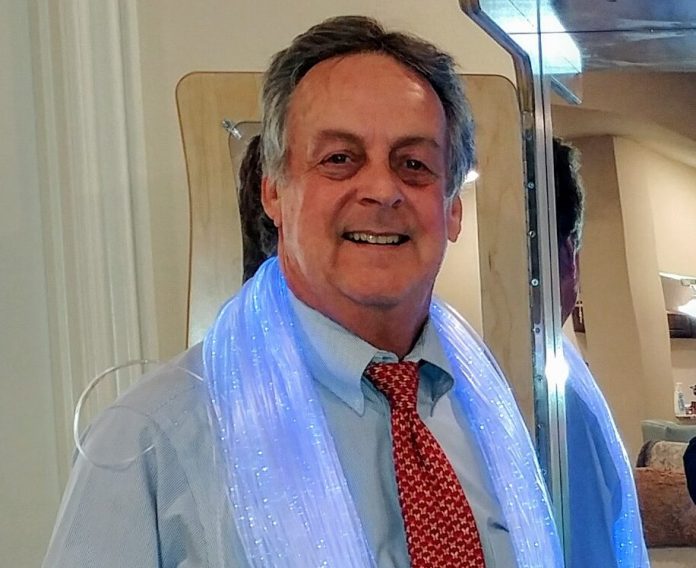
Ben Pearce wraps himself in fiber optics from Iris Memory Cares cutting edge Snoezelen Therapy Machine, “Quality of life is continuous and people expect and need to be engaged in that quality of life so they can remain positive, focused and enriched.” This unique portable unit helps residents do just that by incorporating lights, sounds and smells.

Iris Memory Care of Edmond Engages Residents

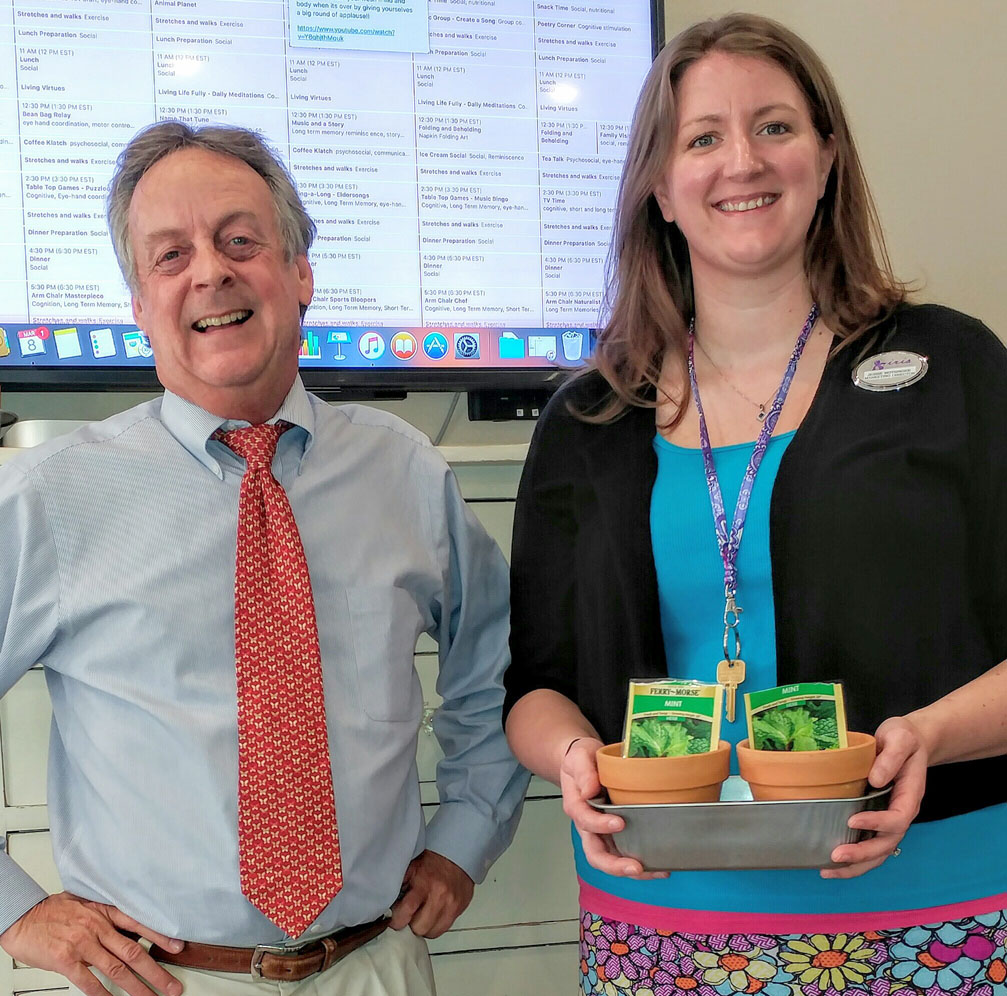
Ben Pearce, consultant for Iris Memory Care and world renowned expert and educator on Alzheimer’s and dementia visits with Jessie Motsinger, Marketing Director at Iris Memory care, while looking at residents spring gardening projects. Just one of the many enriching activities that help residents thrive.

by Bobby Anderson, Staff Writer

With a lifetime spent serving seniors battling age-related memory diseases, Ben Pearce noticed a pattern. Living options for people with Alzheimer’s or dementia issues focused on keeping them protected in environments that often separated them from the things they once lived for. So he devoted his life to finding ways to help people regain that happiness and helping them thrive.
“People are people and even though they have a disease it doesn’t mean they become the disease,” said Pearce, a recognized worldwide expert on the subject of aging. “They want as much engagement as you and I would. Our dementia program allows us to understand a person not only as someone who suffers from illness, but also as someone who inhabits healthy routines and a personality that remains even though it seems to be hidden by illness. Engaging the person behind the impairment allows activities to become therapy.”
With more than three decades of experience working with more than 200 communities in 36 states, Pearce also teaches on the subject at Johns Hopkins University. Pearce’s results in seeing through the fog of dementia to reach people are both innovative and groundbreaking and that’s why David Krukiel and Brandon Meszaros – owners and founders of Iris Memory Care of Edmond – engaged him to provide residents the best possible experience.
“Brandon and I sought high and low, all around the nation, to bring in the best operations team to make our mission of providing the best care for our residents a reality. Upon meeting Ben, it was an easy decision. We founded Iris Memory Care on three principles: Compassion, Dignity and Comfort. Ben not only understands our principles, he lives them!” said Krukiel. “Ben’s knowledge and hands-on-approach is a key component to ‘The Iris Difference’”.
THE IRIS DIFFERENCE
From the moment you walk through the front door you can tell Iris is different. The familiar sights, sounds, and aromas invite you to engage with your loved one in a comfortable, stimulating environment. The kitchen is traditionally known as the heart of the home, and at Iris Memory Care it serves as the heart of the community. The open-concept kitchen encourages residents and visitors to interact with cooks as they prepare classic dishes with fresh seasonal ingredients. Menus include meals your loved one will be familiar with, as well as family recipes shared by others. The food is only part of the dining experience; the sensory cues and social interactions that go along with each meal are equally important.
In the great room, a grand piano sets the tone for expression as residents, caregivers, and visitors are welcome to play. Countertops throughout are made of high-end granite, providing visual warmth and natural durability. Strikingly beautiful hardwood-like floors provide an elegant look while minimizing fall risks. Even the wall colors are specially chosen for their calming qualities.
PERSONAL PATH OF CARE
Krukiel and Meszaros understand residents experience the challenges of memory loss in different ways – and a routine that works well today may not be as effective tomorrow. That’s why Iris provides Personalized Paths of Care with the flexibility to adapt to the moment and be regularly updated with input from caregivers and nursing staff.
The Iris Memory Care approach to care revolves around four simple, yet powerful, factors:
· Getting to Know Your Loved One
When a new resident joins the Iris community, staff conducts a personal evaluation to identify your loved one’s cognitive function, social interaction, mobility challenges, special dietary needs, and more. Family members are welcome to attend the evaluation to offer insights about past events, personality traits, friends, relatives, hobbies, and other details that will help Iris staff connect with your loved one.
· Attentive Physical Care
From proper nutrition, hydration, and medication management to compassionate assistance with activities of daily life, the needs of your loved one are central to each care pathway. Once a Personalized Path of Care is created, staff works daily to strengthen their abilities and promote independence.
·Positive Social Engagement
An important point of difference for Iris Memory Care is the emphasis placed on making connections. Staff members visit each resident multiple times per day, and make it a point to facilitate connections among residents with similar interests. Outings to foster connections with the surrounding community are also offered.
· Sensory Enrichment
With memory impairment, activities that stimulate the senses and encourage hands-on participation can be invaluable ways to soothe or delight your loved one in the moment. Music and art play an important role in the care provided, as do stage-appropriate tasks.
Pearce has discovered the type of engagement offered at Iris is critical in helping residents thrive. “The industry standard is offering care with random activities. We’re reversing that paradigm to provide continuous therapeutic activities as our main focus, with the care that residents routinely need as supportive,” Pearce says. “This means we offer activities with care, not care with activities. Quality of life goes on all day long at Iris Memory Care. Quality of life is continuous and people expect and need to be engaged in that quality of life so they can remain positive, focused and enriched.”

Celebrating history

0
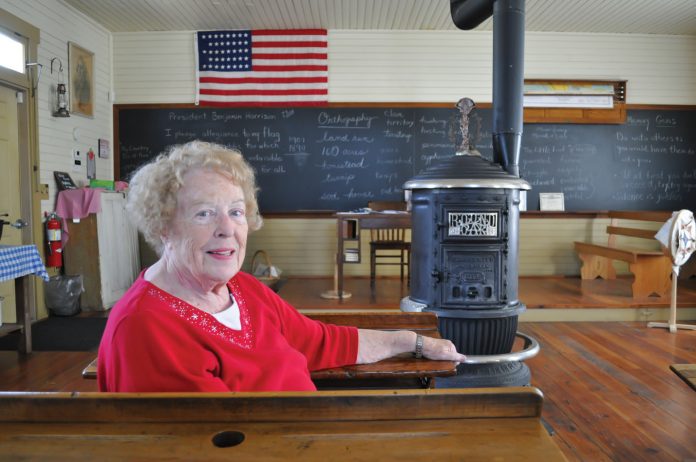
Historian Beverly Terry enjoys introducing people to the the state’s first one-room schoolhouse, which is preserved along Second Street in Edmond.

Edmond home to first schoolhouse

by Bobby Anderson
Staff Writer

Nestled between a Jiffy Lube and a strip mall, one of the most historic buildings in the state sits quietly along a bustling Second Street in Edmond.
Walking inside the 1889 Territorial Schoolhouse is like taking a step back in time. Thanks to care and painstaking renovation, the earliest one-room schoolhouse in Oklahoma feels like a piece of undisturbed history.
For people like Beverly Terry, it’s a labor of love.
Terry is an Edmond High grad and prior officer for the Edmond Historic Preservation Trust. She enjoys seeing the looks today’s school children have when they walk inside for a tour.
“It shows how hard it was for kids those days,” said Terry, tugging on the school bell which chimed twice daily. “A lot of kids in this area rode goats to school.”
HISTORY BEHIND THE HISTORY
On a summer day in 1889, Jennie Forster marched into Brown’s Lumber Company and ordered enough lumber on credit to build a schoolhouse for the new village of Edmond, Oklahoma Territory. The Ladies School Aid Society, consisting of 15 women, had been formed and the ladies were determined to have a proper school for the local children.
Jennie (Mrs. George) Forster was the president of the society. Among the other members were Mrs. L.G. Wahl, Mrs. C.A. Dake, Mrs. Frank Kiedrowski, Mrs. E.W. Erisman, Mrs. H.H. Moose, Mrs. Peter Wilderson, Mrs. J.J. Shen, Mrs. Alvin Ricketts, Mrs. John Pfaff, Mrs. Henry Morrison and Mrs. F.S. Peck.
The women set to work immediately to earn the money to pay back the lumber bill. They badgered their husbands, as well as the other town merchants and citizens. Mrs. Forster joked in later years she was sure the businessmen “felt like running out the back door when they saw me entering the front door.”
The 1889 Territorial Schoolhouse on 124 E. Second Street is possibly the last remaining original 1889 structure in Edmond. The Historic Schoolhouse was restored as an Oklahoma Centennial Project by the Edmond Historic Preservation Trust.
The State of Oklahoma granted the renovation project $75,000.
The Schoolhouse re-opened to the public on April 15, 2007. The first class of students to visit the historic site on the first Schoolhouse Field Trip was in the fall of 2008.
Many people drove past this historic site when it was the boarded up Sanders Camera Shop, not realizing they were seeing and passing by a historic building.
This special restoration project was carried out due to the efforts of the local Trust, local historian Lucille Warrick and a group of concerned citizens. Major restoration uncovered the original blackboards buried underneath the interior walls.
A sample was sent off to a lab in New York and the results showed the blackboard material was a combination of burnt sweet potato and milk.
HISTORY ALIVE
During a five-week summer period, students are able to come for authentic school activities designed to teach them what it was really like to go to school more than a century ago
The building was a schoolhouse for just 10 years. Even an extra room in back couldn’t keep up with the tremendous growth the territory was experiencing.
The building was sold and passed through four different families. The Sanders family was the last owner, using it for both a residence and business.
Codes of conduct for teachers – who earned a monthly sum of $32 – are framed on the wall.
Here’s a few:
· You will not marry during the term of your contract.
· You are not to keep company with men.
· You may not loiter downtown in ice cream stores.
· You may under no circumstances die your hair.
· You must wear at least two petticoats.
· You may not ride in a carriage or automobile with any man unless he is your father or brother.
Preservation Trust members like Terry are walking history books, not only about the schoolhouse but the town in general.
“People don’t realize there were no trees at all in Edmond,” Terry said. “One of the guys bought 2,000 trees and let everyone have trees to put around their property.”
The Schoolhouse is open to the public the first two Saturdays of each month from 1-4 p.m. and by appointment at 405-715-1889.

SPECIAL TO SN&L

0
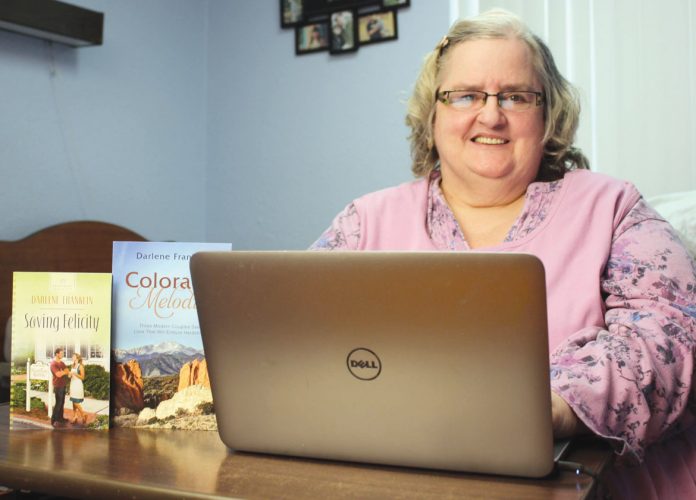
Occupying a unique place-- Darlene Franklin is both a resident of a nursing home in Moore, and a full-time writer. In addition to 46 unique book titles, She has been published in dozens of magazines and nonfiction books. I also write a monthly column for Book Fun Magazine, The View Through My Door--nursing home life from the standpoint of a resident. I wondered if the readers of Oklahoma’s Nursing Times would be interested in a similar article or even, potentially, a column.

A LOVE LETTER TO THE GREATEST GENERATION

By Darlene Franklin

I am writing this on Memorial Day. Between now and the date this is published, we will also celebrate Flag Day and Independence Day. It makes me think of veterans who proudly served, those surviving members of the “greatest generation” who live by my side in the nursing home.
What was it like to win a war that had shown the worst of mankind, from the Holocaust to the only use of atomic bombs? How did they raise children while dealing with the fear that the rest of the world would catch up with atomic power and destroy life on the planet?
Did they wonder how their sacrifice led to a generation who rejected much of what they valued? When an American president was assassinated? When the country rioted in protest to the war in Vietnam? When a different president was impeached and left office?
Perhaps the Eighties felt like a return to greatness. Unless, like me, they were stuck in the oil-decimated economies of states like Oklahoma and Colorado, and saw their American dream gradually sliding away while their pride in their country never faded. (I’m a baby boomer, not a greatest gen, by the way.)
Fifty years past the war, interest surged. Grandkids asked for the old stories. Memories that had been buried in the business of life returned. Some memories slipped away altogether as those who’d live them aged.
For other vets, age has brought back the war years into the present. One gentleman, a man who must once have been tall and handsome but now is thin and hunched over in his wheelchair, rolls from room to room, always with the same question on his wrinkled lips. “Where do I report for duty?” or “Where’s the Army office?” Again and again, all day, he asks, “What am I supposed to be doing?”
The answer-”whatever you want”-doesn’t fulfill his sense of duty.
Other days his thoughts are with his wife. “Has anyone seen my Helen? How can I get to Amarillo?”
With the new millennium came a new threat on 9-11. How would they pass on their core values to their grandchildren’s grandchildren, as the psalmist asked. “So that a future generation-children yet to be born-might know. They were to rise and tell their children so that they might put their confidence in God and not forget God’s works, but keep His commands.” (Psalm 78:6-7, Holman Christian Standard Bible)
Whatever our age, family matters most. One nursing home friend loves to brag about her family: five children, plus a sixth, a doll she claims as a living baby. She counts them down to each grandchild, great-grandchild, and even those great-greats.
Others I don’t know as well are given grand birthday celebrations. What fun to watch dozens of family members celebrate their one common ancestor’s birthday.
I only have one son and he comes frequently with my precious grandkids. There’ll never be dozens of them. But if I go back in time to those holidays of my youth, aunts, uncles (all veterans) and cousins gathered for food and fellowship and a game of Clue or two. And my aunt’s chat about her latest book by Agatha Christie. Yes, I remember what large family celebrations feel like and how family traditions were passed down.
I never thought of my mother as a member of the “greatest generation,” but looking back on it, of course the children qualified. Children born during the hardship of the depression and growing up during a war became the adults who pushed America into world dominance in the fifties and sixties.
I didn’t pay enough attention to Mom’s stories about the war. She talked about collecting scrap metal, about getting a drink, popcorn, and an afternoon at the movies for ten cents. Her only brother, my Uncle Billy, left America early to join the Canadian air force. For some reason, she was the only one at home the day he left. He listened to the same record, over and over, until the time came to catch the bus. After America’s entry into the war, two of my aunts married soldiers. One marriage survived the test of time. The other fell apart.
Uncle Billy did return home, and I never heard anything about his time in the military, nor did I hear of my grandfather’s time during the first war. My father fought in Korea.
Why is there always a war? It makes me think of a verse in Judges that says, “These are the nations the LORD left to test all those Israelites who had not experienced any of the wars in Canaan (he did this only to teach warfare to the descendants of the Israelites who had not had previous battle experience.)” (Judges 3:1-2, NIV)
Hmm, to test us?
At least one generation allowed war to bring out the best of us. Let’s pray the same for our children and grandchildren who continue to defend our country. For those of us who heard their stories first hand, let’s pass them on. Future generations have much to learn from the shoulders they stand on.

Army of resources

0
Lisa Sydnor, senior programs manager for the Salvation Army, says the upcoming Senior Living Fair on April 29 will help seniors and their families connect with needed resources.

Senior Living Fair set for April

by Bobby Anderson, staff writer

As Senior Programs Manager for the Salvation Army Central Oklahoma Area Command, Lisa Sydnor helps families struggling with crucial decisions when loved ones have an unexpected life change.
She was one of those people years ago when her mother faced a world-altering event.
That’s why this month’s Senior Living Fair has a special place in her heart.
The Salvation Army Senior Living Fair will be held Saturday, April 29 from 9 a.m. to 12:30 p.m. at the OKC-County Health Department northeast campus.
This year the focus is on the families of seniors and providing resources for them as they help their loved ones make decisions about downsizing, finding affordable housing and more.
More than 65 vendors who can connect seniors and their families to these much needed resources are expected to attend.
The Senior Living Fair is an annual event that is free to the public thanks to sponsors and includes exhibits for health and wellness, housing, Medicare information, insurance, aging-in-place, and fun ways to stay active.
The Salvation Army Senior Programs offer participants the opportunity to learn, innovate, promote healthy activities, express and fulfill artistic talents, and socialize. The enhanced self-worth, dignity and hope are intrinsic to the well-being of every person.
The non-profit Sisters in Motion group will be there, teaching seniors the benefit of hula hooping to improve their flexibility and range of motion.
“What we want to do is bring all those people together,” Sydnor said. “It’s not just a health fair. It’s about living now but taking care of the contingencies.”
Sydnor’s mother hadn’t taken care of those contingencies a few years back.
So Sydnor became one of those family members who didn’t know where to turn when her mother took an unexpected turn for the worse.
“I can tell you from experience,” Sydnor says. “If you don’t know what you don’t know then you make a mistake. When you realize the mistake then you have to start over again.”
Sydnor remembers walking in to check on her mother one day after work and the entire house had blackened walls.
Her mother was sitting in the middle of it all and Sydnor was aghast.
“She was sitting there barely breathing and said she fell asleep while cooking,” Sydnor said. “The walls were black with soot. Had the neighbor next door not smelled something and basically kicked the door in … mother probably would have died from smoke inhalation because she had limited respiratory function anyway.”
“I had to do something.”
Within 72 hours, Sydnor was forced to downsize her mother to a shared room at a nursing home.
The phone book was her only resource.
She thumbed through, praying the next call would be the right one for her mother.
Turns out it wasn’t.
Within two weeks of choosing a home she knew she had made a mistake.
“Not knowing what questions to ask, you just don’t ask them,” Sydnor says. “I don’t want to see somebody else like that.”
So she pulling her mother out of the center and moved her in with her for the time being until a more permanent situation was found.
During the process, she found out her mother had made no final expense arrangements.
In taking care of her mother’s finances and living situation, it became clear that she needed to have a conversation with her own children.
That’s why the Senior Living Fair is so important. Sydnor says experts from a number of relevant industries are brought together to provide a resource – not just for seniors but for everyone as they age.
“I want to see the seniors come with their families and with their children or grandchildren who will make decisions and help them,” Sydnor said.
This year will be the first time the event has taken place on a Saturday. The move from Thursday mornings was intended to accommodate families who help seniors make important life decisions.
Downsizing, supplementing Medicare, finding the right place to live after an illness or crisis – these are just a few of the topics Sydnor says will be covered.
“Just myriads of questions,” Sydnor said. “We also have health agencies. We’re trying to reach the families so they can make better informed decisions.”
And for Sydnor, she hopes that others aren’t caught unprepared when the unexpected arrives on their doorstep.

Accel at Crystal Park Celebrates Grand Opening

0

New transitional care center located near Integris Southwest Medical Center

StoneGate Senior Living CEO John Taylor announces that Accel at Crystal Park celebrated the grand opening on February 23, 2017. Located at 315 SW 80th St, Oklahoma City, Accel at Crystal Park is currently completing local and state inspections and is expected to begin admitting patients the first week of April. The facility will be fully open immediately thereafter.
The new transitional care center, near Integris Southwest Medical Center. represents the second new health care center developed in the Oklahoma City market-area by Lewisville, Texas-based StoneGate Senior Living. The first—Medical Park West Rehabilitation—is located adjacent to Norman Regional Health System’s HealthPlex Hospital in Norman.
Accel at Crystal Park features 59 private transitional care suites designed for patients recovering from an acute care event. All patient suites will offer modern amenities and technologies—flat-panel TVs, Wi-Fi—and a high-quality dining experience, with meal service available in patient rooms and the center’s dining room. Accel’s rehabilitation gym will offer modern equipment and technologies that help patients complete post-acute rehabilitation as quickly as possible and return to their lifestyle.
StoneGate’s web-based EHR software will be utilized at Accel, facilitating easy access to important patient health information by physicians and other providers, as well as transparent sharing of clinical outcomes and patient satisfaction data with physicians and acute care partners. Expected patient length-of-stay at the transitional care center will vary based on diagnosis, and the expected overall average length-of-stay is 15 to 25 days. Accel’s overarching mission will be to rehabilitate patients as quickly as is clinically feasible. Accel at Crystal Park’s architecture and interiors are designed to complement the look and feel of local real estate, and will offer the same attention to architectural and design details as Medical Park West in Norman.
StoneGate Senior Living manages 42 properties across Texas and Oklahoma, and is currently developing two new transitional care properties in Colorado and another in College Station, Texas. Recently ranked as the nation’s 31st largest transitional and long-term care company by Provider magazine, StoneGate is a fully-integrated post-acute health care company, with service-lines and business units that offer transitional care, long-term care, assisted living, memory care, rehabilitation, wellness, home health, pharmacy, care navigation and post-acute analytical services.

Social

0FansLike
0FollowersFollow
0SubscribersSubscribe