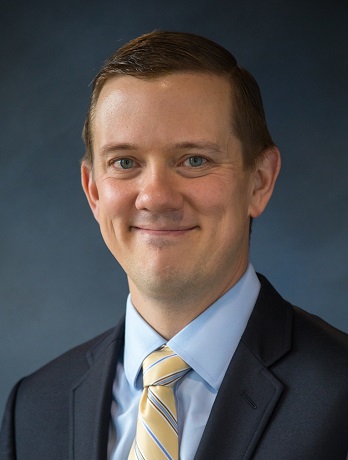
Oklahoma Insurance Commissioner John D. Doak is offering innovative ideas on health insurance to national leaders. Doak responded today to a request from U.S. House Majority Leader Kevin McCarthy asking for recommendations as lawmakers move forward with the repeal of the Affordable Care Act.
“If the Affordable Care Act is repealed, we should take this as an opportunity to do something different, something that works,” Doak said. “Unlike other lines of insurance, the hands of the health insurance industry have been tied by the law, unable to grow and innovate. Now is the time to open the market to see what can be done to provide greater access to affordable health insurance for everyone.”
One of Doak’s suggestions to House Leader McCarthy includes examining the use of microinsurance. This type of insurance focuses on the low-income population and has been successful in countries like India. Doak included research from David M. Dror, Chairman of the Micro Insurance Academy, on how microinsurance could work in the United States.
Other ideas from Doak include:
Permitting sale of insurance across state lines under state regulatory enforcement.
Adopting policies that expand the use of health savings accounts coupled with more affordable, high-deductible health plans.
Allowing states to enact new health reforms at the grade-school level that incorporate physical fitness and nutrition programs to deter preventable illnesses.
Letting states determine the age at which a child can remain on his or her parent’s group health plan.
Enacting legislation that protects consumers from unfair balance billing and surprise billing from individual providers like anesthesiologists, radiologists or medical service companies such as air ambulance and imaging providers.
Allowing states to pursue innovative health care delivery mechanisms including, but not limited to, telemedicine and the expansion of the technologically-based Project ECHO® for rural America.
The Oklahoma Insurance Department and Commissioner Doak will be holding town hall meetings throughout the state to talk with Oklahomans about healthcare reform. The dates and locations of those meetings will be announced at a later date.
Innovative Solutions Needed to Fix America’s Health Insurance Problem
Would You Like to Join Our Airport Information Team?
Our Travelers Aid airport program is now accepting applications for information booth volunteers. Serving as an airport volunteer is a great way to meet people, solve problems, and learn about the growing tourism industry in Oklahoma City.
Travelers Aid volunteers staff two information booths at the airport, providing a warm welcome and a big smile to visitors. Our trainers will provide you with all of the resources you need to assist travelers, answer the telephone, offer paging services, provide directions and information, distribute maps and brochures, direct military personnel, and link distressed travelers with social services throughout the community.
We operate one booth on the ticket counter level and one in baggage claim, seven days per week from 10 a.m. to 10 p.m. Typically volunteers work one 4-hour shift per week, but our schedule is flexible!
“My wife and I have always believed in volunteering as a way of showing respect for those who have helped us in the past and to, in turn, do good for others. Working at the airport is a wonderful experience. You never know whom you will meet or what kind of situation you will encounter. You meet and help people from literally all over the world,” says John Fink, an eight-year airport volunteer veteran. “Volunteering is a privilege and a very rewarding experience.”
Anyone who likes to meet people, solve problems, answer questions, and work in a dynamic environment should contact Megan Chapman, Travelers Aid Volunteer Coordinator, at (405) 486-0619 or mchapman@upwardtransitions.org for more information.
Grant Helps Increase Quality of Care for Nursing Homes
Grant Program Helps Increase Quality of Care for Nursing Homes Across the State
The care and quality of life for nursing home residents in Oklahoma are improving thanks to projects funded through the Oklahoma State Department of Health’s (OSDH) Civil Monetary Penalty (CMP) Fund.
The CMP Fund is made up of fines collected from nursing homes. These funds are redistributed by the Centers for Medicare and Medicaid and a portion of the monies returned to the state to improve nursing home care.
Improvements resulting from the project include a decline in residents with one or more falls with major injury (5.4 percent in September 2015 to 5.2 percent in September 2016) and a decrease in the rate of nursing home residents who showed signs of depression, down to 5.7 percent from 6.5 percent in a 12-month period.
The goals of the CMP Fund Program are to: *Protect the health and property of nursing home residents. *Promote evidence based practices that improve the quality of care and quality of life. *Empower staff through culture change.
Michelle Billings is the Assistant Campus Director of the Lackey Health Center at Baptist Village in Oklahoma City.
“We were involved with a CMP-funded project for improving the quality measures through the Quality Assurance/Performance Improvement (QAPI) process,” said Billings. “This program has fine-tuned our QAPI program while providing us the tools and resources to intentionally and methodically discover and improve our quality measures. In fact, our Quality Measure Star Rating increased from four stars to five stars.”
One of the more popular programs that received funding from the CMP Fund is the Music for the Ages program. This program helps nursing homes create a certified Music and Memory Program™ as a non-pharmacological intervention for pain and dementia. Across the state, 50 nursing homes have been recruited for this program with 20 residents in each home getting their own iPods. Nursing home staff is also trained to assist the residents and develop playlists and recruit student volunteers to help the residents with the program.
The next round of project applications is currently being evaluated by the OSDH. Approximately $2.2 million has been allocated for programs in FY2017. Projects are funded for up to three years with various phases of development and evaluation. The projects selected for funding for FY2017 will be announced in early March.
As of September 2016, seven projects were being funded by the CMP Fund.
Visit http://cmp.health.ok.gov for the full report and more information about the CMP Fund.
Dough Boys: Friends help build pizza empire
by Bobby Anderson, Staff Writer
It was the mid-1970s and Oklahoma State Students Bob Busby and Brent McMurry found themselves in need of a job.
As luck would have it, the geology major and sociology major wound up in the same Stillwater classroom.
Little did they know they would be working side-by-side helping building what would become a cult following in Stillwater and eventually all of Oklahoma in Hideaway Pizza.
“It feels like the guests take ownership in Hideaway, like they’ve worked there before, or like they’ve owned part of it when they’re introducing it to people,” said Busby, now Hideaway senior vice president. “They feel like it’s part of their own experience or their own story.”
Both are former owners (along with Gary Gabrel) of the Hideaway Pizza expansion restaurants that started on Cherry Street in Tulsa. Brett Murphy and Darren Lister are the current owners.
Busby now serves as the senior vice president while McMurry is the district manager for South Tulsa.
BACK IN THE DAY
Richard Dermer and his wife, Marti, bought the business back in 1957.
In the 60’s and 70’s, with happy customers filling the 12 tables in the tiny restaurant, Richard and Marti had a fleet of VW delivery Bugs racing over the streets of Stillwater.
Originally decorated with the Hideaway pizza man logo (Big Kahuna), they evolved into colorful, eclectic designs with zebra stripes, polka dots, flowers and ladybugs, and became synonymous with Hideaway Pizza.
The way to work at the original Hideaway Pizza early on was word of mouth. You had to be a friend of a friend or know someone who had worked there.
“My first shift was nine in the evening to two in the morning driving a Volkswagen,” Busby said. “I didn’t even know how to drive a standard. First thing I did was ask for someone to show me how to do this because I’ve got a load of pizzas.”
Pizza was delivered on campus through the via one of the largest fleets of Volkswagen Beetles in the U.S. Creatively painted by the employees, the VW bugs became an iconic symbol for the company along with vintage kites (Dermer was President of the American Kitefliers Association), collage art and the board game Pente.
In 1993, Dermer allowed the trio of trusted employees including Busby, McMurry and Gabrel (Pente creator) to form a development company to expand the concept into new markets outside of Stillwater while the Dermer family retains ownership of the flagship location.
The first Hideaway Pizza expansion restaurant opened in downtown Tulsa, Oklahoma’s Cherry Street District.
“It was just from the get-go lines out the door,” McMurry said.
Hideaway Pizza had successfully grown its footprint to include six restaurants in the Tulsa and Oklahoma City metro areas when Lister and Murphy purchased the company in Feb. 2006.
Under their leadership, the company has grown into one of America’s favorite pizza companies, employing approximately 1,000 in two states.
The newest restaurant location (#17) opened on Oct. 10, 2016 at 5103 Warden Rd. in North Little Rock, Arkansas. It was the first Hideaway Pizza to open outside of Oklahoma.
Hideaway Pizza plans to open its next restaurant in 2017 in Conway, Arkansas.
RISING SUCCESS
There are approximately 61,269 pizzerias in the United States and Hideaway Pizza was ranked No. 66 in Pizza Today magazine’s 2016 ranking of the nation’s most successful pizza companies.
That’s a six-spot jump from 2015. Two other Oklahoma-based pizza companies were included in the 2016 report. Tulsa-based Mazzio’s Italian Eatery was ranked No. 29 (No. 27 in 2015) and Simple Simon’s Pizza, headquartered in Glenpool was ranked No. 49 (No. 45 in 2015).
It’s still fun for McMurry and Busby, who admit they still regularly eat the pizza.
Both agree it’s never been about how many stores Hideaway has but the quality of the people and product inside of each.
They enjoy pouring into the staff as much as pouring into customers. The mantra has always been happy employees equal happy customers.
Maybe that’s why Hideaway has become an Oklahoma favorite. It’s not just a place to stop and pick up a pizza – although Busby admits the takeaway business is phenomenal – Hideaway is a place where friends and family come for an evening meal.
“Pizza is such a social food because you share it. You can feed a lot of people from one thing. It’s a unique niche of the restaurant business we’ve got here,” Busby says.
And you’ll still see both of them back in the kitchen making sure Hideaway Pizza stays an Oklahoma tradition.
Norman seniors fighting for space


story and photos by Bobby Anderson, Staff Writer
Norman has and always will be a college town.
Today more than 31,000 students come to Norman each year to further their education.
As a result, Norman’s population has grown more than 50 percent to nearly 120,000 residents since 1990.
For the past 50 years seniors like Jim Jinkins have paid for that growth, supporting and paying for municipal bonds, school bonds and keeping dollars local and paying city sales tax.
And it was senior voters like Jinkins who threw their support behind the Norman Forward initiative that in October 2015 resulted in a half-percent sales tax increase intended to fund a number of quality of life issues.
One of those items listed on the ballot was a new, standalone senior center that would replace Norman’s current facility, housed in the city’s original 8,000-square-foot public library built in 1929.
But now Norman seniors feel they’re the ones standing alone and are accusing some city officials of trying to do an end-around with funds that should be used to build a new facility.
NORMAN FORWARD
“Seniors worked their butts off to get that initiative passed,” said Jinkins, who spent four hours on election day holding a sign on a street corner campaigning for the measure. “It passes and a couple months later they start talking about the budget again so we start going to the study sessions of the council meetings and they start saying ‘We don’t have any money. It’s going to take the entire $159 million to fund these Norman Forward projects.’”
“We said ‘Wait a minute. We’re a Norman Forward project.’”
City leaders indicated they had been considering using bond funds from a previous bond issue to fund renovating the existing Norman Public Library for use as a senior center.
That would be done after the library moved into a new building paid for through the sales tax increase.
Voters like Jinkins felt they secured a standalone senior center by passing the Norman Forward initiative.
“There’s not an asterisk next to it, there’s not any language that says if there’s money available,” Jinkins said about building a senior center. “Everybody I know that voted on it (thought they were voting) for a senior center.”
In March 2016, an Oklahoma not-for-profit corporation by the name 21st Century Norman Seniors Association was formed and Jinkins was elected president.
He says there are now more than 400 active members.
With seniors encompassing nearly 20 percent of Norman’s total population the group feels a significant segment of Norman residents are supporting the call for a free-standing senior center.
For now, Jinkins says the city is only offering yet another renovated former library to serve seniors’ needs or trying to float yet another bond issue to voters specifically for a new senior center.
Jinkins worries about voter fatigue and the fact voters have already voted twice to fund a new senior center.
The senior group says the plan of moving into the existing library does a disservice to seniors on multiple fronts.
Seniors and City of Norman staff would share the building and end up competing for space and facilities. Neither could expand as their programs grow.
Problems with parking and traffic flow cannot be resolved.
A shared parking lot with City offices plus the Municipal Court would create a bottleneck and there would also not be enough covered parking spaces that a senior center requires.
Senior centers in Edmond, Shawnee, and Midwest City have this.
The existing library lacks space for kitchen facilities. The staff of the kitchen at the present senior center would like to move to the new senior center, and most people agree that the new center should house the kitchen as the center is the only source for many seniors’ meals.
The option Jinkins’ group favors is building a new facility – which would cost in the neighborhood of $8-9 million – at the nearby city-owned Andrews Park.
The site would provide plenty of adequate parking plus be located across the street from the new library – benefitting from library programming and public resources located on site.
Association Associate Vice President Nadine Jewell penned a letter to the editor of The Norman Transcript that read, in part:
“Norman Forward is certainly needed in our community, and seniors do not think they are being greedy asking for a standalone center. While many projects, like Westwood, can only be used for 3 months of the year, a senior center can be used the year around. Surely, Norman cares enough for its seniors to find enough excess Norman Forward funds to build one standalone.”
With already a fair measure of support from existing council members, one thing working in the group’s favor is the fact City Council seats in the odd-numbered wards will be up for election this coming February.
Norman Seniors will host a candidates forum before the election so that you can meet the candidates, ask your questions, and hear their positions.
In the meantime, Jinkins is urging all interested Norman seniors to call their City Council representative and voice their opinions.
You can find out more information online at www.normanseniors.org as well as the group’s Facebook page listed as Friends for a 21st Century Senior Citizen’s Center.
“I think they just really wanted us to go away and they didn’t think we would get this far,” Jinkins said. “It is our hope that the Council will identify a funding source for a standalone center that does not involve yet another vote of the people.”
Oklahoma City Artist Honored in Competition


Betty Hatcher, a resident at The Fountains at Canterbury in Oklahoma City, earned an honorable mention spot in a national art calendar competition hosted by Watermark Retirement Communities.
The national calendar, created by Watermark Retirement Communities which manages The Fountains of Canterbury, is designed to be a source of inspiration for all those who receive it. Pieces of art submitted for the competition included sculpture, needlepoint, oil and watercolor paintings and mixed-media work. The Expressions art calendar is distributed nationwide and celebrates active aging and the arts.
Hatcher’s cross-stitching was selected as one of 24 honorable mentions for the 2017 Watermark Expressions art calendar out of entries from 39 Watermark communities across the United States.
Hatcher began learning needlework from her mother at a young age. She went on to use her skills as a member of the Oklahoma City Embroiderers Guild for more than 20 years. Her favorite thing about cross-stitching is the multitude of colors and watching a piece transform into artwork. Today, Hatcher is 98-years-old and continues her love of cross-stitching by creating knitted caps for adults and babies as well as baby blankets.
“The Fountains at Canterbury is home to many talented individuals who thrive each day through continuing their life’s passions and discovering new ones,” said Becky Strong, director of community life at The Fountains at Canterbury. “Betty is an incredible artist and we are proud to see her receive national recognition for her talent and hard work.”
The piece was first judged as part of a local competition among residents at The Fountains at Canterbury. Three local experts narrowed down the pieces and sent the five best on to the national competition. Final selections to be featured in the calendar were made at the Watermark Retirement Communities’ national resource center in Tucson, Arizona.
The calendar is available to the public at no charge while supplies last. If you would like a calendar, please call (405) 381-8165.
The Fountains at Canterbury is dedicated to being the first choice in senior living, providing a continuum of care including independent living, assisted living, memory care, innovative rehabilitation therapies and skilled care. The Fountains at Canterbury is managed by Watermark Retirement Communities and is committed to creating an extraordinary community where people thrive. To learn more, please call (405) 381-8165 or go online to www.watermarkcommunities.com.
Nurse Turned Patient Inspires Others through Battle with Cancer

story and photos provided
This holiday season, Susan Abrahamsen says she is especially grateful. In addition to having a loving family and a successful 30-year career in health care, Abrahamsen is a breast cancer survivor.
“It was surreal,” said Abrahamsen of her diagnosis. “All of a sudden, everything changes.”
Abrahamsen learned she had stage two breast cancer. in February. By March, she began weekly rounds of chemotherapy.
“In the beginning, it was easy to keep my illness hidden from my patients,” said Abrahamsen. “I just poured myself into my work, but as I started losing more hair, my patients could tell something was going on.”
For nearly the last two years, Abrahamsen has worked as an advanced practice registered nurse and certified nurse practitioner in the telemedicine program at Mercy Hospital El Reno. She takes care of patients in the hospital, while helping to relay important information about her patients to physicians in Oklahoma City using a television screen with two-way audio and video technology. She often works with Dr. Daniel Pascucci.
“I just remember her being very shaken when she told me she had been diagnosed with cancer,” said Dr. Pascucci. Despite the diagnosis, he said it was hard to keep her away from work. “Her first priority has always been our patients, and even as she was going through a health scare of her own, she did whatever she could to continue taking care of them.”
Dr. Pascucci said Abrahamsen’s outlook on her illness and recovery is now inspiring his own practice in medicine.
“It is humbling to be able to see somebody live out the Mercy mission of bringing to life the healing ministry of Jesus in such a selfless way,” he said. “To see her faith in the Lord guide her through that and give her peace while she continued to care for patients has been very eye-opening.”
Following surgery and now daily radiation treatments, Abrahamsen hasn’t been able to work since September, but she still believes that she has been “very blessed” throughout this journey.
“It is a different feeling being on the other side of care, but it’s helped me connect on a much deeper level with my patients, and I understand better what they are feeling,” she said. “When my patient’s started realizing my diagnosis, they would often offer support and encouragement, even when I was the one taking care of them. There are good people in El Reno.”
Abrahamsen will finish her final round of radiation two days after Christmas. She plans to return to work at Mercy Hospital El Reno by New Year’s Day.
IT’S TWO, TWO, TWO SURGERIES IN ONE!


You’ve heard of a two-for-one sale, but what about a two-for-one eye surgery?
It takes critical coordination and two skilled surgeons, but doctors at Dean McGee Eye Institute are combining cataract and retina surgeries into one combined procedure. It’s an approach that is easier on the patient, more cost effective and can improve outcomes, too. In the end, it is helping restore patients’ vision so that they can more quickly get back to the things in life they love most. For Ed Brandt III, that was reading to his grandkids.
“My four-year-old granddaughter was over, and we were sitting in the back. She brought a book over, sat in my lap and said, ‘Grampy, can you read this for me?’ I opened the book and I just couldn’t read it,” Brandt said.
A trip to the Dean McGee Eye Institute revealed why. Brandt had a detached retina.
“If you think of the eye like a camera, your lens is the lens of the camera and the retina is kind of like the film,” said Dr. Vinay Shah, a retina specialist with Dean McGee. “When you have a retinal detachment that means the film of the camera has come loose and we have to put it back in place surgically.”
For Brandt, who had undergone procedures on his eyes before, that might have meant another three surgeries; the first to re-attach the retina and place a tiny oil bubble to hold the retina in place while it heals; a second surgery to remove the oil bubble; and then, since it is common for a cataract to form after retina surgery, he would need a third surgery to address that issue. Brandt was pleased to learn that two of those surgeries could be combined into one. Not only was it more convenient for him, but he also learned that the procedure could enhance his overall outcome.
“A large percentage of patients who have retina surgery will develop a cataract. So six months later, they are looking at surgery again. So if we can go ahead and take out the natural lens, replacing it with an implant lens and do the retina surgery at the same time, it is much easier on the patient and his or her family,” said Dr. Ralph Hester, a cataract surgeon with Dean McGee. “More importantly, though, the retina surgeon wants the clearest possible view to visualize the finer details of the retina.”
“The retina is a less-than-one-millimeter-thin membrane in the back of your eye. So to work on that, you want optimal visibility,” Shah explained.
Accomplishing the combined cataract-retina surgery requires a lot of coordination. Two surgeons and their teams as well as two sets of surgical equipment must all be in place.
“The patient does not move. We move,” Shah said. “So it has to be carefully orchestrated. At the Dean McGee Eye Institute, we have set aside particular times of the week just for these types of combination procedures.”
With one trip to the operating room, patient safety is improved and there also are cost savings with the added bonus of less time away from work.
“It’s not about the money, though. It’s about the patient,” Hester explained. “For the patient, this is a big deal. If you can package this into one operation, they are not scheduling time off work multiple times and getting their loved ones to transport them to and from the surgery center multiple times. It makes a big difference.”
Ultimately, Hester and Shah added, it is about changing somebody’s life, restoring their vision and helping them get back to the things they love doing most, like reading to grandchildren.
“There are Braille books and audio books, but there is no way that I could ever replace having a grandchild sitting in my lap and being able to read to him or her. I can do that now. I can see, and I can read. It makes a world of difference to me,” Brandt said.
To learn more about the combination cataract-retina surgery, visit www.DMEI.org
10th Annual Holiday Tap Dance Performance kicked off in December


Several members of the Edmond Senior Center’s “Tap For Fun” class kicked off this year’s holiday season with their 10th Annual Holiday Tap Dance Performance, held at the senior center on December 14, 2016.
The fun-loving senior tappers performed six very lively tap dances and – by popular demand from their delighted audience – an encore tap dance to “Let It Snow”.
Men and women, ages 55+, are welcome to participate in the “Tap For Fun” class. For more information about the class, call the Edmond Senior Center, 216-7600.
What are you wishing for in 2017?
What are you wishing for in 2017? Integris Southwest Medical Center Volunteers
Joy to the world in 2017. Jody Wilkerson
Let there be peace on Earth in 2017. Tomie Webster
Peace around the world. Ellen Lewis
Peace and food for the hungry. There is so much violence throughout the world. Doreen Tiffany