Sunday, October 25, 2026

SAVVY SENIOR: Nifty Gadgets That Can Help Seniors with Hearing Loss

0

Dear Savvy Senior,

What types of products can you recommend to help people with hearing problems? My 65-year-old husband has some hearing issues, but doesn’t think he needs a hearing aid, so I’m looking for some alternative devices that can help.

Loud Talker

Dear Loud,
If your husband feels he’s not ready for a hearing aid but needs some hearing help, there are dozens of “assistive listening devices” on the market today that can make a big difference.
Assistive listening devices are over-the-counter electronic products (they are not FDA approved hearing aid devices) that can amplify and improve sound to help your husband in different listening situations. It’s also important to know that these products are best suited for people with mild to moderate hearing impairment, and they usually aren’t covered by insurance or Medicare.
Here’s a breakdown of some of the different devices that can help.
Personal amplifiers: For better hearing, especially in noisy environments, there are personal sound amplification products that can be worn in the ear like a hearing aid, and are designed to amplify sound while reducing background noise. Two top rated products to consider that were recently recommended by Consumer Reports are the SoundWorld Solutions CS50+ and the Etymotic Bean.
The CS50+, which costs $350, looks like a Bluetooth cell phone headset, and has customizable settings that can be programed with a smartphone. The Etymotic Bean, which costs $399 a pair or $214 for one, is ready to use right out of the box and is best suited for those with high-frequency hearing loss.
If these are too pricy, there are also a number of small hand-held or body-worn amplifiers – like the Williams Sound Pocketalker ($139) and Bellman & Symfon Mino Personal Amplifier ($188) – that have a microphone and headphones or earbuds that are very effective too.
TV amplifiers: To hear the television better, there are TV listening devices that will let your husband increase the volume and adjust the tone to meet his needs, without blasting you out of the room.
Some of the best options include wireless infrared, radio frequency or Bluetooth devices that come with standard or stethoscope headphones. Sennheiser makes a variety of quality products with prices running between $130 and $450. Or, for a more affordable solution, consider the Serene Innovations TV Sound Box for $120. This is a wireless amplified TV speaker that would sit near your husband, and provide clear stereo sound from the TV without the need for headsets.
Amplified telephones: To have clearer phone conversations, there are a wide variety of amplified telephones that offer enhanced volume and tone adjustments, and they usually come with extra loud ringers and flashing ring indicators to alert him when a call is coming in.
Some top makers of these products are Clarity, ClearSounds and Serene Innovations, and a top seller today is the Clarity XLC2+ Amplified Phone ($144), which is a cordless phone that provides three tone settings and 50 decibels of amplification.
Alerting devices: There are also a variety of alerting devices that can help people who have trouble hearing the doorbell, phone, alarm clock, smoke detector or even weather radio. These products use flashing lights, multi-tone ringers or vibrating devices as a means to alert you.
Some popular products in this category include: The Bellman & Symfon Care Home Alerting Solution that provides door and phone notification with a flashing alert ($198); the Silent Call Weather Alert Radio with strobe and bed shaker ($165); and the all-in-one Serene Innovations CentralAlert CA-360 Clock/Receiver Notification System, which provides alarm clock, doorbell, phone, motion and storm warning alerts ($180).
To locate these and any other hearing loss products visit Harris Communications (HarrisComm.com, or call 866-476-9579), which offers more than 2,000 assistive devices and provides customer support services to assist you.
Send your senior questions to: Savvy Senior, P.O. Box 5443, Norman, OK 73070, or visit SavvySenior.org. Jim Miller is a contributor to the NBC Today show and author of “The Savvy Senior” book.


TRAVEL/ ENTERTAINMENT: A Miami Florida Potpourri

0

Photography and Text by Terry “Travels with Terry” Zinn  [email protected]

Miami Florida is known for many attractions, and it may be difficult which to put on your tourist schedule. Some may be within walking distance of your hotel, especially if you stay in South Beach, and some may be more conveniently visited by taking a package bus tour. And if you find you have half a day free before your flight back home, a half day bus tour is the best use of your time. Bus tours are always
the best and most conveniently way to get a sampling of an area. Of course the bus has a schedule to keep and you may find that you would like to spend more time in one place than another.
One such bus tour can pick you up at your Miami cruise dock and then drop you off at the airport, once the tour is over.
The bus can take you through South Beach, and a glimpse of the art décor architecture, which you may be more than familiar with if you have stayed there. And while in South Beach you could take a walking tour with a guide describing the building styles, by signing up at the Art Deco Museum, there in south beach. I found this humorous as I was staying in one of the Art Deco Hotels, and one day the tour came into my lobby. If you are not a walker and one that does not like to stand, a walking tour may not suit your physical preferences.
Within an easy stroll from South Beach is the Wolfsonian museum, which is a treasure trove of near lost American art and culture. The collection has about 180,000 objects from 1850 – 1950 in a variety of media and its impact can be best expressed by the Wolfsonian mission statement.
“The Wolfsonian uses objects to illustrate the persuasive power of art and design, to explore what it means to be modern, and to tell the story of social, political, and technological changes that have transformed our world. It encourages people to see the world in new ways, and to learn from the past as they shape the present and influence the future.”
Also the Wolfsonian hosts a coffee shop and book shop for a pleasant oasis and recuperative space. The Coffee table books and beverages are a tour with in itself. A few doors down is a bake shop where you might get a snack and return with it to the Wolfsonian coffee/gift shop, surrounded in a quiet and congenial atmosphere. http://www.wolfsonian.org/
A bus tour, may take you to Little Havana, a Miami hot spot during the days when Cuba was a closed society. Most famous is the domino park in Little Havana, where still today you can see locals and expatriate Cubans playing dominos and socializing. Also in the area are small cafes where you are encouraged to have your lunch break. This allows you to taste authentic cultural foods as well as a chance to chat and get to know your fellow bus tour travelers. Also nearby is a fast food outlet, if the familiar choices are your preference.
Little Havana is replete with many bright colored wall paintings and murals. In fact one stop might be a park and museum replete with a plethora of examples of outdoor indigenous art, and a good restroom stop, at Wynwood Doors.
Away in the Coconut Grove area of South Florida is the Vizcaya mansion, museum and gardens. The house is a example of another more luxurious times when tycoons lived in palaces. The interior is filled with authentic furniture and antiques and the gardens inspirie days gone by. There are bus tours that offer an extended visit or you may book some of their additional experiences. Always improving with preservation upgrades, a repeat visit is always new. http://vizcaya.org/
And of course you have to eat an upscale meal. The restaurant at the Versace Mansion is not to be missed, and talked about in previous issues. A Fish Called Avalon, in the South Beach Avalon Hotel does not disappoint with an upscale menu. As with so many South Beach eateries they have an outdoor as well as indoor dining area. You might enjoy the grouper, octopus, snapper, tuna, lobster or wild salmon and if you are inclined, top notch steaks. If this sounds too heavy for you, their salads are mountains of deliciousness. With a common name of Chopped Salad you will be surprised at the over the top presentation. And of course ask about their daily specials. https://www.afishcalledavalon.com/
If the weather is clear and the ocean calm, you should indulge in a tourist cruise in the Miami bay, sightsee lux backyard of celebrities, and a panoramic view of Miami Beach. There are many more treasures you may explore in South Florida beyond the potpourri listed here. Explore !

Mr. Terry Zinn – Travel Editor
Past President: International Food Wine and Travel Writers Association
http://realtraveladventures.com/author/zinn/
www.new.okveterannews.com – www.martinitravels.com

Kick Start Retirement Planning Today

0

By John D. Doak, Oklahoma Insurance Commissioner

Retirement can be a new beginning for us, but planning for your golden years can be daunting. This week is National Retirement Planning Week© (NRPW). The goal of NRPW is to promote the importance of comprehensive retirement planning.
While retirement planning was once thought of as an issue for older people, the truth is that you must start preparing for a secure future as soon as you enter the work force.
Check out this retirement checklist to help you plan for a comfortable and secure retirement.
Review Your Finances
If your workplace offers a 401(k), 403(b), ESOP, profit sharing plan, IRA or Roth IRA, you should take advantage of their plan. Many employers will match contributions up to a certain amount. The sooner you start saving, the more money you’ll have for retirement. Consider at least contributing the amount needed to obtain the employer match.
Review your finances to see how financially prepared you are for retirement. Track down and value your assets including cash, investments and anything else you can exchange for cash such as your house, savings bonds and even fine jewelry. Find the retirement accounts you have put money into throughout your career. You might want to think about consolidating some accounts so your money is easier to manage. If you decide to consolidate retirement accounts, seek advice on how to implement a rollover to avoid immediate taxation of your funds.
Assess Your Life Situation
Life insurance, like retirement, is something to consider at the beginning of your working years. Life insurance policies can provide benefits throughout life including whole life policies that build cash value. Whole life policies also allow you to take a loan, or borrow from them, but doing so does reduce the amount your beneficiaries will receive if you haven’t repaid the loan. Please note: you will pay interest on the amount you borrow. Do your research carefully to determine if such a policy is right for you at your current life stage.
Also, review your specific needs for health insurance and long-term care insurance. Your need for various coverages will change throughout your life. Insurance can help provide financial security in your retirement years if a catastrophe happens.
Annuities
An annuity is a contract or policy between you, the policyholder, and an insurance company. An annuity pays a periodic (monthly, quarterly, semiannual or annual) income benefit for the life of a person (known as the annuitant). Annuities can also be purchased for a specified time period. Annuities can play an integral role in a financially secure retirement. There are four main types of annuities:
*Variable annuities with guaranteed lifetime withdrawal benefits: Long-term, tax-deferred insurance products that contain investment and insurance components with optional guaranteed withdrawal benefits.
*Fixed and fixed-indexed annuities: Long-term, tax-deferred insurance vehicles which offer a guaranteed minimum interest rate.
*Single premium immediate annuities products: Provide a guaranteed income for life or a specified period in exchange for a one-time lump sum payment.
*Deferred income annuities: Provide for guaranteed income but don’t begin until a specified age, such as 80 or 85.
Please note that annuities are not for everyone. Research your options thoroughly before purchasing one. Also, consider the costs associated with the annuity, such as the broker commissions.
Grow Your Nest Egg
Having a clear financial plan is important. A rule of thumb: 80 percent of your current annual income is a good amount to save up for retirement. Consider if you’ll receive a pension and Social Security and subtract that amount from your annual income. Use that number to calculate a financial plan running out to age 100 for how much you’ll need every year based on the year you retire.
Learn about investing and consider paying a certified financial planner for help. You might be keeping your money in accounts that have low rates of return and could earn more simply by moving the money.
A professional can help you invest your money for the best rate of return.
It is possible to retire on your own terms if comprehensive retirement plans are properly developed and managed. Visit www.RetireOnYourTerms.org for retirement resources such as a retirement calculator, basics on investing and information on how to find the right financial advisor.
For insurance information, contact the Oklahoma Insurance Department at 1-800-522-0071 or visit our website at www.oid.ok.gov.

OKC ZOO PLEDGES CONSERVATION FUNDS TO HELP SAVE “LITTLE” PORPOISE

0

Outpouring of Care and Support Brings Endangered Porpoise Closer to Safe Waters

When just 30 animals of a specific species are left in the world, the zoo and aquarium communities accredited through the Association of Zoos and Aquariums (AZA) are compelled to act. The Oklahoma City Zoo and Botanical Garden has partnered with over 100 other AZA-accredited institutions to help save the vaquita (Vah-KEE-tah) porpoise from extinction. Vaquitas, or “little cows” in Spanish, are the smallest and most endangered cetacean in the world.
To date, AZA organizations have contributed over $1 million toward the emergency rescue of the Vaquita. AZA and its members are joining the Mexican government, which today announced that it is pledging up to $3 million to support the VaquitaCPR emergency rescue plan. VaquitaCPR (Conservation, Protection and Recovery) is an emergency action plan led by the Mexican government, with the input of an expert group of conservation scientists and marine mammal veterinarians. The Zoo has pledged $5,000 from its Round Up for Conservation emergency intervention funds, collected from Zoo guests who volunteer to “round up” to the next dollar amount on purchases made at the Zoo.
“Without these combined rescue efforts, the vaquita will soon be extinct,” said Dr. Rebecca Snyder, Zoo curator of conservation and science. “We are fortunate to have these funds from our home-base conservation fundraising effort for emergencies such as the VaquitaCPR emergency rescue plan.”
Vaquita can easily become entangled and subsequently drown in gill nets used to illegally catch other species, including the endangered totoaba fish, found off the coasts of the northwestern corner of the Gulf of California, Mexico. The fish’s swim bladder is used in traditional Chinese medicine. In addition to securing funds, AZA is teaming up with other conservation organizations to capture the remaining vaquita and place them in sea pens to try to establish a protected assurance colony.
The Zoo is a founding member of the AZA’s Saving Animals From Extinction (SAFE) program and the vaquita is one of the 10 signature SAFE species. AZA institutions have played a key role in bringing back other species from the verge of extinction by establishing protective housing and breeding programs, such as for the California condor, Arabian oryx, golden lion tamarin and American bison. This expertise provided by AZA members is very valuable to the Vaquita Rescue Effort. The Zoo has other SAFE species in its animal collection, including the Asian elephant, gorilla, cheetah and shark.
Donations to the VaquitaCPR emergency rescue plan can be made through the Zoo by calling the ZOOfriends’ office at (405) 425-0611 or can be made online at www.VaquitaCPR.org.. A complete list of the AZA-accredited facilities that have contributed to the AZA SAFE Vaquita Rescue Plan can be found online at https://www.aza.org/donors-to-the-aza-safe-vaquita-rescue-project. To review the AZA SAFE Vaquita Conservation Action Plan, visit https://www.aza.org/safe-vaquita-conservation-projects.
Show your support for all the little and large animals of the world. Round Up for Conservation with every purchase at the Zoo!

What brings joy to your life? Grand Tapestry at Quail Springs Apartments

0

My work is important to me because I can still do it. And I love all kinds of sports. Glenn Boyer

Music and art. My family was full of musicians. Liliana Schechter

Believe it or not it’s the sunrise I get to watch every morning. Gwyn Walters

The fact I have a washer and dryer in my apartment. I’m easy to please. Sandy Dolan

Significant Women in Agriculture – Katie Plohocky

0
Katie Plohocky of Tulsa is being recognized in the Significant Women in Agriculture series.

If you’re heading north out of Tulsa and don’t know what to look for, you could pass right by R & G Family Farm and never know it. However, nestled back in the woods off of State Highway 11 you can often find Katie Plohocky gardening, feeding the livestock and organizing her latest proposal to bring agriculture and food to the communities around her.
Born on a 400 acre centennial farm in Croswell, Michigan, Katie Plohocky has been playing in the dirt since she could crawl. Upon graduating high school Katie headed for the business world. She earned a bachelor’s degree in business leadership from Baker College as well as a master’s and MBA from University of Phoenix. Already a well-seasoned commercial real estate agent, in 2000 she moved to Oklahoma to continue her career. It wasn’t until she got involved with the Indian Healthcare Resource Center’s ‘Food for Life’ in 2008 that she realized the food scarcity that many Oklahomans face.
“We are in a food desert,” she said. “People in this area have to travel several miles to access food. We grow more than enough food in the state, but access and distribution of that food is a different story. Seventeen percent of households in this area do not have transportation, so food access is a problem. We help with community gardens, help people grow in their backyards and assist mobile farmers markets.”
In addition to her selfless attitude, Plohocky’s entrepreneurial spirit and work ethic set her apart. The projects and service organizations she has developed did not come with an instruction manual, nor were they a guaranteed success. One thing that is guaranteed, however, is that when Katie recognizes a need with Oklahoma food and agriculture she takes action. Take for example her mobile grocery store.
Founded in 2010, R & G Family Farm’s mobile grocery store was just the first of many different ways Plohocky is striving to increase access to food and having a lasting impact on agriculture in Oklahoma. The mobile grocery store served over 10,000 people in only its second year of operation.
“We started a mobile grocery store to serve food deserts about four years ago,” she said. “We converted a nine-horse trailer into a grocery store that we can transport to different neighborhoods each day. We have 16 acres that consist of chickens, goats, aquaponics, fruit trees and vegetables that we stock the store with. We also have partner farms that grow produce for us as well as let us utilize the food they do not sell. Our customer base continues to expand significantly each year.”
With a portfolio which shows over 100 percent growth in food sales each year, her selfless attitude and entrepreneurial mindset is working well to benefit others. It is easy to see how her volunteer base is growing with individuals that want to give back.
In 2015 R&G Family Farm started ‘Hands to Harvest”, which redirects unsold produce to those who need it most. With this program, Plohocky takes volunteers to partner farms, grocery stores and restaurants to harvest unwanted food and leftover food waste. This food is either distributed through R&G Family Grocers’ mobile store, Food on the Move, Food Bank of Eastern Oklahoma, or taken back to their commercial kitchen for preservation. Between her farm, gardens, mobile grocery store and volunteering it can be hard to see how Plohocky has any free time to do anything else. However, Plohocky understands the importance of educating people across Oklahoma on our food needs at both the local and regulatory level.
Don’t be surprised if you see Plohocky out of her work clothes on the steps of the state capitol building. She has become a resounding voice for Oklahoma food security and has traveled to the state capitol several times to discuss policy related to food growth and distribution. Each year she coordinates the Oklahoma Food Security Summit which brings together national, state, tribal, and local food policy experts and community members to discuss food insecurity and develop solutions to take action. On the local level, she began the “Cooking for Health” program which teaches people how to grow and prepare fresh, healthy food all the while reducing food waste.
“We currently work with Tulsa Food Security Council, Lacy Park Community Center, Tulsa City-County Health Department, OSU Health Sciences, Tulsa Public Schools, Tulsa Community College, and many others to provide community classes around healthy food,” she said.
Listening to Plohocky describe all of the different facets of food and agriculture with which she’s involved can be challenging to keep up with. However, she claims it’s all more than worth it at the end of every day.
“By doing what we do, we hope to change lives for the better. Healthy diets can only be possible through diverse farming systems that ensure everyone has adequate access to local foods. Any day we get to do that is a day well spent,” Plohocky said.

ASK VICKI: Q. I am a health care provider and I am very concerned with all the pharmaceutical drugs being advertised on TV.

0

Q. I am a health care provider and I am very concerned with all the pharmaceutical drugs being advertised on TV. I worry that people will believe everything they see and hear in the commercial and dump more money into this industry that is failing us in so many ways. These are some of my concerns.  —-  Rhonda

A. I don’t know how many readers have paid close attention to these frequently run drug commercials. It is crazy to think that drugs are being advertised on TV…..really?
It is highly unlikely that any of these drugs will make you sing, dance or ace a game of volleyball but you would never know it if you fell for the message in the commercial. Notice how the speaker enunciates very clearly until he gets to the side affects of the drug. Then suddenly he has a manic episode, his speech is pressured and barely audible. The last thing you think you heard is something about coma and possible death. But with those butterflies and beautiful surroundings who focuses on being in a coma.
So ok, you think one of these drugs might help you. You talk to your doctor, who also thinks this drug might help your symptoms and he writes a prescription. Now the scary part. You pull into the pharmacy parking lot with your prescription in hand. The pharmacy tech takes over while you wait. Your name is called and you are told you owe $475.00 after insurance has paid their part. Now you have symptoms related to finding out the pharmaceutical industry is raping you.
So what has happened? You watch a commercial for a new drug with people who are smiling big, some are singing, dancing, growing beautiful flowers and don’t forget the butterflies and maybe the ocean. These are happy people taking their new drug. Who wouldn’t want to smile big and grow beautiful flowers.
So now your hooked. Your doctor writes the prescription. The pharmacist tells you the price. You announce he can keep the drug because there is no way you can pay for it unless you stop eating.
Or another issue………Maybe your doctor gives you samples of the new drug and you find it does help your symptoms. But when you are told it will cost $475 after your samples are gone, what is the point.
I was personally given a prescription for a skin cream, with a coupon because the doctor told me it might be expensive. When I went to pick up the prescription the pharmacy tech had a strange look on his face when he told me the small tube of cream was $1042 after the coupon!!
Be cautious. Pay attention to the side affects listed for these drugs. If you can make behavioral or life changes, try that first. Your health and your money are at risk.

Vicki L Mayfield, M.Ed., R.N., LMFT Marriage and Family Therapy Oklahoma City

If you would like to send a question to Vicki, email us at [email protected]

Hats off to ISMC Hospitalists

0

by Sheila Kennedy-Stewart, MSN, RN, CMSRN & Melodie Hopkins, BSN, RN

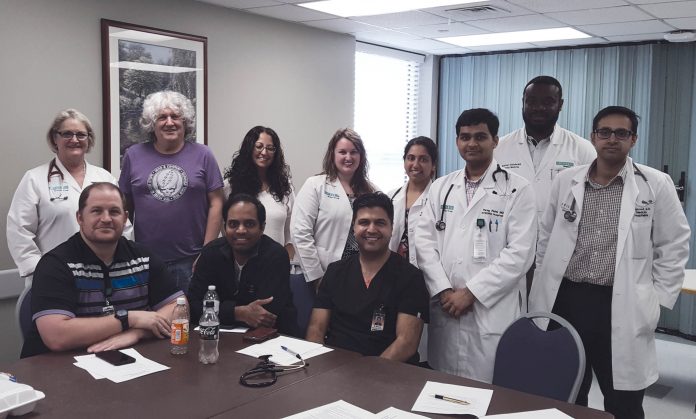
The hospitalist movement has arrived and it has transformed the care of hospitalized patients and the collaboration among healthcare professionals. For Integris Southwest Medical Center (ISMC) nurses and members of the Clinical Practice Council (CPC), having a close, professional relationship with our hospitalists is a must to improve the value of inpatient care. In the fifteen years since the hospitalist movement and quality movement began, our nurses have supported the initiative for 24/7 hospitalists in the hospital for a safer health care system. The engagement of collaboration is mutual between our nurses and hospitalists. Melodie Hopkins, Intermediate Care Team Lead for Integris Southwest Medical says, “The Hospitalist Group have respect for the nurses’ judgement and recommendations in patient care. We feel we now have a voice that is being heard.” ISMC’s Clinical Practice Council is instrumental in supporting nurses by introducing LEAN projects to curtail hospital costs, supporting evidence-based practice for maintaining the highest standard of patient care and raising funds for the celebration of the annual ‘Nurses Week’. This time of year, the CPC would normally be organizing a fund raiser for the special week’s celebration. But ISMC is about to transition to EPIC computer system and all the nurses are busy with extra educational classes. When the hospitalists became aware that this year’s nursing week might not be well celebrated due to lack of funds, they jumped into action.
Our hospitalists organized and are sponsoring the “Brushes and Bubbly.” This event will be a painting fun-raiser. The event is to be held May 25th, 2017 at Nosh Restaurant in Moore. Tickets for the event are $35.00 and all proceeds will go to the Clinical Practice Council. The Nurses of ISMC are grateful for the comradery of our wonderful hospitalists and we salute you: Mobolagi Olulade, M.D., Carolyn Pimsler, D.O., Jeanette Kelley, D.O., Nicole Dodson, D.O., Adrian Scaunasu, M.D., Abie John, M.D., Emenike Uba, M.D., Shiedeh Khodadadian, D.O., Ryan Morgan, D.O., Siddhartha Rangineni, M.D., Matthew Kallenberger, D.O, Mahdi Mussa, M.D., Ralph Shadid, M.D., Magesh Sathaiah, M.D., Dubari Ashraf, M.D., Susan Mathew, D.O., Paragkumar Patel, M.D.

Faith, Fire and Family: Chief watches over Moore

0
Fire Chief Gary Bird has helped guide the City of Moore through utter devastation and simultaneous unprecedented growth during his 30-plus year fire career.


by Bobby Anderson, Staff Writer

Three things immediately stand out when you walk into Moore Fire Chief Gary Bird’s office.
A black leather-bound Bible rests within arm’s reach on his desk.
A copy of The Wisdom of Solomon at Work sits across a nearby table.
Pictures of his three smiling grandkids perch behind him, framing the imposing figure that has helped guide the Oklahoma City suburb through its darkest times and into a period of unprecedented growth – all too often at the same time.
Faith, fire and family.
That’s about all you need to know about Bird, who has devoted more than 30 years of his life keeping his community safe.
On this day, Bird sits in a 19,000-square-foot fire station that doubles as the department’s administrative headquarters.
It’s one of four stations serving the needs of Oklahoma’s seventh-largest city, populated by more than 55,000 as of the last census.
Just looking out from one of the fire bays Bird sees that number growing daily. More than 1,000 apartments are springing up in the community and room is being cleared for even more. Big box stores like Target, Dick’s Sporting Goods, Home Depot and Lowe’s are now staples in a community that 10 years ago had none.
The City of Moore has come a long way, and so has Bird’s department, which just celebrated 100 years of services a few months ago.
EARLY DAYS
For nearly the first three decades of its existence, the City of Moore had very little fire protection. A public water well was dug at the intersections of Main and Broadway. When a fire broke out residents would form a bucket brigade handing off water.
Those first fire alarms came in the form of three pistol shots.
On July 18, 1916 the Moore Volunteer FIre Department was established. Paul R. Simms served as the first chief.
That November the town council passed a resolution to purchase a Badger chemical fire engine, which was hand drawn.
Simms added to that when he rebuilt an old Model-A Ford and kept it in a garage next to his barber shop on South Broadway.
Two years later the city’s first firehouse was built, a 10-foot by 10-foot building.
By the 1930s the council established the first Moore Firefighter’s Pension fund which provided for retirement for firefighters after 20 years of service.
It wasn’t until 1963 when the town started paying a full-time wage for firefighters, phasing out the volunteer brigade as each member retired.
Howard Boatman, Jr., holds the distinction as Moore’s last volunteer, retiring in 1977.
Bird would come along a little later.
August 12, 1985 was Bird’s first day on the job as a recruit. He spent 16 years on a rig before advancing to deputy chief and then chief in June 2012.
“It’s hard to believe it’s been 100 years,” Bird says. “Some days I feel like I’ve been here all one hundred. Then there’s days where it seems like I’ve been here no time at all.”
TOTAL DEVASTATION
Few fire departments in the country have been asked answer the call as often as Moore.
Over the last two decades two of the strongest tornadoes ever recorded struck the city. Five twisters in five years made the community a punchline for Mother Nature’s sometimes cruel humor. Massive rescue and recovery operations were undertaken each time.
The New York City Fire department is famous for what it went through during 9/11. That came from a 10,000-member fire department.
Currently, the Moore Fire Department has grown to 73 uniformed employees with a 66-member shift corps that rotates through 24-hour shifts.
People from around the country have rang Bird’s phone in the weeks and months after each disaster.
And they all want to know one thing: How did you do it?
“The guys were amazing,” Bird said. “We had off-duty guys coming in and we had a lot of them that just didn’t want to leave. The guys jumped right in there and stayed with it.”
“The people in this city are resilient,” Bird continued. “For people it’s home. We’ll build it back and go on. They just keep going. Some of this area has been hit by a tornado three times and the vast majority are still there.”
Bird is one of two employees that are on-call 24-hours a day, seven days a week, 365-days a year.
Bird’s department responds to more than 5,000 calls annually ranging from structure fires to medical emergencies.
Bird himself started his firefighting career as a volunteer in Ninnekah. He has tremendous respect for the individuals all across our country who volunteer to protect their communities.
He makes it a point to note there are more volunteer fire departments nationwide than paid departments and larger volunteer departments than the professional one he runs.
But he stays grounded and so do his men.
Faith, fire and family. It’s what it’s all about.

Quality of Life

0
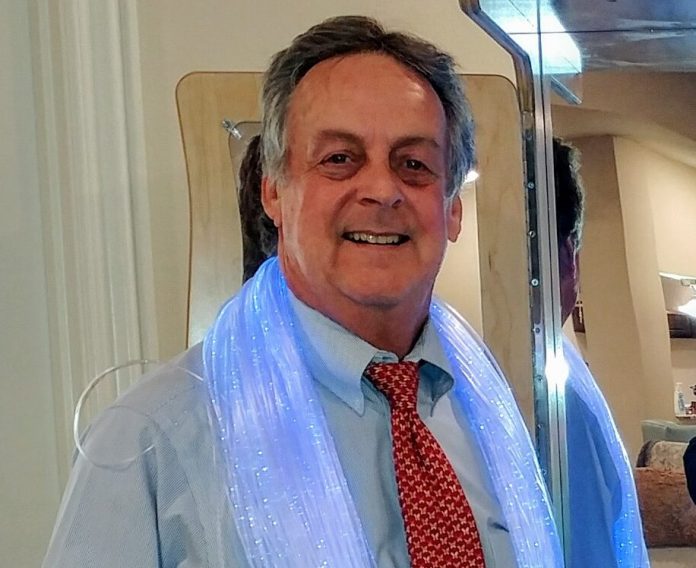
Ben Pearce wraps himself in fiber optics from Iris Memory Cares cutting edge Snoezelen Therapy Machine, “Quality of life is continuous and people expect and need to be engaged in that quality of life so they can remain positive, focused and enriched.” This unique portable unit helps residents do just that by incorporating lights, sounds and smells.

Iris Memory Care of Edmond Engages Residents

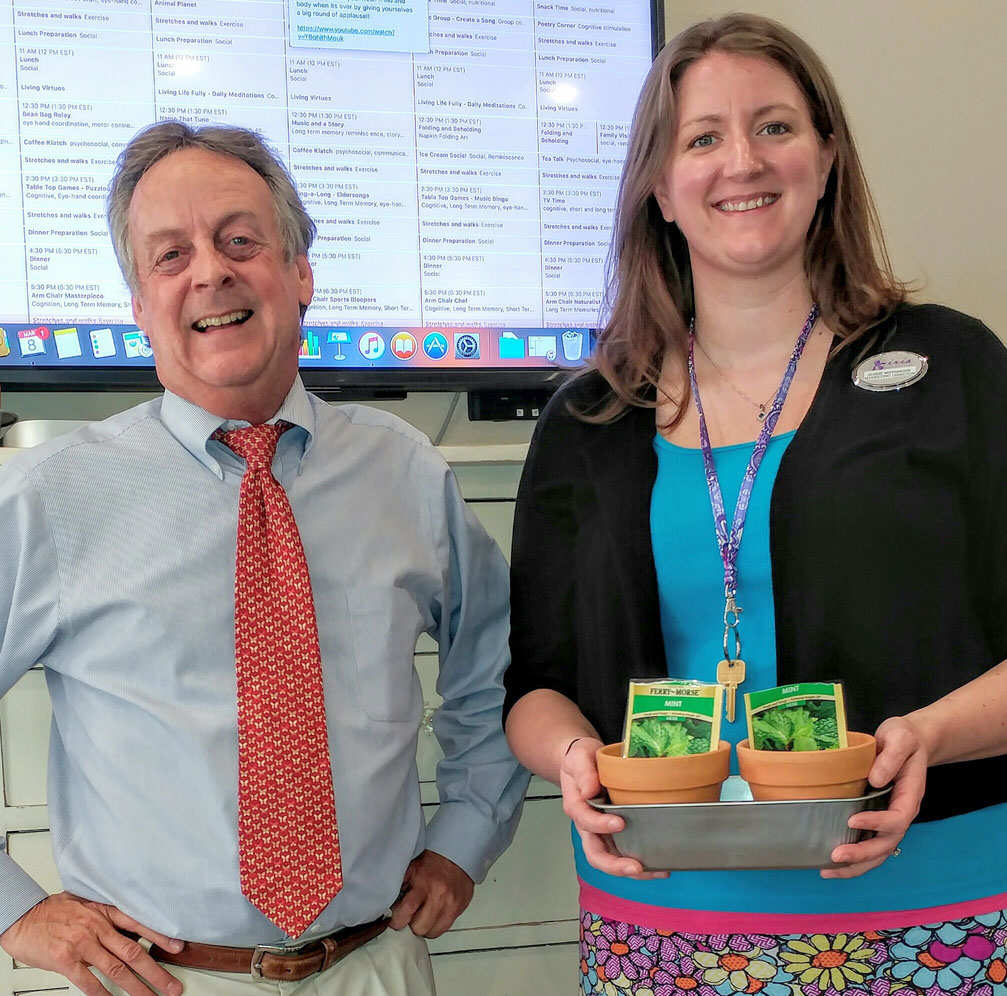
Ben Pearce, consultant for Iris Memory Care and world renowned expert and educator on Alzheimer’s and dementia visits with Jessie Motsinger, Marketing Director at Iris Memory care, while looking at residents spring gardening projects. Just one of the many enriching activities that help residents thrive.

by Bobby Anderson, Staff Writer

With a lifetime spent serving seniors battling age-related memory diseases, Ben Pearce noticed a pattern. Living options for people with Alzheimer’s or dementia issues focused on keeping them protected in environments that often separated them from the things they once lived for. So he devoted his life to finding ways to help people regain that happiness and helping them thrive.
“People are people and even though they have a disease it doesn’t mean they become the disease,” said Pearce, a recognized worldwide expert on the subject of aging. “They want as much engagement as you and I would. Our dementia program allows us to understand a person not only as someone who suffers from illness, but also as someone who inhabits healthy routines and a personality that remains even though it seems to be hidden by illness. Engaging the person behind the impairment allows activities to become therapy.”
With more than three decades of experience working with more than 200 communities in 36 states, Pearce also teaches on the subject at Johns Hopkins University. Pearce’s results in seeing through the fog of dementia to reach people are both innovative and groundbreaking and that’s why David Krukiel and Brandon Meszaros – owners and founders of Iris Memory Care of Edmond – engaged him to provide residents the best possible experience.
“Brandon and I sought high and low, all around the nation, to bring in the best operations team to make our mission of providing the best care for our residents a reality. Upon meeting Ben, it was an easy decision. We founded Iris Memory Care on three principles: Compassion, Dignity and Comfort. Ben not only understands our principles, he lives them!” said Krukiel. “Ben’s knowledge and hands-on-approach is a key component to ‘The Iris Difference’”.
THE IRIS DIFFERENCE
From the moment you walk through the front door you can tell Iris is different. The familiar sights, sounds, and aromas invite you to engage with your loved one in a comfortable, stimulating environment. The kitchen is traditionally known as the heart of the home, and at Iris Memory Care it serves as the heart of the community. The open-concept kitchen encourages residents and visitors to interact with cooks as they prepare classic dishes with fresh seasonal ingredients. Menus include meals your loved one will be familiar with, as well as family recipes shared by others. The food is only part of the dining experience; the sensory cues and social interactions that go along with each meal are equally important.
In the great room, a grand piano sets the tone for expression as residents, caregivers, and visitors are welcome to play. Countertops throughout are made of high-end granite, providing visual warmth and natural durability. Strikingly beautiful hardwood-like floors provide an elegant look while minimizing fall risks. Even the wall colors are specially chosen for their calming qualities.
PERSONAL PATH OF CARE
Krukiel and Meszaros understand residents experience the challenges of memory loss in different ways – and a routine that works well today may not be as effective tomorrow. That’s why Iris provides Personalized Paths of Care with the flexibility to adapt to the moment and be regularly updated with input from caregivers and nursing staff.
The Iris Memory Care approach to care revolves around four simple, yet powerful, factors:
· Getting to Know Your Loved One
When a new resident joins the Iris community, staff conducts a personal evaluation to identify your loved one’s cognitive function, social interaction, mobility challenges, special dietary needs, and more. Family members are welcome to attend the evaluation to offer insights about past events, personality traits, friends, relatives, hobbies, and other details that will help Iris staff connect with your loved one.
· Attentive Physical Care
From proper nutrition, hydration, and medication management to compassionate assistance with activities of daily life, the needs of your loved one are central to each care pathway. Once a Personalized Path of Care is created, staff works daily to strengthen their abilities and promote independence.
·Positive Social Engagement
An important point of difference for Iris Memory Care is the emphasis placed on making connections. Staff members visit each resident multiple times per day, and make it a point to facilitate connections among residents with similar interests. Outings to foster connections with the surrounding community are also offered.
· Sensory Enrichment
With memory impairment, activities that stimulate the senses and encourage hands-on participation can be invaluable ways to soothe or delight your loved one in the moment. Music and art play an important role in the care provided, as do stage-appropriate tasks.
Pearce has discovered the type of engagement offered at Iris is critical in helping residents thrive. “The industry standard is offering care with random activities. We’re reversing that paradigm to provide continuous therapeutic activities as our main focus, with the care that residents routinely need as supportive,” Pearce says. “This means we offer activities with care, not care with activities. Quality of life goes on all day long at Iris Memory Care. Quality of life is continuous and people expect and need to be engaged in that quality of life so they can remain positive, focused and enriched.”