Vampires are as deeply embedded in pop culture as their fangs are in the necks of their victims.
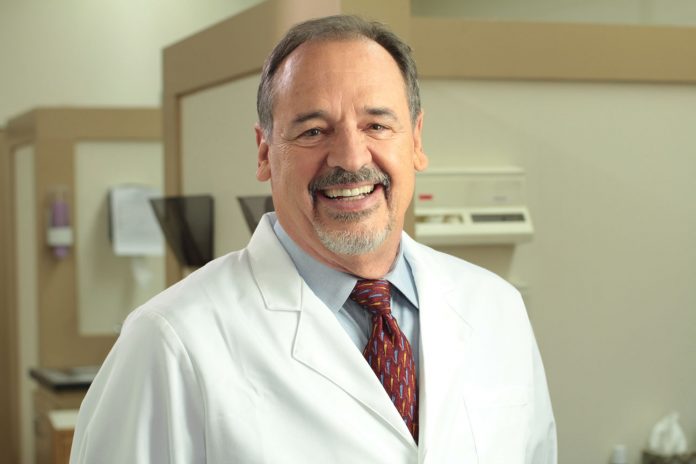
But before vampires became the darlings of TV and movies, their legends haunted folklore for centuries. According to Oklahoma Medical Research Foundation President Stephen Prescott, M.D., the origin of these creepy beliefs likely rises from a legitimate medical basis: disease.
“When a large group of people would die in a village, the true villain wasn’t a pale-skinned blood-sucker. It was something even more terrifying: microorganisms,” said Prescott, a vascular biologist and physician. “Vampires were often used as an explanation for diseases like smallpox or tuberculosis and other conditions that couldn’t be diagnosed at that time.”
This resulted in a huge swell of belief in vampires in the Middle Ages in Europe, as fast-moving diseases with no explanation swept through towns and villages.
“Without formal educations and modern science to clarify the situation, people grabbed onto something that made sense to them,” said Prescott. “People struggled with causes for illness and death long before we had medical research or modern science to make heads or tails of it.”
The most common physical depictions of vampires share a number of similarities with people who suffered from a rare group of blood diseases called porphyria.
“There are multiple manifestations, but in most cases, people are extremely light sensitive,” said Prescott. “A lot of them couldn’t tolerate the sun at all without severe blistering and deformities, enough to cause them to lose their fingertips or produce facial scarring.”
In addition, the facial mutilation often caused the skin to tighten and pull back, resulting in the appearance of fang-like teeth.
“There were bizarre things going on: They had abnormally long teeth, they slept during the day and came out at night because they couldn’t take sunlight,” said Prescott. “It serves to reason that this would play a role in the origin of the vampire legend. People would have seen them around and drawn their own conclusions of what was happening.”
Some of scarring and physical characteristics were also observed in exhumed corpses of the recently deceased, furthering the rise of the legend in Europe. Natural decay caused the lips and gums to lose fluid and contract, creating (or further exaggerating) the illusion of fangs. The skin also contracts in other parts of he body, causing a claw-like appearance to fingernails and longer hair.
“Vampires came from needing an explanation for why bad things were happening, and blaming disease and death on something that comes out at night and sucks your blood isn’t actually that far off,” said Prescott. “Just look at mosquitoes.”

Vampires: Sink your teeth into the origins of this Halloween legend

Special to SN&L: I want to be Tommy Howard
By: William McDonald/Author/Old Friends (Endless Love)
I want to know what it feels like to say, “I am Tommy Howard. I am 76 years old. I’ve lived in a 1997, 33-foot Airstream Class A motor home for 15 years and camped my way through 55 national parks, 49 states and 31 countries.”
I really want to say that.
But I can’t.
Because I can’t dance.
Tommy Howard can dance.
Like popcorn over a hot fire.
So I’m out. I cannot say, “I am Tommy Howard.”
But I can say I know him.
I can say I know of the time he white-knuckled his way down an Andes mountainside behind the wheel of a six-ton runaway Winnebago. I can say I know of the time he hiked up the side of an active volcano in Guatemala and I know of the time he woke up in the middle of a civil revolution in Peru.
I tell him it’s pretty amazing that he came out of all that alive.
“Life is a dance,” he says, waving his hand in the air like he’s shooing a fly. “Just keep moving your feet.”
He does a little North Carolina two-step.
Tommy Howard talks about the stars like they’re a thousand angels glowing in the dark. He talks about meeting a whale in Mexico that told him the meaning of life.
“So, what is the meaning of life?” (I had to ask).
“Beats me. I never learned to speak whale.”
He talks about a woman in his life that is? was? so special that, “I’d walk through hell wearing gasoline pajamas to get to her.”
He talks about beating cancer like it was a nuisance that had to be dealt with.
He drives a 1973 Jaguar XKE.
He hikes where most of us would be afraid to walk.
He has a glass of red wine every night.
He’s 76 years old.
He’ll dance till the music stops.
He’s just finished writing his autobiography, An Unexpected Journey. One reviewer spoke for a lot of us when she wrote:
I would read three or four pages of Tommy Howard’s book and then gaze off into space remembering and recalling those days in my past. The adventure, the excitement of waking up each morning to the wonders of what was going to happen next. And I cried and I mourned the death of my own hopes, dreams and expectations. Then I would pick up Tommy’s book and dream again.
I hear people say, “You’re never too old.”
I hear Tommy say, “You’re never old.”
I am privileged to know Tommy Howard, the 76-year old man who says life is a dance.
Years ago, another friend told me I would never get old if I would always remember to dance to the music of the child in my heart.
Maybe that’s the secret of life?
Learn to dance.
William McDonald is an Emmy Award winning writer and published author who, for more than 30 years, specialized in emotional communication in the broadcast industry. For several more years, he was a caregiver in assisted-living homes, memory-care homes and private homes, and it was there that he met many of the old friends who inspired these stories. He writes full time from his home in Colorado. Available at: www.oldfriendsendlesslove.com
Social Security Announces 0.3 Percent Benefit Increase for 2017
José M. Olivero
Monthly Social Security and Supplemental Security Income (SSI) benefits for more than 65 million Americans will increase 0.3 percent in 2017, the Social Security Administration announced today.
The 0.3 percent cost-of-living adjustment (COLA) will begin with benefits payable to more than 60 million Social Security beneficiaries in January 2017. Increased payments to more than 8 million SSI beneficiaries will begin on December 30, 2016. The Social Security Act ties the annual COLA to the increase in the Consumer Price Index as determined by the Department of Labor’s Bureau of Labor Statistics.
Some other adjustments that take effect in January of each year are based on the increase in average wages. Based on that increase, the maximum amount of earnings subject to the Social Security tax (taxable maximum) will increase to $127,200 from $118,500. Of the estimated 173 million workers who will pay Social Security taxes in 2017, about 12 million will pay more because of the increase in the taxable maximum.
Information about Medicare changes for 2017, when announced, will be available at www.Medicare.gov. For some beneficiaries, their Social Security increase may be partially or completely offset by increases in Medicare premiums.
The Social Security Act provides for how the COLA is calculated. To read more, please visit www.socialsecurity.gov/cola.
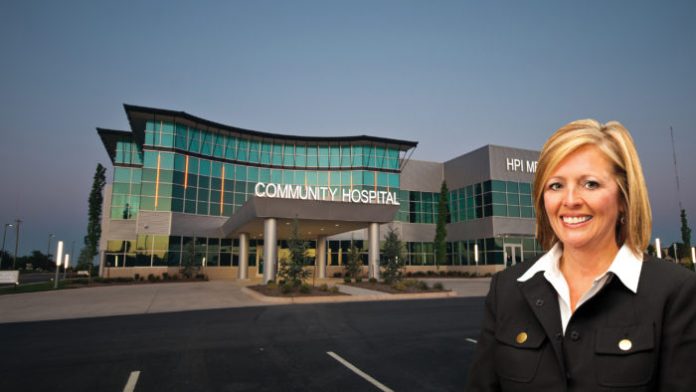
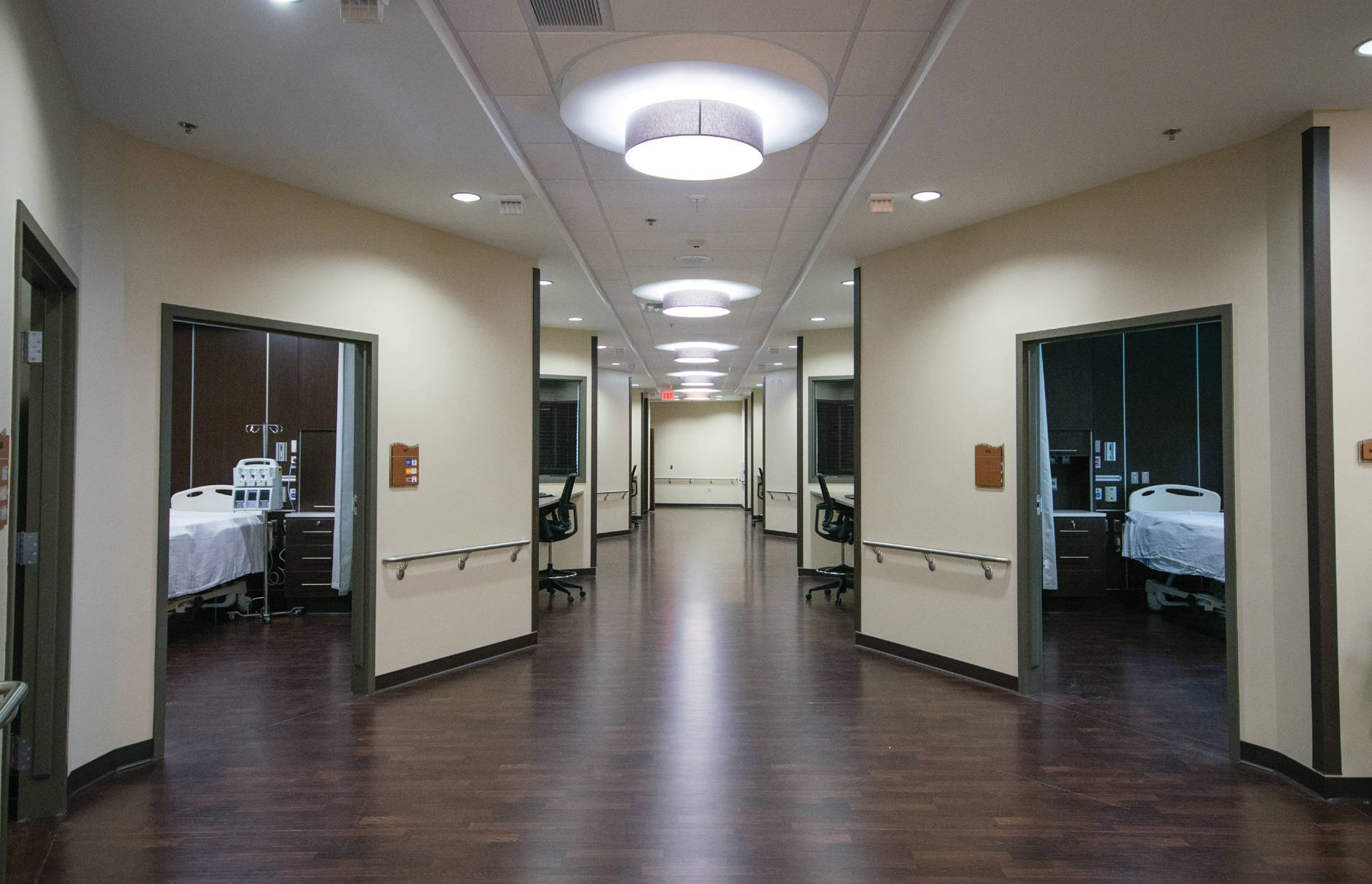
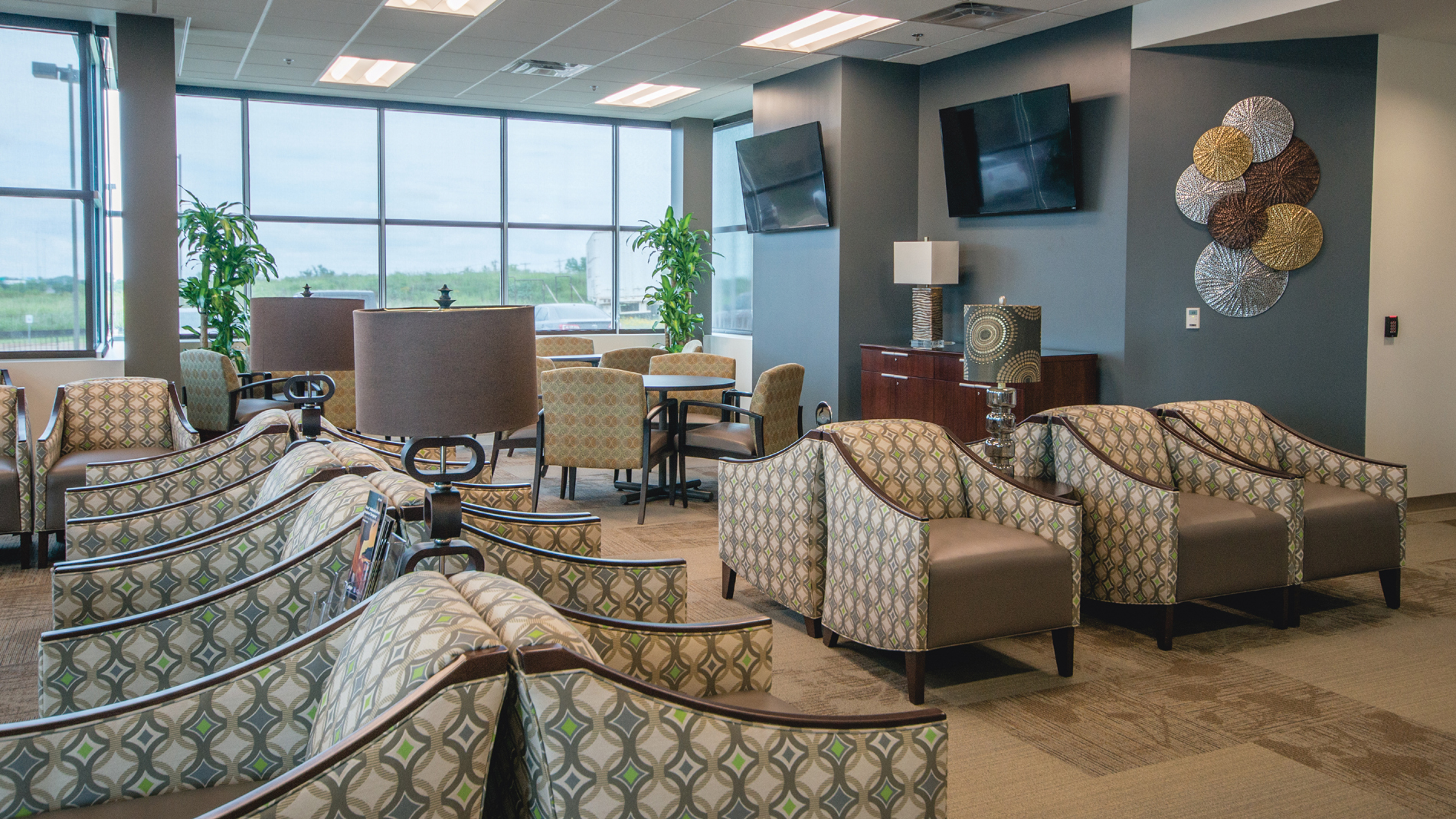
Community Hospital receives 5-star rating


by Bobby Anderson, Staff Writer
Unless you’ve been living under a rock you’ve realized that hospitals are being scrutinized by the Centers for Medicare and Medicaid Services like never before.
Care standards such as core measures are by now commonplace and improving Hospital Consumer Assessment of Healthcare Providers and Systems scores are keeping hospital executives up at night.
But for the first time this year hospitals in America who excelled in these areas were eligible for the coveted CMS five-star rating.
Community Hospital CEO Debbie Kearns, RN, recently learned her hospital received five stars.
“It’s pretty exciting,” Kearns said. “It reflects the hard work and commitment all of our team members have to providing safe, quality care.”
Community joins select company in Oklahoma with only Oklahoma Heart Hospital, McBride Orthopedic Hospital and Oklahoma Surgical Hospital in Tulsa earning five-star status.
“Community Hospital is committed to providing safe, quality care for every patient,” Kearns said. “Our physicians, nurses and other clinicians are committed to continually improve care. We appreciate the trust patients continue to place in our ability to meet the highest standards of care and are pleased that Community Hospital has achieved the top rating of five stars.
“The five-star rating is a direct reflection of the hard work and dedication of our team members and shows their true commitment to providing our patients with the best experience possible.
Our work doesn’t stop with this ranking, instead it serves to reinforce our mission of becoming the premier hospital in the country specializing in surgical care.”
The Overall Hospital Quality Star Rating is designed to help individuals, their family members, and caregivers compare hospitals in an easily understandable way. Over the past decade, the Centers for Medicare & Medicaid Services (CMS) has published information about the quality of care across the five different health care settings that most families encounter.
The new Overall Hospital Quality Star Rating summarizes data from existing quality measures publicly reported on Hospital Compare into a single star rating for each hospital, making it easier for consumers to compare hospitals and interpret complex quality information.
The methodology for the new Overall Hospital Quality Star Rating was developed with significant input from a Technical Expert Panel (TEP) and refined after public input.
CMS will continue to analyze the star rating data and consider public feedback to make enhancements to the scoring methodology as needed. The star rating will be updated quarterly, and will incorporate new measures as they are publicly reported on the website as well as remove measures retired from the quality reporting programs.
For Kearns and her hospital, which includes a new campus in North Oklahoma City, the five-star ranking was validation of what she sees every day.
“Our culture in our organization is one of hiring the best staff, the best team and to have the best group of doctors,” Kearns said. “Our goal of being a premier surgical hospital, if you don’t continue to maintain those quality initiatives and focus on the customers you can’t maintain that rating.”
Kearns has been notified that Community will receive the quarterly five-star rating again for the next quarter.
“Every employee has to be committed to providing that five-star experience for our customers,” Kearns said. “We don’t have any opportunities to sit back and provide less than an exceptional experience. When we hire employees we set that expectation and raise that bar really high.”
CMS collects the information on these measures through the Hospital Inpatient Quality Reporting (IQR) Program and Hospital Outpatient Quality Reporting (OQR) Program.
Hospitals are only assessed on the measures for which they submit data. Some of the measures used to calculate the Overall Hospital Quality Star Rating are based only on data from Medicare beneficiaries and some are based on data from hospitals’ general patient population, regardless of payer.
“Today, we are taking a step forward in our commitment to transparency by releasing the Overall Hospital Quality Star Rating,” CMS said in a statement. “We have been posting star ratings for different facilities for a decade and have found that publicly available data drives improvement, better reporting, and more open access to quality information for our Medicare beneficiaries.
“These star rating programs are part of the Administration’s Open Data Initiative which aims to make government data freely available and useful while ensuring privacy, confidentiality, and security.”
SSM Health, OU Medicine Unite to Create a Comprehensive Integrated Health Care Delivery Network
Working in partnership to enhance quality of care for all Oklahomans
To best serve the current and future health care needs of Oklahomans, SSM Health’s St. Anthony Hospitals and Physicians Group are partnering with the University of Oklahoma (OU) and the University Hospitals Authority and Trust (UHAT) to create a premier health care network. This combined network will partner with physicians to not only deliver exceptional health care, but also to advance transformative clinical research and provide innovative educational experiences for future physicians and health professionals.
“This is an exciting time for health care in Oklahoma,” said William P. Thompson, president and CEO, SSM Health. “As a part of SSM Health, the St. Anthony Hospitals and St. Anthony Physicians Group have a long history of providing high-quality, compassionate and personalized care. By coming together with OU Medicine, we will build upon our collective heritage of serving this community, while also striving to ensure that Oklahomans receive exceptional care for years to come.”
The combined resources of OU Medicine, UHAT and SSM Health include more than 23 Oklahoma hospitals and affiliates, including OU Medical Center, The Children’s Hospital and OU Medical Center Edmond, as well as St. Anthony Hospital in Oklahoma City, Bone and Joint Hospital at St. Anthony, and St. Anthony Shawnee Hospital.
As a part of the integrated delivery network, OU Physicians and St. Anthony Physicians Group, with a combined total of more than 1,100 physicians and providers, will work together to share best practices and clinical expertise with the goal of best coordinating patient care.
“Today, we begin a new era, focused on further elevating patient care, clinical research and health professions education for the benefit of all Oklahomans,” said OU President David L. Boren. “We will continue to bring Oklahomans the best health care throughout the state with the ongoing support of University Hospitals Authority and Trust and by combining OU’s highly respected Health Sciences Center with a leading health system, SSM Health.”
This new network brings together organizations that each represent more than 100 years of caring for Oklahomans. Established in 1898 as the first hospital in Oklahoma territory, St. Anthony Hospital’s community-based network of services includes St. Anthony Physicians Group as well as a network of 17 rural hospital affiliates. Founded just two years later, in 1900, the OU College of Medicine and its faculty physicians began training future doctors and conducting leading medical research. UHAT has supported the state’s teaching hospitals in Oklahoma City since 1993, helping to build state-of-the-art medical and research facilities.
“We are excited to open this new chapter with SSM Health,” said Mike Samis, chairman of the University Hospitals Authority and Trust. “During its history, the Trust has invested in health care in Oklahoma to advance the mission of our state teaching hospitals, helping to provide quality care to patients and train the doctors of tomorrow. We are appreciative to our HCA colleagues for a nearly 20-year relationship, during which we have expanded our range of services and enhanced our quality of care. Now, we look forward to continuing our role in collaboration with the University of Oklahoma and SSM Health.”
UHAT and SSM Health are committed to making significant investments in this new integrated network to ensure patients and caregivers continue to have access to the latest technology and state-of-the-art facilities. A capital plan is already under development and includes a new patient tower at OU Medical Center.
SSM Health and UHAT will share governance and financial responsibility in the network, with SSM Health managing the day-to-day operations. The transaction should be finalized within the first half of 2017, pending regulatory and other approvals. No state-appropriated funds will be used to create the new network.
The OU Medical System is currently managed by HCA, an investor-owned company based in Nashville. UHAT and HCA plan to end their relationship within the first half of 2017.
Public Health Officials Warn of an Early Start to the Influenza Season in Oklahoma
The Oklahoma State Department of Health (OSDH) began surveillance for seasonal influenza early this fall and is detecting laboratory confirmed cases of influenza among Oklahomans. In addition, there have been 14 influenza-associated hospitalizations since September 1, 2016, a total that is concerning at this point in the season. Cases of influenza illness have been geographically spread across the state and have occurred among people of all age groups.
Each week, a network of voluntary medical facilities and hospital laboratories report the number of patients that have been seen for influenza-like illness and the proportion of influenza tests that are positive for flu. Some positive samples are forwarded to the OSDH Public Health Laboratory for confirmation and for determining the type of infecting influenza virus strain. All hospitals and healthcare providers are required to report influenza-associated hospitalizations or deaths to the OSDH.
Symptoms of influenza usually consist of a sudden onset of fever, body aches, headache, sore throat, cough, and fatigue. Most persons affected by the flu require bed rest for 4-7 days to recover fully. Others may be at risk of serious complications of the flu, such as pneumonia, secondary bloodstream infections, or heart problems leading to hospitalization or even death.
To protect against the flu, an annual flu shot is recommended for everyone 6 months and older. Vaccination is especially important for persons at high-risk for severe complications from influenza infection including children less than five years of age, persons age 65 years and older, pregnant women, and persons with underlying medical conditions. Flu vaccination not only protects pregnant women, but also protects their babies for up to 6 months before they are old enough to be vaccinated. Influenza vaccination is safe during pregnancy, after delivery, and for breastfeeding women.
The importance of protecting yourself and those close to you by getting immunized cannot be overstated.
“If you haven’t done so already, now is the time to get your flu shot before influenza activity is elevated,” said OSDH State Epidemiologist Dr. Kristy Bradley. “While the flu shot does not completely prevent all cases of influenza illness, many studies have shown that it greatly reduces the risk of developing severe complications from influenza infection such as hospitalization and death, as well as shortening the duration of illness among people who got the flu vaccine compared to those who did not.”
In addition to getting your flu shot, the OSDH reminds you to follow these respiratory virus illness prevention tips:
Practice frequent hand hygiene using soap and water, or alcohol-based hand gels or wipes when hands are not visibly soiled
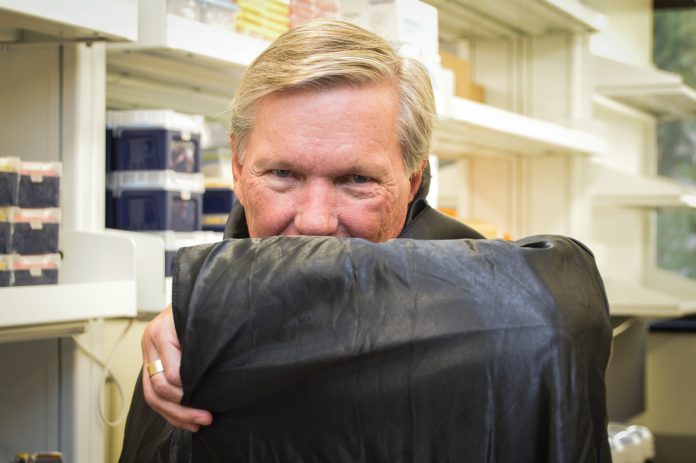
Make “respiratory hygiene” a habit, including use of tissues to cover coughs and sneezes, then disposing of them and performing hand hygiene right away. When tissues are not readily available, sneeze or cough into your sleeve — never your hands
Stay home from work, school, and other public places if you are sick with the flu.
Visit flu.health.ok.gov for the Flu View updates posted every Thursday at 10:00 a.m.
Nov/Dec AARP Drivers Safety Classes
Date/ Day/ Location/ Time/ Registration #/ Instructor
Nov 3/ Thursday/ Okla. City/ 9:30 am – 4 pm/ 951-2277/ Edwards
Integris 3rd Age Life Center – 5100 N. Brookline, Suite 100
Nov 4/ Friday/ Okla. City/ 9 am – 3:30 pm/ 621-8709/ Palinsky
Concordia Life Care Community – 7707 W. Britton Rd
Nov 5/ Saturday/ Chandler/ 9 am – 3:30 pm/ 258-5002/ Brase
1st Methodist Church – 122 West 10th, Church Basement
Nov 8/ Tuesday/ Midwest City/ 9 am – 3:30 pm/ 691-4091/ Palinsky Rose State, Tom Steed Center – 6191 Hudiberg Drive
Nov 11/ Friday/ Okla. City/ 9 am – 3:30 pm/ 951-2277/ Edwards
SW Medical Center – 4200 S. Douglas, Suite B-10
Nov 17/ Thursday/ Norman/ 9 am – 3:30 pm/ 307-3176/ Palinsky
Norman Regional Hospital – 901 N. Porter
Nov 18/ Friday/ Okla. City/ 9 am – 3:30 pm/ 752-3600 or 478-4587/ Reffner Mercy Hospital – 4300 W. Memorial Road / Palinsky
AARP State Office – 126 N. Bryant
Dec 1/ Thursday/ Okla. City/ 9:30 am – 4 pm/ 951-2277/ Palinsky
Integris 3rd Age Life Center – 5100 N. Brookline, Suite 100
The prices for the classes are: $15 for AARP members and $20 for Non-AARP. Call John Palinsky, zone coordinator for the Oklahoma City area at 405-691-4091 or send mail to: [email protected]
SAVVY SENIOR: Incentive Trusts Can Motivate Your Heirs
Dear Savvy Senior, What can you tell me about incentive trusts? I have two adult children that are financial disasters. Before I die, I want to put some type of requirements in place that they will need to follow in order to receive their portion of my estate. Otherwise, they’ll blow it all in the first year.
Troubled Parent
Dear Parent,
If you want to influence your family members even after you’re gone, an incentive trust is definitely an option to consider. Here’s how it works, along with some tips to help you create one.
Incentive Trust?
An incentive trust is an estate-planning tool designed to help prod your heirs in a direction you desire when you’re no longer around.
With an incentive trust, some or all of your assets are passed to your trust when you die rather than directly to your heirs. Your trustee is empowered to distribute funds from the trust only if and when your beneficiaries do whatever it is you have specified in the trust.
For example, an incentive trust might encourage a beneficiary to graduate from college, enter a particular profession, get married or even have children. They could also reward beneficiaries who do charitable work, or supplement the incomes of those who choose low-paying, yet meaningful careers like teaching or social work. Or, they could penalize beneficiaries who don’t work by cutting off or decreasing distributions, or placing restrictions on heirs with addictions by requiring that payments go directly to rehab centers.
But be aware that these types of trusts can also have drawbacks. A poorly constructed incentive trust can have a high risk of unintended consequences. For example, if your trust provides a financial incentive for your children to be employed full-time, but one of them gets sick or seriously injured in a car accident and can’t work, they would be punished unfairly.
You also need to know that incentive trusts aren’t cheap. You can expect to pay an attorney $2,500 to $5,000 to draft one.
There are also legal limits on what you can do with an incentive trust. While state laws vary, incentive trusts that encourage a beneficiary to join or leave a particular religion, or leave a spouse or not marry at all, can be challenged in court and possibly struck down.
How To Make One
To create a solid incentive trust that accomplishes what you envision, tell your estate-planning attorney that you want to include precise instructions that clearly spells out your wishes, but you also want to include language granting your trustee the right to use his or her discretion and that the trustee’s decisions should be final and binding.
This allows your trustee to make common sense rulings, which will reduce or eliminate the chances of unintended and unfair consequences. It also makes it very difficult for beneficiaries to successfully challenge the trust or trustee in court. When a trust grants final decision-making authority to its trustee, it becomes almost impossible for beneficiaries to successfully argue that this trustee is not correctly implementing the trust’s terms.
The key is to select a trustee who’s smart enough to interpret your intent and has sufficient backbone to stand up to beneficiaries when necessary. You also need to select a successor trustee too if your first choice can no longer serve. Fees paid to a trustee vary widely depending on the state’s fee schedules, the size and complexity of the trust, and conditions laid out in the trust.
Send your senior questions to: Savvy Senior, P.O. Box 5443, Norman, OK 73070, or visit SavvySenior.org. Jim Miller is a contributor to the NBC Today show and author of “The Savvy Senior” book.
Kolaches a labor of love, tradition, history

by Traci Chapman

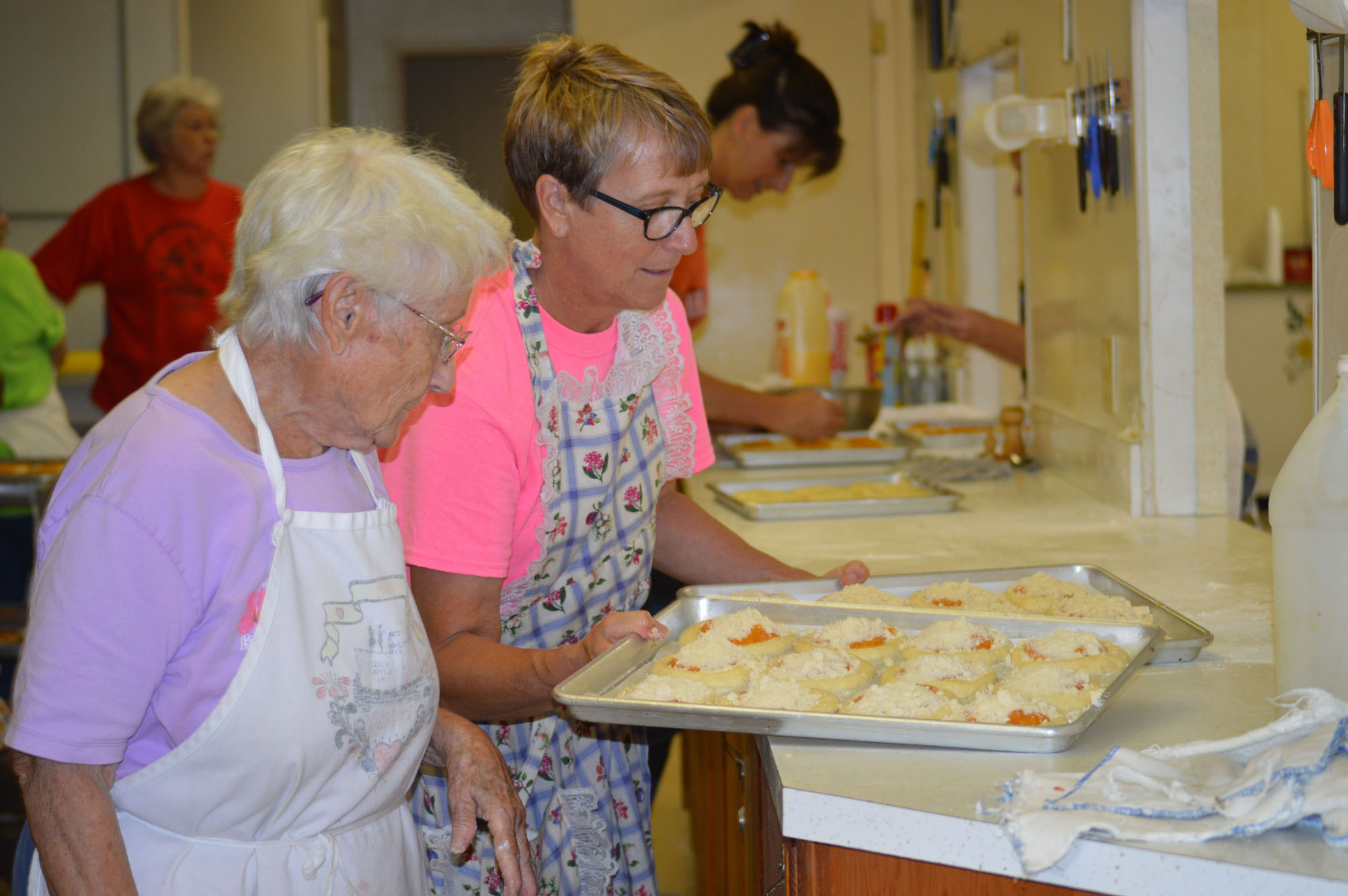
Yukon’s annual Oklahoma Czech Festival is a celebration not only of heritage, but also of history and tradition. Perhaps more than anywhere else that is illustrated by a decades-long practice – the traditional Czech pastry known as Kolaches.
Those delicacies are made by a group of people known for their love of history and a passion for baking, men and women who have been part of the effort, in some cases, their entire lives.
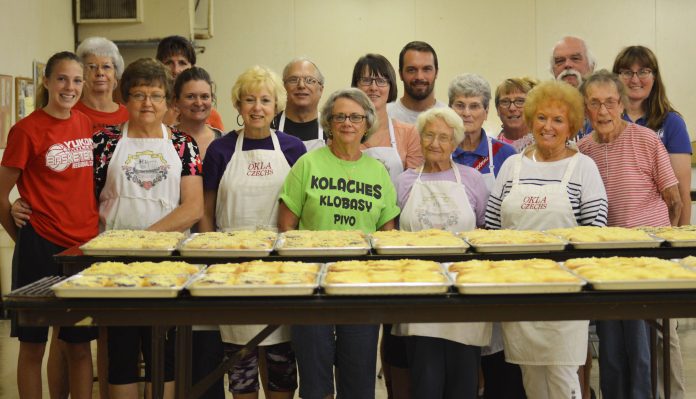
Janice Van Brunt is one of those veterans. Always known as an organized person, someone who always gets the job done, Van Brunt is a major piece in the puzzle that is the “Kolache Crew,” a group of bakers who have worked for more than 38 years to make sure their Czech delicacy is ready for the October festival.
“Janice is so good at bringing us all together and she has always had so much enthusiasm and love for what we do – it’s really difficult to imagine doing this without her,” Gloria Hlinicky said, as she scooped Kolaches off baking trays and onto cooling racks at Yukon’s Oklahoma Czech building.
Van Brunt and Hlinicky have both been part of the Kolache Crew, officially known as the “Tuesday Night Baking Club,” for decades – “longer than I’d like to remember,” Van Brunt said. While younger crew members have joined the effort over the years, many of those involved are, like Van Brunt and Hlinicky, bakers who spend hours upon hours annually preparing their regional pastry.
It’s no small effort – the group creates more than 30,000 Kolaches in the months leading up to the Czech Festival each year.
Kolaches first begin as balls of dough which raise three times before being flattened and stuffed with fillings. They bake about 20 minutes and then are brushed with butter – a lot of it – while still hot out of the oven. From there, the Kolaches are cooled and put into an industrial freezer until October.
The group begins baking in July, completing 100 dozen creations each Tuesday night, Van Brunt said. Incorporating traditional Czech recipes, they utilize only fruit or cream fillings for their delicacies – 15 different varieties, ranging from peach and apple to cherry and raspberry and any kind of flavor imaginable in between, Van Brunt said.
“We have a specific list of how many of each kind we make and we have lots of people who come back every year to get their favorite kind,” she said. “While we have many of the same group making them year after year, we also have many return customers the same way.”
While bakers put hundreds of hours into creating their Kolaches, the consumption of them can be quite different, Van Brunt said.
“We start selling them in the morning and many times they are gone in an hour, maybe a little bit more and sometimes even less,” she said. “We are always amazed at the line that forms even before anything opens.”
“If you think about 30,000 – 30,000! – Kolaches and they are gone in such a short time – it’s really a little overwhelming to me that they are that popular every single year,” baker Shirley Reed said.
June Calahan has also been a staple of the group for years, working on any project that needs to be done – rolling the dough or putting in the filling, taking trays out of the oven, even washing dishes and just giving moral support.
“June is one of our backbones, she is someone who just always makes our effort more fun and enjoyable,” Julia Mason said. “She’s someone who I’ve always looked up to and so do my children, which is really something wonderful – we are bringing in a new generation who sees the older generation and all it has accomplished.”
Many crew members were part of the original effort 38 years ago. Back then, they didn’t work together in an organized kitchen, but rather created pastries at home, bringing them to the festival individually. While that got the job done at that time, they said it’s a plan that would never work today.
“There’s no way – it’s just too much,” Reed said. “And I really think it would take away from what we are doing, the companionship we feel.”
“We are a fun group, but we get a lot done and we work together very well,” Janice Van Brunt said. “We are very serious about getting this done right and making sure we have what we need each year.”
As this year’s efforts come to a close, the crew is already looking forward to next year.
“It does get tiring and it is a lot, but it truly is a labor of love, and we’re very lucky to do it,” Calahan said.
Easy Dental takes friendly, affordable approach

by Bobby Anderson, Staff Writer
Ever been to the dentist’s office only to see the dentist pop his head in for a couple minutes and then hurry on to the next room?
When’s the last time you really talked to your dentist other than the few minutes when he has his hands in your mouth?
A dentist for nearly 30 years, Dr. Charles L. Goodwin saw how the practice of dentistry was ever-moving towards the business of dentistry.
It’s the reason he decided to retire.
But that love of people and joy of changing patients’ lives through the art of quality dentistry made retirement short-lived.
So when the Oklahoma City dentist returned to practice he hired Bobby Long as his director of business operations. It’s Long’s job to insulate Goodwin and grow the business while Goodwin focuses on his true passion.
And it shows in the way Oklahoma City’s Easy Dental Solutions has helped patients across the metro.
Easy Dental has three convenient locations covering the metro. The first is at 10001 S Pennsylvania Ave Ste M220. Easy Dental is also at 1100 North Mustang Road in Mustang and 4341 SE 15th Street in Del City.
In his previous practice, Goodwin felt that the business owned him.
“Now he’s at a point where he works to have fun and enjoy it,” Long said. “He is at a point in his life where he doesn’t work because he has to he works because he wants to.”
“That’s a real positive impact on the way he does dentistry.”
Long says it’s not uncommon for Goodwin to spend 30 to 45 minutes with a patient just to make them comfortable.
Goodwin has several dentists staffing his three locations.
Dr. Golnaz Naghdi received her Doctor of Dental Surgery from the University Of Oklahoma College Of Dentistry and graduated in 2007.
In 2010, she graduated from the prestigious Misch Surgical Implantology Institution and has been a member of the International Congress of Oral Implantologists since.
Dr. Jean Lee received her Doctor of Dental Surgery from the University of Oklahoma.
She understands that we all have different stories, different concerns, and different goals.
Dr. Leisha Everett, DDS graduated from the University of Oklahoma with a Doctor of Dental Surgery in 1993.
Easy Dental offers almosts every aspect of dentistry in-house and rarely encounters cases that it has to refer to other places.
Some of Easy Dental’s more popular services include:
WHITENING – This is the procedure of making teeth whiter, and therefore more attractive. Easy Dental uses several methods: Zoom!, passive tray whitening, and professional strength white strips.
Teeth typically become at least six to ten shades whiter, sometimes more.
VENEERS – Veneers are a dental procedure in which a covering is placed over the outside (visible area) of the tooth. Veneers are usually only done to the part of the teeth that are visible when talking or smiling. The procedure can be direct or indirect.
The advantage of veneers versus crowns is that much less tooth material is removed, and the procedure is generally less uncomfortable. Veneers are recommended for teeth that have large fillings or little tooth structure.
INVISALIGN – Invisalign straightens your teeth with a series of clear, virtually invisible custom-molded aligners. By using a series of clear, removable aligners, Invisalign straightens your teeth with results you’ll notice sooner than you think. The course of treatment involves changing aligners approximately every two weeks, moving your teeth into straighter position step by step, until you have a more beautiful smile.
DENTURES – There are different types of dentures, but they share their common function. They replace teeth that have become loose or been lost due to bone loss. When bone loss around the roots of teeth is great enough to loosen them or let them fall out, it’s time for dentures. Relax. No one enjoys losing their natural teeth, but you can still eat and talk regularly.
Dentures are fitted to go over or around whatever teeth remain in the mouth, depending on the type.
Often implants can used to further stabilize the dentures.
IMPLANTS – A dental implant is an option to replace a missing tooth. In this procedure, a small titanium shaft is surgically implanted into the bone and allowed to set. The bone grows around it forming a tight connection, which additionally slows or stops the bone loss that occurs when the root of a natural tooth is missing.
BRIDGES – This is an option for filling the space created by a missing tooth. It is formed to look like the missing tooth, and it takes its place in the mouth.
A bridge replaces the missing tooth, both functionally and cosmetically.
Now you know what dental problems you can face in the future. However, if you are suffering from any dental problems mentioned above, contact the Most Popular Dentist in Dubai.