Sunday, October 25, 2026

Nov/Dec AARP Drivers Safety Classes

0

Date/ Day/ Location/ Time/ Registration #/ Instructor
Nov 3/ Thursday/ Okla. City/ 9:30 am – 4 pm/ 951-2277/ Edwards
Integris 3rd Age Life Center – 5100 N. Brookline, Suite 100
Nov 4/ Friday/ Okla. City/ 9 am – 3:30 pm/ 621-8709/ Palinsky
Concordia Life Care Community – 7707 W. Britton Rd
Nov 5/ Saturday/ Chandler/ 9 am – 3:30 pm/ 258-5002/ Brase
1st Methodist Church – 122 West 10th, Church Basement
Nov 8/ Tuesday/ Midwest City/ 9 am – 3:30 pm/ 691-4091/ Palinsky Rose State, Tom Steed Center – 6191 Hudiberg Drive
Nov 11/ Friday/ Okla. City/ 9 am – 3:30 pm/ 951-2277/ Edwards
SW Medical Center – 4200 S. Douglas, Suite B-10
Nov 17/ Thursday/ Norman/ 9 am – 3:30 pm/ 307-3176/ Palinsky
Norman Regional Hospital – 901 N. Porter
Nov 18/ Friday/ Okla. City/ 9 am – 3:30 pm/ 752-3600 or 478-4587/ Reffner Mercy Hospital – 4300 W. Memorial Road / Palinsky
AARP State Office – 126 N. Bryant
Dec 1/ Thursday/ Okla. City/ 9:30 am – 4 pm/ 951-2277/ Palinsky
Integris 3rd Age Life Center – 5100 N. Brookline, Suite 100

The prices for the classes are: $15 for AARP members and $20 for Non-AARP. Call John Palinsky, zone coordinator for the Oklahoma City area at 405-691-4091 or send mail to: [email protected]

SAVVY SENIOR: Incentive Trusts Can Motivate Your Heirs

0

Dear Savvy Senior, What can you tell me about incentive trusts? I have two adult children that are financial disasters. Before I die, I want to put some type of requirements in place that they will need to follow in order to receive their portion of my estate. Otherwise, they’ll blow it all in the first year.
Troubled Parent
Dear Parent,
If you want to influence your family members even after you’re gone, an incentive trust is definitely an option to consider. Here’s how it works, along with some tips to help you create one.
Incentive Trust?
An incentive trust is an estate-planning tool designed to help prod your heirs in a direction you desire when you’re no longer around.
With an incentive trust, some or all of your assets are passed to your trust when you die rather than directly to your heirs. Your trustee is empowered to distribute funds from the trust only if and when your beneficiaries do whatever it is you have specified in the trust.
For example, an incentive trust might encourage a beneficiary to graduate from college, enter a particular profession, get married or even have children. They could also reward beneficiaries who do charitable work, or supplement the incomes of those who choose low-paying, yet meaningful careers like teaching or social work. Or, they could penalize beneficiaries who don’t work by cutting off or decreasing distributions, or placing restrictions on heirs with addictions by requiring that payments go directly to rehab centers.
But be aware that these types of trusts can also have drawbacks. A poorly constructed incentive trust can have a high risk of unintended consequences. For example, if your trust provides a financial incentive for your children to be employed full-time, but one of them gets sick or seriously injured in a car accident and can’t work, they would be punished unfairly.
You also need to know that incentive trusts aren’t cheap. You can expect to pay an attorney $2,500 to $5,000 to draft one.
There are also legal limits on what you can do with an incentive trust. While state laws vary, incentive trusts that encourage a beneficiary to join or leave a particular religion, or leave a spouse or not marry at all, can be challenged in court and possibly struck down.
How To Make One
To create a solid incentive trust that accomplishes what you envision, tell your estate-planning attorney that you want to include precise instructions that clearly spells out your wishes, but you also want to include language granting your trustee the right to use his or her discretion and that the trustee’s decisions should be final and binding.
This allows your trustee to make common sense rulings, which will reduce or eliminate the chances of unintended and unfair consequences. It also makes it very difficult for beneficiaries to successfully challenge the trust or trustee in court. When a trust grants final decision-making authority to its trustee, it becomes almost impossible for beneficiaries to successfully argue that this trustee is not correctly implementing the trust’s terms.
The key is to select a trustee who’s smart enough to interpret your intent and has sufficient backbone to stand up to beneficiaries when necessary. You also need to select a successor trustee too if your first choice can no longer serve. Fees paid to a trustee vary widely depending on the state’s fee schedules, the size and complexity of the trust, and conditions laid out in the trust.

Send your senior questions to: Savvy Senior, P.O. Box 5443, Norman, OK 73070, or visit SavvySenior.org. Jim Miller is a contributor to the NBC Today show and author of “The Savvy Senior” book.

Kolaches a labor of love, tradition, history

0
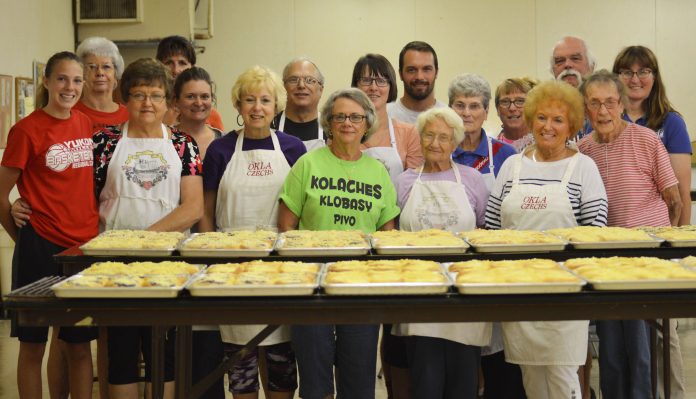
The “Kolache Crew” with a batch of the more than 30,000 Kolache they baked for this year’s Oklahoma Czech Festival.

by Traci Chapman

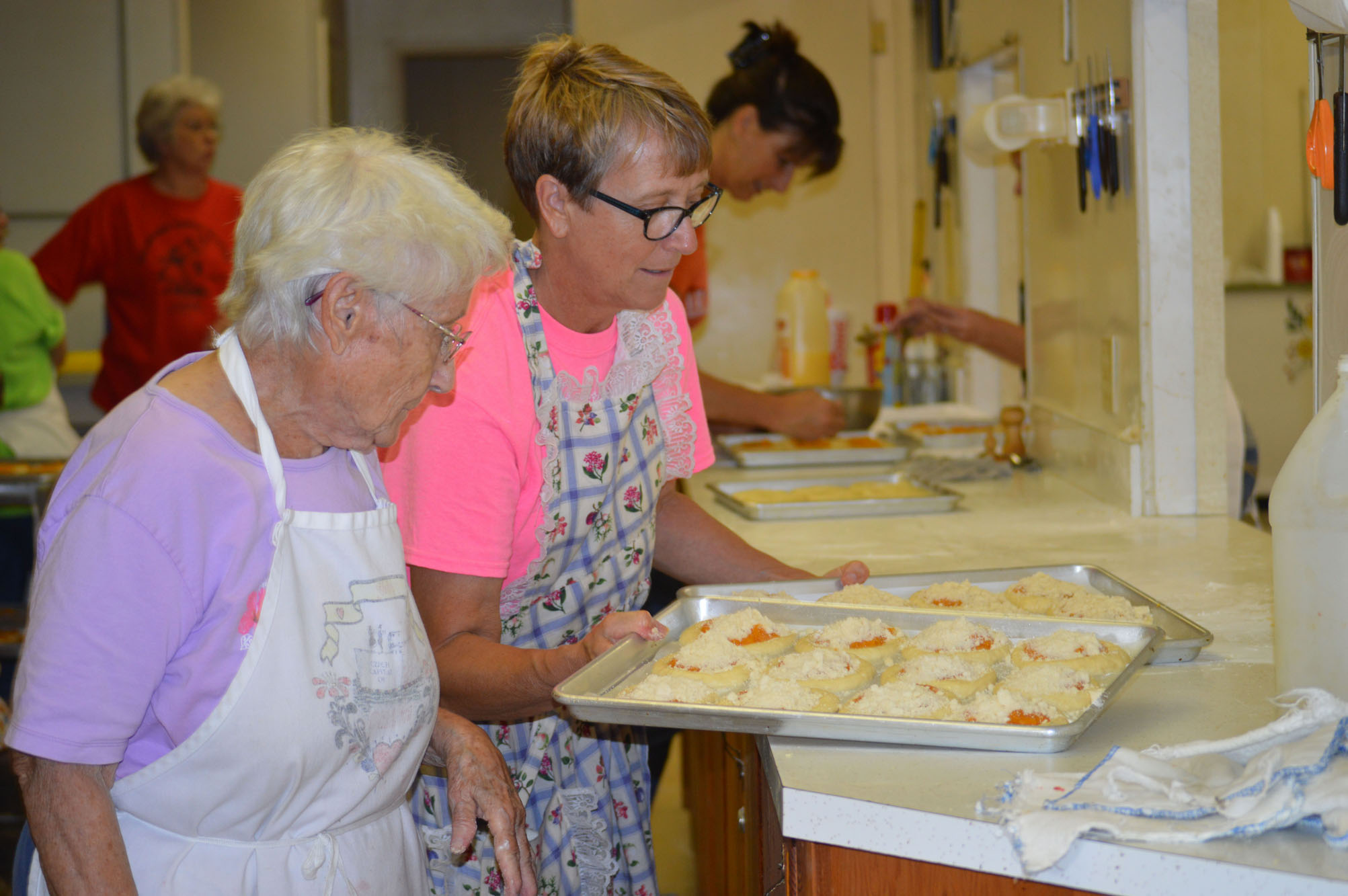
June Calahan and Julia Mason get ready to put Kolaches in the oven.

Yukon’s annual Oklahoma Czech Festival is a celebration not only of heritage, but also of history and tradition. Perhaps more than anywhere else that is illustrated by a decades-long practice – the traditional Czech pastry known as Kolaches.
Those delicacies are made by a group of people known for their love of history and a passion for baking, men and women who have been part of the effort, in some cases, their entire lives.
Janice Van Brunt is one of those veterans. Always known as an organized person, someone who always gets the job done, Van Brunt is a major piece in the puzzle that is the “Kolache Crew,” a group of bakers who have worked for more than 38 years to make sure their Czech delicacy is ready for the October festival.
“Janice is so good at bringing us all together and she has always had so much enthusiasm and love for what we do – it’s really difficult to imagine doing this without her,” Gloria Hlinicky said, as she scooped Kolaches off baking trays and onto cooling racks at Yukon’s Oklahoma Czech building.
Van Brunt and Hlinicky have both been part of the Kolache Crew, officially known as the “Tuesday Night Baking Club,” for decades – “longer than I’d like to remember,” Van Brunt said. While younger crew members have joined the effort over the years, many of those involved are, like Van Brunt and Hlinicky, bakers who spend hours upon hours annually preparing their regional pastry.
It’s no small effort – the group creates more than 30,000 Kolaches in the months leading up to the Czech Festival each year.
Kolaches first begin as balls of dough which raise three times before being flattened and stuffed with fillings. They bake about 20 minutes and then are brushed with butter – a lot of it – while still hot out of the oven. From there, the Kolaches are cooled and put into an industrial freezer until October.
The group begins baking in July, completing 100 dozen creations each Tuesday night, Van Brunt said. Incorporating traditional Czech recipes, they utilize only fruit or cream fillings for their delicacies – 15 different varieties, ranging from peach and apple to cherry and raspberry and any kind of flavor imaginable in between, Van Brunt said.
“We have a specific list of how many of each kind we make and we have lots of people who come back every year to get their favorite kind,” she said. “While we have many of the same group making them year after year, we also have many return customers the same way.”
While bakers put hundreds of hours into creating their Kolaches, the consumption of them can be quite different, Van Brunt said.
“We start selling them in the morning and many times they are gone in an hour, maybe a little bit more and sometimes even less,” she said. “We are always amazed at the line that forms even before anything opens.”
“If you think about 30,000 – 30,000! – Kolaches and they are gone in such a short time – it’s really a little overwhelming to me that they are that popular every single year,” baker Shirley Reed said.
June Calahan has also been a staple of the group for years, working on any project that needs to be done – rolling the dough or putting in the filling, taking trays out of the oven, even washing dishes and just giving moral support.
“June is one of our backbones, she is someone who just always makes our effort more fun and enjoyable,” Julia Mason said. “She’s someone who I’ve always looked up to and so do my children, which is really something wonderful – we are bringing in a new generation who sees the older generation and all it has accomplished.”
Many crew members were part of the original effort 38 years ago. Back then, they didn’t work together in an organized kitchen, but rather created pastries at home, bringing them to the festival individually. While that got the job done at that time, they said it’s a plan that would never work today.
“There’s no way – it’s just too much,” Reed said. “And I really think it would take away from what we are doing, the companionship we feel.”
“We are a fun group, but we get a lot done and we work together very well,” Janice Van Brunt said. “We are very serious about getting this done right and making sure we have what we need each year.”
As this year’s efforts come to a close, the crew is already looking forward to next year.
“It does get tiring and it is a lot, but it truly is a labor of love, and we’re very lucky to do it,” Calahan said.

Easy Dental takes friendly, affordable approach

0
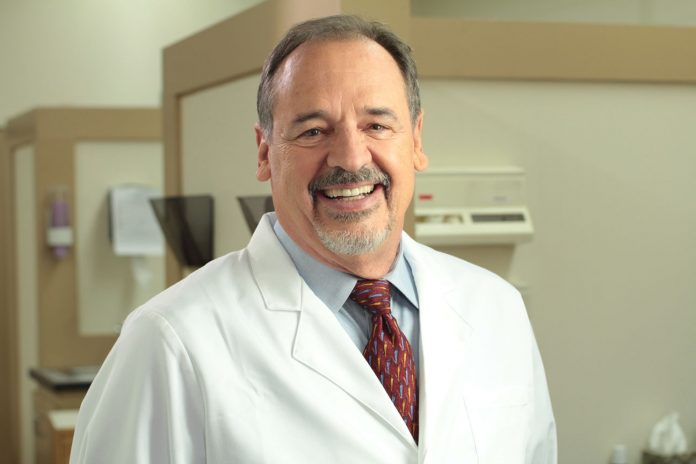
Dr. Charles L. Goodwin, DDS, has continued his passion for providing friendly, affordable dentistry for nearly three decades.

by Bobby Anderson, Staff Writer

Ever been to the dentist’s office only to see the dentist pop his head in for a couple minutes and then hurry on to the next room?
When’s the last time you really talked to your dentist other than the few minutes when he has his hands in your mouth?
A dentist for nearly 30 years, Dr. Charles L. Goodwin saw how the practice of dentistry was ever-moving towards the business of dentistry.
It’s the reason he decided to retire.
But that love of people and joy of changing patients’ lives through the art of quality dentistry made retirement short-lived.
So when the Oklahoma City dentist returned to practice he hired Bobby Long as his director of business operations. It’s Long’s job to insulate Goodwin and grow the business while Goodwin focuses on his true passion.
And it shows in the way Oklahoma City’s Easy Dental Solutions has helped patients across the metro.
Easy Dental has three convenient locations covering the metro. The first is at 10001 S Pennsylvania Ave Ste M220. Easy Dental is also at 1100 North Mustang Road in Mustang and 4341 SE 15th Street in Del City.
In his previous practice, Goodwin felt that the business owned him.
“Now he’s at a point where he works to have fun and enjoy it,” Long said. “He is at a point in his life where he doesn’t work because he has to he works because he wants to.”
“That’s a real positive impact on the way he does dentistry.”
Long says it’s not uncommon for Goodwin to spend 30 to 45 minutes with a patient just to make them comfortable.
Goodwin has several dentists staffing his three locations.
Dr. Golnaz Naghdi received her Doctor of Dental Surgery from the University Of Oklahoma College Of Dentistry and graduated in 2007.
In 2010, she graduated from the prestigious Misch Surgical Implantology Institution and has been a member of the International Congress of Oral Implantologists since.
Dr. Jean Lee received her Doctor of Dental Surgery from the University of Oklahoma.
She understands that we all have different stories, different concerns, and different goals.
Dr. Leisha Everett, DDS graduated from the University of Oklahoma with a Doctor of Dental Surgery in 1993.
Easy Dental offers almosts every aspect of dentistry in-house and rarely encounters cases that it has to refer to other places.
Some of Easy Dental’s more popular services include:
WHITENING – This is the procedure of making teeth whiter, and therefore more attractive. Easy Dental uses several methods: Zoom!, passive tray whitening, and professional strength white strips.
Teeth typically become at least six to ten shades whiter, sometimes more.
VENEERS – Veneers are a dental procedure in which a covering is placed over the outside (visible area) of the tooth. Veneers are usually only done to the part of the teeth that are visible when talking or smiling. The procedure can be direct or indirect.
The advantage of veneers versus crowns is that much less tooth material is removed, and the procedure is generally less uncomfortable. Veneers are recommended for teeth that have large fillings or little tooth structure.
INVISALIGN – Invisalign straightens your teeth with a series of clear, virtually invisible custom-molded aligners. By using a series of clear, removable aligners, Invisalign straightens your teeth with results you’ll notice sooner than you think. The course of treatment involves changing aligners approximately every two weeks, moving your teeth into straighter position step by step, until you have a more beautiful smile.
DENTURES – There are different types of dentures, but they share their common function. They replace teeth that have become loose or been lost due to bone loss. When bone loss around the roots of teeth is great enough to loosen them or let them fall out, it’s time for dentures. Relax. No one enjoys losing their natural teeth, but you can still eat and talk regularly.
Dentures are fitted to go over or around whatever teeth remain in the mouth, depending on the type.
Often implants can used to further stabilize the dentures.
IMPLANTS – A dental implant is an option to replace a missing tooth. In this procedure, a small titanium shaft is surgically implanted into the bone and allowed to set. The bone grows around it forming a tight connection, which additionally slows or stops the bone loss that occurs when the root of a natural tooth is missing.
BRIDGES – This is an option for filling the space created by a missing tooth. It is formed to look like the missing tooth, and it takes its place in the mouth.
A bridge replaces the missing tooth, both functionally and cosmetically.

Now you know what dental problems you can face in the future. However, if you are suffering from any dental problems mentioned above, contact the Most Popular Dentist in Dubai.

Oklahoma Strong Torch Award illustrates customer commitment

0
Brad Elder, Oklahoma Strong Roofing & Construction owner, with his Better Business Bureau International Torch Award for Ethics.

by Traci Chapman

No matter what Brad Elder has done in his life, he’s always lived by one abiding principle – “be honest and sincere and do the right thing.”
That philosophy has resonated with customers, who recently propelled Elder’s Yukon-based company, Oklahoma Strong Roofing & Construction, to its receipt of the Better Business Bureau’s Torch Award.
“Torch Awards, officially the International Torch Awards for Ethics, are given to companies that demonstrate the best practices in character and leadership, as well as organizational ethics and high standards that benefit not only their customers, but also their communities, their suppliers, employees and shareholders,” said Sheila Adkins, Better Business Bureau community outreach manager. “They’re a way of advancing trust in the marketplace, which is one of BBB’s missions.”
That award – and what it represents – is why Elder began Oklahoma Strong, he said.
“I’ve found in this business that it can be very easy to find someone to do an inexpensive job, even offer things that aren’t ethical, but the important thing is to find a company that will do the job right,” Elder said. “If you do that, ironically, you won’t be coming back to me for more business because you won’t need a new roof.”
While roof installation is part of Oklahoma Strong’s mission, it’s far from all of it, Elder said. Oklahoma Strong’s hail restoration contractors address issues with gutters, siding, windows, garage doors, paint and more – anything that could be part of a homeowners’ insurance claim.
“It could be one of those little gnomes in the garden that might be precious to someone – we inspect to make sure we find all that’s wrong so we can present a full package to the insurance company and make sure the homeowner is fully covered and protected,” Elder said.
The 59-year-old business owner has worked in service industries his entire life, even as a youth. His own grounds keeping and maintenance company, begun as a high school senior to fund college, grew into a 25-employee firm that Elder in 1997 sold to a large regional company.
He then went into telecommunication sales – at a time when long distance services were a big seller. After a year as an independent agent, Elder was promoted to corporate recruiting and mentorship, eventually managing 400 sales representatives.
It was in 2010, however, that a personal event would prompt a complete professional evolution.
“We were renovating our house and were out of town for a wedding when we got a call – a contractor had put in a faulty light fixture and there was a fire in the house,” Elder said. “About one-third was fire damaged, the rest with smoke and water.”
The rebuild of his own home brought Elder face-to-face with contractors, many of whom he watched cut corners and use substandard materials. As the process moved forward, he began to see a light – what he was meant to do, he said.
“I had a friend who said I needed to get into roofing sales, and I had done that, but I saw the same thing in my job as I did at my house – and I knew the only way I could fix it was to start my own company – so I did,” Elder said.
Thus, Oklahoma Strong Roofing & Construction was born.
“Trust is the major factor, the thing I most want to convey to my customers,” he said. “We don’t use substandard materials, we don’t use previously used materials, and we make sure the job is done right – and that’s why we received the Torch Award and why we’ve received the testimonials we have.”
While many roofing companies might re-roof 500, even 1,000, buildings annually, Elder has held the number of his jobs back to about 100 to 150 a year, he said.
“That way I’m able to have my hand in every single one of them,” Elder said. “I want to make sure that I am involved in the process every step of the way and that the homeowners have complete access to me and know exactly who they are dealing with.”
Oklahoma Strong has four full-time employees and a regular crew that performs the actual roofing services. That means every project is the company’s sole focus as it’s being performed – because no more than one roof is being constructed at any one time.
“I’m just one little portion of their life, but for me they’re all I’ve got going on, so I want to make sure it’s as painless as possible for them,” Elder said. “That’s why people are happy with us, and that’s how I want it to stay.”

November election holds major ramifications

0
Sen. Clark Jolley is one of the supporters behind State Question 792 which would allow wine to be sold in Oklahoma’s grocery stores.

by Bobby Anderson, Staff Writer

The presidential election isn’t the only thing voters in Oklahoma will have a chance to decide this November.
A penny sales tax for education, the right to farm and selling wine in grocery stores are just a few of the issues that will also be decided when voters go to the polls on November 8.
Seven state questions have made their way to the ballot and several are being hotly contested by the different sides.
Here’s a quick look at both sides of each issue.
State Question 776
This state question involves Oklahoma’s right to exercise the death penalty.
The language allows the Oklahoma Legislature to be expressly empowered to designate any method of execution not prohibited by the United States Constitution.
Opponents argue a state question to amend the constitution is unneeded.
State Question 777
One of the more hotly contested items on the ballot, SQ 777 has been touted as the right to farm bill. Opponents call it the right to harm bill.
Oklahoma Farm Bureau, the Oklahoma Cattleman’s Association and the Oklahoma Pork Council are three of the largest supporters of the question.
“SQ 777 will protect our ability to use science based production methods to humanely produce food and fiber,” said Terry Detrick, president of the American Farmers & Ranchers/Oklahoma Farmers Union. “We are in a daily struggle with adverse weather conditions, burdensome regulations and contrary markets. SQ 777 will lend stability to our industry by encouraging younger generations to be involved in agriculture without worrying about outside influences with an anti-agriculture agenda.”
Opponents of 777 call it a “wolf in sheep’s clothing” and are backed by the Sierra Club and the Humane Society of the United States.
The Edmond City Council formally passed a resolution opposing State Question 777 earlier this year and former University of Oklahoma Coach Barry Switzer has also announced he is in opposition.
State Question 779
Oklahoma has one of the worst-funded education systems in the nation. State Question 779 looks to help remedy this by creating a limited purpose fund to increase funding for public education through a penny sales tax.
The revenue to be used for public education shall be allocated: 69.50% for common school districts, 19.25% for the institutions under the authority of the Oklahoma State Regents for Higher Education, 3.25% for the Oklahoma Department of Career and Technology Education, and 8% for the State Department of Education.
It also requires teacher salary increases funded by this measure raise teacher salaries by at least $5,000 over the salaries paid in the year prior to adoption of this measure.
Opponents don’t like the idea of taxing Oklahomans further under any circumstances
State Question 780
This measure amends existing Oklahoma laws and would change the classification of certain drug possession and property crimes from felony to misdemeanor. It would make possession of a limited quantity of drugs a misdemeanor.
Proponents say it will ease prison overcrowding. Opponents fear lower charges would be less of a deterrent.
State Question 781
This question piggybacks on the above question.
This measure creates the County Community Safety Investment Fund, only if voters approve State Question 780, the Oklahoma Smart Justice Reform Act. Any savings realized by the state would be distributed to counties for community rehab programs.
State Question 790
After the removal of a Ten Commandments statue from the Oklahoma Capitol grounds, this question arose.
If this measure repealing Article 2, Section 5 is passed, the government would still be required to comply with the Establishment Clause of the United States Constitution, which is a similar constitutional provision that prevents the government from endorsing a religion or becoming overly involved with religion.
Oklahoma’s constitution currently prohibits the government from using public money or property for the direct or indirect benefit of any religion or religious institution.
State Question 792
This question would allow the sale of wine in grocery stores and convenience stories while also allowing liquor stores to sell items other than alcoholic beverages in limited amounts.

Sen. Clark Jolley is a supporter for a number of reasons.
“It means tremendously increased convenience for (seniors),” Jolley said. “I think that’s something that will really appreciate and enjoy having.”
The issue is also one of modernization for Jolley, who terms Oklahoma liquor laws as oftentimes “fuddy duddy.”
“For Oklahoma to modernize our laws to really come into conformity with the rest of the country … will have a great impact on us having our young people want to be in Oklahoma,” Jolley said. “I think that’s a huge testament to why we should modernize our laws.”

VA Town Hall a way to reach out

0
Oklahoma City VA Medical Center Director Wade Vlosich speaks to attendees of a Sept. 21 Town Hall.

story and photo by Traci Chapman

Oklahoma Department of Veterans Affairs administrators say a lot has improved in the VA’s reboot, but there is a long way to go – for patients and employees alike.
“We are very much on a learning curve, working to make the VA experience the best we possibly can for our veterans and their families, while we make sure our employees are happy and fulfilled, because that’s the way to make sure they are dedicated to giving the best care possible to our patients,” Oklahoma City VA Medical Center Director Wade Vlosich said.
The director’s comments were made during a Sept. 21 Town Hall, attended by dozens of veterans and staff members. Aimed at addressing both patient and staff concerns, the meeting was part of an effort to help move beyond years of bad press involving long wait times for care, employee concerns about hospital leadership and more at VA centers across the country. And, while the Town Hall gave individuals a chance to air ongoing issues, it was also a sign of a change in philosophy at the center, staff said.
“We are all working to make sure we are an active part of what we’re calling the ‘New VA,’” said Darrell Long, hospital specialty clinic float nurse. “We all know there is a bad perception out there, and we’re working to change that.”
Vlosich is a big part of that change, staff said. Joining the Oklahoma City VA facility in May, Vlosich is the first “permanent” director named in more than four years. With staff having no stable leadership to look to or lean on, Vlosich said it was difficult to provide both the kind of atmosphere needed for happy and quality employees, as well as the best in patient care.
“You just can’t make it work without stable and dedicated long-term leadership,” Vlosich said. “The quality of care we do offer is a testament to our employees – but now we owe them more too.”
That staff cares for more than 61,000 veterans annually, this year that number jumping by more than 3,000 over the number of patients seen two years ago, Vlosich said. The center’s $460 million budget funds a 192-bed hospital and emergency room operations, as well as a myriad variety of specialty clinics, including extensive mental health facilities. The VA also administers community centered outpatient clinics in north Oklahoma City, Lawton, Ada, Wichita Falls, Blackwell, Ardmore, Altus, Enid and Stillwater.
Employees have worked hard to address issues with wait times in all areas of the facility, something that’s been a longtime problem, Vlosich said. But, while the director has his work cut out for him in his new position, the challenge isn’t anything new. Before coming to Oklahoma City, he served as director of Harry S. Truman Memorial Veterans’ Hospital in Columbia, Missouri, for more than two years – a facility that before his arrival had been under “significant” fire for serious patient care issues.
“It was certainly a challenge, but we made some real improvement, and I know we will do the same – and better – here,” Vlosich said.
Like the Missouri facility, Vlosich said Oklahoma City has a major asset, its employees, and they are the primary key in hastening the forward strides needed to improve service.
“We are very lucky to have people with amazing dedication and talent, people like our specialty clinic chief, Terri Sharp,” the director said. “She and her staff have elevated our nursing services and make a huge difference in the lives of their patients.”
Those efforts have made a difference, with primary care waits dropping from seven days to three days, mental health from three days to two days and specialty care decreasing from 12 days to 11 days, Vlosich said.
“Obviously, that’s an improvement, but we have lots of room for more advancement,” he said.
Another frustration has been aged facilities, including inadequate parking for both staff and patients. Crews are working on a first and second floor clinic expansion, which will add 8,000 square feet and renovate another 16,000 square feet. A major parking addition should add 300 spaces and ease a situation that causes headaches on a daily basis, Vlosich said. The clinic project is slated for completion March 2017, while the new parking spaces should be ready by May 2017.
“We are also working to improve our facilities, which are a direct patient benefit but also is positive for our staff,” Vlosich said. “That allows us to keep the excellent employees we have happy, while allowing us to appeal to quality staff because, of course, we are only as good as the quality of our nursing/medical and other staff.”
That is an area that has seen forward momentum, staff said.
“There is a lot of excitement, a lot of commitment to the VA family,” said Leann Denney, a chemotherapy nurse navigator. “We have the greatest patients, and we are so committed to them because there is that additional component that they have served, they’ve sacrificed for all of us.
“That’s always been there, but there is also a new feeling that we are more of a coordinated team, that we will be able to better work together for the good of our patients,” she said. “We are a family here, all of us – nurses and staff, patients and their families – and we’re looking for things to just get better and better.”

Meals on Wheels Norman a senior lifeline

0
People like Lynn Haynes (left) and Dena Nelson make sure hundreds of Norman seniors are fed each day through the Norman Meals on Wheels program.

by Bobby Anderson
Staff Writer

Nearly 20 years ago, Lynn Haynes remembers her phone ringing at the American Red Cross with a worried voice on the other end of the line.
A volunteer with Meals on Wheels Norman was calling the social worker saying their client wasn’t coming to the door to receive their daily meal.
There was noise inside and what sounded like the client’s voice, but no one came to the door.
Haynes drove over and found a window open on the side of the house and went in to investigate.
As she entered she stepped over the elderly woman who had fallen eight hours earlier and had broken her hip.
After calling 911 Haynes sat with the woman and noticed she didn’t seem too worried.
“What she said to me was ‘I knew I would be OK because I knew Meals on Wheels would get to me,’” Haynes recalled. “That was my first experience with them and that made me realize this was a really good thing.”
“Meals on Wheels kind of helps people to stay independent and make sure they have food,” Haynes said of the program’s core mission.
Meals on Wheels America estimates that some 15 to 20 percent of Oklahoma seniors struggle with hunger.
Nationally, one in six seniors face hunger while some 233,000 Oklahoma seniors live in or near poverty.
It’s estimated that one year’s worth of meals for a senior costs the same amount as one day of a hospital stay.
Meals on Wheels of Norman operates on an annual budget of $575,000 with food costs ranging between $15,000 and $20,000 each month.
Haynes said special grants and donations also fund a pet food program.
Haynes is proud that Meals on Wheels has some volunteers who have been around nearly 30 years.
She shudders to think about what might happen if Meals on Wheels Norman went away.
“I think it would be very hard for our community,” Haynes says. “I think you would see people, especially seniors placed more in nursing facilities.”
Haynes says clients pay for their meals based on a sliding scale based on income. Some clients receive their meals for free while others pay from 81 cents to $6.25 per meal.
Haynes knows better than most the program’s deliveries go beyond just providing nutrition.
The friendly volunteers develop relationships and look forward to visiting clients each day.
The feeling is mutual.
The visits insure the health of loved ones and to see that they are receiving a nutritious meal each day.
History
The agency began serving the Norman community January 21, 1972 as the Norman Mobile Meals Council, under the direction of the late Tedo Prickett, executive director and co-founder.
Meals on Wheels has maintained the same basic philosophy to improve nutrition by providing meal service to the ill, disabled, and senior residents within the Norman city limits. The organization strives to improve the mental health of isolated recipients by providing visitation and to improve the wellbeing of senior citizens in coordination with existing services in the Norman area.
Currently, Norman Regional Hospital prepares all meals. Licensed dietitians determine the necessary meals to accommodate a client’s specialized dietary needs with confirmation from the client’s doctor.
Norman Mobile Meals Council changed its name to Meals on Wheels of Norman, Inc. in 1986.
The group’s annual poinsettia fundraiser is coming up in late November.
Ordering just 5 plants will help provide meals to an ill, disabled, and elderly individual for one week.
Fall is when Haynes needs volunteers the most.
Meals on Wheels of Norman delivers some 300 meals each day. A minimum of 100 volunteers a week are needed to get the meals out.
To learn more about Norman’s Meals on Wheels program, to sign up or to volunteer you can call them at 321-7272

SAVVY SENIOR: Forgetfulness: What’s Normal, What’s Not?

0

Dear Savvy Senior,

At age 76, my husband has become forgetful lately and is worried he may have Alzheimer’s. What resources can you recommend to help us get a grip on this?  Concerned Wife

Dear Concerned,
Many seniors worry about memory lapses as they get older fearing it may be the first signs of Alzheimer’s disease or some other type of dementia. To get some insight on the seriousness of your husband’s problem, here are some resources you can turn to for help.
Warning Signs
As we grow older, some memory difficulties – such as forgetting names or misplacing items from time to time – are associated with normal aging. But the symptoms of dementia are much more than simple memory lapses.
While symptoms can vary greatly, people with dementia may have problems with short-term memory, keeping track of a purse or wallet, paying bills, planning and preparing meals, remembering appointments or traveling out of the neighborhood.
To help you and your husband recognize the difference between typical age-related memory loss and a more serious problem, the Alzheimer’s Association provides a list of 10 warning signs that you can assess at 10signs.org.
They also provide information including the signs and symptoms on the other conditions that can cause dementia like vascular dementia, Lewy body dementia, frontotemporal dementia, Parkinson’s disease, Huntington’s disease, chronic traumatic encephalopathy and others – see ALZ.org/dementia.
Memory Screening
Another good place to help you get a handle on your husband’s memory problems is through the National Memory Screening Program, which offers free memory screenings throughout National Memory Screening Month in November.
Sponsored by the Alzheimer’s Foundation of America, this free service provides a confidential, face-to-face memory screening that takes about 10 minutes to complete and consists of questions and/or tasks to evaluate his memory status.
Screenings are given by doctors, nurse practitioners, psychologists, social workers or other healthcare professionals in thousands of sites across the country. It’s also important to know that this screening is not a diagnosis. Instead, its goal is to detect problems and refer individuals with these problems for further evaluation.
To find a screening site in your area visit NationalMemoryScreening.org or call 866-232-8484. It’s best to check for a screening location at the end of October, because new sites are constantly being added.
See a Doctor
If you can’t find a screening site in your area, make an appointment with his primary care doctor to get a cognitive checkup. This is covered 100 percent by Medicare as part of their annual wellness visit. If his doctor suspects any problems, he may give him the Memory Impairment Screen, the General Practitioner Assessment of Cognition, or the Mini Cog. Each test can be given in less then five minutes.
Depending on his score, his doctor may order follow-up tests or simply keep it on file so he can see if there are any changes down the road. Or, he may then refer him to a geriatrician or neurologist who specializes in diagnosing and treating memory loss or Alzheimer’s disease.
Keep in mind that even if your husband is experiencing some memory problems, it doesn’t necessarily mean he has dementia. Many memory problems are brought on by other factors like stress, depression, thyroid disease, side effects of medications, sleep disorders, vitamin deficiencies and other medical conditions. And by treating these conditions he can reduce or eliminate the problem.

Send your senior questions to: Savvy Senior, P.O. Box 5443, Norman, OK 73070, or visit SavvySenior.org. Jim Miller is a contributor to the NBC Today show and author of “The Savvy Senior” book.

October AARP Drivers Safety Classes

0

Date/ Day/ Location/ Time/ Registration #/ Instructor
Oct 1/ Saturday/ Newcatsle/ 9 am – 3:30 pm/ 392-4466/ Palinsky
1st Baptist Church of Newcastle – 1650 N. Main
Oct 6/ Thursday/ Okla. City/ 9:30 am – 4 pm/ 951-2277/ Palinsky
Integris 3rd Age Center – 5100 N. Brookline suite 100
Oct 14/ Friday/ Okla. City/ 9 am – 3:30 pm/ 951-2277/ Edwards
S.W. Medical Center -4200 S. Douglas, Suite B-10
Oct 1/ Saturday/ Norman/ 9 am – 3:30 pm/ 360-5300/ Palinsky
1st Baptist Church Family Life Center – 300 W. Commanche
Oct 6/ Thursday/ Okla. City/ 9:30 am – 4 pm/ 951-2277/ Palinsky
Integris 3rd Age Center – 5100 N. Brookline suite 100
Oct 14/ Friday/ Okla. City/ 9 am – 3:30 pm/ 951-2277/ Edwards
S.W. Medical Center -4200 S. Douglas, Suite B-10
Oct 15/ Saturday/ Okla. City/ 9:30 am – 4 pm/ 427-3366/ Palinsky
OKC Democratic Party – 700 N. Classen, suite 100
Oct 18/ Tuesday/ Edmond/ 9 am – 3:30 pm/ 210-6798/ Palinsky
AARP State Office – 126 N. Bryant
Oct 21/ Friday/ Okla. City/ 9 am – 3:30 pm/ 297-1455/ Palinsky
Will Rogers Senior Center – 3501 Pat Murphy Drive
The prices for the classes are: $15 for AARP members and $20 for Non-AARP. Call John Palinsky, zone coordinator for the Oklahoma City area at 405-691-4091 or send mail to: [email protected]