Wednesday, March 11, 2026

Prevent Slips, Trips and Broken Hips

0

A fall can happen in a split second, but it may take a lot of time, pain and rehabilitation to recover. Falls can cause injury at any age, but they can be especially devastating for seniors. In fact, falls are the leading cause of injury-related deaths among individuals over age 65.
About one-third of the population over age 65 falls each year. (Source: U.S. Centers for Disease Control) This is a serious problem affecting seniors. As we age, the risk increases for injury from falling and these injuries may result in hospitalization and long term loss of freedom and independence. However, you can reduce your risk.
To help you, INTEGRIS Third Age Life Center in collaboration with INTEGRIS Jim Thorpe Rehabilitation, developed an educational program, Prevent Slips, Trips and Broken Hips. The program includes discussion of risk factors for falling and prevention of falls, and the opportunity for individual assessment of one’s risk for falling.
The program is available to senior groups in the metro Oklahoma City area. To schedule Prevent Slips, Trips and Broken Hips at your location, please contact Marge Jantzen, 405-717-9823, at INTEGRIS Third Age Life Center. For more information click here:  http://integrisok.com/senior-community-services-third-age-life-oklahoma

Give the Gift of Life Insurance

0

By John D. Doak, Oklahoma Insurance Commissioner

February is the month of love, and many of us are searching for the perfect gift for our Valentines. According to the National Retail Federation, Americans spent an average of $142.31 on Valentine’s gifts last year. But instead of giving roses or chocolates, consider giving the gift of security to your loved ones this year. Give the gift of life insurance.
Many people think life insurance is too expensive, but according to LIMRA, the cost of a $250,000 term life insurance policy is around $150 a year. That’s nearly the same amount of money the average person spent on Valentine’s Day gifts last year.
Choosing the right type of life insurance can also be confusing. Here are some guidelines that can help you narrow down your options.
You might consider term life insurance if:
– You need life insurance for a specific period of time. Term life insurance enables you to match the length of the term policy to the length of the need. For example, if you have young children and want to ensure that there will be funds to pay for their college education, you might buy 20-year term life insurance.
– You need a large amount of life insurance, but have a limited budget. In general, term life insurance pays only if you die during the term of the policy, so the rate per thousand of death benefit is lower than for permanent forms of life insurance.
Premiums for term life insurance policy are lower when you are younger. Some term insurance policies can be renewed when the policy ends, but the premium will generally increase as you age.
You might consider permanent life insurance if:
– You need life insurance for as long as you live. A permanent policy pays a death benefit whether you die tomorrow or live to be over 100.
– You want a savings element that will grow on a tax-deferred basis and could be a source of borrowed funds. The savings element can be used to pay premiums to keep the life insurance in place if you can’t pay them otherwise, or it can be used for any other purpose you choose. You can also borrow these funds even if your credit is shaky. The death benefit is collateral for the loan, and if you die before it’s repaid, the insurance company collects what is due before determining what goes to your beneficiary.
Premiums for permanent policies are generally higher than for term insurance, but it remains the same no matter how old you are.

There are also a number of different types of permanent insurance policies, such as whole life, universal life, variable life, and variable/universal life. For more details, talk to your insurance agent.

Veterans helping veterans find help, hope

0
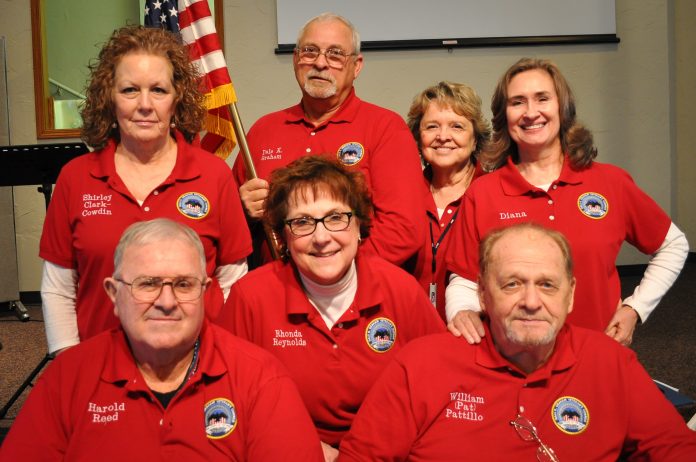
Dale K. Graham (rear center) and an army of volunteers are helping veterans get the benefits they deserve through the Dale K. Graham Veteran’s Corner.

by Bobby Anderson
Staff Writer

It’s Thursday morning at 10 a.m. and the parking lot to Pastor James Gann’s Faith Pointe Baptist Church in Norman is completely full.
On this day there isn’t a service scheduled but people are pouring in from miles away to find help, hope and healing.
“You know that’s what the church is for,” Gann said after bellowing out the name of the next military veteran who will find help that day.
Gann isn’t preaching God’s word but he is making sure the flock is being tended to. That’s why he routinely opens up the the doors to his church to allow staff from the Dale K. Graham Veteran’s Corner to minister to America’s vets.
Graham’s 501(c)(3) organization helps vets navigate the seeming labyrinth that often separates them for the benefits they so rightfully deserve.
People from across the country have made the trek to one of the weekly workshops.
Graham started the ministry in the early 1990s. He began opening up the workshop at his country home.
By 2008, he was in the Goldsby community center. He separated from his original organization and now works out of Norman.
“I just want to help people,” Graham said. “My board of directors and I couldn’t agree. We parted ways and moved on.”
“This move to Norman has been the best move I’ve ever made. What we’re doing is we’re changing lives one at a time.”
Graham estimates his organization helps nearly 150 veterans a week in addition to 10 surviving spouses.
Benefits that veterans once thought impossible or didn’t even know about are often within reach.
Veterans who can get a 70-percent service-connected disability rating can enter a state VA center free of charge.
“One of the biggest drawbacks of getting old is they’re going to take everything you’ve got when it’s finished,” Graham said. “I like to see the kids or grandkids get something.”
An army of between 30 and 40 volunteers – all clad in red polo shirts – are present to help veterans at any given workshop.
The organization supports itself through donations and grants.
Currently, Graham says there is a desperate need for a donation of transportation to help veterans get to the Oklahoma City VA Medical Center and doctor’s visits.
A handicap van would also be a lifesaver as would a permanent location to open up daily for veterans.
The stories continue to flow in. On this morning a woman from Kansas City called and told Graham her brother was living with her after being homeless. After the Gulf War he was unable to function and struggles daily with Post Traumatic Stress Disorder.
She asked if there was anyone in her area that could do what Graham’s organization does.
Sadly, he couldn’t think of any.
“Most people don’t care,” Graham said. “The main thing is people don’t know how to do it.”
Graham is accredited as a claims agent for veterans.
He says he accepts no pay.
Volunteer Rhonda Reynolds recently retired as chief deputy of the Western District Federal. Her late husband was a Navy pilot.
“It’s money they’ve earned,” Reynolds said. “The difference is we’re not talking thousands of dollars we’re talking hundreds of dollars but to people living on $750 a month” it’s a huge difference.
Graham’s group has a network of doctors and healthcare providers that understand the needs of our veterans.
Shirley Clark Crowdin’s Navy husband passed away from Agent Orange exposure. She specializes in working with the spouses of veterans who have passed.
She said World War II surviving spouses, kids or grandkids whose loved one died of cancer are eligible for up to $75,000 in radiation benefits.
“They should have got it 50 years ago,” Crowdin said. “I’m doing claims for surviving spouses (whose husbands served) in Nagasaki and Hiroshima. Nobody told them.
“One of the toughest things is we have so many suicides, but we’re able to service connect them once they pass away.”
Vietnam Veterans are of particular concern.
“Vietnam Veterans – there shouldn’t be one alive that doesn’t get 100 percent (disability),” said Crowdin, who notes the average age at death of a Vietnam Veteran is 63 years old, due to chemical exposure.
“We have World War II surviving spouses that live on about $300 per month and we can get then another $400,” Crowdin said, fighting back tears. “During the holidays we worked with three that had committed suicide.”
Graham nods his head.
“Every time you deal with one of them you feel the pain,” Graham said.
If you or a loved one need help with benefits you can contact Graham at 405-609-9895 or email him at [email protected]. Tuesday mornings from 8 a.m. to noon are open for veterans. Walkins begin at 6:30 a.m. until noon on Thursdays.
“So far, we’ve never sent anybody home,” Graham said.

Living History

0
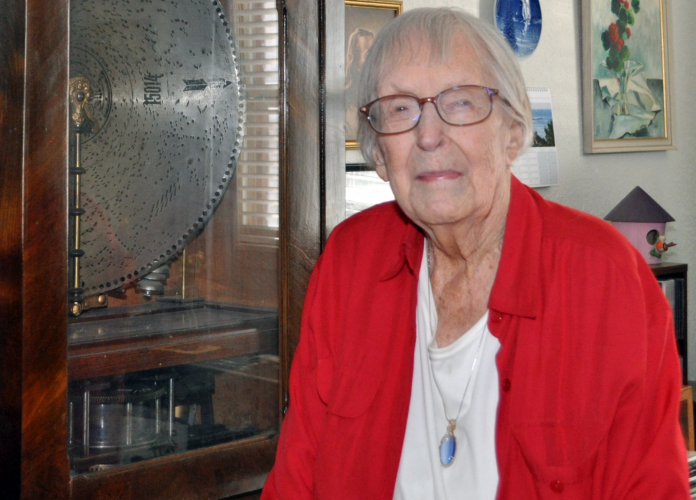
Evelyn Brown stands beside her antique wind-up music box as it plays a tune on the copper record. Her husband purchased the late 1800’s treasure right after World War II near the German Border, in Denmark.

by Vickie Jenkins

Meet Evelyn Brown, also known as ‘Bobbie Brown’ by her friends. She lives at Spanish Cove Retirement Village and has been a resident for 13 years. “I just love living here. I have lots of friends here and we have the best time,” she states. Her apartment is nice and cozy as treasured memories are all around.
One would never know that Evelyn just turned 100 years old. I was honored to be invited to her birthday party, which was held in the Club House at Spanish Cove. Since Evelyn’s birthday was October 31, the room was decorated with orange and black decorations. Friends began arriving as hugs were given and ‘happy birthday’ was heard. Friend after friend came by to give her a hug and tell her how much they appreciated her. One of her friends, Dell South sat down beside the two of us and began telling me how much Evelyn meant to her. “I tell you what, Bobbie is so knowledgeable in history. If anyone around here has a question about history, she has the answer,” she laughed. “She is a delight to be around and I see her every day. It’s so good to be friends with Bobbie Brown,” she added. Meeting some of Evelyn’s family members was a true sign of love and compassion. A special thank you to Evelyn’s daughter, Enda for allowing me to interview such a wonderful woman as Evelyn Brown. About 150 family and friends showed up to wish her a happy birthday.
Evelyn had some very interesting stories to tell. She grew up in Eastern Colorado on a farm near the site of the Sand Creek massacre. She recalls one of her favorite memories from her teen years. “I loved hunting arrowheads. Once, I found one in pristine condition and I had it made into a ring,” she said with a bit of pride in her voice. “I still have that ring to this day.”
“My first job, outside of working on the farm was working at Longs Peaks Inn where I made forty dollars a month,” she commented with a laugh. “I think jobs have changed quite a bit since then. In the winter, I worked in the County Clerk’s office in Eads, Colorado.”
Meeting a few of Evelyn’s friends, they each had something nice to say about her. “Evelyn is such a good friend,” one of them said. “Oh, she is so good with history,” another friend commented. “Someone can ask Evelyn about history and she seems to know the right answer,” she added. Over the years, Evelyn has been a member of Daughters of the Revolution, Founders and Patriots of America, Colonial Dames of the 17th Century, War of 1812, Union Veterans of the Civil War and Huguenots of the Manakintown. “I love history and always have,” she said.
I am sure most people in Oklahoma are familiar with the annual Friends of the Metropolitan Library System book sale. This was formed in 1978 as a non-profit organization for the purpose of focusing public attention on library services and needs. This organization was started by Evelyn Brown, Sally Hirte (who is still living and lives in Arizona) and Linda Levy, a library employee at the time. “There was a query in the daily newspaper needing volunteers. The next day, the three of us met in Linda Levy’s office in the library and that was the beginning of the book sale,” Evelyn said. The organization is still going strong as people flock to the fairgrounds, carrying large bags, pulling wagons, in search of just the right books to buy. It makes perfect sense that Evelyn’s favorite past time is reading.
Asking Evelyn what she likes to do to keep busy, she replied, “I like to spend time with my friends. My friend, Dee and I make a trip to Starbucks every afternoon, and I get my favorite drink, a Chai Tea Latte. Starbucks even gave me a party for my birthday,” she added. “I don’t watch much T.V. but I do have a favorite show which is ‘Antique Roadshow.’ I watch the news every night too.” When asked if she had a favorite actor or actress now, she replied, “I don’t have a favorite now but in my younger years, I liked Nelson Eddy and Jeanette McDonald.”
Today, Evelyn continues to stay busy, whether it be gathering with friends, reading a book, drinking a Chai Tea Latte or just listening to a tune on her music box. Happy birthday Evelyn Brown! You are loved and respected by many.

Can you get the flu from a flu shot? Simply, no

0
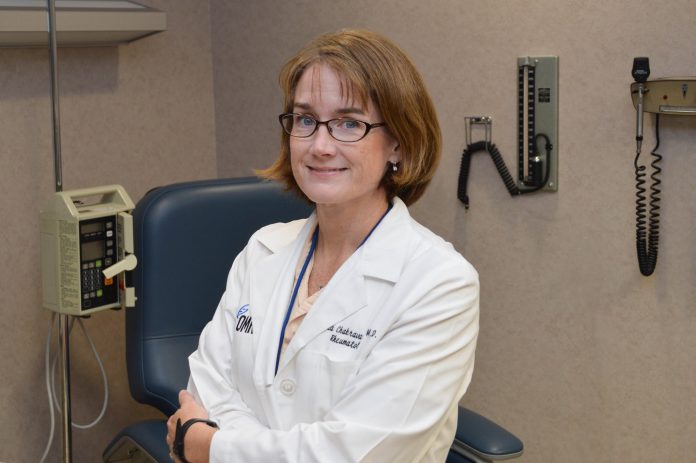
Oklahoma Medical Research Foundation Scientist Eliza Chakravarty, M.D.
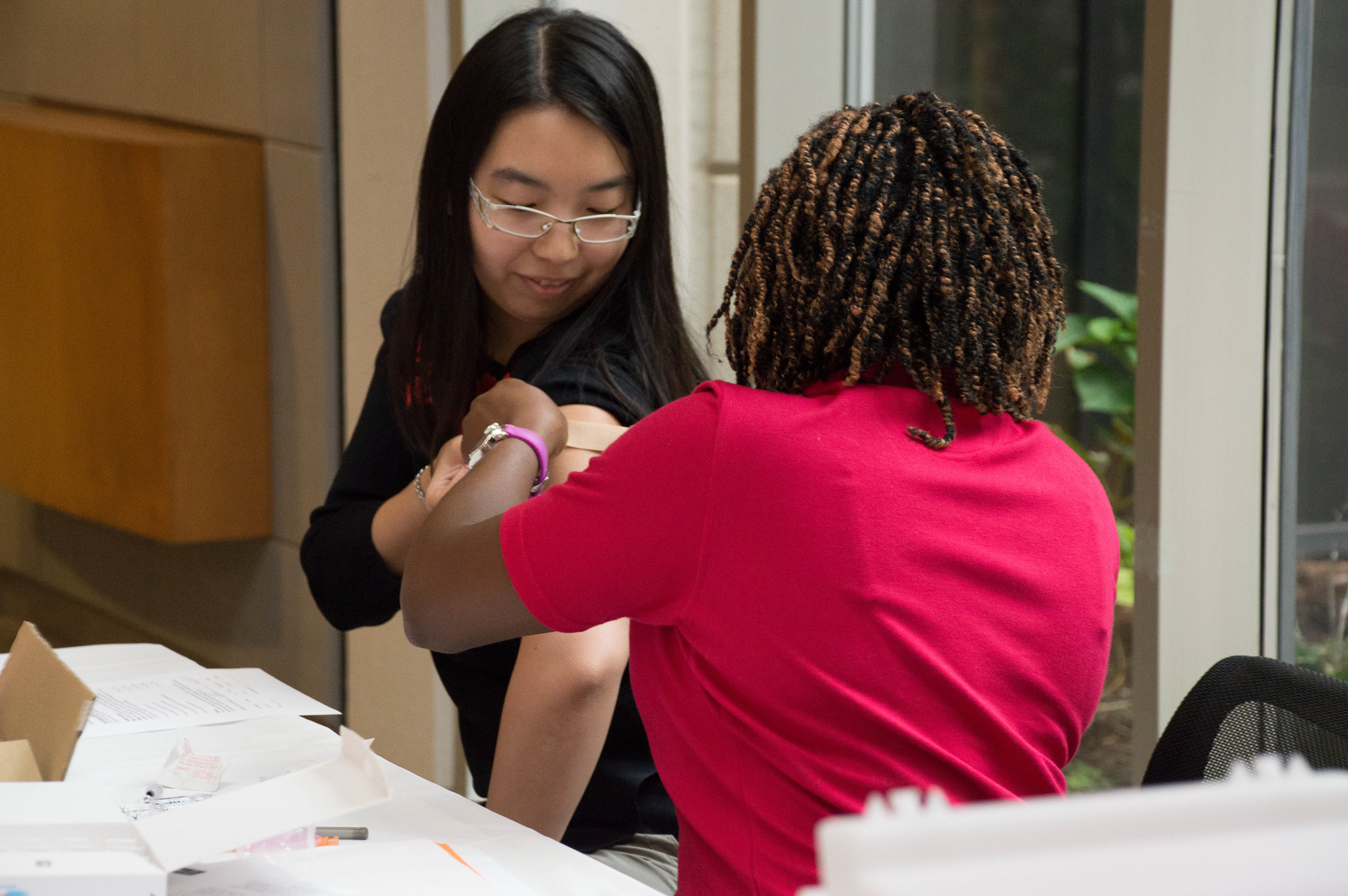
Oklahoma Medical Research Foundation Post-Doctoral Fellow Yao Fu receives her annual flu shot.

The flu virus can spread like wildfire. It kills roughly 36,000 Americans annually and makes many more miserable.
Even with the potential danger posed by the virus, why do as many as 60 percent of Americans forgo the annual flu shot?
A big factor is the long-held belief that the flu shot itself can give you the flu. But according to scientists at the Oklahoma Medical Research Foundation, this simply is false.
“The flu vaccine that we use now does not have live flu virus in it,” said OMRF President Stephen Prescott, M.D. “The vaccine cannot infect you.”
The vaccine is made from proteins in a lab, not from the virus itself. However, your body’s immune system sees these proteins as foreign and makes antibodies that bind to them to prevent the influenza virus from infecting cells and spreading. This process prepares the body for a rapid immune response to the actual flu virus, often preventing the illness.
But a flu shot can cause mild side effects, and this is where some of the misunderstandings start.
OMRF immunologist Eliza Chakravarty, M.D., said the most common side effects are soreness, redness or swelling around the site of the injection, and some people may occasionally experience a low-grade fever. But, according to Chakravarty, this is no cause for alarm, “It’s just your body doing its job and developing protective immunity.”
These symptoms, though, won’t be anything like the full-blown flu, said Prescott, a physician and medical researcher. “The flu will give you a high fever and muscle aches all over your body. Those symptoms are usually severe, and the disease can be life-threatening.”
Very rarely, a person might get the flu after receiving the flu vaccine, but Chakravarty says not to blame it on the shot.
“In these instances, a person was already exposed to the virus,” she said. “Most likely, they were in an incubation period without symptoms, but the vaccine didn’t cause the illness. This is just coincidental and unrelated to receiving the shot. Essentially, it would just be bad luck.”
If you haven’t gotten vaccinated this year, Chakravarty urges you to do so.
“It’s never too late to get the flu shot,” she said. “We’ve found that the flu can linger within a community longer than we expected, so it’s always a good idea to protect yourself and your loved ones.”

Earning Top Honors for Oklahoma

0
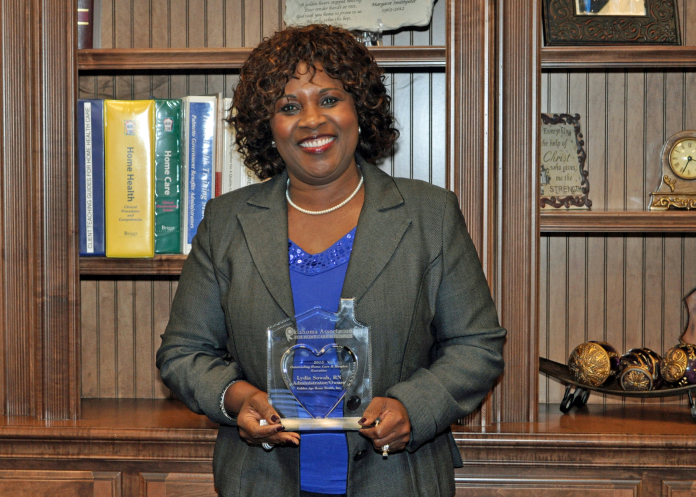
Lydia N. Sowah, RN and Administrator of Golden Age Home Health, Inc. received the 2015 Home Health and Hospice Home Health Executive Award in the state of Oklahoma.

by Vickie Jenkins

“So in everything, do to others what you would have them do to you, this is the Law and the Prophets. Matthew 7:12. This is a scripture that has been the driving force behind the success of Golden Age Home Health, Inc. and its staff,” comments Lydia N. Sowah, RN and Administrator of the facility.
In 1996, Golden Age Home Health, Inc. was established, owned and operated by a registered nurse, Lydia N. Sowah, RN and Administrator.
Lydia has been a nurse for over 36 years. She spent 15 of those years working in critical care as a critical care nurse at Southwest Medical Center. She and her husband, Nathan Sowah, co-own Golden Age Home Health. The company’s mission is to provide quality, safe, timely and cost effective health care in the privacy of the patient’s residence.
Lydia and her team strive to create a lasting bond with every patient while ensuring their safety in the comfort of their own home. Golden Age Home Health offers skilled nursing services, home health aide services, speech therapy, occupational therapy, social services, physical therapy, and Advantage Case Management.
Lydia’s vision for her home health agency has always been to provide excellent care to each patient and their families, and to improve outcomes and prevent frequent readmissions to the hospitals. Because of this vision, Golden Age consistently focuses on continued staff education and coordination of care.
The golden Rule of treating others the way you wish to be treated is the foundation on which Lydia has built her business. Golden Age Home Health is proud of their professional staff. As the Administrator, Lydia is goal driven, hard-working and a perfectionist and she has a way of instilling those qualities into each of her employees. Recently, Lydia was honored with the 2015 Home Health and Hospice Home Health Executive Award in the state of Oklahoma for her hard work in the industry.
Lydia’s success and career can be attributed to her upbringing as a young girl born and raised in Accra, Ghana. Lydia attended elementary and high school in Ghana. Her family moved to Stevenage, in Hertfordshire England in 1962. In 1974, Lydia joined her family in England, where she completed her final year at Heathcote Secondary School. “I always had a dream of being a fashion designer and knew this was what my future would hold,” said Lydia. “Little did I know that my father had different plans for me and his words of wisdom would change my life forever.”
“I had just graduated high school in 1975 when on a beautiful Sunday afternoon, my father wanted to meet with me and my 2 sisters.” Lydia explained. “Standing in front of him, he said that he wanted one of us to be a nurse, though he had no preference at the time on which one of us would become one. It was up to my sisters and me to decide and get back with him. My immediate thought was that I don’t want to be a nurse; I want to be a fashion designer. My sisters didn’t want to be a nurse either. I was confused and all I could think to myself was, what’s going on here?”
“A week later, the 3 of us met with my father again. Not knowing what was going to happen, my father handed me an envelope. Inside, was a filled out application for me to get into a nursing program. All I had to do was sign it and return it to him. I wasn’t sure why he handpicked me, but I assumed it was because of me being the eldest of the 6 children. I simply did as my father said.”
“Six weeks later, I received a phone call from the School of Nursing at Lister Hospital for an interview. My interview lasted less than 10 minutes. The Dean of Nursing, who conducted the interview, asked me why the signature on the completed application was in a different handwriting. I told her it was because my father completed the application and asked me to sign it. I left the room, knowing that I would never be accepted. Six weeks later, I received a letter that read, ‘We are pleased to inform you that you have been accepted into the school of nursing at Lister Hospital in Stevenage, England.’ Apparently, God knew what He wanted me to do. It was my destiny. This is how I got into nursing.”
“I started the nursing program and received my LPN Certificate within the required 18 months. My first clinical experience was on the Orthopedic Unit, where I had the opportunity to develop a one-on-one relationship with patients, most the elderly population. I felt so much compassion, taking care of the sick and critically ill patients and it was at that time when I really fell in love with nursing as a career.“ While working full-time and managing a family, Lydia received her RN License in 1984.
Today, Lydia’s business is a huge success and has been for the last 20 years. She took her father’s advice and became an LPN and loves every minute of her job. Although it was not meant for her to be a fashion designer, caring for others and servicing others in their time of need became the calling of her life. She is thankful for her loving parents and knows that because of them, she is where she is today. Her biggest blessings thus far have been her faith in God, her family and her amazing staff.
Apart from various community services, Lydia is actively involved in volunteering at Crossings free clinic on behalf of St. Luke’s United Methodist church where she serves on the medical team. She enjoys spending time with her family and has been blessed with two children and two granddaughters. Her hobbies include traveling, dancing and watching sports. Along with her husband, they are supporting 3 orphan boys, living in Ghana after the death of their parents. The Sowahs have big hearts and lots of love that they share with others.
When asking Lydia what qualities make a good nurse, she replied, “A nurse has to have a good heart and a genuine interest in caring for patients. The love and compassion has to come from within. They have to have a desire to take care of sick people, have strong work ethics and be knowledgeable about any situation that they may encounter.”
I admire Lydia for her dedication and determination through the years. Lastly, Sowah wants to share the fact that she owes everything that she has accomplished in her life to her Heavenly Father above.

The Blue Cape

0
Patricia Navarro, Marketing Director of Emerald Square Assisted Living stands in one of the courtyards that are welcoming to the residents. In the summer, they enjoy the many flowers that surround them.

by Vickie Jenkins

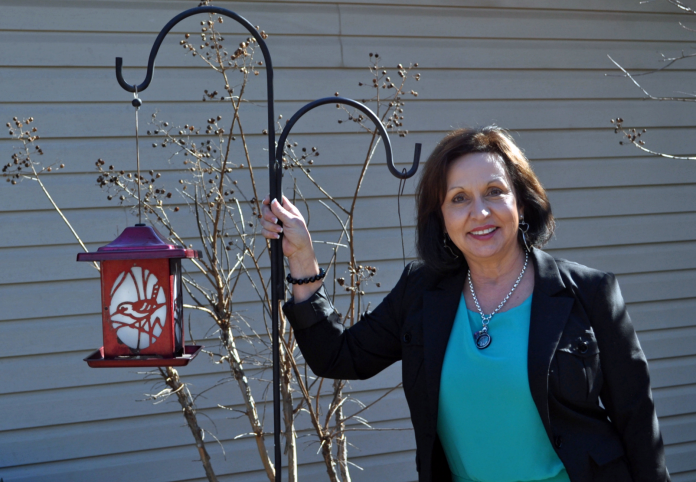
I had the pleasure of meeting with Patricia Navarro, Marketing Director of Emerald Square Assisted Living. Patricia has had plenty of experience in caring for others; she has been a nurse for 40 years. Her first job as a nurse was at Children’s Hospital. “That is when I discovered that taking care of people and helping them in any way that I could was my passion.”
Emerald Square offers a caring atmosphere, an active community and a comfortable and secure lifestyle for their residents. Each member of their community enjoys the opportunity to ‘live life their way.’ Valued residents enjoy assistance when required and freedom when desired. Residency includes a complete array of services and accommodations. “We love it here,” comments Patricia. “We try to make it comfortable and happy for the residents,” she said as she gave me a tour of the facility. “We always have some kind of entertainment for our residents,” she said as the live music played and the residents listened to the relaxing tunes. It is obvious that Emerald Square has a nice, comfortable inviting feeling, as though changing the word ‘facility’ into ‘home.’ This is a wonderful place to be,” Patricia adds.
“How did you become a nurse?” I ask Patricia. “When I was a little girl, I liked Superman. Who didn’t like him? He was the good guy, the hero. I also noticed that Superman wore a blue cape. For some reason, that blue cape really stood out to me. Back then, scrubs for nurses were unheard of. The nurses wore white dresses, white hose, white shoes, a white hat and a blue cape. I think in a way, I associated Superman’s blue cape and the nurse’s blue cape as a symbol of helping people,” she said with a laugh. “When I became a nurse in 1976, the blue capes were gone but I was determined to help others. One thing for sure though, I will always remember that blue cape.”
“Did anyone influence you to become a nurse?” I ask. “It was definitely my dad. Up until the age of 13, my family and I lived close to the border in Zapata, Texas. My dad was part of the horseback border patrol. He was a good worker and enjoyed his job. I saw how much he cared for others and whether he knew it or not, he was making an impact on my life, even at a young age. It made me realize that I wanted to make taking care of others my goal in life and making it my career. My dad influenced me then and through the years, he always encouraged me. I will always be thankful for that.”
Asking Patricia what her greatest blessing about being a nurse was, she replied, “My biggest blessing is the fact that being a nurse is rewarding. A nurse has to have a genuine care for others and facilitate their needs. A nurse gives of herself and that nurse is given back much more. Whether it is saving a life in the ER or through preventative medicine, its rewards are spiritual. Nursing feeds the soul.”
“What is your greatest asset?” I ask. “I think it’s communication. I feel like I am able to communicate with others, no matter what their social background is. I make people feel at ease, or so people tell me,” she says with a smile. “I don’t judge people and I accept them for the way they are,” Patricia comments.
I asked Patricia if she saw any challenges in the assisted living facility? “I do see a bit of a challenge when it comes to making sure potential residents come to the facility when they should. Some tend to want to wait, but then, it could be too late. It is important that we can tell others what a wonderful staff and wonderful residents we have here at Emerald Square, conveying the urgency of caring for their loved ones before it is too late.”
Patricia’s hobbies include gardening and spending time with her family. “My husband and I have a daughter, Racheal and a son, Tyler. They are both graduates of UCO. We also have a 3 year-old granddaughter, Amilee, which I love to spoil.”
Patricia’s words to live by are: “Treat others the way you would like to be treated. Treat others the way you would want your parents to be treated.”

TRAVEL / ENTERTAINMENT: Art and Artists at the Gilcrease Museum

0

Photography and Text by Terry “Travels with Terry” Zinn  [email protected]

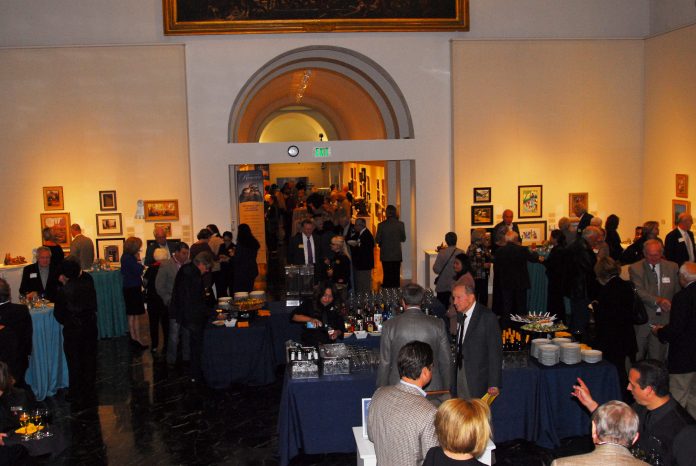
Art can be entertaining and a reunion with favorite talented artist. The November Collectors Reserve event at Oklahoma’s Gilcrease Museum is such a gathering. The Museum is known for its western heritage art, but the Collectors Reserve brings together many contemporary artists expressing many cultures.
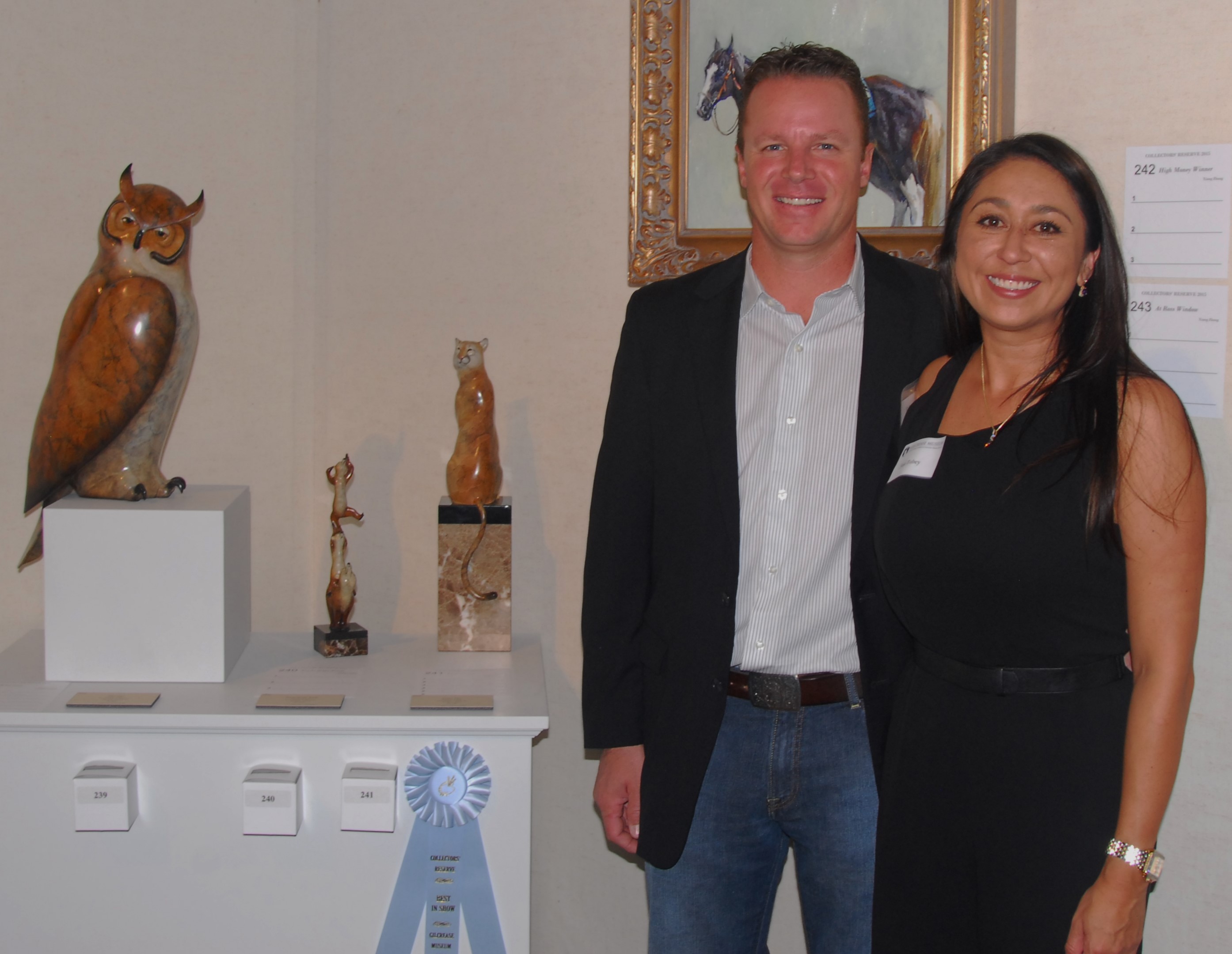
Following your favorite artist over the years and over the county, can be daunting, as it has been for many with the prolific bronze artist, Joshua Tobey, http://www.joshuatobeystudios.com/. For many years his wildlife bronze creatures could be found in Sedona, Austin, Santa Fe and Loveland, among many galleries. The multiple award winning artist was present for the recent Collectors Reserve at the Gilcrease, and once again took home the highest award over 100 other artists with the Best In Show. He exhibited his large owl, Wise Guy, and bears performing a balancing act, Tricks of the Trade, and the Best In Show cougar in repose, Lions View.
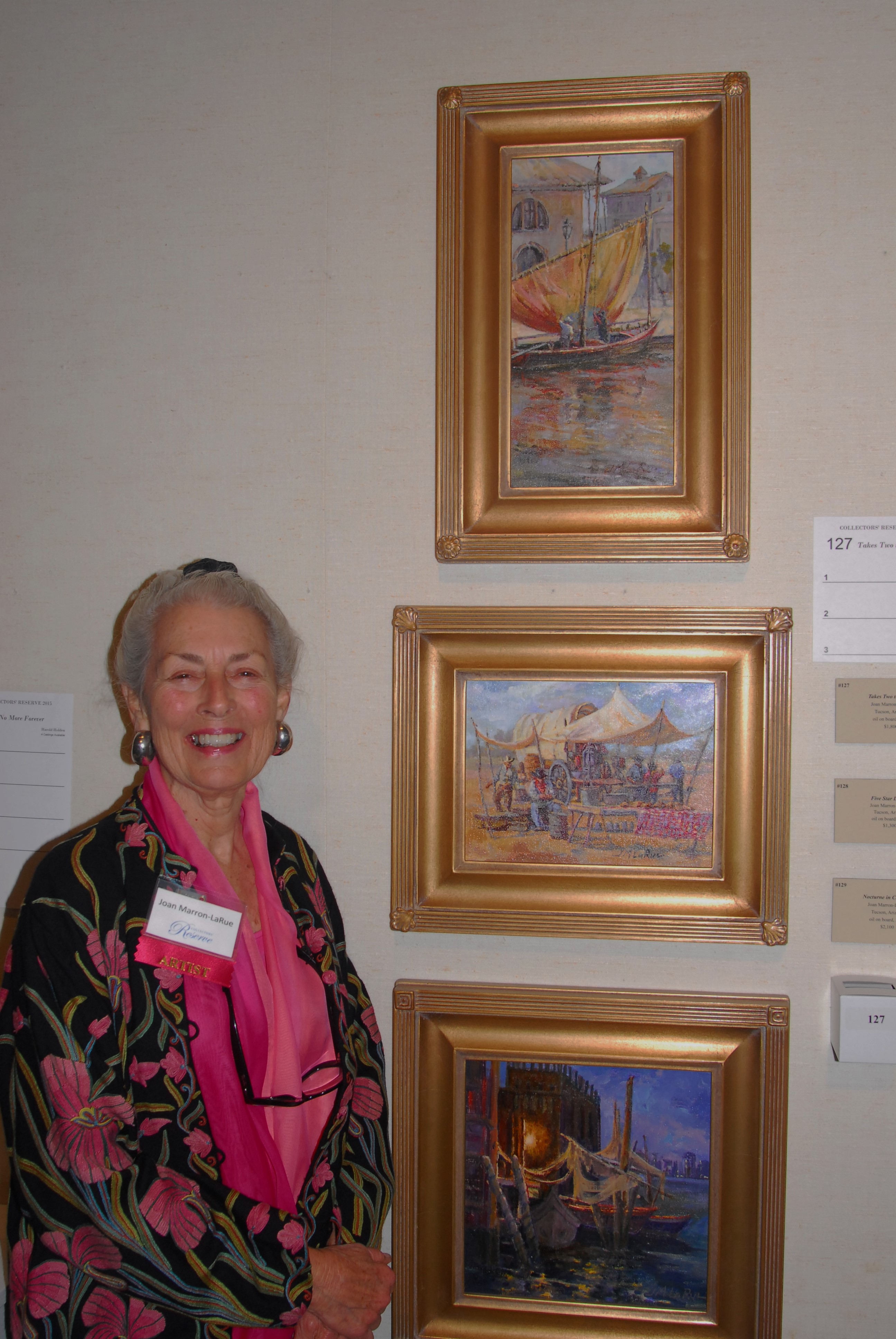
Other artists exhibited were: Joan Marron-LaRue, Doug Hyde, Oreland C. Joe Sr., Linda Turma Robertson, Jim Wilcox, Sandy Scott, and Gerald Balciar among others. Cocktails and light refreshments were served as the guest perused the art that they would like to have the opportunity to purchase with a drawing for its set price. The museum provided group prices for a downtown Tulsa hotel and offered shuttles up to the Gilcrease, making the entire evening more enjoyable.
You may want to plan to attend the 2016 Collectors Reserve, or sample the Gilcrease before then with:
Rick Bartow: Things You Know But Cannot Explain opens January 24 and runs through April 24, 2016 at Gilcrease Museum. Featuring more than 100 pieces, including a broad selection of sculptures, paintings, drawings, prints, mixed media work and the giant pastels for which he is mostly known, the exhibition draws from public and private collections (including the artist’s studio) that affirm this extraordinary artist’s regional, national and international impact.
Also see the works of early nineteen hundred artist William R. Leigh, where in 1906, an opportunity to expand the scope of his work came about when the Santa Fe Railroad offered him free passage to the West in exchange for a painting of the Grand Canyon.
If you don’t have a favorite artist, you can start your search at the Gilcrease. For more information go to: https://gilcrease.org/

Mr. Terry Zinn – Travel Editor
Past President: International Food Wine and Travel Writers Association
http://realtraveladventures.com/author/zinn/
http://www.examiner.com/travel-in-oklahoma-city/terry-zinn
www.new.okveterannews.com – www.martinitravels.com

DSC_0016 - Joan Marron-LaRue

Joshua and Jo Tobey
Joshua and Jo Tobey

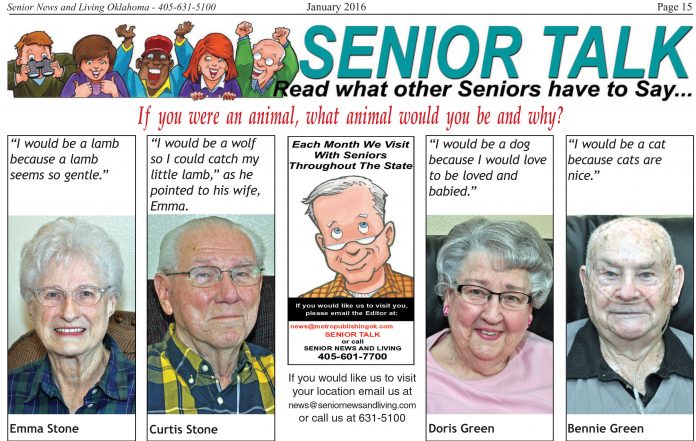
SENIOR TALK: If you were an animal, what animal would you be and why? Emerald Square Assisted Living

0

“I would be a lamb because a lamb seems so gentle.” Emma Stone

“I would be a wolf so I could catch my little lamb,” as he pointed to his wife, Emma. Curtis Stone

“I would be a dog because I would love to be loved and babied.” Doris Green

“I would be a cat because cats are nice.” Bennie Green

OMRF research sheds new light on effects of aging in knee joints

0
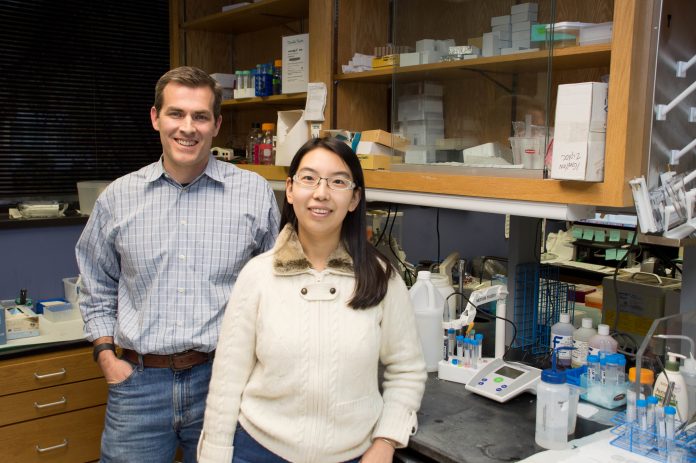
Oklahoma Medical Research Foundation scientists Tim Griffin, Ph.D. and Yao Fu, Ph.D.

Research from the Oklahoma Medical Research Foundation has identified new culprits that may be responsible for the development of arthritis.
The study found that growing older increases the production of a pair of inflammation-producing proteins. It suggests that targeting these inflammatory proteins might provide a path for future development of arthritis therapies.
The new findings, published in the Journal of Gerontology, provide a snapshot of age-related changes in a crucial area of soft tissue in the knee.
A team led by OMRF’s Tim Griffin, Ph.D., and Yao Fu, Ph.D., examined the knee joints of rats as they aged. In particular, the researchers studied the animals’ infrapatellar fat pad, the soft fatty tissue that lies beneath the kneecaps of both rodents and humans.
Scientists have known that these fat pads are a source of inflammation in osteoarthritic knees. And they’ve believed that this inflammation contributes to osteoarthritis, which occurs when cartilage breaks down and wears away.
“It’s actually the most common form of arthritis, often affecting the hips, hands and spine, in addition to the knees,” said Griffin. According to the Centers for Disease Control, an estimated 27 million Americans suffer from osteoarthritis.
Griffin and Fu wanted to look specifically at how aging affects inflammation in the fat pads. Griffin says he anticipated that as the animals grew older, the amount of inflammation produced by the fat pad and the size of the animals’ fat pads would increase.
“But our findings were not quite what we expected,” said Griffin. Specifically, the fat pads actually shrunk while producing higher levels of two inflammatory proteins.
“Our study suggests the fat pad is a contributor to a general increase in knee inflammation that occurs with age,” said Fu. This points toward future treatments to limit the inflammation, which might then prevent osteoarthritis from developing.
However, the researchers did find a benefit to aging in biological conditions that simulated an acute injury—such as a fall that causes damage to a joint. In this condition, the older fat pads decreased their production of leptin, a protein secreted by fat that also contributes to the break down of cartilage.
“We know there is acute inflammation that occurs after injury and can have long-term consequences,” said Griffin. “This study taught us that under certain conditions aging can actually limit the amount of leptin produced by the knee fat pad. This might help us develop new strategies to reduce post-traumatic osteoarthritis, a common cause of the disease in younger active adults.”
Janet Huebner, Ph.D., and Virginia Kraus, Ph.D., of Duke University also contributed to the research, which was supported by grants from the National Center for Research Resources (number RR018758), the National Institute of General Medical Sciences (number GM103441), the National Institute of Arthritis and Musculoskeletal and Skin Diseases (number AR066828), and the Arthritis Foundation.

Social

0FansLike
0FollowersFollow
0SubscribersSubscribe