Friday, September 11, 2026

What was your first job? Rambling Oaks Assisted Living

0

What was your  first job?  Rambling Oaks Assisted Living

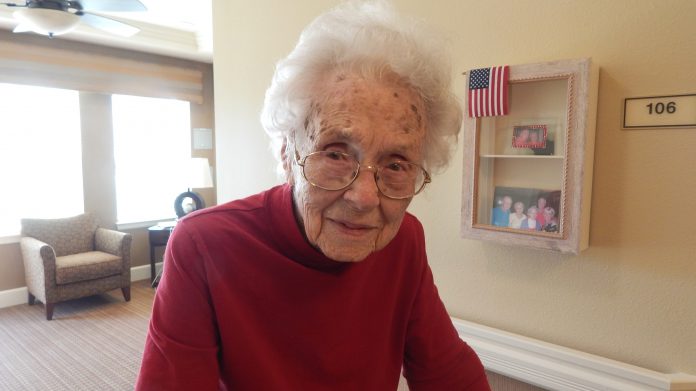
“I lived on a dairy farm and my first job was milking cows.  I would get paid a quarter and I would go to a movie.” Julia Murray

“I lived in the country and my first job was a school teacher.  The school was small and was all 12 grades.” Paula Grove

“I worked at a Ford garage and was a parts man.” Paul  Bolles

“I was in 9th grade and worked at a drug store.  I did everything that I needed to do and even worked behind the fountain.” Chester Spears

COSTS FOR ALZHEIMER’S CARE TO INCREASE

0

The Alzheimer’s Association’s new report, The Impact of Alzheimer’s Disease on Medicaid Costs: A Growing Burden for States, released today, found that between 2015 and 2025, Medicaid costs for people living with Alzheimer’s disease and other dementias will increase in every state in the U.S. and the District of Columbia.
In Oklahoma, Medicaid spending on people with Alzheimer’s and other dementias will increase by more than 40 percent over the next 10 years. This year, spending will total $437 million, increasing to $613 million in 2025.
“With the quickly rising Medicaid costs for people with Alzheimer’s and other dementias, Oklahoma needs to continue to refine The State Plan to Address Alzheimer’s Disease in Oklahoma, enhance standards of quality care, as well as attack the disease through research,” said Mark Fried, president and CEO of the Alzheimer’s Association Oklahoma Chapter.
Seniors with Alzheimer’s and other dementias rely on Medicaid, which is funded by state and federal governments, at a rate nearly three times greater than other seniors due to the long duration of the disease, the intense personal care needs and the high cost of long-term care services. According to the Alzheimer’s Association’s Alzheimer’s Disease Facts and Figures report, by the age of 80, 75 percent of people with Alzheimer’s and other dementias will be admitted to a nursing home, compared with just four percent of the general population.
Alzheimer’s is a triple threat, with soaring prevalence, lack of treatment and enormous costs that no one can afford, but we are here to help. Beyond funding vital research, the Alzheimer’s Association offers free resources to guide the over 60,000 Oklahomans living with Alzheimer’s and their more than 220,000 unpaid family caregivers, including:
Alzheimer’s Association Helpline (1-800-272-3900): This toll-free 24/7 Helpline is the one of its kind; the Helpline is staffed by masters-level counselors and provides information and guidance in more than 170 languages and dialects.
Support Groups: Connect with others going through the same journey and get support through the different stages of Alzheimer’s disease.
Education Programs: Attend caregiver education classes and workshops to learn about connecting with and caring for your loved one with Alzheimer’s disease.
To find a local list of education programs and support groups, visit alz.org/CRF
The Alzheimer’s Association is the leading voluntary health organization in Alzheimer’s care, support and research. Our mission is to eliminate Alzheimer’s disease through the advancement of research, to provide and enhance care and support for all affected, and to reduce the risk of dementia through the promotion of brain health. Our vision is a world without Alzheimer’s. Visit alz.org or call 800.272.3900.

NOMINATIONS DEADLINE EXTENDED FOR ASPIRE AWARD

0

The nomination deadline for the 2016 Sunbeam Family Services Aspire Award has been extended to November 20 at 5 p.m.
To be selected for this prestigious award, the recipient must contribute remarkable community or humanitarian service that has made a difference to the well-being of children, families or seniors; have a positive impact on the community and model a life that others “aspire” to; and currently or previously support the work of Sunbeam Family Services through time or financial contributions OR life’s work mirrors the mission of Sunbeam Family Services. The nominee cannot be a current Sunbeam Family Services board member.
“Every day, individuals in our community are making a significant difference in the lives of children, families and seniors, whether through their personal or professional pursuits,” said Erin Engelke, chief external relations officer, Sunbeam Family Services. “We all have people in our lives we aspire to model and this award allows us as an organization to do just that – shine a light on those change-makers.”
Nominations can be made online at www.sunbeamfamilyservices.org under the “Aspire Award Nominations” tab. Or visit www.AspireAwardOKC.org to submit your nomination.
The Aspire Award will be presented at the 2016 Shine a Light fundraising gala April 7 at the Chevy Bricktown Events Center.
The winner of the award will be selected by a committee based on their level of service to the community, alignment with the mission of Sunbeam Family Services, and their impact on children, families or senior citizens.
Last year, former Sunbeam Family Services CEO Ray Bitsche was recognized as the first recipient of the Aspire Award for his more than 15 years of hard work and dedication to the organization. Bitsche retired as CEO of Sunbeam Family Services in November 2014.

The Social Security Dilemma: Draw Now Or Draw Later?

0

by Reid Abedeen

The temptation is great.
Maybe too great for some.
The federal government allows retirees to start drawing Social Security as early as age 62, a feature that more than 40 percent of Americans take advantage of as they gladly draw from the system they spent a lifetime paying into.
But many of those people may be making a mistake, says Reid Abedeen, a partner at Safeguard Investment Advisory Group, LLC (www.safeguardinvestment.com).
“While you’re allowed to start drawing Social Security when you are 62, your monthly benefit will be reduced,” Abedeen says. “Although there might be personal reasons why someone needs to apply early, for most people it’s probably better to wait at least until their full retirement age.”
Full retirement age is between 66 and 67 for most people in the workforce right now. Wait until you are 70, and the amount of your monthly check goes up even more.
When it comes to Social Security, though, there’s a financial monkey wrench that can complicate sorting out your plan. Social Security rules can be complicated and even your spouse’s income and decisions can affect when the most opportune time is for you to draw benefits.
“You really are going to want to coordinate what you do with what your spouse does, to make sure you are getting the highest amount possible,” Abedeen says.
Here are a few points to remember if you’re considering claiming your Social Security at 62:
• Reduction of benefit. Depending when your full retirement age is, you would see about a 25 to 30 percent reduction in your benefit if you retire at 62. On the other hand, if you delay collecting past full retirement age, you can increase your benefit by 8 percent a year up until you are 70.
• Life expectancy. One reason many people opt to draw the money early is they fear they will die before they get a chance to receive anything at all from Social Security. After a lifetime of paying into the system, they won’t get a penny out of it. They don’t want to feel cheated out of what they have coming to them.
That’s certainly a concern, Abedeen says. But there’s an even greater concern than dying early, and that’s living too long. “Life expectancies are growing, but many people have not saved enough to see them through a retirement that could last two or three decades or longer,” he says. “If you live a long life, it could be crucial to you that the monthly Social Security payment be as large as possible.”
• Continuing to work. You could be in for a surprise if you plan to continue working after you begin drawing Social Security. If you haven’t waited until your full retirement age, there’s a limit on how much you can make. In 2015, that limit is $15,720, according to the Social Security Administration. If you go over that, you would be deducted $1 in benefits for every $2 you earn over the limits. (That changes in the year you reach full retirement age, and beginning with the month you are at full retirement age there is no limit on your earnings.)
“A lot of factors come into play when you’re trying to decide when to begin drawing Social Security,” Abedeen says. “That’s especially true if you have a spouse and need to factor them into the equation. It’s worthwhile to seek professional advice so you can get the most favorable result.”
Reid Abedeen is a partner at Safeguard Investment Advisory Group, LLC. As an investment advisor, Abedeen has helped retirees for nearly two decades with issues such as insurance, long-term care planning, financial services, asset protection and many other areas. He holds California Life-Only and Accident and Health licenses (#0C78700), and holds a Series 65 license, and is registered through the Financial Industry Regulatory Authority (FINRA). Abedeen is a family man who owes much of his fulfillment in life to his wife, Smyrna, and his three children, Yusef, Leena and Adam.

10/15/15 ISSUE: One dynamic lady

0
At 63, Dea Dietrick has reinvented herself, going back to college to get a degree and writing a book.

by Mike Lee, Staff Writer

At 58, Dea Dietrick found herself at a crossroads.
Gone was her husband of 27 years. With him went the money she was planning on funding her golden years.
She hadn’t gone to college after school, even though her dad told her she needed to get her teaching degree.
Employed at a church with a nominal salary, things looked dim.
So the absence of available options was almost a Godsend for Dietrick, who was just a few years shy of enrolling in Medicare, enrolled in college instead.
Fast forward five years and there’s a smile on Dietrick’s face. There’s also a college degree with distinction.
And her father would be proud not only that she’s teaching, but teaching others how to get the most out of themselves in life.
“I’m proud of this because it gives me authority to encourage others to go after their dreams and rise above their circumstances,” she said.
The decision to go back to school seemed like the best option to provide for herself in the future. Retirement wasn’t a port she would be pulling into anytime soon so she figured she needed to do what was best for the long haul.
She enrolled at Mid-American Christian University in May 2010. Working full-time, plus a side job, she carried a full course load each semester.
Five years later she graduated Summa Cum Laude with Distinction as one of the top five students in her class of 531.
It was actually Dietrick’s church job that helped her get to where she is today.
Working as a Biblical counselor, Dietrick’s title was campus administrator. Staff would refer people to Dietrick for counseling and she would get to the heart of what was wrong.
“It’s very fulfilling,” she said. “It’s where my passion is. I love working one-on-one with people.”
She was forced to put that passion to work to make a living.
“One day my attorney looked at me and told me she didn’t know if we would be able to recover any of the assets and it looked as though I needed to investigate how to earn more money and plan for a sustainable retirement,” Dietrick recalled of her divorce. “I reasoned that obtaining a degree as the only way possible to provide for myself. After investigating several local schools I found MACU to be conducive with my lifestyle.
“My thought was to work at the church during the day and open a counseling office at night. That plan has taken a slightly different form, but I am doing what I love and intended; using my degree and professional experience to serve others to experience life satisfaction and well-being.”
And Dietrick has a powerful story to tell. She reasons that if she can go to college at 58, reinvent herself and earn a degree in five years while working full-time then she has a few things to share about the value of hard work and determination.
“My ultimate goal is to help individuals understand their significance and use their passion to live a life of influential leadership and authentic satisfaction, bringing their ultimate best to their employer,” she said.
As founder of A Dynamic New You, LLC, a firm dedicated to helping individuals exercise their leadership capabilities, she adds a new dimension to her client’s personal wellbeing. Her forthcoming book, Charting Life with Intentionality, serves as a positive reminder that everyone has something significantly remarkable to share and is able to become an impactful influential leader.
Serving in the role of Counselor, Coach, Public Speaker, and a John Maxwell Certified Trainer, her experience blended with her wisdom introduce profound applicable concepts during coaching, Mastermind Groups and workshops.
She attends Crossings Community Church and is a member of Early Risers Toastmasters, American Business Women’s Association, the Greater Oklahoma City Chamber and is active in several smaller networking groups and volunteer opportunities.
Born and raised in Denver, Dietrick has lived abroad in Jakarta, Indonesia. It was a profound experience, one that resulted in the adoption of twin girls.
Each daughter now has two children.
“My feeling is you can’t let life get to the point where you just sit down and sigh,” she said. “I think what happens with older people, those who have given or put a lot into what they’re doing all their life – they don’t feel respected anymore. The culture is changing and they feel they should stop.”
Dietrick says she doesn’t feel old. She still wears platform heels and the occaional mini-skirt now and then.
“I think it’s important to invest in others, especially as seniors, because you have wisdom you can share with people who want to change and grow,” Dietrick said.

FETCH ALONG THE CAMERA!

0
Danny Hill began taking celebrity photos when he was discharged from the Air Force and continued until 2010.

by Felicia Lucas

Danny Waldron Hill jokes that, “you can see a lot of movie stars – FREE – ALL AGES ADMITTED” when you visit his home at FOUNTAINBROOK ASSISTED LIVING CENTER IN Midwest City. The movie stars line the wall in a commons area at the Center, photos from an era of Hollywood past, many of them autographed.
A six generation Oklahoman, and CHICKASAW Nation Citizen (his grandmother was original enrollee Lizzie Columbus), Hill began taking celebrity photos when he was discharged from the Air Force in 1960, and continued until 2010 when his health and lifestyle changed with the passing of his wife and “sidekick” Mary Ella. He grew up in Southwest OKC, attending Columbus Elementary, Jackson Jr High and is a 1956 graduate of Grant High School.
Always having his camera near, Hill snapped photos of visiting celebrities while living and working for the Federal Government in the Dallas, TX area. “There seemed to always be a celebrity or two in the downtown area having lunch or performing at a concert. It was worth keeping my camera near me.” Often, he would capture a photo, develop it, frame it and wait patiently for many years to have the photo signed by the personality featured. At times, he would be invited back stage for a close up or two, as was the case with Debbie Reynolds. Johnny Cash once invited him on stage to share a collage of the famous singers’ many poses, and signed it in front of thousands of fans attending the concert that night.
Actors and Actresses alike enjoyed seeing photos of themselves from many years back, and would often try to purchase them – but to no avail – the photos were his private collection. Occasionally, he donates pictures from his collection to museums and restaurants featuring the particular star – most recently donating a shot of Mickey Mantle to the namesake’s restaurant in Bricktown, OKC.
His large collection expands many venues and decades and includes film stars such as Elizabeth Taylor, Gregory Peck, Kirk Douglas, Mitzi Gaynor, Sophia Loren, Cecely Tyson, Richard Rountree; musicians Mel Torme, Pat Boone, Roy Rogers, Hank Thompson, Charlie Pride, Andy Warhol, Sally Struthers, Carol Channing; athletes Dorothy Hamill and Hank Aaron; and various performers like Art Linklater, Jerry Lee Jones, Liberace, Herb Alpert, Adam West as BATMAN, Cesar Romero as the JOKER, Eartha Kitt as CATWOMAN and Clayton Moore as the LONE RANGER.
Active in pow-wows and other American native events, and also serving on the Chickasaw council in Dallas, his 5 decade photos of Native American Dancers have been shared at many pow-wows (gatherings of the native tribes) and displayed in libraries across the Dallas/Ft Worth area. His expertise allowed him the opportunity to share his love and passion for the camera by public speaking at conferences and teaching Camera/Photo classes at community colleges in the Irving, Grand Prairie and Arlington area, where he lived for 40 years.
Not limited to famous people, he snapped photos of animals, flowers, trains, and of course, family! It was anticipated and expected at family reunions to view “Uncle Dan’s” photos on a slide show projected on the side of a house or wall. With his family now extending into great, great nieces and nephews, his photos have become a part of the family’s history with pictures of loved ones that have passed away, or aged from toddlers into grandparents…
His return to Oklahoma was bittersweet in that it was after his wife’s passing. An often quiet man, (except for the boldness associated with a photographer), he was one of the first residents of FOUNTAINBROOK, and would have preferred sharing his “assisted living” experience with her, as together they could have shared the various outings and wonderful activities offered by the staff. Director Debbie Riddle has become “just like family” sharing in his new life and adventures, and allowing him to share his past loves of all things photography.

Photograph2

World War 2 vet celebrates 100 birthday

0
Carl Morrell, who served in World War II, celebrated his 100th birthday recently at Rambling Oaks Assisted Living Center.

by Mike Lee
Staff Writer

Carl Morrell has seen 17 presidents during his lifetime.
The average individual income has risen from $800 to more than $26,000 per year in that span.
One hundred years ago the zipper was invented.
Today, nearly 80 percent of Americans have the Internet in their home.
A lot has changed during the last century but the guy affectionately known to his family as “shorty” has taken it all in stride.
Carl Bertrand Morrell turned 100 recently at Rambling Oaks Assisted Living Center and he still has plenty of stories to tell.
He graduated from Valley Grove Elementary, then located in the Corbett farming community southeast of Lexington, and went on to graduate Lexington High School and then the University of Oklahoma.
In 1936, at the age of 20, he joined the New Deal’s Civilian Conservation Corps and worked with the Army Corps of Engineers in the Big Horn National Forest outside of Sheridan, Wyoming building the Sibley Lake Dam.
He earned $30 per month plus his room and board.
In 1937, he came back to Oklahoma and built on his brief encounter with field engineering by enrolling in the OU School of Engineering.
His education was interrupted in the spring of 1940 as he enlisted in the U.S. Army just months before America’s entry into World War II.
He served his country until 1946. He initially trained as a high speed radio operator in anticipation of assignment to a bomber crew in Europe.
But he was plucked to attend Officer’s Candidate School and earned a commission as a Second Lieutenant in the Army Signal Corps.
From there he commanded coastal radar units in Maine, Massachusetts and North Carolina until the war ended.
After his release he resumed his education, this time switching to the School of Business where he graduated in 1948 with a Bachelor’s in Accounting.
He then worked for Continental Oil and moved to Ponca City where he later worked for Conoco for 33 years before retiring in 1980.
After the death of his wife, Delma, in early 1985 Morrell returned to Norman. There he would marry his childhood friend, Agnes Waddle, the widow of his older brother.
Together they joined Immanuel Baptist Church where for eight years he volunteered to help the church manage its finances. He also taught a Senior Men’s Sunday School class until he was 89 and served as Sanctuary Greeter.
He was recently honored for his years of services in World War II by the Veterans of Foreign Wars.
“He is a really sweet man and has obviously made an impact on everyone here,” said Sales and Marketing Director Shana Sapp, who notes Rambling Oaks has three centenarians, one who is 103.

Carl B-day 3

Quality of life Senior beats cancer

0
Mike Kastl is a cancer survivor enjoying life with wife Elizabeth.

by Mike Lee
Staff Writer

It’s mid-morning and Mike Kastl is giving his granddaughter a bottle and trying his best to get her down for an 11 a.m. nap.
The 67-year-old could use a nap himself but he’s happy to oblige. In fact, he’s happy to do most anything these days after beating cancer.
When he’s not bouncing his grandbabies around the former ag teacher is spreading the word to other men about how important annual checkups are.
He believes to this day it is checkups that saved his life.
It was 2009 when Kastl and his wife both were hit with cancer diagnosis.
The PET scan of her bile duct came back red hot.
A trip to the Mayo Clinic in Houston followed, as did a life expectancy of three-to-five years.
“She only lasted two,” Kastl said.
It was during this time that Kastl found ProCure Proton Therapy Center for himself.
It was during an annual checkup that he learned his PSA score had doubled. It was a big enough jump to be referred to a urologist for a biopsy.
“They took it in two different places,” Kastl said. “One showed five percent cancer and the other showed 20 percent cancer.”
His options were radiation, surgery and then a new thing with protons.
“He kind of blew it off but I was taking notes,” Kastl said of the visit with his doctor. “When somebody says you’ve got the big C you start listening real close. I was online 24/7 looking at prostate cancer treatments.”
During his research he stumbled upon Robert J. Marckini’s book You can Beat Prostate Cancer: And You Don’t Need Surgery to Do It.
He read it and followed his sister’s urgings to contact the new ProCure Proton Therapy Center in Oklahoma City that was just being finished.
He began his first of 44 treatments in August of 2009 and holds the distinction of being ProCure’s first prostate patient.
“The quality of life is what makes ProCure, I think, much better,” he said. “My quality of life is better for having gone to ProCure. No side effects. I didn’t lose any hair. I was out working cattle.”
When he’s not watching Elmo videos he’s running cattle with his brother at his ranch in Stillwater.
And when he’s not doing that he’s telling other men about prostate cancer.
Other than skin cancer, prostate cancer is the most common cancer in American men. The American Cancer Society’s estimates for prostate cancer in the United States for 2015 are:
About 220,800 new cases of prostate cancer.
About 27,540 deaths from prostate cancer.
Prostate cancer occurs mainly in older men. About six cases in 10 are diagnosed in men aged 65 or older, and it is rare before age 40. The average age at the time of diagnosis is about 66.
Prostate cancer is the second leading cause of cancer death in American men, behind only lung cancer. About one man in 38 will die of prostate cancer.
Prostate cancer can be a serious disease, but most men diagnosed with prostate cancer do not die from it. In fact, more than 2.9 million men in the United States who have been diagnosed with prostate cancer at some point are still alive today.
When discussing cancer survival statistics, doctors often use a number called the 5-year survival rate. The 5-year survival rate refers to the percentage of patients who live at least five years after their cancer is diagnosed. Of course, many of these people live much longer than five years (and many are cured).
Five-year relative survival rates assume that some men will die of other causes and compare the observed survival with that expected for men without prostate cancer. This is a better way to see the impact of the cancer on survival.
Proton therapy can precisely target your tumor, reducing damage to healthy tissue near the tumor and potentially allowing you to receive higher, more effective doses of radiation. Proton therapy not only effectively targets a tumor, but it can also be used in combination with chemotherapy, as a follow-up treatment to surgery, and in combination with standard X-ray radiation treatment.
Today, Kastl is remarried and has a new lease on life. And he enjoys all the extra time he has to spend with his grandkids.

ProCure_Logo

It’s a Mystery to Me

0
Bill Howard’s imagination soars with one mystery and investigation after another. Juanita Howard has a new cookbook, “Grammy’s Favorite Recipes, a Seventy-Year Collection.”

by Vickie Jenkins

Bill Howard is a retired Oklahoma City businessman and former minister. Now, he is a published author of 3 mystery books, “ Rick Wade: Investigations,” “The Case for Sarah” and “A Time to Reap.” The unique thing about Bill is the fact that he began writing his first book in 2013 at the age of 83 and is almost finished with his 4th book.
“I have always felt like I needed to be busy, doing something or producing something,” Bill comments. “When I was young, I spent a lot of time reading. I remember my grandmother gave me my first book and it was a mystery. After that, it seems like that was the only kind of book I read. At first, it was the Hardy Boys and then the Nancy Drew series and as I got older, I advanced to the Perry Mason books. I didn’t have a lot of my own books, but there was a small school library and a small town library. I was only interested in mysteries.”
Asking Bill how he came about naming the main character in his first book, “Rick Wade,” he replied, “I have a friend with the name of Rick and a friend with the last name of Wade so I guess I had those names on my mind,” he replied. “A lot of the characters in the book are named after some of my friends.”
Bill does admit he gets writer’s block sometimes but it doesn’t last long and he is ready to go again. “The stories just come to me and then, it takes off. You have heard the saying, flying by the seat of your pants? I write by the seat of my pants,” he says with a laugh. “Where do you get your story ideas?” I ask. “I just pull them out of the air,” he says. “ I actually think I read so many books over the years, the stories just flow out.”
“After Bill writes his stories, I go through and edit his work,” Juanita says. “I’m good at words and she is excellent with punctuations,” Bill adds. Bill is not the only author in the family. Juanita has written a cookbook, “Grammy’s Favorite Recipes, A Seventy-Year Collection.” “I decided to write a cookbook since my kids were always asking for a recipe,” she said. “I gathered the recipes, put them in a book, sharing the recipes with others. “Are you planning on writing another cookbook?” I ask. ‘No, not now, I’m staying too busy,” she replies “I am enjoying spending time with my family.”
Bill’s hobbies include reading, writing and watching movies. Bill is also a fantastic artist. A modest man, Juanita holds he r cell phone, showing me some of his art work that is hanging in their house. “No painting lessons, just a few painting tips from one of his friends,” Juanita says.
“What inspires you every day?” I ask Bill. “Oh, it is definitely my faith and my beliefs and my religious connections. Juanita and I start every morning by reading God’s Word. I want to be the best Christian, husband and best father I can be.”
Asking Juanita, to describe Bill’s personality, she replies, “Bill is just wonderful and enjoys the simple life. He is very thoughtful and caring and always thinks before he speaks. He is definitely a problem solver and he gets things done.” How does Bill describe Juanita? “She is the most thoughtful, caring person I know. She is always looking out for the other person. She is involved in church activities and is always helping someone out. It seems like people are drawn to her. She is such a sweet person,” Bill replies.
Both Bill and Juanita agree that faith is the most important thing in their life. “I am a big believer in the fact that everything happens for a reason. We are both faithful and honest and we trust each other in everything,” Bill comments as he gives Juanita a little pat on the hand. “We live a simple life and a God-fearing life. We are both very happy,” Juanita adds.
Bill and Juanita Howard reside right outside of Shawnee, Oklahoma. Their blended family consists of eight children, sixteen grandchildren and thirteen great grandchildren. If you are interested in purchasing their books, please contact Vickie at [email protected].

SAVING LIVES ONE FOOT AT A TIME

0
Dr. Kiersten Weber, a podiatrist with the Harold Hamm Diabetes Center, checks Elizabeth Hixon’s foot. Hixon, who has diabetic neuropathy, discovered a wound on her foot following a day of shopping. Even minor wounds like Hixon’s can become serious in patients with diabetes without proper care.

OU Experts urge awareness and proper foot care for those with diabetes

Most of the time, a simple bandage can heal a wound, but one Oklahoma woman discovered it would take a lot more to heal the wound on her foot, a problem concealed by the absence of pain.
It is an all too common story in the world of diabetes care and one that could lead to amputation if ignored. The experts at the Harold Hamm Diabetes Center at the University of Oklahoma know it well. With proper awareness and foot care, though, limbs and lives can be saved.
Elizabeth Hixon had no idea she had injured her foot on a recent trip to the store. She was focused on buying gifts. Hixon works year-round preparing presents to bring Christmas smiles to more than 60 orphans. It’s her way of honoring her kidney donor, a young, single mother of two children. On that day, though, another shopping trip for gifts ended with an unsettling discovery.
“I came home and took my sock off and my foot had blood on the bottom of it,” Hixon said.
The sock was soaked in blood, but she had felt no pain. Why? Hixon got her answer from Kiersten Weber, a podiatrist with the Harold Hamm Diabetes center.
“Unfortunately, it is very common. Elizabeth, having diabetes, also has neuropathy,” Weber said.
Neuropathy is nerve damage that can trigger numbness.
“When someone has lost that feeling, he or she may continue to walk and have no idea that an injury has happened,” Weber added.
People who have diabetes, like Hixon, are at increased risk for neuropathy. Combine that with reduced blood flow to the feet and they are also at greater risk of developing ulcers and infections that are difficult to heal.
“The complications that people experience can be devastating. In fact, the number one cause for hospital admissions for people with diabetes is foot deformities or foot infections. So I don’t think people realize how problematic a complication involving your feet can be in terms of your overall well-being when you have diabetes,” Weber said.
She also pointed out that these complications that occur in the feet are almost always preventable. In addition, early diagnosis and care is critical to protecting your foot, your leg and ultimately your life.
Weber said diabetes is the number one cause of lower extremity amputations.
To make matters worse, a lower extremity amputation puts the patient at risk for even more problems in the future.
“When somebody has an amputation, the risk of a second amputation within five years is 50 percent. The mortality rate in these patients also goes sky high as high, if not higher than some cancers,” Weber said.
Those facts did not escape Hixon, who had already seen what can happen when a wound gets out of control in someone with diabetes.
“I have a sister-in-law who is a diabetic and has lost a foot and a leg,” she said.
Hixon was determined to do all she could to help her foot heal and to avoid future injury.
Diabetes experts know proper foot care is critical for those living with diabetes. That includes checking one’s feet regularly for changes.
“Daily activities that I always try to stress, similar to brushing your teeth every day, include examining your feet. Every day, it’s important to look at your feet. I know that sounds simple, but especially when you’ve lost that feeling you have to use your other senses – your eyes and your hands – to examine your feet. You’re looking for sores, open wounds and any areas of discoloration,” Weber said.
Hixon now examines her feet religiously each and every day, keeping an eye out for any new calluses, bruises or cuts.
“You want to make sure you don’t get a toenail infected or something that would be a minor problem for anyone else, because it can be major for a diabetic,” she said.
Weber also fitted Hixon with custom-made shoes that aid healing and offer additional protection. She advises all patients with diabetes never to go barefoot.
Under Weber’s care, Hixon’s wound healed in just two weeks. Because of the nerve damage, though, the risk of another injury will always be there, and Hixon said she is not only taking all precautions, she urges others she knows with diabetes to do the same.
Meantime, she is back to shopping and wrapping hundreds of gifts, many purchased by her and some donated, that she and her husband will deliver in December to a home for orphans.