Tuesday, March 10, 2026

STOPPING A SILENT KILLER

0

New recommendations aim to prevent ovarian cancer

Saving women from an often silent killer is at the heart of new recommendations for ovarian cancer prevention from a top researcher and clinician at the Stephenson Cancer Center at the University of Oklahoma as well as counterparts nationwide.
It’s estimated that almost 22,000 women in this country will learn they have ovarian cancer this year alone, and more than 14,000 women will die of the disease. The disease often is not detected until it is in an advanced stage because there seldom are symptoms until it has already spread. Since early detection through screening and symptom detection has failed to reduce mortality, top cancer researchers and clinicians nationwide now have issued a list of recommendations aimed at stopping the cancer before it starts.
Joan Walker, M.D., gynecologic oncologist with the Stephenson Cancer Center at the University of Oklahoma Health Sciences Center, is lead author on the commentary published in Cancer. Walker also holds the George Lynn Cross Research Professorship in Gynecology and Oncology with the OU College of Medicine.
“These new recommendations are aimed at helping save lives,” Walker said. “ Recent scientific breakthroughs have provided new insights into ovarian cancer? how it forms, how it spreads and who is at greatest risk. With that knowledge, we felt it was important to make a strong recommendation to both the public and health care providers about how to best prevent ovarian cancer.”
The new recommendations include the use of oral contraceptives and instead of tubal sterilization, they recommend the removal of the fallopian tubes. For women at high hereditary or genetic risk of breast and ovarian cancer, risk-reducing removal of the fallopian tubes and ovaries is recommended. Finally, they recommend genetic counseling and testing for women with ovarian cancer and other high-risk family members. Women identified with excess risk of ovarian cancer can reduce that risk to almost zero with the removal of the fallopian tubes and ovaries, but they experience premature menopause.
“For women with an average risk of developing ovarian cancer, we know that the use of oral contraceptives can cut their lifetime risk for ovarian cancer by 40 to 50 percent. The longer oral contraceptives are used, the greater the benefit and that benefit can last up to 15 years after a woman has stopped using oral contraceptives,” Walker said.
Tubal ligation, a procedure in which a woman’s fallopian tubes are blocked, tied or cut, has been associated with a 34 percent reduction in the risk of ovarian cancer in women at average risk for ovarian cancer. With the new scientific evidence, the authors indicated they prefer the removal of the fallopian tubes as a preventive measure.
“Studies have reported a 70 to 85 percent reduction in ovarian cancer as well as a 37 to 54 percent reduction in breast cancer in women at high hereditary risk with the removal of both the ovaries and fallopian tubes,” Walker said. “Growing evidence shows that most type 2 ovarian cancers develop as a result of cellular changes in cells within the fallopian tubes.”

“This information is especially important for women at increased risk for breast and ovarian cancer. These recommendations are intended to help encourage an open discussion between women and their health care providers,” Walker said.


Mayor’s movie chronicles OKC’s ups, downs

0
At 56, Oklahoma City Mayor Mick Cornett has created a movie detailing Oklahoma City’s rise, fall and rebirth.

by Mike Lee, Staff Writer

Head down to Bricktown on any given night and you’ll see families riding on a water taxi along the Riverwalk.
You’ll probably see people coming and going from any number of restaurants that have moved into the revitalized area within the past 15 years.
Head a little farther north along West Reno and you’ll hear the chants from more than 18,000 screaming fans inside the Chesapeake Energy Arena pulling for the NBA’s Oklahoma City Thunder.
It wasn’t always this way and it wasn’t always this good for Oklahoma’s capital.
Oklahoma City Mayor Mick Cornett wants people to never forget that. That’s the reason behind Cornett’s nearly four-year labor of love Oklahoma City: The Boom, the Bust and the Bomb which opened at Harkins Theater on April 10 with four showings daily.
“When I was elected mayor over 10 years now I knew about and was proud of Oklahoma City’s history but I think I also assumed every city had a history that wasn’t all that unique from Oklahoma City,” Cornett said. “As I spoke more and  more about Oklahoma City’s life experience of the 70s, 80s and early 90s I realized over time our city’s history was unique.”
“The highs of the the 70s and the lows of the 80s added on with the emotional burden of the Oklahoma City bombing those are significant elements on a city’s timeline and we saw them all in a relatively short period of time.”
Cornett holds that the good times the city is experiencing right now are a direct result of the trying times.
“I want them to understand how we got to where we are today,” Cornett says.
Cornett parallels his movie with the story telling style of the late Paul Harvey, who was born in Tulsa in 1918 and made a career telling people “the rest of the story.”
“He would tell you some things that went on before that that had a significant relevance that you probably never knew about. That was the rest of the story,” Cornett says. “That’s kind of what this movie is. You look at Oklahoma City today and see the city we have … well, this is the rest of the story. This is the story of the city that didn’t have any of these things and what it went through and how it never gave up.”
Cornett’s full-length feature film tells the story of Oklahoma City’s rise and fall from 1970 to 1995.
In Cornett’s eyes, no other city has a story like this. From being formed in a single day, to playing for the NBA Championship, Oklahoma City has ridden the triumph-to-heartbreak roller coaster for a good part of its historic life.
Oklahoma City:The Boom, the Bust and the Bomb, examines the most critical time in our city’s history. It centers on a pivotal 25-year period.
From the oil boom of the 1970’s to the failure of Penn Square Bank in 1982 to the bombing of the Murrah Federal Building in 1995, this inspiring film sheds light on the darkest days of Oklahoma City – and the people who refused to give up.
“Just like people are shaped by their life experiences, cities are as well. And the city we have today is a direct result of some incredibly tumultuous times,” Cornett says. “I want the next generation and those who have moved to the city since 1995 to understand the events that have shaped Oklahoma City in the 21st century.”
Cornett says he interviewed 20-25 people in piecing the story together. “It’s an amazing story and I think people will leave the theater inspired.”
Cornett interviewed people from all walks of life
“I saw the emotions of the camera crew, young people that didn’t know anything about these things and I saw their reaction and I thought this was just as powerful of a story as a I hope it would be,” Cornett said. “I don’t think the next generation has any idea what we went through.”
Cornett said he’s received “incredible feedback” from people his age and older.
Running a city and working, Cornett spent the better part of three years working on the movie. It took him a single year just to write the script.
To rent the movie instantly on any device or purchase the DVD, go to www.okcmovie.com.
“I think it’s a better story than people realize and there’s an emotional aspect to it as well,” Cornett said. “I think people are really going to enjoy it.”
When it seemed like things couldn’t get worse – things got worse. This is the inspiring story of Oklahoma City.
And if things go well Hollywood could be calling. Cornett already has his eye on recutting the film for a major motion picture audience.


Making a better world – CASA volunteer advocates for at-risk children

0
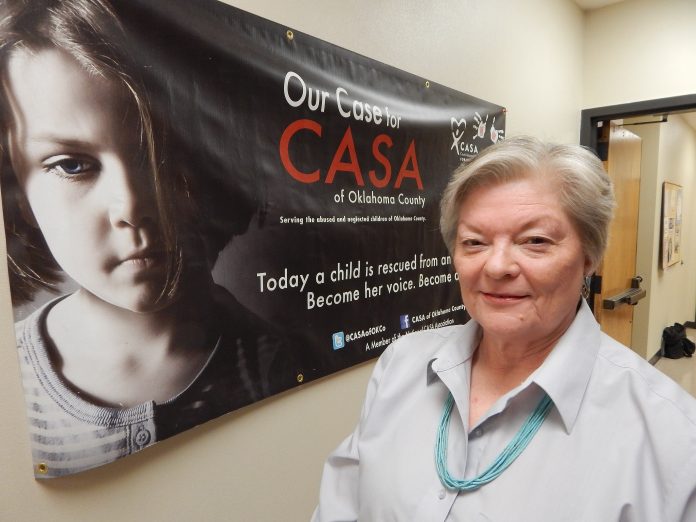
Jonette Dunlap wants more retired school teachers to consider the personal enrichment of improving a child’s life by becoming a CASA.

Story and photo by Jason Chandler, Staff Writer

Jonette Dunlap continues to feel an altruistic calling as a retired school teacher.
Her life had been dedicated to children and she wanted to see more of them prosper and experience the beauty of life. Six years ago, she discovered being an advocate for Court Appointed Special Advocates (CASA), would provide a stepping stone for many more children that she has mentored and acted in their best interests.
The goal of a CASA is to advocate for children and teenagers during a child custody court proceeding due to their legal guardians’ alleged abuse and neglect. Dunlap hopes that more retired school teachers will consider volunteering as a CASA.
“I have a passion for this,” Dunlap said. “It’s being able to take what I did as a teacher involved in the child’s life, but only so far, and go with them further, and be able to be an active advocate for their situations.”
A judge is looking for a neutral third-party opinion to cover bureaucratic concerns. They want someone to give an objective point of view to what would best serve the children, said Alex Corbett, CASA volunteer recruiter and training facilitator.
DHS is mandated by statute to attempt the reunification of the child and legal guardian if there is a glimmer of hope. CASA is not bound by that law when advocating.
There are currently 174 active CASA volunteers in Oklahoma County, he said. During the course of a year, there are typically 240-250 active volunteers on one or more cases, he added.
Corbett refers to Dunlap being a rare breed — a super CASA. Dunlap accepts the maximum work-load of five cases.
“By putting a cap on the number of cases a CASA volunteer can serve on — the wisdom being that the CASA volunteer comes to know the children, families and the core situation much better than the DHS worker has the time to do,” Corbett said. “The DHS workers want to, but they don’t have the time to dig as deeply in the case as what a CASA volunteer can do.”
Dunlap cautioned that there are not enough CASA volunteers to serve the growing needs of children in Oklahoma County. The ideal situation would be to have a CASA on every case, for every child that enters the custody of the Oklahoma County DHS system.
“That way we could make sure that all areas are being covered,” Dunlap continued. “And as Alex was mentioning, the DHS workers are very good, but they only have a certain amount of time. So we step in and fill some of those gaps. We can make more visits. We do have more time to go to the schools.”
As a teacher, she would make home visits and see families living the way most people would not consider as normal. She could not do anything about it, Dunlap said. But as a CASA, she is empowered to advocate for at-risk and deprived children in the custody of the Oklahoma Department of Human Services.
“We follow them along through that time in custody,” Dunlap said. “With my particular background, I always look at that education.”
Many children are far behind literacy standards when entering the DHS system. These children become even further behind in their education when being placed in different areas of custody or for therapies in different patient facilities, she said.
Providing opportunities to change a child’s life is also uplifting for Dunlap.
“Being there to see their eyes light up. That’s the main thing,” Dunlap said. “Seeing them have hope and being able to make a difference in their case; my reward is when I’m able to change something that was not getting taken care of in the way it should have been.”
She recalls a case when a boy was supposedly home-schooled. But it was found that at the age of 8, when he entered DHS custody, he had been without any schooling. The boy knew nothing about math or spelling.
“As an 8-year-old he had to start in the first grade,” Dunlap said. “He started behind. He is still behind but making some strides to catch-up,” Dunlap said. “That is a success story because I’ve spent time with him, taking him to the library and tutoring him in reading.”
Education is sparking the boy’s curiosity to learn and engage in life, when before, he was very quiet because he could not read at all.
“He now is very proud to be able to read some little beginning books,” Dunlap said.
Reading is so important to one’s life because illiteracy impacts a growing prison population in Oklahoma.
“If you are interested in children, and you like making a difference, CASA is a great place to do it,” Dunlap said. “You pretty much have control of your time and the only things that are fixed in stone are the court dates. So you’re expected to be there with your child and have a report written for the court.”
The volunteer is supported by an advocate supervisor who accompanies the CASA in all court proceedings, Corbett said.


Designing the perfect answer

0
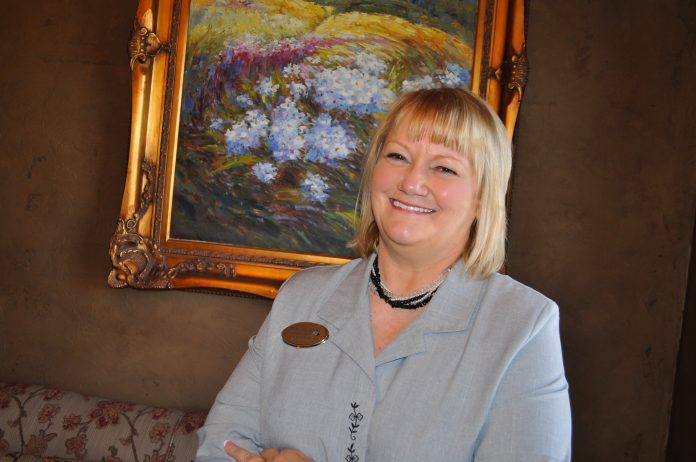
At 61, Billie Upshaw is ready to make life more comfortable for seniors with memory care issues at Heritage Pointe, which opens soon in northwest Oklahoma City.

by Mike Lee
Staff Writer

Billie Upshaw, RN, has spent the bulk of her career serving residents in long-term care facilities in Kansas. She traveled from border to border to different facilities each week and then did it all again on Monday morning.
Even though former employers may have operated in a different way, Upshaw has always prescribed to the philosophy that every patient is unique.
That’s why she’s so excited about her new role as wellness director with the soon-to-be opened Heritage Point OKC in northwest Oklahoma City.
“It’s not cookie cutter. You meet where that resident is,” she said. “I read a quote somewhere that said that if you’ve met one person with dementia you’ve met one person with dementia. You can’t say ‘this is the way they are, this is what we do.’ There’s not a perfect answer unless you make it that way for them.”
Upshaw is excited about getting in on the ground floor at Heritage Pointe – which is designed after a similar facility in Overland Park, Kansas and will be a sister to a similar residence to open next year in Tulsa.
When owner Kip Pammenter talks about the residents at his Heritage of Overland Park memory care residence he uses their first names.
The president of a company that specializes in Alzheimer’s and memory care knows that’s the only way you can truly make a difference in someone’s life. Getting to know each and every client and meeting them where they are is the hallmark of Pammenter’s successful approach to person-centered care.
Upshaw likes working for someone with that philosophy. She also believes in tailoring care to the individual.
It’s a unique concept in today’s take-it-or-leave it memory care market.
“Each family comes in with their our circumstance and their own issues and that’s their focus,” Pammenter said. “The relationship blossoms and they tie into other families. There’s a lot of empathy. Families are going through the same issue and families lend support to each other.
“They help each other and they help us.”
David Thompson serves as Pammenter’s vice president of operations.
“Really what we’re trying to do – big picture – is the person-centered care approach,” Thompson said. “We want to know what their routines are, what their interests are and how do we give them meaning and purpose and relationships and enjoyment each day in a lifestyle.”
Dealing with the effects of Alzheimer’s disease and trying to understand available care options can be extremely challenging for families.That’s why Pammenter designed Heritage Point to work with families to envision a better way to live with Alzheimer’s disease and other dementia related impairments.
Pammenter wants to truly reinvent Alzheimer’s care and what life should be like for seniors with cognitive challenges. The focus is on each individual resident; knowing who they are and what they love to do…and then finding activities that have meaning and purpose.
Heritage Point will offer a smaller, home environment that promotes dignity, respect and love. A dedicated team of experienced and caring staff understands the importance of developing close personal relationships with residents and becomes an extended part of your family.
Professionally trained care staff, along with the expert guidance of the medical director, offer an unmatched array of services and life activities to create a home that supports each individual person.
“People trust you to take care of their loved ones and sometimes it’s easier for you to take care of them because you’re taking them where they’re at,” Upshaw said. “We want to remember those things that are good and positive in their life but dementia is a robbing disease. It takes away the person and the things that have always been important to them but sometimes you can circle around and get back to that and those are the moments you live for.
“It’s a horrible disease. I hope we can cure it. I would be glad to be put out of a job. I’ll go find something else to do.”


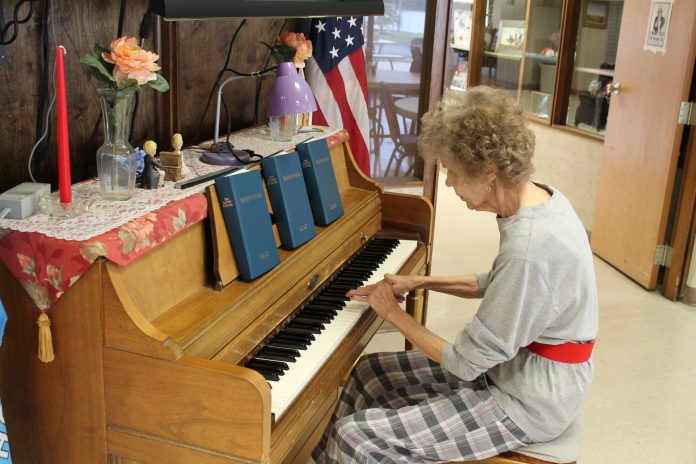
Senior Talk: Growing up, what did you want to be?

0

Growing up, what did you want to be? Salvation Army Senior Center – Warr Acres

I wanted to always work in an office. I always liked typing. Norma Bellamy

I leaned more towards office work because in high school I took shorthand, typing and bookkeeping. Alie Faye Johnson

When I was little I wanted to be a beauty operator. I did all my cousins’ hair. Cheryl Wilson

I think I wanted to be a nurse and I was, working in oncology and chemotherapy. Lynn McKinnon

Salvation Army to host Senior Fair

0
Seniors will have access to a wealth of services and entertainment during the Salvation Army’s Annual Senior Living Fair.

by Mike Lee, Staff Writer

What started as an idea to benefit a handful of seniors has blossomed into an annual event impacting the lives of hundreds in our community.
The Salvation Army 4th Annual Senior Living Fair will be held on Thursday, April 30 from 9 a.m. to 1 p.m. at The Salvation Army Chesapeake Energy Center of Hope, 1001 N. Pennsylvania, Oklahoma City.
The Senior Living Fair, presented by Well Preserved Advisory Group and Senior News & Living, strives to spread hope by providing resources that empower older Americans to be more positive, active and physically fit.
“We’re excited to be able to showcase so many organizations in one place that can be a resource to senior citizens,” said Lisa Sydnor, senior programs manager at The Salvation Army Central Oklahoma. “We have nearly 60 exhibitors for this year’s fair who can enhance and empower our seniors to live fuller lives.”
Sydnor had the idea of inviting local service providers to come and show her seniors what they could offer them.
“I thought I could bring eight people in,” Sydnor said.
The idea was a hit from the very beginning with 12 exhibitors showing up that first year. The event has grown to be worthy of the the 18,000-seat Chesapeake Energy Arena.
The Senior Living Fair is free to the public, thanks to sponsors like Brookdale Senior Living, and includes exhibits for health and wellness, housing, Medicare information, insurance, aging-in-place, and fun ways to stay active.
Exhibitors for this year include the Oklahoma State Attorney General, Legal Aid of Oklahoma, Oklahoma City Police Department, Oklahoma City Fire Department, Valir, Sunbeam Family Services, RSVP of Central Oklahoma, AARP, Regional Food Bank of Oklahoma, Seniors on the Move and many more.
“We are doing this with no budget,” Sydnor noted. “Quite frankly I think it’s so popular because it’s a God thing. This was never supposed to be more than six people talking to seniors at one location. Now we have 60 vendors and expect more than 300 people.”
The event has continued to grow because seniors are finding value in it.
With everything from Zumba, to Tai Chi to line dancing almost everyone can find something to entertain them.
“I think because they know they’re going to have fun and we have staff floating through and inviting people to come to our centers,” Sydnor said, noting lunch is provided.
The Salvation Army Central Oklahoma operates five senior centers throughout the Oklahoma City metro. The centers are open every weekday to seniors ages 55 and older. Seniors have the opportunity to socialize, enjoy lunch and participate in numerous activities that include Bible study, exercise classes, crafts, dancing and much more.
“Our goal is for anyone who comes to the center to feel like they’re in their own home, relaxed and have good friends and company,” Sydnor said.


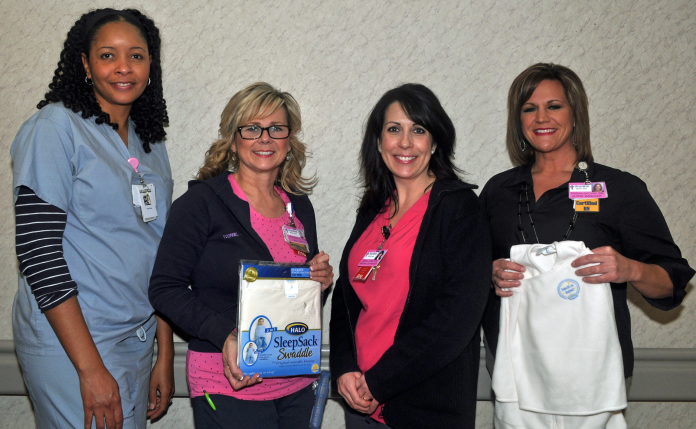
Nurses give extra TLC to the babies in the Neonatal Intensive-Care Unit at Deaconess Hospital.

0
Nurses in the NICU show the Sleep Sack Swaddle that is given to each baby born in the nursery at Deaconess Hospital.

by Vickie Jenkins

The Birth Center at Deaconess hospital features eighteen elegantly appointed single-room maternity suites that allow mothers to share the birth experience with family in a beautiful, home-like atmosphere by staying in the same room for labor, delivery, recovery and postpartum care.  Nine-bed level-II NICU provides excellent care for babies who need additional medical attention. The NICU is staffed by registered nurses and board-certified neonatologists.  One-on-one nurse to patient ratio throughout the entire labor and delivery process.
Deaconess Hospital in Oklahoma City is known for their outstanding doctors and nurses. Picture: From L-R: Tanya Bogan, RN,  Yvonne Silberman RNC-OB,  Jonna Criscuoli, RN and Supervisor Trisha Brown, RNC-OB show the Sleep Sack Swaddle that each newborn receives at Deaconess.  The Sleep Sack is a Safe Sleep Initiative that was introduced February 14, 2014.
Here are some Safe Sleep Swaddle Tips to ensure a safe sleep for your baby. Always place baby to sleep on his or her back at naptime and night time.  Use a crib that meets current safety standards with a firm mattress that fits snugly and is covered with only a tight-fitting crib sheet.  Remove all blankets, comforters and toys from your baby’s sleep area (this includes loose blankets, bumpers, pillows and positioners).  The American Academy of Pediatrics suggests using a wearable blanket instead of loose blankets to keep your baby warm.  Offer a pacifier when putting baby to sleep. If breastfeeding, introduce pacifier after one month or after breastfeeding has been established.  Breastfeed, if possible, but when finished, put your baby back to sleep in his or her separate safe sleep area alongside your bed.  Room share, but don’t bed share.  Bed sharing can put a child at risk of suffocation.  Never  put your baby to sleep on any soft surface (adult beds, sofas, chairs, water beds, quilts, sheep skins etc.)  Never dress your baby too warmly for sleep.  Never allow anyone to smoke around your baby.  Deaconess Hospital is proud of their new Hugs and Kisses Security System as of January 2015.  The Hugs system offers the reliability that you and your staff can depend on every day to keep your infants safe.  The Hugs tag attaches in seconds and is automatically enrolled in the software.  Protection can start right in the delivery room.  The Hugs system requires no manual checks of infant tags or other devices to make sure they’re working. The Hugs system software -continually monitors the status of all devices, and will generate an alarm if something goes wrong.  There is an automatic mother/infant matching.  With the Kisses® option, the Hugs system automatically confirms that the right baby is with the right mother. There are no buttons to push and no numbers to match.
Deaconess Hospital offers Certified Lactation Consultants that round on all post-partum and NICU mothers.  Here you will find Neonatologists and Neonatal Nurse Practitioners on call 24/7 for high risk deliveries.


Travel/Entertainment: Artist Harold Stevenson honored at Oklahoma’s Fred Jones Junior Museum of Art

0

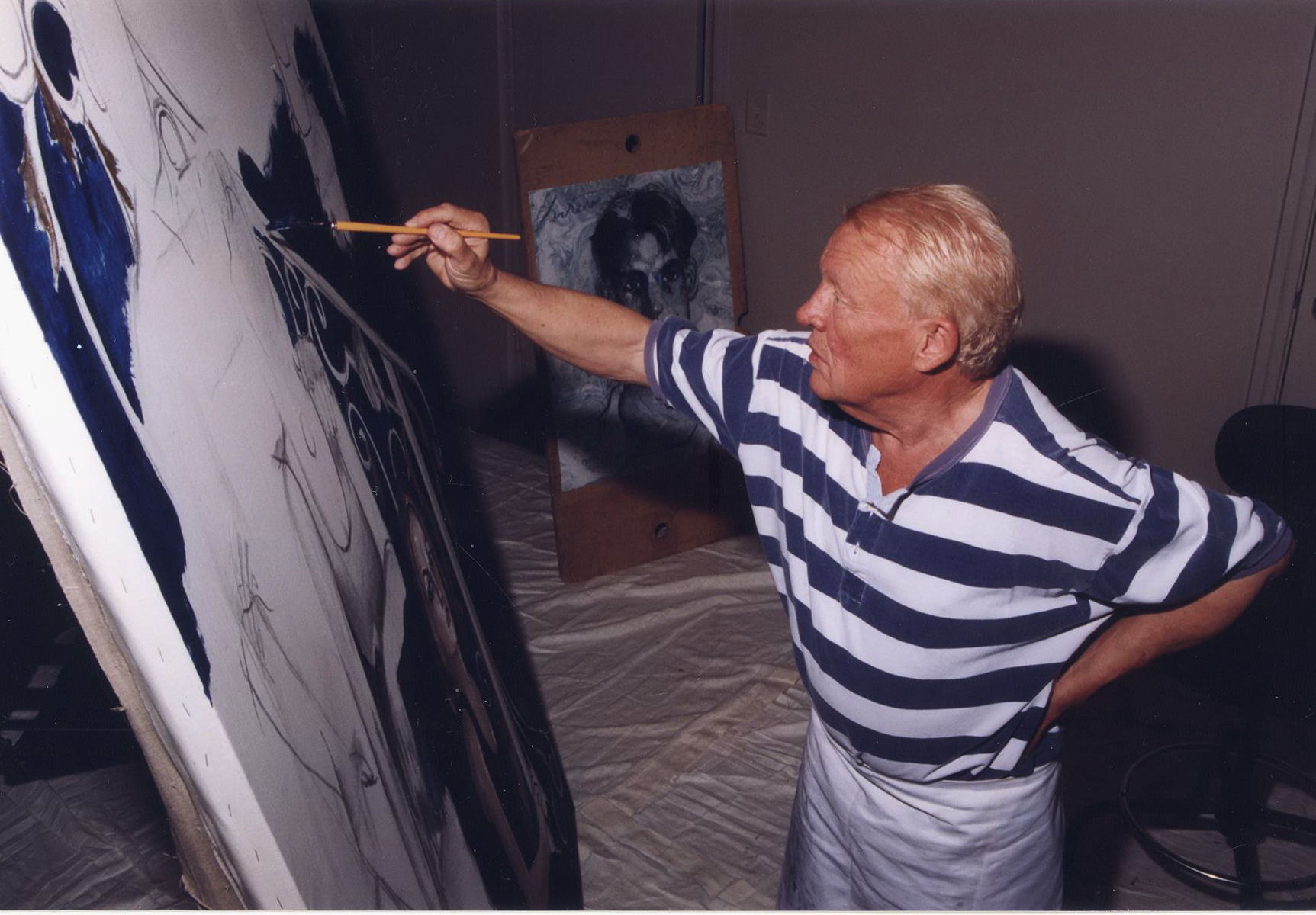
ddd001.drk-conArtist Harold Stevenson  honored at Oklahoma’s Fred Jones Junior Museum of Art

Photography and Text by Terry “Travels with Terry” Zinn  [email protected]


Idabel, Oklahoma native artist Harold Stevenson was recently reunited with friends and a selection of his artwork dating back to 1953 at the University of Oklahoma’s Fred Jones Junior Museum of Art. “The Nature of Man: Paintings and Drawings by Harold Stevenson,” will be on exhibit through May 2015, and was generously donated to the Museum by childhood friend and art collector, Ross Dugan.
The museum has previous works of Stevenson in its collection including his monumental series, “The Great Society” of a hundred larger than life portraits of his neighbors, friends and acquaintances generated in Idabel, Oklahoma in 1966.  Besides being in many private collections, Stevenson works are in the collection of the Oklahoma City Museum of Art and the Museum of Modern Art in New York City.
As descried in the gallery brochure, “The Nature of Man, explores Harold Stevenson’s investigation of masculinity from his early career in 1960’s to more recent works from the 1990’s. The male body in Stevenson’s works represents variously an expression of eroticism or memory of a reference to art history…. he produced naturalistic yet simplified depiction of the human body, frequently using a monumental scale and unconventional or unusual perspectives.”  This style was rejected by the critics of the 1950s who were more interested in non-objective abstraction.  But Harold’s creative artistic lust would not be quelled and his prolific painting continued to great heights.
A self-taught artist, at an early age in Idabel, Oklahoma, he moved away from his home’s kitchen table and set up his own gallery/studio in a second story of a main street Idabel building.  From then on, his art took him to the University of Oklahoma, on to Paris, with homes there, in Key West, Wainscott Long Island, Long Island City and a cabin in the woods in Idabel.  This energetic octogenarian now lives in an apartment in his beloved Idabel.
It was a fitting honor to have Stevenson and his childhood friend and benefactor Ross Dugan at the intimate gallery event, where his longtime friend Mary Jane Rutherford and the Fred Jones Junior Museum of Art Interim Director Dr. Mark White, commemorate this reunion and celebrate of Stevenson’s approaching 86th birthday.
It is not often that an artist and his friends have the opportunity to celebrate the man and his art near the end of a career, as does the Fred Jones Junior Museum of Art with this exhibition.  The museum is open to the public free of charge and as always presents and celebrates an eclectic exhibition of fine art.  Harold Stevenson is as original as his art, and the Nature of Man exhibition could be called the Nature of Harold, as it depicts his personality as well as artistic expression.

Authors Note:  I first met Harold at an impromptu Luncheon in Oklahoma City in 1995, hosted by Dr.  Duane Moore.   From this first meeting I knew I was in the presence of a celebrity with an extraordinary talent of telling tales of his worldly experiences with such notables as Andy Warhol and Peggy Guggenheim, among others.  His love of a luncheon ~ or anytime ~ martini reintroduced me to that cocktail of elegance and joy, resulting in my own photographic interpretation of the Martini through my worldwide travels.  www.martinitravels.com    Since 1995 I have visited Harold in New York, Dallas and of course Idabel, documenting his life and creativity in photographs and recorded interviews.
For Fred Jones Junior Museum of Art, times and more information visit, http://www.ou.edu/fjjma.html

INTEGRIS Southwest Medical Center Names Dialysis Unit After Longtime Physician

0
Anthony W. Czerwinski, M.D.

The dialysis unit at INTEGRIS Southwest Medical Center is named in honor of a longtime member of the hospital’s medical staff. The unit was dedicated in memory of Anthony W. Czerwinski, M.D., on Feb. 10. That date was specifically chosen because it would have been his 81st birthday.
The Anthony W. Czerwinski, M.D., Dialysis Unit, as it is now called, is a fitting tribute to a man who committed his life to medicine.
Czerwinski was born Feb. 10, 1934. He began practicing internal medicine and nephrology at INTEGRIS Southwest Medical Center in August 1982. He would remain with the hospital for 32 years. He was still practicing medicine at the time of his passing last November.
Czerwinski, who was lovingly known as “Dr. C,” served as the hospital’s chief of staff for seven years. He held many leadership roles throughout his tenure, serving on the board of directors from 1995 to 2005, as chairman of the medicine department from 2002 to 2007, and on the medical executive committee from 1987 to1993 and then again from 2002 to 2007.
Czerwinski touched many lives and his presence is greatly missed, but his memory will live on forever in the hearts of everyone who knew and loved him.

Women’s New Retirement Realities

0

By Donna M. Phelan

Although it is improving, there is an economic cost to being a woman that reverberates into retirement. It results from multiple long-term socio-economic conditions.
The first is that women have consistently earned less than men, and real wages have stagnated.  Currently women earn about one-fourth less than men.  The disparities are even greater for black women, who earn about 30 percent less and Hispanic women, who earn about 40 percent less (census.gov). The Center for American Progress calculates that over a forty-year career life, that difference may add up to $300,000 for lower earners, $431,000 for average earners and $723,000 for higher earners.
Women are also less likely than men to start their careers in, or get promoted to management positions.  A March 2010 Catalyst article in the Harvard Business Review reports that “women continue to lag men at every single career stage, right from their first professional jobs.”  Women comprise only 5 percent of CEOs of the Fortune 500 companies.  A 2014 Grant Thornton International Business Report survey, featured in the March 6, 2014 issue of Forbes, found that the number of women in senior management has “stagnated” at 24 percent since 2007. This means that most women miss out on the majority of lucrative executive benefits that may help secure their retirement.
An August 14, 2013 article in the Wall Street Journal, quoted an Aon Hewitt study, which said that the 401(k) gender gap is even bigger than the gender pay gap. The study showed that the average man’s 401(k) savings was $100,000 dollars.  The average woman’s 401(k) retirement saving’s was $59,300 dollars– a full 40 percent less.
Women are more likely to leave the workforce for childcare and eldercare.  This redirects their resources of time, money and energy away from retirement saving.  It also hinders career progress.  Studies by Claudia Goldin of Harvard show that when women reenter the workforce, they permanently lag behind in pay and promotions.
Women who leave the workforce for caregiving also incur consequences for Social Security. Women receive about one-fourth less than men in Social Security benefits, $13,236 versus $17,004. Nearly 30 percent of women over age 65 rely on Social Security for virtually all of their income, a rate that increases with age. The percent of women older than 65 living below the poverty level of $11,670 was 11 percent versus 6.6 percent for men, and 18.9 percent versus 11.9 percent for those living alone.  Women who turn on Social Security early for financial reasons permanently lock in a lower lifetime benefit in what may be their only pension.
Women also tend to work in industries that don’t offer retirement plans, so they miss the opportunity for wealth building through an employer match. With women’s average income hovering around $38,345, it is difficult to see how women would have any discretionary income left over for retirement saving.
Marital status is also a factor. Married women fare best, divorced and widowed women next best. Never-married single women incur the most cautious outlook for retirement.
The longevity gap between men and women is narrowing, but women still outlive men, and end up living out their later years alone.  Greater longevity is accompanied by larger risk of diminished purchasing power due to inflation.
The many socioeconomic issues facing women and retirement raise concern. What if the old method of trying to save enough for retirement doesn’t work for women?
New strategies are needed if women are going to thrive in retirement. Women should consider working longer in their careers, and part-time in retirement.  Women should also consider non-traditional residence sharing – renting out empty bedrooms, getting a roommate, and downsizing.  With the savings from reduced housing expenses, women could make financial investments in income-producing vehicles. Women could also turn their hobbies – for which they already have the skills, tools and materials – into profitable home-based businesses.
Women need to understand the role they play in their own retirement and take responsibility. They need to become financially literate and realize they will need income for life.  Women need to create stackable income streams to empower their retirement security and meet their monthly spending needs.
Women should also start talking to other women about retirement planning.  What are their friends doing to prepare for retirement? What if they got together once a month over coffee to start a conversation about women and retirement? They might discover that they have ideas, talents and resources to share with other women, which might enhance the retirement planning experience and success of a larger scope of women.
Donna M. Phelan has spent more than 18 years at some of Wall Street’s largest and most prestigious investment firms. She holds an MBA in finance from the University of Connecticut, and provides personal financial advice to clients coast to coast. The author of “Women, Money and Prosperity: A Sister’s Perspective on How to Retire Well,” (www.donnamphelan.com), she has lectured at conferences nationwide on a broad range of financial topics and has published numerous articles on investments, retirement and financial planning. Phelan was formerly president of the American Association of Individual Investors (AAII) Connecticut state chapter and was active in the Financial Women’s Association (FWA) in New York.

Social

0FansLike
0FollowersFollow
0SubscribersSubscribe