Wednesday, March 11, 2026

Former Governors Share Experience, Wisdom

0
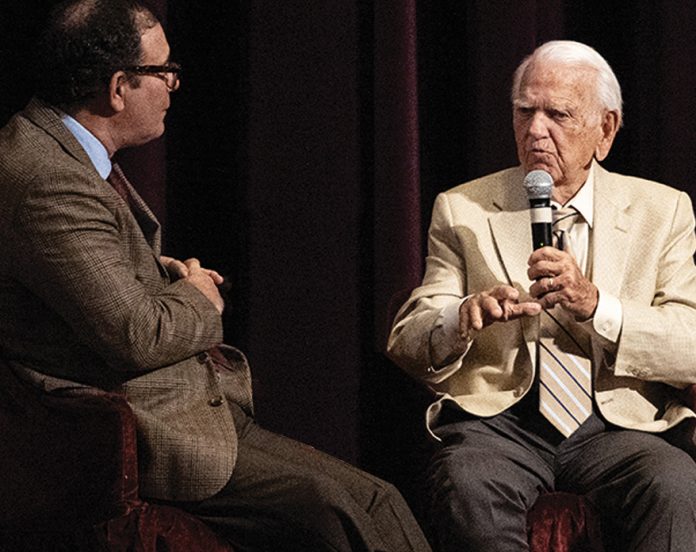
The Masonic Temple recently was the site of a fireside chat with former Oklahoma Governors George Nigh and Gov. Brad Henry. Pictured left to right is; Michael Williams, moderator, and Curator at the Oklahoma Territorial Museum, and Gov. Nigh.

Former Governors Share Experience, Wisdom During Fireside Chat

Story and photo by Van Mitchell, Staff Writer

Former Oklahoma Gov. George Nigh, age 96, recalled listening to President Franklin D. Roosevelt’s famous fireside chats as a child.
Nigh and former Gov. Brad Henry both got to participate in their own “fireside chat” before an audience recently at the Masonic Temple in Guthrie. The event was a fundraiser for the Oklahoma Territorial Museum which is celebrating its 50th anniversary in 2023.
Nigh served as the 17th and the 22nd governor of Oklahoma and as the eighth and tenth lieutenant governor of Oklahoma. He was the first Oklahoma governor to be re-elected and the first to win all 77 counties in the state. Additionally, short term vacancies in the governor’s office twice resulted in Nigh assuming gubernatorial duties while serving as lieutenant governor.
In 1950, at age 23 Nigh became the youngest member of the state legislature when elected to the House of Representatives from Pittsburg County. In 1953 he introduced the bill that made “Oklahoma!” the official state song.
“As a kid in school, I listened every week to Franklin Roosevelt’s fireside chat before hardly anybody in this room was born,” Nigh told audience members which included students from Guthrie Junior High, and hardly ever did he attack somebody personally, hardly ever did he call (someone) a dirty word or anything, but he talked about how things were. He basically brought the country through the Depression. Then he brought the country through World War II, and he died shortly before Japan surrendered in 1945. He was not the dictator, he was not the emperor, he was not the king. He was the president. He was an executive. And he led personally and motivated this country.”
Henry, who was the last Democratic governor of Oklahoma, said Nigh was a mentor to him.
“I want to say that he is literally and figuratively my mentor,” Henry said. “When I was a sophomore in college, he allowed me to intern in his office. But it was not your typical intern experience. One of my jobs was every morning to get there a little early, go through the main newspapers and cut out any article that related to the governor or the Legislature, legislation pending legislation, things of interest to the governor’s office. I would copy them all and make it packageable. George would come in and sit down with me while I was reading the paper, and would just visit with me about the day’s news or whatever was on his mind. As you can imagine. It was just absolutely fascinating.”
Henry said Nigh served as a role model for him deciding to run for public office.
“I just had to recognize my friend and mentor George, because he’s a big part of my quest and my decision making and my drive to serve people,” Henry said. “I love the way he puts it. I absolutely agree with him. It’s not about politics, it’s not about being a politician, in my view, it’s about public service.”
Henry said he comes from a public service family.
“I grew up in a family of public servants and I wanted to serve the public,” he said. “My mother was a school teacher. My aunt and grandparents were school teachers. My father was a state representative and a county judge. My uncle was a county judge. My cousin Robert Henry, who you all probably know was state representative then later Attorney General and on and on. I just always wanted to serve.”
Henry initially tried to recruit other Democrats to run for governor, but was persuaded to give it a try.
“The bottom line is I looked back to the service of George Nigh and Henry Bellmon,” he said. “It wasn’t just a Democrat or Republican thing; it was a servant thing. I met Henry Bellmon when I was working for George and became very close and good friends with Henry. I think George and I and Henry are two of the greatest governors that this state has seen. Those two individuals really inspired me to take that risk, take that step.”
Henry told the audience that you sometimes have to take risks for something you believe in.
“I think it’s important to be willing to take a risk to put yourself out there, to be willing to fail,” he said. “Because if you’re not willing to fail, if you’re not willing to make a mistake, you’re never going to make it be successful. And that’s what it boils down to me.”
Nigh said he knew at an early age he wanted to become governor.
“When I was in the ninth grade, I took a vocations class at McAlester,” he said. “You wrote down what you wanted to be when you grew up, this was before Pearl Harbor in 1941. I wrote down that I wanted to be governor, and then you discussed that for the semester.”
Nigh has given commencement speeches across the state and around the country hoping to motivate young people to go into public service during their lifetime.
“I’ve made hundreds of commencement speeches, and what I want to tell these students is you cannot be drafted to be a legislator or governor or President,” he said. “You have to offer yourself. Be involved in serving the people. Yeah, be a politician. Take out an ad, shake hands, kiss a few babies, make a speech, but then be a public servant. And that’s why all 77 counties are important to Oklahoma, not just the one you come from. I want to encourage everyone to get involved.”


Three Healthcare Missteps of Military Retirees

0
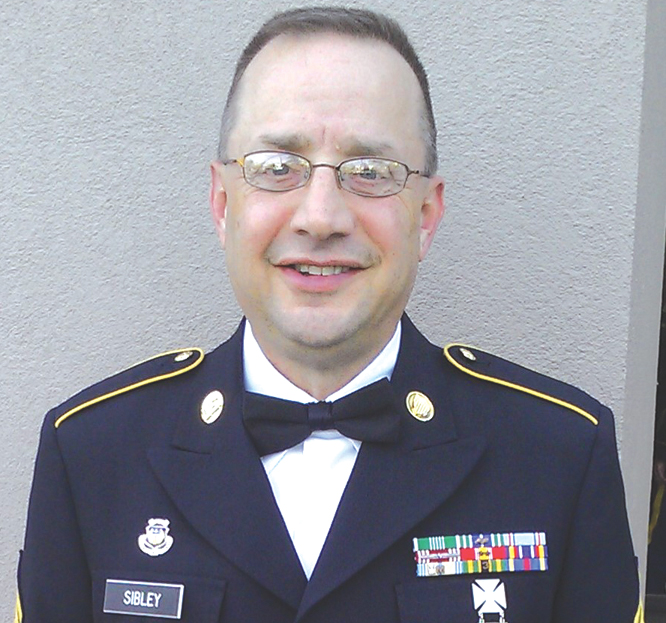
Steve Sibley is a native Oklahoman and Native American. He is also a retired, disabled veteran of both the Air Force and Army, and holds an MBA in Healthcare Administration.

Story by By Steven Sibley, MBA/Healthcare Administration

I enjoyed a 36 year career in the military, in the Air Force and Army, on active duty and in the reserve. I was honorably discharged from the Active Guard Reserve (AGR) in 2017 at the age of 61, after 10 years as an Army Reserve Career Counsellor, where my primary duties were recruiting, retention, and educating reservists about their benefits. Now, I do the same for military retirees with their healthcare benefits. While we have great healthcare benefits, many retirees do not access or understand how to maximize them. In my opinion, they make the following three crucial missteps.
First, many retirees fail to use the VA Healthcare System or file for VA disability. Generally, anyone who has served on active duty, is eligible for both these benefits. Veterans can seek care with the Oklahoma VA Hospital by enrolling into the VA’s OKC downtown location, room 1B109. Veterans Services Officers (VSOs) are in the same room who can assist with filing disability claims. Claims can also be file at most VFW and American Legion post’s, the DAV, and the Oklahoma Department of Veterans Affairs (ODVA).
Secondly, many retirees seek another career after leaving active service. Those employers generally offer healthcare benefits. Since retirees are eligible for Tricare Prime or Select up to age 65, they should carefully review their employer plan with Tricare, to see which offers the best benefits and lowest costs. Once a retiree turns 65, they will convert to Medicare with Tricare for Life (TFL). TFL is a premium free wrap around plan, secondary to Medicare, with prescription drug coverage (aka express scripts). Once on Medicare, there is no need for a retiree to continue paying for an employer health plan, which becomes the 3rd payor. This means they only pay the remaining balance after both Medicare, the primary coverage, and TFL, the secondary pays everything Medicare doesn’t. In this scenario, there would be no unpaid balance, so there would be no claim to file with a 3rd payor. It’s simply insurance you do not need.
The third problem is that there is little clear training given about TFL and exactly how it works. Retirees just know that they go to the doctor, get care, and don’t get a bill. While that’s a great benefit, veterans deserve and can access more from the Medicare portion of their TFL by using Medicare Part C (Medicare Advantage) which will positively impact their health, wellness, and more.
I offer needed education, along with answers and advice to both veterans and their beneficiaries about their healthcare benefits. No cost, no pressure, just help. We’ll sit down and have a conversation until we are satisfied that you understand all that you need to know to make an informed decision about ALL the great healthcare you’ve earned and deserve for you and your dependents. See my ad on this page, and give me a call at 405-850-1569.

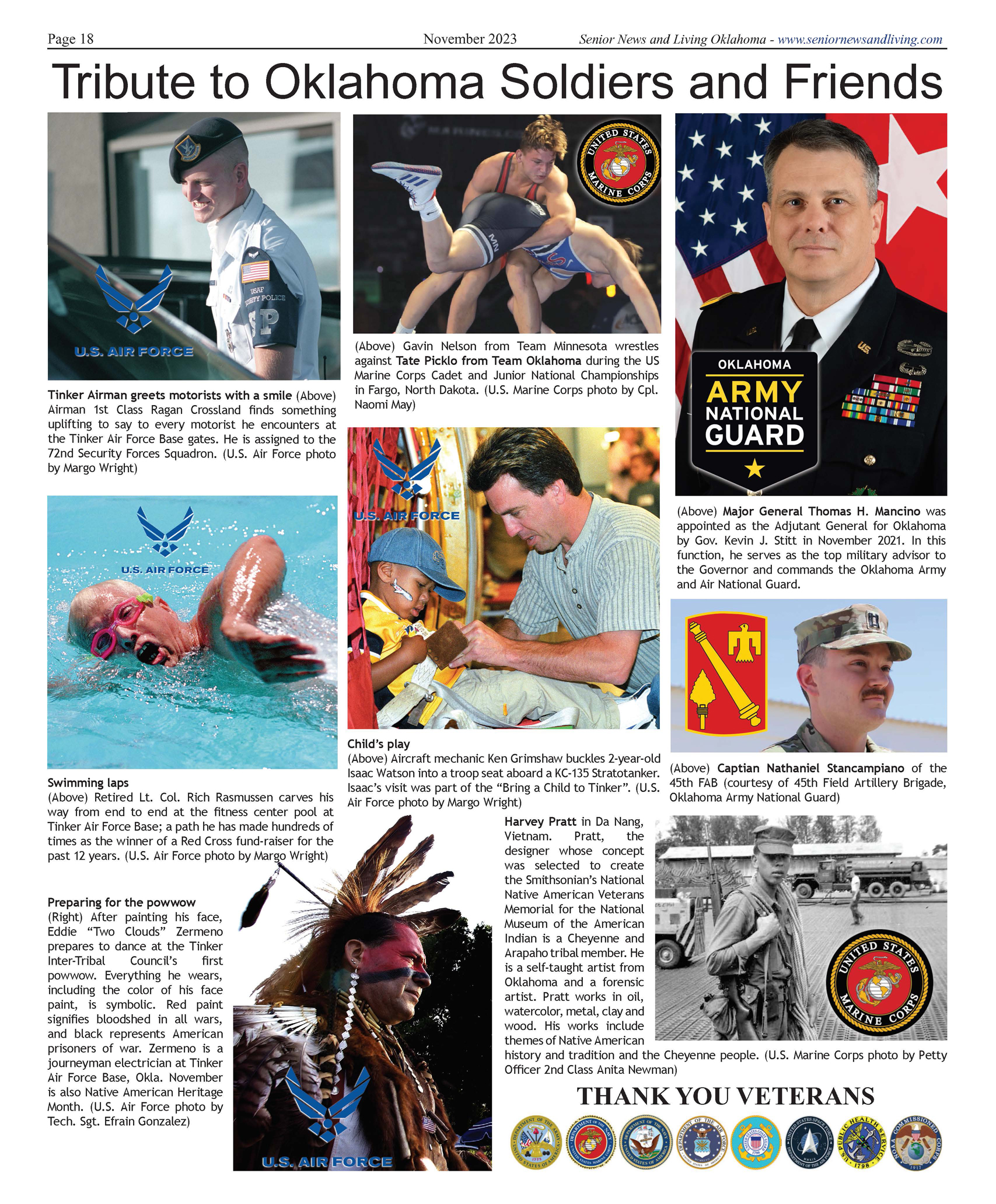
VIEW PAGE HERE: Tribute to Oklahoma Soldiers and Friends

0

Veteran Resource Fair Coming to Guthrie American Legion

0

Senior News & Living and VIPCare will be hosting a Veteran Resource Fair November 16th at the Guthrie American Legion LeBron Post 58 at 123 N First St., Guthrie, OK 73044.
Coffee, beverages, snacks, and donuts will be served at the event, and veterans are encouraged to attend and enjoy learning and socializing.
Resources covered will include: Veterans Healthcare Options

Veterans Mental Health Services

Veterans Disability Claims

Veterans Home Care

Veterans Education

Veterans Beneficiaries Benefits

and more…

For information about the event, call Steve Sibley at 405-850-1569. We will see you there!


VillagesOKC – A Plan for Aging That Connects The City

0

Story and photo by Eddie Roach, VillagesOKC Member/Volunteer

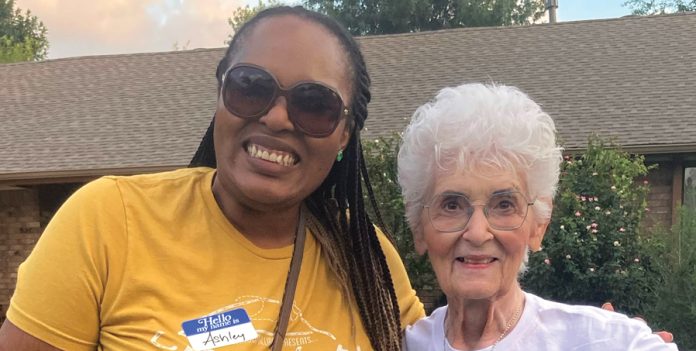
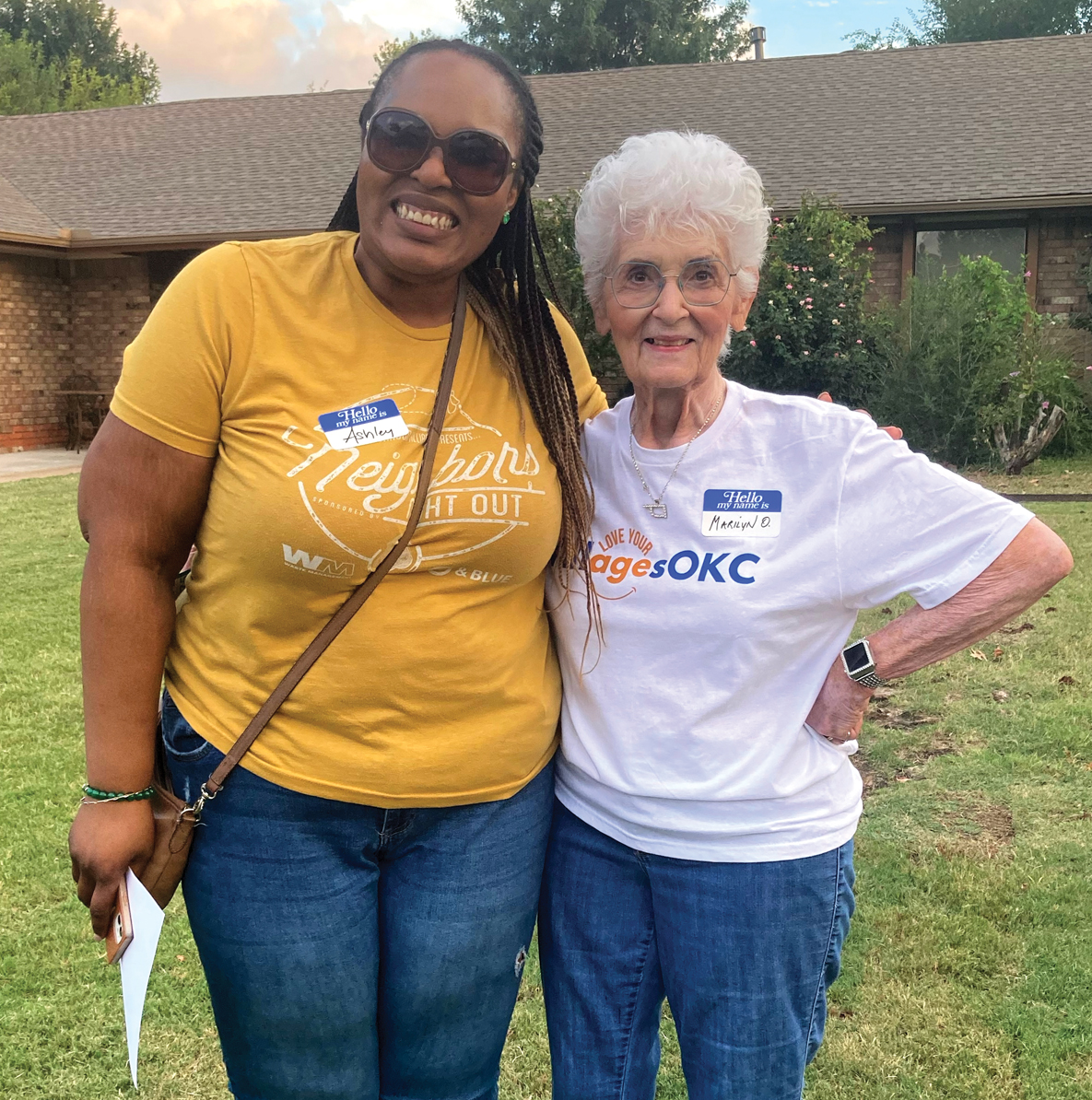
Ashley Dickson Oso, program/communications director for the Neighborhood Alliance of Central Oklahoma, left, joined VillagesOKC Executive Director Marilyn Olson for the September Neighbors Night Out.

“VillagesOKC is everywhere!” That’s what we hear from friends who’ve been watching as we’ve grown over the past five years. And, while we aren’t everywhere, we are lots of places with our own events and partnering with others.
Our newest partnerships are with the YMCA of Greater Oklahoma City and the Neighborhood Alliance of Central Oklahoma. The YMCA partnership is intended to foster a sense of community and social connection among members of the YMCA and VillagesOKC. The Neighborhood Alliance partnership includes the opportunity to publish older-adult focused articles in the Alliance’s quarterly newsletter, which has a distribution list of 6,600.
Here are some of the other organizations with which VillagesOKC partners to connect members with information and resources to age successfully – with vitality and purpose.
– Caregiver Ambassadors is a program within VillagesOKC which helps train a network of volunteers guiding faith communities through the challenges of aging.
– Senior Living Truth Series offers two monthly seminars on topics affecting older adults. We are education partners with the Truth Series.
– NewView Oklahoma is a valuable partner that provides services and employment opportunities to empower individuals who are blind or have low vision.
– Oklahoma Senior Journal provides a comprehensive guide to all things senior as well as hosting the Second Half Expo each October.
– OKC Town Hall Lecture Series brings nationally recognized speakers to the city. We are proud to partner with them and promote these stimulating and informative lectures.
– Veterans Initiatives include partnering with Force50 Foundation, Oklahoma Warriors Honor Flight, Vietnam Era Veterans recognition and pinning, and Path to Freedom hosted by NewView Oklahoma.
Details for all our activities and those of our partners are on the Events Calendar on our website: https://www.villagesokc.org/, or call (405) 990-6637. We’d love to see you!

Library By Mail Offered by Metro Library for Homebound Readers

0

The Metropolitan Library System is proud to offer the Library By Mail program to help Oklahoma County residents 65 years or older who are homebound get access to library materials.
The Library by Mail program provides materials (like books, CDs, DVDs, and more) by USPS at no cost to library customers who are homebound or are otherwise physically unable to visit one of our 19 library locations. Recipients can simply request materials through the catalog or by phone, and Metro Library will mail them. When the guest is ready to return the materials, they’ll put them back in the bag they received them in, and send them back to the library with no postage required.
Library by Mail also offers monthly newsletters with suggested titles from the Library by Mail collection.
Now, with the integration of Metropolitan Library System’s upgraded catalog (starting Nov. 1), customers will be able to select “Library by Mail” as their pickup location to have their material(s) mailed to them.
To access this service, guests can visit metrolibrary.org/LBM and log in with their library card number and last name.
Interested recipients who are 65 years or older and reside in Oklahoma County can call 405-606-3295 or 405-606-3297 or email [email protected] to consult with a staff member to determine eligibility.
About Metropolitan Library System: The Metropolitan Library System provides library services for more than 800,000 residents of Oklahoma County with 19 physical locations as well as 24/7 access to our digital resources at metrolibrary.org.

OKC VA Leads Pack With Fastest Growing VA Across Nation

0

The OKC VA Healthcare System would like to extend their appreciation to all the Veterans who have trusted their care with us and helped to make the OKC VA HCS the fastest growing health care system in the country.
“We have pushed our community engagement and outreach programs to travel to remote locations to personally reach out to our Veteran population and provide them with the answers to their questions,” said Wade Vlosich, OKC VA Director. “Many Veterans are not sure if they are eligible for VA healthcare or not, and the best way to find out is by letting us help you navigate the VA eligibility process with our expert staff.”
As of August 2023, the OKCVAHCS data results include:

  • * OKCVAHCS consists of a 192-operating bed facility, located in central Oklahoma serving 47 Oklahoma counties and two counties in North Central Texas (Wilbarger and Wichita), with a total unique Veteran population over 74,600.
  • * OKCVAHCS consists of 15 outpatient clinics, 4 outpatient clinic partnerships with the Department of Defense and a Friendship House/Compensated Work Therapy transitional residence.
  • * OKCVAHCS is in the process of procuring space off-site for a Substance Abuse Residential Rehabilitation Program (SARRTP) and Community Living Center.
  • * OKCVAHCS currently has outpatient clinics in Ada, Altus, Ardmore, Blackwell, Clinton, Enid, Lawton (DoD), Lawton North (DoD), Norman, North Oklahoma City, North May, Shawnee, South Oklahoma City, Stillwater, Tinker (DoD), Wichita Falls, and Yukon.
    Through the OKC VA partnership with DoD, they have opened clinics on Fort Sill Army Base and on Tinker Air Force Base. OKC VAHCS is a part of Veterans Integrated Service Network (VISN) 19, which includes facilities in Oklahoma, Colorado, Montana, Utah, and Wyoming.
    Positive changes and improvements have been made throughout the system to include:
  • One of 15 VA Systems in the country to receive the exoskeleton robotic device providing spinal cord injury providing Veterans the ability to walk.
  • OKC VA is the only VA to have completed minimally invasive outpatient lumbar spine fusion surgeries.
  • Offers VA Express Care Clinic at the main hospital and in Outpatient Clinics. The Express Care Clinic is similar to an urgent care clinic.
  • Robust Lean-Six-Sigma management program with a running total of 205 projects.
  • Implemented a robotic surgery program.
  • OKC VA HCS has sharing agreements with DoD Facilities to increase integration of best practices of health care services to military service members and Veterans.
  • In 2020, first VA to deploy and staff mobile ICU on campus to support the Oklahoma City area with additional bed capacity due to increased COVID cases.
  • Opened new Veterans Resource Center in 2019 which houses: Veterans Recovery Center, Mental Health Intensive Case Management, Homeless Patient Aligned Care Teams, and HUD-VASH.
  • Selected as one of 12 sites to receive a Fisher House. This will be the first Fisher House in the state of Oklahoma.

“We are proud to announce that according to FY23 VHA statistics, we are leading the nation in growth but we are even more excited about is the ability to take care of the nation’s most precious resource—our Veterans,” Vlosich said, “Not only do we strive to provide the best medical care for our Veteran population but we are also thinking outside the box on innovative ideas to reach the most rural areas in Oklahoma. The statistics prove that what we are doing here at the OKC VA, is working and we plan on keeping up this positive momentum going forward for 2024.”
For more information about the OKC VA Health Care System and programs, please click the link below or visit the VA website at: Oklahoma City VA Medical Center | VA Oklahoma City Health Care | Veterans Affairs

TINSELTOWN TALKS: Illeana Douglas pens Connecticut’s Hollywood connections

0
Illeana Douglas is an actress, writer, producer, and director.

By Nick Thomas

In her new book, “Connecticut in the Movies” released in October, actress Illeana Douglas explores Hollywood’s long love affair with the Constitution State.
“The book features movies from the silent era to modern films that were either shot in Connecticut or featured the state in some way in the storyline or production,” Douglas told me when we met at the Katharine Hepburn Cultural Arts Center in Old Saybrook, Connecticut, this past summer.
“On the one hand, you’ve got country-living comedies like ‘Christmas in Connecticut’ (1945) and ‘Mr. Blandings Builds His Dream House’ (1948),” explained Douglas. In the latter, a New York businessman (Cary Grant) builds his dream home in rural Connecticut, but the remodeling goes horribly wrong in a costly yet hilarious way.
The book’s subtitle, “From Dream House to Dark Suburbia,” alludes to the other more edgy themes and darker storylines in the collection.
“Films like ‘Gentleman’s Agreement’ (1947) and ‘The Man in the Gray Flannel Suit’ (1956) have dark suburbia at their core,” said Douglas, referring to movies that deal with anti-semitism and disillusionment in the postwar generation, respectively. But it was back in the 80s after viewing “The Swimmer,” a 1968 film set in Connecticut, that she first developed an interest in films connected to the state.
“Connecticut cinema began to percolate in my head and when COVID hit, I had time to sit down and focus on more Connecticut films,” she said. “I simply fell in love with my subject.”
So much so, Douglas uprooted herself from Los Angeles and moved to Connecticut, near where she grew up in Old Saybrook. This allowed her to not only travel the state while researching and photographing its Hollywood links, but to also purchase a 19th-century house near her childhood home where she completed the book.
But complications of ironic proportions soon arose, linked to the “Mr. Blandings” film. Like Grant’s character in the movie, who relocates from the bustling city to rural Connecticut and purchases an old home that becomes a money pit, Douglas discovered her new home was desperately in need of major repairs – far more than she anticipated. Plumbers, electricians, and builders became her constant companions for the past 2 years!
An actress in her own right appearing in such big-screen hits as “Goodfellas” and “Cape Fear,” Douglas is also a producer, director, and writer, and has appeared as a movie host and interviewer on the Turner Classic Movies network (see www.illeanadouglas.com). However, her personal ties to Connecticut uniquely qualify her as the ideal author to discuss the Hollywood-Connecticut link.
A thoroughly researched book with over 300 photos, Douglas is hoping it will not only appeal to residents of the Nutmeg State and film fans, but will also inspire filmmakers.
“I’ve demonstrated the diversity of films that have been made in Connecticut,” she says. “I hope the book is a blueprint of a renaissance of filmmakers returning to Connecticut.”
Nick Thomas teaches at Auburn University at Montgomery in Alabama and spent this past summer traveling throughout Connecticut and Maine. He writes features, columns, and interviews for newspapers and magazines around the country. See https://www.getnickt.org/.

SNL CENTENARIANS OF OK

0

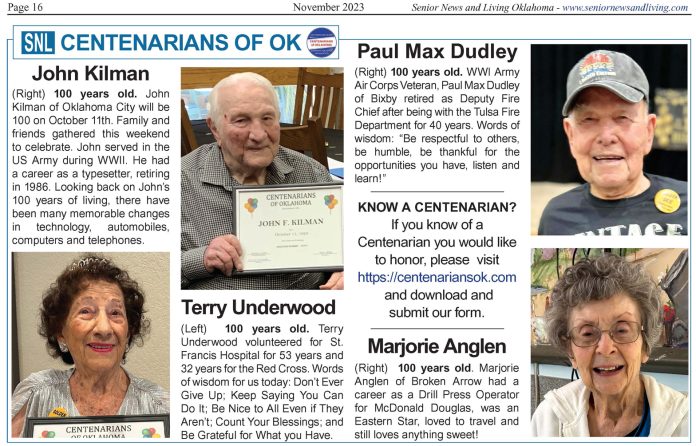
John Kilman: 100 years old. John Kilman of Oklahoma City will be 100 on October 11th. Family and friends gathered this weekend to celebrate. John served in the US Army during WWII. He had a career as a typesetter, retiring in 1986. Looking back on John’s 100 years of living, there have been many memorable changes in technology, automobiles, computers and telephones.

Terry Underwood: 100 years old. Terry Underwood volunteered for St. Francis Hospital for 53 years and 32 years for the Red Cross. Words of wisdom for us today: Don’t Ever Give Up; Keep Saying You Can Do It; Be Nice to All Even if They Aren’t; Count Your Blessings; and Be Grateful for What you Have.

Paul Max Dudley: 100 years old. WWI Army Air Corps Veteran, Paul Max Dudley of Bixby retired as Deputy Fire Chief after being with the Tulsa Fire Department for 40 years. Words of wisdom: “Be respectful to others, be humble, be thankful for the opportunities you have, listen and learn!”

Marjorie Anglen: 100 years old. Marjorie Anglen of Broken Arrow had a career as a Drill Press Operator for McDonald Douglas, was an Eastern Star, loved to travel and still loves anything sweet!

KNOW A CENTENARIAN?
If you know of a Centenarian you would like to honor, please visit https://centenariansok.com and download and submit our form.

SNL SPECIAL TO SNL – Caregivers for Loved Ones with Dementia

0
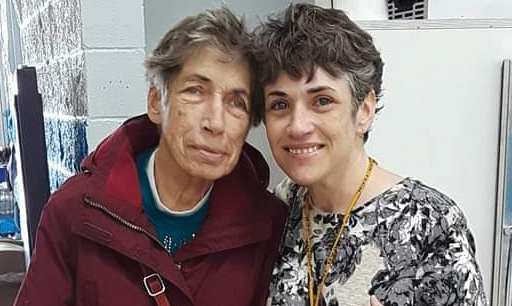
Denise Slattery and Mom, Patricia Slattery (1943-2018)

Denise Slattery, P.E., CFM, CPM
Former caregiver to my mom, Patricia Slattery (1943-2018)

Her eyes were wide open. She looked scared, lost and confused. This was my mother, in the summer of 2018. I had put her to bed (it was about 9 p.m. or so), but she had woken up a little bit later, adamant about going home to be with her kids.
She stopped recognizing me as her daughter some months before. She was getting agitated and my frustration was definitely not helping. We had gotten into an argument, and she started walking away from the house, along the curb. I tried following her, but she yelled at me to stay back. While we were passing a neighbor’s house, he recognized my mom and had called 911. A fire truck had come, with only the lights on (the siren was too loud and it very well could have scared my mom even more).
They started talking to mom in a gentle caring voice. I brought my car near to where mom was sitting on the step of the fire truck, and the firemen helped her get into the passenger seat. I was standing some distance away with the neighbor, hesitant and scared of my mom’s reaction to me. Would she recognize me? Would she still be angry?
After a bit, the fireman ‘introduced’ me to her as her daughter and motioned for me to come forward. Walking towards her, with the sun going down, I could just barely see her eyes and they reflected her emotions then: scared, lost and confused. When I came closer to her, and said Hello Mom in a gentle voice, she recognized me and hugged me. She was not agitated and felt so happy to see me.
This is just one of many stories I could tell you about giving care to my mom who had dementia for about 4 years, before she died from its complications in late November of 2018, just five days shy of her 75th birthday. Giving care to a loved one who has dementia is not an easy road at all; it can deplete you of all that is you. You are no longer his or her spouse, child, sibling or friend; you are a caregiver. If you are just starting down this road, or you may suspect your loved one has dementia, here are few do’s and don’ts to follow:
Don’ts:
*Don’t stand over the person in dominance. Instead, talk at their eye level.
*Don’t raise your voice. Keep your voice gentle and calm.
*Don’t correct, disagree or argue. Try not to think logical as you would normally. Their world is no longer the one we see but the world they see. Try to ‘enter’ that world and be with them.
*Don’t invade their space, but don’t be afraid of touching. A gentle touch on their hand can be reassuring.
*If you offer to stay with the person who has dementia in order for their caregiver to have some time for themselves or for them to run a few errands, please adhere to this. Don’t say that you would love to help, but then rescind your offer when they ask you because you have an errand to run or an appointment to keep. If you say you want to help, please mean it.
Do’s:
*Do establish a routine. The more you can set a routine throughout the day-to-day activities, the more you both will know what to expect, and the smoother your days will run. This helps provide stability for your loved one and doesn’t add to their confusion. This also includes upending their lives, by moving them from their home into yours. If this something that has to be done, please understand that your loved one will be angry or upset for some time; you are creating chaos in their world and because they can’t tell you how they feel, they react by being angry or agitated.
*Be patient, kind and flexible. Caring for someone with dementia is like riding a wave; go with it. Meet them where they are mentally and emotionally at any given moment. It will change constantly, and it is best to expect nothing else. And try to always remember: your loved one is still your loved one; it’s the dementia that is causing them to act this way.
*Allow as much independence for your loved one as long as possible. For instance, if they want to wear sweaters in June, then let them. Allow the person to keep as much control in their lives as possible.
*Try to spend some time for yourself. Take breaks, call a friend, or go for a walk if you can. Find a caregiver support group meeting by calling the national Alzheimer’s Association number at 1-800-272-3900 24 hours a day, 7 days a week.
*Encourage a two-way conversation for as long as possible. If the conversation dies, then engage the person in an activity such as coloring or perhaps looking through a photo album.
People tend to often see only the memory impairment of someone who has dementia, but that is not the only symptom. There are many more: the person finds it difficult to make decisions or solve problems, they put things in unusual places such as the iron in the fridge or socks in the pantry, they can’t complete everyday tasks we usually take for granted: putting clothes on the correct order or how to prepare a meal, they can’t think of words to say and cannot follow a conversation so they become more withdrawn. In the later stages of dementia, the person may become incontinent, their eating patterns will be affected and they may not recognize you anymore or know your name.
As a caregiver you want to give your loved one the best care possible, and part of giving this care is getting to know more about this disease and its symptoms in all stages. Always remind yourself that your loved one is not being difficult; they have lost the ability to tell you how they are feeling, so they act out. By trying to figure out what it is they are trying to tell you can help resolve the problem quickly and helps keep your loved one calm. There are many websites to learn from and books to read from, but, in my experience, the best resource is The Alzheimer’s Association. Find your local chapter by calling 1-800-272-3900 24 hours a day/ 7 days a week, and look into what resources they have that might help you and your loved one.

Social

0FansLike
0FollowersFollow
0SubscribersSubscribe