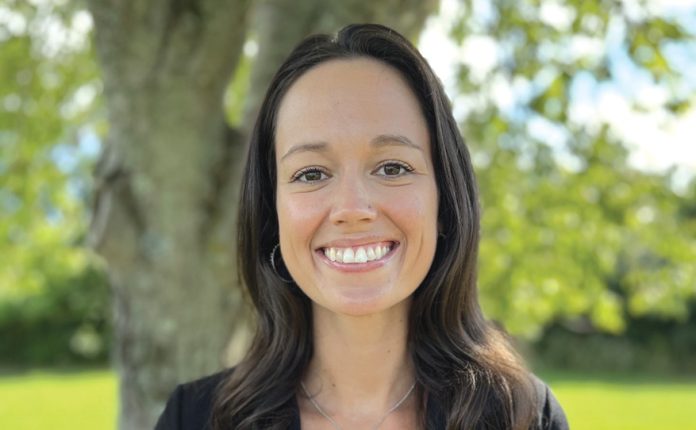
Three faculty members have joined the TSET Health Promotion Research Center at the University of Oklahoma Health Sciences Center: Katelyn Romm, Ph.D.; Erin Vogel, Ph.D.; and Meng Chen, Ph.D.
Romm comes to HPRC from George Washington University Milken Institute School of Public Health. Her research aims to identify factors that predict substance use initiation, escalation and cessation to inform prevention and cessation efforts among individuals at greatest risk for such use, including youth and young adults, as well as minoritized populations.
Vogel comes from University of Southern California Keck School of Medicine. Her research examines psychosocial influences on youth tobacco use and the use of digital tools and social media to address tobacco and other substance use among priority populations, including youth and the LGBTQ+ community. Her research program employs experimental, observational, and qualitative methods to address health disparities and emerging trends in technology and tobacco product use.
Chen joins the HPRC from University of California, Davis. Her research focuses on using computational algorithms for dynamic model fitting and the development and use of flexible dynamic models in behavioral sciences. She will work with HPRC faculty by providing biostatistics support and assisting with research study design.
According to Darla Kendzor, Ph.D., co-director of the HPRC, “These talented new additions to our team will enhance our ability to address tobacco and substance use across the state. Their research offers a focus on youth and young adults, and other at-risk populations along with advanced biostatistical expertise. Their skills offer a valuable complement to the expertise of our current faculty.”
The HPRC receives funding from the OU Health Stephenson Cancer Center via an NCI Cancer Center Support Grant (P30CA225520) and an Oklahoma Tobacco Settlement Endowment Trust contract (R23-02).
TSET Health Promotion Research Center Expands Their Team

TACKLING THE STRUGGLES OF AGING BY REVOLUTIONIZING
Imagine having to choose between paying your electric bill or paying for your life-sustaining medications or food. For many seniors living on a fixed income, that is a difficult reality.
The price of medications continues soaring — over the last decade, research shows many of the top-selling, brand name medications have increased more than 50-percent, with more than half of them doubling in price, that’s according to the National Library of Medicine.
The cost of medications alone can leave them facing difficult choices every month.
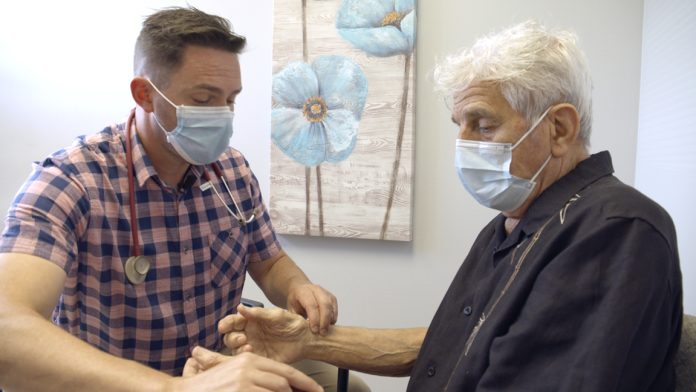
“We never want a patient to have to make that decision of am I going to eat this week, am I going to have air conditioning this week, or am I going to pay for that blood pressure medication,” said Justin Henson, a nurse practitioner at Valir PACE in Oklahoma City.
September is National PACE Awareness Month. PACE stands for Program of All Inclusive Care for the Elderly. It is an approach that aims to bundle. It is a relatively new model of care that is gaining momentum across the United States. Valir is one of the first to implement the model in Oklahoma
The goal is to help more seniors, who otherwise would require nursing home care, continue to live independently in their own homes. It does that by bundling their medications, meals, transportation, physician visits, and therapy needs under one umbrella care plan, that also provides opportunities to socialize and be a part of the community.
The results are impressive – reducing hospitalizations and improving quality of life.
PACE participants, like Nick Felix, say the program has helped them to enjoy the life, despite the issues that come with aging. For Felix, heart issues top that list.
“My heart fibrillates whenever it wants to. It’s like dancing a Cha-Cha to a Waltz. You know you’re not in sync at all,” said Felix, a 90-year-old former dance teacher and movie choreographer, who still enjoys dancing at his favorite studio.
Henson has worked closely with Felix, helping him manage his health and medications to stay healthy and active.
“He’s had a very complicated cardiac history,” Henson said. “But he is a guy who will wake up every single morning doing his push-ups. He loves to go out and walk, he loves to go dancing every week.”
Managing the challenges of a complicated regimen of medications without the worry of cost is one aspect of PACE Felix likes best.
“Well, it’s lifesaving. I mean you’re talking about my heart medicine, my joint medicine, I’ve got all kinds of arthritic conditions — and they tell me when to take it, what to take and how much to take,” he remarked.
Medications are packaged and labeled for each day, and time of day for each participant and
Valir PACE provides those medications — helping eliminate the financial pressure off of rising drug costs for seniors.
“We do get a lot of patients who want to join our services and we note as they’re coming onto services that they have been without their medications for three months, four months,” Henson said. “Diving into why they have been without these medications, often it is they’re trying to pay for electricity or they’re trying to pay for food.”
Henson added ensuring seniors have their medications and take them as correctly can lead to better health outcomes and a better quality of life.
“If you have a medical condition, even if it’s a small medical condition, but it’s not treated, it can grow into a large medical condition,” he said. “Taking medications as prescribed, when prescribed is going to be the best way to keep you as healthy as possible, and as young as possible as long as possible.”
Valir PACE is located at 721 NW 6th Street in the heart of downtown and has just opened an Alternative Care setting at 2411 Main Street in Choctaw, expanding services to seniors living in that more rural part of the metro. To learn more, visit ValirPACE.org or the National PACE Association at NPAonline.org.
Mercy Celebrates Milestone in Love Family Women’s Center
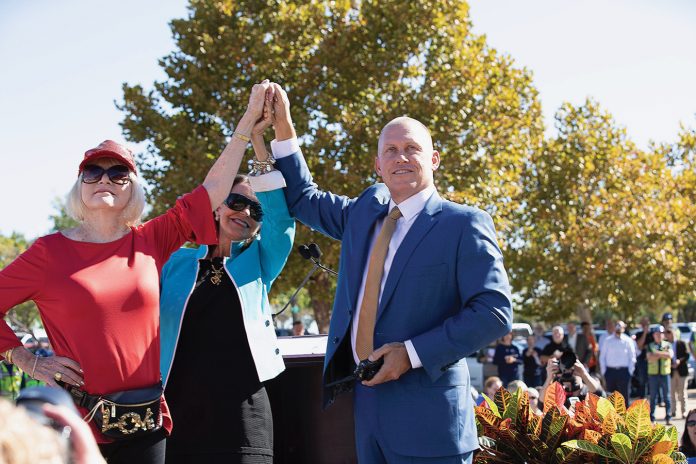
Crowds cheered as construction crews lifted the final steel beam into the frame of the new Love Family Women’s Center Monday. The facility is under construction on the campus of Mercy Hospital Oklahoma City and will increase the hospital’s capacity to deliver babies by 40%.
The women’s center is being built at the northwest corner of Mercy’s campus at West Memorial Road and North Meridian Avenue. Construction kicked off in July 2021 and is on schedule to be complete in fall 2023.
Labor and delivery and postpartum services at Mercy have been at capacity for years, limiting the hospital’s ability to serve more patients. Over the last decade, Mercy has seen a 34% increase in births. The hospital, built in the 1970s, was designed to accommodate up to 3,000 births annually, but the hospital made room for a record 4,035 births last year.
“Like Mary and Joseph experienced the night Jesus was born, many days there’s just not enough room in the inn here at Mercy,” said Dr. Chad Smith, chief medical officer and obstetrician/gynecologist at Mercy Hospital Oklahoma City. “Our Mercy Birthplace team is awe-inspiring, and they do everything in their power to create as much room and serve as many families as possible. But we’re excited this building will give us much more space to serve many more families when they need us.”
The hospital currently has 43 patient rooms dedicated to labor and delivery and postpartum services. When the Love Family Women’s Center opens, that number will increase to a total of 73 patient rooms.
The four-story, 175,000-square-foot building will feature an obstetrics emergency department and the state’s first hospital-based low intervention birthing unit staffed by certified midwives. It will also serve as a hub for services designed for women of all ages, including women’s surgical recovery and physical therapy.
Three large caesarean section suites in the women’s center will connect to the hospital on the first floor via the existing hospital surgical suite. This strategic design allows for quick, safe access to additional services if medical emergencies occur during delivery.
Postpartum rooms will be on the third floor of the women’s center and connect to the hospital via a skybridge. This allows moms of babies needing a higher level of care to have direct elevator access to the existing neonatal intensive care unit on the fifth floor of the hospital.
A large conference center will host support groups and classes on everything from childbirth and infant care to CPR and more.
“What makes this building so special is the love and support from our community that made it all possible,” said Lori Cummins, vice president of development at Mercy Health Foundation Oklahoma. “They say it takes a village to raise a child. With more than 40% of this project funded through donations, it’s taken a village of generous people across Oklahoma and the country to make this longtime dream a reality.”
The Tom and Judy Love family, for whom the center is named, gave a $10 million lead donation to kick off the project, inspiring another $33 million total in donations toward the Love Family Women’s Center.
https://scissortaildermatology.com/
OK HISTORY & MORE – Nov./Dec. 2022 Events
For a full list of events/details visit: www.okhistory.org/calendar/ohs
Will Rogers Days and Motion Picture Festival November 4, Will Rogers Memorial Museum, 1720 West Will Rogers Boulevard Claremore, OK 74017. The Will Rogers Memorial Museum (WRMM) and Birthplace Ranch will celebrate the 143rd birthday of Oklahoma’s Favorite Son with the Will Rogers Motion Picture Festival. From November 2 through 5, four days of activities will be held to honor the memory of the Cherokee cowboy, philosopher, and movie actor who had starred in 50 silent movies and 21 talkies by the time of his death on August 15, 1935, in an Alaska airplane crash.
Sibley Insures Educates Seniors

story by Bobby Anderson, Staff Writer
For many seniors, there’s excitement knowing their hard years of work have finally paid off and it’s time to reap the healthcare benefits Medicare affords.
But that excitement can quickly turn into heartache and bad decisions if they can’t navigate the mountain of information in front of them come enrollment time.
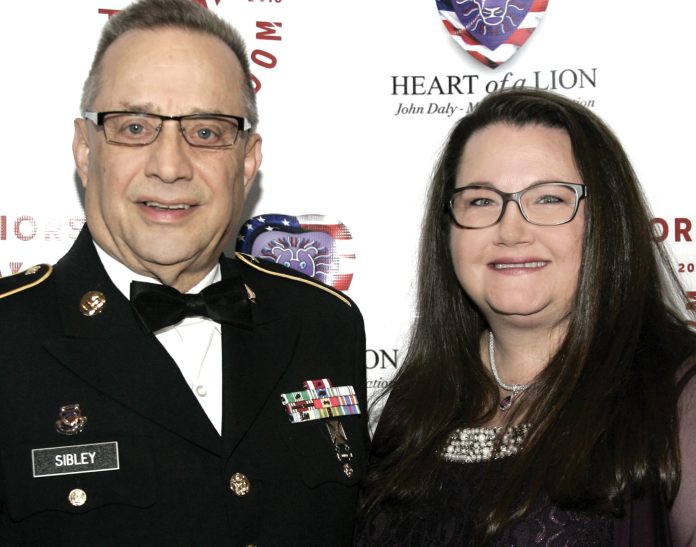
“With Medicare as complicated as it is, being able to make an informed decision really requires – I think – having a face-to-face conversation with somebody who can go through all of those things with you, explain the differences in a simplified way and in a way you can understand,” said Christina Sibley, co-owner of Sibley Insures.
Sibley Insures isn’t an insurance company but a company that works for its insurance clients.
There’s no high-pressure sales.
The primary goal is to educate and empower clients to make informed decisions.
Serving OKC, Tulsa, and beyond, Sibley Insures offers products from some of the top Medicare plans in the country to smaller local plans.
And those plans all come into focus in the next few weeks.
The last few months of the year the Sibleys’ business goes into overdrive with Medicare enrollment beginning October 15 and running through December 7.
Behind her, the whole way is husband, Steve, who brings 17 years of financial services expertise and 36 years of military service to the business.
“Education is extremely important,” Christina said. “I came into this business five years ago as a professional educator. Even people who are on Medicare and have been on Medicare for some time often don’t get a thorough education. They get information in the mail.”
Most people choose the jobs they want to pursue.
For Christina Sibley, the job chose her.
Christina has been a healthcare provider for more than 20 years. She’s taught medical assisting and phlebotomy.
She’s worked in doctor’s offices, labs, hospitals, and home care, always with a passion for her patients.
But it was a suggestion from her husband that brought it all together.
“I feel like God put me on this Earth for a reason,” she said. “I have a specific set of skills, experience, and education that allow me to do things for people, they have put me in a unique position to be able to do things for people that others just don’t have the ability to do.”
Through Sibley Insures, Christina brings those skills to bear teaching thousands of Oklahomans what healthcare protection truly means.
She says there’s so much consumer education lacking when it comes to commercial products that are required when you sign up for Medicare.
Drug plans, supplements, and Medicare Advantage programs are often foreign territory for consumers.
“They’re not going to get a thorough education unless they sit down with somebody who can walk them through the basics and all of their choices and explain the pros and cons of the things they can do,” Christina said. “Medicare is not a one size fits all. It’s very customized to that individual’s needs. People don’t know what they don’t know.”
If you’re turning 65 in the next few months, you’ll have a lot of company. An average of 10,000 Americans turn 65 every day.
For most, it also means that you’re eligible to enroll in Medicare for the first time and most likely have a lot of questions.
As you prepare for Medicare, there’s a lot to know.
You do not have to be retired to get Medicare. The retirement age for full Social Security benefits, called “full retirement age” is slowly rising to age 67, but you can still get full Medicare benefits at age 65, even if you’re not going to collect Social Security benefits. Some under age 65 qualify, through Social Security disability, after 24 months.
Sibley Insures has expanded over the years to better serve clients, most recently moving into an agency role that allows for greater outreach.
“We now have the ability to bring in and mentor agents who do what we do,” Steve Sibley said. “What we do with Medicare is very much an advocate-based focus.”
And that focus is on display in their office, at any one of a number of free seminars, or sometimes in the comfort of your own home.
“It’s crucial for people to talk to an agent or broker,” Christina said. “What we do is work for our client, to look across plans and across products to find what’s going to be most appropriate for them and their particular needs.”
And with hundreds of thousands of Oklahoma Medicare eligible, that time begins now.
“We only have seven weeks to get everyone enrolled.”
For more information or to visit with Christina and Steve, visit: https://www.sibleyinsures.com/

Second Half Expo Offers Panel Discussion

Story by Darl Devault, Contributing Editor
The free 2022 Second Half Expo begins at 8:30 am Saturday, October 22nd, and finishes at 2 p.m. for the second year at National Cowboy & Western Heritage Museum in Oklahoma City.
Billed as Something for Everyone Above Age 50, the expo is tailored to people in the “Second Half” of their lives. This is for those looking to connect with the resources needed to live the way they have always imagined. More than 120 of Oklahoma’s senior-related businesses will be present, providing education and demonstrations of their products and services.
The day will be loaded with fun activities, including free educational seminars, drawings for prizes, live music and much more.
“We firmly believe the senior years can be lived with dignity and purpose with the right guidance and resources,” said Bob Loudermilk, event manager. “We strive to support seniors and their adult children, honoring and assisting their aging parents.”
This year’s free two-hour panel session: THE 50+ YEARS – How to Navigate the Changing Landscape, offers eight community thought leaders sharing their expertise. This timely information on wealth management, senior housing, estate planning, health & fitness above age 50, tax & insurance planning, downsizing, Second-Half entrepreneurship and more is invaluable for seniors.
The panel session will begin at 9 a.m. with coffee and continental breakfast items provided. Seating is limited. Please RSVP to reserve your seat at https://secondhalfexpo.com/the-panel/. Details of topics and bios of the eight panelists are available on this page.
An example of the quality of the panelists offering their insights into living a vibrant and productive Second Half early Saturday morning is someone familiar to many Oklahomans.
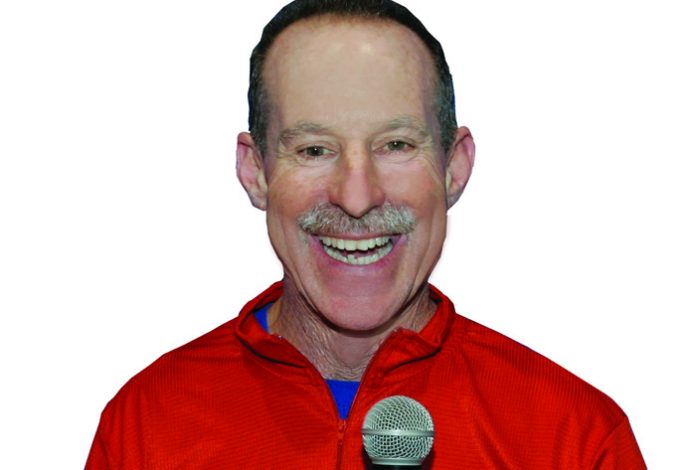
Many seniors have seen Mark Bravo, 64, help broadcast the Oklahoma City Memorial Marathon live on local KFOR-Channel 4 television since its inception in 2001. With Bravo’s broadcast journalism training from the University of Oklahoma and his experience as a marathoner, he describes the events from the runners’ point of view. He offers background both on the elite and “ordinary” runners.
“I’m humbled to be a part of this race, and to offer color commentary on race day gives me a chance to provide insight into road racing,” Bravo said in a recent interview. “I describe the mindset of all levels of athletes who participate and the importance of this race to Oklahoma, not only in April but all year long. I’m fortunate to have much engagement with athletes of all abilities throughout the year. The connection to the community has made it one of my great pleasures to help document every OKC Memorial Marathon.”
He actively supports the race throughout the year and on marathon weekend. From hosting the event’s two-day Health and Fitness Expo to inviting legends of the sport to the race, Bravo has volunteered thousands of hours over the years.
He takes great pride in ensuring its national reputation as the “Run to Remember,” leaving participants with two distinct emotions. The first is to bring together runners and spectators from around the world to honor those who were killed, those who survived, and those who were changed forever in the 1995 Oklahoma City bombing of the Alfred P. Murrah Federal Building.
Another source of his pride in this race is Bravo has helped bring many extras to the runners and walkers not available at most marathons. Bravo says this makes each person feel like an “elite” participant because of the on-course support from a massive outpouring of cheering and volunteering by OKC residents.
One of these extras for participants is interaction with Hall of Famers from the sport at the Expo. Many of these famous marathoners were at the forefront of the “running boom” in America in the ’70s and ’80s. These marathon luminaries speak about their experiences in and out of the sport and share their expertise to help ease runners’ minds before the race.
Bravo is a freelance writer, broadcaster and nationally-noted road race announcer who has finished almost 50 marathons in his 40-plus years in the sport. He speaks at countless sports-focused venues on building momentum in one’s life. Bravo has coached runners for the last two decades, and his view of mental and physical wellness is detailed in his well-received book: “Momentum: 77 Observations Toward a Life Well Lived.”
Bravo’s definition of an “athlete” has less to do with physical prowess but more about a few principles. “It’s viewing the world and yourself through a ‘kinder, gentler’ lens, an always existent ‘stick-to-it-iveness,’ strong view that the glass is ‘three-quarters full, not half-empty,’ and an ever-present emphasis on gratitude,” Bravo said. “Through these principles and how we share them, each of us raises the calibration of the entire world!”
He stays closely involved with the local running community in his position as manager of OK RUNNER OKC in downtown Oklahoma City. He and his wife, Leslie, live in Edmond, Oklahoma.

U.S. Air Force Celebrates Two Anniversaries

Story and photos by Darl DeVault, Contributing Editor
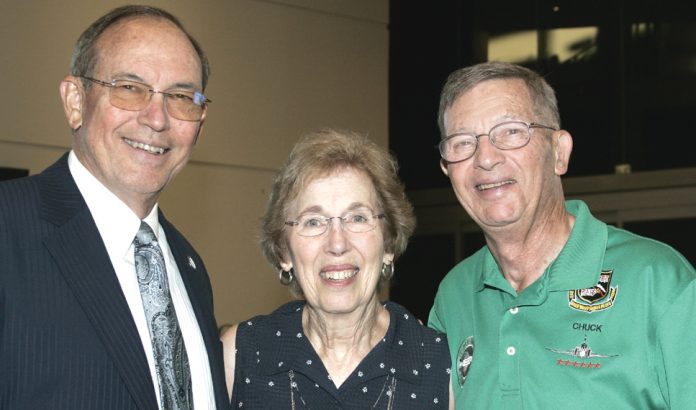
Locally the U.S. Air Force’s 75th-Anniversary celebration took place September 8 at the Oklahoma History Center featuring America’s leading Vietnam War Ace, Edmond’s retired Col. Chuck DeBellevue, who gave a narrative of his eventful missions.
The Air and Space Forces Association Gerrity Chapter #215, the Oklahoma Aeronautics Commission, and the Oklahoma Defense Industrial Association organized the event to celebrate America’s dominance of the skies in armed combat.
To sustain an enduring advantage in its trailblazing 75-year history, the U.S. Air Force’s place as the world’s most capable and respected source of airpower is well-established. The presentation clarified why the last time an American combatant was killed on the ground by an adversary air force was April 15, 1953.
Retired Air Force Lt. Gen. David Deptula, dean of the Mitchell Institute of Aerospace Power Studies, traveled from Washington, D.C., to moderate a discussion with DeBellevue on an educational panel wherein he recounted each of his six MiG kills in the skies of North Vietnam. The Mitchell Institute is the only aerospace power-focused think tank in the nation.
Edmond’s DeBellevue, 77, is America’s last ace to serve on active duty. In the Vietnam War he was a weapons systems officer (WSO) in the F-4 Phantom II fighter. Following his combat tour, DeBellevue attended pilot training and returned to the F-4. During the interview, he credited the real-time support of many people, from crew chiefs and maintainers to cooks and supply guys, for making the F4 effective in battle. While explaining each MiG kill, he said he was a part of an air combat crew with a real team spirit of agile thinking, persistence, and a certain disregard for the rules. DeBellevue commented, “The team that flew with us into Hanoi on a daily basis were all focused on the mission. You had to know we were going to get everyone home. If you had doubts or didn’t feel good about the mission, not only would you not go with us, but we would not take you.”
In 1972, Hanoi, the capital of North Vietnam, was the most heavily defended city in the world except Moscow, with the thickest air defense system that surface-to-air missiles (SAM), antiaircraft artillery (AAA), and interdiction MiGs could provide.
Early in the presentation, DeBellevue’s wife, Sally, was recognized in the audience. DeBellevue explained that in 1972 the communications between him and his wife were by letter, so she got a letter every day that stated, “I was alive last week,” knowing the time required for the letter to get to her.
The audience was comprised of 200 veterans and their wives and families, active duty and reserve service members, legislators, and defense and aerospace industry representatives.
The event also marked DeBellevue’s 50th year to the day he became America’s leading Vietnam War ace. In 1972, DeBellevue became one of only five Americans to achieve flying ace status and the first as a WSO, an integral part of two-person aircrews, with the emergence of air-to-air missiles as the primary weapons during aerial combat. He was credited with a total of six MiG kills, the most earned by any U.S. aviator during the Vietnam War and is a recipient of the Air Force Cross and three Silver Stars.
“A large part of the team did not fly into combat but were so vitally important to the success of the missions we flew,” DeBellevue said. “From getting the jets ready to ensuring the bombs and missiles were loaded and ready, to the electronic techs that kept the systems peaked, to the supply teams who kept the parts and fuel coming to the base, the support troops and, of course, the cook who had breakfast ready at 4:30 every morning, the team worked well together. They all put the confidence in the jet that allowed me to take it into North Vietnam every day and to know it was ready for whatever happened.”
Deptula retired in 2010 after 34 years of service, where—among other accomplishments—he was the principal attack planner for the Desert Storm air campaign in 1991, commander of no-fly zone operations over Iraq, where he flew 82 combat missions as a general officer. He planned and orchestrated air operations over Afghanistan in 2001 in response to the 911 attacks.
Deptula observed DeBellevue’s achievement in an interview, “We all know him as America’s top ace of the Vietnam War and the last ace to serve on active duty in the United States Air Force. But there’s a lot more to Chuck—excellence, teamwork, and dedication to duty are themes that resonate throughout his life. History books may celebrate him for his MiG kills, but what we are here to celebrate is a lifetime of service.”
After the one-hour presentation, AAR, Boeing, Captain Bob Ford, the Air Warrior Courage Foundation, and the Retail Liquor Association of Oklahoma sponsored a defense and aerospace industry reception.

Partnership aims to help seniors

Story and photo by Bobby Anderson, Staff Writer
Living decisions for seniors can be complicated all by themselves.
Throw in an unexpected illness or injury and the situation can quickly spiral out of control.
After seeing these situations play out over and over and the turmoil they create for families, local senior living leaders have come together to provide awareness through education.
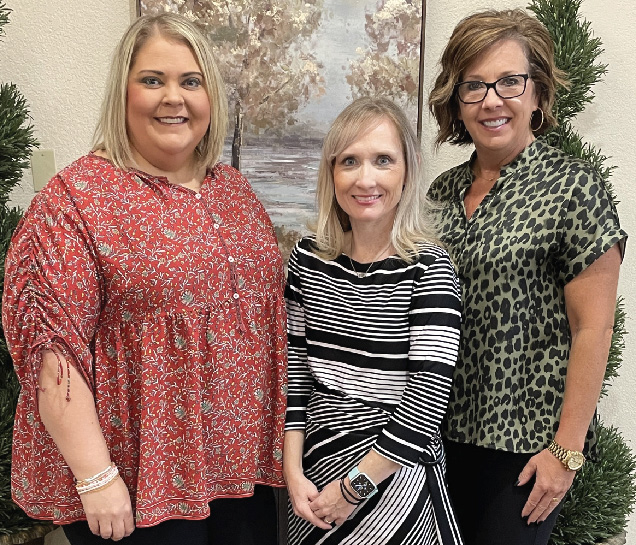
Melissa Mahaffey, MHA, serves as the executive director of Tealridge Retirement Community and is one member of a group focused on bringing information to those needing it the most.
“We want people to know we’re in this industry together and we don’t necessarily have to be owned and operated by the same company to put on great resource events and work together for the betterment of the larger community,” Mahaffey said. “We just want to provide a resource. We partner because we feel like we have the same type of philosophy in terms of we want the community to know and what some of the options are.”
Communities like Tealridge and Legend at Jefferson’s Garden have long focused on giving residents just the right amount of personalized support to enhance independence.
But in an industry that can have an array of service levels people can quickly get lost.
“They hear one word and they automatically go down a rabbit hole. It’s educating on all levels,” said Tealridge Retirement Counselor Kristen Moss.
Finding information on those levels is the focus of a series of upcoming progressive tours and educational presentations.
“I think we want to encourage people not to start looking when there is a crisis but be educated prior because they could help their family, their neighbor or someone within their church,” Mahaffey said. “That’s why we need people to understand we are offering this.”
“During each progressive tour stop people will get to touch and feel what we do here. We want people not to be afraid to ask questions. We encourage everyone over the age of 60 to come.”
Unfortunately, decisions regarding the next level of care often occur within 24 to 48 hours prior to a loved one needing care. All too often an injury or illness has landed a loved one in the hospital and the determination has been made that further care is needed after discharge.
What shape and form that care comes in is often a mystery to those charged with making a decision on behalf of their loved one.”
Moss said the scenario plays out time and again, forcing people into crisis mode.
“Then somebody ends up in the hospital and it’s go time,” Moss said. “It’s Wednesday and the hospital is going to release on Friday and we have to go somewhere.”
And then there’s the issue of cost and where funding will come from.
Skilled nursing days are limited under Medicare.
Independent and assisted living costs are excluded altogether.
“Education is so important because they don’t know,” said Kristi Wilhelm, sales director at Legend at Jefferson’s Gardens in Edmond. “I had a family that literally walked into my building and she realized mom is exhausted from taking care of dad and mom’s fixing to go downhill if she doesn’t do something.
“She didn’t know what independent living is. She didn’t know what assisted living is. I was with them for two hours going through all the steps.
“She was so relieved I educated her and explained everything to her.”
And learning that information when not facing a deadline can make the difference between the right decision and a decision for right now.
“And a lot of times people in that emergency, the first place they go to they’ll end up moving in and it might not actually be the right fit for them,” Wilhelm said. “Eventually they start shopping again because they’re not happy because mom isn’t happy. That’s why it’s all about education so it’s not the last minute.”
Mahaffey said the program is unique to the metro but expects it to expand quickly because at the end of the day it comes down to the right fit for both the resident and the residence. “I always tell people when they come to visit our community know that if I’m not the one you chose, I’m still here as a resource to help you in any way. They appreciate it so much,” Wilhelm said.
Tealridge Retirement Community is a full-service retirement community located at 2100 NE 140th Edmond.
Legend at Jefferson’s Garden specializes in assisted living and is located at 15401 N Pennsylvania Ave in Edmond.
For more information about Tealridge Retirement Community visit http://www.tealridge.com

VillagesOKC receives grant from Force 50 Foundation for veterans program

Story and photos by Eddie Roach
VillagesOKC received a $5,000 grant from Force 50 Foundation to be used to implement a veterans initiative called One-On-One Honor.
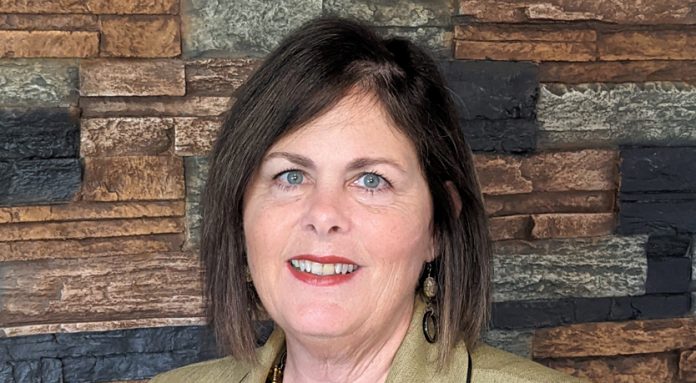
“This grant will be used in our pilot program seeking to bring awareness of the importance of bringing honor and patriotism into everyday life,” said Marilyn Olson, VillagesOKC Executive Director.
The program will honor veterans in assisted living and low-income senior housing. Identified veterans will be honored in a ceremony at their facility and receive a veteran cap, service pin, photo, and certificate. The presentation will be conducted by a fellow veteran.
“VillagesOKC is part of the annual Vietnam War Era Pinning Ceremony each March 29 at the Oklahoma History Center. But, this One-On-One Honor program awards those who are in assisted living communities and cannot attend the annual pinning ceremony,” Olson said.
Gary W. Banz, Force 50 Foundation Executive Director, said the grant application was open to any of the foundation’s partner agencies. VillagesOKC was selected because its mission of connecting older adults to opportunities and services in the community is like Force 50 Foundation’s objectives.
“We value a ‘One Mission, One Force’ network as the best way to connect organizations serving veterans,” Banz said. “What we are all about is providing a platform for information sharing, connecting veterans to the various support opportunities.” He explained that while there are many organizations offering veterans services, vets don’t always know where to look.
VillagesOKC embraces a similar mission of connecting older adults to programs for learning, planning, and serving – providing a plan for aging that connects a community.
Gaylene Stiles, who submitted the grant for VillagesOKC, said the project also will engage Southern Nazarene University students from the SNU Veteran Center, providing an opportunity for students of all ages to observe and participate.
VillagesOKC is a nonprofit that connects adults ages 55+ in the greater Oklahoma City metro area to valuable resources that empower them to remain independent and age gracefully. VillagesOKC consists of virtual neighborhoods of volunteers who share vital connections, education, and programming with members to improve their quality of life.

SPECIAL TO SNL: CELEBRATE AUTUMN BY “FALL PROOFING” YOUR HOME
Story by Joyce Clark, Executive Director – Saint Ann Retirement Center
Senior living communities are a popular choice for people with a history of falling down because typically the building has design features to help reduce fall risk. Minimum thresholds, walk-in showers, handrails, contrasting colors, low-pile flooring, and non-glare lighting are examples of some senior living building amenities that help to lower fall incidents. You can implement these and other safety enhancements in your own home.
As people age they experience physical and lifestyle changes that can also lead to falls. Health conditions such as Parkinson’s disease, stroke, heart arrhythmias, dehydration, inner ear problems, vertigo, and urinary tract infection can increase a person’s chance of falling. Other risk factors include: * Dizziness * Foot problems like numbness, corns, bunions, ingrown nails, or ulcerations * Cataracts, glaucoma, depth perception and vision problems * Weak muscles or poor balance * Confusion or memory loss * Drinking too much alcohol * Vitamin D deficiency
It is a good idea to show a complete list of all medications, herbs, and remedies to your physician at each visit to help maintain safety and good health. Medication side effects or taking a number of medications at the same time can also increase fall risk. Even some over-the-counter medicines can affect balance and walking steadiness. Medications that most commonly cause blurred vision, dizziness, unsteadiness, drowsiness, or difficulty thinking include: * Blood pressure lowering medications * Sleep aids and sedatives * Antidepressants and psychotropics * Anticonvulsants for epilepsy
Some other general tips to reduce fall risk are: * Have your eyes and vision examined annually. * Stay physically active. Exercise helps to prevent falls, especially activities that enhance balance and coordination. A lot of exercise and stretching can be done from or using a sturdy chair for balance. * Wear shoes with non-slip soles. Socks can be a slipping risk. * Wear pants and clothing that are properly hemmed and don’t drag on the ground. * Take your time moving from a lying or sitting position to standing. * Use the arms of sturdy furniture when you sit down, reach, or stand up. * Use a reacher to retrieve items from the floor without bending over and from high shelves without using a footstool. You can use a reacher to wipe up spills while seated or standing. * Keep a mobile telephone nearby in an easy to reach location. * Wear an emergency call pendant or have “Alexa” in different rooms programmed to call for help when requested.
FLOORS AND FURNITURE
* Clean up clutter. Move newspapers, furniture, plants, and electrical cords out of traffic areas.
* Store clothing, towels, and household items where you can safely reach them.
* Eliminate uneven floor surfaces. Replace high doorway thresholds between rooms with low, beveled ones, or remove them.
* Replace thick carpets with dense, low-pile carpet or leave the floors uncovered.
* Arrange furniture to give you plenty of room to walk freely.
* Secure carpets to the floor and stairs. Remove throw rugs. Use non-slip rugs or attach rugs to the floor with double-sided tape.
* Put non-slip tape strips on steps, bathtub, and floors.
BATHROOM
* Use a shower chair / bench.
* Rinse all soap from tub / shower before getting out.
* Install adjustable height or hand-held showerhead.
* Mount grab bars with secure reinforcement at the toilet, bath, and shower walls.
* Secure bath mats with non-slip, double-sided rug tape.
* Install a night-light to help you get to the bathroom safely. There are also motion detector versions that automatically light up as you approach the area.
BEDROOM
* Sit in a sturdy armchair to dress and undress.
* Use a long-handled shoehorn to put on shoes without bending over.
* Use a dressing stick to pull on pants or skirts, take off socks, and reach hanging clothes.
* Place a portable commode or a plastic urinal near your bed.
KITCHEN
* Keep clean pans on the stove or in a countertop rack instead of hanging or putting them in a cabinet.
* Store plates, bowls, cups, and other frequently used items in an easily accessible drawer or shelf.
* Sit in a sturdy chair when you cut vegetables or do other kitchen tasks.
* Install slide-out shelving or a lazy susan.
* Use a wheeled cart for extra storage and to help move heavy items. For example, use it to move a dish from the refrigerator to the oven.
* Keep the floor dry. Have paper towels and a reacher handy for cleanup.
STAIRWAYS
* Make sure handrails are securely fastened.
* Install handrails on both sides of steps.
* Put non-slip tape on steps.
* Turn on lights before going up or down stairs.
* Take a pause before going up or down stairs.
LIGHTING
* Place nightlights in hallways, bedrooms, bathrooms, kitchen, and stairways.
* Install light switches at the top and bottom of stairs.
* Place a lamp near your bed. Touch on/off lamps are easier to use.
* Add lighting to dark spaces, entrances, and walkways. Motion detector lights can be a good option when they are set to stay on for a while.
* Keep a flashlight by your bed and in other easy to find locations in case the power goes out.
* Use light bulbs that have the highest wattage recommended for the fixture.
About Joyce: Joyce Clark is the Campus Director of Saint Ann Retirement Center, which offers independent and assisted living. She says watching people regain their strength, balance, and health is one of her team’s greatest rewards.
Clark encourages people to be extra careful at home getting in and out of the bathtub, where many people tend to fall. Call Lisa at Saint Ann Retirement Center, (405) 721-0747 Ext #322, if you would like more tips and helpful information.