Friday, March 13, 2026

Sailor with ties to Oklahoma City supports U.S. Navy’s “Take Charge and Move Out” mission

0
Photo by Mass Communication Specialist 1st Class Anna-Liesa Hussey, Navy Office of Community Outreach.

By Stephanie Fox, Navy Office of Community Outreach

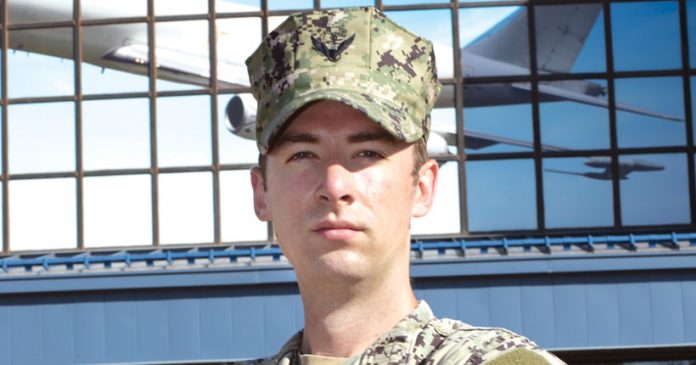
TINKER AIR FORCE BASE, Okla. – A sailor with ties to Oklahoma City, Oklahoma, is serving in the U.S. Navy as part of the nation’s nuclear deterrence mission at Strategic Communications Wing One (STRATCOMMWING ONE). Its TACAMO (“Take Charge and Move Out”) mission provides airborne communication links to nuclear missile units of U.S. Strategic Command.
Petty Officer 2nd Class Cody Tiller joined the Navy five years ago.
“I joined the Navy because I wanted to travel,” said Tiller.
Today, Tiller serves as a yeoman.
“My favorite thing about being a yeoman is the flexibility,” said Tiller. “I get to do a lot of different things and meet a lot of different people.”
The Navy’s presence aboard an Air Force base in the middle of America may seem like an odd location given its distance from any ocean; however, the central location allows for the deployment of aircraft to both coasts and the Gulf of Mexico on a moment’s notice. This quick response is key to the success of the nuclear deterrence mission.
The Navy command consists of a Wing staff, The Center for Naval Aviation Technical Training, and three Fleet Air Reconnaissance Squadrons: The “Ironmen” of VQ 3, the “Shadows” of VQ 4 and the “Roughnecks” of VQ 7.
STRATCOMMWING One employs more than 1,300 active-duty sailors and 100 contractors to provide maintenance, security, operations, administration, training and logistic support for the Boeing E-6 Mercury aircraft fleet, an airborne command post and communications relay based on the Boeing 707.
Their mission stems from the original 1961 Cold War order known as ‘Take Charge and Move Out!’ Adapted as TACAMO and now the command’s nickname, the men and women of TACAMO continue to provide a survivable communication link between national decision makers and the nation’s nuclear weapons.
The commander-in-chief issues orders to members of the military who operate nuclear weapons aboard submarines, aircraft or in land-based missile silos. Sailors aboard TACAMO E-6 Mercury aircraft provide the one-of-a-kind and most-survivable communication needed for this critical mission.
With more than 90 percent of all trade traveling by sea, and 95 percent of the world’s international phone and internet traffic carried through fiber optic cables lying on the ocean floor, Navy officials continue to emphasize that the prosperity and security of the United States is directly linked to a strong and ready Navy. Serving in the Navy means Tiller is part of a team that is taking on new importance in America’s focus on rebuilding military readiness, strengthening alliances and reforming business practices in support of the National Defense Strategy.
“The Navy is important to the National Defense Strategy because of our forward presence,” said Tiller. “We are a show of force. We show our allies we are there to help when needed.”
Tiller and the sailors they serve with have many opportunities to achieve accomplishments during their military service.
“My proudest Navy accomplishment has been having the chance to visit Vietnam and experience different cultures,” said Tiller.
As Tiller and other sailors continue to perform missions, they take pride in serving their country in the United States Navy.
“To me, serving in the Navy means that I am able to provide for my family,” added Tiller.


OKLAHOMA HISTORY: September 2022 Events

0

For a full list of events/details visit: www.okhistory.org/calendar/ohs

Working America: A Sam Comen Photography Exhibition opens Cherokee Strip Regional Heritage Center, 507 South 4th Street Enid, OK 73701. Thursday, September 1, 2022. Artist Sam Comen presents a series of portraits of American immigrants and first-generation Americans at work in the small, skilled trades as icons of the American experience.

Drummond Heirlooms exhibit opens (all month) Fred and Addie Drummond Home, 305 North Price Avenue Hominy, OK 74035. September 1st Family heirlooms belonging to the Drummond family will be on display for the entire month at the Victorian-style home they built in 1905.

“Musket Demo Day” living history program September 9-10, 10 a.m.–3 p.m. Fort Gibson Historic Site, 907 North Garrison Avenue Fort Gibson, OK 74434. Fort Gibson Historic Site will host a living history program based on the history of musket firearms and musket demonstrations. This program will run from 10 a.m. to noon and again from 1 to 3 p.m.

Quilting workshop with Martha Ray September 10, 9 a.m.–11 a.m. Sod House Museum, 4628 State Highway 8 Aline, OK 73716. Workshop will take place from 9 to 11 a.m. with instructor Martha Ray, and the cost is $5 per person.

Tuesday Tunes at the Mansion featuring Hunter Thomas September 13, 6 p.m.–8 p.m. Henry and Anna Overholser Mansion, 405 NW 15th Street Oklahoma City, OK 73103. Preservation Oklahoma, Inc. will be hosting a series of relaxed free summer concerts featuring local musician Hunter Thomas.

“Traveling by Keelboat” living history program September 16-17, 10 a.m. Fort Gibson Historic Site, 907 North Garrison Avenue Fort Gibson, OK 74434. On Friday, September 16, and Saturday, September 17, join the staff and volunteers at Fort Gibson Historic Site as they demonstrate the operations of a keelboat during a special riverside living history program. The tours will run at 10 a.m., 1 p.m., and 3 p.m. on both days.

Will’s Cowboy Trader Days at the Ranch September 17, 10 a.m.–5 p.m.|Will Rogers Birthplace Ranch, 9501 East 380 Road Oologah, OK 74053 Third Saturday of the month through October, make the trip to the Will Rogers Birthplace Ranch in Oologah to take part in Will’s Cowboy Trader Days. See locally handcrafted and homemade items, saddles, cowboy hats, tack, boots, and a variety of work created by local artisans. Admission is FREE.

“A Long Walk in the Sun: Mexican-American War Days” September 17, 10 a.m.–2:30 p.m. Fort Towson Historic Site, HC 63, Box 1580 Fort Towson, OK 74735. FTHS will be host in mid-September. This event will feature an encampment set in the time period of the Mexican-American War, educational presentations, and opportunities to interact with experts.

“History of Masonic Temples in Oklahoma” by T. S. Akers September 17, 1 p.m.–2 p.m. Honey Springs Battlefield, 423159 E 1030 Road Checotah, OK 74426. A presentation by T. S. Akers. Akers, a historian of Freemasonry in Oklahoma, will discuss the establishment and architecture.

“Candles on Post” living history program” On Friday, September 23, and Saturday, September 24, from 10 a.m. to noon, and again from 1-3 p.m., the last September living history program will focus on the use of candles. Watch a candle-making demonstration in the palisade kitchens while learning about the differences between candles made of beeswax and those made of tallow. In candle making, wick preparation is the key to longer burning candles, and the use of herbs and scents was a 19th-century way of keeping pests.
educational presentations, and opportunities to interact with experts.

Movie Night featuring Animal Crackers (1930) September 24, 6 p.m.–9 p.m. Will Rogers Memorial Museum, 1720 West Will Rogers Boulevard Claremore, OK 74017. Animal Crackers (1930) will be featured in the theater. “Horsing Around with Will” will take place from 6 to 7 p.m. Enjoy activities and crafts relating to the movie.

“Americana: A Musical Tour of the USA” featuring Jonas Nordwall September 26, 7 p.m.–8:30 p.m. Oklahoma History Center, 800 Nazih Zuhdi Drive Oklahoma City, OK 73105. The fall performance of the Kilgen Organ series will feature organist Jonas Nordwall, presenting musical selections that follow the theme “Americana: A Musical Tour of the USA.”

OMRF discovery unravels complexity of wound healing

0
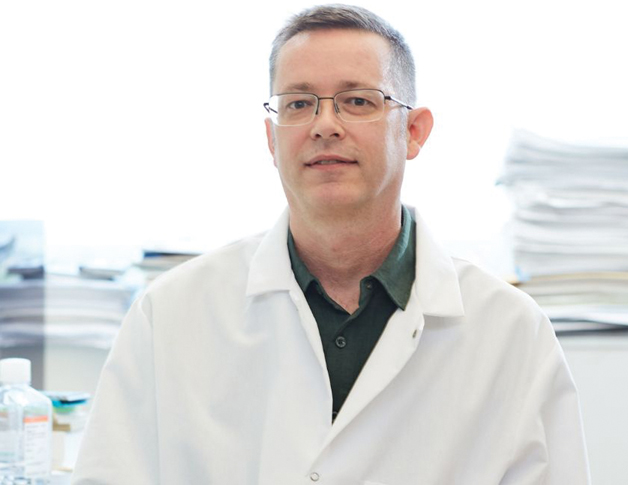
OMRF scientist Lorin Olson, Ph.D.

When a fresh wound occurs, cells rush to produce collagen, which aids healing. But sometimes this process goes awry, resulting in one of two extremes: insufficient healing or excessive scar tissue.
Thanks to a recent discovery at the Oklahoma Medical Research Foundation, researchers now have a better grasp on the cause.
“It’s a delicate balance,” said OMRF scientist Lorin Olson, Ph.D., who led the study published this month in the journal Cell Reports. “Everything must work just right for proper wound healing to take place.”
Olson’s lab focused on a protein signal called platelet-derived growth factor (PDGF) and cells called fibroblasts, which create collagen to form scar tissue. Several days later, these cells morph into a different cell type called myofibroblasts, which pull the wound’s edges together, essentially closing it.
Working with researchers from the University of Oklahoma Health Sciences Center, Olson’s team discovered that PDGF controls this transition from one cell type into another and that optimal healing requires precise amounts of the protein signal.
“This paper focuses on wounds in the skin, but the same principles apply to injuries in other tissue or organs,” Olson said, “because in every injury, cells respond by migrating toward the damage.”
Too much PDGF results in wounds full of fibroblasts but no myofibroblasts, causing excessive scar tissue. In contrast, without sufficient PDGF, there aren’t enough fibroblasts to create collagen, and wounds fester.
Those chronic wounds cause significant medical and financial issues for millions of Americans. One common example is in people with diabetes. Poor circulation and nerve damage caused by the disease can lead to chronic foot ulcers, potentially requiring amputation. A 2018 University of Southern California analysis found that chronic wound treatment accounted for up to $96.8 billion in annual Medicare costs.
“Wound healing happens so routinely that we tend to take it for granted,” said Lijun Xia, M.D., Ph.D., chair of OMRF’s Cardiovascular Biology Research Program. “Dr. Olson has dedicated his career to better understanding the inner workings of this complex process. His discovery gets us closer to solutions for cases where a wound refuses to heal properly.”
Olson has taken these findings to delve into the cause of keloids – thick, often permanent, raised scars that most frequently form on the earlobes, shoulders, chest and cheeks of people of African and Asian descent. However, he said this discovery has far broader relevance.
“We’re studying PDGF signaling in conditions like atherosclerosis, where deadly plaque builds up in arteries, as well as cancer,” Olson said. “So if we better understand how it works, we can apply that knowledge to many other health conditions.”
Olson’s research is supported by National Institutes of Health grants R01-AR070235 and R01-AR073828, the Oklahoma Center for Adult Stem Cell Research, a program of TSET, and the Presbyterian Health Foundation.

Oklahoma Healthy Aging Initiative to Host the 2022 Statewide Tai Chi-A-Thon

0

Oklahoma Health Aging Initiative (OHAI) will host its fourth annual Statewide Tai Chi-A-Thon on Friday, September 26, as part of National Falls Prevention Week.
Tai Chi is a series of gentle physical exercises and stretches. Generally safe for all ages and fitness levels, Tai Chi can help older adults reduce their risk of falling, while also increasing balance and flexibility. Health benefits include reduced blood pressure, better sleep, improved muscular strength and enhanced mental well-being. It does not matter how strong, flexible or active you are – Tai Chi is designed for people of all ages and levels of health.
The event will be held from 9 a.m. to noon at four locations across the state — Catoosa, Durant, Enid and Norman. It is open to participants 18 years and older, at no cost. To register and find the event location near you, visit www.ohai.org. On-site registration will also be available at the event, but those who pre-register by August 19, will have the opportunity to purchase an event t-shirt.
For additional questions or accommodations, contact OHAI at [email protected] or by phone at (855) 227-5928.
OHAI is a program of the Donald W. Reynolds Section of Geriatric Medicine at the University of Oklahoma Health Sciences Center, and is supported in part by the Donald W. Reynolds Foundation. OHAI is committed to enhancing the health and quality of life of older Oklahomans and their caregivers through community classes, workshops and professional trainings. The University of Oklahoma is an equal opportunity institution. www.ou.edu/eoo

SPECIAL NOTICE: Oklahoma Home and Community Education Presents

0

“Internet Food Safety Myths”

This event is free to the public. The internet is a great resource for many things, but there is a lot of misinformation, especially about food safety. Learn about some common internet food safety myths and what to do instead to keep you and your family safe. The class will be taught by Kelsey Ratcliff, an FCS area Specialist in Health Disparities. Come join us at 9:30 AM, Thursday, September 22, at the Extension Conference Center, 2500 NE 63rd Street, OKC. There is no charge for the class.

SSA Accelerates Decisions for People with Severe Disabilities

0

Agency Expands Compassionate Allowances List

Kilolo Kijakazi, Acting Commissioner of Social Security, recently announced 12 new Compassionate Allowances conditions: Angioimmunoblastic T-cell Lymphoma, Blastic Plasmacytoid Dendritic Cell Neoplasm, Gerstmann-Straussler-Scheinker Disease, Microvillus Inclusion Disease – Child, Mowat-Wilson Syndrome, Myelodysplastic Syndrome with Excess Blasts, NUT Carcinoma, Pfeiffer Syndrome – Types II and III, Pontocerebellar Hypoplasia, Posterior Cortical Atrophy, Renal Amyloidosis – AL Type, and Sarcomatoid Mesothelioma.
The Compassionate Allowances program quickly identifies claims where the applicant’s condition or disease clearly meets Social Security’s statutory standard for disability. Due to the severe nature of many of these conditions, these claims are often allowed based on medical confirmation of the diagnosis alone. To date, more than 800,000 people with severe disabilities have been approved through this accelerated, policy-compliant disability process, which has grown to a total of 266 conditions.
“The Social Security Administration is committed to reducing barriers and ensuring people who are eligible for benefits receive them,” said Acting Commissioner Kijakazi. “Our Compassionate Allowances program allows us to strengthen that commitment by accelerating the disability application process for people with the most severe disabilities.”
When a person applies for disability benefits, Social Security must obtain medical records in order to make an accurate determination. The agency incorporates leading technology to identify potential Compassionate Allowances cases and make quick decisions. Social Security’s Health IT brings the speed and efficiency of electronic medical records to the disability determination process. With electronic records transmission, Social Security can quickly obtain a claimant’s medical information, review it, and make a fast determination.
For more information about the program, including a list of all Compassionate Allowances conditions, please visit www.socialsecurity.gov/compassionateallowances.
To learn more about Social Security’s Health IT program, please visit www.socialsecurity.gov/hit.
People may apply online for disability benefits by visiting www.socialsecurity.gov.
To create a my Social Security account, please visit www.socialsecurity.gov/myaccount.

Oklahoma History Center Installs Universal Adult Changing Tables

0

The Oklahoma History Center (OHC) agrees with the fact that all individuals, children and adults alike, deserve a safe, dignified and clean restroom experience. Assistance with this need is common for adults who are aging or have disabilities and other conditions. Because of this, the OHC has recently installed a universal adult changing table in its Family Restroom, located on the first floor, to accommodate individuals with a range of disabilities and medical issues such as muscular dystrophy, Parkinson’s disease, paraplegia, cerebral palsy or those recovering from a stroke. Having access to such a table will provide a clean and safe environment, eliminating the unhygienic option of placing a loved one on a bathroom floor.
“We want to provide this amenity to families so they can extend their stays and won’t have to go out to their cars, or go home early, when a family member is in need,” said Dan Provo, director of the OHC.
In an interview earlier this year, disability advocate Audra Beasley was quoted as saying, “If we’re not planning for all, we’re not planning. We need to be asking ourselves what we are doing as great citizens of this state to hold the door for those coming in behind us, to build on the work of those before us. We need restroom access for all!”
The Oklahoma History Center is a division of the Oklahoma Historical Society and is an affiliate of the Smithsonian Institution, National Archives and is an accredited member of the American Alliance of Museums. The mission of the Oklahoma Historical Society is to collect, preserve and share the history and culture of the state of Oklahoma and its people. Founded in 1893 by members of the Territorial Press Association, the OHS maintains museums, historic sites and affiliates across the state. Through its research archives, exhibits, educational programs and publications the OHS chronicles the rich history of Oklahoma. For more information about the OHS, please visit www.okhistory.org.

OK CATTLE BARON’S BALL CELEBRATES 20 YEARS OF SAVING LIVES

0

Oklahoma City’s Cattle Baron’s Ball celebrates 20 years of saving lives with a night of food, fun and fundraising – Friday September 23rd at the National Western Heritage Museum. This year’s event is being led by dedicated volunteer, Mary Blankenship Pointer, Vice President at Frontier State Bank.
Cattle Baron’s Ball is the signature philanthropy gala of the American Cancer Society.
This year’s western-themed “party with a purpose” features A-List entertainer and OKC local, Ty England. As well as games, food and beverage, live and silent auctions.
All proceeds benefit the American Cancer Society and the Chad Richison Hope Lodge Oklahoma.
The Chad Richison Hope Lodge is a centrally located home-away-from-home for patients and their families opening this fall. It offers cancer patients and their caregivers free lodging while they travel to receive life-saving care from any of the area’s premier medical centers.
The $16.5 million facility is named in recognition of ACS’s capstone donor, Paycom Founder and CEO, Chad Richison. Mr. Richison is also this year’s Cattle Baron’s Ball honoree and will be recognized the night of the event.
Richison donated $5 million to fund Oklahoma’s first Hope Lodge. “This is a personal cause for many, including myself, and helps ensure anyone traveling for treatment will have one less item to worry about,” said Richison.
Cancer is the second-leading cause of death in Oklahoma. Each day, 49 Oklahomans are diagnosed with cancer. The American Cancer Society is working every day to free the worldfrom the pain and suffering of cancer through research, prevention, patient services, and advocacy.
To learn more or donate visit www.cattlebaronsballokc.org. For more information, please contact Rachel Stratton at 281-352-6471. Engage with @ACSOklahoma and follow us on Facebook, Instagram, and Twitter.

https://www.belmontcove.com/

Greg Schwem: Is touching still legal in this country?

0

by Greg Schwem

“Do you mind if I touch you?” I asked my wife one evening after dinner.
“Not at all,” she replied with a soft giggle.
“You’re sure?”
“Yes, I’m sure.” But the giggle had disappeared.
“There will be no negative ramifications or consequences if I place my hand anywhere on your body?” I asked, extending my hand toward her waist.
She slapped it away. “WHAT is going on?”
I recounted the story that played out on a recent business trip to New Orleans. After saying goodbye to a college friend who happened to be in town, I decided to have a nightcap at one of the dozens of bars dotting Bourbon Street. There was nothing special about the establishment; it featured two levels, the lower containing dozens of patrons in various stages of inebriation. I opted for the top floor.
I found a lone couple sitting at the bar. “Perfect,” I thought. “Maybe a chance to engage in some quiet conversation.” Chatting up strangers at bars is a pastime I sorely missed during quarantine. For starters, I am a standup comedian by trade and some of my best ideas, which later become comedic bits, germinate during bar conversations. Not all comedians write material this way, but it works for me.
More importantly, people in general fascinate me. I talk for a living, but I’m also an excellent listener. To me, there is nothing worse than seeing a bar full of customers engrossed in their phones, oblivious to their surroundings. Everybody has a story to tell if given a chance.
The bartender seemed to be taking an inordinately long time mixing the woman’s drink. I turned to her companion. “What’s she having?”
The bartender replied instead, naming some oddly titled New Orleans drink that I have since forgotten. I do know it wasn’t a Hurricane.
‘Well, it looks amazing,” I said to the man. Placing my hand on top of his shoulder, I added, “I think I’ll have one too. I’ve still got an hour before curfew.”
Without laughing or even smiling, he turned to me.
“Don’t ever touch me again.”
I should note, he added an unprintable word between ‘ever” and “touch.”
Then he took his hand, and not so gently shoved the side of my head. Without bothering to ask me if I liked being touched.
While his companion stared sullenly at her now completed drink, the man got off his stool and began to pace. I didn’t know if he had been overserved, for doing so would have required making eye contact. What if he didn’t like being stared at either?
The bartender, sensing a situation, intervened. Turning to me, he said, “Sir, why don’t you head downstairs?”
I took the hint.
“That sounds horrible,” my wife said. “Did he think you were hitting on him?”
“I put my hand on top of his shoulder. I didn’t try to kiss him,” I said.
“Can’t you just keep your hands off people?” she inquired. “What if he had a gun?”
How sad, I thought, that a simple gesture of friendship or inquisitiveness could end with gun violence.
“I won’t be touching anybody’s possessions either,” I said.
“Why not?”
Two days after returning from New Orleans, I was sitting in a traffic jam while heading to Chicago for a meeting. The Honda CRV, creeping in front of me, contained a decal to the left of its license tag stating, “Don’t Touch My Car.”
What frightened me wasn’t the command but the two-stick figure artwork accompanying it. One figure was crouched on its knees, its head being held down by the second figure, whose free hand contained an upraised stick. The message? Touch this particular Honda and get beaten over the head. Maybe it was the owner’s way of saying, “No Tailgating.” Or maybe the owner just returned from New Orleans. Regardless, I changed lanes.
I pondered the fact that I now fear the consequences of exhibiting a friendly gesture or inadvertently bumping a cheap vehicle. Our nation’s anger is manifesting itself in strange ways, in strange locations. Now, two years after quarantine forced everybody inside, I’m still not comfortable venturing outside, for who knows? I too might become angry at the slightest provocation.
I guess I’ll just stay indoors and watch TV. Oh, look, another Jan. 6 committee hearing is about to get underway.
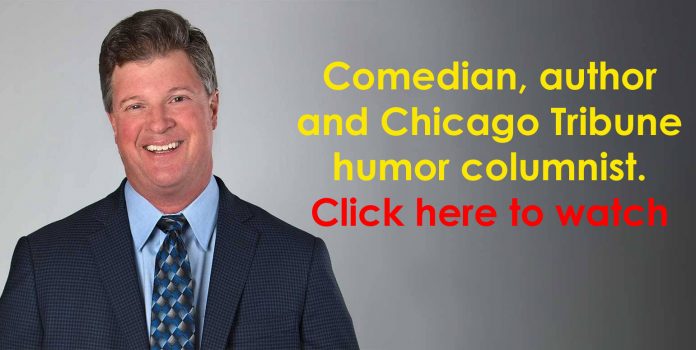
(Greg Schwem is a corporate stand-up comedian and author of two books: “Text Me If You’re Breathing: Observations, Frustrations and Life Lessons From a Low-Tech Dad” and the recently released “The Road To Success Goes Through the Salad Bar: A Pile of BS From a Corporate Comedian,” available at Amazon.com. Visit Greg on the web at www.gregschwem.com.
You’ve enjoyed reading, and laughing at, Greg Schwem’s monthly humor columns in Senior Living News. But did you know Greg is also a nationally touring stand-up comedian? And he loves to make audiences laugh about the joys, and frustrations, of growing older. Watch the clip and, if you’d like Greg to perform at your senior center or senior event, contact him through his website at www.gregschwem.com)

Hearing Loss Association is not all serious stuff

0

By Ron Hendricks, Hearing Loss Association of America Central Oklahoma Chapter

Hearing Loss Association of America Central Oklahoma Chapter (HLAA COC) is not all serious stuff. We have fun too. Our summer bingo party brought out a large crown for Bingo, Prizes and Pizza and August is cold. At least the ice cream at the Annual Ice Cream Social is cold. The social is the traditional kick-off of the new season of monthly Educational Seminars held by HLAA COC. Seminars have speakers of interest to the hearing loss community – subjects like technology, research, training, tips & tricks. All helpful to those with hearing loss and those who love ‘em. Speakers/programs for the fall include Shelley Gladden, Oklahoma Able Tech discussing technology, October we host Dr. Sarah Newman delving into research being done by Hearts for Hearing. In November Dr. Kopke with the Hough Ear Institute will talk about their research in hair regrowth that will possibly restore hearing. December, ‘ya-all come for the annual Christmas Party. The Ice Cream Social is also the time when we introduce the scholarship winners who are; Boyd Robertson, Josie Burns, Charles Brady IV.
HLAA COC’s educational seminars are captioned so you can see the conversation as well as hear it. Now there is also a hearing loop system to be used with the telecoil in your hearing aid AND we zoom the meeting too. Seminars are held monthly on the third Thursday, 11:30-1PM. The public is invited as there is no entry fee.
We have a lot of activities but our main mission here is to “Open the world of communication to people with hearing loss by providing information, education, support, and advocacy.” for more information visit our website, www.OklahomaHearingLoss.org.

Social

0FansLike
0FollowersFollow
0SubscribersSubscribe