Nearly 40 Oklahoma middle school math teachers became students again this week, receiving a glimpse into the medical research that results from the passion they instill in students.
OMRF on Tuesday hosted teachers from the Sarkeys Foundation Summer Math Institute at the Oklahoma School for Science and Mathematics. The weeklong program includes teachers from Inola to Mangum and Madill to Sayre.
Scientists at the nonprofit foundation showed them, among other things, research samples from arthritic knee joints of mice and explained how the regenerative qualities of flatworms might someday apply to humans.
OMRF President Andrew S. Weyrich, Ph.D., welcomed the teachers, calling them “the unsung heroes” behind the minds that shape OMRF’s research.
Throughout the year, OMRF hosts students from elementary school through college for various education and outreach programs, Weyrich noted. “We do that in part because we know Oklahoma students are paramount to the future of research.”
OMRF Vice President of Government Affairs Lisa Day, an OSSM board member, helped organize the event.
“It’s gratifying to connect these teachers with a real-world application of the skills they develop in students,” Day said. “Much medical research requires a mastery of math. Their skill and passion for teaching make what scientists do at OMRF possible.”
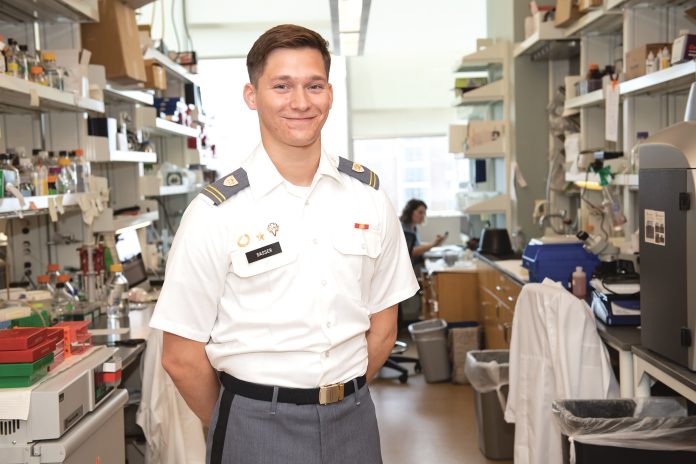
During their afternoon at OMRF, the teachers split into small groups to visit lab stations staffed by scientists.
Using a microscope and oversized monitor, David Forsthoefel, Ph.D., demonstrated how quickly the flatworms he studies can completely regenerate their organs. He hopes the clues he learns from the tiny worms might lead to new help in treating conditions ranging from bowel disorders to paralysis.
“We study the flatworms because we hope to learn their secrets,” Forsthoefel told the teachers.
Beggs Middle School teacher Carol Creason called her trip to OMRF “tremendously helpful. It shows how important mathematics is to all sorts of jobs outside of the traditional math field of study.”
Creason was so impressed with Forsthoefel’s presentation that she plans to include flatworms in future lessons.
“I normally use bean plants so they can chart growth, but now I’m going to have them chart regenerative growth in flatworms,” she said. “They’d have a blast.”
OMRF hosts teachers for research

FIVE SOCIAL SECURITY RESOURCES THAT CAN PROTECT ELDERS FROM SCAMS
By Tonya Cater, Social Security Public Affairs Specialist in Arkansas
World Elder Abuse Awareness Day was June 15. On that day, communities, seniors, caregivers, governments, organizations, and the private sector united to prevent the mistreatment of and violence against older people.
Social Security scams are widespread across the United States. Scammers use sophisticated tactics to deceive you into providing sensitive information or money. They target everyone – especially the elderly – and their tactics continue to evolve.
Here are five easy-to-use resources to prevent Social Security fraud:
* Check out our Fraud Prevention and Reporting page to learn about Social Security fraud – and how we fight scammers at www.ssa.gov/fraud. * Read our Scam Alert fact sheet to learn what tactics scammers use and how to protect yourself at www.ssa.gov/fraud/assets/materials/EN-05-10597.pdf.
* Create your own personal my Social Security account at www.ssa.gov/myaccount to stay one step ahead of scammers. Please read our blog post at blog.ssa.gov/my-social-security-what-to-know-about-signing-up-or-signing-in for more information about creating or signing in to your personal my Social Security account. * Learn about other types of fraud on our Office of the Inspector General’s (OIG) Scam Awareness page at oig.ssa.gov/scam-awareness/scam-alert. You’ll also see how to report these scams to our OIG and other government agencies.
* Read our blog post to learn how to guard your Social Security card – and protect your personal information at blog.ssa.gov/guard-your-card-protect-whats-important-to-you/.
Please share this information with your friends and family to help spread awareness about Social Security imposter scams.
22 INTEGRIS Health Medical Group Clinics Continue to be Nationally Recognized for Patient-Centered Care
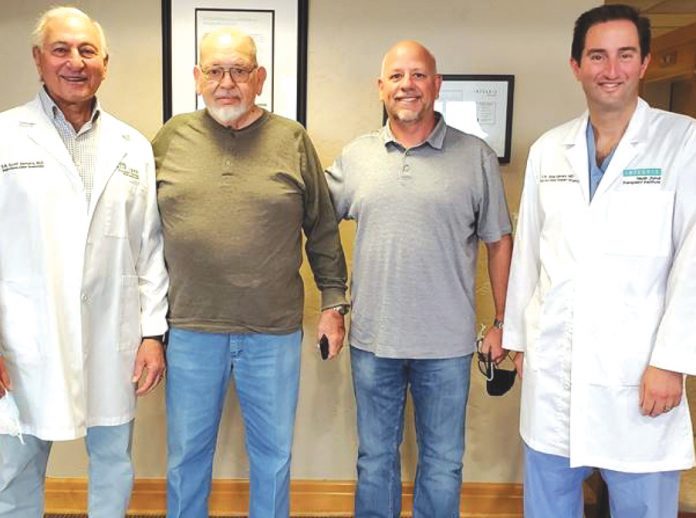
The National Committee for Quality Assurance (NCQA) recently announced that 22 INTEGRIS Health Medical Group Clinics earned Patient-Centered Medical Home (PCMH) Recognition renewal.
The clinics received the initial recognition for using evidence-based, patient-centered processes that focus on highly coordinated care and long-term, participative relationships.
The facilities receiving the PCMH Certificate of Recognition renewal are listed below:
INTEGRIS Family First Miami, INTEGRIS Family Practice Miami, INTEGRIS Grove Family Practice, INTEGRIS Grove Primary Care, INTEGRIS Internal Medicine Clinic, INTEGRIS Internal Medicine & Pediatric Associates, INTEGRIS Miami Physicians Clinic, INTEGRIS Health Medical Group Baptist, INTEGRIS Health Medical Group Central, INTEGRIS Health Medical Group Coffee Creek, INTEGRIS Health Medical Group Council Crossing, INTEGRIS Health Medical Group Edmond East, INTEGRIS Health Medical Group Edmond Renaissance, INTEGRIS Health Medical Group Lake Pointe, INTEGRIS Health Medical Group Memorial West, INTEGRIS Health Medical Group Moore, INTEGRIS Health Medical Group Mustang, INTEGRIS Health Medical Group Norman, INTEGRIS Health Medical Group South, INTEGRIS Health Medical Group Southwest, INTEGRIS Health Medical Group Surrey Hills, INTEGRIS Health Medical Group Yukon
The NCQA Patient-Centered Medical Home is a model of primary care that combines teamwork and information technology to improve care, improve patients’ experience of care and reduce costs. Medical homes foster ongoing partnerships between patients and their personal clinicians, instead of approaching care as the sum of episodic office visits. Each patient’s care is overseen by clinician-led care teams that coordinate treatment across the health care system. Research shows that medical homes can lead to higher quality and lower costs and can improve patient and provider reported experiences of care.
Route 66 Museum in Clinton to Host Route 66 Hall of Fame Induction and Exhibit
On Saturday, July 9, 2022, the Oklahoma Route 66 Museum and the Oklahoma Route 66 Association will host the Oklahoma Route 66 Hall of Fame Induction Ceremony and the opening of a new exhibit, “Route 66 Transitions, 1981–1991: Jerry McClanahan’s First Decade of Route 66 Photography.” This event is free and open to the public, and refreshments will be provided.
Beginning at 2 p.m., the Oklahoma Route 66 Association will induct two special Oklahomans into the Oklahoma Route 66 Hall of Fame. Inductions are held every two years for individuals who have made outstanding contributions to the promotion or preservation of Route 66. The winners’ plaques will be unveiled with the others on display in the Oklahoma Route 66 Museum’s Hall of Fame, located in the WOW! exhibit room.
Immediately following the induction, the museum will hold an opening for the “Route 66 Transitions, 1981–1991: Jerry McClanahan’s First Decade of Route 66 Photography” exhibit. McClanahan is a noted Route 66 authority, artist and photographer. He first began photographing and mapping the route in 1981 on a trip from Texas back to visit his boyhood home in southern California. McClanahan captured many lost and forgotten scenes during this decade of decline and revival, some of which are presented in this exhibit for the first time.
The Oklahoma Route 66 Museum is located at 2229 W. Gary Blvd. in Clinton. The museum galleries present the history and legends of Route 66 through the decades. For additional information, please contact Pat Smith at 580-323-7866 or email rt66mus@okhistory.org.
The Oklahoma Route 66 Museum is a division of the Oklahoma Historical Society. The mission of the Oklahoma Historical Society is to collect, preserve and share the history and culture of the state of Oklahoma and its people. Founded in 1893 by members of the Territorial Press Association, the OHS maintains museums, historic sites and affiliates across the state. Through its research archives, exhibits, educational programs and publications the OHS chronicles the rich history of Oklahoma. For more information about the OHS, please visit www.okhistory.org.
Broadcaster Celebrates “Race to Remember”

Story and photo by Darl DeVault, Contributing Editor
Since its inception in 2001, Mark Bravo, 64, has added color commentary to the Oklahoma City Memorial Marathon’s live television broadcast on KFOR-Channel 4 locally while actively supporting the race throughout the year and on marathon weekend. From hosting the event’s two-day Health and Fitness Expo to helping with invited legends of the sport coming to the race to inspire runners both at the Expo and all weekend, Bravo has devoted hundreds of hours to the event over the years.
He takes great pride in making sure its national reputation as the “Run to Remember” leaves participants with two distinct emotions. The first is to bring together runners and spectators from around the world to honor those who were killed, those who survived and those who were changed forever in the 1995 Oklahoma City bombing of the Alfred P. Murrah Federal Building. Another source of pride the race has fostered is to treat runners and walkers to many extras not available at most marathons. This makes each person feel like an “elite” participant because of the on-course support from a massive outpouring of cheering and volunteering OKC residents. (story continues below)

The marathon weekend’s amenities in April, and the race itself, punctuates what has become known as the “Oklahoma Standard.” Oklahoma City offers an outpouring of volunteerism and an Expo that assists runners and walkers in getting fired up for their big day, no matter what event they seek to accomplish.
A highly anticipated aspect of the Expo is interaction with Hall of Famers from the sport who speak about their experiences in and out of the sport and training expertise to help ease runners’ minds before their race. Some years Bravo’s duties included recruiting marathon luminaries for the weekend, some of whom were literally at the forefront of the “running boom” in America in the ’70s and ’80s. The Expo’s “Legends Booth” hosts some of the best American runners ever.
This year saw National Track and Field Hall of Famers like four-time Boston and New York Marathon winner Bill Rodgers and Hall of Famer and Olympic Marathon Champion Joan Benoit Samuelson attend. Famed marathoner Dick Beardsley spoke at the Expo. Also speaking was world record-holder and double amputee marathoner Marco Cheseto. Oklahoman Dan Little, 78, spoke about trying to run seven marathons, in seven days, on seven continents later this year, a feat he succeeded in doing just two years ago.
With Bravo’s broadcast journalism training from the University of Oklahoma, he joins KFOR’s Kevin Ogle and Linda Cavanaugh in anchoring live television coverage of the Sunday marathon on-air and online beginning at 6 a.m. each year. As an experienced marathoner himself, he describes the events from the runners’ point of view and offers background on the many elite and “ordinary” runners.
“I’m humbled to be a part of this race, and to offer color commentary on race day gives me a chance to provide insight into road racing. I describe the mindset of all levels of athletes who participate and the importance of this race to Oklahoma, not only in April but all year long,” Bravo said in an interview. “I’m fortunate to have a lot of engagement with athletes of all abilities throughout the year. The connection to the community has made it one of my great pleasures to help document every OKC Memorial Marathon.”
Bravo is a freelance writer, broadcaster and nationally-noted road race announcer who has finished almost 50 marathons in his 40-plus years in the sport. He speaks at countless sports-focused venues on building momentum in one’s life. Bravo has coached runners for the last two decades, and his view of mental and physical wellness is detailed in his well-received book: “Momentum: 77 Observations Toward a Life Well Lived.”
Bravo’s definition of an “athlete” has less to do with physical prowess but more about a few principles: “It’s viewing the world and yourself through a ‘kinder, gentler’ lens, an always existent ‘stick-to-it-iveness,’ strong view that the glass is ‘three-quarters full, not half-empty,’ and an ever-present emphasis on gratitude. Through these principles and how we share them, each of us raises the calibration of the entire world!”
He stays intricately involved with the running community locally in his position at OK RUNNER OKC in downtown Oklahoma City. Bravo and his wife, Leslie, live in Edmond, Okla.
The event that some years hosts more than 25,000 runners and walkers from every state and several foreign countries starts at the Oklahoma City National Memorial & Museum. The course goes through Bricktown, by the Capitol Complex, Nichols Hills, and several of Oklahoma City’s historic neighborhoods. Along with thousands of eager volunteers helping on the routes, the participants see 168 banners bearing the names of the 1995 bombing victims.
Participants are offered a marathon, half marathon, marathon relay (5 member teams), 5K, Kids marathon and a wheelchair division. Runners can secure a place in the Boston Marathon at this qualifying event.
The event is the Museum’s largest fundraiser as the sole beneficiary of the proceeds to support its year-round operation. It honors the victims, survivors, rescuers, and all affected by the Oklahoma City bombing on April 19, 1995. Many runners and walkers visit it during their time in Oklahoma City for the event.
The staging of an event of this magnitude requires the cooperation of many partners. There is a massive outpouring of help from the City of Oklahoma City, its Police and Fire Departments and the medical community. Community resources and safety are also provided by Nichols Hills and other parts of the courses, such as the Capitol Complex.
The volunteer race medical staff has a stellar reputation nationwide in road racing circles, especially for the fully equipped medical facility and the quality of care provided at the finish line. University of Oklahoma College of Medicine volunteers have set that standard. Volunteer communications personnel are positioned at intervals along the course to keep the fully-equipped medical team of professionals aware of events all over the course.
“Nationally and on social media, the running community has a lot to say about what is considered a great event,” Bravo said. “Many runners will come to our event for the first time due to the premise. With so many marathons available, they won’t return if the efficiency isn’t in there. I hear runner’s accounts to other runners every year when I visit other cities’ marathon expos: ‘You have to run this race (OKC Memorial Marathon). It’s the best race I’ve ever done! They treat you like you’re the most special runner there.’ We take great pride in that endorsement.”
In its continuing tradition of making the event memorable, a new feature was added this year. Any runner setting a personal record during the event could celebrate by ringing the new Personal Record Bell near the finish line in Scissortail Park. The bell was on the Oklahoma City Fire Department’s Truck 55, which provided aid after the 1995 bombing. An original stone from the Murrah Federal Building is set beneath the bell’s commemorative plaque.
After working the race for more than two decades, Bravo continues to exude class. After his broadcast work was over, Mark was still there this year. He announced athletes to their finishes and high-fived many, including the last official finisher, a 78-year-old male from Virginia, as he crossed the finish line almost seven hours after the start at 6:40:44. Bravo says he counts those experiences as much as the elite performances as the “real stories” of the race.
SAVVY SENIOR: How to Choose a Medicare Supplemental (Medigap) Policy
Dear Savvy Senior,
I’m planning to enroll in original Medicare in a few months and have been told I probably need to get a Medicare supplemental policy too. Can you offer any tips on selecting one? Almost 65
Dear Almost,
If you’re enrolling in original Medicare, getting a supplemental policy (also known as Medigap insurance) too is a smart idea because it will help pay for things that aren’t covered by Medicare like copayments, coinsurance and the Part A deductible. Here are some tips to help you choose an appropriate plan.
Medigap Plans
In all but three states (Massachusetts, Minnesota, and Wisconsin), Medigap plans, which are sold by private health insurers, are available to new enrollees in eight different standardized plans. These plans are labeled with the letters A, B, D, G, K, L, M and N, with two more, C and F, that are only available to those eligible for Medicare before 2020.
Plan G is the most popular policy among new enrollees because it covers the most comprehensive range of benefits. Monthly premiums for Plan G typically range between $100 and $300, depending on your age and the state you reside in. If that’s more than you’re willing to pay, there are also high-deductible plans that have lower premiums but impose higher out-of-pocket costs. (story continues below)

For more information on the different types of plans and coverage details, including Medigap options in Massachusetts, Minnesota, and Wisconsin, go to Medicare.gov/publications and type in “choosing a medigap policy” in the Keyword box, and download their 2022 guide. Or call 1-800-MEDICARE and ask them to mail you a copy.
How to Choose
To pick a Medigap policy that works best for you, consider your health, family medical history and your budget. The differences among plans can be small and rather confusing.
To help you choose, visit Medicare.gov/medigap-supplemental-insurance-plans and type in your ZIP code. This will give you a list of the plans available in your area, their price ranges and the names, and contact information of companies that sell them. But to get specific pricing information, you’ll need to contact the carriers directly or call your State Health Insurance Assistance Program. See ShipHelp.org or call 877-839-2675 for contact information.
Since all Medigap policies with the same letter must cover the exact same benefits (it’s required by law), you should shop for the cheapest policy.
You’ll get the best price if you sign up within six months after enrolling in Medicare Part B. During this open-enrollment period, an insurer cannot refuse to sell you a policy or charge you more because of your health.
You also need to be aware of the pricing methods, which will affect your costs. Medigap policies are usually sold as either: “community-rated” where everyone in an area is charged the same premium regardless of age; “issue-age-rated” that is based on your age when you buy the policy, but will only increase due to inflation, not age; and “attained-age-rated,” that starts premiums low but increases as you age. Community-rate and issue-age-rated policies are the best options because they will save you money in the long run.
You can buy the plan directly from an insurance company, or you can work with a reputable insurance broker.
Drug Coverage
You also need to know that Medigap policies do not cover prescription drugs, so if you don’t have drug coverage, you’ll need to buy a separate Medicare Part D drug plan too. See Medicare.gov/plan-compare to compare plans. Also note that Medigap plans do not cover vision, dental care, hearing aids or long-term care.
Alternative Option
Instead of getting original Medicare, plus a Medigap policy and a separate Part D drug plan, you could sign up for a Medicare Advantage plan (see medicare.gov/plan-compare) that provides all-in-one coverage. These plans, which are sold by insurance companies, are generally available through HMOs and PPOs that require you to get your care within a network of doctors.
Send your senior questions to: Savvy Senior, P.O. Box 5443, Norman, OK 73070, or visit SavvySenior.org. Jim Miller is a contributor to the NBC Today show and author of “The Savvy Senior” book.
Bradford Building Among New Oklahoma National Register Listings
The Oklahoma Historical Society, State Historic Preservation Office (SHPO) is pleased to announce the National Register of Historic Places designation for the following properties in Oklahoma. The National Register of Historic Places is our nation’s official list of properties significant in our past.
Oklahoma County
William L. Bradford Building
27 E. Sheridan Ave., Oklahoma City
The William L. Bradford Building near downtown Oklahoma City, Oklahoma County, is locally significant for its association with Commerce and Industry. Constructed in 1909, the four-story, red brick building was developed as an investment property in Oklahoma City’s burgeoning warehouse district, known today as Bricktown. A simple corbeled brick cornice adorns the top of the building in reference to the Classical Revival architectural style that was commonly seen at the turn of the 20th century. Various manufacturers and wholesalers occupied the building during its period of significance from 1909 to 1941, including the Southwestern Fountain Company, the Can’t Spill Oil Can Company and Kansas City Paper House.
Kay County
Ponca City Coca-Cola Bottling Company
511 S. First St., Ponca City
The Ponca City Coca-Cola Bottling Company is locally significant for its association with Industry. The modest, one- and two-story, painted brick building was completed in a series of phases between 1923 and 1956 as the bottling plant expanded to meet the growing demands of the local community. The historic period glass block windows, drive-through service entries and signage panels reflect the building’s unique industrial uses and share common vernacular design elements with other nearby industrial complexes. Part of an integrated chain of local and regional bottling operations, the Ponca City Coca-Cola facility reflects the significant, early-20th-century industrial growth of the community and was the longest continually operated bottling works in Ponca City.
WBBZ Radio Station
1601 E. Oklahoma Ave., Ponca City
WBBZ Radio Station is locally significant for its association with Communications and Architecture. The station property is comprised of a two-story, buff brick, Modernist radio station building and an adjacent 165-foot metal transmitter tower, all completed in 1951–52. The modest, flat-roofed station building with its distinctive corner window and glass block glazing represents an exceptionally well-preserved local example of mid-century International style design. Ponca City does not have a large concentration of mid-20th century International style buildings. Thus, the intact and somewhat unusual nature of the WBBZ Station building marks it an exemplary local example of International style design. The WBBZ Radio Station provided an important outlet for local and regional communications regarding news, current events and general entertainment in an era before the widespread use of television and the Internet for social communications. The station also had a significant role in the establishment of local weather warning systems and civil defense programs in the immediate post–World War II era, a particularly important aspect given Oklahoma’s notorious reputation for severe and rapidly changing weather conditions.
Listing in the National Register of Historic Places is an honorific designation that provides recognition, limited protection and, in some cases, financial incentives for these important properties. The SHPO identifies, evaluates and nominates properties for this special designation. For more information about the OHS, please visit www.okhistory.org.
Grellner Selected to Serve on State Board of Health
Dr. Randy Grellner, a candidate for the U.S. Senate representing Oklahoma, has been approved to serve on the State Board of Health by the Oklahoma Senate.
“It is truly an honor to be nominated and confirmed to serve in such an important position that affects the lives of every Oklahoman,” Grellner said. “As a doctor, I care deeply about the health of every person. Being a part of this board gives me the opportunity to ensure Oklahomans get the best health advice and care we can offer on disease and injury prevention and in keeping the people of our state healthy and strong.”
The mission of the board is to protect and promote health, to prevent disease and injury, and to cultivate conditions by which Oklahomans can be healthy. The nine-member Board is appointed by the Governor with Senate confirmation. Board members are selected based on a strict criterion which includes leadership, integrity, service, a commitment to public health, and accountability based on sound evidence and responsible research.
In all, very few physicians get chosen to serve in such a high-level and responsible capacity, and those selected are considered the top doctors and health professionals in the state. Those selected to serve are more than proven professionals in their fields but are those who are shown to have the highest moral and ethical standards and who show a true compassion for the health of the people of Oklahoma.
“I am always happy and prepared to serve the people and the communities of this great state,” Grellner said. “I will serve to protect us in the realms of health and will serve to protect us and our values in Washington against the establishment and the corrupt professional politicians as a member of the U.S. Senate.” For more information visit: www.drgrellnerussenate.com
Dr. Grellner is a candidate for U.S. Senate from Oklahoma. Additional information can be found at www.drgrellnerussenate.com.
Proud of Progress with a Cry for Help

Story by Darl DeVault, Contributing Editor
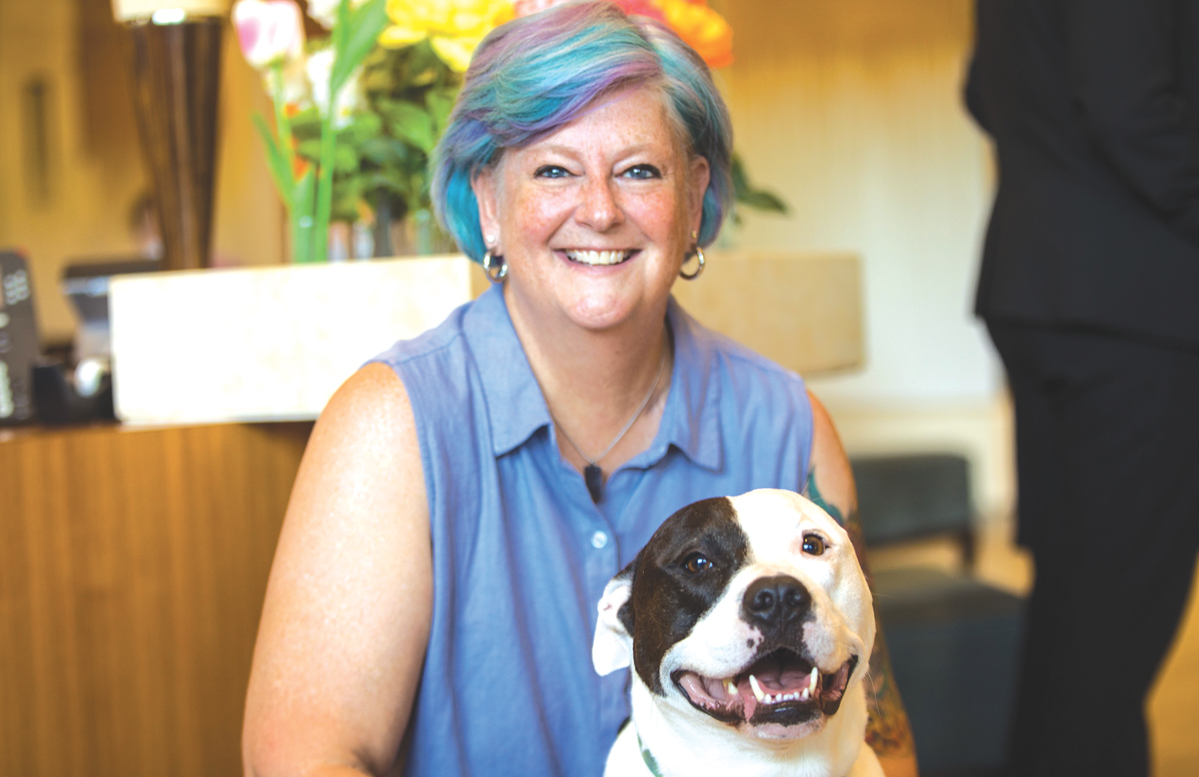
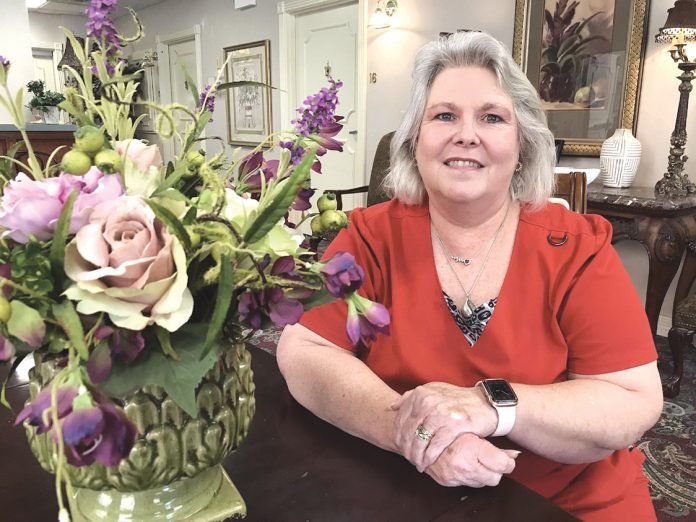
Bonnie Wells, 66, has made it her mission to help Edmond area adults with developmental disabilities become more independent as executive director of Edmond’s EARC Inc. (Employment and Residential Centers) for the last 18 years. One of the highlights of her working in the field since 1978 has been applying energy to innovation. She has done this during the nonprofit’s more than 50-year local mission, helping shift clients from State institutions to home settings.
Wells deflected inquiries about her role in building up EARC to serve 56 clients over the years. She wanted to discuss a burgeoning problem she and others in leadership face in providing clients a better quality of life through vocational and residential services.
“The most important story in our nonprofit sector serving developmentally disabled and the senior services world is how the COVID 19 pandemic has caused severe labor shortages,” Wells said. “All of our managers have been filling multiple roles and working ridiculous hours due to this problem.” (story continues below)

She explained how worn out and depressed many of her fellow service providers have been since absorbing the pandemic’s additional stresses. “Even though we are all career caregivers, who love what we do and who we serve, we wonder how long we can continue to endure,” Wells said.
Because she and many other nonprofit leaders have served people with disabilities for the past 40 years, Wells makes what she sees as an appropriate statement: “The government needs to look forward and work on massive educational incentives to get good people to go into healthcare. This is especially important at the direct nursing care level and administrative positions. Otherwise, at the current rate of burnout in caregiving, not enough staff with the right skills will be there ready to help seniors in their own homes or other settings.”
This effort to provide the best support by supplying appropriate help and housing reflects a tradition begun in 1982 when EARC opened the first of two six-bed group homes in north Edmond. After they opened the second similar home in 1985 on the south side of Edmond designed to provide training in areas of independent living skills, they expanded their mission.
In 1989, they built The Nova Centre in Edmond, a 16-bed, long-term care facility for residents with more severe disabilities with specialized nursing provided. Clients furnish and decorate their space to suit their own style to make them feel more at home. These clients share living areas for social interaction and family-style dining.
EARC Inc.’s non-profit mission is to provide clients with affordable quality housing in the Edmond Community. This instills a sense of pride in the individuals with intellectual disabilities and certain persons with related conditions who moved from closed Oklahoma public institutions to private settings.
The EARC purchased four private three-bedroom residences between 2012 and 2019. The agency operates another to serve 15 resident clients in a Daily Living Support program.
“A good example of this is when we bought and furnished a home for three men moving from the closing Northern Oklahoma Resource Center in Enid in 2013,” Wells said in an interview. When the Southern Resource Center in Pauls Valley closed in 2014, 219 residents needed to transition from the two State-operated facilities.
Wells said this was a significant change and move for anyone who has lived in the same setting for more than 30 years, where their only experience in the community was during visits to their parents’ or siblings’ homes.
EARC wanted to expand the number of its DLS homes, but quality affordable housing in Edmond to rent for its clients was challenging to find.
Organizers select these homes because of their spacious three bedrooms and open living areas, although sometimes they need to be architecturally modified to make them handicapped accessible. The Oklahoma State Developmental Disabilities Services Division provides those materials and skills for the architectural modifications.
The rest of the 52 adults receiving residential service occupy their own apartments or family members’ homes with EARC training and paid staff, who are sometimes family members. They all receive needed care, from usually 20 hours per week up to 24-hours of care per day.
Wells says the agency is grateful to Edmond citizens for their generosity as donations from the community to EARC thrift stores create job opportunities for their clients. They employ 22 clients working for the three thrift stores as cashiers, truck driver assistants, janitorial workers, or those processing and hanging clothes.
“We have created many income-producing jobs in our thrift stores with the processing operations we undertake to prepare the donated items for resale,” Wells said recently. “Through these opportunities, many of our clients earn wages significant enough to be taxpayers and reduce their dependence on taxpayer funding.”
These clients are employed alongside workers without disabilities after receiving on-the-job training from an EARC job coach.
Wells said EARC is proud of a core group of about a dozen dedicated community volunteers who help sort, clean and price the thrift stores’ donations. The stores are at 100 E. 3rd and Litter in Edmond, a larger Edmond store at 92 E. 15th St and in Guthrie, at 1408 E Oklahoma Ave.
To volunteer or donate to help area adults with developmental disabilities in this United Way community partner nonprofit, visit the EARC website at www.earcinc.org.
RN Renfrow Running For Office

by Van Mitchell, SNL writer

Gabe Renfrow isn’t afraid of taking on life challenges, and says his approach running for public office is no different.
Renfrow, who works as a Registered Nurse at the Oklahoma Heart Institute in Tulsa, is running as a Republican candidate for Oklahoma House District 66, which encompasses Tulsa and Osage counties.
A Sand Springs resident, Renfrow will face Mike Burdge, Wayne Hill, and Clay Staires in the June 28 Republican primary vying to replace Rep. Jadine Nollan, who is term-limited. A run-off, if necessary, will be held Aug. 23, with the winner taking on Democrat James David Rankin in the Nov. 8 general election.
“I like challenges,” Renfrow said. “I am not one to back down from any life challenge whether it is a job or kids.”
A 15-year veteran of a cardiovascular catheterization lab, Renfrow previously worked as an emergency medical technician. He is a graduate of Northeastern State University and Bacone College.
Renfrow’s campaign platform includes; fighting for election integrity, defeat illegal immigration, support a parent’s right to choose, and rejecting government mandates.
Renfrow said the birth of his children helped inspire him to serve a greater good as a lawmaker.
“My daughter was born seven years ago, and I felt like I needed to be a voice to make sure she had what she needed to be successful in this state,” he said. “It just snowballed from there. People are looking for somebody to do a good job, and make sure that their thoughts and feelings are heard at the state level. It is like being an advocate for a patient. You are an advocate for the people of your district, and for the state of Oklahoma.”
Renfrow has been campaigning since last fall.
“It (campaign) has been really positive,” he said. “I have been campaigning since last September. I have probably knocked on close to 6,000 doors. It has been a real eye-opening thing for me. I learned a lot about myself doing it.”
Renfrow said if elected, will work part-time at the hospital. The Oklahoma Legislature meets in session every February through May in Oklahoma City.
“When the (legislative) session is out, I will be at the hospital,” he said.
Renfrow said nursing has long been a calling for him to do.
“It (nursing) is something that I always wanted to do,” he said. “I was in medical sales in Missouri, and I had this feeling that I wanted to be closer to the patient instead of in sales. I worked for a company doing orthopedic sales. I felt there was something more that I could do, so I decided to go to nursing school.”
Renfrow’s career direction was also influenced by an experience while doing clinicals in Tahlequah.
“I was in clinicals in Tahlequah, and they have a small Cath lab there,” he said. “They had an emergency patient come in, and he was basically dying. I was standing against the wall watching everything happen, and the guy went from grey to blue. They opened up the vessel, and he instantly changed colors and his breathing was better. That was something (to see). It was a very exciting moment. I thought this is what I want to do with my career. Saving someone’s life is the best part of what I do. When you get to be a part of that, it is why you do the job.”
Renfrow is married to his wife Gini, who is a nurse practitioner. The couple has two children, Sadie, 7, and Monroe, 4.
Renfrow said having a spouse who also works in the medical field, is beneficial for both of them.
“She is absolutely amazing,” he said. “I tell people she is a much smarter person than I am. We bounce things off of each other all the time.”
As a teenager, Renfrow cleaned churches at 4 a.m. before school to afford food and clothes. That experience helped instill in him a strong work ethic.
Renfrow said he still enjoys coming to work each day at the hospital.
“I have been doing it for 15 years, and I don’t think I have had a burnout day yet,” he said. “There are days when I sit and think and pray about what I have dealt with that day. Most of the time, I can wash it off my back and come home and enjoy my wife and children, and know that I did the best that I could for the patients that I had that day.”
To support Gabe Renfrow visit: https://gaberenfrow.com/