Friday, March 13, 2026

Bradford Building Among New Oklahoma National Register Listings

0

The Oklahoma Historical Society, State Historic Preservation Office (SHPO) is pleased to announce the National Register of Historic Places designation for the following properties in Oklahoma. The National Register of Historic Places is our nation’s official list of properties significant in our past.
Oklahoma County
William L. Bradford Building
27 E. Sheridan Ave., Oklahoma City
The William L. Bradford Building near downtown Oklahoma City, Oklahoma County, is locally significant for its association with Commerce and Industry. Constructed in 1909, the four-story, red brick building was developed as an investment property in Oklahoma City’s burgeoning warehouse district, known today as Bricktown. A simple corbeled brick cornice adorns the top of the building in reference to the Classical Revival architectural style that was commonly seen at the turn of the 20th century. Various manufacturers and wholesalers occupied the building during its period of significance from 1909 to 1941, including the Southwestern Fountain Company, the Can’t Spill Oil Can Company and Kansas City Paper House.
Kay County
Ponca City Coca-Cola Bottling Company
511 S. First St., Ponca City
The Ponca City Coca-Cola Bottling Company is locally significant for its association with Industry. The modest, one- and two-story, painted brick building was completed in a series of phases between 1923 and 1956 as the bottling plant expanded to meet the growing demands of the local community. The historic period glass block windows, drive-through service entries and signage panels reflect the building’s unique industrial uses and share common vernacular design elements with other nearby industrial complexes. Part of an integrated chain of local and regional bottling operations, the Ponca City Coca-Cola facility reflects the significant, early-20th-century industrial growth of the community and was the longest continually operated bottling works in Ponca City.
WBBZ Radio Station
1601 E. Oklahoma Ave., Ponca City
WBBZ Radio Station is locally significant for its association with Communications and Architecture. The station property is comprised of a two-story, buff brick, Modernist radio station building and an adjacent 165-foot metal transmitter tower, all completed in 1951–52. The modest, flat-roofed station building with its distinctive corner window and glass block glazing represents an exceptionally well-preserved local example of mid-century International style design. Ponca City does not have a large concentration of mid-20th century International style buildings. Thus, the intact and somewhat unusual nature of the WBBZ Station building marks it an exemplary local example of International style design. The WBBZ Radio Station provided an important outlet for local and regional communications regarding news, current events and general entertainment in an era before the widespread use of television and the Internet for social communications. The station also had a significant role in the establishment of local weather warning systems and civil defense programs in the immediate post–World War II era, a particularly important aspect given Oklahoma’s notorious reputation for severe and rapidly changing weather conditions.
Listing in the National Register of Historic Places is an honorific designation that provides recognition, limited protection and, in some cases, financial incentives for these important properties. The SHPO identifies, evaluates and nominates properties for this special designation. For more information about the OHS, please visit www.okhistory.org.

Grellner Selected to Serve on State Board of Health

0
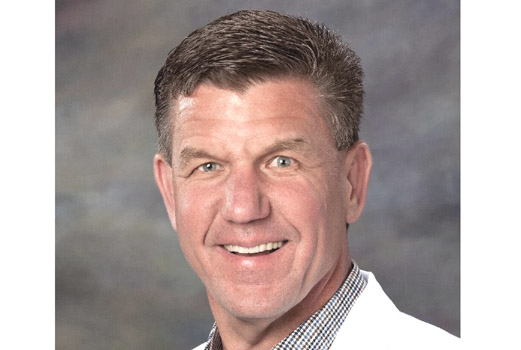
Dr. Randy Grellner.

Dr. Randy Grellner, a candidate for the U.S. Senate representing Oklahoma, has been approved to serve on the State Board of Health by the Oklahoma Senate.
“It is truly an honor to be nominated and confirmed to serve in such an important position that affects the lives of every Oklahoman,” Grellner said. “As a doctor, I care deeply about the health of every person. Being a part of this board gives me the opportunity to ensure Oklahomans get the best health advice and care we can offer on disease and injury prevention and in keeping the people of our state healthy and strong.”
The mission of the board is to protect and promote health, to prevent disease and injury, and to cultivate conditions by which Oklahomans can be healthy. The nine-member Board is appointed by the Governor with Senate confirmation. Board members are selected based on a strict criterion which includes leadership, integrity, service, a commitment to public health, and accountability based on sound evidence and responsible research.
In all, very few physicians get chosen to serve in such a high-level and responsible capacity, and those selected are considered the top doctors and health professionals in the state. Those selected to serve are more than proven professionals in their fields but are those who are shown to have the highest moral and ethical standards and who show a true compassion for the health of the people of Oklahoma.
“I am always happy and prepared to serve the people and the communities of this great state,” Grellner said. “I will serve to protect us in the realms of health and will serve to protect us and our values in Washington against the establishment and the corrupt professional politicians as a member of the U.S. Senate.” For more information visit: www.drgrellnerussenate.com
Dr. Grellner is a candidate for U.S. Senate from Oklahoma. Additional information can be found at www.drgrellnerussenate.com.

Proud of Progress with a Cry for Help

0
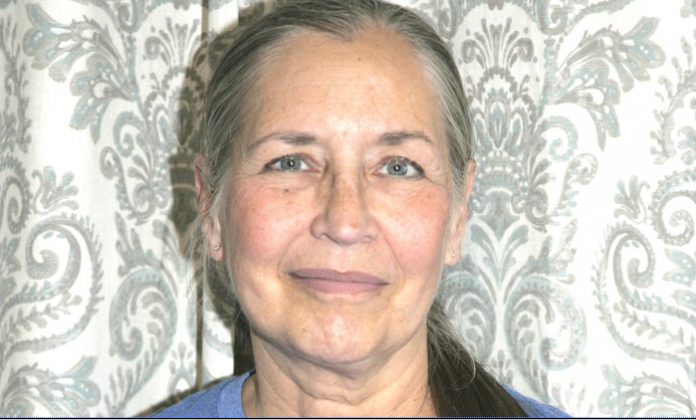
Bonnie Wells has guided EARC Inc. in Edmond for 18 years in providing employment and residential services encouraging independent lifestyles in their adult developmentally disabled clients.

Story by Darl DeVault, Contributing Editor

Bonnie Wells, 66, has made it her mission to help Edmond area adults with developmental disabilities become more independent as executive director of Edmond’s EARC Inc. (Employment and Residential Centers) for the last 18 years. One of the highlights of her working in the field since 1978 has been applying energy to innovation. She has done this during the nonprofit’s more than 50-year local mission, helping shift clients from State institutions to home settings.
Wells deflected inquiries about her role in building up EARC to serve 56 clients over the years. She wanted to discuss a burgeoning problem she and others in leadership face in providing clients a better quality of life through vocational and residential services.
“The most important story in our nonprofit sector serving developmentally disabled and the senior services world is how the COVID 19 pandemic has caused severe labor shortages,” Wells said. “All of our managers have been filling multiple roles and working ridiculous hours due to this problem.” (story continues below)


She explained how worn out and depressed many of her fellow service providers have been since absorbing the pandemic’s additional stresses. “Even though we are all career caregivers, who love what we do and who we serve, we wonder how long we can continue to endure,” Wells said.
Because she and many other nonprofit leaders have served people with disabilities for the past 40 years, Wells makes what she sees as an appropriate statement: “The government needs to look forward and work on massive educational incentives to get good people to go into healthcare. This is especially important at the direct nursing care level and administrative positions. Otherwise, at the current rate of burnout in caregiving, not enough staff with the right skills will be there ready to help seniors in their own homes or other settings.”
This effort to provide the best support by supplying appropriate help and housing reflects a tradition begun in 1982 when EARC opened the first of two six-bed group homes in north Edmond. After they opened the second similar home in 1985 on the south side of Edmond designed to provide training in areas of independent living skills, they expanded their mission.
In 1989, they built The Nova Centre in Edmond, a 16-bed, long-term care facility for residents with more severe disabilities with specialized nursing provided. Clients furnish and decorate their space to suit their own style to make them feel more at home. These clients share living areas for social interaction and family-style dining.
EARC Inc.’s non-profit mission is to provide clients with affordable quality housing in the Edmond Community. This instills a sense of pride in the individuals with intellectual disabilities and certain persons with related conditions who moved from closed Oklahoma public institutions to private settings.
The EARC purchased four private three-bedroom residences between 2012 and 2019. The agency operates another to serve 15 resident clients in a Daily Living Support program.
“A good example of this is when we bought and furnished a home for three men moving from the closing Northern Oklahoma Resource Center in Enid in 2013,” Wells said in an interview. When the Southern Resource Center in Pauls Valley closed in 2014, 219 residents needed to transition from the two State-operated facilities.
Wells said this was a significant change and move for anyone who has lived in the same setting for more than 30 years, where their only experience in the community was during visits to their parents’ or siblings’ homes.
EARC wanted to expand the number of its DLS homes, but quality affordable housing in Edmond to rent for its clients was challenging to find.
Organizers select these homes because of their spacious three bedrooms and open living areas, although sometimes they need to be architecturally modified to make them handicapped accessible. The Oklahoma State Developmental Disabilities Services Division provides those materials and skills for the architectural modifications.
The rest of the 52 adults receiving residential service occupy their own apartments or family members’ homes with EARC training and paid staff, who are sometimes family members. They all receive needed care, from usually 20 hours per week up to 24-hours of care per day.
Wells says the agency is grateful to Edmond citizens for their generosity as donations from the community to EARC thrift stores create job opportunities for their clients. They employ 22 clients working for the three thrift stores as cashiers, truck driver assistants, janitorial workers, or those processing and hanging clothes.
“We have created many income-producing jobs in our thrift stores with the processing operations we undertake to prepare the donated items for resale,” Wells said recently. “Through these opportunities, many of our clients earn wages significant enough to be taxpayers and reduce their dependence on taxpayer funding.”
These clients are employed alongside workers without disabilities after receiving on-the-job training from an EARC job coach.
Wells said EARC is proud of a core group of about a dozen dedicated community volunteers who help sort, clean and price the thrift stores’ donations. The stores are at 100 E. 3rd and Litter in Edmond, a larger Edmond store at 92 E. 15th St and in Guthrie, at 1408 E Oklahoma Ave.
To volunteer or donate to help area adults with developmental disabilities in this United Way community partner nonprofit, visit the EARC website at www.earcinc.org.

RN Renfrow Running For Office

0
Gabe Renfrow is a Registered Nurse working for the Oklahoma Heart Institute in Tulsa, and is running for House District 66. He is married to his wife Gini, who is a nurse practitioner. Photo provided

by Van Mitchell, SNL writer

Gabe Renfrow and wife Gini, a nurse practitioner.

Gabe Renfrow isn’t afraid of taking on life challenges, and says his approach running for public office is no different.
Renfrow, who works as a Registered Nurse at the Oklahoma Heart Institute in Tulsa, is running as a Republican candidate for Oklahoma House District 66, which encompasses Tulsa and Osage counties.
A Sand Springs resident, Renfrow will face Mike Burdge, Wayne Hill, and Clay Staires in the June 28 Republican primary vying to replace Rep. Jadine Nollan, who is term-limited. A run-off, if necessary, will be held Aug. 23, with the winner taking on Democrat James David Rankin in the Nov. 8 general election.
“I like challenges,” Renfrow said. “I am not one to back down from any life challenge whether it is a job or kids.”
A 15-year veteran of a cardiovascular catheterization lab, Renfrow previously worked as an emergency medical technician. He is a graduate of Northeastern State University and Bacone College.
Renfrow’s campaign platform includes; fighting for election integrity, defeat illegal immigration, support a parent’s right to choose, and rejecting government mandates.
Renfrow said the birth of his children helped inspire him to serve a greater good as a lawmaker.
“My daughter was born seven years ago, and I felt like I needed to be a voice to make sure she had what she needed to be successful in this state,” he said. “It just snowballed from there. People are looking for somebody to do a good job, and make sure that their thoughts and feelings are heard at the state level. It is like being an advocate for a patient. You are an advocate for the people of your district, and for the state of Oklahoma.”
Renfrow has been campaigning since last fall.
“It (campaign) has been really positive,” he said. “I have been campaigning since last September. I have probably knocked on close to 6,000 doors. It has been a real eye-opening thing for me. I learned a lot about myself doing it.”
Renfrow said if elected, will work part-time at the hospital. The Oklahoma Legislature meets in session every February through May in Oklahoma City.
“When the (legislative) session is out, I will be at the hospital,” he said.
Renfrow said nursing has long been a calling for him to do.
“It (nursing) is something that I always wanted to do,” he said. “I was in medical sales in Missouri, and I had this feeling that I wanted to be closer to the patient instead of in sales. I worked for a company doing orthopedic sales. I felt there was something more that I could do, so I decided to go to nursing school.”
Renfrow’s career direction was also influenced by an experience while doing clinicals in Tahlequah.
“I was in clinicals in Tahlequah, and they have a small Cath lab there,” he said. “They had an emergency patient come in, and he was basically dying. I was standing against the wall watching everything happen, and the guy went from grey to blue. They opened up the vessel, and he instantly changed colors and his breathing was better. That was something (to see). It was a very exciting moment. I thought this is what I want to do with my career. Saving someone’s life is the best part of what I do. When you get to be a part of that, it is why you do the job.”
Renfrow is married to his wife Gini, who is a nurse practitioner. The couple has two children, Sadie, 7, and Monroe, 4.
Renfrow said having a spouse who also works in the medical field, is beneficial for both of them.
“She is absolutely amazing,” he said. “I tell people she is a much smarter person than I am. We bounce things off of each other all the time.”
As a teenager, Renfrow cleaned churches at 4 a.m. before school to afford food and clothes. That experience helped instill in him a strong work ethic.
Renfrow said he still enjoys coming to work each day at the hospital.
“I have been doing it for 15 years, and I don’t think I have had a burnout day yet,” he said. “There are days when I sit and think and pray about what I have dealt with that day. Most of the time, I can wash it off my back and come home and enjoy my wife and children, and know that I did the best that I could for the patients that I had that day.”
To support Gabe Renfrow visit: https://gaberenfrow.com/

A CALLING IN LIFE: LPN LEARNS FROM PERSONAL EXPERIENCE

0
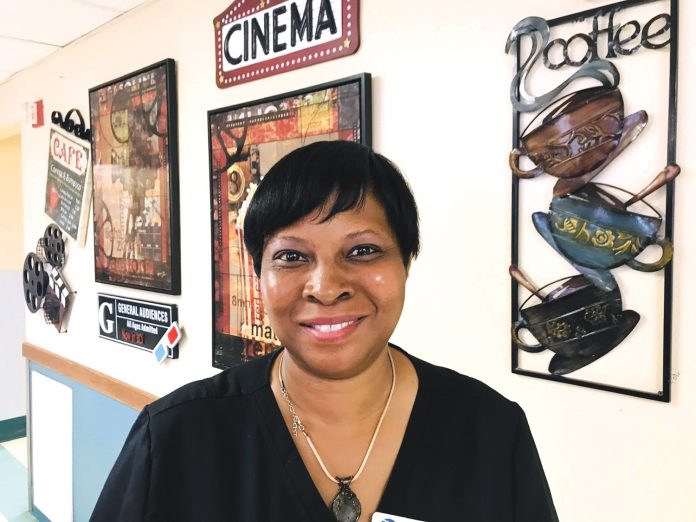
Sherice Randle, LPN, engages with people where they are in life while keeping in mind their stories of long ago.

by James Coburn – staff writer

Sherice Randle, LPN, needed to understand more about Alzheimer’s Disease after her aunt was diagnosed with the most prevalent form of dementia.
“So, I got my CNA and CMA and worked in nursing homes for a while,” Randle said.
“People with Alzheimer’s have their good days and their bad days. So as a family member you must take that in stride,” she said. “You have to know that they’re in there somewhere. They know who you are, but sometimes they may not know who you are,” said Randle, who serves as a case manager over long-term care and skilled nursing care at The Wilshire Skilled Nursing and Therapy, located in Oklahoma City. “You just have to take it how it is day-to-day. My aunt wasn’t the only one. Alzheimer’s runs in my family. You take your good days. Sometimes you might have more bad days than good days.”
She found patience to be a valuable component of living with somebody with Alzheimer’s disease.
“You remember the good and how they were, and don’t remember them like that,” she continued. She learned how residents living with Alzheimer’s respond well to music from decades ago. (story continues below)


“I used to have this one. He could forget anything there was except how to play dominoes,” she said. “If you set some dominoes in front of him, that was it. He’d beat you in dominoes all day long.”
Nursing has always been a learning opportunity for Randle. Her career pathway included being a home health aide while putting herself through nursing school. After graduating from nursing school, she worked in long-term acute care unit of a hospital.
“I did a lot of vents and learned a lot in an LTAC, but it wasn’t my calling,” she said. “A nursing home is where I feel more comfortable.”
She joined The Wilshire in early March. Randle earned her LPN license after graduating from Chisholm Trail Technology Center, located in Omega, 16 miles west of Kingfisher.
“It’s smaller and I like their leadership and their structure,” she said. “The staff works hard together, and I like that.”
Everybody is willing to pitch in during times when they would otherwise have a staffing shortage, Randle said. There have been experiences that have moved her to persevere. When Randle was a CNA, she cared for an older lady who was part of a group of people who lived to be over 100. Randle would read to the group each day she was at work.
“She liked the comics, so I had to read her the comics. Another liked the classifieds. I would ask him, ‘Why do you make me go over all of the classified stuff with you?’ I started to read certain things out of the classifieds, and he was like, ‘No, you have to read it all.’ I really like them, and when I left there, I really missed them a lot.”
Another woman would tell her stories about her life in Europe. Randle enjoyed listening to older residents telling her stories about their lives. Each one of the residents at The Wilshire Skilled Nursing and Therapy come from different walks of life. One man ran a farm and one of the women worked in government.
Anyone working in long-term care and skilled nursing needs to have a lot of patience and organizational skills, Randle said. As the MDS coordinator, she documents all the information Medicare requires for reimbursement and audits. Medications are documented as well as if the resident requires more than one person for assistance. Vision and dental and whether the residents require total care is reported to the federal government.
“You put all that information in their care plan,” she continued.
The Easter Bunny passed out Easter eggs as a recent guest at The Wilshire Skilled Nursing and Therapy. It was part of the many activities that keep residents engaged in their community. Staff and volunteer organizations help with the activities that include putting together puzzles and involvement in holidays, among other events.
“It keeps them motivated and it keeps them busy,” she said. “For some people it keeps them up-to-date.”
The nursing staff spends a lot of time speaking to each resident in order to relate to their daily likes and dislikes. “It’s hard work, but on the skilled side of it, I like seeing people accomplish their goals and send them back home,” Randle said.
“We get them to their prior level of care so they can go back home. Some decline home health services because they don’t need it. That’s a goal that I set for myself — to try to get them back home. I like working with elderly people. I don’t know how to explain it, I just like working with them.”
Randle has her challenges as a nurse but said she would rather continue her work as a nurse than do something less enriching in life.
For more information visit: https://www.wilshireokc.com/

Stacey Sanders to Perform at Cherokee Strip Regional Heritage Center for “Museum After Dark: Village Sounds”

0

On Friday, June 10, from 7 to 9 p.m. the Cherokee Strip Regional Heritage Center (CSRHC) in Enid will present “Museum After Dark: Village Sounds” featuring singer/songwriter Stacey Sanders. The Village Church on the grounds of the Humphrey Heritage Village will be transformed for the evening into an intimate listening room for the musician to share songs and stories. The CSRHC will remain open for the duration, so visitors can also explore our shared history at their leisure.
Museums are honest, authentic interpreters of the past, using pieces of historic evidence as a guide. Musicians are also storytellers, also telling honest, authentic stories about the world around us. “Museum After Dark: Village Sounds” at the Cherokee Strip Regional Heritage Center is a chance to explore our story in Oklahoma from the perspective of different songwriters from our state.
As Sanders’s song “Government Issue” suggests, “I was a Desert Strike baby conceived in 1964.” He indeed was born in 1965 in Blackwell. His family relocated frequently to other states and Germany due to his father’s military service until they settled in Enid in 1976. Sanders then started playing acoustic guitar and penning songs during his teens. He cut his teeth on the sounds of James Taylor, Dan Fogelberg, Neil Young and other acoustic musicians he would aspire to become. Sanders unapologetically shies away from love songs and prefers telling gritty, earthy stories. Many of his songs are based on true-life experiences while others are whimsical, wild tales. He resides in Enid with his wife, Kay, and their dog, Jane.
The concert is free with admission to the CSRHC. Members of the CSRHC or the Oklahoma Historical Society always visit the center for free. This event is made possible through the financial support of our community partner, Park Avenue Thrift. The Cherokee Strip Regional Heritage Center is located at 507 S. Fourth Street in Enid. For more information, please call 580-237-1907 or visit www.csrhc.org.
The Cherokee Strip Regional Heritage Center is a division of the Oklahoma Historical Society. The mission of the Oklahoma Historical Society is to collect, preserve and share the history and culture of the state of Oklahoma and its people. Founded in 1893 by members of the Territorial Press Association, the OHS maintains museums, historic sites and affiliates across the state. Through its research archives, exhibits, educational programs and publications the OHS chronicles the rich history of Oklahoma. For more information about the OHS, please visit www.okhistory.org.

TRAVEL / ENTERTAINMENT: Washington D. C.: An Installment City

0

Photography and Text by Terry “Travels with Terry” Zinn [email protected]

When you think of Washington DC in the spring, you might think of the Jefferson Memorial in Cherry Blossom splendor, but D.C. has so much more to offer, and that’s the problem.
Over the years I have discovered that some cities are just too large, diverse, and ever changing, to be experienced fully in just one visit. I find this true about our Nation’s Capitol, Washington D.C. That’s why I find it to be an “installment” city: one that needs to be visited over and over again, over a number of years (or decades in my experience.)
Creating a reasonable itinerary for D.C., and knowing your physical capabilities is the key. In my youth I walked and walked and walked to near exhaustion, to see some of the monuments, memorials and museums. For this brief two day trip I took it easy, knowing that in most likelihood that all would be there for another visit on down the line.
I used inexpensive taxis to go most places. I could not believe how accessible they were.
My home base was in the Beacon Hotel and Corporate Quarters, up the hill from the White House by several blocks. It was a comfortable hotel, with a doorman for taxis, offering spacious rooms, kitchenette and full size bath. While I would not try to visit their unfriendly dining establishment again, I would consider the hotel for my next installment. They do offer a rooftop bar on some nights. Go early before the music starts.
Months in advance I contacted both my Congressional representatives to see about getting a White House tour. After a prolonged attempt it did happen, and I was put on a list with a group of strangers, to this day I have not met. I showed up a little earlier than my appointed time, and went through 2 check lists before going through security. I was told on the website, no cameras, although cell phones with cameras were allowed (go figure that logic), no pencils, no pens, no back packs, no water, no nothing, or it would be taken away. Strange again, but the price you pay. The self guided tour, following a pre determined path, was reminiscent of a tour decades ago. In reflection it is fun to see the rooms and hallways on TV and know their juxtaposition to each other and such, because you were there. I’m ashamed to say, I did not get a feeling of awe, but seeing the portraits of JFK and Jacqueline was heart warming. A tour of the Capitol Building is much easier to get and very informative.
I can also recommend visiting the National Gallery, The Spy Museum and its adjacent restaurant, Zola. All three are worth a lengthy visit. Dining at Zola is definitely on my list for my next installment visit to D.C.
Other fun food and beverages were enjoyed at the iconic Old Ebbitt Grill, the Round Robin Bar at the Willard Intercontinental, and the roof top bar and dining atop the W Hotel, where extra ordinary sights can be had of the White House, Washington’s Monument, Jefferson Memorial and the Lee Mansion in Arlington The W can be a bit snooty, as they reserve several roof top bar tables for VIP’s, which are seldom used early in the evening. So as you wait for the elevator behind the velvet rope, just profess to the doorman you want to stand at the bar. It’s worth the effort.
I longed to see the National Cathedral and took a taxi there and back. Getting back was the challenge. I saw the edifice and took a Gargoyle tour, which I can not recommend.
One is shown slides of the exterior, and then taken out front on the grounds to try and see again, what you saw in slide format. My souvenir book of Gargoyles sold in the basement gift shop was worth its money; the tour was not. A quick trip to the architecturally pleasing National Museum of the American Indian was accomplished, along with a light lunch, and my two days were completed.
As these days much is changing and challenging, and while this was my experience, it is always best to explore and investigate your Installment on your own before a trip.
One of the best compliments of any travel adventure or meal is answering “Yes” to the question, “Would you have it again?” And “Yes,” Washington D.C. is already on my list for future city installments.
When you go or before check out:
Zola Dining: www.spymuseum.org/dining
Beacon Hotel: http://www.capitalhotelswdc.com/
The Spy Museum : www.spymuseum.org/
The National Cathedral: www.nationalcathedral.org
Washington D.C. info: http://washington.org

Mr. Terry Zinn – Travel Editor
Past President: International Food Wine and Travel Writers Association
3110 N.W. 15 Street – Oklahoma City, OK 73107
https://realtraveladventures.com/?s=terry+zinn
https://realtraveladventures.com/?s=zinn
http://new.okveterannews.com/?s=TERRY+ZINN
www.martinitravels.com

INTEGRIS Health Encourages Oklahoma Lawmakers to Extend Acute Hospital Care at Home Waivers

0

INTEGRIS Health is encouraging Oklahoma lawmakers to support the Hospital Inpatient Services Modernization Act, so that hospital at home programs can continue to exist.
The Acute Hospital Care at Home (AHCAH) waiver program was implemented by the Centers for Medicare & Medicaid Services (CMS) to allow Medicare beneficiaries to receive acute-level health care services in their home environment during the COVID-19 public health emergency (PHE). The waiver program has allowed hospitals and health systems across the country to meet increased capacity demands during the pandemic, while providing safe, high-quality care in patients’ homes where they can be supported by their friends and family. To date, more than 200 hospitals and health systems in 34 states have received the waiver – including INTEGRIS Health.
The INTEGRIS Health @ Home program officially launched Jan. 31, and recently celebrated the discharge of its 100th patient. Forty-six-year-old Rachael Martin had been in and out of the hospital multiple times due to congestive heart failure and respiratory issues. She was thrilled to learn there was an alternative option to the traditional brick and mortar hospital. “The hospital at home program is so much more convenient and comfortable,” says Martin. “There’s no place like home… and that’s truly where every patient would prefer to be if given the choice.”
INTEGRIS Health @ Home provides hospital-level care to patients in the comfort and convenience of their own homes. Patients receive a remote patient monitoring kit and other clinical equipment as needed for their particular diagnoses. Standard equipment includes a blood pressure monitor, pulse oximeter, cellular-enabled digital tablet and a digital scale. Other devices can be added based on the patient’s needs. All the devices connect to a tablet through Bluetooth and transmit vital signs to a remote monitoring command center. The command center, staffed by INTEGRIS Health physicians and nurses, monitors patients 24/7 and responds immediately to a patient’s medical needs via video or telephone. Daily in-home visits by community paramedics, nurses, nurse practitioners and other health care professionals are also part of the treatment plan. IV therapies, oxygen treatments, lab tests, mobile imaging like x-rays and ultrasound are all performed in the home. Other services provided include skilled nursing, medications, infusions, behavioral health, and rehabilitation.
At this time, access to this care model is limited to patients with Medicare, Medicaid and Medicare Advantage health plans who accept the CMS waiver. Martin was only able to qualify for this option since SoonerCare agreed to accept the CMS waiver. “I immediately started feeling better as soon as I got home,” Martin declares. “I wish this program was available to everyone. I think countless Oklahomans could benefit from it.”
The problem facing current and future hospital at home patients is that the waiver flexibilities that enable this model of care are tied to the duration of the COVID-19 public health emergency (PHE), which is slated to run through mid-July 2022. While it may be extended further, the PHE can only be extended in 90-day increments. “Patients and their health care providers need greater certainty for this important care delivery option,” says INTEGRIS Health Hospital @ Home System Director Lisa Rother. “The waiver program has demonstrated positive outcomes, experiences and potential cost savings, reinforcing the need for broader adoption. ”
The Hospital Inpatient Services Modernization Act (S.3792/H.R. 7053) would ensure that patients and providers have access to these services for two years beyond the duration of the PHE. This bipartisan bill would also require that within one year of enactment, CMS issue regulations establishing health and safety requirements for AHCAH Programs.
“By extending the waiver program, Congress will sustain the existing momentum and investment in the program,” says Tom Cassidy, the director of government affairs at INTEGRIS Health. “It will also allow for additional experience and data collection that can inform the potential of a longer-term payment model for these services in the Medicare and Medicaid program. Without such an extension, programs like INTEGRIS Health Hospital @ Home will no longer be available for patients with Medicare and Medicaid health plans.” Click here to see a video explanation from Tom Cassidy.

Local Researcher Publishes Study Highlighting Deficiencies in COVID-19 Vaccine Compensation Program

0
Junying Zhao, Ph.D., Ph.D. assistant professor of health administration and policy

Although extremely rare, adverse events have occurred after COVID-19 vaccinations, and people affected have exercised their rights to seek compensation. However, the U.S. government program that considers COVID-19 vaccine injury claims lacks accountability, transparency and cost-effectiveness, according to a recently published study led by a researcher in the Hudson College of Public Health at the University of Oklahoma Health Sciences Center.
The study, published in the current issue of the Journal of Law and the Biosciences, was led by Junying Zhao, Ph.D., Ph.D., an assistant professor of health administration and policy at the Hudson College of Public Health. The study provides the first-ever economic examination of the government’s Countermeasures Injury Compensation Program (CICP), whose design is rife with unintended consequences, Zhao said.
The CICP has its roots in the Public Readiness and Emergency Preparedness (PREP) Act, which was enacted by Congress in 2005. The PREP Act authorizes the U.S. Department of Health and Human Services (HHS) to issue a declaration in response to a public health emergency like COVID-19. As part of the declaration, companies that manufacture and distribute vaccines, as well as medical professionals and others who administer them, are granted immunity from tort liability claims — essentially, they cannot be sued in state or federal courts for any injury or death.
The PREP Act rightfully eliminates liability concerns for the large number of people quickly responding to a public health crisis like COVID-19, Zhao said. But the U.S. government still must provide a mechanism to compensate individuals and families when the evidence shows a person was harmed or died as a result of receiving the vaccine. The CICP was created to address injury claims related to public health emergencies.
“My expertise is applying economics to the intersection of medicine and law,” Zhao said. “A particular branch of law relevant to healthcare is tort law. When COVID-19 vaccinations became available, I became interested in how someone would seek justice if they were injured, or how their families would be compensated if a family member died. Although it has been very rare — only three adverse events reported per one million people in our study — we still need a fair program for people to seek compensation.”
Zhao’s discovery of the inadequacies within the CICP came after comparing it to the government’s decades-old program that responds to vaccine injury claims concerning traditional vaccines against the measles, seasonal flu and others that are administered routinely, not in response to an emergency like COVID-19. Called the Vaccine Injury Compensation Program (VICP), it is located within the judicial branch of the federal government and operates in a typical court fashion in which attorneys for both the plaintiff (the person seeking compensation) and defendant (HHS) present evidence to a judge who specializes in vaccine injury cases.
In contrast, the CICP is located within the administrative branch, specifically HHS. Medical experts working for HHS make decisions for vaccine injury claims rather than each side making its case before a judge.
“In the CICP program, HHS serves as both the defendant and the judge,” Zhao said. “There is no third party to make sure both sides are heard. The design of the program incentivizes HHS to reject claims in order to reduce budget expenses.”
That assertion is reflected in the compensation amounts awarded by CICP as compared to the non-emergency VICP. In her study, Zhao found that the average compensation per adjudicated claim from the VICP is $243,129, while the average compensation from the CICP is $45,697. That translates to about one-fifth the amount of compensation for a COVID-19-related vaccine injury compared to the amount awarded for injuries caused by non-emergency vaccines.
“If someone has a mild adverse event, $45,000 may be sufficient,” Zhao said, “but what if a family’s primary breadwinner is temporarily or permanently disabled, or dies? In that case, $45,000 is not nearly enough to support a family in a lifetime, nor is it the worth of life.”
Zhao also found discrepancies in the administrative costs between the CICP and VICP. Administrative costs in the VICP are $24,000 per claim, money that pays judges, attorneys and medical experts. In contrast, the administrative cost per claim in the CICP is $40,000, which only pays medical experts within HHS.
The study highlighted another potential barrier for people seeking compensation for a COVID-19 vaccine injury. If a person’s claim is denied by the VICP, he or she can file an appeal and the case is presented again before a judge. However, in the CICP, a person can ask for the claim to be reconsidered, but it is reviewed by a similar group of medical professionals with no transparency about their identity or credentials.
To conduct the study, Zhao took a deep dive into information from the White House budget and the Department of Treasury. Her findings are especially relevant given that the CICP and VICP fulfill the same role, yet have such different structures and spending outcomes. Since the CICP began with the PREP Act in 2005, it has experienced only occasional public health emergencies, such as the H1N1 influenza outbreak in 2009 and the ongoing COVID-19 pandemic. The VICP, in contrast, has been operating continuously since 1986 with lower administrative costs and higher compensation payouts.
In the publication, Zhao makes several policy recommendations that would improve the compensation process for future public health emergencies. They include merging the CICP and VICP and locating the single program in the federal claims court, which is the VICP’s current home. Alternatively, the publication recommends that Congress consider incremental changes, such as judicial review of the CICP, increased transparency, financial and performance audits, and more cost-effective use of taxpayer money.
The publication produced by the study was rigorously peer-reviewed, Zhao said, and fills a gap of knowledge about the compensation process during public health emergencies. The PREP Act is essential for a rapid response to crises like COVID-19, Zhao said, and vaccine adverse events continue to be exceedingly low in proportion to the number of vaccines administered. But Americans deserve a fair and transparent opportunity to seek compensation when they feel they have been harmed, she said.
“Vaccines are incredibly important for public health, but the design of the federal CICP represents a conflict of interest and lacks checks and balances,” she said. “From a public health and public policy perspective, the program needs to be improved so that it more effectively reduces vaccine hesitancy by serving as a warranty for vaccine safety.”
The publication can be found at https://academic.oup.com/jlb/article/9/1/lsac008/6555422. Zhao’s team included several faculty researchers from the Department of Economics at the University of Oklahoma’s Norman campus: Firat Demir, Ph.D., Pallab K. Ghosh, Ph.D., and Myongjin Kim, Ph.D.; and Austin Earley, graduate student researcher in the Hudson College of Public Health at the OU Health Sciences Center.

TINSELTOWN TALKS: 60s Pop singer Donna Loren traded fame for family

0
Donna Loren on the cover of the 1965 Beach Blanket Bingo album - provided by Donna Loren

By Nick Thomas

Adam West and Donna Loren, as Susie, who appeared in a pair of 1966 episodes of Batman – ABC

When a top female British singer declined to appear on the premiere episode of the new American musical variety show “Shindig!” on September 16, 1964, the producer knew who to call – Donna Loren.
“Dusty Springfield couldn’t make the first show, so I was invited to sing her hit Wishin’ and Hopin’ and became a regular cast member for the rest of the series,” said Loren, who turned 75 in March, from her home in Bisbee, Arizona.
Loren had already impressed American television audiences six years earlier with stunning performances guest-starring as a child singing prodigy on “The Mickey Mouse Club.”
By 1963, she was also gaining nationwide recognition as the model and spokesperson for the Dr Pepper Company, performing at promotional events across the country since the age of 16. In films, she appeared in two 1964 musical comedies, “Muscle Beach Party” and “Bikini Beach,” with a third, “Pajama Party,” released shortly after her first “Shindig!” appearance. All three films starred beloved former lead Mouseketeer, Annette Funicello.
With film, television, advertising, and song contracts before her, the dark-haired beauty with a killer voice seemed poised to take the 60s entertainment world by storm, even acting on popular shows such as “Batman,” “The Monkees,” and “Gomer Pyle: USMC.” An additional beach film, “Beach Blanket Bingo,” was released in 1965 featuring Loren’s signature song, “It Only Hurts When I Cry.”
But by 1969, Donna had largely vanished from the entertainment scene.
“Privately, my life growing up had been difficult,” she admitted. “My mother had me out of wedlock and was mired in shame back in the 1940s. She didn’t want me and didn’t even like me which I’ve had to try to balance all my life.”
Loren married in 1968, at the age of 21, as her 5-year contract with Dr Pepper was coming to an end. But then, tragedy struck her new family.
“Two months after the wedding my mother-in-law passed away suddenly,” she explained. “I’d had the contract with Dr Pepper since I was 16 and on my 21st birthday they wanted me to fly to the company headquarters in Dallas to perform for the executives.”
Around this time, with all her earnings going straight to her parents, she also became pregnant.
“I knew the Dr Pepper CEO, Foots Clements, so I called him to say I was getting out of the business,” she said. “I did not want to be used anymore and I needed my child to know who I was. I have absolutely no regrets about the decision.”
Loren went on to raise several children and remarried. After 40 years of private life and with her family grown, she began recording and performing again in the late 2000s.
With numerous singles and CDs released in the past decade, she even relearned 100 songs she had performed in the 60s, posting many online for fans. If Loren had any doubts about recording after a prolonged absence, the words of Mickey Mouse Club teen idol Funicello confirmed her self-confidence.
“I still remember my appearance on the show and Annette later sending me a Christmas card in which she wrote ‘I wish I could sing like you!’” recalled Loren, whose still-powerful vocal performances are cataloged on her website (www.donnaloren.com).
Loren has been recounting her life and career recently on a series of weekly podcasts titled “Love is a Secret Weapon” co-hosted by Dr. Adam Gerace (see www.anchor.fm/lovesasecretweaponpodcast).
“I love communicating with people,” she says. “Give me a minute and I’ll give you my all.”
Nick Thomas teaches at Auburn University at Montgomery, in Alabama, and has written features, columns, and interviews for numerous magazines and newspapers. See www.tinseltowntalks.com.

Social

0FansLike
0FollowersFollow
0SubscribersSubscribe