Thursday, October 29, 2026

TRAVEL / ENTERTAINMENT: Washington D. C.: An Installment City

0

Photography and Text by Terry “Travels with Terry” Zinn [email protected]

When you think of Washington DC in the spring, you might think of the Jefferson Memorial in Cherry Blossom splendor, but D.C. has so much more to offer, and that’s the problem.
Over the years I have discovered that some cities are just too large, diverse, and ever changing, to be experienced fully in just one visit. I find this true about our Nation’s Capitol, Washington D.C. That’s why I find it to be an “installment” city: one that needs to be visited over and over again, over a number of years (or decades in my experience.)
Creating a reasonable itinerary for D.C., and knowing your physical capabilities is the key. In my youth I walked and walked and walked to near exhaustion, to see some of the monuments, memorials and museums. For this brief two day trip I took it easy, knowing that in most likelihood that all would be there for another visit on down the line.
I used inexpensive taxis to go most places. I could not believe how accessible they were.
My home base was in the Beacon Hotel and Corporate Quarters, up the hill from the White House by several blocks. It was a comfortable hotel, with a doorman for taxis, offering spacious rooms, kitchenette and full size bath. While I would not try to visit their unfriendly dining establishment again, I would consider the hotel for my next installment. They do offer a rooftop bar on some nights. Go early before the music starts.
Months in advance I contacted both my Congressional representatives to see about getting a White House tour. After a prolonged attempt it did happen, and I was put on a list with a group of strangers, to this day I have not met. I showed up a little earlier than my appointed time, and went through 2 check lists before going through security. I was told on the website, no cameras, although cell phones with cameras were allowed (go figure that logic), no pencils, no pens, no back packs, no water, no nothing, or it would be taken away. Strange again, but the price you pay. The self guided tour, following a pre determined path, was reminiscent of a tour decades ago. In reflection it is fun to see the rooms and hallways on TV and know their juxtaposition to each other and such, because you were there. I’m ashamed to say, I did not get a feeling of awe, but seeing the portraits of JFK and Jacqueline was heart warming. A tour of the Capitol Building is much easier to get and very informative.
I can also recommend visiting the National Gallery, The Spy Museum and its adjacent restaurant, Zola. All three are worth a lengthy visit. Dining at Zola is definitely on my list for my next installment visit to D.C.
Other fun food and beverages were enjoyed at the iconic Old Ebbitt Grill, the Round Robin Bar at the Willard Intercontinental, and the roof top bar and dining atop the W Hotel, where extra ordinary sights can be had of the White House, Washington’s Monument, Jefferson Memorial and the Lee Mansion in Arlington The W can be a bit snooty, as they reserve several roof top bar tables for VIP’s, which are seldom used early in the evening. So as you wait for the elevator behind the velvet rope, just profess to the doorman you want to stand at the bar. It’s worth the effort.
I longed to see the National Cathedral and took a taxi there and back. Getting back was the challenge. I saw the edifice and took a Gargoyle tour, which I can not recommend.
One is shown slides of the exterior, and then taken out front on the grounds to try and see again, what you saw in slide format. My souvenir book of Gargoyles sold in the basement gift shop was worth its money; the tour was not. A quick trip to the architecturally pleasing National Museum of the American Indian was accomplished, along with a light lunch, and my two days were completed.
As these days much is changing and challenging, and while this was my experience, it is always best to explore and investigate your Installment on your own before a trip.
One of the best compliments of any travel adventure or meal is answering “Yes” to the question, “Would you have it again?” And “Yes,” Washington D.C. is already on my list for future city installments.
When you go or before check out:
Zola Dining: www.spymuseum.org/dining
Beacon Hotel: http://www.capitalhotelswdc.com/
The Spy Museum : www.spymuseum.org/
The National Cathedral: www.nationalcathedral.org
Washington D.C. info: http://washington.org

Mr. Terry Zinn – Travel Editor
Past President: International Food Wine and Travel Writers Association
3110 N.W. 15 Street – Oklahoma City, OK 73107
https://realtraveladventures.com/?s=terry+zinn
https://realtraveladventures.com/?s=zinn
http://new.okveterannews.com/?s=TERRY+ZINN
www.martinitravels.com

INTEGRIS Health Encourages Oklahoma Lawmakers to Extend Acute Hospital Care at Home Waivers

0

INTEGRIS Health is encouraging Oklahoma lawmakers to support the Hospital Inpatient Services Modernization Act, so that hospital at home programs can continue to exist.
The Acute Hospital Care at Home (AHCAH) waiver program was implemented by the Centers for Medicare & Medicaid Services (CMS) to allow Medicare beneficiaries to receive acute-level health care services in their home environment during the COVID-19 public health emergency (PHE). The waiver program has allowed hospitals and health systems across the country to meet increased capacity demands during the pandemic, while providing safe, high-quality care in patients’ homes where they can be supported by their friends and family. To date, more than 200 hospitals and health systems in 34 states have received the waiver – including INTEGRIS Health.
The INTEGRIS Health @ Home program officially launched Jan. 31, and recently celebrated the discharge of its 100th patient. Forty-six-year-old Rachael Martin had been in and out of the hospital multiple times due to congestive heart failure and respiratory issues. She was thrilled to learn there was an alternative option to the traditional brick and mortar hospital. “The hospital at home program is so much more convenient and comfortable,” says Martin. “There’s no place like home… and that’s truly where every patient would prefer to be if given the choice.”
INTEGRIS Health @ Home provides hospital-level care to patients in the comfort and convenience of their own homes. Patients receive a remote patient monitoring kit and other clinical equipment as needed for their particular diagnoses. Standard equipment includes a blood pressure monitor, pulse oximeter, cellular-enabled digital tablet and a digital scale. Other devices can be added based on the patient’s needs. All the devices connect to a tablet through Bluetooth and transmit vital signs to a remote monitoring command center. The command center, staffed by INTEGRIS Health physicians and nurses, monitors patients 24/7 and responds immediately to a patient’s medical needs via video or telephone. Daily in-home visits by community paramedics, nurses, nurse practitioners and other health care professionals are also part of the treatment plan. IV therapies, oxygen treatments, lab tests, mobile imaging like x-rays and ultrasound are all performed in the home. Other services provided include skilled nursing, medications, infusions, behavioral health, and rehabilitation.
At this time, access to this care model is limited to patients with Medicare, Medicaid and Medicare Advantage health plans who accept the CMS waiver. Martin was only able to qualify for this option since SoonerCare agreed to accept the CMS waiver. “I immediately started feeling better as soon as I got home,” Martin declares. “I wish this program was available to everyone. I think countless Oklahomans could benefit from it.”
The problem facing current and future hospital at home patients is that the waiver flexibilities that enable this model of care are tied to the duration of the COVID-19 public health emergency (PHE), which is slated to run through mid-July 2022. While it may be extended further, the PHE can only be extended in 90-day increments. “Patients and their health care providers need greater certainty for this important care delivery option,” says INTEGRIS Health Hospital @ Home System Director Lisa Rother. “The waiver program has demonstrated positive outcomes, experiences and potential cost savings, reinforcing the need for broader adoption. ”
The Hospital Inpatient Services Modernization Act (S.3792/H.R. 7053) would ensure that patients and providers have access to these services for two years beyond the duration of the PHE. This bipartisan bill would also require that within one year of enactment, CMS issue regulations establishing health and safety requirements for AHCAH Programs.
“By extending the waiver program, Congress will sustain the existing momentum and investment in the program,” says Tom Cassidy, the director of government affairs at INTEGRIS Health. “It will also allow for additional experience and data collection that can inform the potential of a longer-term payment model for these services in the Medicare and Medicaid program. Without such an extension, programs like INTEGRIS Health Hospital @ Home will no longer be available for patients with Medicare and Medicaid health plans.” Click here to see a video explanation from Tom Cassidy.

Local Researcher Publishes Study Highlighting Deficiencies in COVID-19 Vaccine Compensation Program

0
Junying Zhao, Ph.D., Ph.D. assistant professor of health administration and policy

Although extremely rare, adverse events have occurred after COVID-19 vaccinations, and people affected have exercised their rights to seek compensation. However, the U.S. government program that considers COVID-19 vaccine injury claims lacks accountability, transparency and cost-effectiveness, according to a recently published study led by a researcher in the Hudson College of Public Health at the University of Oklahoma Health Sciences Center.
The study, published in the current issue of the Journal of Law and the Biosciences, was led by Junying Zhao, Ph.D., Ph.D., an assistant professor of health administration and policy at the Hudson College of Public Health. The study provides the first-ever economic examination of the government’s Countermeasures Injury Compensation Program (CICP), whose design is rife with unintended consequences, Zhao said.
The CICP has its roots in the Public Readiness and Emergency Preparedness (PREP) Act, which was enacted by Congress in 2005. The PREP Act authorizes the U.S. Department of Health and Human Services (HHS) to issue a declaration in response to a public health emergency like COVID-19. As part of the declaration, companies that manufacture and distribute vaccines, as well as medical professionals and others who administer them, are granted immunity from tort liability claims — essentially, they cannot be sued in state or federal courts for any injury or death.
The PREP Act rightfully eliminates liability concerns for the large number of people quickly responding to a public health crisis like COVID-19, Zhao said. But the U.S. government still must provide a mechanism to compensate individuals and families when the evidence shows a person was harmed or died as a result of receiving the vaccine. The CICP was created to address injury claims related to public health emergencies.
“My expertise is applying economics to the intersection of medicine and law,” Zhao said. “A particular branch of law relevant to healthcare is tort law. When COVID-19 vaccinations became available, I became interested in how someone would seek justice if they were injured, or how their families would be compensated if a family member died. Although it has been very rare — only three adverse events reported per one million people in our study — we still need a fair program for people to seek compensation.”
Zhao’s discovery of the inadequacies within the CICP came after comparing it to the government’s decades-old program that responds to vaccine injury claims concerning traditional vaccines against the measles, seasonal flu and others that are administered routinely, not in response to an emergency like COVID-19. Called the Vaccine Injury Compensation Program (VICP), it is located within the judicial branch of the federal government and operates in a typical court fashion in which attorneys for both the plaintiff (the person seeking compensation) and defendant (HHS) present evidence to a judge who specializes in vaccine injury cases.
In contrast, the CICP is located within the administrative branch, specifically HHS. Medical experts working for HHS make decisions for vaccine injury claims rather than each side making its case before a judge.
“In the CICP program, HHS serves as both the defendant and the judge,” Zhao said. “There is no third party to make sure both sides are heard. The design of the program incentivizes HHS to reject claims in order to reduce budget expenses.”
That assertion is reflected in the compensation amounts awarded by CICP as compared to the non-emergency VICP. In her study, Zhao found that the average compensation per adjudicated claim from the VICP is $243,129, while the average compensation from the CICP is $45,697. That translates to about one-fifth the amount of compensation for a COVID-19-related vaccine injury compared to the amount awarded for injuries caused by non-emergency vaccines.
“If someone has a mild adverse event, $45,000 may be sufficient,” Zhao said, “but what if a family’s primary breadwinner is temporarily or permanently disabled, or dies? In that case, $45,000 is not nearly enough to support a family in a lifetime, nor is it the worth of life.”
Zhao also found discrepancies in the administrative costs between the CICP and VICP. Administrative costs in the VICP are $24,000 per claim, money that pays judges, attorneys and medical experts. In contrast, the administrative cost per claim in the CICP is $40,000, which only pays medical experts within HHS.
The study highlighted another potential barrier for people seeking compensation for a COVID-19 vaccine injury. If a person’s claim is denied by the VICP, he or she can file an appeal and the case is presented again before a judge. However, in the CICP, a person can ask for the claim to be reconsidered, but it is reviewed by a similar group of medical professionals with no transparency about their identity or credentials.
To conduct the study, Zhao took a deep dive into information from the White House budget and the Department of Treasury. Her findings are especially relevant given that the CICP and VICP fulfill the same role, yet have such different structures and spending outcomes. Since the CICP began with the PREP Act in 2005, it has experienced only occasional public health emergencies, such as the H1N1 influenza outbreak in 2009 and the ongoing COVID-19 pandemic. The VICP, in contrast, has been operating continuously since 1986 with lower administrative costs and higher compensation payouts.
In the publication, Zhao makes several policy recommendations that would improve the compensation process for future public health emergencies. They include merging the CICP and VICP and locating the single program in the federal claims court, which is the VICP’s current home. Alternatively, the publication recommends that Congress consider incremental changes, such as judicial review of the CICP, increased transparency, financial and performance audits, and more cost-effective use of taxpayer money.
The publication produced by the study was rigorously peer-reviewed, Zhao said, and fills a gap of knowledge about the compensation process during public health emergencies. The PREP Act is essential for a rapid response to crises like COVID-19, Zhao said, and vaccine adverse events continue to be exceedingly low in proportion to the number of vaccines administered. But Americans deserve a fair and transparent opportunity to seek compensation when they feel they have been harmed, she said.
“Vaccines are incredibly important for public health, but the design of the federal CICP represents a conflict of interest and lacks checks and balances,” she said. “From a public health and public policy perspective, the program needs to be improved so that it more effectively reduces vaccine hesitancy by serving as a warranty for vaccine safety.”
The publication can be found at https://academic.oup.com/jlb/article/9/1/lsac008/6555422. Zhao’s team included several faculty researchers from the Department of Economics at the University of Oklahoma’s Norman campus: Firat Demir, Ph.D., Pallab K. Ghosh, Ph.D., and Myongjin Kim, Ph.D.; and Austin Earley, graduate student researcher in the Hudson College of Public Health at the OU Health Sciences Center.

TINSELTOWN TALKS: 60s Pop singer Donna Loren traded fame for family

0
Donna Loren on the cover of the 1965 Beach Blanket Bingo album - provided by Donna Loren

By Nick Thomas

Adam West and Donna Loren, as Susie, who appeared in a pair of 1966 episodes of Batman – ABC

When a top female British singer declined to appear on the premiere episode of the new American musical variety show “Shindig!” on September 16, 1964, the producer knew who to call – Donna Loren.
“Dusty Springfield couldn’t make the first show, so I was invited to sing her hit Wishin’ and Hopin’ and became a regular cast member for the rest of the series,” said Loren, who turned 75 in March, from her home in Bisbee, Arizona.
Loren had already impressed American television audiences six years earlier with stunning performances guest-starring as a child singing prodigy on “The Mickey Mouse Club.”
By 1963, she was also gaining nationwide recognition as the model and spokesperson for the Dr Pepper Company, performing at promotional events across the country since the age of 16. In films, she appeared in two 1964 musical comedies, “Muscle Beach Party” and “Bikini Beach,” with a third, “Pajama Party,” released shortly after her first “Shindig!” appearance. All three films starred beloved former lead Mouseketeer, Annette Funicello.
With film, television, advertising, and song contracts before her, the dark-haired beauty with a killer voice seemed poised to take the 60s entertainment world by storm, even acting on popular shows such as “Batman,” “The Monkees,” and “Gomer Pyle: USMC.” An additional beach film, “Beach Blanket Bingo,” was released in 1965 featuring Loren’s signature song, “It Only Hurts When I Cry.”
But by 1969, Donna had largely vanished from the entertainment scene.
“Privately, my life growing up had been difficult,” she admitted. “My mother had me out of wedlock and was mired in shame back in the 1940s. She didn’t want me and didn’t even like me which I’ve had to try to balance all my life.”
Loren married in 1968, at the age of 21, as her 5-year contract with Dr Pepper was coming to an end. But then, tragedy struck her new family.
“Two months after the wedding my mother-in-law passed away suddenly,” she explained. “I’d had the contract with Dr Pepper since I was 16 and on my 21st birthday they wanted me to fly to the company headquarters in Dallas to perform for the executives.”
Around this time, with all her earnings going straight to her parents, she also became pregnant.
“I knew the Dr Pepper CEO, Foots Clements, so I called him to say I was getting out of the business,” she said. “I did not want to be used anymore and I needed my child to know who I was. I have absolutely no regrets about the decision.”
Loren went on to raise several children and remarried. After 40 years of private life and with her family grown, she began recording and performing again in the late 2000s.
With numerous singles and CDs released in the past decade, she even relearned 100 songs she had performed in the 60s, posting many online for fans. If Loren had any doubts about recording after a prolonged absence, the words of Mickey Mouse Club teen idol Funicello confirmed her self-confidence.
“I still remember my appearance on the show and Annette later sending me a Christmas card in which she wrote ‘I wish I could sing like you!’” recalled Loren, whose still-powerful vocal performances are cataloged on her website (www.donnaloren.com).
Loren has been recounting her life and career recently on a series of weekly podcasts titled “Love is a Secret Weapon” co-hosted by Dr. Adam Gerace (see www.anchor.fm/lovesasecretweaponpodcast).
“I love communicating with people,” she says. “Give me a minute and I’ll give you my all.”
Nick Thomas teaches at Auburn University at Montgomery, in Alabama, and has written features, columns, and interviews for numerous magazines and newspapers. See www.tinseltowntalks.com.

Mom genes make up fabric of health

0
Oklahoma Medical Research Foundation scientist Courtney Montgomery, Ph.D.

Mom jeans may be back in style this season, but mom genes never go out of fashion, say experts at the Oklahoma Medical Research Foundation.
In addition to the half-and-half mix of each parent’s DNA in the nucleus of our cells, genetic material is found in mitochondria, the part of the cell responsible for producing energy.
“These mitochondria are passed to the child from the egg, so they are always inherited from the mother,” said OMRF genetics researcher Courtney Montgomery, Ph.D.
Mitochondrial DNA is small but mighty. It contains about 16,500 base pairs, compared to the roughly three billion in the nucleus, according to the National Human Genome Research Institute.
“This inheritance from our mothers plays a big role in our bodies running smoothly,” Montgomery said. “It controls the mitochondria and helps regulate the metabolism.”
Plus, these mom genes are totally vintage – because they never merge with DNA from another parent, they can be a reliable source of information on population genetics and migration going back thousands of years, Montgomery said.
The small portion of DNA in the mitochondria is “like a satellite facility” of genetic material in the cell, said OMRF scientist Bill Freeman, Ph.D., who studies the impact of the genome on aging.
Mitochondrial DNA makes up for its size through numbers. While each cell has only one copy of the primary genome in the nucleus, Freeman said, the same cell may contain hundreds of mitochondria with thousands of copies of its genome.
These many copies help maintain function when risk factors like age and diet cause damage, said Montgomery. Mom genes can get tattered over time, and they need proper care.
As the “powerhouse of the cell,” the mitochondria are responsible for many cell functions. Its DNA taking damage can be a “critical factor in the development of diseases it is associated with,” Montgomery said.
“Proper mitochondrial function plays a part in everything from aging to neurodegenerative disease and diabetes to cancer,” Freeman said.
This Mother’s Day, appreciate mom by protecting her hand-me-downs, said Montgomery. “Get plenty of sleep, exercise, eat well, and avoid smoking — your mom genes will continue looking their best.”

Medicare Fraud Prevention Week:

0

Join the Oklahoma Insurance Department for the Summer Senior Fraud Live Events This Summer

In conjunction with the first national Medicare Fraud Prevention Week, the Oklahoma Insurance Department’s (OID) Medicare Assistance Program (MAP) is inviting Medicare beneficiaries to the Summer Senior Fraud Live Events on June 23 and July 14. OID has partnered with MAP, the Oklahoma Social Security Administration, the Oklahoma Department of Securities, the Oklahoma Attorney General’s Office, AARP Oklahoma and the National Insurance Crime Bureau to educate and empower Oklahomans in the fight against fraud targeting senior citizens.
“We’re excited to bring back these in-person events and continue to work with our partners to help Oklahomans protect themselves from fraud,” Director of the MAP division Ray Walker said. “Educational events like this will help individuals stay safe and protect the Medicare program for generations to come.”
The Summer Senior Fraud Live Events, funded in part by the SMP grant through the Administration for Community Living, will be held at the OID’s Oklahoma City office. These in-person events will consist of two one-day sessions led by speakers with diverse areas of expertise such as state agency directors, Medicare professionals and fraud prevention professionals. The topics include Medicare and healthcare fraud, contractor fraud, cyber scams, investment fraud and securities fraud. These events are free for senior adults and include breakfast. Registration is required because of limited capacity. To register, visit oid.ok.gov/summerseniorfraud/.
The Medicare Fraud Prevention Week, held June 5-11, kicks off on June 5, or “6-5,” because most people become eligible for Medicare when they turn 65 years old. Learn more about Medicare Fraud Prevention Week at www.smpresource.org
If you have questions about other insurance issues, please contact the Oklahoma Insurance Department at 1-800-522-0071 or visit our website at www.oid.ok.gov.

OKLAHOMA CITY ADVENTURE DISTRICT ANNOUNCES NEW EXECUTIVE DIRECTOR

0
OKC Adventure District announces new exec director.

The Oklahoma City Adventure District (OKCAD) is excited to announce the hiring of Brittani Hunter as Executive Director. Hunter will be responsible for leading and managing the OKCAD including bolstering fundraising activities, marketing its members as well as promoting the area’s momentum and opportunities for economic development.
A Tulsa native, Hunter earned dual Bachelors of Science degrees in Sport Management and Marketing from Oklahoma State University and a Master of Business Administration with a focus of management from Southern Nazarene University. Her experience with the Oklahoma City Thunder created a passion for community engagement and as owner of Spiked. A Coffee Concept, located on NE 23rd Street, Hunter has further strengthened her business skills and local community ties. Using her entrepreneurial background, Hunter plans to work closely with the OKCAD Board to build relationships in the District and across the City to foster sustainable change in northeast Oklahoma City.
“We are excited to welcome Brittani in her new role,” said Dwight Lawson, OKC Zoo’s executive director and OKCAD Board Chair. “Brittani brings incredible experience and enthusiasm to this position. Through her leadership, we are confident she will continue to propel the District forward while building on our mission and connections with our members, visitors and the community.”
Hunter is eager to show her support as an advocate for OKCAD and is ready to promote the diverse entertainment and development opportunities in the District to visitors from Oklahoma City and the region.
Located in Northeast Oklahoma City, OKCAD is home to some of the Oklahoma’s most outstanding attractions including National Cowboy and Western Heritage Museum, Remington Park, Science Museum Oklahoma, the Oklahoma City Zoo and USA Softball Hall of Fame Complex and Museum and more–all within a 2-mile radius. In 2000, the attractions, in cooperation with Frontier Country Marketing Association, began combining their resources to create a marketing effort promoting the area as an entertainment destination for tourists and local residents. OKCAD was recognized by the City Council of Oklahoma City as an official entertainment district in 2003. Today, more than 3.3 million people visit the District annually to experience its world-class attractions and more. To learn more about OKCAD visit www.okcadventure.com.

Brightmusic Chamber Ensemble Turns the “Musical Kaleidoscope”

0

Festival from Mozart to Chickasaw composer Jerod Tate

Guest pianist Peter Miyamoto joins current and returning Brightmusic musicians to take a turn at different musical combinations through four concerts June 10, 12, 13, and 14 at our pre-pandemic venue: St. Paul’s Cathedral in downtown Oklahoma City.
A Norman native, Jerod Tate generously offered his music to be performed at no charge during the pandemic. Co-artistic director Amy I-Lin Cheng says, “We have been wanting to program something by Jerod for a long time.
Many of the festival’s composers drew on their ethnic heritage for inspiration, from Polish Jewish composer Mieczyslaw (Moishe) Weinberg to Albéric Magnard of France, who died defending his house from German soldiers in World War I.
Concert 1 – Friday, June 10 7:30 pm – Amy Beach, Summer Dreams Op. 47 for Piano Four Hands – Kevin Puts, Air for Cello and Piano – David Baker, Sonata for Clarinet and Piano – Antonín Dvorák, Quintet for Piano and Strings in A Major, Op. 81
Concert 2 – Sunday, June 12 2:30 pm
The Mae Ruth Swanson Memorial Concert – Edvard Grieg, Sonata No. 3 in C Minor for Violin and Piano, Op. 45 – Mieczyslaw Weinberg, Sonata for Clarinet and Piano, Op. 28 – Wolfgang Amadeus Mozart, Quartet for Piano and Strings in E-flat Major, K. 493
Concert 3 – Monday, June 13 7:30 pm – Jerod Tate (Chickasaw), Pisachi (Reveal) for String Quartet – Aram Khachaturian, Trio for Clarinet, Violin and Piano – Franz Schubert, Piano Trio in B-flat Major, D. 898
Concert 4 – Tuesday, June 14 7:30 pm
– Jacques Ibert, Trois pièces brèves for Wind Quintet
– Wolfgang Amadeus Mozart, Quintet for Piano and Winds in E-flat Major, K. 452
– Albéric Magnard, Quintet for Piano and Winds in D Minor, Op. 8
For more information about the ensemble and upcoming concerts, visit www.brightmusic.org

Greg Schwem: No, I don’t want to see all 743 of your vacation photos

0

by Greg Schwem

I have a request, no, a plea, to cellphone manufacturers and software developers obsessed with phone memory.
Please stop.
You are the primary cause of an annoying disease I refer to as “scrolliosis.”
Those who suffer from it, and, in turn, cause those around them to suffer even more, are serial scrollers. In layman’s terms, they are obsessed with showing everyone the photo contents of their phones, beginning every sentence with, “Check this out!”
A scrolliosis victim could be your best friend, your relative or even your spouse; although, if my wife was constantly thrusting her phone in my face, I would put an immediate stop to it. But if it’s anyone else, I am forced to politely wait while their finger frantically moves vertically as they search for that photo or video clip that, according to them, I “just gotta see.”
What I really want to see their finger doing is repeatedly pushing the delete key until the only image left on their phones is the one on their home screen, covered in icons so I won’t have to look at that either.
I am not saying my phone is empty of memories; quite the contrary. My library shows I currently have 2,520 photos and (gulp) 1,362 videos vying for space with apps I actually use on a daily basis. About once a month, I attempt a phone cleanse, although it usually results in me deleting about one percent of my phone’s contents. Hey, you never know when somebody might want to see a selfie of me outside a Ketchikan, Alaska, salmon store. It could happen, right?
No, it couldn’t.
Think about it: Suppose I’m having a conversation with somebody about Alaska. That person expresses interest in visiting. Do I whip out my phone and say, “Check this out. Here’s ME in Alaska”? Followed by, “And here’s 40 more pictures of me in Alaska. And, wait a minute while I find it; wait, wait, hang on, it’s here somewhere…yes, here’s a video of a bear in Alaska!”
Somehow, I doubt the response would be, “Well, that’s all the evidence I need. I’m calling the airline today!”
When my daughters were of high school age, my wife and I frequently attended “pre dance” parties. Prior to homecoming or senior prom, a willing parent opened their home to about 30 couples, purely for the chance to take photos.
These get-togethers often lasted longer than the dances themselves; the event did not end until every ball gown and tuxedo-clad individual had taken pictures with every other attendee, in every conceivable combination. Yes, Chloe and Haley took a picture together but they didn’t take one with Samantha. Or Madeline. And did Madeline get one with Haley and Chloe, but not Samantha? And look who just showed up? Gabby!
This photo extravaganza continued until all the couples were satisfied they had, indeed, taken the appropriate amount of photos. Then, a late-arriving couple entered the home and the process started all over again. I could only imagine the scene on the Monday following the dance when Chloe met Madeline, Haley and Gabby in the school cafeteria and said, “You HAVE to see this video I took of us. Wait, wait…I know you have to get to class…here it is! No, wait, that’s me with Lizzie. Hold on…”
Twice a year, my town offers a shredding event, where residents are invited to, free of charge, destroy documents they no longer need. I suggest a similar event for phone contents. Keep five of the 367 photos you took of your Disney World vacation, transfer the rest to a thumb drive, and toss it into a machine full of sharp blades. You still have evidence on your phone that, yes, you visited Disney World and, yes, it was magical. But nobody will be forced to feign interest while you locate that amazing photo.
You are now cured of scrolliosis. That didn’t hurt a bit, did it?
(Greg Schwem is a corporate stand-up comedian and author of two books: “Text Me If You’re Breathing: Observations, Frustrations and Life Lessons From a Low-Tech Dad” and the recently released “The Road To Success Goes Through the Salad Bar: A Pile of BS From a Corporate Comedian,” available at Amazon.com. Visit Greg on the web at www.gregschwem.com.
You’ve enjoyed reading, and laughing at, Greg Schwem’s monthly humor columns in Senior Living News. But did you know Greg is also a nationally touring stand-up comedian? And he loves to make audiences laugh about the joys, and frustrations, of growing older. Watch the clip and, if you’d like Greg to perform at your senior center or senior event, contact him through his website at www.gregschwem.com)

A watchful eye: Local doctor helps seniors monitor health

0
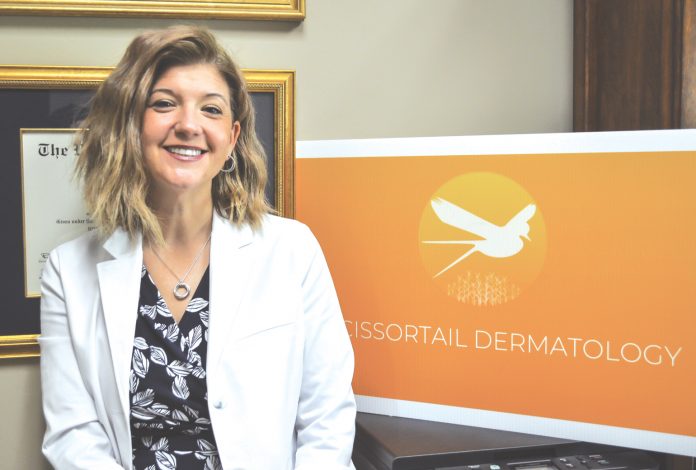
Dr. Elise Brantley specializes in helping seniors preserve their skin health.

story and photo by Bobby Anderson, Staff Writer

It’s all fun in the sun when you’re young.
But as you start to age all that exposure to the sun can begin to take its toll, resulting in blemishes and forms of skin cancer.
That’s where Dr. Elise Brantley and Scissortail Dermatology come in.
Brantley is a board-certified dermatologist who has been practicing since 2009.
Her practice focus is evaluation and treatment of growths of the skin with emphasis on detecting and treating skin cancer.
She is a native Oklahoman from Broken Arrow.
After graduating high school from the Oklahoma School of Science and Mathematics she attended the University of Tulsa for undergraduate studies.
She received her medical degree from the University of Oklahoma and completed her residency training at the University of Cincinnati where she served as chief resident.
While her husband was completing additional training in orthopedics she served on the faculty of both the University of Cincinnati and Emory University in Atlanta, Georgia before returning to Oklahoma.
She has been serving the Oklahoma City metro area for nearly 10 years.
She started Scissortail Dermatology this past September to better serve her patients.
“Over the years I’ve accumulated a practice of people who have had years of chronic sun exposure and a high rate of skin cancer development,” Brantley said. “Many of them are elderly because skin cancers come from years and years of sun exposure. It’s basically insult after insult after insult.”
Years of data have taught us about the harmful effects of the sun’s rays. Unfortunately, for many, that information wasn’t available when they needed it the most.
“We didn’t know then what we know now so when they were younger they were accumulating damage that no one had any idea how dangerous it was,” Brantley said. “Luckily, now, we have a lot more knowledge about how the sun’s rays cause damage but back then people just burned and kept going.”
Brantley has heard stories of patients trying to get sun tans when they were younger. Baby oil, Crisco, aluminum foil, iodine were just a few of the concoctions people thought might help them tan.
The wisdom of trying to get a “base tan” before the summer is also one that Brantley says is a myth. Base tans do not protect from sun damage or skin cancers.
Brantley educates her patients so they can become more knowledgeable about what to look out for.
She focuses on prevention and protection from the sun as well as skin cancer detection and treatment.
“It’s never a bad idea to come in and get a full body skin check from head to toe, at least for a start,” Brantley said. “We can look at your overall risk factors, your history and personal history and even clues from your skin as to how much sun damage you’ve already accumulated.”
“From there we can determine how often you should come in and we can go over how to detect things on your own.”
Three main types of skin cancer exist and some may have genetic components.
Non-melanoma skin cancers include basal cell and squamous cell cancers.
Melanomas are the quicker, more dangerous forms that – if left untreated – can become fatal.
“Those can take off within only a few weeks for the more aggressive ones,” Brantley said. “Anytime you have a brown spot or black spot that is not part of your normal skin that you don’t recognize or is behaving differently you definitely should come get that checked out sooner rather than later.”
“It doesn’t mean it’s melanoma. There’s a whole category of things that are benign that look similar but are hard to tell unless you are trained.”
It’s never too late to hedge your bet against skin cancer. Seeking shade and not being out in the hottest part of the days from 10 a.m. to 2 p.m. are recommended.
There is more SPF protective clothing now than ever before including hats and shirts.
Sunscreen with an SPF of 30 or higher is also a great idea, reapplied every two hours.
Brantley notes that seniors are also at a higher risk of damage as they age, particularly if they spend more time in the sun.
“The more you are in the sun the less effective your immune system is at fighting off skin cancer,” said Brantley, who also noted the benefits of getting Vitamin D from the sun can as readily be achieved through vitamin supplements. “If you are immune-compromised you can start growing more and more skin cancers as your system gets weaker.”
Keeping a watchful eye over her patients is something that brings her immense joy.
“It’s very satisfying how you can get to know someone young and develop a relationship and know these patients over years and years. I love that once you get established with patients you build that relationship and it’s a privilege to get to know someone throughout their entire life. It’s very much a part of who a patient is, not just what their skin looks like.”
You can visit Dr. Brantley at one of her two OKC offices, Collier Skin Cancer Center, 3030 NW 149th St, or 401 SW 80th St, Bldg D, Ste 101. You can make an appointment by calling (405) 562-6222 or visiting her website at www.scissortaildermatology.com