Idaho artist, Cary Schwarz, will join some of the finest traditional cowboy artists for the 23rd Annual Traditional Cowboy Arts Exhibition and Sale at the National Cowboy & Western Heritage Museum, October 1-2, 2021.
Showcasing the best of saddlemaking, bit and spur making, silversmithing and rawhide braiding from the members of the Traditional Cowboy Arts Association, the exhibition will open to the public Friday, October 1, 2021, and the sale will take place on October 2. All pieces will remain on exhibit and available for purchase at the Museum through January 2, 2022. The sale will take place on October 2.
Each year the TCAA exhibition gives Schwarz the opportunity to reflect on his journey as a founding member. From the very earliest conversations about what would become the TCAA, to the elaborate education programs of today, it’s been a tremendous journey. Before the founding of the association, Schwarz would stumble into his peers and mentors in the saddle business every few years. Now he interacts with them on a weekly basis, offering a depth of support and advice to one another. To view the catalog, visit TCAA (nationalcowboymuseum.org). To sponsor the event or place a proxy bid for art, visit nationalcowboymuseum.org/tcaa. Proxy service is also available by contacting Trent Riley at (405) 839-7097 or [email protected].
Terry Hill, pastor of the Canadian County Cowboy Church in Yukon, offers a video sermon from horseback in the church archives.
Story by Darl Devault, Contributing Editor
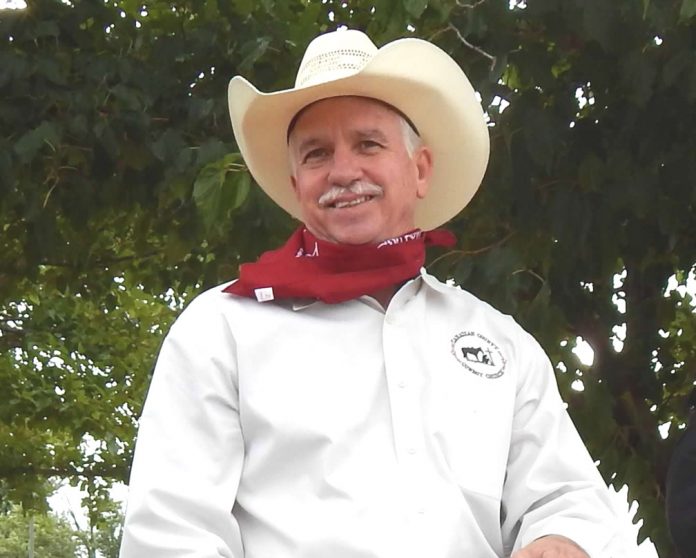
In his sermons and in person Terry Hill, pastor of the Canadian County Cowboy Church in Yukon, tells his congregation and this writer our church is in a good place. He says things are better than ever because God is sending them more good people.
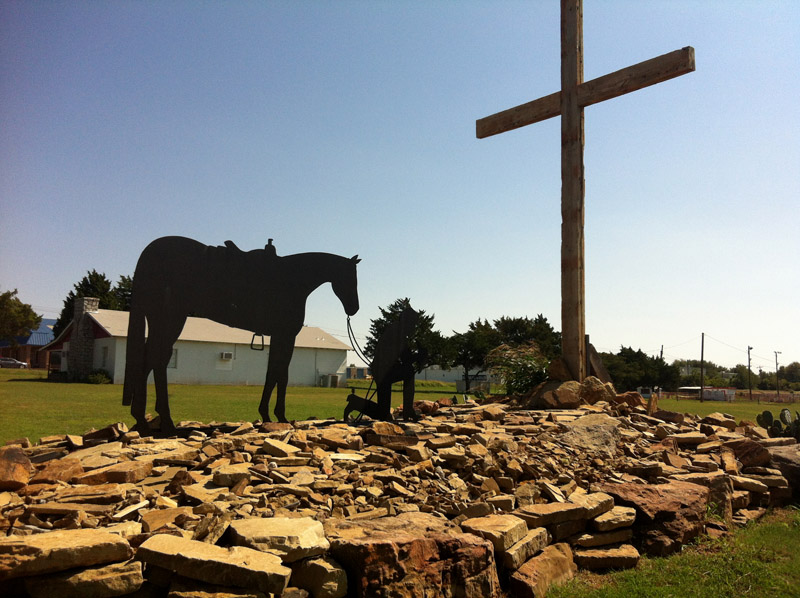
The board recently has been kicking around the idea they may need to expand the non-denominational Cowboy Church on East Main, on property donated by the Yukon Round-Up Club in 2013.
“You do not have to be a cowboy to worship with us,” Hill said. “We just want our visitors to know we are not overly formal in our dress and our fellowship includes many who are not cowboys or wear cowboy hats.” (story continues below)
Hill is grateful for all the new people seeking fellowship in God’s name who are attending the church since it shut down for eight weeks during the height of the COVID-19 surge in the area.
He wonders if the availability of their extensive online ministry is attracting more people to come in person. He thinks some of his early congregation members are watching the sermons online.
The ministry streams services both on YouTube and Facebook.
Hill shares a story about how he got back to his roots as a cowboy and pastor during their eight-week shutdown for COVID-19. He and his wife Evelyn took their video camera down to the Holy City of the Wichitas in the Wichita Mountains Wildlife Refuge, northwest of Lawton. He was inspired to record his sermon on the 66-acre area that looks much like Israel during Biblical times. A few weeks later, trying to change this up, Hill did his sermon on horseback in his round pen. These sermons can be found in the church’s Web site archives.
The church has a practical ministry giving away Cowboy Bibles and Bibles for all ages to whomever wants one. The church supports local, state and foreign ministries. Hill say their mission is “Bear ye one another’s burdens, and so fulfil the law of Christ: Galatians 6:2.”
Every Sunday the service begins with the presentation of the American and Christian flags. The congregation stands with hats removed as they sing God Bless America, followed by their theme song, Yes Lord, We Will Ride with You.
Another direct service to the flock is providing spiral notebooks on each row for the recording of prayer requests or a praise report if God has done something for members. The church prays over the needs expressed in the requests later in the service.
Again Church websites have become the new front doors of any church. Before visitors step inside the church itself, they can get a sense of the community and determine if they would belong. When a church streams its services online, it invites potential newcomers to join the service from afar to see how the sermon resonates with them.
Pastor Hill credits streaming for bringing many new families to the church within a few months. He happily says streaming “has been a huge success and we hope to have even more families join.”
Hill thinks the congregation attends services on Sunday and then some watch the archived stream later to deepen their understanding of that week’s lesson.
Founded in 1947, the Yukon Round Up Club owned the 13 acres now the church campus. The rodeo arena still emphasizes the cowboy heritage with club’s name part of the original metal archway over the road leading to the arena. The church has made the venue a part of the ministry, offering community events.
On Sunday mornings, CCCC kicks off their services at 550 E. Main Street with fellowship, coffee and doughnuts at 9 a.m.
Sunday school classes for all ages start at 9:30 a.m. The church service begins at 10:30 a.m. Wednesday evenings they serve a fellowship dinner from 5:30pm to 6:30pm for a voluntary donation. Bible study classes for all ages begin at 7 pm.
They now offer a LIVING FREE class, small group sessions for those who need inner healing and help to stay away from life controlling problems.
Hill, owner of El Reno Steel, along with his wife Evelyn, founded the church in 2010.
“We welcome you to our weekly Cowboy Church Service, where hats are welcome but not required,” Hill said. “We pray you will be blessed as we worship and fellowship in the “Cowboy Way”.”
For more information on this “Cowboy Ministry”, find them on Facebook and YouTube or visit: www.canadiancountycowboychurch.com.
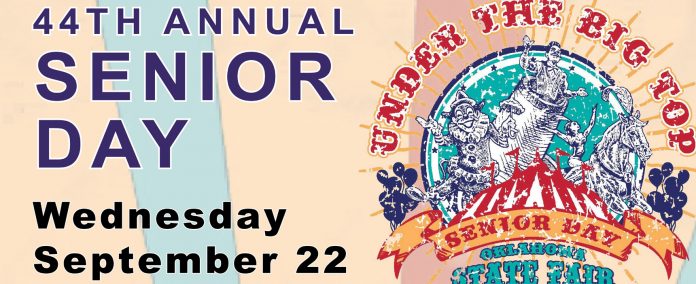
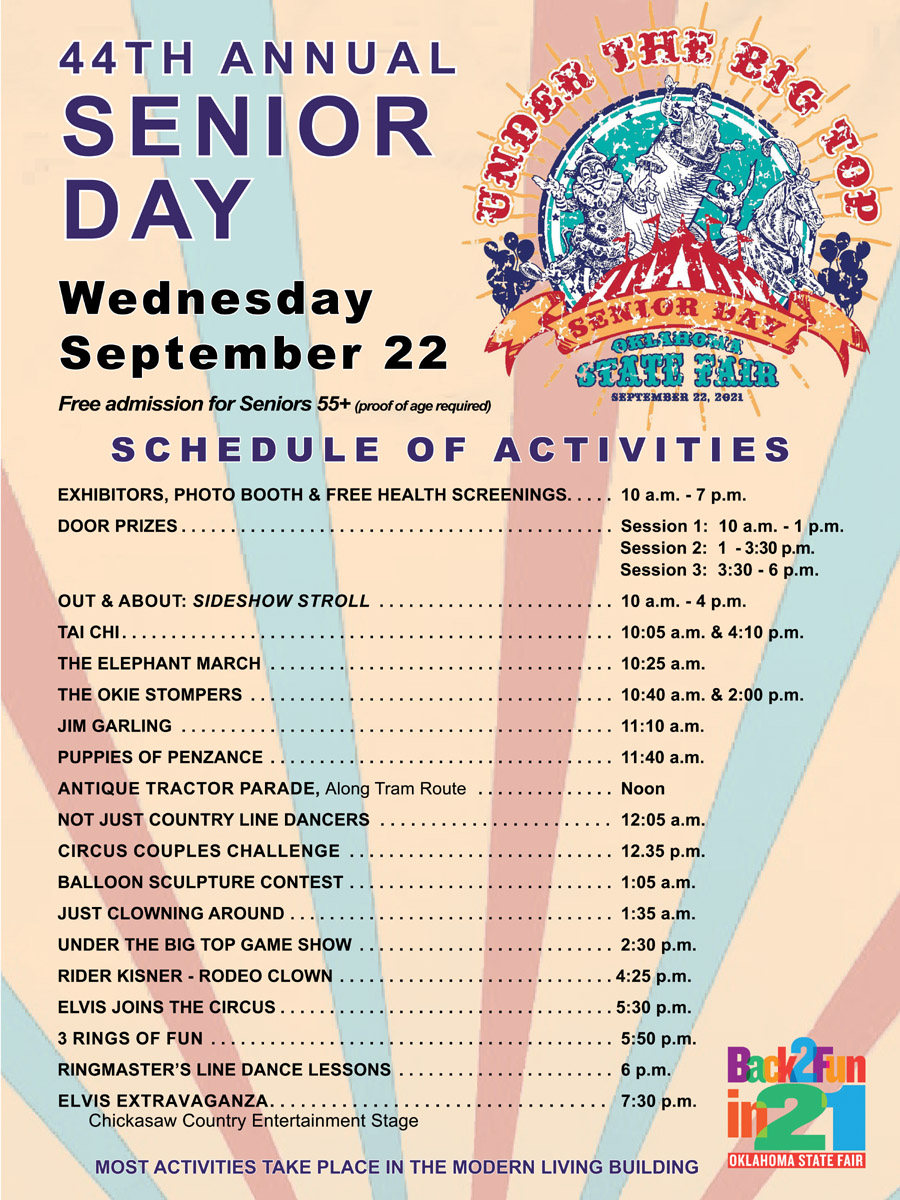
Senior citizens will be celebrated with free admission to the fairgrounds on their special day with events from 10 a.m. to 7 p.m., Sept. 22 at the south end of the Modern Living Building at the Oklahoma State Fair.
All seniors ages 55 or older are invited to enjoy the “Under the Big Top” themed event for activities, entertainment, exhibits, prizes and health screenings designed especially for the golden ager.
“We are very excited to be planning the Fair and Senior Day. New for the 2021 Senior Day event is Mike Black as Elvis!” said Robyn Hicks, Fair Special Programs & Events manager. “Since January, our volunteer Senior Day committee has been hard at work planning an excellent event for Oklahoma Seniors 55 and over. We look forward to having both a successful Senior Day and Fair.”
Black, who will sing Elvis songs at 5:30 p.m., is from Choctaw after growing up in Midwest City. During his long career he has opened concerts for major acts Percy Sledge, Eddie Raven, The Grass Roots, Three Dog Night and Blood, Sweat and Tears. (story continues below)
Later he will appear outside at 7:30 p.m. during the Elvis Extravaganza at the Chickasaw Country Entertainment Stage. Black will compete with other powerful Elvis impersonators in a regional contest to allow one to go on to the National Championship in Las Vegas. Black has won this regional several times.
Activities planned for the day include a robust lineup of free health screenings: Blood Pressure Screenings • Blood Sugar Screenings • Pain Management Assessment • Vein Testing • Depression and Memory Screenings, and Diabetic Foot Screenings.
Flu Shots, Pneumonia, Bone Density, B12 shots will be offered by Passport Health with a cost incurred for all shots. Please have your insurance card if it covers your shots.
The event offers seniors Door Prizes (Registration: Session 1: 10 a.m. – 1 p.m., Session 2: 1 p.m. – 3:30 p.m. & Session 3: 3:30 – 6 p.m.) Pick up your ticket at the prize table for a chance to win one of many donated gifts. There will be multiple drawings in the morning, the early afternoon and then again during the late afternoon. Each session’s tickets will be discarded after the end of their respective time. Please register again for both afternoon door prize sessions. Please check the winner board during each session.
The day will also feature a Photo Booth and 22 senior health and recreation exhibitors.
A full listing of what goes on “Under the Big Top” is available online at senior-day-event-detailed-schedule-8-11.pdf (okstatefair.com)
The Oklahoma Senior Games demonstration area will be there on Senior Day and for the whole run of the Fair.
This year the Games will offer special strength testing for seniors at their Senior Fitness booth
Tests will include arm strength (pushups), leg strength (globet squats), abdominal strength (forearm plank), and balance.
The largest interactive demonstration court for seniors is one of the fastest growing recreational sports, Pickleball. It is now widely embraced by seniors for its great health outcomes.
Pickleball is a recreational paddle sport for all ages and skill levels. Grandparents who welcome the opportunity to try new fitness outlets can play with their grandkids to stay active.
Whether seniors are looking for a way to exercise or want to be challenged at a competitive level, there is a place in the pickleball community.
Volunteers are needed help support the large Senior Games area from September 16 to the 26. By volunteering, helpers earn a free fair ticket, T-shirt and close-in free parking. Schedule shifts at its signup website: www.signupgenius.com/go/9040a4da4a628aa8-oklahoma1
The organizers are counting on the warm hospitality and strong sense of community spirt our citizens have shown as volunteers to allow the state to thrive.
“Our volunteers are a major part of how and why our state has proven itself as a great place to compete in senior games each year,” volunteer coordinator Regina Stewart said. “We have grown to offer more games because of the time and energy Oklahomans who do not compete have invested in offering the Games to those who do compete.”
Seniors can enter at gates 1, 2, 6, or 10 to catch one of the free trams which begin running at 10 a.m. Trams can stop at Gate 3 or by the fountain on General Pershing Blvd to drop you off as they are the closest drop-off points to the building. Electric and manual wheelchairs are available for rent inside Gates 1/2, 6 & 9, while supplies last. Free coffee and snacks will be on offer at 10 a.m. until they are gone.
To view the schedule of activities
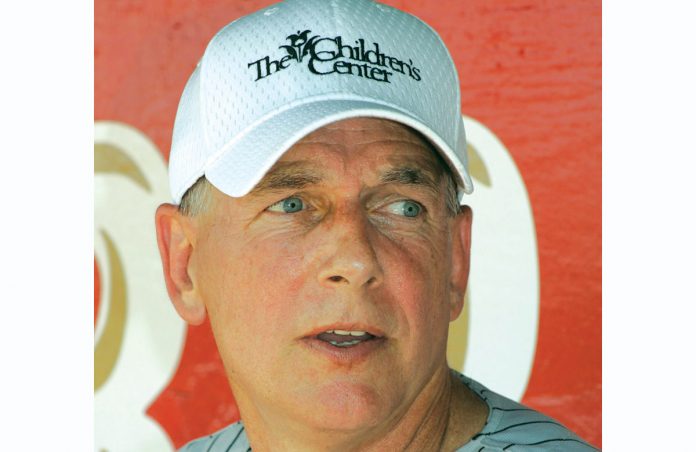
Star of the highest rated drama on TV, “NCIS,” Mark Harmon visited area for 16 years.
Story and photos by Darl DeVault and Richard Mills
For a decade, actor Mark Harmon, star of the CBS action drama “NCIS” provided the spark needed to propel The Children’s Center Rehabilitation Hospital in Bethany to a fundraising goal. He and his famous friends sustained a 16-year charity mission in the area raising more than $1 million through the “Pitch in for Kids” baseball charity game, bowling competition and auction.
Locally, Dr. Michael Wright of the Oklahoma Sports Science and Orthopedics (OSSO) was friends with Harmon during his time in San Bernardino. He participated in baseball charity games Harmon organized. Moving to Oklahoma City in 1998, Wright soon connected with The Children’s Center. (story continues below)
Wright then called Harmon to invite him and his charity team “the Bombers” to consider The Children’s Center as a fundraising stop on a several-city tour the team did each summer.
The Bombers played the OSSO Healthcare Network Outlaws, a team of physicians and staff members of the medical organization. Each year OSSO served as the primary sponsor and producer of this premier fundraising event.
The relationship with The Children’s Center began in 2001. The event was a rousing success. The team made the hospital its focus each year for that decade.
“It’s humbling to look back and see the positive impact Mark Harmon, the Bombers charity baseball team and the OSSO baseball team had on fundraising and raising our hospital’s visibility in the community,” said Albert Gray, executive chairman of the board at The Children’s Center Rehabilitation Hospital.
The first time Harmon visited The Children’s Center, patients greeted him at the door with excitement. At the time, the hospital only had a complex care unit with 100 inpatient beds. Harmon toured the facility, where the patients played baseball with him in the hospital gym. The children used toys to mark the bases and enjoyed their time with Harmon.
It was evident Harmon empathized with the patients, so raising money for this hospital was an easy decision. He saw the need and understood the hospital relied on private contributions from organizations and individuals to provide continued pediatric and rehabilitative care.
Although a career actor, Harmon is no stranger to competitive athletics. He was the UCLA Bruins’ starting quarterback in 1972 and 1973. The National Football Foundation gave him their award for All-Round Excellence in 1973.
For the 10 years Harmon and his friends helped the Children’s Center, they hosted a bowling competition and auction on Friday night for sponsors and hospital employees. On Saturday, the group staged a charity baseball game at the Chickasaw Bricktown Ballpark in the afternoon before the minor league night game. Harmon was gracious in signing autographs while posing for photos with fans at the events.
The Bombers team of Harmon’s Hollywood industry friends and former star MLB players made the trip from southern California each year. Harmon’s college roommate and now his agent Barry Axelrod was the Bombers’ manager and often late-inning pitcher. Hollywood super producer Frank Marshall and MLB veterans Wally Joyner (first base) and Cy Young winning pitcher Rick Sutcliffe (now an ESPN broadcaster) accompanied Harmon each year. Other teammates included Mark Heydorff, Peter Dubrawski, John Sciarra, Steve Klausen, Ed Galigher, Brad Lyman, Jim Peterson, Deacon Nauslar, team historian and catcher Don Manning. Most years Scott Wedman, Rusty Van Dam, Scott Wedman, Bruce Walton, MLB veteran Mickey Hatcher and long-time player coach Chuck Olsen rounded out the team.
Often, local sports stars, celebrities and media members played for the OSSO team against the Bombers in the seven-inning game.
Harmon, the Bombers and OSSO raised $1 million through their annual fundraiser. This sustained the hospital in raising the remaining $9 million needed for a new Pediatric Medical Rehabilitation Unit. This unit added 20 additional inpatient beds, providing short-term care for children and teenagers needing rehabilitation after an injury or illness.
Many of the staff and supporters of The Children’s Center are certain God brought Harmon and the Bombers to Bethany each year.
The grateful management and staff at The Children’s Center wish Harmon a resounding Happy Birthday on his 70th birthday September 2nd. They are proud he and his friends played a key role in the legacy of helping children and teens heal and thrive, as the hospital has expanded to treat more patients since then.
Exciting recent developments at the hospital, with more than 700 employees, include the opening of a community compounding pharmacy. In keeping with the Bombers’ efforts, the hospital opened a state-of-the-art Adaptive Recreation and Fine Arts Center. They are working to open an adaptive ballfield for patients and the community later this year.
These new facilities expand the hospital’s reach into the surrounding community. It will offer children with differing abilities opportunities to participate in therapies, arts, and recreational activities.
“Harmon and his team truly had a heart for our patients, and the fact that we are weeks away from completing construction on our own ballfield speaks to the impact they had through their charity baseball game. We are forever grateful,” Gray said.
After finishing the fundraising drive for the hospital, Harmon and his group moved their philanthropic efforts to other children’s concerns locally for six more years before Dr. Wright moved his practice to Lake Havasu City, Ariz.
Revamped, it became the Mark Harmon Celebrity Weekend. Each year the team took part in a bowling event and a baseball game or golf event to raise funds for children related non-profits supported by the OK Kidz Charities Foundation.
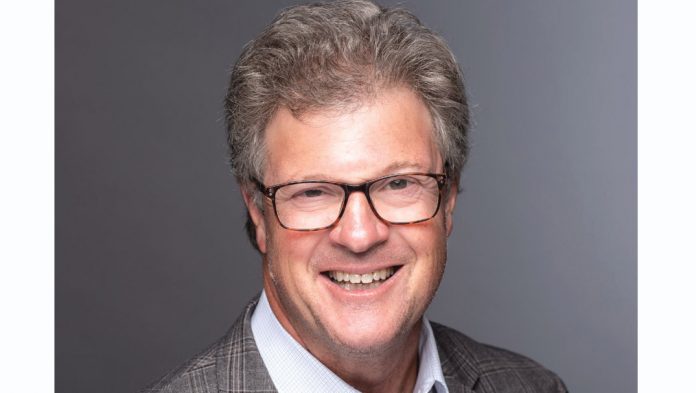
What does nationally successful comedian Greg Schwem, 58, do when he hears a return performance at Tellico Village in Loudon, Tenn. set for October sold out in two hours? Realizing the power of comedy is important to his burgeoning senior audience Schwem looks at his busy national schedule and calls back to offer to do a second show because he wants to accommodate his fans.
“I’ve already written my opening line,” Schwem said. “Rather than say, ‘How many of you saw me last time?’ I’m going to say, ‘How many of you can’t remember if you saw me last time?”
Schwem has been writing a nationally syndicated comedy column appearing in Senior News and Living since 2010. Now that he has joined the active senior demographic, he realized it was time to start talking humorously about his own senior “experiences” as opposed to just writing about them. (story continues below)
Schwem joins a famous Oklahoman who realized he needed to include senior humor in his routine when Will Rogers quipped “When you are dissatisfied (with aging) and would like to go back to youth, think of Algebra.”
Schwem is grateful to his audiences as he secures more bookings speaking to this demographic. He has generated a good amount of interest with bookings at Sun City Austin, Texas and the Forest CC in Fort Myers, Fla. for next year. Many fans are joining the legion of Schwem devotees because they can watch his online videos of his national performances on his website www.gregschwem.com and via his social media channels. His followers have howled as Schwem recounts his battle with a kidney stone, the embarrassing sounds he emits during yoga classes and seniors who are building massive houses as opposed to downsizing.
“Why do you need a wine cellar?” he asked a recent audience. “At some point in your life, the only thing in your house that should be aging is you!”
Already hugely successful as a comedian writing and performing customized routines for some of our nation’s largest corporations, Schwem is enjoying the opportunity to add seniors to his national schedule. He says he is delighted seniors are such great laughers; they inspire him to write new routines to tickle their funny bone.
He has been writing comedy at the national level for many years. His column appears in the Chicago Tribune’s web edition and more than 25 other newspapers and periodicals around the world.
The Illinois native left a promising career as a broadcast journalist in 1989 to pursue his love of standup comedy. After several years traveling the country working comedy clubs, Schwem transitioned into providing humorous keynote presentations for the corporate market.
“I realized I had a knack for writing customized material about individual companies, whether it was making them laugh about their products or just their culture,” Schwem said last month. “It can be tricky; there is a very fine line when having fun with a company’s employees, so I am careful to make the business community laugh while also praising its work.”
Over the past 20 years, Greg’s corporate clients have included Microsoft, Cisco, IBM, Southwest Airlines, McDonald’s and even the CIA. “If I can get America’s covert intelligence agency to laugh at itself, I think I am doing pretty good,” Schwem said.
And now seniors are squarely in his sights for humor. “It is such a joy to watch people who are clearly enjoying their golden years be entertained, and laughter is a big part of that,” Schwem said. “Since I am 58, I realized performing in front of active seniors would allow me to continue doing what I love. People love to laugh at their aches and pains and other issues associated with aging and I’m no different.”
He shared a joke in our interview that fits here: “I’m now playing Pickleball. The game begins with everybody meeting at the net and revealing what physical ailment drove them to play Pickleball.”
His humor reaches out from his audience to the communities they live in.
“Florida retirement communities always seem to contain an animal’s name in the title. And yet you never see that animal in the community. I stayed with a friend who lived in Panther Crossing. Trust me, any panther who attempted a crossing would have been nailed by a golf cart.”
Finally, knowing his audience is suffering from assorted maladies, he is happy to share his own.
“I threw out my back pulling weeds. I tore my retina shoveling snow,” he said. “At this point, I’m only two seasonal injuries from laying on the couch for the entire year.”
Schwem has booked dates at several Del Webb communities and now seeks out active retirement communities near the sites of corporate dates where he is to perform, “In February, I’m doing a date in Fort Myers, Fla. for a metals association and, the next night, I’ll be performing for 200 active seniors 10 minutes away. I hope I can keep the audiences straight,” Schwem quips.
Greg Schwem is a monthly columnist for Oklahoma’s Senior News and Living.
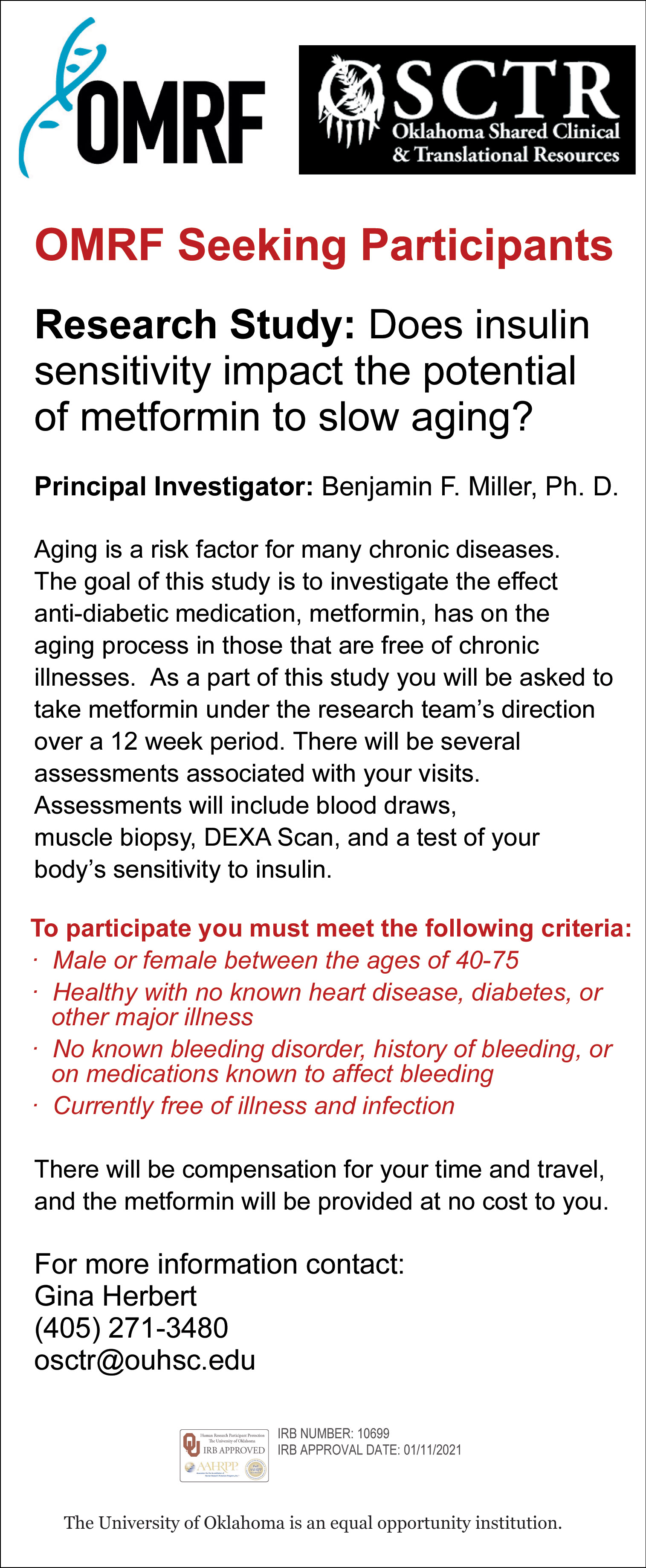
The Oklahoma Medical Research Foundation is recruiting healthy volunteers to study whether a diabetes drug can slow aging.
OMRF scientist Benjamin Miller, Ph.D., is investigating how metformin impacts insulin sensitivity and its link to the biological processes of aging. The 12-week study will take place at the Harold Hamm Diabetes Center in Oklahoma City and is open to adults between the ages of 40-75 without chronic disease.
“Aging is the leading risk factor for all chronic diseases. If we can slow the process, we may simultaneously slow or prevent the onset of conditions like cancer, cardiovascular disease, Alzheimer’s and dementia,” said Miller, a physiologist in OMRF’s Aging and Metabolism Research Program.
Metformin is the world’s most prescribed diabetes drug and is believed to be effective at slowing aging. In a 2019 study, Miller found the drug to be less impactful for this purpose when combined with exercise in sedentary adults. By understanding how metformin impacts the cellular function of healthy volunteers in the absence of exercise, Miller hopes to further show who it can — and cannot — benefit.
Volunteers will undergo a health screening prior to enrollment. Those with known heart disease, diabetes, bleeding disorders, cancer or other major illnesses do not qualify for the study. Strict Covid-19 protocols will be followed to ensure participant safety.
Once admitted, visits may range from 10 minutes to five hours and will include blood draws, muscle biopsy, a bone density scan and an insulin sensitivity test. Participants will be compensated for time and travel, and metformin or placebo will be provided at no cost.
To participate or for more information, contact Oklahoma Shared Clinical and Translational Resources at 405-271-3480 or [email protected].
Funding for the research is provided by National Institute on Aging grant No. R01AG064951, a part of the National Institutes of Health.
The University of Oklahoma is an equal opportunity institution. IRB 10699
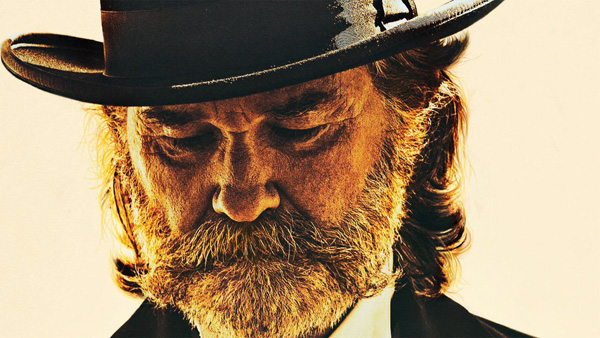
Due to an unforeseen medical issue, Kurt Russell is not able to attend the 60th Western Heritage Awards on September 17-18 as previously planned. Kurt and his father, Neil Oliver “Bing” Russell, will now be recognized during the 61st Western Heritage Awards as 2022 inductees into the Hall of Great Western Performers.
“I’m having hip surgery,” said Kurt Russell. “I had hoped it could wait, but my doctors said it needs to be this September. As much as I hate missing this year, I’m grateful to the Museum for being willing to move our recognition to 2022 so I can be there in-person to accept this great honor.” This year’s ceremony will recognize honorees and inductees from both 2020 and 2021. At this time, all other inductees, including Academy Award winner Robert Duvall and American country music singer George Strait, still plan to be in attendance. (story continues below)
https://getbakd.com/
“While we’re disappointed that Mr. Russell will not be here this year, we’re glad accommodations could be made for 2022,” said Natalie Shirley, Museum President and CEO. “This year will still be a star-studded event, and 2022 is already shaping up to be just as special.” Due to the overwhelming support of our Inductees, Honorees, their families and sponsors, tickets to the 2021 Western Heritage Awards Induction Ceremony are sold out, but tickets for a special livestream remote dinner held in the Museum’s Annie Oakley Center are available for purchase and includes access to the cocktail reception preceding the induction ceremony, Saturday, September 18.
The full list of Western Heritage Honorees and Inductees for 2020 and 2021 are listed below. For more information about the 2021 Western Heritage Awards, visit: https://nationalcowboymuseum.org/western-heritage-awards.
The 60th Annual Western Heritage Awards supporting sponsors are Arvest Bank, The Chickasaw Nation, Cresap Family Foundation, Wrangler and Mr. and Mrs. Lenny Sadler. Promoting sponsors are Hall Capital, Fred Jones Family Foundation and Greg and Bekki Kowalski.
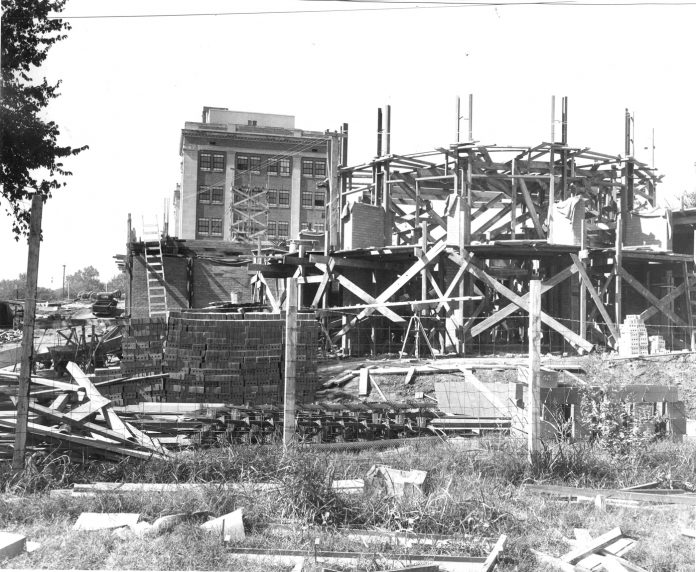
Construction of the Oklahoma Medical Research Foundation began in 1949.
Oklahoma Medical Research Foundation
In 1946, a polio vaccine was still years away. DNA was just a group of letters. And no one had any idea cigarettes caused cancer.
But in Oklahoma, a group of citizens recognized that it wasn’t enough for physicians to work each day to treat illnesses like tuberculosis, heart disease and cancer. To make real headway against disease, medicine had to do more.
So, they created an institute where scientists could devote their entire careers to rooting out the causes of human disease: the Oklahoma Medical Research Foundation.
Saturday marks OMRF’s 75th anniversary. On Aug. 28, 1946, Oklahoma’s Secretary of State granted the charter of the new foundation that would, in the words of an early fundraising brochure, conduct “scientific investigations in the field of medical research to attack killing and crippling diseases about which little is known by science.”
“Oklahoma is a young state, so we sometimes find ourselves playing catch-up,” said OMRF Interim President Adam Cohen. “But when it came to creating an independent research institute, we were on the cutting edge.” (story continues below)
To fund the construction of OMRF, which would become one of only a handful of independent biomedical research institutes at that time, Gov. Roy J. Turner led a drive that spanned all 77 of the state’s counties. The state’s physicians organized one fundraising campaign, and pharmacists, dentists and nurses followed suit with their own efforts. When Turner declared a statewide “Research Week,” organizers held 137 meetings in 42 cities and towns over seven days.
“This is one of the finest things we of Oklahoma ever have attempted,” said Grace Marlow of Shawnee in 1947, when she and her husband donated $26,000 to the new foundation in memory of their late son. “Such a wonderful movement cannot fail.”
All told, 7,000 Oklahomans gave more than $2 million to build the foundation. And what began as an 18-person scientific staff has since grown into an internationally recognized research institute.
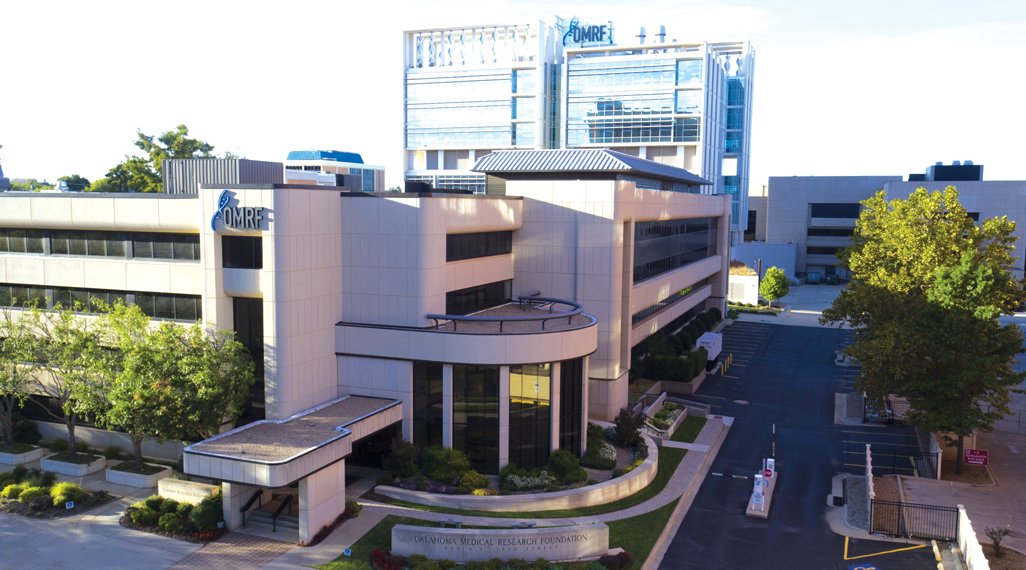
OMRF now employs 450 staff members who study cancer, heart disease, autoimmune disorders and diseases of aging. Their discoveries have yielded hundreds of patents and three lifesaving drugs now available in hospitals and clinics worldwide. Most recently, Adakveo became the first targeted therapy approved by the Food and Drug Administration for sickle cell disease, which affects an estimated 100,000 Americans.
OMRF scientists made crucial insights that paved the way for powerful protease inhibitors that transformed the therapeutic landscape for people with HIV/AIDS. The National Institutes of Health has designated OMRF an Autoimmunity Center of Excellence, one of only 10 in the country, for its work on conditions such as lupus, where OMRF researchers have played a role in identifying or confirming more than 60 genes involved in the disease.
OMRF has also taken on emerging challenges like the Covid-19 pandemic. It’s now serving as the lead clinical site for a nationwide clinical trial sponsored by the NIH to study why immunocompromised patients fail to respond adequately to Covid-19 vaccines.
“The goal of every medical researcher is to make discoveries that improve people’s lives,” said Rodger McEver, M.D., OMRF’s vice president of research. “OMRF scientists have done that, and they’re continuing to do so.”
OMRF’s founding donors could not have foreseen the advances their gift would make possible. Still, said McEver, “I hope they’d be proud.”
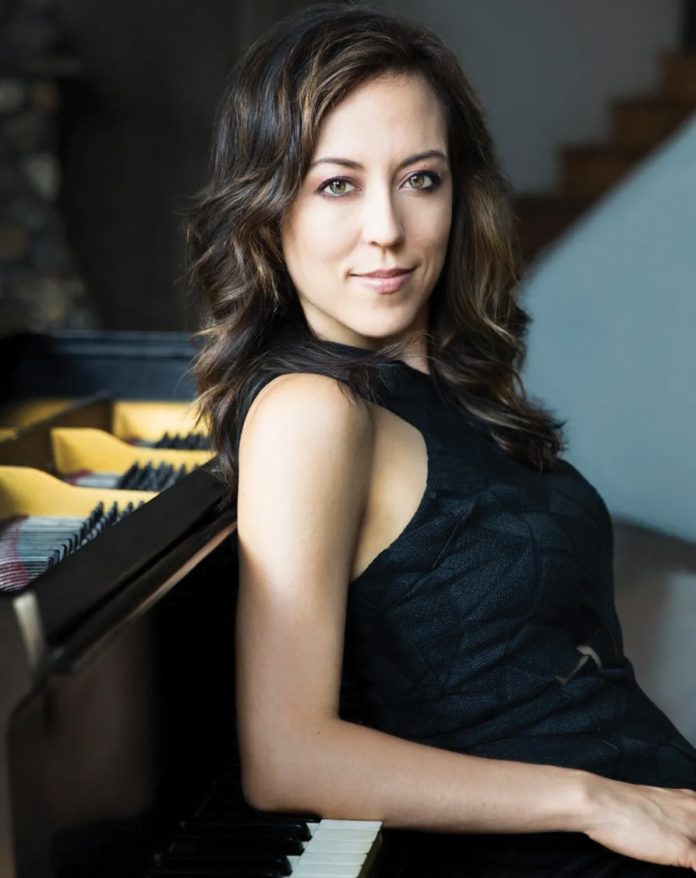
Tanya Bannister. Photo courtesy of Tanya Bannister.
“Songs without Words”
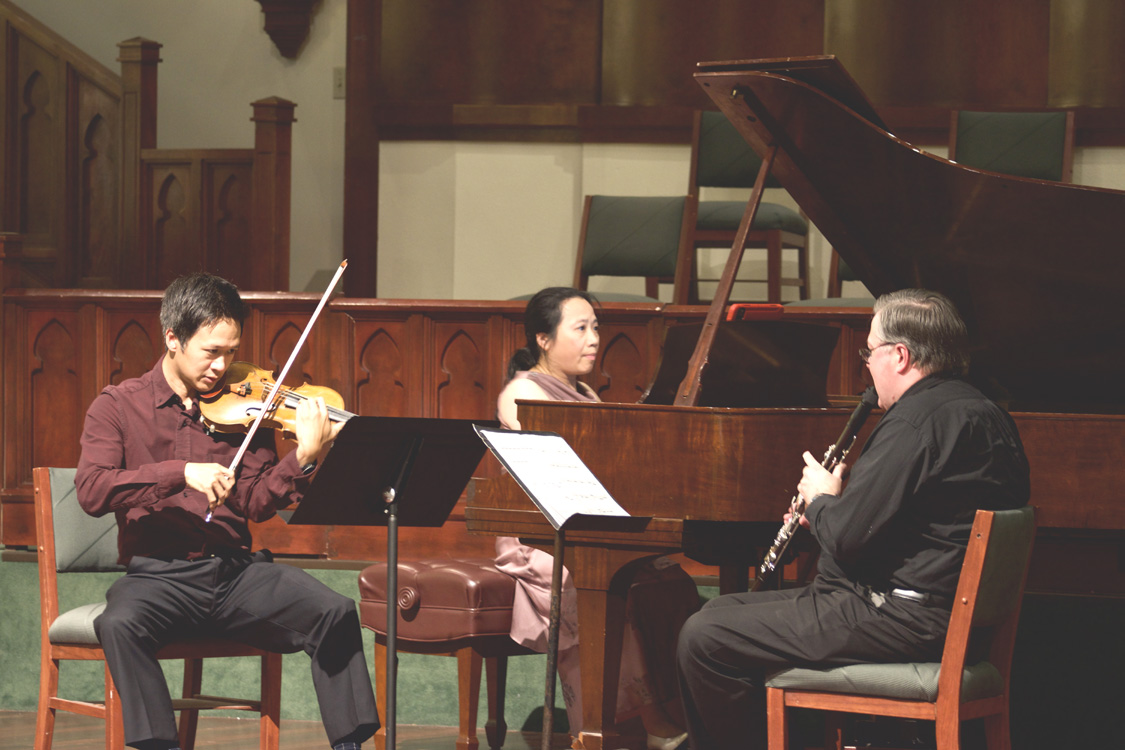
Guest pianist Tanya Bannister joins the Brightmusic Chamber Ensemble in their season-opening concert “Songs without Words,” Tuesday, September 21, 7:30pm at First Baptist Church in midtown Oklahoma City. The concert spans two centuries with works by Romantic era composers Robert Schumann, Carl Maria von Weber, and Walter Rabl, alongside the elegiac “Soliloquy” by living American composer John Corigliano. Tanya Bannister is a versatile pianist serving as co-founder and artistic director of AlpenKammerMusic in Austria.
John Corigiliano (b. 1938) began “Soliloquy” as an elegy for his late father, a former concertmaster who found solace in the violin. The work is adapted from his clarinet concerto commissioned for New York Philharmonic clarinetist Stanley Drucker and Leonard Bernstein as conductor, whose personalities are reflected in the first and third movements, respectively. (story continues below)
German composer Robert Schumann (1810-1856) dedicated his Piano Quintet in E-Flat Major to his beloved wife and fellow pianist/composer Clara Schumann, who regularly performed it. Schumann composed it and five other chamber music pieces in just one year, and Clara considered the work “splendid, full of vigor and freshness.”
“Introduction, Theme, and Variations” for clarinet and string quartet was formerly attributed to German composer Carl Maria von Weber (1786-1826), but it is now thought to be composed by his contemporary Joseph Küffner (1776 – 1856), known more for his guitar music. Similarly, Austrian composer Walter Rabl (1873-1940) is less well known today, but Johannes Brahms awarded him first prize at the 1896 Vienna Tonkünstlerverein (Musician’s Society) competition for his Quartet in E-Flat Major for clarinet, violin, cello, and piano.
Musicians appearing in the concert are: Tanya Bannister (piano), Chad Burrow (clarinet), Gregory Lee and Katrin Stamatis (violins), and Jonathan Ruck (cello).
Admission for each concert is $20 at the door and free for children, active-duty military, and students with ID. Or, save $55 with a $125 season pass for all 5 regular season and 4 summer 2022 festival concerts. Passes are available by mail or online at brightmusic.org/passes. Brightmusic Chamber Ensemble, Oklahoma City’s own chamber ensemble, will perform its 2021-22 season of fine classical chamber music at First Baptist Church, 1201 N Robinson in midtown Oklahoma City. The venue offers plenty of space for social distancing. Free parking is available north and southwest of the building. For more information about the ensemble and upcoming concerts, visit www.brightmusic.org.
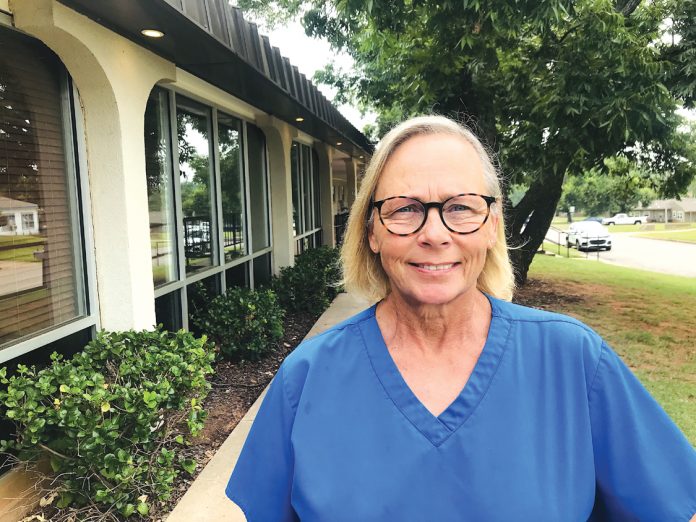
40 years of nursing and rodeo keeps Debbie Gordon, LPN, in a steady pace with life.
Story by James Coburn, Staff Writer
Debbie Gordon likes helping patients stay away from hospitals by being where they want to be — at home.
“Our goal is to keep our patient in their homes as long as we can, so that they can stay there safely,” said Gordon, a licensed practical nurse at Companion Home Health in Guthrie. “They get to stay in their environment, their comfort zone.”
It was providence that led her to a nursing career, said Gordon, who had never dreamed of being nurse. But it was God’s will, she said.
She’s lent a compassionate hand to patient care at Companion for four years. Gordon also serves as a Companion hospice nurse when needed. And, she re-energizes by doing barrel racing.
This seasoned professional entered the nursing field in 1980 after graduating from Meridian Technology Center, located in Stillwater. Gordon said she likes the hometown feeling of working for Companion that connects with nurses and families without a big corporate image. (story continues below)
“They definitely care about their patients and I feel like they care about their employees,” said Gordon, who enjoys the one-on-one patient time that home health allows her to bond with patients. “You kind of get a closer relationship with your patients doing home health than in the hospitals.”
Home health transcends the simple definition of a job because it centers on patient care. Nurses help them become stronger and educate them about their medications. The staff ensures patients use medications properly without dangerous complications caused by combining non-compatible drugs.
“The patients are important to the nursing staff,” she said. “And they care what happens to the patients.”
Nurses see all walks of life and give everyone the same loving care. They make sure therapy is provided, that patients are dressed and bathed, and have nutrition on a regular basis.
“Every individual is different as far as what the need or might need,” Gordon added.
Diabetes is prevalent, so she teaches patients to monitor their blood sugar every day in order to prevent complications and co-morbidities that are common with the disease.
“It’s important to keep their sugars within normal range because if they don’t it affects all kinds of different functions in their body, their eyes, their kidneys, circulation and everything,” Gordon explained.
Patients can still go to church, get prescriptions and get their hair styled. However, they are not supposed to drive, shop for groceries or go to the mall.
“They don’t have to be tied to home, but they can’t be out running around,” Gordon said. “It’s a taxing effort for them to do that.”
Patients have not mentioned a lot about COVID and the new Delta variant that is spreading across the state, Gordon said.
“Their biggest question is ‘Have you been vaccinated?’ Surprisingly, I have not had a lot of COVID questions. I’ve actually dealt with more frustration from it than questions about it. I know the patients that we have in assisted living facilities — it was very difficult for them not to be able to see their family.
The nurses always wear masks to help prevent the spreading COVID. But several patients have said to her, “I don’t want you to wear that mask.”
Gordon explains to them that she’s required to wear a mask in order to protect them from contracting the disease.
Gordon is well seasoned as a nurse in her career of about 40 years. Experience brings wisdom.
She went to college on a rodeo scholarship. And she still performs at rodeos.
Family issues brought her back home from college. Her sister was a nurse. When she learned Debbie had quit school, she said, “Are you just going to be a bum?”
Those words crushed Gordon because she always wanted to make her sister happy.
“So, I just went home that night, and I was lying in bed crying. And I said ‘Lord, I’m lost, and I don’t know what to do. And I need you to guide me.’ And in six months I was in nursing school.”
She never turned her back on nursing or rodeo. Rodeo was in her blood since she started riding a pony at age 5.
“I started competing when I was about 8, and I still do it,” she said of barrel racing. “It’s kind of like a second job for me. I train on my own.”
She keeps five horses of her own and two from her sister that she rides north of Crescent.
Horses are large animals, and they can take advantage of that. But Gordon knows how to earn and keep their respect.
She learned when turning a horse loose, to never let them walk away from her. They stand their until she walks away from them.
They are creatures of habit, sort of like people, she said.
For more information visit: http://www.companionhealthcare.net/