
Tuesday, March 17, 2026

Greg Schwem: Coming (hopefully) next summer: ‘Indiana Jones and the Elusive, Affordable Meds’

0
Greg Schwem is a corporate stand-up comedian and author.

by Greg Schwem

Harrison Ford in “Indiana Jones and the Kingdom of the Crystal Skull.”

Please, Harrison Ford, don’t do this.
You’re already 78 years old. You’ve proven to be one of the most bankable movie stars in history. You’ve survived numerous plane mishaps, some due to your, um, confusion while piloting your own aircraft. You’re Jack Ryan, Dr. Richard Kimble and Han Solo, rolled up into one dude. Leave it at that.
But you’re also Indiana Jones, the guy who found the Ark of the Covenant, and apparently, you’re going to gulp down a whole lot of anti-inflammatories and reprise the character yet again. A fifth Indiana Jones movie, Disney confirmed earlier this month, will be released in July 2022. You will be 80 by then.
I know, 60 is the new 40 and 70 might be the new 50 but 80 is still 80. I can’t imagine a scenario where an 80-year-old man, even one who has faced off against Nazis, would be in need of anything other than a comfortable chair. My mom just celebrated her 85th birthday and we got her everything on her wish list, comprised of an outdoor planter and a fanny pack.
“I need something to hold my phone when I get the mail,” she said.
Also, Harrison, may I remind you that, in “Indiana Jones and the Last Crusade,” you found the Holy Grail, which gives eternal youth to anyone who drinks from it. You gave it to your dad, a noble gesture for sure, but you took nary a sip. Had you done so, you could have made many more adventures. But you didn’t and now I assume you’re like most octogenarians; trying to stay active but also bemoaning how much it costs every time you pick up a prescription at the local CVS. That problem will, hopefully, be rectified in the Summer 2022 blockbuster, “Indiana Jones and the Elusive, Affordable Meds.” How about this for a plot?
OPEN: While playing Pickleball at an undisclosed active retirement community, Indiana Jones is visited by his grandson, Michigan Jones (I’m thinking Chris Evans for this role). Michigan has grown weary of reading his grandfather’s Facebook rants about the OUTLANDISH cost of Lisinopril, which Indiana takes daily to control his high blood pressure. This condition first appeared more than 30 years ago when he fell into a vat of poisonous snakes.
Michigan shows his grandfather how to download the GoodRx app. Together, they see that Lisinopril is available for a third of the price at a Costco but it’s 60 miles away. Despite Indiana’s complaints about Costco — “Why do I need 30 pounds of cashews at my age?” — Michigan offers to drive him. Indiana infuriates his Pickleball partners by leaving the game early to get ready for his latest adventure.
CUT TO: Indiana stubbornly tells Michigan that he needs his whip and sable fedora before leaving. The whip is in his nightstand; unfortunately, he sold the fedora at a yard sale while downsizing. Michigan says he could order a new one on Amazon, with one-day shipping, but Indiana doesn’t want to wait. Whip at the ready, the two set out for Costco.
CUT TO: Indiana insists on stopping at Denny’s for the senior discount breakfast. Indiana says it’s his “God given right” to enter the establishment without a face covering but the Denny’s manager has other ideas. Warily eyeing Indiana’s whip, the manager also gestures to the “No Weapons Allowed” sign on the cash register. Furious, Indiana leaves, vowing never to spend another red cent at Denny’s. Michigan texts his wife, saying, “Grandpa’s being Grandpa again.”
CUT TO: They enter Costco, using Michigan’s membership card. Indiana reluctantly dons a mask. They approach the pharmacy, where Indiana does indeed get his Lisinopril. Upon leaving, a Costco attendant asks to see Indiana’s receipt.
“You think I stole this?” an enraged Indiana replies “The Temple of Doom has nothing on this place. Get the manager.”
Michigan produces the receipt and leads his grandfather to the parking lot. They arrive home at 4 p.m., just in time for dinner.
FADE OUT
(Greg Schwem is a corporate stand-up comedian and author of two books: “Text Me If You’re Breathing: Observations, Frustrations and Life Lessons From a Low-Tech Dad” and the recently released “The Road To Success Goes Through the Salad Bar: A Pile of BS From a Corporate Comedian,” available at Amazon.com. Visit Greg on the web at www.gregschwem.com.
You’ve enjoyed reading, and laughing at, Greg Schwem’s monthly humor columns in Senior Living News. But did you know Greg is also a nationally touring stand-up comedian? And he loves to make audiences laugh about the joys, and frustrations, of growing older. Watch the clip and, if you’d like Greg to perform at your senior center or senior event, contact him through his website at www.gregschwem.com)

SITUATION UPDATE: COVID-19

0

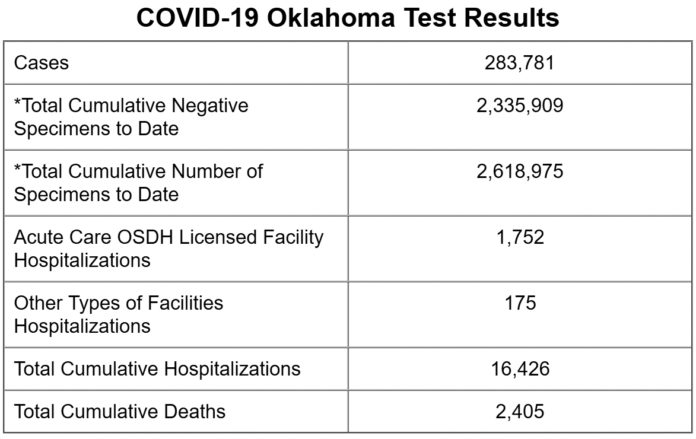
* As of this advisory, there are 283,781 cases of COVID-19 in Oklahoma.
* 2,594 is today’s 7-day rolling average for the number of new cases reported.
* There are 22 additional deaths identified to report.
* Two in Cleveland County, one female in the 65 or older age group, one male in the 65 or older age group.
* One in Creek County, one male in the 65 or older age group.
* One in Garfield County, one male in the 65 or older age group.
* One in Grady County, one male in the 65 or older age group.
* One in Kay County, one female in the 65 or older age group.
* One in Love County, one female in the 50-64 age group.
* One in McClain County, one female in the 65 or older age group.
* One in McCurtain County, one male in the 65 or older age group.
* Eight in Oklahoma County, three females in the 65 or older age group, one male in the 18-35 age group, one male in the 50-64 age group, three males in the 65 or older age group.
* One in Pontotoc County, one male in the 65 or older age group.
* Three in Tulsa County, one female in the 65 or older age group, two males in the 65 or older age group.
* One in Woods County, one female in the 65 or older age group.
* There are 2,405 total deaths in the state.
* Additional hospitalization data can be found in the Hospital Tiers report, published evenings Monday through Friday.
* For more information, visit https://oklahoma.gov/covid19.html.

*The total includes laboratory information provided to OSDH at the time of the report. As a result, counts are subject to change. Total counts may not reflect unique individuals.
***The purpose of publishing aggregated statistical COVID-19 data through the OSDH Dashboard, the Executive Order Report, and the Weekly Epidemiology and Surveillance Report is to support the needs of the general public in receiving important and necessary information regarding the state of the health and safety of the citizens of Oklahoma. These resources may be used only for statistical purposes and may not be used in any way that would determine the identity of any reported cases.
Data Source: Acute Disease Service, Oklahoma State Department of Health. *As of 2020-12-29 at 7:00 a.m.

COVID 19 Takes Physical, Emotional Toll on Caregivers

0
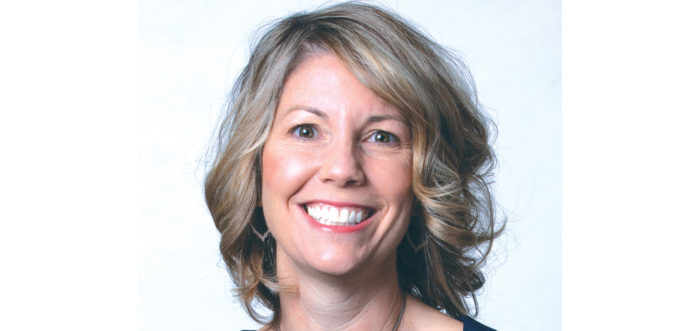
Kerri Bayer, the Chief Nurse Executive for INTEGRIS Health, explains the physical and emotional toll the pandemic is having on our caregivers.

by Vickie Jenkins, Staff Writer

There is no denying that the last nine months have been very difficult for our caregivers. COVID-19 is a devastating and relentless disease that knows no rules or boundaries. The medical community is working day and night to unlock its mysteries and we’re learning more each day on how to treat those infected – yet the death toll continues to rise. Our caregivers are exhausted from the rigorous donning and doffing of personal protective equipment while in the back of their minds is fear that they could be contracting and or bringing this virus home to their loved ones. They are witnessing significant mortalities and many say they have seen more death in the last month then they have in their entire careers. They are literally doing everything they can to try to save as many patients as possible. They pour their heart and soul into each patient but at the end of the day, they know some will not make it out of their unit.
With family members not being allowed inside the hospital for safety concerns, our caregivers are playing dual roles. They are not only caregivers to these patients, they are also their support system. They are comforting patients when they are scared, hugging them when they are lonely and unfortunately holding their hands as the pass away. Our caregivers serve as the liaison between our patients and their families worrying at home. They facilitate phone calls and video conferences when they can and become emotionally invested. It is physically, mentally and spiritually exhausting.
While the recent approval of the COVID-19 vaccine is rejuvenating and uplifting, it will still take quite some time and will require majority compliance to see the true impact. In the meantime, the models indicate that it will get worse before it gets better. Our caregivers are bracing for what is to come.
Support from the community is imperative to help get them through these dark days. Anything helps. Cards, notes, care packages, prayers. They are all meaningful and appreciated. These tokens are sometimes the catalysts that get them through their next shift. It’s amazing to watch their faces light up when they receive even the simplest gesture. Anyone interested in supporting our INTEGRIS Health caregivers can make a monetary gift to the Caregiver Relief Fund at integrisrelief.org or reach out to the INTEGRIS Health Foundation team at [email protected] to discuss other giving opportunities.

ANA President Responds to False Claims

0
American Nurses Association Logo (PRNewsfoto/American Nurses Association)

The following statement is attributable to Ernest J. Grant, PhD, RN, FAAN, President, American Nurses Association (ANA):
“To claim that health care professionals are inflating the number of COVID-19 cases or deaths to make more money is outrageous, baseless, and dangerous.
Nurses, physicians, and other frontline health care workers have endured brutally long shifts covered in stifling personal protective equipment (PPE). Others have faced long days and weeks caring for COVID-19 patients, working without sufficient PPE, or forced to reuse PPE multiple times, increasing their risk of infection, or bringing the virus home to those they love, illness and even death.
More than 350 nurses in the United States have died as a result of COVID-19, many others have been infected and hospitalized. All have faced extreme stress and mental anguish.
As cases and hospitalizations surge across this country, our nation’s leaders have a responsibility to call for and model public health measures to stem the spread of the disease. They should follow science and the guidance of health care professionals.
Nurses, physicians, and other frontline health care workers have demonstrated courage, commitment, and grit in responding to this pandemic, risking their own health and safety to care for others. To try to slander or place blame on these dedicated health care professionals is a shameless, blatant lie.”

SAVVY SENIOR: Is Social Security Income Taxable?

0

Dear Savvy Senior,

I understand that a portion of my Social Security benefits may be taxable when I retire. Can you tell me how to calculate this? Ready to Retire

Dear Ready,
Whether or not you’ll be required to pay federal income tax on your Social Security benefits will depend on your income and filing status. About 35 percent of Social Security recipients have total incomes high enough to trigger federal income tax on their benefits.
To figure out if your benefits will be taxable, you’ll need to add up all of your “provisional income,” which includes wages, taxable and non-taxable interest, dividends, pensions and taxable retirement-plan distributions, self-employment, and other taxable income, plus half your annual Social Security benefits, minus certain deductions used in figuring your adjusted gross income.
How to Calculate
To help you with the calculations, get a copy of IRS Publication 915 “Social Security and Equivalent Railroad Retirement Benefits,” which provides detailed instructions and worksheets. You can download it at IRS.gov/pub/irs-pdf/p915.pdf or call the IRS at 800-829-3676 and ask them to mail you a free copy.
After you do the calculations, the IRS says that if you’re single and your total income from all of the listed sources is:
* Less than $25,000, your Social Security will not be subject to federal income tax.
* Between $25,000 and $34,000, up to 50 percent of your Social Security benefits will be taxed at your regular income-tax rate.
* More than $34,000, up to 85 percent of your benefits will be taxed.
If you’re married and filing jointly and the total from all sources is:
* Less than $32,000, your Social Security won’t be taxed.
* Between $32,000 and $44,000, up to 50 percent of your Social Security benefits will be taxed.
* More than $44,000, up to 85 percent of your benefits will be taxed.
If you’re married and file a separate return, you probably will pay taxes on your benefits.
To limit potential taxes on your benefits, you’ll need to be cautious when taking distributions from retirement accounts or other sources. In addition to triggering ordinary income tax, a distribution that significantly raises your gross income can bump the proportion of your Social Security benefits subject to taxes.
How to File
If you find that part of your Social Security benefits will be taxable, you’ll need to file using Form 1040 or Form 1040-SR. You also need to know that if you do owe taxes, you’ll need to make quarterly estimated tax payments to the IRS, or you can choose to have it automatically withheld from your benefits.
To have it withheld, you’ll need to complete IRS Form W-4V, Voluntary Withholding Request (IRS.gov/pub/irs-pdf/fw4v.pdf), and file it with your local Social Security office. You can choose to have 7 percent, 10 percent, 12 percent or 22 percent of your total benefit payment withheld. If you subsequently decide you don’t want the taxes withheld, you can file another W-4V to stop the withholding.
If you have additional questions on taxable Social Security benefits call the IRS help line at 800-829-1040.
State Taxation
In addition to the federal government, 13 states – Colorado, Connecticut, Kansas, Minnesota, Missouri, Montana, Nebraska, New Mexico, North Dakota, Rhode Island, Utah, Vermont and West Virginia – tax Social Security benefits to some extent too. If you live in one of these states, check with your state tax agency for details. For links to state tax agencies see TaxAdmin.org/state-tax-agencies.

Send your senior questions to: Savvy Senior, P.O. Box 5443, Norman, OK 73070, or visit SavvySenior.org. Jim Miller is a contributor to the NBC Today show and author of “The Savvy Senior” book.

AHCA/NCAL Issues Statement Regarding COVID Relief Package

0

The American Health Care Association and National Center for Assisted Living (AHCA/NCAL), representing more than 14,000 nursing homes and assisted living communities across the country that provide care to approximately five million people each year, released the following statement in response to the pending COVID relief package.
The following statement is attributable to Mark Parkinson, president and CEO of AHCA/NCAL: “While we appreciate the difficulty in reaching a bipartisan compromise, we are disappointed that Congress could not strike a deal that recognizes the dire situation our long term care residents and staff are facing right now. Due to soaring community spread, nursing homes are experiencing a record-breaking number of cases and deaths—worse than the spring. Even with a vaccine on its way, it will likely take months to fully vaccinate our residents and staff, as well as the remaining public. Facilities will not be able to return to normal for some time, meaning providers need ongoing support with PPE, testing and staffing.
“Meanwhile, nearly two-thirds of long term care facilities are operating at a loss, and the additional funds slated for the Provider Relief Fund for all heath care providers in this legislation are minimal. Hundreds of facilities are in danger of closing their doors permanently and uprooting the frail seniors they care for. Congress must do more in the new year by directing specific aid to long term care. We owe it to our nation’s seniors and our health care heroes.”

American College of Rheumatology recognizes OMRF scientists

0
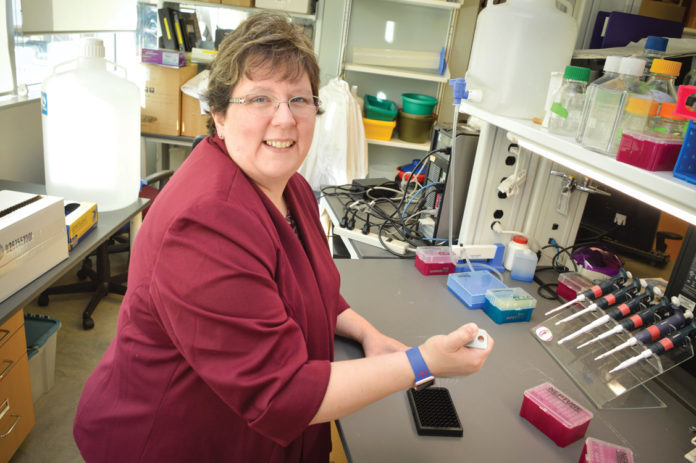
Oklahoma Medical Research Foundation scientist Melissa Munroe, M.D., Ph.D.
OMRF scientist Sherri Longobardi received the Sjogren’s Foundation’s Outstanding Abstract Award for the 2020 conference.

Three Oklahoma Medical Research Foundation scientists were recently recognized for excellence at the American College of Rheumatology meeting, the world’s largest annual conference for the field.
OMRF senior research assistant Sherri Longobardi received the Sjögren’s Foundation’s Outstanding Abstract Award for her work in identifying new methods for diagnosing Sjögren’s syndrome, where immune cells attack moisture-producing glands, causing symptoms that include severe dry eyes and dry mouth, fatigue, joint pain and rashes. There are currently no approved treatments for the illness.
Current blood tests to diagnose Sjögren’s look for biomarkers found in just 60% of patients, making the disease challenging to detect, and a lip biopsy is often required to confirm a diagnosis. Since beginning her research in 2016, Longobardi has identified eight new markers, paving the way for a blood test with accuracy rates as high as 93%.
Darise Farris, Ph.D., who mentors Longobardi at OMRF and holds a $2.7 million Sjögren’s grant from the National Institutes of Health, noted the work is a major step forward in the field. “This a significant discovery that could better diagnose patients and save a large portion from a painful lip biopsy and extensive testing.”
OMRF scientists Eliza Chakravarty, M.D., and Melissa Munroe, M.D., Ph.D., were also recognized for outstanding abstracts at the meeting. Their separate projects focused on better understanding aspects of the autoimmune disease lupus.
Chakravarty helped lead a multi-site NIH trial to determine whether patients can safely stop taking a lupus medication — mycophenolate mofetil — associated with numerous side effects. The study determined that patients with stable disease may be able to stop the medication without added risk of disease flare.
Munroe’s project examined specific inflammatory and regulatory imbalances in the blood that may help clinicians better predict and identify which relatives of lupus patients will go on to develop the condition.
“The American College of Rheumatology meeting is a gathering of the brightest minds in the field,” said OMRF Vice President of Clinical Affairs Judith James, M.D., Ph.D. “The recognition of these investigators and their teams is yet another nod to OMRF’s critical work in understanding and treating autoimmune diseases.”

OU Health Sciences Center Receives Grant for Opioid Management in Older Adults

0

Chronic pain can be quite common among older adults as they face conditions such as arthritis and neuropathy. Treating pain in older adults requires special considerations, however, especially when it comes to opioids.
The University of Oklahoma Health Sciences Center recently received a $2.5 million federal grant to tailor methods of treating chronic pain to the older adult population – with an emphasis on decreasing the use of opioids – and to disseminate those best practices to primary care clinics across Oklahoma. The grant is from the Agency for Healthcare Research and Quality, the lead federal agency charged with improving the safety and quality of America’s healthcare system.
In recent years, the OU Health Sciences Center has made significant contributions to the medical profession’s understanding of the risks and benefits of using opioids to treat chronic pain. However, much of that work has focused on the general population, rather than older adults specifically. This grant will allow physicians and researchers to concentrate solely on older adults, and to establish standards of pain management that prioritize non-opioid medications and treatments.
“The older population has a much different relationship with opioids than the younger population does,” said one of the grant’s three principal investigators, Zsolt Nagykaldi, Ph.D., Director of Research for the Department of Family and Preventive Medicine in the OU College of Medicine. “In the younger population, the No. 1 problem is typically misuse, while in the older population, the bigger problems are interactions between opioids and other medications and other health conditions, as well as a higher risk of falls.”
There are numerous reasons for limiting or avoiding opioid prescriptions in older adults, said co-principal investigator Steven Crawford, M.D., Senior Associate Dean for the OU College of Medicine. Metabolism slows as people age, which can increase the effects of opioids. Conditions like emphysema and sleep apnea complicate the use of opioids, Crawford said, and other medications may interact poorly with opioids. Opioids also cause constipation, which can affect the body’s systems and eventually lead to serious issues.
However, there are many alternatives to opioids. Non-opioid medications may be an option, although care must be exercised with anti-inflammatory drugs like ibuprofen, which can damage the kidneys and increase the risk of internal bleeding, among other complications, Crawford said. There are many non-pharmacologic possibilities, such as physical therapy, topical agents, acupuncture, massage, meditation and exercise. Those are also important options if patients are decreasing their opioid use slowly over time.
“Regular physical activity is very important for managing chronic pain because pain gets worse if people sit for a long time,” said geriatrician and co-principal investigator Lee Jennings, M.D., Chief of the Section of Geriatrics in the Department of Medicine, OU College of Medicine. Jennings is also director of the Oklahoma Healthy Aging Initiative (OHAI), which provides gentle exercise opportunities and falls prevention classes (including via Zoom) across Oklahoma. OHAI’s free programming will be emphasized as part of the overall program.
“It’s not easy to treat older adults with chronic pain, so this grant will allow us to help patients and their physicians to understand and have access to alternatives to opioids,” Jennings said. “It’s very important to have safe opioid prescribing practices and to make sure that patients understand the risks, but we have to think through other ways to manage pain. It’s not always possible to make someone totally pain-free, but we also don’t want to put someone at risk for a fall because they’re taking a medication that has a sedating effect. We want them to continue doing the activities that enrich their lives. We don’t want people to stop doing the things they enjoy because that can lead to social isolation and loneliness, which ultimately leads to poorer health.”
Because primary care clinics provide most of the care for older adults with chronic pain, the OU Health Sciences Center will be working with up to 50 clinics across Oklahoma. Community panels, comprised of both patients and clinicians, will provide insight into the needs specific to each area. The OU Health Sciences Center has an extensive network of relationships with rural clinics across the state to share best practices and provide hands-on assistance; this grant will enable further outreach on a topic that’s important to many Oklahomans.
“New medical guidelines, if they follow the natural course of things, can take years to become wedded into the practices of clinics,” Crawford said. “This type of program allows us to accelerate that process by working with clinics to improve the quality of life for their patients.”

COVID-19 Vaccine Myths Debunked

0

Oklahomans should feel confident in receiving either of the vaccines.
Still, we know there is a lot of mis-information out there. The Mayo Clinic debunks many of the most common myths below.
Myth: The COVID-19 vaccine is not safe because it was rapidly developed and tested.
Fact: Many pharmaceutical companies invested significant resources into quickly developing a vaccine for COVID-19 because of the world-wide impact of the pandemic. The emergency situation warranted an emergency response but that does not mean that companies bypassed safety protocols or perform adequate testing.
To receive emergency use authorization, the biopharmaceutical manufacturer must have followed at least half of the study participants for at least two months after completing the vaccination series, and the vaccine must be proven safe and effective in that population. In addition to the safety review by the FDA, the Advisory Committee on Immunization has convened a panel of vaccine safety experts to independently evaluate the safety data from the clinical trials. The safety of the COVID-19 vaccine will continue to be closely monitored by the Centers for Disease Control and Prevention (CDC) and the FDA.
Myth: I already had COVID-19 and recovered, so I don’t need to get a COVID-19 vaccine when it’s available.
Fact: There is not enough information currently available to say if or for how long after infection someone is protected from getting COVID-19 again. This is called natural immunity. Early evidence suggests natural immunity from COVID-19 may not last very long, but more studies are needed to better understand this. Mayo Clinic recommends getting the COVID-19 vaccine, even if you’ve had COVID-19 previously. However, those that had COVID-19 should delay vaccination until about 90 days from diagnosis. People should not get vaccinated if in quarantine after exposure or if they have COVID-19 symptoms.
Myth: There are severe side effects of the COVID-19 vaccines.
Fact: There are short-term mild or moderate vaccine reactions that resolve without complication or injury. Keep in mind that these side effects are indicators that your immune system is responding to the vaccine and are common when receiving vaccines.
Myth: I won’t need to wear a mask after I get the COVID-19 vaccine.
Fact: It may take time for everyone who wants a COVID-19 vaccination to get one. Also, while the vaccine may prevent you from getting sick, it is unknown at this time if you can still carry and transmit the virus to others. Until more is understood about how well the vaccine works, continuing with precautions such as mask-wearing and physical distancing will be important.
Myth: More people will die as a result of a negative side effect to the COVID-19 vaccine than would actually die from the virus.
Fact: Circulating on social media is the claim that COVID-19’s mortality rate is 1%-2% and that people should not be vaccinated against a virus with a high survival rate. However, a 1% mortality rate is 10 times more lethal than the seasonal flu. In addition, the mortality rate can vary widely and is influenced by age, sex and underlying health condition.
You cannot get COVID-19 infection from the COVID-19 vaccines; they are inactivated vaccines and not live vaccines.
While no vaccine is 100% effective, they are far better than not getting a vaccine. The benefits certainly outweigh the risks in healthy people.
Myth: The COVID-19 vaccine was developed as a way to control the general population either through microchip tracking or nano transducers in our brains.
Fact: There is no vaccine “microchip” and the vaccine will not track people or gather personal information into a database. This myth started after comments made by Bill Gates from The Gates Foundation about a digital certificate of vaccine records. The technology he was referencing is not a microchip, has not been implemented in any manner and is not tied to the development, testing or distribution of the COVID-19 vaccine.
Myth: The COVID-19 vaccine will alter my DNA.
Fact: Injecting mRNA into your body will not interact or do anything to the DNA of your cells. Human cells break down and get rid of the mRNA soon after they have finished using the instructions.
Myth: The COVID-19 vaccines were developed using fetal tissue.
Fact: Current mRNA COVID-19 vaccines were not created with and do not require the use of fetal cell cultures in the production process.
INTEGRIS Health is a member of the Mayo Clinic Care Network.

Which Trail to Take?

0
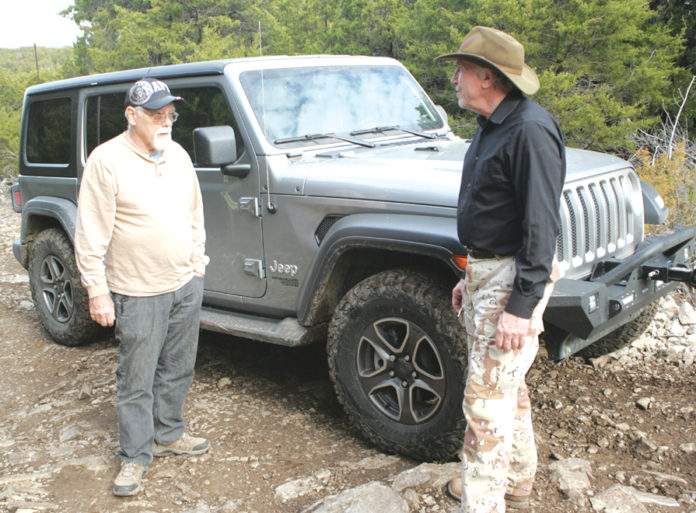
Retired U.S. Navy Veteran Walt Schneider (left) discusses which trail he and Rob Walker (right) should take at Outdoor Powersports Offroad Park at Crossbar Ranch near Davis, Okla.

Story and photos by Darl Devault, Feature Writer

Some outdoor activities come with social distancing, such as hiking, kayaking, bicycling, while Jeeping is an everyone activity because your effort is as simple as driving. Jeeping offers the automatic added benefit of a COVID-19 safe recreational outing enforcing social distancing.
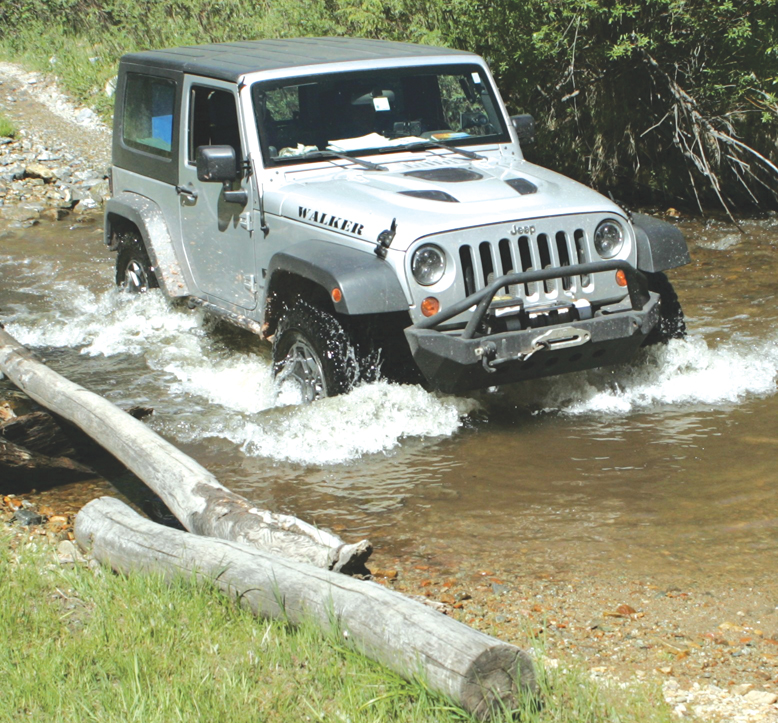
You can travel far to Jeep off-road or as close as nearby country roads. At Outdoor Powersports Offroad Park at Crossbar Ranch near Davis, Okla., drivers have many trails to choose from within the 6,500-acre park. While touring road and trails of Crossbar’s granite canyons you realize there are many places to enjoy being outdoors away from people.
Edmond, Okla. resident, and retiree, Rob Walker, 65, wants to increase his Jeep activity. He explains you do not have to rule the off-road world. You can simply take advantage of what it offers, immersion in nature and social distancing. He insists seniors who take up the 4-wheeling off-road lifestyle will likely continue it long after vaccines make traveling safe again.
“Isolated in your vehicle, a person driving a Jeep cannot get close to anyone without intending to get close,” Walker said. “I took a five state Jeep tour in June to Moab Utah with caution, finding if you camped in the outback you had to consciously work to get within social distance of someone. This, and it being the area’s offseason, made it safe to have a wonderful outing.”
Jeep travel and exploring provides enthusiasts with plenty of opportunities for recreation. Seniors looking for a zero COVID-19 risk reality on vacation can enjoy camping and the outdoors. (Story continued below)

http://www.earsofoklahoma.com/

From the increased sale of four-wheel drive off-road vehicles, insiders say this contingent of outdoor enthusiasts has been growing fast for many years.
Although magazine and television ads often portray Jeep owners as young and affluent, many retirement privileged seniors are learning the skills needed to enjoy what many see as rugged car camping.
Jeeping, also called off-road four wheeling, is the predominant name for the activity in America. Every year new enthusiasts create more demand for the continued strong growth in the already phenomenally large number of places to go off road.
Although you will occasionally see high-end Jeeps on the trails, the usual choice for locals is stock models These have enticed many new adventurers into the sport.
They enjoy the feel of control over rough roads. Jeeps allow them the stability and ease of getting up and over rugged obstacles. Every area has trails of with varying degrees of difficulty.
These off-road activities began soon after WWII with advances in the machinery became high tech. This has revolutionized the quality and lowered the need to be outstanding drivers for the recreational Jeeper. Jeeping provides opportunities for all ages, shapes, and sizes of folks, no matter their physical ability or driving level.
Jeeps have gone from being bare bones, WWII surplus workhorses, to having versatile number of uses. Many Jeeps are now used for a weekend, week, or longer, self-supported camping trip in the rugged parts of America.
Although using the word Jeep because they are often called Jeep trails, readers need to know many vehicles are every bit as rugged. Honda Ridgeline, Chevy Blazer, Honda Element, Toyota 4Runner, Subaru Outback, and Nissan Pathfinder, just to name a few, will work just as well.
All these rugged vehicles are easy to maneuver and stable. They all provide the feeling of being in control of something that glides effortlessly through the outdoors. This gives even the newbie the confidence to slip into the seat and go off road.
With all the automobile builders offering Web sites with tours of their products, you can comparison shop. Look around, do not buy the first vehicle you try.
For seniors, the attraction of doing what they have been doing for five decades or so, driving, has prompted many to try the sport now.
Everyone knows how to drive. Seniors can create haunting memories of their adventurous experiences off road, immersed in nature and enjoying the comforts of home while camping in the evening. The vehicle allows for the effortless hauling of all the camping gear needed to make a campsite as comfortable as you care to make it. Remember, you are not backpacking. You can bring along a small generator to combine the experience of camping with a little glamor and you have Glamping with spatial distancing.
If you choose to rent a Jeep at your adventure area, you can still pack your vehicle full of camping luxury for transfer at the rental site.
If you are brand new to the world of glamorous camping, search the Internet for ideas. In a world where public transportation is being shunned for its tight quarters with other people, you are in charge of who and how you associate with others.
“I advise anyone planning to go off road and camp in an area to first go online to the many web sites detailing the area and weather predictions,” Walker said. “Our national weather service provides this info to help promote its weather awareness agenda.”
Walker says fellow seniors who go off road need to slow down, let some air out of the tires at your destination to make the going smoother and admire the scenery.
As newcomers to the activity, many seniors can easily find out if they enjoy Jeeping by renting one for a day trip.
Seniors are living longer and have time to do things. Retirement is a time to explore. Figure out if this activity interests you. Is this how you want to spend your free time?
Walker recommends that seniors set some short-term goals and be thinking about their long-term goals. The short-term can be a trip to Crossbar. The long-term is perhaps a multi-day trip to Big Bend National Park at our southern border in Texas. You can think of both simultaneously.
All the major Jeep destinations offer Web sites describing rentals and trails. Canyonlands Jeep Adventures provides a complete overview of the sport. The U.S. National Park Service has a site allowing you find a place to go car camping and can help you get permits for certain camping spots.
Ending on a safety point, when in doubt, back out! If you are traveling on a trail or trying to maneuver around something that you are not comfortable with, do not do it. For more information visit www.rideyourlifestyle.com.

Social

0FansLike
0FollowersFollow
0SubscribersSubscribe