is once again recognized as the #1 hospital in the state and the #1 hospital in the Oklahoma City metro area by U.S. News & World Report. The 2020-21 rankings were just released to the public today.
INTEGRIS was the sole recipient to be named the Best Hospital in Central Oklahoma and the Best Hospital in the Oklahoma City Metro area, but we share the distinction of the Best Hospital in Oklahoma with St. Francis Hospital in Tulsa.
INTEGRIS Baptist Medical Center was recognized as High Performing in five different adult procedures and conditions including colon cancer surgery, heart failure, abdominal aortic aneurysm repair, aortic value surgery and chronic obstructive pulmonary disease (COPD).
The annual U.S. News rankings are widely reported and are designed to assist patients and their doctors in making informed decisions about where to receive care. We take great pride in the fact that we have earned this honor multiple times and appreciate the continued acknowledgment and support from the communities we serve.
U.S. News & World Report Names INTEGRIS Baptist Best Hospital in the State and OKC Metro
Home at HarborChase

story and photo by Bobby Anderson, Staff Writer
Simply stunning.
No other words quite describe the feeling of walking into HarborChase of South Oklahoma City.
Visually remarkable, the brand new assisted living and memory care residence located at 10801 S May Ave is a treat for all five senses.
Depending on the hour or day, you might hear the smooth gospel stylings of pianist Gatha Graham or the laughter from the main dining room.
In the afternoon, the smell of freshly popped popcorn wafts through the air.
Wood-fired pizza directly out of the oven, crab cakes or a prime rib dinner cooked to order await to be enjoyed downstairs or in the privacy of your residence with room service.
Amenities abound at Oklahoma City’s newest senior residence offering.
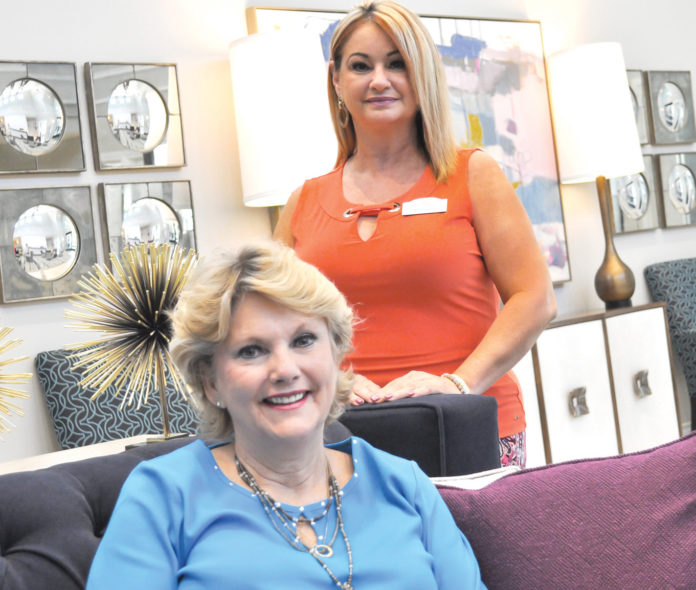
“It’s amazing,” says Executive Director Willena Ferguson while walking through the finely-appointed property, which is also licensed as a hotel by the state.
After spending the past 15 years in senior living, Ferguson has spent the last 14 months bringing HarborChase to life in the metro.
Residents began moving in February 29 prior to the recent quarantine.
Vero Beach, Fla. – based Harbor Retirement Associates brings the luxury living option to Oklahoma.
HRA operates more than 35 communities in eight states and is partnering on the construction of even more communities in seven additional states. HRA manages over $150 million in revenue and approximately $1 billion in assets while employing 2,000 associates.
HarborChase of South Oklahoma City is now accepting new residents and is proud that through June, the residence remained entirely Coved-free with no residents or employees testing positive.
That’s thanks to a stringent entry criteria as well an extensive daily sanitization regimen.
Temperature checks are completed three times daily. No one can enter the facility without having their temperature scanned.
The building is disinfected twice daily.
The Oklahoma Room is a crowning jewel at the residence. The nearly 1,900-square foot safe room is rated by FEMA to withstand 500-mile-per-hour winds. An enclosed generator ensures power and a full-stocked pantry provides food and water for residents for up to three days in the case of disaster.
Some $400,000 worth of concrete – nearly two-feet thick – protects residents as does the bulletproof glass and rolling steel hurricane shutters.
“It’s really kind of cool some of the amenities they put into the building,” said Ferguson, who also noted the space serves as a movie theatre room, and a chapel.
HarborChase offers both one and two-bedroom assisted living options.
From the very first day a resident moves into HarborChase, they are a familiar name and face, treated as a respected and cherished member of the family. Ferguson and her staff are dedicated to providing an ongoing feeling of connection, communication, comfort and caring. Upon arrival, a unique “Silhouette of My Life” profile for each individual resident is created to ensure that their wants, needs and desires are being met.
This customized profile allows care partners to create fun activities and programs based around residents’ favorite pastimes, foods and memories.
Each day, care partners offer respectful assistance with walking, dressing, grooming and more. You’ll rest easy knowing that your loved one’s medical needs are provided for by a caring and compassionate team of licensed nurses and medication assistants.
In order to help nurture their independence, your loved one will receive the personalized level of care and support they need with friendly supportive services that truly make life easier and more enjoyable. An active and purposeful lifestyle awaits your loved one at HarborChase.
A dedicated memory care unit is also built in.
Harbor Chase’s acclaimed Memory Care neighborhood is a safe, serene and loving harbor for residents and their families.
A putting green sits in the interior courtyard next to the cabana. A family of ducks seems to enjoy the fountains and raised, self-watering flower beds that are being installed next to their float pool.
An art studio and fitness gym are also on site.
Business Office Manager, Tia Crittenden, has worked with Ferguson for 10 years now, following her along her journey.
“I have a really huge loyalty to Willie. She’s an amazing director,” Crittenden said. “Her standards are very high.”
Ferguson smiles and explains it all comes down to setting the bar high and building lasting relationships.
“I love this population,” Ferguson said.
And there’s no doubt this population will love HarborChase.
HarborChase is located at 10801 S May Ave, Oklahoma City, OK 73170. Call (405) 429-8386 for more information or visit: www.harborchase.com
Seniors Can Have Fat Bike Fun

by Darl DeVault

Bicycling is experiencing a resurgence lately because it provides a fun, healthy way to spend time outdoors while riders keep a safe social distance from others. Seniors might consider the comfortable modern Fat Bikes that will bring back memories of bicycles in the 1960s.
Modern fat tire bikes, or Fat Bikes as they are called, are off-road bicycles providing seniors comfortable and smooth riding because of the oversized tires, no matter where they ride. The elderly appreciates these bicycles because they are designed so the rider maintains an upright position with no strain on their back. The handlebars are straight, again easing pressure on the back by not requiring a crouching position over the bike.
Seniors who cycle or want to start riding again might want to test ride a Trek Fat Bike. It is a cross between a light-weight racing bike, with its multi-speed gearing, and a balloon-tired “paperboy” bike of the 1950s.
Many seniors are riding more now because the activity can slow down the progression of aging, deterioration in muscle mass, and much more, according to many medical studies.
Remember your first balloon-tired bike? These new fat tires are almost three times bigger than those balloon tires, which expands regular 2-to- 2.25-inch mountain bike tires to a whopping, comfortable, cruising 4-5 inches. With all that squishy rubber under you, comfort rules the day.
These bikes have the best kind of frames for a senior, the step-through design. This enables the rider to get on and off the bicycle easily. It will perform well during your regular commute or a Sunday country ride. The choice of more gears is generally helpful. If you have a lot of climbing to do and prefer easy pedaling with more revolutions and less resistance for each pedal stroke, the gears provide that option.
With these big tires you achieve a floating sensation when riding along. Fat Bikes are a lot of fun and come with a built-in smile factor – you cannot help but grin to yourself if you like to bicycle.
These Fat Bikes have everything, as manufacturers are now putting real engineering and design technology into them. Racing-bicycle metallurgy, extremely light but strong, means the design allows the Fat tires to dampen road shock and provide stability over rough terrain.
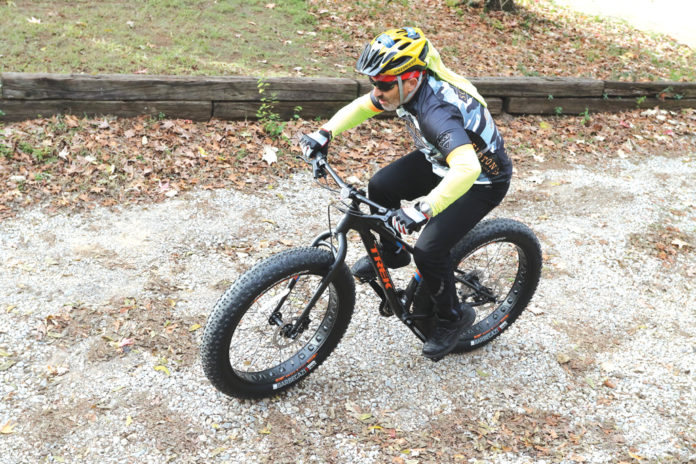
Here is my recent off-road test. I took a Fat Bike off the pavement and up a nearby berm to test the fun.
The added buoyancy of plenty of air between the rim and the ground meant it was simply a matter of powering through the uneven terrain.
My first pass…. I started up the steeply sloping hillside only to discover about two-thirds of the way up that it was sandy soil. The loose soil quickly brought my speed down. When I noticed I was not making good progress I simply applied more power.
I continued my climb. What a feeling, I was on top of the world! I was in control and staying upright while climbing over difficult and uneven terrain.
It made all the difference in the world to my confidence to know that I had climbed the steepest area without using all the gearing available.
The length of the wheelbase, because of extra-size tires, alone adds a dimension of stability. Forget the huge contact patch with the ground; the longer wheelbase gives your ride a squish not available any other way. It seems to even some obstacles out without effort from the rider.
Senior riders can opt for significantly lower tire pressure. Think 15 or 10 psi, or even lower still. This gives the tire some significant squish, and that play translates to more rubber conforming to the trail for serious grip.
I rode back and forth on top of the berm several times, finding new routes, weaving in and out of the trees and around obstacles. I could cut back against the hill and accelerate to support my balance after going around bushes.
I was proud of being able to handle the bike in such tight quarters. I took on harder terrain, happy to come shooting out of the underbrush into the open unscathed.
So far, so good. Now it was time to ride down. I felt I was in control… that I could use the disc brakes and if necessary, the whole rear tire in slowing down. Coming down was a pleasure, the control of the bike suddenly became all mine again. Slaloming on the 4-inch fat tires was a breeze.
I felt I had more control over the bike descending than at any other time, especially with the longer wheelbase. I knew that if I kept my center of gravity low and the bike centered beneath me, those sturdy fat tires could take any punishment. This confidence allowed me to steer right where I wanted it to go.
While Fat Biking over changing terrain takes coordination, and quickness, it gives the cyclist the elation of triumphing over unpredictable conditions and challenges. Finally, it instills a “can-do” attitude that is as comfortable as a bicycle can get.
If you ride, please buy a helmet, and wear it. Today’s helmets are adjustable and comfortable to wear while the air flow through the vents keep your head cool.
Senior cyclists owning the new-generation Fat Bike can also try out what they term Gravel Rides, taking backcountry unpaved scenic routes on their new contraptions.
Imagine a bicycle with bigger than a paperboy balloon tires by two and a half times taking the tension off major joints, and you have the start of what you might find as the inspiration to cycle more.
Oklahoma History Center Announces Winners of 2020 National History Day
Ten students representing five Oklahoma school systems received recognition for their projects during the 2020 National History Day (NHD) contest. The national contest is the final stage in a series of contests beginning at the local/regional and state/affiliate levels. This event is held annually to highlight the work of middle and high school students from the United States and several countries around the world who have prepared projects with a particular theme in mind. The theme for 2020 was “Breaking Barriers in History,” and students presented their work in the form of papers, documentaries, performances, exhibits or websites. The Oklahoma History Center serves as the state sponsor for Oklahoma National History Day (OkNHD) and coordinates the state competition, while various local sponsors manage regional events.
Students begin their journey by presenting their projects in classrooms, schools and regional contests across the country. Top entries are invited to the state/affiliate level contests. The top two entries in each category at the state/affiliate level are then invited to the national contest. In past years, state winners have had the opportunity to travel to College Park, Maryland, for judging in the National History Day contest. However, the COVID-19 pandemic meant an alteration in how this event was traditionally held. This year, all presentations and entries were uploaded to the NHD registry, then downloaded and reviewed by the judges. The judging panels were comprised of teachers, graduate students, authors, historians and volunteers from various museums domestically, as well as seven international sites. The Smithsonian Institution, of which the Oklahoma History Center is an active affiliate, also contributed judges from its staff, as well as from other national affiliates.
“This year posed many challenges to the students, not the least was the fact that the schools were closed,” said Sarah Dumas, director of education at the Oklahoma History Center and OkNHD state coordinator. “Research on their particular projects had to be done wherever they could find it. It seems that this year’s theme, ‘Breaking Barriers,’ became a reality to all those who participated in this wonderful event.”
Judging for the national contest, also done virtually, was completed between May 23 and June 6. The Oklahoma students who earned honors at the 2020 National History Day competition are as follows:
1. First Place in Senior Group Website: Evan McCrackin, Justin Yang and Shoaib Jamil for their website entitled “For the Rainbow Children of God: Desmond Tutu’s Perilous Conquest against South African Apartheid.” Their teacher at Norman Public Schools is Margaret Wadleigh.
2. Special Award for Discovery or Exploration in History: Amelia Peoples, Cate Mossman and Kate Schein for their Senior Group Documentary entitled “The Journey to Mars: How Donna Shirley Broke Barriers for Women in Space Engineering.” Their teacher at Classen School of Advanced Studies in Oklahoma City is Billy Tillman.
3. Special Award for Equality in History: Alexa Delgado and McKayla Howerton for their Junior Group Exhibit entitled “Woman vs. Woman.” Their teacher at Canton Public Schools is Penny Heath.
4. Special Award for Outstanding Junior State Entry: Zayda Sherwood for Junior Paper entitled “Love Conquers All: How Loving v. Virginia Helped Break Racial Barriers.” Her teacher at Canton Public Schools is Penny Heath.
5. Special Award for Outstanding Senior State Entry: Jordan Mason for her Senior Individual Performance entitled “Bright Not Broken: The Barrier Between Autism and Agriculture.” Her teacher at Burns Flat-Dill City Public Schools is Patsy Lyles.
National History Day is a nonprofit education organization in College Park, Maryland. Established in 1974, NHD offers year-long academic programs that engage more than half a million middle and high school students around the world annually in conducting original research on historical topics of interest. NHD also seeks to improve the quality of history education by providing professional development opportunities and curriculum materials for educators.
The Oklahoma History Center is a division of the Oklahoma Historical Society and is an affiliate of the Smithsonian Institution, National Archives and is an accredited member of the American Alliance of Museums. The mission of the Oklahoma Historical Society is to collect, preserve and share the history and culture of the state of Oklahoma and its people. Founded in 1893 by members of the Territorial Press Association, the OHS maintains museums, historic sites and affiliates across the state. Through its research archives, exhibits, educational programs and publications the OHS chronicles the rich history of Oklahoma. For more information about the OHS, please visit www.okhistory.org.
Stitching Helps Volunteer’s Outlook Through Pandemic
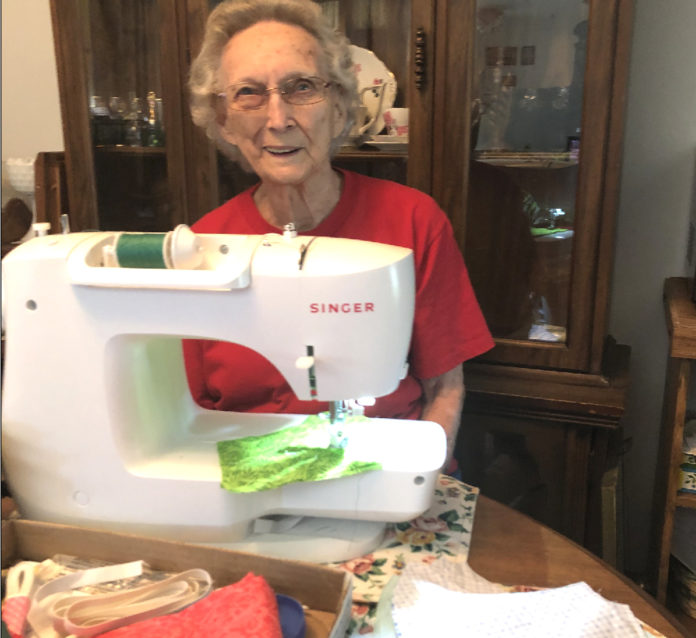
At 93 years old, Carlene Pearce remains a very active 29-year volunteer with the Retired and Senior Volunteer Program of Central Oklahoma, a United Way of Central Oklahoma partner. Through RSVP, she volunteers her time with the American Red Cross sewing group and since March, has stitched more than 350 face masks that are distributed in the community to help with COVID-19 safety.
As part of her sewing group, Carlene says she sews 3-6 hours a day, taking at least one day off to tend to her own projects. During the pandemic, she and her group, which typically meets on Thursdays, are working strictly from home. She is currently making masks, but also does a lot of sewing for Veteran’s groups making tote bags, pillows, lap throws, and eyeglass cases.
“I’ve been sewing since I was 14 years old. My grandma taught me how and I love any kind of handcraft. I have to have some sewing project in my hand,” she said.
In the nearly three decades with RSVP of Central Oklahoma, she’s volunteered with the Midwest City Police Department, OU Children’s Hospital, the Hugs Project, and Veteran’s Hospital. She’s logged more than 15,000 hours as a volunteer.
“Volunteering keeps me busy and I know that if it is helping someone else, it brings me joy and a sense of ease,” Carlene said.
Since 1973, RSVP of Central Oklahoma has helped senior adults continue to live with purpose and meaning by connecting them with rewarding community volunteer opportunities, including RSVP’s Provide-A-Ride Senior Transportation Program. RSVP is a partner of Senior Corps and the United Way of Central Oklahoma. To learn more about becoming a volunteer, call Laura McPheeters at 405.605.3110 or visit rsvpokc.org. You can also follow RSVP on Facebook at facebook.com/RSVPokc.
Fran Drescher and “The Nanny” Reunion
by Nick Thomas

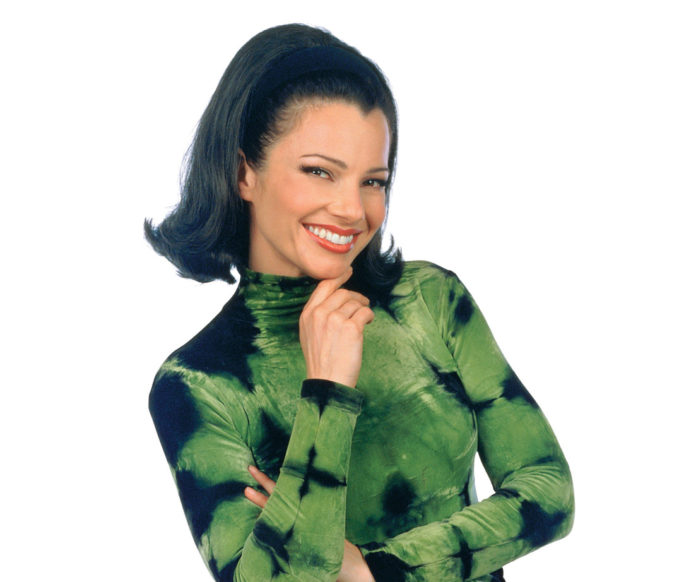
Reassembling a dozen cast members from a popular 90s TV sitcom could pose a challenge for any network, much less an individual. But it was a task Fran Drescher relished. As the nasal voiced star of the hit CBS series “The Nanny,” Drescher co-created and co-produced the show along with then-husband Peter Marc Jacobson.
“Peter came up with the reunion idea for fans stuck at home during isolation and I said right away let’s do it if everyone in the cast is available,” said Drescher from her home in Malibu.
Unable to meet collectively in a studio due to quarantine restrictions, all 12 credited actors who appeared in the 1993 pilot agreed to participate from their home in April in a “Pandemic Table Read” via a Zoom split-screen reading of that first episode, interspersed with cuts from the original broadcast.
In addition to the cast, Jacobson narrated the reading while Ann Hampton Callaway – composer and performer of the show’s catchy theme – opened with a lively rendition on piano.
Drescher admits the reunion brought memories flooding back. “To see everybody and to hear the words again made me miss the show and everyone in it so much. It gave me a lift during this terrible period. Hopefully, it did the same for fans.”
Although nearly 20 years have passed since “The Nanny” first aired, Drescher says she still remembers the pilot and the live studio audience.
“They didn’t know the characters or what to expect from us,” she recalled. “But they quickly got it and were soon anticipating laughing almost before we said the lines. They had never really experienced an outrageous character like Nanny Fran Fine that incorporated elements of Cinderella, Mary Poppins, and The Sound of Music’s Maria.”
Several years after “The Nanny” ended production, Drescher was diagnosed with uterine cancer. She completely recovered, but the experience steered her toward a second career to promote a “whole-body approach to wellness” and form the Cancer Schmancer Movement in 2007 (see www.cancerschmancer.org). More recently, Drescher produced a series of videos called “Corona Care 4 You” featuring interviews with health experts during the pandemic.
A longtime advocate of natural foods and products, Drescher was isolated at home for weeks during the spring like much of the country and used the time to catch up on TV shows, writing, and cleaning. As Nanny Fine, her famous TV character might not have scolded Niles the Butler for using corrosive cleaning products to sanitize the Sheffield’s home in which the 90s Nanny series was set, but today she probably would.
“I use 65% alcohol in a spray bottle with a little water and some peppermint oil which smells nice and has some antimicrobial properties,” she said.
Despite the forced home confinement, Drescher took it largely in her stride.
“I happen to like staying at home, so I don’t get cabin fever easily,” says Drescher who currently stars in the NBC comedy “Indebted.” But for the actress and her former husband with whom she remains close friends, their collaboration on “The Nanny” remains a career milestone. “This was our baby and we remember everything about it.”
Nick Thomas teaches at Auburn University at Montgomery and has written features, columns, and interviews for over 800 newspapers and magazines.
Flu shot more important than ever, experts say

Getting the annual flu shot is always important. But this year, it might be essential.
The SARS-Cov-2 coronavirus is surging throughout the state and much of the country, and many health experts are predicting an epidemic-level wave during the fall and winter months, right in the heart of the annual flu season in the U.S.
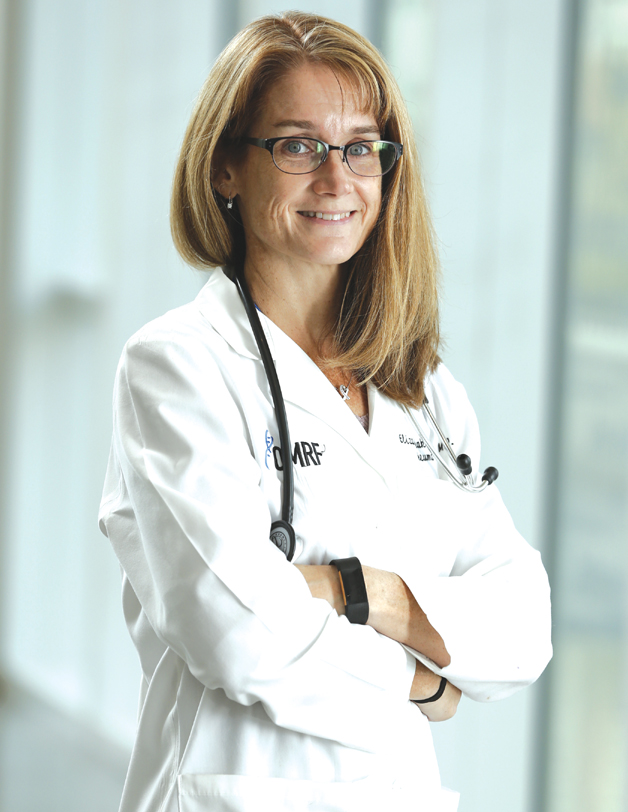
“That timing could be potentially disastrous for a number of reasons, but the most obvious is that the combined fight against coronavirus and influenza is potentially more than our healthcare system can handle,” said Oklahoma Medical Research Foundation physician-scientist Eliza Chakravarty, M.D.
Since the coronavirus first started spreading across the U.S. earlier this year, it has resulted in almost 2.3 million confirmed cases and 120,000 deaths, according to the Centers for Disease Control and Prevention as of June 22. Those numbers – and the associated strain on hospitals and healthcare resources – could be compounded by the flu, which in the during the 2019-20 season infected as many as 56 million Americans, with 740,000 hospitalizations and nearly 62,000 deaths, according to preliminary CDC data.
“Efforts taken with the shutdown, like socal distancing and wearing masks, have kept rates low enough to keep coronavirus patients separated from others who need other routine care,” Chakravarty said. “Add another outbreak and toss in a fast-spreading virus like the flu, and all that progress could go out the window.”
Chakravarty also worries about people getting exposed to both viruses. “Each of them is deadly enough individually, but we know they are especially dangerous for those with compromised immunity or lung function,” she said. “You don’t want to catch both if you’re already compromised.”
The good news is that there are ways to avoid this nightmare scenario, said OMRF President Stephen Prescott, M.D.
“We have to maintain already sensible practices, like physical distancing, wearing masks, and washing our hands,” said Prescott, a physician and researcher. “An obvious additional step is to get the flu shot. Even if you don’t normally get one, this is the time to do it.”
Flu shorts are generally inexpensive or free, and drive-thru vaccinations may become widely available. And while the shots are far from perfect, typically providing between 40 and 60 percent protection, “Some protection is better than none,” said Prescott.
Even if you contract the flu after receiving your shot, vaccination often leads to a milder case, said Chakravarty.
“A less-severe version is always a good thing, but now it might also save you or a loved one a trip to the hospital where coronavirus exposure is possible,” she said. “So, the bottom line is that flu shots save lives – this year, maybe more than ever.”
Greg Schwem: Welcome to the United States of ‘Do as you Please’
The warning alarm knifed through the humid air as my foursome exited the eighth green. Dark clouds overhead meant rain was imminent; the accompanying siren signaled lightning had been spotted and all golfers were to clear the course immediately.
IMMEDIATELY.
We scrambled into our carts and beelined for the clubhouse, never once considering remaining on the course and playing 10 more holes. Despite seeing pockets of sun trying to poke through the gloom, I’ve seen enough charred tree trunks on golf courses to know the power of a lightning bolt. Not to mention the fact that a golf bag is basically comprised of 14 metal sticks.
Besides, rules are rules, right?
As we approached the clubhouse, we saw plenty of other golfers heading … the opposite direction. A foursome of cigar-chomping bros was teeing off on number one. A dad with his daughter, no more than 8 and the proud owner of a pink flowered golf bag, appeared ready to start their round, rain, lightning and rules be damned.
Such is the nature of living in a country synonymous with freedom. The Cambridge dictionary defines freedom as “the condition or right of being able or allowed to do, say, think, etc. whatever you want to, without being controlled or limited.” And my, oh my, are we getting good at it.
Turn off our cellphones because it’s time for the plane to push back from the gate? Sorry, I’m on an important call with my swimming pool contractor and my freedom takes precedence over an on-time departure.
Leash our dog in a bird-watching section of Central Park because that’s what the signs say? Too bad. That’s a violation of my dog’s constitutional rights, never mind that my dog can’t distinguish a copy of the Constitution from a rolled-up newspaper.
Wear a mask in a retail establishment because doing so might ward off a virus that has killed more than 100,000 people and doesn’t seem to be abating despite, um, warm weather? Excuse me, but nobody tells me how and where to breathe for doing so is a violation of my air intake freedom.
Looking back, I’m starting to question all the parenting decisions I made with my children, now 18 and 23. At the community pool, when lifeguards simultaneously blew their whistles at 50 minutes past each hour, it signaled “Adult Swim” for the next 10 minutes. If my kids dawdled, my wife and I yelled, “Out of the pool. You know the rules.”
Think of all the valuable swimming time my children missed. I should have yelled, “Keep swimming, girls. Nobody can tell you to leave the pool. That’s a violation of your Marco Polo freedom.”
When they were high school students, and the temptations of alcohol began to appear, we were firm: No parties in our house with liquor, for underage drinking is against the law. Silly us. I should have set up a fully stocked bar in my basement. And when police arrived to shut down the festivities, I should have scolded them for illegally entering my premises, verbally harassing the guests — including the 15-year-old cheerleader puking in the bathroom — and impinging on the kids’ First Amendment rights to openly discuss the new Selena Gomez single. That’s a veritable trifecta of freedom violations.
And what about my freedoms? The town where I live has an ordinance stating I can only run my yard sprinklers on even numbered calendar days. Ha! My grass blades are on my property and it should be up to me to decide when they receive nourishment. If I’m slapped with a fine, I’ll take my cues from our freedom-loving president and appeal this horrible injustice all the way to the U.S. Supreme Court.
I could go on and on stating all the times my freedoms have been trampled, but this column is due and I’m under strict orders to have it in by Tuesday morning.
On second thought, I’ll submit it whenever I feel like it. Need I say why?
(Greg Schwem is a corporate stand-up comedian and author of two books: “Text Me If You’re Breathing: Observations, Frustrations and Life Lessons From a Low-Tech Dad” and the recently released “The Road To Success Goes Through the Salad Bar: A Pile of BS From a Corporate Comedian,” available at Amazon.com. Visit Greg on the web at www.gregschwem.com.)
You’ve enjoyed reading, and laughing at, Greg Schwem’s monthly humor columns in Senior Living News. But did you know Greg is also a nationally touring stand-up comedian? And he loves to make audiences laugh about the joys, and frustrations, of growing older. Watch the clip and, if you’d like Greg to perform at your senior center or senior event, contact him through his website at www.gregschwem.com)
TRAVEL / ENTERTAINMENT: Entertainment: In the Presence of Greatness – Part One
Photography and Text by Terry “Travels with Terry” Zinn [email protected]

In this time of forced suspension of activities, one such even more missed than travel destinations is the suspension of theatrical shows, plays, and concerts. It’s comforting to look back over the years, and as a 72 year old I have plenty, and revel in the live performances and performers that are memorable. I call these times “In the presence of greatness.” While movie theaters are beginning to reopen, there is nothing like a meaningful and exceptional live performance.
My first theatrical experience was with the Mummers Professional Theater held in a warehouse in Oklahoma City’s on West Main street. The building is remarkably still there as are the memories of the performances of theatrical literature of Tennessee Williams, O’Neil and other classical playwrights. I was amazed at the performances and the performers. I remember fondly being taken their in my High School years by my mother and looking back it must have been exceptional theater to keep the attention of this teenager.
Decades later in the 1970s I saw and helped as a 12 hour a day intern at the Mummers Theater in its last season. The architectural award winning building was torn down for a vacant lot a few years ago, but the memories of performers such as Tamara Long, Carveth Osterhaus and Dody Goodman remain fresh and warm.
While a freshman at college I saw Carol Channing, in her record-breaking performances in OKC’s Music Hall’s Hello Dolly. I was so impressed I saw it twice, and that is saying something to buy 2 tickets with a small entertainment budget. In the era before higher security I went backstage in hopes of seeing her and followed a small group down beneath the stage to a small room, where Carol came to say “Hi.” Looking into those wide eyes and hearing that gravely voice, is an indelible memory. She was one of a kind. And still alive to me on the Hello Dolly cast album recording or on You Tube videos, I was surely in the presence of greatness then.
Other performances of greatness I saw at the Music Hall, were Louis Armstrong and Ray Charles.
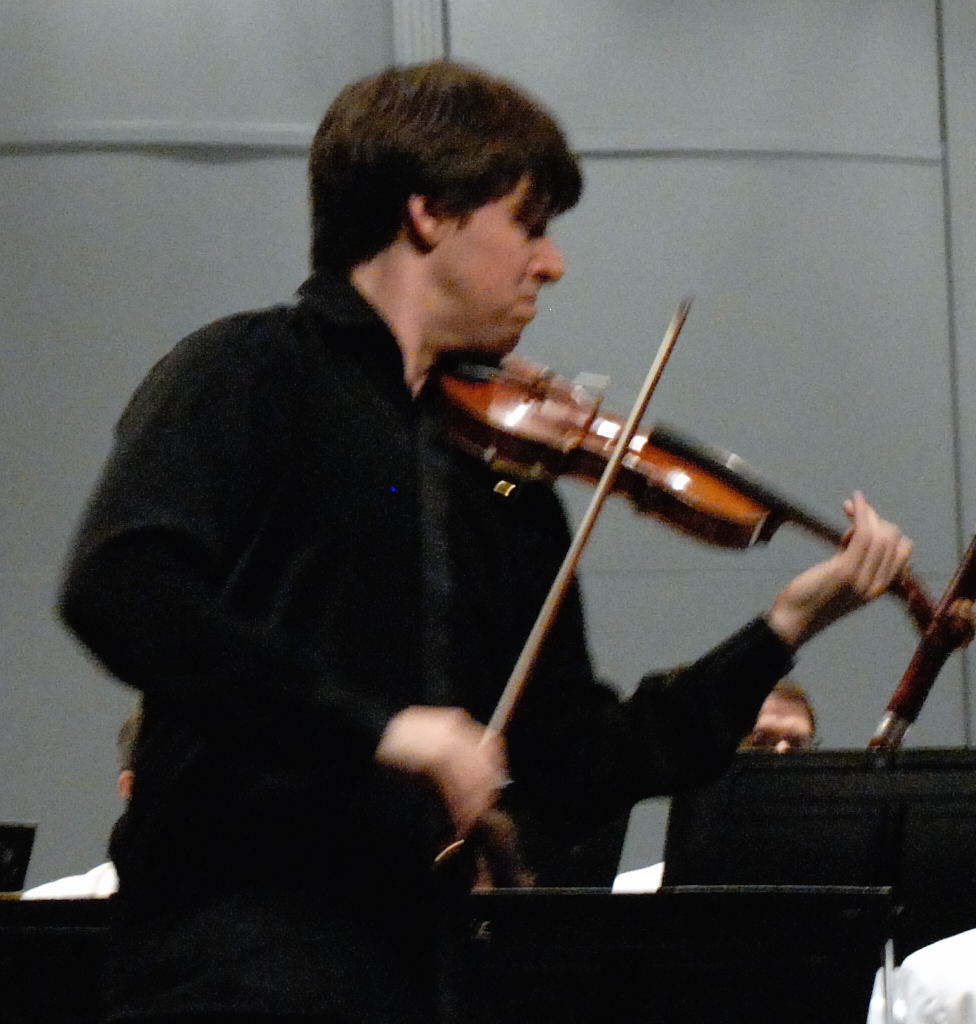
In subsequent times at the Music Hall I sneaked on stage to greet and shake hands with Violin virtuoso, Joshua Bell. As my favorite violinist I have attended a number of his Oklahoma concerts with the Mozart Festival, or performances at the Music Hall and most recently on the Oklahoma State University campus.
On another backstage foray I saw in passing and up close the legendary Ethel Merman, after one of her guest concerts with the Oklahoma City Symphony. Wow, seeing her in only a glimpse a foot away was indeed my lucky night.
As you can tell my dedication to theater took me to New York City’s Broadway musicals. Top rated for me back in the 1970s was seeing the original 1973 cast of Pippin with the energetic and young Tony winner, Ben Vereen. A few years ago in Oklahoma City, the aging performer still had a bit of magic about him, but the one man show material he chose was less than satisfying. It’s a fact about live performers, that you never know their physical capabilities on any given night.
On Broadway seeing the original cast of Stephen Sondheim’s Into the Woods was memorable with Bernadette Peters playing the witch. I reveled in her recording of Sunday in the Park with George, but felt in Woods she lacked magic and energy. As one person said, it was like she was phoning it in. These feeling continued years later when she was doing a one woman small concert in Oklahoma City, where I think she was either coming down or getting over a cold and thus a disappointing performance.
In another OKC one man show, John Lithgow a consummate screen actor, chose self-absorbing material that was boring, even from sitting on the third row.
While you never know what kind of live performance you are going to get, kind of like that box of chocolates, there are other sweet morsels of performances that keep you coming back for more. In conjunction with City Rep the one-woman concerts of Audra McDonald and Patti Lapone, made up for any previous performers’ disappointment. McDonald’s pure, strong and full voice made me wish I’d have bit the expensive bullet of going to Broadway to see her award-winning performance in Porgy and Bess. La Pone’s “Ladies Who Lunch,” complete with martini glass, was a classic and an intense interpretation. Her other songs that night and theatrical stories let you know for sure you were in the presence of greatness. This was live theater you dream of.
Of course LaPone’s song is from the Stephen Sondheim musical, Company. In graduate school I made my thesis on Sondheim’s work and in particular Company. As a result of library investigation I found his Manhattan Turtle Bay address and sent him a letter requesting a copy of his unpublished song called “Silly People,” which was cut from A Little Night Music. With his generosity he sent me a rehearsal copy of the music and that started up my long time correspondence with him that ultimately resulted in an hour’s long private conversation in his townhouse. Just being in his presence and him knowing of my existence encouraged me as a playwright/librettist to this present day. Known as the best living composer/lyricist of the musical theater genre, certainly puts Sondheim in a category of greatness and I treasure the memory of being in his presence. So many memories and more to come next month.
(Editors Note: Terry Zinn is a theater graduate of Oklahoma City University with a Masters Degree in Theater from the University of Cincinnati and has attended several theatrical workshops and performed on several stages over the decades.)
Mr. Terry Zinn – Travel Editor
Past President: International Food Wine and Travel Writers Association
3110 N.W. 15 Street – Oklahoma City, OK 73107
https://realtraveladventures.com/?s=terry+zinn
https://realtraveladventures.com/?s=zinn
http://new.okveterannews.com/?s=TERRY+ZINN
www.martinitravels.com
Can I Stop Social Security if I Go Back to Work?
Dear Savvy Senior,
I lost my job last month because of the coronavirus crisis. With little savings, I’ve been thinking about starting my Social Security benefits early to help me get by. But my question is, if I find a new job can I stop my Social Security benefits and restart them at a later date so they can continue to grow? Almost 63
Dear Almost,
Creating a living will (also known as Yes, there are actually two ways you can stop your Social Security retirement benefits (once you’ve started collecting them) and restart them at a later date, which would boost your benefits. But in order to do this certain rules and conditions must be met. Here are your options.
Withdraw your benefits: One way to pause your Social Security benefits is to simply withdraw your Social Security application. But this must be done within 12 months of starting your benefits and you’ll also have to repay what you’ve received so far. If you choose this option, Social Security will treat your application for early benefits as if it never happened.
To withdraw your benefits, you’ll need to complete Form SSA-521 (SSA.gov/forms/ssa-521.pdf) and send it to your local Social Security office. Also be aware that you can only withdraw benefits once in a lifetime.
Suspend your benefits: If you aren’t eligible for withdrawal, but you’ve reached your full retirement age and have not yet reached age 70, another option is to voluntarily suspend your retirement benefits. With the suspension option you don’t have to repay the benefits you’ve received, and you can restart them anytime you wish, or they will be automatically be reinstated at age 70. (See SSA.gov/planners/retire/ageincrease.html to find your full retirement age.)
By suspending your benefits you’ll earn delayed retirement credits, which means your benefit amount increases for every month of the suspension. Your payment will go up by two-thirds of 1 percent monthly or 8 percent annually. A benefit of $1,500 monthly, for example, increases by $10 for each month you have benefits suspended.
You can request a suspension by phone (800-772-1213) or in person at your local Social Security office.
Working and Collecting Benefits
If you start collecting Social Security and you do go back to work, but your income is modest, you may want to continue drawing your benefits while working at the same time. But if your earnings are higher, it makes sense to stop your benefits.
Social Security has a “retirement earnings test” that says if you’re under your full retirement age and you earn more than $18,240 in 2020, Social Security will deduct $1 from your benefits for every $2 you earn over that amount. Those who reach full retirement age in 2020 a less stringent rule applies. In this case, $1 gets taken out for every $3 you make above $48,600 until you reach the month of your birthday.
It’s also important to know that if you were to lose some or all of your Social Security benefits because of the earning limits, they aren’t lost forever. When you reach full retirement age, your benefits will be recalculated to a higher amount to make up for what was withheld.
Also, if you do decide to work and collect Social Security benefits at the same time, you need to factor in Uncle Sam too. Because working increases your income, it might make your Social Security benefits taxable.
Here’s how this works. If your combined income is between $25,000 and $34,000 as an individual or between $32,000 and $44,000 as joint filers, you will pay tax on up to 50 percent of your Social Security benefits. If you earn above the upper limit of these ranges, you will pay tax on up to 85 percent of your benefits. To help you calculate this see the IRS publication 915 at IRS.gov/pub/irs-pdf/p915.pdf.
Send your senior questions to: Savvy Senior, P.O. Box 5443, Norman, OK 73070, or visit SavvySenior.org. Jim Miller is a contributor to the NBC Today show and author of “The Savvy Senior” book.