Wednesday, May 13, 2026

Operation Epic Fury: News Outlets Report Tinker E-3 AWACS Destroyed

0
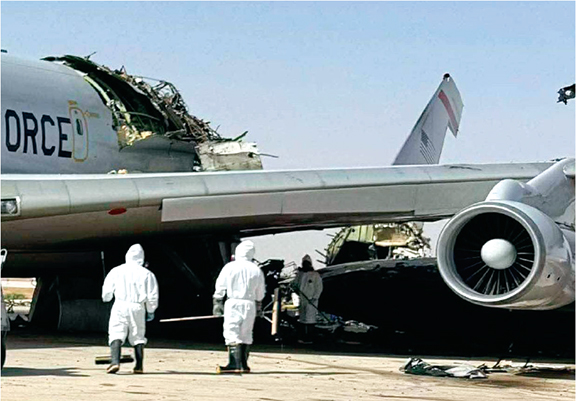
An E-3 AWACs sits destroyed at Prince Sultan Air Base, Saudi Arabia. Photo obtained by NBC News

Multiple news outlets reported an E-3 Airborne Warning and Control System (AWACS) aircraft was damaged or destroyed between March 27-29, 2026, at Prince Sultan Air Base, Saudi Arabia. The likely cause was Iranian missiles and/or drones, according to Air and Space Forces Magazine, Microsoft Network (MSN), The Defense News and others. Images confirmed significant structural damage, including to the rear fuselage.

A request was sent to USCENTCOM for information on whether an E-3 was damaged and if any U.S. military or civilians were hurt in the attack but no response was received by presstime. As of April 25, 2026, nothing on the subject is posted on their website. Not providing information like this is routine for operational security reasons to deny enemies useful information.

A March 28 Air and Space Forces (AFA) news release stated, “The attack injured more than 10 service members, two seriously. Among the other planes damaged are aerial refueling tankers… The image appears to show one of the E-3s stationed at the Saudi base, based on runway signage and aircraft markings. Six E-3s had been stationed at Prince Sultan Air Base before the incident, according to open-source flight tracking data.”

A MSN.com report from April 4 said, “The strike also damaged at least two US refueling aircraft and wounded 12 personnel, two seriously…With only 16 operational aircraft and a mission-capable rate of about 56%, the fleet is already under strain. Experts warn the loss will hamper the Air Force’s ability to manage battlefields, deconflict airspace, and deliver coordinated effects in ongoing operations.”

The AWACS aircraft are critical components of the Joint Force Air Component Commander’s arsenal during combat operations like Operation Epic Fury. The Air Force has flown AWACS planes since the late 1970s to provide command and control and intelligence, surveillance, and reconnaissance capabilities. They were used extensively in Operation Desert Storm, the Kosovo war, the wars in Iraq and Afghanistan, and for Operation Inherent Resolve.
“The loss of this E-3 is incredibly problematic, given how crucial these battle managers are to everything from airspace deconfliction, aircraft deconfliction, targeting, and providing other lethal effects that the entire force needs for the battle space,” said Heather Penney for the AFA Magazine. She is a former F-16 pilot and director of studies and research at AFA’s Mitchell Institute for Aerospace Studies. “The value of the E-3 and the battle managers is they see the big picture,” Penney said. “They’re the chessmaster, while [fighter pilots] are the bishops.”

Lee McCullum, a former 552nd Air Control Wing (552 ACW) radio operator for the AWACS and VFW Post 7192 member, said, “I don’t think we planned it right. We did know that Iran was going to hit the neighboring places, states, or whatever. I wish they would move to E3 back somewhere (perhaps) Aviana, Italy.” His hopes and prayers go out to the members and families affected. Veterans of Operation Desert Storm remember Iraq fired numerous SCUD missiles at military installations in Saudi Arabia, including Riyadh. History repeated.
The MSN.com article also stated, “Ukrainian President Volodymyr Zelensky alleged that Russian satellites photographed the Saudi base multiple times in the week before the attack and shared the imagery with Iran. He argued this pattern indicated deliberate targeting preparation, though NBC noted no direct evidence was provided.”

The 552 ACW operates E-3s at Tinker AFB. The wing reports to 15th Air Force headquartered at Shaw Air Force Base, SC. According to an USAF Fact Sheet posted online, the wing consists of four subordinate units: the 552nd Operations Group, the 552nd Maintenance Group, the 552nd Air Control Group, and the 552nd Training Group. “The 552nd Maintenance Group directs logistics support of 27 E-3 AWACS aircraft (several news outlets state there are 16 aircraft in the inventory) valued at $9.2 billion. The
group supports all E-3 sorties enabling aircrews to fly 20,500 hours annually from numerous locations world-wide.”

A USCENTCOM fact sheet dated April 1 states more than 13,000 combat flights have been flown (jet, helicopter, drone, etc.) and 12,300 targets struck and 155 or more Iranian
vessels damaged or sunk.

For more information about Operation Epic Fury, go to www.airandspaceforces.com and major news sources. • Story by Lt. Col. Richard Stephens, Jr., USAFR, Ret. website: Rich Travel Niche

E-3 #0005 belonging to the 552 ACW, Tinker AFB, destroyed on Mar 30, 2026, Prince Sultan Air Base, Saudi Arabia.X

Beetle Bailey – 03-01-26

0

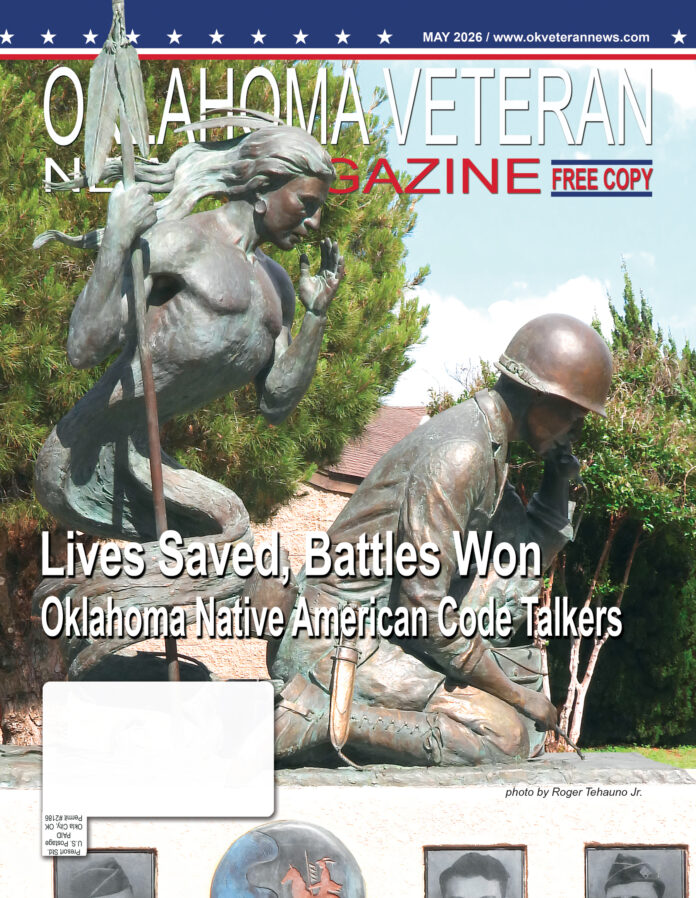
On the Cover: A Memorial Day Tribute

0

Lives Saved, Battles Won – WWII Oklahoma Native American Code Talkers
A Select Group of Men

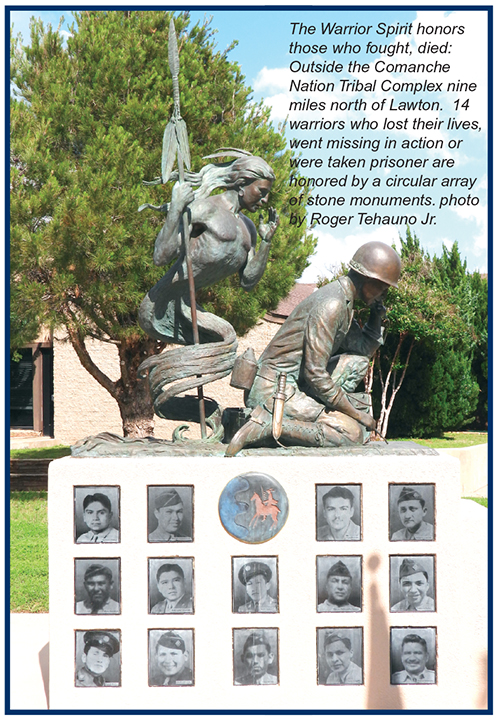
Of the 38 federally recognized American Indian tribes headquartered in Oklahoma, five Nations: Comanche (17 men), Pawnee (9 men), Choctaw (4 men), Muscogee/Creek-Seminole (3 men), and the Kiowa Tribe (3 men) provided a total of 36 Code Talkers, sometimes called “Telephone Talkers.”

Real-Time Communications
Dr. John Curatola, Senior Historian at the National WWII Museum, explained that communications operated at a tactical level and the soldiers were usually dispersed throughout platoons and companies. He said code talkers operated the radios, speaking their tribe’s language or in codes.

“And so that way they would be communicating with their adjacent units or maybe to the battalion in the back, sharing information.” Curatola noted that such messages included
intelligence, ammunition levels, supply status and enemy positions-anything useful during combat.

Comanche Deployed to Europe
Comanche soldiers were assigned to the Fourth Infantry Division’s Fourth Signal Company at Fort Benning, Georgia, receiving phone, radio, Morse code, and semaphore training. Dr. William Meadows, Professor of Native American studies at Missouri State University, an author of seven books about American Indians, described the Comanche’s training and service in “The Encyclopedia of Oklahoma History and Culture.”

“In August 1941 they were placed under Lt. Hugh F. Foster to develop an unbreakable
Comanche-language code. Foster provided approximately 250 specialized military
terms for which the Comanches developed coded equivalents.” Training was complete
by October 30, 1941.

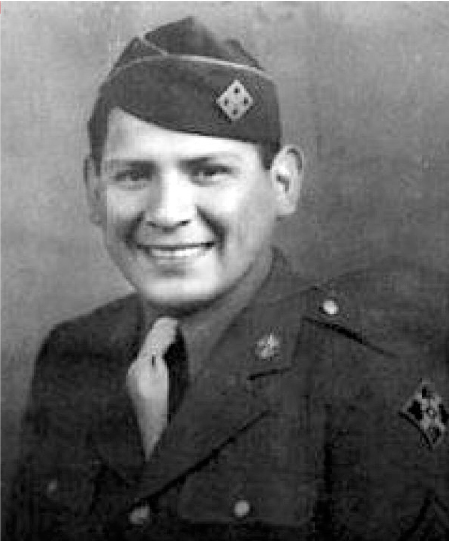
“Thirteen Comanche Code Talkers landed at Utah Beach during the Normandy
invasion in France. Maintaining wiremessages via field telephone and radio, they served in France, Luxembourg, Belgium, and Germany. Their service included important battles at Cherbourg, St. Lo, Paris, the Siegfried Line, the Huertgen Forest, and Bastogne. Although several were wounded in action, none were killed. The Comanche code was never broken.”

A Life of Service Beyond War
Meadows profiled Corporal Forrest Vernon Kassanavoid, a Comanche Code Talker born March 30, 1921, and died at the age of 75. Wounded by shrapnel in WWII, he received the Purple Heart. He became the first American Indian to graduate from Cameron Junior College under the G.I. Bill in 1947 and later attended Oklahoma A&M College. After the war, Kassanavoid enlisted for six years in the Oklahoma Army National Guard as a staff sergeant. He also worked as a private military supplier for the U.S. government for four years and with the U.S. Postal Service for 28 years. Later, he returned to Indianola, serving as a committeeman for the Comanche Business Committee.

Courage Under Fire
The Choctaw Code Talker Association identified four Choctaws who served in the European Theater: Schlicht Billy, Forreston Baker, Davis Pickens and Andrew Perry. Pickens and Perry were killed in action. Army 2Lt. Schlicht Billy received the Silver Star and the Purple Heart while serving with the 45th Infantry Division. His friend, Davis Pickens, was the Choctaw on the other radio and was killed in action. Billy led an attack on the Siegfried Line in Germany on March 17, 1945, becoming the first soldier to reach a German-held pillbox and toss in a grenade. During the battle, Billy was severely wounded. His actions earned him the Silver Star.

Kiowa Tribe Honored
At the 2025 Oklahoma Military Hall of Fame banquet, three Kiowa Code Talkers were inducted posthumously: Private First Class (PFC) Leonard “Red Wolf” Cozad, Sr., PFC James Paddlety, Jr., and Private John Tsatoke. They were assigned to the 689th Field Artillery, XX Corps, in the European Theater.

Chairman Lawrence SpottedBird, a Vietnam era Navy veteran, accepted on behalf of the tribe, stating, “All these Kiowa legends are deceased, but their legacy as Kiowa warriors, the legacy of all of our Kiowa warriors, lives on today.” Then, Kiowa singers drummed and sang a victory song as more than 50 Kiowa Tribal members and all banquet guests stood in respect.

Different Reasons to Enlist
Meadows identified several factors that motivated American Indians to enlist: traditional warrior culture, military preconditioning through boarding schools, unemployment, and out of tribal and national patriotism.

Using A Unique Weapon
Many American Indians recognized the irony of being forced into boarding schools that attempted to erase their language and culture, only for those same languages to become invaluable in wartime.
Meadows wrote, “As one code talker told me, he had something that other soldiers did not – his language – and his language was his weapon.”

A Record of Distinction
In an article, “American Indian Veterans Have Highest Record of Military Service,” Alan Ramirez stated American Indians and Alaska Natives serve in the Armed Forces at five times the national average and have served with distinction in every major conflict for over 200 years.

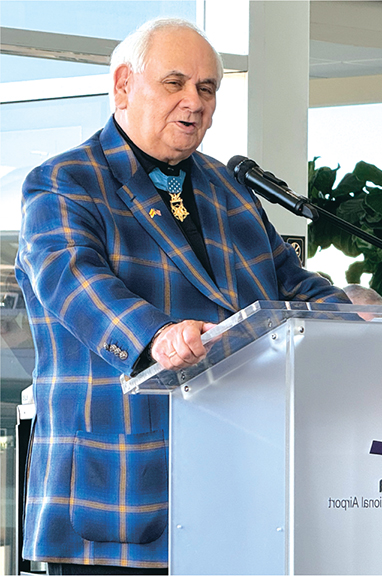
“American Indians enlisted in overwhelming numbers after the attack on Pearl Harbor in 1941…Forty-four thousand of a total American Indian population of 350,000 saw active duty, including nearly 800 women. For this service they earned at least 71 Air Medals, 34 Distinguished Flying Crosses, 51 Silver Stars, 47 Bronze Stars and five Medals of Honor.”

Long-Overdue Honors
American Indians from at least 34 American Indian nations were given Congressional Gold Medals in recognition for WW I and WWII Code Talker service: the Navajo in 2001 and 33 others after the Code Talkers Recognition Act of 2008.

The French government and the State of Oklahoma bestowed the Chevalier de L’Order National du Merite (Knight of the Order of National Merit) on November 3, 1989 posthumously to the World War I Choctaw and to the three then-surviving World War II Comanche Code Talkers (Chibitty, Kassanavoid, and Roderick Red Elk) at the Oklahoma Capitol.

The Oklahoma Military Hall of Fame inducted the Seminole, Choctaw and Pawnee Nations and the Kiowa Tribe over time.

Comanche Code Talker Charles Chibitty reflected to Meadows, “After all of it was over with, they finally honored us at the state capitol. But to know that I at least done something for the country, what little I did…If what little we did saved some of those lives, then I’m proud I was part of it you know.”

Charles Chibitty landed on Utah Beach during the D-Day invasion, June 1944, and started communicating right away about the battle. Photo given by Dr. William Meadows.
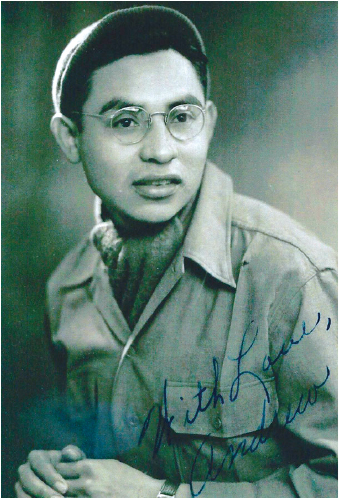
Edmond Harjo was a Seminole Code Talker in WWII. Photo by Dr. Michael Meadows

Oklahoma’s Native Americans are immensely proud of their veteran’s service. For more information, visit tribal websites or consult library resources. • Story by Lt. Col. Richard Stephens, Jr., USAFR, Ret. website: Rich Travel Niche

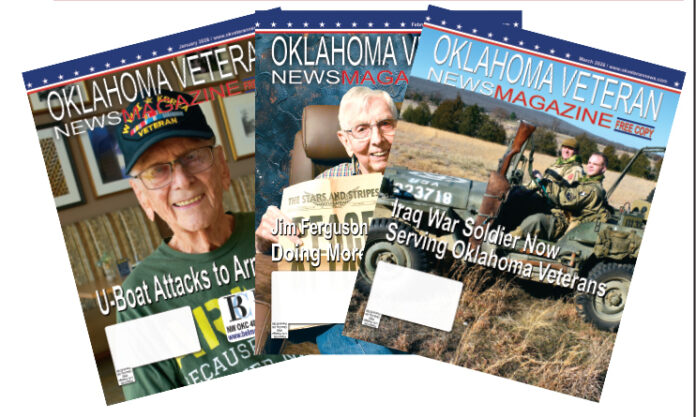
Oklahoma Veteran News Magazine Receives Highest Recognition

0

story by Darl Devault, contributing editor

For the statewide free Oklahoma Veterans News Magazine to receive a Senate Citation of Recognition after just one year in print serves as powerful validation of its role in bridging the gap between state resources and the Veterans it serves.
Such recognition highlights the magazine’s value as a statewide communication
tool that unifies a community of over 300,000 Veterans.
Co-publishers Steve Eldridge and Veteran Steve Sibley worked together on
its creation for more than a year leading up to the publication’s first issue in May
2025.
This official validation of impact from State Senator Brenda Stanley (R-Midwest
City), who chairs the Senate Veterans and Military Affairs Committee, designates the
publication as a trusted source of information for the state’s military community.
This legislative commendation reinforces the magazine’s role as a “vital part of
the state’s identity,” officially acknowledging its mission to pay tribute to the service
and sacrifice of Oklahoma Veterans and their families.
All of this is because the magazine is attempting to help many Veterans who
are unaware of available benefits, such as sales tax exemptions. A recognized
statewide magazine acts as a critical partner in disseminating this essential
information and updates on benefits, services, and new laws, such as the PACT Act
and state-specific tax exemptions.
It also serves as a platform to raise awareness of Veterans-owned businesses
and encourage “patriotic Oklahomans” to support them.
The platform also promotes storytelling and community engagement. It helps
preserve the patriotic legacy by sharing stories of Veterans’ achievements. It
chronicles their sacrifice, fostering a sense of belonging and “collective pride”
across the state.
Its outreach for isolated Veterans continues to expand with over 600 distribution
points-including VFWs, American Legion posts, and VA clinics. This magazine
reaches Veterans who may not have easy access to digital information, partnering
with the Oklahoma Department of Veterans Affairs (ODVA) to feature leadership
and highlight state-run programs and ceremonies.
The content of the document follows:
THE STATE OF OKLAHOMA
Citation of Recognition
EXPRESSING SUPPORT FOR THE OKLAHOMA VETERAN NEWS MAGAZINE;
COMMENDING ITS LEADERSHIP; AND DIRECTING DISTRIBUTION.
WHEREAS, Senator Brenda Stanley, Chair of the Senate Veterans and Military
Affairs Committee, proudly supports the mission of the Oklahoma Veteran News Magazine, the first statewide monthly free publication dedicated to serving Oklahoma’s veterans, active-duty service members, and their families; and
WHEREAS, the magazine marks one year in print, reflecting its continued commitment to
informing, connecting and honoring those who have taken the oath to defend the United States;
and
WHEREAS, Oklahoma is home to major installations, including Altus Air Force Base, Fort Sill, McAlester Army Ammunition Plant, Tinker Air Force Base, and Vance Air Force Base, which play a vital role in national defense and serve as key economic drivers; and
WHEREAS, the Oklahoma Veteran News Magazine strengthens the military community by
sharing important information, connecting veterans to resources, and promoting awareness, respect, and appreciation for their service; and
WHEREAS, the Oklahoma Senate recognizes the importance of ensuring veterans and their
families have access to timely, accurate information and honors the service and sacrifice of those who have defended our freedoms;
NOW, THEREFORE, BE IT RESOLVED BY THE SENATE OF THE 60TH OKLAHOMA
LEGISLATURE:
THAT the Oklahoma Senate expresses its support for the Oklahoma Veteran News Magazine
and its mission to serve Oklahoma’s military and veteran community, and THAT co-publishers Steve Eldridge and Veteran Steve Sibley are commended for exemplifying
the spirit of “The Oklahoma Standard” through their dedication to veterans’ affairs and community service; and
THAT a copy of this resolution be distributed to
Steve Eldridge and Steve Sibley.
Signed April 22, 2026: Senator Brenda Stanley
Senate District 42

Veteran Suicide Prevention

0

Across the country, state and local governments, nonprofits, certain tribes and other community organizations are going to share in a $112 million grant program for their work in veterans suicide prevention. The Staff Sergeant Parker Gordon Fox Suicide Prevention Grant Program (also known as SSG Fox SPGP) promotes outreach to identify veterans at risk, clinical services for emergency treatment, case management, baseline screening, education, peer support, help with connecting with benefits and more. Help can also be in the form of temporary income support, legal services, child care, financial counseling and fiduciary help.

And it works: Over 90% of veterans who got these services reported improvements in their mental health and well-being.

The grant organizations will work with local VA medical centers to verify that the individual is a veteran, has some risk factors (such as traumatic brain injury, recent loss, homelessness or history of abuse) and has been assessed as to the degree of risk of suicide.

Veteran suicide stats are, as they always have been, grim to consider. The national suicide report for 2025 says that the number of suicides have decreased (for 2023, the last year numbers were available). Specifically, 2023 had 44 fewer veteran suicides than in 2022. The report calls that an “encouraging” result — even though the number for 2023 was a whopping 6,398 veterans.

In an analysis of the stats, 61% of those veterans were not getting VA health care. The group most affected were veterans ages 18 to 34 with risk factors of homelessness, health problems and pain, with pain being the biggest risk factor.
\

To learn all the details about the SSG Fox SPGP grant program, see www.mentalhealth.va.gov/ssgfox-grants/docs/SSG-Fox-SPGP-Program-Guide-508.pdf.

If you (or a veteran you know) are at risk for suicide, call the VA crisis hotline at 988, then press 1. That’s all you need to dial. Or text to 838255. Or go online to chat at
www.veteranscrisisline.net. Somebody is there 24/7. It’s free and confidential, and you don’t have to be enrolled in VA health care or benefits.
(c) 2026 King Features Synd., Inc


After 88 Years, Holdenville’s “No-Name Creek” Gets One

0
It took two-and-a-half-years for Doyle Tampleton of Holdenville to get approval from local, state and federal offices to name Holdenville’s Veterans Park

Is there a creek, stream or river near your town that is unnamed with the State of Oklahoma? Perhaps not. But stay with this story if you want to read how Captain (retired) Doyle Tampleton, a tenacious Marine Corps member (aren’t they all?) with American Legion Post 32 got a 1.5-mile-long creek that runs through Holdenville named for veterans and when the creek will be publicly commemorated.

Why name a creek anyway? To honor veterans, Tampleton said, to include Muscogee (Creek) Native Americans employed by the Works Progress Administration (WPA) in Holdenville from 1938-1940. He also wants “to help others understand the complexity involved, so they can name an unnamed creek.”

Creek Construction
While in high school in 1959-1960, Tampleton worked in Charlie Sims’ Grocery Store. He remembers a Native American named Harjo, a Marine veteran. “I was very impressed by all the tales he told about how this creek was built. And he was the foreman that oversaw the workers of the creek.”

Tampleton said the creek was dug with picks and shovels. Sandstone rocks were brought and dropped at one centralized point. “They made skids like pallets that traveled and they loaded these stones on these skids, and they would hitch on a mule or a horse and drag ‘em down this creek where they would concrete them in and make a channelized creek.” Backbreaking work during the Depression years for $40 a week.

About the Creek
The creek’s headwaters originate in Holdenville. It flows into Tiger Creek five miles north of the city, becomes Wewoka Creek, and finally, joins the North Canadian River.

Process Starts at a National Level
Tampleton discovered the U.S. Board on Geographic Names (BGN), Washington D.C., approves geographic features such as creeks and mountains. The BGN sent him a 13-page application which plainly stated it may take three years to complete. “You have to have the city, the county, the state, any Native American property affected. And it all has to be related to who you wish it to be named after.”

Starting Local to get Approval
In September 2023, Tampleton’s American Legion post approved his quest. That was followed by in-person and written requests to the Holdenville City Council and Hughes County Commissioner. David Smith, State Representative House District 18, approved the request in November 2024.

Approval from the Muskogee (Creek) Nation in Okmulgee was needed because Holdenville is in their reservation. “I sent a lot of letters and on the phone talked to various parts of that nation, like the veterans, cultural and historical desks.” Result? David Hill, their Principal Chief, supported the proposal in April 2025.

State, Congressional and National Approval
Tampleton and Lou Jean, his wife, met with Senator James Langford’s staff in Tulsa. After staffers said they could help, they informed him that permission from the Oklahoma Board of Geographic Names (OBGN) was needed. Another step to complete. Cesalea Ray, Chairman of the OBGN, came to Holdenville, saw the creek and gathered more information.

Final Steps
In December 2025, the BGN approved the creek’s name. Done? Nearly. The Geographic Names and Information System (GNIS) office, a section of the BGN, needed to provide coordinates of the beginning and ending of the creek for typographical maps. This was completed in January 2026.

This February, the OGBN approved the name, Veterans Creek, in an email which read in part, “The name Tvstvnvke Hvccuce (Warrior Creek in Muscogee Creek), phonetically pronounced, Dust-Dun-Uh-Gey Huh-Jo-Jee, has been added to the GNIS with Feature ID 2833026.” State and federal approvals complete!

Public Dedication
On June 20, at 10:00 a.m. in Holdenville’s Stroup Park, officials will publicly dedicate Veterans Creek with a big celebration. The creek’s sign, “Veterans Creek” on one side and “Tvstvnvke Hvccuce” on the other, will be uncovered. Attendees will include U.S. Representative Josh Brecheen, State Senator Jonathan Winguard, David Smith, a representative from Senator Lankford’s office, Holdenville officials and veteran groups.

Tampleton’s biography
Tampleton enlisted in the Marine Corps in 1960, became a warrant officer and commissioned officer, and retired in 1985. He served in the Vietnam War south of Da Nang for 20 months and received two Purple Hearts. He was a police officer for nine years, school board representative for two years and President of the Central Oklahoma Military Officers Association of America for three years.

Captain Tampleton’s tenacity to name Holdenville’s creek for veterans, despite a two-year, five-month period that required numerous details and approvals, resulted in success. For more information, go to U.S. Board on Geographic Names. •
story and photos by Lt Col Richard Stephens, Jr., USAFR, Ret.

Holdenville’s Stroup Park with the newly named Veteran
Creek running though it. The creek fills during rain storms.

Social

0FansLike
0FollowersFollow
0SubscribersSubscribe